In short
Industrial digitization and its investment/economic implications, plus a brief market/rates backdrop. The host argues markets are complacent after a strong rally, with VIX near February levels and a “key reversal indicator” suggesting the move may be stretched. He claims recent headlines (tax/regulation/trade) are often “rollbacks” rather than true new stimulus, and that Fed cuts are unlikely unless inflation data weakens.
Guest backgrounds
John Pugliano is author of The Robots Are Coming and host of the Wealth Steading Podcast. He has spent 30+ years studying and applying habits of financially independent middle-class Americans and has experience in the military and corporations.
Key claims
Industrial digitization is the next phase after digitizing data—moving from simple automation to complex “white-collar” decision support. AI will replace mediocre middle managers and routine professional tasks, while top performers (CEOs/sales leaders) and new roles will persist. Digitization lowers costs and can reshape energy and manufacturing.
Notable examples
AI-enabled combines that detect weeds; digitized fracking via sensors/horizontal drilling; oil exploration using seismic/LiDAR/satellite data; nuclear “new clear energy” and SMR/uranium refining (e.g., Centrus Energy); Airbnb/Uber as analog-to-app digitization; medical wearables and remote/robotic surgery.
Written by AI. May contain mistakes. Listen to the episode to check what was said.
Chapters
Tap a time to open that second in VOMarket Sentiment Overview
0:03 to 1:13
Discussion on current market conditions and indicators.
“And now, those balances can be FDIC insured up to$10 million through their program banks.”
Market Sentiment Overview
1:35 to 2:06
Discussion on current market conditions and indicators.
“Horowitz and Company, from seed through harvest, cultivating financial success.”
Legislative Impact on Markets
2:06 to 3:00
Exploring implications of the recent OBBA legislation on markets.
“Well, we have a new acronym to deal with.”
Geopolitical Tensions and Market Reactions
3:00 to 6:38
Insights into geopolitical issues affecting market dynamics.
“Can we just finally get beyond all this?”
Analyzing Economic Indicators
6:38 to 8:10
Discussion on recent economic indicators and their implications.
“These headline-grabbing moments, this social media style of news flow, these, you know, text 140 characters of, it's just not what you want to rely on for your money.”
Federal Reserve Outlook
8:10 to 10:27
Speculation on Federal Reserve actions based on economic data.
“It goes to a plus seven the way we calculate it.”
Market Sentiment and Investor Behavior
10:27 to 11:53
Analyzing current investor sentiment and market strategies.
“He's going to say that, you know, here, here's the numbers, and yeah, the tariffs did add some extra to the inflation.”
The Relevance of Robotics and AI Today
14:37 to 15:10
Explore the importance of discussing robotics and AI in current times.
“So he's a lot to share with us on that, of course.”
Understanding Industrial Digitization
15:10 to 17:03
Dive into the concept of industrial digitization and its evolution.
“So I'm going to just bang it right off with the topic of an idea that you mentioned many times.”
The Impact of Digitization on Labor
17:03 to 19:36
Examine how digitization is affecting job roles and industries.
“We're going to start doing the complex labor, which would include mid-level managers, right?”
Show all 28 chapters
Examples of Digitization: Agriculture and Oil
19:36 to 21:30
Discuss real-world examples of digitization in agriculture and oil industries.
“But the issue there was fascinating about that.”
The Future of Non-Tech Industries
21:30 to 23:39
Analyze non-tech industries poised for growth due to digitization.
“Well, you know, it's starting, and it's kind of funny, you know, you look at, you know, you say non-tech.”
Nuclear Energy and Its Revitalization
23:39 to 26:00
Explore the changing perceptions and resurgence of nuclear energy.
“But I want to go back to Uranium for a second.”
Investment Strategies in a Digitized World
26:00 to 28:00
Learn about investment opportunities related to digitization and technology.
“I don't think we ever got above 20 percent so I mean And there's still about 97 or so reactors out there.”
Surprising Market Performers
28:00 to 29:00
Explore how some lesser-known companies are outperforming giants like NVIDIA.
“And I think a lot of people would be pretty surprised to learn that a couple of the names in the SMRs are outperforming NVIDIA, for example, by a long shot this year.”
Digital Transformation of Services
29:00 to 30:50
Discuss how apps like Airbnb and Uber transformed stagnant industries.
“Or what are the other things that are going to happen?”
Future of Medical Wearables and Tech
30:50 to 32:40
Examine the potential of Apple in medical wearables and the impact of technology on various industries.
“I mean, things like medical wearables, I think that's definitely going to, you know, from a Dexcom to Apple may never get their head fully around consumer driven large language models.”
Adobe's Missed Opportunities
32:40 to 33:40
Analyze how Adobe failed to adapt to the AI generation and lost market share.
“But I, I'm still bet they're going to get it.”
Interest Rates and Economic Perspectives
33:40 to 36:20
Discuss the current interest rate environment and its implications for the economy.
“I want to talk about, let's go to interest rates a little bit more, not as exciting.”
Shifts in Energy and Manufacturing
36:20 to 38:10
Explore changes in energy exports and the future of manufacturing jobs in the U.S.
“So everybody goes back to the 1970s and looks at stagflation.”
Impact of Automation and AI on Jobs
38:10 to 42:00
Analyze how automation and generative AI are reshaping job markets, especially for white-collar workers.
“So we're not only – our dollars are not leaving the U.S.”
The Future of White Collar Jobs
42:00 to 44:34
Discussing how AI and digitization will reshape the job landscape.
“And you can use that, use their decision supports, use the methods that they use to make decisions, and you can make a computer do that.”
Embracing Technology for Personal Growth
44:34 to 46:45
Strategies for individuals to stay relevant in a tech-driven job market.
“these are maybe robot slash AI proof traits, right?”
The Evolution of Medical Technology
46:45 to 50:08
How advancements in medical technology will create new jobs and improve healthcare.
“They're not thinking about, they're like, I'll do it another day, AI.”
The Rise of Robotics and Drones
50:08 to 52:54
Exploring the future potential of robotics and drone technology in various sectors.
“that's probably wasted or fraudulent in things like Medicare and Medicaid.”
Wellsteading: The Modern Approach to Asset Management
52:54 to 56:00
Introducing the concept of wellsteading as a new way to manage personal assets.
“getting into medical wearables or more things like Dexcom where you can, you have a heart, and again, this will take cost out of medicine, right?”
The Shift from Analog to Digital
56:00 to 57:11
Learn about the impact of digitization on traditional industries and investment strategies.
Wealth Building Through Appreciating Assets
57:12 to 57:54
Discover how investing in appreciating assets can protect against inflation.
“And how do I, it comes down to appreciating assets.”
Transcript
Automatic transcript. May contain errors.0:00Andrew Horowitz:This episode is sponsored by Interactive Brokers. And did you know that Interactive Brokers clients earn up to 3.83 % on their uninvested, instantly available USD cash balances? And now, those balances can be FDIC insured up to$10 million through their program banks. IBKR's Insured Bank Deposit Suite Program will provide up to$5 million of federal deposit insurance coverage on an individual or institutional account's free balances. In addition, joint accounts are eligible for up to$10 million in coverage in free cash balances. How much interest is your broker paying you? Compare IBKR's rates to those of other banks and brokers offering less than half a percent.
0:47Andrew Horowitz:That's one reason smart investors use IBKR to trade stocks and options, futures, currencies, bonds, funds, and more. Strength also matters when choosing a broker. I want you to check out IBKR's financial stability and risk controls because they're designed to protect your assets in any market conditions. The best informed investors choose Interactive Brokers. Race, of course, is subject to change. Interactive Brokers is a member of SIPC. Compare how much more you could earn at IBKR.com slash interest rates. The Disciplined Investor is all about you, your money, and the markets. Sit back and get ready for this edition of the Disciplined Investor Podcast.
1:30This episode of the Disciplined Investor is sponsored by Horowitz and Company. If you're looking for a portfolio manager, look no further. Horowitz and Company, from seed through harvest, cultivating financial success.
1:47Andrew Horowitz:Jobs, jobs, jobs, not too hot, well, not too cold either. The VIX under 17. Is that a contra signal? Well, the KRI, the key reversal indicator, seems to think so. Overbought at a plus five. And our guest today is John Pugliano, host of the Wealth Steading Podcast. All this and much more on episode number 928 of the Disciplined Investor Podcast.
2:27Andrew Horowitz:Hello there. Well, we have a new acronym to deal with. OBBA. O-B-B-B-A. One big, beautiful bill act. It's going to have implications, we know, that's going to take some time, of course, to figure out exactly what it means, what it's going to do, how it's going to impact the various areas of the markets, the economy, you and me both. Both, I don't know, there's tax issues, there's policy changes, there's all sorts of things. But it seems, if nothing else, that markets are pretty thrilled about the fact that it's done. It's passed. Can we just finally get beyond all this? Yeah, there'll be some things that happen along the way.
3:06Andrew Horowitz:But bottom line is that it was a sausage factory. We know that. It was stacked with all sorts of nonsense. We know that. But do we really? We'll get back to that in a second. Put a little piece of tape on that, stick it on the wall. We'll be right back to that. A quick intro for those of you that are new to the show. Thank you for joining us and thank you for being here. Thank you for listening to the Disciplined Investor Podcast. I promise you're going to get a lot of really good information out of what we talk about here each and every week with the discussions we have and the guests that we bring on.
3:41Andrew Horowitz:I'm Andrew Horowitz. I'm the host of this fine podcast, the founder and president of Horowitz Company. It's simply, well, we manage money for people just like you. It's that simple. We help you invest. We work with your taxes, your estate planning, all of this to get you to where you want to be at the point of financial security and independence. It's not an overnight success. It takes time. It takes hard work. It takes grit. It takes dedication. It takes the desire, but we do it with you. You want more information? Go over to thedisciplinedinvestor.com and set up a quick chat. I'll talk with you.
4:22Andrew Horowitz:We'll set up a quick call and we'll go through maybe how we can help. Now back to business. It's been a pretty busy summer, hasn't it? It's already July. Hot. Markets are at or near all-time highs. The hope is for less regulation in the current administration. The financials are doing well with that. tech? Well, we're dropping the restrictions that we set for China, right? Abruptly turning around. The chip and design companies are doing really well. All of a sudden, we're allowing for our, not our best chips from DVD, but our second best chips and the design companies to work again. So that's something.
5:03Andrew Horowitz:We're going to be really fueling their AI ambitions. And I guess we got that and turned that around because the chip companies were freaking out, But more so, I guess, there's some kind of a deal going on with China that is reverting us back to simply where we were before the reciprocal tariffs were put in and the various retaliatory tariffs were put in as well. And for what it's worth, I think we need to look a little bit deeper past the headlines because it tells a much different story. We've got deals with Vietnam helping manufacturers back here, and that's kind of helping some of that. But, you know, we saw, for example, the Iran obliteration headlines.
5:50Andrew Horowitz:Now, that seems very unlikely. In fact, they say that those bunker bombs, those 30 ,000-pound bombs obliterated, did massive damage, halted the entirety of the nuclear program. Now we're hearing, I think it was Friday, that Iran says they're going to continue with their nuclear enrichment programs. The administration says, well, we're going to have nuclear talks with them next week. Well, wait a minute. I thought we were done with the nuclear talks. I thought that we totally disassembled and demolished their entire ambitions, but yet they say that they're actually going to continue with their enrichment, which means they moved it.
6:30Andrew Horowitz:We didn't do the damage that we said we inflicted upon them. Point is, whether or not I'm trying to call somebody out or not, it's all over the place. These headline-grabbing moments, this social media style of news flow, these, you know, text 140 characters of, it's just not what you want to rely on for your money. The deals that we see that we're getting all these deals done, these are simply just rollbacks. To before the retaliatory, the reciprocal tariffs were put on, made us look, well, good, we got something done. That's great. Now we see the VIX at levels that was in February. In fact, you look at the VIX, when I looked at the chart just recently, it's at a level right before the massive sell-off that took it above 60 in February and March.
7:22Andrew Horowitz:And what does that mean? Well, it doesn't mean it has to happen again like that. But there is complacency in the markets right now. The markets are expecting a smooth sale over the next couple of months. Is it possible? Yeah. Is the news flow that's going to continue to be staggered with pauses, deals, pauses, deals, new deal, taxes, all this other stuff that happens, right? Because we didn't get tax breaks. We got rollbacks. We're not rollbacks. We got non-rollbacks. That's what we got on that deal. But be careful because we do have things coming up like earnings. Our key reversal indicator I mentioned before, this is our internal.
8:01it's a proprietary gauge of what we think is overbought and oversold in a market.
8:10Andrew Horowitz:It's a plus five. It's a plus five. That is not the highest. It goes to a plus seven the way we calculate it. But it's something to consider, something to be cautious about that maybe things are getting a little bit long in the tooth in terms of this current rally. So let's take a minute and talk about the economy. We saw that last week, last Friday, or a few days ago. The unemployment rate fell to 4.1 % from 4.2%, which signaled the strength in the labor market. I don't think anybody really can argue that. There was some aberrations in the numbers. Yes, the ADP came out at negative 33 ,000. We saw a total add of about 147 ,000 on the non-farm payrolls, a little bit less from private.
8:53Andrew Horowitz:But the big issue in the head-scrasher here was how many people were put on the job rolls from the government side. That was really interesting. The government seems to be hiring when we thought they were laying off. So that's odd. The markets, well, did fine. Didn't really get too upset about that. In fact, yields came up a little bit. The dollar came up a little bit. The averages hit an all-time high on the Dow. Not the Dow. The S &P 500 and the NASDAQ. That was good. We saw that the labor participation rate declined. Long-term unemployment rose. Let me look through the numbers. Average weekly hours dropped a little bit from 34.3 to 30.2.
9:44Andrew Horowitz:34.2. Now, the big question of this, of course, is what is the Fed going to do with this information? The data by no means supports an immediate rate cut Let's just get that clear As a matter of fact, with the initial jobs claim still healthy Which is a leading indicator And even though we have this lagging indicator of the jobs numbers I mean, the Fed officials are likely to I would think stay in a wait-and-see posture That's what it seems to me So a rate cut at the July meeting, probably unlikely unless CPI and PPI data later this month are significantly weaker than expected. I don't see that.
10:23Andrew Horowitz:I think the June number-ish, maybe July, but we're going to see June shortly. He's going to say that, you know, here, here's the numbers, and yeah, the tariffs did add some extra to the inflation. It may not be a lot because the tariffs are only a small piece of the overall puzzle here, but I think that we're going to see inflation kick up a little bit. That's the way it seems at this point. So, in totality, you know, we had a good shortened week again. Well, a couple weeks ago, it was two or three weeks ago, Juneteenth. But from that April low to where we are, that V recovery that we've seen has been pretty astounding.
11:04Andrew Horowitz:Led by the big caps, of course, but then also being filled in a lot by some of the small caps and some of the names in the areas that really had been lagging. So that's a really good sign. It means breath is a bit more positive right now, which is good, because, you know, I always, I'm looking at things, I'm like, you know, why are only five stocks leading the whole market? Well, that's not really the case right now. So that's good. However, with that, certain things are also telling me at the same time that because we pushed things so hard for so long of a time in this last few months, markets are getting a little bit tipsy.
11:43Andrew Horowitz:Now, whether or not there's a lot of people standing on the sidelines waiting, just waiting to pounce on that dip. Just, oh, just give it to me. Just give me a 3 % drop. I'll take it. I mean, that's something that we'll have to look at. I've talked to people in the past and professionals that are like, hey, they're waiting for the dip. I'm like, well, the dip's not coming so much. You know, you got to get in there. And we've done that for our clients, for example, in our dollar cost average programs. But what is holding up the markets? It's a lot of people who have money on the sideline that just are tired of sitting out of it and waiting for any sign of any kind of drop.
12:19Andrew Horowitz:And they're just, all right, we're in. We had that a few weeks ago. The whole war issue. It was like, you know, a five minute drop. Everybody's like, oh, I got to get in. 3 % drop, you know, weeks before that. Oh, I got to get in. That's the environment that we're currently in. Bad news is not so bad. Matter of fact, could be good. Good news is really good. We'll take it. And we believe every headline that comes out, whether or not it's the whole issue about the OBAA, let's see, we'll start using that. The big, one big, beautiful bill act. One big, beautiful bill act. OBAA being passed in record time.
12:56Andrew Horowitz:Nobody read it, I'm sure, but it's okay. why do we have to read it Nancy Pelosi didn't let us read it so why are we going to read this right we don't have to read anything nobody reads it's just like oh it's good doesn't matter how much was stuffed into this multi-trillion dollar bill it's all good we'll have to see how that plays out ah good stuff good stuff I like it alright let's take a moment to talk about interactive brokers again because I have a question again for you something you have to be probably asking yourself and it's whether you're wondering if the market's going to go up or down.
13:32Andrew Horowitz:I mean, right? That's what you think about. Well, the answer lies in the economy. In a bad economy, wages, they stagnate, spending drops, companies struggle, and the market takes it. In a good economy, wages rise, spending soar, companies thrive, and the market climbs. So how could you predict what's next? Visit IBKR Forecast Trader. Get up-to-date consensus insights and trade your prediction on yes or no questions. The question is, will the market go up or down? Yes or no, by a certain date. You can do that with IBKR Forecast Trader. Because the best informed investors choose Interactive Brokers.
14:13Andrew Horowitz:Sign up today. Forecast contracts are not suitable for all investors. It's time to get to our guest. Let's get right to it. I'm pretty excited. And our guest today is John Pugliano. He's the author of The Robots Are Coming, A Human Survivor Guide to Profiting in the Age of Automation. He's also the host of the great Wealthsteading podcast, where he shares ideas and personal experiences on wealth building principles. And he's spent over the last 30 years plus studying and applying the habits of financially independent middle class Americans. So he's a lot to share with us on that, of course. And he has been in the military.
14:50Andrew Horowitz:He's in corporations. generations. You've been all around. You've done a lot, my friend, haven't you? I have, Andrew. Great to be back on. Yeah, I've had an unusual career, but it's made me who I am. Yeah, that's great. That's awesome. So I want to get into this because now of all times, should we be talking about robotics AI? I think yes. And how it affects our lives. So I'm going to just bang it right off with the topic of an idea that you mentioned many times. You talked about industrial digitization, industrial ID, industrial digitization. First, let's start with what the hell is that? OK.
15:31Andrew Horowitz:And secondly, I want to know about how you how you kind of see traditional industrial sectors evolving with the adaptation of of some technology. Sure. Well, you know, everything in the media now, it's either about robots or large language models, artificial intelligence. I've always looked at this as just straight digitization, you know, taking the analog and digitizing it. And whether that's, you know, 60 years ago when we first started with, you know, big mainframe computers or advancing to desktops and then smartphones, et cetera. So, I mean, that's been the whole digitization process. I think the big shift we're seeing, and it hasn't really caught on as a major trend yet, but the big shift is we're starting to see the industrial digitization, right?
16:21We've seen data digitized over the last 20, 30 years. So, you know, you used to publish a book and you had to have paper and ink and distribution. Now, now it's all Kindle, right? Or, you know, music, you had to have a music label and vinyl records and now it's all Spotify. So, so we've gone from digitizing data to where I think we're going to digitize manufacturing, industrialization generally. And sure, we've done that. I mean, 30 years ago, we probably replaced all the welding and painting jobs at General Motors with robots. But, you know, that was the easy low-hanging fruit stuff. Now I think we're going beyond that.
17:03We're going to start doing the complex labor, which would include mid-level managers, right? And so, you know, the book I wrote years ago about the robots are coming. The big premise of that was it's white collar workers are going to lose their job this time around because that digitization is getting good enough where we can not just replace the simple jobs, but the complex ones as well.
17:28Andrew Horowitz:It's interesting because the evolution has been slow. This is always the case, right? You know, you have slow uptake adoption and then all of a sudden it's like, oh, my God, I got to get on that train before it's too late. You know, that's when we get to that YOLO thing. But the idea that we can now do something on this scale where we can replace whether it's a – and I'll talk about some crazy things like a combine, which is going and mowing through cornfields or wheat or whatever particular farmland that we're looking at. and how that was required to do, first of all, on a certain schedule based on a farmer going out there looking at what it looks like.
18:10Andrew Horowitz:It looks like, ah, it's a good time to start gathering, right? It's a good time to start harvesting. Two, a combine that is now combined with maybe weather-oriented AI slash computer modeling and looking at maybe the absolute best and most efficient time to have the greatest haul on your harvest, sending the combine out, which, by the way, is going to do it the most efficiently because it's all computerized, right? Is this all what you were talking about here? Absolutely. And yeah, that combine has the camera on it that can now detect the weed from, you know, the tomato plant or whatever, the wheat plant.
18:45It knows whether to apply fertilizer or herbicide or whatever to it, right? And it's just, it's that continual digitization of everything that we've seen. You know, the oil industry too is another perfect example, the whole fracking. We knew how to frack back in 1946, but it wasn't until we got to the real big data digital age and we had the automation where we could control the horizontal drilling that fracking took off. And, you know, it's no, you know, millennials wouldn't believe it today, But right. You go back 25 years ago and we were a major oil importer. Now we're a major oil exporter.
19:28We're finally huge ramifications. Yeah. And that's and that's I mean, that means a lot more than just economics. Right. That's geopolitical shift.
19:39Andrew Horowitz:But the issue there was fascinating about that. And just if there are any of those millennials or people that maybe don't remember. it wasn't that we just was like, oh, we're going to sink more oil wells and do a better job at somehow pumping this stuff up. It was the start to the finish of the exploration and the ability to find the oil in a much more efficient manner. And utilize various, what we'll call it, I don't want to call it cameras, but like cameras, x-rays, and all sorts of data gathering, right? Everything from seismic stuff on the earth, you know, LiDAR type things to cameras in the sky with GPS, you know, positioning and looking for anomalies from even from the satellites and then big data to tie all that together so that geologists can figure it out.
20:35And again, then all the ability to horizontally drill, right? That wasn't, that wouldn't be a thing without robotics. You couldn't, if you didn't have the sensors and the, you know, the, I'm at a loss for what the PLC controls, you know, everything that causes that drill bit to move, you used to just be able to go down, right?
21:00Andrew Horowitz:Yeah, like, hey, Bob, that looks like a good spot, right? Yeah, it was worming over there, right? And so, and we're seeing, we're seeing this digitization with everything and it lowers the cost of products. It makes life better. It also makes life more complicated. But to your point about the farming, yeah, I mean, you go back 100 years ago, what, 80 or more percent of people were employed on the farm. Now, you know, now you're hard pressed to meet a farmer. Yeah. Amazing. So what non-tech industries do you think are maybe the most primed to go through this process of digitization and have some really incredible growth moving forward?
21:46Well, you know, it's starting, and it's kind of funny, you know, you look at, you know, you say non-tech. So is Amazon a tech company, right? They are, right? They're a tech company. It's like Tesla's a tech company. Yeah, Tesla's not a car company. It's a tech company. Amazon, they're not, I mean, they are a retailer. Walmart is a retailer. But they've merged, right? They've gone beyond just straight retail and they've become tech companies. Sears and Robux didn't figure that out. Sears, Sears. And Lurias, if you remember that.
22:21Andrew Horowitz:Exactly, right? Yeah, yeah. Those guys are gone. You know, IBM was a tech company and then it hadn't done anything for what, 30, 40 years? And all of a sudden, maybe Watson and IBM are back. Who knows? So I mean, it's really digitization is the merging of tech with the analog. So I mean, look at the revolution we're seeing, which I almost thought we'd never see again, but nuclear. I mean, the proliferation of these small modular nuclear reactors, just the excitement around uranium refining. I mean, these are things you were thought for dead. We've got, I live in Utah. We've got uranium mines in Utah that now they're trying to fast track and get them reopened again.
23:10And I think these things probably closed in the 60s, 70s, and 80s. You know, no one's mined them in years and people thought it was dead, but it isn't. It's coming back. And so it's the mundane to virtually everything. And I think anybody that doesn't digitize, right, whether you're a small business and you're not using artificial intelligence or if you're Apple. I mean, take a look at Apple. Talk about being behind the curve in artificial intelligence.
23:38Andrew Horowitz:Yeah, they literally said last week that, I think they blatantly came out and pretty much said that their AI sucks. But I want to go back to Uranium for a second. I want to mention something. Speaking of Apple's AI, have you ever used like an Apple Maps? If you use Apple Maps, you'll get lost. No, it's Google Maps. No one uses Apple Maps. I use Apple Maps, but that's another story. I mean, for short distances. Nothing for anything crazy. Let me go back for a second. Let me go back to your discussion of uranium. And if you're a proponent of new clear energy, and I say it purposely like that, then you have to start saying it like that.
24:21Andrew Horowitz:The idea that nuclear energy, the old way, people are freaked out about it. They think about Three Mile Island. They think about Hiroshima, Nagasaki, Fukushima. they think of movies with Jack Lemmon in it. It's all this stuff that's bad, right? I think we change the name and we change the way people look at it to new, clear energy. If you keep, and tell your friends about that. Sarah, I'm not kidding about this either. Tell your friends, because I'm a big proponent, but I think people are just like stuck with it. They don't get it. Small modular actors from SMR, Oklo. There's a few other companies out there that do this.
24:55Andrew Horowitz:You know, even you have GE, GE, Vernova for that matter. Absolutely. These companies. GE Vernova. And this great stuff. And even the traditional utilities, I mean, from the Constellation Energy, obviously still owns the Three Mile Island and those guys. But I think Duke Energy, a lot of these, there's probably a dozen traditional utilities that have always owned nukes. And now they're just becoming more fashionable again. And it will. I mean, that media narrative will change. you'll see that shift in the way – anyway, it already has, right? It's like anything. When people want something, when the big tech companies want something, they'll change the media narrative to make it.
Read the full transcript
25:42And, I mean, to that point, though, Bill Gates has been talking about nuclear energy for, I don't know, a couple decades, I think. If you look at what he's talked about, he's always been a proponent of it. I think he's been farsighted and seen that. um the interesting thing about nuclear energy though i mean you go weaving back to the to the 70s and um the united states and france in i think was 1973 when we had the arab arab oil embargo we wanted to have energy independence and i mean that was the goal was energy it was in nixon's moonshot or nixon's manhattan project right it was to get energy independence he he had planned to have a thousand nuclear reactors operational by the year 2000 that was a 1970s plan France went that way right France went to 80 percent they didn't have a thousand because they the country wasn't that large but they went to 80 percent of their energy or more from nuclear energy the U.S.
26:43I don't think we ever got above 20 percent so I mean And there's still about 97 or so reactors out there. But yeah, going forward, I think absolutely that's going to be, that's the only way to generate the electrical demand that we need, both in terms of the data centers for traditional, what we're thinking of large language models and charging electric vehicles and even Bitcoin mining. I mean, just that side of it's going to need nuclear. not to mention this, what I'm talking about, which hasn't fully emerged yet, but the digitization of industry. We have more and more manufacturing facilities being made in the U.S.
27:25Ever seen a post-pandemic, we have extreme spending on industrial build-out. It's not going away. That's going to continue. And that takes a lot of energy.
27:35Andrew Horowitz:Mm-hmm. What's interesting about that also is that this is a side conversation in the industrial digitization. In other words, a lot of people, and I've been trying to get people to think about this, right? What are the picks and shovels or the outside the norm thinking process that we should go into when we're looking for an investment, looking for companies that are not necessarily NVIDIA? You know what I mean? That's not just Apple. You know, okay, great. I got it. Those are the right in there. Those are the names. But what are the things on the outside? And I think a lot of people would be pretty surprised to learn that a couple of the names in the SMRs are outperforming NVIDIA, for example, by a long shot this year.
28:17Oh, absolutely. I own Centris Energy, which I don't know what it's up. It's up maybe four times. Yep. And again, people thought uranium refining was dead, but it isn't. Some of that had to do with Ukraine getting invaded and the Russian stuff coming off the market. But it's more than that. And I guess looking for that second or third or fourth derivative trade on artificial intelligence, I mean, it's anything where you're combining the digital to the analog. And again, just like we did in the last 30 years where we took a published printed book and we turned it into a PDF or some kind of a digitized Kindle file or something.
29:00How do we do that? Or what are the other things that are going to happen? And they're right before our eyes. And they're still not fully mature yet. Look at Airbnb and Uber. to seemingly different companies, but all they've done is they've taken an analog service, right? They've taken the consumer and linked them up through an app to a service provider. So we have lodging and transportation, but extend that to all the millions of other service providers that could use an app to link them to the consumer.
29:35Andrew Horowitz:But these are industries that were in existence before. They were stagnant. They were stale. Talk about the taxi business. For God's sakes, for years, You'd go to the airport. You'd have to hop into one of these crickety-crackety, stinky, leather-seated, smoky, nasty-smelling. Am I right online? Does this remind you of the taxi you get into when you get in the airport? Yeah, the only nice taxi I've ever ridden in was in Japan. Yeah. The only clean one. And in England, those black ones. But I agree. And they took this right from underneath the taxi business and basically almost put them out of business.
30:14Andrew Horowitz:The medallions in New York, which were a million dollars apiece, dropped to like$300 ,000,$200 ,000, even less to get a medallion in order to drive a taxi. And it's kind of amazing. You have also the – before Airbnb, there was also some rental businesses here and there. But there was no way to really get out there besides, I don't know, maybe a listing in the local newspaper in the classifieds, house for rent. How else would you do it? Exactly. And look at those kind of rural vacation properties. Their real estate values have skyrocketed because of the rent they can now charge from Airbnb. So it's drastically changed that.
30:56I mean, things like medical wearables, I think that's definitely going to, you know, from a Dexcom to Apple may never get their head fully around consumer driven large language models. But Apple, I believe, will dominate medical wearables sometime in the future. Again, a lot of this regulation, we got to we got to get through, you know, a lot of the FDA type approvals. But a company like Apple, you know, even and again, even companies that are out there today at DraftKings, right? DraftKings has taken gambling and, again, digitized it. It's made that app that makes a consumer product of gambling to link it up to a service provider.
31:39So it's going to be those things. I mean, companies like Disney, I mean, they've been stagnant for a while and finally have come up a little bit. But think of how much more they'll be able to digitize. And they've got that whole franchise, right? They can make the media and they get either adults or kids to go to the movies or watch it on some kind of a screen. And then they got a park or a cruise or they create products that they license. I mean, it's just a whole system that's media driven. And so it starts from the digital media creation, and then it goes to an analog Snow White or Princess doll that a kid buys to play with.
32:22So, or that experience, the experience on the cruiser in the park. Those are the kind of companies that are really going to, I think, continue to thrive. But again, look at Apple's missed a lot of it. Adobe. I'm shocked at how bad Adobe has missed the whole, you know, AI generation of, of both photographs and videos.
32:45Andrew Horowitz:But I, I'm still bet they're going to get it. This Eastman Kodak, you know, part two, right? This is, this is a company that, that thought they had everything that nobody was going to do anything and then all of a sudden film. And then like now, so, so these days, you know, you have a camera. How, how, have you ever thought in your phone that when somebody is taking pictures, you're like, oh, slow down on the picture taken, I'm going to run out of film. It doesn't happen. Right. This is the kind of situation where Adobe thought they had the market cornered from a lot of different areas, didn't hop in.
33:17Andrew Horowitz:Canva came in and just obliterated them. Just stole market share left and right because the prices were a lot. It's the same thing as many companies. It's old as the oldest story in the book in terms of people having security, what they're doing. They thought it was great and then not looking around to what the other options are. I want to switch gears. I want to talk about a couple of different things here. I want to talk about, let's go to interest rates a little bit more, not as exciting. But the interest rate environment, I think, is very much – and inflation, deflation pricing is very much a part and parcel of the story of AI, of technology, of enhancement, of growth, of all of this, right?
34:03Andrew Horowitz:But you've, I think, from some of the things that I read, talked about the case for higher interest rates. I don't know if that's your current outlook on rates because you have a thought on the narrative that we're having today or that there's been around the peripherals about the stagflation. And what are your thoughts on that? Yeah. So interest rates are a funny thing. So do I have a higher interest rate mentality or just do I have a normalized interest rate mentality? You know, where we just saw post great financial crisis through, you know, the pandemic recovery, that 15 year period or whatever it was, we just saw such artificially what I believe to be artificially low interest rates where, I mean, shoot, it wasn't too long ago that Germany, Japan, they were still negative interest rates.
35:05How do you have a capitalist society or any society based on trade where that where where where currency has no value? So so it's not so much that I'm in the higher interest rate camp because I don't think we're going to see the hyperinflation where interest rates go to, you know, double digits or anything like they had done in the. in the, you know, 70s and 80s. But, but I do think there's an argument that, that, that there's a time value to money, right? So if you're holding cash, you should get some kind of a rate of return, you know, is that 3 % annually, 4 % annually? I think we can argue about that, but I'm, I'm just not a believer that, that these, you know, two and a quarter percent, 30 year mortgages are coming back anytime soon.
35:57And I think the, I think the, real estate environment is going to have to adjust to that. We're going to have decades worth of mortgages that people are going to be handcuffed to that they can never get out of because they're never going to get that 2.5 % interest rate again. Right. But I think the argument about even stagflation is wrong is the generals always fight the last war. So everybody goes back to the 1970s and looks at stagflation. But we have polar opposites from where we were in the 1970s. And it gets back primarily to the digitization of automation and manufacturing. In the 1970s, we suffered through the energy crisis.
36:48And at the same time, it's when globalization was really exploding, right? That's the, I think, when the term Rust Belt actually got invented, right? All the jobs, they weren't going to China back then, they were going to Japan or Taiwan or South Korea, whether it was car manufacturing in Detroit or steel mills in Pittsburgh, that stuff was all going overseas. So our dollars were leaving, our dollars were going overseas to buy oil, and our jobs were going overseas. And so we not only had higher costs for energy, but we had lower prospects for jobs. So that was stagflation. Fast forward to today, again, we're an energy exporter of both not only the highest grade light sweet crude in the world, but also natural gas.
37:40And people had said, you can never profitably liquefy natural gas, right? It's only going to travel down a pipeline. You can't export that. Well, you know, technology, again, technology has proved that wrong. We're a major exporter of natural gas. That's in its infancy stages as well. I mean, look at companies like LNG and anybody, even vaguely, an old school company, FlowServe, you know, a company that makes valves. Boring, right? Boring, right? These guys, they're going to have explosive growth. Absolutely. Because of this. So we're not only – our dollars are not leaving the U.S. anymore to buy energy.
38:19They're actually coming into the country because we're exporting energy. And at the same time, the jobs are no longer leaving. And listen, I don't think we're going to get back to 100 % manufacturing or anything like we did maybe even in the 60s or 70s.
38:34Andrew Horowitz:Going to because you just described why we have the digitization of industries. And even if we don't do business with China, it's only because we're going to have cheaper, potentially, labor, which is robots that don't take vacations, don't get stomach cramps and problems, don't get divorced, don't do this, don't do that, don't need 401k plans, et cetera, working 24-7 and all you got to do is oil them. Exactly. And maybe we still want to get our T-shirts from Pakistan or Sri Lanka because it's on a comparative advantage basis, it makes economic sense, right? That makes sense. But it doesn't make sense to design the most advanced ships in the world here and then turn around and make them on a small little island in the Pacific.
39:20I mean, you know, it doesn't make sense politically. It doesn't make sense from a national security standpoint. And it ultimately won't make sense from a labor standpoint once we invest in the automation here.
39:34Andrew Horowitz:Meanwhile, we just did 180 degree turn just last week on the fact that we're going to let the computer, some of the computer chips be remanufactured back in China again. Yeah. What happened? Like, what happened? Hello? We don't have to go through that. Let's not go through that. Trust me, I don't want to go through that. Let's not even go there. Did I say that? I can't believe I said that. Next question. Yeah. So in your book, I keep on talking about it, or the robots are coming. You warned a little bit about automation's impact, right? You talked about the issue and the concern about if we have all this automation, what is it going to do to people?
40:22Andrew Horowitz:Now, let's fast forward that. So take the concept we had there, and I don't know if it's exactly a proper fit, but you take that and you overlay on it the rise of generative AI. Is there a new warning? I don't think so. And, you know, when I wrote that book, and I wrote it in, it's almost 10 years ago now. In there, I talk about decision support systems, which effectively are what we're calling large language models now. I didn't, you know, I didn't know what term that eventually be coined. And that gets to the point of that book was a lot about it's going to be white-collar workers that lose their jobs now because the blue-collar guys had already lost their jobs.
41:08Anything that was easily taken out of a manufacturing factory was either shipped to China for low-cost labor or it was already automated. So it's been the white-collar jobs that had grown over the last 30 years in the US. And those decision support systems, whether you're a business analyst or some type of a researcher, an entry-level attorney that's got to go back and study case law or a financial advisor that's got to put together some kind of an investment strategy. All that had to be done with humans because we didn't have the computing capacity and the logic to figure that out. And the point of the book was that we are going to get these decision support systems where we can tap the brightest minds of heart surgeons or of financial advisors or of attorneys.
42:11And you can use that, use their decision supports, use the methods that they use to make decisions, and you can make a computer do that. I mean, that was, we just weren't there yet. And we're at that point now. So I think that's where a lot of the, you know, we'll call them the lower skilled white collar jobs go away. I mean, look at, look at how many people, Microsoft, these other tech companies are laying off because they don't need, they don't need just average programmers anymore, right? The guys that went to the coding camp for six weeks and suddenly were making six figures, you don't need them anymore.
42:52But you still – that doesn't mean computer science jobs are going to go away, right? You still need high-skilled people that can be creative and fix problems with information systems. So it's going to be more the mediocre things, the manager that just approved expense reports, right? He really didn't create value. He shuffled papers, mid-level manager kind of guys. You're still going to need the top-notch salesman to go out and sell a product, and you're still going to need the top-notch CEO like a – who can I say now? Maybe not Elon Musk. Another named Bezos. I guess they hate Bezos. Let's stick that down though.
43:36Andrew Horowitz:Let's not focus on the big companies. You still need that guy though, right? You need the sales man or woman and you need the CEO person leading the company, but all that bureaucracy in the middle that was not value add. Fat. You don't need that. Yeah, well, that's fat. And we've used things like SAP or other, you know, Salesforce, all these other enterprise softwares to basically train computers to do those jobs, right? We don't need those mid-level managers anymore. We can thank ourselves, by the way, for all of the training that we've done, because basically what we've done is we have created all the training by the years that we've used computers in one area or another, and essentially all this stuff was stolen, put into large language models, and nobody even knows what's happened, so we can't even sue or stop them because done, the big data dump was done.
44:27Andrew Horowitz:But you talk about creativity, ingenuity, entrepreneurship.
44:34Andrew Horowitz:these are maybe robot slash AI proof traits, right? So you've also talked right now about the CEO that can't be replaced, for example, but that's not you and me, right? Let's talk about this level, right, of small business. What should people be doing, your everyday John and Jane, to make sure that they are not displaced in life and shoved aside and just out with the old and with the new. Sure. And it works the same way, right? We're the CEO of our own, in your case, in my case, our own small businesses, our own life. Other people, even if they choose not to be a direct entrepreneur, they think of themselves as an employee.
45:17Well, they really basically just have one customer, but they still have a customer. And then this is where I get into the optimistic side of things. And he's cynically optimistic, but very optimistic, is that technology also breaks down all those barriers. I mean, think of the companies we've just mentioned in the last 30 minutes, from Adobe to IBM 30, 40 years ago that missed it. Sears and Robux are gone. They were all replaced, or in a case like Adobe, maybe going to be replaced by a startup or by something that didn't even exist before. So the barriers to entry are gone. You and I having a Zoom conversation, we couldn't have done that 40 years ago.
45:57I mean, I can remember as a kid in the 1960s and 70s, a long distance phone call just from New York to California cost a fortune. You know, now we don't even think about making an international call, a long distance phone call. So digitization makes everything better. And you can go out and buy 3D printer or a CNC milling machine. or, you know, people are not going to lose their job to a robot or to artificial intelligence. People are going to lose their job because some other human is using artificial intelligence or using a robot.
46:38Andrew Horowitz:So back to the point of making sure that you are well-versed, knowledge, learned, and understand the discussion. I had a podcast I was a guest on a little while ago, and we talked about how a lot of people don't embrace. They're not thinking about, they're like, I'll do it another day, AI. But there's so many practical applications, even at the stage of where we are today, for any individual, for individual personal use, to use this kind of stuff. and that will familiarize yourself enough with it so that at least you're not left in the dark when that other person is possibly displacing you. You can at least be ahead of the curve, right?
47:18Yeah. And new jobs will always form, right? Again, I grew up in Pittsburgh in the 1960s and 70s. And if you were a steel worker in Pittsburgh in 1975, you know, and you were 55 years old, you lost your job and you never got another one if you stayed there. But if you were a 55-year-old guy living in California and you were somehow involved in the tech industry, you had a flourishing career. So it all depends on your skill set and your geography of where you're located. But think in terms of what people can do with their own abilities and talents and then how you can use automation or digitization or any of these things to enhance your skills.
48:06And again, like we talked about, you know, Airbnb, people can now compete with Marriott, right? Or with Hyatt. They could have never done that before. Now they can do that. And just in terms of products and services, we, and the whole decision support system long-term, right? Not tomorrow, but long term, right? We're going to see more medical devices and medical procedures done either robotically or remotely. So, you know, maybe there's only so many good heart surgeons in the world, right? I don't know how many, I don't know what the number is, but let's say there's, there's only 2000 good heart surgeons in the world.
48:44But if we can take the knowledge that those 2000 heart surgeons have, and we can somehow take a company like Intuitive Surgical, right? That makes, makes these operating devices, you'll be able to have, and we're already doing this, but I mean, you'll have a surgeon in Chicago that will be performing a heart operation in Guatemala, right? Because it's done remotely. And that in itself is going to create jobs for all the people in the middle, right? Because even if you don't ever have the skills to be the heart surgeon, you can be the assisting nurse in Guatemala, or you can be the technology guy that's making sure where all the equipment's wired up.
49:23Or, you know, I mean, these dark factories that are coming back to the United States. We're not going to get back to the days where we have, you know, 50 ,000 people working in one factory, but there will be skilled labor in those factories that are associated with these different technologies where you need, you know, you need operators, you need people to maintain them, you need people to organize and fix them
49:49Andrew Horowitz:and put them back together when they break. Yeah. So, I mean, just the whole medical industry, I believe we'll have higher level jobs at a lower cost for things like medicine in the future, which will negate some of the problems that we have with the budget deficit and all the money that's probably wasted or fraudulent in things like Medicare and Medicaid. It's not going to happen tomorrow. So with companies like Tesla and Unitary, there's others they're kind of pushing the humanoid robots into the real world and application use of that is there is there any viable path to mass adoption of this?
50:31Andrew Horowitz:I mean I start thinking about the movie Sleeper and everybody had a little robot of course that was a comedy with Woody Allen or some of these other ones where it was like I am whatever it is there was like with Will Smith and iRobot, I guess it was called. Is this something that's coming? I mean, even Jensen Wang. Wang was talking about this. The next step for NVIDIA is going to be robotics. Sure, sure. And Elon Musk, I mean, that's his big thing. Now he's saying, don't look at the car, look at what we're going to do. Well, that's because car sales sucks. That's right. Remember we talked about have to have a good salesman.
51:09He's the salesman and the CEO. No, this is coming, and we can't put our figure on it right now because the link, that next link isn't there yet. It's like drones, right? You can look at drone technology and everything from what's gone on with using it as a warfare technology in Ukraine to just things that real estate agents do with drones in the US, where they can get three-dimensional and aerial shots of people's homes and things. And exploration too, if you're gonna go put in a new pipeline or a new, you know, electrical wiring system, you're going to send out a drone first, right? You're not going to send out the surveyors and those guys.
51:55You're going to use drones and things. We use drones for fishing.
51:58Andrew Horowitz:For fishing, we go and put it up there and let's see if we see any schools of fish down there. Or let's put a bait on the end of it instead of using a kite or an outrigger and float it out there and we can move it around. Sure, yeah. You know, talk about old school hobbies and things. I'm a ham radio operator. I know guys that use drones to take an antenna and put it up in a tree to like, you know, get up off the ground. So, yeah, I mean, so we know drone technology is going to be a huge advancement. Just again, like, you know, during World War I, aviation was kind of born. We didn't really know where that was going to take us.
52:31But you knew that that sector was going to be a big growth sector. we can see that with drones don't exactly how it's going to go and maybe and the drones maybe merge into these air taxis that we see things like that we might finally get flying cars like the jetsons had hey 40 years ago there you go so you know i think i think we do i think we do merge into those and even with the um the body robotics i think it's going to be more again more apple getting into medical wearables or more things like Dexcom where you can, you have a heart, and again, this will take cost out of medicine, right? So it's not going to, it's not going to, doctors aren't going to lose their job because we have more medical wearables, but the quality of life will improve because your smartphone or your smartwatch will monitor your heart rate or whatever.
53:24And it'll be predictive that, Hey, you know, Andrew's about to have a stroke or Andrew's have a heart attack. And just like the weather reports, right? We didn't used to be able to predict hurricanes. We'll be, you know, your doctor will get a notice saying that, hey, Andrew's, his heart rate is erratic. It's something unusual. He needs to get in either for just a physical or he needs to get to the emergency room. Those are things that are going to, the companies in the future are going to build those products and services. And there will be plenty of jobs in between that address all those issues because you're still going to need the ambulance drive.
54:00Well, maybe you won't need the ambulance driver to come and get you, but, but there will be an EMT in an autonomous ambulance that comes and gets you right.
54:09Andrew Horowitz:Flying one. Hey, by the way, ham radio, is that, we used to do single sideband. We say like CQ, CQ, CQDX, and there's a unit force. Yeah. Is that, do I got that? Still? Yeah. Yeah. Last weekend was the big annual field day. Yeah. There were, there were, you know, a million people out there on their ham radios. Really? Still, still happens. Morse code. Morse code is more, um, you know, years ago, they got rid of the Morse code test cause no one was knew how to take it and people weren't getting their license. So you didn't, you don't need to know Morse code anymore to be an operator, but shoot Morse code's never been more popular.
54:41Really? So let's go over. It's like, it's like a fountain pen, right? You, I get it. You, you, you want, you want that human touch.
54:48Andrew Horowitz:Yep. Let's finish off with um well-steady the well-steady podcast so well-steady tell me we talked about this before you and i but again remind me where'd you get that name it's it's kind of like homesteading it reminds me of uh building a a ranch or something i don't know that's kind of what i envision and it's it's but but tell me what what that is and how it kind of differs from traditional planning sure and as far as well-steady you know fourth of july i i this will be our 11th the podcast 11th anniversary on the 4th of July. Um, so, and it was, you know, 11 years ago I sat down and I was, um, I had been a long-term, just an individual investor.
55:31And, um, I had sat down and kind of came up with the 10 things that really helped me build my wealth. And, uh, that was the first 10 episodes of the podcast. They're still out there in the archives. You can find them, but it's really about learning like with homesteading it's a takeoff of homesteading homesteading is where you work the land and you and you learn to live off the land wellsteading is the modern version of that where you learn to work your assets and you work you live off your assets as opposed to you know just growing food or things and and the reason this this kind of fits into the whole digitization and the things that i've been passionate about over these last 10 to 20 years and seeing all the automation and things is that the companies that are growing and again believe will continue to grow in the future are all adapting that analog to digital because you can move you can move electrons cheaper than you can move physical products um where that big shift is coming and i think again the mundane things that the copper miners the um the companies that laid fiber optics you know years ago those things are coming back into vogue because we finally gotten to the point where we can't just make we we've moved electrons enough by themselves we need to start moving the analog products with them so you still need the railroads you still need either the copper network or the fiber optic network you know the pipes that move the systems around you still need the steel pipes that move the natural gas of the oil so it is it is a merging of the of the analog and the digital well and for me wealth studying is just about putting that all together.
57:12You know, how have I built my wealth? And how do I, it comes down to appreciating assets. I don't worry about inflation because I believe if you invest in appreciating assets, it doesn't matter what the currency is worth, right? It doesn't matter what the US dollar buys or the yuan or the euro. It's, these are, these are just pricing mechanisms. If you own beachfront property in Malibu, you're probably going to be okay, right? If you own a good quality, you own a good quality company that's growing profits every year, there's your asset class, right? You don't have to go work in the coal mines like my grandfather did.
57:49You can make smart business investments.
57:52Andrew Horowitz:I hear you. John Pugliano from the Wealthstanding Podcast. Also great books, great things. You can find out more about him, where to find him, everything about him over on the episode notes, over on The Disciplined Investor. It's episode number 928, by the way. John, thank you so much. Happy birthday to the U.S. And thanks for joining me again. I appreciate it. Always a pleasure to be on, Andrew. Thanks so much. Thanks. And that's going to wrap it up for this week's edition of The Disciplined Investor. I want to let you know that next week we have Larry McMillan coming on. Next couple of weeks, Larry McMillan, Anthony Scaramucci, Jim Rogers, Tom Thornton.
58:32Andrew Horowitz:And Das is going to be back by the end of the month. And pretty exciting, all these great guests. So I want to let you know that I appreciate you. I appreciate you spending your time with me each and every week talking about money, finances, and how to figure out the way to get you towards what we call financial independence. That's all for me this week. Thank you so much for joining me. And I'll see you again next week.
58:59Andrew Horowitz:Nothing discussed in this podcast should be considered a recommendation to buy or sell any security. Past performance is no indication of future results. In addition, the information presented is not intended to be used as a sole basis of any investment decisions, nor should be construed as advice designed to meet the individual needs of any particular investor. Nothing herein constitutes legal, accounting, or tax advice or individually tailored investment advice. Remember, investing involves substantial risk. Past performance is not a guarantee of future results and a loss of original capital may occur.
59:30Andrew Horowitz:No one receiving or accessing this information should make any investment decision without first consulting his or her own personal financial advisor and conducting his or her own research and due diligence, including carefully reviewing any applicable prospectuses, press releases, reports, and other public filings of the issuer of any securities being considered. Please consider this for educational purposes only. As always, use your best judgment when investing. Horowitz & Company, Inc. is registered as an investment advisor with the state of Florida and conducts business in other states where it is properly registered or is excluded from registration requirements.
1:00:06Andrew Horowitz:Registration does not imply any level of skill or training. advertisements are not related to the host or affiliates and are not considered recommendations by the host of the show or any affiliates of Horowitz and Company
From the publisher
Jobs Job Jobs – not too hot, not too cold.
VIX – under 17 – a contra-signal?
The KRI (Key) seems to thing so – overbought at a +5
Guest John Pugliano, host of the Wealthsteading Podcast is our guest.
NEW! DOWNLOAD THE AI GENERATED SHOW NOTES
John Pugliano is the author of The Robots are Coming: A Human’s Survival Guide to Profiting in the Age of Automation. He’s also the host of the Wealthsteading Podcast where he shares his ideas and personal experience on wealth building principles.
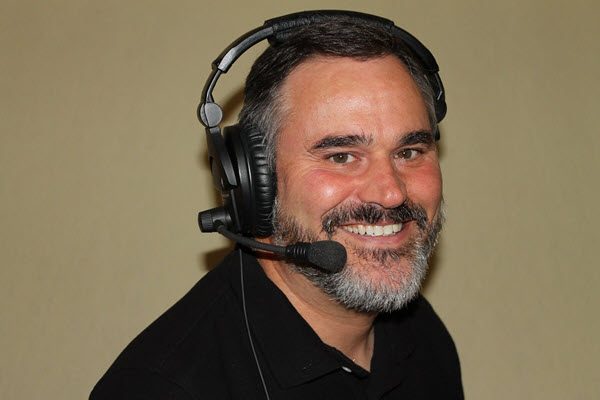
John has spent over 30 years studying and applying the habits of financially independent middle-class Americans. His circuitous path to success included serving in the military as both enlisted and officer; a corporate career in industrial sales; and finally a late blooming entrepreneur. John has an M.S. in Systems Management from the University of Southern California and a B.S. in Environmental Science & Engineering from Penn State.
Check this out and find out more at: http://www.interactivebrokers.com/
More information available on Horowitz & Company’s TDI Managed Growth Strategy
Stocks discussed this week – (ABNB), (UBER), (AAPL), (SMR), (OKLO), (CEG), (TSLA), (AMZN), (WMT)