In short
Summer market seasonality and what doesn’t work as a strategy. The host argues “sell in May and go away” has failed for years, while summer can still create sector tailwinds (travel/leisure, airlines, cruise lines, hotels, retail, and Prime Day). He frames seasonality as a tool that depends on other conditions (macro policy, dollar moves, geopolitics, and event-driven demand like storms boosting backup power demand). He also discusses portfolio positioning (trim high-beta if volatility rises, lean into dividends/defensives, keep dry powder) and warns calendar-based signals aren’t guarantees. He then pivots to a guest discussion on resilience after public setbacks, authenticity in media (“parasocial” connection), political-economic change, and Bitcoin.
Guests
Anthony Scaramucci, founder and managing partner of Skybridge Capital; founder/chairman of SALT; former co-founder/investment partner of Oscar Capital Management (sold in 2001); ex-Goldman Sachs private wealth management; crypto influencer; author of five books; host of Open Book Podcast.
Key claims/examples
Delta and cruise results show summer travel strength; Amazon Prime Day extended multiple days with continued momentum; Generac demand rises when storm headlines hit; gold demand rises around summer weddings in India/Turkey. Scaramucci: don’t “hang on” humiliation; don’t buy crypto without homework; Bitcoin can behave like “digital gold” (he cites a 2% allocation for most investors, but personal holdings grew to ~70% of net worth). He praises Michael Saylor’s Strategy premium vs copycats and avoids meme coins.
Written by AI. May contain mistakes. Listen to the episode to check what was said.
Chapters
Tap a time to open that second in VOMarket Trends and Speculation
1:23 to 2:14
Discussion on current market dynamics and factors influencing them.
“Horowitz & Company, from seed through harvest, cultivating financial success.”
Summer Market Dynamics
2:14 to 3:40
Analyzing the effects of summer on market behavior and investment strategies.
“And welcome back to another great episode of the Disciplined Investor Podcast.”
Evaluating Seasonal Investment Myths
3:40 to 4:32
Debunking common seasonal investment myths and their real impact.
“markets theoretically into towards the end of September.”
Sector Performance in Summer
4:32 to 6:46
Exploring how different sectors perform during the summer months.
“The Fed is kind of signaling maybe we'll have some rate cuts throughout the year.”
Cultural Influences on Markets
6:46 to 8:10
How cultural events affect market dynamics, especially in commodities.
“Well, the first day was a blowout, and then it continued on.”
Portfolio Positioning and Strategy
8:10 to 11:46
Guidance on maintaining a balanced portfolio during summer.
“And I'm just going to warn you that that seasonality depends on other factors to make sure that it actually happens.”
Reevaluating Market Timing Strategies
11:46 to 14:00
A critical look at the effectiveness of traditional market timing strategies.
“You use it to think about where things can be if certain conditions line up.”
Market Trends and Insights
14:00 to 17:38
Explore recent market trends and key investment strategies for 2024.
“you could be working from your place in the Hamptons very easily.”
Resilience in the Face of Setbacks
18:52 to 23:41
Discover how Anthony Scaramucci overcame public humiliation and built resilience.
“You know, listen, Andy, the thing about, by the way, you call me Andrew or Andy?”
Lessons from Failure and Success
23:41 to 27:30
Learn the importance of embracing failure and the reality of risks in life.
“I tell my kids, you know, you want to say the F-bomb?”
Show all 27 chapters
The Value of Reading and Experience
27:30 to 28:08
Understand how reading can provide valuable life experiences and insights.
“What is the most surprising things you've learned maybe from your guests?”
The Value of Reading and Learning from Authors
28:08 to 29:32
Explore how reading books can provide vicarious experiences and insights from authors.
“I mean, I would say to you that I'm a big book reader because I think the books extend your experience.”
Craving Authenticity in Media
29:33 to 31:21
Discuss the desire for authentic communication in political discourse and media.
“On the rest is politics, different situation.”
The Impact of Historical Context on Politics
31:22 to 34:26
Understand the historical transformations in political systems and their implications today.
“They want you and I to talk straight to each other.”
Populism and Political Movements
34:27 to 36:38
Examine the rise of populism and its potential dangers for democracy.
“Lawrence said to me, and I quote, he said, yeah, the post-World War II order was good for certain people like America and parts of the West, but it was really bad for Poland.”
Economic Policies and Their Consequences
36:39 to 38:12
Analyze the complexities of economic policies and public trust in government.
“So, you know, and people buy into the lies, of course, but you can't.”
The Role of Bitcoin in Today's Economy
38:13 to 39:58
Delve into the significance of Bitcoin and its evolving role in financial markets.
“It's almost laughable because, you know, the bond market will quake.”
Investment Strategies for Bitcoin
39:59 to 42:00
Learn about different investment strategies and the volatility associated with Bitcoin.
“He said, well, I have a call with the DNC right before the election.”
Bitcoin Investment Insights
42:00 to 44:24
Learn about the volatility and long-term potential of Bitcoin investments.
“I have 70 % of my net worth in Bitcoin now.”
Corporate Bitcoin Treasury Strategies
44:24 to 46:58
Explore how companies are adopting cryptocurrency treasury strategies and their implications.
“I mean, GameStop recently, like, oh, look what we're going to do.”
Navigating the Altcoin Market
46:58 to 50:39
Understand the altcoin market, including the risks and opportunities involved.
“So I've been asked on more than one occasion to do this, you know, and I've decided not to.”
Lessons in Long-Term Holding
50:39 to 52:06
Discover the importance of patience and holding quality assets in investing.
“Because when it drops, you're going to sell it.”
The Future of Stablecoins
52:06 to 55:00
Learn about stablecoins and their potential to enhance the U.S. dollar's dominance.
“After the Trump tariff fiasco in April, it went to$74 ,000.”
Bridging Traditional and Digital Finance
55:00 to 56:00
Explore how companies like Circle are bridging the gap between traditional finance and digital assets.
“It's fixed to a fiat currency, in this case, a US dollar.”
Bridging Traditional and Future Finance
56:00 to 57:14
Explore the intersection of traditional and new finance through Skybridge.
“Traditional finance and new finance, right?”
The Role and Risks of Private Equity
57:14 to 59:06
Discuss the necessity and risks of incorporating private equity into portfolios.
“let's just kind of boogie over to that for a second.”
Insights from Anthony Scaramucci
59:06 to 59:46
Reflect on the insights shared by Anthony Scaramucci regarding investments.
“So, you know, one thing about Bitcoin is super liquid.”
Transcript
Automatic transcript. May contain errors.0:00This episode is sponsored by Interactive Brokers, and here's a question for you. Will the median new home sales price exceed$450 ,000 in June 2025? The yes forecast contract recently traded at 5%, and the no was at 93%. With Interactive Brokers forecast contracts, you can trade on future events like climate change, the economy, or politics. You choose yes or no, and if you're right, you get paid. It's that simple. Explore the trending data, spot the trends, and make your prediction for June 2025. Trade forecast contracts at Interactive Brokers and earn$1 for every correct prediction. Plus, you'll earn 3.83 % APY on your investment with an interest-like incentive coupon.
0:49And you'll get$3 when you start trading forecast contracts. Forecast contracts are not suitable for all investors. Go to ibkr.com slash forecast and start predicting today. The last trading day for this contract is July 24th. The Disciplined Investor is all about you, your money, and the markets. Sit back and get ready for this edition of The Disciplined Investor Podcast. This episode of The Disciplined Investor is sponsored by Horowitz & Company. If you're looking for a portfolio manager, look no further. Horowitz & Company, from seed through harvest, cultivating financial success.
1:36Speculation is back in vogue as Oba Passage will definitely leak money into markets. It's stimulus, of course. Tariff fever. Markets, they don't really care. Bitcoin on the move. And we'll discuss that with our guest today, Anthony Scaramucci, founder of Skybridge Capital. All this and much more on episode number 930 of the Disciplined Investor Podcast.
2:14And welcome back to another great episode of the Disciplined Investor Podcast. I'm your host, Andrew Horowitz. And today, we're going to dive into a topic that's as hot as the July sun. And it's hot out there. how summer shapes up and how it shapes the markets from seasonal slowdowns that we see on a lot of times, particularly in the heart of summer, like we are now in July, to sector surges. And we're going to unpack the signals that matter most during these warmer months. And I got to tell you, I think more so what I want to talk about is the things that don't work. because we've been hit so many times by headlines and how many things will actually work or get this or buy that.
3:01There are some seasonal trends. There's no question about that. We have some that we like, but generally speaking, some of the old adages, well, you've heard them before, right? The summer slowdown. It's a big myth. The sell in May and go away. it's kind of a question from a lot of people if it's just folklore of wall street or there's real data behind it we talked about this before but i thought it would be a good time to bring it up again because you hear about it all the time now obviously we're well past may but you talk about things that are going to come like the santa claus rally that's going to be there but during the summer months you think about sell a may and go away and you really wouldn't go back into the markets theoretically into towards the end of September.
3:44And I wanted to give you some reference on other things like this. Now, back on, when was it? July 9th, we talked how forecast contracts were pricing in a cooling housing market and how there may be a ripple through the broader economy. And just last week on podcast episode number 929, we explored how political uncertainty was weighing on retail sales expectations. We talked about during the first part of the year versus the second part, you know, the first half versus second part, half the year, how presidential trends with second term presidents really had an impact. And this summer we're seeing a little bit of a twist.
4:32The Fed is kind of signaling maybe we'll have some rate cuts throughout the year. The dollar, what did it do? It just posted its worst. full half year since 1973. And geopolitical tensions, I mean, come on, they're simmering hot. So the question is, is this a summer a lull or a launch pad? And if we think about the first thing, the idea of sell and may go away, that did not work out so well for those that just use that as a simplistic form of market timing. It didn't work. And it hasn't worked in years. Does it work for a few weeks maybe? I don't know. And people are like, oh, yeah, I told you so.
5:12Yeah, it worked out so wonderfully. No, it really hasn't. I would take that, put it in the trash heap. Santa Claus rally, I'm kind of fast-forwarding away from summer for a second. Interesting, there are other things that are going on that time of year that seasonally are of real interest when we look at why there's going to be a move to the upside. simply money managers are trying to make their book. Simply people are investing towards the end of the year. They got to do some moves towards the end of the year. We get that selling that goes on for tax selling. And we get the buying back, right?
5:50The small cap effect we see in January sometimes. But in the summer, you really have to look at what's happening and what are on the top sectors on people's mind. For example, let's talk about sectors, travel and leisure, right? They're usually the summer darlings. You got to think about things like airlines. Did you see the numbers that were posted by Delta Airlines this week? Pretty amazing. That was about two weeks ago, actually, now that I think about it. But nonetheless, pretty amazing. And then we look at the follow-through from the other airlines. They beat. The expectation was a real problem, but cruise ships really coming back strong.
6:32Hotels, retail also got a boost recently, but they're going to get more of a boost probably from back to school and summer sales. We saw that Amazon a week ago or so came out with their Amazon numbers for their overall sales. Well, the first day was a blowout, and then it continued on. They extended it to what, four days, was it? I guess four days. Amazon Prime days. And if you just look at that compared to history now, maybe some of its tariffs and the inflationary trends that are going on. But bottom line is that there is a definite trend in the summer that people are changing wardrobes, they're going places, they're traveling, et cetera.
7:13In the beginning of July, we talked with John Pugliano and how interest rates and sentiment are kind of shaping sector rotation summer, right? Back in June on podcast episode 927, we talked with Carly Garner and we talked how consumer sentiment is shifting in real time and how there's like this big change going on and it's not really impacting retail sales at this moment, at this exact moment. Now that may change. But the summertime is usually a time that people feel they go outside. They're not stuck indoors in the Northeast and the Northwest. We're kind of stuck inside in the Southeast because it's so hot.
7:54I call it the hippopotamus months where we're just sitting in pools and just throwing water over our fat backs to cool us down. But the summertime is a time that we do see some seasonality. And I'm just going to warn you that that seasonality depends on other factors to make sure that it actually happens. It's not a guarantee. You know, a lot of things like Generac, that's a company that we like and we start buying in June or July. Why? Well, once you start hearing about a storm, a hurricane, a tornado, a power outage, people start thinking Generac. Now, this is not a recommendation to buy it per se, but we did buy it for our clients.
8:38I own it personally. And it's a time when people start top of mind thinking of things. And that being the case, sometimes it has an impact on stocks. Now, what about things like, for example? summer weddings in India and Turkey. Did you know about the incredible amount of summer weddings that happened in both? And what is the most important thing for Indian and Turkish weddings? You know, it's gold. Gold is bought hand over fist for gifts and for the, you know, the wedding parties. It's just, it's a major, major issue. And we talked about this with David Gaffin back in June. We explored this cultural seasonality and the global demand cycles that influence things like gold and oil.
9:36And I think it's a really interesting reminder that not all rallies and market moves are driven necessarily by Wall Street. They could be outside influences that drive demand.
9:52now what about portfolio positioning inside of this this time period right during the summer what do you do do you know do you should i do something majorly different well if you have good stocks that are good for the long haul or you have good positioning in bonds or you have commodities that you like or whatever the particular investment is whether it's mutual ETFs direct investment whether it's i don't care what it is bitcoin it doesn't it doesn't matter it doesn't necessitate you making any major changes just because the summer's here we did talk about this with frank curzio back in uh in the early part of june first week of june podcast episode number 924 frank and i talked about uh the the the resilience of the small mid-cap stocks and and this whole debt ceiling issue the unemployment trends and all that and we talked about some of the things that happened in the summer.
10:47These are tools that you can use through the podcast. I gave you just the ones we did the last month and a half, two months and to reference these in the future, take notes on what we talk about. My guests are superb. I love them. And think about how you want to position yourself. For example, the playbook we are taking right now is trimming some of the high beta names if volatility picks up. It hasn't. The VIX is, you know, it's still relatively calm, relatively. Lean into dividend payers and defensives if things do heat up or if we start seeing a rollover. Keep some dry powder, right? You want to keep some cash?
11:32Gives you flexibility on what you could do moving forward. And remember something. I think this is important.
11:41Seasonality is a tool. It's not a strategy. It's not a strategy at all. You use it to think about where things can be if certain conditions line up. Because the seasonality calendar-based look is only as good as the calendar-based items line up. Just one factor in the totality of seasonality that you want to really think about. Because if you think about just the calendar, and not the outside influences on this, it may not happen. For example, if we look at things like, oh, in summer things heat up and well, let's go back to our hurricanes and all that, right? And the hurricane season is a flop.
12:28Does Generac not do well? As an example, right? Or do we look at electricity usage and the utility companies? Or do we look at things like, I don't know, a pool chemicals company and maybe supplier of chlorine or bleach? And what if, in fact, it's a rainy summer, it's cool, and nobody's going in their pools? So things like that have to influence it. There's a multidimensional chess game that's going on with regard to seasonality. So with the Fed pivoting, the dollar weakening, capital flows shifting, are we at the start of a new macro regime, or are we in for more chop than we've been seeing? And then we look at this sell in May thing, which I think is really important to look at, and to really go into these kinds of thematic seasonal adages, cliches, market cliches.
13:21The classic, again, sell in May and go away. You should exit in May, come in maybe, because some of the months would underperform because people were at the beach and people wouldn't be in touch and people would be on vacation. Now everybody's connected and don't forget, please don't forget the algorithms that are running things anyway. You go back for decades and decades before technology, and yeah, I think there was some statistical support that this was actually an interesting thing to look at. But with the advent of always connected, I don't think it makes as much sense. Fast forward to 2020, when we had the explosion of remote workforce, you could be working from your place in the Hamptons very easily.
14:07with Starlink, you could be on a remote island with, well, you need electricity, but you could be on a remote island on a boat with battery operation, getting that thing all charged up. But that one hasn't worked out so recently. In fact, if you followed the advice in 2023, 2024, this year, 2025, you'd missed out on major rallies driven by things like, what, AI, automation and momentum, a resilient consumer spending environment, rate cut options that are happening. In fact, you have to look at why things have changed. And in fact, you have to look at all the different parameters, like I said. So, you know, macro policy dominating, retail investors are active all year round now, markets are faster, more global, etc.
15:01You know, there's other ones though too, right? You know, it's not just sell a man, go away. You have, how about this one? Don't fight the Fed, right? Think about that for a second. In 2022, 2023, plenty of investors did. And some of them won. But the fact is that you have to time that just right. When is the Fed saying what they're doing and how they're going to work? Right now, the Fed has been in a tightening or a tight, not tightening, tight, relatively tight. and I would say stalwart position. Markets going up. There's others like, as January goes, so goes the year. Not true in 2024 as an example.
15:44January was flat. The rest of the year was just, I mean, bonkers up, right? Buy the rumor, sell the news. I mean, sometimes the news just keeps getting better. So all the, there's so many more. Santa Claus rally, there's a January effect. I mean, all these different things, right? Then there's ones that are technically driven, like the Golden Cross.
16:10There's technical methodologies that are used that people like, right? You know, like bouncing off the 50s. I mean, some of these are interesting. But take them all with a grain of salt. Do your research. Make sure that you understand that you are involved in a process that is ever-changing. Take all things into account when you are utilizing these kinds of seasonal items. And make sure that you are investing properly. So I thought that was kind of interesting because the summer was here. Go back and listen to the podcast that we had over the last, I would say, eight episodes. And you'll find some real gems inside of there.
16:49We're going to get to our one this week, which I do believe we're going to have some gems too. But before we do that, I want to talk about interactive brokers because interactive brokers has key competitive advantages for sophisticated investors just like you. IBKR's margin loan rates are from just 4.83 % to 5.83%, which is rated among the lowest margin fees by StockBrokers.com. Now compare IBKR's low margin borrowing rates to other brokers like Schwab, E-Trade, Vanguard, Fidelity, who charge hundreds of basis points more. Of course, rates are subject to change and margin is only for experienced investors with high risk tolerance levels.
17:31Because you may lose more than your original investment if you'll lever up. The best informed investors choose interactive brokers. Go to IBKR.com slash compare. Now, how about we get to my guest, one of my favorites, Anthony Scaramucci. He's the founder and managing partner of Skybridge, a global alternative investment fund, and founder and chairman of SALT, a global thought leadership forum and venture studio. Now, prior to joining or founding Skybridge in 2025, he was co-founder and investment partner of Oscar Capital Management, which he sold to Neuberger and Berman in 2001. Earlier, he worked in private wealth management at Goldman Sachs.
18:13In 2022, he was ranked number 47 in Cointelegraph's top 100 influencers in crypto and blockchain. And he's highly ranked in Worth Magazine's Power 100, the 100 Most Powerful People in Global Finance. He reserved Ernst & Young's New York Financial Services Entrepreneur of the Year Award. and he's the author of five books, host of the Open Book Podcast. Pretty cool. And remember, he was also served on President Trump's 16-person presidential transition team for a bit. So let's get right to it. So, Anthony, welcome back. How are you? Well, listen, I'm still above great. You know, listen, Andy, the thing about, by the way, you call me Andrew or Andy?
19:01And everybody from New York calls me Andy. Everybody else calls me Andrew. So you're from New York. You call me Andy. Yeah, we'll go by Andrew. But Andrew, let me tell you something. I'm above ground. I'm vertical. Every day above ground is a good day. What are you going to do, right? We're on a run right now, but I'm 61 years old. I've been through nine bear markets. So we're on a run right now. And maybe the run will last for a while, but maybe it won't. I think we have to remember that always when we're managing expectations for clients. and, frankly, managing expectations for ourselves. Yeah.
19:35You know, I want to kind of go, I want to dig a little bit deeper into Anthony Scaramucci because we've talked around this and all that. You've faced some public setbacks. I don't know how personally, frankly, I would have dealt with that, right? The whole, you know, I don't want to call it embarrassing, but whatever the hell it was that happened back then. I would say, you know, embarrassing. It was humiliating. I mean, it was a step higher than embarrassment. I mean, they took me out. They hung me out to dry. I think Elon Musk and I have a little bit in common now. They hung him out to dry. They take you out.
20:06They build you up. Then they strip you down. They eviscerate you. They skin you alive. Then they blow you out into Pennsylvania Avenue, roll you in margarita salt. And, you know, you get excoriated by the late night comedians, ripped up by the cable news pundits, destroyed in the newspapers. And then you got to build yourself back up. And so, no, it wasn't embarrassing. It was probably four steps higher than embarrassment. You know, it was full-on humiliation. How do you reset mentally and move forward with that kind of stuff, especially with the high – you know, it's one thing – you know, I got a horrible trade personally.
20:45I lost a bucket of money and I'm dealing with that myself, right? You know, whatever. Or something else. I don't know, whatever it is, right? You know, but, you know, how do you come back from that? How do you deal with that? I think it's – by the way, credit to you and very impressive, by the way. Well, I mean, let me say this. I think people like me and perhaps people like you, we don't really have a choice. I grew up with no money. Parents were blue collar people. What am I going to do? Am I going to whine and sit there? I think the biggest lesson, if you want to be resilient, there's no crying in the casino.
21:17If you're playing and you get your ass kicked, don't be a baby about it and don't slink away. I had a public relations communications crisis management person tell me, oh, my God, this is horrifically embarrassing. Leave the country, buy yourself a villa in Italy and hide for five years. And then maybe you could reemerge five years from now with a mustache or something like that. I was like, OK, fuck yourself and fuck that. I'm not doing that. Right. I'm going to go on the Stephen Colbert show. I'm going to go on the Bill Maher show. I'm going to face the music of what happened. But what I'm not going to allow it to happen, particularly in American media these days, is the two-dimensionalization.
21:56So, you know, Bill Maher's calling me a Long Island Guido. He says I'm a Jersey Shore cast member, even though I'm from Long Island. Other people are calling me Tony Soprano on the Hudson, and they're being very derogatory towards me. I can be mad and bitter and cynical about that and feel that it's unfair. or I can go face the music. You understand? Yeah. So I did. I went on those shows. I hung out with those guys. And guess what? People realize that you're not that two-dimensional person. There's more density to you. There's more volume. There's more substance. And, you know, just a big lesson for people.
22:38You're going to get your ass kicked. First of all, you're born into earth. You didn't choose your birth. You didn't choose your parents. You're going to get your ass kicked a few times. Are you going to be a baby and a whiner about it? Or are you going to be somebody that's like, okay, got my ass kicked. Let me dust myself off and move on. But the number one thing, Mr. Horowitz, don't, and I repeat, don't hang on things. I don't wake up in the morning and say, wow, I did some stupid things in the White House eight years ago. Let me kick myself in the pants this morning. I don't have a millstone of regret for anything.
23:12I've misfired in business. I've misfired in politics. I've misfired in investment decisions, personnel decisions. You know, that's what happens in life. You're not, if you're taking the risk, you have your own business. I have my own business. In order to have your own business, you're shooting in the dark a lot. You're taking risk. You're going to miss a target when you're shooting. Are you going to cry about that and be a baby about it? Or are you going to keep moving? That's the whole point. That's the whole point of winning. No whining. Okay. The word ought. I tell my kids, you know, you want to say the F-bomb?
23:44I don't care. But the two words I don't ever want to hear come out of your mouth is ought and should. You know, I ought to get into this school. This should be happening. That's not how the world works. The world is an is-based world. It's not an ought or should world. You know, the United States is borrowing 44 cents for every dollar that it's spending. Should we be doing that? Well, the obvious answer to that is no, but we do do that. So what happens to the world? What's the macroeconomic implication of that? What's the inflation that's going to be spun from that? How do we handle this? And so the right answer is, that's how it is.
24:24React to the world the way it is, not the way you want it to be or the way you think it should be. Yeah. And by the way, I want to back up. You mentioned your kids. You have, I know, I don't know your kids personally, but I have listened to your daughter's beautiful voice singing opera. Thank you. And I think she was in Italy when I saw it, somewhere in Italy, and you went to meet her there and stuff. Just fantastic to have that musical talent. So congratulations on that. And listen, it's a huge blessing for us. And there's a picture over here behind me with Andrew Lloyd Webber. She's sung with Andrea Bocelli.
24:59She played Christine and fans of the opera in Europe for Sir Andrew. She's a hard worker. It's a very hard industry. It looks glamorous from the outside, but there's lots of competition. And you've got to be also resilient because for every job that my daughter gets, which is high profile and amazing, there's probably 20 jobs that she didn't get, or there's 20 rejections. You know, she goes to an audition, they tell her, no, you're not the right fit. You're not the right look. Your voice isn't the right key, you know, and then all of a sudden she lands something that's spectacular. And that's, that's the nature of her business.
25:37She, you know, being a musician is like being in the venture capital business. She's got a 95 % negative rate, but you get one hit, you know, you're doing really well. A lot of similarities there, right? You know, with the rejection and with the having to go through a public opportunities that could be good or bad. I know people in that industry too, by the way, just to segue. It's not easy. I agree. It looks great when you see them that one time in that one show, but the backstage, the schlepping, the moving, the driving, the going, the heat, the exhaustion, the late nights, the repetitive nature of it, right?
26:09The repetitive nature of the same show over and over and over. That's tough. At least you and I have podcasts that change all the time. Well, here's the thing I would say to you. It's tough, but give your kids the space to fail. Like I have rich friends who apparently they've lived perfect lives. This is an audio podcast, but I've got my hand up in a 45 degree angle going straight up. my rich friends have never made mistakes. They were born perfect. They made perfect decisions in elementary school, right through to where they are now. I've read some of these billionaire biographies. I laugh out loud, perfect decision-making the whole way.
Read the full transcript
26:55And guess what? You don't provide any space for your children. You don't provide any space for failure. And I think it's very sad, by the way. And I think I would rather have my kids see me fail. I'd rather have my kids see me get my ass kicked and pick myself up because hopefully it'll send a signal to them. Take the risk. Get your ass kicked. Who cares? Pick yourself back up. See what I mean? I think we have some of the same friends, by the way. No question. You know these people. You know these people. I know these people. Of course. So you're a podcast host. You have a couple. You do the open book podcast.
27:33You do the The rest is politics, U.S. version. That's fast ripping and all that. What is the most surprising things you've learned maybe from your guests? Maybe not anything specific per se, but, I mean, you've had on recently. Lawrence Rees, the Nazi mind. Jake Tapper, the Biden cover-up. Rom Rosby, the AI will cure cancer. You've had some amazing guests. You read a lot of books. You're a big reader, I know. But what's kind of, maybe not one guess, but what have you learned from the totality of all this that's really something you could impart? Such a good question. I mean, I would say to you that I'm a big book reader because I think the books extend your experience.
28:16I think you can live, I think Mark Twain said it way better than I can, and I'm paraphrasing, you can have multiple lives through the vicarious experience of reading books, both fiction and nonfiction. I think from the nonfiction world, if you get a great nonfiction historian, you can get steeped into things that have happened and you can have that relate to you in your, you know, in your current contemporary world. If you're getting a fiction writer, some of the best fiction writers are actually the best humanists. They're the best psychologists. Back in the day, I used to tell people for$10 and 10 hours, you can get 10 years of experience from an author.
28:58We've got inflation now, so it's probably$30. But you get the point that I'm making. And so I want to interview these authors because they've done a tremendous amount of research. You're going to learn some insight from them that maybe you didn't garner from the book. It gives people an idea of some cool books. We sell a lot of books. You know, we have maybe on that podcast, we're probably getting a half a million downloads a month. And we have 200 ,000 subscribers to our channel, if you will. And so we end up selling a lot of books. And so we're getting reverse inquiry now from the authors, which is very flattering.
29:32Perfect, perfect. On the rest is politics, different situation. It's more an explanation of the political economy, also what's going on in the world of politics. I know Donald Trump very well, having worked for him for over a year, got fired in the White House after 11 days, but worked for him for a year on the campaign. Know him well, can tell you a lot about his personality, which I think people find interesting in the context of what he's doing right now in his second term. So those, you asked me what I'm learning. I guess, first of all, I'm flattered by the response to that one. There's seven and a half million downloads for that a month.
30:09So that's an extraordinary amount. And I would say that what I'm learning is that people want, in fact, I would say they crave authenticity. What I'm learning is they don't want the sanitized corporate news to tell them the story because they know there's some lines that are being fed in there and it doesn't feel, feels artificial. The word that's used in the podcast community, and I'm sure your listeners will feel this, is parasocial. So what does that mean, parasocial? It means that right now there's a person listening to this podcast. And so it's you, me, and that third party listening in. And that's quite intimate.
30:52Andrew, if we were doing this on television, we could have the exact same conversation. But in the person's mind, there's 5 million people listening or 500 ,000 people listening. If we did this on radio, the same thing. It's a public listen. But in the podcast space, parasocial means the person feels close to you and me because it's a third person listening into a bilateral conversation. And that's the reason why these podcasts have really taken off. And so what do those people want? They want you and I to talk straight to each other. They don't want me to give you a, you know, let me call my comms director.
31:30You're asking me a question. and let them give me this boring, homogenized answer to your question. They don't want that. They want, okay, yeah, I was flat on my back after the humiliation of the White House firing. I was so hurt and stunned by that that even my kids were worried about me. That's what they want. And by the way, that's true. So why sugarcoat it or pretend it didn't happen? It's interesting because when I first started this, you know, doing this podcasting back in 07, I guess it was, 06, 07 when I started this up, I guess we come on like, what are we what are we supposed to do? I said, just pretend there's two guys on a gal, whatever, two people on a bar stool hanging out talking.
32:09That's it. Audience is peering over, listening in. And it's just us. It's just us hanging out talking and we'll get through it. So you mentioned some politics stuff and then I'm going to get into a whole round of discussion about Bitcoin and asset allocation models. the current state of political discourse in America. It's, well, personally, I think it's horrible. It's gross. But, you know, you talk about this parasocial, two people talking about authenticity, but yet there's people that bring up things like alternative facts and things like, you know, fake news and things of that nature. Anytime somebody says something that someone else doesn't like, it's fake news.
32:50It's not right. And the trust factor has kind of gone out the window a bit. And this is all, I think, has been deliberate. But what role do you think maybe business leaders and others, I'm leaving out politicians because I've given up, should play in shaping kind of this whole thing that's going on? And you could wrap in there the whole new Musk theoretical possible party edition of, what is it called? America's Party something? Going at America Party, yeah. So should business leaders be involved in this? Who should take over the reins of this? Is this going to be the continuation in the future or is it this is kind of just what it is now?
33:39Well, I mean, I don't think so. I think we're heading for a very big change, and I think it's a perilous period of time, if you don't mind me saying so, because I think that we don't know which direction we're going to go in. And so we had a very big change in the 1930s. We had massive crisis, 29 to 33, steep global depression. And then it led to this horrific situation politically where most of Europe turned to fascism. Some of Asia turned to fascism. Remember, the real fight between General Kai-shek and Mao Tse-tung started in the 30s. And so there was a massive political transformation. some of it good, some of it really bad.
34:25You know, if you listen to Lawrence Rees talk about this, Lawrence said to me, and I quote, he said, yeah, the post-World War II order was good for certain people like America and parts of the West, but it was really bad for Poland. It wasn't so great for the Chinese people who went into the scourge of communism. So you can get outcomes that vary, but we're in for another seismic change. There's a great book by Neil Howell called The Fourth Turning, where he basically just describes that every 80 years, whether you like it or not, we lose the institutional living memory of why we have structures in place in institutions.
35:06And so this happened leading into the First World War. We're now 80 years out from the Second World War. So there are 40-year-old bureaucrats and diplomats around the world that are like, well, Why do we have the IMF? The UN isn't workable. This is not right. That's not right. Even though these systems were put in place to prevent more wars, they've become dated. And now people want change. And so as they get to change, the question is, are we going to get positive change or are we going to get negative change? And so that's the problem. And so you have this unfortunate situation in America during the 1930s.
35:43He had a very adept, skillful politician, Franklin Roosevelt. He was on our side. He was on the side of the angels of democracy and plurality and freedom. And so he fended off the rising specter of dictatorship in the U.S. You know, you had the first America First movement, Charles Lindbergh, Huey Long, Father Coughlin. He put all of that down. But now you have this systemic rise of populism now, which is very dangerous. You could read the Guns of August. You could read anything like you could read The Rise and Fall of the Third Reich by William Shire. Populists, usually the populist movements usually end in violence.
36:22And so you have to be very, very careful with these movements. And so, yes, I think we can fix things, but I think we've got to explain to the American people where we are. We have to provide historical context. And then we have to give the American people a solution that's workable for them. And when an American president or political candidate says we're going to balance the budget in four years, that's a direct lie. It's not even possible. So, you know, and people buy into the lies, of course, but you can't. You got to say, look. It all depends. There's that slippery slope of finding somebody saying something and it's not a complete sentence like no tax on tips.
36:59Well, there are no tax on tips with a caveat, right, that it's maximum of$25 ,000 and you can't make over a certain amount, et cetera. et cetera. So it's like word usage and twisting, no tax on social security. Well, that's not true either, et cetera. You go through that whole thing. It's going to actually reduce the deficit. It may do it for one area, but the totality of it isn't. So it's an interesting time that I think people have given up. I think a lot of people have given up on following the information flow that goes on because nobody believes it. Let's just focus on the fact that the terrorists are a moving target, Besant, which who, who, uh, a guy who looks like, you know, he's serious all the time because he doesn't move his face at all.
37:39And, and, and he smart guy, not taking anything away from him, you know, seems to be drinking all the Kool-Aid right now and backing up this in terms of trying to be, uh, the financial, uh, approval meister of all this. And we have, we have all these, uh, tariffs that have come in that we have this date, we have that date. Now we have this date and we have August 1st and it's who knows where it's going. It's a moving target. You know, the market knows where it's going. It's going nowhere. That's exactly my point, though. He's not going to be able to do any of that shit. And he's a buffoon. You know, so, I mean, let's just call him what he is.
38:12None of that shit's going to happen. And the market's telling you that. It's almost laughable because, you know, the bond market will quake. The shit will go badly. And he'll reverse course like he always does. Now, people say, oh, no, he dropped bunker buster bombs. Okay, the bunker buster bombs are very different from the stock. and bomb market. He saw an opportunity, saw lots of victorious success for his buddy Netanyahu. So he wanted to do a little bit of a pile on and he made the decision, the correct one, where there wasn't going to be a lot of flack coming back to him. Now, you know, maybe there'll be an exogenous terror event that will hurt American citizens a year or two from now and they'll cite back that bunker buster bombing.
38:54I don't know. You know, we're living in a tough world. These are tough people in a tough world. I wouldn't have done it. I don't think it was necessary to do it. It didn't really set their nuclear program back. They moved all the uranium. Of course, the Americans tipped off the Russians that were working at the facilities. All the uranium got moved anyway. So I don't know. It was like an exercise in stagecraft as opposed to statecraft. That's what it is. It also happens on a Saturday so that doesn't disrupt the markets. It's, you know, this is a very standard playbook of, you know, we do things that are resolved by Sunday at 6 p.m.
39:34Eastern time so the futures don't get whacked. You know, that's the general concept, it seems to me, that there is a playbook. There is a person that is orchestrating this. Let's kind of move beyond this. I want to talk about one of your favorite. Well, I know when I say one of your favorite, I know you like talking about Bitcoin. You're very outspoken and you are actually extremely involved in this movement. As a matter of fact, if I recall, the last time we talked, you said, I have to be off by X time. And I said, why? He said, well, I have a call with the DNC right before the election. And I said, oh.
40:11And I said to myself, well, the DNC is now going to adopt Bitcoin as a platform because Anthony is going to do a pretty good job at doing that. And as did the Republicans, right? Both sides said. Well, I mean, they've moved. They've moved. You know what I mean? Yeah. Impressively. So what's your thesis on Bitcoin? I mean, we've talked about this. We talked about the 18 million. We talked about, you know, the potential of a store of value, alternative currencies, you know, and all that. But where are you these days? I mean, the longer it goes on, I'm assuming your thesis evolves. Yeah. Well, I mean, listen.
40:44I mean, I wrote a book about this. I'm happy to send it to you. It's called The Little Book of Bitcoin. It's basically my odyssey into Bitcoin and others, including Michael Saylor, who wrote the forward. Hey, may I ask you, what do you think of Saylor? Genius or just extremely aggressive? Both. I think he's a genius and extremely aggressive. aggressive. I think he has, well, again, let me preface this because you're in the wealth management business and I want people to be wealthy and I want them to be safe. And so if they don't understand Bitcoin, I want to caution them. When I was writing this book, I got to the end of the book.
41:30I said, it's one of the best investment ideas I've seen in my life. Saylor called me and said, I love the book, learned a lot about Bitcoin stories and things I reinforce my view of Bitcoin. But at the end of the book, you say, and I quote, you say that an investor should put 2 % of their money in Bitcoin. I said, yes, I do. He said, well, let me ask you something. You said it was the best investment idea you ever came up with. Do you have 49 other great ideas like this? I said, well, no, I don't. He said, well, how much of your money do you have in Bitcoin? Well, at that time, Andrew, I had 40 % of my money in Bitcoin.
42:03But guess what's happened? I have 70 % of my net worth in Bitcoin now. because this is what happens with Bitcoin. It's a, you know, it eats the pizza. Right. If you start out with this and Bitcoin triples, it ends up like this. You know, it keeps moving in the pizza, eats up the pizza. And so he said to me, you got to tell people that you're more aggressive in Bitcoin than what they are. And therefore I say, yeah, I hear you, but I stayed, I did tell that story, but I stay in the 2 % zone for people because it's Bitcoin. I can't predict. I can't predict where it's going to go. I know it's going to be very volatile.
42:41I bought Bitcoin at 20 ,000. It went to 69 ,000. My clients thought I was a genius. It went from 69 ,000 to 16 ,000. My clients thought I was a dummy. It's gone from 16 ,000 to 111 ,000. And I don't know if my clients think I'm a dummy or a genius, or they just think that I got lucky. It doesn't matter to me. I did the homework. I believe in the long-term success of Bitcoin. and I would say that Saylor sees something. And he would tell you if he was on this podcast with you that he sees the operating software of the future of money. And if that is the case, this will be a$1 to$2 million per coin asset.
43:24And remember, at a million dollars a coin, Bitcoin is the market capitalization of gold. So let me just say that again. If you think Bitcoin is digital gold, and it's not just an investment like an NVIDIA or Microsoft, at$1 million a coin, its market capitalization is identical to gold. And so a lot of people think Bitcoin could be even better than gold. So again, I'm just here to tell you that I love it. I love the asset long term. I have most of my money tied into it. But I'm not overconfident. I'm not a smuggy person. I've been humbled by life. I've been humbled by markets. But I would just tell people, learn about Bitcoin, do the work, get off of zero.
44:11You don't have to own as much as I own or somebody like Saylor, but get off zero. I think you'll benefit from that. So I think you've talked about this whole wave of companies adopting cryptocurrency treasury strategies, right? I think, if I'm not mistaken, the first one was Saylor. I mean, GameStop recently, like, oh, look what we're going to do. We're going to issue bonds and we're going to buy this. I mean, basically what Saylor has done is he's done convertibles and he's issued debt, just generally speaking, just debt. The convertible is interesting because you get a piece of the stock also, which then is a leveraged play on Bitcoin.
44:42So you get it both ways there. But you get some kind of a way of borrowing money of some sort, bringing it in, buying it on the treasury of the companies. Elon Musk did it with Tesla. I don't know if he still owns it. Does he still own that? Because I think he talked about selling it at one point. No, he owns it. He still owns it. He has that on his balance sheet. He has that balance sheet. All right, so there's a bunch of other ones. But I think there was somewhere that you said that this was likely to fade. Is that true? That the idea of pushing all this money into crypto treasury strategies?
45:13What I said is that I think that the strategy being deployed by strategy, formerly known as micro strategy, is unique. These other guys are just buying Bitcoin and they're holding it on their balance sheet. And so Michael's getting a premium to the Bitcoin that he holds on his balance sheet because of the arbitrage that he's created and the mechanisms, the way he's buying Bitcoin. That's a unique strategy. It's related to his financial sophistication, his sort of financial technology instruments that he's deploying inside the company. These other guys are not doing that. They're just buying Bitcoin and holding it on their balance sheet, but they're taking fees.
45:58So you're getting, you know, 0.8 or 0.9 of a Bitcoin. In Michael's case, you're getting like a 1.3, 1.4, which is why it's trading at a premium. So if they adopt the identical strategy to Michael, I don't even think they'll get the same premium because they have, you know, more volume with Michael. Michael's more well-known. He's the first mover. He's more liquid. So I just think these treasury strategies, which will work because I think Bitcoin's going up, but I think it would be just better for people just to own the Bitcoin outright. That would be my opinion. I would own strategy, which, frankly, I do.
46:35And we have a great little ETF called CRPT, probably one of the best performing ETFs the last three years. A lot of strategy is in that. And so I own a lot of strategy. But I'm not in love with the copycats because I don't think they do it as well as him. And I think he would just be better served owning the Bitcoin directly. So, again, no offense to any of these guys. So I've been asked on more than one occasion to do this, you know, and I've decided not to. Well, I mean, when you say no offense, I mean, the fact is that you're going to look for the best opportunity for yourself. Obviously, with the strategy formerly known as Prince MicroStrategy, it's also leveraged to Bitcoin up and down, both sides, right?
47:22Exactly, exactly, exactly. So, again, you got to be careful. I have, you know, when you have 70 % of your money in Bitcoin, if it gets cut in half, you know, your net worth gets cut by 35%. And now you got 30 % of your money in Bitcoin. So you got to be careful. You got to be careful. So what about the altcoin market? Your conversation about that, your thoughts on that, maybe some example of good versus bad. I mean, there's been some weird stuff that's gone on in these meme coins and all these other kinds of things that are going on. Do you stay away from that? Do people who are involved in Bitcoin, like that are real Bitcoin maximalists to a point, well, maybe it won't be the maximalists, but Bitcoin lovers, let's say that, right?
48:07Is it necessary to have other coins too just for the hell of it? because like I own some Bitcoin. My chunk is in Ethereum, which is not done as well, but it's done its thing. And I got 40 million shares, 40 million of, what do I have now? Shiba Inu, I think, or something stupid like that. I figured if it goes to a buck, I'm in good shape, which is a long way off, by the way. I mean, I have tremendous way off. But what's your thoughts on the altcoin side? Listen, I'm as close to being a Bitcoin maximalist without being a Bitcoin maximalist, meaning I have almost all my money in Bitcoin. But I do own, because remember, I'm a long-term Wall Street trade-fi traditional finance guy.
48:55And so I see the stock and bond market, to quote Larry Fink, the CEO of BlackRock, I see the stock and bond market converting into the world of tokenization. I see us going from, remember, when I started in the industry, it was T plus five. That means you could execute a trade. It took five days for it to end up in your account. And it became T plus three. Now it's T plus one. But you and I both know that over the blockchain, it could be T plus a few minutes. And so I think that's coming. I think anytime a good technology works, a good technology gets adopted. And so there are layer one protocols, also known as altcoins like SUI, Aptos, Avalanche, and Solana that are going to provide that rail system to trade stocks and bonds on.
49:44And I think the leader of those is Solana. And so I'm writing a book right now about Solana, which will come out in December. And so I am a Bitcoin enthusiast. I'm as close to being a Bitcoin maximalist as possible. and I own a few of these other coins that I think are going to have use cases and utility. I don't own the mean coins. I don't own the Shibu coins. Again, I don't have an opinion on them one way or another. I hope it goes to a dollar. That was just a joke. I own it, but it was just a, ah, throw five grand in there. Let's just leave it, let it go. I don't own those. I don't own those.
50:18And it's for no other reason that I don't really understand them. And so I would rather not own something I don't understand. And again, this is also true about Bitcoin. Don't buy Bitcoin if you're not doing the homework on it. Or if you have a trusted advisor, you're a trusted advisor to your clients. If you like it and you're recommending it to your clients, they should own a little bit of it. But don't just buy it. Oh, other people are buying it. Because when it drops, you're going to sell it. Right. And then you'll be all mad at yourself for doing that. You've got to buy it and say, OK, I'm buying that.
50:50I'm not looking at it for five years. And so I bought it five years ago. I bought it for$20 ,000. Didn't look at it. It went up and down, up and down. It's$111 ,000 right now. So holding that for five years was a good idea for me. Right. Just quickly. And by the way, I'm going to tell you that over the next five years, holding it is going to be a good idea. And so here's a lesson I will share with all of your listeners. I'm 61 years old. It took me a very long time to learn this lesson. And I had to get my ass kicked. I had to get very humbled, like I said, by life in markets. Buy high-quality stuff, hold high-quality stuff.
51:31Peter Lynch, who wrote the very famous book, One Up on Wall Street, 36 years ago, biggest mistake in his life, he sold winners too early. Warren Buffett, the great genius, what's his holding period? Well, Warren Buffett says his holding period is forever. How about that? How's forever? That's long. And so the point being is the geniuses in the world of investing buy great assets and they hold great assets. So I believe Bitcoin is a great asset. I'm not selling the asset. I'm patient with it. If it goes down 30 % from here, I will be buying it. After the Trump tariff fiasco in April, it went to$74 ,000.
52:13I bought some more. I didn't catch it at$74 ,000. I think I bought some at$80 ,000 or something like that. That's good. And you're holding. And I'm holding. Yeah, I'm not letting go. We only have a few minutes. I want to kind of talk about two different topics. I want to make sure you know what we're going to talk about so we can squeeze this in. I want to talk about, real quickly, stable coins. I want to talk about tokenization. I'm going to get back to that in a second. And I want to talk about private equity and private markets. But Robinhood, they're doing tokenization of stocks. Although the SEC came out, I think, very clearly and said, that is not ownership in the stock.
52:43And beware of that. And they're just starting. I think they're the first, I guess, of the tokenization of equity companies, right? Is that utilizing the underlying technology of Solana or Avalanche?
53:02Yeah. I mean, listen, I understand what they're doing and I understand the SEC's concerns. I'm not thinking about what they're doing, okay? I'm not thinking about that. It's really a derivative overlay on a stock. I'm actually thinking about the actual contract, the actual certificate of the stock embedded into the token. And then it gets traded. So it's like an NFT style. Yes, exactly. That's what I'm thinking of. I'm thinking of my Starbucks stock is on my phone. It's in my digital wallet. It's been tokenized on Solana. Right. And when I go to the barista, she says to me, hey, we're having a share repurchase here.
53:45If you want to give me the stock on your phone, we'll give you a 20 % discount on the drink that we're going to serve you right now. And that's what I'm thinking about. Maybe there'll be a Walmart stock like that or a Disney stock. And maybe we'll see a resurgence in the usage case, not stupid artwork with NFTs. But I've always thought like a mortgage would be a house ownership within a mortgage wrapper of a tokenization, if you will, somehow, however exactly it works. It's the smartest thing in the world. And when you sell the house, it just goes in one block to somebody else with the title and everything like that and cut out the expensive process that goes along with home ownership.
54:22Yeah, exactly. So, you know, that's that. Stablecoin is different. Stablecoins, I think, are going to be with us. They'll be with us forever, frankly. So let's talk about stablecoin for a second. So stablecoin will be a digital dollar. I think it's very smart for the U.S. to get the regulation right on this because if we have a digital dollar known as a stablecoin, it will strengthen the U.S. dollar. It will further dollar supremacy. Companies like Tether and Circle, they have more treasuries on their balance sheet than sovereigns like Japan or Germany. So if we can get stablecoins, which is basically exactly what it is, it's a stablecoin.
55:00It's fixed to a fiat currency, in this case, a US dollar. And so I just have US dollars on my phone. And so I go to the restaurant and I pay with my stable coins. Me and the restaurateur avoid the 3.5 % service charge from MasterCard or Visa or American Express. So stable coins are going to grow. It's going to proliferate. We have guidance now from the SEC and from the US government on how they're going to be regulated. And I think that's going to be beneficial. So for those reasons, I think that's very, very good for the industry. You wanted to mention private equity. Well, let me just mention one thing.
55:37What's the question there? I have one question about going back to stablecoin and Circle. Do you see a paradox or an irony with Circle, a stablecoin outside the traditional finance, being publicly traded? I just thought that was kind of like a strange bedfellow. How do you mean? Well, the public circle is a stable coin company, right? Yeah. And it's kind of like that. I see sides, right? Traditional finance and new finance, right? And somehow they came to traditional finance to capitalize themselves, which maybe you say is smart and all that, but I just found it kind of funny. Yeah, I mean, yeah.
56:18So I guess what I would say to you is that they're the bridge, if you will. They're the intersection between traditional finance and the future of finance. So yeah, I mean, they're coming. And by the way, I would also say, it's funny, our name bar firm is Skybridge. I like to think of myself as a bridge. I'm trying to bring people into the digital asset space, into the future. And so, yeah, I mean, I predict that there'll be a lot of traditional investors that will be investors in circle, will buy into SkyBridge-based funds because they want to participate in this. And, you know, I thought the thing you were saying, I'm going to share it anyway, was for a period of time, they had$60 billion on their balance sheet and they were worth $60 billion.
57:04So that was like, I mean, it was trading like a meme coin. So it's corrected since then, thank God. I thought that was a ridiculous valuation, if you will. So let's just kind of boogie over to that for a second. Everybody that is in, I went to an event down, Barry Redholtz and the gang had a event down in Miami. And I don't usually go to these events, but Med Faber, if you know him, I was down there and I wanted to have a drink with him. So I got down there and I was surrounded by everybody just yapping to me about private equity that you have to have it now in your portfolio. Like didn't matter.
57:38Just you have, whatever it is, it doesn't matter what it does. You have to have it. And now we're talking about 401ks have to have it. Right. And, and it's interesting because it sounds great. Right. Um, and we manage a bunch of portfolios for clients that have chunks of private equity all over the place that, uh, you know, have less regulation to be honest, and, uh, don't have the transparency much of them. Um, you know, what's your kind of thoughts on this? Cause you're, you're, you're embedded in this pretty well. And you know a lot about this. I know. I have positive thoughts on, I think, I think, again, it, it depends on your timeframe.
58:13You know, if you're telling me you have a long timeframe and you're telling me that you're, you're, you're committed to a five and sometimes in venture, they say 10, but you gotta be at least 15 years of my mind in venture. But if you tell me, look, I got a 10-year timeframe. I have private equity in my portfolio and I don't look at it. And the goal is you invest it over 10 years and you hope you get some type of return in excess of the S &P. And a lot of good private equity firms have actually been capable of doing that. And you're just trying to take advantage of the different anomalies that are out there in the marketplace and the skill set of the private equity people.
58:53So, you know, should you have it in your portfolio? Yes. But should you also measure it and balance it relative to your liquidity and the constraints that you may have in your living and things like that? Sure. So, you know, one thing about Bitcoin is super liquid. If I had 70 % of my net worth in Bitcoin, I needed to sell the entire position today. I could get it off today. No problem. Right. You know, and private equity, though, you got to make sure you're careful with that because whatever you own, you may get stuck in it, if that makes sense. Yeah, I hear you. And this Garamucci, host of the Open Book Podcast, and of course the founder of Skybridge, and great stuff there.
59:32Appreciate all the things you've done and that you're going to do, my friend. Well, it's also great to be on with you. I'm very appreciative, and hopefully you'll invite me back, brother. In the meantime, I know you're going to Alaska. Go enjoy yourself. Thanks, appreciate it. I'll see you soon. Thanks. All right, God bless, man. Have a great weekend. Thanks. That was a great interview, I thought. some good insights on a personal basis, as well as just some great aspects of the investing world, focusing on cryptocurrency. Anthony Scaramucci, a great guest to have at any time. Listen, thanks for joining me this week.
1:00:05And every week we have some great guests still coming up over the next few weeks that I think you're going to be really interested in hearing. We've talked about it before. Go to thedisciplinedinvestor.com and check out all that we have to offer from the Matters Growth Strategy, which is an equity-oriented, long, short type of strategy that is a bit towards the alternative side if you're looking for something different in your portfolio, as well as Investology and our global allocations. Over on thedisciplinedinvestor.com. Thanks for joining me this week and every week, and I'll see you again real soon.
1:00:43This podcast is intended for informational purposes only and does not constitute personalized investment advice. Investing involves risk, including the possible loss of principal and past performance is not indicative of future results. The views and opinions expressed are those of the host and any guests and may not necessarily reflect those of Horowitz & Company, Inc., an investment advisor registered with the U.S. Securities and Exchange Commission. Registration with the SEC does not imply a certain level of training or skill. Advisory services are only offered to a client or prospective clients where Horowitz and Company is properly registered or is excluded from registration requirements.
1:01:21Any mention of third-party companies, products, or services is provided for informational purposes only and does not constitute an endorsement. Hypothetical scenarios or forward-looking statements are for illustrative purposes and should not be viewed as guarantees. Content is intended for U.S. residents only and may not be applicable in other jurisdictions. Listeners should consult a qualified financial advisor before making any investment decisions. Please visit our website for additional information, disclosures, as well as a copy of our form CRS. Advertisements are not related to the host or affiliates and are not considered recommendations by the host of the show or any affiliates of Horowitz.
From the publisher
Speculation is back in vogue as OBBBA passage will leak money into markets – its stimulus of course!
Tariff Fever – Markets don’t really care.
Bitcoin on the move and we will discuss with our guest – Guest Anthony Scaramucci, Founder of Skybridge Capital and Host of the Open Book Podcast.
NEW! DOWNLOAD THE AI GENERATED SHOW NOTES (Guest Segment)
Anthony Scaramucci is the founder and managing partner of SkyBridge, a global alternative investment firm, and founder and chairman of SALT, a global thought leadership forum and venture studio.
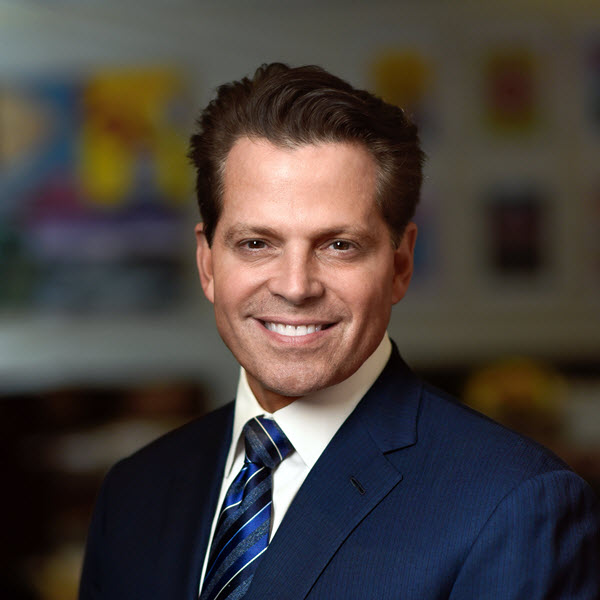
Prior to founding SkyBridge in 2005, Scaramucci co-founded investment partnership Oscar Capital Management, which was sold to Neuberger Berman in 2001. Earlier, he worked in Private Wealth Management at Goldman Sachs & Co.
In 2022, Scaramucci was ranked #47 in Cointelegraph’s Top 100 Influencers in Crypto and Blockchain. In 2016, he was ranked #85 in Worth Magazine’s Power 100: The 100 Most Powerful People in Global Finance. In 2011, he received Ernst & Young’s New York Financial Services “Entrepreneur of the Year” Award. Anthony is a member of the Council on Foreign Relations (CFR) and a board member of the Federal Enforcement Homeland Security Foundation. He is the author of five books.
Scaramucci served on President Donald J. Trump’s 16-person Presidential Transition Team Executive Committee, and in 2017 briefly served as Chief Strategy Officer of the Export-Import (EXIM) Bank and White House Communications Director.
Scaramucci, a native of Long Island, New York, holds a Bachelor of Arts degree in Economics from Tufts University and a Juris Doctor from Harvard Law School.
Check this out and find out more at: http://www.interactivebrokers.com/
Looking for style diversification? More information on the TDI Managed Growth Strategy – HERE
Stocks mentioned in this episode: (CRPT), (GNRC), (SPY)