In short
The episode discusses late-July 2025 market conditions (record highs with shallow sell-offs), inflation cooling (core PCE near a 4-year low), tariff/trade uncertainty, and earnings-season signals that consumers are weakening and pricing power is eroding. The host argues stocks’ multiple expansion isn’t earnings-led and may reflect “relief” rather than fundamentals. Housing is described as price-still-up but activity-down, with affordability constrained by rates. The guest focuses on macro risks from politicized central banks, extreme U.S. debt, and why tariffs are ultimately a tax on trade. He also shares specific investment preferences: buying silver (coins) and favoring commodities over stocks for 2026–2028, plus optimism on Asia.
Guests
Jim Rogers, co-founder of the Quantum Fund (with George Soros), Yale and Oxford alumnus, international investor and author/adventurer based in Singapore. Host: Andrew Horowitz (Horowitz & Company).
Key claims
U.S. stocks have risen since 2009, suggesting complacency; central bank/political mistakes lead to problems; U.S. debt will cause “gigantic problems”; silver is undervalued vs gold; tariffs are anti-capitalistic and restrain trade; Asia is likely to dominate the 21st century.
Notable examples
Quantum Fund’s oil/gold/raw-material contrarian stance; U.S. debt “clock” reference; India’s shift toward accepting capitalism; China and Vietnam optimism; meme-stock/SPAC risk-on moves (e.g., Krispy Kreme, Kohl’s); housing examples (Case-Shiller up ~3% YoY; days-on-market rising).
Written by AI. May contain mistakes. Listen to the episode to check what was said.
Chapters
Tap a time to open that second in VOMarket Analysis and Trends
1:55 to 6:12
Discussion on current market trends, inflation, and corporate earnings.
“All this and much more on episode number 931 of the Disciplined Investor Podcast.”
Housing Market Insights
6:12 to 10:39
Exploration of the housing market dynamics and pricing trends.
“In an effort to maintain this price stability, they're losing pricing power.”
Meme Stocks and Market Sentiment
10:39 to 13:43
Analysis of the recent movements in meme stocks and overall market sentiment.
“and taking the long-term mortgage rates down from let's say six and a half down to what?”
Adjusting to Global Time Zones
14:00 to 15:31
Learn how scheduling challenges arise due to global time differences with guests.
“that we have to shift the time that we talk to them because they're either in Singapore or they're in Australia or they're in somewhere else that the times are all wonky.”
Introducing Jim Rogers
15:36 to 16:30
Get to know Jim Rogers, his background, and accomplishments as a successful investor.
“He's been frequently featured in Time, the Wall Street Journal, Washington Post, New York Times, Barron's Forbes.”
The Quantum Fund Success Story
16:30 to 17:42
Explore the factors behind the Quantum Fund's remarkable investment success in the 70s.
“We'll find out in a few minutes, won't we?”
Investment Strategies and Market Insights
17:42 to 19:58
Understand the investment strategies used by Jim Rogers and their relevance today.
“During that time, most investors were like looking at equities.”
Concerns Over Central Banks and Inflation
19:58 to 22:24
Dive into Jim Rogers' views on central bank policies and their potential impacts on economies.
“Do you have concerns today about the central banks printing money and the geopolitical tensions and it seems like runaway equity prices?”
Debt Issues and Economic Implications
22:24 to 24:55
Discuss the implications of national debt and the potential consequences for the U.S. economy.
“Andrew, I've been around long enough to have heard many, many strange, strange, strange theories and approaches to any country's economy.”
The Role of Central Banks in Today's Economy
24:55 to 28:00
Examine the effectiveness of current central bank policies and their historical context.
“It always has, and I'm afraid it will again.”
Show all 22 chapters
Political Climate and Precious Metals
28:00 to 28:38
Discussing the impact of politics on investment choices, particularly in precious metals.
“They do what the politicians want them to do.”
The Case for Buying Silver
28:38 to 29:52
Exploring reasons to favor silver over gold, including buying methods and personal experiences.
“Well, I mean, I can look at prices, Andrew.”
Commodities and Market Trends
29:52 to 31:21
Examining the current state of various commodities and their historical pricing trends.
“They're easy to trade, easily to monetize.”
Experiences in Emerging Markets
31:21 to 33:18
Sharing insights from trips to India and discussing the economic conditions in emerging markets.
“I mean, platinum is obviously very, very depressed.”
Investment Perspectives on India
33:18 to 35:10
Discussing the evolving economic mindset in India and its implications for investment.
“and whether it's Asia or, I don't know, Africa or any other areas, some EM in emerging Europe.”
Opportunities in Asia: China and Vietnam
35:10 to 37:42
Exploring investment opportunities and future potential in China and Vietnam.
“I mean, with all the things going on with the U.S.”
Lessons on Debt and Discipline
37:42 to 41:36
Analyzing historical debt patterns and the importance of discipline in investment.
“100 years ago, you know, 1925, Britain was the richest, most powerful country in the world.”
Reflections on Investment Success and Failures
41:36 to 42:04
Discussion on the nature of successful and failed investment theses throughout a career.
“have, listen, you could veer off every once in a while, right?”
Evolving Mechanisms of Wall Street
42:04 to 43:20
Exploring the historical changes in Wall Street and how they impact investing.
“There was a much different mechanism to getting quotes.”
Handling Investment Failures
43:21 to 45:06
Discussing strategies for investors to cope with mistakes and failures.
“How do you, as an investor, rationalize, get back on the horse and do the right thing again after maybe a big failure?”
Cultural Insights from Singapore
45:07 to 46:38
Examining perceptions of tariffs and trade relations from an Asian perspective.
“Don't think you have to make correct your mistake or make up for your mistake immediately.”
The Downsides of Tariffs
46:39 to 49:05
Analyzing the negative impact of tariffs on the economy and trade.
“I don't know how the relationships stay, stay so great.”
Transcript
Automatic transcript. May contain errors.0:00This episode is sponsored by Interactive Brokers. And here's a question for you. Will the medium new home sales price exceed$430 ,000 in July of 2025? The yes forecast contract recently traded at 34 % and the no was at 64%. With Interactive Brokers forecast contracts, you could trade on future events like climate change, the economy, or politics. You choose yes or no. And if you're right, you get paid. It's that simple. Explore trending data on U.S. home sale prices, spot the trends, and make your prediction for August 2025. Trade forecast contracts at interactive brokers and earn a dollar for every correct prediction.
0:44Plus, you'll earn 3.83 % APY on your investment with an interest-like incentive coupon. And you'll get$3 when you start trading forecast contracts. Now, forecast contracts are not suitable for all investors. Go to ibkr.com slash forecast and start predicting today. The last day for trading this contract is August 25th. The Disciplined Investor is all about you, your money, and the markets. Sit back and get ready for this edition of The Disciplined Investor Podcast.
1:21Jim Rogers:This episode of The Disciplined Investor is sponsored by Horowitz & Company. If you're looking for a portfolio manager, look no further. Horowitz & Company, from seed through harvest, cultivating financial success.
1:40Setting new records, all-time highs against the odds. Meme stocks back with a vengeance. The housing market's slowing, but prices are still rising. And we're talking global markets with famed investor Jim Rogers. All this and much more on episode number 931 of the Disciplined Investor Podcast.
2:18Yeah, the markets are climbing. The war drums are beating. Inflation is whispering instead of warring. Well, welcome to July of 2025. Welcome to 2025. Forget about July. I mean, we thought that there's going to be some tick up in inflation in June. And we saw a little bit of a slowing of the disinflationary trend. Still not here, though, yet, as was suspected that we would start seeing it show up in many of the numbers. There's still some time to see if that actually is true. But right now, it seems that this headline chaos and the continuation of this tariff struggle and our various bills that are passed, the S &P 500, the Nasdaq, keeps on setting new records on the high side.
3:09And the Dow's move has been pretty impressive. But the sell-offs have been shallow. They've been honestly non-existent. Hey, I'm Andrew Horowitz, and thanks for joining me again for another great episode of the Disciplined Investor Podcast. You know, you can listen on YouTube, Amazon, Apple Podcasts, Spotify, iHeartRadio. There's all sorts of places. Wherever there's great podcasts available, whether it's an app or online, you can actually find the Disciplined Investor Podcast. You can also find DH Unplugged where myself and John C. Dvorak spend an hour each and every week talking about the things that make up the markets, the news, really break it down, decipher it, put it back, give you the backdrop, the beyond.
3:58I mean, I hate to be cliche, but, you know, the headlines say one thing, but we go behind that. We really get to the bottom line of what's going on and have a lot of fun doing it too. A lot of fun. We're always joking around about something or other. And we also have listener participation. So if you haven't started listening to DH Unplugged yet, make sure you do so. The recent inflation numbers, right? I guess we could say they remain in line within expectations, somewhat tame. and we're seeing, you know, with these new tariffs is that things haven't changed much yet. Now, whether or not companies are absorbing that, we'll see shortly because we are in the throes of earnings season.
4:47And we've seen a few things, right? We've seen some problems with like Dow Chemicals. I don't know if you saw that, but they were losing money. We saw one of the worst numbers in terms of same source sales shrinkage with Chipotle. Tesla's car sales are just abysmal. Google's doing better. That came out this week. And a few others. Bottom line, though, is here when we look at these companies and we look at what's going on, there seems to be an absorption possibly going on and a slowdown by the consumer to a degree. Nothing to be like, oh, my God, get out of Dodge. That's not what's happening. And even if there was this multiple expansion that we've been seeing with regard to the markets, rather than an earnings-led increase in the valuation.
5:35I mean, we're seeing that, what, 22 and a half right now, right?
5:41On the forward PE, that's saying something. That's saying that investors are not either worried or dumb, I don't know, but the wisdom of the crowd you have to go with, that they are looking past whatever may be happening right now to the benefits of what we're going to see, let's say, six months to a year from now, and willing to stay on the horse, right? Not getting off, not getting bucked off. As a matter of fact, anytime something seems down, it's a buy signal. And even though retailers like Costco and Walmart are absorbing costs, they say they are. In an effort to maintain this price stability, they're losing pricing power.
6:25The whole discretionary sector is losing pricing power. Now, maybe some of these companies have done better than expectations. That's great. But let's not be fooled. When we look at the actual raw numbers, many of these companies are not doing so well. You look at it year over year, some of these companies are 25 % down. If we exclude and take out some of the maybe hyperscalers and maybe some of the tech like semiconductors. Put that aside for a second. There's a lot of commentary coming from these companies that, you know what, consumers are weaker. You know, we're hearing that hotel bookings are in the toilet.
7:02We're seeing that the price per seat, the revenue per seat from the airlines is not doing so well. American Airlines came out with their numbers this week. I don't know what's going to happen with the cruise lines. We're not there yet. But inflation, we look at core PCE, which is, of course, the Fed's preferred measure of inflation. is near its slowest annual gain in over four years, which is, again, fueling speculation that we're going to have some rate cuts coming up. Now, meanwhile, President Trump wants the Fed rates to be, the Fed funds rates, to be closer to like 1%. He's been all over the news, right?
7:38Beaten up Fed Chair Powell and the fact that he should be fired, but some of that rhetoric's died down a little bit, but yet he's going over to see what's going on with the cost overruns on this construction project here at the Fed. The redo, the renovation, that's like$800 million, $800 million, over budget. It was about 1.7 original budget, now it's about 2.5. Hmm. But yet, markets could care less. To a point. Look at Sherwin-Williams stock, right? That's kind of interesting. I thought it was miserable earnings and a pretty concerning outlook. Guidance was definitely soft. So on the number, stock was down about 4 % for a bit and then finished the day down a mere 0.36.
8:25Now, that may have had something to do with the fact that that day, Pulte, for example, Pulte Homes, and who was the other one? Oh, D.R. Horton, both reported, both housing, major housing megas, pretty good numbers compared to expectations that it wasn't as bad as they thought. Maybe some of the pricing came down and they gave a relatively rosy outlook. Look, those stocks soared and maybe Sherwood Williams was like, okay, okay, maybe not that bad. And sure, the stock, Sherwood Williams went from a high about 400 down to about 330 from the start of the year to then. So I think there was something about this Pulte and this D.R.
9:05Horton number, Dr. H, that came in and helped prop it up just for the time being. Because the question is, a lot of people are asking, right, can we think about the idea that maybe we're getting nearer? near the bottom of the cycle for housing, which is like what? Because housing on a year over year basis, if we look at the Case Shiller National pricing average, on the totality of it is up about 3%. Now, housing activity is definitely down, but prices are still up. We're not in a downturn necessarily if we look at all of it, right? There are some pockets and places and things that are different, But the problem with housing is not the rates.
9:50Just to be clear about this, it's the prices. If we drop rates and we take rates down significantly, trust me, prices are going to ramp higher. It's all adjusted. It's a natural process. But we still haven't seen that price drop as much as it should be with regard to the differential in how interest rates went up over the last two years, let's say. to where housing prices are now. Again, there are pockets of places around the country that are having some difficulties. And yes, the days on market has been increasing for housing across the country. That's a blanket statement. It takes longer to sell your house.
10:35But housing is still relatively strong. Dropping the rates and taking the long-term mortgage rates down from let's say six and a half down to what? I don't know, four? four and a half, is only going to goose the prices of housing. Now, some say that's good. The affordability factor still won't be there, though.
10:59Now, one of the other things that's going on recently, I found this really kind of like, hmm, that's something you want to think about, is last week, the sudden moves in some of the meme stock names, like Krispy Kreme, Koss, right? You remember these names. Back in the day, it was GameStop. It was Build-A-Bear. It was BlackBerry. It was these names that went berserk. Riley. Then we saw Kohl's up at a point 100 % on Tuesday. SPACs are making a comeback too. So the risk on is there. And the question is whether or not there's a topping process for the bull cycle. I mean, there is no fear, right? The midweek level of the VIX was like at 15.
11:49It looked like it was going to go even lower. Now, we know that, generally speaking, July is a month that usually has some of the lows when it comes to the VIX. But all the news flow, even though we have no details on much of it, right? These deals, these theoretical deals with Japan buying agriculture and planes. This is the same story, the same discussion as last time. Not much more incrementally. When I say last time, 2016 deal, when we had all these unbelievable deals that went on, right? Anything to get a deal done. And more importantly, we've had no conversation about accountability. Because last time we saw this, that this company or that company is going to build a$500 million plant in Oshkosh and hire 5 ,000 people.
12:37We didn't have the accountability. A lot of these things didn't actually come to fruition. We know that. Now we have Europe getting a deal done maybe by August 1st, just only, merely, slightly, 15 % across the board tariff with some concessions. Again, nothing major here. So what's happening? Why is it happening? It's more of a relief. What we have is the very simplistic view of let's create some problems, Let's fix some problems and take a victory lap, slap on the back. Everything is great. We're happy. And the markets are just relieved that it's not anything worse. And that's why we're seeing all of this is back to the point I made a few minutes ago, this multiple expansion that is not based on earnings right now and the ability for investors to slough off, to say, not big deal.
13:35I'm not worried about this. And hold to what they believe is something in the future that's going to be a lot better. That's where we are right now in this cycle at the end of July. So something to think about. Something to think about. Now we're going to get to our guest in a minute. Very excited about having Jim back on. Good guy. And the next few weeks actually have some people coming on that we have to shift the time that we talk to them because they're either in Singapore or they're in Australia or they're in somewhere else that the times are all wonky. So I got to get in here either really early in the studio or stay really late in the studio to make sure that we can spend some time with them.
14:24But before we do so and before we get to our guests, I want to talk about Interactive Brokers because at Interactive Brokers Bond Marketplace, You can access over 1 million global bonds, including, this is pretty cool. You got government, you got corporate, you got municipal bonds, all, this is the best part, all in one place. With IBKR's bond search tool, finding and comparing yields against other brokers has never been easier. Streamlining your investment decisions. Now, you can also trade U.S. Treasuries around the clock five days a week, which allows you to react to market news and economic events whenever they happen.
15:01and you can trade bonds with no markups or built-in spreads and low transparent commissions, which can help, of course, improve your returns. Now, rated a top online broker, Interactive Brokers has won awards from Barron's, Investopedia, Stockbrokers.com, and has been Benzinga's number one overall online broker for bonds four years in a row. Interactive Brokers is a member of SIPC Visit ibkr.com slash bonds And start trading today Now let me tell you a little bit about our guest today Jim Rogers He's a native originally from Alabama He's an author, financial commentator He's an adventurer You know, he wrote his motorcycle He's got, get his book of world records For motorcycle riding around the world and a very successful international investor.
15:58He's been frequently featured in Time, the Wall Street Journal, Washington Post, New York Times, Barron's Forbes. It just goes on and on. Business Times, Straight Times, everywhere. He attended Yale and Oxford, and he also co-founded the Quantum Fund with George Soros, which is a global investment partnership. Currently, he's in Singapore, citing his strategic location and economic dynamism as key reasons for relocating from the U.S. So pretty cool. Pretty cool. Let's get right to our discussion with Jim. So, Jim Rogers, how are you? Nice to have you on. Again, I appreciate that. Well, I guess I'm fine.
16:40I hope I'm fine. We'll find out in a few minutes, won't we? Yeah, we will. So, you know, one of your greatest investment successes is, I think, widely recognized as co-founding of the Quantum Fund with George Soros in the 70s And over the next decade, achieving, you know, like 4 ,200 percent returns when the S &P 500 rose, you know, just 47 percent during the same period. And I guess what I want to talk about is to start with is not only how you did it, but like what was the emotions involved in that? Because it probably took some real good cojones, if you will, to really make those bets. Well, Andrew, those days I never thought I was working.
17:21I was just having fun. Both of us were. It was just a gigantic challenge. I mean, it was a daily of fun every day. Every day I went to work. It wasn't work. I was just going down to have fun. I couldn't believe how much fun we were having. And I guess if you get it right, it's more fun than if you get it wrong. Right. During that time, most investors were like looking at equities. But you took this contrarian stance. You went long on oil and gold and raw materials at the time. I mean, did you start out with, oh, you know, we're going to be a commodity shop? Or it was just like, oh, there's just something so juicy here that we need to get in there?
18:03Well, foolishly, when I started the business, I didn't realize that you had to limit yourself to shares on the New York Stock Exchange. I was always very interested in everything. I remember once talking to some guys about Danish Krona. They looked at me like I was a crazy person, a fool. And they went to the other side of the room. But always from the very beginning, I knew there were many, many markets. We both did. And we were extremely interested in all those markets, both long and short. And so we did it. I mean, not many people did that sort of thing then. But we didn't think anything of it.
18:41We were just trying to find ways to make money. You know, it's interesting because I did some, I was thinking about this. I was thinking about, you know, because I've studied your history and I've looked into it and we've, you know, talked together several times. And I kind of, well, let me read this to you and you tell me what you think. I kind of jotted down some notes here. I said to myself, you know, back then, from what I can discern, you saw that central banks were printing money and eventually devalue currencies and boost real assets. You also saw all this geopolitical tensions. Like back then, it was the Middle East conflicts, right, and how it would disrupt supply chains and maybe spike prices.
19:21And you believe that commodities were deeply undervalued. Boy, I think we could kind of just overprint that on today, right? Well, actually, there are many times in history when commodities have been undervalued and have skyrocketed, many times when they've collapsed as well because they were overvalued. But yes, if you get it right, but Andrew, that's true of anything. That's true of railroads. That's true of bonds. That's true of currencies. That's true of anything you want to invest in. So do you, there are, I guess what you're saying is there's some parallels today, but maybe it rhymes, it's not a exact.
20:05Do you have concerns today about the central banks printing money and the geopolitical tensions and it seems like runaway equity prices? Of course I do. I mean, stocks everywhere except Uzbekistan and China are making all-time highs. Everybody's having a lot of fun, Andrew. In my experience, when everybody's having a lot of fun, it's great. You can join in or you can get worried and go to the other room and try to figure out what's going on. So are we towards the end, do you think? I mean, I'm not asking you to really do a total because I don't buy into the idea of trying to project a price or a definitive top.
20:47But, I mean, are we kind of towards the last innings or is this the start of a new bull run because of just a new investor out there? Well, Andrew, we'll talk about America because it's the most important. The American market's been going up since 2009. That's the longest in American history without a problem. I repeat, it's never happened like this in America before. So that says to me that maybe I should ask some questions or maybe I should get worried. It may be, I mean, Washington will tell you, don't worry. Everything is OK now. It's all different now. We have solved all the problems. If you believe that, fine.
21:31Great. Wonderful. But I happen to know they're wrong. And I know we're going to have more problems eventually. I have not started selling short, but I know problems will be coming eventually. Yeah, it's funny because you look at the interference by governments with central banks, particularly in a place like Turkey, when the current residing, well, I guess he's in charge of the country, but also the central bank, decided that lowering interest rates would be beneficial for inflation, which didn't really work out so well there, and a few other places around the world. There's only a couple of places.
22:13I think it was Venezuela, Argentina? Was it Argentina that he got involved to? I forgot it was Argentina or Venezuela. But anyway, both countries, runaway inflation. I don't know. Do you project that if we get a politicized Fed that we could have similar outcomes here in the U.S.? Andrew, I've been around long enough to have heard many, many strange, strange, strange theories and approaches to any country's economy. Yes, I find that very strange, what you just said. But I happen to, in my experience anyway, that I know that if politicians make mistakes or central bankers make mistakes, it leads to problems.
22:56It always has. And I suspect it always will. I'm worried. You should be worried. Yeah. I mean, the U.S. obviously has been in an upswing. But you look around, you're in Singapore. I mean, you're seeing all-time highs in many Asian markets around the world due to their heavy technology exposure, but also the upswell of the idea that, you know, finally it's the time for, quote-unquote, emerging markets and the dollar that's down what? The dollar basket's down like 10 % this year against major currencies. Well, I mean, I own U.S. dollars, so I'm not happy to hear it. But compared to most currencies, I don't know any currency right now in which I want to invest except U.S.
23:40dollars. I am looking. I am looking for the next competitor to the U.S. dollar. And if you know it, Andrew, please don't announce it on the show. Send me an email. Send me a private email. I'm looking. I hear you. It is kind of interesting that we're still, it seems like the whole world is still in this. Even though they say they're not to a degree, maybe with the exception, well, not even the exception of Japan. You know, there's quantitative easing. Everybody is still, I think, in easy money. Even though the Fed says they're tighter than we should be, we still have enormous amounts of debt out there.
24:14Is this debt issue going to eventually become too top-heavy for countries and have us go into, I don't know if it's some other monetary policy quest? Well, Andrew, the United States is the largest debtor nation in the history of the world. No country has ever been so deep in debt. And the debt goes up every day. In Washington, they think there's no – they don't even know. Or if they know, they don't care. They think it doesn't matter. I've been around long enough that I think it does matter, and I know it's going to lead to gigantic problems for us, us being the U.S., before too much longer. It always has, and I'm afraid it will again.
25:01The problem that I'm having is I don't know another currency or another market to where to go. I remember that when I lived in New York, we'd go to Manhattan, And there used to be, you've probably seen this because you used to frequent New York. There used to be that giant debt clock. Remember that giant long debt clock that was on some building somewhere? I don't know if there's enough digits anymore to actually had that debt clock up there. Well, I remember the debt clock. I doubt if it's still there because as you point out, there's not enough room. The debt's so high, they don't have a place to put it now.
25:41So let me just, on this one other point, and finish this off, put a cap on this. When it comes to central banks, and like you said, you've said it many times, you've been around a long time, and you've seen many different gyrations. I mean, I don't know, can you remember the earliest Fed chair that you can recall during your business tenure? What was that, back in the 70s? Was that, was it Volco? No, before Volco, wasn't it? Well, I remember McKesney Martin was the first name that comes to mind for me. I don't know if he's the first one, but he's the first one I remember. He was a knowledgeable guy.
26:20He even had some sound policies at times. But, I mean, since then, William McKesney Martin, I mean, we've had some interesting people. Oh, interesting. That's a word. Some quacks. Quacks is another word. Yeah, yeah, yeah. They seem to be, and this seems to be this weird global attraction to the same shenanigans, the artificial 2 % inflation rate that seems to be everybody's adopted as a number. And then we go through the quantitative easing where we buy bonds and sanitize them through the quantitative easing process. on the other side and all that. I don't know. Do they have the tools that would be effective still to this day to manage any downturns, even with all the debt they have?
27:16No, of course. Andrew, these guys are people who are looking for government jobs. They're happy to have a government job. They think it's great to have a government job. Now, I happen to know government jobs usually are not a good place to be, and the people who want them are usually not the people we want running the world economy. So I am not, for the most part, other than one or two people in the last 30 or 40 or 50 years, we haven't had good central bank policy heads in the United States. And I'm afraid we won't either in the future because, I mean, most people wouldn't take the job, Especially if they take the job, they know they cannot do what they have to do.
Read the full transcript
28:03They do what the politicians want them to do. And that's not what the job is supposed to be. I mean, unfortunately, we could debate this item forever, but, you know, politics ain't what it used to be.
28:19Andrew, I'm afraid if we go back and look at history, we will find it very rarely in world history has politics ever been. what it used to be or what it should be. Yeah, yeah. So I understand. Tell me if I'm wrong about this or if I'm right. You're favoring silver over gold right now in terms of a precious metal. Well, I mean, I can look at prices, Andrew. I mean, turn on your computer. Silver's down, gold is up. My parents taught me to buy low and sell high. I'm sure your parents taught you the same thing. Yep. It's pretty clear to me that silver is down and gold is not. Are you just directly owning silver?
29:04Are you doing like a trade, like a ratio trade or some kind of spread trade? That's work. No, that's hard work. I'm just simply buying silver. I got to. And own silver. And I bought more recently because silver is still down. Now, when you buy silver, I mean, you've been doing this so many years. When you buy silver, there's different ways that people can buy silver, right? You can buy it outright. You can buy the commodity. You can buy the ETF. How do you actually go about and buy it? Well, the simple way is I own some silver coins. I have them under the bed or in the closet. Right. Next to the gun.
29:47But yeah, go ahead. I do own silver. For the most part, these days, I buy silver coins because they are recognized everywhere. They're easy to trade, easily to monetize. And it's, I mean, a bar of silver, if you walk into the grocery store with a bar of silver, the guy is going to say, oh, Mr. Rogers, it's nice to see you, but how do we know that's silver? How do we know what it's worth? But if I show him a silver dollar, nearly anywhere in the world, they know what it is or other silver coins. So I have learned from experience that silver coins are the easiest to monetize. Yeah, that would make sense.
30:34I mean, obviously, it's not only the value of the silver itself, but it's currency. It's almost stamped of approval, right? It shows it's authentic. That's the point. Well, yes, but as I say, if you have a bar of silver, it's fantastic and extremely valuable. But you know it, but who else knows it? Right, and even if somebody does know it, how am I going to get it? What do we walk in? I shave off a little piece for you? Well, you're exactly right. I mean, you walk in, if I go into the dime store and say, hello, look what I've got, they're going to say, what is that? Right. And I'll say, you fool, it's silver.
31:10Yeah. I'll say, how do we know? What about other commodities? Any other commodities that you have your eye on that are undervalued, that your parents would have said, hey, buy low? Well, I mean, we were talking about precious metals, gold and silver. I mean, platinum is obviously very, very depressed. But many commodities historically are cheap. I mean, even oil, which is up a lot, we think, but it's down a lot from its all-time high. So nearly all commodities are cheap on a historic basis. Yes, they've been going up recently, and I expect that they will go up much more. But I'd rather look at commodities than stocks in 2026, 2028.
31:56That makes sense. I mean, obviously, especially with the run that we've had in terms of looking at valuations. Let's shift over to emerging markets, which you live in. And I, by the way, since we last talked, I had an interesting, we'll call it vacation I went to India to experience that environment, which I know you've been to And for those people that are listening that haven't been there, it's not at all like the United States
32:29Yes, yes, I'm glad you noticed, yes It's a little bit, it's a couple of little things I mean, it's not like you could just pull up to a Walmart anywhere. It's not like there's a McDonald's. As a matter of fact, there is not. Well, I shouldn't say that because they're mostly vegetarian. There are Burger Kings and McDonald's. They do not serve hamburgers. They serve only vegetarian. And you have a tale of, I think, two worlds there, right? And this is very similar. You can probably tell me also. There's a haves and a have-nots. And there's a huge disparity. The have-nots really don't have. And the haves have a lot, a lot.
33:05But you have been very, of course, well, for years you've been on the whole EM trail to a degree. Where are we with, well, we can talk about India, but also China and some of the other areas in EM, and whether it's Asia or, I don't know, Africa or any other areas, some EM in emerging Europe. What are your thoughts? well I will say to you what I've said many times if you can only visit one country in your life you should go to India there's no place quite like it it has religions foods everything culture different cultures I mean it's got everything and the women are always winning the international beauty contest there are many many things about India to to enjoy and appreciate So I'll repeat, if you can only visit one country in your life, I would suggest India is the place to go.
34:04And I am not investing in India right now, but that's because the market's been making all-time highs recently. But for the first time in my investing career, I'm of the view that in Delhi, the capital, they actually believe that Marxism is bad and capitalism is good. they think it's good for people to be successful and get rich. Now, they've always said that in India. Everybody always says it. But something has happened in India, and the people now understand prosperity and that it is good, and it is good for people to be rich. People in India have said that since I can remember. They never meant it.
34:53They just said it. Now they They understand it, and now they believe it. And it makes me keener on India. I don't have any Indian investments right now because I told you, the market went to all-time highs. I missed it. I sold too soon. It's not my first time doing that, and I hope I'm smart enough to buy it back. Yeah. What about China, Vietnam? I mean, with all the things going on with the U.S. pointing a finger, shaking a finger, saying how bad everything is, Although it seems like we've forgotten that. Now we're allowing chip sales to China and we're OK. It's OK to Vietnam, a little bit of a tax there.
35:32And, you know, what is what's your thoughts on those countries? Well, I'm extremely optimistic about China in your lifetime, my lifetime, my children's lifetime, which is better. China is going to be the most successful country in the world later in the 21st century. It probably already is. It's already happening. So I'm optimistic about the future of China. My children boast big, you know, fluent Mandarin, TV Mandarin. So I hope I'm preparing them for the 21st century. Vietnam has great opportunities. I mean, it's a country of 100 million people. It's got huge, successful neighbors. No, Vietnam has great possibilities.
36:23You know, it's interesting. I think I've traveled all those countries. I've been to Vietnam, Cambodia. I've been to Myanmar, by the way. I've been to China several times, several other countries, Singapore, South Korea. It's interesting. Only until you go there can you really get a sense of, oh, my, there is something here. You know, every country is a little bit different, clearly. But, you know, just the bustle and the movement and the incredible amount of energy, for example, in Vietnam or, you know, the vastness, the incredible, I mean, the bullet trains and things in whether it's Japan or whether it's China.
37:06You know, it's quite unbelievable. And I felt at least, every time I went, it's like it comes right through you. It's like so obvious. But sitting here, I think a lot of people are like, oh, it's over there. And they don't get it. Well, unfortunately, you happen to be exactly right. Many people don't get it. Many people cannot find China on a map and don't know why it matters. I happen to be of the view that 21st century is going to be the century of it is the century of Asia and it's going to be more that way I mean the United States is the largest detonation in the history of the world Andrew the largest detonation in world history and it's getting worse every day I don't like saying that I'm an American I have American family American children them.
38:03But we have to face facts. 100 years ago, you know, 1925, Britain was the richest, most powerful country in the world. 50 years later, it was bankrupt. Margaret Thatcher had to come along and bail them out. And by the way, Margaret Thatcher did some great things, but she didn't bail them out. She became prime minister the same year the North Sea oil started flowing. So, Andrew, if you give me the largest oil field in the world, I will show you a very good time. And she did. She was a smart woman, and she helped us all. It seems like many of the Asian countries have learned a lesson about debt comparatively.
38:47I mean, you know, I remember a number of years ago, and probably we'll call it in the 2000s, the early to mid-2000s, that I remember you look over at pick a country in Europe or pick a country around the world, Oh, wow. They have a debt to GDP of over 100 percent. That's awful. Look at us. We're at 50 percent here in the United States and everything was great. And we flip flopped. Right. I mean, we decided to just go all out. And I don't know, we're at 120 percent right now. And then growing with the latest big, beautiful bill, growing at, you know, another$3,$4 trillion over the next 10 years.
39:23But the Asians seem to understand, some, not all. I mean, China's obviously got their own little issues. But some other of the EM's Asians seem to have learned a lesson about that and decided to not go that route. Well, I don't know if they've decided not to go that route just because they started later. You know, it's hard for a country to be a gigantic debtor if they only started picking up debt 20 years ago, 30 years ago. The United States started picking up debt 100 years ago. So we've gotten to be pretty good at it. I hope you're right, but I am skeptical because I know that human beings like the easy way, and the easy way will be just more debt, more debt, more debt.
40:10I'm sure that 100 years from now, we will be bemoaning the fact that many of these Asian countries are deeply in debt. Not now. You're right. But in my view, it's mainly because, you know, who would lend money to these countries 40 years ago, 50 years? Nobody. Nobody would lend their money 50 years ago. And so they don't have much debt. It's a historic more than a choice, if you ask me. And that leads me to believe that what we've seen with the desire of whether it's private equity or otherwise to lend out the amount of money that is created from quantitative easing and looking for a home, we could easily just feed them our bad diet and they will consume it.
41:00smart guy smart guy the world is full of periods in world history when countries went from perfect and very well disciplined to gigantic disasters because the easy way is take the easy way and the easy way is usually leads to disaster yeah yeah i mean all of our teachers taught us to be disciplined, et cetera. But nobody likes discipline. Yeah. And that's the name of our show, The Disciplined Investor. The whole point is to have, listen, you could veer off every once in a while, right? But coming back home, coming back to square one, to understanding what you're doing, to apply those tried and true and with variance of that as time goes on to adapt, right?
41:53I mean, Back when you first started, getting a quote on a stock or commodity was not the easiest thing, right? It wasn't just like it's live and, you know, in front of your face on your iPhone back then. There was a much different mechanism to getting quotes. It was a much different mechanism to everything just in my lifetime, in my career on Wall Street. And, you know, I'm sure that 100 years ago, they would look at us today and say, oh, my God, are you people crazy? Is that possible? But, you know, Wall Street alone has changed extremely dramatically. Again, just in my lifetime, just in my career, but certainly in the last 100 years.
42:40I want, since you are a legendary investor, I thought we'd just spend a moment talking about, because you talk about all, we talk about the great things that happened and all the different things that are great and all that, but you've had, I'm certain, I don't know this for a fact, I'm just going to throw this out there. I'm going to throw it out there and then you could rebut it or tell me what it is. You've had some failed investment thesis over the years. My question to you is, how do you deal with that? What do you do to right yourself, to get your head back into, without all the talking of, oh my God, I'm not good at this anymore.
43:15I don't have what it takes. It was just lucky what I did before, or whatever goes through your head, whatever that is, whatever that is. How do you, as an investor, rationalize, get back on the horse and do the right thing again after maybe a big failure? Well, Andrew, I've certainly made many, many mistakes in my life. You want to hear about my first wife? Yes. Oh, God, what a horrible mistake that was.
43:41Jim Rogers:What a disaster. But no, I, what I have learned is, okay, when I make a mistake to, first of all, recognize that I made a mistake, understand the mistake, accept it, and figure out why I made the mistake and then figure out what to do next. Usually what to do next is, okay, take your losses, cut your losses, and get ready to start over. And that's what I try to do. I'm sure I'm making mistakes as we speak. I'm not sure what they are, then I wouldn't make them. No, unfortunately, I wish there were a way to avoid mistakes. But the only way I know to avoid mistakes is just stop trying. But if you stop trying, then that's an even worse mistake.
44:34Yeah, I found that a lot of investors, they feel that they have to do something all the time, right? They have to have a trade-on all the time. And one of the hardest things to do is to sit on your hands and not do something. What a great insight. Yes, yes. Especially when you make a mistake. Everybody says, Oh my God, now I got to do something to correct my mistake, to make up for my mistake. No, you don't. No, you don't. The best thing to do is to do nothing and just wait, wait, start over. Don't think you have to make correct your mistake or make up for your mistake immediately. That usually leads to more mistakes.
45:18I want to close up on something because I think you have a unique insight, potentially, into this where you're living and breathing in Delhi in Singapore. The home of, by the way, one of the only Michelin star rated food truck-y kind of things. I think one of the hawker stalls, the one that makes the... There's a... Jim will confirm this for me. There's a hawker... It's kind of like a foodie area where you walk through. It's like tents or something where you walk through and everybody has all this different food that you can go grab and sit in a seat and eat. They're called hawker stalls in Singapore.
45:57And there's a particular hawker stall there that has this chicken. It's just this plain chicken on a bed of rice. And literally it's like plain chicken on rice, but you eat this thing. It's like, what in the world? How is this possibly so delicious? You know, you've been there, right? You come here and I'll take you to lunch. I'll buy you lunch. but living there, how is the, what is the perception in Singapore, in the, in the Asian area, this whole tariff thing that we supposedly now have great relationships, you know, our government and our, and our people have great relationships, but yet we're, we're, we're kind of putting it to everybody over there pretty hard.
46:40I don't know how the relationships stay, stay so great. Is there a different side of this from your side over there? Well, Andrew, I've been around long enough to know that tariffs are usually bad eventually. Yeah, they're good for a few people for a few days, few weeks. But tariffs have never been good for an economy. It's never been a way to grow trade. I mean, tariffs are a tax, a punitive tax. And I don't think you'll ever find me encouraging people to put on tariffs because I know it's a restraint of trade. I know it's an excess tax. And I know it's usually done by politicians trying to reward their friends.
47:24I don't know anybody who has been able to say that tariffs are great. Yes, there have been times in history, I mean, the United States, after in the 19th century, we had a lot of tariffs and that helped us to become successful because we restrained, we kept out the competition and it helped us grow. But I don't think, I anyway cannot think of a time in history when tariffs have been good to build an economy, to build a society. They have built a few people, they built a few politicians, but I would not advocate tariffs except unless it's some strange circumstances. Yeah, I've gone to the, so when this first whole thing happened and talked about the trade barriers and how much they're charging us and how much we need to have reciprocal tariffs and how we need to have an equalization of trade, right?
48:24This whole idea, this equalization of trade. I said to myself, wait a second. Could you imagine if I wanted an equalization of trade with Amazon? I'd buy from Amazon. I'm giving them all my money, right? I'm buying stuff. They're not giving me anything. I mean, they give me the product, but they're not giving me anything. It's like I'm saying that I need to have a trade balance with Amazon. No, I need their products. I need their things. That's why I'm buying it. That's why Amazon is doing well. That is capitalism at its best. Tariffs are anti-capitalistic, in my opinion. Well, they're a tax. They're a restraint of trade.
48:56Anything you want to say. The people who put on the tariffs to reward their friends will tell you many reasons that they're good. Don't listen. or at least listen carefully and then refute them. Yep. Jim Rogers, always appreciate you and your insights and your patience and all the things about your history and the things that you've done. And I want to thank you very much for, once again, a great interview and a great discussion on this episode. Andrew, it's always my pleasure. But remember, I make plenty of mistakes. Don't worry. If I get something right, I'm delighted. but I'm sure I will make many mistakes.
49:37I hope I live long enough to make many, many, many more mistakes in my life. I hear you. I hear you. Thank you so much, bud. I'll see you soon. Thank you. Let's do it again. Yes. Bye-bye. Bye. Ah, great interview, great discussion with Jim Rogers, the famed, the very successful Jim Rogers that we all have come to know and love. And I always appreciate him coming on. It is an upside-down timeframe for us to get together. So with that, we talked about a lot, right? We talked about the things that he's looking to buy and not buy. We looked at the issues with regard to the global environment when it comes to central banks and geopolitical items.
50:18We also looked at what's happening with the markets right now. We started out the show with PE expansion over earnings and why that may be an issue right now and responding to the obvious, let's just hold on for dear life for the future. So a lot covered in this week's episode. Next week, we have Thomas Thornton, Head Fund Telemetry coming up. I'm pretty excited about that. We'll talk to him about all sorts of things because Thomas always brings us a lot of great ideas. Thanks for joining me this week. Thanks for joining me every week. I hope your summer's going really well and I'll see you again real soon.
50:57This podcast is intended or informational purposes only and does not constitute personalized investment advice. Investing involves risk, including the possible loss of principal and past performance is not indicative of future results. The views and opinions expressed are those of the host and any guests and may not necessarily reflect those of Horowitz & Company, Inc., an investment advisor registered with the U.S. Securities and Exchange Commission. Registration with the SEC does not imply a certain level of training or skill. Advisory services are only offered to a client or prospective clients where Horowitz and Company is properly registered or is excluded from registration requirements.
51:34Any mention of third-party companies, products, or services is provided for informational purposes only and does not constitute an endorsement. Hypothetical scenarios or forward-looking statements are for illustrative purposes and should not be viewed as guarantees. Content is intended for U.S. residents only and may not be applicable in other jurisdictions. Listeners should consult a qualified financial advisor before making any investment decisions. Please visit our website for additional information, disclosures, as well as a copy of our form CRS. Advertisements are not related to the host or affiliates and are not considered recommendations by the host of the show or any affiliates of Horowitz & Company.
52:24We'll be right back.
From the publisher
The first time in history this is happening in India
What is Jim Buying?
A restraint of trade and why commodity prices are cheap
Looking to learn from one of the greats – GOAT!
This episode’s guest: Jim Rogers – The Investment Biker
NEW! DOWNLOAD THE AI GENERATED SHOW NOTES (Guest Segment)
Jim Rogers, a native of Demopolis, Alabama, is an author, financial commentator, adventurer, and successful international investor. He has been frequently featured in Time, The Washington Post, The New York Times, Barron’s, Forbes, Fortune, The Wall Street Journal, The Financial Times, The Business Times, The Straits Times and many media outlets worldwide. He has also appeared as a regular commentator and columnist in various media and has been a professor at Columbia University.
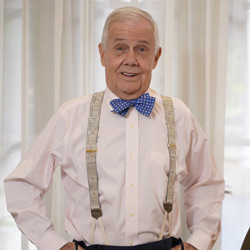
After attending Yale and Oxford University, Rogers co-founded the Quantum Fund, a global-investment partnership. During the next 10 years, the portfolio gained 4200%, while the S&P rose less than 50%. Rogers then decided to retire – at age 37. Continuing to manage his own portfolio, Rogers kept busy serving as a full professor of finance at the Columbia University Graduate School of Business, and, in 1989 and 1990, as the moderator of WCBS’s ‘The Dreyfus Roundtable’ and FNN’s ‘The Profit Motive with Jim Rogers’.
In 1990-1992, Rogers fulfilled his lifelong dream: motorcycling 100,000 miles across six continents, a feat that landed him in the Guinness Book of World Records. As a private investor, he constantly analyzed the countries through which he traveled for investment ideas. He chronicled his one-of-a-kind journey in Investment Biker: On the Road with Jim Rogers. Jim also embarked on a Millennium Adventure in 1999. He traveled for 3 years on his round-the-world, Guinness World Record journey. It was his 3rd Guinness Record. Passing through 116 countries, he covered more than 245,000 kilometers, which he recounted in his book Adventure Capitalist: The Ultimate Road Trip.
Check this out and find out more at: http://www.interactivebrokers.com/
Looking for style diversification? More information on the TDI Managed Growth Strategy – HERE
Stocks mentioned in this episode: (SLV), (GLD), (CMG), (DOW), (KSS), (KOSS), (DHI), (SHW)