
In short
“Bend-and-snap” markets and a guest analysis of U.S. economic policy—especially tariffs, debt, and “selective isolationism”—and how these could affect inflation, growth, and Treasury stability.
Guests
Das Sadiajit Das, internationally respected finance expert with 40+ years’ experience in derivatives and risk management. He anticipated parts of the 2006 crisis, warned about ineffective policy responses, and wrote books including Trader’s Guns and Money, Extreme Money, and A Banquet of Consequences. He was nominated by Bloomberg as one of the 50 most influential financial thinkers (2014).
Key claims
Investors aren’t “buying the dip” so much as reacting to rapid reversals driven by policy promises. Tariffs are described as chaotic, administratively unworkable, and politically motivated; they may be inflationary and unlikely to rebuild manufacturing ecosystems. The bigger risk is debt financing: shorter U.S. debt maturity, reliance on foreign capital, and potential destabilization if foreigners reduce holdings. The U.S. may also shift toward capital controls.
Notable examples
Apple’s tariff appeasement via a $100B U.S. reinvestment; Apple stock rebound after earnings; Sarepta Therapeutics’ drug pull followed by FDA reversal; historical tariff precedent (Smoot-Hawley) and a Brazil soybean diversion after China tariffs.
Written by AI. May contain mistakes. Listen to the episode to check what was said.
Chapters
Tap a time to open that second in VOCurrent Market Dynamics and Investor Behavior
2:21 to 11:27
Discussion on market movements, investor psychology, and the concept of 'buying the dip'.
“I mean, really, some good stuff happening, right?”
Current Market Dynamics and Investor Behavior
12:45 to 13:24
Discussion on market movements, investor psychology, and the concept of 'buying the dip'.
“because, you know, a lot of times you have to navigate political uncertainty.”
Introduction to Guest Das Sadiajit
13:35 to 14:00
Introducing Das Sadiajit, an expert in finance with extensive experience.
“He's an internationally respected expert in finance with four decades of experience.”
Introduction of the Guest
14:00 to 14:35
Learn about the guest's background and expertise in finance.
Discussion on Economic Policies
14:35 to 15:36
Explore the parallels between Trump's tactics and U.S. economic policies.
“I think I want to start with, I know what I want to start with.”
Analyzing Trump's Economic Strategy
15:36 to 16:49
Understand how Trump's strategies aim to restore American manufacturing and economy.
“I think you have to essentially avoid the two polars because there are now what I would call the forever Trumpers and the never Trumpers.”
The Role of Government in Economic Policy
16:49 to 19:46
Discuss the increasing government involvement in the economy under Trump.
“there's a whole range of policies going on.”
Historical Context of Tariffs
19:46 to 21:12
Learn about historical examples of tariffs and their implications.
“And let me tell you a little story which illustrates the point.”
Economics vs. Politics of Tariffs
21:12 to 22:31
Examine the difference between the economic and political aspects of tariffs.
“If I was a betting person – That's the problem.”
Challenges in Implementing Tariffs
22:31 to 24:12
Discover the complexities and challenges of negotiating tariffs and trade deals.
“The starting point in all of this has to be that if you're honest and look at it, is they're just chaotic.”
Show all 28 chapters
Building a Manufacturing Workforce
24:12 to 27:22
Explore the challenges of creating a skilled manufacturing workforce in the U.S.
“all the different items that are coming across the border and you were able to figure out what the effective rate would be and then give back.”
Cultural Differences in Work Ethic
27:22 to 28:00
Discuss the cultural differences in work expectations and their impact on industry.
“So a lot of them are going out of the workforce.”
Exploring U.S. Workforce Challenges
28:00 to 29:14
The discussion reveals the complexities surrounding U.S. labor dynamics and the push for certain job roles.
“What are your benefits and your 401k plan?”
Tariffs and Their Implications
29:14 to 31:30
The hosts delve into the implications of tariffs on industries and their impact on employment and production.
“Those everybody that's on the always Trumper side.”
Car Manufacturing and Global Standards
31:30 to 32:44
A discussion about the limitations of U.S. cars in international markets due to differing standards and consumer preferences.
“Is if anybody thinks it's going to encourage U.S.”
Cultural Perceptions and Trade
32:44 to 34:22
The hosts discuss how cultural differences influence trade and consumer preferences across countries.
“They sell it by the court over there, too, which is, you know.”
The Shift in Global Economic Perception
34:22 to 36:22
An analysis of how global perceptions of the U.S. economy are changing and the potential long-term repercussions.
“And there's going to be problems down the track.”
Isolationism and Its Consequences
36:22 to 37:56
A deep dive into the concept of selective isolationism and its implications for international trade.
“And they're going to go on, but I think there's a couple of elements to that.”
Impact of COVID on Supply Chains
37:56 to 41:26
The impact of the COVID-19 pandemic on global supply chains and how countries are adapting post-crisis.
“which is that the only way you have access to the United States market, which is the greatest market in the world, is if you do all of this.”
Lessons from Global Trade Dynamics
41:26 to 42:00
The segment discusses the lessons learned from global trade changes and the future of international relationships.
“when in the first Trump era, around 2017, 2018, remember he put all the tariffs on China and the Chinese stopped buying soybeans?”
The Impact of Tariffs on the Economy
42:00 to 44:34
Learn how tariffs affect revenue, inflation, and the broader economy.
“after Trump left office, he said, nope, nothing.”
U.S. Debt and Financing Challenges
44:34 to 47:26
Explore the implications of rising U.S. government debt and its financing.
“And so now we have to focus on the main game, which is the U.S.”
Tax Policies and Their Economic Effects
47:26 to 49:50
Understand how proposed tax policies impact foreign companies and U.S. pricing.
“Well, because they didn't want to increase the debt.”
The Role of Stablecoins and Debt Issuance
49:50 to 51:49
Learn about the relationship between stablecoins, debt issuance, and market stability.
“And there's other things as well which people don't really focus on.”
U.S.-China Relations and Global Perceptions
51:49 to 54:06
Examine the evolving dynamics of U.S.-China relations and perceptions in both countries.
“And this is where, effectively, the two major concerns I have going forward.”
Discussion on Forced Controls and Economic Restructuring
54:06 to 56:01
Delve into the implications of forced controls and potential restructuring of U.S. bonds.
“when, in fact, we created what they are, by the way.”
The Implications of Economic Controls
56:01 to 1:01:48
Explore the potential consequences of economic restructuring and foreign capital dependency.
“He said, why is the rest of the world so concerned with China invading Taiwan?”
Reflections on the Discussion with Das
1:01:48 to 1:02:12
A summary of insights shared during the conversation with guest Das.
“And they want to do business because - Isn't this time, isn't what John Templeton once said that this time it's different is the foremost dangerous words in financial markets?”
Transcript
Automatic transcript. May contain errors.0:00This episode of The Disciplined Investor is sponsored by Interactive Brokers. And here's a question for you. Will the median new home sales price exceed$430 ,000 in July 2025? The Yes Forecast contract recently traded at 34 % and the No was at 64%. With Interactive Brokers Forecast contracts, you can trade on future events like climate change, the economy, or even politics. You choose yes or no. And if you're right, you get paid. It's that simple. Explore trending data, spot the trends, and make your prediction for the July 2025 median new home sales price. Trade forecast contracts at interactive brokers and earn a dollar for every correct prediction.
0:47Plus, you'll earn 3.83 % APY on your investment with an interest-like incentive coupon. And you'll get$3 when you start trading forecast contracts. Forecast contracts are not suitable for all investors. Go to ibkr.com slash forecast and start predicting today. The last trading day for this contract is August 25th.
1:12Satyajit Das:The Disciplined Investor is all about you, your money, and the markets. Sit back and get ready for this edition of The Disciplined Investor Podcast. This episode of The Disciplined Investor is sponsored by Horowitz & Company. If you're looking for a portfolio manager, look no further. Horowitz & Company, from seed through harvest, cultivating financial success.
1:42The bend and snap. A one-day sell-off is all it takes. Services PMI is just about in the contraction zone. Economic reports soften. Markets are begging for a rate cut. And our guest today, yes, it's Das, one of our favorites. All this and much more on episode number 933 of the Disciplined Investor Podcast.
2:20It just takes a little bit of excitement to get these markets moving. And man, are they moving. I mean, really, some good stuff happening, right? Got the bend and snap. We're going to talk about that. Hey, it's Andrew Horowitz. And thank you once again for joining in. We're working hard, aren't we, together? We are working really diligently in a disciplined manner. I think it's great. And it's paying off in a big way. I hope that you're following along, that you've spent time thinking about the things we've discussed in the show, especially in these opening discussion times, and how to really deal with things from a psychological, but also from a fundamental standpoint when it comes to the markets.
2:58And then on top of that, if you haven't read my book or listened to the audio book, The Disciplined Investor, yeah, there's a few things in there that probably need to be updated one of these days in terms of how to do some filtering and some screening. But generally speaking, all the information you need is in there. Get it on Amazon or wherever else you get your books. but the audiobook in particular is live and it's active and you can check that out uh as well over on audible or amazon i guess they call it um and one of these days we'll continue giving away we have some books in the office we have a couple of i think there's a case or so in the closet there we've got a couple of things we can get more um but basically uh we couldn't give those away one of these days we'll do something i'm not sure what we'll do something to give away some more books the idea that things are doing well is flying in the face of what many people think are times of craziness, which they are.
3:52But again, we have to look at what's actually happening, not what we think is going to happen. If we project and try our best to find reasons why something should be and it's not, so incredibly hard. If we need to really dig down and find those reasons why and go against the grain, maybe that doesn't make any sense. I mean, there's a lot of reasons why we should like what's happening right now in terms of the U.S. economy and the markets. A lot of reasons why we should probably say, boy, that's not so good. We can get both sides of this equation. We could talk about, and we have, the fundamentals.
4:35We've talked about the valuations. We've talked about the chaos. We've talked about the global geopolitical uncertainty. I mean, all these different things that go into it. But right now, that is not what's happening. In fact, what is happening is paying attention, reading what is exactly right in front of us. You know, the buy the dip, what we saw for so long, we hear about this all the time. This idea that investors have, you know, money on the sideline. And they're looking for those times, those opportunities to push money into play. waiting for valuations to get to a point that is so exciting and there's blood in the street that they're going to buy.
5:17They're going to come in and pick up the pieces, all these names that are being crushed or the markets that have come down, maybe in ETFs, mutual funds, in something. The notion is that they're looking for something that has a better valuation than it has today and they wait and they wait and they wait Maybe they're partially in. I don't know. But bottom line is they're waiting to buy the dip. BTD. We've heard this so many times, right? But it's not exactly what we're seeing. I don't see that happening these days. It's a little bit different, a little bit more nuanced. Yes, there's dip buying going on, but is it really a dip?
5:56Can we consider this something that is a corrective type of valuation adjustment where we're going to start? No, not at all. Not at all. In fact, it takes very little,
6:15very little downside. The dips are unconsequential, inconsequential. But investors are eager to get things going on any drop, right? Like we saw after the jobs report. We saw that sell-off because a lot of things were going on. The revisions that came in, taking it down pretty bad. Maybe the unemployment rate is going to be close to 4.4, 4.5 When we readjust it according to the latest revisions of those two months It added about 250 ,000 people less that were added to the markets And you take that into consideration with the statistical calculation And it's going to pump the unemployment rate up a little bit And then the firing of the BLS And then all the other things that are going on Okay So we had that dip on that Friday Remember a couple weeks ago?
7:02and again, not of any consequence, 1.5%, 2 % max, some stocks down 5%. Or how about that dip when buying, when Apple was down after their earnings? Then a couple of days later, people started buying it saying it's not so bad. And then of course they came up with$100 billion to pay off the bribery or coercion against them or, you know, that was being held hostage by, oh, we're going to have more tariffs on smartphones. And India is going to have a play in this and$100 billion in additional manufacturing adding to the, I think,$600 billion that was promised before that still hasn't been done, but in totality, of money that, or reinvestment that Apple is going to put into the United States, yeah, it is a calming of the coercion by the White House.
7:58You know, the threat that the tariffs are going to be in there. But now, well, that's all good. It's all good. We don't have to worry about the iPhone threats, the 25 % tariff. Yep, that$100 billion does the trick, doesn't it? Apple was, in fact, up 5 % last Wednesday in appeasement for this payment. Got to love it. But I digress here, back to the discussion about buying on the dip. Now we're looking at something much different. Remember the movie Legally Blonde? There was a scene in there where Elwood, Elwoods, Elwoods, Elwoods was her name, played by Reese Witherspoon. She taught the bend and snap.
8:44She was in a beauty salon and was trying to get the attention of the UPS driver. And you drop something on the floor and you do this very methodical, stiff kind of bend over with your tocha sticking out a little bit and, you know, making this whole thing. And then, boom, you get up. It's called the bend and snap. And there was a lot of bad things that happened where people got hit in the head with that when they tried it. But the bend and snap, that's what we have going on right now. No, the market's not waiting. Investor's not waiting for buy the dip rather than a slight bend and then snap right back.
9:19Boom. All it takes. Now we have the bend and snap investor. Boom. Bend and snap. I like that better because you have to realize that there's no waiting anymore. Bend and snap. You know, think about it. What's gone on recently where we have a one-day sell-off. We have a VIX that goes up to 21.5 last week ago, Friday. And it pops right back. A little bit of a, I guess, back and fill or a little bit of a, just a slight amount of drop. And then we have a moment that just stays a little bit like, okay, I'm not sure what's going on. Next day we wake up, it's like, oh, the Nasdaq's up 300 points. So pretty interesting sequence of events that's happening right now with the idea, with the carrot that's constantly in front with the reality that all it takes is promises to turn things around.
10:19And we see the parade of people, whether it's the CEO of NVIDIA, whether it's the CEO of Apple, whether it's the CEO of AMD, whatever it is, going in to see the president and then coming out with, oh, wait a second. All those things that were going to happen, like not sending chips to China, it's okay, send your chips to China. And, you know, tariffs, we're going to hit you with a penalty. If you don't do, oh, don't worry about it. You put a little money to, you're good, you're good to go, you're good to go. Kiss the ring, you're good. Put a little money down, you're good. Settle out of court, so to speak.
10:52That's what's happening here. Good to go. Is this good for the United States? Yeah, well, if in fact Apple is going to actually put this money into play in the U.S., it's wonderful. Are they actually going to start creating and manufacturing iPhones here? Very doubtful. Halfway to impossible. So what we see right now is investors looking out and realizing that a lot of the things that are happening are just full of hot air and can be resolved by a promise. and a framework, and a handshake, a wink and a nod, and bend and snap. Investors just want in. Very simple right now. Even the bad news that comes out, you see, reversed pretty quickly and a few days later.
11:44Unless it's really, really, really bad news. Even something like a Sarepta Therapeutics came out with a good earnings number last week, but yet what we saw was the drop after they had to pull their main drug off the market But then the FDA turned around and said, you know what, okay, fine. We hear people really want it for this Duchenne's muscular dystrophy. And there's a reason why. It makes sense. And even though it has caused some fatalities, maybe the majority of people that are taking it are actually having a better life and extending their life. And maybe that's what they want. And okay, you can sell it right now.
12:20So a lot of reversals after quick decisions. a lot of changes in the mindset from day to day. Maybe that's what's causing the bend and snap markets. All right, enough of that. I want to get to our guest. I want to talk about Das, Sadiajit Das. We'll give you his bio in a second. But first, let's talk about interactive brokers again because, you know, a lot of times you have to navigate political uncertainty. But yet, as a disciplined investor, you don't panic. What do you do? You prepare. And at Interactive Brokers, you can help protect your portfolio and hedge market risk with bonds, precious metals, and foreign exchange from one powerful platform.
13:11With advanced tools, global access, and low costs, IBKR helps you manage volatility and stay ahead, even in uncertain times. The best informed investors choose interactive brokers. To learn more, visit ibkr.com slash navigate. ibkr.com slash navigate. So we're going to talk about Das. He's an internationally respected expert in finance with four decades of experience. He correctly anticipated many aspects of the global crisis starting in 2006. He then subsequently proved accurate in his warnings about the ineffectiveness of policy responses And the risk of low growth, sovereign debt problems In fact, talked about the restructuring of Greek debt And increased problems in China and emerging economies Back in 2014, he was nominated by Bloomberg As one of the 50 most influential financial thinkers in the world He's authored a number of key reference works on derivatives and risk management books like Trader's Guns and Money and Extreme Money and his latest book, A Banquet of Consequences, Have We Consumed Our Own Future?
14:31Good stuff. I have a lot of questions. Let's get right to it. So Das, welcome back. It's great to have you again. It's nice to be with you, Andrew. So I have so many questions. I think I want to start with, I know what I want to start with. I want to start with this piece and comments on a piece that you wrote recently for MarketWatch. This whole notion of how America's economic policies are copying Trump's aggressive business tactics. And you argue that the U.S. budget mimics Trump's business tactics, especially with aggressive borrowing. So we know that the, well, let me just state one more point.
15:14I grew up with President Trump, not grew up with him, actually, but I'm from New York. You know, he built Atlantic City in the years that I was there and then also bankrupted them the years I was there and the stories that we know and all that. But tell me what you mean and how this is working and what the impact is going to be, you know, on a national level and maybe even on private enterprise. I think you have to essentially avoid the two polars because there are now what I would call the forever Trumpers and the never Trumpers. And what that's done is completely confused any analytical debate about what he's trying to do.
15:55Now, if you actually look at what he's trying to do. There are, I mean, there is some method in this madness. And the method is that he's trying to correct a whole range of things. And one of the things he's trying to correct, obviously, is the loss of manufacturing and the loss of jobs and the de-industrialization of the US. And that's being addressed in part by the tariff policies. And there's a second of the actual US debt, and essentially how you manage the reliance on foreign capital. And there is also part of that, which is to essentially the greatness comes from making America grow very, very quickly, and essentially restoring prosperity, at least to some members of at least the Trump family, if not anybody else.
16:48But essentially, if you look at those three elements to it, there's a whole range of policies going on. But if you actually look at one of those elements, which is to grow the economy, clearly what he's doing is through tax cuts. And there's nothing new in this. He's basically reprising Reagan's supply side economics. This is a version of, If we build it, they will come. So if we cut everything, somehow, miraculously, the economy will grow. And basically, that will recover American strength. That's all fine in theory. There's a problem, of course, is that you're not starting with Reagan-esque levels of debt.
17:35You're starting with debt, which is far, far greater. And so effectively what he's doing now is the big, beautiful bill, which might turn out into just big, beautiful bankruptcy, is essentially the thing that's effectively pushing money into the economy like crazy. And there's an interesting element to that, which is if you actually look at his own businesses, that's what he did. he basically borrowed money like crazy tried to grow his businesses and some of them worked to some various degrees but on the whole they eventually imploded under the debt so there is an element here that he's going for broke and the one thing whether you like president trump or don't like president trump is not the issue the issue is this man has a playbook he doesn't know any other.
18:32I mean, for instance, to give you an example of what I mean by that, clearly, somewhere in his past, he fell in love with tariffs. And so the answer to everything is tariff. I'm waiting for him to say that the cure for male patent baldness is tariff. Because at the moment, he's basically, you know, I like Bolsonaro, and I want him not to go to jail. What do I do? I put tariffs on Brazil. I don't want to do this, I put tariffs on. So coming back from that he in his picture has in his mind has this picture that if you borrow a lot of money and spend it somehow miraculously it will work so that is the comparison but there's a big problem with that and the problem with that is what works in an individual or a private enterprise setting doesn't necessarily work for a country right and that's the disconnect and to be very honest also So what he's doing is actually quite anathema to what he's saying.
19:33He's saying, I'm going to deregulate, do this sort of stuff. But if you actually look at it, the US government is up to its necks now in everything. It's actually becoming a more activist government. Instead of retreating from the private sector, it's basically going to effectively mean more government involvement. And let me tell you a little story which illustrates the point. And tariffs are a classic example of that. Now, in Australia, there was a deputy prime minister who headed what was then known as the National Country Party, which represented basically rural sectors. His name was John McEwen, and his nickname was Blackjack McEwen.
20:17And he was one of the cleverest politicians I ever encountered. I only saw him towards the end of his life. The first thing he did was put tariffs on everything. And having tariffs means you effectively have this pool of revenue coming in. But everybody obviously screams that they're being punished by the tariffs. So then McEwen, what he would do is hand out subsidies on the other side. And it made him incredibly powerful because he basically controlled the economy. Because by putting tariffs, he hurt certain people and helped others. And on the other side, by taking the money from the tariffs, he basically gave it out to people and they were in his pocket.
20:57And Trump is this strange mixture of all of those forces. And I think that's where the parallel comes in. Now, obviously, the problem with all of this is we don't know whether it's going to work. If I was a betting person – That's the problem. Is there any precedent that shows that these tariffs work? Or is it, you know, we look at Smoot-Hawley and we know what happened there. That was, you know, maybe, was that different? I don't know. And there's two types of tariffs, right? There's tariffs for an adjustment of equality between economies. And by the way, in the old days, and I mean by old days, you know, a year ago.
21:38When you were a young man. No, I'm talking about a year ago. We would adjust that through essentially currency manipulation. That's how countries would do these things, right? But there's adjustment tariffs to equalize. And then there's punitive tariffs. That's the ones you're talking about. You know, hey, we don't like what you're doing. We're going to slap a tariff on you. We don't like that you're doing this and that your state, we're going to pull funding. There's two different kinds of ways of doing it. And he's doing both. Well, the first thing I would say about the tariffs is if you want to stand back for them and look at what they're trying to do.
22:18I think there's two ways of doing this. One is the economics of tariffs. The other is exactly what you're talking about, is the politics of tariffs. They're entirely different things. So let's talk about the economics of tariffs. It's interesting. The starting point in all of this has to be that if you're honest and look at it, is they're just chaotic. And I'm quite familiar with tariffs because Australia had a lot of tariffs when I was younger and they were gradually removed in the 80s. So I know how they work. Now, the first thing about tariffs is they're bloody complicated. They're not easy.
22:55And now you have the situation and the deals that are being put in place are classic examples. These are not deals. These are tweets. Yeah, they're framework tweets. They're frameworks. They're frameworks of tweets. They're not even framework tweets. They just tweet, and they just basically say, I have a deal. And nobody really understands. I'll give you an example of - Well, there's no detail on anything. There's this headline detail of 15%, and they're happy. Oh, South Korea's happy with a 15 % or 20%. Really? Oh, okay. And we're really good friends. Really? Yeah. It doesn't make any sense. And then that's one part of it.
23:33It's just complete chaos. And there's no way anybody can administer these schemes that are being put in place. That's just a pie in the sky. You can't administer something. Tariffs, and I know friends of mine who are bureaucrats, and they've been involved in trade negotiations. And I asked one of them when this whole thing started, I said, how long does it take you to negotiate a fairly straightforward set of trade agreements with tariffs in them? He said three to five years. Yeah. No, no, exactly. No, no, no. So that's exactly, that's a great point that you make there. Because this idea that I made a phone call and we got a trade deal, it's like, what?
24:09How did that happen? I don't understand. You went over all the differential, all the different items that are coming across the border and you were able to figure out what the effective rate would be and then give back. I mean, what it is is basically a blanket something and then we're going to say that we're going to buy soybeans, soybeans and corn, and we're going to build a factory. That's the deal. That's the deal. Right? I mean, would you agree? That's it. Yeah. And I also think there is a degree of disingenuousness because the one thing you can say about this administration, whatever else you say about them, is detail is not their strength.
24:52And I think one of the most amusing things is, and I'll take just one example, this business about the Europeans buying more liquid natural gas from the United States. The first is the U.S. doesn't have the level of capacity to produce what supposedly the European Union is buying. And so, you know, and it's going to be stretched out. Things are going to go wrong. And effectively, none of this stuff will actually happen. But let's come back from this stage. The critical thing here is, okay, let's assume for a second that this is the grand plan. So will it work? So if you go through the tariffs, and just let's concentrate on the economics, not the politics, is the aim here is to encourage American producers to supply domestic demand.
25:48That's basically what it's all about, nothing more. The problem is, can you actually build all this stuff? and the problem here is building a manufacturing industry and remember this is all about manufacturing it's got nothing to do with anything else you know services are which is america's strength is completely ignored in all of this but if you're trying to do steel aluminium chemicals you know electronics automobiles consumer products all of these sorts of things you have to have a whole ecosystem and over the last 40 years we've just recreated the entire supply chain in awareness. You have to put it back.
26:27So that means putting everything that goes into even a t-shirt in the United States. That's assuming you have the natural resources, and then you have to have the workforce. And this is where the contradictions and the policies become very important. On the one hand, we want to reassure. On the other hand, through the immigration policies, we are actually, in my view, the US workforce will shrink by about between five and seven million people once you take the migrants out and everything else out of the equation, because essentially the labor markets are tight. And leaving aside just the number of people, the skills that you need.
27:10Right. You don't get a machinist who makes high tech machine tools overnight. And most of them demographically are of retirement age. So a lot of them are going out of the workforce. And the most hilarious thing about this, and for historical reasons, I know a lot of the semiconductor makers in Taiwan. And some of them have agreed to invest in the US. And I had a casual chat with one of them. And I said, how's it going? And you know how the project is. He said, firstly, they couldn't find enough workers. Yeah. Then the workers they could find basically wanted to work according to certain things.
27:52And, you know, the Taiwanese have certain ways of doing things. And that wasn't the American way. Well, yeah. How about, yeah, air conditioning or even, you know, let's start with the, well, in the United States, the first thing they ask when you go for a job interview, the interviewee says, what is your vacation time? What are your benefits and your 401k plan? Right. You know what I'm saying? That's the kind of, that's the, what's your, and what's your salary, of course. Other places around the world are like, yes, I will work. And as much as you need me and I'll get paid whatever you tell me.
28:27Exactly. And so what happened in the end, these Taiwanese fab makers, they were so hampered by shortages, they brought in their own workers from Taiwan. Oh. Because that's the only way they could do it. That's so dumb. Like the whole point. That is dumb. Yeah. So, but now, of course, Lutnick wants to restore American workforces by creating an army of millions and millions of human beings screwing in little screws into iPhones. We have fat fingers here. Well, A, you have fat fingers because you're bigger. But more importantly, I'm not sure that American workers would share his enthusiasm for that sort of work.
Read the full transcript
29:07It's just that's the dumbest. I don't even know where that came from. That is honestly boneheaded dumb. But you know what? And by the way, just to be clear with all the people are like freaking out right now that, oh, my God, they're going against Trump. Those everybody that's on the always Trumper side. I can tell you that the policies of the last president, just to be fair, was suck too. You know, there was just as sucky. Absolutely. And they spent too much money. They raised the debt too much. But my hope was that we have – my hope as a believer in laissez-faire government and capitalism and a fiscal responsibility was that something was going to change here.
29:49But this big, beautiful, bloated bill is unfortunately a real problem in that$3 to, I don't know,$5 trillion, give or take$1 or$2, is going to be added to the deficit or into the debt. And that itself tells you that how all this is happening, that it's not going to be, you know. I think you're right because I don't think, look, I'm agnostic. Governments in each country are selected by their constituents, and it's up to you who have it. I'm just standing back and looking at the policies and saying, can they work? And are they sensible? And that's where the biggest problem is. But just coming back to tariffs in a second, getting foreign firms to relocate into the United States might create some temporary employment.
30:39But almost all the industries that are going in are high tech, which are highly automated. So after the initial construction, which they've been doing with foreign workers anyway, how many people are they going to employ? It all sounds good. That's what it's for. It's for social media. It's the optics. It's the optics. It's the optics. Yeah, it's just let us – it's like when you go on a vacation and you post – or not you, somebody, everybody that's listening to me post a picture of you somewhere. It's not going to be in a rainy day sitting in your room bored because you can't go out. It's going to be the sunny day with the sun going down with a cocktail in your hand.
31:15It's going to be the most beautiful scene. That's what they do. That's what they're doing. They're not telling you about the stuff that you don't want to see. It's, you know, it's all look at us because we want to make sure that we keep that high level of confidence. That's right. And just to finish off on tariffs, there's two other points which are worth making. Is if anybody thinks it's going to encourage U.S. exports, I think you have to be very cautious. because just take one area, the automobile industry. And I noticed President Trump was saying that how foreigners are now going to buy a lot of American cars.
31:53Now, people may not be aware, but there's an existing 25 percent tariff on light trucks being imported into the United States. And this obviously helps American carmakers. and American car makers have been encouraged by the tariffs to focus on these very, very highly profitable light trucks. And by the way, it's not only light trucks because SUVs use the same basic components as these light trucks. So they've made these cars and they make a lot of them. But the problem is nobody internationally is going to buy them because overseas you have strict fuel economy standards. Secondly, the fuel prices, because there are taxes on fuels almost everywhere else in the world, are like double.
32:38I mean, our fuel prices here. Oh, so low. I mean, Americans go. So low. Oh, yeah, it's$4 a gallon. They sell it by the court over there, too, which is, you know. Yeah, well, we sell it by completely. We sell it by the liter, which is about one-fifth. But our gasoline prices are double yours. In Cambodia, they sell it by the two-liter Coke bottle that they empty out and they fill on the side of the road. Absolutely. Absolutely. There's a very funny story about that in Madagascar many, many years ago when I was there. We had to catch a taxi to the airport. And we called the taxi and the taxi driver said, you have to pay me first.
33:17I said, ah, ah, ah, we pay you when we get to the airport. He said, no, because until you pay me, I won't buy the fuel to put in the tank to take you to the airport. Mm-hmm. Mm-hmm. So the point I'm making is the world is very different wherever you go. But there's one other thing, Daz. There's one other thing. You've traveled around the world. Do the trucks and the cars that we have here fit down the roads in most of the areas of remote – not the highways, but the places like anywhere in Europe or in Japan or in China, do the cars actually fit on those side roads? No. U.S. cars don't fit. And more to the point, they could double as a bulldozer.
33:57Yeah, they don't fit. That's right. So it's not going to really work in the way that it does. And besides which, you can't make people buy things. You just can't make people buy things. And I can tell you, the Japanese are not going to buy American rice. Yes. It is just not in their culture. It is not in their culture. I agree with you. And so all of this is not going to work. And what it's ultimately going to do, in my view, is there's, as you say, the optics are pretty good. And there's going to be problems down the track. And the two problems, which are absolutely obvious, is that it's going to be inflationary.
34:39Because I think the Wall Street Journal did a calculation that an iPhone completely built in the U.S. costs$3 ,500, not$1 ,100. Now, it won't be$3 ,500, but it's going to go up. It's not going to be$1 ,100. It's going to go up. And I reckon it'll go up by about a third. You know, I think this whole administration, tell me what you think about this. This is a theory I've been working on. It seems like they were all about the same age, give or take, some of these main players in this administration, right? And they're stuck in a time warp somewhere between Frank Sinatra and Ronald Reagan, right?
35:17And whatever happened in those years, they see as like the best times of life. And they want to recreate that. They want that to be more. You know what I'm saying? I think you're absolutely right. I couldn't agree more. I couldn't agree more. They're stuck. And I've observed this about people, starting with myself, is that there are formative years of your life. And it's very hard to move outside of that. because you know it's the old grumpy old man syndrome basically you know things were better in my day and the answer is they may have been better they may have been worse but they were just different and the world moves on you can't sort of recapture the past it's a bit like jay gatsby jay gatsby spent his entire or rather f scott fitzgerald spent the entire novel of about gatsby trying to recapture the past right and essentially it's impossible yeah but Just moving on, and I think this is the real danger for people, is everybody has become fixated with the tariffs.
36:22And they're going to go on, but I think there's a couple of elements to that. Whatever happens, sadly, I think the rest of the world have changed their perception of the U.S. Everywhere I go, there's quite a major shift in how they see America. So the critical thing here is what they're trying to do is over time, they're going to shift away. All these deals, all of these things are basically short-term expedience. One diplomat said it very well. He said, yes, we can do deals with the United States, but what's the point? He'll change his mind in a week's time. That's a problem. And he said, and one Canadian said it to me, he said, what the Canadians found completely incomprehensible about the U.S.
37:13policy was Trump renegotiated NAFTA in his first term. And then he comes back and tears it up. It was the worst deal ever. It was the worst deal ever, he said. Exactly. And he did it. Who put this deal together? Exactly. So the problem here is nobody believes anything that's coming out of the U.S. now. So all of them are doing a spot of yes, sir, no, sir. They're playing the game. They're playing the game. And what they're trying to do is plan how to get around it. And this is where I think the fatal flaw in all of this is. And the flaw is that when he wrote those letters, which were ungrammatical, written in what I call Trumplish, which is a version of English, basically made a big point.
38:06which is that the only way you have access to the United States market, which is the greatest market in the world, is if you do all of this. The problem is the US is not the greatest market in the world. It once was. It's now about 13 % of global consumption. And it is smaller than China, India and European Union combined. So that's the first thing I'd make. The second thing is that's the size of the market. But the size of the market doesn't matter. It's what you import. The US imports$3.2 trillion of goods, of which I reckon about half you can't avoid. So we are at the end talking about$1.6 trillion of goods.
38:55Now, that's not a small number. I'm not saying it's a small number, but that's the amount that we're all sort of anxiously talking about. Now, the issue is the US is reflating, sorry, the European Union is reflating its economy by about a trillion dollars. China's doing about the same and the Indians will probably do something smaller. So the demand that you're losing from the US will in time be made up elsewhere. So all they're doing is buying time. Because essentially, the US is going to be bypassed in the global trading system over the next three to five years. And this is what I... And that damage.
39:36This is what I brought up, the term that I think I coined a couple of years back, called selective isolationism. The idea that we are forcing this upon ourselves and choosing who we want to do business with or not. But yet, and what that does is it creates all sorts of problems. The idea of isolationism itself is tariff-driven a lot, right? That's what happened during smooth haul, you know. And the way that we are pissing off our neighbors is, now, that could all be reversed in four years from now, possibly. You know, that is, we don't know if this will be permanent damage or people are like saying, you know, okay, it's fine, we'll just do it.
40:16But it's like what happened during COVID. During COVID, as you recall, we couldn't get goods from China. Our supply chains were in disarray. And it was our fault. We were sourcing so much from China. We never thought something like this would happen, obviously. And even though supposedly Bill Gates was promoting this and saying it would happen. But no, nobody really believed this would happen. And nobody set themselves up. And so what happened was when China shut down for a while, we had to go and scramble. and what we decided was never again is this going to happen. And we started sourcing and buying from other places and we built up an incredible rapport and operation with a country like Vietnam and India for that matter and other countries around the world.
41:01And when China opened up, they were forced isolationism. That's what happened there, right? That was different. When they opened up, they opened the doors and thought there'd be all these orders coming in. It was like, hello, hello, anybody there? So we're doing the same long term because we retrained ourselves. That's what these other countries are being forced to do also, aren't they? That's exactly right. And I'll give you a very concrete example is in Brazil. when in the first Trump era, around 2017, 2018, remember he put all the tariffs on China and the Chinese stopped buying soybeans? They just switched to Argentina and Brazil.
41:48And I was talking to a farming consultant in the Midwest and I said, did the sales ever come back after the tariffs basically were reduced? after Trump left office, he said, nope, nothing. Not a single one came back. And the second thing that happened, I said, well, okay, so how do these farmers survive? He said, well, whatever amount they raised from the tariffs from China was just given back as subsidies to the soybean farmers. So that's the only way that industry keeps going. So I don't think it's worthwhile, while. But I think there's several things in what you're saying. I think it's a mindset.
42:32And I'll be very frank. The most nations now around the world really now have painted across their foreheads a statement by Henry Kissinger. Kissinger once says it may be dangerous to be America's enemy, but to be America's friend is fatal. And that's what they're now working towards. And that's the big problem longer term, but that's a longer term thing. There is a shorter term thing that's going to play out, which nobody's talking about, which is what is going to happen, what I call the capital wars. The tariffs are only one part of it. What we're now going to see is a switch to capital account things.
43:19So controls on money flows, on investments. And that, I think, is what people are missing. And that is going to be far, far more damaging than the tariffs. And let me explain what I mean by that. Now, one benefit of the tariffs is it's raising revenues. Everybody knows that. And I think they raised about$50 billion in the last quarter. And I noticed the Commerce Secretary was sort of beating his chest a lot. and saying they'd raised$50 billion and how this was going to reduce the budget deficit. Now, what he seems to not grasp is that the budget deficit is$5.3 trillion. So$50 billion by four is 200.
44:04That's 4%. And even if you double it, it's not going to be sufficient. And remember, the tariff revenue always, and I know this by having looked at history, is short-lived because people stop buying. People just simply can't afford it or whatever happens, they find new markets. They just stop buying. Well, tariffs are taxes. Tariffs are taxes. Taxes are inflationary, higher cost. And when people are stretched to begin with and exhausted from pricing escalations, it causes problems. Absolutely. And so now we have to focus on the main game, which is the U.S. government debt, which is$36 trillion.
44:44And as the big, beautiful bill is going to add a huge amount to that. And I think, by the way, the Congressional Budget Office estimates grossly underestimates how much will be added. Grossly underestimated. Well, if it's$5 trillion, I'm going to stay with that. I can't think of anything. I can't think of more. I just can't. No. Yeah, it's worrying to think of it more. Now, you have the budget deficit to be financed. But notice one thing. the US current account deficit, which the tariffs were meant to fix, has remained high. It hasn't changed. So you have to fund these two deficits. And essentially, if you look at how the funding works, foreign investors have about between$25 and$30 trillion invested in the US.
45:34About$17 trillion is in equities. The rest are in a hodgepodge of treasury securities, corporate and agency debt. And essentially, the problem now is if the foreigners start to withdraw that, and everybody says, well, I can't withdraw$30 trillion. And I said, I can't. They can't. That's absolutely right. But if they withdraw a couple of trillion, that's enough. Because that would completely destabilized the treasury markets and the US currency. And we had some of that shock back in April. Correct. And that's what I'm really worried about is that's going to come. And the other thing here, which is quite interesting because it flies below the radar, the US has shortened the term of its borrowings.
46:25This was under Janet Yellen. Janet Yellen tried to keep bond deals down at the long end of the curve so that mortgage rates didn't go up. by borrowing short. And they've got a lovely name for it. It's called Activist Treasury Issuance, ATI for short. But essentially, US debt now is getting shorter and shorter. And US debt that's maturing within 12 months is around about 30%, which is the second highest after Japan. And the average maturity has come down from around 10 years to six years. It's one of the shortest in the world. So you now have rising debt levels, amounts to be financed, relying on overseas people, high interest costs, particularly if inflation doesn't come down, and a lot of short-term borrowing.
47:14That is not usually the recipe for success. I mean, they should have gone gangbusters at 1%. Absolutely. I couldn't understand why they weren't issuing 50-year bonds. Well, because they didn't want to increase the debt. Yeah, that's right. And also there's always this thing, I hear this among corporations, we don't want to borrow long because we'll be so profitable, we'll pay off the debt and we don't want to be stuck with debt because we've got to be so profitable. That's so dumb. And I just sort of roll my eyes and go, good, good. If you're so profitable, the 1 % is still a moneymaker. You leverage it up on the profitability.
47:52Yeah, exactly. Well, it's stupid as it was stupid. Yeah. And now you have to look at what they're going to try to do to deal with this problem, because they've got a massive debt problem and a massive financing problem. So I think it's a three or four pronged strategy that's playing out here. The first is, okay, well, how do we correct this? We're going to increase revenue and tariffs are part of that. But there were some other interesting things which people don't really look at. The famous section 899 of the big, beautiful bill, would have increased taxes on foreign companies operating in the US by 5 % annually to a maximum of an additional 20 % over the normal tax.
48:32And there was this funny thing in there saying, well, we'll tax people who we deem to levy discriminatory taxes on American businesses. And since the administration has the right to basically classify who's discriminating against us and who's not. So you can take it as a given that it'll be on everybody. And of course, American companies love this because it gives them a huge competitive advantage. The thing that people don't understand, Dustin, and you can confirm this with me, once you have these tariffs and these taxes and all that in foreign companies, the US companies feel the right ability and desire to increase their pricing because there's no reason they can't because in doing so, they're just, they keep it a little bit lower.
49:11So if this is a 20 % tax and then therefore a 20 % increase in pricing of another product that comes in? Why not just increase ours by 15 %? And we're great. I have a friend who's in the plumbing business and he has big inventory, right? He's a distributor. He said he loves the tariffs. I'm like, why is that? He goes, because my inventory just went up by 15 % in value. Absolutely. Oh, my God. Absolutely. That's terrible. It's just crazy. And those taxes, it was withdrawn from the bill eventually because they did a horse trade on basically the minimum corporate tax under the international tax arrangements.
49:46But it'll come back. You mark my words, it'll come back. And there's other things as well which people don't really focus on. One is taxes on foreign remittances. So if you're a worker in the US remitting money, there's going to be an additional 1 % tax on that. Now, that doesn't really encourage people to come and work in the United States. That's the first thing I would say. The second, then there's a whole thing about port fees, which have completely flown under the radar. And this is going to go through. So it's an additional cost of$600 to$800 per container. It's about$15 or$18, I can't remember now, per ton, specifically on ships built in China, which is about 80 % of the global fleet.
50:33So every time those ships dock in the U.S., whether they're bringing in imports or taking out exports, they're going to have to pay taxes. and there's, of course, the famous$5 million gold card visa, which Trump is promoting. These are all ways of raising money. Now, whether they're going to work or not and how disruptive they'll be, I don't know. But there's also other little things which are going on, which again, are flying below the radar. One is, you notice that the US banking regulators relaxed banking regulations, which is a supplementary leverage ratio. There's only one reason they did that.
51:11It allows American banks to hold more US government bonds. Yeah, of course. So they're trying to create a bigger market. Well, they like also the stablecoin. That's why the stablecoin is so popular. Absolutely. The stablecoin, you hit it on the head. The stablecoin is exactly that because each stablecoin has to be actually invested in interest-bearing short-term government debt. And the most funny thing about that is they actually defended stablecoins and short-term debt issuance. They're saying they're only issuing short-term debt because the stablecoin demand is so great, which is kind of interesting.
51:43But everybody thinks, okay, well, these are fine. They're at the enders. But they're not going to work. They're not going to be sufficient. And this is where, effectively, the two major concerns I have going forward. One is obviously the barney that's going on between the White House and Jerome Powell. Yes. Now, the reason they're doing this, leaving aside the personal animus that exists between those two individuals, is they want interest rates down. Trump has said he wants interest rates down at 1%. And the reason is you can't service this government debt with current interest rates because, as we know, the interest bill is now so large.
52:24So they're going to basically try to get the interest rates down. And in my view, it's a matter of time before they get somebody in the Fed, essentially, who's going to do what the White House tells them. Because his term ends next year. Yeah, May. And I think it would need some very brave people in the Federal Reserve to stand up to the White House because God knows what else they could do. And as I pointed out to a friend of mine, I said, they're not going to stand up because if they stand up, they'll have the IRS crawling over all their personal affairs. In about two minutes. The question is who's going to take that job.
53:01The only person that would take that job is going to be somebody who's just going to play ball. Well, it's basically going to be somebody who likes to lick the wrong end of the elementary canal. And we see what happens when this goes on. But I want to just go back for a second. Sure. And then I want to talk about that. I want to also get into force controls and Stephen Mirren. Sure. And some of that. But, you know, with every delectable, not every, but many delectable things like a piece of fruit, an apple, a peach, you eat it, it's delicious. But there's a pit. There's a pit in there. And we just say, we don't complain and whine and be upset that there's a pit.
53:39It's just what it is. It's the same thing with China. What is our problem with China? I mean, I don't really get the fact that, you know, there's some good there. And, yes, they do dumping and they do unscrupulous things. and you want to talk about the fentanyl, that's a problem. Okay, fine. Whatever you want to talk about. But with every relationship, with every good, there may become some piece of bed like a pit. And we just can't get beyond that. It's like somebody wronged somebody, and this is a lifelong desire just to kick their ass for some reason when, in fact, we created what they are, by the way.
54:15We created this. There's absolutely no doubt about what you're saying, But the most important thing is Americans have benefited from low cost of everything for the last 30 years from the rise of China. So I get it. That's what I'm saying. I don't understand. But I'm not going to understand. I'm not going to understand. I'll give you that. And I don't think you can explain it to people either because it's kind of a weird, weird thing that's going on. But it's kind of interesting because I've just spent seven weeks in China. and it's fascinating to look at how they look at America. America is obsessed with China.
54:56The average person in China and also most of the bureaucrats now regard America as kind of irrelevant because basically they're saying, well, we are a very large domestic market and yeah, we rely on exports. We understand that. but we are now much better in terms of higher technology than we used to be certainly their
55:19Satyajit Das:electric vehicles make tesla look like stone age cars yep and there's a whole world outside of the united states we can sell to and the matter is how do we do that so the obsession is one way it's not a two-way obsession it's like a love affair where one person is in love with somebody else or is reliant on somebody else. And the other person couldn't give a stuff about them. Right. How come they're not thinking of me? Yeah, yeah, yeah. Yeah. They keep obsessing about it. But the other side, and the funniest one is in Taiwan. About five years ago, a friend of mine who I'd worked with before, who's Taiwanese, said to me, can you explain something to me, Des?
56:02And I said, what? He said, why is the rest of the world so concerned with China invading Taiwan? when we don't spend any time thinking about it. Yeah, something was made up. And I said, I have no idea. Diversionary tactics, scapegoats. This is classic kind of politics going on. Let me go to something else here, if you don't mind, because we only have a few minutes left here. I want to talk about the economics of these forced controls. We touched on this for a second. I want to get your thoughts on how you go through this. There was another piece you wrote about with Stephen Mirren, the Council of Economic Advisors, and this proposal of restructuring U.S.
56:40bonds into 100-year perpetual securities. Is that – how would that even happen? I don't even – I mean, you could issue new ones, of course. That could happen. But they can't just take our U.S. bonds and restructure the 30-year and say, hey, you know what, we're going to make it a 100-year bond. Well, this goes back to the point about we talked about with the parallel between what's happening in the US and President Trump's private businesses. So basically why Mirren is the chairman of the US Council of Economic Advisors is this paper that he wrote. And he basically made the simple point, which we were making earlier, is that essentially the US is captive to foreign investors and basically they have to prevent capital flight.
57:26And to manage the debt, they have to wipe it out. So he basically had a three-pronged plan. The first one was exactly what you're talking about, which is this exchange. You can do forced exchanges. If you're the borrower, you can force whatever you like, which is to force the other side to take low or zero coupon bonds, which is what he wanted. But that would be a de facto default. But, you know, your default, people default. And Trump, as you know, his businesses have defaulted several times. The second part is his other idea was, well, OK, well, maybe we won't do that or maybe we'll do something else, which is I'm going to charge a user fee for government security.
58:07So if you're a foreigner, you buy a government bond of the United States, you pay us a user fee, which is actually a withholding tax. They couldn't call it a withholding tax because that would be contrary to tax treaties. So this became a user fee. And the other one is, he said, well, the other way we could deal with this is foreigners would have to hold these securities in limited access escrow accounts. Basically, that's seizure. I don't understand. What's the whole purpose of this? The whole purpose is what? To dissuade people from buying bonds? No, the whole purpose is that we've got$30 trillion of your money and we're not giving it back because it's just wiping out the money because we won't pay it back.
58:48But isn't that kind of what we do? This is so dangerous. Isn't this how we do by debasing our currency and creating inflation? Yes. Isn't that the whole point of – without getting into the whole discussion how this works, but basically by debasing your currency or taking down it through an inflationary process, what ends up happening is that you actually reduce the value of the money that you have to pay back over time. Well, that's the whole point. The point is the dollar is down 10%. I do not know of one sovereign fund, one international investor who is keen to increase their exposure to the U.S.
59:26Not one. U.S. dollar or U.S. Yeah, to the U.S. dollar and U.S. investments. Really? Well, somebody's bringing money in. The only people who are bringing money in at the moment, in my view, are companies, which are basically pushing money in because of the plans they have to invest. But if you actually look at them, Japan, basically in terms of treasury bonds anyway, the major ones are Japan, Hong Kong, Taiwan, and the petro states. And the petro states have a different problem. They haven't got any money anymore because of the lower oil prices and their own extravagant spending. So basically, what is happening now is this problem that exists, which is the reliance on foreign capital, is being made worse by people talking about these plans.
1:00:17Because that's basically going to make these people very nervous, and they're going to actually try to withdraw the money. And Mirren gave a very interesting sort of analysis of this. He said, well, they can't take their money out because if they try to, the US dollar would crash and interest rates would go up, asset prices would fall, they'd lose money. So they'll have to stay in. Now, that's fine up to a point. And it's probably true. But it's not exactly encouraging foreign investment. And that's what you're trying to do, remember, under the tariffs as well. So the problem is this whole plan is full of inconsistencies and contradictions.
1:00:59And there's no consistency, no coherence, no real strategy. The best way to put it, it's a Hail Mary pass. You know, we're going to run a massive budget deficit. We're going to put these things up and hope to hell it all works. And if it doesn't, it's all going to blow up and we're going to call bankruptcy. Well, I hope that, you know, we don't end up with any kind of financial repression or maybe something. My hope is that something is going to come out of this somewhere good. But I agree with you that the totality of all this as I watch it unfold on a regular basis with the fact that we don't really understand what the ramifications would be.
1:01:36and this time is different with tariffs. This time is different with tariffs. It's not going to create inflation. It's not going to create a problem with selective isolationism. It's not going to, this time is different because everybody likes us now. Okay. And they want to do business because - Isn't this time, isn't what John Templeton once said that this time it's different is the foremost dangerous words in financial markets? Yep, yep, exactly. Exactly. Das, always a pleasure having you and I appreciate you staying up or getting up early, I guess, to do this. And we'll talk real soon. I really appreciate you.
1:02:11Thanks very much, Andrew. And you're a great guy. All the best. Thanks. Das is always great to have on, always just a treasure trove of information. And his explanations is what I think people really like and how he brings things forth and makes it easy to understand. So he's very complex and very difficult to really get through, sometimes almost impossible to get through. data points, theories, outlooks, and not only that, just facts about what's actually happening. So hope you enjoyed that. I did as well. Great stuff. Great stuff. Next week, we have coming up Meb Faber. If you haven't heard Meb, he's awesome.
1:02:55He's awesome. So stick around for that. Make sure you subscribe. Make sure to tell your friends. Make sure to visit thedisciplinedinvestor.com and make sure to be here next week. I will be here. Thanks for joining me again. I'll see you again real soon. This podcast is intended for informational purposes only and does not constitute personalized investment advice. Investing involves risk, including the possible loss of principal and past performance is not indicative of future results. The views and opinions expressed are those of the host and any guests and may not necessarily reflect those of Horowitz and Company, Inc., and investment advisor registered with the U.S.
1:03:32Securities and Exchange Commission. Registration with the SEC does not imply a certain level of training or skill. Advisory services are only offered to a client or prospective clients where Horowitz and Company is properly registered or is excluded from registration requirements. Any mention of third-party companies, products, or services is provided for informational purposes only and does not constitute an endorsement. Hypothetical scenarios or forward-looking statements are for illustrative purposes and should not be viewed as guarantees. Content is intended for U.S. residents only and may not be applicable in other jurisdictions.
1:04:06Listeners should consult a qualified financial advisor before making any investment decisions. Please visit our website for additional information, disclosures, as well as a copy of our form CRS. Advertisements are not related to the host or affiliates and are not considered recommendations by the host of the show or any affiliates of Horowitz & Company.
1:04:37We'll be right back.
From the publisher
The Bend and Snap – a one day sell-off is all it takes
Services PMI is just about the contraction zone
Economic reports softening – markets begging for a rate cut
This episode’s guest: our good friend , author and former banker Satyajit Das – all the way from down under
NEW! DOWNLOAD THIS EPISODE’S AI GENERATED SHOW NOTES (Guest Segment)
Satyajit Das is an internationally respected expert in finance, with over 37 years’ experience. Das presciently anticipated many aspects of the global financial crisis in 2006. He subsequently proved accurate in his warnings about the ineffectiveness of policy responses and the risk of low growth, sovereign debt problems (anticipating the restructuring of Greek debt), and the increasing problems of China and emerging economies. In 2014 Bloomberg nominated him as one of the fifty most influential financial thinkers in the world.
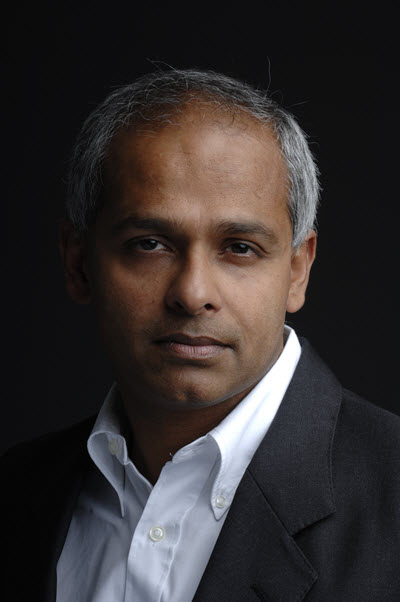
Das is the author of a number of key reference works on derivatives and risk management. Das is the author of two international bestsellers, Traders, Guns & Money (2006) and Extreme Money (2011). His latest book is A Banquet of Consequences: Have We Consumed Our Own Future? (2015 & 2021)
He was featured in Charles Ferguson’s 2010 Oscar-winning documentary Inside Job, the 2012 PBS Frontline series Money, Power & Wall Street, the 2009 BBC TV documentary Tricks with Risk, and the 2015 German film Who’s Saving Whom. His writing appears in Financial Times, Nikkei Asia review and Marketwatch
Check this out and find out more at: http://www.interactivebrokers.com/
Looking for style diversification? More information on the TDI Managed Growth Strategy – HERE
Stocks mentioned in this episode: (AMZN), (TLT), (AMD), (AAPL), (NVDA)