In short
The Disciplined Investor Podcast: Thomas Peterffy Unfiltered (#964)
Episode Overview In this episode of *The Disciplined Investor*, hosted by Andrew Horowitz, the focus is on significant market movements, particularly in oil, and features a conversation with Thomas Peterffy, the Chairman and Founder of Interactive Brokers. Key topics discussed include oil price fluctuations, inflation, market responses, and insights from Peterffy's extensive experience in trading technology and brokerage.
Key Topics
Market Movements
- Oil Prices:
- The podcast opens with a discussion on the recent volatility in oil prices, described as "one for the record books."
- Historical context is provided about how spikes in oil prices typically indicate potential recessions and market corrections.
- Market Sentiment:
- The current market is characterized by slight panic but is not in a state of severe distress.
- The discussion hints at the government's role in alleviating market fears through interventions, allowing for market recoveries after crises.
- Inflation:
- Recent inflation numbers are reported, with a sense that the public may be apathetic towards these figures.
Guest Segment
Thomas Peterffy
- Background:
- Peterffy shares his journey from emigrating from Hungary to founding Interactive Brokers.
- He emphasizes the importance of technology in automating trading processes, which he pioneered in the late 20th century.
- Interactive Brokers:
- The brokerage has grown to be one of the largest publicly traded electronic brokers, with over $100 billion in market capitalization.
- Services offered include trading executions, clearing, and custodial services for a variety of financial products.
- Trading Innovations:
- Discussion about the evolution from open outcry trading to electronic trading and the innovations Peterffy introduced, such as handheld devices for traders in the 1980s.
- Market Predictions:
- Peterffy discusses the role of forecasting in trading and introduces the concept of forecast contracts as a tool for traders.
Insights on Financial Markets
- Market Behavior:
- There is a recognition of the government's consistent interventionist approach to prevent long-term economic damage.
- Peterffy reflects on the implications of technology and AI in trading, hinting at potential disruptions.
- Client Education and Tools:
- The importance of financial education is highlighted, with mentions of IBKR's educational resources like IBKR Campus, which teaches young people about finance.
- Performance Metrics:
- IBKR clients have outperformed various market benchmarks, attributed to the firm's best execution practices and trading tools.
Key Takeaways
- Resilience of Markets: Despite periods of panic and significant market movement, history shows that markets often recover due to economic interventions.
- Technological Advancements: The evolution of trading technology has dramatically changed the landscape, making trading more efficient and accessible.
- Financial Education: The emphasis on educating clients and providing tools for informed trading decisions is crucial for fostering financial literacy and success.
- Forecasting as a Tool: The introduction of forecasting contracts can help traders hedge their portfolios more effectively and make informed decisions based on market predictions.
Conclusion This episode combines an analysis of current market trends with insights from a pioneer in electronic trading, Thomas Peterffy. The discussion emphasizes the importance of technology, education, and market adaptability in navigating the complexities of investing.
---
For more details and to listen to the episode, visit [The Disciplined Investor Podcast](https://podcasts.apple.com/us/podcast/the-disciplined-investor/id217999782).
Written by AI. May contain mistakes. Listen to the episode to check what was said.
Chapters
Tap a time to open that second in VOMarket Reflections: Historical Perspectives
0:30 to 5:30
Discussion on past market crises and current conditions, and how markets tend to rebound.
“Oil's big move, one for the record books.”
The Role of Government in Market Stability
5:30 to 9:30
Exploring government interventions in the economy to prevent deep recessions and control inflation.
“for business and then back to business as usual.”
Insights on Oil Prices and Market Trends
9:30 to 13:50
Analysis of recent oil price spikes and their potential impact on the economy and markets.
“So when I went on to the floor of the stock exchange, I was surrounded by these huge guys.”
Introduction of Guest: Thomas Peterffy
13:50 to 14:03
Introducing Thomas Peterffy, founder of Interactive Brokers, and his background.
“Now, I think that's fascinating because you didn't accumulate yachts.”
Building a Trading Empire
14:03 to 16:44
Learn how Thomas Peterffy built a successful automated trading firm and the culture behind it.
“You know, you built one of the most automated trading firms in the world.”
Innovating Trading with Technology
16:44 to 19:31
Discover how Peterffy introduced custom technology for trading before the era of laptops.
“So it had nothing to do with the virus, any aid that they could have objected to, they would have objected to.”
The Future of Trading: Beliefs and Predictions
19:31 to 20:55
Explore Peterffy's beliefs about the future of trading and his confidence in technological advancements.
“Could you first explain what open outcry was back in the day and kind of why you thought this?”
Best Execution in Trading
20:55 to 22:29
Understand the importance of best execution and the complexities of trading pricing.
“But were you so – part of your success, was it so that you had such a belief in your outlook like that open aisle crate would disappear and that the exchange floors would be electronic?”
Challenges in Global Markets
22:29 to 25:43
Discuss the issues in global markets that still need fixing according to Peterffy.
“And that is, it's interesting because there's a lot of rules about best execution.”
The Role of Regulation in Trading
25:43 to 28:00
Examine how regulation impacts trading practices and client behavior in the market.
“Now, you at IB, you've intentionally limited leverage, right?”
Show all 20 chapters
The Challenges of Replicating Success
28:00 to 29:00
Explore the hurdles in replicating successful business models.
“Because it costs you a lot of money to get to that point.”
Client Experience at Interactive Brokers
29:00 to 30:20
Learn how automation and minimal advertising enhance the client experience.
“You know, extreme automation, minimal advertising, all this, by the way, I view as a client as a way that makes sure that I'm not going to get poked with some crazy fees or a problem with the company.”
Understanding Prediction Markets
30:20 to 31:40
Delve into the workings and significance of prediction markets in elections.
“So generally, every year is better than the previous one.”
Using Forecast Contracts for Economic Predictions
31:40 to 34:20
Discover how forecast contracts can be used for economic predictions and hedging.
“And so there was, you know, the Republican win was much more likely in the election markets than according to the polls.”
The Role of Weather in Forecast Contracts
34:20 to 37:00
Understand the impact of weather on forecast contracts and economic activity.
“or even worse, of course, government edicts.”
Enhancing Investment Strategies with Forecasting
37:00 to 39:40
Learn how forecasting can enhance investment strategies and performance.
“forecast contracts that a lot of people don't think because a lot of people think you know, it's just a binary outcome, yes or no, which it is.”
Interactive Brokers' Trading Tools
39:40 to 42:00
Explore the advanced trading tools offered by Interactive Brokers and their benefits.
“So I think the primary is the best execution.”
The Power of Interactive Brokers' Trading System
42:00 to 46:03
Discover the advanced features of Interactive Brokers' trading systems, including block trading and efficient allocation.
“So this is something that you really push.”
Educating Investors for Financial Security
46:03 to 47:56
Learn about the importance of financial literacy and the educational resources offered by Interactive Brokers.
“Our best customer is an educated consumer, right?”
Market Dynamics and Current Events
47:56 to 50:46
Gain insights on current market conditions, trading volumes, and the impact of geopolitical tensions on investments.
“So there is, we have on our website something called Probability Lab.”
Transcript
Automatic transcript. May contain errors.0:01Thomas Peterffy:The Disciplined Investor is all about you, your money, and the markets. Sit back and get ready for this edition of The Disciplined Investor Podcast. This episode of The Disciplined Investor is sponsored by Horowitz & Company. If you're looking for a portfolio manager, look no further. Horowitz & Company, from seed through harvest, cultivating financial success.
0:30Oil's big move, one for the record books. Markets in and out of panic. So far, not too worse for wear. Inflation numbers are out. I don't think anybody cares. And our special guest today is Thomas Pederfee, chairman and founder of Interactive Brokers. All this and much more on episode number 964 of the Disciplined Investor Podcast.
1:06And welcome to The Discipline. Welcome to the podcast that is here for you to learn, explore, and hopefully make some sense out of the crazy things that we call investing and the markets. I'm Andrew Horowitz, your host here in the chair since back in 2007, one of the earliest podcasts, And I think now the longest running independent financial podcast out there. And over the years, it's been a long time we've been doing this. We've been faced with some crazy things that are going on, right? I mean, all the way back to the challenges that you and I have seen, like the financial collapse of 2008-09.
1:47We had COVID shutdowns, remember that? That was just a couple days ago, it seems. We had this massive inflation in 21-22. you. And each time that something happens, it seems like, wow, it's never going to be never going to be good. And this is the worst ever that I've ever seen. Never before have we seen anything like this and markets react. And then all of a sudden it's like, well, nothing happened. We look back. We're like, well, that was bad. But if we were smart about it, we were disciplined. We made it through pretty well, didn't we? And why is this? Why does this happen? Why is it that markets have a short term memory when things like that happen, when it's feeling really bad, but then all of a sudden we jump because mostly not a lot of really, really bad was allowed to happen.
2:31Sure. We can concede. I can concede. Listen, 2008, 2009 was the worst of it. Banks were failing. People were losing their houses. It was horrible. But the government stepped in and did whatever they could do to generate a better outcome. And we saw that. Saw the same thing happen in COVID. Money was splashed along the streets, basically, when the entire world was shut down. Because it's not allowed to happen. And what I mean by happen is, I mean a deep correction that lasts a long time. Like we saw in the 70s. Like we saw in the beginning of the 2000s. A recession that painfully resets the system.
3:19like the old days, like we saw back, I don't know, the 30s. There was a bunch of them in the 60s, 70s. This is no longer allowed in our current economic environment. The Fed has taken the side of, well, we have the ability, we have the tools to do things like quantitative easing, creating money out of thin air, and we're going to do what we can to make sure that nobody feels extraordinary pain. When I say nobody, yes, there are people that are going to get hurt. But when I talk about the markets and the people invested, that's where they want to protect. Because any time anything goes sideways to Dow, the government steps in with schemes that eventually are going to end up in higher debt like we have record debt loads, floods of money in the economy.
4:04And it's not just here. The lessons that were learned with this quantitative easing, with this modern monetary policy and modern monetary theory is spread all over the world. Central banks with lower rates, creating money, government spends. And what happens? That money particularly finds its way into risk assets. There's nothing new here, just what's going on. And then we have to ask ourselves, is this time different? Oil skyrocketing. The VIX hitting above 30 for a minute there. Stocks have been under pressure. And in the past, there's been no better way to foretell a recession and market corrections and bear markets, etc., than incredible oil spikes.
4:56But it feels like this time there's a need to end this quickly, especially before the midterms. That's going to be a big issue. Which is why we're hearing things like the war has reached its objective, the war is complete, and in a way it's kind of sounding like mission accomplished that we know didn't really end well into that one. And what we're watching now is if the whole thing just turns off just as fast as it turned on, if we can get this to subside somehow, I think it will be kind of a short-term blip for business and then back to business as usual. But that's a big, big if. You can see there's still a lot of money that's flowing into the system.
5:42And buyers really keep on stepping in at any time they see any inkling of any good news. And that says a lot. Yes, we're in a downtrend. No question about it. I can't even for a moment think about any other classical downtrend that can't be recognized such as what we're in right now. And it started way before this war. There was a lot of things happening in the market, specifically with technology that was a bit of a tell. Of course, the oil spike spread itself through the rest of the market. So we are in a downtrend of sorts. But let's also recognize that the latest move has been situational.
6:20And that's much different than something that is economic. Now, this could spread to an economic circumstance. That's what everybody's really concerned about. That's why the markets are readjusting and revaluing. because if it does last for a while, well, all bets are off. If it clears soon, things will be kind of okay. So like I said, I've seen plenty of these types of conditions and what worries me now is not the war footing that we're having right now. More so there's other market structures like private credit that is also happening at the same time. the funny dealings in the tech world that we've been discussing that I think are far more important for us to understand right now.
7:06And we're going to continue to explore this, right? Keep your eyes on the news flow. Even the smallest of small items like gating of money that we saw a couple of days ago and throughout the week on private credit in particular, that could, I think, unravel. People are going to get pretty nervous because not only do we have the private credit situation going on, now we have this oil spike. And that is going to be problematic. That could unravel if this conflict is elongated. So that's something that really concerns me right now. So let's keep an eye on that. I want to get to our guest because I'm sure he has some great insights.
7:46Our guest today is Thomas Petterfi. He's the chairman and founder of Interactive Brokers Group, which is a global electronic brokerage firm. He has been at the forefront of applying computer technology to automated trading and brokerage processes since soon after he immigrated here from Hungary to the United States in 1965. Today, Interactive Brokers is one of the largest publicly traded electronic brokerages with market value of over$100 billion. And the firm provides direct access to trade executions, clearing, and custodial services for a wide variety of products, including stocks and options, forex, futures, bonds, funds, CFDs and funds and over 170 markets and in over 29 currencies around the world.
8:29Wow. Pretty impressive. Let's get to it. So Thomas Petrfi, how are you? Welcome to the show. I'm very well. Thank you very much. And thank you for having me. Yeah. I want to get an understanding of who you are first before we get into some of the nitty gritty about some of the things your company's doing and how you built this, I would call a magnificent company. So here's some of the things that I have. Tell me where I've either gone wrong or whatever. So you were born, this is my understanding, in the basement of a Budapest hospital during a Russian air raid in World War II, right? That is correct, although I'm not sure if the air raid was Russian or American.
9:12Okay. I don't know which. But either way, there was something going on in the background. Or maybe German, right? Right, could have been, right. So here's the start of your life. You're born under bombs. You grew up under socialism. And you ended up building the machinery that replaced trading floors. And I was thinking about this. And I was wondering if you see your life's work as basically one successful challenge to disorder. Well, yes. You see, I'm not a very tall person. So when I went on to the floor of the stock exchange, I was surrounded by these huge guys. And everybody, you know, had a louder voice.
9:56And, of course, they didn't have an accent. Nobody could understand me. So I was thinking that, you know, if we could do this with a computer, it would be a lot easier for me. Right. And for everybody else also. because you see the way it was organized is that the specialists had to keep track of who was bidding what for which options and what price they were offering it. And, you know, as you know, there are maybe 23 in those days, 23 different options on underlying stock and maybe five to ten people in a crowd. So it was impossible for the specialist to keep track of who was bidding and offering what.
10:45So even though the rules called for that, that's not how it actually took place. So, you know, the specialist would call out a price and then people who wanted to participate put up their hands. And the specialist liked the price for himself. and he gave very little to the people who wanted to participate. And when he didn't like the prize, he gave it all to them. So you grew up in socialist Hungary, where you didn't have access to free market literature, right? My understanding is what shaped your early thoughts were, I guess, pre-World War II novels, like Dickens and Balsock. That's right. In fact, not traditional economic texts, right?
11:29That's absolutely correct. I didn't know anything about economics except from what I learned maybe from Zola, because Zola, one of the French writers, had several books on the French stock exchange in the late 1800s. So that was interesting. So do you think that modern finance as we know it today is missing the human side of the markets? the human side of the law. You know, kind of what you learned, again, some of the things you learned were more of a humanistic standpoint regarding, I think, the economics rather than just textbook economics. Am I wrong about that? Maybe that's... Well, you know, practice always helps.
12:15Yeah, I mean, so I basically learned most of what I have done by doing it, not by reading about it. Right, right. That's true. So, so I don't, you know, I don't even have a college degree to tell you, frankly. And is that something that has bothered you? You've built yourself into... It hasn't bothered me in the last three years, but it has bothered me in the preceding 50 years, because, I mean, preceding, you know, it didn't bother me when I was a baby. Right. But, you know, since I've been in my in my 20s all the way up until I became successful, it bothered me because if I knew that if I would fail, then I would have nothing to fall back on.
13:01Yeah, well, we have that. By the way, you and I have that together. I don't have a college degree either. So I guess as a point, though, you can be successful if you study, learn, stick to it, and you have a discipline, right? And then you can do something and not suggesting, I would suggest that somebody doesn't go to college, but that doesn't mean that you are prohibited from being a success, by the way. Right. You're absolutely right. But the fact is that, you know, lately people have woken up to the fact that it is not as important as it was made out to be 10, 20 years ago. So people would not hire anybody without a degree.
13:43And even probably today is difficult to get a job without a degree. Yeah. So you own over, this is, I found this out, I was a little bit taken aback by this, over 560 ,000 acres, primarily in Florida, of land. That is unbelievable. Now, I think that's fascinating because you didn't accumulate yachts. You became one of the biggest landowners in the USA with all that you've done that you built. You know, you built one of the most automated trading firms in the world. Are you automating your farmland? Well, you see, if I spent a lot of time thinking about what goes on there, I would. But, you know, I just have to focus on interactive brokers.
14:27So I do not spend my time figuring out how to manage it the best possible way. But if I did, I would. What's also great about, I think, your firm is that you had people that were very loyal to you and that worked with you for years and that helped build Steve Sanders, as an example, who recently retired. Great guy. I got to know him over the years. These are just people that really were dedicated to it. And what's part of the culture at Interactive Brokers that helped build a team like that? Well, you know, I used to, my management style was letting people do what they wanted to do and see what they were the best thought.
15:07so they could succeed. And when they were successful, I let them move into the jobs they basically wanted to do. So it was all up to them. And as long as you have some control over that, it works very well. Also, many of the people have gotten very, became very wealthy because the company was successful and everybody got stuck every year. So they all accumulated. And so that was, it's easy to do when the company is successful. It's much more difficult, I would think, if the company is not successful. Yeah. So let's fast forward into how you built this because I think it's just fascinating. So in the 1980s before laptops, you built custom handheld computers so your traders could price options faster than the competitors on the exchange.
16:06floor, right? That's right. So in fact, I hear that you hid the handhelds in a briefcase because computers were banned on the trading floor because traders feared automation. Well, you know, so on the CBOE, we were not allowed to use the handhelds. Of course, we were not able to use them. So putting them in the briefcase didn't help because we couldn't use it when it was in the briefcase so we were just told that no you cannot use it so i i i sued them they sued me and so we had all kinds of uh regal wranglings over the years and it was it was because of the wireless part of it or because of the handheld well basically the the the people who who didn't want to have their competitors use aids that helped them to become better and make a tighter, narrower market, they didn't like it.
17:16So it had nothing to do with the virus, any aid that they could have objected to, they would have objected to. Yeah, because I heard there's some story about once upon a time, there was something about a wire down the sleeve of your coat or something like that? Some weird story. No, they have many times cut our wires, you know, communication wires, right? Right, right. And they just cut it with a plier. And this was because, what was that? Was it because they were so afraid? Sabotage, sabotage. No, but why didn't they want it? It would seem like this was good for all sides. Was it because they didn't want tighter spreads to kill the commission?
18:02No, because they couldn't make equally tight spreads. So they didn't want to be competed out of business, right? Which they eventually were, right? But does any of this ring true with you with kind of the worry about AI these days? Is there a similarity between the two times? I don't see the big opposition to AI. I think I find it surprising that many, that not more people seem to be vocally opposed to it, like the software companies that, you know, spent many, many years building up their software now see that AI can do the same thing in much shorter period of time. But they, I mean, no, they are not, they don't come out to oppose it as they did in those days.
19:02I mean, you know, unions in those days were much more vocal. So what are my, the things about all this that I think is really interesting that back in 1990, kind of moving through the 80s where you created these machines and back in 1980, you declared, I think, to the point that open outcry, which a lot of people probably don't remember what that is, but open outcry trading would disappear. And at that time, I think it was considered like heresy, right? Could you first explain what open outcry was back in the day and kind of why you thought this? So open hot cry is when you had to cry out the order you had or the bid you had or the offer you had.
19:46It was all done by voice. People in a crowd by voice making agreements with each other. And then use hand signals like a palm out, palm in. The clerk signaled to the broker, and the broker then did the trade, and he signaled back the execution. So, yes, the brokers used hand signals with the clerks. The traders and market makers were, of course, on their own. and then there were brokers who are also trading for themselves and they use send signals when they were trading for customers and they did it on their own when they were trading for themselves. Did you think at that point, this is kind of about people that have succeeded to the level that you've succeeded.
20:42You have to have a belief that is pretty strong and unwavering, right? A lot of people have beliefs, but it's like, oh, they can be – their belief can change very quickly with just one person saying, well, that's not going to happen. Or some argument that seems to really be stiff enough to make them change their mind. But were you so – part of your success, was it so that you had such a belief in your outlook like that open aisle crate would disappear and that the exchange floors would be electronic? Well, I still do. I still believe that in a free market economy, a competition is good, and the person who provides the best service wins the competition, right?
21:29So the broker that provides the really best execution, best execution is relative to better than other brokers' execution, is still better, right? And so your clients tend to do better when you give them the best prices, right? And so that's why I have never gone along with selling the order flow to somebody else to execute it against themselves. That's a big issue of yours is payment for order flow, which a number of years ago was a big thing where basically you'd have faster machines grabbing the orders, you'd sell it. It's still a big thing. I mean, most brokers still sell the orders. All the brokers I know sell the orders except us.
22:33And that is, it's interesting because there's a lot of rules about best execution. And I've always wondered how payments for order flow fit into that. Okay, but best execution has become a name for executing a trade within the best visible bid and best visible offer. But that doesn't mean that it is the best possible price because, you know, the bid and offer can be kind of wide. And, you know, the best price within that bid and offer is important. So especially in options. So say option markets, sometimes three, four cents wide, right? Maybe five cents wide. So if you can execute it in the middle, that makes a big difference.
23:21So if you trade only one or two times a year, it doesn't matter. But if you trade frequently, it makes all the difference in your performance. And I know some, by the way, unmentioned, you know the names, that you could only bid within$0.05 increments still on options. There's no, you can't grab in between. Yeah, right. Which is awful. You know, what happened to the penny spreads on things? Yeah, but that's not really true. I mean, that's how you're supposed to quote them. But you can execute in between. So we execute in between the best. No, I know you do. No, I know you do. Yeah, I'm just saying that that's an important issue that people don't look at.
24:06You know, they look at, well, it's a free trade or I don't have to pay anything. And they think that's the best. Yeah, they think if they pay no commission, they are ahead. But the commission is a small fraction of what they lose on the trade. Right. Right. So you continually innovate. You have this great team that you put together. We're going to get into some of the different products and all that and things that you really have just jumped ahead of others. What still feels broken to you in the global markets? In the markets? Just generally speaking, the global markets, I mean, there could be anything in there.
24:45But what's kind of still a broken part that, you know, you would like to fix like you have for so many other things over your career? Well, you know, I still would like to see more competition than there is. I would like to see, of course, more interesting products. and I would like to see less useless regulation. There is a law of regulation that basically doesn't lead to anything. It just makes it more difficult to conduct the business and puts a lot of expenses on the people who do the business and then they have to pass it on to their clients And that is a big problem because a market should be much more efficient without all that regulation.
25:43Now, you at IB, you've intentionally limited leverage, right? You enforce very strictly margin rules, restrict certain client behaviors. As a matter of fact, I don't know exactly what happened in your circumstance. I know there's other firms back. Do you remember when oil went below zero back in the - Yeah, then to minus 20 something. Yeah, and that was kind of a crazy moment. People were pulling their hair out, freaking out. There were brokers that didn't properly do what they needed to do to manage their margin. We lost a lot of money in that, yes. But you do a really good job. My understanding is about restricting certain, let's just say, bad client behaviors, right?
26:25You just don't let - Well, it's not. You see, that's regulation. So we are compelled by regulation to survey our clients against manipulative trading. and, for example, so I'm not sure if I agree with this, but the rule is that you cannot, for example, bid up the price of an item and then suddenly turn around and sell it. That's called manipulative behavior. But in my mind, as long as you bid it up electronically and anybody can come in and sell it to you, If he's quicker than when you turn around and sell it to the other guy, I think that should be okay. But they say, no, it's not. So, you know, I don't want to argue with them.
27:20But that's the rule, and we have to enforce it, right? That's like saying that a baseball pitcher can't throw a curveball. That's right. Right? That's right. You have to throw it down the middle every time and make it fair. You have to be forthright about what you want to do. Right. So that's crazy. Yeah, but that's the rule. That's the rule. Yeah, yeah. You've also emphasized that interactive brokers, low cost, comes from, I think, a company-wide discipline. So many firms out there want your cost discipline, but I don't think I'd be hard-pressed to find anybody that could pretty much replicate it.
27:58And so I guess my question to you is— Because it costs you a lot of money to get to that point. Right. where you can provide low cost. Is that why it's so hard for other people to try to replicate that model? They just don't want to deal with the fact that they're going to have to suffer for a while until they get to the point they need to be? Yeah, it's years and years of building very efficient systems. Yeah. Constantly. Which puts a moat around you. Which puts a great moat around you. That's what is the moat, right. But maybe it will not last long because supposedly AI can do all this in a minute.
28:39It's going to take us all out. I don't know. It's going to take us all out. So just a couple of things that I kind of really dug into and was thinking about. Because like I said, I have been a client of interactive brokers for a decade at least. And I've seen an incredible amount of changes over that time. And it just keeps getting better and better. It just keeps getting better and better. You know, extreme automation, minimal advertising, all this, by the way, I view as a client as a way that makes sure that I'm not going to get poked with some crazy fees or a problem with the company. That's how I look at it, right, from the client side.
29:16So, you know, I think that's great. And I thank you for that, by the way. I thank you for mentioning it. Yeah, no, and I think – and also all these incentives that are tied to efficiency instead of growth optics. and that's also where you've been and over the years where I think you've enforced this internally. It comes out in your earnings. Last earnings, I think, from the fourth quarter 2025 business highlights. Just a few things I'm going to throw out there, right? So you reported 22 % rise in commission revenue to 582 million, increase in consumer trading volumes across options, future stocks.
29:53Total equity reached about 20 and a half billion. You saw customer accounts increase 32 % to$4.4 million. Darts, daily activity, increased 30 % to$4.04 million. Credits increased dramatically. Margin loan increased dramatically. Is this not a one-off? I know that. It's been a lifelong process for you. That is correct. So generally, every year is better than the previous one. and it's been a long time since that has not been the case. That's been great. So some of the things that you set up, forecast trader, that's the, I think, well, I don't say it's the latest, but that's something big that you really went into very strongly, and you have a big belief in.
Read the full transcript
30:42Can you kind of just give me and the listeners a little bit? So, well, I remember when that was coming out, by the way. I remember because I was right there, and there was a lot of discussion about it, and it was like, hey, we have something coming. We may be doing this. We've got to get approval for this. I think it was right before the presidential election, wasn't it? Is that what it was? It was somewhere around there. Well, which presidential election? I don't remember, but I just remember that from my, I'm just remembering that. But these prediction markets, right? They've become pretty big.
31:10Some of the polling companies are like even leaving the market entirely now. Well, yeah, and certainly, I mean, at this election, you will see that the prediction markets will be well ahead of the polls. And that actually happened in the last election also. I mean, you know, the prediction markets were very firmly convinced which way the election is going to come out. And so there was, you know, the Republican win was much more likely in the election markets than according to the polls. I mean, with that, with the elections, it seems it's free from, well, people are putting money where their mouths are.
32:01I'm sure that if there's anybody that wants to put extra on there or whatever, for whatever reason, but the difference is we don't have some. Right now, right now, you see, it's interesting because the House seems to, the election markets are convinced that the House is going Democratic so much so that you can, for 19 cents, you can get a dollar if the Republicans get to keep the House. So it's very unlikely that they will keep it because you can get five to one on that if they do. That was like the recent, which I was so aggravated I didn't grab this one, when Hassett was the lead. Remember that?
32:39And he was like 90 or 80, 80 to 20, that Hassett was going to become the Fed chair. Well, but, you know, and that he was going to be picked, whatever. And I'm like, oh, that seems like this president, he moves around a lot. I should really go the other side of this one. And that would have been a good play right there. But there's so many different things. And it keeps on growing. the opportunities to do this. So we have forecast contracts on economics and a variety of other weather politics. Yeah, so in my mind, it's very important that we take this forecast trading seriously and we don't devote it to sports and frivolous questions like, will the Kardashians get married or divorced or whatever.
33:28because it's basically a fantastic tool to look into the future via the consensus opinion. And so as long as we can build out the appropriate questions, we can build a model of the future, and we can project that forward and keep getting more and more opinions, and that will guide people on what to do to optimize their individual benefits. And that will drive to the communal benefits. So it's a much better way of organizing something than it's been organized currently by the free markets or even worse, of course, government edicts. So the thing also is that we've known for years that economics is no better weather forecast and some analyst expectations of earnings are off and purposefully off, by the way, to hit a lower bar.
34:43We play that game. We know this going into, well, analysts expect a 10 cents per share EPS, but the company comes in at 12, right? But we know that the companies, a lot of companies have told the analysts nine or whatever the number is, right? And the analysts are like, well, the buy side and the sell side. So we know that. So this could hopefully clean up some of that. Yes, it will. We have to overcome a problem here, which is a difficulty posed by the securities laws that these election markets are regulated by the CFTC, but questions about particular companies is a security by law. So we need some regulatory clarifications here to make sure that we can advance to a point where we can basically replace analysts, where analysts themselves can become participants in the prediction markets and earn their living that way instead of, you know, selling their own analysis.
36:04So what is the, right now at Interactive Brokers, what's the most often utilized forecast contract? It will be surprising to you. It's the weather. It is the weather, huh? It's the weather. It's the temperatures. Yeah, it's crazy. Yeah, but it's not so crazy because, you see, especially when temperatures are unseasonably warm or cold, that makes a huge difference in electricity consumption, natural gas consumption and you know what people do with their daily lives so it's it's uh we are very substantially under the impact of the weather every day of our lives so it's not surprising if you think about it so one of the things i think that's really interesting about forecast contracts that a lot of people don't think because a lot of people think you know, it's just a binary outcome, yes or no, which it is.
37:09It's easy to understand. I get that. But what's really fascinating about this, it can be used like anything else in a way that can be worked like, for example, as a hedge. So for example, you have a portfolio of whatever you have, and you want to predict yourself against a really big CPI print,
37:27Thomas Peterffy:as an example. Right. So what do you do? Well, I can hedge it by going, you know, buying a put option on a broad-based market, or I can sell some calls, or I can go and maybe work the opposite side of futures, or all that. But what you could do here, or sell, what you could do here is take a one step over, but go right to the direct of what is the CPI going to be, and utilize that as the hedge. That's something, right? Yeah, absolutely. So it's a straight cut to where you want to go and not try to bet on the consequences. Yeah, that's fascinating. That's great stuff. So, and this is what's really great about Interactive Brokers, by the way.
38:17For those of you who have never seen this in action, you could do this pretty much all in one account. It's not like you have to - Of course, it's all in one account. everything we do is our customers just have one account. They do securities, commodities, foreign exchange options, futures, but that you say it like it's really easy that a lot of other firms, not so easy. They make you open up 14 different accounts. Yeah. We have all those 14 different accounts behind the scenes. Right. That's what I'm talking about. We save that for our customers. We just give them one account to see. Right. Love it.
38:55And we do all the bookkeeping. That's so great because, as I could tell you, as being in the business as long as I have, trying to reconcile all these different places at once for a client. Clients sometimes can't even look at one account. You know, it's hard enough for that. But having them look at 14 different 10, 5, 2 is very, very difficult. One of the things that I found really interesting in a recent discussion I had with some people at IBKR is that in 2025, clients outperformed the S &P 500, right? You were, individual clients did about 19%, registered investment advisors over 20, hedge funds nearly 29%, which is great for hedge funds, by the way.
39:34So what do you think explains that? Is it the tools, the type of investors attached or something structural in your platform? So I think the primary is the best execution. So the best prices we are able to get for our customers. But don't forget, these statistics only include customers who have started the year with$50 ,000 or more in their account. And the hedge funds, only the hedge funds that have started the year with a million dollars or more in their account. So, smaller customers, I don't know how well they've done. Maybe they haven't done that well. So I always like to specify that I want people to understand that these stats are for people who have had more than$50 ,000 of value in their account on the first day of the year.
40:38But I think, okay, still with that, it's still pretty impressive. Yeah, sure. It's very impressive. But you're thinking back to execution, just that little sliver, that little extra amount that actually goes into the actual deal is actually helping out. Yeah, but many of our clients trade very often, and especially option traders, right? And also, the fact is that much of that good performance has come from options. So people who trade options, people who have a portfolio, and they trade options against their long stock. And so they add additional yield to their portfolio. you. But also I think that one of the things I know, cause I get a lot of, uh, I got a lot of emails and I got a lot of pop-ups and I got a lot of things and alerts like, Hey, by the way, be careful with market orders, be careful with market orders, be careful with market orders.
41:40Even if I don't use market orders, it's like always popping up. And I think, but please use market orders because, you know, obviously, I mean, why, why, when you want to buy something, why pay what is being asked? Why not try to negotiate, right? Right. So a limit order basically is a way for a trader to negotiate the price. Right, exactly. Right. Exactly. So this is something that you really push. And I think that that's an important thing for a couple of reasons, because I don't think your system would allow this. By the way, folks, what's really interesting is on a lot of systems you have market, limit, stop, stop limit.
42:21That's it. That's basically the four you get. There are so many choices on interactive brokers. There's mid-price, there's negotiated price, there's algo, there is, I don't know, would I be right to say there's like a dozen different, 10 different options to choose from when you're actually doing this? Well, at least, yeah. So you need to know that. But what happens there is the system, the algos, the computer brains behind this, what's happening is it's you're allowing the system to help you negotiate the price and get even better execution than, quote unquote, best execution. I don't know if that's a proper way to say it.
42:55Yeah, that's very well put. So what's interesting about this is that you, especially if you're an advisor, for example, and you're trading for your clients and you block trade. And what's really cool about this is that it's a one-stop shop. You could say, hey, I want 5 % of Apple in all my client portfolios or by these 10 portfolios. I want 5 % Apple in this portfolio. You click the button. You click the particular buy sequence that you want, whether it's algorithmic trade. whether it's a, you could do things like, you know, blend in over time. There's a variety of different things you could do, but let's just keep it simple.
43:30You say, I'm going to buy. When you buy, you automatically buy it. At that moment, once you buy, it is allocated proportionally to each of the accounts behind the scenes automatically. And each account is hit with a transaction fee that is also prorated according to the total buy. So you're buying in one block. So let me say this. So if you're managing 20 accounts and you are buying, say, Apple for the 20 accounts, we do one order of Apple. We execute it maybe in many, many stages, but it's one order. And we charge you commission for the one order. And then we allocate it. If you buy an ETF for all your clients, we only charge you one times$14.95, not ETF, mutual fund.
44:20We charge you once$14.95, and if you want to allocate it to 1 ,000 accounts, you still only pay once$14.95. For the whole lot. That's it. Yeah. So, yeah. So it's really nice. And then also going back to the allocation process, everybody gets the same price because you just wait for that order to be concluded. and it usually happens quickly, but everybody gets$15.92 across the board. It prevents cherry picking. You don't have to worry about that. So therefore, from a client's compliance standpoint, you don't have to worry about something saying, hey, why did Joe get 20 cents less? This all happens when I tell you in a blink of an eye, it's not funny.
44:57It is so fast, efficient. Then you can go back and say, like we did recently, we go in and say, you know what? Here's our orders. Here's what our account looks like. We're going to go to the rebalancer. The rebalances shows that I own 5 % Apple. You know what? I've decided. I'm going to take that down to 4%. I click 4%. I click the button. Oh, I don't have to think. Everybody's exactly at 4 % because I use fractional shares also, by the way. Thank you for that. That may not seem like a big deal to people, but I'm telling you to keep portfolios even. Fractional shares are a beautiful thing. And I have yet to meet a particular stock that I can't do a fractional share of.
45:34So you buy that. So everybody gets in my portfolio 4 % now of Apple across the board at the same price I sold at. It's allocated instantly. Saves me literally our office. One trade could be 20 minutes per trade. Trying to allocate, trying to deal with this, making sure the compliance is right and all that. So wonderful stuff. Wonderful stuff. Education, big. IBK, our campus. This is a, I think, I call it, please don't be offended by this. like the size Sims, right? Our best customer is an educated consumer, right? You know, we're for suits. That was for the clothing shop, right? Yeah, yeah, yeah.
46:14Our best consumer is educated, whatever. Sims, right? Yeah, Sims, yeah, Sims. Where I stopped shopping there because they wouldn't give me the hangers. I'm like, wait, I'm buying all this stuff. You won't give me the hangers? No, they folded up. I'm not, take it all back.
46:26Thomas Peterffy:I'm not buying it. That was their way of saving money. But an educated consumer is your best customer. So that I think is a part of this whole IBKR campus, right? Which is this huge, huge suite of educational content and courses and webinars. And I was on there, by the way. I've taught on there before. Financial literacy, which I think is unbelievable because it is true that if you, and that's why I've been doing this podcast since 2007. if we teach people how to create their own sense of financial security, they'll be so much better off in the future. And we're just, yeah, you know, selfishly get more clients, but also just the, the thousands of people that I've taught thousands and thousands between my books and the podcast.
47:10It is such a wonderful feeling when I get somebody tells me, Hey, I'm retiring. Thank you for all the stuff you've done. And you, and you've, you've taught me on your podcast. And that's kind of like where you are here too, right? Yeah, you're absolutely right. I mean, I meet customers almost every day. I run into somebody who says, hey, I'm your customer. I'm always so happy when I meet somebody. So the teaching that you do, there's a broad range, right? You talk about strategies, market mechanics, not only IBKR platforms, right, and tools, but teaching them about Black Shoals. By the way, I'm going to go back for a second.
47:46You developed on your own pre-Black Shoals, didn't you? I did, yeah. Which is, by the way, just so nobody, they don't know about this. It's an options pricing module, mechanic, options pricing methodology that understands like, you know, strike price, volatility issues, all that. But you were free. So there is, we have on our website something called Probability Lab. Probability Lab, okay. And you can go there and see, and you see what distribution, what probability distribution the current option markets imply for any specific stock.
48:29So, again, this is not just limited to options. There's so many different things that are out there. You also have IBKR Invest Mentor. This is more learning. That's for beginners. Yeah, that's for the youngins. Yeah. And that helps him because, of course, those youngins aren't always going to be youngins. Yeah, and that's for young people. And they don't have to be customers to avail themselves of that. So there are a series of lessons, very short, two, three-minute long lessons. and people in their teens can learn all about the economy, the markets, how free market economy works and everything about it.
49:20So you also have portfolio analysts, by the way, which you don't, another thing that you don't have to have an account for, you can take a look at that. And there's other ways that you can put all your portfolios from different places together. I mean, just the wealth of offerings, it seems like it's never ending, which is great, right? I mean, obviously something's worked, something's done. We're still working on it. You're still working on it, I get that. And then you're always working and tweaking what you're doing. And I mean, I think that is just amazing. You've made an incredible mark on the investment world and I'm so happy to finally meet you.
49:55Thank you very much. You're incredibly flattering. Thank you. It's great. It really is great. So in closing, anything else that you want to talk about? Some of the things that are happening, some of the exciting things that are going on in the world of investing? Well, of course, there is this war going on, right? And of course, I think and I'm very hopeful that it is going to end very, very soon and that we'll be victorious. Yeah. And so the oil prices will come down to$50 again. and I think the market is going to turn around and go up. During these kinds of periods, do you see a very heightened amount of darts and transactions?
50:41I'm assuming you do. Yes, for the past couple of weeks, we had about close to 5 million trades a day. Wow, wow. I mean, these are the things that people get nervous about and all, but I think as I'm looking from afar, just stepping back a second, looking at these markets, they're a lot calmer than I would have expected. You know, I would have thought that, you know, you pop into 116 would have been a 5 % move. I mean, Korea, for example, because of course they're more reliant on the oil and all that. But, you know, generally speaking, I think that the markets kind of get that a lot of this stuff is, I don't want to say temporary, but at least situational.
51:27No, temporary is probably the right word Yeah, it's interesting, so we'll see what happens Transient Oh gosh, oh gosh Oh no, not that word That's a minefield right there We're going to have all the information on Thomas Petrify And also on Interactive Brokers On the show notes for episode number 964 Thomas, we've been doing this since 2007 I'm proud to be number 964, thank you Thanks so much, I'll see you again soon Great. Thank you very much. Thanks. Wow. I've done a lot of interviews in my day. I got to tell you something. Hundreds and hundreds and hundreds, if not in the thousands of interviews over the time on the various podcasts that I've done.
52:05And that was one of my favorites right now of the recent memory, talking with a gentleman who is a self-made success story that has built such an incredible platform that has spanned decades, competed against the big boys in the early days, became a big boy in its later days, and is giving so much back to the education and the abilities for not only hedge funds, but individual traders to do the things that they do. Seriously, you got to respect something like that. You got to listen to what he has to say, and you got to appreciate what is going on here and the opportunities that he has given all of us.
52:48So, you know, even though he's not listening right now, I thank Thomas Petterfee again for that. And I want to say that that was something, hopefully you all learned a lot from that, about the ability to succeed through hardship, hard work, discipline. And we're going to leave it at that. Thank you for joining me this week. Next week we have coming up, who do we have? David Gaffin is coming up. Howard Lindzen, and then Thomas Thornton, all in a row. Great names, great minds, great ideas, and going to give us some great opportunities. Right now, through all the mess that we're seeing right now with regard to the oil markets, the Straits of Hormuz, geopolitical tensions, concerns, stock markets moving all around, it's time to keep your discipline, understand who you are, understand where you want to go, what you want to be, and make sure that you are focusing in on the goal, not on where you are right now.
53:49Thanks for joining me this week and every week. I'll see you again real soon. This podcast is intended for informational purposes only and does not constitute personalized investment advice. Investing involves risk, including the possible loss of principal and past performance is not indicative of future results. The views and opinions expressed are those of the host and any guests and may not necessarily reflect those of Horowitz & Company, Inc., an investment advisor registered with the U.S. Securities and Exchange Commission. Registration with the SEC does not imply a certain level of training or skill.
54:23Advisory services are only offered to a client or prospective clients where Horowitz & Company is properly registered or is excluded from registration requirements. Any mention of third-party companies, products, or services is provided for informational purposes only and does not constitute an endorsement. Hypothetical scenarios or forward-looking statements are for illustrative purposes and should not be viewed as guarantees. Content is intended for U.S. residents only and may not be applicable in other jurisdictions. Listeners should consult a qualified financial advisor before making any investment decisions.
54:56Please visit our website for additional information, disclosures, as well as a copy of our form CRS. Advertisements are not related to the host or affiliates and are not considered recommendations by the host of the show or any affiliates of Horowitz & Company.
From the publisher
Oil’s Big move – one for the record books.
Markets in a slight panic – not too worse for ware.
Inflation numbers are out – but does anyone care?
And our special guest is Thomas Peterffy – Chairman and Founder of Interactive Brokers.
NEW! DOWNLOAD THIS EPISODE’S AI GENERATED SHOW NOTES (Guest Segment)
Thomas Peterffy is the Chairman and Founder of Interactive Brokers Group, Inc. a global electronic brokerage firm. He has been at the forefront of applying computer technology to automate trading and brokerage processes since soon after he emigrated from Hungary to the United States in 1965.
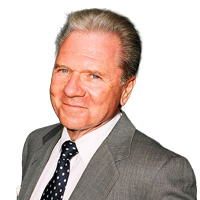
In 1977, Peterffy started his own business with $200,000 savings, writing programs and building systems to value and trade stocks and options, as a market-maker on the American Stock Exchange. He was the first to build mathematical models to calculate and disseminate continuous bid and offer quotations and to develop a tablet computer for use by his employees trading on exchange floors. By the late 80s, Peterffy developed a fully integrated, automated market-making system for stocks, options, and futures, that grew into a digital network encompassing most of the world’s exchanges. Starting in 1993, brokerage interfaces and customers were added to this network that continues to expand in products and customers all over the world.
Today, Interactive Brokers is one of the largest publicly traded electronic brokers with a market capitalization of over $100 billion. The firm provides direct access to trade executions, clearing, and custodial services for a wide variety of products, including stocks, options, futures, forex, bonds, CFDs, and funds on over 170 markets and in up to 29 currencies around the world.
Check this out and find out more at: http://www.interactivebrokers.com/
Looking for style diversification? More information on the TDI Managed Growth Strategy – HERE
Stocks mentioned in this episode: (OIL), (GLD), (SPY), (QQQ)