In short
The episode covers “Reduce, reuse and recycle” with three waste-cutting stories: disposable nappies, energy use, and plastic recycling into school desks. It claims babies drive major diaper waste (about 3,000 disposables in year one) and that switching to washable nappies can cut carbon by about a quarter; Brussels’ municipal nurseries (40 sites) are moving to washable nappies, aiming for 100% and avoiding ~200 tonnes of waste yearly.
Guests
William Kramer (BBC reporter on Brussels nurseries); Nermina Abdur-Rahmanovic (Fraunhofer Society researcher on energy-saving gamification); Makafui Awuku (Ghanaian entrepreneur/activist behind Makintosh Africa); Justice Beidou (reporter in Accra).
Notable examples
Snappies’ diaper collection/laundering system; Singapore/UK energy-saving app studies; Awuku’s “bottle Christmas tree” and plastic-sachet desks for Ghana’s ~2 million desk deficit.
Written by AI. May contain mistakes. Listen to the episode to check what was said.
Chapters
Tap a time to open that second in VOThe Waste Crisis from Diapers
1:17 to 2:16
Discussion on the environmental impact of disposable diapers.
“This is the documentary from the BBC World Service.”
Brussels Nurseries Go Eco
2:16 to 2:56
Brussels's initiative to switch municipal nurseries to reusable nappies.
“Well, mainly through disposable diapers.”
Inside the Nursery with Washable Nappies
2:56 to 7:25
A reporter's visit to a nursery using washable nappies, discussing their usage.
“In Brussels, the capital of Belgium, all 40 municipal nurseries are moving over to washable nappies.”
The Operations of Snappies
7:25 to 8:12
Exploration of how the Snappies service operates for washing reusable nappies.
“But I spot lots and lots of nappies going round and round in washing machines and tumble dryers.”
Parent Perspectives on Reusable Nappies
8:12 to 9:18
Parents share their thoughts on using reusable nappies at home versus at nurseries.
“Benidique tells me that though some parents were concerned about hygiene, the city has persuaded them to get on board.”
Economic Perspectives on Nappy Choices
9:18 to 11:39
Discussion on the socio-economic implications of using washable versus disposable nappies.
“It shows that change takes time, and that applies to changing time too.”
Economic Perspectives on Nappy Choices
12:01 to 12:29
Discussion on the socio-economic implications of using washable versus disposable nappies.
“automated investing, financial planning, thematic investing, retirement planning.”
Economic Perspectives on Nappy Choices
12:32 to 13:00
Discussion on the socio-economic implications of using washable versus disposable nappies.
“Fed up with losing out to hidden fees when you send money abroad with your everyday bank?”
Gamification in Reducing Waste
13:09 to 14:00
How gamification can help in reducing energy consumption and waste.
“And today on the program, we are exploring what I call the famous environmental R's.”
Gamification for Energy Saving
14:00 to 18:20
Learn how gamification can motivate energy savings through competition and progress tracking.
“and I started by asking her what gamification means.”
Show all 12 chapters
Innovative Recycling Solutions in Ghana
18:20 to 21:06
Discover how an entrepreneur is turning plastic waste into functional furniture for schools.
“Now we've looked at reducing and reusing.”
From Waste to Desks: A Creative Approach
21:06 to 24:15
Explore the process of creating school desks from recycled plastic and its impact on education.
“News media across Ghana and the world covered McCaffrey's bottle tree.”
Transcript
Automatic transcript. May contain errors.0:00This BBC podcast is supported by ads outside the UK.
0:30We do the things we do and how to make better choices to help avoid costly mistakes. Each episode covers the latest research in behavioral science and dives into themes like the power of self-control, shaping your mindset for success, navigating new beginnings and why starting over can feel so hard. Listen to choiceology at schwab.com slash podcast or wherever you listen. If you are currently overpaying on software to run your business, remember this number. 10 ,000. That's the number of new businesses that join Odoo per month. Join Odoo today at odoo.com. That's O-D-O-O dot com.
1:16The Documentary, home of the best documentaries from the BBC World Service. This is the documentary from the BBC World Service.
1:37I'm Myra Noobie and you're listening to People Fixing the World from the BBC World Service. A programme that's bursting with optimism. Every week we explore new ways to tackle old problems. and I can't wait for you to hear what I've got lined up. It includes nappies, gaming and classroom desks. We'll be exploring a key principle of environmentalism. It's all about the fantastic hours, reducing, reusing and recycling. Now, I never thought I'd say this, but babies are contributing to our global waste crisis. How? Well, mainly through disposable diapers. or nappies. I mean, don't get me wrong, I love kids, I've got two of my own.
2:22But these tiny, adorable humans can go through almost 3 ,000 disposable diapers in just their first year. Now, some people use washable nappies, which do need more time to clean and dry. But recent studies show that these reusable diapers save a quarter of the carbon footprint of disposable ones. One study even suggests that if 20 % of parents in the European Union switched to reusable nappies, it would save more than a million tonnes of waste a year. Well, one city is taking this challenge seriously. In Brussels, the capital of Belgium, all 40 municipal nurseries are moving over to washable nappies.
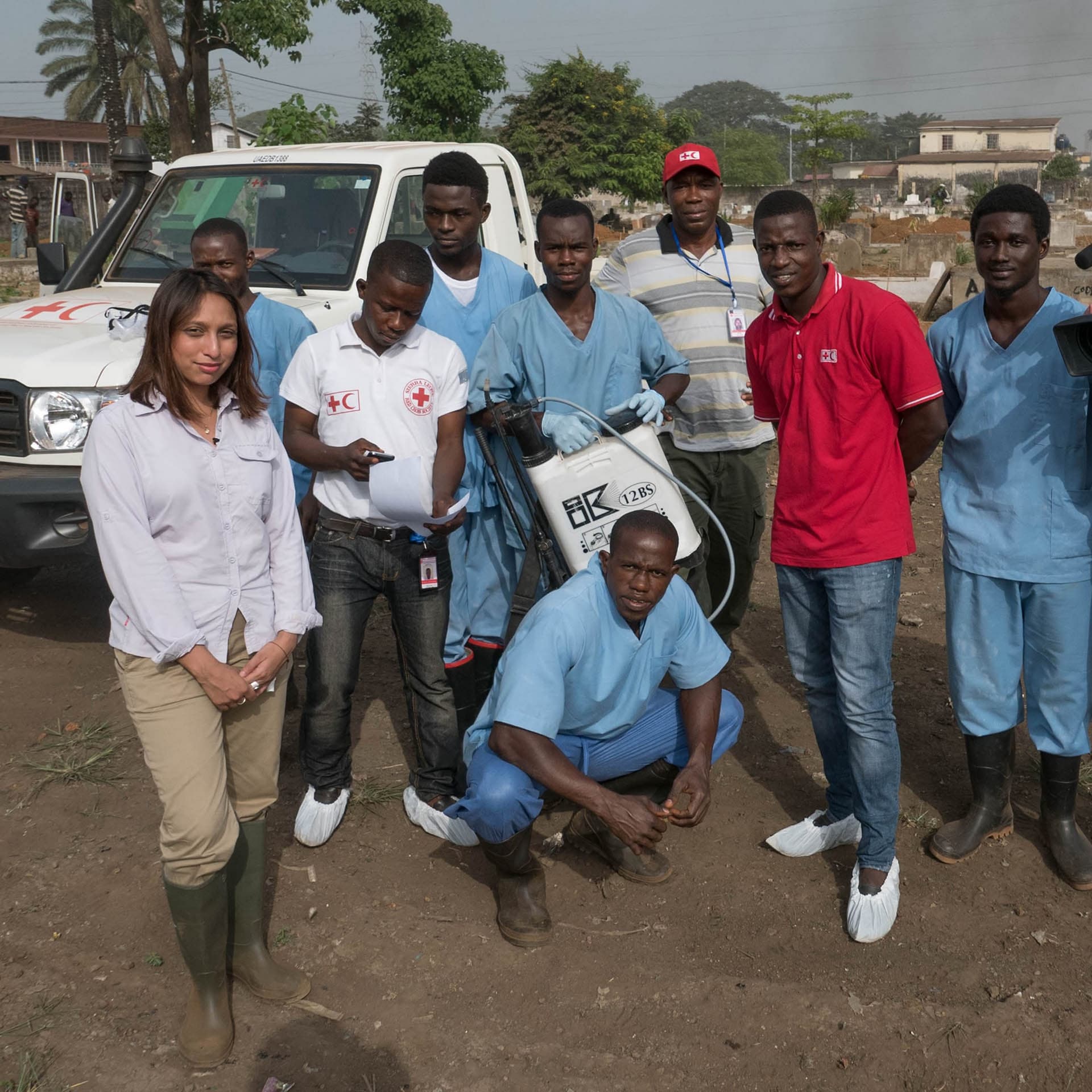
3:06Our reporter, William Kramer, went to sniff around. Hello, welcome to the nursery. Thank you. I've come to Wangari Mafai Nursery, a so-called eco-cresce in the north of Brussels. So we're a creche here, the babies are three months to 18 months. And then we have other sections where they're older from 18 months to 36 months old. And looking through this door, I can see lots of really small babies crawling around and rolling around. Maybe we can go in this one? Yep. I watched three little babies sit and gaze at their nursery teacher, Brandy, as she sings. Underneath their adorable little outfits, these children are all wearing reusable nappies.
3:57Like most of Brussels municipal nurseries, Wangari Mathai has moved over to using washable nappies and wet flannels during the daytime. While I'm in the room, none of the babies issues are code brown. But the nursery's boss, Alyssa, takes me to their neatly organised changing area anyway. OK, so you've got a couple of nappies here which are the reusable ones. And I'm just going to pick one up and have a look at it. So this is not something I had the guts to do when I was a parent. We talked about it, my wife and I talked about it, and then we decided not to do it. so this is a new thing for me to look at these reusable nappies and they are um they're quite nice actually they have a kind of shiny canvas like waterproof cover and i'm just opening it up and there's a lovely the inside of it is is lovely and fleecy actually it's it's much nicer than a disposable nappy i have to say and it's with microfiber so it's really soft as well for the skin.
4:58Yeah, lovely. And do you find the children, they like these or they're just used to them? Well, I think they can't say yes because they don't speak, but they're not bothered at all. So we can't see any difference from another nappy. That's all well and good. But what about the staff? I speak to Brandy, the nursery teacher. She is only three weeks in this job, but hasn't been scared off by the toileting arrangements. I have worked in multiple crashes and I have never used washable nappies. This is my first time using them and working in an eco-crash. What do you think of the eco-nappies? How do they compare to the normal ones?
5:41So the first point, and I think the most important one, is it's really ecological for the planet. Less things to throw in the bin. The texture is really soft for the children and they really like that texture. What's really good is that it's an outside firm that washes them. We just put them in a normal bin and they come and get them and wash them. This last point is key. Even with the largest punami, Brandy and the other staff don't need to empty the nappies. They just fold them up and chuck them in a laundry bin, the same as they would with a disposable nappy. The difference is, instead of being emptied into a rubbish truck, those bins are collected by a company called Snappies, who supply and launder all the nappies.
6:27Every two days, the mildly biohazardous garments are loaded onto Snappy's cargo bike and driven to their processing centre. I'm Emric, I'm the co-founder of Snappy's. So when we unload the cargo bikes, we just put the dirty one here. We separate the different diapers, then they go into the washing part. Part of the appeal of the system is the staff don't have to deal with removing poo. So do you remove the poo manually or how does it work? So basically, so the dirty part, we take care of it. So when the diapers arrive in our warehouse, we have to open each one of them to see what's inside. And if there is a poo, we extract it manually.
7:14It takes a second, but we do it ourselves instead of the daycare. Tragically, this poo extraction procedure is not taking place during my visit. But I spot lots and lots of nappies going round and round in washing machines and tumble dryers. And at a table at the back of the laundry, four guys, quite big guys with tattoos, gently sort and fold the clean nappies to send back to the city's infants. Snappies conducted one million nappy washes last year, and their biggest customer is Benedit Houbinot at the city government. For the moment, 75 % of our nurseries use reusable nappies and for next year we'll be at 100%.
8:01All the new children will use reusable nappies. Each year it will be 200 tonnes of waste avoided and it's like about, it's equivalent to the weight of 30 elephants. Wow. OK, that's a lot of poo. Benidique tells me that though some parents were concerned about hygiene, the city has persuaded them to get on board. And the parents I meet are keen on the reusable nappies. At least they're keen on them while their babies are at the nursery. We would love to do it also for us at home, but it was not really an option. We are living in a 55 square meter apartment. I didn't use them because I thought, what do I do with the poo at home?
8:49I have to clean myself. You need maybe a washing machine or something. We chose not to have nappies, reusable nappies at home because life with a newborn can get, anyway, extremely overwhelming. but we were very happy that she doesn't produce any plastic waste, let's say, when she's here. These three mums, like most parents in Brussels, still use disposable nappies at home, which means their babies arrive at the nursery and go home using them too. It shows that change takes time, and that applies to changing time too. Nevertheless, the city of Brussels is bum-shuffling in the right direction. Bravo!
9:38William Kramer, who brought us that report, with me in studio now. I'm going to start calling you our diaper correspondent. Diaper daddy. OK. Well, back to the solution. I can understand, as a mum, why parents might be a bit sceptical. Cleaning diapers takes time, but it's also not very pleasant. No, it's not something that I chose to do. As I mentioned in the report, like we didn't do it for my two kids. I think it's when you've got a new child, anyone that's had a baby is so overwhelming, like one of the people in that report said. And so this idea of going through removing poo from the nappy and then cleaning it, you know, it's just like, no, thank you.
10:19But I think that's what's really interesting about this story is that they, you know, they've identified what's stopping parents from doing that. and they are basically allowing these nurseries to to treat their reusable nappies like disposable ones and just they don't have to do that the the big guys in the warehouse do that i know with tattoos yes well where i come from in kenya you know having disposable diapers is also a sign of kind of having gone up your ladder your lifestyle ladder and people who still use washable ones might be seen as coming from different economic backgrounds. Yeah, it's interesting, isn't it?
10:57It's kind of the opposite in Europe. It's like, I think, reusable nappies, it's almost like you have to be quite privileged, I think, to have the time, to have the space to hang them up to dry or a tumble dryer. You know, it's quite a kind of middle-class hippie thing almost. But snappies now offer a kind of at-home service too. So you can pay a little bit extra, 55 euros a month, which is about 65 US dollars and parents can actually drop off the dirty nappies at the nursery and they get collected and washed and given back to them and also brussels government offers parents 100 euros or 115 US dollars to try and get into like to try and start using reusable nappies can i ask is this monthly or the 100 euros 100 euros is one off it's to buy the reusable nappies to get going with it yeah so that's an alternative way of doing it yeah Anyway, enough talk about that.
11:51Thank you, William, for what we've heard today. You're welcome. This is the documentary from the BBC World Service.
12:00Self-directed investing, trading, full-service wealth management, automated investing, financial planning, thematic investing, retirement planning. Phew. And to think, that's just a small taste of what Schwab offers. Because Schwab knows that when it comes to your finances, choice matters. No matter your goals, investing style, life stage or experience, Schwab has everything you need, all in one place, so you can invest your way. Visit schwab.com to learn more. Support comes from Wise, the smart way to manage the currencies you need around the globe. Fed up with losing out to hidden fees when you send money abroad with your everyday bank?
12:41Choose the smart way. Wise. You can count on the exchange rate you'd usually find on Google. No unwelcome surprises. Plus, ditch that where's my money feeling. Most transfers arrive in under 20 seconds. Join millions saving billions on hidden fees. Be smart. Get wise. Download the Wise app today. T's and C's apply.
13:08I'm Myra Anubi and this is People Fixing the World. And today on the program, we are exploring what I call the famous environmental R's. Reduce, reuse and recycle. Of the three behaviors, the most impactful is to reduce for us each to try and consume less in the first place. But it's arguably the hardest to do because it means changing the way we live. However, what if reducing what we use could be fun? Turns out energy agencies across the world have been using this idea over the last 15 years with striking results. They've been encouraging people to reduce their energy consumption by turning it into a game.
13:51They call this gamification.
13:56Well, I spoke to Nermina Abdur-Rahmanovic, a researcher from the Fraunhofer Society in Germany, and I started by asking her what gamification means. So gamification basically means taking elements that we know from games and using them in a context that isn't actually a game. Giving people points for inducing their consumption, setting them challenges or targets. We can also show them progress, give them rewards. So is this, Namina, basically like what, like Duolingo, but one that helps you save energy? Yes, definitely. So it's the same concept. But Duolingo is a gamification for learning languages.
14:39This would be gamification for energy saving. When you have this little bird telling you that you have to fill out your task for today to learn language, something similar would happen in this app. You would get a little bird or something else telling you that you should reduce your consumption for next two hours, and then you can get some points for it. What also they could see is how their consumption looks like in comparison to their neighbor. This has also been shown to be very successful, like the comparison and this competition feeling like when people see that others are achieving more, they feel more motivated.
15:16They also achieve more. You're going to get neighbors to start going against each other. It's actually together for the same goal. I mean, it feels like competition, but in the end, they have the same goal to save energy and also to help the environment. And could you give me some examples of how this has been done? Some studies that I could mention or some examples that I can mention are, for example, a study in Singapore. They were giving people personalized feedback and specific energy saving goals through app. and people had goals, set targets for reducing their consumption. And what is very interesting that, for example, households that were given 5 % saving target achieved even 8%.
16:04Those who have been given 10 % achieved even 12%. Another example, Energy Aware. Energy Aware was in the UK. And here people interacted with a game that used storytelling, points, challenges. Here, savings reported 3 % for electricity and 7 % for gas. And when you hear these numbers, 3 and 7, it may not sound that much. But when you have a large number of households, the overall effect is significant. Right. I mean, I still wonder here, when you play a game, it could be exciting for the moment, but can this have lasting benefits? Can people really stick to it? So it has been shown that after some time, motivation and engagement declines.
16:53What could help in this case is to have some personalized gamification. So based on how much people engage and which parts of gamification they engage the most, we could adapt our concept so that it still stays interesting for people. But overall, do you think gamification could actually work to help people reduce their energy? Definitely. I think the studies that we have already researched show that it works. We are currently also working on a simulation-based study, which is very, very promising and shows that gamification could work even if we have a system where not all people play. It seems promising.
17:39I suppose also for people who might find it quite nerve-wracking keeping up with their energy needs needs or just find it very expensive. It's good to move from being stressed about it and have a fun way to do it. Exactly. And also when you see your progress, that's what really helps because sometimes people do it, but they don't see any progress until the end of the month when they get bill. And in this case, it all combines into a positive outcome. Well, please don't tell me about bills. I've just seen mine. So I know what you mean. Thank you so much, Normina, for showing us that solutions can be fun.
18:16Yeah, I'm glad I had the opportunity to do that. Thank you as well. Now we've looked at reducing and reusing. So all that's left to tell you about is recycling. But first, how about a little message from one of our fans? I drive around the town a lot and people fix in the world. It's one of the programs I listen to a lot. I think that's one of the things that have encouraged me on my personal journey, I have to tell you. It's a wonderful program. That's Makafui Awuku. As well as being an avid listener of the show, he's also a well-known entrepreneur and activist in his home country, Ghana. His latest project is to turn plastic packaging into school desks.
18:55And our reporter, Justice Beidou, went to meet him in his workshop in the capital city, Accra. Well, so this is Makintosh Africa. Welcome to Makintosh Africa. So let's walk around and let me show you some of them. A big guy with a big smile. Macafui Aoku has an infectious passion for recycling plastic. He shows me his current stockpile. So it's a huge heap of plastic bottles, sachet rubbers that have been collected together that are stuck here. It's huge. How much plastics do we have here? So what you see here looks like about 400 kilograms. Wow, that's a lot. We generate about 1.1 million metric tons of plastic waste in Ghana every year.
19:44But McAfee tells me that plastic in itself is not a problem. It is how it is handled that is wrong. In Ghana, it is thought that just around 5 % of plastic is collected for recycling. People just leave it on the floor. When the wind blows, it just takes it around the whole environment. It's in the gutters, it's on the streets, it's in the environment. and then when it rains, the rain takes them into the storm drains and it washes all of them into the ocean. Then there's a systemic problem where waste management, most of the landfills we have are not engineered landfills. They are just bare land that they just dump the waste.
20:21And then there's accidental fires in our landfills where there's a lot of smoke coming from the landfills because of the methane gas, which is highly flammable. This toxic smoke is a particular problem for Macafui, who suffers from severe asthma. Some time ago, he decided to do something about it. Not by writing letters or protesting, but by building a 20-foot Christmas tree. So this is our famous bottle Christmas tree. This is where it all started. So I was like, what can I do? It was somewhere around November. I was like, what can I do? I was like, well, Christmas is in the Cana Haber if I make a Christmas tree from bottles.
21:00So I made the first one. I put it on a major street in Medina where I lived and it went viral. News media across Ghana and the world covered McCaffrey's bottle tree. He even had a visitor from America who came to Accra to learn how he made it. That successful stunt taught McCaffrey an important lesson. People are more influenced by what they see than what you tell them. So I moved from trying to explain to people what I was doing to letting them experience this for themselves. Nobody needs to explain what this is to you. People see it and it makes a lot of sense. Examples of this design-first thinking are all around McAfee's workshop.
21:44On one wall, old ties have been brightly painted and turned into hand-washing basins. Dozens of old flip-flops and bottle tops decorate a large public shelter, itself made from recycled plastic. But taking up the most space are several rows of school desks arranged as if in a classroom. McAfee's latest project addresses another problem here in Ghana, a shortage of school desks. We have a lot of desk deficits in our schools. We have a desk deficit of close to 2 million. But then when I visited some of the schools, I realized the frames are still intact. So I took this metal frame from one of the schools and then I brought it to the file.
22:25I was like, guys, can we remake a new desk from this? and like, yes, we can do it. So that's what we are doing right now. McAfee makes the refurbished desktops not from bottles, but from the plastic sachets that are commonly used for drinking water here in Ghana. He has 300 drop-off points for the sachets around the country. And he supplements these by buying more that have been gathered by waste pickers. So the plastic robbers have been shredded apart and when you dip your hands in it, it feels like a feeling for a pillow. So when the dry shreds come here, we have this heat transfer equipment.
23:10And then we have hydraulic press that we use to press it.
23:19Okay. So we set it and then we wait. So this looks to me like a big sandwich making machine, but instead of sandwich, this is plastic materials that have been put into this machine and then been pressed together. Yes, that's close enough.
23:40These sandwich machines can create a range of materials from a leather-like fabric to these desk boards that are just like plywood. They are sanded.
23:56and drilled to the desk frames. So far, McAfee has supplied 600 desks to 12 schools around the country. They cost about 60 US dollars each, but they are not paid for by the schools, but with grants and corporate donations. I travel to a nearby school to see them for myself. So this is a classroom of about 60 pupils, and as I enter here I can see Macapre's desk lined up with the students sitting on them and using them. I'm just going to go have a chat. When we are writing exams, you know the wooden decks, they are not that smooth for the paper. So when we are writing, the writing don't look smooth, but those are good cards.
24:40It's really helpful. The wooden decks, they break easily, but these plastic decks, they don't decay and they don't break easily. They are very hard. Well, I can't resist asking the students to test the strength of the desks. OK, so three, two, one, go.
25:00Thank you. Justice Beidou reporting from Accra, Ghana. And that brings us to the end of this week's programme. But before we finish, I want to turn this over to you. Do you have any clever tips or ways that you are reducing, reusing or recycling? Let me know by sending me a WhatsApp message to the number plus 44 8000 321 721. I'm Myra Anubi and you've been listening to People Fixing the World from the documentary. As long as there are problems out there, I'll keep coming back with solutions. Until next time, thanks for listening.
From the publisher
We look at three solutions connected to the “three Rs” – reduce, reuse and recycle. The city of Brussels in Belgium is in the process of moving all 40 municipal nurseries over to reusable nappies – and have managed to do it without their staff kicking up a stink! Also energy companies around the world have found ways to encourage customers to reduce their consumption by making it fun, and lastly we meet Makafui Awuku in Ghana - a man on a mission to turn used plastic into school desks.