In short
The 1986 Philippines People Power Revolution (EDSA) and how Catholic faith motivated largely nonviolent resistance to Ferdinand Marcos Sr.’s martial law, plus reflections on why later Marcos-era politics and corruption persist.
Guests (backgrounds)
- Sen. Gregorio “Senator Honasan” (former military officer; founded Reform the Armed Forces Movement in 1982; later rebelled against Marcos).
- Sister Mary John Mananzan (Benedictine nun; superior/director of Saint Scholastica’s Academy in Pampanga; social-justice activism against oppression).
Key claims
- Faith provided courage, conscience, and “values to overcome fear,” enabling soldiers and nuns to defy orders.
- EDSA succeeded largely “bloodlessly” because crowds acted as a buffer preventing confrontation.
- The revolution removed a dictator, but the system and corruption remained.
Notable examples
- Sisters’ solidarity during a forbidden factory strike; workers were pushed into buses and beaten.
- A rally where soldiers fired, killing 27 farmers.
- Cardinal Sin’s Radio Veritas broadcast urging people to go to EDSA to stop tanks.
- “Flowers to the tanks” inspiring other peaceful revolutions (e.g., Berlin Wall era).
Written by AI. May contain mistakes. Listen to the episode to check what was said.
Chapters
Tap a time to open that second in VOFaith and Revolution
2:25 to 3:36
Exploring how faith influenced the struggle against dictatorship in the Philippines.
“For Heart and Soul, which hears personal stories of faith, I'm going back to 1986, to what's now known as the Philippines' People Power Revolution.”
Martial Law Era Overview
3:36 to 4:59
Understanding the impact of Ferdinand Marcos declaring martial law in 1972.
“In 1965, Asia's oldest democracy had elected Ferdinand Marcos Sr.”
Sister Mary's Call to Activism
4:59 to 6:15
Sister Mary discusses her journey into activism during oppressive times.
“Why did you choose to become a nun sister?”
Military Perspectives on the Regime
6:15 to 8:14
Exploration of the disillusionment of military members with the Marcos regime.
“There was this factory strike, which was forbidden at that time.”
Civilian Struggles and Protests
8:14 to 10:36
Discussion on the dangers faced by civilians during protests against Marcos.
“casualties, the effect on the lives, liberty, and property of innocent civilians.”
Crisis of Conscience
10:36 to 11:37
Senator Honasan reflects on his moral decision to rebel against orders.
“In early 1986, snap elections were held.”
Turning Point of the People Power Revolution
11:37 to 14:03
The pivotal moments leading to the people's uprising against Marcos.
“You have to make a choice between good and evil.”
The Voice of Radio Veritas
14:03 to 15:42
Discover how Radio Veritas became a crucial voice during the people power revolution.
“and the Catholic-run Radio Veritas, attacked today by...”
The EDSA Experience
15:43 to 17:46
Hear firsthand accounts of the miraculous events during the EDSA revolution.
“And for us sisters, we are already veterans in going to the streets.”
A Bloodless Revolution
17:47 to 20:21
Learn about the extraordinary nature of the bloodless Philippine revolution.
“in the last hope for democracy, and we are on their side.”
Show all 14 chapters
Global Influence of EDSA
20:22 to 21:04
Explore how the Philippines' revolution inspired global peaceful protests.
“The Philippines' people power revolution changed the future of the country.”
Reflections on EDSA's Legacy
22:26 to 25:09
Hear discussions about the continued relevance of EDSA's lessons in today's politics.
“I'm hearing how the Catholic faith underpinned the peaceful protests in the Philippines 40 years ago that helped overthrow a dictator.”
Faith and Activism
25:10 to 28:04
Understand the connection between faith and activism for the speakers.
“here comes a mother whose child is going to have an entrance exam.”
Faith and Activism Intertwined
28:04 to 29:08
Explore the connection between Catholic faith and activism in the Philippines.
“Do you consider your activism and your Catholic faith to be intertwined?”
Transcript
Automatic transcript. May contain errors.0:00This BBC podcast is supported by ads outside the UK.
0:30Make your travel dollars work harder. Follow Smart Travel on your favourite podcast app. Ever wonder why we make the choices we do? And how to make smarter ones? Introducing Choiceology, an original podcast from Charles Schwab. Join Wharton Professor Katie Milkman, an award-winning behavioural scientist and author of the best-selling book, How to Change, as she shares true stories from Nobel laureates, authors, athletes and everyday people about why we do the things we do and how to make better choices to help avoid costly mistakes. Each episode covers the latest research in behavioral science and dives into themes like the power of self-control, shaping your mindset for success, navigating new beginnings, and why starting over can feel so hard.
1:20Listen to choiceology at schwab.com slash podcast or wherever you listen.
1:34This is Manila, the capital of my home country, the Philippines, and the city I spent my university years in. Today, these streets are busy with traffic and street vendors, but 40 years ago, they were occupied by Filipinos demanding change.
1:56We don't have to worry about anything anymore. Everything is alright for us. We went in front of the tanks and we told them, please don't go. And of course they cannot go because we are in front of the tanks. They cannot run over us.
2:10Gregorio ‘Gringo’ Honasan:We were dreaming hard. Young, idealistic, professional soldiers. We were also praying very hard. We felt that we were being true to the oath we took as professional soldiers, as protectors of the people. I'm Jay Beruzi, and this is the documentary from the BBC World Service. For Heart and Soul, which hears personal stories of faith, I'm going back to 1986, to what's now known as the Philippines' People Power Revolution. I'm speaking to some of the last people alive who were at the heart of what happened, to hear how their Catholic faith helped overthrow a dictator and restore democracy to our country.
2:52Gregorio ‘Gringo’ Honasan:What was miraculous, and I fall back on my sense of faith during the time, was the divine intervention that happened. We were afraid that the spirituality means you have values in yourself that can make you overcome fear. That for me is a very deep spirituality.
3:17When I was a schoolgirl in the late 90s, I of course learned about the history of the Philippines. But while it's one thing to read about it in the history books, it's quite different to hear about it firsthand from people who lived through it only a few years before I was born. And as I've been finding out, hearing how their faith supported them through the revolution. In 1965, Asia's oldest democracy had elected Ferdinand Marcos Sr. Eight years later, however, in 1972, just before the end of his second term, Rather than leave office, he declared martial law. We are going to reform many things in our society.
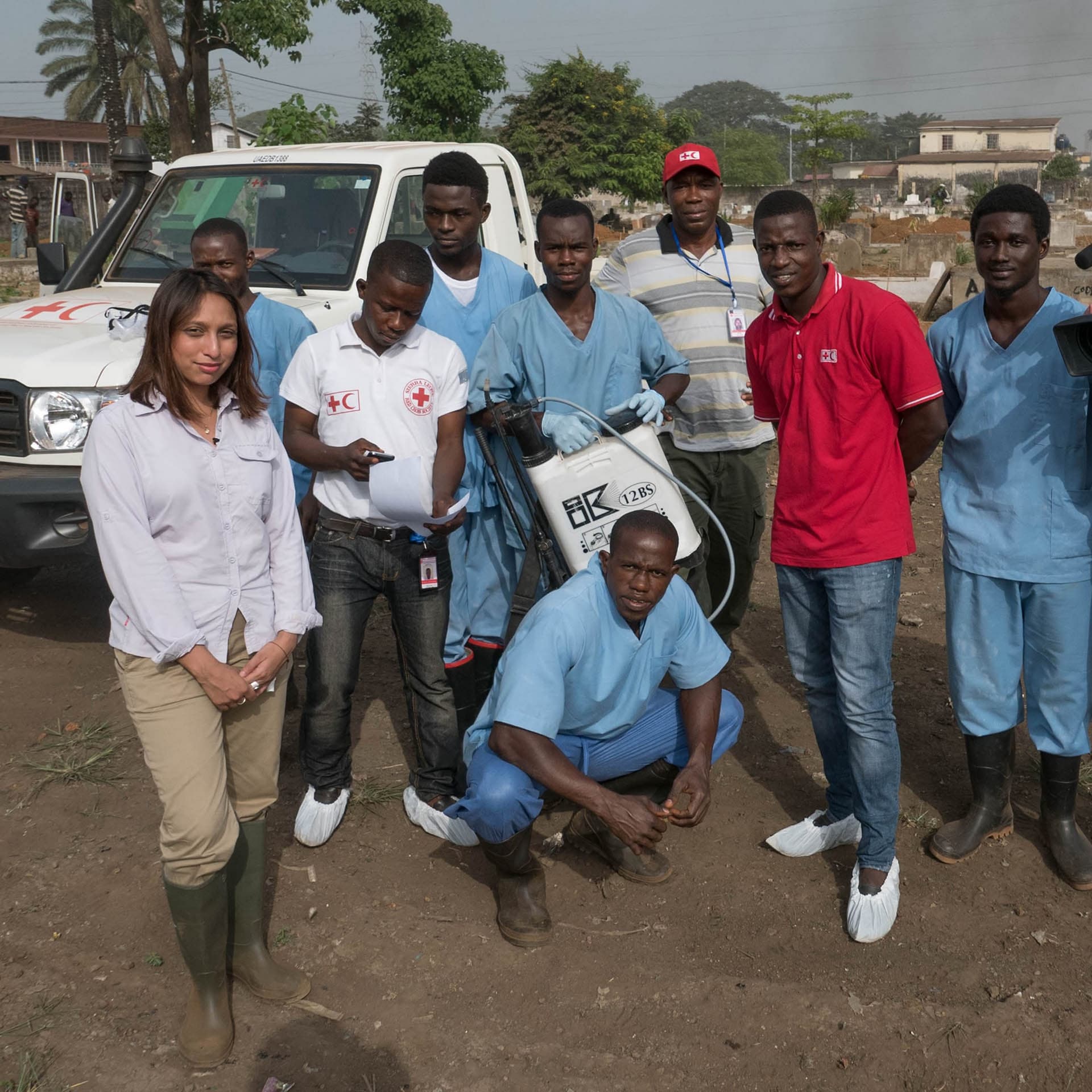
4:07Martial law is required because of necessity. Parliament was suspended. Opposition politicians were arrested and total censorship imposed. The army and police tortured and killed his opponents, while millions of people lived in extreme poverty as the country's debt mounted. It started with the workers and then we got involved with the urban poor because these workers were also living in slum areas. I am Sister Mary Jan Mananzan. I am a Benedictine sister. We are actually missionary Benedictine sisters of Tutsing, Germany. But we are the Manila Priory of that congregation. Right now, I am the superior and director of our Saint Scholastica's Academy, San Fernando Pampanga.
4:58In a country that's more than three-quarters Catholic, the church was part of the opposition. Why did you choose to become a nun sister? You know, it's funny. Whenever they ask me that, I say, maybe inertia. Because I have been in our school since I was a little girl. and of course there were sisters there and I used to bring their books when they go back to their cloister and I used to be very curious. I looked inside because you cannot go inside. It is supposed to be off limits. But all the more we were very curious and I became the border, as you call it. So I got to hear the beautiful Gregorian chant and I also heard them laughing together in their recreation.
5:43And also I was thinking about what is this spiritual life and all that because we are getting that from theology. And then at that time, you cannot have any influence on the grassroots if you were not a social worker or unless you are a nun. So I was thinking, oh, I like to work with the poor. So the only way I can do that is if I will become a nun. I was only 19 years old, you know. I graduated college in March and I entered in May. That desire to help the poor stayed with her. In 1975, Sister Mary had returned to the Philippines after studying abroad. And what she found horrified her. There was this factory strike, which was forbidden at that time.
6:28But some sisters were already active. So they called me and they told me, you know, we are very afraid that the Metrocom, the policemen were called Metrocom at that time. I think they are going to go to that strike. They will forcibly, you know, get all the workers and maybe they will even torture them. So I said, oh my goodness, I am a nun and I cannot go out of my convent without permission. But it was 11 o 'clock at night. So I said, how will I ask permission? I will like my sister superior. Dear sister Kathleen, I'm going to De La Tondeña strike. I don't know when I will be back. Love, sister Mary John.
7:07And I put it at her door. And it's a good idea that because we came home at one o 'clock and I really saw the workers being pushed into buses, you know, like the Christ after the scourging at the pillar, all blooded like this. And really that made me so angry about what are they doing with these workers? So that there and then I said, I have to be in solidarity. And then afterwards we found out that the farmers were even more oppressed. So that's how it happened that I got really involved in activism. And she wasn't the only one shaken by the oppression in the country. When I started my military career, we followed to the letter almost.
7:48Gregorio ‘Gringo’ Honasan:All orders and instructions were the commander-in-chief, who was the president, Ferdinand Marcos Sr. Gregorio Hanasan, now Senator Hanasan, was a soldier. But over time, we felt that some of the decisions that were emanating from the highest levels of government were, to us, not correct, not right, because of the collateral damage, the casualties, the effect on the lives, liberty, and property of innocent civilians. You wanted to be a priest before becoming a soldier. How important was your faith to you when you were younger? I went to Catholic schools. I was baptized a Catholic. So I looked up to my teachers, my mentors then, and I saw most of them as role models.
8:42Gregorio ‘Gringo’ Honasan:But then I got to know some of them better, and it humanized my outlook, that I didn't have to enter the seminary to serve God, country, and family. So I changed track. Then I wanted to become a doctor. But since my father was a soldier and the economics of the family would not allow me to take a medical course, he convinced me to enter the Philippine Military Academy. During my first year in the academy, of course, it was tough, rigorous. After the first year, I was in love with the military profession. So it was a sort of combination between the priesthood and a medical profession. What do you mean by that?
9:31Gregorio ‘Gringo’ Honasan:Public service. I was wired to the old Jesuit saying that you become a man for others and a man for all seasons. Despite his love for public service, by the early 1980s, Senator Honasan had become disillusioned with the way the military and police were being used in the Philippines. In 1982, he set up the Reform the Armed Forces Movement. You mentioned life for the average civilian. Can you tell us more about that? What was it like for them? Some of them died in the crossfire. Some of them were deprived of their liberties. And we saw that first time because we were out there in the field following orders from a duly constituted authority, the so-called chain of command.
10:22Sister Mary also saw what happened to those who protested. I still remember one rally that we went to in Malacanang Paras, and actually the soldiers fired into the crowd and 27 farmers died. In early 1986, snap elections were held. Ferdinand Marcos declared himself the winner, but there were widespread accusations of fraud and violence. The Philippines on the brink of civil war But President Marcos says I'll fight to the last drop of blood By February, the Philippines had reached a boiling point As the BBC television show Newsnight reported in the UK Senator Hunasan was faced with a crisis of conscience
11:10Gregorio ‘Gringo’ Honasan:So we broke away, we went out of barracks which is actually a break in tradition because soldiers are supposed to follow orders. Now, how did it display into my faith? Well, I guess that goes back to the issue of conscience. You actually defer to your conscience to determine what is right and what is wrong. And that is how we resolve the issue. You have to make a choice between good and evil. Are you willing to make a sacrifice in action? Because that takes courage. You have values in yourself that can make you overcome fear. That for me is a very deep spirituality. As the pressure grew, the armed forces, the backbone of Ferdinand Marcos' power, began to rebel.
12:04Senator Hunasan and his men left their posts. The split within the armed forces was instigated by the abrupt defection last Friday of the defence minister Juan Enrile and the deputy chief of the armed forces Fidel Ramos. They claimed they had to act before President Marcos arrested them and they called on all the armed forces to join them.
12:24Gregorio ‘Gringo’ Honasan:What prompted us to rebel? We felt that since we were soldiers of the Filipino people. We were sworn to protect the lives of the people government itself served. We felt that we had to join them. Can you tell me about your moral decision to not follow those orders and rebel? The Constitution itself tells us very clearly, you protect in order of priority life, liberty and property. And this mandate, drawing deep into our conscience, was what government itself during that time was violating. Tonight in Manila, fires are burning on the streets around the corner from Mr. Marcos' presidential palace.
13:09Armed guards fired into the air to frighten off the opposition. We plan to assault the palace, the seat of political power, not to harm the occupants,
13:20Gregorio ‘Gringo’ Honasan:but to take control of the situation and present them to our people for judgment. It was not a power gap. We just wanted to be instruments of transition by taking the side of the majority of our people.
13:36But the plan to arrest the Marcoses was leaked to the president, exposing Senator Hanasan and his men. They withdrew to their headquarters, but they knew it was only a matter of time before the president's forces would come for them. President Marcos is at the presidential palace with loyal troops, while the rebel troops are at Camp Crame, about seven miles to the east. To the north are the Channel 4 TV station seized by rebels and the Catholic-run Radio Veritas, attacked today by... 846 Veritas. Radio Veritas had become the voice of the people. And then, Cardinal Sin, the Catholic Cardinal of Manila, made this historic broadcast.
14:46Willie and General Ramos have expressed their position with respect to the legitimacy of the government. We appeal to our people to pray for a just and peaceful resolution of this crisis. Cardinal Sin at that time, the Cardinal of Manila, then called upon all of us to go to EDSA, to that street, so that the soldiers of Marcos cannot pass the street to go to the place where Ramos and Enrily were. Edsa means Fafano de los Santos Avenue. That is the name of a street. It's a very long street, and now it's full of traffic. But at that time, that was the main thoroughfare. I ask you now to be calm and to be prepared to express again your power as a people.
15:41ministering really and those with him have appealed for food and expressions of support those of you who wish to help should do so in the meantime continue to listen to radio veritas and I shall speak to you again let us pray together let us not allow a drop of blood to be shed So Cardinal Sin said to us, please come to the EDSA so that there will be no bloodshed. And for us sisters, we are already veterans in going to the streets. So at that time, we just all went.
16:25Gregorio ‘Gringo’ Honasan:What was miraculous, and I fall back on my sense of faith during the time, was the divine intervention that happened. People were gathered in the streets for reform. They were not waving red or yellow flags. They were there as if they were joining a picnic with their families to express their desire for meaningful change. There was a big tank there already. And I remember that we saw the soldiers just sitting there and I asked them, where are you going? And they said, we are awaiting commands. And I said, what command? Well, they will tell us what to do. So I said, oh my goodness, I think they're going to really go into Krami now.
17:08So what we did, we went in front of the tanks, and we told them, please don't go. And of course, they cannot go because we are in front of the tanks. They cannot run over us, no. We were there for three days. In fact, I brought my mother, who was 87 years old. Well, it looks as though people's power is succeeding, backed by a good deal of military persuasion. The new armed forces under General Ramos appear to have kept the city quiet overnight, partly by the sheer crowds in the streets, probably over a million people, some of them near the palace, of course, also around Camp Crame. We are proud of Minister Anrila and General Ramos of what they have done to the Filipino people in the last hope for democracy, and we are on their side.
17:57Even those who couldn't go out onto the streets were sending their good wishes through Radio Veritas.
18:27was that we would be mobbed and there would be a confrontation. But when we crossed, the people started cheering.
18:35Gregorio ‘Gringo’ Honasan:Some started crying. Some started to embrace the group that was crossing. So at that time, I felt that whatever happened, we had already won. And a lot of those people, they flocked to the camp to help you and protect you. What did you think of that? The people provided the buffer that prevented a head-on confrontation. That was the miracle of the whole thing. So it became a practically bloodless people power revolt. If you look to the front, as far as your eye can see, people, if you look to the back, as far as you can see, I never ever saw in my whole life something like that. So in fact, what came to my mind is for one brief shining moment, you know, it was euphoric.
19:22I wasn't scared at all. It wasn't scary. I saw the people there. They were not afraid. They were giving food to each other. So I said, why should I be afraid? So that was what EDSA was. It was a euphoric event.
19:35Gregorio ‘Gringo’ Honasan:When the army and the people get together, nothing is forever. You can change the most hard-headed, the most corrupt, the most inefficient government. When did you realize that the revolution had happened, that you had achieved what you had set out to do? but with only very little violence as well. That's what makes this so extraordinary. Yes, that's where divine providence comes in. That's where faith comes in. They even consider the miracle because in other countries, in other cultures, normally change like that. Governments are changed through violent means, certain levels of violence. In the case of us in the Philippines, We consider ourselves a state-of-the-art in revolutions.
20:31The Philippines' people power revolution changed the future of the country. But Sister Mary says it also had international repercussions. If you look at the Berlin Wall, what was the inspiration of the Berlin Wall? us, EDSA. They really copied us bringing flowers to the tanks, I remember. So it's not just a theoretical thing. We did actually influence some of the peaceful revolution in the world.
21:05Tyler Reddick here from 2311 Racing. Victory Lane? Yeah, it's even better with Chumba by my side. Race to Chumbacasino.com Let's Chamba. No purchase necessary. VGW Group. Void where prohibited by law. CT &C's 21+. Sponsored by Chamba Casino. At BritBox, character is everything. Stream the iconic characters defining British TV on BritBox, including Ludwig. I think I might just have solved a murder. Vera. Now we're getting somewhere. Agatha Christie's Poirot. Bonjour. And more beloved favorites. I'm a policeman. I'm a professional. I'm a time lord. In the Duchess of York. Once you know them, you never quite forget them.
21:42I be in vain. I just am special. Stream the best of British TV on BritBox. Watch for the free trial today at BritBox.com. Today's episode is sponsored by NerdWallet's Smart Money Podcast. Personal finance can feel like a pop quiz you didn't study for. This podcast is your study guide. On NerdWallet's Smart Money Podcast, you'll hear from trusted journalists who explain the why behind major financial decisions. You'll get research-backed insights and clear pros and cons. whether you're planning a big purchase or just want to grow your wealth. Make your next financial move with confidence. Follow NerdWallet's Smart Money Podcast on your favorite podcast app.
22:25You're listening to Heart and Soul with me, Jay Beruzzi. I'm hearing how the Catholic faith underpinned the peaceful protests in the Philippines 40 years ago that helped overthrow a dictator.
22:41But in the Manila of 2026, for some of those who witnessed the EDSA revolution, it can feel as though history is repeating itself. After ousting Ferdinand Marcos Sr. 40 years ago, in 2022, the Philippines then elected his son as president. Ferdinand Jr., nicknamed Bongbong, has ruled since, although his government has also seen protests and accusations of corruption. There's a saying, a lot has changed but nothing at all You've also been involved in the very recent trillion peso marches against yet another Marcos government, now it's Marcos Jr. What was that like? You know, I think that EDSA did not fail us, we failed EDSA Why?
23:31Because we banished a dictator Imagine, for me that was the great thing our non-violent revolution actually ended the Marcos dictatorship. Now, what is the mistake? For me, the mistake was after we finished as if, oh, let them take care of it. The people who are coming now will take care of it. But unfortunately, the system remained.
24:00Gregorio ‘Gringo’ Honasan:Maybe it's semantics, no? But revolution connotes meaningful change. And that is, I think, the opportunity that we missed. Since then, it happened 40 years ago. What have we been doing economically, politically, even in terms of national security? We have been doing the same things historically over and over again and expecting a different result. But Ferdinand Marcos Jr. says he is expecting a different result. Although he's acknowledged there is corruption in the Philippines, he's calling on people to report it and has launched a website for that purpose. I wondered how both Senator Honasan and Sister Mary now see the future of the Philippines.
24:48I would be a prophet if I can say how do I see the future of the Philippines. I'm sorry to say that I am not very optimistic. because it's so difficult to subdue corruption. It's not only the government. It's in all institutions. In fact, you know, even in our school, I remember when I was president of Saint Scholastica, here comes a mother whose child is going to have an entrance exam. And what does she have? She has a letter of a bishop. It's like if she will give me the letter of a bishop, it's like I'm supposed to just pass her daughter. So I told her, ma 'am, if your daughter passes, then thanks be to God.
Read the full transcript
25:34If your daughter does not pass, even a letter from the Pope, I am not going to follow it, I said.
25:42Gregorio ‘Gringo’ Honasan:I never wanted to be a politician. I think I will always be a soldier at heart. Most of my life was spent trying to be a professional soldier, so 17 years. Seven years as a rebel, that gives me an added advantage in terms of experience. I've been inside and outside the system. So almost 50 years of public service. What I'm preoccupied with now is over time I have met young lawmakers, government executives, mayors, governors. I consider them our children, our most precious strategic and renewable resource. Our next generation of citizens and leaders. They are much better than us. So, I'm trying to exert some effort to connect them so that we can jumpstart and make up for lost time.
26:35Gregorio ‘Gringo’ Honasan:Because our generation and generation before us did a lot of good things. But I must admit that we also did a lot of things that were not right. So we are banking on this next generation of citizens and leaders to develop a better learning curve so that we can accelerate the process of national development.
27:01The Philippines is still a highly devout Catholic country. And while political problems may continue, when it comes to the lives of both Sister Mary and Senator Hunasan, EDSA changed everything. How has your faith still played a part in your life and your career since 1986?
27:24Gregorio ‘Gringo’ Honasan:I pray just as hard, if not harder, for my children and grandchildren and the children and grandchildren of other Filipinos who still believe in God, democracy, and family. The thing that gave me courage to go to the street and to be in danger is because I have a deep contemplative part of my life. As a Benedictine, we are a very contemplative congregation. And that led to a whole life and career of activism. Do you consider your activism and your Catholic faith to be intertwined? Yes. You know, actually we Benedictine our, what they call now, hashtag is Ora et Labora. Ora means pray. Labora means action.
28:21So faith and action. I need contemplation in order to be an activist. For me, it's a wrong contradiction when they, oh, if you are a nun, you cannot be in the street. That's a ridiculous dichotomy. So for me, there is absolutely no contradiction. In fact, one feeds the other. And for me, hearing the pages of the history books come to life through the stories I've heard has been both inspiring and frustrating because I'm part of the generation they fought for. Have we got too used to the ingrained corruption? I don't know. But I hope my country's strong faith will inspire us once again to speak up and do the right thing.
29:08Faith and Revolution in the Philippines was presented by me, Jay Beruzzi, and produced by Julia Paul.
From the publisher
Forty years ago, a Filipino soldier serving under Ferdinand Marcos Sr, was ordered to attack civilians opposing the corrupt regime. After wrestling with his conscience, Gregorio ‘Gringo’ Honasan found he could not do it. Along with other soldiers who resigned from their posts, he founded the Reform for Armed Forces Movement, and they planned to storm the presidential palace and arrest the Marcoses. The coup, however was foiled when an insider leaked the plan to the government. Honasan and his men retreated back to their headquarters, but they knew the Marcos’s forces were on their way to them. Then, Archbishop of Manila, Cardinal Jaime Sin, broadcast an appeal on the Catholic radio station Radio Veritas, calling for support from the public. Hundreds arrived at the camp to form a human shield around the rebel soldiers. They brought guitars and sang to the Marcos military. Meanwhile nuns, among them Sister Mary John Mananzan, handed out flowers. Jay Behrouzi speaks to Senator Gregorio Honasan, now 78 and retired from politics, and 88-year-old Sister Mary John, who is still an activist, to hear their firsthand accounts of that day, and how their faith has sustained them in the years since.