In short
The Documentary Podcast: Episode Summary - "What is the 'Shadow Fleet'?"
Podcast Overview The Documentary Podcast from the BBC World Service dives deep into global stories, providing insightful narratives that challenge headlines. Each episode explores various themes and significant events through the lens of documentary storytelling.
Episode Details
- Title: What is the 'Shadow Fleet'?
- Host: Faranak Amidi
- Featured Guests:
- Alexey Kalmykov, Economics Reporter, BBC Russian
- José Carlos Cueto, BBC Mundo
- Bimal Thankachan, BBC Delhi Bureau
- Producers: Laura Thomas, Caroline Ferguson, Hannah Dean
---
Segment 1
The Shadow Fleet - An Overview
- Definition: The "shadow fleet" refers to around 1,000 oil tankers, constituting one-fifth of the world's oil transport vessels. These ships are primarily used by Russia, Venezuela, and Iran to evade Western sanctions.
- Key Features:
- Operate under opaque ownership structures.
- Often uninsured and poorly maintained.
- Present ecological, economic, and strategic threats.
Key Takeaways
- Economic Impact: The shadow fleet supports countries under sanctions by facilitating oil transport, particularly to China and India.
- Operational Tactics: Tankers often switch off their transponders to avoid detection, and they may blend different oils to obscure origins.
Risks Involved
- Environmental Threat: The age and maintenance of these ships increase the risk of accidents and ecological disasters, like oil spills.
- Security Issues: The shadow fleet has been implicated in hybrid warfare tactics, including covert sabotage.
Segment 2
The Impact of the Nevado del Ruiz Eruption
- Historical Context: On November 13, 1985, the Nevado del Ruiz volcano erupted, leading to a devastating landslide that buried the city of Armero in Colombia.
- Casualties: Approximately 25,000 people died, with rescue efforts hampered by the rapid onset of the disaster.
Jennifer's Story
- Background: Jennifer, known as the "daughter of the volcano," was just a week old when her mother left her with the Red Cross and disappeared searching for family.
- Reunion: Jennifer later discovered she had a sister, Angela, who was also searching for information about their mother.
Commemoration and Resilience
- Cultural Significance: Commemorations of the tragedy showcase the resilience of Colombians, with efforts to find and honor lost family members.
Segment 3
The Origin of Chicken 65
- Dish Profile: Chicken 65 is a popular spicy chicken dish from South India enjoyed across various dining establishments.
- Naming Theories:
- Various theories surround the name, including the number of spices or pieces, but it was simply named after the year it was invented (1965) by A.M. Buhari in Chennai.
Culinary Evolution
- Cultural Impact: The dish's popularity has led to many interpretations, with no official recipe patenting, allowing for diverse culinary expressions.
---
Conclusion This episode of The Documentary Podcast highlights significant global issues through storytelling—ranging from the intricacies of modern oil transport and geopolitical ramifications to the personal tales of tragedy and resilience. Each segment weaves together broader narratives that illustrate the interconnectedness of human experiences across the globe.
Written by AI. May contain mistakes. Listen to the episode to check what was said.
Transcript
Automatic transcript. May contain errors.0:00This BBC podcast is supported by ads outside the UK.
0:30World Service. Listen now wherever you get your BBC podcasts.
1:00Listen on BBC.com or wherever you get your podcasts.
1:07Welcome to the documentary from the BBC World Service.
1:16Estás escuchando The Fifth Floor. The Fifth Floor dinliyorsunuz. Vizim le kalı. Tomiha ektar The Fifth Floor, Farnak, Amidi Sobat. This is The Fifth Floor, at the heart of global storytelling with BBC journalists from all around the world. I'm your host, Farhanak Amidi.
1:44Hello and welcome to the program. I'm in the Fifth Floor studio with Alexei Kalmykov, the economic reporter for BBC Russian, and we're going to talk about oil tankers. Alexei, I was thinking, if I wanted to buy an oil tanker, could I just go about doing that? Sure. If you have a spare 40 million, around that, 40 million dollars, you can go and shop for one. They're in high demand, and they're in high demand because the shadow fleet is growing. Why do we call them shadow fleet? Because they operate in the shadow. So basically, oil trade now consists of the legitimate, say, white fleet and some kind of a piracy style shadow fleet, which consists of, there are different estimates, but it's around a thousand tankers, which is pretty much every one in five oil tank in the world now in the sea is a shadow one.
2:42So it's a pretty big fleet, this shadow fleet. Who are they shipping this oil to or for? They're shipping the oil of the countries, which are under sanctions from the West, basically. It's only the West that's deployed sanctions. And the three major players here are Russia, Venezuela, and Iran, obviously. Iran has been under sanctions for quite a while, yes. That's when the Shadow Fleet came to existence, basically. So were they the first people to create the Shadow Fleet? Them and the Venezuelans, yeah, definitely. Then as soon as Russia suddenly found itself invading a neighboring country and under the sanctions from the West, then Russia started using this.
3:28And since Russia is the third biggest oil producer in the world, after the United States and Saudi Arabia, by the estimates, approximately half of the Shadow Fleet now is transporting purely and solely Russian oil. They do cater to the Russians. And about 20%, one-fifth is catering to the Iranians. And there's a big bulk, and this is growing, of bigger tankers who don't care really which oil to transport. And they just transport it to different buyers all around the globe. The main one being China and India. India. So now let's look at the Russian oil a little closer. Give us more examples of what their aims and intentions are.
4:11Sale of oil is the main business for Russia. It gets to most of its hard-earned currency from oil sales. And obviously the Russian budget is very militarized. Whatever money they've got, most of it goes to military spending or producing weapons and launching them into Ukraine, but protecting their population from the fallout of this war because in Russia it's not even called a war and they keep pretending that nothing is happening. Americans and Europeans, they refused buying Russian oil. That was it. But they couldn't refuse the Chinese or Indians, for example, to buy Russian oil. So Russia just reoriented its sales to these huge countries.
4:55We can see that the ships go from Russia to India, from Russia to China, from Russia to China and back in international waters. And no one can do anything to it. and then it meets another bigger tanker and just transfers oil to this bigger one. And the bigger one carries it to India. In the meantime, on the way, somehow, it's blended with other oils. And when it comes to China, you never know whose oil is that. And so it's really well hidden. But the main reason here, again, is not even to circumvent the sanctions, not to save, but to protect the buyers. Because they get sanctions as well if they are buying that oil.
5:34Exactly. And that's the only thing that can really, really hurt both Russians, Iranians and Venezuelans. When suddenly the buyers lose interest in their oil, all that will then diminish the amount of money that Russia has at its disposal for the war in Ukraine. That's where the Shadow Fleet comes very handy Because they can fake documentation They can save on insurance You don't know who the owners of these vessels are Apart from changing names And having very opaque ownership structures They do physically switch off their transponders Every ship has to have a transponder So other ships would see where they are It's like switching off your mobile phone If you don't want to be detected And suddenly switching it on again In a different location These techniques are not illegal.
6:24Sometimes ships do switch off, and they are told to switch off. Their transporters say when they pass in the Red Sea, for example, or other areas where pirates are active, sometimes they do switch these transporters. But with Shadow Fleet tankers, the most dangerous bit is that they sometimes do it in very, very narrow straits and very busy, busy areas near the coasts of Malaysia, for example. And it's dangerous because if there's a shadow ship going around the corner carrying a million barrels of oil, it's dangerous if you don't see it, if its transponder is off. If it's not on the radar properly, it can't.
7:05Yeah, you can't really see it in the fog. And mostly the ships are very, very old. And so they're not properly maintained because of the sanctions. The chance of an accident, a chance of an ecological disaster is very high. And what's important here is that if you don't have a proper insurance, say there's an oil spill of a million barrels somewhere in Danish Straits, who's going to pay for it? It's a disaster. Exactly, yeah. So the tax base will have to pick up a multi-billion euro bill for cleaning it up. That's the main problem with that. So you talked about the risks that this shadow fleet creates for the environment, for the economy, but also security.
7:50Definitely. The shadow fleet, especially in the Baltics, because it's a NATO sea, we call it, because it's surrounded by NATO countries, except for Russia. It used it for covert sabotage, for launching drones, and all these allegations were made against the shadow fleet vessels. So recently, a tanker called Borokai was detained. What was the story of this ship? That one was detained by the French authorities. And the captain was taken into custody and asked which flag was his ship flying. And he just couldn't answer. Wow. And I do trust him because that particular ship has changed its names several times.
8:35They had seven flags in a row, and it used to be called whatever. It was called Pushpa, Dishes, Varuna, Kiwala, you name it. And probably by the time the captain got back to the ship, he was renamed again. Yeah, there was a suspicion that this particular tanker was involved in flying the drones next to the airport of Copenhagen in Denmark, which basically made the Danish authorities to shut the airport for a day, which is not a nice thing to do. And that's what Russia has been accused of doing, this hybrid warfare launched against the European Union. So Alexey, how are European nations reacting to all of this?
9:20What are they doing? The Europeans are the only ones who are doing something. First, they come up with lists of tankers who they sanction, and they keep renewing it. It's a cat and mouse game. It's a whack-a-mole thing. You sanction a tanker and then the next day it flies a different flag. It calls in the port under a different name. It just even changes the colour. And the Europeans are updating that and the British are also very active in that. That's the first thing that they can do. Another one is more of a NATO exercise. They have a special operation now and they do follow all these ships just to survey them, see what they are.
9:59So NATO is following these ships. And the concern of the Danes obviously involves Danish Straits, very narrow. And should anything happen there, that would literally block the whole sea and it'll be a disaster. So it's mostly a European effort. They're going after the pirates and the pirates are just adopting and evolving. How easy is it for journalists to gathered information and data on these ships? It's almost impossible. Yeah, all we can do is rely on people who are really into that. Unofficial observers? Where are they? Yeah, there's this famous guy who lives in Istanbul. This gentleman has been very active in ship spotting, and literally he's been doing that for 10 or so years already, as far as I know.
10:47He's spotted lots of shadow tankers, and he notices how they change names, how they change flags. So that's like a human surveillance, say, a human intelligence. And also some people do have access to satellite imagery. And if you have real-time satellite imagery, obviously you can follow ships much more closely. And if you have people in the ports with binoculars, basically, or you have people on other ships, then, yeah, journalists normally wouldn't have that kind of resources. And I would guess the bigger picture is in the hands of the military, The people who really have the radars, navy and satellites, they can probably follow it.
11:27But it's a long game, yeah, and there's no guarantee of anything to that. There's so many ships now that I personally came across one. Not myself, but my wife went to Istanbul for a short visit and she sent me a picture. She said, oh, look, what a nice ship. And I looked it up and it was a Shadow Fleet ship. and it did have several names and you could see that he was returning from India to Russian oil port near St. Petersburg and it's obviously you could find pictures of the same ship with different colour, different names and different flags obviously so that's how easy it is to spot it it's just the first ever picture she sent me was about, I was mad at him as I was writing the story by the way Thanks to Alexei Kalmiko from BBC Russian Now for this story, we need to go back 40 years, to November 1985.
12:22It was a politically tumultuous time in Colombia's history. And then, on 13th of November, 130 kilometers west of the capital Bogota, the Nevado del Ruiz volcano erupted. BBC Mundo's José Carlos Cueto joined me to talk about the impact of the eruption on the Colombian city of Armero, and about the story of a young woman, Jennifer de la Rosa, who was only a week old when the volcano erupted, and who's become known as the daughter of the volcano. I asked him first to take me back to the night of the disaster. So on the 13th of November, a few ashes started to fall over the city. And then by late during night, when most of the people were believed to be sleeping, the volcano erupted.
13:11and that essentially melted approximately 10 % of the glacier gap of the volcano. So that all transformed into mud, fluids, rocks that literally swept away everything in its path downhill. And in the middle was the city of Armedo, which pretty much ended up under all the liquid that were coming from the volcano. And the result was 20 ,000 people dead in the city of Armada. So about 9 ,000 people only survived the tragedy in this city. And immediately after this eruption, what were some of the main challenges that the rescuers were facing? Well, essentially, it's a very, as many parts in Colombia, it's an area that is difficult to access.
14:03And also that everything happened really very quickly. It caught people sleeping. Barely few people could escape. So by the time the authorities and the emergency services arrived to the city, it was too late pretty much for everything. Now let's talk about this woman, Jennifer. She's also known as the daughter of the volcano. How old was she when this disaster happened? Well, she was only one week and she was brought. to volunteers of the Red Cross by her mother. And she was left with these volunteers of the Red Cross. And what she was told later was that her mother went back to Hermero to try to look for her partner, the father of Jennifer, and she never came back.
14:51Until today, she's not 100 % sure of what really happened. We don't really know much about her mother, do we? No, we know that her name was Dorian Tapasco-Telles, that she was probably displaced, a victim of the internal conflict in Colombia. We know that she had changed her name after she spent time in prison. Was she in prison before the volcano eruption or after? After, after. So she was alive after that as well, after? Yes, yes, apparently yes. But we don't have any more information than that. And Jennifer, she was adopted and ended up in Spain. How did that happen? Well, then she was taken after her mother didn't come back.
15:36She was taken to an orphanage. And eventually this Spanish couple that was struggling to have kids, they met Jennifer and they adopted her. And that's how she ended up in Spain. That was approximately one year after the tragedy. So she was one year and a half when she was taken to Spain with her adoptive parents. Were there many children who were adopted after this volcano eruption? There is no official data. There is this foundation, which is called Armando Armero, that through the years have spent resources and time trying to find and trying to obtain data of what happened after the tragedy.
16:19And their estimate is that there were approximately 500 children that were given up for adoption through both regular and irregular processes in the aftermath of the tragedy. Some of them, I believe, that even their parents were not dead. They were just nowhere to be found. And then they were taken by people, some apparently with good intentions, some apparently with bad intentions that even, you know, profited from giving these children in adoption. So how aware was Jennifer of her own roots and what had happened to her? Well, she said that from a very young age. Her parents never lied about her life, that she was from Colombia and that her life was somehow tied to the volcano tragedy.
17:07And they also told her, according to the files, that there was no sister or any other relative that she had that she should know about. However, she said that during her teenage years, she sort of didn't really want to talk about it. She just wanted to get on with her life and she studied and she eventually studied journalism. And when did she start researching her own history and her roots? Well, she said that she decided before turning 30 years old that she would visit Colombia. And shortly afterwards, she started to seek for answers. And while she was investigating her own roots and history, she did a Google search.
17:50and that Google search changed everything for her. What happened? Well, she always said that she had this obsession to find Orianta Pascotelius, the name of her mother, and she would Google her name the whole time without seeing any result. And then one day she saw a surprising article in a local newspaper. A woman whose name is Angela Rendon, also adopted, she was then aged 32, was also searching for information about her mother. who one day, when she was three months old, left her with a caregiver and never came back. And the name of that mother was Dorian Tapasco Tellez, the same name of Jennifer's alleged mother.
18:33So she told herself that that was probably a confusion, that she could never have a sister, that probably has been some confusion with the names, but she never thought of the possibility of having a sister. But through the Armando Armero Foundation, They compared the DNA through a test, and a few weeks later the result was met. And the case became a sensation in Colombia because only four families have been able to reconnect themselves through DNA. So it's quite an extraordinary case, really. It's such an extraordinary story. Jose Carlos, you went to actually meet the sisters. Let's hear a bit of them together.
19:15I said, how's it going? It's impossible.
19:23How were they together? Did they have the sisterly bond? I think they're getting there increasingly. At the beginning, Angela, the Colombian-based one, she was very excited. She was told the news just a few days ahead of her birthday. And she couldn't believe it. She said that was the best news, the best birthday present gift ever. Whether Jennifer, on the other hand, was struggling to express the emotions, she wasn't expecting that outcome. And the first sentiment that she felt was this feeling of denouncing and rage about how could they do this to us? and then from there her coldness as she herself describes has turned into accepting and learning how to live with a sister she never expected to have so you could see how the bonds are growing between them but obviously it's difficult probably people imagine that when they discover that they have a lost brother or lost sister it's just a reason to be extremely happy But I try to put myself into the shoes, inside the shoes of these two women.
20:40And it must not be a very easy situation to accept and come to terms with. Exactly. There's so much to process. Exactly. Yeah, this is not a Hollywood film. This is real life. Exactly. But they are doing amazingly well. Every time they have a chance, they see each other. They are in touch with each other. and they are now fighting together to know what happened to the mother. Forty years after this disaster, how do people, the survivors, how do they commemorate that day? I have to say first that Colombians are some of the most resilient people I've ever met. No one can deny that. Yeah, they're very resilient people.
21:23So you see this force constantly and this hope and even in the sadness they're still showing their faces and they're still showing words that knowing what happened to their relatives is possible and they made this beautiful, beautiful event in which they put the pictures of the so-called children of Almero that's how the case is known and Jennifer belongs to these children of Almero where they put the pictures of them when they were young and they released them in the river in little boats and these people, yeah, they remember the tragedy with sadness, but again, there is an incredible resilience there and they just are hopeful that every anniversary that they go there and they gather together, one of the relatives will show up and they will finally meet with them.
22:17Thanks to Jose Carlos Cueto. You can find his article about sisters Jennifer and Angela on BBC Mundo. and Jennifer has made a documentary about her story called Daughter of the Volcano. You're listening to the documentary from the BBC World Service.
22:54You're making decisions that will have long-term consequences for the levels of greenhouse gases in the atmosphere. Wind power in the United States has been subsidised for 33 years. Solar for 25 years. That's enough! The interview from the BBC World Service. Listen now wherever you get your BBC podcasts. America is changing. And so is the world. But what's happening in America isn't just a cause of global upheaval. It's also a symptom of disruption that's happening everywhere. I'm Asma Khalid in Washington, D.C. I'm Tristan Redman in London, and this is The Global Story. Every weekday, we'll bring you a story from this intersection, where the world and America meet.
23:39Listen on bbc.com or wherever you get your podcasts. I am Nina Khrushcheva, the great-granddaughter of Nikita Khrushchev, the leader of the Soviet Union in 1962. And I'm Max Kennedy, the nephew of U.S. President John F. Kennedy. We explore what was a terrifying moment in history. The story of the Cuban Missile Crisis. How close the world came to nuclear war. And what they had to do to pull it back from the brink. The bomb, Kennedy and Khrushchev. All episodes available now, wherever you get your BBC podcasts.
24:25This is The Fifth Floor, and I'm Farina Khamidi. In the south of India, a crispy, spicy chicken dish called Chicken 65 is hugely popular. You can eat it in upmarket restaurants, and you can eat it at food stalls on the street. But mystery still hangs over the dish's name. Why Chicken 65? What does the number in that name mean? From the Delhi Bureau, BBC journalist Bhimaal Thankachan joined me to sift through the lore that surrounds Chicken 65. And since the dish's popularity means it's available in London too, I ordered some and we ate as we talked. Hmm, spicy. Not hot though. Mine is not hot.
25:11It's a bit tangy. Mine's really spicy. It has a lot of curry leaves on it. it's crunchy as well because it has a really nice crust bimala i think yours is better than mine no doubt so this is chicken 65 that's quite a famous indian dish but tell me about it where does it come from so um the chicken 65 was invented in the south of india there are many theories regarding the number that is attached to the chicken. You rarely come across dishes which have a number attached to it, right? Give me a few of the theories and then the real reason behind it. So one theory suggests that the chicken was cut into 65 pieces before cooking.
26:04One theory suggests that it has 65 spices. Another theory suggests that it was the 65th item on the menu. A lot of people believe that theory as well. But the actual reason as to why the name of the dish is 65 is simply because the proprietor of the hotel that invented the dish made this in 1965. It's as simple as that. I love that. So tell me about the person behind this dish and the restaurant where this dish was served for the first time. So the Chicken 65 originally hails from the southern part of India. It comes from a city that is now known as Chennai and it was invented at a time when it was known as Madras.
26:52The proprietor of the hotel that invented the dish was A.M. Buhari and he founded this restaurant in Chennai somewhere in the 50s, in the 1950s. He started the restaurant and to celebrate New Year's, he made this dish in 65 and he gave it to his friends and family who all came to his restaurant to have it. And they were like, what is this? And he was like, chicken 65? So this recipe was never patented, no? No. So Mr. Bukhari did not want to patent it because he didn't really feel the need to patent this recipe. Because he didn't patent the recipe, people started to do their own spins on this recipe.
27:40And it's, I mean, it's taken off. As you can see, you are having a plate of 65 over there. I'm having a plate of 65 over here. And the both of us are not in Chennai. So I love that. Thanks to Bimal Tanke-chan. If you want to let us know what you think about the show, or you've got a question for amazing correspondents, send an email to the fifth floor at bbc.co.uk. Earlier this month, we covered the debate in South Africa over whether Kruger National Park could or should be renamed. The conversation led one South African listener to write in saying, after more than 30 years of democracy, the poor are poorer and our unemployment has soared to more than 30 percent.
Read the full transcript
28:29He continued saying, name-changing costs money, which could have been better spent on providing services like water, electricity, housing, etc. Kind regards, Piet Kruger. But no relation to the man himself. He was keen to point that out. We love hearing from you, so don't be a stranger. You can write to us at the5thfloor, all one word, at bbc.co.uk. That's all from me, Ferenc Amidi, and the rest of the Fifth Floor team. Thanks for listening.
29:08You've been listening to the documentary from the BBC World Service.
29:26have long-term consequences for the levels of greenhouse gases in the atmosphere. Wind power in the United States has been subsidized for 33 years. Solar for 25 years, that's enough. The interview from the BBC World Service. Listen now wherever you get your BBC podcasts.
From the publisher
Around one fifth of the world's oil tankers now belong to the 'shadow fleet', more than a thousand ships which Russia uses to skirt sanctions and - increasingly - conduct acts of sabotage and hybrid warfare. BBC Russian's economics reporter Alexey Kalmykov explains how, with its opaque ownership structures and uninsured, poorly maintained ships, the shadow fleet presents an ecological, economic and strategic threat.
On the night of 13th November 1985, the Nevado del Ruiz volcano in Colombia erupted, and the resulting landslide of mud and debris devastated the nearby city of Armero, causing twenty thousand deaths in the city itself and a further 5,000 in the wider area. In the aftermath, a baby called Jennifer was left with the Red Cross by her mother, who is then believed to have ventured back to the ruins of the family home to search for her partner. She never returned. BBC Mundo's Jose Carlos Cueto tells the story of Jennifer, who has become known as the 'daughter of the volcano' and continues to search for the truth about her mother.
Chicken 65 is a spicy, crispy chicken dish adored in the south of India. You can eat it in upmarket restaurants and roadside food stalls alike. But how did it get its name? From the BBC's Delhi Bureau, Bimal Thankachan joins Faranak as they eat some Chicken 65 and dive into the story of how it got its name.
This episode of The Documentary comes to you from The Fifth Floor, the show at the heart of global storytelling, with BBC journalists from all around the world.
Presented by Faranak Amidi.
Produced by Laura Thomas, Caroline Ferguson and Hannah Dean.
This is an EcoAudio certified production.
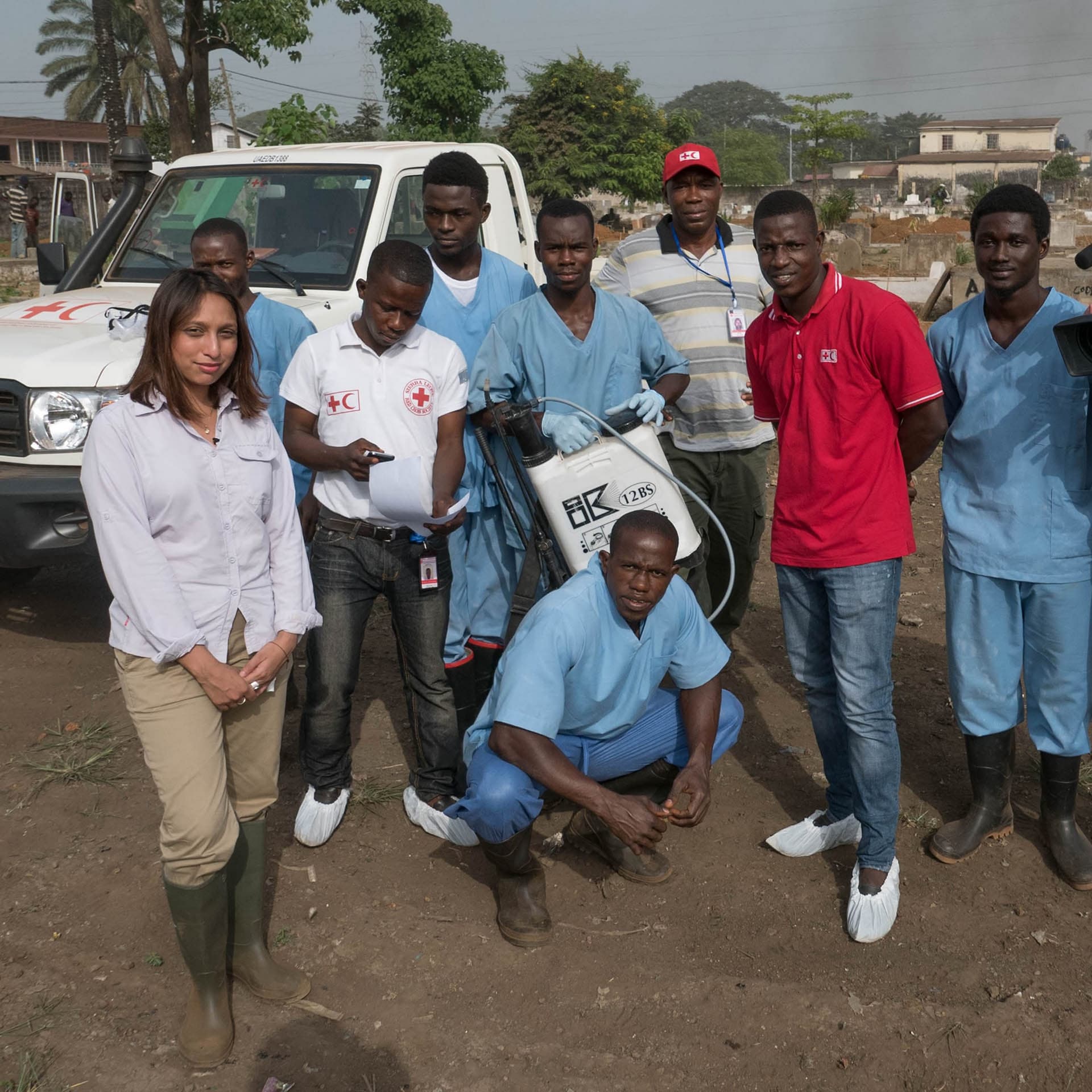
(Photo: Faranak Amidi. Credit: Tricia Yourkevich.)