Ask ChatGPT

 The Dr Louise Newson Podcast
24 Sep 2026 · 32m · 18 chapters
Research on how menopause/perimenopause is linked to increased suicide risk and how hormone replacement therapy (HRT) may reduce suicidal thoughts and low mood; argues women’s mental health is often dismissed due to siloed care and lack of hormone education.
Nearly 20% of surveyed menopausal women reported suicidal thoughts in the prior two weeks; after HRT, suicidal thoughts dropped by 92% (about 6 months). Best outcomes came from HRT combinations including testosterone; estrogen+testosterone+progesterone performed best. Suicidality may occur without low mood, so it can be missed.
Repeated interview stories (~70 interviews) of women bounced between NHS departments, treated with antidepressants/antipsychotics/anxiolytics or even electroconvulsive therapy, then improving after HRT (“lights switched back on”). A GP story of a 54-year-old with severe mental symptoms and menopause who improved after starting hormones. Workplace suicide-prevention standards discussed, with calls to include menopause.
Written by AI. May contain mistakes.
Pooja shares her background and the significance of researching menopause and suicide risk.
“But it was a great conversation I think we had when I got that email from you thinking about women in midlife and then potentially being, you know, in menopause, transitions and suicidal.”
Liv introduces herself and discusses her journey transitioning into menopause research.
“So Liv, do you want to introduce yourself?”
Discussion on the importance of understanding hormonal impacts on mental health in clinical practice.
“But someone said ages ago, no one likes whinges, Louise.”
Sharing stories of women’s experiences with mental health and the effectiveness of hormone therapy.
“Clearly, you haven't had a period for a long time.”
Insights into how medical training inadequately addresses menopause and mental health.
“And were you expecting that when you started the research?”
Discussion of systemic issues within healthcare affecting women’s mental health treatment.
“And we had talks to do with women and suicide prevention, but it's literally, you know, one of the first years.”
The conversation highlights the necessity for collaboration between gynecology and psychiatry.
“they've been sort of denigrated to thinking about fertility and periods.”
The segment discusses the lack of awareness among psychiatrists regarding HRT's benefits for mental health.
“But they still, I've only met a handful of psychiatrists that actually prescribe HRT.”
Discussion of a survey revealing nearly 20% of menopausal women experience suicidal thoughts.
“but they often have a bit more time with people and their patients and often can unpick a bit more.”
Treatment with HRT led to a 92% reduction in suicidal thoughts, showcasing its effectiveness.
Exploration of how suicidality can exist independently of low mood in menopausal women.
Discussion on how hormonal changes and social factors contribute to suicidality.
Personal anecdotes reveal the inadequacies in mental health treatment for women.
“And, you know, people do take their lives.”
Emphasis on the urgent need for improved treatment options for women's mental health.
“And so she was dreading becoming menopausal.”
Discussion on the importance of incorporating menopause into suicide prevention strategies.
“hormones of course it's not it's often multifactorial but we need to be thinking more in a broader way so that people can have those conversations and seek the right people.”
Learn about the importance of addressing hormonal changes in mental health crises.
“informing that as well and we can really get that conversation about um hormones in there because we just can't rely on just mental health kind of treatments for anyone who's in crisis.”
Discover two crucial take-home tips for addressing suicide risk in menopausal women.
“So I'm very grateful for both of your time.”
Understand the need for compassion and validation in healthcare for women.
“absolutely what about you Pooja yeah I think definitely echo what Liv just said and then And I think listening to women, you know, actually when they come in and say there's an issue, listening to them.”

Get the gist, explore an idea or ask about something said.
 Claude
On The Dr Louise Newson Podcast, what are the key points of this episode?
Searching your listeningAutomatic transcript. May contain errors.
0:01So on the podcast I've got two people who I've got to know really well and I'm very excited about this episode because it's an area that's incredibly important that resonates with a lot of people. It might not be the most cheeriest of episodes but it's one that's really important. So I've got Pooja and Liv with me who I feel like I met Pooja about three or four years ago it feels like. And I handed her one evening, I emailed her because she'd written an amazing article in their British Medical Journal. And the rest is history, as they say. So Pooja, do you want to go first and introduce yourself?
0:41Yeah, I think I've spoken about our first meeting to so many people, Louise. But it was a great conversation I think we had when I got that email from you thinking about women in midlife and then potentially being, you know, in menopause, transitions and suicidal. It was just like a light bulb moment for all of the evidence I had seen nationally over a 10-year period where women in midlife were at high risk of dying by suicide. So, yeah, I think for me it was just where two kind of worlds collided and a really important area that we needed to look into. So tell me your background. So you're a professor?
1:21I am I'm a professor of suicide and self-harm prevention at Liverpool John Moores University I've been researching in the field now for 20 years and the focus was always on primary care and looking at people who talk about feeling suicidal in the community and what can be done to help them and I'd say unfortunately there hasn't necessarily been that much progression actually in in what is offered in the community um so it wasn't female specific and actually following that there was a lot of work that I was involved in implementing for men um for community-based centers for men and with three quarters of people dying being male um but I think recently there's been a lot more focus on women as well especially those going through kind of perinatal or around the, you know, giving birth and maternity and even more recently now in menopause.
2:24Absolutely. And the article that I read was about men and that's why I emailed you to say, hang on. But you listened, which is great, which is so brilliant when people listen and inquisitive. And then you introduced me to Liv. So Liv, do you want to introduce yourself? Yes, of course. So I am freshly out of the NHS. I used to work clinically as a psychologist in primary and secondary mental health services. And then I saw a research physician open at John Moors, which I applied for, and Pooja was interviewing me. And she said, you haven't got this one, but we do have a PhD going if you'd like to do that instead.
3:07it's with Dr Louise Newsome and it's on menopause and suicide risk and because of my background my clinical background working in secondary care mental health services I dealt with a lot of risk management and I also did have a hormonal background as well in terms of academia in my undergraduate degree a master's degree I looked at gender dysphoria and the effect of sex hormones in terms of that. So I had a good foundational knowledge of hormones. And then with my clinical experience, it just kind of felt like a natural progression to move into that arena. And yeah, and then after that. You've just finished your PhD.
3:49I have. I've just finished, I was about to say, a few months ago, maybe six months ago, I submitted it. And yeah, I have it now in my grasp. Which is fantastic. So you are a doctor, but not a medical doctor. I always think people with PhD are sometimes more clever than medical doctors. And it's a lot of work, a lot of work. I've read your thesis and took me a long time to read, but it took you a hell of a long time to write. Yeah, absolutely. And I think that thesis actually, you know, we had that initial idea didn't we louise and what can we do and what can we do within a reasonable budget as well yes um and then louise and live obviously came for that interview where she really impressed me um so it all kind of just worked out really well but i think so many more questions have come out of that research um yeah you know which we need to now kind of keep following up really absolutely So I co-founded the research with your PhD with Liverpool, John Rawls, which is a great privilege to be able to do this.
4:59But someone said ages ago, no one likes whinges, Louise. And other people have said, put your money where your mouth is. And so I sort of did both really, because I'm really keen to instigate change. And I really, really enjoyed psychiatry as a medical student. I did it in a very deprived area of Manchester. and actually I found my project a few weeks ago just in a cupboard that I wrote and it was a we had to do a case and spend a long time with one person and my case was a lady who had an eating disorder she had bulimia and she had been abused as a child she'd had a really difficult time and her mental health was really bad and it was a really I got an A for it I'd spent a lot of time.
5:43And I reread it recently and I've asked nothing about her periods. I asked nothing about what her pregnancy was like. I asked nothing about whether she had pastoral depression and she was 45. So I didn't even think about her perimenopause. And that's not because I was stupid. That was because I wasn't taught and you don't know what you don't know. And I think this is what this research is really unmasked actually. And it was, I still worked as a GP for 25 years without really knowing mental health and hormones. I always thought I was good at psychiatry. I always thought I was good at hormones, but I didn't realise the huge impact of hormones in the brain.
6:21And it was one day when I'd only recently opened my clinic and a lady from Sheffield came down to see me and she had become housebound with her crippling mental health problems. She'd been in and out of a psychiatric hospital. She'd had lots of treatments, including electroconvulsive therapy. And the only way she could actually come down to the clinic was to come in a camper van with all her belongings and her dog around her because it was so difficult for her to go outside. So she'd remortgaged her house to buy a camper van to come and see me. And I didn't know this at the time. I knew she'd struggled coming across the car park because she was 20 minutes late for her appointment.
7:02And the nurses told me it took her 20 minutes to just come out and see me. And she was in a very difficult place mentally. But she was 54. Her periods had stopped quite a few years before. And she had recurrent urinary tract infections, palpitations, dry skin and joint pains. And I looked at her and I thought, my goodness, hormones are good, but they're not that good. And I'm never going to give any patients I don't now false hope about hormones. But I said to look, you're menopausal. Clearly, you haven't had a period for a long time. You've got lots of physical symptoms. and I know from the evidence that taking hormones will reduce your risk of osteoporosis for example so I said I'm going to give you hormones and we'll review you and it would be lovely if it helps some of your mental health conditions but they're quite extreme and I'm not you know I don't want to give you false hope so a week later and I've still got her email actually I was reading it last night in preparation for today and she wrote me this email to say I've started sleeping for the first time in many years.
8:07My mind is feeling clearer. I feel calmer. I'm so happy that you believe me because for the last six years I've been telling my team there is a hormonal component to my mental health and no one has believed me. And it really struck me firstly that this lady knew more than I did about her own hormones and no one believed her. And it also struck me how her hormones were already having an impact and it took me about two years for her to feel fully better. And she's been now to see me in the clinic. She's come independently. It's amazing. And I've seen this pattern recognition so often, but that was eight, nine years ago.
8:47Moving forwards, the stories that you heard really, it was still as bad, actually, in the clinic, which is really sad. Yeah. Yeah. So I heard a lot of stories from women as part of my PhD I had to interview um as many as possible really and I um I got around 70 interviews most of which were were women but I also interviewed clinicians from from your clinic Louise um and um the same stories were just coming up over and over and over again and feeling feeling suicidal feeling really low mood being sort of passed around different departments in the NHS and sort of bounced from place to place. Nobody was listening.
9:35Nobody was treating me or if they were treating me, it was with things that weren't effective with antidepressants, really heavy antipsychotics too, anxiety medication and in some cases electroconvulsive therapy, which is, as you know, very sort of brutal and invasive and none of it was working and then um they sort of came to to your clinic got hrt and within weeks even or months just their suicidal thoughts completely disappeared and their mental health was a lot better and they said like it's the lights have just been switched back on again someone's just turned the lights back on and yeah it was it's just the same over and over and over again every single story was was pretty much identical.
10:24And were you expecting that when you started the research? I wasn't. So whenever I started in this research, I didn't know that it was actually an issue. Because you're not told, it's not public knowledge really, that hormones affect mental health. Even yourself as a GP weren't told about it in your training. And a lot of the clinicians that I interviewed in my PhD said the same thing just weren't told about it didn't know about it in fact menopause in general they weren't really taught about either maybe had one lecture in their whole medical degree about it um so it isn't really public domain so I didn't have any clue that that was going to be as bad I think reflecting on that as well Liv you know I've been presenting at global suicide prevention conferences for for over 12 years now and suddenly it was hitting me as well when I was going to these conferences and I was chairing some of the gender-based you know studies and they were all on men and I and it was all women presenting as well which I found really interesting um and so what's really what's really good to see you know for the first time last year we had a panel discussion on all issues related to women and suicide prevention, whether it was to do with menopause, which we presented, or domestic violence and, you know, other kind of conditions.
11:53And we had talks to do with women and suicide prevention, but it's literally, you know, one of the first years. So that was in 2025. It's quite shocking, really, to think that that's happening but on a positive note you know the dialogue is starting our research has been taken seriously we've been invited to present it at numerous places Liv's been asked to go and speak within the NHS as well about it you know we really are getting invitations so that's been really good to see is as much as you know there's been some negative press as well in the field one thing we did was collect data from women who weren't coming to the clinic and they were saying pretty much the same things yeah and about all of the issues of not being able to get help from the NHS and for many women who did come to your clinic a lot of them had tried yeah within the NHS and it was kind of a last resort yes um so I think there's something that needs to be thought about you know from services um yeah and I think it's really interesting yeah I mean our clinic people come because they've been underserved by the NHS, they certainly don't come first line because why would they when they've got that service available to them?
13:10But it's really interesting because when we think about hormones, as in progesterone, estradiol, testosterone, they've been sort of denigrated to thinking about fertility and periods. So then gynecologists sort of have owned menopause, perimenopause, if you like, for many decades, actually, even when hormones were discovered the researchers and the pharmaceutical companies paid gynecologists to work with them so it's very much been about a gynecological issue and so if I had mental health issues I wouldn't go and see a gynecologist about that I would go and see my GP or I would go and see a psychiatrist psychiatrists have never been trained because they're not gynecologists and that's where medicine becomes very siloed and so I've been told many a time by quite eminent gynecologist Louise you need to stop talking about mental health and hormones because there's no association but they've never seen the results they would never see the lady I explained and they certainly would never treat her either and see the improvement and then the psychiatrists are getting better, I think, at thinking about hormones and trying to piece it together.
14:24But they still, I've only met a handful of psychiatrists that actually prescribe HRT. And psychiatrists are medical doctors. They can prescribe any medication, really. So then they don't see the results. And it's only in medicine that, you know, when you see results, it's pattern recognition. You learn so much through your patients. And we're very experienced clinicians in this field and the knowledge I have now compared to eight years ago is hugely different. So joining those dots and psychologists, as many people might know listening, don't prescribe, but they often have a bit more time with people and their patients and often can unpick a bit more.
15:09So a lot of psychologists I talk to actually understand it more than psychiatrists. yeah that that makes sense and i remember actually when we had these first conversations and i was kind of really emphasizing the point of we need to have some evidence yes back what we think is happening yeah um and we really worked hard didn't we to implement the um kind of measures that are held up within our medical um communities and the a kind of valid instruments for us to use um i think that's been really important to be able to use that not just for the phd but actually more wild widely within the service but i think it'd be really good if um we speak about some of those you know findings as well actually with with what was it nearly a thousand women yeah yeah so nearly a thousand women were were surveyed about feeling suicidal and any suicidal thoughts that they they might have had over the past two weeks so it was pretty imminent um and it came back that nearly 20 percent of women said that they were having those thoughts so that's around what one in five uh women suffering going through menopause are feeling thinking of ending their lives which is higher than probably what most people think but interestingly on first follow-up so around up to six months later I think it was after treatment that dropped by 92 percent 92 percent yeah which is just huge um so that was with with treatment with HRT um and the most effective combinations of HRT were ones that included testosterone interestingly enough and women that were on all three HRTs so estrogen testosterone and progesterone had the best mental health outcomes out of any group of HRT.
17:12That's a dramatic improvement isn't it? Yeah it is. That is better than any anti-psychotic and antidepressant actually that I'm aware of. Yeah yeah huge huge benefits and in terms of general mental health as well that improved by uh i think it was around 50 as well so it's not just suicidal thoughts it's it's low mood as well but it's interesting that those two were different uh in terms of their um outcomes kind of suggests that maybe suicidality and suicidal thoughts can exist without low mood in menopausal women um which is why some women might fall through the net because maybe some doctors think that suicidality is just the result of extreme low mood when that actually might not be the case in menopausal women.
18:04It might actually present differently. Yeah, and that's a point I've been kind of arguing or trying to put out across the population, to be honest, that suicidality doesn't have to be related to mental health issues and often is related to social issues, you know, a relationship breakdown, on a job loss bereavement is is huge um as well and then obviously now what we're talking about with hormonal changes which are just I think something that's come to light for me which has been a little bit sad really is to see the real kind of lack of importance that's been given to women's health that this PhD and this project has really highlighted that to me um across the board and that's a bit worrying isn't it when half the population of women you know you've worked with me through very difficult and challenging times because the Panorama documentary was in the middle of your PhD Liv and you've had first hand knowledge on the hostility that people the perceptions that they have about who I am or what I'm doing but all of these perceptions, all of this gossip all of this whatever they think of me as actually harming women and you know I've been to some very dark places myself with some of the things that have happened to me but one of the reasons that I keep going with my work is I know it's making a difference you know these women with this huge improvements in mental health I see them and when I'm feeling particularly vulnerable I do my clinic and I hear first-hand stories and I know that what I'm doing is right and it's it's based on established research we've got research even in the 80s showing that women with treatment resistant depression given um hrt and psychiatric hospitals made a dramatic improvement with a randomized controlled placebo study um so we've got the studies it's just been ignored but the way it's being ignored now as well is is is such a shame because just remind me Pooja the suicide rates in women yeah so the the rates in women for age groups so we know that one in four kind of suicides in the UK is from women that's normally around 1500 suicides a year and unfortunately that number's increasing but what we do know is that the high risk group you know is midlife women and unfortunately it's increasing in younger um kind of girls and women as well which interestingly is another time where there's a lot of hormonal absolutely shifts and I think it's very important that we think about hormones in that age group as well um which I know is something we've discussed before but what one thing I was going to say is is even though women have researched less the impact of the work we've done together has been phenomenal I mean I wrote one article for the conversation recently on the mental health toll of menopause and I mean the way that's been read globally um you know and it's the the highest read article at the university which I just thought that was normal how much it was read um but with people globally though in America I think it was three quarters of the readers were there so it's really reaching a wide audience but the comments as well from women whether it was on that article or our post that we put out on Liv's papers and things has just been massive and you can really feel um what they're saying which I've not had that with any other research I have to say that I've been involved in which again highlights the importance of the research and it's it's wonderful actually because Liv is now working with us full time and we've got so many projects but you're right Pooja we're extending a lot of the work I'm doing is thinking about hormones in all ages for women so a lot of people with PMDD premenstrual dysphoric disorder have suicidal thoughts and some studies have shown 84 % of women who have PMDD have these thoughts and they can just be I say just in inverted commas for a few days a month but my daughter has PMDD which is treated so she has hormones but she used to say to me but mommy it's not just those three or four days because the rest of the month you're petrified those days coming because they're so awful so it affects you every single day regardless of how you're feeling and this is where you're talking again about you don't have to have a mental health condition to have suicidal thoughts and a lot of younger people when they come on very quickly they're more likely to have an impact and we know about 50 % of people with PMDD self-harm.
22:53And, you know, people do take their lives. But the thing is, one of those quotes from your research, Liv, really resonated with me because a lady has said, if I had gone through and taken my life, I would just be a statistic. I would just be a number. People wouldn't be thinking about the hormonal effect. And that really made me feel very cold reading that because it's true actually isn't it yeah yeah I think a lot of women after they take their lives so they just get classified as another woman with depression who has has died and they get sort of siphoned off into that category of just having mental health issues when in reality it could be a hormonal issue yeah so we we need to make big changes and I think we We've done amazing, or we, you especially, both of you have done amazing work over the last few years.
23:47But it still needs to reach more people. I spoke to a gentleman on Tuesday who reached out to me because he'd listened to some of our work and research, which is great. But it's not great, his story, because his wife had taken her life just a couple of months before. and her grandmother had had postnatal psychosis and was in an asylum for all her life. His wife's mother had had awful depression in her menopause. And so she was dreading becoming menopausal. And when she did, she was given drugs, she was given electroconvulsive therapy, and they really struggled to access hormones and she didn't receive all three hormones.
24:33and he said I really blame the NHS actually because we tried and failed and it's really sad to hear that story in 2026 it would be different if it was you know 1906 but we need some urgency with this and we're not here by the way saying that all mental health is due to hormones of course it's not it's often multifactorial but we need to be thinking more in a broader way so that people can have those conversations and seek the right people. And I think that's what those people that you had spoken to, Liv, and your research really had tried hard to get the right information and make the right choices as well.
25:18Yes, they definitely did. There's a lot of advocating for yourself. I think they figured out they had to do that the hard way after many failed attempts of of seeking advice and getting help they they realized they just they had to learn the information themselves and do the research and you know come to the doctors prepared with stuff written down and say look this is happening to me these days a month every month what is going on here there has to be something else because it's just not adding up um and then even then some of the women were like laughed at basically by the doctors and said no hormones don't affect mental health that's ridiculous um it has to be something else um just thinking back to the stories that i heard one lady um self-identified as an alcoholic and her gp advised that she had a glass of wine to help with her her mental health symptoms that she was experiencing um a lot of doctors referred to all women coming in to getting for getting help suddenly with their menopause is the divina effect which is you know just crazy invalidating sort of putting it down to just a mass effect that's i haven't going through women but a lot of invalidation and just not being listened to not being believed i'm i'm hoping that you know i've got an invitation last year to be on the all parliamentary group for suicide and self-harm prevention so I've kind of sat in a meeting now seeing how they run and what the discussions are and they were actually launching the suicide prevention in the workplace standards which is fantastic to see you know it's really good they're trying to make this kind of everyone's business and for people to think about but obviously I was there and I put my hand up and I said there's no mention of menopause in here considering a lot of women in the workplace you know maybe going through menopausal transition and what was really good and interesting is the women who were there presenting this work had also led the menopause in the workplace um standards which was great and they were really welcoming to the kind of thought of do you know what we haven't done that and and what they suggested is they're going to be developing kind of shorter um if you like small books for workplaces to add as add-ons and they were saying about doing a combination um to look at menopause and suicide prevention and and kind of the effects of that and making that topic discussed a lot more so you know hopefully our research will be informing that as well and we can really get that conversation about um hormones in there because we just can't rely on just mental health kind of treatments for anyone who's in crisis.
28:18Absolutely not. We need to be thinking differently and thinking about others as well. This isn't just for if you personally have symptoms or experiencing symptoms, look around you, think who else could be suffering or could have hormonal changes. So I'm very grateful for both of your time. you're not going to go without me asking three take-home tips but I can't divide three by two so it's going to have to be two each really so two things that you would love to see happening with the results that you've had from your research so do you want to go first Liv? Oh that's a big question I would love for suicide risk to be asked about in general practice whenever a woman of a certain age who is experiencing other menopausal symptoms hot flushes brain fog anything like that comes in and um talks about having having bad mental health the doctors need to be asking have you had any thoughts of ending your life because they don't ask the question so it's never found out yeah um so that seems like a kind of a simple solution really just asking the questions and also if a woman comes in in suicidal crisis to ask about periods you know when was your last period and so then there isn't this constant lack of communication and women falling through the net absolutely and it takes two seconds well maybe 10 seconds to ask those questions so absolutely what about you Pooja yeah I think definitely echo what Liv just said and then And I think listening to women, you know, actually when they come in and say there's an issue, listening to them.
30:04Because I think all too often they're just ignored or they're just pacified in a way and kind of just go, you'll be fine. And I don't think that's just in health professionals. I think that's in our families and communities as well. I think as a woman, I've sometimes and I've gone going through the kind of menopausal transitions myself. I've had those days when I've said to my family, you know, I'm not well, I'm not right. You all need to support me here. And it can sometimes be made as humour. But actually, I think we've got to start listening when somebody says they're not feeling right and they're not well, kind of validating their feelings and listening to them.
30:48And then I just think more compassion as well within the system. I think that has to be there. So, yeah. Yeah, absolutely. And I would add to listening, believing women as well, because you have to listen and believe as healthcare professionals, we have a real duty to believe our patients. They don't make these symptoms up. So we've got a lot to do, but it's great. And I'm really looking forward to seeing what we can do working together with new research. We've got amazing ideas, we've got lots we're going to do and really hopefully help a lot more people going forwards. So thanks so much for your time today.
31:25It's been a really great discussion. Thank you.
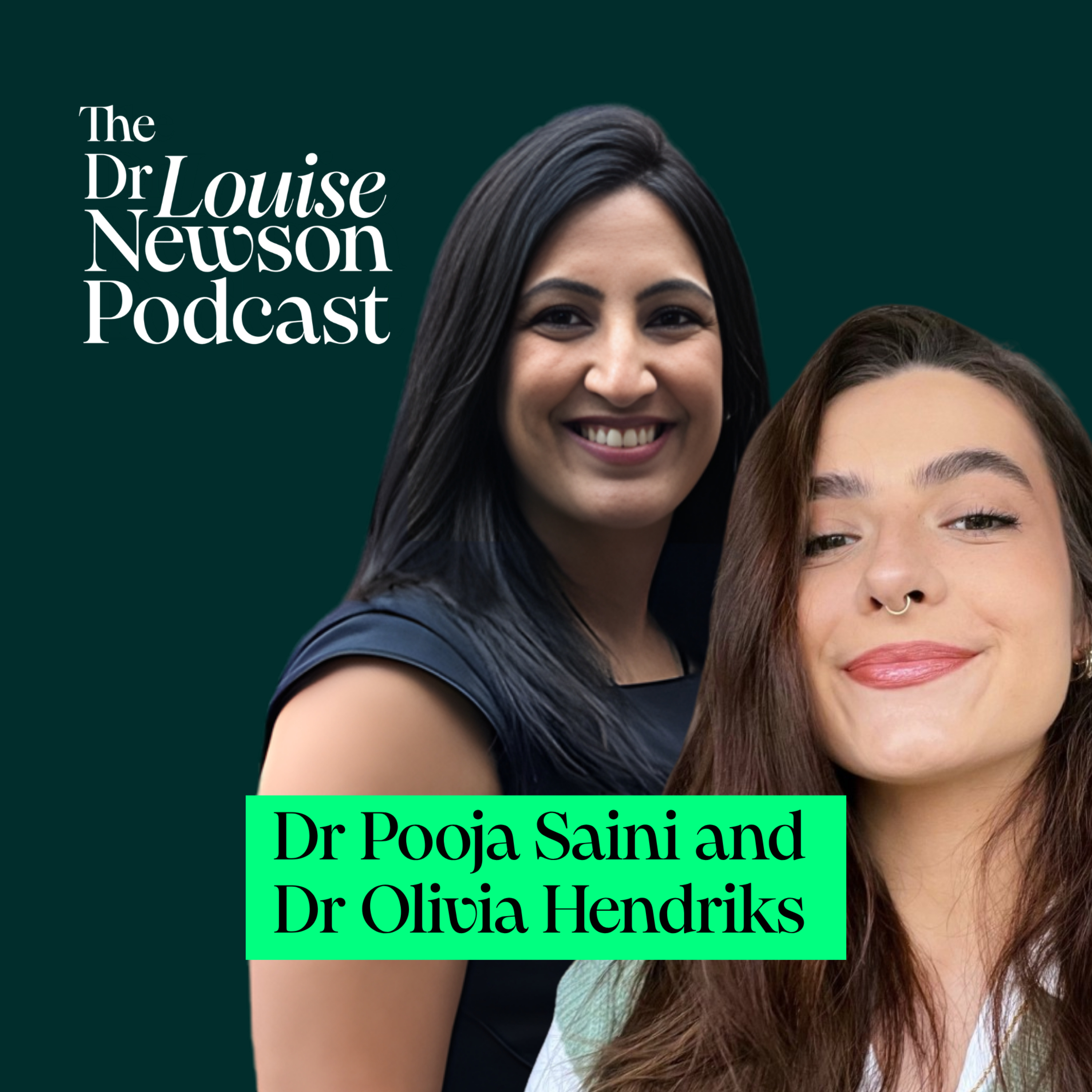
In this episode, Dr Louise Newson is joined by Dr Pooja Saini and psychologist Dr Olivia Hendriks to discuss their important research into perimenopause, menopause and suicide risk. Together, they explore why hormonal changes during perimenopause and menopause can have such profound impacts on mental health, and why this connection is still often overlooked in both research and clinical care.
They also discuss findings showing significant improvements in mental health and suicidal thoughts with appropriate hormone treatments, and why greater awareness, better research and more frequent prescribing of hormones are urgently needed to improve the health of women.
This is a really important episode highlighting the important link between menopause and suicide risk that can’t be ignored.
Let’s connect
👉 Read the full research paper discussed in this episode: https://www.drlouisenewson.co.uk/knowledge/hormone-related-suicide-risk-going-undetected
👉 More from Dr Louise Newson: https://linkin.bio/drlouisenewson