Ask ChatGPT

 The Dr Louise Newson Podcast
29 Sep 2026 · 34m · 13 chapters
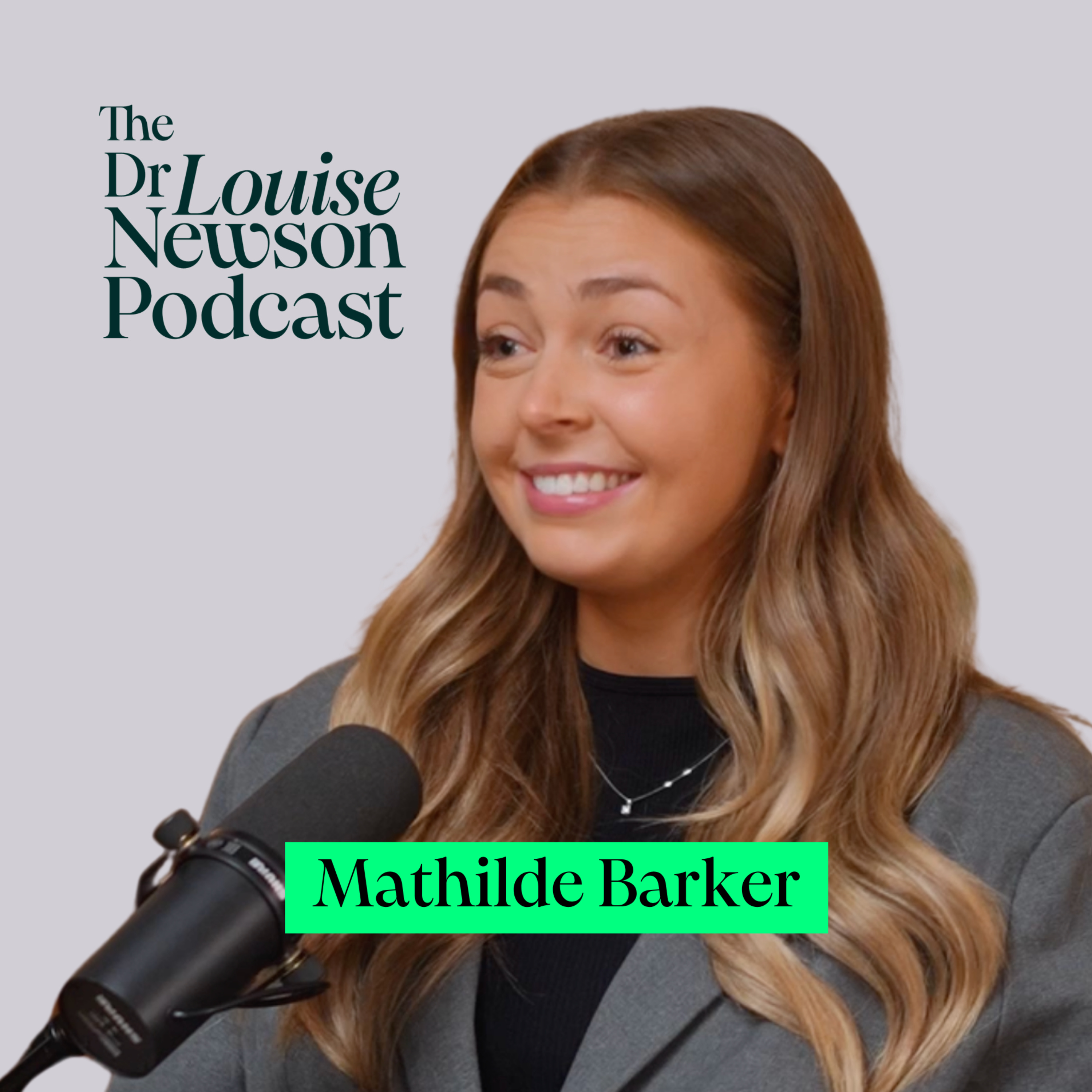
Mathilde Barker’s long, confusing journey to diagnosis and treatment of endometriosis and adenomyosis, including being put into early menopause with Zoladex/RIC0, and discussion of hormone-based approaches vs “blocking hormones,” plus diagnosis delays and misdiagnoses.
Mathilde is 23. Symptoms began around age 14 (during school/GCSEs) with back pain that was initially attributed to dance/muscle strain. She was diagnosed at 19 after about 5 years of symptoms.
Endometriosis/adenomyosis symptoms can be non-specific and linked to the menstrual cycle; diagnosis often takes years due to misattribution and inconsistent testing. Synthetic hormone treatments (pill/coil) may worsen inflammation for some. Early menopause can reduce symptoms but carries risks (bone density, joint pain, hot flushes) and may not be ideal in the long term.
appendix removal for presumed appendicitis; antidepressants/anti-anxiety; pill and Mirena coil without symptom relief; scans with conflicting results; two surgeries (second revealed adenomyosis, fused ovary to pelvic wall, fimbrial cyst); hot flushes on Zoladex; struggling with joint pain after London Marathon; advice to trust instincts, share symptoms, and choose case-by-case treatment.
Written by AI. May contain mistakes.
Mathilde shares her long path to being diagnosed with endometriosis and adenomyosis.
“So listen carefully and share this episode because I can guarantee you'll know someone with endometriosis.”
Discussion of Mathilde's early symptoms, misdiagnoses, and treatment attempts.
“how old are you now I'm 23 now yeah so how old were you when you were diagnosed I was 19 so you So you started having symptoms when you were 14?”
Exploring the impact of hormonal treatments on Mathilde's condition and symptoms.
“Like three years, three and a half years.”
Mathilde and the host discuss what endometriosis is and its symptoms.
“The Mirena coil didn't even stop my periods.”
Discussion on the inflammatory nature of endometriosis and challenges in treatment.
“And it's really interesting because it's tissue that's like the lining of the womb.”
Exploration of the long-term consequences of hormonal treatments for endometriosis.
“because there's been very little studies, very little research, usual thing.”
Mathilde shares her experiences with menopause symptoms and their management.
Mathilde discusses her experience with menopause symptoms and treatments.
“flushes but some effects of your bone or your brain or your heart?”
Discussion about various hormone treatments and their impact on endometriosis.
“I wasn't keen on going for the implant after them not working.”
Exploration of hormonal imbalances in women's health and their effects.
“They might have enough to cause periods, but not enough for the body to function properly and our immune cells to function properly.”
Mathilde shares her personal journey of diagnosis and the challenges faced.
“And a lot of people with endometriosis also have other hormonal conditions like PMOS, they might have PMDD.”
Learn about the symptoms of endometriosis and the importance of tracking them.
“And did anyone ask about, like the sociopath, did anyone ask about how your symptoms change throughout your cycle at all?”
Discover practical tips for seeking diagnosis and support for endometriosis.
“So three things people might be listening who might have potential endometriosis or adenomyosis, or they might have a friend or family member or work colleague who thinks have it.”

Get the gist, explore an idea or ask about something said.
 Claude
On The Dr Louise Newson Podcast, what are the key points of this episode?
Searching your listeningAutomatic transcript. May contain errors.
0:00On the podcast today, I've got a 23-year-old Mathilde who talks very openly about her experience of adenomyosis and endometriosis and how long it took for her to have the right diagnosis, the amount of time she suffered and also the different treatment options she tried, including putting her into an early menopause. So listen carefully and share this episode because I can guarantee you'll know someone with endometriosis. So thank you so much for coming today. It's really great having younger people in my studio because my work is not just about menopausal older women. Increasingly, I speak to a lot of women with endometriosis who have taken years for the diagnosis, then they're not on the right treatment, still getting symptoms, and it's getting more and more confusing for people.
0:54so I'm really grateful that you're here to talk about your experience so just tell me a bit about you know your whole journey to get your diagnosis of adenomyosis and endometriosis sure well looking back it all kind of merges into one but it was years of going back to the doctors being turned away misdiagnosed for example had my appendix out did you yeah I did and that's quite common I hear that quite a lot I've also been put on antidepressants anti-anxiety I tried the pill the coil but it did come down to being diagnosed with endometriosis after five years which I understand is quite quick I mean it sounds quick but five years I mean it's a long time because how old are you now I'm 23 now yeah so how old were you when you were diagnosed I was 19 so you So you started having symptoms when you were 14?
1:50Ish, yeah. So through GCSEs? Yeah, school, really hard time. Yeah, so what were your main symptoms? Back pain. And I did a lot of dance when I was younger and I trained in dance. So the doctors always associated it with that and muscle strain. But you knew it wasn't? Well, at first I did believe that because you just do believe what medical professionals do tell you, especially at such a young impressionable age. so I did think I need to stop dancing for six weeks I need to see a physio I need to see an osteopath but then when I'd finished those courses I'd had acupuncture I tried everything I just said to my mum like this is this is not right there's something wrong yeah and that's how I found out and what were your periods like my periods were regular they were normal and I think that's what kind of threw me off I didn't actually know what endometriosis was but I did as time went on suffer more and more with my periods and that's how I got the correlation between the pain and the menstrual cycle and that's when I then was sent to a gynaecologist.
2:54And so how long after having your first symptom was that? Like three years, three and a half years. And then what did the gynaecologist do? I then had a scan, a ultrasound and a MRI but between those two scans was probably about a year and I had blood tests and I was put on the pill and I had the coil inserted so all of that was quite a bit of a jumble for me of hormones and being told one thing and I actually had my scan and they said that the endometrial particles did show up, but then I got a call saying they'd made a mistake and that they didn't show up. Oh gosh, so that's confusing. Yeah, so I was told one minute that I did have endometriosis from the scan, which isn't common because as we know, it doesn't always show up.
3:46To then being told, oh, we've made a mistake, like your scan was completely clear, completely normal. And it's kind of like... So what's causing it then? Yeah, exactly. And did going on the pill or have the coil make any difference? No. So going on the pill actually messed up with my body and all my hormones were a bit all over the place, really. And I just moved out. I had just started my degree course. It was a busy time for me anyway. So having different hormones in my body kind of threw me off and I was still in pain. So I quickly came off the pill and then I had the Mirena coil and same. The Mirena coil didn't even stop my periods.
4:27So looking back, I had that for two years. Looking back, I should have had that taken out maybe after six months and tried a different thing. So, yeah. And now what do you do? Now I have had two surgeries. And so which is crazy to me because at the age of 23, I would never have thought that I would have needed two surgeries to extract endometriosis. But in my second surgery, I was also diagnosed with adenomyosis as well, which they found. And my ovary was fused to my pelvic wall and I had a fimbrile cyst. There was a lot going on. Absolutely explains why I was in so much pain, which I couldn't believe.
5:11But now my treatment plan is RICO. So for people who don't know, that is basically the injection. Is it the Zoladex? Zoladex. Solid X injection with HRT on top, but it's all in one pill and it's oral. So I don't have to inject myself, which I'm grateful for. Yeah, but it only contains estradiol, doesn't it? It only contains one hormone, which is, and it's quite a low dose as well. Let's just take it back. So what is endometriosis? Because lots of people have it, think they have it. As being diagnosed, it's great that it's been talked about more. it's frustrating that it's so common and people have to wait so long for diagnosis but just explain to listeners what endometriosis is sure so from my understanding i'm no medical professional um it's the lining of your womb yeah growing outside of your uterus so that can create lesions between your organs and it can grow anywhere um and it kind of reproduces uh through estrogen that makes it grow from my understanding and common symptoms can be um inflammation pain um heavy periods painful intercourse um and for me personally i had a lack of appetite i was constantly dizzy and light-headed and it's hard because all of these symptoms could be for multiple different conditions so to pinpoint that it actually is an endometriosis symptom is probably why it takes so long to diagnose.
6:43Yeah. And it's really interesting because it's tissue that's like the lining of the womb. And when I was at medical school, there was a theory that it was the actual lining of the womb. And they talked about retrograde menstruation, where literally bits of the womb would float off to other parts of the body. And now they think it's more that it's tissue that's like the lining of the womb elsewhere. But it responds to hormonal changes. So as you I'm sure know, throughout our menstrual cycle, our hormone levels will change to try and get the body and the womb ready for pregnancy, because that's what women are on the planet for evolutionary.
7:21And so the lining of the womb will thicken with estradiol. And then the second half of the cycle, there's a lot of progesterone, which then declines very rapidly if there isn't a pregnancy. and with that rapid decline of progesterone, the lining of the womb shreds. And so it's a constant dynamic motion really of the cells in the lining of the womb. But if you have endometriosis deposits, then they will fluctuate and change with changing hormones. And if they're in a tight space, like between your bowel or sometimes stuck onto the bladder, then any movement of those cells getting bigger or smaller can cause the symptoms.
7:59but people can get it in the lungs, in the diaphragm, there's even in the brain and so I think very much it's more of a multi-organ systemic disorder really. Obviously it's more common in the pelvis but it's not really a gynecological disorder and the problem is with all health of women problems is that no one really takes ownership. Everyone just wants to wash their hands off women who are complaining of non-specific symptoms and so it's been sort of almost owned by gynaecologists but gynaecologists only really specialize in the pelvic organs and then it's become more of a surgical problem so let's cut it out and everything will be fine well if you've got a bit of endometriosis on your diaphragm you can't really cut out a bit of your diaphragm very easily or even as you know if it's stuck on your bowel you don't really want the bowel taken out and so I'm very simplistic in the way that I think and the way that I practice medicine and think about what's going on, what really is going on, what's causing it.
9:02Because if you can treat the underlying cause, it's always better. And one of the problems is we don't know because there's been very little studies, very little research, usual thing. But there does seem to be an increased incidence of endometriosis far more. I've been a doctor for 31 years and when I was at medical school, we didn't get taught about endometriosis, but it didn't seem as common. Whether it's because it's more likely to be diagnosed more now and people still had symptoms but were misdiagnosed, it's impossible to know. But there does seem to be more people having those symptoms and adenomyosis is where the tissue, like the lining of the womb, actually within the womb.
9:46So then it can be very painful with the change in hormone levels. But it's an inflammatory process. So if you look down the microscope of endometriosis deposits, there's inflammation, there's more inflammatory cells, and the blood supply to those lesions actually gives more inflammatory cells. And then the lesions actually make inflammatory cells. So it's like self-perpetuating, really. And the problem with any hormone treatments, you have to be really clear whether it is a hormone or not. So you've actually been given treatments that haven't been proper hormones. So the synthetic hormones in contraceptives, the synthetic hormone in the Mirena coil, they actually can increase inflammation in the body.
10:31Yeah. So they can sometimes make things worse. Some people, and a lot of people I'm sure you've spoken to as well with endo or adenomyosis, find that actually having contraceptives can improve symptoms short term because they're not getting a fluctuation in hormones. but in the longer term you've still got inflammation and it can still the disease can carry on but it might be less less painful so it's thinking about how we can modify the lesions if you like so you don't end up with surgery you don't end up with worsening and so anything that reduces inflammation is really good and our hormones naturally so our progesterone estradiol testosterone actually work to reduce inflammation yes whereas the synthetic hormones will increase it because they block our natural hormones working yeah but a lot of people and a lot of gynecologists and endometriosis specialists think because hormones are a nuisance with endometriosis let's just block them completely and that's where like zolidex comes in they think well let's just get rid of them but then zolidex is giving people a chemical menopause isn't that when doesn't it send a signal to your brain that's exactly it so it's so all our hormones are amazing they all they've got this biofeedback if you like so your brain will signal through the blood supply the levels of hormones and going through the brain and a small area of the brain will pick that up and go oh this is low we've got low esteridone we've got low progesterone testosterone let's give more of this hormone from the brain signals the ovaries and other tissues to produce more hormones so what it does is it stops having any change and so then the body doesn't detect the hormone levels and then just that basically tells the body we don't need to have any more hormones and so switches or any hormones off and so a lot of doctors think well that's great this woman doesn't have hormones in the body so that fluctuation of hormones won't be stimulating the endometriosis deposits so they'll feel better but it might stop like i say that fluctuation but do you really want to go into menopause when you're in your 20s no so because there are you know symptoms but long-term health risks as well of not having them so and that's where I really worry and then this treatment that you're having that sort of gives you a little bit of estrogen back is still not replacing your hormones properly and a lot of people I speak to have been on it actually find that they do get side effects with it and they don't tolerate it that well so but you're probably better than being on nothing are you?
13:05Well I'd rather have symptoms of menopause than symptoms of the endometriosis and adenomyosis because I mean the one thing that's probably affected me the most with the rico side effects is the hot flushes and I'd be with like my mum and she'd be like oh it's a bit hot in here and I'd be like oh yeah yeah it's a bit hot in here and it'd be like hot flush symptoms or like I'd be in the car and someone would be like with the air con on and I'd be like having a hot flush and I'm like oh my goodness I am having a hot flush because of this medication um but in terms of other symptoms like that's all I've experienced in terms of the menopause side effects which like to my knowledge because I'm sure that it's affected my body in other ways that I might not be aware of but for me like I would take a hot flush over not being able to move any day.
14:02And did anyone talk to you about any long-term consequences of being menopausal so not just flushes but some effects of your bone or your brain or your heart? Yeah so I have been made aware that it can lower my bone density so I have to have a DEXA scan every year I've not actually had my first one um and that worries me obviously at being 23 I do have another symptom which is joint pain and I have just run the London Marathon a few months ago and I really struggled um my surgery came in November and I'd already signed up to the London Marathon which was in April and I managed to turn it around I had about three months training after recovering from the surgery and I did the run, but it was the worst thing I've ever done in my life.
14:56And that would have been different if I wasn't on this medication, if I hadn't just had the surgery. But yeah, the joint pain, the hot flushes and the bone density. It's a lot. But for me, it just trumped the symptoms of the endometriosis, unfortunately. I'd like to give my clinic a shout out because without it I wouldn't be able to do this podcast. My clinic helps many women throughout the UK to access evidence-based and individualised support and treatment for their hormone health. To find out more about the clinic, visit newsandhealth.co.uk. Did anyone talk to you about any other type of treatment, any other hormone treatment at all?
15:44Because I'd already tried the coil and the pill, I wasn't keen on going for the implant after them not working. That's kind of the solution that was presented to me. So I just tried it and luckily it did work. I just don't know what other path I would have gone down if it didn't work. And are they expecting you to be on this treatment for life now? Well, obviously not because I do want to have children at some point. But that's another worry. fertility will it affect the way my body will be able to conceive I don't know I'm just kind of taking it every step at a time and kind of just reminding myself that my quality of life is better because I'm on the medication at this point but what will happen when I do want to have a child I don't know so it's really interesting because I was saying to you before we started recording that I see a lot of people with endometriosis in my hormone clinic.
16:46And a lot of people, in fact, I've never met a woman with endometriosis who has a normal testosterone level. Often the testosterone is low. We don't measure progesterone levels, but a lot of women have low progesterone as well. And those two hormones really reduce inflammation in the body. There's been studies for many years actually showing that women with endo are more likely to have low testosterone. and testosterone is a really important hormone for women and for men as well and a lot of women if they have the right dose of hormones especially progesterone and testosterone can be absolutely transformational and I've seen so many women who have had many many of their symptoms of adenomyosis and endometriosis really resolve with those hormones but it's beneficial for their future health because it's not blocking hormones so people don't have symptoms enforced on them of course some people need oestradiol as well and people are always concerned that the oestradiol can stimulate the endometriosis but if you've got those other hormones as well at a constant even level then often you don't get that fluctuation and people feel a lot better so it really worries me that so many women are just being told oh just block your hormones or they think they've tried hormone treatments whereas they're not hormones if you see what I mean yeah so it's really important that people know the difference because our natural hormones will not reduce fertility at all they're just literally topping up what's missing and there are a lot of people who are younger who who have not quite enough hormones.
18:26They might have enough to cause periods, but not enough for the body to function properly and our immune cells to function properly. And we know our immune cells work a lot better when they've got hormones present, as in the natural hormones present in their bodies. So the more we can do things ourselves with the hormones we balance properly, the better. Yeah. And a lot of people will try, and I'm sure you do as well, with their nutrition and exercise to reduce inflammation. But if you're in a lot of pain and discomfort, you can't exercise. Yeah, it's easy for me to say go and exercise, but you can't if you're having symptoms.
19:04Yeah, it's tough. And what came to mind there when you were just speaking is the hormone levels and the investigation towards that. I don't think I had a hormone level test until further on in the diagnosis. And I was fortunate enough to go private for my second surgery. And the first one I had was on the NHS. And a lot of my community and a lot of thoughts that come up is that no, not everyone can go privately. And the NHS is the only way that they are going to get their treatment and their diagnosis. and it just is a bit scary that you aren't getting the investigation like up front for the hormonal levels for example and that the first thing you're being told is to go on to go on the pill to have the coil inserted for example when I was about 19 like one of the first appointments I had I think I actually presented to A &E like not knowing why I was in so much pain um and And no, it can't have been because at this point I knew I had endometriosis.
20:16It was quite soon after I'd been diagnosed, actually. The doctor said to me, and you know, like a lot of ladies, the endometriosis gets better once they've had a baby. But I was 19. I went away and I was like, they're not expecting me to get pregnant at 19, are they? And in my case, that wasn't, I was in education. I was having a degree. But you know why it gets better when people are pregnant? It's because of the hormones. Yeah, of course. so it's a lot easier to give the hormones than to get pregnant and I've I've spoken to a lot of women who've been told by their doctors get pregnant and you'll you will improve but that is just a ridiculous thing to say as a doctor yeah so have you heard similar stories from other people absolutely I mean I'm very open online with my journey and I've documented both my surgeries so from being diagnosed to having my second diagnosis of adenomyosis and the kind of following I've grown has been people also seeking diagnosis and finding their journey similar to mine and I just hear so much about getting pregnant or being put on the pill the coil the implant being turned away unfortunately it happened to me early days quite a lot and the misdiagnosis is one thing that stands out quite boldly to me and looking back having my appendix out because I was in such pelvic pain at age 13 14 that was probably because I was experiencing endometriosis symptoms but that is the reaction that the doctors and A &E had when I presented it's appendicitis get the appendix out and I hear so much so many people have had their appendix out that have bits like it's been seeking endometriosis diagnosis and do you hear any positive stories from people um it's hard because to get to a positive there are loads of negatives and I feel like that's why the diagnosis length is so long I think it's pushed to nine years now the average diagnosis length which to me is crazy and it makes be grateful that I only only had to wait five years but for all of that to get to that diagnosis point there is negatives um and it takes a mental toll on you of course it does and you know I was a GP for many years and I look back and I didn't know what I know now about hormones and hormones treatments and um I always want to help the people in front of me and you know often if they have to be referred for investigations I have no control over the weight of time and so I would give people contraceptive because I thought I was giving them hormones and I thought it would help them feel better and they might have felt like you know a little bit better for a short period of time but I then realized I wasn't really helping them and then in medicine I always go back to the books and go back to the basics and think what else can I do what can I do differently and then when you start to understand how the natural hormones work in our body and the big effect when they're not balanced then it makes sense and then going back like I say now in our clinic we give the natural hormones at the right dose and it really does make a huge difference but often medicine people don't think they just do what they've been told yeah and this is what's happening more and more and you know I feel that a lot of people with endometriosis don't need surgery they don't always need every single test under the sun, you can often make the diagnosis from a really good, clear history because there is often a change in symptoms throughout the menstrual cycle.
24:03And even people, you know, that end up seeing bowel specialists, if you take a really clear history of their pain and realise at certain times of the month, it's a lot worse than others, we've got to exclude a hormonal imbalance. And a lot of people with endometriosis also have other hormonal conditions like PMOS, they might have PMDD. There's a massive overlap. But again, it's just names and sort of words that basically means there's a hormonal disorder going on. And so underneath all of this is a hormonal imbalance that needs addressing. So I feel like one problem is it's taking so long for diagnosis.
24:41But the other problem is in those four, five, nine years, however long it takes, women are just left. whereas if they had their hormones balanced then they might not even need to have all these tests and all this suffering but it just feels like while people are waiting for diagnosis nothing gets done or they just go on painkillers Yeah, exactly, the painkillers is a big one the amount of different painkillers the anti-inflammatory medication that's prescribed to you it's a case-by-case basis really, isn't it? Yeah, of course Because, I mean, I don't know what the teachings are for doctors and things like that, but for some conditions it is a textbook answer.
25:25Like you have this, so take this. Or you have this, so do this. Whereas endometriosis or other conditions within that umbrella, it is case by case. And it might be someone's hormone. Like you just don't know. And it's harder to just off the first appointment say, oh, this is what you need to do because there's a lot of investigation needed. Of course there is. Absolutely. And that's where there is an art in medicine as well of individualising care. And the problem is even, you know, with 2026, doctors still get scared of women because we're just like a nuisance because we've got all these symptoms that don't fit into a clear diagnostic box.
26:06You know, if someone, it's usually, you know, how we learn in medicine was always based on men. But if it was a man having a heart attack with a very classic central crushing chain pain on the left side of the chest going down the arm, then you immediately go to the protocol of what drugs to give them and how to make the diagnosis. When you have a woman sitting in front of you who's got a bit of pain and a bit of tiredness and a bit of bloating, there's no clear pathway. And then doctors then get a bit worried. and then end up saying, well, I'll just refer you. But we know that the waiting times are huge.
26:40We know that it's not feasible for people always to go private, and even privately, you've still got to wait. And you might not see the first person who really understands your condition either. So in the meantime, I feel very strongly that women should try and get as much information as possible and ask and see about hormones. Knowing there's a difference between synthetic and natural hormones is really key. Yeah, and I think that's it. It's about knowing. I was 19 when I was diagnosed and I had no knowledge on what endometriosis even was like prior to that. It was actually from posting a video.
27:17I was very open in my college days and I was just saying how sore I was. I couldn't go into college that day. I like had such crippling pain that I was actually in bed. I had to take the day off and I documented that. And someone said, well, that's not normal. Like, have you thought it could maybe be endometriosis? so that's what started my interest in endometriosis and I was like maybe it could be and anyway I just brushed it off I was like no like I don't have all these symptoms like my periods weren't heavy I couldn't match my my experience to what the classic symptoms were so I was like okay like maybe I don't maybe maybe I'm just being dramatic and I heard that a lot like maybe I'm just being dramatic um and it's actually then when I went to see the college osteopath who specialized with dancers because I went to a dance college and he was like I can't recreate your pain it's not structural you have like something going on that's deeper than actually like your bones and your muscles and your joints and your tendons this is like um autoimmune so then he sent me away and he was like just log like when like a pain diary basically like a pain log and then I brought it back to him and he was like yeah um I think you might have endometriosis you need to go to your GP and ask for a gynaecology referral and from that I mean that's amazing a diamond in the dust that osteopath I must give it all to him because he's the one who pushed me to to go back and at that point I'd been to the GP so many times I'd been to A &E so many times endless waiting in in those, like, you don't want to be in A &E if you can help it.
29:01And did anyone ask about, like the sociopath, did anyone ask about how your symptoms change throughout your cycle at all? Yeah, he was like, well, when does it flare up? Like, where is the pain? And it's then when I was like, oh, no, it is linked to my menstrual cycle. But other doctors hadn't asked you, GPs hadn't asked you to try and tease out whether it was linked with your menstrual cycle. Not really. And it got to a point, I must admit, that the pain was quite constant. So it was harder to pinpoint. But when I did narrow it down, it was like coming up to my period or when my period would have been.
29:41It's really important. You know, we've got a balanced app and people can monitor symptoms. And just doing symptoms at different times of the cycle, working out where the cycle is or where periods are, if people are having them, can be really useful. And it's hard, obviously, if people are on contraception or marina coil. But looking to see any pattern is really, really useful. And women trying to work it out, because they often can work it out quicker than doctors, is fine. You know, I think as doctors we need all the help we can get from patients. But if we can try and understand more so people can get signposted to the right diagnosis, but also the right treatment pathway and maybe ask for a different treatment or a hormone blood test, like I say, testosterone blood test, rather than being told it's normal, get the actual result, work it out if it really is normal or whether it is low, can make a huge difference.
30:34Absolutely. There's a lot that needs to be done. But it's great that you're so vocal. And I'm very grateful that you've come and shared so much today. I always end with three take home tips, though. Okay. So three things people might be listening who might have potential endometriosis or adenomyosis, or they might have a friend or family member or work colleague who thinks have it. What are the three things that you would suggest that they do to try and get an earlier diagnosis and better treatment? Okay. I think, first of all, trust your instinct. Trust your own body. If it wasn't for my gut feeling, I wouldn't have gone back to the GP.
31:12I wouldn't have gone back and asked for that referral. So that's number one. That would be to trust your instinct. Like, do you know your body better than anyone else does? You are the only person who can feel what you're feeling. Secondly, I would say talk to people about how you're feeling. Talk to people at work. Talk to people if you're at school. Talk to your teachers, the staff. Talk to your parents. Talk to friends, family. Make them aware of how you feel. Because I think early days I didn't and I'd just try and get on with it. And then I'd find myself like having to leave class at school, like going to the medical room, getting a hot water bottle because I was in so much pain.
31:53And because I did a lot of dance at college, like not being able to finish a class and not being able to take part, being sat on the side, not being able to go in. And my teachers being like, what is going on with Mathilde? Like, is she being flaky? Does she not want to take part in my class? um but opening that conversation and letting them know oh I'm being investigated for endometriosis it just makes it all so much clearer and they're on the same page even in a workplace I've not had a job where I've had to go into an office um so I don't know how that would present in a workplace but telling your boss telling your manager people who are around you can just make it so much more understandable and being like oh that explains why they need to go and make hot water bottle at this point or whatever so i talk to people and thirdly oh this is hard um i would probably say do what's best for you um it's a case-by-case condition as we've just discussed um as much as it's helpful to see what other people are doing um try think try different things um speak to different people and just see what works for you.
33:09Like, for example, I'm not going to go and get the coil because so-and-so's on the coil. I'm going to do what's best for me because it's case by case. My treatment might not correlate to their treatment. Yeah, that's brilliant advice. So thank you so much for coming today. Thank you so much for having me. It's been enlightening. Oh, good. Thank you. Thanks. So just a quick one. It would be really great if you could follow or subscribe to this podcast. This will really help me reach more people with evidence-based information about hormones and their future health. And it also ensures that you'll never miss a future episode.
33:47Thank you.
Mathilde Barker was 23 when she finally understood why, since the age of 14, doctors had told her it was "just" muscle strain, put her on antidepressants, and once removed her appendix by mistake. It took five years to get a diagnosis of endometriosis, and two surgeries later, adenomyosis too.
She joins Dr Louise Newson to talk through her whole journey: the misdiagnoses, a scan result that was reversed by a phone call, being told by a doctor at 19 that having a baby would cure her symptoms, and the reality of being put into a medically induced menopause in her twenties just to manage the pain.
Louise explains what's actually happening in the body with endometriosis and adenomyosis, why low testosterone and progesterone are so common in women with these conditions, and why blocking hormones completely isn't always the right approach.
Louise ends, as always, with three take-home tips for anyone who suspects they — or someone they know — might have endometriosis or adenomyosis.
Lets connect
👉 Track your symptoms and understand hormones, download the Balance app: https://bit.ly/4yZty5A👉 More from Dr Louise Newson: https://linkin.bio/drlouisenewson👉 Follow Mathilde: @mathildebarker