Ask ChatGPT

 The Dr Louise Newson Podcast
8 Oct 2026 · 32m · 15 chapters
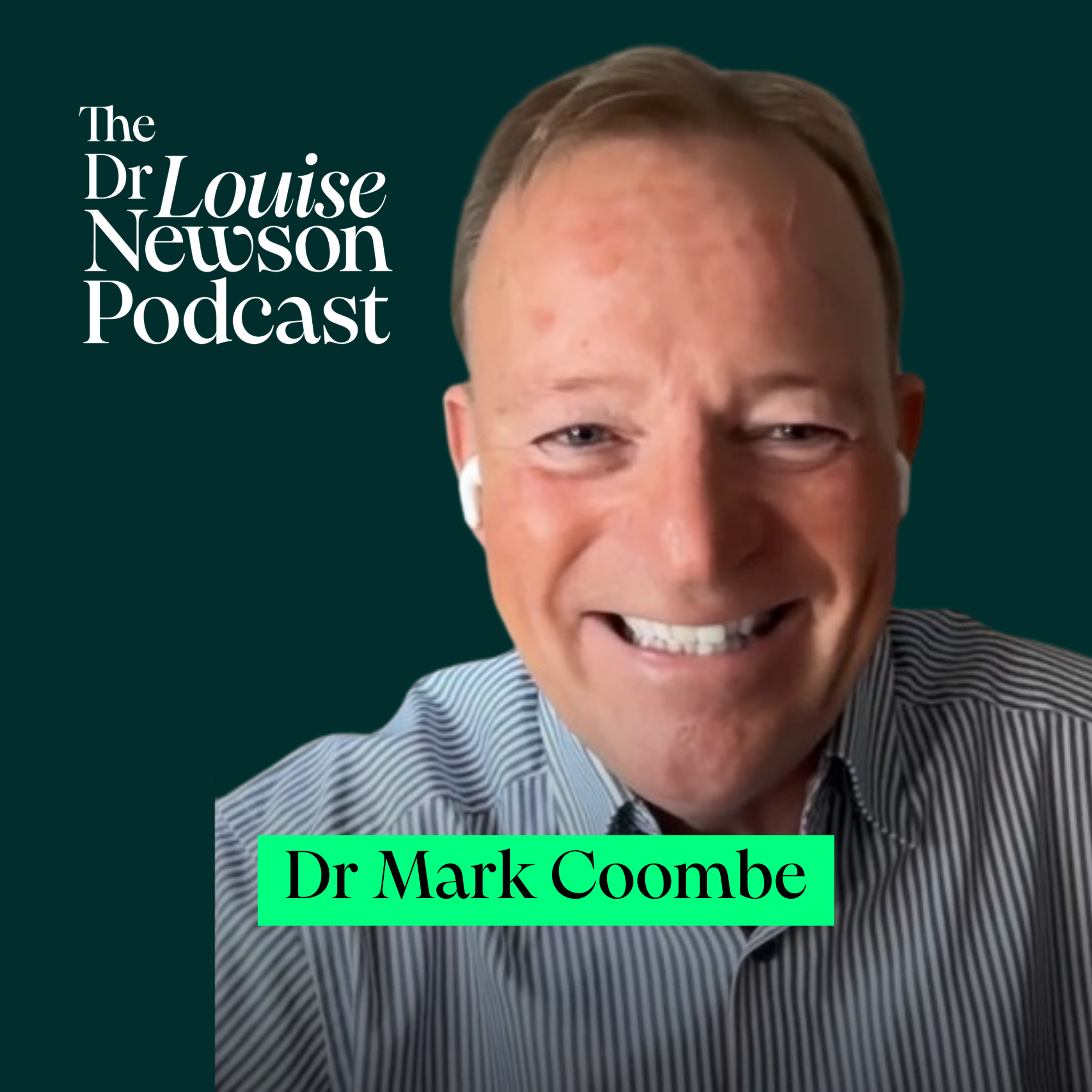
Education gaps and alleged “evidence-based bullies” blocking hormone health/HRT education for clinicians, leading to women being dismissed, untreated, or steered toward antidepressants/pain/sleep meds instead of individualized hormone therapy.
Dr Mark Coombe, recently retired GP and long-time medical educator/assessor for the Royal College; previously involved in assessment and education roles and created/used large-scale education (14 Fish Education).
NICE menopause guidance should be individualized and used as guidance (not treated as law); women have higher risks when hormones aren’t used; some guidance is “conservative” or “wrong” due to fear.
course content removed after accusations it “didn’t run out of guidelines”; debate over NICE panel mixing bioidentical vs synthetic hormones—bioidentical share molecular structure with human hormones, while synthetic progestogens (e.g., WHI’s medroxyprogesterone acetate) are chemically altered and may worsen brain fog/aches and increase risks. Case example: cyclogest (progesterone) for severe PMS/PMDD where licensing arguments impede access; links discussed between hormone changes and mental health/ADHD symptoms and family outcomes.
Written by AI. May contain mistakes.
Discussing the challenges women face in receiving proper healthcare and the lack of hormone treatment awareness among doctors.
“Once, it was many years ago, it feels like.”
Dr. Coombe shares his background in education and the evolution of medical training.
“So I've been keen over my life to alter the way that we educate to help the user.”
Exploring frustrations with traditional medical education and the need for innovative teaching methods.
“And so you mentioned your frustration and my frustration.”
Discussion on creating engaging educational content for hormone treatment and the importance of practical application.
The success and challenges faced when offering free hormone education to GPs.
“So traditionally, you know, kids and doctors, any learner has sat in a class and been given information and there's been no sort of confirmation of whether they've learned.”
Discussing the negative response from some doctors regarding hormone education courses.
“Which is amazing and it was just a wonderful time and around that time the Davina documentary came out and I was working very closely with Kate Muir on it.”
Exploring the role of medical guidelines in hormone treatment and the misconceptions surrounding them.
“I just need to have the platform somewhere else.”
Emphasizing the importance of individualized care in hormone treatment and addressing patient concerns.
“Do the committee that's been involved, what's their background?”
Discussing the ongoing challenges and the future direction of hormone education amidst resistance.
“And actually the approach would then be different.”
Discussion on the impact of current guidelines on hormone therapy and patient care.
“And so, yes, this new sort of, you know, evidence-based bullies and being hit by guidance really worries me.”
Sharing a patient’s journey with hormonal treatments and the importance of personalized care.
“And so that's very confusing for people when they don't know the true benefits of hormone treatments.”
The discussion highlights the necessity for education on hormone therapy for healthcare professionals.
“My goodness only knows what was going on.”
Learn about the significant impact of hormonal support on personal lives.
“So it's on our website, newsoneducation.co.uk.”
Understand why healthcare professionals must be informed about hormone treatment.
“Encourage everyone to go and look wherever they're working in the UK or globally.”
Discover how patients can engage their doctors in discussions about hormone therapies.
“And as a doctor, if you're not sure, why don't you have a look at some of the free Balance app patient leaflets.”

Get the gist, explore an idea or ask about something said.
 Claude
On The Dr Louise Newson Podcast, what are the key points of this episode?
Searching your listeningAutomatic transcript. May contain errors.
0:00So Dr Mark Coombe is on my podcast today who I've known for many years. He is a phenomenal, well, recently retired GP, incredible academic, very interested in education of doctors. And what we've talked about today is just about education, about hormone health for women, how poor it is and how hard we're working to improve it. So it's a great conversation that you all need to share with your GPs, consultants, pharmacists, any healthcare professionals, because they all have a duty of care for women. So enjoy it and let us know what you think. So, Mark, this is the second time you've been on my podcast, actually.
0:43Once, it was many years ago, it feels like. I don't get another star on my badge, but I'm excited to be here. Well, I'm very excited. It's been very hard because we're both busy to juggle our diaries. But, you know, I feel really sad and embarrassed, Mark. So I'm sad every day because the stories I listen to from women keep coming about how they're not listened to, they're not believed, they're not understood, they're not given a diagnosis, and they're not signposted to the right evidence-based hormone treatment. But I'm also frustrated that I've been a doctor for 31 years. And for the first 21 years of being a doctor, I didn't know what I know now.
1:22and I would love to go back in general practice and see all the women patients that I spent 15 years trying to get better without thinking about hormones so I understand how hard it is for healthcare professionals and I'm not here to be rude about them but I'm very solution driven as you are too and our work that we've done together wants to help bridge that gap and increase at speed knowledge so that women have better healthier futures so just tell me a bit about like you like I just said you've retired as a GP so just tell me what your background was like as a doctor yeah so um so I love being a GP but I've always been involved in education ever since um even when I was qualified as a junior doctor I was teaching the doctors and the students below me um and and then over time i've taken a number of um of jobs i've worked quite heavily for about 20 years in both assessment and education for the royal college and and held a few uh senior positions there um and then rather like you i felt very frustrated um by the if you if you look at um education and assessment in particular um it evolves and so So the way our parents were taught and the way our children are being taught is very different.
2:48And that evolution of education is really important because you learn better ways of doing it, more valid ways of doing it, better ways of looking at people of different learning styles and how they're going to pick it up. So I've been keen over my life to alter the way that we educate to help the user. Because you and I, we're just one person sort of seeing however many patients you do in a lifetime. But if you can educate thousands of people, and certainly as the creator of 14 Fish Education, we educated hundreds of thousands of people, then you're changing lives on a massive scale. And so you mentioned your frustration and my frustration.
3:32One of the reasons that I set up my own company to do education was that I was fed up with the traditional models and people going, oh, I don't know. It's going to take 10 committees and decisions to say, for example, about online learning. Online learning is now commonplace. but when I first said I think online learning is going to be much more suitable for our new doctors coming through everybody said no no people will want to come to the classroom and so your frustration is the same as mine and I think the traditional models of male-led teaching male-led medical schools and very much are not recognizing that 50 percent of the population are female and not just for females but for males as well hormones and the hormonal environment is hugely important and so I wasn't really taught at medical school about hormones and HRT and their impact from the beginning of a female's life until the end and and how so many illnesses could be prevented by you know good hormonal care and you know we're still seeing statistics of more women die of stroke if you if you if you equalize their risk factors more women die of stroke because people don't think of a stroke in a woman because we're taught women don't get strokes men do and so yeah I'm I'm very frustrated by it and and a bit like you if I could go I mean you and I did a collaboration about seven or eight years ago in which we provide a lot of free education about hormones and we had 40 odd 50 000 people who took up that free education and it and it changed a lot of people's thinking but it unfortunately what it did do is is is it changed some young doctors thinking and it certainly helped the outcomes in in um in some patients but a lot of the organisation sort of slipped back into believing that the old traditional methods of education, learning, assessment, and teaching, and in particular guidance, that's what really frustrates me, is that a lot of the guidance in relationship to hormones, which is provided by large organisations, is on the best very conservative, but at the worst wrong.
6:04Yeah. And it's really interesting, actually because when I first reached out to you it was about seven or eight years ago and I'd written this course and developed a course because I was really tired of just going and listening to lectures having time off paying for child care being in a lecture theatre and not really learning that much and the most I learned about hormone prescribing was sitting in other people's clinics So I had this idea of videoing consultations with mock patients, you know, actors, so people could see the art, because it is an art and craft of prescribing properly in a very personalized way.
6:43And I needed some technology. I needed a platform to really help. and I remember getting hold of you and I just had an operation so I had a bit of time where I wasn't physically running around so I could have more time to do things and I said to you I remember very clearly Mark I was sitting on downstairs and I said look I'm not everyone's cup of tea Mark and a lot of people that really don't like what I'm doing are you okay with that and you went yeah this is brilliant this is the type of people I want to work with and this was but also also you were very open to a new way of teaching and learning.
7:18So traditionally, you know, kids and doctors, any learner has sat in a class and been given information and there's been no sort of confirmation of whether they've learned. There's been no sort of practical application of what you learned in the class today, how that might be applicable. And so when we first collaborated, I think your approach using lots of different styles and don't forget, lots of people have different learning styles. So you've got to try lots of different ways to get the information in. But also what we did was to look at testing somebody's knowledge before they did the education and testing it afterwards.
7:59And then looking at their data, looking at the way that they, looking at the way they learned, looking at whether or not that sort of particular type of medium worked. and by the end of it actually assessing whether or not they've taken enough in for us to certificate them as being able to have more confidence in treating the menopause as it was then and your new course which is very much in the same vein but it's just expanded into your confidence in the hormones and so yeah I mean it was very exciting particularly as a dedicated educator to see for the first time we were watching what the trainee, what the student was doing and how they were learning and then adapting it and checking that they were understanding and checking that they were getting better.
8:49Which is amazing and it was just a wonderful time and around that time the Davina documentary came out and I was working very closely with Kate Muir on it. And I knew that the Royal College of GPs response that was on the program when they were approached to say, are you going to improve education about menopause for GPs? Their response was that providing more education was unworkable. And we knew that was going to come up on the screen. So I remember saying, look, I'm going to make it free for one person in every GP practice. And I remember my finance director saying, Louise, and I said, I don't care.
9:24I've spent the money now. my big mission is to improve the health of women so let's make it free and it was gobbled up people loved it and then what was this really sad was that um some other doctors many people know there are quite a few doctors that don't really like what i do actually approached the company that were really just hosting it you weren't involved with it it was a other company and they approached them and said this course doesn't run out of the guidelines what louise is saying isn't within the guidelines. And so they took the course down and I contacted them and they said, if you've got any problems, just speak to lawyers.
10:02And I said, it's not a legal thing. I just need to have the platform somewhere else. This is wrong. And lots of GPs and people were contacting saying, where's the course gone? We need it for our appraisal. We're enjoying it. We're learning. We're helping women. And it was really, really sad time of my medical career for this to just go. And, you know, a bit like you said, then, you know, when I was running the platform and we agreed to give it free, my accountant nearly shot me as well. But having said that, we got quite a lot of bad press and some very critical sort of social media stuff directly to me.
10:43We used to discuss it. But it was based around fear and the establishment being worried about we were changing things too quickly. Yeah. And so I was very disappointed once I'd left the company to hear that they'd taken it down really for no good reason, apart from some, you know, evidence-based bullies shouting loudly. And that really was not good. I'm very evidence-based in my approach. Hopefully many people listen, know that I've written books on evidence-based medicine. And I worked as a medical writer for many, well, I still work now, but for many years, unpicking evidence and actually summarising guidelines for the Royal College of GPs.
11:30I had that job for about 20 years. And when guidelines come in, what I would do was read them all properly, read all the papers that were mentioned in the guidelines, and then look at the authors. So do the authors have any conflicts? Do the committee that's been involved, what's their background? What's their experience? Do they work in clinical practice or are they academics? Because it's very different skill set, obviously. What papers are they referring to? Are they papers that are relevant to this guideline? So I've done this for many, many, many years. And so I think people do realise that when people mention guidelines, I know them in depth.
12:10So when they talked about you're not in line with the menopause guidelines, I was saying, but where? Because I am actually, because menopause guidelines are very clear that it's individualized care, that the benefits outweigh the risks of hormones. There's nothing in the nice, even the updated ones that have come subsequently about dosing. It doesn't say we can't prescribe off-label dose because we know for many things in medicine, we have to change the dose for the patients. But it was very much the top level, oh gosh, this is harming women, because of unfounded fears. And it really took a step back.
12:46And then GPs who started to enjoy prescribing went back to prescribing the antidepressants and the painkillers and the sleeping tablets because they thought they would be safer for their patients. And I think the problem is that guidance was being totally wrongly used. And guidance is purely guidance. It's up for the individual GPs and doctors to look at that guidance and see it as guidance. But exactly as you've just said, it's tailoring to every individual because it may be that they want a different outcome or that their major concern is not the hot flushes. It might be vaginal dryness. And actually the approach would then be different.
13:28But unfortunately, I've been a specialist witness in court and I saw lawyers using guidance as if it was law and guidance is guidance and I know unfortunately the junior doctors have been hit with these guidance when a lot of them are relatively low laced low evidence base um so that you know they're not large-scale meta-analysis they're actually anecdotal or what we've always done and and to challenge that which you did and all continue to do I think is is fantastic um and and it's such a shame that we've taken a step back since yeah um since I was actually a senior examiner for the Royal College of GPs exam and literally in every menopausal consultation you were being quoted um and it was so good to hear that and see that people were looking at the patient as an individual and actually using their brains to work out the best pattern.
14:30And so, yes, this new sort of, you know, evidence-based bullies and being hit by guidance really worries me. It does, too, Sue. Even with the NICE menopause guidelines, I did apply to be on the committee for the revised ones and didn't get the job. And my feedback was because I work in a private clinic, which I feel upset because there are other people who are involved who work in private clinics. But I was in a conference last year in Valencia, a European Menopause Society meeting, and the main topic advisor was challenged actually and asked, did she distinguish between synthetic and bioidentical hormones in her analysis of the NICE guidance?
15:16And her answer was, she was on the panel, so it was in front of hundreds of people. her answer was no because there aren't any randomized controlled studies with bioidentical hormones so we've put them all together and I knew that the very day it came out but lots of people don't know and for those listening who don't know the bioidentical hormones we prescribe have the same molecular structure as our own hormones whereas the synthetic hormones especially the progestogens have been chemically altered and we know the one that was used in the WHI study this randomized controlled study was myoxyprogesterone acetate.
15:54Now it actually works as an aromatase inhibitor. So it blocks the action of estradiol in the body and brain. So that's why so many women on it have brain fog, they have weight gain, they have muscle aches, they feel dreadful. But of course, it's going to increase your risk of clot, heart attack, strokes and cancer, because you're blocking the very hormone that we know is very beneficial in our bodies. And it's synthetic, like the body doesn't know how to deal with it. So it's not a hormone. So you can't compare it to progesterone as a bioidentical hormone treatment we prescribe. It's like, you know, comparing apples and bananas and saying, well, all fruit's yellow because bananas are yellow.
16:34Like it's just, it's so ridiculous. It's almost laughable. And then even if you look at, if you knew nothing about hormone treatments and you looked at the menopause guidance. The word osteoporosis is mentioned, but very seldomly. The word breast cancer is mentioned something like 22 times more than osteoporosis. Yet we know HRT is licensed as a treatment to prevent osteoporosis. And we know that most types of HRT aren't associated with breast cancer. So there's a bit of a sort of misbalance, really. I think a lot of pharmaceutical firms use sort of class action. We're the same drug, made the same, and therefore you can expect the same outcomes, even if there isn't the evidence for a drug with a different name.
17:26And I think by saying what was said, that bioidentical are the same as synthetic, people took that to mean the same. And it is so different. Absolutely. And yeah, the other thing I was going to say is that the word risks is mentioned significantly more than the word benefit. And so that's very confusing for people when they don't know the true benefits of hormone treatments. but there are lots of other guidelines that sometimes come from other societies, from the colleges and you know as a busy GP you get guidelines all the time and you get there's this whole thing isn't there guideline fatigue where people don't really know and they can't see the wood for the trees and I think the most important guideline and most significant that I've ever read is one from NICE and it was the shared decision making guideline and I still think that stands today and I'm sure you agree Mark because that means that we share uncertainty we share potential risks benefits choice with our patients and anything we do in medicine is it's about our patient in front of us and every consultation is different and somehow that's forgotten it's more conveyor belt medicine and we can't lose that and you know I've spent a long time writing and teaching and assessing communication skills from doctors.
18:51And the key thing is to ask the patient right back at the beginning of the consultation, what they were hoping for and what they were expecting and what did they think was going on. And if you get into this over-structured consultation style, over-structured guidance space, you know, And, you know, we talked about this before. Some female patients go in and say, I think, you know, I might need some HRT. And before you know it, they've said, well, I don't prescribe HRT, but I'll give you antidepressants. And that's just not acceptable. They need to listen to the patients. Yeah. So I got an email last night from a lady who's in her late 40s, early 50s.
19:35She's had a long history of PMS, PMDD. and she came to our clinic because she was close to ending her life and obviously her hormones had got lower with time, symptoms had got worse. She'd had lots of different antidepressants, antipsychotics, like a lot of patients we see. And one of the doctors who works with me had given her cyclogest, which is a progesterone as a suppository, and it transformed her life. She felt incredible. Like many patients, she can't afford to have it privately and cyclogest is quite expensive because it's used as a fertility drug as well, but it's just pure progesterone.
20:13So she's gone to her consultant in Scotland who agreed that she could have it once, but they were going to have to have a big meeting about it because they said it's not licensed for PMDD. So she wrote me this very long email last night to say, I'm really stuck because I can't afford the dose that I'm on if I pay privately because she's on quite a high dose, but without it I won't have a life and I'm really worried about my appointment tomorrow with the doctor how can I get around this she said I have heard you talk on a podcast before that it is licensed for PMS premenstrual syndrome and it's very clear in our British national formulary that you know it's like our bible of drugs it says that cyclogest is licensed for PMS but she has more severe PMS and somebody's labeled it premenstrual dysphoric disorder it's a hormonal condition.
21:03So I sent her a screenshot of my BNF for her and I sent her some articles and asked, she should really say to the doctor, are you happy refusing to give me a natural hormone treatment that has saved my life and it made me feel better? Because nothing else over the last 20 years has made me feel like this before. So it's really difficult. And you know, in the worst case, we've seen both of us have seen people commit suicide and take their life but but there are loads and loads of grades before that of you know marriages breaking down you know the effect on the children um this quality of life is so important um and you know we're talking more and more every day about mental health and neurodiversity yeah and actually you know underneath a lot of it is hormones.
21:58I totally agree. I mean, we were writing up some really interesting research with ADHD. And, you know, the top line is that women's hormones, when they change their ADHD gets worse, and especially progesterone and testosterone really can improve ADHD symptoms. And, you know, I worry a lot. I worry about quality of life, not just for the individual, but for the families as well. I was in London at the weekend, and I saw this dad just shouting and shouting at the mom. and the mum looked quite menopausal. You know, you can often tell by looking. There was a little child in between them who looked about eight, looking really lost and sad.
22:36And, you know, I said to my husband, this is terrible. I don't know. I couldn't hear them. My goodness only knows what was going on. But I know there are a lot of arguments where children listen to and it wouldn't be there if people felt well. I know I was very irritable and short-tempered when I didn't have my hormones. It was like I had a demon in my brain telling me it's fine to shout at the kids, it's fine to shout at my husband. And, you know, I love my children and I love my husband. But I really worry because the other thing is that in areas of deprivation, there is less hormone prescribing.
23:10And there is more childhood abuse, there's more sexual abuse, domestic abuse, there's more violence in families. And of course, it's not all related to hormones. but it will have an effect and there is studies that show there's more domestic violence when people don't have hormones and they have hormonal symptoms so how are we going to get doctors to wake up and not think which a lot of doctors are saying now is that hormone treatment is fashionable at the minute don't follow louise because she's running a cult these are words i hear in my clinic so i'm not making them up but in my mind and not my mind but the evidence is very clear that women who don't take hormones are more likely to have symptoms, but more importantly, more likely to have health consequences that are negative.
23:56So there's more risk of not having hormone treatments than having them. But we need to get doctors or allow doctors to think differently. And that's where our education course is so crucially important to allow people to join the dots and think differently, isn't it? I mean, for me, I mean, just taking a step back, I mean, I think one of the things that first got me when I looked at your original course was just the key point that it's in the history of the human race. We've been around for 300 ,000 years and actually really only been our life expectancy remained at about 40 to 45 for most of that 300 ,000 years.
24:40So it's only very recently that we've been living with the menopause because actually everyone died before it happened. And so it's still a misunderstanding. I mean, I love it when you hear people say, oh, you know, it was much better when we were all eating locally and organically. Well, actually, the cavemen were doing that. And actually, they were still dying at 35 to 40. you know the things that have changed our life expectancy are things like decent housing and clean water yeah but now we are living those extra years you've got to give quality and so all of those women who are living possibly half their life without hormones we were never designed to do that no and so as you say this the extension of your course which i think is really key we were focusing on the menopause the first time and this time you've gone on and i've independently viewed this i don't work for you or anything and so independently viewing it the educational quality is fantastic you're looking at educational progression but more importantly you're you're you're looking at how to use hormones in that post-menopausal period which may be 40 or 50 years to change people's lives.
25:59And we're not, we're not, it's not a replacement therapy. It's actually giving them the hormones that they should have had in that period of time that we weren't expected to live. You wouldn't, you wouldn't, um, with somebody who's hypothyroid, you wouldn't just say, I'm really sorry, but we just don't use thyroxine anymore. And all of the health issues associated with being hypothyroid, you know, and mood and quality of life and cardiovascular disease, you would be struck off if you did that whereas for some reason in hormones that seems to be okay and it's not no i totally agree and you know looking at the top line of the guidelines there all of them whoever's written them say that hormone treatment should be first line treatment for the majority of women who have perimenopause or menopausal symptoms yet globally it's five percent of menopausal women like that is not the majority and then the whole hormonal changes and that's why the course is so important for women with PMS, PMDD, PMOS, endometriosis, postnatal mental health.
27:04It's hugely significant and important. And we have to allow healthcare professionals to really catch up quickly because the more they understand, the more they have confidence. That's why we've called it confidence in hormones. Once you have the confidence, you can really transform people's lives very quickly. But I think also one of the key statistics for me is if you look at female medical practitioners and the percentage of them taking hormone replacement therapy so outweighs the number of the general public. So we as doctors know it's the right thing to do. It's just we're not being given the support to feel confident to prescribe it.
27:48you know why do more female doctors take hormone replacement therapy and that's because they believe in their heart that it's actually the right thing to do and when they do do it they feel a lot better and then they speak to their colleagues and they start taking hormone replacement therapy since i retired i've been uh had a lot more time on my hands and so i've met a lot more people in the public and quite quickly they find out you're a doctor and you've got an interest in in in hormones and the number of people that say i i lost my first marriage because nobody listened to me um and and i'm i'm i would say 50 of the people that i meet have had a significant problem in their life um because nobody would would give them support hormonally and i often flag you know um flag them off to um clinics where they will get support you know education online that you do some brilliant stuff with um patient leaflets which which you know once once you educate the patient and the doctor then you're pushing against an open door yeah definitely and that's where i've worked very hard with the balance app with my website with podcasts my youtubes so women can be really empowered and their partners their work colleagues children whoever but then this part is so important, the healthcare education.
29:08So it's on our website, newsoneducation.co.uk. Encourage everyone to go and look wherever they're working in the UK or globally. If they're a doctor, nurse, pharmacist, healthcare professional, please go and urge them to have a look. And I'm really grateful for your work, Mark. But before we end, I always ask for three take-home tips. So I'm going to ask you three reasons. Don't put me on the spot. Yeah, well, it won't be. Go on. So three reasons why every healthcare professional has a duty of care to know about those three hormones, progesterone, estradiol, testosterone. Yeah, I think we made these points during the podcast.
29:54I think the first thing is that women weren't expected to live with the menopause because we died before that. And we've had centuries of dying before that. And so it's become acceptable for women not to have hormones. And that's not right. So I would say it's not acceptable for women not to have hormones. don't be scared of uh one of the things that that occurred to me when i looked at louise louise's education system was that actually if a patient had come to me and and told me that this was available and and told me about it i wouldn't have been offended um i i i would encourage you if if you're a patient watching this to go to your doctor and say this is available why don't you have a look at it.
30:45And as a doctor, if you're not sure, why don't you have a look at some of the free Balance app patient leaflets. I've learned a lot in my career of looking at the patient leaflets because it explains why patients are coming to you. I used to go on to the NHS patient site because I'd wonder why people were asking me for x-rays when they didn't feel appropriate. it go and have a look at what the patients are reading because you'll then understand what they're asking for and as I say the the balance series I think is fantastic um and and hopefully that will persuade you to come and have a look at the education which I think is invaluable thank you so much Mark it's been great and let's keep going it's a pleasure have a good evening
Doctors are being taught to treat hormone guidance as if it's law, but according to retired GP and medical educator Dr Mark Coombe, that guidance is too often "at best very conservative, at worst wrong."
Mark spent two decades in education and assessment for the Royal College of GPs and founded FourteenFish, the training platform used by hundreds of thousands of clinicians. He and Louise previously built free hormone education for GPs together — education that was pulled from its hosting platform after a handful of doctors complained it didn't "run to the guidelines."
In this conversation, Mark and Louise unpack how guidance gets misused as law in consultations and courtrooms, why NICE menopause guidance mentions breast cancer over 20 times more often than osteoporosis, and why more female GPs take HRT than the general public despite so much hesitancy to prescribe it. They close with three take-home tips on why every healthcare professional has a duty of care to understand progesterone, estradiol and testosterone.
Let’s connect
👉 Track your symptoms andunderstand hormones, download the Balance app: https://bit.ly/4yZty5A
👉 More from Dr LouiseNewson: https://linkin.bio/drlouisenewson