Ask ChatGPT

 The Dr Louise Newson Podcast
13 Oct 2026 · 31m · 13 chapters
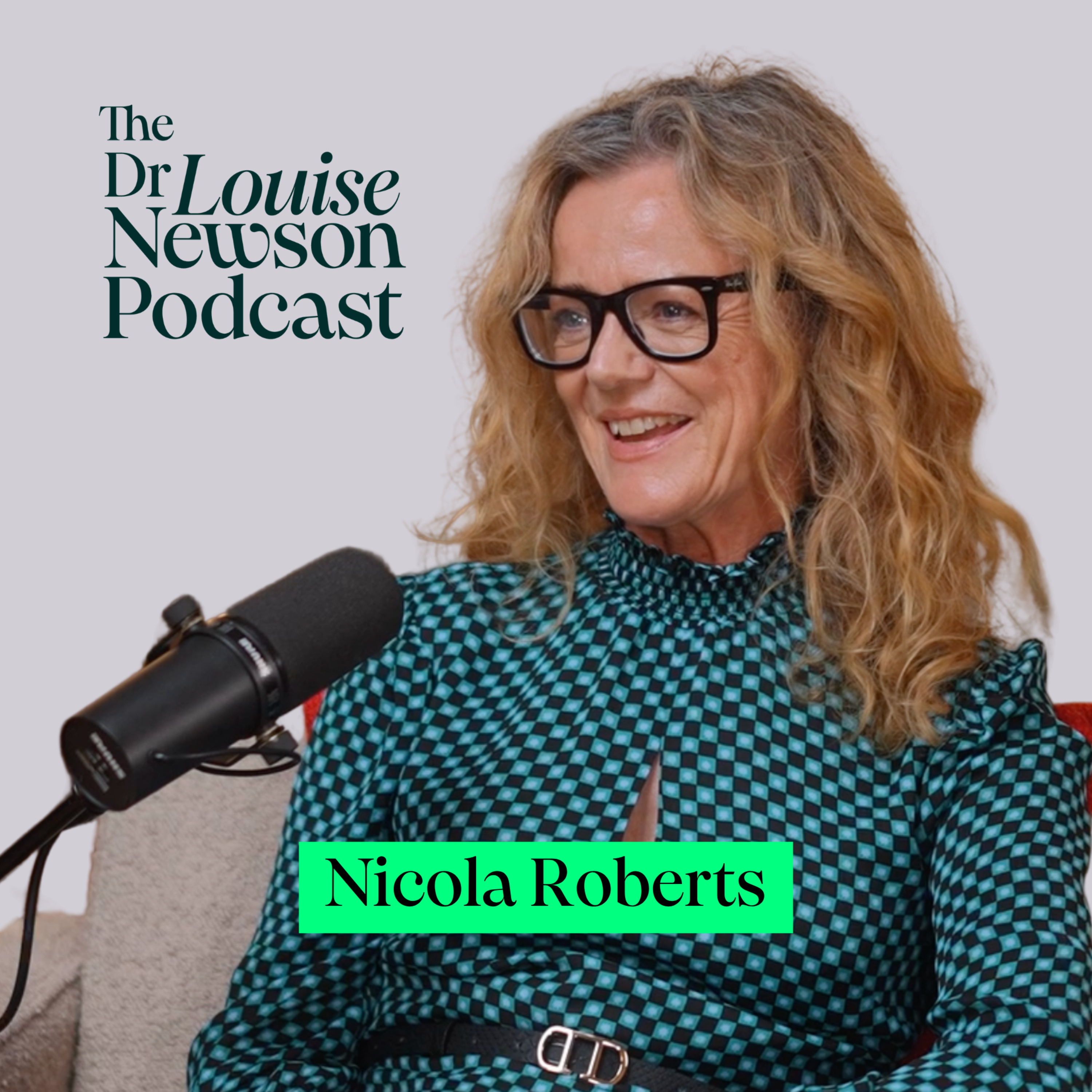
Nicola Roberts discusses endometriosis and her experience with hormone treatments, arguing that synthetic contraceptives can worsen symptoms via “chemical menopause,” inflammation, and side effects, while bio-identical HRT (estradiol, progesterone, and testosterone) improved her health.
Nicola Roberts is a woman with long-standing endometriosis (diagnosed stage 4) who also had urinary/UTI-like symptoms, severe vomiting, and later intestinal involvement requiring bowel resection. She later developed osteopenia/osteoporosis after Depo-Provera. She lives with menopause and sought HRT after learning from Davina McCall’s documentary.
Synthetic progesterone injections (Depo-Provera) can block estradiol and cause menopause-like effects, including bone thinning and mood/aches. Endometriosis is influenced by hormone balance; testosterone and progesterone may help. Women with endometriosis can take HRT, and bleeding/spotting can be dose/patch timing related and is often not cancer.
Stage 4 diagnosis (plus fibroids, polycystic ovaries, ureter/kidney drainage issues); vomiting up to 15 times/day; A&E and 3-month hospitalization; osteoporosis after Depo; rapid symptom improvement within two days after diet changes; juice/sugar triggering stomach pain; testosterone access took months and required low-libido criteria.
Written by AI. May contain mistakes.
Nicola shares her early experiences with painful periods and misdiagnosis.
“which is wonderful to talk about your endometriosis journey.”
Discussing the lack of proper diagnosis and treatment options over the years.
Nicola recounts her severe symptoms leading to a diagnosis of endometriosis stage 4.
Exploring the effects and side effects of synthetic hormones on Nicola's health.
“And I used to have continual vomiting, so I could vomit 15 times a day because I couldn't even take a teaspoon of water to take a painkiller and it would come back up.”
Nicola discusses her transition to natural hormones and the positive changes.
“Um, and that did work for a short time, the continual contraception.”
The conversation shifts to hormonal imbalances and their relation to endometriosis.
“And they said, but you have to because it's on a template and it's part of long-acting reversible contraception and we get paid extra for you prescribing it because GPs get paid various ways.”
Nicola reflects on her past treatment and the difference HRT has made in her life.
“I've probably since starting HRT hand on heart I've probably felt the best that I've felt since about the age of 12.”
Learn how low testosterone and hormonal treatments affect endometriosis symptoms.
Explore how diet modifications can alleviate symptoms of endometriosis.
“The link is also in the show notes for this episode.”
Understand the struggles and misinformation surrounding endometriosis treatment.
“gluten-free wheat-free lactose-free and I thought it's maybe the ice I was in a foreign country it's Maybe the ice in the drink.”
Examine the difficulties women face in obtaining appropriate hormone therapies.
Learn how hormone treatments can significantly improve well-being, especially for women with endometriosis.
Discover key take-home tips that encourage women with endometriosis to consider hormone treatments.
“salon owner you know I I can say that hand on heart I'm not using my wax more than I used to Yeah, so absolutely.”

Get the gist, explore an idea or ask about something said.
 Claude
On The Dr Louise Newson Podcast, what are the key points of this episode?
Searching your listeningAutomatic transcript. May contain errors.
0:00So on the podcast today, I've got Nicola Roberts with me, who talks about her journey with endometriosis, many years of suffering, and actually suffering with some of the side effects of synthetic hormones, including the depropavira that she was given. She now takes all three hormones, including testosterone, and feels the best she's felt for many, many years. So I hope people learn from this and share her experience with others. So thank you so much. You've come all the way from North Wales to the studio here in London, which is wonderful to talk about your endometriosis journey. And I see a lot of women and talk to a lot of women with endometriosis who are young.
0:45They're just starting really, although it's taken them often several years, as I'm sure you realise for the diagnosis. They're given synthetic contraceptives often or the implant or the Mirena coil. they're told it's a hormone treatment and it's not hormones and I worry about these people and why aren't they being given natural hormones first off and and when we do give natural hormones especially progesterone and testosterone it can really improve their symptoms so you've had a long time with endometriosis and it's only more recently that you've been taking natural hormones so tell me a bit about your journey if that's okay I started my periods at the age of 12 and I think literally on the third time I couldn't believe the pain that I was having and nobody had ever spoken about the pain and so I went to see the GP with my mum and they said that I needed to go on the pill so I was put on the pill at probably 13 maybe yeah and um and had kind of quite low health really for as long as I can remember and then um I would say things started to really get more difficult when I was in my late teens early 20s and I couldn't seem to get any any sense anywhere and there was never a mention of going to see a specialist I can remember when I was probably about 19 that I'd seen a diet in a in a women's magazine about a wheat-free diet right and I can remember taking it to the doctor and saying do you think this would help me and he just yeah he just kind of dismissed me about the diet side of it um and so this kind of continued and you know had um years with what I thought was cystitis and probably now in hindsight it was possibly all connected yes yeah so I've had lots of antibiotics over the years lots and I am quite antibiotic resistant now yeah okay um so you had the urinary tract symptoms when you were on synthetic hormones yeah yeah yeah and that's when they started yeah yeah which we see a lot actually because contraceptives aren't hormones they block natural hormones working and we've got lots of hormones in our vagina vulva urinary tract bladder and so when they're blocked our resistance to infection changes we've got increased incidence of utis so a lot of women have cystitis and utis on contraceptives but no one joins the dots and thinks about hormones so presumably no one thought about giving you vaginal hormones then no no no um and that that became quite a pattern the the UTIs and I would say that um I did at one time I had a really active sporty job and that seemed to things seemed to ease and I think I stopped taking the pill as well so maybe there's a correlation there and then at 25 things just got ridiculous and I would end in A &E with pain.
4:17And I used to have continual vomiting, so I could vomit 15 times a day because I couldn't even take a teaspoon of water to take a painkiller and it would come back up. And then I borrowed some money to see a private gynaecologist and he diagnosed me with endometriosis stage 4, polycystic ovaries fibroids and a megal enlarged ureter and a kidney that didn't work doesn't work it doesn't drain correctly and then he recommended to have children as soon as possible and to go on the pill so to be continuously on the pill or trying for children and at the time though I was quite relieved to have that diagnosis because over the years, you know, I can't tell you how many practice nurses told me to take anodine in a hot water bottle and that everybody has painful periods.
5:20Um, and that did work for a short time, the continual contraception. Um, and then it came to about the age of 29 when I, I couldn't function. You know, I think I was well for a week out of four weeks. Gosh. And I was living in Spain at the time and found a German gynaecologist who recommended the Depo Provera, the injection. Yeah, the injection, the Depo, yeah. Which was great for those symptoms. But in hindsight now, I realised that I was quite low in mood. Relationships were very difficult for me. And I think that I used to have severe body aches. You know, I'd wake up in the morning. But because my job was quite physical, I thought it was related to my job.
6:18You probably weren't told that Defo could cause that. So the Defo-pivir contains a synthetic progesterone called myoxyprogesterone acetate, which actually works by blocking the action of estradiol in the body and the brain. So it's a bit like giving you a menopause straight off. which a lot of people don't realise and I did used to have night sweats I remember now and I was diagnosed and I don't know if it's a connection but I was diagnosed at 40 with osteoporosis of the lowest vine and osteopenia and I do wonder because of that well we know that the depropavira we've known for many years actually that it's associated with bone thinning and osteopenia and osteoporosis and when I was starting to learn to prescribe it and these studies came out, I remember saying to the partners, the doctors at work, I'm not going to prescribe this anymore.
7:13And they said, but you have to because it's on a template and it's part of long-acting reversible contraception and we get paid extra for you prescribing it because GPs get paid various ways. But because I was a salaried doctor, I get paid the same regardless of what I did. And I said, but I'm really not happy because if it's having this effect on the bone, how else is it affecting yeah and it's that's the problem i think with a lot of contraceptives people are very focused on either stopping people get pregnant or thinking that it's helping you with your hormones and with endometriosis it can be triggered by changing hormones and worsens so people simplistically think well blocking those hormones or giving contraception will be the same as having hormones but it's it's not and you probably won't explain that many years ago No, no.
8:04And that was quite disappointing about the osteoporosis, I can remember, because I've always been quite sporty. Yes. And I just thought that, you know, it wouldn't have been something that would be of concern to me. So it was a bit of a surprise. um then going forwards from 29 um I kind of just about functioned I didn't thrive I functioned and had a business and I was employing people and it made things a slog with that low mood the whole time and um I probably made a lot of decisions that that were not great at the time for for me and my business and then at 35 I decided to have a try for children and came off the progesterone injection and within three months I ended up in hospital for three months really yeah and they didn't know what was wrong and it was a continual vomiting and and it transpired that it was endometriosis in my intestine and it'd been there it probably been there for years because I think I'd been vomiting from about the age of 17 and I'd always thought it was something I'd eaten yes um and um and so I had a bowel resection and that took that took a long time to recover from yeah so I think I went in hospital at 54 kilos and came out of 34 kilos and it would have been really handy if that if the first gynae had spotted that on the laparoscopy the first time round but they probably don't think that it's going to be in in places such as and would that have come up on a laparoscopy anyway it really depends doesn't it but but we know that endometriosis can occur on any organ any surface throughout the body so um so now fast forward you do take hormones don't you but you take the real deal you take the bio-identical lateral hormones and how are you feeling taking those?
10:13I've probably since starting HRT hand on heart I've probably felt the best that I've felt since about the age of 12. Really? Yeah. Gosh. In what way? um I feel I've got more energy I feel as if I'm not being pulled down um I feel that I'm stronger physically stronger I feel like I'm mentally stronger and I think that the HRT has allowed me to go forward with my life in a way that probably I wouldn't have done if I hadn't been on HRT. Wow. Yeah. That's amazing. Yeah. And I think as well with, with menopause, it's a slow drain. Yeah. It's kind of little, little things. Um, and you know, perhaps you perhaps treat some, I don't know, perhaps you notice that your skin on your body suddenly gone really dry and you wonder if it's your shower gel or you wonder, you know, there's all these things and And you try a cupboard full of products and it's just an ongoing thing.
11:20But I think it's, you know, because of the work that I do, I've always mixed with a lot of women of all ages. And when I hear what they're saying, I just think I'm sure you could just go on HRT and about five of those symptoms would improve. Yeah. So tell me when you, because you thought women with endometriosis couldn't go on HRT. and then after the Davina documentary you watched it, listened to something or read something that I'd put out and then you decided, so you went to your doctor didn't you to ask? Yeah, so I had looked everywhere for information regarding endometriosis and HRT and couldn't come up with anything.
12:03The only thing that I could come up with that it could possibly trigger the endometriosis to reoccur and that was the last thing that I wanted because even though I was in menopause, that was still preferable to endometriosis pain. And I saw the Davina documentary and I actually saw that you were on the documentary and that you were saying that even women with endometriosis can take it. So with that information, I went to my lovely, kind GP and she supported me with a very slow, gentle introduction to HRT. So I started with a 37.5 Estrodot patch and one progesterone tablet and we gently progressed monitoring symptoms and monitoring also for me the unexpected other benefits that came with it that I didn't realise were symptoms of menopause.
13:06just um just maybe dry eyes or um a a continual thirst or a low-grade headache aches and pains had been a part of my life for years and I just thought that's it's just a part of life and now to be free of bodily aches and pains is is just yeah it's amazing though isn't it because I think I mean I often say to patients you you don't know what you're missing until you have it back and there's so much that is normalized or we think should be normalized because you don't know what it's like to not have those symptoms and I'm really interested in endometriosis being a hormonal imbalance disorder really because a lot of women I see with endometriosis have low testosterone, have low progesterone, a lot of them have low estradiol but it's the way those hormones interact and the balance between each other that can have a really detrimental effect and increase inflammation in the body and there's been research for quite a few years showing that low testosterone is associated with endometriosis and then when you've been given all these synthetic hormone treatments they've lowered your hormones even more yeah so it's really interesting that now you you take testosterone as well as hrt that you're feeling so much better yeah and we can never go back in time but i wonder how you would have felt years ago if you'd had hormone treatment oh yeah yeah does that cross your mind oh gosh yeah things could have been so different yeah yeah because when you're feeling so low the whole time that you find the decisions that you make are a different decision you know regarding your life in general you might stay doing something that's not great for you but the thought of and I know that's for everybody but I think especially when you're low and you're poorly yeah the decisions that you make are not with clarity I hope you enjoyed today's episode.
15:05If you'd like more information about your hormone health, download my free Balance app. It allows you to track symptoms and cycles, access hundreds of educational articles and videos, and connect with a supportive community of women. Many people tell me that they want to understand their hormones so they can access the right treatment to feel better and also improve their future health. That's why Balance app is designed not only to educate but also to help you become empowered and prepare for conversations with healthcare professionals so you can make informed decisions about your hormone treatments.
15:45The Balance app is completely free to download and part of my mission to help more women access the information they both deserve and need. Search for Balance in your app store and download it today. The link is also in the show notes for this episode. things like exercise if you've got muscle and joint pains and low energy you're less likely to exercise and as you know and and many people know it's really important to look at whole lifestyle so it's really important to have the nutrition that works for you exercise you know everything else is so crucially important but without hormones yeah it's really hard and we We were talking earlier about you found that changing the diet, reducing sugar and changing your nutrition really helped for you and making your diet less inflammatory.
16:39Yeah. But it's very hard to say to people with a lot of symptoms, especially with endometriosis, oh, just have a less inflammatory diet, isn't it? Yeah, it's really difficult because I was having quite regular morning what I thought was endometriosis episodes. and this was after I'd had the big surgery and I went to my GP and said I think I need to go to hospital I need to go to A &E and it was a locum doctor and she said well we'll put you down for doing tests she said but in the meantime what we recommend to people that have continual stomach problems is to try a wheat free gluten free diet and I can remember looking at her thinking do you realize what I'm going through and so I took it on board she didn't have any information to hand so I went home started researching and so I adopted the diet and without exaggeration within two days I felt better than I'd felt for months and years from that change of diet but it's very difficult to explain to somebody when they're in the throes of an episode that pizza, pasta, cake, bread is probably one of the worst things that you could do because it's, you know, as well as in there, there's a lot of high sugars in there.
18:00And the sugar thing was a huge, a huge revelation and especially in liquid form. And I hadn't realised because I haven't got a particularly sweet tooth, but I was um I was I was on holiday and after my early morning yoga class I was grabbing a juice from a juice bar and I was kind of swaggering along with my juice and my yoga mat on my shoulder and I got back and I was drinking my juice and I thought oh my stomach but I was already doing gluten-free wheat-free lactose-free and I thought it's maybe the ice I was in a foreign country it's Maybe the ice in the drink. And I thought, well, the next time that he does it, I'll ask him to not put any ice in it.
18:45And same thing again, stomach ache. And then so I stopped that. And then in the evening, if I had a cocktail, I'd get an immediate stomach ache. And I didn't associate at any time. It was because it was juiced fruit. And it was just like a bomb of sugar dropping in my stomach. And that was another huge, huge thing. But again, it's very difficult in the era of smoothies and shakes and juices to try and express how much it's probably better to eat the whole fruit rather than the liquidised version. Yeah, and everyone's obviously so different. But because endometriosis really is an inflammatory condition, I always think as a doctor, try and treat the underlying cause.
19:33So if it's related to inflammation, you want to reduce inflammation. And that often does mean changing diet, not necessarily to the way you've changed yours, but anything that reduces inflammation in the diet. Also smoking, alcohol, like you say, sugary drinks, but also, you know, drinks, all those colored drinks. I always think if ever you go and buy petrol, you see all these brightly colored drinks, all of those, they're not going to be good for endometriosis. so all of those things are really crucial but what worries me a lot with endometriosis is that when people are given those synthetic hormones like the medroxyprogesterone acetate is that they actually will increase inflammation in the body even more so although you're not getting fluctuations of hormones you're basically having chemical menopause and no one's really telling people about that no no and that's hard isn't it it is yeah yeah it's it's a really difficult one because i think there's so much misinformation and there's so much fear um around around endometriosis and i went to a health talk in manchester um about a year ago with students that were in manchester and they were coming forward with their stories around endometriosis and nothing's really changed.
20:57No, it hasn't. You know, because I did wonder perhaps, because I lived in a foreign country, if I'd have been here, perhaps I would have had a different treatment. And I did always wonder if I'd made a mistake there. But when I heard the stories now, that it's kind of the same. I actually think, and this is a generalisation, but I think the stories now are worse than they were five years ago. I don't know whether it's becoming more common. I don't know whether there's more awareness by women. So therefore women are talking more. I don't know whether there's less training for doctors but I also know that there's less curious thinking and I was at a conference last year and there was some speakers with a panel talking about endometriosis and one of them was a lead professor from Germany talking about endometriosis and the different synthetic hormones that they give so I asked a question about natural bioidentical hormones and also testosterone.
21:54So he started to talk about danosol, which is a synthetic type of testosterone. It's not testosterone at all. And he said, I'm concerned about side effects with danosol. And I said, but I'm not asking you about danosol. I'm asking you about testosterone. He said, well, it's not in the guidelines. We wouldn't consider it. And I just thought, well, where's your curious thinking? if women are feeling better on the drugs that they're giving and these synthetic hormones then that's fine but generally people don't so if we think about the natural hormones like it seems crazy that it's so hard for women to access them when they're given out contraception like smarties yeah yeah I think it's really sad and you know it's the amount of women that I do come into contact with um of all ages and I just feel like they're they're getting a really raw deal yeah it's um it's just they're not being listened to and not being believed and understood and doctors not prepared to even deal with any sort of uncertainty or um you know I think it's fine as a doctor to say to a patient well you might have endometriosis it might be something else we could try maybe changing your diet first and if that doesn't help maybe i'll look into this that's okay but it's almost like sorry i'm not interested yeah yeah um and i think that um you know i talk to women and they might be on five different types of meds perhaps on an antidepressant yes they may be on a sleeping tablet maybe on blood pressure yeah they may be I don't know other things and then I say to them have you thought about HRT I'm not taking HRT um there's still these unfounded fears aren't there yeah yeah and I think it's such a shame that um that there's this misinformation and fear out there around HRT and they don't know kind of what they're missing no and there are more risks of taking antidepressants than there are of taking bioidentical hormone treatments yet when people get a prescription for antidepressants they're hardly ever told that there's an increased risk of dementia of bleeding of early death of addiction of inability to orgasm no one sits down and tells them that and yet they're given them yeah whereas if they try and have hrt people talk about all these risks which are not related to natural hormones yeah so was it easy or hard for you to get testosterone then where i was living before in ireland um that i wasn't in the the kind of nhs stream there my gp was a private gp so you would pay um 50 euros to see the gp but in that 50 euros you got a 50 minute great appointment and it was all very much about well-being as well as what was what was going on immediately and so when I did ask for testosterone because I thought it would help with my brain fog and wondered again if it would help with aches and pains a little bit more and the GP admitted that I was the first and only female that had requested testosterone.
25:15Yeah. They were giving it to men? They're giving it to men, yeah. Yeah. And I know for sure they were giving it to men and so I had to answer a few questions and to admit that I had low libido and that was kind of the, to get the star prize, you had to admit that you had low libido and that was great as soon as I had it but I would say it probably took about two and a half, three months to feel the effects of it and again coming back to the UK when I went to my former GP and gave my prescription over. She said, yes, that will be fine. I thought, oh, I was surprised. And then I had a phone call after from the surgery saying there's questions we need to ask you.
26:01You need to come back in. And it was regarding the testosterone. And I said, well, I said, I've been on it for kind of two years already. And they said, well, have you noticed any side effects? And I said, well, I sing soprano one and I still sing soprano one. And there's nothing untoward happened anywhere else. and but I have to agree that I have got to go and see a gynecologist every couple of I think it's every might be every nine months and I had to go and see this gynecologist who wanted to then put me on the coil rather than progesterone tablets and I said I'm fine with the progesterone tablets because I mentioned that I had a little bit of spotting and he said well if you go on the coil that that and I said well I said because of my my health history I don't think the coil would be the right thing for me and and I said I'm happy to have all the benefits of HRT and if it comes with a little bit of spotting that's okay and going off on a tangent a bit about the spotting I've kind of found as well that if I put my patch on perhaps um an hour and a half before I should do or two hours before the spotting doesn't seem to be yeah as i don't know whether it's maybe when the estrogen drops it often does actually so the womb is very sensitive to changing estrogen levels a lot of people think it's too high causes problem but it can be a change and the patches wear out at different times and so sometimes if the level of estrogen in the body is too low or there's just a decline that's quite quick sometimes if the patches don't stick on so well or the adhesiveness it reduces then that can trigger bleeding as well and gynecologists really worry about bleeding and actually women who take continuous HRT have a lower incidence of wound cancer than people not taking HRT and there are lots of reasons why people have bleeding and usually it's not anything serious and so but like you say a little bit of spotting compared to how you're feeling is a huge yeah you know it's not the worst thing in the world no i'm i'm happy to wear a panty liner than not have my hrt and i did go for is it hysteroscopy hysteroscopy i had one and yeah it was fine which is the right thing to do obviously but if you know there's nothing else untoward and it's it's really just having that right dose and type of hormone treatment and i just wonder you know why we're finding it or why people are making it so difficult to access hormones especially testosterone people have these fears about side effects um we're writing up some of our data where we have many thousands of women who take testosterone and we just don't see side effects at all because if it's given at the right dose to the right person then the incidence of side effects are really low yeah and I haven't met women who stopped taking their testosterone because of an increased hair growth on their thigh which is the commonest side effect because for most women you know our brain improves our motivation improves our general well-being improves and that's worth so much yeah yeah and you know as a retired beauty therapist salon owner you know I I can say that hand on heart I'm not using my wax more than I used to Yeah, so absolutely.
29:24And it's all about choice. But I'm really grateful that you've traveled so far to talk about your experience. And I hope that whoever's listening, whether they've had endometriosis or they know someone, or they're just thinking about hormones at a different time of their life, that they can really learn from this. But before I finish, I'd like to ask you three take-home tips. so there will be people with endometriosis who may like you in the past think they can't have hormone treatments so whatever age they are because we see a lot of women in their 20s and give them hormone treatments so if they've got endometriosis and they're listening to this what are the three things that you would say to try and encourage them to think about hormone treatments don't be frightened of trying something yeah because you never know it could be better than where you are now yeah and i think it's that fear and possibly between perhaps all the the pain medication that you're taking perhaps the things that you're buying to help relieve pain the just trying some of your own hormones might just really give some benefits that can that can make you feel so much better and and start thriving in your life yeah yeah that's really important and you don't know what you're missing until you have it back starting hormone treatments all three of them progesterone, estradiol, testosterone you can choose to stop them if they don't help or there's a problem it's all about choice and being really empowered and informed really isn't it so thank you so much for coming you're very welcome thank you yeah delighted so just a quick one it would be really great if you could follow or subscribe to this podcast this will really help me reach more people with evidence-based information about hormones and their future health and it also ensures that you'll never miss a future episode thank you
Can you take HRT if you have endometriosis? Nicola Roberts feared it would bring her pain back. Now she takes estradiol, progesterone and testosterone and feels the best she has since she was 12.
Nicola's periods were agonising from the start, but she was put on the pill at 13 and told by nurses to take Anadin and use a hot water bottle. At 25 she was diagnosed with stage 4 endometriosis, then spent years on Depo-Provera, which left her with low mood, body aches and, at 40, osteoporosis.
Dr Louise Newson explains why synthetic contraceptives aren't the same as hormones, why Depo-Provera works "like giving you a menopause straight off", and how low testosterone is linked to endometriosis. They also talk about why so few women are offered testosterone, and how changing her diet and cutting sugar helped Nicola.
Nicola closes with her take-home advice for anyone with endometriosis who has been told hormones aren't an option.
Let’s connect
👉 Track your symptoms andunderstand hormones, download the Balance app: https://bit.ly/4yZty5A
👉 More from Dr LouiseNewson: https://linkin.bio/drlouisenewson