Ask ChatGPT

 The Dr Louise Newson Podcast
29 Oct 2026 · 31m · 12 chapters
How to advocate for yourself when menopause symptoms are dismissed, and how to “cut through the noise” from confusing or biased information.
Dr Khumi (menopause-focused physician; emphasizes patient communication, readability of medical language, and transparency about uncertainty). Co-host (podcast host; menopause educator/clinician who uses symptom questionnaires and prep sheets; works with midlife women and underserved communities).
Dismissal (“it’s just age”) is common and harmful; subjective symptoms need structured assessment; patients should ask permission for exams and request thorough evaluation; transparency and uncertainty (“I think… we’ll test/try and see”) builds trust; crowdsourced online advice can mislead, but engagement can help correct misinformation.
A young patient with vulva/vaginal pain after radiotherapy who wasn’t offered examination; another patient told “I know the problem” and was left without an exam for 12 hours; use of an 84-symptom questionnaire and “pause, pivot, proactivate” take-home steps.
Written by AI. May contain mistakes.
Discussion on the challenges women face in accessing reliable menopause information and the importance of clear communication with healthcare providers.
“And I feel it's a really confusing space for people.”
Exploration of techniques for doctors to better understand and engage with patients during consultations.
“and I think at the beginning of every conversation one of the things I try hard to do is assess what the patient understands and then as we have our conversation at the very end to have them tell me what we talked about.”
Personal anecdotes highlight the importance of offering examinations and understanding patients' feelings of vulnerability.
“But even keeping a notepad where between visits you have something in your phone or some way to kind of track, oh, I want to ask about this.”
The discussion focuses on acknowledging symptoms, the importance of thorough examination, and empowering women to advocate for their health.
“And it just made me feel how isolated a lot of people can be, especially if they go on their own.”
The conversation emphasizes the difficulties in diagnosing hormonal imbalances and the need for doctors to listen and validate patients' symptoms.
“And if we pretend otherwise, that doesn't strengthen their trust in us.”
The importance of addressing the subjective symptoms of menopause to validate women's experiences.
“but it helps me address what's happening.”
Discussing how women can learn from each other and the importance of community support in managing menopause symptoms.
“I think what's really changed over the last few years as well is that women are really helping each other.”
Exploring the challenges in reaching underserved communities with menopause education and the importance of tailored conversations.
“When I was training to be a family physician, a GP, my trainer was very good at educating me to how to ask the patient, what do you want out of the consultation?”
The role of family and support systems in addressing women's health issues and hormonal changes during menopause.
“So it starts with a single conversation, but it starts with intentionality.”
Explore how hormonal imbalances can be misunderstood and the importance of external support.
“And sometimes you need someone external to say, Louise, no, I've seen you stressed before.”
Learn how to support someone struggling with menopause symptoms through advocacy.
“You've got resources and amazing physicians like yourself.”
Discover the actionable steps to improve one's quality of life when facing challenges.
“think they can learn or help to really support this person who's struggling?”

Get the gist, explore an idea or ask about something said.
 Claude
On The Dr Louise Newson Podcast, what are the key points of this episode?
Searching your listeningAutomatic transcript. May contain errors.
0:01So today on my podcast I've got Dr Khumi who is a real inspirational doctor. She's very educated, she thinks a lot about her patients and what we want to talk about today is about how women and patients can advocate for themselves because there's a lot of noise out there and I think it's getting more confusing for people. A decade or so ago, when I started to do more and more menopause work, people didn't really seem to know much at all. And I was giving some very basic information. Now I feel people know that other people with their own agendas, their own conflicts, their own ideas, often sponsored by various people, are coming making noises.
0:45And I feel it's a really confusing space for people. What do you think? Thank you so much for inviting me to participate in this conversation. And I agree with you wholeheartedly. As information that's available to patients multiplies in volume, I often find that women come to me and say, how can I tell if this is actually good information? And so identifying good information and knowing what to do with it, being able to engage well with your health care team in ways that, you know, sometimes it's tricky, right? Sometimes it's a challenge. But being able to engage and being able, like you said, to cut through the noise because over time the volume of information has grown.
1:24But the ability that our patients have to use it well doesn't always match pace. No, you're absolutely right. And I mean, when I trained as a doctor, there was no Internet. We had no mobile phones. There was no social media. and I started actually doing some medical writing as a student. I started to write some information for people who had breast cancer and I realised that people didn't know what cancer meant. They thought it was death. They thought chemotherapy meant hair loss. They didn't even know really basic things that as doctors we'd learn really early on. And I realised the importance of language, but the importance of readability, reading ease, allowing people to really understand very short sentences, you know, small words.
2:05not to be patronizing, but actually to enable them to understand. And I think often with medical literature, it's very complicated. And then people don't understand. And I was thinking about this the other day, actually, because last time I went into an American supermarket, there was a section for meat, and it was hormone-free meat. And we don't really get that so much over here, but people are scared of hormones and it made me think actually hormone-free meat means that hormones are bad and what they're really saying is synthetic hormones in me not pure hormones so even that word hormone causes a lot of confusion doesn't it it sure does it sure does and I think at the beginning of every conversation one of the things I try hard to do is assess what the patient understands and then as we have our conversation at the very end to have them tell me what we talked about.
3:00And so, you know, I like to say, if you had to go home and tell your grandmother what we talked about today, what would you tell her? Because that's a great chance to understand how they're comprehending what you just discussed. Because honestly, if you say, do you understand? 90 % of the time or more, they'll say yes, even if they don't, because it's embarrassing to be the person who doesn't understand. And so rather than asking, do you understand? Saying, what do you understand about what we talked about? How would you tell your family about what we discussed? What are you going to do next? That's so important because the art of communication, because, you know, our consultations are an art as well as a science, aren't they?
3:35You know, the whole thing about medicine is being able to personalise and individualise care. And even before people come in a clinic, they fill out a questionnaire. And one of the first things we ask them is, what are the top three things you want to get out of this consultation? and that's really useful actually because what I think a woman wants to get out of a consultation might not be what the woman really wants because often she's worrying about something that she might not even bring up or I might not ask but it will be the thing that's on her mind throughout the consultation and then she'll never listen to the rest of the consultation.
4:11Exactly and I send my patients a you know a prep sheet that same way lets them prioritize their concerns for this visit. And then at the end, you know, you can have a summary of what you need, what are your action steps. But if nothing else, it forces them to identify what they want to talk about because so often we're rushing, they're rushing too, right? So it's like I went from A to B, I dropped my kids off, I ran to the grocery store, got the milk, and I skidded into my doctor's appointment two minutes before it started. And then when the visit's over, you get to the parking lot, you're like, oh, I forgot to ask about this, or I didn't mention that.
4:40So forcing them to even take five to seven minutes to think about, okay, how often do I get in front of this person? What do I need to leave this room not having missed? What do I need to know? What can I not get into the car and realize now I have to wait three more months to come back? And I think having those kind of conversations, and I tell people, think about it over time. So doing it for five minutes before you come in is a start. But even keeping a notepad where between visits you have something in your phone or some way to kind of track, oh, I want to ask about this. Oh, I want to ask about this.
5:11You know, you and I have both had experiences where someone gets in front of you and say, what do you want to talk about? And they just give you that blank face like, well, they told me it was time to come back and talk to you. And then later you'll get online messages or voice messages of things that they hadn't thought about or hadn't remembered during the brief time we had together. And I just love to make the most of the face to face time, knowing that I think that's the best way to do the communicating. Obviously, we use lots of other forms of communication, but making the most of your visit when you're coming in, us making the most of the time and making sure they're leaving with the same to-do list that we have in mind is really important.
5:46Because I've absolutely had people repeat back the to-do list. I'm like, oh, dear, that's not what we talked about at all. Let's try again. It's really important. And, you know, we see a lot of women who have been let down by other health care professionals. and it's really sad actually but it's also quite revealing because sometimes people ask things that they're too embarrassed or they've been closed down for um to talk about with other clinicians and sometimes it's quite intimate things um and I remember ages ago there was a lady of mine who had a vaginal cancer she was quite young and she'd had radiotherapy she'd had um surgery and um she was really struggling with a lot of vulva and vaginal pain and discomfort and urinary tract symptoms.
6:31And I offered to examine her. And she said, are you sure you can do that? Is that all right? And I was like, of course it is. I'm a doctor. What do you mean? She said, well, none of the doctors before have ever offered. And I was too scared to ask because it's so painful and so uncomfortable. And I know she had a lot of radiotherapists scarring, so she knew that it looked different. But I thought, gosh, that's really interesting, isn't it? that, you know, some things that are, for me, you just take for granted, but I'd always ask someone if they're happy for me, you know, are you, you wouldn't just say to someone, lie down and I'm going to examine you.
7:06And it just made me realize that, you know, in my mind, especially if they go to a clinic, she'd been under gynecologists in a clinic, I thought it was a sort of foregone conclusion they would be examined, but obviously it never came up in the conversation and she never really felt confident enough to ask. And it just made me feel how isolated a lot of people can be, especially if they go on their own. It's a very vulnerable situation, isn't it, to put yourself in front of a doctor maybe that you don't know very well and you're quite quickly telling them things that often you've not told other people as well.
7:42Right. No, I agree. Having someone to support you is great in and outside of the exam room. And so I appreciate your point about asking permission, but I too have absolutely had patients who wanted to be examined. I actually had a patient who had gone to another visit and who requested to be examined, and the person told her, I know what the problem is, and so I'm just going to prescribe you this Valcyclovir, and you're going to go home. And so she stayed in the emergency room all night long and then came to see me that afternoon at 3 o 'clock. So she sat in the hospital for over 12 hours because she was unable to get an exam.
8:18And she, you know, she wanted to be sure that the diagnosis was correct. And this, you know, this physician said, no, I know what you do. I know what you have. And she said, well, I asked him if he would check. And he said, no, I already know what it is. And like wrote the prescription and kind of just left her in the room. And so she, you know, she reported being so kind of crushed by that experience. But I think one of the things that we absolutely encounter as physician taking care of anyone, but especially taking care of women in midlife is you meet people who have been wounded or brushed off or they give their symptoms and are told, oh, well, that's just kind of goes with the age.
8:52So you just have to get used to it. And so they're not offered good discussions, good treatment options, you know, support, coaching, all of these things we have that can help. They're told, well, it's just like that sometimes. And, you know, that's just how it goes. And, you know, so often we see people who were their third, fourth or fifth stop, you know, where it was just like I've been trying for years to get an answer. No one will tell me what this is or everybody says it's just that way and this is how I have to live. And so that's been something that I've seen repeatedly. So I've been really excited to work on some new programs and educational materials to encourage women in midlife to advocate for themselves, to speak up, to keep asking the questions.
9:28Yeah, it's quite surprising, isn't it? And I don't know whether it's just because I expose myself more in the public and I'm listening to more women. But when I was a junior doctor, I never heard people saying that they weren't listened to or they weren't believed or they weren't understood. Whereas I hear it every day on my social media, at my clinical practice, that women are just being dismissed. And whether it's because women have got more knowledge that they're not fobbed off or whether the doctors don't have the same training and education or they're just treating people differently. I find it really upsetting and very sad, actually, because as a doctor, you can't know everything.
10:09It's impossible. There's lots of things we don't even know and we might not know for many decades or whatever. But I was taught, and I'm sure you were very early on, is that you have to believe and understand your patients. And most of the diagnosis making is in the history. You have to ask the right questions. But also, as a doctor, you have to deal with uncertainty. and I'm very comfortable saying to a patient, I'm not sure what's causing your symptoms. And even when they come with very obvious symptoms of hormonal imbalance, so they've got the joint pains, they've got palpitations, they've got night sweats, they've got memory problems, mood problems, I every day say to them, I cannot tell you that these are definitely due to hormonal imbalance.
10:51I can tell you I think that they are and I'm going to balance your hormones in a physiological way and then we can see how they improve. But I think as a doctor, you can't say categorically what the symptoms are. And we can sometimes get things wrong as well, but that's okay, isn't it? It absolutely is. And I think that transparency with patients really goes a long way. Because I think patients realize that we are human. And if we pretend otherwise, that doesn't strengthen their trust in us. No. And so I think I've had so many patients say, oh, I'm so relieved that you told me that. Because often people say, oh, that's just how it is.
11:32That doesn't mean that's how it is. It honestly sometimes means that they don't know and they don't know what to do. And rather than own that, they dismiss you. And so I've told many people, if someone tells you that's just how it is and you ask again and can't get a good answer, ask someone else. Because it's quite possible that that person is not in a space where they know enough to help you in that specific area. and hormonal imbalance can overlap with so many other things that making that the blanket statement can be very dangerous for the patients, right? So we want to make sure we do a thorough look at everything, which involves asking questions, taking our time, and actually listening when they talk.
12:08We've all been in a room where someone asks a question and moves right on past you while you're still answering. It's so interesting, isn't it? because I often think about the difference between signs that we can see and symptoms that patients experience. And the other day, my daughter was showing me a rash that she had, and she'd recently had a viral infection, so it was probably a viral rash. And I said to her, I don't know what it is, but it doesn't look like anything that needs specific treatment. It will probably settle. But I could see the marks on her skin. She had a rash, so I couldn't say, well, there's nothing wrong because there was a mark there.
12:46But that's very different when it's symptoms that people experience because how I'm experiencing the symptom, even if it's a physical symptom like a palpitation, but certainly when it's a mental health symptom, it's so much easier to dismiss as another person because you can't see it. And I think that's what happens a lot with symptoms of hormonal imbalance because you can't see them. You can't do a test to show it. I can't do a brain scan and show that this person has low hormones in their brain causing their low mood and anxiety and overthinking and whatever. So it's so much easier just to say, well, it's not really there.
13:24One of the things that I've been doing with my patients that I've found very helpful is when it comes to their symptom groupings, to have them fill out one of the standardized assessments. So in addition to kind of symptom tracker at home, when you come in, we can kind of categorize in each of these areas how your symptoms are. And just as you said, we can't scan everyone's brain and check all their hormone receptors, but we can know how they're experiencing those symptoms. So if today you're saying when it comes to fatigue, I'm on a scale of one to 10, I think I'm about a 10 or I'm an eight. And the next time you come, you say you're a three, you can be your own baseline and we can say, okay, so you are not feeling well, even if there's not a measurement that I can do in the lab that tells me what to do, but it helps me address what's happening.
14:08And so I think managing symptoms, like you're saying, as well as managing the actual objective things we can measure are important. But it seems that in midlife, the subjective things get much bigger. And so then it's much easier to say, well, you know, all these tests, we didn't see anything. So, you know, I hope you feel better. Come back six months or we'll see you next year. Versus saying we need to dig in deep to the symptoms because having people suffer is, you know, we came to do no harm. And so having people suffer and just leaving them blowing in the breeze, is to me something that is unacceptable.
14:37And so many women come to us and that's been their experience. Yeah, I absolutely agree. I mean, the suffering is so immense. And we extended our symptom questionnaire. It's the same one that's on Balance app and on my website. It's got 84 symptoms. And when we first did, a lot of our doctors who work with us said, oh, no, it's going to take ages and the patients won't enjoy it. But actually, a lady said to me the other day, I feel validated filling out your questionnaire. I feel heard, I feel listened to and it's saying, well, that's interesting because it's just a toque box. But I think because it has so many symptoms and one of the questions about symptoms is, do you feel like yourself?
15:16And it's that, you know, it's a very, it's not a clinical thing, is it? But it's a lot of people feel that they just do not feel themselves anymore. And to be able to admit that and know that you're not the only person feeling like that, I think that's really validating as well, actually, isn't it? Absolutely. I actually just held a webinar yesterday with a group of perimenopausal and menopausal women. And so we had the, you know, the anonymous things where you use your phone and QR code and you vote. And so you don't have to give your personal answer, but you see the response of the group in general.
15:47And so the feedback I received was absolutely like, I thought it was just me. I didn't know other people were feeling this way. Nobody ever asked me that question before. So if they're not feeling comfortable enough to take the question forward themselves to their doctor or their health care team, and those people in turn don't ask them as you do so thoroughly, then they're left. It's like them and Dr. Google and they're all alone. So being in a room full of people, even just to hear, it's not just me. I like forgot in the middle of a presentation what I was even saying. Oh, you know, I lost this and, you know, I have this shoulder pain and just hearing that other people are having the same experiences goes so far.
16:22And so one of the things for sure that we are incorporating into our program is, you know, support groups, but even coaching, having someone talk with you through those symptoms that you experience that no lab test is going to quantify goes a long way. I think people start to feel better when they realize they're not alone. I think so. I think what's really changed over the last few years as well is that women are really helping each other. and a lot of times they haven't had the right knowledge or information but when they do it's made a massive difference and you know I've never advertised my clinic or my services at all but when I started on my own I only was working one day a week doing a hormone clinic that was all I wanted to do and and then women started to talk and say well actually you shouldn't be experiencing all these symptoms because they're probably related to your hormones why don't you think about having hormone treatment but before that they've only ever got their information from their doctor who was telling them no the only treatment was an antidepressant so actually it's a weird imbalance because it wasn't like this when I was at medical school that that women are learning from their peers more than they are from a healthcare professionals and some doctors find that really challenging but I actually really like it there are sometimes people come and I'm sure people have come to you with completely ridiculous ideas because they've read in the newspaper, you know, a study of one person has found this cure for Parkinson's disease and they want that treatment for their grandfather or something.
17:54And you have to unpick it and explain. But actually, I think what is great is they're learning about testosterone and how it works throughout the body. And they're really keen to have a blood test and maybe try it because, you know, and I think that's great to be involved in that conversation as well, isn't it? It is. I find that if you are a doctor that is not ready to do hard work or heavy lifting, it can be very challenging because it keeps us on our toes. Every day you walk in and you're like, ooh, what interesting thing am I going to hear today? And sometimes it's real and sometimes it's not.
18:27And, you know, when you go online, you absolutely find groups of 5, 10, 20 ,000 women. And I was in one group just poking around and there was a woman who said, I went to my doctor who gave me this medicine in this dose. What do you think? Should I take it? And like you're crowdsourcing 5000 strangers about medical care when you just left your doctor's office. And so no doubt that person went back and said, well, the group says I shouldn't take it. And so obviously crowdsourcing your health care decisions is far from ideal. But us knowing that they're investigating, they're reading, they're asking each other and they're willing to then engage with us.
19:03It still gives us an opportunity to kind of maybe write the balance of some of those things that are a little bit inaccurate. it, but to have the conversations and keep it open as a safe space. So it's not that once you Googled anything, then don't ever come back to me. Because I saw one of these memes and it says, if your first opinion came from chat GPT, you should get your second opinion from Claude. As in, if you're looking elsewhere for information, you're not welcome here. And I mean, it adds to the complexity of what we do, but it gives us a chance to help our patients get to the next level.
19:36And I would rather an engaged patient who is reading and asking questions every day of the week than someone who shows up and says, I don't know what I need, whatever you say, whatever you say, because we want patients that are engaged. I totally agree. And it's really important. When I was training to be a family physician, a GP, my trainer was very good at educating me to how to ask the patient, what do you want out of the consultation? Why are you here? And I said to him, if I ask those questions, I'll think I don't know what I'm talking about. He said, no, honestly, it will make such a difference to your consultation.
20:07And I think it's so important. But one of the things that worries me is how we reach other people. Like there's so many people, I mean, every woman has a hormone imbalance and a lot of women are dismissed. But a lot of women who don't have English as a first language, they have different ethnicities, they're harder to reach groups. These women often are learning from each other, but they're not having anyone else to give them the right information. Or they have relatives that have never taken hormone treatment. So they say, well, my mother, my grandmother didn't have them. So why would I think about this?
20:43And it's how we change those conversations, really, I think are really, really important. And also those conversations, not just for the women, but the doctors working in those environments because they often don't see hormone treatments as a priority. They're thinking about, you know, blood pressure and mental health symptoms and treatments and everything else. And it's how do you think we should change that conversation? I think that it's definitely a tough conversation. And I spent a large part of my career working with underserved communities. So when it comes to language, race, ethnicity, all kinds of things.
21:18And the conversations are different, but they have to be intentional. Because as you're saying, people, you know, any patient might come in and say, well, I guess I should take my blood pressure pill. But then I got to go to work and do like learning about hormones and what that impact could be on their lives is not always their priority. So I think we have to take the information to them. And so when it comes to any work in communities that are maybe not the mainstream community, we need to find where they are, meet them where they are. I mean, things that I've done in the past when it comes to breast health and, you know, midlife women's health are to host events either online, in person, which takes a different kind of effort.
21:53Right. So aside from your clinic visits, if you don't reach people outside of the clinic space, they may not come into the clinic space to have those conversations to begin with. So, you know, hosting events, participating in events for the community, they're talking about health in general. You can be the one booth and talk about midlife women's health. And even just a few brief conversations gets it started, because as we said, women talk to each other. So someone who comes to your event and hears, you know, a coffee talk or a lunch and learn or something like, you know, I learned all these interesting things.
22:22And I got this information sheet. And, you know, and again, making sure that the way the information is delivered is something that they're comfortable with and it meets them where they are. So if we're talking about issues of language, it needs to be written in the appropriate language at the appropriate grade level. It needs to be fully accessible so that once they receive the information, they know what to do next. And that takes work. And not everyone's willing to do that work. And not every system is readily equipped to do it. And so I think making sure that you find places and spaces that keep special populations in mind gives us a chance to do this really hard but important work for more people.
22:59But I think we have to be intentional. We have to identify the needs of the community. We have to find who are the key stakeholders in those communities and engage them in the dialogue. And they bring people along. Absolutely. In my experience doing work in the community, there are things you can do alone, but you do better when you find community groups that all of the women in that particular community trust and things like that. But it takes it takes work. It takes effort and it takes conversations where we get to know each other. They get to trust you. You get to understand what they need.
23:27And they'll say to you, we understand you want to talk about midwife hormone health. But honestly, our community has questions about diabetes. Now, it's easy to say, well, I didn't come to talk about diabetes. But if you don't talk about diabetes, you won't get to talk about anything because they won't invite you in. So that piece where you identify their needs, just like we do in clinic visits, is so important. And then it gives us the open door to talk about other things, right? Then it becomes, oh, Dakumi, what else do you have that you can teach us? Or how can I tell my mother or my sister about this?
23:56But you have to show up and earn trust. Sometimes they'll take you with your topic. Sometimes there's something they believe that they need more. And so if you offer them what they believe they need the most right now, you then are buying yourself a little goodwill and a little of an open door to then say, here's what else I have to offer that I think is really important. How can I help you all feel your very best, be as healthy as possible, reduce the risk of long-term health problems? So it starts with a single conversation, but it starts with intentionality. Yeah, I really like that. And that's so true because a lot of the time when I speak to women, they actually, once I start talking about the impact of hormonal changes on their children, a lot of them have got children in their teens or their early 20s.
24:38A lot of them have been diagnosed with endometriosis or PMS or they're struggling. And then the conversation shifts quite quickly to their children. I think it's really important because as doctors, we should be very holistic. We should be flexible in the way that we work. And because hormones affect every cell, every tissue organ in the body, we can't be just talking about periods. We can't just be talking about palpitations. We have to be thinking about the whole body and mind and the effects. And that's when the conversations get more interesting as well, because people can ask all sorts of questions, which is so important, isn't it?
25:18It absolutely is. And I would add to that, that in addition to having a holistic approach to physical health and to mental health, understanding the psychosocial model, just like you mentioned, people are interested when you raise their children, when you raise their children as part of the conversation. Women may be struggling and the other people in their corner, if they have partners or friends or family members, those people don't have the language to talk about it either. So I'm struggling. I don't know how to describe it. You're watching me struggle. You don't know how to describe it. You'll probably try to help and maybe ask the wrong question.
25:48So now I'm offended and the conversation's over. So we've been creating resources that also are good for whoever's in a woman's corner as she wrestles through. So being prepared for the next generation, how you interact with your children, how they are feeling about all of these life stages and changes is important. But then how do you interact with your coworkers, with your family and friends, the people who will cheer for you every day of the week, twice on Sunday, and want you to be your very best at everything? How do we communicate with those people as well? Because even though they're not our patients, they are part of the story, right?
26:19They're a part of how this woman is going to achieve her very best health in a season fraught with hormonal fluctuations and ups and downs. When you are feeling whichever way you're feeling on Monday versus Friday, you're not in the universe alone. You've got your family, your friends, your co-workers. And so you want the people who want to support you to also have some information. It's not their job to fix you, but having some resources and some language to be able to say, you know, how can I help you? You know, it seems like this. How can I help you? And we've got a great tool we're working on that gives you the chance as you kind of can lay out your symptoms and talk about with your doctor.
26:54If you wish to share that with someone, you can share specific symptoms and it gives them very specific language about how to talk about this, things never to say and things like that, because then it helps make the conversations feel a little safer. Just like the patients are scared to talk to us sometimes, someone who's on the outside looking in is also nervous about making a mistake and making something hard worse. And so what ends up happening is silence. Yeah, yeah, that's absolutely right. And I think the more people can advocate for each other as well, then that makes such a difference when people come together to consultations, whether it's sometimes it's the daughters actually that come with the mothers because they're worried about the mother, could be partners.
27:36it's you know that that really makes a huge difference and the more we can do that um the better i think because you know having someone else who's really there invested in their yes that person those people are more likely to remember the consultation they're more likely to consider taking any any treatment that's prescribed and they'll be able to share the benefits as well because it's very difficult when you're having especially a hormonal imbalance because when you live with yourself 24-7, you can normalize a lot of symptoms and think, oh, it's because I'm stressed, because I'm busy, because I'm there.
28:13And sometimes you need someone external to say, Louise, no, I've seen you stressed before. This is not you. This is something different. I think you should go. And that's really important, isn't it? It absolutely is. It makes a huge difference to know that you're not alone and that there are people in your corner who want to help you through a very challenging season that for so many women for so long has been a black box, right? We get there. What's happening? What's going on? Does anybody know what this is? And so you don't know what it is, but now you have someone who's willing to walk with you through that slightly dark zone and come out the other side.
28:45You've got resources and amazing physicians like yourself. We want to help our patients get to the next place. And when they come with someone who feels the same, I think they feel supported and will have better outcomes when it comes to making any behavior change. Just normalizing talking about it even, right? Just being able to say, this is a rough day because versus, oh, this horrible thing is happening to me. I can't talk to anybody else. I'm not going to talk to my doctor. I'm going to suffer in silence or talk to myself about it. But creating spaces for really important and sometimes uncomfortable conversations goes so far, I think, in helping each of us grow.
29:20Yeah, that's so important. So to finish, I just always ask for three take-home tips. And I'd really like to ask if someone's listening to this and they're worried about a partner, a work colleague, a friend, and they want to advocate with them and for them and take them to the consultation. What are the three things you think they can learn or help to really support this person who's struggling? Yeah. So for our program, we talk about pausing, pivoting and proactivate. So pause and see where you are right now. Yeah. Pivot and decide I have to live this way is not the option. And the option is what can I do to have a better life?
30:00What can I do differently? What is available to me? And then proactivate is that piece where you take active steps. And it starts with getting the information, right? So ask good questions. You know, what is what you've told me mean for me? What are all of my options? What happens if I don't do any of the things we've talked about today? So patients get to decide whether they will or won't take on the treatments that we offer, but making sure that they have all the information available, makes sure, you know, helps us know they're as informed of patients as possible. And then in the same way, we're not just teaching them lots of big long words.
30:36We are teaching them information that they can use. So I would tell both patients and whoever's in their corner, we pause, we pivot and we proactivate. Oh, I like that. Very, very good. What a great way to end. Thank you so much for your time today. It's been really wonderful. It's been wonderful to meet you as well. I've heard so many lovely thing. So this really was quite an honor and I've loved chatting with you and I hope that someday we get to talk again.
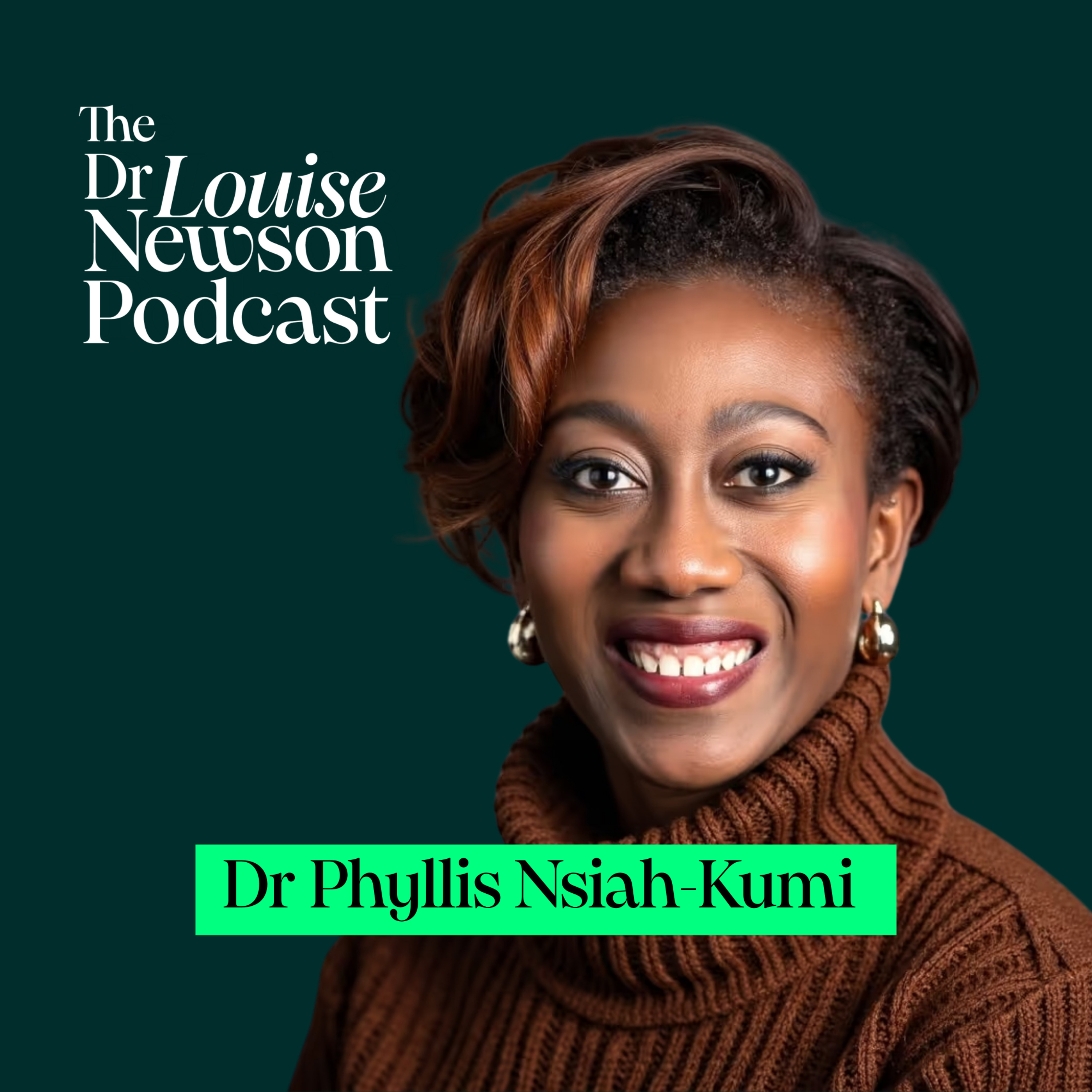
Doctor dismissing your menopause symptoms? Dr Phyllis Nsiah-Kumi explains how to get heard and get the right care.
Dr Phyllis Nsiah-Kumi, MD, MPH, is a US physician with more than 25 years in women’s health and public health, much of it with underserved communities. She regularly sees women for whom she is the third, fourth or fifth doctor, after years of being told their symptoms just come with age.
Dr Louise Newson explains why symptoms of hormonalimbalance, from night sweats and joint pain to low mood and memory problems, are so easily dismissed when they can’t be seen on a scan. She also explains why so many women are told the only option is an antidepressant, and why many are now learning about hormone treatments, including testosterone, fromeach other.
Phyllis closes with three take-home tips for women and the people supporting them: pause, pivot and proactivate.
Let’s connect👉 Take your symptoms to your next appointment: complete the free symptom questionnaire in the balance app: https://balance-app.com/utm_source=DLN&utm_medium=biolink&utm_campaign=crosspromo
👉Follow the podcast for more: https://open.spotify.com/show/7dCctfyI9bODGDaFnjfKhg
👉More from Dr Louise Newson: https://linkin.bio/drlouisenewson
Chapters
00:00 Why is health information so confusing for women?
02:28 Why are people so scared of the word hormone?
02:45 Why is "Do you understand?" the wrong question?
03:27 What do you really want from your appointment?
04:09 How should you prepare for a doctor's appointment?
05:51 Why are women too scared to ask for an examination?
07:41 What happens when a doctor refuses to examine you?
08:42 Is it really "just your age"?
09:27 Why are so many women being dismissed?
10:27 Is it okay for a doctor to say "I'm not sure"?
11:09 What does "that's just how it is" really mean?
12:11 Why are hormone symptoms so easy to dismiss?
13:24 How can scoring your symptoms help you get heard?
14:43 Can a symptom questionnaire make you feel heard?
15:39 Why do so many women think it's just them?
16:47 Are women learning more from each other than doctors?
18:17 Should you crowdsource medical advice online?
21:06 How do we reach women in underserved communities?
24:29 How do your hormones affect your whole family?
25:23 How can partners and friends support you?
27:24 Why take someone with you to your appointment?
29:25 What are the three steps to advocate for yourself?