Ask ChatGPT

 The Dr Louise Newson Podcast
27 Oct 2026 · 32m · 15 chapters
Inflammation as a driver of aging and chronic disease, with a focus on how the menopause transition accelerates “immune aging” and how estrogen (and other sex hormones) may reduce low-grade, long-term inflammation. The episode also covers postpartum hormone drops, links to mental health, and argues that hormone therapy can improve future health outcomes.
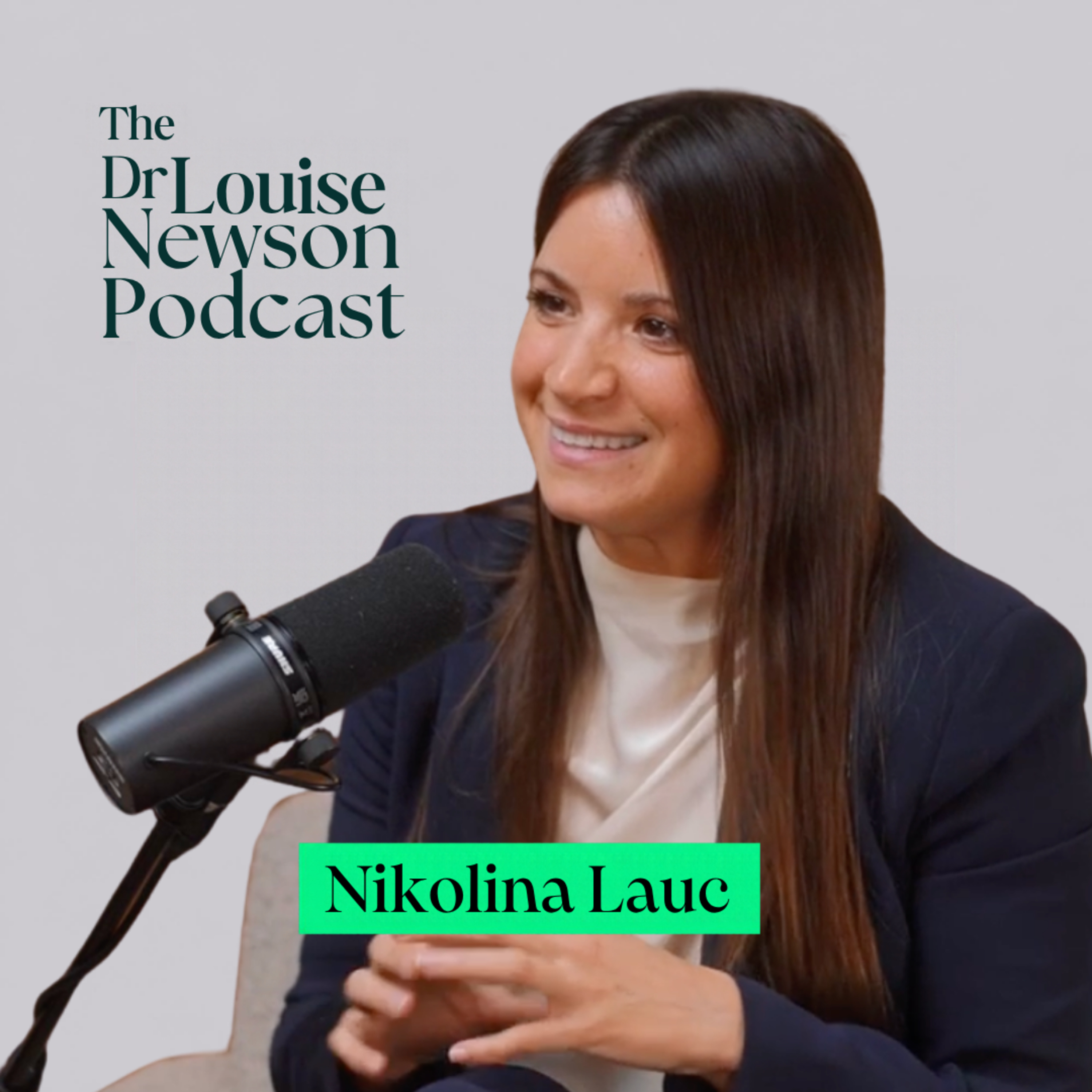
Nikolina Lauc of Glycan Age. Background: immunology/pathology training; research using IgG glycosylation (antibody sugar patterns) as a biomarker of pro- vs anti-inflammatory immune aging; prior collaboration with Tim Spector and work in animal models (e.g., rhesus monkeys).
Acute inflammation (e.g., CRP after infection) differs from chronic sterile systemic inflammation that tracks aging; menopause is a major aging event for women; hormone replacement can prevent or reverse inflammation acceleration; postpartum hormone withdrawal may contribute to postnatal depression/psychosis risk.
finger-cut immune response; 1972 menopause conference noting reduced disease incidence with hormone treatment; twin study showing IgG glycosylation inflammation rate doubles from perimenopause to menopause; reversal with HRT; pregnancy lowers inflammation and postpartum “skyrockets”; PMDD linked to higher cardiovascular/osteoporosis/dementia incidence; ovaries removed before age 40 associated with later chronic inflammatory diseases and mental health/drug abuse increases.
Written by AI. May contain mistakes.
Exploring the role of inflammation and hormones in women's health.
“And we saw this on this biomarker that we focused on and that my father dedicated his scientific career to.”
Discussing the connection between inflammation and the aging process.
“They protect us and they're always hypervigilant working.”
Examining how hormones impact inflammation and disease prevention.
“And so they can damage tissue, they can cause diseases as well.”
Understanding the effects of hormone therapy on women's health post-menopause.
“And we shouldn't really be waiting for the disease.”
Discussing the health risks associated with early menopause and hormone loss.
“they're going to, and GLP-1s, we just came from a conference in Boston where everybody was talking about GLP-1s being potentially anti-aging or longevity medicine.”
Explore the health consequences of young ovarian removal and hormone loss.
“And he was on my podcast a few years ago.”
Understanding the connection between postpartum hormonal changes and mental health.
“If you'd like to hear more conversations like this, then please follow us or subscribe to the podcast on Spotify, Apple Podcasts, YouTube, or wherever you listen.”
Discussing the effects of hormonal shifts postpartum on women's mental health.
“And I think this connection with mental health is huge.”
Examining how hormonal imbalances contribute to various postpartum symptoms.
“But what she was doing was treating the underlying problem, which is what we should be doing in medicine.”
Investigating how hormonal changes influence psychological health in women.
Highlighting the advancements in hormone treatments and their misconceptions.
“So I think there's a difference between an acute prescription and a long term prescription.”
Analyzing the impact of hormones on aging and various diseases over time.
“and confusion about the risks and benefits, it's almost put people off.”
Discussing future research directions in hormonal studies and resilience to disease.
“work, CRP, LDL, smoking, history of disease, you still had a signal for every year increasing all - cause mortality.”
Explore how hormones may play a role in resilience and health outcomes.
“And one, the thing we have to prove now, so we see that this would associate with greater risk, this would be meaningful for an outcome, but if you change it with intervention, are you also changing an outcome?”
Discuss three pivotal research questions regarding hormones and inflammation.
“I'm very grateful for your time, especially as you're jet lag coming into the podcast studio today.”

Get the gist, explore an idea or ask about something said.
 Claude
On The Dr Louise Newson Podcast, what are the key points of this episode?
Searching your listeningAutomatic transcript. May contain errors.
0:00So today on the podcast, I've got Nikolina Lauc from Glycan Age. We talk a lot about inflammation, what it means, how we need a little bit of inflammation, but we don't want lots. And actually too much inflammation is harming women. And guess what? Hormones reduce inflammation. So it's a great lesson. So today we're going to just talk about inflammation, what it means, what it doesn't mean and just the whole hormone conversation because nicolina we've known each other for eight nine years i think probably yeah and it's a very interesting space because i think people are talking more about inflammation and in my book the power of hormones i've written a whole chapter about inflammation but a lot of people still don't quite understand what it is so i'd really like to unpick that a bit and obviously talk about you and your background so let's just talk a bit about when we first connected and what you do yes i think we were it was during covid or just around the time and you were we did quite a bit of work with tim specter and you had a conversation with him about the differences um pre-menopause post-menopause with covid and we thought that was super interesting so i asked him to connect us yes and for to do some research together yeah so i think that's where it originally started And I like the whole immunology side that you brought to the conversation because that really wasn't there.
1:31We didn't see it anywhere else. And we saw this on this biomarker that we focused on and that my father dedicated his scientific career to. The strongest influence we would see were actually hormones. And it's an inflammatory biomarker. Yes. And then maybe talking about inflammation, a lot of times what we're measuring is more acute inflammation. So it would like CRP would go up after an infection. It could be really high one day and then the next day or when you're recovered, it goes down. So it doesn't really move with aging. And we see that this low grade, we call it sterile systemic inflammation is a marker of aging or this immune aging, inflammation.
2:15aging yeah and that's something that um actually before we stumbled on the biomarker as a theory of why we age and how we age it was work of Claudio Franceschi I think you read some of his papers yeah he had a great uh he I think he's 84 now around he had a great talk at our conference in in June and it's amazing how this field has evolved and how much work we have now to show that the immune system has a or this aging or immune system is connected to a lot of chronic disease yes and he would also explain it as a accumulation of lifelong stress but we see that hormones or the menopause transition would be the main aging event in a woman's life yeah and the thing is we've known it for many many years but often in medicine people don't join the dots and they work very much in silos and often the academics and the researchers aren't clinicians so they don't see it in practice and the clinicians don't have the academic background so they don't really think deeply into what's going on with the pathophysiology and I guess I'm fairly unusual because my pathology degree involved a lot of immunology as well and although it was a long time ago the basic principles are still there and so a lot of people might have heard of the term inflammation and we need a bit of inflammation in the acute stages so I always often use the example of if I cut my finger I need my immune cells to go and work around that cut so it doesn't become infected the last thing I want is to not have a good immune system have an infected cut end up with sepsis and you know catastrophically things happen that would I wouldn't want so we've got these lots of white cells they're called these inflammatory cells that go and they're like our sort of armour really, aren't they?
4:08They protect us and they're always hypervigilant working. And we've always got diseased cells in our body. We've all got the potential to have cancer every day. We've got potential to have infections every day. And so we want our immune cells to get rid of any abnormal tissue, any dead tissue, any abnormal cells. And that's what keeps us healthy, basically. But if we have too much inflammation in our body, the immune cells can fight against us, can't they? So they can become pro-inflammatory. So then they actually damage our tissue, which is a bit paradoxical. And so they can damage tissue, they can cause diseases as well.
4:47And when I learned about especially the macrophages, these types of cells many years ago, it really blew my mind because you think, how can something that's good for us or a cell that's good for us turn against us? And then when you think about pretty much all diseases, they are inflammatory diseases. So ranging from obviously inflammatory bowel disease, it's got it, so we know that that is. But other diseases like osteoporosis, cardiovascular disease, dementia, depression, motor neuron disease, Parkinson's disease, non-alcoholic fatty liver disease and cancers. They're all diseases of inflammation, aren't they?
5:26Yes, they are. And that's the, but there is a difference, as you pointed out. this acute response is something that keeps us alive. Totally. But then when it turns into chronic, that's when it leads to chronic disease. And that's the difference we see because we're not measuring, looking at acute markers. We're looking at something you can think of as a type of HPA1C for inflammation. This kind of cumulative effect. So what I do on a daily basis, even if, because I've just come up of an overnight flight, won't change this marker. But in the long term, if I'm accumulating this damage, that will lead to problems.
6:07And that's really important. So with your test, like an age, I mean, there's various tests that seem to be coming out. But when you look at the immunology and inflammation, you want to look at the longer term. You don't want to just think, oh, well, I have just cut my finger. I don't want to know what's happening today. It's sort of longer. because like you say this term inflammation i think is really interesting because as we age we're more likely to have diseases that's just fact and for many years and and even now the way doctors get trained the way we get taught is often to wait for the disease to come and then we treat it but certainly over here in the in the uk with the rnhs is sadly falling apart and other health care systems.
6:53And we shouldn't really be waiting for the disease. We should be trying to reduce it. And a lot of the diseases of aging are inflammatory diseases. And so some of the times we can't prevent them, but we might be able to delay them, which is actually really good because we're living so much longer. But as you say, menopause is a complete car crash when it comes to inflammation because we have this accelerated aging, this increased inflammation in our body. and for many years it's been spoken about and I read some minutes from a conference that was held here in London in 1972 on aging and menopause and it's really interesting because they didn't have the knowledge that we have now but they were still it was all men in the conference of course but when you read their lectures and their notes it was all about heart disease osteoporosis and dementia.
7:48But what was really amazing was that they were all writing how taking hormone treatments can reduce the incidence of those diseases, which makes sense, actually, even though back then the hormones they were prescribing were different to what we prescribe now, they were still seeing the women and noticing how much healthier they were. It's incredible. And maybe I can explain a bit what we see and what we measure. So the biomarker is based on antibodies And we look at these sugars that would regulate how the antibody functions, if it's acting pro-inflammatory or anti-inflammatory. And this is our adaptive learning immune system.
8:26And we see that women prior to menopause, they're in a way protected against this inflammation. When we compare them to men, their immune system looks much, much younger. And this is also why a lot of this chronic disease, cardiovascular disease, diabetes, all of it happens post-menopause. And we see that this transition, this is actually a study we did together with Tim Spector on his twins. We see that this rate of inflammation by looking at this, it's called IgG glycosylation, would be double to any other period from perimenopause to menopause, even while women are still cycling. And if you introduce estrogen, we had the other studies where you can completely prevent this acceleration or even recently with the cohort we looked at in your clinic, reverse that inflammation with hormone replacement.
9:20So we do have the tools and we are and there is data now on hormone replacement reducing all-cause mortality. So we look at the drugs which are actually extending health span and reducing long-term risk. There was this recent review they did on the UK Biobank and out of 14 drugs they identified as potential life-extending drugs, four of them were estrogens. So I think this information is there. But if I go to our spaces, which is very obsessed with these kind of new drugs, they're going to, and GLP-1s, we just came from a conference in Boston where everybody was talking about GLP-1s being potentially anti-aging or longevity medicine.
10:02But actually everybody's ignoring the data we already have for estrogen because it's not a new drug. It's generic. And it's not an expensive drug either. And it's not just oestrogens, actually, progesterone and testosterone are very anti-inflammatory as well. They all really reduce inflammation and they improve the weight. The macrophages work and also mitochondrial function. So they help the energy production in all our cells as well. But because it's so basic, it's been forgotten. And it's really interesting because there are papers, immunology papers that I've read from the 1980s, very clear talking about the immune regulating effects of these hormones.
10:41But because they've been mislabeled and misgendered actually as sex hormones or gender hormones, they're not at all because men produce progesterone and estrozole, women produce testosterone. But people are so fixated on symptoms. And even now with the testosterone, people are just talking all about libido. And no one's taking a step back and thinking, hang on, what's going on at a molecular level? because the hormone treatments we prescribe are the same molecular structure, as you know, as our own hormones. And so when we're looking at the health of women, we want anything we can do to reduce inflammation.
11:19And it's very interesting when you look at work of women with PMDD, premenstrual dysphoric disorder. So a lot of those women have changes of their hormones in the second half of their cycle. So a lot of those women for several days, sometimes a couple of weeks have lower levels of hormones than other women. And studies have shown that women with PMDD have a higher incidence of, guess what, cardiovascular disease, osteoporosis, dementia. And that's really interesting because thinking about the whole menopause, I hate that word because it's just about periods. You know, we've got to be looking at when else do we have this hormone imbalance that can worsen inflammation and worsen our future health.
12:03Yes, correct. And that's I love the work you're doing with your daughter. I work with my father's. Yeah, yeah. It's very nice to see. We did do studies on cycles. So we had that study with 70 women who were tracking weekly to see if this changes within a cycle. And with a healthy regular cycle, there was only a 1 % change. So there was no variability. So if we were to measure the biological age, which is one part of glycan age, it would be stable. but in the woman who didn't have regular cycles it it seems to behave differently so that's something we also want to study better and we see a lot of influence so we know this is not just um it's not that we're seeing effect in this inflammation process just because of the health benefits of estrogen we have done studies on animal models where it directly changes this So, for example, we did some trials which are still unpublished with rhesus monkeys, where they remove the ovaries and then they give the estrogen or they don't give the estrogen.
13:06And they're looking at bone marrow samples and we see this change in bone marrow. Yeah. So it is something that's mechanistically involved with what we measure. Yeah, so I think that's something we want to do a lot more research in this space to understand what's going on. It's crucially important because, you know, many people who are listening know that women globally are harmed by not being prescribed hormone treatments for their future health. And I think people are waking up and realizing it more. But I worry a lot about younger people. I mean, I worry about all women of all ages, but younger women who have longer without their hormones are really impacting their future health.
13:48And we know that it's probably between three and four percent of women have menopause under the age of 40. And I remember many years now, probably about 10 years ago, I listened to Walter Rocco, who's a great professor. He's an academic at the Mayo Institute. And he was on my podcast a few years ago. And he produced data. And it's almost barbaric when you look at it. But basically, they were looking at women who had their ovaries removed at a young age and following them up and seeing the diseases that they got comparing to women who hadn't had a bilateral lupectomy at a young age. And I remember seeing the graph.
14:23And it's this just, you know, they start off as healthy as each other. And then it drops. And then it's not just those diseases that we mentioned already, these inflammatory diseases. It's also chronic kidney disease. It's also lung disease. It's like chronic obstructive airways disease, but also drug abuse and mental health disorders really do increase. And when I first saw this, I was really shocked because then I was immediately thinking, but why? Well, of course, but why? The reason is those hormones have gone in the bin with the ovaries and levels of hormones have reduced in that woman's body.
15:01but what really shocks me is that every day I speak to women who've had their ovaries removed at a young age and no one's actually given them hormone treatments back and it you know it's these women obviously a lot of them have symptoms but as a doctor I worry more about their future health and so your studies that you've done have have just replicated that as well you're not showing us anything that's surprising but it's confirming the harms of not having hormone treatment when hormone levels are low. I hope you're enjoying today's episode. If you'd like to hear more conversations like this, then please follow us or subscribe to the podcast on Spotify, Apple Podcasts, YouTube, or wherever you listen.
15:45By subscribing, you'll be the first to hear new episodes each week featuring expert guests, the latest research and evidence-based discussions about hormones and the health of women. Thank you for listening and being part of this really important community. I want to also ask you about postpartum. And I think this connection with mental health is huge. It's something we see more and more in the data. And there is, so if we look at this biomarker in pregnancy, there's a special estrogen that we produce in pregnancy. And basically inflammation goes all the way down to the floor. And if you have an autoimmune disease, rheumatoid, MS, all of these spontaneously go into remission during pregnancy.
16:31But then postpartum, when we look at them, the inflammation skyrocket. So similar to what we would see with menopause, but there is a recovery. And we see sometimes that can be a decade or even a few decades change postpartum. And it would stay during the breastfeeding and then it would start to normalize. So I want to ask you about hormones in postpartum. Is there something that we should be doing that we're not doing well? Absolutely. And I think this is a great conversation because when we're pregnant, levels of hormones are very high in our body, especially progesterone, but also estradiol and estradiol, another form of estrogen as well.
17:07And then overnight, literally when the baby's born, they decline. And we've known for decades that women who have this big drop, some women are more predisposed to mental health disorders. so a lot of us experience some baby blues when we have our children and you know a lot of us incorrectly really are told it's because you're not sleeping much it's because the stress of the baby and all of that and of course that will affect your mood but no one really talks about the hormonal shift and then when you think about postnatal depression postnatal psychosis again that could be triggered by this change in hormone levels and many years ago you might know this amazing pioneer doctor dr katrina dalton used to be prescribing progesterone mainly for these women and she'd give it a high dose as pure progesterone for these women with postnatal psychosis and postnatal depression with absolute transformational results but it was around the same time that the synthetic hormones the contraceptives were coming into market so they tried to silence her and then as you know all the antidepressants antipsychotics really took over in this space because people treated it as a mental health disorder.
18:16But what she was doing was treating the underlying problem, which is what we should be doing in medicine. And when you really ask more questions to these women, the symptoms they have are of a hormonal imbalance. A lot of women postpartum will have joint pain. A lot of them have palpitations. A lot of them have vaginal dryness, urinary symptoms, but no one's really putting it all together. And it's a real shame actually because antidepressants aren't going to treat the underlying cause. Antipsychotics often block the action of hormones so then actually induce the chemical menopause which makes it even worse and I see a lot of women who have got a history of postnatal depression, postnatal psychosis, they've had PMDD and it's gone on and on sometimes for 20 or 30 years and when I've seen them they've become perimenopausal or menopausal but when you take a history a lot of them have been under psychiatric services for so often and when I see them they've got dry hair they've got dry skin they've got all these symptoms they're often on a multitude of medication and then over it often takes time but over a year or two of them having treatment you can just see them transform and you know a lot of people you can see their skin and hair change and some people think well that's just a cosmetic thing well actually the skin is an organ if the skin looks healthier then the internal organs are going to look healthier too and will function and a lot of it when you look at the root cause is these low hormones the low hormones increasing inflammation but no one is thinking about that they're just thinking about the symptoms of a mental health disorder yes and then going back to so there's something that also is coming up more and more and we're going to kind of explore this also from an academic standpoint but we see it in clients there's this system integrate like psychoneuroimmunoendocrine and it seems to be crucial in this inflammation story because and in some of the case studies you were sharing even at the beginning of your practice they would have all these mental health symptoms that seem to go away with estrogen with hormone replacement so that's um it seems to be an integrated system where low hormones are then also triggering um our psychology in a way that we're not connecting but when we look at them so menopause has this big acceleration inflammation usually it's about 10 years and then there's this deceleration uh with with hormone replacement and it's also estrogen in men and we can go touch on that maybe at the end um and then when we look at what else has this strong of an effect and first we were focused on weight loss caloric restriction all of these things do have an impact uh exercise yes moderate like all of these have an impact but there's something that can change it so strongly in a very short period which is divorce, grief, all psychology related that we never thought, you know, looking at just the, you know, the dots on the screen in academic work, you wouldn't really meet the patient and understand the full story.
21:33But we would, you know, tracking people for years, they have the same result or it's going up gradually, then they go for divorce, there's a decade change, or they go for grief there's a decade change and I think that the connection of this system is is coming out more and more yeah and I think this is why we need all of the puzzles to actually treat the underlying problem versus just the symptoms of it yeah and I think medicine needs to change I think you know for a lot of people medicine is failing not just women but men as well and you know when you think about advances in medicine what's really made the biggest difference in medicine well i think everyone would would agree that hand washing even though simul vice who discovered it ended up you know completely ostracized from his medical establishment and was ended up dying beaten to death in an asylum i mean his story is so awful yeah but everyone now agrees he was right um antibiotics have made obviously a huge difference but they're in surgery you know my husband's a surgery a surgeon and i often say to him like what he does is transformational it really is and and surgeons can really transform but medical treatment i don't think there's been much you you know you could say statins or biologics for some people but there is still over prescribing anti-psychotics if you're running around down the street naked then And absolutely, they're brilliant.
23:04But long term, I'm really not sure. So I think there's a difference between an acute prescription and a long term prescription. And even antibiotics. If you've got an infection, you know, my daughter's had sepsis. Of course, it's the best thing. But you wouldn't want long term antibiotics for recurrent urinary tract infections. You would want to treat with vaginal hormones. So the other biggest advance in medicine is hormones. but the bioidentical hormone treatments that have got so confused with the synthetic hormones and confusion about the risks and benefits, it's almost put people off. And people have put off prescribing for the wrong reasons.
23:42GLP-1s, we're still working them out. But for some people, obviously, they have a role. The lower dose, thinking about inflammation, probably do. But we need more research. But I'm very simplistic as a doctor. and if we think about the basis of hormones we can't ignore it and it's frustrating when you look at some of the guidelines when they say there's no increased incidence of heart disease with hormones but there's lots of evidence to show there's a reduction and some of it is because of the whole way that insurance works and they don't want to make menopause a disease because then they would have to insure women, which would cost money in the short term.
24:25But longer term, they could save billions of dollars and pounds, couldn't they, by getting it right early on? Yeah, no, I mean, similar cases now with the weight loss drugs, getting this to reimbursement. And we really should have been there already with hormones looking at the data. So that's, yeah, I think that's a big missing piece. Yeah. And so one of the things I think that's so important is research. You know, we do publish quite a lot of research. I've got a very small but excellent team. But we need to be changing the narrative because often, and it's happened for many decades or centuries, that women aren't believed.
25:04So when women talk about their joint pain improving, their sleep improving, often it's put down to placebo. Now, I don't think the placebo effect is really there very much at all. but people who want to just put the nail in the coffin of hormones and don't like them will always talk about placebo yeah whereas i think with studies especially looking at inflammatory markers looking at glyconate other biometric data you know you can't argue even my aura ring you know if it's telling me i sleep well obviously you could argue it might not be as accurate but it really does it's objective the same with a blood test and putting all these together are signals and we can't keep ignoring proper data can we yes correct and then maybe i can also on the study that's now in preprint but we should have it published in in i forget if it's nature communications or nature aging but one nature paper it was a really nice review we did we had about 20 000 people yeah and 19 different diseases for just healthy aging cohorts and then interventions like yours, caloric restriction and therapeutic plasma is something that was done in the US.
26:15And we see that these changes in the influx, our biomarker, would happen with all of these different diseases. And that's from COPD to diabetes to cardiovascular disease to all different autoimmune diseases. And in some cases where we had the data where we have patients who are healthy and then we track them while until they develop disease, for example, with Crohn's disease, we see these changes six years prior to a diagnosis in some cases even 10 years prior to a diagnosis so it's telling us that on a molecular level we're heading towards a problem but there is is room to to do prevention and then when we looked at mortality there was another we had 5 000 patients from a chronic kidney disease mortality cohort and they had all the blood work, all the regular risk factors, and every extra year of immune aging, of glycanage, was a 10 % increase in all-cause mortality.
27:10And when we removed all the factors, all the blood work, CRP, LDL, smoking, history of disease, you still had a signal for every year increasing all - cause mortality. And we have patients who are 10, 20 clients, they're not patients, not all of them, who are 10, 20 years over or 10, 20 years younger. So what we're doing now, we're looking at resilience to disease. But also if you have a condition, in some cases, like in Northwestern, they're looking at a big biobank of HIV patients. And they have some clients with HIV who are actually classified as super-agers. So their cognitant function is on a level of a 25-year-old.
27:55Their immune function is much younger. Everything they can measure, it's much younger despite them having a chronic condition. So that's another element we want to understand, like not just what puts it at risk, but we want to understand what makes people resilient and what interventions improve this resilience. and hormones seem to be one. And one, the thing we have to prove now, so we see that this would associate with greater risk, this would be meaningful for an outcome, but if you change it with intervention, are you also changing an outcome? Because here we need the long-term data. So one thing we're doing now is analyzing some older cohorts and they're not ideal because they have the old form of HRT, unfortunately, but one large cohorts that we already analyzed it, but we haven't written a preprint.
28:47It's the Women's Health Study, not the WHI. It's a nurse's study. So it was very well controlled. And they had long-term outcomes on women on HRT or not. And then they even have some interventions, vitamin E, which didn't do much, and a baby aspirin, which did prevent some stroke. Then another cohort we managed to convince to send the samples is the KEEP study, which has on transdermal or oral randomized. And they don't have long outcomes, but they have surrogate endpoints. So we can start to show the changes we're seeing in the reduction in this inflammatory, low-grade inflammation is actually changing the outcome.
29:30So that's the work we need to do now to convince the medical community that this will also change outcomes. And we're very interested in dosing. because there they use pretty much the low kind of the guideline, but the guideline is quite low. And we have some practices in the U.S. that if they don't see as much of a reduction in inflammation, they actually increase the dose. So that's a question we have. Are we all on the right dose? Should it be higher for some, lower for others? Should be a different combination of hormones? I think that's something that you already have in practice. But if we can publish more research on it, understanding mechanistically, it's going to be one day easier.
30:14Yeah, absolutely. Because, you know, prescribing hormone treatments is personalized and we need to be prescribing the right dose, the right type of hormone to reduce inflammation and improve future health. It's so important. So there's so much we need to do. I'm very grateful for your time, especially as you're jet lag coming into the podcast studio today. I always end on three take-home tips. So thinking three things that you would like to see some research, looking at inflammation and hormones. What are the three things that would be really exciting over the next few years to witness? So when I mention dosing, I really want to understand, can we personalize dose based on inflammation?
30:56That's one question we have. Staying with hormones, testosterone. And we haven't spoken about men, but we see that men only benefit from testosterone therapy if you don't block conversion to estrogen fully. If you block their conversion to estrogen, we only see pro-inflammatory change. We don't see anti-inflammatory. So also it's the right level of estrogen for men. It seems that estrogen is acting anti-inflammatory. So a lot of men get their estrogen for testosterone, but a lot of women also get a lot of their estrogen for testosterone. So I'm quite interested to see if testosterone would have a similar effect we see with estrogen or the combination of testosterone.
31:40Would it also impact it further than just estrogen and progesterone? and then the third one has nothing to do with hormones but we have this huge effect of psychology and we're keen to find interventions. So watch this space. So the more research that's done and the whole neuroinflammation is so important. So thank you so much for coming today. I really appreciate it. Thank you for having me. So just a quick one. It would be really great if you could follow or subscribe to this podcast. this will really help me reach more people with evidence-based information about hormones and their future health and it also ensures that you'll never miss a future episode thank you
Does menopause speed up ageing? The science shows inflammation accelerates in perimenopause, and estrogen can slow it.
Nikolina Lauc is CEO of GlycanAge, which measures a marker of low-grade inflammation in our antibodies, building on research her father has dedicated his scientific career to. Nikolina’s research shows estrogen can prevent, and even reverse, the rise in inflammation that comes with menopause.
Dr Louise Newson explains why so many chronic diseases, from heart disease to dementia, are driven by inflammation, why estrogen is being overlooked in the longevity conversation and what happens to women whose ovaries are removed young and are never given hormones back. They also discuss why inflammation soars after childbirth, and how progesterone can be used to treat postnatal depression.
Nikolina closes with three things she wants research to answer next, from personalising HRT doses to whether therapy can calm inflammation.
Follow Nikolina: @nikolinalauc
Let’s connect
👉I've written a whole chapter on inflammation and hormones in my book, The Powerof Hormones: https://bio.to/ThePowerofHormones?utm_source=DLN&utm_medium=biolink&utm_campaign=crosspromo
👉 Follow the podcast on Spotify or Apple Podcasts so you never miss an episode
👉More from Dr Louise Newson: https://linkin.bio/drlouisenewson
Chapters
00:00 Why does inflammation matter for women?
01:34 What is low-grade inflammation?
03:33 When does inflammation turn against us?
06:05 What is "inflammaging"?
08:12 What does a glycan test measure?
08:46 Does inflammation speed up in perimenopause?
10:43 Are oestrogen and testosterone really sex hormones?
12:12 Does inflammation change across the cycle?
13:31 What happens when ovaries are removed young?
15:35 Why does inflammation soar after birth?
16:29 Could progesterone help postnatal depression?
20:33 Can grief and divorce age your immune system?
21:30 Are hormones medicine's biggest advance?
24:19 Is HRT's benefit just placebo?
25:19 Can inflammation predict disease years early?
29:05 What makes some people resilient to disease?
30:05 Are women on the right dose of HRT?
31:26 What should hormone research answer next?
32:13 Does testosterone affect inflammation?
33:05 Can therapy reduce inflammation?