Ask ChatGPT

 The Dr Louise Newson Podcast
30 Jun 2026 · 30m · 15 chapters
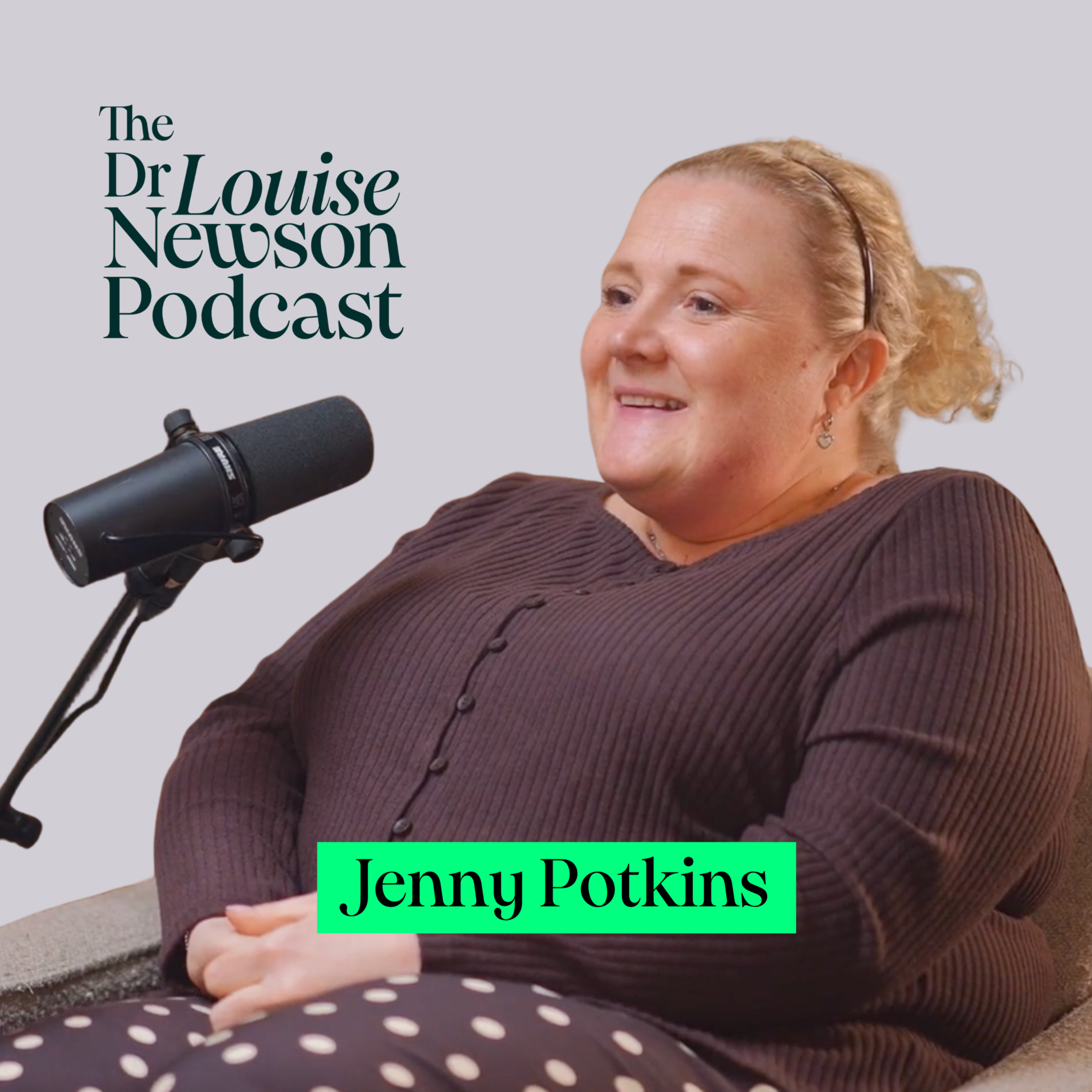
Jenny’s PMDD (premenstrual dysphoric disorder) story—how it was misdiagnosed as depression for years, the role of hormone changes, and why hysterectomy/antidepressants didn’t solve it. She describes severe mood symptoms (including suicidal thoughts), binge eating/self-harm-like thoughts, and physical symptoms (palpitations, anxiety-like flutters, aches, itchiness/dryness, fibromyalgia).
PMDD is more severe PMS tied to hormonal ups/downs (especially progesterone changes in the luteal phase); doctors often miss it by treating only “mental health” and not asking about symptom timing across the cycle; natural progesterone may help, and removing ovaries/hormones can be overly simplistic.
years of antidepressant trials; hysterectomy at ~41; hormone blockers (Zoladex) causing blood pressure issues; a patch of HRT not helping until she found the right hormone balance; a “Hormone Health” black-and-white picture contrasting PMDD symptoms vs “living life to the full.”
Jenny (PMDD patient; chronic fatigue syndrome; fibromyalgia diagnosis; stopped working for ~4 years; now improving with hormone treatment) and the host/doctor (Newsome Clinic clinician; discusses evidence-based hormone care and PMDD awareness).
Written by AI. May contain mistakes.
Jenny shares her journey with PMDD and the lack of recognition from healthcare providers.
“Because it could not just change lives but save lives too.”
Jenny discusses her symptoms of PMDD and the struggles she faced for years.
Exploring the emotional and physical toll of PMDD on Jenny's life and mental health.
“and they agreed to refer me to a gynecologist at that point.”
Discussion on the effects of hormones and misdiagnosis in relation to PMDD.
“It was, no, you need to eat food that's going to hurt.”
Jenny recounts her experiences with various healthcare professionals and treatments.
“No they just concentrate on one thing rather than looking at the bigger picture and that's one thing I've learned.”
Jenny highlights her journey to find effective hormone treatment and support.
“And that's one thing that made me want to do my awareness, because I'm lucky I've got really good family and friends to support me, but not everybody has.”
Jenny shares her experience post-hysterectomy and her initial feelings about HRT.
“Well, even after my hysterectomy, I was told after six weeks, you go on HRT.”
Discussion on the complexities of hormonal imbalances and the importance of hormones.
“with any hormonal imbalance, especially with PMDD, because people in some ways rightly think the hormones are to blame.”
Jenny recounts her past experiences with symptoms and treatment approaches.
“And a lot of women with PMDD, once you get the level of hormones and the same all the time, because that's the big difference.”
Exploration of the differences between natural progesterone and synthetic progestogens.
“So if other ladies are worried about taking it, it's worth a trash.”
Jenny discusses her experience with antidepressants and their ineffectiveness for her symptoms.
“So to have your ovaries removed, your hormones, although they're made elsewhere, would have been lowered.”
The emotional and social toll of PMDD on Jenny's family and personal life.
“Some of them maybe took the edge off, but...”
Jenny shares her initiative to raise awareness for PMDD and its effects on young women.
“It's like you're waiting for the wave to come and knock you over.”
Jenny offers important advice for individuals facing PMDD, emphasizing persistence.
Learn the importance of self-advocacy in seeking medical support and opinions.
“And I was told I wasn't entitled to a second opinion.”

Get the gist, explore an idea or ask about something said.
 Claude
On The Dr Louise Newson Podcast, what are the key points of this episode?
Searching your listeningAutomatic transcript. May contain errors.
0:00This podcast is really important for everybody to listen to. It's about PMDD, premenstrual dysphoric disorder. I have Jenny with me who has PMDD and she has struggled for far too many years. She's not been believed, she's not been listened to, she's been given antidepressants, she had a hysterectomy. No one thought about hormones. She's done this amazing picture that we talked through, showing the contrast between the good days and the bad days of having PMDD. It's a really common condition. It's a more severe form of premenstrual syndrome. But premenstrual syndrome is still not understood enough.
0:37It's not talked about enough and it's certainly not treated well enough with the right hormones. So listen to this. Share this episode with as many people as you know. Because it could not just change lives but save lives too. Jenny, you are here. I am. In real life. You've come down from Stockport. you've got your mother for moral support it's a big thing that you're here yeah and i'm really excited to be talking about pmdd yeah which most people don't know what it is although it's been around forever it's been called different things so premenstrual dysphoric disorder yeah it's a more severe form of pms premenstrual syndrome there's lots of academics will argue and discuss how to diagnose it but for most women it just means they're having a really difficult time throughout their menstrual cycle usually before their periods and you have had a really difficult time and you're here to talk about it because you are feeling better and you're getting better all the time which is wonderful so do you mind it's not easy I know but do you mind just talking a bit about what's happened yeah so I went to my GP for years and years and I kept and with depression symptoms and and they kept giving me I think I tried every antidepressant that there was and none of them really did anything but I kept saying it feels like it's in relation to my cycle but they were like no no because my periods were regular they were like no it can't be anything to do with your hormones so this went on for years and years so when did that start i'd say around
2:212006 ish so how old were you then i was in my 20s so when your period started with it were they looking back i think i could have had it since i was a teenager and then i was seeing a regular counselor um through a charity that's near our house um after my son was born asleep we this charity were really good and because I was seeing her once a week she picked up on the site she picked up on it and I have chronic fatigue syndrome so I was seeing an ME nurse as well and she also picked up on it and she was the one that printed the document out and said please go take that to your GP and it was PMDD and when I read it I couldn't believe it because it all made sense yeah it was me so I took that to the GP and they agreed to refer me to a gynecologist at that point.
3:14And what symptoms were you getting? It was more the mood symptoms I struggled with the most. The worst one was the feeling like not wanting to be here anymore, which it started where it was about maybe one week of the month, but as it got more towards the end, it was, I was feeling like that three weeks of the month. So three weeks of a month you were feeling like you didn't want to be there. Yeah. and then it would hit and then I'd feel okay and then it would hit me again and it was just a constant cycle of and it was feelings like not feeling good enough and a lot of mine I would say were mental but also another one of the symptoms is binge eating which I was struggling with which actually turned into an eating disorder I think because my PMDD was left so long yes so then that was like another thing to battle that's really hard and we know with the hormonal changes our hormones work in every cell of our body so they affect our brains so the mood the irritability some people get very angry as well but then also it can affect our metabolism and people can get changes in their insulin and glucose as well and a lot of people listening will i'm sure have had times where they have sugar cravings yeah those days before you your periods but all you want to do is think about food and you know I've had it we've all had it but then suddenly realize oh yes my periods come I don't feel like the same with food but if it's more extreme for some people like you say it can really affect the way that you eat content mine got to a point where it wasn't that it was someone explained it as like a form of self-harm so and it wasn't that I didn't want to eat healthy it was my head was telling me I wasn't good enough to eat an orange or to eat fruit or salad.
5:05Yeah. It was, no, you need to eat food that's going to hurt. You know, like I wasn't good enough. Yes. So it wasn't just that I ate a lot or there was a lot more. More than that. And that's really important to talk about, actually, because we know that a lot of women with PMDD, and PMDD affects, we don't know, because a lot of people aren't diagnosed, but at least 5%, which is a lot, one in 20 women probably more and some studies have shown around 80 percent of people with PMDD self-harm yeah and you can self-harm in different ways as you've just described with eating and for some people they can physically harm themselves as well can't they yeah yeah I've heard of people that do I think my head was doing it in a way that people couldn't see yeah apart from the weight it wasn't something that people, there was no physical marks or people.
6:01I think my head was trying to hide what was going on in front of other people. And then did you have any other symptoms that didn't affect your mental health? So any palpitations? Looking back now, there were things that the doctors looked into, which looking back now was probably the BMDD. Like the heart pounding, even like the chest, like anxiety. Yes. like flutters and aches and pains as well. I have been diagnosed with fibromyalgia but... How much is related, yeah. The more you learn about PMDD, it affects so much of your body. And did you get any skin changes, any skin dryness or itchiness or anything?
6:47I do get itchiness and dryness but I have muscle activation as well and my hormones have affected that. The whole balance of hormones is so important. And many people will know the graph that we're often taught at school, where people get a little surge of hormones when we ovulate in the middle of our cycle. Then we get a surge in the second half. It's called the luteal phase, where we get higher amounts of estrogen, but also very high levels of progesterone that then fall very quickly. And that fall very quickly can trigger symptoms for a lot of people. and often people have underplayed really the power of hormones.
7:28And when years ago, you might know, in the 1960s, a doctor called Katrina Dalton coined the term premenstrual syndrome and she wrote about it and she talked a lot about PMDD, premenstrual dysphoric disorder, and she gave a lot of women natural hormones, especially progesterone. She lectured on it. Lots of people came to her clinic. really she transformed a lot of people's lives but a lot of people didn't like the way she was lecturing they thought she didn't know much she was only an inverted commas a gp and um the antidepressants were coming into play and the psychiatrist decided to label it a psychiatric disorder and prozac you know the antidepressant prozac was green and they made one that was pink and purple specifically for PMDD.
8:20It's awful isn't it? It's really frightening and so then it became a psychiatric disorder. Now it's very likely related to changing hormones. Our hormones work everywhere and one of the things as you know in the clinic we ask people lots and lots of symptoms and we've increased it so it's the same as a symptom questionnaire on balance and a lot of those are other symptoms so like you say the palpitations skin changes urinary symptoms and so forth oh that was a big one for me sorry actually I forgot yeah and so if people have all these other symptoms it's very hard for me as a doctor to say it's all depression or it's all a psychiatric condition yeah because if it's all in your brain your heart and your bladder and your muscles shouldn't really be affected no but sometimes in medicine doctors don't ask the right questions so then you don't get the right answers.
9:17No they just concentrate on one thing rather than looking at the bigger picture and that's one thing I've learned. Yes. You need to have open eyes and look at the bigger picture. I know they struggle I know professionals struggle with time and things but it makes such a difference. Absolutely so you've seen lots of different healthcare professionals. Yeah. Haven't you? Yeah and you've not always got the best advice from them either have you no um so when i got referred to the gynecology she did some ultrasound scans she was brilliant at the beginning um and then they put me on the waiting list they decided i was having a hysterectomy um to remove your ovaries as well yeah so they actually gave me music prostat yeah so that's to block your it's a hormone blocker isn't it yeah yeah so they gave me that but after two injections or two months it affected my blood pressure right so they took me off it well your blood pressure went up it went really high yeah that's because i'm sure you know you don't have your natural hormones which help reduce and lower your blood pressure so it was through the roof like dangerously high so they took me off it i did in the short time i was on it i did see improvements and and because of that they said we'll put you on the waiting list for hysterectomy that's the best option for you so I went on to the waiting list there was a Covid was a factor in it as well um but I was on the waiting list two years and in that time there was I was coping with the PMDD I was waiting to see an eating disorder specialist who told me I wasn't allowed to be on any diets until I'd had the treatment and this consultant was telling me to lose weight from my surgery right I was like stuck in between two professionals and this went on for two years and when I after this two years I got took off the waiting list because of my bma and this doctor knew that I was see I can use this word now I've never been able to use it until recently I told this doctor that was suicidal for three weeks of the month and she did there was no compassion she just kept going on about my weight um and then And when I questioned this, I was told that they're trained in gynaecology, not mental health, so they don't know what to do with what I told them about feeling suicidal.
11:42And that's one thing that made me want to do my awareness, because I'm lucky I've got really good family and friends to support me, but not everybody has. Not everyone does. And that could have really tipped somebody off on the edge. So it's just looking at the bigger picture again. So how did you manage to find somebody to help you with your hormones? At this point, I went to see a private gynaecologist, which was hard because I was already struggling because I'd not been able to work. Yeah, of course. I think I'd not worked for about four years up to this point. And this gynaecologist, he put me on Zolidex.
12:20Another hormone blocker. Another hormone, which does the same as the prostate. Yes. So he put me on that and my blood pressure was okay. so they kept me on that and he was a lot talking about my mental health as well until I went back um two months later and he'd looked PMDD up and he apologized because he said he genuinely didn't know the effects of it and that was him apologizing was actually quite nice because it made me validates you more doesn't it and that's what made me want to do my awareness as well um because he was a gynaecologist and he didn't know about it. And it just gave me a bit of a light bulb movement.
13:01I thought if gynaecologists don't understand it, we're not going to get the right treatment, sorry, because that's who you get referred to. So he gave me the Solidex for a while. And then because he knew I was struggling with Money Wise and he helped me as much as he could because he knew how I'd been treated, he transferred me back to the NHS to another consultant and he couldn't have referred me to a better... He was lovely, the consultant. Yeah, he was lovely. And the day of my surgery was the calmest day. Nice. I didn't know you then. But since I've learnt things from you, hysteretic maybe, there might have been other options to not have gone down that such serious route.
13:46Yes. There could have been other options. He could have tried with HRT and other hormones, couldn't he? I think from what I've learned from you. Yes, but you don't know what you don't know. That's the problem. And now you are taking some hormones, aren't you? Some natural hormones. Well, even after my hysterectomy, I was told after six weeks, you go on HRT. So six weeks came. And the first six weeks, I actually felt incredible. But then maybe about week seven, everything changed. And I thought the PMDD was coming back, which confused me because I'm like, how can it come back? Everything's gone.
14:22And then I contacted my GP and they were like, we'll just wait for the hospital. Anyway, it got to about three months and I still hadn't been given any HRT. And then they finally gave me a patch, which wasn't doing anything at all. And it wasn't until I found you. And you helped me with different hormones. Before we continue, I'd like to tell you about Newsome Clinic, the sponsor of this podcast. I founded Newsome Clinic to improve access to expert evidence-based hormone health for women. Our specialist clinicians support women with perimenopause, menopause, PMS, PMDD, postnatal depression, endometriosis, PCOS or PMOS and other hormone-related condition.
15:17My Clinic makes this podcast possible, allowing us to continue sharing free education and information to help women better understand their hormones and health. To learn more about Newson Clinic or book an appointment, visit newsonhealth.co.uk. This link is also in the show notes. It's really interesting and important actually that people realise this because I see it a lot with any hormonal imbalance, especially with PMDD, because people in some ways rightly think the hormones are to blame. Let's just remove the ovaries and then we won't have hormones. Now, there's a couple of problems with that.
15:57One is that our hormones are made in other organs, not just our ovaries. They're made in our adrenal glands. They're made in our brain. You can't take out your adrenal glands. You can't take out your brain. So it will help some of the imbalance, but not all. But the other thing is a lot of people have the symptoms because of the change in hormone levels. And our hormones are really, really beneficial for us as well. They have lots of beneficial effects. And you're young as well. You know, you want hormones for your bones and your heart and future health. And so it's a very sort of wrongly too simplistic thing to remove the hormones.
16:35And I remember years ago, it must have been about eight or nine years ago, a 74-year-old lady came to see me in the clinic. and she had more sort of PMS, maybe PMDD. I mean, the symptoms are similar. It's just the severity, really. But she'd had a hysterectomy when she was in her 40s. But she said, every month I still get symptoms. She said, the beginning of the month, I get a drop in the mood. I get anxiety. I get palpitations. And I remember listening to her and thinking, well, she's had her ovaries removed. Why is that? But I've always been taught to listen and believe your patients. So I thought, I've got to understand more.
17:10And then I realised, well, of course, her brain has got this cyclical hormonal changes going on. So, of course, it's right. And I gave her hormones because I said, well, I'm not sure about these changes, but I'll give you hormones for your bones and your future health and might help your symptoms. And she came back a few months later and said, I feel amazing. I wish I'd done this years ago. So then I thought, well, we shouldn't just be blocking hormones. We shouldn't just be giving these hormone blockers or removing ovaries without talking about having those hormones back. And a lot of women with PMDD, once you get the level of hormones and the same all the time, because that's the big difference.
17:51It's the ups and downs, isn't it? Yeah. And for you, there were more downs and ups. Some people, it's just a few days, but for you, it was the majority of the month. I don't know if it's because it did get longer as tired, so I don't know if it's because it had been going on so long. It often can be, can't it? Yeah. And it's really hard sometimes in medicine when we have a patient in front of us, we focus on what's happening on that day. Yeah. If you see what I mean. Yeah. And one of the things I've really learned when I'm trying to work out whether it's hormones or not, is just ask the patient, do you feel the same every day of your cycle?
18:27Yeah. And if someone had asked you that many years ago, once you'd worked it out yourself, it was very clear that you didn't feel the same every day of your cycle. Yeah. And that's what I think all doctors and nurses and pharmacists and healthcare professionals should be asking anybody with any mental health symptoms. because so often people are focusing on just today's symptoms and not putting it into context and then they're forgetting about hormones. Yeah, I think it goes down to being listened to again. Absolutely. I don't feel like I was listened to at all. And then when they decided on the hysterectomy, I was made to think I'd have the hysterectomy and life would be rosy.
19:14and it isn't that's not the and I think if I'd not met you I'd still be struggling with the patch that wasn't like when you did the blood test just along with my symptoms and you said I'd not had any hormones for I think it was 18 months to two years and how old were you when you had your hysterectomy it was two years ago so 41 so young yeah yeah yeah and even maybe this might help someone else when you put me on progesterone i was a bit wary at first because when i was put on the pill which they put me on to try and help it made me work so much worse and i was made to think i had a problem with progesterone so when you suggested that i was but i was really nervous i was nervous and i honestly cannot believe i had two weeks where i couldn't take it because there was a problem with my prescription and I could tell.
20:08Yeah. It's made such a massive difference. So if other ladies are worried about taking it, it's worth a trash. It's really important, and thank you for saying that, because what happens is a lot of people call the synthetic progestogens progesterone. Yeah. Because it used to be called the progesterone-only pill, whereas progesterone is the hormone that we make ourselves. Yeah. And obviously you're taking now on prescription, but it's a very different substance to the synthetic progestogens. and so a lot of people especially with pmdd have quite severe side effects with progestogens either they've had them as contraceptional they might have had um like the mini pill or the implant or a depot or use a um a synthetic hormonal coil so then they get quite scared yeah and then a lot of people think well if you've had a hysterectomy you don't need progesterone yeah i was told i was told i needed estrogen i didn't need to sell testosterone or progesterone yeah Yeah, which is crazy, really, because our hormones, progesterone and testosterone, as well as oestrogenase, are made in the ovaries.
21:12So to have your ovaries removed, your hormones, although they're made elsewhere, would have been lowered. And so having the natural progesterone at the right dose can make a real difference. And what's very frustrating for me, as you know, I spend a lot of my time frustrated, is that even in the 1960s, it was known that progesterone, the natural progesterone, is a really beneficial treatment for PMDD. Yeah. Yet it's not given, first line. No. So, yeah, if that was prescribed, that could have avoided major surgery and years of trauma. Yes. Because it was having the surgery as well, being on the waiting list, that caused so much trauma.
21:54Of course, yeah, yeah. Yeah, and that's a lot for lots of women. You know, even the guidelines, as you know, for PMDD don't mention natural hormones. No, they don't. No. It's crazy, isn't it? Yeah, it's just the chemical, menopause and hysterectomy, that's... Or antidepressants. Or antidepressants. So were you given antidepressants? Throughout the years, I think I've tried every antidepressant going and none of them. No. I'd say none of them. Some of them maybe took the edge off, but... Didn't make anything dramatic, no? No, not at all. So it's very hard also for family members, isn't it? It's not just for the individual who's got PMDD.
22:34No, because in my story that I've done for my awareness, I've put in there, I feel like it robbed my children of the mum, my husband or his wife, and my parents of the daughter, and it's cost me a lot of my life, really. It's robbed me of my time with my children. Yeah. As much as we've done things in our own way, it has robbed a big part of the life, really. The mum in the life. Yeah. And you're doing a lot of awareness. I'm trying. So you've done this picture. Yeah. Which is just brilliant. And I've shown it in loads of presentations. And it's called Hormone Health. And there's a picture of a womb.
23:16And it's two sides, isn't it? Yeah. So I'm just going to read some of the words. I mean, the bigger part says suicidal thoughts on one side. And then you've got paranoid, weight gain, depression, cramps, fatigue, bloating, migraine, anxiety. It goes on this side. And then you've got a rainbow and living life to the full, which is what we should always be doing. I mean, life is not good every day for everybody. That's just not life. But you've got smile, enjoy, relax, social, function, self-care, energy, calm, kind. These are all really, really important words. And it's a real black and white, isn't it?
24:07Yeah. It's like night and day, which is what so many people say to me, the difference. The difference, yeah. So if you had a mental health condition, this would be there all the time. Yeah. But you have glimmers of this. Yeah. I think that's what makes it harder as well, having the glimmers and then being hit by a brick wall. Yes, yeah. And I know, having spoken to many people with PMDD, even when you're the rainbow side, you've got the other side hanging over you because you know it's going to come. You know it's coming, yeah. Which is really difficult, isn't it? You're just waiting. It is. It's like you're waiting for the wave to come and knock you over.
24:47Yeah. so I speak to someone at the weekend I did a consultation and she's had PMDD and she's in her mid-20s and she couldn't sit her exams her A-levels because they came when her just before her periods yeah so then she couldn't get into university that she wanted to she couldn't get the job she wanted to she's under a gynecologist who said well I think they have a hysterectomy she hasn't had children she doesn't know whether she wants them and they said oh we could give you two coils together marina coils and put two in together and that might help some of your bleeding and she doesn't like the synthetic progestogens so she said she didn't want that and they said well that's your that's their options so i worry about younger people because they're not reaching their potential yeah you know you've been really lovely and great and honest about the impact it's had on your personal family life but the only way I think we can change is awareness yeah and choice and I'm not here saying we can't have these other treatments but we have to think about the basics and hormones as well and the balance of those hormones yeah you know you've had difficult time but you are improving which is wonderful I'm not to the point of living life to the full no but I'm on my way but you're on your way yeah and you've come down here I can see the road ahead now yeah Which you couldn't before.
26:10Before I didn't even want to wake up in the morning. No. And now I can see the lights on its way. Yeah. But that wouldn't have been possible without you. Yeah. Because if you'd not done the HRT, I'd still be struggling. Yeah. And you've come a two-hour train journey into London. It's a massive thing. It is. I can't even overestimate how much it's been for you to come here. Yeah, it's been a big deal for me. And you've done so well, but it's so important. because you know you can learn from me as a doctor but actually I learn so much from patients and other people need to learn from real life scenarios because it will resonate and I know your story will resonate with a lot of people I think because it's so real as well yeah it's so real but also you're getting better because you've got the right balance of hormones and the motivation and now the knowledge and the reassurance as well I think I'm in the right HRT as well I can function a bit better so I can function a bit better if I can help myself a bit more absolutely they all go together I couldn't function at all so it's so important we're doing a lot of work about PMDD through balance app as well because the more people that have that knowledge to share the better your work is so important too yeah so before we end I always ask for three take-home tips yeah so there might be people listening today who either think oh my goodness I've got PMS or PMDD it actually doesn't it doesn't matter in the in the respect that the treatment is still with hormones so they might have PMDD or they might think goodness me that's my daughter that's my niece that's a colleague at work so what three things Jenny do you think would be important for people to know when they're just learning about PMDD?
27:57Firstly to make sure you speak to someone yeah um your family maybe first just and speak to them about how you're feeling just so they're aware and that might help them help you a little bit but don't give up with professionals um keep going if you go if you have to go to your GP keep going don't let them make like I felt really dismissed yeah don't let them do that because Just don't give up. And I was told I wasn't entitled to a second opinion. But since then I've learned you are entitled to a second opinion. And a third and a fourth. Yeah. So don't let them say no and make you feel like giving up.
28:37Keep going. You'll find someone that will listen. It might take, hopefully by this podcast, it might not take as long. But you will find somebody that will listen. It might take a few professionals, but you will find someone. really important really important to advocate for yourself yeah speak up to listen but to share which is really hard when you're in that it's so difficult it really is yeah um but yeah you need to um be brave enough to which is hard but yeah absolutely yeah so thank you so much i'm so grateful that you've come today and i know this podcast will help so many people so thank you so much for asking me.
29:21Thank you. So just a quick one. It'd be really great if you could follow or subscribe to this podcast. This will really help me reach more people with evidence-based information about hormones and their future health and also means you never miss a future episode. Thank you.
For years, Jenny was wrongly told she had depression. She was prescribed antidepressants, saw multiple healthcare professionals and even underwent a hysterectomy, yet no one addressed the underlying hormonal changes driving her symptoms.
In this powerful episode, Dr Louise Newson is joined by Jenny Potkins, who shares her deeply personal experience of living with premenstrual dysphoric disorder (PMDD), a severe hormone-related condition that can have a devastating impacts on mental and physical health. Jenny describes years of feeling dismissed, the toll PMDD has taken on her family, and why she is now campaigning to raise awareness so that other women don’t have to go through the same dreadful experience.
Louise explains why PMDD is often misunderstood, how fluctuating hormone levels can affect the brain and the whole body, and why so many women are still often inappropriately prescribed antidepressants or encouraged to have surgery before natural hormones are even considered. Together, they discuss the importance of listening to women, recognising the cyclical nature of symptoms, and ensuring people have access to informed choice about hormone treatments.
LET'S CONNECT
👉 Subscribe on YouTube
👉 TikTok
https://www.tiktok.com/@drlouisenewson?utm_source=DLNpodcast+&utm_medium=shownotes&utm_campaign=BAU+
👉 Spotify
LEARN MORE
👉 Download my balance app
https://balance-app.com/?utm_source=DLNpodcast+&utm_medium=shownotes&utm_campaign=BAU+
👉 Order my new bookhttps://bio.to/ThePowerofHormones?utm_source=DLNpodcast+&utm_medium=shownotes&utm_campaign=BAU+
👉 Speak to Newson Clinic
👉 Visit my website
https://www.drlouisenewson.co.uk/?utm_source=DLNpodcast+&utm_medium=shownotes&utm_campaign=BAU+
Link to Jenny's poster :
PMDD_Poster_2026 v2.2-29-06-2026.pdf - Google Drive