Ask ChatGPT

 The Dr Louise Newson Podcast
7 Jul 2026 · 30m · 14 chapters
Natural/bioidentical (“body-identical”) vs synthetic hormones, and how terminology confusion affects prescribing and patient outcomes.
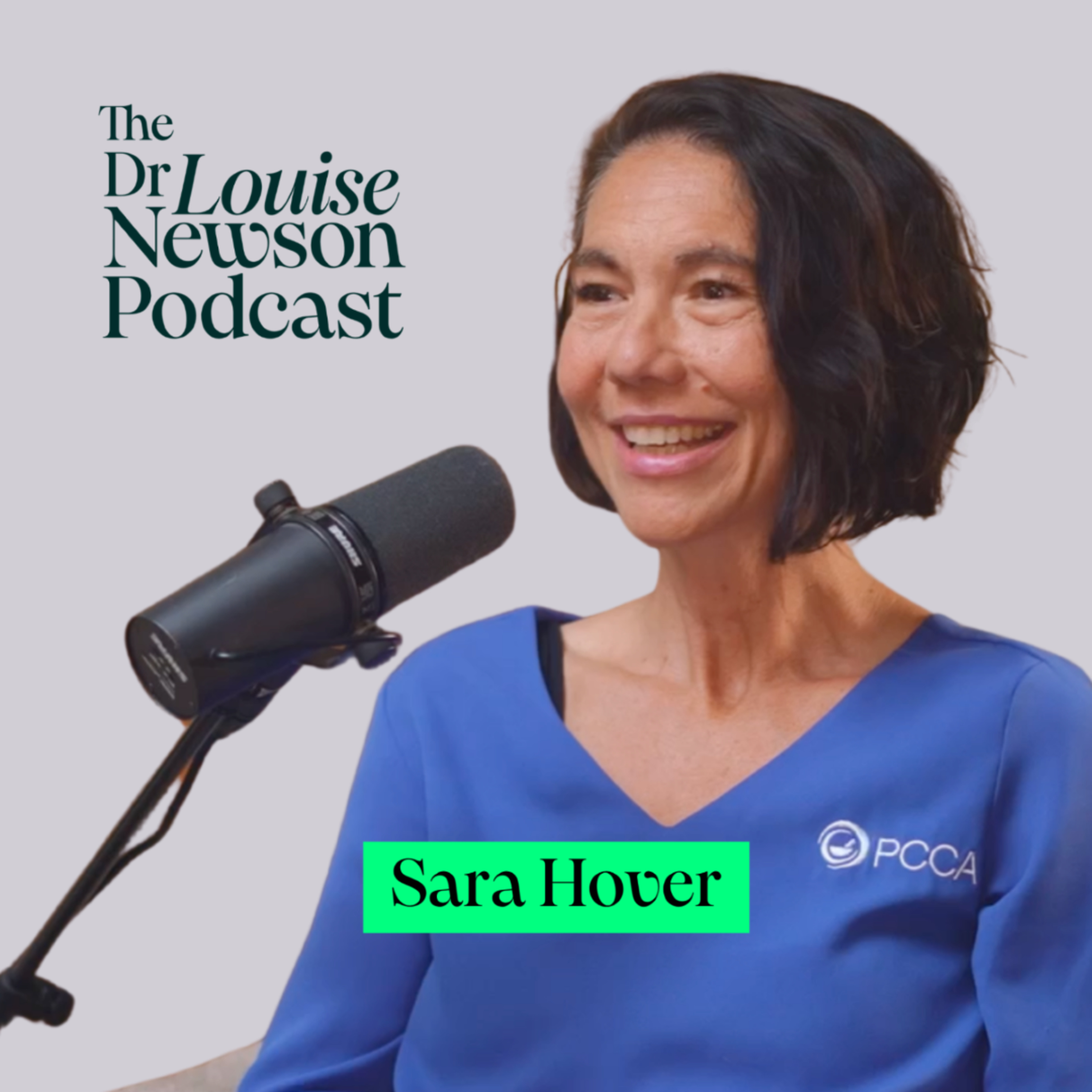
Sara Hover, pharmacist from Texas (30 years in pharmacy; worked in the Dallas area on hormone replacement before licensing). She describes a patient whose insurance change led to different hormone care; after switching back, blood pressure and sleep/depression issues improved, motivating her to educate women.
Synthetic progestogens/estrogens differ chemically from progesterone/estradiol and may bind receptors longer, potentially delaying desired effects for months; synthetic research focused on uterine bleeding rather than broader organs/brain. She argues some synthetic hormones contribute to vasoconstriction and stroke risk (citing rhesus monkey findings comparing medroxyprogesterone acetate vs progesterone) and that “hormonal” products (contraception/HRT/coils) often use synthetic progestogens.
WHI interpretation (medroxyprogesterone acetate vs progesterone), women reporting mood/memory/sleep/cognition changes on synthetic contraception/HRT and being dismissed; hysterectomy patients still needing progesterone (receptors throughout body); patch/gel absorption variability (heat transfer example from a semi-pro golfer in ~100°F).
Written by AI. May contain mistakes.
Discussion on the differences between natural bio-identical hormones and synthetic hormones.
“So you probably know more about hormones than me, although I'm catching up.”
Sara Hover shares her experience as a pharmacist and her insights on hormone replacement.
“Newsom write about a drug that isn't even able to be prescribed on the NHS.”
Sara discusses pivotal moments that shaped her understanding of hormone treatments.
“So we can theoretically as licensed doctors prescribe any.”
Discussion on misconceptions regarding natural and synthetic hormones and their effects.
“And if you go back to basic chemistry, just explain to me the difference between these different progesterones.”
Insights on how synthetic hormones could lead to negative health effects.
“They cause dementia, progesterone, estradiol, testosterone promote brain health.”
Emphasis on the need for education regarding the differences in hormone therapies.
“And that is a real problem with the synthetic hormones, isn't it?”
Discussion on how patients experience hormonal treatments and associated misconceptions.
“So they altered the structure just very slightly, but a small difference in chemical structure can make a massive difference in the body and how this substance works.”
Analyzing the systemic effects of vaginal estrogen and the misconceptions about its absorption.
“Because I was talking to someone at the Royal College of GPs recently about the difference between natural and synthetic hormones.”
Explore how vaginal estrogen can affect mental health and absorption into the bloodstream.
“Therefore, if she's had a hysterectomy, she only needs oestrogen.”
Discuss the need for personalized hormone treatments and the challenges faced.
“I mean, our body is so, it's such a miracle.”
Understanding the issues with hormone delivery methods and their effects on patients.
“So giving personal, prescribing personalized hormones, it's really important because you've got flexibility.”
Examine how hormones interact with various aspects of women's health beyond menopause.
“So, yeah, those patients are definitely more difficult.”
Discover the advantages of bioidentical hormones over synthetic options.
“Like just really, I'm just more of functional medicine of really looking at the whole individual.”
Learn about the advantages of bioidentical hormones for health and well-being.
“So three reasons, and we will have talked about it already, of course, but three reasons why the, when I say natural, bioidentical, body identical.”

Get the gist, explore an idea or ask about something said.
 Claude
On The Dr Louise Newson Podcast, what are the key points of this episode?
Searching your listeningAutomatic transcript. May contain errors.
0:00So on the podcast today, we're talking about natural versus synthetic hormones. I've got with me Sara Hover, who's a pharmacist. It's a great listen that everybody should be listening to, whether you take hormones or you've got a daughter, niece, somebody at work who's maybe taking synthetic hormones. it's really crucially important to know the difference between the natural bio-identical or body-identical hormones and synthetic so-called labelled hormones which are actually chemicals made to act like hormones but they're not so have a listen and let us know what you think so sarah you're over from the us it's always exciting having real live patients from abroad in the studio so thank you so much for making the effort to come over very excited to be here.
0:48So you probably know more about hormones than me, although I'm catching up. But because you've been in it for a lot longer than me, I feel really cheated as a doctor because I've only really known so much over the last 10 years, whereas you've been in this for a bit longer, haven't you? A bit longer. I've been a pharmacist for 30 years. And before I even got my license, I was working for a pharmacy in the Dallas area. I'm from Texas. And they were doing hormone replacement and it really opened my eyes. I had one particular patient that came in, her insurance changed. So she had to see a different practitioner and she then also needed something for sleep and depression.
1:27And she was like, I don't want to be on all these. Her blood pressure went up. All these things started, the wheels were coming off the bus. And she told her husband, I don't care what it costs. I'm going to go back to that doctor. I'm going to go back to that pharmacy and that was my big aha moment of the nutrition we were supplying to her along with the bioidentical hormone replacement was made all of those things other medications go away and so it became my mission to help educate women because we've been lied to for we have and I want to talk about this so I've been a medical writer for many years I've trained as a physician so I'm not a gynecologist and I've also got pathology degree so I like basic science but I've worked as a medical writer for for many many years for healthcare professionals but also for for lay people but about 12 years ago I went to a lecture and the doctor there was talking about micronized progesterone and saying how different it is to synthetic progestogens now back then the progestogen only pill was called the progesterone only pill so I thought well we've got progesterone and then I read about micronized progesterone so then I wrote an article about it I used to write a weekly article and it's called GP so it was a magazine that was given freely to every GP and it was sort of key topics it was to keep people up to date so I wrote an article about hormones and I call I wrote about progesterone micronized progesterone and utergestin which is one of the ones that we prescribe quite a lot over here and there were letters of complaint that came in and one doctor wrote to say how dare Dr.
3:04Newsom write about a drug that isn't even able to be prescribed on the NHS. Now it was and it still is able to be prescribed on the NHS it's in the British National Formulary it's no more expensive than synthetic hormones and I was really shocked that someone could be so rude about me without knowing the facts but I'm not shocked now because lots of people are rude about me without knowing the facts but but I thought then gosh it's because it's something different and it's something about women and its hormones that these people got very cross whereas if I was writing about a new ACE inhibitor for hypertension they'd probably go oh this is interesting you know so I was really and and so then I started to use it in my practice but it wasn't on our formulary so in I don't know if you know in the UK each region has different formularies so although we've got the British national formulae which is like our bible of drugs, if you like.
4:00So we can theoretically as licensed doctors prescribe any. Each formulae will say what you can and can't prescribe and it's usually on cost. So when I, after hearing this lecture, I went and read about the differences between natural and synthetic progesterone and progestogens. I thought, well, I'm going to prescribe utergestone. It wasn't on the formulae, like the drop down box on my computer, it wasn't there. So I initially had to handwrite the prescription and I got into trouble for it. So then I went to the local authorities and I said, I'd like to change it for you to gestern. They said, well, no, you can carry on giving myjoxyprogesterone acetate or norothistrone.
4:35And I said, but they're completely different. And they said no. And I had to write so much. And in fact, I left the practice by the time and now they've changed it. But it took about three years to change. And I look back now And I'm really shocked by that episode because no one would listen to me. No one would understand the difference. And if you go back to basic chemistry, just explain to me the difference between these different progesterones. Because there is only one progesterone, isn't there? All of the progestin, progestogen, progesterone, they all get used interchangeably. And it's frustrating because there is a lack of understanding.
5:17I used to talk to physicians and I would talk to them about the differences and they're like they didn't understand. I said, well, would you prescribe medroxyprogesterone to a pregnant woman? They're like, oh, absolutely not. I go, well, then they're not the same thing because you would give progesterone to someone to help maintain their pregnancy. So that was always my big kind of getting them to think, you know, because, you know, with hormones and receptors, it's like a lock and key. Yes. And so it may fit into the lock, but it's not going to turn it the way that we want it to turn. And if you just even look at the molecular structures, they are very far from even looking the same.
5:54So it's very, very different. And it's frustrating. The literature, I always tell pharmacists and providers, like, please read in the literature. A couple of years ago, I was planning to do a talk on hormones in the brain. and I had turned in my learning objectives and I hadn't written my PowerPoint yet, but the, there was an article that came out that said hormones cause dementia. Yeah. And I was like, oh, this is perfect. And I had a student at the time. I was like, here, I'm doing this talk on hormones in the brain. And here's this article. And she looks at me like, I'm crazy that I'm excited that this article has come out.
6:28And so I'm like, just, I want you to dig down into it. She comes back and she was like on the very last table, had to dig down into it. It was all synthetic hormones. I'm like, exactly. They cause dementia, progesterone, estradiol, testosterone promote brain health. And so I was I loved that I could use that article as an example of you can't just read a title. Yeah. You can't just even read the abstract. No, you have to do. You have to. And it's so important. And because the terminology is quite confusing and it's branded around in the wrong way and all hormones are lumped together. so any insert will talk about risks whether it's the you know bioidentical the natural estradiol progesterone testosterone or the synthetic versions it still has the same risks for the consumer for the patients same warnings when we try and prescribe it through our computer systems so you can understand how this confusion happens but often if i'm not sure about something i've got quite a simplistic brain so i'll go back to basics i'll be like a sort of annoying two-year-olds asking why why just explain and and so going back to very molecular like the key and lock analogy is so brilliant because so many people understand when they've had we all had the dodgy key cut and sometimes it does fit into the lock and then it just doesn't doesn't turn does it but there are two problems with that firstly it doesn't unlock like you say this lovely cascade of biological processes that occur in the cells but if it's in the lock and you've got the new key, you've got to take out the old one first.
8:01And that is a real problem with the synthetic hormones, isn't it? They hang on to the receptor for a long time. It can take three, six, nine months sometimes before we start to see the bioidentical be able to do what we want it to do because that synthetic's on board. And it's hard. It's frustrating. I usually talk about how we paper off of a synthetic, especially if we've been on it for a long time. It's not an easy process. Yeah. So I've written a lot about this in my book because the history, I think, is really important. It's all about commercialization at the end of the day. And when they discovered the structure of the hormones, they wanted to make them commercial so they could sell them through pharmaceutical companies.
8:47So they altered the structure just very slightly, but a small difference in chemical structure can make a massive difference in the body and how this substance works. But also the research was done on the lining of the womb. So they were very much focusing on will this woman bleed or not with this synthetic progesterone. But they didn't look up or look down. So they weren't looking at, you know, if you look down, looking at the muscles, looking at the nerves, looking at the heart, even the skin, and then looking up. My goodness, they didn't go to the heart or the lungs. It certainly didn't go to the brain.
9:25So they've got this synthetic chemical. I don't even like calling it a hormone because it's not a hormone that has been tested on for bleeding. It hadn't really been tested whether it was a contraceptive or not when it was licensed, was it? No, it really wasn't. There was an article that came out about comparing medroxyprogesterone acetate to progesterone and they were testing it on rhesus monkeys do you remember that it was before the whi yes it was a long time and so they basically they internalized stress like we do and they gave one group i don't know how they stressed out these monkeys i don't want to think about that but um they were able to see that medroxyprogesterone acetate caused vasoconstriction yes and progesterone caused vasodilation so when I first read the WHI I'm like did they not read the racist monkey study like it wasn't a surprise that medroxyosyginal acid caused stroke and you know more more risk for women because of the vasoconstriction yeah absolutely and and they can negate the beneficial effects of those hormones probably because the key is stuck in the receptor really isn't it but they have their own effects too and some of them we just don't know but we I mean we as clinicians we I've spoken to so many women who have been given synthetic hormones, whether it's in contraception, whether it's in all types of HRT, whether it's in an implant, the depot injection, whether it's the hormonal, inverted commas hormonal, but the synthetic progesterone coils, they've had negative effects affecting their mood and their memory and their sleep and their cognition.
11:00Yet they've often been told, oh, you're probably depressed. It won't be related to hormones. Exactly. Or they're old. I've had so many patients that thought that a hysterectomy was going to solve all their problems. And that's just the beginning of it. It was hormonal imbalance that was causing their problems. And just taking out the component that is bleeding doesn't solve the issue. And I look at those patients as medical victims. It just really breaks my heart. Many times I'm like, oh, if I talked to you sooner, I could have helped you sooner. But we do what we can to help as many people as we can.
11:36Remember, education is key. It's really crucial, isn't it? Because I was talking to someone at the Royal College of GPs recently about the difference between natural and synthetic hormones. And he just said, Louise, you've just lost me there. Just stop talking now. And I said, well, it's not that difficult. Once you understand, it's really not difficult. So just to recap, really, in all contraceptives that are marketed as hormonal, they don't contain natural hormones. We've got one in the UK called Zoli, which contains estradiol, not ethanol estradiol. But all the others that contain, inverted commas, estrogen is ethanol estradiol, which is a synthetic estrogen.
12:15It's like estradiol with an ethanol group, so it doesn't have the same. And actually, we've known since 1979 it's a carcinogen. So it can cause cancer and there are risks with it. But all contraception that's marketed as hormonal contains synthetic progestogens, doesn't it? It does. It does. And how many young women and young ladies have problems that, you know, it's difficult. It's very difficult because a lot of people, like I say, aren't believed. They're not believed that it's associated with their hormones. And it's very hard to prove because you can't do a blood test and say, oh, yes, you're having a side effect to your progestogen.
12:53So a lot of people are being told, well, it's trauma, it's stress, it's something else, or you've got a psychiatric diagnosis. A lot of people also, and I was told that if you have a hormonal coil, so a coil that contains a synthetic progesterone, it doesn't get in the bloodstream. And so therefore you can't have systemic side effects from it. Right. I strongly disagree with that. And the same thing, even with, I believe, with vaginal estrogen. There was an article that I was doing. I was asked to do this talk on kinetics. And I'm like a very simplistic pharmacist. Like, you know, if I left it in my trunk, I'm not going to do the degradation rate.
13:33I'm going to say, oh, let's replace it. You know, but I had to do this kinetic talk. So I thought, OK, well, I'll dig down into some literature. And I found this article on vaginal estrogen and how they said it only stays in the vaginal tissue. but in the same article they went on to mention that it helped with vasomotor symptoms and i'm like it's not just staying there you know it's getting everywhere so i mean if that is absorbed systemically certainly a synthetic progestin is going to be absorbed anything on an area where there's blood supply the blood will go around and actually with vaginal estrogen these are natural body identical by identical means it doesn't matter right but we i've seen people especially when they've got um very thinning of the skin they get absorbed quite quickly and you can get you know it's a very small amount it's not enough to be concerned about but if you've got something going into the womb that's touching the lining of the womb the womb is a lot more vascular than the skin or the vulva or the vagina correct so you will get some going into the uterine vessels which will then get into the bloodstream and i've seen people that have had really severe mental health symptoms one lady was a psychiatrist and she actually took it out it was a weekend she couldn't get to see a doctor so she actually just pulled the threads and took it out herself and she said you know within minutes she felt better i heard the exact same story recently that someone else was like nope this is not for me it needs to come out of there yeah yeah so no it can definitely be systemic i mean there are a lot of progesterone receptors in the vaginal area so i mean it makes sense that maybe some is going to stay there because of the attraction to those receptors yeah but we have progesterone receptors all throughout our body and that's why i get frustrated when they say a woman that's had a hysterectomy doesn't need progesterone don't get me started i i i was at a presentation i went to ishwash conference really great conference in los angeles recently and there was a talk by one of the menopause societies talking about poi premature ovarian insufficiency so menopause women under age of 40 and she showed the flow diagram which she would have seen many times before Or has a woman, you know, had a hysterectomy or not?
15:41Yes or no. Therefore, if she's had a hysterectomy, she only needs oestrogen. So I went up, I took the microphone and I said, oh, I'd just like to ask. We all know that our ovaries produce progesterone, oestrogenase and testosterone, actually. But just thinking about progesterone first, we know it works all around the body. We've got receptors on every cell, especially in our brains. so when you women have their ovaries and womb removed why are we only suggesting estrogen it just doesn't make sense and she said because that's what the guidelines say oh wow and I said well yes but I'm just wondering why so then she said well some people don't tolerate progesterone and the audience actually laughed and then she said next question please and that was it she didn't want to engage in any further but some people don't tolerate a certain dose of progesterone but some women crash their car does that mean we can never drive right I wanted to take a quick pause from our conversation to tell you about my new book the power of hormones many of the topics we discuss on this podcast are explored in much greater depth in my book I look at how hormones really work in the body why they've been misunderstood for decades and how confusion between natural hormones and synthetic hormones has influenced medical practice and public perception.
17:05Most importantly, I explain why understanding hormones is essential for improving both current health and future health. So if you'd like to continue learning beyond the podcast, my book The Power of Hormones is available now and I've included a link to buy in the episode show notes. and we get quite a few letters of complaint in the clinic because we're giving progesterone to women who've had a hysterectomy and the doctors are saying how dare you prescribe and when i sort of interpret it's like how dare you prescribe a natural hormone to somebody whose hormone is missing right it's it's it's really weird isn't it and progesterone makes estrogen receptors work better and vice versa yeah and like you said there's receptors in the thyroid the breasts the brain, you know, the intestines.
17:55I mean, our body is so, it's such a miracle. Like it never does has one way to do something. And so it's not going to just have one job. It has many jobs throughout the body. And it's interesting because we see people when they're perimenopausal and they're producing their own progesterone, they sometimes don't tolerate progesterone so well then. But then as they become older and they're menopausal and their progesterone really drops, then they really enjoy having the progesterone back. but they're quite nervous because they said, oh, I didn't like it when I tried it before. Or we might change them from oral to a pessary or a cream.
18:30And then they feel very different because they're metabolized quite differently, aren't they? Oh, absolutely. Yes. I mean, I do love oral progesterone just because of the metabolite, the allopregnino. Yes. It can really, really help with anxiety, depression, and obviously sleep is fabulous. But, you know, there are some ladies I usually ask, like, how did you feel when you were pregnant? And some will say, I was pregnant. and others are like it was the best time of my life i enjoyed every minute of it and others like i hated every second of it that kind of gives me an idea like what they're going to be like with progesterone how they're going to do it for gesture um i mean we can still work work around that and work through different dosage forms different strengths and that's the beauty of personalized medicine is we can fine tune it and that's really important we do it with every other aspect of medicine and somehow with hrt certainly when i started to prescribe it in the 90s it was fixed dose it was one dose and you either like it or you don't and often people then if they didn't feel better they said well it can't be your hormones because you've been on hrt and i look back and i think oh my goodness that was a east well it used to be the estrogen from pregnant horses urine and medoxyprogesterone acetate like no wonder they didn't feel better oh my gosh you No, but things have moved on.
19:47Yes. So giving personal, prescribing personalized hormones, it's really important because you've got flexibility. So we always prescribe the progesterone, estradiol, testosterone separately, certainly initially. I mean, they can be combined when we know the right dose, but having them separately gives real control, doesn't it? Absolutely. And that's what I would recommend to my patients or providers when I had my pharmacy was, let's start out separate so we can see how you respond. Because if they're all combined, we're going to have to raise or lower them together. And there were a couple of times patients talked me into that, and I regretted it every time I did it because then there would be an issue.
20:28Maybe they had some fluid retention, and maybe we need to back their estrogen down. Or there were things that we needed to tweak, and we couldn't because it was combined. But I got to the point where it was like a hard no, we can't start combined. But I would tell them that was an ultimate goal. Yes. Yeah. And it's the absorption is a real issue. And there's still confusion out there. We have had and we still have so many patients whose doctors refuse to prescribe them a higher than licensed dose of patches or gel. Yet their estradiol levels, which I know are only a guide, are low, but they've got symptoms that improve when they increase their dose.
21:07and I feel very strongly about optimizing dose for two reasons firstly because you know I've had a whole panorama documentary made about doses against me but secondly as a patient I've been using higher than licensed doses for the last 11 years and if I didn't I wouldn't have been able to work and function but I also get very frustrated with the patches so the gel doesn't absorb at all it just literally float you can see it floating off my skin but the patches sometimes are brilliant and I have no worries and problems and other times they don't stick very well so it's almost been like perimenopausal again I get I'm sure I'm getting like intermittent absorption and because I'm a migraine sufferer it triggers a lot of migraines and a lot of joint pain as well actually so you know the tiredness and the mood things that can be due to so much but it probably is related to hormones but migraines and joint pain is something that you can't really make up and I find that really frustrating because you think you've just got there and then you can't so having alternatives like a cream can be really just life-changing actually.
22:21Oh yeah absolutely and the migraine sufferers I'm always super super careful with because it's the change in hormones and so you know even though they might be extremely low like we're going to Start out with baby doses and just barely fill up the cup, even though we want to fill it up right away. We need to just kind of drip it in so that it doesn't kind of throw things off in our body. So, yeah, those patients are definitely more difficult. But, yeah, the patch is a lot of patients do great with it, obviously. I live in Dallas, so Texas in August, September. I wouldn't recommend that. It'd be a time to visit because it's hotter than it can be.
23:02and I had a patient that was a semi-pro golfer and she was on the golf course 100 degree I mean it's Fahrenheit so I'll let y 'all do the conversion um and she told me as soon as I put the patch on I feel like it's gone yes and that was the first time it made me think hmm and like you thinking about chemistry thinking about physics I'm like heat transfer yes her body is super hot yeah they probably didn't test that she was probably sucking every little bit of estrogen out of the patch and then nothing. So if someone is super active, they're outdoors, they work out a lot, even if they tolerate the adhesive and it stays stuck, they might not be getting the even delivery that they need.
23:42But we've known it for decades, actually, when you look at some of the studies, because it's not just between different women you can get differences. It's also the location, whether it's on the back or the bottom or the thigh. But also, like you say, the temperature of the skin. There's so much and it's basic pharmacology, actually. So it seems madness that people are worrying about the doses because actually it's all about absorption and penetration through the skin, isn't it? Absolutely. Yes. What we're absorbing. And then the other part that I heard a doctor talk about not that long ago just really made me think twice about things is what's going on at the receptor.
24:18Yeah. We don't even know. We don't know. You know, we don't know what's going on at the receptor. or we can measure how it's getting in. We know how much we're giving, but that part is kind of like a mystery that I think is the next thing we have to solve. It is. And also, you know, I see a lot of women in our clinic who have very severe mental health symptoms. One in six have suicidal thoughts and a lot come from psychiatrists. A lot of them have been inpatients and a lot of them have been mislabeled really with treatment resistant depression, but they've been on antipsychotics for many years, which can obviously block their hormones.
24:53And increasingly, some of them need higher doses for their mental health. And it's impossible, isn't it, to know. Blood tests will tell you what's in the blood at the time of the blood being taken, but it doesn't tell you what's going on in the brain. We spend time with our patients. We're very lucky we see our same patients coming back and we work with them very closely. And you learn a lot when you do that. And you think you've just got there. And then I always say to the patients, I don't know whether it's true or not, but it's almost like the ovaries have a bit of a swan song just before they go.
25:25There's this sort of heightened activity and, you know, they can get breast tenderness, they can get bloating, they can get bleeding and they come back and say, my hormones. And it's like, actually, I don't think it is the hormones I've prescribed for you. I think it's your own. Just give it a bit of time and then they settle, don't they? And yeah, it's but we're all different. Absolutely. And I think that's important. I know a lot of people will be listening and thinking, right, what am I going to do? either for my contraception or for my daughter's contraception? And there's no easy answer at all, really, is there?
25:59There is not. I have a 25-year-old, a 21-year-old daughter's and then an 18-year-old son. And, you know, I've been doing this for 30 years. And so when I first was learning about, after pharmacy school, was learning the negative things with synthetics, that's the first thing I thought of is what am I going to tell my girls? And, you know, abstinence sounds great. it's not gonna happen it's not reality and i realize that so um but i just you know and they've heard me talk for years about the negativity of synthetics so you know we opted for copper iud you know i felt like it's you know not perfect but it was at least a non-hormonal option um you know there was a non-hormonal contraceptive that came out and um that's like to change the ph I don't know that I trusted that like I wanted my girls to get through school and of course they can still have natural hormones on top absolutely so just getting everything balanced is really key really important and certainly with Balance App we're doing a lot more education about younger people with PMS, PMDD PCOS about having those natural hormones back women with endometriosis often the inflammation lowers when they have progesterone, maybe testosterone as well.
27:21So looking at those hormones beyond just for perimenopause and menopause is really key, isn't it? Absolutely, absolutely. And just, yeah, and looking at the whole patient, you know, we can't just narrow in just on these hormones, these female hormones. We have to broaden and look at adrenals and thyroid, their gut. What's their lifestyle like? It's, you know, just are they sleeping? That's key for so many things. Do they need to lose weight? Like just really, I'm just more of functional medicine of really looking at the whole individual. But hormones is really the key piece. To so much. To so much.
27:54So I'm really grateful for your time. Before I end, I always ask for three take home tips. So three reasons, and we will have talked about it already, of course, but three reasons why the, when I say natural, bioidentical, body identical. So the three reasons why these natural hormones are a lot better and safer than synthetic hormones. um number one i'm all about brain health um i with with what i do with education i want to make sure my brain is always functioning and so brain health is number one um we also want to feel good and live longer i mean in a healthy health span not a lifespan and so i do think that um the bioidentical helps us to do do those sort of things let's see number three um it's just you know overall happiness you know i've had ladies come to me that were um their hormones weren't balanced and they stopped doing the things that they used to love their hobbies once we get their hormones balanced then they have that that you know zest for life again you know and so to me it's all about quality of life as well so the health span the quality of life and brain health that is so important really important things to end on so thank you so much sarah for coming to the podcast today.
29:13It's been my pleasure. Thank you. So just a quick one. It'd be really great if you could follow or subscribe to this podcast. This will really help me reach more people with evidence-based information about hormones and their future health and also means you never miss a future episode. Thank you.
What’s the difference between natural and synthetic hormone treatments, and why does it matter?
In this episode, Dr Louise Newson is joined by pharmacist and hormone expert Sara Hover, who has spent more than 30 years helping women understand hormone health. Together, they explore one of the most misunderstood topics in medicine: why natural, bioidentical hormone treatments are fundamentally different from synthetic hormone treatments, despite often being grouped together.
Louise and Sarah discuss how small changes in a hormone’s chemical structure have very different effects throughout the body, why synthetic hormone treatments shouldn’t be considered interchangeable with natural, bioidentical hormone treatments, and how decades of confusion have influenced the way hormone treatments are prescribed and researched.
They also explore why personalised hormone treatment is so important, the limitations of relying on blood tests alone and why conversations about hormones shouldn’t begin and end with menopause.
LET'S CONNECT
👉 Subscribe on YouTube
👉 TikTok
https://www.tiktok.com/@drlouisenewson?utm_source=DLNpodcast+&utm_medium=shownotes&utm_campaign=BAU+
👉 Spotify
LEARN MORE
👉 Download mybalance app
https://balance-app.com/?utm_source=DLNpodcast+&utm_medium=shownotes&utm_campaign=BAU+
👉 Order my new book
https://bio.to/ThePowerofHormones?utm_source=DLNpodcast+&utm_medium=shownotes&utm_campaign=BAU+
👉 Speak to Newson Clinic
👉 Visit my website
https://www.drlouisenewson.co.uk/?utm_source=DLNpodcast+&utm_medium=shownotes&utm_campaign=BAU+