Ask ChatGPT

 The Dr Louise Newson Podcast
14 Jul 2026 · 28m · 11 chapters
Why women leave or reduce work due to untreated hormonal changes (especially perimenopause/menopause), and what workplaces and individuals can do.
The 2002 WHI study is blamed for fear of hormones despite evidence that appropriate HRT benefits outweigh risks for many women (per NICE: under 60/within 10 years). Untreated hormone shifts can drive not just hot flushes but psychological and cognitive symptoms (fatigue, sleep problems, anxiety, brain fog, low mood) that impair performance and lead to early retirement, role changes, antidepressant use, or workforce exit.
Groups at West Midlands Police and Fire Brigade where awareness led women to stop antidepressants, increase hours, and change roles; a workplace “light bulb” moment where a colleague suggested the Balance app, leading to HRT and symptom improvement.
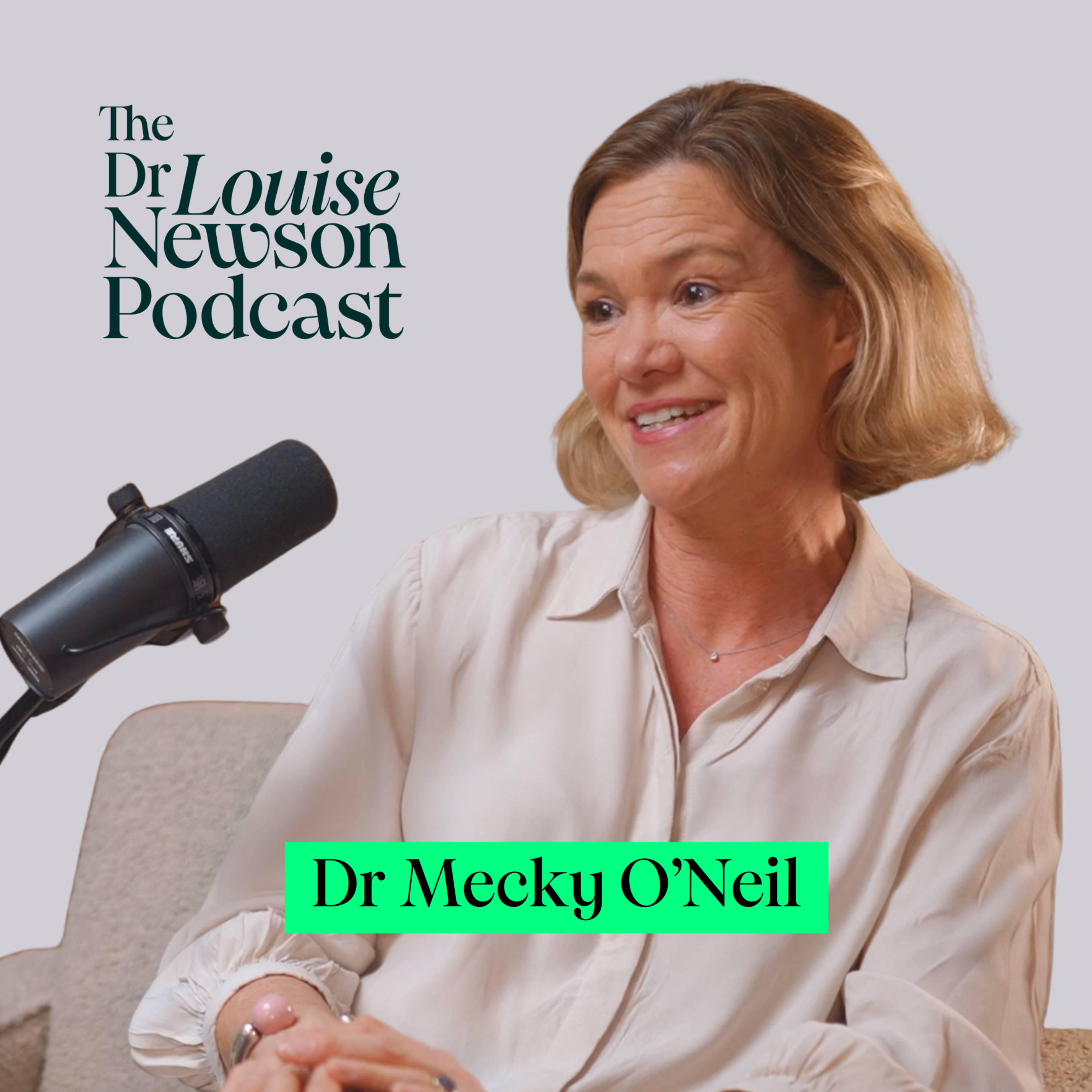
Dr Mecky McNeil (Swiss medical doctor; GP in UK; health coach; health education/mental health first aid; founder/leader of Balance at Work). Host: Louise (podcast host; UK doctor background mentioned; involved in hormone advocacy and surveys).
Written by AI. May contain mistakes.
Dr. McNeil shares her medical background and focus on women's health.
“Well, it was a long time ago that we met at school.”
Discussion on the Women's Health Initiative and its effects on hormone prescribing.
“So very much impacted by the change in hormone prescribing at that time, because, of course, as a GP, looking after many women through menopause.”
Exploring the benefits and misconceptions surrounding hormone therapy.
“It didn't show us anything we didn't know already.”
Exploring how menopause affects women's careers and workplace experiences.
“It's a real problem because also you learn from your peers.”
Discussion of the psychological symptoms that affect women at work.
“brain, the brain fog, the memory problems, the low mood, the anxiety.”
Real-life accounts of women dealing with menopause symptoms at work.
“And I said, look, I can't help you with your policies and your HR, but all I can do is help with awareness.”
Strategies for raising awareness and supporting women in the workplace.
“So it wasn't just the thought of are they employed or not, but what are they doing?”
The economic implications of menopause on women's livelihood and healthcare.
“All those symptoms that we were talking about will improve with hormone replacement therapy.”
Learn about the impact of hormonal changes on women in the workforce and strategies to support them.
“And what worries me is the way it's been normalized so much.”
Explore the importance of supportive work environments for women experiencing hormonal changes.
“Hormones can take a while to really maximise the benefit.”
Discover actionable tips for women and employers to improve workplace support for hormonal health.
“but also thrive in their health as well.”

Get the gist, explore an idea or ask about something said.
 Claude
On The Dr Louise Newson Podcast, what are the key points of this episode?
Searching your listeningAutomatic transcript. May contain errors.
0:00If you've been suffering in the workplace with hormonal changes and they're having an impact, you need to listen to this podcast. Today I've got Dr Mecky McNeil who actually went to school with me, so we've known each other for far too many years to tell you here. But she's doing a huge amount of work increasing awareness, knowledge about hormones, especially menopause in the workplace. What we can do about it, how we can advocate for change, how we can support others and also how we can direct people to the right treatment. so have a listen, share with others and let's try and keep women working So Mekki, you're over from Switzerland, you're here it feels really weird actually because the last time we were well face to face, really close together was probably at school I'm not going to say how many years ago but it was many years ago when we were 17, 18, we were at the same school and it's great because you reached out to me must be about five or six years ago That's right.
0:58And you've trained as a medical doctor. Tell me about what you've been up to. Okay. Well, it was a long time ago that we met at school. We were both starting out on our medical careers. I went to medical school. Like you, I also did a year in the middle of my degree, my medical degree to do pharmacology. So I've always had that interest of understanding disease, how the body works. I know that you have that same passion and interest with pathology. And pharmacology is the same. You really have to understand what's going on first and then know, you know, from there work out, OK, well, now we know what's going on.
1:35How can we support that by either replacing hormones or using medication? So I did that, qualified as a doctor, then went and became a GP, worked for many years as a GP in the UK during the time of the WHOI. So very much impacted by the change in hormone prescribing at that time, because, of course, as a GP, looking after many women through menopause. And then when I moved to Switzerland, I shifted my focus towards health promotion, disease prevention. I trained to become a health coach and I started working very much in the health education field. In mental health, I'm working with mental health first aid in Switzerland and also just in health education.
2:18and just kind of translating what is written, what we know about illnesses from the medical and scientific perspective into everyday language to really help people understand more about how to look after their health, help them really understand what the latest evidence is. Because I think it's so important that people do have reliable evidence-based information so that they can really make the right decisions for them for their health care. Yeah, and it's so true, but I feel so cheated as a doctor, actually, that we weren't given the right evidence-based information before the WHI study, but even since the WHI.
2:58So for those people listening who don't know what the WHI is, it's a Women's Health Initiative study, which was published in 2002, prescribing the wrong dose and the wrong type of hormones, the wrong type of women. It was just a car crash and it's been the biggest harm to women's health ever in the history of medicine, really. But people still use it. They still use it as a reason to be scared of hormones. And it was synthetic hormones. It didn't show us anything we didn't know already. And I used to write a weekly column in GP magazine and I went back and my mum cut out the article so she still had them.
3:34And I'd written about WHI and I just said there's a study, but it doesn't show us anything else. there might be a risk with synthetic hormones, but actually there are benefits especially for bones and future health. So that was 2002. I just carried on prescribing, but I hadn't realised around me everybody, or most people had stopped prescribing and women couldn't get these safe, effective hormones, yet were still being prescribed synthetic contraceptives, which in my mind, just it blows my mind. And you doing your pharmacology, you'll know the difference between the natural and synthetic hormones.
4:07It's just crazy, actually. And we just keep listening about the suffering of women who haven't had hormones. Yeah. So you're not practicing as a GP now, are you? No, I'm not practicing as a GP now, but I am using all that knowledge that I gained over the years, my experience of supporting women, supporting patients, to kind of share the information that I think people need to be able to make the right decisions for their own health because there's so much fear, there's so much misunderstanding and it's really difficult for women to find that evidence-based information to make those decisions that they need.
4:44And to your point, yes, the fact that since 2002 so many GPs, healthcare professionals have stopped prescribing hormone replacement therapy. There's an entire generation of doctors that don't have experience and also confidence. And that can be a real problem for women. It's a real problem because also you learn from your peers. So if your peers aren't prescribing, then you're not going to learn and you're not having the confidence. And I know even when I sort of renewed my interest 10 years ago with hormones, I'd read a lot of the evidence and the research, but I needed to sit in someone's clinic and really learn the art and craft of how to prescribe, what to do when someone comes back, what to do if you need to change the dose.
5:25And that was brilliant. I really, really enjoyed, you know, listening and learning. And obviously I put it to practice. But for a lot of doctors and nurses and pharmacists, they don't have that. But one of the things that worries me is the risks of not having hormones. So there's risks to health. I've already said osteoporosis, heart disease, dementia, diabetes, cancers, inflammatory bowel disease, Parkinson's disease, autoimmune diseases. The list goes on and on. but we also know that there's the suffering of symptoms which have a personal toll in family lives but also in work yeah and that's a real problem and like I'm really embarrassed to say this but it must have been about 11 12 years ago Dame Sally Davis was the chief medical officer she brought out a report called the health of 51 percent and it was the first time I'd ever thought about the impact of menopause in the workplace.
6:20I'd never crossed my mind before, even as a doctor. And I listened to a review on Women's Hour on Radio 4 about it. And I thought, how ridiculous, surely the flushes and sweats, they could just change the temperature. I was like, didn't really think the bigger picture. And then I started to realise that most symptoms affect our brain, the brain fog, the memory problems, the low mood, the anxiety. And then I did some work with West Midlands Fire Brigade and the police and I listened to all these stories and I thought, my goodness me, this is a huge problem. This is huger than they even made out on Women's Hour because it's nothing to do with flushes and sweats.
7:01These women are hemorrhaging from the workplace and no one is helping them and no one's recognising or joining the dots. Yeah, no, you're so right. And the work that I've been doing in workplaces, supporting speaking to women hearing their stories it is it is huge and again what you're saying about the symptoms there was a study that was done in 2023 that actually showed that the leading symptoms that women were experiencing were what you call you know the psychological symptoms so loss of concentration loss of focus fatigue difficulty sleeping and then another big symptom in the workplace as well was joint pain as well so hot flushes didn't even appear in the main symptoms.
7:46And of course, that's where a lot of people are investing their time in trying to support women at work. But of course, if you're not experiencing a hot flush, then you're not going to really be needing a fan either, are you? But these symptoms really do impact women. They're impacting their ability to perform, to concentrate. It feeds into many of the symptoms that women already have at work with imposter syndrome, loss of confidence, loss of self-belief. And of course, just feeling that they aren't able to do their work. and as a result of that they're struggling often in silence you know that many of them having to go to work because of the financial burden but actually finding it really really difficult and I think many of them also don't many women don't realize that what they're experiencing is something that could be treatable right yeah it's really interesting because once I started doing this work with West Midlands Police I realized how huge the problem was but they wanted me to go and talk to them about the impact in work.
8:44And I said, look, I can't help you with your policies and your HR, but all I can do is help with awareness. And there was a very small group when I first went, and they were talking about their symptoms, but they were also talking how they were retiring early, getting their pension early, but they weren't actually enjoying their retirement. They said, I remember one lady said, oh, I'm in my 50s now, and they've got grandchildren and she said I can't pick my daughter my granddaughter up to put her on the swing I can't run after in the park because I've got muscle and joint pains but then I am old and I was like hang on you're not old I said you know could this be related to your hormones oh no hormones is about plushes and sweats that's it and then all of them had been given antidepressants for their mood and so I thought well I'm really going to just talk to them about hormones about hrt and um and over the year that i worked there each group i went once a month they got busier and busier and the last one it was literally standing room only and people learned from each other actually and over the year a lot of them had stopped their antidepressants they were on hormones they were and increased their hours but they'd also changed their roles so some people had been taken off like working on the streets on the beat and then they'd come in as office workers because they couldn't walk outside.
10:05They were finding it difficult. So it wasn't just the thought of are they employed or not, but what are they doing? Are they doing the job that they want to do? Yeah, exactly. And many of the women I've spoken to as well have been finding that they've had to reduce their hours, you know, because of the way that they're feeling. They've gone part-time. I've spoken to women who've been really suffering with symptoms and just said, like, I'm going to have to give up my work. And I think actually when we look at the numbers from the Fawcett report that was 2022, one in 10 women, one in 10 women leaving the workforce for symptoms of menopause.
10:41Doesn't it frustrate you as a doctor, though? Yeah, yeah. I find it's almost being normalised. It's like, oh, it's part of the menopause transition, this will just happen. Well, there's nothing else in medicine. Like, where's the report saying that women with underactive thyroid gland feel more tired and give up work? It doesn't happen because those women get thyroxine. Exactly. It just seems bonkers, doesn't it? Exactly. And I think, you know, raising awareness, first of all, for women to understand that these symptoms are part of a transition that all women are going to go through, understanding and recognising when they start having them, that it's time to go to speak to somebody about it and seek support and talk about what the treatment options are.
11:20And, you know, when we look at the NICE guidelines, there's, you know, for women under the age of 60 or within 10 years of their period, And hormone replacement therapy has many, many more benefits than risk. And it is the first-line treatment. It's the best treatment that we have by far. It will treat those symptoms of mood, of low concentration, sleep, it'll improve, fatigue, it'll improve, motivation, anxiety symptoms. All those symptoms that we were talking about will improve with hormone replacement therapy. And then women are able to feel back to themselves again and go back to work and thrive at work and thrive in their lives.
11:56Which isn't a bad thing, is it? No. It is crazy. I did a survey a few years ago now of people employed by the NHS and I put it out and then I got told off for it so I could only let it run for a week. But it was still, we got 1300 responses, so it's quite a good response. and one of the figures was that 37 % of women were working but they didn't want to and they couldn't afford to reduce their hours and that figure is almost worse than the 10 % who leave their job and it was similar, it was 12 % actually here had left their jobs but the 37 % I think, gosh, those are women who are going to work and they're not doing the best so they're probably doing the bare minimum just to get through They're working under the radar.
12:44You know, they're not there going for a promotion. They're not there going to work, going, come on, this is going to be a really good day. And I know myself, when I had symptoms, I really wasn't functioning as well. My clinic times were longer. I was making more mistakes. It took me longer to do prescriptions and things. Even doing the visits, it took me longer because I kept getting lost in my car. You know, it's ridiculous. But it's the efficiency and the effectiveness of our jobs as well that it's quite hard to monitor, isn't it? Yeah, you can't. It's difficult to measure that impact that it has.
13:18But you can tell also, particularly I'm thinking about in the NHS, when we're thinking about health care, looking after patients, the quality of the care, the quality of the interactions for the patients will also be impacted. And as you say, the risk of mistakes. It's so important that women do get the help. Because also, you know, we feel the quality of good work, feeling enjoying our work is critical part of our quality of life. It's part of our identity, not just as women, but men as well. But it's also brings income in. Yes. And that is really important, actually, when we think about, you know, what we earn, paying off our mortgages, just being part of, you know, that household income is really important.
14:03And what worries me is the way it's been normalized so much. And I'm part of the Government Menopause Task Force. There haven't been meetings for ages, actually. But the last one I went to was frankly quite disappointing because they said, we've made great strides. We've improved things. We've been working with an airline. And one of the airline companies now, it's not just the air hostesses that can wear a wicking uniform. The pilots can as well. So it was on a Zoom meeting. So I put my hand up and they said, yes, Louise, what is it? I said, well, the commonest symptoms affecting people at work are memory problems, fatigue and anxiety.
14:41So I'm not quite sure how a pilot wearing a wicking uniform that's going to help. Yeah. And they didn't quite know what to say. And then someone changed tack and said, we've also done some great work to help with flexible working and allowing people to work at home more. So I put my hand up again and you can see it's great on Zoom because you can see people rolling their eyes. They think they haven't got the camera on them. So what is it now, Louise? And I said, well, some of my friends work in A &E departments, you know, accident and emergency departments as nurses and consultants. I'm not sure how they work from home.
15:15Oh, we haven't thought of that. But it's always convenient if you're not there. But like, if you can't do your job well going into work, are you really going to do it well when you're working at home? I don't really get it. No, I think you're right. I think we really have to address what it is that women are experiencing. and then it comes back to listening to them and hearing what are your experiences and then how can we work together to help you with that. And I think time and time again, if there's one thing that work flexibility would give, it would give women the time to go and see their healthcare, the GP, talk about their symptoms and see if they can get some support, some treatments and ideally for those who can, take the hormone replacement therapy which is actually going to address the problem that's causing the symptoms in the first place.
16:00so many women are struggling at work because they have hormonal changes that haven't been treated properly with hormone treatments we've set up balance at work to enable more organizations to take this issue responsibly we provide training and education about hormones about how changing hormones whether it's due to pms pmdd pmos or pcos and also postnatal depression and of course perimenopause and menopause, how they can have negative impacts in the workplace when they're not adequately addressed. If you think your organisation would benefit from having more information, support and education about hormones, then go to balanceatwork.co.uk and there's more information in the show notes.
16:49I mean, I often compare it to a broken leg. You know, if I had a broken leg that was obviously broken and you were my employer I'd like to think you'd say gosh Louise that looks painful let me get your ambulance or I'll take you to the nearest hospital get it fixed if you need a bit of time off if you're in pain or you need a bit of adjustment for your desk or whatever then let I help you and then you'll be back and you'll be working and it's a bit like that with any hormonal change because it can take a while for hormones to have an effect you might we all know that you might need to see another doctor or a third or fourth doctor.
17:24Hormones can take a while to really maximise the benefit. In that time, employers should be really supportive with a view that you'll carry on working and you'll hopefully get promoted and you'll retire as late as possible. But somehow it's just like, oh, never mind. Let's think about reducing your hours. And like you say, lots of people go for different jobs because they're menopausal. It seems wrong. Yes. And in those situations, these are women with huge amounts of experience who've been working in their roles for a long time. They understand the work, you know, they've got a team who they've been working with and then they don't feel able to do that job anymore.
18:03And rather than getting the support they need, like you say, with a broken leg, you know, have that time, that adjustment time. Maybe you do need a little bit of support during those months to get to get back on track. But the idea is they're going to get back to where they were rather than changing job, changing role, maybe even leaving the workforce altogether for something that all women will go through. I mean, menopause will affect all women. So we need something much more sustainable in terms of our approach and also normalising the conversation that menopause is something that women are going to have and go through and then really change it towards.
18:39So what do we need to do about it? Yeah. And it's how we teach others as well. So not just the women who are suffering, but also, you know, if someone puts in a sickness and it's got back pain or low mood or depression, it should all be alert. Could there be something else going on? And also work colleagues. I know years ago when I was doing something for Apple, actually, there was a colleague, a male colleague was there. And with a female colleague, they were doing a sort of double act on the panel. And she was saying how her work colleague had pretty much saved her life. And what happened was she was having one more time off work.
19:20He knew she wasn't right mentally and knew things weren't quite right. And then I'd brought out the app Balance and he'd messaged her and said, I don't know if this is appropriate or not, but download this Balance app, have a little look around. And it was that light bulb moment. She was just drawing the dots and said, oh, gosh, lucky for her, her first doctor she saw prescribed her hormones and she felt herself coming back. And she said that she didn't know who to talk to, but she didn't know what was wrong with her either. And so it was lovely seeing them together. But it's how we not just normalise the conversation that it will be accepted, you'll feel like this.
19:58But it's like, how do you help and support your colleague to go and get the right treatment? That's right. And actually, we can learn a lot from what's been happening over the last years here when we think about mental health at work. Yeah, totally. If you think before COVID, it was virtually unheard of that you would share how you're feeling mentally with your manager, for example. you know you'd suffer in silence you wouldn't talk to anybody take time off managers would say oh no I can't possibly talk to somebody about their mental health but now it's become something that's really accepted and normalized and spoken about a lot at work and actually many organizations train managers now to have sensitive conversations with people when they notice that team members seem to be struggling with their mental health and actually being heard being seen by somebody can make such a difference.
20:45Absolutely. It can also make you want to get something done about it. You know what I mean? If you were in a supportive environment, you're more likely to want to do well, want to be promoted, want to stay in the same job. And, you know, a lot of the time now, I think about hormones in all ages, not just menopause, although one in 30 women will have menopause at a young age, any hormonal change. So whether it's related to premenstrual syndrome, PMS, premenstrual dysphoric disorder, PMDD, even postnatal depression. These hormonal shifts that can occur are often not spoken about because so many people have them.
21:23But actually, if someone's having changes that's three, four days a month affecting their ability to work, that's still significant amount of workforce if it's affecting the majority of women. Exactly. So again, when we see women in the clinic giving those hormones back just for a few days sometimes some natural progesterone can make a huge difference but again if people can talk about it and then someone else say oh did you know that some natural hormones can make a difference we learn from each other all the time don't we and having those really grown-up conversations can make such a difference they absolutely Louise they can and some of the work that we've been doing is going into organizations and just creating that safe space where people can start sharing their stories and their experiences and you can see literally people in the room having aha moments and talking to each other and going yes I've been going through that I didn't realize that there was something I can do about it or I had spoken to someone who'd said there was nothing I can do but now they have the opportunity to go and speak to somebody else and these conversations this raising awareness this creates the possibility to change, to change the landscape and to give women the opportunity to get support and not accept that this is the way it has to be.
22:38But also the workplace becomes a support network for them where they can talk and share and also hopefully get the help and support they need. Yeah, because often people spend longer at work with their work colleagues than they do at home often. And so you tend to get to know your work colleagues really well. And I think back 11 years ago I was struggling for a few months I had no idea what was going on I thought it was just because I was working in quite a horrible environment but if someone had just poked their head around my door and said Louise you're just not yourself but you know perhaps download balance had you thought yeah it just opens up that conversation in a different direction and we need to be moving forwards quicker to help more women stay at work don't we we do and and And what you've just said there, I hear that over and over again.
23:28Women saying to me, I just wish someone had just come to me and said, are you OK? You just don't seem yourself. Is everything OK? That moment could have been absolutely critical just to take that action then. Yeah. Instead of going on and on and on and then ending up with maybe a burnout diagnosis, time off work, lots of appointments, lots of different investigations until eventually maybe two, three, four years down the line. finally getting a diagnosis that this is hormonal and starting on that right treatment. And that suffering that goes along the way and, you know, at work, but also at home and family, relationships.
24:06It's huge. It is massive. And so many women I've spoken to have actually given up or sold their company at a time that wasn't right for them. But they've been so exhausted. And then once they've been given the right dose and type of hormones, like, why did I do that? I wish I hadn't done that. and they regret their decisions. They do, but then they can also sometimes become our best advocates, can't they? Because when they're sharing their story and their experience, it gives others the opportunity to go, well, I feel that way, but I don't have to and I can get help. And I think that's really where we can really make a difference.
24:40And that's what I'm hoping that through raising awareness is going to make that big shift. And I think the workplace is the place to do this because that's where women are who are suffering and that's really where we want them to stay. So that they can, instead of at a point in their career where they're often ready for a promotion, where they're currently suffering and struggling and not taking those opportunities, they're able to and then continue in to bring their experience with them forward, enjoy their jobs, thrive in their jobs, but also thrive in their health as well. And do you think employers are thinking more about hormones and menopause than they used to?
25:17I'd like to say I wish that they are. I think here in the UK, things are definitely improving. Switzerland's still a little bit behind. It's beginning. It's beginning. The conversation is starting, which is good. Women are talking about it more. The conversation's happening at work. And I hope that in the next couple of years, we're going to start seeing more action, more taking it as an important action in work. We're going to see more workplaces having menopause guidelines, increasing the conversation, raising awareness and also the health care profession as well. Also becoming better equipped to support women.
26:01Yeah, there's a lot to do. There's a lot more to do. But the hardest part of any job is starting and you've started amazing work. And we're hoping to do more and more with you going forwards because, you know, your knowledge just is so important to share. So thank you so much. But before we end, three take home tips. So people listening to this podcast will either be employed, or there'll be employers, or there'll know people who are working. I think the majority of people listening to this will probably know people who are struggling because of hormonal change. So what three things do you think people can do to make a big difference to improve and increase women working in the workforce?
26:44three things well i think the first thing is just a call to action to all women okay understand your body understand hormones understand what's coming get that information advocate for your health i think that's the first thing so that women owning their own health and starting that journey is the first i think the second is that workplaces really need to listen sit up and listen and and actually take action themselves you know the cost to women is huge but the cost the workplace as well so So really just by using this as an opportunity to raise awareness, to think about how to support women at work, I think is also really important.
27:20And then finally, I think also, you know, just to seek help. Don't wait, but seek help. Go and see your GP. Go and speak to your gynecologist, because in Switzerland, it's gynecologists who manage menopause care. And say, you know, I'm struggling. I'm not feeling well. I think I'm going through changes, hormonal changes. and ask for support and help and get the right treatment. Yeah, absolutely. No one should be suffering alone. And if you don't get the right help, support, treatment from the first person you see, you can go and see someone else, can't you? Exactly. If at first you don't succeed, you try again.
27:55Very good. Thank you so much today. It's been really great you being here. Thanks, Mekki. Oh, thank you, Louise. Thanks for inviting me. So just a quick one. It would be really great if you could follow or subscribe to this podcast. This will really help me reach more people with evidence-based information about hormones and their future health, and also means you never miss a future episode. Thank you.
We’re losing experienced, talented women from the workforce because hormonal symptoms are still being overlooked, misunderstood and too often left untreated.
In this episode, Dr Louise Newson is joined by Dr Mecky McNeil, a former GP and health educator who is leading work to improve understanding of hormones and menopause in workplaces across Europe. Having trained together at medical school, Louise and Mecky reflect on how generations of doctors were left without the confidence to prescribe hormone replacement therapy following the publication of the Women’s Health Initiative study, and the lasting consequences this has had for women.
They explore why the most common hormone-related symptoms affecting work are often not hot flushes, but brain fog, poor concentration, anxiety, fatigue and loss of confidence. They also discuss the growing number of women reducing their hours, changing careers or leaving the workforce altogether because their symptoms are unrecognised or untreated, despite effective treatments being available for many.
The conversation highlights why improving hormone education isn’t just about individual health. It’s about protecting careers, families, workplaces and the wider economy. If you would like support in your workplace, get in touch with Balance@Work here: https://balanceatwork.co.uk?utm_source=Podcast&utm_medium=episodenotes&utm_campaign=mecky
LET'S CONNECT
👉 Subscribe on YouTube
👉 TikTok
https://www.tiktok.com/@drlouisenewson?utm_source=DLNpodcast+&utm_medium=shownotes&utm_campaign=BAU+
👉 Spotify
LEARN MORE
👉 Get hormone health support for your workplace:
https://balanceatwork.co.uk?utm_source=Podcast&utm_medium=episodenotes&utm_campaign=mecky
👉 Download my balance app
https://balance-app.com/?utm_source=DLNpodcast+&utm_medium=shownotes&utm_campaign=BAU+
👉 Order my new book
https://bio.to/ThePowerofHormones?utm_source=DLNpodcast+&utm_medium=shownotes&utm_campaign=BAU+
👉 Speak to Newson Clinic
👉 Visit my website
https://www.drlouisenewson.co.uk/?utm_source=DLNpodcast+&utm_medium=shownotes&utm_campaign=BAU+