Ask ChatGPT

 The Dr Louise Newson Podcast
16 Jul 2026 · 34m · 15 chapters
How perimenopause/menopause hormone changes can affect women’s mental health and identity—causing low mood, anxiety, irritability, poor sleep, “not feeling like yourself,” and sometimes stroke-like symptoms—while media/language and healthcare gaps can lead to shame, misdiagnosis, or delayed treatment.
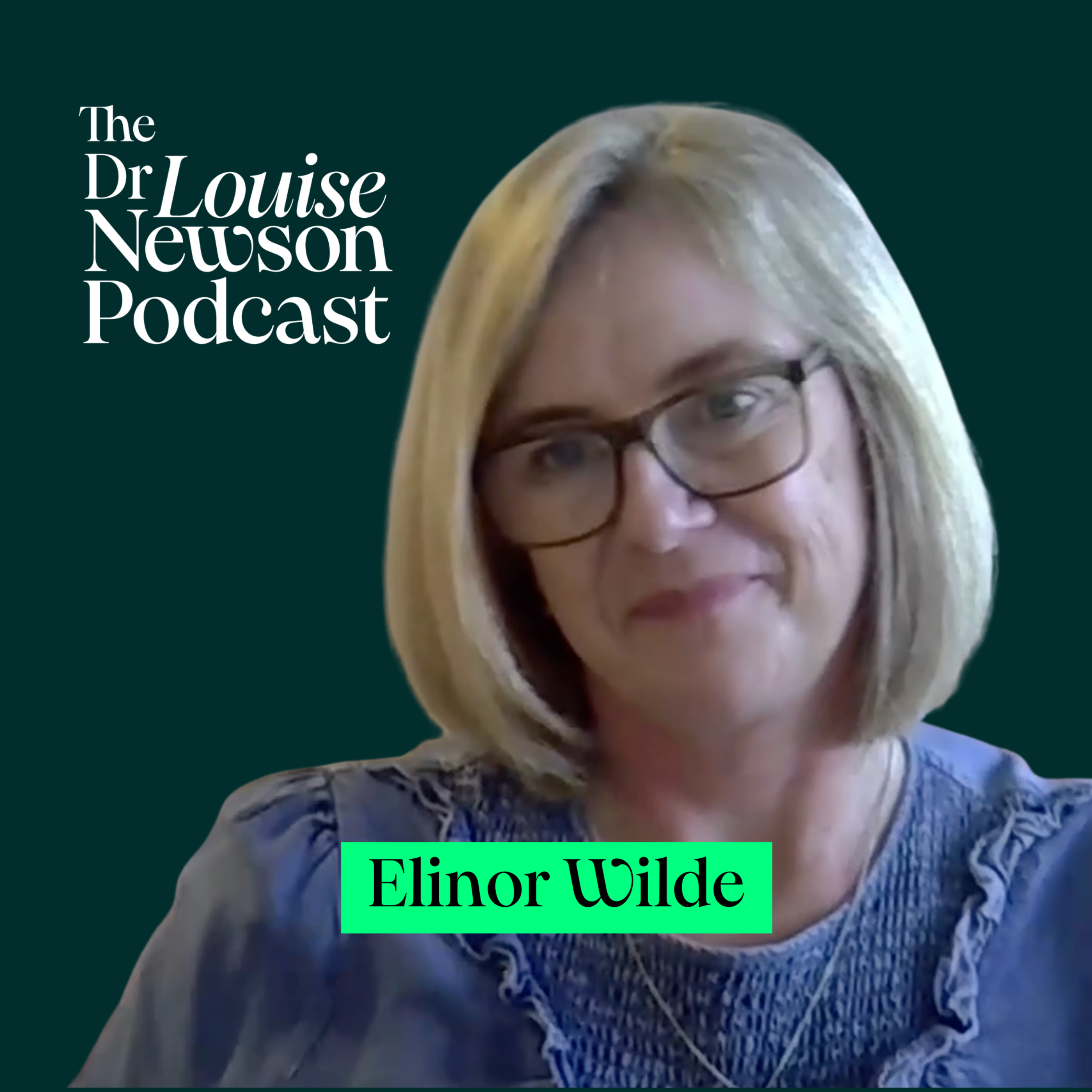
Elinor Wilde, a mental-health professional who works with women across roles (returning from maternity leave, leadership/corporate, sport) and focuses on hormonal mental health education and advocacy.
gradual hormone shifts can be missed because women “power through” and attribute symptoms to life events; therapy and self-compassion help women interpret symptoms and make changes; older synthetic hormones were linked to higher clot/stroke risk, but natural hormones (progesterone, oestradiol, testosterone) are presented as beneficial and lower risk than outdated guidance suggests.
perimenopausal sleep loss, hot flushes, crying and feeling unable to cope; memory/anxiety affecting cycling/driving; volatile arguments with her husband in front of children; a TIA-like episode while on HRT and later reassurance/return to HRT; “blurry glasses” analogy for brain fog; advice: notice symptoms early, find small “anchors”/pauses, and watch the language you absorb.
Written by AI. May contain mistakes.
Elinor shares her insights on how hormonal changes affect women's mental health and the gradual nature of these changes.
“I feel as though I've arrived at the menopausal mothership by talking to you.”
Elinor recounts her personal experiences related to menopause and the mental health challenges she faced.
“And I think what happens is you just start to carry on absorbing more and more pressure until unfortunately sometimes people then just wait until they reach crisis point or they reach animal.”
Discussion on recognizing hormonal symptoms and the challenges women face in understanding their health.
“um kitchen roll over all the bits of food to try and scoop the fries away there was not one piece of kitchen roll left by the time I'd gone around and mopped up.”
Elinor and Dr. Louise discuss navigating healthcare, advocating for oneself, and the impact of hormonal changes on relationships.
“Yeah, and particularly at a time when you're feeling vulnerable, the likelihood you've been able to draw upon that strength is even less likely.”
Elinor discusses the loss of her mother and the complexities of managing her health during this challenging time.
“think we tend to, often our default is to internalise that and it just adds to that sense of self-criticism which is just so unhelpful at any time in life but it's particularly I think in their midlife.”
Discussion on transient ischemic attacks (TIA) and the effects of antidepressants on mental clarity and emotional state.
“And I think what compounded this for me was when I went to the doctor and then was given HRT, which was just a revelation to actually get some sleep.”
Explore the feelings of detachment and emotional numbness women experience, especially related to antidepressants.
“and I hear that a lot from people on antidepressants.”
Discuss the importance of understanding hormones and their effects on health, especially during menopause.
“You know, you want to keep your brain healthy.”
Examine the complex relationship between mental health and hormonal changes during menopause.
“And people have said quite openly that because I talk about the Association of Mental Health and Hormones, people are more likely to have more severe symptoms because they're dreading those symptoms coming.”
Learn about different coping strategies for navigating life changes during menopause and how to find stability.
“And I think sometimes that's impacted by the language that we use around all of this in media or whatever.”
Discover the significance of finding anchors and stability during periods of change, including menopause.
“so are already beginning to have that journey of that stabilising of their hormones.”
Understand the importance of therapy and support systems for women experiencing hormonal and life transitions.
“feel a little bit you know, pressured and structured, that you've got to write down three things that you thought were fantastic and grateful for every day and that kind of thing.”
Learn why self-compassion is vital for personal growth and relationships.
“And those things combined, in my experience, give women the capacity then to look at, okay, so what is it I now want to change going forward?”
Discover practical strategies for improving mental health and well-being.
“I think there's something about having the awareness of, I kind of refer to it as the Dora effect, and I'm probably showing my age with one of my son's favourite films when he was little, the Finding Nemo.”
Understand how to navigate personal changes and challenges effectively.
“And I'm not saying that, you know, midlife isn't a time of positivity and great opportunity, but sometimes that can take a while for us to get there.”

Get the gist, explore an idea or ask about something said.
 Claude
On The Dr Louise Newson Podcast, what are the key points of this episode?
Searching your listeningAutomatic transcript. May contain errors.
0:02So Elinor, I'm really excited to have you here on the podcast because mental health and hormones is something that actually if I'd spoken to you maybe 15 years ago, I would have not even thought about it. I would have thought, yeah, I know people can feel a bit flat and low before their periods. I didn't even know really that menopause caused low mood because it wasn't on my radar and I'm just being really open as a doctor here because if you're not taught it you don't look out for it you don't ask the questions and you don't join the dots and like a lot of the work now for me is so obvious because I've joined those dots but it can be very difficult and you know I know myself when I was perimenopausal I felt very low and flat a bit tearful at work I felt quite socially withdrawn but then I was busy and I've got three children and I was in my mid-40s and everyone would say well it's just a time of your life it's an adjustment and I wasn't tracking my periods because they just sort of came and went and actually they had went for a few months but I didn't even realize so how do we know like it's really interesting so just before we start really just tell me a bit about like who you are because you're far more interested got more experience in mental health than I have.
1:22Well, firstly, thank you for having me. I feel as though I've arrived at the menopausal mothership by talking to you. So it's a real honour to be here. So thank you. I think how I came to this is, in my background, I've always really enjoyed not just working with women, but men as well. But that's what I've particularly enjoyed in working with women, which has been in many different roles, whether that's been returning from maternity leave, you know, thinking about their leadership and corporate roles, working in sport, whatever it is. I see patterns of women that just tend to keep on pushing through and almost just take on more and more responsibility and are almost seen to be really strong if they just keep on going and keep on powering through.
2:12And I think what happens then is while our hormones start to change underneath those responsibilities and that kind of external scaffolding of what makes us who we are, it's so difficult to notice when it starts because it can be so gradual. And I think what happens is you just start to carry on absorbing more and more pressure until unfortunately sometimes people then just wait until they reach crisis point or they reach animal. Yeah, and one of my roles, if you like, or jobs is education. So people can have the knowledge that's right for themselves and then they make choices about their future health, especially their hormonal health.
2:53But if you don't know what to look out for or your partner or work colleagues don't know what to look out for, it's very difficult, isn't it? Really hard. I mean, I know from my own experience that when I look back on it now, I find it almost easier to put the jigsaw together. like I was talking to my husband the other day and I used to enjoy cycling and then suddenly I just started to get really anxious about it and I know driving's another one that can be very common it's just suddenly you're like what's going on and it's only now when I look back I think oh that that explains it it was just this like discombobulating sensation of well this isn't me what's going on here yes but I think when there's other things you know going on in your life when life's happening sometimes you then attribute some of these things to other external life events it takes a while before you start to realize this oh actually this is hormonal yes so how did you realize for yourself then that you were having many hormonal issues um well as I say that looking back on it I can see when things started at the time I was on a waiter um and then i started to really struggle to sleep i think that was the big big thing for me and then there were some physical things like hot flushes i have a vivid memory of being at a friend's 40th birthday party in the summer um and it was a really hot day and they had um kitchen roll over all the bits of food to try and scoop the fries away there was not one piece of kitchen roll left by the time I'd gone around and mopped up.
4:33And I remember standing in their hallway crying on my own, just like, I just can't cope. And it was a friend there that talked to me about hormones. And it was just like, you do realise, you know, you can get help. And of course I did. But I think I was also coming at it from the point of view of, well, some people just sail through it. Some people apparently get help. And I think things, I mean, that was probably 2017, 2016, 2017. So I feel like even in that short time since then, things have changed so much. I guess I'm more attuned to it now, but I just feel so much more educated in a way. And I think a lot of people are.
5:15So I would like to think that somebody who was going through a similar situation to me then would recognize earlier the need to go and get some support it's difficult though isn't it because like when i was experiencing symptoms at the same time i was lecturing healthcare professionals and i was saying it's more than flushes and sweats we have to remember the worsening migraines the muscle joint pains the low mood the irritability the anxiety the poor sleep I was having every single of those symptoms but I didn't realize it was me because I didn't just sit down and have time for myself and I just the days would come and go and I think oh I've got through another day never mind I'm just a bit tired and then I'd wake in the night and I I didn't really work it out and I think when your brain doesn't work properly you can't think in the same way it's really hard to describe to people and i'm sure some people listening will have experienced that that it's it's a bit like i wear glasses to read and i can see the words but they're blurry and it's really frustrating and i know it's part of getting older and i put my glasses on and everything comes out and it's the same with your brain you know it's not working the way it should be but you can't you can't sharpen it you can't do anything and then you think this is a new me this is a new normal and you know we've we've sort of if you don't get help or you try and get help when someone says well it's just part of your age or maybe you're depressed you don't really know where else to go to and I think that's really difficult for women and you know I've always grown up thinking that the doctor knows best and I know I'm a doctor but actually I have less faith in healthcare than I used to unfortunately because I hear so many stories and I really think it's important that we can advocate for ourselves and know we can have a second or third opinion but if you go and see someone and you might have waited a few weeks for that appointment and the doctor says to you well I take these medications because you've got depression even if you think you're not it takes a strong person to say uh-uh no thanks I don't want those medications.
7:27Yeah, and particularly at a time when you're feeling vulnerable, the likelihood you've been able to draw upon that strength is even less likely. Yeah, it's very difficult. I mean, I have a very solid relationship with my husband, but there were times where he was driving me mad and I was driving him mad. And there was one particular time when I wrote about it in my last book, actually, that I was arguing with him in front of my three children. And we were in London and we'd gone to have a nice family weekend. And his version of the story is that I'd met this person before at breakfast. My version is I don't remember ever being introduced to someone and he didn't introduce me at the breakfast table when we were staying in a hotel.
8:06And I thought it was really rude. And he probably had introduced me, but it was part of my memory problems at the time. But rather than going, oh, never mind, it doesn't matter. You've introduced me now. He seems like a nice person. I just kept going at him and telling him how awful he was and how terrible he was. and we shouldn't be bringing up our children in the same way if we're not introducing people and being polite and all this stuff. But I just went on and on and on. And we were going upstairs to our room and the children were positioned at different stages of the staircase. And I remember it because they were trembling almost because I've never shouted like that before my husband, especially in front of them.
8:46And I remember my oldest daughter was about 14 and she even then says, Mommy, I kept thinking, you're going to have a divorce. and if you go I don't know what to do because if I go with daddy he can't cook and he can't really look after us but I don't want to be with mommy because she's really vile and arguing and how awful for my children to even think like that and in the end it was awful and I actually thought you know what you can all go I don't need to just leave me and of course I would crumble without my family but I it does make me think if I didn't have a stable relationship that's when things really do just like explode and go and we're not thinking about hormones in the right way in very volatile relationships often and that really worries me no and it can be incredibly unsettling I think when you see yourself and reflect back on like the incident that you just described when it's out of character yes but you just keep going it's almost out of control you then think who is this person yes and a lot of the women that come to me it kind of breaks my heart to hear some of the shame that they feel actually which is you know a natural process and a natural response um but because it's not what they're used to seeing and they're feeling judged around them that sense of failure and shame and oh my goodness I'm not coping when I'm used to seeing myself cope.
10:15It's so unsettling and just so unhelpful because I think we tend to, often our default is to internalise that and it just adds to that sense of self-criticism which is just so unhelpful at any time in life but it's particularly I think in their midlife. It's very difficult because traditionally menopause is defined as not having your period for a year. Perimenopause is something we talk about more, but who knows really, it just means around the time of menopause, but how do we know the time of menopause until we've waited a year since our last period? I'm very keen talking about the individual hormones and the deficiency of each, but many of us don't, like I said, I don't track my periods.
11:00People might have had a hysterectomy and never have periods. So it's really difficult actually, isn't it, to know what's going up. Yeah, I myself had a hysterectomy, which meant that some of those earlier symptoms that I started to describe, it was compounded by the fact that I had very little else to gauge to know that I, oh right, now I know I'm definitely entering this period because there's irregularity in my cycle or whatever. I didn't have that marker. So I just felt I was in the dark in so But I think also, you know, to pick up what you talked about earlier, the difficulty in distinguishing between what are these perimenopausal symptoms?
11:44Am I in this now or is this just a normal reaction to life events? At the time when I was going through the early stages, I recognised now was the same time when my mum was getting ill. and we took over a year to get our diagnosis of Alzheimer's and vascular dementia for her. So then the following years after that, when I was at my, as my husband refers to it, when I was deep in the very menopause time, was also an incredibly difficult time when my mum was deteriorating and then, you know, then sadly died in 2020 during COVID. So it just was so, so, so difficult. It's just very, very hard. And I think what compounded this for me was when I went to the doctor and then was given HRT, which was just a revelation to actually get some sleep.
12:42I think that was probably 2019. within three months I had a medical incident which was you know diagnosed at the time as a transient estemic attack a TIA the kind of mini stroke and the consultant that I saw at the hospital straight away said well it's because you're on HRT you're never going on that again I think I saw him for about eight minutes and then and then was left utterly devastated that I'd been told I'd had this TIA. Also then thinking, but I've literally just found this panacea that's helped, you know, this HRT, to then be told you're never taking that again in your life. And then I was left for two years on nothing.
13:33Two years? Two years, because it was going into the pandemic the same year then my mum died and then just left. And at that time, my GP was so understandably cautious to go against what the consultant had said. She was just too nervous. So because my main symptom was lack of sleep, I was given an antidepressant for people who struggle with sleep as a result of depression. So then just felt in an absolute fog, just detached from life, really, then. That's sad, isn't it? Detached from life. and I hear that a lot from people on antidepressants. They say they don't feel sadness, but they don't feel joy.
14:17They're just existing and they can numb people. But just to really pick up on that, so TIA, transient ischemic attack, really is like a mini stroke and symptoms usually resolve within 24 hours. But a lot of people who are perimenopausal menopausal get these symptoms and they might be a migraine or there might just be some spasm of the arteries that feed the brain that can cause stroke-like symptoms. But a stroke is usually where there's a clot or there's a bleed in the brain. And there's usually neither. So I don't know if you had a scan, but the scan usually is normal. Yeah, I had loads of tests and there was nothing to show it.
14:56But also for you with your family history with your mother, having vascular dementia, I'm sure that was very close to your thought processes. You know, you want to keep your brain healthy. the blood supply to the brain is affected in vascular dementia. So we need to think really carefully. And what's very interesting with hormones is that you wouldn't or shouldn't be given older types of hormones. So older synthetic types of both estrogen and progestogens can increase clot risk and increase stroke risk. So that's why this consultant would have wrongly actually grouped all hormones together and said you can't have hormones.
15:36The natural hormones, progesterone, oestradial, testosterone, all actually very beneficial for the cardiovascular system, but also for the brain as well. So actually, it's better for you to be on hormones and it doesn't increase risk of clot or stroke, as you now know. So it's really difficult when consultants, specialists, doctors, nurses, pharmacists have wrong information, but they do it in good faith. this doctor would have learned old information and won't realize that hormones have changed and there are different types but it's damaging for women because if you hadn't had a second opinion two years later yeah you would still be without hormones that's it and it's what you said earlier you respect you know the medical profession so much and particularly when you're you know most medical incidents that you go through you've never done it before you've never been so you don't really know what's happening yeah and you know I remember the consultant saying well your blood pressure is really high and I said well normally it's absolutely fine and normally quite low he went well it's really high today I'm like it took me 25 minutes to park the car and I need an appointment to see this stroke consultant yeah yeah yeah so yeah it's it's very difficult and also you know as you probably know if you look in your packet for your um oestrogen you know um it will say risk of clock risk of heart disease risk of stroke um and that's really could be concerning and this is because it's outdated evidence that they basically label all hormones the same even though hormones are very different in the body so it can be very confusing for women but also for healthcare professionals because those warnings are the same in the warnings when we prescribe on the computer system of course they are so that I think that's why it was incredibly reassuring when I was able to come to your clinic and speak to one of the GPs who then gave me a much more balanced view and I just got so reassured by you know the more recent evidence and and compelling evidence from different sources and those things are important for you to feel reassured and um so yeah I was it was great to be able to go back onto HRT and uh it it just made me feel engaged with life again you know that was the difference which is so important it's so important and one of the things that I've been criticized for several times before is for talking about mental health and hormones.
18:22And people have said quite openly that because I talk about the Association of Mental Health and Hormones, people are more likely to have more severe symptoms because they're dreading those symptoms coming. Now, I haven't seen or read any experience or any research to suggest that, actually. I think what it is doing is unmasking a lot of problems that might be otherwise labelled as a mental health disorder. But, you know, in your work, I don't know what you think, but I always believe my patients and I don't think patients sensationalize symptoms or make them up or catastrophize. I think they're real symptoms that come on regardless of what's happening.
19:04I agree. I agree. And I think one of the things to lean into that is the interpretation that women make of their symptoms. And I think sometimes that's impacted by the language that we use around all of this in media or whatever. But I think sometimes we will talk about things, you hear it is a midlife crisis. Yeah. So therefore a woman can feel like, oh, you know, I'm not coping. Broken, this is something that needs to be fixed. and then at the other extreme there are words such as it's a time of reawakening transformation rebirth which is incredibly positive but yeah so far removed from the reality of what we're experiencing that again that can lead to internalized feelings of failure and shame so it's as though the language around menopause at times can be unhelpful at adding to the sense of I'm not coping and therefore how you interpret some of the symptoms and I'm not saying that to diminish how challenging the symptoms are but it's just something I think that we don't really have an awareness or notice to the same extent.
20:20Yeah I think it's really interesting and obviously for you as a professional it's interesting I'm sure with you know the work and the knowledge that you have but you know I only think about menopause in myself because I deal with menopause and hormones every day of my life but as a menopause a woman who takes hormones if I wasn't doing this work I would just be thinking of myself as an aging woman I'm 55 and I'm getting older all the time and over the months years days you know my mental health changes depending on what's going on I'm you know someone said to me you're only as happy as your least happy child so you know having three children there are times when I'm sad or stressed because something's happening with them.
21:07Now, if I was reading everything, I would probably think, oh, it's my hormones, it's my hormones. But of course, it's not my hormones. I'm very stable, you know, you'd be surprised if my hormones weren't sorted out by a good menopause specialist with my job. So I know my hormones are stable, I'm fine. But I still have emotions, I still have dark days. I still have days of anxiety and I have worked really hard with my yoga practice, my meditation, my nutrition, my meditation, you know, the way that I hold myself, my affirmation, all these things are really important. And some days they're more important than others.
21:47They're really keen to hear from you as a professional, like ways that we should be really looking after our mental health regardless of our age regardless of our menopausal or hormone status i think because they are they work together really well but i don't think we can do them all on our own without hormones but i don't think hormones we can just say that's fine once you've got hormones you'll never have mental health issues no it's not to me it's it's it's not the panacea of all things but it can be an incredibly helpful window i've some of the women or quite a lot of the women that I see come already taking HRT, so are already beginning to have that journey of that stabilising of their hormones.
22:32But I think what it does for them is it gives them that window of opportunity to have some capacity to then look at all the life challenges they've got. Because to me, the period of perimenopause and menopause, that midlife, it's a tide change where almost every layer of your life changes you know it's the external it's the external scaffolding of who am I when I'm working you know my partner my relationship my children my family everything around me that all starts to change that can be incredibly unsettling and unraveling because it's like I've built my identity up on many of these roles for years when they start to change well who am I that coupled with the internal landscape changing of your hormones your body how you feel physically as well as the psychological impact of both of those things going on is incredibly unstabilizing and unraveling for many of us.
23:39So to me, it's recognizing the impact that that is having on you and to accept, I think this is part of the challenge that we have, is that we tend to rail against it because what we crave often is stability and security to make us feel in control. So when things are to such an extent, it's the lack of control, I think, that's so destabilized for people. So I think it's recognizing that uncertainty and change is inevitable. And that becomes a window into, okay, so how am I going to deal with this? And yes, doing different things like, you know, finding some time for space for yourself, which is what the yoga provides for you probably, swimming for others.
24:27But it can be small things like just having a car, Johnny, with the radio off. You know, just little pauses in your day. Because sometimes when we talk about one of the most effective things you can do is find space to relax and connect back with who you are. Some people just look at you like, how on earth am I meant to see what I've got on my plate? So I think it's taken the pressure off. It doesn't have to be an hour of meditation at the beginning of the day. it's finding an anchor you know, kind of like to think of some of these nautical metaphors it's a tide change, find an anchor to help you go on to the pace of change that you're going through, the anchor might be exercise, playing some music that you love, having a friend that just listens without trying you know, it's all these different things, writing, I'm a huge fan of writing, journaling can feel a little bit you know, pressured and structured, that you've got to write down three things that you thought were fantastic and grateful for every day and that kind of thing.
25:33And that can feel a pressure in itself and anything that feels a pressure can leave you open to feeling like, I haven't, you know, done it, therefore I failed. So to me, I think it's just writing because that's slow, like physically writing. And in a world where we're so driven by technology, you know, to be able to just write, you know, whatever comes to mind and then reading it and making meaning of what you're writing can be hugely helpful. And of course, I would say it, but the one thing I think that can really help is just having the space that therapy provides. I think that's incredibly helpful.
26:16Yeah, well, I think we live in a really busy world, but also a world where I think it's harder to find people that you can trust actually and confide in. And I realise that I'm very privileged as a doctor that people do tell me lots of very confidential things. But it's changed over the last 30 years of being a doctor that I think people's relationships are different. They're not maybe quite as solid. People are less likely to have family meals. They're less likely to share things. They're less likely to really sit down and even, you know, know their children, know their families. it's a you know a lot more family whatsapps rather than actually speaking on the phone you know i'm very good at protecting um my mother from some of my emotions because i know she'll worry about me so then i end up talking to her less and i can see but um you know that that happens quite a lot i think that it's hard to know who do i burden things to who do i talk to who do i who do i share things and then when things are bottled up inside you it can become really difficult sometimes I think as women we tend to think we're trivializing a problem and actually a small problem if it's dealt with properly can really make a big difference in the future and I think sometimes people are embarrassed and you know you saying as you know you're a therapist people almost think it's a failure if they have a therapist or if they talk to someone else but it can be very enriching and important can't it it can because i think you know the women that i see one of the main things that they say they find valuable is just knowing that they have this time coming up you know their third it's one of the things that can help them deal with the rest of the week because they know they've got that space where they can just offload without judgment and yeah that's an unusual relationship even with your best friends it's never about judgment because you'll be wondering what they think or they've got a view to share and then they're different so therapy I think it's incredibly valuable because what it does is it validates somebody's experience and when you've got validation and acknowledgement it can just give you the the space to really think about what you're going through make meaning of it And I think that what that does more than anything, I think it allows you to develop self-compassion for yourself.
28:51And those things combined, in my experience, give women the capacity then to look at, okay, so what is it I now want to change going forward? Because the shift of everything around me and inside me has left me with questions of who am I? What's important to me? how do I'm going forward how do I want to be in my relationships what am I willing to you know do tolerate put up with how do I want to change things how do I want to be how do I want to be to my adult children as they begin to leave when I'm no longer in charge of them and yeah it's just there's so many things to consider but it allows you to have the space to prioritize the areas and think about them differently and and you know come up with ideas of how to change that together yeah which is which is so important and it's really wonderful to have this time to talk to you and i just want people to sort of think and reflect and i think self-compassion is not a bad thing and i think as we get older and stronger and wiser we should be looking after ourselves more because once we look after ourselves more we can look after others but it can be difficult because it can sometimes feel selfish so um i'm really grateful for your time but i'd always end on three take home tips so and there's so many things that i could ask you but i would like to just ask three three easy ways if people are feeling a bit uncomfortable with this conversation thinking oh i i don't need to have any self-compassion what are the three things that you think people could start doing that is going to help them mentally and it will help them with others' relationships too?
30:36Those are just three. I know, I know, it's hard. I think there's something about having the awareness of, I kind of refer to it as the Dora effect, and I'm probably showing my age with one of my son's favourite films when he was little, the Finding Nemo. You know, the Dora that just keeps swimming. you know if you have a sense that you're just keeping swimming the whole time and you're hanging on by your fingertips then you probably are just hanging on by your fingertips and don't wait until you fall off that it's just the crisis gets too much so to me there's a the first tip really is about really noticing how you're feeling um and what's impacting you and what's different and what's changing and do something about it don't just keep suppressing it ignoring it find someone to talk to whoever it is whether it's a professional or friend don't bottle it up I would say the second thing find that anchor which is kind of linked in the first it's those little pauses the opportunities to you know we talk about self-care look after yourself you know that can feel insurmountable when you've got so many other people's needs to look after but just finding some little things to pause like I said be in the car with the radio off those kind of little things and in those moments find yourself trying to accept that this change is inevitable instead of resisting it accepting this is it this is the reality this is what it's like what am I going to do how are we going to navigate this and I think the last thing was something that we picked up on earlier which would be the language notice you know particularly if you know you think you're relaxing because you're sat on the sofa in the evening scrolling through your phone notice how you feel after doing that did you read things that inspired you and made you feel optimistic and positive that are in your algorithms that are coming through you in your phone or do you come away feeling even worse and feel like you're failing because of the language that we use around this time in our life, you can find yourself going from one to the other.
32:53And I'm not saying that, you know, midlife isn't a time of positivity and great opportunity, but sometimes that can take a while for us to get there. And it's almost when we're coming out the other side that we recognise that's the case. Or we can feel it that one day and then knock the next, you know, up to it so much. So just some... That's great. More of that awareness raising, really, I think. Being awareness and being true to yourself, really, really important value. So thank you so much for your time. It's been really informative. It was great. Thank you.
Many women suddenly start feeling anxious, overwhelmed or unlike themselves during times of hormonal change. They often assume they’re no longer coping or are told it’s simply stress, depression or the pressures of everyday life, while the role of changing hormones is never considered.
In this episode, Dr Louise Newson is joined by therapist and executive coach Elinor Wilde to explore the often-overlooked relationship between hormones and mental health. Together, they discuss why so many women fail to recognise the signs of perimenopause, how hormonal symptoms can be mistaken for psychological illness or burnout and the lasting impact this can have on confidence, relationships and sense of self.
Whether you’ve been wondering why you no longer feel like yourself, are supporting someone who is struggling or want to better understand the connection between hormones and mental wellbeing, this episode offers reassurance, practical advice and hope.
If you are struggling with your mental health during times of hormonal change, you may want to contact Newson Clinic to discuss how hormone treatments may help you. Many women are also referred on to Elinor for therapy where required.
LET'S CONNECT
👉 Subscribe on YouTube
👉 TikTok
https://www.tiktok.com/@drlouisenewson?utm_source=DLNpodcast+&utm_medium=shownotes&utm_campaign=BAU+
👉 Spotify
LEARN MORE
👉 Download my balance app
https://balance-app.com/?utm_source=DLNpodcast+&utm_medium=shownotes&utm_campaign=BAU+
👉 Order my new book
https://bio.to/ThePowerofHormones?utm_source=DLNpodcast+&utm_medium=shownotes&utm_campaign=BAU+
👉 Speak to Newson Clinic
👉 Visit my website
https://www.drlouisenewson.co.uk/?utm_source=DLNpodcast+&utm_medium=shownotes&utm_campaign=BAU+