Ask ChatGPT

 The Dr Louise Newson Podcast
28 Jul 2026 · 35m · 18 chapters
Motherhood-related brain and mental health changes, arguing that hormone shifts (especially progesterone, estradiol, and testosterone drops after birth) can trigger or worsen ADHD/autism symptoms and that perimenopause/menopause can do the same. The episode criticizes mislabeling symptoms as postnatal depression or psychiatric illness without checking hormonal causes, and promotes hormone-focused assessment and tailored hormone “topping up” (not just antidepressants).
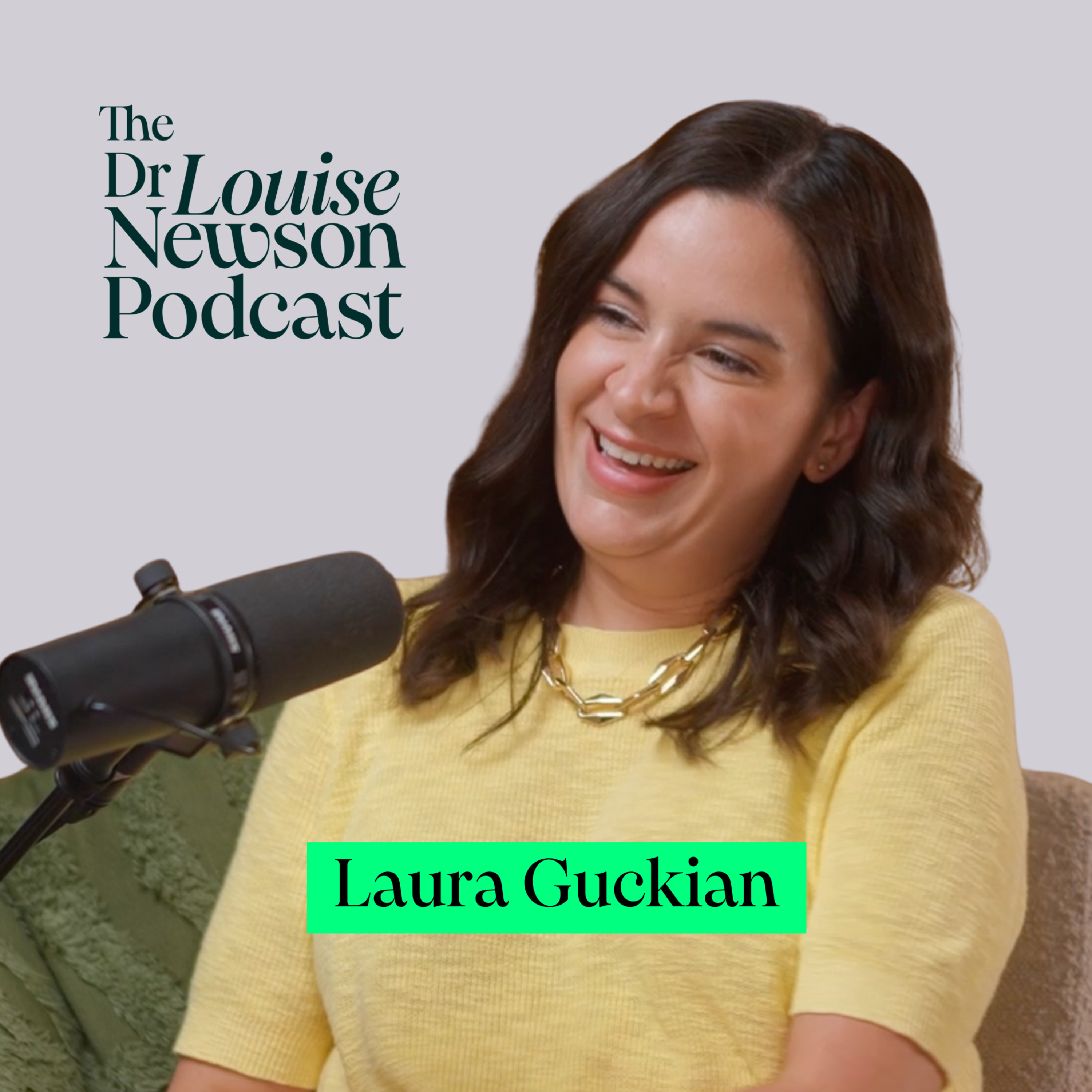
Laura Guckian, founder of Mind Mummy Coaching (Ireland). She is a mother of three, describes her own post-birth mental health crisis, later learning she is autistic and has ADHD; all her children are autistic.
Postpartum hormonal drops can cause “brain chaos” in neurodivergent women; perimenopause can worsen symptoms even with regular periods; progesterone/testosterone are emphasized over estrogen alone; HRT should be individualized by hormone deficiency.
Her 10-month-old crisis leading to a two-month psychiatric hospital stay; later discovery she wasn’t assessed for autism; discussion of progesterone treatment history for postnatal depression/psychosis (Katrina Dalton) and the idea that symptoms can improve when periods return.
Written by AI. May contain mistakes.
Exploration of how hormonal changes post-birth can affect ADHD and autism symptoms.
“I'm really keen to always think about hormones in all women of all ages.”
Laura shares her journey of struggling with mental health after becoming a mother.
“It's on my Instagram page, Mind Mommy Coaching.”
Discussion of Laura's choice to check herself into a psychiatric hospital and the challenges she faced.
“So I remember having that conversation with my GP sort of saying, you know, please refer me in.”
Laura recounts her experiences and treatment during her stay at the hospital.
“I had this, I guess, deep desire to take back control.”
Laura discusses the lack of answers regarding her condition during her hospital stay and the eventual discharge.
“and what happened in the psychiatric hospital yeah so when I went in um they told me you're probably only going to be here for a few days.”
Laura's realization of her neurodivergence and its effects on her life as a mother.
“We've assessed you for so many things and we can't figure out what drove you here.”
Discussion on how hormonal changes can affect those with ADHD and autism.
“But I think a lot of it was down to the fact I was an undiagnosed neurodivergent woman who just couldn't cope.”
Exploration of the need for awareness regarding hormonal impacts on women’s mental health.
“undiagnosed ADHD or autism, or it's been diagnosed and it becomes uncontrollable.”
Discussion of the impact of perimenopause and menopause on neurodivergent women.
“And in my book, I've written, I've just had a book, The Power of Hormones, that's come out.”
Explore how hormonal changes are often misunderstood during menopause.
Discuss how hormonal deficiencies affect brain function and mental well-being.
“and I've included a link to buy in the episode show notes.”
Examine the complexity of understanding and managing hormone levels in women.
“So HRT is only again I don't like the word.”
Highlight the gaps in medical training regarding women's hormonal health.
“And it's partly because the study, the Women's Health Initiative study came out in 2002, which scared everyone about from hormones.”
Discuss the hormonal aspects of postnatal depression and the need for better treatment.
“I mean, I really worry about postnatal depression and suicide after because people, especially when they're given birth, are more likely to be taking their life than at any other time.”
Learn about the challenges in psychiatric care and the importance of recognizing hormonal impacts on mental health.
“And for every mother, they pour sleep because their babies waking up.”
Explore the significance of education around hormonal changes during and after pregnancy.
“But the sad thing is they say I wish I'd tried it before I'd wish I'd had it before you know.”
Discuss how women's empowerment can transform their healthcare experiences and the treatment of hormonal issues.
“So we just, but I think a lot of education is coming from the women.”
Receive three crucial tips for new mothers about validating their feelings, seeking support, and understanding the temporary nature of struggles.
“It's almost like if you put your hand into boiling water, you wouldn't question, why is this burning me?”

Get the gist, explore an idea or ask about something said.
 Claude
On The Dr Louise Newson Podcast, what are the key points of this episode?
Searching your listeningAutomatic transcript. May contain errors.
0:00On my podcast today, I've got Laura Guckian from Mind Mummy Coaching, and we talk about her experiences after giving birth. She didn't know, but she had worsening symptoms related to her autism and ADHD. But she's been struggling without any help and support. What blew her mind today was me talking about the impact of hormones on ADHD, autism, and how the big hormonal drop after giving birth can trigger such symptoms. She's now thinking about her own perimenopause and the impact of hormones there. So there's quite a lot to unpick on the podcast today. So thank you so much. You've come over from Ireland for the podcast.
0:44So thank you for coming. I'm really keen to always think about hormones in all women of all ages. and you know a lot of people just think hormones are menopause and they're not they're there forever and they're changing all the time and the role of hormones in our brain have been misunderstood for so long so when you talk about menopause everyone thinks about flushes and sweats when you think about pmdd or pms people think it's a psychiatric condition because it affects mood whereas I'm very much thinking about the power of those hormones in our brain and when we don't have them all those levels are changing so women with PMS, PMDD but also postnatally as well there's a massive shift of hormones in our body and our brain so can you tell me a bit about your story and then people will understand a bit more why I'm so interested.
1:40Yeah and I'm excited to talk to you today because I guess I became a mom 10 years ago I can't believe it was 10 years ago and at the time I guess everything I'd heard about motherhood is this is going to be the best time of your life and for me unfortunately I wasn't. I really really really struggled with my mental health and I guess when we talk about particularly maternal mental health we tell people to share tell someone and I was sharing it with every healthcare professional that would listen and unfortunately no meaningful support was offered and long story short and I'm sharing all of this if anyone wants to hear like the full details of it.
2:18It's on my Instagram page, Mind Mommy Coaching. But I made a really, really hard decision when my baby was 10 months old to check myself into a psychiatric hospital. In Ireland, we don't have mother and baby units. And I was struggling so much that I knew it was the only way I could get better. So I remember having that conversation with my GP sort of saying, you know, please refer me in. And she was very reluctant saying, you know, you can't bring your baby. But I really just felt like if I don't go in here, I'm not going to survive this. And you knew you'd have to leave your baby then. Yeah, I knew.
2:53But at the time, and this might sound really strange now to anyone listening, I was okay with that. I actually wanted to get better. I wanted to get better. I didn't actually want him with me. And that wasn't a bonding thing. That was more, I am so exhausted. I can't get better if I have to continue doing the mothering. And there was even, I guess, a lot of judgment from the GP around that as well, going, but you'll be apart from him. But for me, it was the right thing to do. And really, it was the decision that saved my life ultimately. So what symptoms were you getting? I had this, I guess, deep desire to take back control.
3:29Like in my life up to that, I'd been very successful. I had a really successful marketing career. I'd been used to achieving. I'd been used to being in control. And the only way I can describe it is when I became a mother, it felt like I didn't know how to live anymore. That no matter how much I tried to be organised, have structure in my day, I couldn't take it back. So it was this deep desire to take back control and this real frustration and anger when I wouldn't. There was a real loneliness because I couldn't see any other mother who felt like me. Everyone was enjoying every moment of motherhood.
4:00And this again was 10 years ago. So these conversations weren't really happening. so I guess there was a lot of guilt a lot of shame I thought I was a terrible mother absolute exhaustion I mean my little boy had severe silent reflux so he wasn't sleeping even though my husband and I were taking it in shifts he cried all the time so it was just an exhaustion a frustration and anger that I've never ever felt before in my life and what happened in the psychiatric hospital yeah so when I went in um they told me you're probably only going to be here for a few days. And I went in thinking, actually, this might be quite nice as a mom who hasn't slept in months, I'm going to get a full night's sleep.
4:41And I don't think I was really accepting what was happening to me. But after a few days, and I met with my multidisciplinary team, and I suppose I'm talking about a private psychiatric hospital in Dublin, you know, there was the consultant psychiatrist, psychologist, and basically, they were like, look, you've come to us to ask for help and we want to support you. But in order to do that, we need to figure out what drove you here. And I was thinking, that makes sense. And to do that, they said, you need to stay here typically for eight to 10 weeks. And I literally was like, no, no, no. I was only coming here for a few days.
5:14I don't need to be here. And I guess, you know, they were like, you can leave now if you want, but we do want to help you. and that that will be our recommendation so we can try to understand what's really going on here and then find the best way to support you. So I guess I surrendered to it and agreed to stay there because the alternative to me was if I go home there's no support there and I don't want this to kill me and I want to get better so I'm going to stay here. So how long were you in for? Two months. Wow. Yeah two months. And did they give you treatment or? This is the frustrating thing so So I guess the reason I agreed to stay was I trusted them that they would figure out what drove me there.
5:56And even after a few days, they were like, look, it's clear to us. We don't actually think this is postnatal depression. We think something else is going on. So we're going to observe you and figure out what's happening. And my eight weeks there, it was a combination of me being there and having something called therapeutic leave, where there was times I could go home for a night or two. I did see my baby. It wasn't like I was locked in there for eight weeks and that was that. But towards the end of it, they kind of came to the conclusion, which is probably the hardest part about it, where they said, we really don't know what's going on here.
6:28We've assessed you for so many things and we can't figure out what drove you here. So we're going to discharge you and basically best of luck. Oh, gosh. So I left definitely feeling more rested, you know, a little bit better. They did put me back together. But essentially, I was left to my own devices to sort of rebuild my life. and what they missed in there is something I can't really ever forgive them for based on what I shared with them but years later when I had my second baby because I went on to have another baby about three and a half years later we learned that he was autistic and I knew nothing about autism at the time only the stereotypical image that we have in our head and the more I learned about it people were saying you know what it can be genetic and if your child has it there's a good chance you might have it.
7:15And something in me clicked. And I rang the hospital and I said, you know, can you pull up my file and see if I was assessed for autism? And they said, well, before we even pull up your file, we can tell you we didn't because we don't assess for that here. And something in that moment, I just knew. I'm like, oh my God, I'm autistic and they've missed it. And I can remember telling them I can't look people in the eye. The hardest part about motherhood for me is that lack of control and structure. And sure enough, we learned, I went for an assessment that I am indeed autistic. All my children are autistic.
7:46And I then later learned I also have ADHD. So for me, I don't still fully know what happened me in my postnatal period for my first baby. But I think a lot of it was down to the fact I was an undiagnosed neurodivergent woman who just couldn't cope. Yeah, that's so interesting. And did anyone talk to you about hormones at all when you were in? No. Yeah, you see, it's really, it's really interesting, the whole neurodivergent autism ADHD because it's exploding we're seeing it more and more as I'm sure you realize and the more people that are going for diagnosis the more people are diagnosed a lot of people have it but they function with it if you see what I mean and but then something happens to some people and it tips them over yeah so probably the reason that you've been so successful in the past before you had your first baby was because it was like a bit of a superpower you could be very focused, you could do all these things, you know, but then something happened to your brain, which meant you couldn't control.
8:47And some of it is the chaos of having a baby, but I'm pretty sure, I can't tell you for sure, that some of it will be the hormonal changes in your brain. And because we see it a lot in our clinic, we see a lot of people who have either undiagnosed ADHD or autism, or it's been diagnosed and it becomes uncontrollable. and the only thing that's changed is their hormones and then you know I very much think about the basics like in medicine what is the underlying cause what's the basic pathophysiology so we know the hormones progesterone, estradiol, testosterone are made in our brains they function on every single cell in our brain but when you have a baby anyone has a baby you have this massive drop of progesterone and estradiol and even testosterone so your brain has gone from being quite calm and whatever to suddenly chaos happening then you put in poor sleep luck of routine then it's the whole thing it's just and the brain rewires in the wrong way and so you know a lot of work that we're doing we're doing some really interesting research looking at the role of all three hormones but we're realizing more and more that it's more progesterone and testosterone that have really important effects on the brain when it comes to neurodivergence and adhd and autism.
10:08Yeah, that's so interesting because nobody has ever said that to me before, particularly about the impact of that when you're neurodivergent. I mean, I know from my work and the mothers I work with, so many mothers are fine in life until they hit motherhood. And I have a theory, well, I have a theory, it's also backed by evidence that a lot of those women are neurodivergent and don't know because out of the clients and mothers I've supported over the last few years, 40 % of them have come back to me and said, you know what, I did actually seek an assessment and I'm either autistic or have ADHD or both.
10:43And that is why I struggle so much in early motherhood, because I think if you wear an or divergent, like you said, it will either hit you when you become a mother. If you manage to survive that and it doesn't hit you, it's definitely going to hit you in perimenopause or menopause. Sure, absolutely. And again, and this is one of my frustrations is that so many people then go on other drugs rather than thinking about the hormonal shift. And in my book, I've written, I've just had a book, The Power of Hormones, that's come out. And I've written a lot about the role of hormones in the brain. But also I've written a lot about labelling of women and mislabelling women.
11:19Because I find as a healthcare practitioner, I find it very frustrated when women are trying to be put into a diagnostic label, really. you know because it doesn't really always help you like like for them did you have postnatal depression or not probably not but what they should have said was you've had a hormonal shift that's affecting your brain because then the next question would be well which hormones and then the next question would be how do I get those hormones back and then it doesn't matter what label you've had do you know what I mean and and I think this is the same with ADHD and autism because the more you look at it the more you find it I mean we have lots of conversations in my family because I'm I have never had a formal diagnosis but I'm sure I've got ADHD and my husband's definitely autistic I mean he's a surgeon he's very binary and my children are a mixture of both of us but I'd only go for a diagnosis if if I if I really needed help and it was it was affecting me in a bad way do you know what I mean I like the way that I can do 50 ,000 things at once and it doesn't bother me have so many tabs open.
12:23And that's a really key thing for me seeking the diagnosis was I wanted to know my why but it didn't change. It didn't help that though did it? It was interesting because it was almost the self-forgiveness I gave myself even though I didn't need to forgive myself for anything but it was like wow that's what happened to me and it just felt right and I knew that was the reason why and suddenly it's like you've spent your life looking at the sky as being blue and suddenly you wake up and it's green and you're like how did I not see that before and it is so useful for people to explain I think that's because otherwise and you know I'm sure with your work women are not listened to they're not believed it's all in their head so for someone just to give an explanation it allows you to think well it's I'm not the worst mother in the world I you know and I think that's so important but for me thinking about gosh okay how would you have been if someone had actually thought about those hormones.
13:18And now you're talking about perimenopause. Well, this is a great opportunity for you to think about the right balance of hormones because you don't want to go back to how you were before. Yeah, and I said this to you before we started recording here. I am really scared about how perimenopause is going to impact me. Like I'm 41 now. I think I'm in perimenopause. I've met with my GP. I've started HRT. but part of it is like wow there's such a lack of understanding around perimenopause and menopause anyway I think because well they don't study women but particularly around neurodivergent women and how to support them through that and it's really really frustrating.
13:57But this is the other thing in in my book I've written that I just don't even like the word perimenopause. Really? Because if you look at the word peri means around the time of menopause means a year since your last period so like how the hell unless you've got a crystal ball that you've not brought to show me like how do you know when your menopause is going to be and how do you know around the time of it all just feels whereas I'm very particular about language and I think we should be saying progesterone deficiency, estradiol deficiency, testosterone deficiency because they're three separate hormones that have different roles and functions so you know you saying you've started HRT well you've started some estrogen but no one's spoken to you about progesterone or testosterone which in my vast clinical experience are the most important hormones when it comes to autism and ADHD and a lot of people's testosterone starts to decline from their late 20s so there are a lot of people that are having regular periods but are having low testosterone and they might have a bit of PMS premenstrual syndrome so interesting yeah and then they'll have low progesterone for some of the cycle as well.
15:05I wanted to take a quick pause from our conversation to tell you about my new book, The Power of Hormones. Many of the topics we discuss on this podcast are explored in much greater depth in my book. I look at how hormones really work in the body, why they've been misunderstood for decades, and how confusion between natural hormones and synthetic hormones has influenced medical practice and public perception. Most importantly, I explain why understanding hormones is essential for improving both current health and future health. So if you'd like to continue learning beyond the podcast, my book, The Power of Hormones, is available now, and I've included a link to buy in the episode show notes.
15:53so talk to me about what is the role of that like in anyone listening who doesn't understand those two hormones we're talking about when we don't have enough of them yeah what's the impact on your life yeah lots of impacts so those hormones affect every single cell in our if you just think about our brain every single cell in our brain but they also work as neurotransmitters so chemicals that sort of tell other bits of the brain what to do. So you will have heard of other neurotransmitters like dopamine and adrenaline and serotonin and glutamate and melatonin, our sleep hormone, all of those. They're all neurotransmitters as well as hormones, if you like.
16:33And there's a really fine balance. Like you need a bit of dopamine to get you up in the morning and to go, oh, look, the sun's shining. Let's have a good day. You don't want too much or you'll be completely manic. And it's the same even with ADHD. you know some people can't concentrate at all so they're all over the place and you don't want that but you actually don't want to be so hyper fixated that you forget about anything else so it is and that's the way our balance of all those hormones and neurotransmitters in the brain is key they're not it's not just one but when you don't have those hormones then you've got lower levels of dopamine lower levels of serotonin lower levels of melatonin lower levels of glutamate all of those so it affects your mood, your memory, your motivation, your sleep, because all those hormones.
17:19But then they also help the firing of the neurons, so the nerves send signals from one area to another of the brain, and that firing gets faster and more effective when we've got our hormones. So a lot of people who have low testosterone have brain fog and memory problems because they know that they want to say something but they can't. A lot of people come to me in the clinic and say, I think I've got early dementia. Like I've got this word finding problem or I'm at a meeting and my brain is just completely empty. That is literally me. In my last, when I was recording an episode of my podcast recently, I literally, we were doing three records in the day on all three multiple times throughout.
18:00I was like, I have no idea what I was about to say. Like, it's like your brain switches off. Yeah. Or you get your words mumbled up. It's really, really hard. A lot of people say they open their mouth and they have no idea what's coming out and it's not what they're expecting and this word finding is really difficult and and i had it i've been on hrt including testosterone for about 12 years but about 13 14 years ago it was and you it's you know that it's there it's like thinking through treacle like you just can't do it and um and it's it's really awful it's paralyzing people throughout um but that's where testosterone has it because it works on the the memory part of your brain as well the motivation part every area of the brain and then then um progesterone is a very calming um hormone it helps people be more calm and not be quite so hyper excitable about things um which and it help with sleep as well help with anxiety it also can change levels of cortisol our stress hormone so we want a bit of stress just to get up you know get us going but we don't want too much because then it's overwhelming so it helps balance that as well so it's really important and a lot of young people are low in progesterone a lot of people think they're on progesterone because they're using a mini pill a progesterone only pill but it's all synthetic so it blocks the natural hormones working in the body so how do you access like i guess i don't really know what i'm asking but how how do we navigate that as women then to support that because this i feel so seen in this I'm like oh my god I can't remember what I'm saying I am exhausted beyond belief and actually even if you take the hormones out of it and just look at the circumstance if you're constantly forgetting what you're saying that's exhausting in itself so it's just this vicious cycle of going through that and then again as a woman going I feel so unseen in the medical world yeah nobody is understanding this and you're speaking a language now that I'm like that makes so much sense to me.
20:02And it's really hard because a lot of people go, oh, well, look at you, you're in your early 40s, you've got two children, you work really hard. You know, they would never say that to a man. And actually, you know yourself that you're not firing all cylinders. So my job, I feel as a clinician, is to try and exclude all other physical causes. So, you know, have you got anemia? Have you got low vitamin D? Have you got, you know, low folate? All of those things that contribute and and usually most doctors exclude all that but no one really thinks about hormones so think and I always say to patients I have no idea how much of your symptoms are related to your hormones but what I want to do is balance them in a physiological way so give you back the right dose and type of each three hormone if you've got low testosterone we can find that on a blood test most people have low progesterone and giving the right dose of that optimizing Easterdile we can do blood tests and then wait three to six months because they can take a while to have an effect and then that's when usually people go wow like I'm back this is incredible.
21:04So what's the role of HRT then? What does that actually do? So HRT is only again I don't like the word. There's so much misunderstanding as well. When you hear menopause what you hear associated with is HRT but what actually is HRT? Well this is the thing and I don't even like the letters hrt because what does it mean hormone we've got dozens of them so it's not telling you what it is replacement actually if you're still having periods we're not replacing we're just topping up it's more like a supplement and therapy sounds like you need a couch and it's sort of some weird so i again would talk about estradiol which is a form of estrogen treatment progesterone treatment testosterone treatments because then not everyone needs all three hormones and then you're doing it separately.
21:49So if you've got progesterone deficiency, you'll say, can I have some progesterone then? Do you see what I mean? Whereas if you're going, I don't know if I'm perimenopausal or not, do I need HRT or not? Then that's really complicated. So because it is a really simplistic problem, the problem is it's been made really complicated because everyone's scared of HRT. They think it causes breast cancer, which it doesn't because it was the older types of hormones that in fact are still in contraceptive pill that are associated with risks. But now what we prescribe are exactly the same structure as our own hormones.
22:21And you can just top up. So a lot of people, when they start hormones, they're still having periods. So they're still having some hormones, but not enough to get the brain to work. Or they might be having some skin changes or some joint pains or some urinary tract symptoms. So then you give enough that they need. And then with time, their body produces less. So then you might need to change the dose. it's very it's just all it is is a topping up of a natural hormone it's very simplistic makes so much sense the way you're describing it it's just the frustration of like why do you think there's such a lack of understanding around women's health like it's it's mind-boggling because we're all saying I feel like this we can't name what it is we don't know what the solution is but yes and then you've been given antidepressants and god knows what are offered them it's not and then it's not working so as a woman particularly as a mother you blame yourself because well even that's not working on me and for me that was really hard because I was like wow I don't even have postnatal depression antidepressants didn't work for me they couldn't figure out what's wrong so it must be me yeah no like even the clarity of well you're neurodivergent was a step closer to no there's actually something going on here we need to understand more of it but it's just mind-boggling that women's health it's 2026 it's honestly I say I've got three daughters and I often say to them, I'm really embarrassed being a doctor, like really embarrassed, like don't get me wrong, I'm very proud of what I do, but I'm so embarrassed that most of my colleagues have had no training about hormones at all.
23:50And it's partly because the study, the Women's Health Initiative study came out in 2002, which scared everyone about from hormones. Everyone's then thought menopause is about periods. So then gynecologists like seem to control women when it comes to periods. That's an interesting question. Can you still be in perimenopause or menopause if you're having a period? We can still have low hormones. Yeah, definitely. And so even, you know, a lot of people have PMS or premenstrual syndrome or more severe form, PMDD, premenstrual dysphoric disorder. So they'll have regular periods. But if you talk to them those few days before their periods come, they're feeling dreadful, you know, mental health symptoms, physical symptoms, feeling very anxious, low, irritable, angry.
24:36And then the period comes and they feel better. So they're having regular periods. And my real frustration is that if you go to a gynecologist, they'll say, well, your periods are fine, you're fine. No, but talk to the woman, she's not fine. She's telling you. And when there's a cyclical pattern, then let's make sure there's no hormonal issue because there will be. But the problem is PMDD is often thought of as a psychiatric condition so then you get psychiatric medication whereas you know you treat the underlying cause you know if you had if you were bleeding on your arm but you had a knife in your arm I wouldn't just put a plaster on I would take the knife out you know you always treat the underlying cause and it somehow is forgotten because people underestimate the power of hormones or changing hormones especially in the brain and then women are just gas lit the whole time and then if you go and see one or two doctors and they say there's nothing wrong with you then who do you talk to?
25:31Who do you ask for advice? You feel so unseen and we know that you know in motherhood the leading cause of maternal death is suicide like this is the fact of it we know that women really struggle during that time and yet even the stuff you're talking about here how amazing would that be if that was part of antenatal classes that education? It should be. I mean, I really worry about postnatal depression and suicide after because people, especially when they're given birth, are more likely to be taking their life than at any other time. Why do you think that is? They often have such extreme symptoms.
26:08They've gone from being fine to very quickly. And they're young, they're clever. I'm sure you've spoken to a lot of people. It's like night and day. yep we're in perimenopause you know you get some fluctuations you get good days bad days it's sort of a bit more drawn out this is like falling off a cliff for a lot of people but then if you go back to basic physiology levels of estradiol and progesterone are way up and then they just drop overnight and so we've known and as i was saying to you before we started recording there's a doctor called katrina dalton who in the 1950s and 60s would treat women with postnatal depression and postnatal psychosis with progesterone, sometimes estradiol as well.
26:48She helped thousands of women, yet it's been ignored because it was become a psychiatric condition. 85 ,000 women a year in the UK have postnatal depression and the vast majority will be given antidepressants, not hormones, whereas it's a hormonal condition. So, you know, back then it worked and it still should work now but people are not thinking about it and I spoke to a professor of psychiatry a few weeks ago who somebody said oh speak to him because he's a leading person in postnatal psychosis and depression but he's just retired so when I spoke to him he said oh Louise nothing really works postnatal depression psychosis none of the drugs which doesn't surprise me because the antipsychotics the antidepressants the lithium the electroconvulsive therapy might help short term but they're not treating the underlying cause.
27:38So I said to him, well, what did you do then? He said, oh, we would just put people to bed and wait. I said, what would you wait for? He said, I'd wait. And then their periods came and then they'd always get better. So I said, but didn't you ever think about hormones? He said, oh, that's a very good point. So it's not rocket science, you know. It's almost the basics of, you know, and I talk about this a lot, that when I was in the psychiatric hospital, you know, and I laugh about this now, and if anyone understands a psychiatric hospital they might laugh too you know every morning they were trying to wake me up to do activities and I was like I just want to I just want to sleep yeah I just want to lay here and watch Netflix and I in like felt that I was getting better by doing that it's like I was getting my energy back I was you know knowing now that I'm more divergent all of the sensory overload was gone yeah I was actually instinctively getting myself better but they were looking at me going she's not getting out of bed she's getting worse and I was like actually I think I just need a lot of rest a lot of care and a bit of someone helping me feel seen on what's going on here yeah and that's one of the problems in medicine especially when it comes to psychiatric diagnosis it's often a tick box you know do you have low mood do you have poor sleep do you have reduced appetite tick tick oh she's probably depressed whereas actually let's look at the bigger picture.
29:00And for every mother, they pour sleep because their babies waking up. Well, of course they do. But it's, you know, I think women get it and they often know they've got a hormonal problem, but they've not been allowed to express it or they've not been allowed to have any hormone treatment to try and see if it helps. And, you know, often we try hormones. If they don't help, well, then we haven't lost anything because they're just a natural hormone. But usually, and that's why I love my clinical job, because people are transformed. But the sad thing is they say I wish I'd tried it before I'd wish I'd had it before you know.
29:31Oh my goodness I'm totally coming to your clinic. Take me help me because it just it just makes sense to me what you're saying and maybe it's because all of the other stuff that I've been told doesn't make sense and isn't helping me but the logic of what you're saying makes sense. Yeah it is it's like I say it's very simplistic but it's so simplistic it doesn't have big pharma behind it it doesn't it's not new drugs these are hormones that we've known for nearly a hundred years so it's very simplistic but sometimes it's the simple things that are the most effective because then when your hormones are balanced it's easier to sleep it's easier to exercise it's easier to just function and all of that else you know everything else sort of fits in and and works better for not just you but your family as well it's really interesting if you could change how like mothers are supported in that like pregnancy and postnatal, what element of would you change to help that?
30:28As you say, it is literally like you're jumping off a cliff. It's very intense. It's just that education. And I feel really embarrassed. For me, it's so obvious. And now you know it, it's really obvious. But, you know, my children are 23, 21 and 15. And each pregnancy, I knew nothing about this. And so they're all saying, well, you'll get the baby blues day five when your milk comes in. You'll have some night sweats if you're breastfeeding. first time you have sex we're really painful like no one said to me this will be because you've got low hormones so if someone even just said those few words to me the why like why then when I was having all those symptoms I could have just said hang on can I just have a bit of hormones because even if you're breastfeeding you can still have natural hormones because you know for some women they take longer than others for the hormones to come back you know some people have a period three weeks after giving birth.
31:19Some of us, it's months after. So of course our hormones are going to come back at different times. But if someone had just said to me, this is driven by your hormones, then my next question would have been, could I try some hormones? Or even if you didn't know to ask for that, well, what's the solution then? Precisely, precisely. So we just, but I think a lot of education is coming from the women. The change will come from women because it's so obvious and it's so low risk. It just, it seems ridiculous that women are needlessly suffering. And that's why I feel so sad with my work because I see and hear it all the time.
31:53And I think, wow, life's hard enough, isn't it? But it's harder when you don't have your hormones. But I think our generation of women are brilliant because I think we're the generation that are like, wait a minute. Yeah. This is too hard. I'm not taking that. That's a cop out. Yeah. It's not helping me. I don't feel seen. And I think, you know, I look at my mum's generation and I think they were maybe too afraid to challenge if it was a doctor or someone else to challenge and say, actually, this isn't working. Can we try something else? Whereas our generation is a bit more like this isn't making sense to me.
32:25Something has to change. And that is so important. And that is the only way for future generations. They don't have to put up with this. They can get listened to. They can get believed. They can get the treatment they want. So it's great. Your work. You need to keep going. but three tips before you end I always ask for three take-home tips your a lot of your work is about advocacy and people learning for themselves and standing up for themselves as well so what are the three things that you would recommend for people especially if they've recently had a baby they're in that time where everyone's saying oh you will be like this because you've had a baby and they know something else is going on what are the three things that you would say they should do So the first thing is, if you're feeling it, it's real and valid.
33:09Yeah. It's almost like if you put your hand into boiling water, you wouldn't question, why is this burning me? But Mary down the road has hotter water. Like if you're feeling it, it's real, it's valid. It does not need to be justified. I think ask for support and do not stop asking until you get the answers. And the third one is probably very basic. But, you know, give yourself the compassion that this is actually hard, but it is a temporary chapter in your life and that can also be very frustrating to hear when you're really struggling that thing of this this won't last forever but actually looking back now when I was deeply struggling with my mental health if someone had said this is actually temporary it's really hard it's horrible but actually there's there's a chapter in your life that is going to be even better so you just have to keep going through it absolutely and seeking them help support and treatment is the most important thing.
34:05And thinking about hormones, of course. Well, thank you so much for your time. It's been really good. Thank you. Thank you for having me. It was really interesting. Great. Thank you. So just a quick one. It would be really great if you could follow or subscribe to this podcast. This will really help me reach more people with evidence-based information about hormones and their future health and also means you never miss a future episode. Thank you.
Becoming a mother is often described as the happiest time in a woman’s life. But for many, it can also be the hardest.
In this week’s episode, Dr Louise Newson is joined by Motherhood Coach, Maternal Mental Wellbeing expert and Founder of Mind Mommy Coaching, Laura Guckian, who shares her deeply personal story of severe postnatal mental health difficulties that led her to admit herself to a psychiatric hospital when her son was just 10 months old. Years later, she was diagnosed with autism and ADHD, helping her make sense of experiences that had never fully been explained.
Together, Louise and Laura explore why hormonal changes after pregnancy can have such profound effects on the brain, particularly for neurodivergent women, and why hormones are so often overlooked in conversations about maternal mental health. They discuss the limitations of labels such as postnatal depression, why antidepressants don’t address the underlying cause for every woman and how understanding progesterone, testosterone and estradiol may transform the way we support mothers.
This is an important conversation about feeling unseen, finding answers and why every woman deserves healthcare that looks beyond symptoms to understand what’s really happening.
LET'S CONNECT
👉 Subscribe on YouTube
👉 TikTok
https://www.tiktok.com/@drlouisenewson?utm_source=DLNpodcast+&utm_medium=shownotes&utm_campaign=BAU+
👉 Spotify
LEARN MORE
👉 Download mybalance app
https://balance-app.com/?utm_source=DLNpodcast+&utm_medium=shownotes&utm_campaign=BAU+
👉 Order my new book
https://bio.to/ThePowerofHormones?utm_source=DLNpodcast+&utm_medium=shownotes&utm_campaign=BAU+
👉 Speak to NewsonClinic
👉 Visit my website
https://www.drlouisenewson.co.uk/?utm_source=DLNpodcast+&utm_medium=shownotes&utm_campaign=BAU+