Ask ChatGPT

 The Dr Louise Newson Podcast
11 Aug 2026 · 32m · 15 chapters
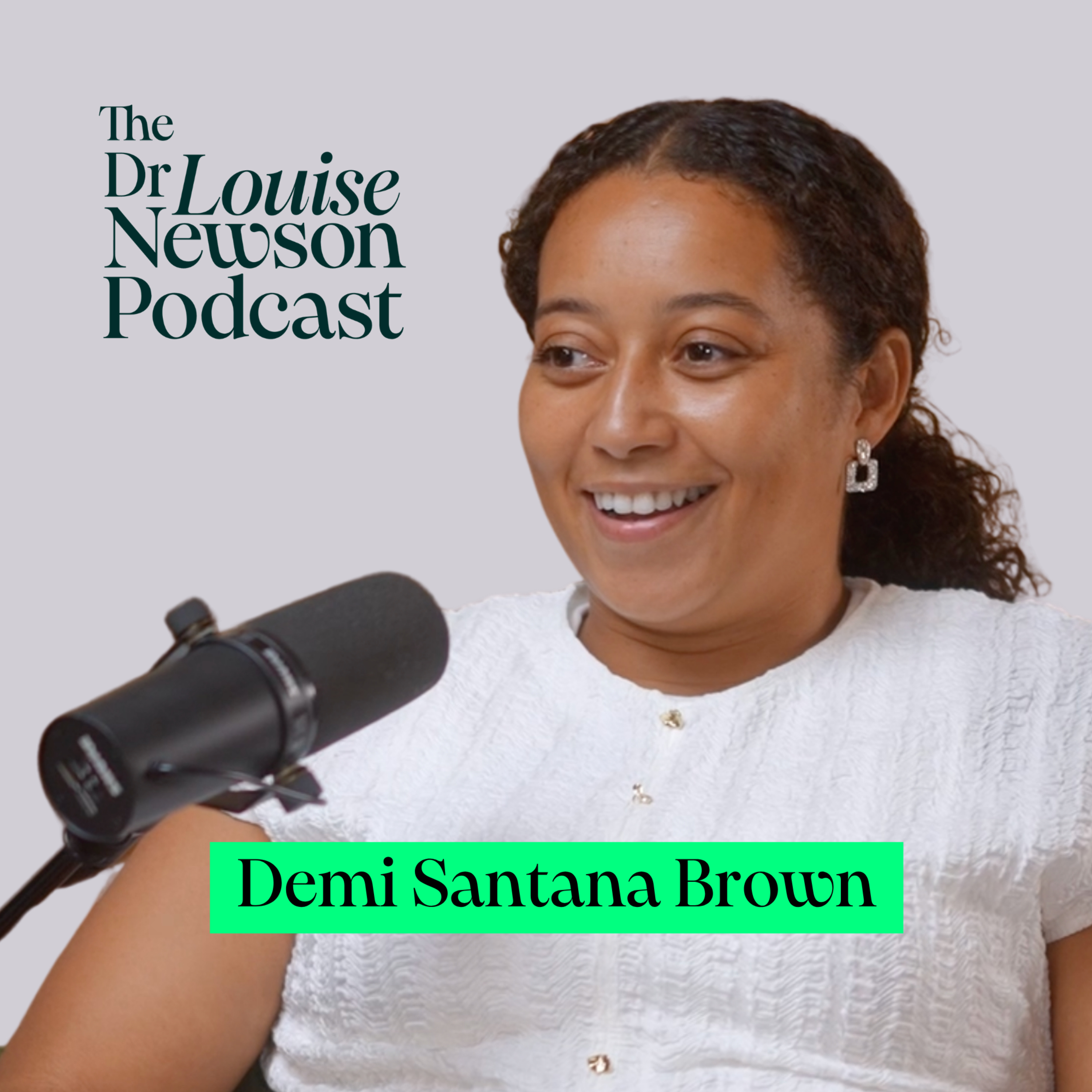
Demi Brown discusses her endometriosis journey and argues that natural, body-identical hormones (progesterone, estradiol, testosterone) may reduce inflammation and pain, unlike synthetic contraceptive hormones. She also criticizes medical misogyny, gaslighting, and inadequate endometriosis care, including hormone-blockers and hysterectomy for young women.
Demi Santana Brown is 33, diagnosed after keyhole surgery in 2019 (ablation). She played football at high levels (scouted to Millwall at 15; later West Ham and Leyton Orient). She reports symptoms since menarche at 13 and says she wasn’t taken seriously until age 25.
endometriosis often takes years to diagnose; synthetic hormones can worsen mental health and inflammation; progesterone/testosterone may help pain and heavy bleeding; hormone blockers can induce “menopause-like” effects and long-term risks.
misdiagnosis as IBS; surgery followed by a severe flare/infection; being told pain is “in your head” and options like hysterectomy/pregnancy; a 20-year-old given Zoladex who lost her job due to brain fog.
Written by AI. May contain mistakes.
Discussion on the prevalence and challenges of diagnosing endometriosis.
“So Demi you're here in the studio despite having an endo flare despite almost not coming you are here which is great so thank you for coming.”
Demi shares her struggles and experiences with endometriosis since childhood.
“There's so many people that I speak to that have similar symptoms to what I have.”
Demi discusses how her condition affected her ability to play football.
Demi talks about her experiences with contraceptive hormones and their impact.
“But still, just to have that anxiety when you're supposed to have your head in the game must be really difficult.”
Demi recounts her experience with surgery for endometriosis and its complications.
“So what other treatments have you had for your endometriosis?”
Discussion on the importance of natural hormones in managing endometriosis symptoms.
“So when I prescribe hormones to people, I'm prescribing the exact chemical that we produce because everything has got its own chemical structure.”
Exploration of hormone testing and the implications of test results.
“Progesterone is the other hormone that we don't often do a level because it can fluctuate so much.”
Learn about the importance of hormone balance and its effects on health.
“So if I see zero point something in my mind and probably a two-year-old's mind, that is low.”
Explore the benefits of natural hormones for conditions like endometriosis.
“access hundreds of educational articles and videos and also connect with supportive community of women navigating similar experiences.”
Discuss the barriers women face in receiving proper treatment for hormonal issues.
Analyze the real-life implications and treatments available for hormonal conditions.
“And it's really difficult because there's no rush to label someone.”
Learn about the potential benefits of natural hormones on health and pain management.
Explore the relationship between hormones, metabolism, and sugar cravings.
Discuss the importance of hormonal balance and patient-specific hormone levels.
“It's just a small amount of topping up your natural hormone.”
Hear vital tips for managing endometriosis and the importance of community support.
“And it's just important for people to be empowered with knowledge.”

Get the gist, explore an idea or ask about something said.
 Claude
On The Dr Louise Newson Podcast, what are the key points of this episode?
Searching your listeningAutomatic transcript. May contain errors.
0:00Demi Santana Brown is on my podcast today and we talk about her journey with endometriosis. We talk about how natural body identical hormones can reduce inflammation, help with pain for women with endometriosis. But very frustratingly, we also talk about medical misogyny, about medical gaslighting, about women not being listened to or taken seriously. So much has got to change to help women with endometriosis. so I hope you enjoy today's podcast. So Demi you're here in the studio despite having an endo flare despite almost not coming you are here which is great so thank you for coming. Thank you for having me.
0:43No it's great I a lot of people think that all I do is menopause and actually it's not at all I think a lot about hormones for everybody and I'm very interested in the role of natural hormones to reduce inflammation and a big well I think women just have a short they just don't have a good deal regardless of what they have like disease wise but endometriosis is a condition you read that affects one in 10 women I think it's more than that you read the average time for diagnosis is eight years and I think it's more than that and then even when you have diagnosis most people don't have the right treatment Is that fair to say?
1:22Absolutely. I agree with everything you just said. I was like, one in 10, absolutely not. There's so many people that I speak to that have similar symptoms to what I have. And as I said, I don't feel like I was treated seriously until I hit 25. This is awful, isn't it? So there's probably so many young girls out there that are struggling. Because how old are you now? I'm 33. So you've had a long time, like nearly 20 years then? Yeah, still fighting to actually be seen with my consultant and stuff like that. So tell me a bit about your story then, if that's okay. Yeah. When I was younger, I struggled.
1:51When I started my periods, I was like 13, struggled with really heavy periods. Not so much pain to begin with. And then when I become like sexually active, that's when the pain started to come alongside it. And I was going back and forth to the doctors, like answering for help. And I was told I had IBS. They said stuff about my prolactin being high. So I was like essentially told to go to different departments and not really taken seriously until I kind of had a bit of a mental breakdown. and then they like took me a bit more serious and then I had my keyhole surgery in 2019 and was told that I had endometriosis but at the time I'd never heard of the name no I didn't have a clue what that was so obviously you go to google and you start typing in things and yeah from there just been trying to figure out what the condition is and how to make my life a little bit easier with it and I suppose over time I've tried like the holistic healing and cutting out foods and stuff like that and it's still a battle because as much as I log you know something new always pops up or some other symptom that I didn't know was related to endo um occurs so yeah still still on that journey of trying to figure it out so it's a long time but you're I mean you were a footballer weren't you oh yeah I missed out of that part so yeah I love yeah I love I still play football now but um I played at quite a high level when I was younger so I got scouted to play for Millwall when I was like 15 and went off to play a lot West Ham and Leighton Orient and stuff like that so it was good but every time I would have a period it was like the anxiety of like uh what color kit are you wearing this week like am I gonna be able to play like make enough excuses like to essentially not play obviously because your periods were heavy yeah so I used to worry I mean when I was when I was like 14 or 13 yeah 14 we played for a team called Longley my first ever team and our kit our away kit was white and obviously our manager was he was a male bless him so I love Mick but um yeah he he thought it looked nice but we were so anxious you know but me especially I used to wear like five pairs of knickers because I didn't know like I didn't speak about it to anyone so I didn't know it wasn't normal so yeah like it was it was a lot but you know thank goodness This for period knickers now.
4:06Yeah, yeah. But still, just to have that anxiety when you're supposed to have your head in the game must be really difficult. Yeah, it was hard, but you love the sport, so you get through it. Yeah. And then you've tried some contraceptive hormones in the past. Yeah, I went on the pill when I was 16. The doctor advised that, actually. and yeah it just made me go a bit crazy I felt like I felt like I was having episodes of just feeling like really low or like yeah I just couldn't regulate my emotions quite scary yeah so that lasted for about two and a half years and then I just come off of it okay yeah did anyone tell you that could be related to being on the contraceptive I think it was my sister because My sister's very like against contraception, to be honest, or putting anything in your body that, anything in your body, to be honest.
5:05So she was like, no, like, don't, you don't need that. And I come off of it and I started to feel better within myself. And I was like, oh, actually, that's what it is. So, yeah, I was like, why are we going back on that? Yeah, because obviously they're not the same as our own hormones. They're synthetic. so that's a chemical that's been made to look like hormones but it doesn't work in the same way as the body and we know that it can block our natural hormones working so quite a few people when it blocks the hormones in the brain can negatively affect mental health oh wow but it's there's very little research done on it because when the pill came out they didn't have to do the research that you would now for a new drug treatment so it's never been tested on the brain or other organs when it came to market so but we there are some studies that show that it can have a negative effect especially on the adolescent brain which is constantly remodeling and changing and everything as well so yeah that's scary I wish I knew I didn't know that I didn't know that no to be honest with you yeah um but yeah that would explain a lot yes yeah and also it can block the way that our natural hormones work throughout our body so can increase inflammation which when you've got endometriosis as you know it's an inflammatory condition I mean there's still a lot that people don't know about it but it's as you know it's where tissue similar to the lining of the womb is elsewhere and there's all sorts of theories why people have it but when there's lots of theories it basically means that no one knows and everyone's just trying to decide in their own way but it's I don't think it's a gynecological issue because you can get endometriosis elsewhere in the body as you know people can get it in the bowel or the diaphragm or the lungs so it's not really a gynecological condition whereas when you've got endometriosis it's usually a gynecologist that look after you isn't it yeah absolutely and i only found out last year that it could it's not just in that area that it can spread up to the lungs and even parts of your brain yeah i was like what i've never heard of that but it is good that people are sharing the awareness around that now as well.
7:14So what other treatments have you had for your endometriosis? So I had keyhole surgery where I had ablation. So they lasered off the tissue. And again, I wish I knew at the time what that even was because I would have asked for them to cut out the tissue. Did it make any difference? After I had that surgery, I had the worst flare-up that I have ever experienced. I actually ended up back in hospital. I had an infection though. which is quite common after you've had that kind of surgery so they had to give me or like put the antibiotics in but yeah my my periods after that for a while were just really bad and then it did die down a bit but then it it started back up and I was like surely in my head I thought you have the surgery and then everything's okay I was like everything's gonna be fine and then I think mentally it had another toll on me because it was like going back to the doctors and they were just like oh yeah we've done the surgery like come back when you're looking to do fertility and they just yeah yeah that was it that wasn't very helpful is it no like we've done kind of all we can do and then I was kind of discharged from my consultant and I didn't even know I was discharged I just thought that like when I go back to the doctors I'll be able to see that consultant they was like oh no you've been discharged that's it then what do you mean I'm still getting problems though I still have like symptoms then I had to get re-referred and everything to go back on to see my consultant for more scans and stuff so have you had any treatment that's helped you um just loads of pain relief to be honest with you and that's not it's just what I do to cope yeah to be fair what other what other contraception have I tried no just the pill yeah yeah and what about natural hormones you said you've been reading a bit but yeah I need to do that no I haven't I haven't well to be fair I only just found out that there's synthetic hormones and natural ones like how do where do I get those from yeah no it's really It's really interesting.
9:23So when I prescribe hormones to people, I'm prescribing the exact chemical that we produce because everything has got its own chemical structure. So we have progesterone, which I'm sure you've heard of, estradiol, which is a form of estrogen that's anti-inflammatory and also testosterone. And they're all three hormones that our ovaries make, our brain makes, other tissues, our adrenal glands make. And they're sort of fluctuating throughout. out um but what's really interesting is that they they work very differently to the synthetic hormones so the synthetic hormones and contraception shouldn't really be called hormones because they're not they're a different chemical and like i say they can block our own hormones working but i'm very interested in anything that is going to reduce inflammation in the body is good for your health and especially if you've got endometriosis or adenomyosis where i've got that as well yeah so that's where the tissue like the lining of the womb is in the womb isn't it in the wall of the womb so that can flare um and actually when you look down a microscope at endometriosis sort of lesions if you like they've got their own like inflammatory cells in there as well so there's like inflammation that your body is producing and then the the inflammation that is actually in the endometriosis you've got like a double whammy of inflammation and with inflammation it can cause pain as well so so when i look at the natural hormones how they work in the body because they help reduce inflammation that's good also they help modulate the pain receptors so that's why a lot of women actually feel pain more the days before their periods when hormones naturally drop so it's not that it's all in our heads we actually you know if I stick a pin on you the second day of your period or the second day before your period the same injury will cause a different pain response because our hormones are really important for how our pain receptors work and so that's the other thing is that I don't want my patients to be in pain I don't want them to have a disease but I also don't want them to suffer so then when I think about giving those natural hormones they can reduce inflammation and help pain so that's two big ticks yeah immediately but the other thing that's quite interesting which I've read a lot about is there's been some studies for many years actually that show that women with endometriosis are more likely to have low testosterone even born with it and then as they grow and age still the testosterone levels low and so when I see people with endometriosis in my clinic I always do testosterone blood tests and it's always low in people with endometriosis so I recently got my hormones oh did you yeah oh okay yeah and what do they show they come back good okay can have a look yeah you can have my glasses on it said the marker on it said oh like good for each one okay um and you can go through what they are so you just did this online so no one's spoken to you about it okay so let's have a look no one's spoken to me so your blood's done that's the results so your testosterone says it's green good but when i look at the number have you read the number or did you just see the good bit i just saw the good i was happy to go so okay the number is 0.591 so the clue is in the zero like what should it be well it's a range okay but you can have it up to about two so that's about a quarter i want at least a one on yeah so that is low your easter dial is is it says good and it's in a normal range but it's only done that day like If I do it today or tomorrow, it'll probably be a different result.
13:04So it's only a guide. And that's all that they've measured. Progesterone is the other hormone that we don't often do a level because it can fluctuate so much. And what's in your blood isn't the same as what's in the rest of your body. But certainly that testosterone 0.9591 is low. And I've just written an article about testosterone levels on Balance app, actually, because what's really frustrating is that what they do is they compare it to apparently normal women. But that's apparently is in the clue. Like you don't know what. So you could say, well, it's normal to have low testosterone when you're in your 30s.
13:46Is it really? Because I've already told you testosterone is an important hormone, reduces inflammation. It can help with mood, energy, concentration, stamina. So they don't really know what is normal, but we do know that women can normally have levels, depending on the laboratory, up to about 2, 2.3. So if I see zero point something in my mind and probably a two-year-old's mind, that is low. Well, I just saw good. But yeah, no, I don't even know if that's acceptable. This highlights the problems with doing online tests because it says, balance levels support energy mood libido reproductive health and overall well-being true but yours isn't balanced although it says good it isn't so it's really really misleading so i'm i hate to tell you but i think you've wasted your money on that well thank you yeah because like i say hormone blood tests are only a guide like anything we do in medicine any test is a guide the most important thing is looking at the patient what you'll be pleased to hear is more important than anything else but that testosterone level being low with you symptoms if you were my patient I would say well we could try some testosterone and also I would probably try progesterone as well but this is really important that it's the natural progesterone so it's the same as our own progesterone lots of people have low progesterone partly because there's so many endocrine disruptors in what we do, like the way that we eat, whatever we put on our skin, all the sort of pollution, everything, it can affect our endocrine system.
15:25So a lot of people have low progesterone and a lot of people find that they have less energy, they don't feel quite the same and can feel just a bit low or stress can reduce progesterone levels as well. if someone's had a lot of stress in their lives a lot of trauma that can increase our cortisol but then it can drain our progesterone and so we have less hormones as well so quite often we give progesterone and testosterone and then someone might or might not need estradiol you know it's looking at the three hormones very separately um so but like i say having the right hormones can reduce inflammation and reduce pain which are two big important things in yeah what i'm really trying to do is i've reduced my inflammation so i've done like changes i used to drink alcohol quite a lot yeah i don't drink alcohol now because yeah the difference that i noticed in terms of feeling like my flares hey and yeah so like it's just not worth it and then there's other things but i don't to be honest with you i don't know if they're working or not with the other things that i've been trying to do it's really difficult isn't it because you don't know what you'd be like if you hadn't made changes as well but you're still struggling with with symptoms yeah that's what to me I feel like I've done like quite good well actually no I did just get back from holiday and I did not stick to the rules that I would normally stick to so that probably would explain why my period has been um more painful and as you were speaking I was like no way because literally two days before I come on my period I was experiencing all the pains like the lower back ache the sharp pains up my leg the cramps and I was thinking my period's going to be so bad but actually the worst pain was leading up to the period and then whilst I'm on my period it's more the heaviness so then that's just like the fatigue and low energy but the pain was definitely way before then that's when you have a big decline in progesterone the days before your period then when you have your period your progesterone comes up a bit but probably not enough so that's why you're still having a heavy period so often when we give progesterone people have a lot lighter more manageable periods as well which makes such a difference so and I've never even I didn't know that even yeah so that explains a lot i mean on my track because i track my periods and my symptoms and stuff like that just to understand what is going on um yeah and that's always a thing like before i come on my period i hope you enjoyed today's episode if you'd like more information about your hormone health download my free balance app it allows you to track symptoms and cycles access hundreds of educational articles and videos and also connect with supportive community of women navigating similar experiences.
18:13So, I mean, a lot of what I do is very simplistic medicine, but it's become really complicated somehow. And what frustrates me is that people, you know, like you are suffering when you might not have to suffer in the same way. and a lot of gynecologists don't think about hormones as in the difference between the natural hormones and synthetic hormones and I've been to quite a lot of conferences where they'll just talk about give people with endometriosis the Mirena coil or give them the synthetic hormones and if they don't work it's not a hormonal problem and I'm like but it's not the same it's completely different in the body yeah that's very interesting and now I'm definitely like what hormones do I need to put what natural humans do I need to put in my body it's it's interesting I one of um one of my colleagues I know um he's a lovely person who works in America and she does a lot of work for fertility um but she's very much about lifestyle making inflammation as low as possible before thinking about any fertility drugs and she said when she um does a laparoscopy on people that have endometriosis she always says to them have six months of natural hormones before even thinking about trying to get pregnant so really optimize not just your health style but your your your lifestyle but also have those hormones to reduce inflammation and she said that if she does a laparoscopy again on those women she said you can literally see the endometriosis has disappeared or really reduced would that be the same with fibroids possibly yeah yeah have you got fibroids as well yeah i've got the triple threat yeah so that's how sometimes i don't know if it's the endo if it's the adobe the fibroids but yeah just just trying to shrink yeah and it's very interesting with fibroids because again you know a lot of this is not coming from research because the research hasn't been done when i was at medical school i was taught that estrogen feeds the fibroids and they shrink after menopause and i'm like that's interesting how is that to be and no one's really given me a proper explanation but like i said to you it's not just about estrogen anyway so i think a lot of people with fibroids have had low progesterone for a long time maybe testosterone as well but giving testosterone and progesterone will not worsen fibroids at all they won't worsen you no not at all so so and they would help with the inflammation for the endometriosis so it's a win-win yeah and often in in medicine like i would hate to give um you know i would hate to say i am definitely going to make you better because that is wrong like no one can say that but i can say the chances are you will improve but also we give people something to try and see like you were given the contraceptive pill and it didn't help then you knew eventually to stop it so with these hormones i'll often say to people try them for three to six months and then you can decide whether they improve you or not and you know i I see a lot of people who are in their 20s, younger than you.
21:18And I saw someone recently in the gynecologist said to her, the pain is all in your head. You can either do more exercise, have a hysterectomy or get pregnant. And they were the three choices she was given. Yeah, that sounds very familiar. Maybe not the pain all in your head, but definitely lose weight. And I'm sorry, my mind blows because I work out and I do exercise. so I'm like there's something going on with the fact that when I'm having a week off of exercise and eating I blow up I don't understand it and then being told to have a baby but you've never got what what do you know how insensitive that is I just can't I find that's I just I can't imagine them saying to a man yeah the same things I just to say to a woman regardless of whether she wants a baby or not that having a baby would improve your symptoms you have a baby because you want a baby you don't have it as a treatment for a condition but one of the things I guess they're indirectly saying what they're maybe not thinking about it is that if you had more hormones in your body you will feel better because that's what happens often when people are pregnant they have progesterone in their body they have a high amount of testosterone and estradiol in their body which reduces inflammation but you don't need to get pregnant to have hormones in your body so there's a lot we need to try and unpick really but the problem is in medicine is that people often learn from their consultants if the consultants say you have to have synthetic hormones or an ablation then you never learn and people don't get treated properly and then as I'm sure you speak to a lot of people with endometriosis they're just in the dark they've got nowhere to go to be honest no yeah have you spoken to anybody who's had good treatment no there's no no i've spoken to some that have found good consultants now okay um but like these are like proper like specialists in their field and it's really hard and really expensive so it's in terms of being accessible no it's not accessible but yeah a lot of women that I have spoken to like it's very traumatic and that's why sometimes um I love being in the endo community because like I feel like people get it as well but then at the same times it can be very heavy because there's so much trauma in there yeah and it's like wow like do you think that's trauma because they've had medical misogyny and awful experiences with doctors absolutely there is definitely medical misogyny like even my own experience like I didn't I thought it was in my head because the pushback was just crazy like you're like until I was 25 as I said like don't feel like anyone was really listening and that's still happening now yeah absolutely like I've got um a family member who's younger uh my niece she won't mind me and you know it's the same things that i was told when i was so it's not getting better i don't think so it well i see in certain areas right like because i i see a lot now and i get invited to certain talks and stuff like that so in that aspect yeah the awareness is there and people are speaking about it whereas i don't think they were when i was younger but what's the action well this is what i can't understand because i i think you're right the awareness is people are talking about people don't know what endometriosis is but the suffering and the pain is still there but but it's the stories of women being gaslit by doctors seem to be worse than ever um and i i don't know i was always trained as a doctor to listen and believe my patients which i do every day but also to be honest with them so if i didn't know what treatment and i said to you well don't i think you've got endometriosis i don't really know the treatment but i'll try and find out that's probably okay isn't it for me to say that as a doctor oh absolutely but not to say go and get pregnant with what in your head like it just seems wrong because then it's adding a pressure onto the person as well that they don't necessarily they don't need that or yeah it's just yeah being told for years like it's just a bad period and then believe in it as well but yeah this is crazy but even if it is just a bad period there is treatment for that as well and that's where like I get really frustrated with the labeling of women um you know my youngest daughter has heavy painful periods and she hasn't been on synthetic hormones which I think is good because I think then she probably would get endometriosis I mean she still might have it I don't think so but now she takes natural progesterone and she's definitely a lot better.
26:13And it's really difficult because there's no rush to label someone. The rush in my mind is to treat them and treat in a very simplistic way with the lowest risks possible. But then the system's not built like that. No, I know. It's built to label and then treat if you're lucky. Yeah. And then half the treatment is, yeah, and then the aftercare is non-existent. It's terrible, isn't it? It's non-existent. I'm also hearing from a lot of people with endometriosis who have hormone blockers. So they have Zolodex injections. Yeah, I've heard of this. Yeah, and I can't understand why you'd block someone's hormones when they're young.
26:51Well, yeah, I wouldn't. But I don't know if that actually helps them, though. Well, the thing is, sometimes endometriosis can flare because of changing hormone levels. Okay. So if you got rid of the hormones, sometimes people feel better because they haven't got the changing hormone levels. but the problem is then you it's like giving you menopause so then a lot of people have symptoms and without those hormones there's more inflammation in the rest of the body more diseases like heart disease and osteoporosis and diabetes so it just like i spoke to someone recently who's 20 and she'd been given one of these hormone blockers for endometriosis but she'd worked in a nursery and she said i've had to give up my job because i've got brain fog i can't look after the children and the consultant said that's all the treatment you can have and she's 20 and i'm like oh dear that's doesn't sound right you know yeah no that's not good and then the other one being hysterectomy as well like yeah option being told that in your 20s as well yeah that's really hard isn't it no no so we need to we need to think differently and like a lot of my work and there's a lot of information on balance um on endometriosis and hormones yeah and you know i'm not saying it will work for everyone but i'm saying it's worth considering having natural hormones and see if it helps and if it helps your pain helps reduce periods then it's got a big beneficial thing and it's no long-term detrimental effect because it's just topping up your own hormones you would suggest like three to six months yeah no you do in most things you know it can take a little while um one of my patients is 24 now and she's had symptoms for a long well long time like nearly 10 years and um the first few weeks she kept saying i don't feel any better i don't feel any better and i was like just hang on and now it's six months and she's completely transformed like it's you know so because the hormones are such a low dose really and they they've got to work your body's got to get used to them or any inflammation makes a difference um but it can take a little while but but there's no harm in my head yeah does this help with weight as well can do because yeah yeah yeah so our hormones work on every cell and they help our metabolism and our control of insulin and glucose metabolism as well so a lot of people find that when they don't have hormones then or they don't have the right level then they have different amounts of glucose and insulin in the body so you can't metabolize the same way so it's a bit like having pre-diabetes almost you know and then quite a few people have sugar cravings as well when their hormone levels are low and it's all very well to say to a woman just ignore them but yeah that's really hard i'm not gonna lie it's a physiological thing because your body is craving sugar because your hormone levels are dropping your sugar so a lot of people sometimes feel a bit light-headed or whatever and you just need a quick sugar fix to come out of a headache yeah but the best thing is treating what's the cause of this change in sugar levels oh it's the low hormones give those hormones and a lot of people find especially testosterone actually like stops the appetite in the same same way um a lot of women are constantly thinking about where am I going to eat next whereas men just eat when they're hungry it's a different thing that level up yeah so that level is not good yeah yeah it was good but it's not good no I don't want that so yeah and what What I always say to people, it's still be physiological, so you're not going to grow a beard or moustache.
30:21It's just a small amount of topping up your natural hormone. I've already got that anyway. And try it and see. I don't mind adding to it. Got a few hairs here and there. I'm just like, what is that as a poll? Well, again, it's balancing your hormones. It's all about, but it's balancing all three hormones is really important. I was going to say, I feel like even though I had those tests, I feel like if you were to test me now, it would be completely different in all those areas. Yeah, and that's where it's listening to the patient, which is not happening enough. Yeah, because even if the hormones are sharing that now, but my symptoms are this, then obviously there's something going on.
30:51Totally. So, yeah, you need to think about your hormones in a natural way. I need to try to get on your waiting list. I bet that's long. No, it's fine. We can help you in the clinic. Absolutely. And it's just important for people to be empowered with knowledge. And so it's great that you've come. Thank you so much for sharing your story. I always end with three take-home tips. Okay. So three things that you think people should know about endometriosis when they're suffering. You are not alone. That's the first one, because community is key and that's really helped me. The second one, knowing how to reduce inflammation, because that has saved me in terms of the pain.
31:30So alcohol for me is one of the things you have to find out what is your trigger. um and then the next one come and listen to louise oh i love you yeah because she has got some good answers and takeaway tips so whatever i don't have the answers to i know you're gonna have it perfect right answer thank you so much for coming today it's been great no thank you for having me honestly i really really appreciate it i mean i was so close to not coming because i wasn't feeling well but i feel so much better being here so i really do appreciate the time excellent thank Thank you so much. So just a quick one.
32:09It would be really great if you could follow or subscribe to this podcast. This will really help me reach more people with evidence-based information about hormones and their future health and also means you never miss a future episode. Thank you.
Love Is Blind's Demi Santana Brown opens up aboutendometriosis, adenomyosis, fibroids and the power of natural hormones.
Before Love Is Blind UK, Demi was a professional footballer for Millwall, West Ham and Leyton Orient - playing through heavy, painful periods for years before doctors took her seriously. She joins Dr Louise Newsonto share what it's really like to be dismissed by doctors, why the contraceptive pill made her mental health worse and how an online hormone test told her she was "fine" when her testosterone was actuallydangerously low.
Louise explains the real difference between synthetic and natural hormones, why testosterone and progesterone matter for endometriosis and how reducing inflammation can ease pain, heavy bleeding and fatigue. They also discuss medical misogyny, harmful advice like "just get pregnant," and Demi’s three take-home tips for anyone struggling with endometriosis.
Let’s connect
👉 Follow Demi: @demisantanabrown
👉 Track your hormones properly with the Balance app: https://bit.ly/4yZty5A👉 More from Dr Louise Newson:https://linkin.bio/drlouisenewson