Ask ChatGPT

 The Dr Louise Newson Podcast
20 Aug 2026 · 32m · 13 chapters
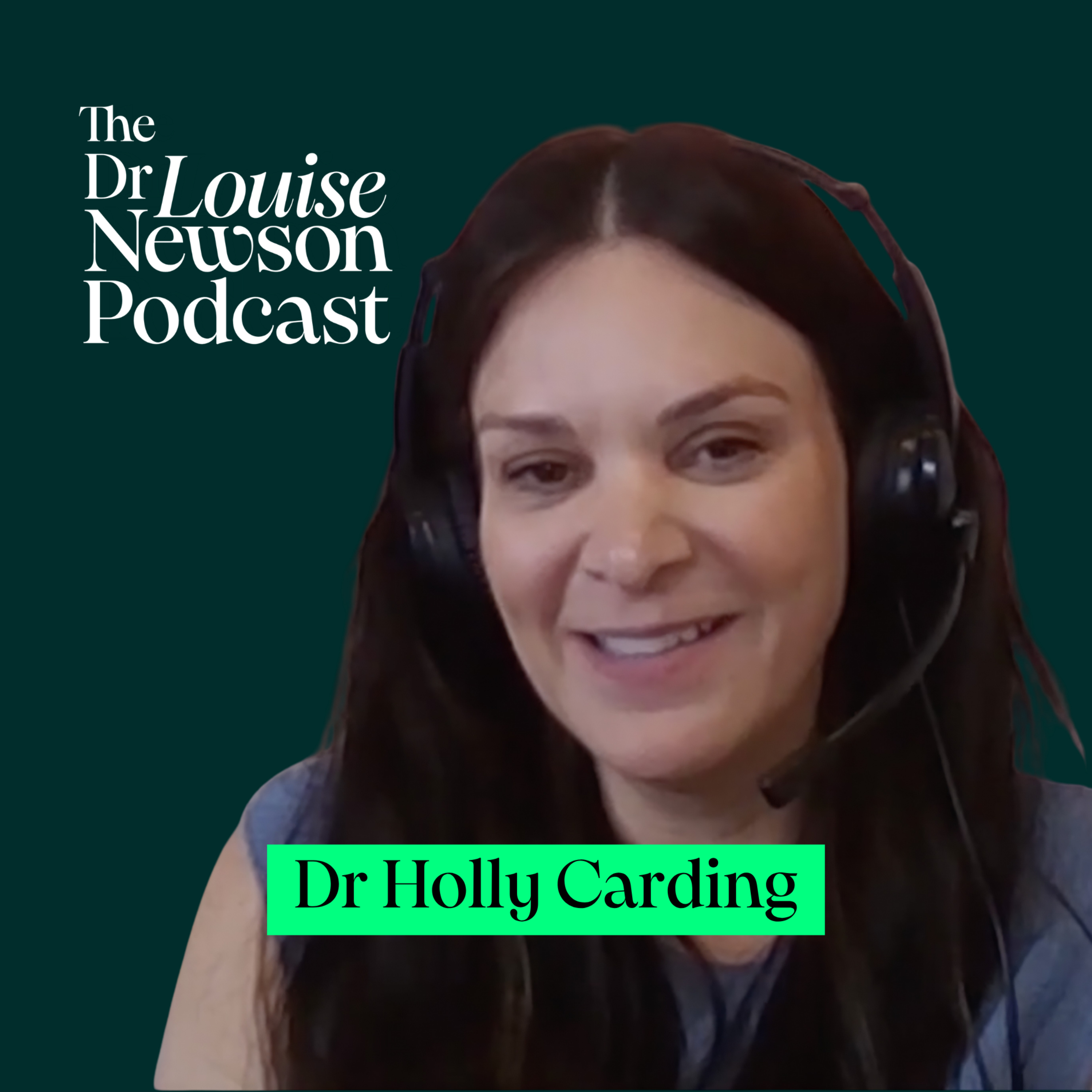
The episode discusses why healthcare professionals (not just GPs) are often fearful or reluctant to prescribe hormone treatments, especially testosterone, and how News and Health/NewsOn Education is addressing this through evidence-based, practical education for global clinicians.
Holly (education lead for News and Education; GP; Manchester Medical School; pathology degree; GP training; became a menopause champion; upskilled via Menopause Doctor resources and the “Confidence in Menopause”/“Confidence in Hormones” pathway; works at Manchester clinic/Hale Clinic at Bank Medispa; supervises Manchester medical students).
Training on hormone health is inadequate and outdated; clinicians should learn physiology first; guidelines don’t cover real-world complexity; fear is often driven by misconceptions (e.g., Women’s Health Initiative); education should build confidence, compassion, and community.
A group practice reportedly decided to stop prescribing testosterone for all patients; women often know more than clinicians; improvements after optimized/initiated HRT included better self-esteem scores (student poster prize); mock consultations and modules (Hormones 101, testosterone, mental health, safe prescribing) are central.
Written by AI. May contain mistakes.
Discussion on personal experiences in medical training and the lack of education on hormone treatments.
“So, I mean, I'm really excited to be here and talking to you.”
Exploring the necessity of education for healthcare professionals to improve women's health care.
“I mean, I graduated 31 years ago, and you graduated more recently than me, and then it's still not moved on.”
Highlighting the significant positive changes seen in women's health through hormone treatments.
“You know, it's a massive positive benefit that we see.”
Discussing the inadequacies in current medical training regarding hormone health.
“education has changed but It's still very traditional.”
Strategies for fostering confidence in healthcare professionals regarding hormone treatments.
“But we've also taken that foundation of the extremely successful confidence in menopause course that was very much focused around watching mock consultations.”
Efforts to make hormone health education more accessible and inclusive for clinicians.
“Because when I was at medical school, I was always taught a guideline is just that, it's a guideline.”
Learn about the development and structure of the Confidence in Hormones course designed for busy clinicians.
“So we started with those mock consultations, but we built around that as well.”
Explore the common fears clinicians have regarding hormone treatments, especially testosterone.
“So I think that's quite a focus of our education coming up.”
Understand the benefits of attending conferences and networking in the medical field.
“And, I mean, we had people from loads of different countries.”
Learn how creating a supportive community can improve clinician well-being and patient care.
“So we're really going to look at how hormones impact the whole of the lifespan, but also chronic disease and how we can live healthier.”
Discover the importance of a supportive professional network in hormone health.
“and you need to have a good support network around you, but also a really good support network of professionals.”
Learn three vital take-home tips for healthcare professionals on hormone health.
“So in the meantime I want to thank you because I know you're in clinic today but thank you for coming on to the podcast but you're not going to go without three take-home tips.”
Encouragement for listeners to share the podcast and thank yous.
“Absolutely and if you're listening and you're not a healthcare professional please share this podcast episode to as many healthcare professionals as you know because they need to learn too.”

Get the gist, explore an idea or ask about something said.
 Claude
On The Dr Louise Newson Podcast, what are the key points of this episode?
Searching your listeningAutomatic transcript. May contain errors.
0:02So Holly, it's lovely to have you in my podcast studio. I've known you for quite a while and you lead our education, which is Newson Education and do a sterling job. But I wanted to spend this time just talking about education, not just for GPs, not just for doctors, but for healthcare professionals globally. So not in UK. So there's, I don't know how many healthcare professionals there are in the world, but there'll be a lot. and the minority of them are confident of prescribing hormone treatments. So we're quite ambitious in what we're doing, aren't we? So we want to educate as many people as possible.
0:40So tell me just a bit about you and your background and also your own training because I hope it was better than mine because I wasn't taught anything about hormone treatments. Unfortunately, I don't think it was. So, I mean, I'm really excited to be here and talking to you. We've wanted to do this podcast for quite a while, haven't we? But I think it's quite fitting that it's happened now because it was just my one year anniversary as education lead for News and Education. And I had quite a similar journey to you. I went to Manchester Medical School at the University of Manchester. I did an interclosure degree in pathology.
1:21um moved down to kent to do my junior doctor years and then back up to manchester to do my gp training and you ask about what training i had around hormone health um and there was there's very little that i remember from my training and even as you know doing gp training there was there's very little. And then after I finished my GP training, I had my children. And then when I came back from maternity leave, I was a bit lost. I had all these colleagues who were developing special interests in things. And I was wondering like, Holly, what are you going to do with your career? So I became a menopause champion, actually, at a previous job.
2:09And once you start to connects those dots around the symptoms and the suffering that these women are going through it's really hard to unsee it and every consultation it flavors the consultation and I really wanted to to try and provide optimal and individualized care for them so I needed to upskill and one of the ways I upskilled was to use your education so the menopause doctor website the um podcasts uh where you've had some incredible clinicians over the years and then also i did the confidence in menopause course um that eventually led on to me being a news and health clinician um and i worked in my work in the manchester clinic i'm actually here in the hail clinic today at bank medispa um and as well as as kind of thinking around my journey into hormone health my journey into education education has always been a huge part of my career and I've on an annual basis I supervise a third year medical student at the University of Manchester doing an applied experience project and they have very little training still even um in hormone health and i see some real opportunities there to to help educate them um and you know we recent project uh did incredibly well we had um data from from news and clinic and we looked at the improvements in self-esteem scores for women who've been initiated or um optimized on their hrt and and the amazing improvements that these women see and and that's something that you you don't sort of see in the guidelines as a suggested indication and so that actually won a prize at a recent conference um for that for the students poster but you know they still they were very much influenced by um the women's health initiative and the legacy that that's left.
4:26It's incredible, isn't it? I mean, I graduated 31 years ago, and you graduated more recently than me, and then it's still not moved on. And it's a massive opportunity to really improve the health of women if we think about hormone treatments and hormone changes right from the start, really, not just menopause. And it seems really weird because also, you know, we've both got a big clinical practice. We both see a lot of patients and obviously we work in the same clinic. So collectively, we're seeing thousands of women a month. And it's very transformational medicine. You know, as a GP, of course, you can help your patients, but not to the same extent as, you know, when our patients come back for follow-up, like you say, They're improving their symptoms, but often you see their blood pressure coming down, their LDL cholesterols come down, their weight has improved, their exercise ability has increased.
5:27They're often back at work. You know, it's a massive positive benefit that we see. And it's very rewarding, isn't it, clinically, the work we do? Absolutely. I mean, it's the most satisfying work that I've ever done as a GP. and I think one of the real benefits about working at news and clinics is that there's so much focus on education which is pretty unique when it comes to working as a healthcare professional and there's so much that goes into developing our clinicians and then that then impacts on the care that we can give the patients so yeah It's really interesting because education has changed but It's still very traditional.
6:13And when I set up the education course, initially it was confidence in menopause and now it's confidence in hormones. I was sort of quite frustrated with the way that I've been educated as a postgraduate because often you have to, you know, sort out childcare. You have to pay quite a lot of money, not just for the course, but for the accommodation, for, you know, travel. and then I you know I spent many a day sitting in a lecture theatre thinking well I know all this I it's like all you get out of date to slides somebody's just talking you know reading the slides at you and I'm thinking this isn't very helpful and I knew that when I set my clinic up 10 years ago I had a lot of like theory knowledge I knew about hormone treatments I knew about how to make a diagnosis.
7:02But I didn't know that like art of like, what do you say to the patient? How do you, which hormone do you start first? What dose do you give? Do you give it different if they're younger or older? When do you start vagina hormones? And then I sat in some clinics in London and that's when I really learned. But I thought, well, even in our clinic, we mentor our doctors, but we can't have everyone sitting in with us because we haven't got enough space. So that was where the idea came to film some of the consultations so just explain a bit about what we do with that yeah I mean our education philosophy is is quite different from the other education that's out there because we're not just teaching about menopause as a topic and and I know that you don't like labels um like menopause and pndd and pmos um postnatal depression so what we've done is we've tried to teach that underlying physiology and pathology.
7:59And then once the clinicians understand that mechanism, it makes the clinical decisions much clearer. But we've also taken that foundation of the extremely successful confidence in menopause course that was very much focused around watching mock consultations. And then, so we've used the same principle in the confidence in hormones course, because one of the pillars of our education was that we wanted to focus on building confidence and compassion. I think in clinic, we see a lot of women who've been ignored, misdiagnosed, medically gaslit. And so we want to not only teach our clinicians about the basics and the theory, but also how to listen to our patients, how to communicate with them.
9:00And I think through your patient education, the patients are very ahead of the curve and we want the healthcare professionals to come over the hill with them as well. Yeah, and that's where I sort of feel that I've sort of got things slightly wrong in that women have understood hormones very quickly and healthcare professionals less quickly. And there's this mismatch. And the problem is now we've got to a dreadful situation where women seem to often know more than their healthcare practitioner. and you know most of us as good healthcare practitioners are always challenging what we do and we're always there I always used to go home and think have I done the best for my patients is there more I need to read is there something else I need to learn and sadly a lot of healthcare professionals aren't quite the same so they're pushing back on their patients and the stories that we hear every day are quite well they're very harrowing you know I've just been told this morning that one of our patients, their doctors had a group practice meeting and they've now said they're not going to prescribe testosterone anymore to any of their patients.
10:11And it feels weird. Like they'd never sit down and say, sorry, we're not going to prescribe antidepressants to our patients or gabapentin, which is a highly addictive drug with a lot of side effects, but they somehow choosing like to target hormone treatments to the detriment of women. And these stories are not coming from any evidence like these doctors seem very scared of hormone treatments for the wrong reason don't they yeah and i mean we're quite committed to improving patient experience and trying to reduce some of those health inequalities that you see because there may be one practice that that does that but down the road and you know the patients are being prescribed testosterone and it's about helping the clinicians to understand that underlying physiology and the evidence so that they don't feel worried anymore and I mean one of the foundational modules of the confidence in hormones is the hormones 101 module and that we created really as a gateway for the rest of the program and it's very much for clinicians who are new to hormone health and who might have some outdated perceptions especially around the Women's Health Initiative study and you know if they want to challenge that and then progress into the other modules and that focus more on clinical care I think that would be a really good place to start.
11:41Yeah and you know I remember sitting down at my computer trying to put down in black and white your very ambitious vision which was um a global one um but you know we we did do that and what we wanted to do was was to transform hormone health education through it being accessible through it being evidence-based learning um that then genuine genuinely changes clinical practice um and really to empower the clinicians and with the knowledge and with the the confidence so that the care is is is safe um but it is person-centered and and it's holistic as well um and you know with i think we we we love a guideline as a doctor because things are there in black and white for us to follow but unfortunately our patients do not fall nicely in and siloed into those those boxes and so they're going to be patients that sit outside that and it's about how you manage those patients and give them good care as well.
12:54Because when I was at medical school, I was always taught a guideline is just that, it's a guideline. Yeah, totally. And we have to be thinking outside the books because the suffering is immense. And we see a lot of people who have been told wrongly, usually that they can't have hormone treatments, yet they want them for their future health. They want them to allow their brain to function, their body to function better. And anything that we do in medicine is a choice that's patient-centered. You know, the shared decision-making is really important. And so with the course, we've got these different scenarios, haven't we, with consultations or mock consultations with a lot of the doctors who work with us who are excellent.
13:36But we've also, there's a lot of references, aren't there? We sort of refer to the literature and there's webinars as well that people can watch too so there's a there's a hybrid type of learning that people can develop their confidence and knowledge from yeah and I mean one of one of our other pillars is is about accessibility and inclusivity we we have face-to-face learning but we have the online learning as well and and you know you mentioned before about trying to access education when you're a busy clinician and you know the cost of travel and accommodation and so that we have a lot of online learning available but the I mean it's probably my biggest achievement this year was was launching the confidence in hormones course and really developing that program we didn't want it to just be you know here or a series of lectures and by the end of it you you know you should have achieved these learning objectives we wanted to build a real educational journey and that is built around these these mock consultations that you're right they're done by our clinicians who see these types of cases day in and day out and see the improvements that women get with the bioidentical hormones.
15:05So we started with those mock consultations, but we built around that as well. So there's expert Q &A from yourself and Rebecca, and there are reflective exercises in there, which is important to complete that learning loop. There are assessments for you to do to make sure that you have achieved those learning objectives. There are the video lectures, but there's also resources as well so there's all the clinical tools and there's the patient resources there's the links to um to things like balance and your website and then the great thing is all of the resource i've spent a long time with you and putting all of those resources and references into one one it's easy to access section so that you can go away and read the papers for yourself and critically appraise them but also you know where they are when you need them for your consultations or your learning which is so important and so what's the feedback been like from their confidence in hormones course yeah amazing really really good like completely different experience to anything else that is out there in terms of education i mean i've done a lot of um menopause and hormone health education over the years um and we We've talked about that foundational module, but we've got other modules as well.
16:28So there's hormones in practice that covers the basics in terms of perimenopause and menopause and POI. We've got confidence in testosterone, which talks about all of the evidence around testosterone replacement, how to prescribe that and how to monitor that safely. like you said i think um clinicians can be very scared of of hormones in general but testosterone especially and um we we've also created a module focusing on mental health and well-being which i know is a real passion of yours so that contains cases that you know not only about depression but about suicide ideation and about the impact of hormone issues on relationships and on work as well and then we have an individualizing clinical decisions module which really starts to look at the nuances of care so off-label prescribing of estradiol and the role of progesterone in hormone health and then safe prescribing in women who have like a family history of breast cancer or a personal history of clots as well.
17:46We also have the other two modules that are coming out in October, hopefully, looking at optimizing care with comorbidities and also improving the health span of women. So we know women live longer, but they live in poor health. So I think that's quite a focus of our education coming up. Yeah and it's amazing because it is so practical and also we've got the ability to add and change things all the time whereas a lot of education courses are quite rigid and we're not rigid because we're learning and extending and that's why it's not just menopause we're thinking about you know PMS, PMDD you know all other conditions that are associated with hormonal changes.
18:28But one of the things I think is completely unacceptable is that a lot of GPs say to me, oh no, I don't know anything about hormone treatments. And then psychiatrists say to me, oh, I'll never prescribe hormone treatments. And then cardiologists say, we see lots of middle-aged women with palpitations, but we never prescribe hormone treatments. And I feel like everyone's fine with saying that they can't prescribe like it feels like you're you're a doctor with part of you missing if you're ignoring hormone treatments because there's no other area of medicine where it's acceptable to not understand and even as a GP I wouldn't always prescribe for example if someone had cancer I wouldn't give the first treatment for chemotherapy but I would make the diagnosis I would refer them to the oncologist but somehow like if women are just told oh it's probably your hormones but I can't do anything about it it's allowed to happen and I do understand how like regulators how people who do the appraisals how educators in a bigger you know have got more more roles responsibilities than us you know people at universities how can they allow doctors and clinicians to graduate without knowing anything about these fundamental hormones.
19:48It doesn't make sense. Yeah, so we're doing a bit of a catch-up, I suppose. But the amount of women that I see in clinic who will have seen a cardiologist for their palpitations, a neurologist for their headaches, a urologist for their recurrent UTIs, and then we join up all of those dots and say, well, this is related to your hormones. And the thing about our education is that it is for everybody. So you can be a healthcare assistant, a nurse, a pharmacist, a physio, a GP, a specialist in the hospital, and you can access our education. and we've made it modular so we that you you can if you've got a a continuing professional development need that you can just access that um section you know I think it becomes overwhelming doesn't it when you have to do a 30-hour course that costs hundreds of pounds and that that as a as a specialist you may not want to go down that route but at least you know you can focus on on the basics and some of the prescribing as well with our approach with modules.
21:06Which makes it really flexible because also increasingly, thankfully, a lot of people do have knowledge, but they still need more specialist area of knowledge and everyone's different. So the ability to be able to dip in and out is really important. But the other part of Newson Education that for me is really exciting is our annual conference. that we've had a couple of times now. We've just put out the date in March for the next one in London. And, I mean, we had people from loads of different countries. Is it like 18 or 19 countries? Yeah, it was, wasn't it? So, you know, which is incredible.
21:42And what's really interesting is that in some ways there's more support for our work in other countries than there is in the UK because there's still a bit of pushback. But the energy in the room, we had a dinner the night before, and this time we're going to make it a two-day conference. But just like the energy from the people is quite different to other medical conferences, don't you think, Holly? Yeah, absolutely. I mean, we had the Hormones Uncovered conference back in March at the Royal College of Surgeons in London. And like you say, people from across the globe joining together. And I think one of the biggest take-home messages for me was how eager people are to learn.
22:22and we did we we had um clinicians from all different specialities in the room together it wasn't um you know an exclusive club that's only for doctors everybody came together and and and learned together and I think that's because we know that um hormone health will will touch every single aspect of health care and so it's important that everybody learns about it as well and remember we did that reflective um uh word cloud so at the beginning wasn't it yeah it's an idea stolen from from your book but um the the the we we said hormone health feels dot dot dot and then um the the delegates had to fill in the gaps and we did it by the beginning and the end of the day and you could see at the beginning there was these real gaps in education and in confidence but then by the end of the day there was some really great like feedback and and great words in that word cloud about how confident and how enlightened everybody felt and empowered.
23:26So it was a fantastic conference and I was running around trying to coordinate everything. So I didn't really have a lot of time to get as involved in the conversations as I wanted to. But as you're running around that conference centre, you can hear people talking and networking and sharing their experiences and we also included some patient experience in there as well which you never see at all the conferences but extremely powerful learning and you can really see how everything that you've learnt during the day you then put into practice at the end of the day. So yeah, next year is the 16th and 17th of March.
24:11It's at the Royal College of Physicians in London and it's going to be called Hormones and Healthspan. So we're really going to look at how hormones impact the whole of the lifespan, but also chronic disease and how we can live healthier. And we've made it two days this time because some of the feedback was that they wanted more and more time to network and more time to ask questions. so we've got international experts coming to give lectures of course you're going to be there and giving a lecture there's more time for the the expert q a's we've got panel discussion we've got case-based discussions we've got some more patient experience some debates going on and it's going to be much more interactive because sitting in a stuffy lecture theatre for eight hours is just not fun and it's not a good way to learn.
25:14No, and we've got some lovely people, you know, there's a lot of awful stories from doctors, you know, not just me, but other doctors in other countries that have been sort of told off often by gynecologists for setting up a clinic for prescribing, for prescribing testosterone or different doses of hormones or whatever. So one of the things that I really like is that it's a very sort of horizontal meeting. There's no hierarchy. There's no people saying you have to do it this way or that way. We learn from each other, but we also are supporting each other because medicine can be quite toxic, actually, and quite misogynistic.
25:54And there's still this hierarchy. And I wrote about it in my book, The Power of Hormones, that there's this thing where hospital doctors think that they're superior to GPs. And then some GPs think they're more superior to nurses or pharmacists. We don't think that at all. In fact, I respect everybody who works regardless of their job. And that really got, I got that feeling when we were together, that when people talk about, you know, difficult emails they've had or hostile conversations with other healthcare professionals, sadly, a lot of people there were going, that's happened to me as well.
26:29That's happened to me. but we can help each other by supporting each other and using tools. You know, I've learned a lot how to deal with people who are very resistant to my work. And so we can help. And I think this is going to make a big difference to patients because, you know, last year I had a very difficult year after the Panorama program and I was very close to stopping everything, but that wouldn't be helpful for patients. And I don't want any of my colleagues to ever go to the dark places that I've been at. So how we can lift each other up. And I think that's quite unusual in medicine because medicine, doctors are quite sort of full of self-importance and they're looking after themselves more than others.
27:11Whereas what we're trying to do with nursing education is help and support mentally as well as educationally people. And that seemed to really, I could feel that last year. I don't know what you think. No, I completely agree with you. I mean, one of the other pillars of our education is community and creating a community. And one of the highlights of the year has been working with some incredible clinicians from around the world and this faculty that we're creating. And yet, I mean, just to take a moment to think about the impact of hostile interactions between colleagues and the impact of GMC investigations and documentaries like Panorama on clinicians' mental health.
28:03and you need to have a good support network around you, but also a really good support network of professionals. Yes. Yeah, totally. Because they really do understand so much more. And I think we're creating that at the moment and we're building this community together. And you could see that at the conference. I see the conference this year, not next year, sorry, in March as being an extension of the Confidence in Hormones program and getting that online learning offline and getting us all together in a room. Yeah, which is so important. And we're very lucky in our clinic that with so much mentoring going on, we're used to supporting others, but a lot of people don't have that.
28:53So it's exciting. And I'm so grateful publicly, Holly, I want to say thank you for your work, because it's only been a year, but it feels like a lot longer and we've got a great team of people in Newson Educators supporting you, supporting everyone else, working together. We've got some very ambitious plans so you need to come back in about six months and tell us a bit more about the plans that we've got. So in the meantime I want to thank you because I know you're in clinic today but thank you for coming on to the podcast but you're not going to go without three take-home tips. Yeah I did some preparation.
29:27Yeah, go on then. So three ways really that all healthcare professionals should know about hormone health for women. yeah I mean just a beat before I go into that because I want to say thank you to you as well because I you know I'm incredibly proud of what we've achieved so far this year but you know I think having the opportunity to come on as education lead for news and education none of that would have happened without having that opportunity and I think as a GP I mean we see like 30 patients a day don't we um but the impact that you can have with education on thousands and thousands of of patients is just huge but my takeout for clinicians um who want to learn about hormone health is um physiology first so think about the underlying mechanisms of what's going on in the body when you're faced with a hormone related symptoms i don't think you should ask okay so what what's the condition I think you should be asking what's happening physiologically and then once you understand that that makes diagnosis and investigation and treatment much more logical um my second take-home tip would be to to build confidence and not just knowledge and Rebecca's taught me a lot about guidelines and how they are important but they do not replace clinical judgment and so you think you really need to invest in education that understands the evidence and questions it where appropriate and then you can feel confident in applying it to that that very individual case that's sitting in front of you and the third point I would say is keep on learning so yeah hormone medicine is is evolving i think you know my um understanding has come on leaps and bounds over the last few years and um we need to keep on on challenging this outdated thinking and keeping up to date with emerging evidence um so that you give the patients the best possible care and you can do that through news and education you can go to our website which is newsoneducation.com and you can sign up to our programmes you can follow us on Instagram and on LinkedIn and we'd love to see you at the conference as well in March next year.
32:02Absolutely and if you're listening and you're not a healthcare professional please share this podcast episode to as many healthcare professionals as you know because they need to learn too. so thank you so much for your time today Holly it's been great and thank you for your work too thanks very much Louise
Dr Holly Carding, GP, Women’s Hormone Specialist and Education Lead at Newson Education, joins Louise to expose the hormone training gap that leaves doctors too scared to prescribe hormone treatments including progesterone, estradiol and testosterone.
Holly had almost no training on hormones as a medical student and as a GP, became a menopause champion after returning from maternity leave and now leads global education for Newson Education, building the Confidence in Hormones course from scratch to close a training and education gap for all healthcare professionals globally - including for GPs, nurses, pharmacists, psychiatrists, cardiologists and all other doctors.
They discuss the course's modules on testosterone prescribing, mental health, and individualising care for women with a history of breast cancer or clots, why "just a guideline" isn't enough for real patients, and the Hormones Uncovered conference returning as a two-day event in London, Hormones and Healthspan, in March.
Holly leaves three take-home tips for any healthcare professional wanting to get to grips with hormone health.
Let’s connect
👉 Find out more about the Hormones Uncovered conference: https://bit.ly/4wOmLtm
👉 Doctor, or know one who needs to hear this? Build confidence in hormone health with the Confidence in Hormones course at Newson Education: https://bit.ly/4g5V0ps
👉 More from Dr Louise Newson: https://linkin.bio/drlouisenewson