Ask ChatGPT
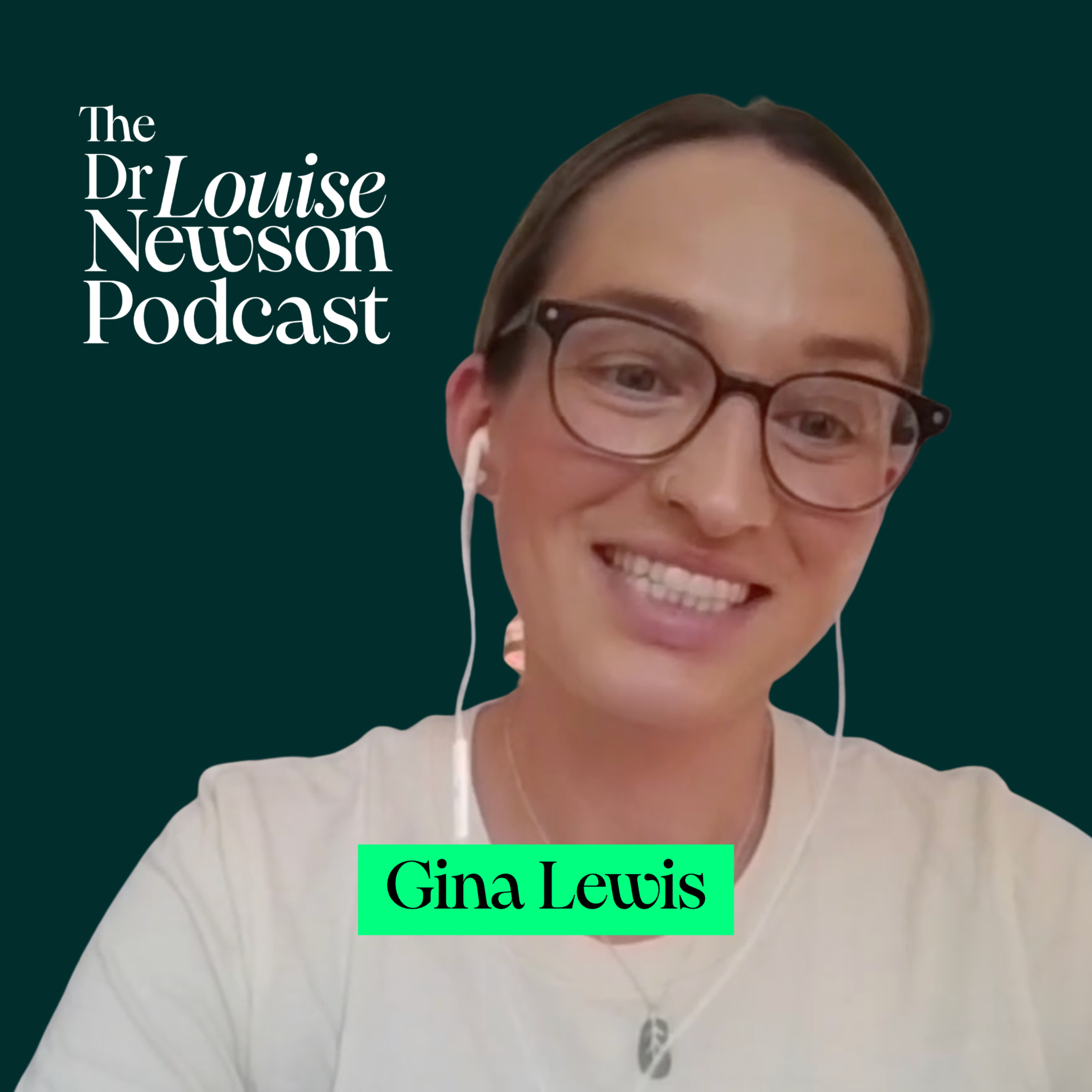

 The Dr Louise Newson Podcast
25 Aug 2026 · 31m · 11 chapters
Rosie Moss (Widowed AF) and host discuss how grief symptoms can be misattributed to hormones, and how hormonal imbalance (including PMDD/perimenopause/menopause) can mimic or worsen mental health crises. They argue women may be mislabeled as “depressed” or “abnormal grief” when physical/hormonal factors are involved, and that treatment choices (e.g., estrogen/progesterone vs antidepressants) matter.
Rosie Gil Moss was widowed in 2018 after her husband Ben died in a scuba diving accident; she had three young children (7, 5, and 6 months). She describes post-bereavement hormonal disruption, severe cyclical episodes, and later finding hormone-focused care.
Grief and hormones can coexist; monthly timing can be missed (e.g., with an IUD). Some NHS approaches (e.g., progesterone mini-pill, antidepressant-first) can worsen symptoms. Higher-dose estrogen/progesterone may be necessary; antidepressants can numb emotions and have side effects.
A&E experience with threats of police/social services; progesterone mini-pill worsening; independent hormone clinic prescribing higher estrogen (200); antidepressants (sertraline/Prozac) described as disconnecting/numbing; quetiapine described as “chemical menopause.” Take-home tips: find your tribe, self-care, and “let it out” incremental crying.
Written by AI. May contain mistakes.
Discussion on personal experiences with grief and hormonal changes.
“Gosh, right back at the beginning, yeah, about two and a half years ago.”
Exploration of coping strategies and the influence of hormones on mental health.
“My husband, Ben, died in 2018, and it was a real cataclysmic shock.”
Navigating healthcare challenges in seeking help for hormonal issues.
“I mean, woe but hide a teacher if one of my kids had had a bad day and they needed, you know, the walk of shame when they come towards you because I didn't have any resilience to that sort of thing.”
Discussion about the complexities of grief and how it relates to hormonal health.
“And I don't know what the answer is, really, other than challenging and saying, so what are the risks?”
The impact of misdiagnosis in women and the need for hormonal awareness.
“But when we think about grief, people can have, you know, short-term grief.”
Explore the link between PMDD, neurodiversity, and coping mechanisms.
“And then things like, you know, being labelled as moody and disruptive or flaky.”
Discuss the importance of labels and appropriate treatment plans for hormonal imbalances.
“They have, but I do sometimes feel like I'm collecting acronyms.”
Examine the effects of antidepressants on mental health and hormone production.
“you giving me a cup of tea would help me a bit.”
Highlight the importance of women sharing information and advocating for their health choices.
“And actually, when you're talking about these antidepressants and a lot of the uncomfortable symptoms of menopause, things like the sweating and the libido, So they cause that.”
The conversation explores hormonal treatments and the need for women to share their experiences and knowledge.
“I'd managed to get my daughter home from school and she walked past and she said, are you all right?”
The guest shares three essential tips for managing grief effectively, emphasizing community support, self-care, and emotional expression.
“And that doesn't do your mental, physical or emotional health any good.”

Get the gist, explore an idea or ask about something said.
 Claude
On The Dr Louise Newson Podcast, what are the key points of this episode?
Searching your listeningAutomatic transcript. May contain errors.
0:00So today on my podcast, I've got Rosie Gil Moss, who runs the amazing podcast called Widowed AF. She was widowed, very unexpected death of her husband, left with three young children. We talk about grief, but we talk about how sometimes grief can be blamed for symptoms, which are actually related to hormonal changes, and how a lot of women who have grief can also have a hormonal imbalance. So it's an open conversation, which I know will resonate with many of you. So I hope you enjoy it. So Rosie, you are now in the hot seat, whereas I was on your podcast a couple of years ago. Gosh, right back at the beginning, yeah, about two and a half years ago.
0:42Yeah. So you've got the podcast, Widowed AF, and I came on it, which was great. But, you know, I think about you a lot, partly because my mum was widowed at age nine, brought up three children and now I'm older I think how the hell does she do it and then I also think about her a lot because I can't tell you how old she is because I'm not allowed but you know I'm 55 so a lot of people could probably work out roughly how old she is she was really lucky because she was struggling with grief she was struggling not knowing what her future was she knew she had to move house she knew she needed a job and she was working as a teacher and she was getting all these symptoms very hot and back then you weren't even allowed to wear sleeveless you know dresses because it was 70s you had to keep your shoulders covered she got very hot she got quite irritable and the doctor just said take this you're going through the change she had no idea what it was because back then no one asked anything she took it well in fact it was pregnant horses you're in hrt like but it worked for her and she's been really lucky because i wonder how my life would have been if my mum hadn't taken hormones from not long after my dad died.
1:52I mean, my dad died when he was 40 and it was probably a few years after that she got symptoms. But her grief, I mean, she dreams about him every day and cries a lot even now about him. So she's got big grief, but I wonder what my childhood would have been like because she's done and she still does the most amazing job for all three of us, but it would be very different if she didn't have hormones and it would be so easy to blame her grief. So just keen to hear about your story, really. I mean, not dissimilar, actually, to your mum's timeline. My husband, Ben, died in 2018, and it was a real cataclysmic shock.
2:29It was an accident, a scuba diving accident. And I just look back and I think, much like you do for your mum, how did I do that? How old were your children then? They were seven, five and six months. Yeah, it was tough. So it was just out of the blue, no warning. Yeah, knock on the door from the police. Oh, my God. Yeah. and you know at the time I was postnatal my daughter was six months old I'd just finished breastfeeding and so my hormones were kind of all over the shop anyway and for the first sort of three to four years I to the outside world I coped what the way I was coping was I was drinking a lot and I was masking a lot of my feelings you know I was squashing them down because I was kind of scared of what was going to come out and it was about four years in and I felt this kind of seismic change in myself.
3:18And the only thing I could liken it to was puberty, when I felt completely out of control. And I ended up feeling quite scared. I didn't know what version of me was going to come down the stairs. And in the sort of darker times, I'd be thinking my kids would be better off without me, you know, really horrible, dark, negative thoughts. And I didn't know what was the matter with me. I really didn't. I thought I was broken. I thought I was mad, bad or broken. and I didn't know where to turn. Did you feel worse at certain times of the month or was it the same? Yeah, but because I had the coil, I didn't identify that it was monthly.
3:54You weren't having periods. Yeah, so I didn't have that kind of timeline to follow. And yeah, it was. And it was starting to kind of take over initially just a couple of days and then some months it would be a week or even longer. And, you know, when I say I was white, I'd be in bed staring at a wall. I wouldn't even be able to look at my phone, read, watch television. I would just stare at a wall and cry and think, I can't do this anymore. At the time, I had a partner, so he was able to help with the children. But we've since separated. And that really made me realise how precarious things would have been had I been entirely on my own.
4:31Yeah. And I worry about this a lot, actually. I worry about deprived people. I worry about vulnerable people. but I also worry about the impact of hormonal imbalance on children because a lot of people I'm sure you had some PMDD you had grief but there was a hormonal imbalance going on as well and it's you can ignore yourself well you can't but you know what I mean like a lot of women tell me that they close the blinds they go to bed they stare at the walls and that's awful in itself but if you've got children who are only dependent on you what what happens then if you haven't got a partner or haven't got any other people who are going to help with child um minding it those children are just stuck in front of a screen and probably not fed not put to bed not loved in the same way yeah and it's you know I'd get the children to school and then I would go back to bed and I'd just pull the duvet over and then I'd set a timer for when I had to go and pick them up and I'd sort of get up, put the big dark sunglasses on, drive to the school, you know, probably crying, get to school, really not want to speak to anybody.
5:39I mean, woe but hide a teacher if one of my kids had had a bad day and they needed, you know, the walk of shame when they come towards you because I didn't have any resilience to that sort of thing. I took it all very personally. It all felt like it was an attack on me. And, yeah, the relationship between me and my kids absolutely did suffer. It did because they didn't understand what's wrong with mum. and actually as I began to learn more about the hormones and the impact they were having and actually I wasn't mad, bad or broken, I was able to talk to them, particularly the older, to the boys and explain to them in age-appropriate ways why I might be struggling at certain times of the month.
6:14But of course that's still very scary for a child to see their mum like that. So how did you manage to get help? Well, it was a long old process. Initially the NHS where I have to say, And, you know, the NHS is amazing for many things, but women's health, not always. And in the end, it got to a point where I presented at A &E. I'd got to the point where I was begging to be sectioned. I was begging to be sedated because I was scared. So we went to A &E and I waited in the corridor for hours, as you do. And then by the time I was seen, actually, I was all right. They'd given me some Valium and I was feeling calmer.
6:54But when I asked to leave, they threatened me with the police. Yeah. They said if I left, the police would come to the house and social services would be involved. Oh, no. At which point I had a meltdown, you know, because I think as soon as somebody threatens what I perceive as my children, then you just... It's a different level, isn't it? Yeah, it really is. And that in turn made me very frightened to seek help. The only real support that they would give me was they prescribed progesterone tablets, the mini pill, which actually had... as you probably know and it had an adverse effect on me it made things worse because they block your progesterone yeah and I just again I was thinking nobody's going to help me and it's that real sense and it took me right back actually to being widowed where you're knocking on doors asking for help and everybody's saying not our problem well we can't help you or here's some antidepressants so it was actually chance I came across a newson clinic and it was and this is not me saying this because I'm sat across from you, this is genuine.
7:50I felt for the first time that somebody cared and listened to me and every individual clinician that I spoke to all came to me with sympathy and kindness and just understanding that actually I might need a higher dose of oestrogen, which I do, I'm on 200. But then I've gone back to the NHS since and said, actually, my financial situation has changed. Could I come back under the NHS? And again, it was that computer says, no, you know you're on far too high a dose we can we can start you back on 50 and see how you go and I said I've done all the work for you yeah I've done it and it's not like I've been you know buying on the black market I'm being prescribed it by so they still refused it yeah do you know it makes me so cross because you know we run a specialist clinic we are all specialists we are all qualified doctors we're all registered with the GMC we all have annual appraisals we've had and outstanding in our CQC who have looked at our doses of prescribing.
8:47And there's good evidence that some people don't absorb enough through the skin. There are no guidelines by regulating authority that say we can't prescribe higher doses. I quoted that back to them in a sternly worded email. Yeah. But if I was a private psychiatrist and I'd prescribed you an off-label higher dose of antidepressants, it'd be no problem if I was a private cardiologist giving you a dose of whatever for your blood pressure or your heart arrhythmia no one questions it and this is where like we need to turn it on it and say hang on what are my risks of not having the dose that I need because I've seen what I was like before and I do they want to just harm women I don't know this is what I said in the in the session in the in the appointment I said you know you can see my notes in front of you you can see the distress I was in three years ago before I independently went and sought help for myself and I said I've got I'm on my own I've got three children this is you know this is dangerous you know this is one of the biggest killers in women over 40 and it was just that there's nothing we can do and I felt incredibly frustrated I think I'm in a very different place to where I was back then but it just felt like nobody was listening to me and it's so lonely to feel that way yeah Yeah, it's really hard.
10:06It's very difficult. And I don't know what the answer is, really, other than challenging and saying, so what are the risks? Where are the guidelines? Where's the evidence? Because there isn't any that shows that a higher dose is harmful because having too low a dose can be harmful as well. But you notice a difference on hormones to your mental health. I didn't just notice a difference, Louise. My life changed. You know, I was able to, don't get me wrong, it's still there. But what I would say is it's two days a month where I'm just very, very tired. I'm a little bit cautious about what I say on WhatsApp groups and in emails.
10:43You know, I second guess myself a little bit more because I am prone to, you know, being a bit stroppy. But that feels to me like quite normal PMS rather than the debilitating hellhole of PMDD. So, yeah, I mean, I was able to work again, to build up my own podcast. I was able to get back to being the mum that I knew I was, which, you know, I'm never going to be the mum. I was before I was widowed because you have to be good cop bad cop all the time but that kind of fun side of me began to come back out again amazing things like you know I didn't get out of bed and my joints didn't I felt like I was about 95 I was gaining weight I was sweating through to the mattress you know I was I felt just horrible all the time whereas now I feel like I've got my life back yeah it's amazing and what I often say to patients is you don't know what you're missing until you have it back.
11:33And I also say to patients, I don't know how you're going to feel on hormones, but I'm prepared to give them to you, get the right physiological dose for you, and then we'll let's see. But when we think about grief, people can have, you know, short-term grief. You know, if your great-great granny who's in the late 90s dies, of course that's very sad, but people can move on a lot easier than if it was someone younger or someone like your partner so unexpected at such a young age. And people's grief and their grief reaction can really be different. And, you know, we talk in medicine as people having an abnormal grief reaction, which I find is a bit harsh because what's normal and what's abnormal?
12:15Like, say, my mum still thinks and loves my father so much, but it's not abnormal. They were so in love and they, you know, but that warmth is there and it should be there really. So the way that I grieve is different to the way my sister and brother grieve. But I don't want to be judged whether it's normal or abnormal. I don't even want someone to talk to me about it. I'm content with how I've changed my life, whatever, because I don't know what I'm missing. But I feel like when we were taught at medical students about grief, it was almost like a bit of a tick box to sort of ask, I don't know.
12:54Five stages. Yeah, it was. It's a bit like the whole cycle of change when people are trying to give up cigarettes, you work out where they are. And a bit like with grief, have you had the anger yet? And it's like, oh, hang on. But then what I realise more and more, this symptom questionnaire that we got on balance with 84 different questions, is thinking about other symptoms as well, like the physical symptoms of the dry skin, the palpitations, skin changes, joint pains, like you say. because if you just focus on the mental health symptoms you're only going to be thinking about grief and you're looking at that side of that person and I just wonder how many people are just labeled as it's all related to your grief and no one's thinking about hormones yeah but if you say if I was your grief counselor and then I did these symptoms and you also told me you were getting joint pains and muscle aches and night sweats well that's not related to grief is it yeah and I think there's so much around kind of misdiagnosis mislabeling particularly for women you know I look back at my my childhood I spent time in a in a young person's unit when I was 17 because nobody knew what was going wrong with me as it transpires I'm neurodivergent and had PMDD yeah but how different might that outcome have been I know I was asked to leave school in my Yeah, I didn't know what was wrong with me.
14:20You're the calmest person I've met. Well, I'm well medicated now. And then things like, you know, being labelled as moody and disruptive or flaky. But you see, that's so common for PMDD. It's so common, this disruptive behaviour. And PMDD and ADHD are very closely linked. And, you know, I've written about it in my book, and I feel very strongly I hate labels. I don't even like the term PMDD because what's he telling you? Like what you want to know is have I gotten a hormonal imbalance and how do I treat it? Because that's the most important thing. But those hormones in our brain can help all the connections to work, can help people feel calmer, can help people naturally have that ability to rationalise in the way that you can't when you don't have the hormones.
15:08All the hormones are just fluctuating the whole time, which when you're 17 is probably what was happening a lot. Yeah, and I just felt like such a freak, for want of a better word. I felt like I was different to everybody else. So what I became very, very good at is masking, which we know is commonly used in neurodiversity. But also, I think with the thorme imbalance, I felt like I had to make myself very likable, make sure that nobody saw beneath that veneer. And then when I hit imperimenopause and those cracks began to appear and I couldn't mask those traits anymore, I felt that everybody was going to abandon me they would see the real me you know and actually it's interesting how particularly when we build up these coping strategies and then you have a significant life event like the loss of your partner which blows all ability to hold that mask up and then you throw in perimenopause as well and it just became untenable I hope you enjoyed today's episode if you'd like more information about your hormone health download my free Balance app.
16:11It allows you to track symptoms and cycles, access hundreds of educational articles and videos, and also connect with supportive community of women. Many people tell me that they want to understand their hormones so they can access the right treatment to feel better and also improve their future health. That's why Balance app is designed not only to educate, but also to help you become empowered and prepare for conversations with healthcare professionals so you can make informed decisions about your hormone treatments. The Balance app is completely free to download and part of my mission to help more women access the information they both deserve and need.
16:54Search for Balance in your app store and download it today. The link is also in the show notes for this episode. Labels for me have been helpful in a way. Yes. They have, but I do sometimes feel like I'm collecting acronyms. Well, I think the label's only helpful if you've got a treatment plan. Yes. But a treatment plan that's treating underlying cause as well, because otherwise your label and then it's been masked with a medication that might or might not be appropriate. Yeah. And that's where I think thinking about any condition, we've got to always have in the back of our mind, could there be any hormonal imbalance as well?
17:31And I think so much with grief, because so many people I see, even in my clinic, you know, the dog has died and it's been awful. And everyone's focused on that. I said, no, it can't be your hormones because your dog's died. It's like, hang on, I can have grief and I can have a hormone imbalance. You can have more than one thing going on at the same time. Yeah. Yeah. And I think that's it. I think when you present to the doctors and you say, I feel like I'm losing my mind, I keep crying, I can't eat, I can't sleep. And then I say, oh, but my husband died. automatically that's going to be the assumption isn't it if that well that must be why so I was prescribed sertraline like so many women were um a little a little uh they prescribed quite a high dose um which I was uncomfortable with because I felt that I needed to feel that grief yeah I owed it to him to feel it yes I do still take it I take a very low dose now because I'm in the process of hopefully winning myself off because I'm not actually depressed and that was the thing that I really struggled with is this version of myself the staring at the wall you know you know completely non-verbal that isn't somebody that I recognize in myself once I realized it was only happening once a month I began to be able to separate that the condition from myself if you like because when you're in it you can't see out of it and you just think this is untenable I can't live like this and that's when those awful ideations begin to sneak in because quite frankly the prospect of living like that all the time, forever.
18:53It's really scary. It's awful. Yeah, awful. Nobody would want that. No, it completely can torment your mind. And, you know, the only advantage of PMDD often over menopause is that people with PMDD get a bit of a break because their period comes, they have some hormones, and, you know, there's a bit of reprise. Sometimes it's not for long, but it's still there. But it can be very difficult, and it's very hard to explain to people. So when you have mental health symptoms, you know, if you have a rash on your arm, you can show someone and get sympathy. But it's not the same when it's inside, is it?
19:28No. And when you're in the midst of a crisis, you're not capable of, you know, advocating for yourself and explaining what's going on because you just have this kind of angry spiky ball. And then I would come through it and I think, oh, I'm fine now. I'll cancel that doctor's appointment because much like when you're in it, you can't remember it being good. When it's good, it's hard to remember it being that bad. Totally. And I totally, it is that Jacqueline Hyde, the sort of black and white night and day. There's nothing grey in between with PMDD. And I know when I opened the clinic eight years ago, we called it a menopause and wellbeing centre because I was too scared of women with PMDD because they changed so quickly.
20:10And I didn't feel that I had enough clinical experience really. But over the years, I've had more knowledge. and now it's really, we call ourselves women's hormones experts because I actually really enjoy seeing, it sounds a bit weird, I really enjoy seeing women with PMDD because I know I can help them because what I don't enjoy is the stories and the suffering and the dismissal from so many people. But when you ask just that really easy question, how do you feel when you have your period? Do you feel different those days before your period? then you know you know it's related not maybe all of it but a lot of it related to hormones but I went to um a group a meeting of um people sort of stakeholder meeting for PMDD group and they're all just talking about talking treatments and I went there with one of the doctors Hannah Ward who's actually been on my podcast talking about her own PMDD and how she was close to ending her life and no one would give her treatment and the antidepressants didn't work.
21:15So she managed to get a prescription for progesterone and it transformed but saved her life as well. And she read a lot of Katrina Dalton's work from the 50s and 60s. We've all read it. We've reactivated her work from that time and see the transformation effects of progesterone. So she was there not just as a doctor but someone with her own lived experience and they just don't want to listen. No. It's like, of course having a cup of tea with a friend is going to help. Of course talking therapy is going to help, but it's not going to treat the underlying cause. You know, if I had a knife in my arm and it was painful, you giving me a cup of tea would help me a bit.
21:50A bit of sugar in it for you. Yeah, but it would be a lot better if you took the knife out and took me to the hospital. You know what I mean? It just feels like people are just blinded by it or they want to give people antidepressants. And that's the antidepressant one is quite a big one for me because I was given antidepressants when I was quite young. When I was at university, I was put on to Prozac. And Prozac, I suspect, actually really helped me. I think it masked a lot of the neurodiversity, which did it help me? Well, you know, that's another conversation really, but it enabled me to function in a society that wasn't really built for me.
22:25Then the sertraline, but it's that sense of slightly disconnect, you know, that numbing of your feelings. And also you've got the other side effects, things like lack of libido and you know you can gain weight you can increase sweating there's lots of other negative side effects well we're understanding more and more about the negative effects um of antidepressants i did a podcast with mark horovich a few months ago but you know he talks about the the risks of osteoporosis and dementia um and women without hormones have an increased incidence of osteoporosis and dementia but no one really talks about the the risks of the antidepressants and I used to prescribe them a lot because I was only taught about the benefits of them.
23:06I remember one patient and I think back she probably did have a hormonal imbalance that I hadn't checked and thought about but she told me that she'd crashed her car, she'd gone into the wall like next to her house and parked it really badly but it was really smashed and I said how does that make you feel? She goes oh well I just got out and thought oh dear and I said oh she goes yeah I could have run over my best friend and I would have gone oh well and I said do you think those antidepressants are really doing you any good she said no I'm really scared because it makes me realize they've made me too numb and it was the first time this was many years ago it's probably about 20 25 years ago and I just remember her so well thinking oh my gosh you know me giving her that prescription has that made her feel like this and you know it was incredible that you don't realise the harm that's being done with these medications but then I was also taught treatment of PMDD and it's still on guidelines is you give women antidepressants for two out of four weeks yes why would you do that and apparently I mean in all other areas of antidepressants they have a three-week kind of what would you call it a settling in period yeah so they're not really going to work no I can't no I can't because my doctor did suggest that I perhaps try that and take but hey i'm not brilliant at tracking so i probably get the days wrong anyway and then you sort of think well once i'm in it it's too late it just feels really weird like yeah totally because like i say it's like nice and day and it often very quick downhill if you suddenly wake up one morning and you don't want to be waking up you know you feel dreadful firstly you're probably not going to feel like taking anything but secondly it's going to take two weeks to have an effect you'll be off them again by then you'll feel fine it just doesn't but the most most recent guidelines I was looking at recently, there's some national guidelines and international guidelines, and they still talk about antidepressants, or they talk about the synthetic hormones, the progestogens.
24:59And then they've got a little thing about progesterone at the bottom, we've not got enough evidence. Well, we've got a lot of common sense, actually. And we know out of all the medication, including blocking hormone, you know, the injections like Zolodex that block hormones, they talk about removing ovaries, and even antipsychotics like crotypene. It's like, well all of those treatments have risks having natural hormone i i can't i can't see any risks i don't understand any risk so yeah and actually at my worst i was prescribed i can't pronounce it the quetiapine was it quetiapine yeah which i i received the prescription i was under the care of a private psychiatrist at this point from for the adhd and he sent this prescription and i remember getting it and googling it because you do don't you and reading what it was for and just thinking oh my gosh am i am i mental you know am i really it's a heavy duty drug whoa did you take it no no no i didn't but i do remember begging my gp and my psychiatrist for sedatives because i felt the only way to keep myself safe during a pmdd episode was sedatives so for a while he would prescribe diazepam which i could take when things got really all orazepam even i mean again And they're very heavy duty medications.
26:10No. No. It's amazing, isn't it? And quetiapine actually blocks your own hormone production. Does it? Yeah. Oh, my goodness. So, yeah, it's an increased prolactin, a hormone in the brain, which then suppresses your hormone production. So progesterone, estrogen, testosterone, it basically gives you a chemical menopause. And actually, when you're talking about these antidepressants and a lot of the uncomfortable symptoms of menopause, things like the sweating and the libido, So they cause that. So you could be on trying to get help for your symptoms and actually they're making them worse. Yeah. And we don't really know.
26:44I've been trying to look at some of the data, but no one's done the study. So the data is not there. Looking to see if antidepressants have any blocking effects in any of the pathways for hormone production, because so many of the symptoms of so-called depression are related to a hormonal imbalance. And some of the side effects like the anhedonia, this sort of lack of joy, not wanting to do anything, not being bothered about things. I've never heard that word before. Yeah, anhedonia. Anhedonia, yeah, it's a great word. How much of that is related to hormones as opposed to a pure side effect of the drugs?
27:16You know, I'm always very interested in how drugs work. And, you know, because I understand the action of our own hormones and how they work in the body. And there's so much we don't understand about the drugs that we're just, well, I don't prescribe them anymore, but that people prescribe all the time. but we have to be thinking about the harms but also the most important thing is thinking about the choice for women and that to me is the most important part of my work is women being able to choose but it's hard if you haven't got an advocate we haven't got the right knowledge to really choose what's right for you isn't it and a lot of the the knowledge gets shared amongst women doesn't it it's you know women chatting at the school gate or at work totally i it was a neighbor I was absolutely, you know, beside myself.
28:01I'd managed to get my daughter home from school and she walked past and she said, are you all right? No. And it just came flooding out. And she said to me, you need to get some hormone treatment. A friend of mine has been on hormone treatment. She's had, it's been revolutionary. And she said, make sure you ask about testosterone. And I'd never heard of testosterone. And this is, you know, I'm social media accounts. I watch the news. But nobody was talking about it outside of this world of 40 something women who were sharing this information like it was a prized secret and you think well why isn't this widely available why are we being denied it it doesn't it doesn't make sense when you're being offered all these other drugs as well so we've got a lot to do and I think one of the ways the future's going to change is by women empowering other women and talking and and just having choice so I'm really grateful for you coming onto the podcast we've talked about a lot I always end three take home tips okay so there will be people listening who will be having grief whether it's recent or in the past they'll be they'll be thinking about various loved ones that they're missing and it will be creating some I'm sure emotion for them so what three things would you say if someone is having any sort of grief process what three things do you think help people the most so the one that i would always recommend uh is this and it kind of it's relevant you know we talk about women sharing knowledge it's find your tribe yeah whether that be an online network whether it be a podcast i know a good one yeah or whether it be in real life because there are real life meetups that go on all over the country it's about because you will feel no matter how amazing your friends and family are you will feel very lonely and isolated so i think finding people who have a shared common experience is number one number two is i mean it's really really tough to say this to people because when they're grieving and someone says you need to take care of you and you think oh yeah whatever but it's your main line wine and pizza but the second I started treating myself as somebody who deserves some care the better I felt and that's not to say it's perfect now I don't go and walk every single day I don't eat perfectly every day I do yoga every day but as long as I'm relatively consistent I'm able to keep that real dark acute overwhelming grief at bay but also my third point would be let it out sometimes you know don't try so hard to keep it at bay that you forget to grieve or you become scared of grieving as soon as I allowed myself to have the the little kind of incremental cries and and to feel sad because it's really sad you know it's really sad then I felt like I had a little bit more control I guess you're so it's like that Pandora's box you're so scared of opening it of what might come out that you just lock it tighter.
30:47And that doesn't do your mental, physical or emotional health any good. That is so great. And Widowed AF, listen to the podcast, download it, share it. Thank you. And thank you so much for coming today. Thank you for having me, Louise. Thank you. So just a quick one. It would be really great if you could follow or subscribe to this podcast. This will really help me reach more people with evidence-based information about hormones and their future health and also means you never miss a future episode. Thank you.
Rosie Moss spent years being told her symptoms were simply grief, when actually there was undiagnosed PMDD also at play.
Rosie hosts the podcast Widowed AF, and after her husband Ben died suddenly in a scuba diving accident in 2018, she was left to raise three young children while experiencing monthly crises that went far beyond ordinary grief, including periods of being unable to leave her bed for days at a time. Over the following years she was prescribed a succession of medications, from antidepressants to sedatives to an antipsychotic, none of which addressed what was actually happening to her hormones.
Rosie describes being threatened with the police at A&E and being refused the estrogen dose that had finally brought her stability, while Dr Louise explains why physical symptoms such as joint pain and night sweats are often a sign that hormones are involved rather than grief alone, and why current guidelines still recommend antidepressants for PMDD despite limited evidence that they help.
Rosie also shares the three take-home tips she would give anyone navigating grief.
Follow Rosie and Widowed AF: @widowed_af
Let’s connect
👉 Track your symptoms and understand hormones, download the Balance app: https://bit.ly/4yZty5A
👉 More from Dr Louise Newson: https://linkin.bio/drlouisenewson