Ask ChatGPT

 The Dr Louise Newson Podcast
27 Aug 2026 · 27m · 15 chapters
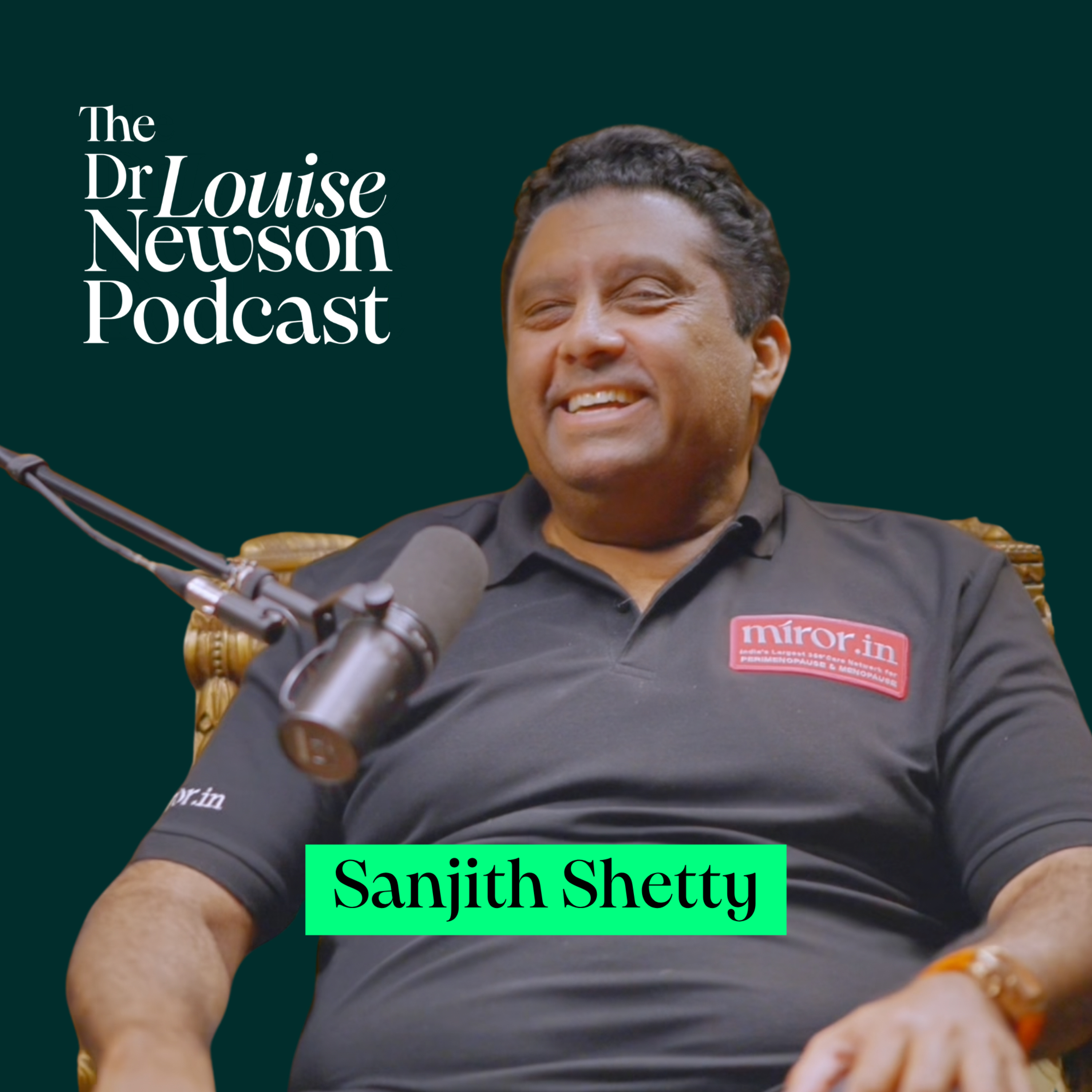
India’s perimenopause and menopause “hormone health” awareness and access, arguing that evidence-based hormone replacement therapy (HRT) is being wrongly withheld due to fear and misinformation, and that this affects women’s work, wellbeing, and quality of life.
Sanjith Shetty, a male “femtech” founder/diversity-and-inclusion advocate and male ally focused on menopause/perimenopause education; he studied ~440 femtech companies and built a community via Mirror (with an HRT center of excellence, doctor network, supplements/app, and corporate outreach). Dr. Louise (host/doctor, referenced as “Dr Louise/Dr Newson” in the conversation), an evidence-based hormone clinician/educator who trains practitioners.
HRT can help women in their 20s/30s (PCOS/PCOD/PMS) and women past 60 (bone density, energy, cognition). Many doctors reflexively equate HRT with breast cancer and deny it; women sometimes stop estrogen and feel worse. Women who take hormones are more likely to stay employed and take fewer sick days.
a gynac allegedly said “over my dead body” to HRT; a woman improved on estrogen (sleep, palpitations) then was told to stop and worsened; UK workplace surveys (78% symptomatic affecting work; 37% wanting to quit due to affordability); Maharashtra perimenopause/menopause clinics mentioned; women’s community subgroup demanding HRT-focused content.
Written by AI. May contain mistakes.
Discussion on the lack of conversations around hormone treatments and menopause.
“And then when I heard of this term called femtech, which is where technology can be scaled to help women, I said, wow.”
Revelations about hormone treatments for younger and older women.
Discussion on the misconceptions and fears surrounding hormone replacement therapy.
“some of my friends from very affluent circles whose uh whose gynex whose doctors are very right up there in the learning curve.”
Exploration of cultural perceptions and resistance to hormone therapy in India.
“You want the well-being of your patient.”
Impact of hormonal health on women's participation in the workforce.
“And that's what you've been telling me for the past two days.”
Discussion on the lack of research on women's hormonal health in India.
“There are widows out there who don't have husbands.”
Challenges women face in accessing hormone treatments and support in India.
Learn how PMDD affects women's career choices and opportunities.
“So they're choosing roles that, you know, are inferior to what they could be doing.”
Discover how grassroots movements and community support can raise awareness.
“Because you know, it's such a massive country.”
Explore the role of celebrities in normalizing discussions about hormonal health.
“I see so many celebrities just talking about hormonal health now and how, you know, what happened to them and how they put on weight, how they fought back and they got their muscle mass and stuff.”
Understand the importance of trust and open discussions about health in women's communities.
“And if they're feeling good, they're also saying that.”
Examine the availability and future of HRT products in India.
“I also learned from you about this very interesting world of compounded HRT, which is bio and body identical and not synthetic.”
Learn how education and community can support women's health initiatives.
“And I'm very grateful for the work that you're doing and I met your team today.”
Discover how the right medical practices can transform women's health.
“At least we are impacting so many women by doing something right.”
Explore key goals for improving women's hormonal health in the next five years.
“It's not so wonderful witnessing the suffering, but it's great to think things are changing.”

Get the gist, explore an idea or ask about something said.
 Claude
On The Dr Louise Newson Podcast, what are the key points of this episode?
Searching your listeningAutomatic transcript. May contain errors.
0:02So, this is a bit unusual because normally I'm in my podcast studio and you have made your home a studio, Sanjith. So, just for the listeners, we are in India and a very unexpected trip, but I've been working out, and sad actually, how many women are missing out on hormone treatments. so just for context before we get into that I met you or you met me rather nearly two years ago and you've been stalking me for a little while in a good way in a good way but I've been rather busy and I've been going yeah yeah okay we'll talk at some stage and now I've spent a lot of time with you and I realize that you are genuine and you want to help women so thank you tell me about who you are what are you doing with a t-shirt talking about perimenopause and menopause on so firstly you know this this this logo on my t-shirt is as big as a hoarding right so it's cheaper for me to wear it like it pays for my for my airfares um so why um firstly i've been a big diversity and inclusion champion uh growing up um i admittedly i had more women friends than male, so I could relate to them better.
1:23And then when I heard of this term called femtech, which is where technology can be scaled to help women, I said, wow. And then when I went into that femtech space, studied some 440 companies, 439 to be exact, and saw the wonderful work happening on menstrual health, around maternal health, everything was mother and child, but nothing for this phase of a woman's life, which is menopause, a phase that every woman will go through for half of her life, 50 to 84 symptoms, yet zero conversation. And some of these symptoms are fatal. And I said, you know, something has to be done. I think this space needs a good male ally with good intent.
2:08And that's what I am. Great. So you've learned quite a lot about hormones. thanks to you yeah but i think over the last couple of days since i first you know met you in person everything i say you seem to be going oh my gosh i'm not sure oh wow i didn't know that i didn't know this so what are the things that you've really learned that you didn't know before clearly that we can actually give hormones to women in their 20s and 30s to help them with pcos pcod pms and also that we can give hormones to older women past 60 because it will help them in bone density it'll help them with energy it'll help them with with cognitive powers it'll just help their overall quality of life so that hormones can actually be given for these two age bands which i did not know which is amazing because you've spent you know a long time researching thinking about hormones you learn to not yeah i'm embarrassed but thank you no well it's interesting because a lot of things that i do i i take for granted and i think that everybody knows and you know many years ago i was writing some information about breast cancer treatments it was a long long time ago way before the internet um it was in 1992 and i realized then that people didn't know what cancer was they all told me it was death they didn't understand what what it was and I realize that now about hormones people don't know what they are and when you talk about HRT they just think it's breast cancer and end of conversation so for me it's very obvious that hormones are just chemical messengers that we produce in our body and hormone treatments just replace those hormones and of course why would they be associated with risk so sometimes it's the simple things that are forgotten and when they're forgotten and people fill the void and that's what's happened a lot and i can see that you know in india people as in women men but also health care professionals are so scared of hrt it's almost just been completely forgotten but there's a lot of suffering over here isn't there you know i i'm talking to some of my friends from very affluent circles whose uh whose gynex whose doctors are very right up there in the learning curve.
4:39And one of my friends, when she went and asked her Gainac, can I take HRT? The answer she got was, over my dead body. It's shocking, isn't it? It's shocking. Now, my friend who has two fantastic babies thanks to this Gainac, hears this from a person she trusts implicitly. There's no way she's going to have it. no i think that has to change dr louise that has to change you've got to work i mean we've got the best doctors in the world you know i'm so proud of our doctors from india i mean wherever i go in the world you'll find some indian doctor in the hospital um but this has to change yeah and thanks to you because you do uh you know you do a lot of education programs i'm 37 000 practitioners have been trained uh through newson right so thank you thank you but there's a lot more that need to be trained and in fact we did an event together a couple of days ago and one lady said she'd started some estrogen and was feeling so much better palpitations had improved her sleep had improved and then her gynecologist said you need to stop that and she of course she had and she was feeling worse wasn't she and she said but i don't want to disagree with my gynecologist and so that's really sad because we're now getting to a stage certainly in the uk it's happened and maybe it will happen here in India that women know more than their gynecologists and doctors because it's quite basic simple information I think it's good I think it's really good but a lot of doctors don't they don't like challenge and also a lot of doctors don't like to admit that they've got things wrong so a lot of doctors are quite arrogant and it's the way we've been taught and trained that we don't question we just do as our senior doctors have told us our education has taught us so then to suddenly completely change and say no all the things I've said about hormone treatments are wrong people don't like to do that so they either ignore it or like these two gynecologists we're talking about just push back and say no but then for that doctor their life continues the patient leaves the consulting room and they carry on but for that patient the woman we met and your friend their lives are going to be very different without hormones and it's wrong yes it is um but i think things are changing uh dr louise i interact with a lot of gynacs and a lot of doctors today who are so passionately helping in hormonal health and from an absolute no the answer today is it can be given for the for those women who are medically qualified to take that so at least it's not a no we have we have we have it's changing we've we've walked quite a few steps forward and doctors here in india like you doctors in the UK or everywhere in the world, your first priority is your patient.
7:47You want the well-being of your patient. And if your patient, if you see that this HRT or hormonal therapy or hormonal treatment is really helping that woman, I am sure you would not desist from giving that. You will give it. So eventually it's the result, right? And that's what you've been telling me for the past two days. It's like, forget the theory behind it. look at what is actually doing to women yeah but it's quite i mean you're from a business background and are you quite shocked with what you're hearing that there's an evidence-based treatment that all guidelines say is first-line treatment for the majority of women yet it's being denied for the majority of women if this was a business sort of you were doing something in a big organization and you were told that you had to do this health and safety policy or you had to do something and everyone ignored it would you get away with it in the same no way things have to change things are changing uh in fact you know at mirror we we have a new corporate outreach where we're going to reach out to a lot of corporates because we have communities we have doctors we have supplements we have an app we have the hrt center of excellence we're doing very interesting programs we're reaching out to corporates uh with the intent that you know please please look into the hormonal health of the the thousands or the every woman that you have in your organization because every woman counts right so yeah and and and corporates are listening that's a good thing well i think they need to because women are leaving the workplace all the time and many years ago i and worked with the police force, West Midlands Police, and we found that 78 % of women were having symptoms affecting their ability to work.
9:41And the commonest symptoms were memory problems, anxiety and fatigue. Nothing about hot flushes. Yet a lot of them were not able to access treatment. So they were retiring early, they were giving up work. I did a survey for some NHS employees and found that 37 % of women wanted to give up work but couldn't afford to so those women are not going to work going yeah this is going to be a good work day they're just sluggishly turning up doing the bare minimum because they've got all these symptoms affecting their ability and I'm sure you know the same in India it's it's interesting looking at some of the jobs you know sort of in in restaurants I've been to or hotels I've been to you know there's a lot more men that are doing jobs that women would be doing in England and some of that is just a cultural difference but some of it i'm sure is because women can't do the same jobs because they're not taking hormones are not feeling as well and i i wonder whether people are leaving their jobs or retiring earlier as well so you know i so what we've forgotten in india is that today there are a lot of women who have to maybe work there are a lot of single There are mothers out there, right?
10:56They have to work. There are widows out there who don't have husbands. And they have to work because they want to give a great life for their children. They want to take care of their aged parents. So they have to work. And today, the ability of the option of not working, I don't think, can be entertained. And today, that's what we say in our communities. every woman should be financially independent, she should be financially secure, she should be financially knowledgeable. Not to say that their husbands are not taking care of them or their partners are not taking care of them but I think she should be herself just financially smart.
11:42We hear over this data and in fact what we don't have in India is the research and the data that says so many women have actually dropped up and that's what we're trying to fix at mirror also and you know whoever's listening if they know some good researchers who want to do research on what's happening in the workplace uh with women going through perimenopause or menopause if they're dropping off you want to do research please reach out to us at mirror and we will uh fund that well it'll be really interesting to see how it varies in india compared to uk because we've just done a big survey of women in the workplace and we had a lot of response and but what was really interesting we found that women who were taking hormone treatments said they're more likely to work and continue their work they're less likely to go off sick which I think is the first time anybody's done research in that way and it's really important that we don't just think about these poor women you know a lot in in England a lot of people are talking about adjustments for work so having fans on the desk or changing the temperature of the air conditioning now i told you earlier when i had symptoms as a doctor i couldn't remember anything like my memory had gone and so you could give me all the fans you like it's not going to help you know if i had a broken leg i don't just want a stool to sit on i want my leg to be fixed if your hormones aren't there you can do all the support you like but the most important thing is having medical treatments and so for corporates and organizations the more they think about how do these women access treatment because then they're not spending money on getting new people to come and replace those people that have left their work and you know having a forward-thinking company that are looking at hormone health is really important i was hearing statistics where they say because women are dropping out of the workplace in the uk millions of so many millions of pounds have been spent on getting them you know on on training them all these decades and suddenly they're not there when they're most needed so it's it's it's not good for the economy and it's totally awful for the economy and then you know if you look at hormone health throughout the ages as well there's a lot of younger people with pmdd who you know if you could say well it's just a few days a month they're struggling with symptoms but then if it's three days a month you've got 12 months in a year that's 36 days a year that they really can't perform as well and a lot of women just tell me that they have a you know they stay at home they have more time off sick then their period comes and they feel well and they carry on but they're avoiding going for promotion, they're avoiding doing more training because they know they can't do it.
14:35So they're choosing roles that, you know, are inferior to what they could be doing. They're not living up to their true potential. No. It's sad and this has to change. And we're changing it. It's a changing, thanks to you. Yeah, well, there's a lot. But how do you feel like we can get through to women in India? Because you know, it's such a massive country. like it's overwhelming how big it is your population is huge how do women get most of their information do you think so you know coming from india um i'm in the crowd right so i don't think we are that big right the numbers don't scare me right and doesn't scare my team uh in fact we love it we love it there are so many millions of women that we can help right because we can get scale in india so how so that's why we started our community it was all about um it was all about awareness right and we used uh the you know people started we didn't mass advertise right we just told women if you like what we're doing please tell two other women or tell one other person and that's what happened we we grew with uh with three you know in the first month and we are over 2 ,000 women, right?
15:49We have thousands talking every day, which is nothing. Of course, my social media has close to a lakh followers, but on my online communities, it's still not there. So we are also trying to see how to improve the spread of our message. Do we need influencers? Do we need people who women look up to? Could be sportswomen, could be politicians, could be movie stars. You know, someone who, musicians. Whoever, whoever people look up to, I think we need everyone's help. Because India still, you know, we look up to our icons, right? And if the icon says, this is very good, and it's happening already.
16:40I see so many celebrities just talking about hormonal health now and how, you know, what happened to them and how they put on weight, how they fought back and they got their muscle mass and stuff. So I know so many people who are so willing to do that. And I think it has to be a, there's not one magic recipe here. It has to be a combination of so many things. But do you think people are accepting the conversations in India in ways that they perhaps didn't before? Very much so. In my own community, because women asked for it, we have a subgroup on HRT, which is like coming from women. So women wanted that.
17:22Women wanted that. They said, listen, we want HRT-focused information. we want articles around the world which are talking about you know why hrt is safe why it's it's good for us and how we can improve so women are asking for it and and it should be and it's a very healthy sign and and another beautiful thing that's happening in our communities are women are just talking about sometimes i would say embarrassing things right that's good yeah they're just openly just talking about it and i think that says something about their courage yeah that says something about their strength that says something about them trusting us also so i i you know i take it as a compliment you have a long way to go but but dr newson you know the intent is to just keep on plowing on and getting more and more women and i i feel you know because you're so you're blessed with such good testimonials right because you you were just telling me this afternoon how you had this woman who was just you know saying um you know she feels like gold is running in her uh in her veins right like she was feeling so good you know uh thanks to hormones and we need such testimonials and it'll happen it'll happen you know we've already started quite a few women have are already in hrt with our program and uh you know with with good collaborations um you know getting our learning curve up hopefully we will work with you um and if you know you know how to do it yeah because somehow i feel in india i might be wrong this is just a observation that women are closer communities in england we're not as close as we used to be our families aren't as close we're more fragmented often we don't even live near our families so i feel that there's bigger opportunity for women to share and educate each other in India I love it that's what that's happening yeah you know it's just not among just in India yeah but you must understand Indians are very close to their family overseas and we have such huge populations of Indian women and women from South Asia in Dubai in Hong Kong in Singapore in in the US in Canada in England you know so So they're all sharing with their family members.
19:43And if they're feeling good, they're also saying that. If they're not feeling good, they're sharing that. Which is really important because I think that is one of the ways it's going to change. And you providing a platform to have a community over here is vitally important because there's been a lot of confusion because people have been given often misinformation, which makes it really difficult. and certainly in the UK you know I don't work with any pharmaceutical companies at all my work's very impartial but there are a lot of people who are trying to push certain drugs or treatments or or they don't have the right knowledge you know I have a wealth of clinical experience that a lot of people don't have so you sometimes hear doctors talking and they're they don't understand how really how to treat women properly um do you think that's the same in india so you know we are still at our infancy right we are still uh we've just started um so we have actually researched what what is available here um we you know we have quite a lot of estrogen progesterone and some testosterone available here i think we could do much better i appeal to the government of india to really open it up, to get more of these products in.
21:05I also learned from you about this very interesting world of compounded HRT, which is bio and body identical and not synthetic. Clearly understood the difference. And we should try and fix that, because I think, first of all, HRT is so inexpensive. You know, when I heard those numbers, this is something for all Indians, you know. It's something, and I'm telling you, I feel our government are very, very pro-women, you know. Women come and vote in numbers and the government realizes that and they feel that they should. I mean, you see all the manifestos of parties that have won in the recent past.
21:53huge, huge benefits for women. And I'm telling you, it's not far, the day is not far when various political parties start helping women in menopause and perimenopause. In fact, I know of a couple of states, I know Maharashtra has started perimenopause menopause clinics. And if one state starts it, trust me, the others will also follow, not because they want to copy because they also want to do what is right for the women in their state yeah which is so important you know if i had a governmental position it's an easy win isn't it to help 51 of the population because if you're helping women you're helping and every politician i mean we're just assuming they're men but there are many women politicians also but the male politicians all have very dominant women in their homes right so you know so they are like yeah winning major brownie points in their house so it's going to happen dr louise it's going to happen it's just that that's why i tell my team just be focused yeah you know don't let's not show bravado let's survive and whoever survives i think will thrive well it's a big opportunity to make india the world healthier and and you know women have been suffering for too long and it's we can't keep waiting for change because it's really not fair there's no other medical guideline that is ignored like one about menopause and perimenopause if you know i wouldn't allow my patients to have an underactive thyroid gland and not give them thyroxine and just watch them put on weight and become lethargic and somehow it's it's it's allowed and it feels wrong unacceptable so the more that we have voices in other corners of the world, the better.
23:48And I'm very grateful for the work that you're doing and I met your team today. You know, it's brilliant. Dr. Neeson, you must understand it's people like you who inspire us. You know, because you show us what is medically right. You show us what is scientifically backed. And you know, we get so much more confidence when we know what we're doing is medically right. Because this is not about money. None of us are making money here. It's all about doing the right thing. At least we are impacting so many women by doing something right. So I'm just playing my part. Thank you so much. No. Big, big debt to you.
24:31Well, no, it's great. It's wonderful to be here. It's not so wonderful witnessing the suffering, but it's great to think things are changing. changing and that's you know and i'm i always you know we indians always are very hopeful because you know that's how we are that's why we do so well wherever we go because we don't let circumstances hold us down we're always we always are positive in our outlook and we say there's so much more to be done yeah and we are spiritual right we believe like you know we are so whatever we do for the outside world it comes back to help us absolutely you know and and and And we believe we have been put here for a reason.
25:10I'm here for a reason. You're here for a reason. And we're talking today for a reason. Absolutely. Whatever happens tomorrow happens for a reason. Yeah. So before I end, I always ask for three take-home tips. So three things that you would like to happen in the next, I was going to say 10, but I'm going to say next five years to improve the hormone health of women in India. first is we have a very good collab with uh newson the newson empire second is um is women really don't have to be told about joining communities they just join in millions because it's such a great network for them it's it's free they they they just they have companionship they offload what's there in their minds they get great guidance medically backed guidance they seek medical help and finally you know the medical community the doctors and the women and the government and us we all work together to solve a common problem I believe we need allies from various quarters, I'm just one I'm a male ally.
26:29We need allies among doctors, which there are so many, thanks to you. We need allies among the government. We need allies among policymakers. We need allies among how to get HRT inexpensive. We need those manufacturers, right? And it'll happen. It will happen. I'm so hopeful of it. Well, I love your positivity. Let's see what happens. Thank you so much. We live with hope, Dr. Lee. Yes, very good. We live with hope. And thank you for letting me host my podcast here. Oh, please. It's my pleasure. It's my pleasure. Thank you.
In India, one woman asked her gynaecologist about HRT and was told: "over my dead body." Dr Louise Newson travels to India to meet Sanjith Shetty, founder of the menopause community Miror and one of the country's most vocal male allies for women's hormone health. Sanjith built Miror after studying hundreds of femtech companies and finding that menopause, a phase every woman goes through, had almost no support compared to maternal and menstrual health. His community has since grown to thousands of Indian women openly discussing HRT, and he is now pushing corporates and government to take hormone health seriously.
Louise and Sanjith discuss why so many doctors in Indiaremain frightened of prescribing HRT, what it costs women's careers and confidence and the early signs that attitudes among doctors, employers and government are starting to shift.
They close with three things Sanjith wants to see happen in the next five years to improve hormone health for women across India.
Let’s connect
👉 To access hormoneinformation in India, download the Balance app: https://bit.ly/4yZty5A
👉 For global clinicianeducation, explore Newson Education: https://bit.ly/4g5V0ps
👉 More from Dr LouiseNewson: https://linkin.bio/drlouisenewson