Ask ChatGPT

 The Dr Louise Newson Podcast
1 Sep 2026 · 30m · 13 chapters
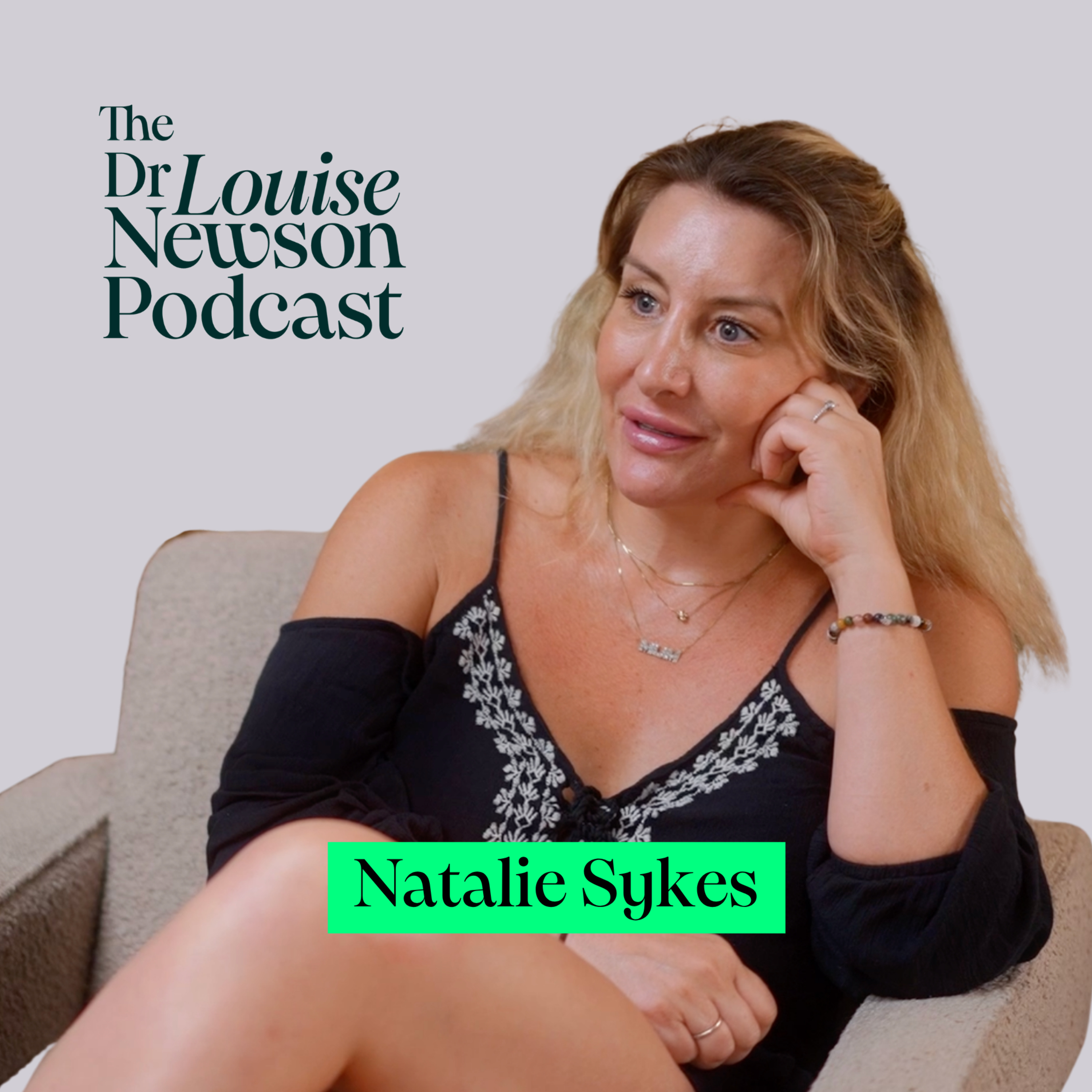
PMDD (premenstrual dysphoric disorder) and how untreated hormonal changes can drive severe mental health symptoms, especially in people with ADHD/autism; links to addiction as self-medication and to misdiagnosis (e.g., bipolar).
Natalie (43) has autism and ADHD; she was undiagnosed for years (figured out PMDD only a few years ago after her second child). She reports addiction recovery history and experiences with severe depression, suicidal thoughts, and postnatal mental health crises.
PMDD is severe PMS tied to hormonal shifts (not “all in your head”); symptoms can mimic bipolar; progesterone is portrayed as protective for brain/cortisol regulation; lack of hormone access contributes to substance use.
hospital after first childbirth with near psychosis; feeling “catatonic” depression before periods; relief after menstruation; heroin/crack use reportedly shutting down symptoms; mentions Dr. Katrina Dalton’s progesterone work and later psychiatric framing of PMDD.
Natalie (main guest); host Louise (doctor/clinic founder, discusses Newsome Clinic and progesterone treatment).
Written by AI. May contain mistakes.
Discussion on PMDD, its confusion among doctors, and personal experiences with the disorder.
“So I've been able to massively change my lifestyle according to the correct diagnosis, if that makes sense.”
Exploration of symptoms of PMDD and common misunderstandings surrounding it.
A deep dive into the mental health effects of PMDD, including depression and diagnosis issues.
“And does your mood, did it change much throughout your cycle?”
Discussion of hormonal changes throughout a woman's life and their relation to PMDD experiences.
“I've always described having autism alone as having feeling like I've got no skin and all my nerves are exposed.”
A look at historical treatments for PMDD and how medical understanding has evolved.
“And what really saddens me is obviously the suffering that's often needless to women.”
Discussion on the need for awareness and effective treatments for PMDD.
“have changed to make it a psychiatric condition.”
Learn about the speaker's struggles with PMDD, ADHD, and addiction, and the impact on their life.
“And the lengths I've gone to, to treat the conditions, to self-medicate them myself, because it's been so unbearable to live in my own body.”
Explore how hormonal changes can lead to addiction and why this issue is often overlooked.
“We should be able to, you know, and I always say to my patients, I don't know how much is related to your hormones, but let me balance your hormones and then see how you are.”
Understand how hormones influence pain perception and how this relates to addiction.
“And I'm not saying 12 step meetings don't work for people, but they can profoundly take somebody off track while they're looking for the solution in there.”
Discussion on the importance of creating supportive environments for women dealing with hormonal issues.
“Thankfully, I had some really good tutors is not to judge anyone at all.”
Tips on how to empower women to advocate for their health and well-being.
“Yeah, and share knowledge, which is power after all.”
Learn about personal experiences with PMDD, the importance of HRT, and lifestyle changes.
Discover insights on neurodiversity and a new book focused on empathy and ADHD.

Get the gist, explore an idea or ask about something said.
 Claude
On The Dr Louise Newson Podcast, what are the key points of this episode?
Searching your listeningAutomatic transcript. May contain errors.
0:00Today's podcast is all about PMDD. Not just what it is, but what happens when it's not treated for 20 years. The suffering, both to mental and physical health, are really explained very openly here, including problems with drug addiction, other addictions and unstable personalities too. So Natalie's really open in this podcast, but I think it's going to resonate with so many of you. please listen and share with as many people as possible to help them also understand about hormones and PMDD. So Natalie thank you so much for coming we're going to talk about something that still causes a lot of confusion for many people and you are very passionate I'm very passionate about knowledge for people and there's been so much confusion about four letters PMDD premenstrual dysphoric disorder people still don't really know what it is you ask different doctors some doctors still haven't heard of it women don't know so many women have been gaslit and told it's all in their heads so I just want to unpick it a bit and just talk a bit about your experience and let's see where the conversation goes yeah so well I'm 43 now so I only actually figured out I had PMDD a couple of years ago right um after my second daughter after my second child was born my daughter I went for a significantly long period without being diagnosed which had huge consequences I think on my life was uh was the not knowing what was wrong with me through all that time is what was the worst part of it was but I found since I've been diagnosed with it knowledge is power.
1:46Yeah. So I've been able to massively change my lifestyle according to the correct diagnosis, if that makes sense. Absolutely. Because premenstrual dysphoric disorder, if you unpick the words, it's easy, but it's quite hard. It's a bit of a mouthful. But premenstrual means before a period. Yeah. Dysphoric means a change in mood. Disorder, well, I hate that word because it makes you sound like you're diseased or something. yeah i think the simple way of thinking about it is it's severe pms and a lot of people have pms premenstrual syndrome but the problem is pms is normalized like 95 of women have premenstrual syndrome and most of us are just told well that's just your hormones just put up with it yeah so then when it's more severe again you think well it's just my hormones yeah but it so the symptoms if you look at the list of symptoms we put on balance app they're exactly the same whether they're pms pmdd perimenopause menopause or postnatal depression because they're due to hormonal changes it's just the severity and sometimes the duration of those symptoms is worse yeah absolutely and i think that for me um the worst thing about pmdd is it's so widely it's still widely misunderstood what it actually is and what a huge disability it can be on a woman's life through not just at one stage of that woman's life but the whole life cycle so like puberty pregnancy childbirth the period after childbirth then perimenopause so it's ongoing throughout the lifespan yeah because it's all at times when there's hormonal changes and we don't know why there's not been enough research done but some women are more sensitive than others to hormonal changes so it's not the absolute levels it's that change of levels that occur and predominantly in the brain because it's the mental health symptoms that really affect people so what symptoms were you getting for me mainly it was always my mental health like physical symptoms have always been there but I've never really struggled with like pain or anything like that it's more been the mental side of it um I when when I got to 14 it was literally like I was just given a new brain and body overnight that I had to deal with and I've got autism and ADHD as well I'm aware now that the link between hormones autism and ADHD and PMDD being a significant increase you could have PMDD if you've got neurodivergence um so I literally felt like I was catapulted into a new dimension and the depression was excruciating I mean almost at times catatonic I've had it and and it's just depression has been a symptom I've just kind of learned to live with all my life antidepressants have helped I'd say but they just take the edge off it's it's a depression that I can't quite describe um that I've learned unfortunately to live with which has been a bit like having a broken leg that nobody can see that I've just sort of learnt to function with.
5:01And does your mood, did it change much throughout your cycle? Yes. So I noticed, especially in my teens, 20s, early 30s, I would, I never understood why at the time, but I would feel absolutely dreadful before a period. Nothing like what I've got now because I'm perimenopausal but I would feel so bad before a period and I mean my whole week would be it would be like a no-go like I couldn't do anything I couldn't function all my usual coping mechanisms weren't working and at the time I would pathologize it I would think you know oh god I had I had a bipolar diagnosis at the time so I always pathologized it as bipolar so I was always backwards and forwards to the psychiatrist saying you know what's wrong with me I'm having this breakdown and they'd get crisis teams involved or they'd send me off to a crisis house for a few days but it never got to the root cause of what it was so I was just given more medication or more like oh this is your bipolar did anyone talk to you ever about hormones never never ever ever knew anything I just thought hormones back then I massively underestimated them I just thought they were like oh supplements blah yeah periods I also minimized it because I didn't know anything about it so I just thought all my symptoms were down to being bipolar and also I was in addiction recovery as well so it was kind of like everything was concentrated on the addiction recovery in the 12 step looking for my character defects it's like a spiritual program so I was constantly scrutinizing my character um the way I thought the way I felt every day was spent scrutinizing myself looking for character flaws and you know I just felt like there was something profoundly spiritually wrong with me because the thing is with PMDD and autism and ADHD together they they can really make you feel profoundly like an alien in your own skin it's like being allergic to your own body.
7:05I've always described having autism alone as having feeling like I've got no skin and all my nerves are exposed. So I think when PMDD and hormones come into that, the severe dysregulation from it that it can cause can look like bipolar. Of course, you can see where people are diagnosed or misdiagnosed really as bipolar. But when you when you were having your periods, when you had your period, did you feel better then? yeah that's what I was going to say so that's how I knew like I would feel this profound relief and I actually people used to say oh I hate having menstrual cycles and I used to think I like that relief that I I never put it down to PMDD at the time but I used to enjoy the relief that I got and getting back to normal which is classic for people with PMS and PMDD and what happened after you gave birth how was your mental health then terrible as well after I had my first born I spent a week in hospital and they nearly put me in a mother and baby unit because I was displaying actually psychotic symptoms from at the time the hormonal drop yeah which I didn't know about especially on the third day when your breast milk comes in so no one talked to you then about hormones no a little bit like oh your breast milk's gonna come in so you might feel a bit tearful but but the severe like mental health reaction was actually very frightening for me um you know they kept me in like I said they were giving me tramadol and things that I didn't want to take because I was in an addiction recovery at the time and although I felt this profound love for my son and was so grateful he was here those memories will always be sort of tormented a little bit with the profound mental health response I had to the hormones it was it was significant and it was frightening and I I felt um suicidal if I'm honest I didn't want to be here at all it was so bad but what's really sad and that thank you for sharing it but it's sad because when you look at some of the figures for PMDD I read one study recently that 84 % of women have considered ending their lives yeah and i and i get that i don't think that's people just crying for help and two-thirds of women at least self-harm as well yeah and the mind becomes very tortured without hormones because hormones are integral to the way we think the way we behave all our everything you know our brain every single cell responds to hormones especially progesterone and And what really saddens me is obviously the suffering that's often needless to women.
9:44But in 1948, you might know the name, Dr. Katrina Dalton, who was an incredible doctor. She actually initially trained as a croppidist. Her family had no money. Her father died when she was young. And then she then went into medical school. and then when she was a GP she realised that quite a few of her female patients were coming back once a month with symptoms and she thought what's going on so in 1952 she wrote an article in the British Medical Journal with a male doctor and she called it pre-menstrual syndrome and she wrote about the hormonal imbalance she wrote about the drop especially of progesterone and then she wrote a lot about PMDD.
10:29So in the 50s, 60s, 70s, she helped so many women with PMDD by giving them progesterone in high doses of natural progesterone. But one of the problems was she was up against the medical authorities and the establishment because they were trying to push out contraception at exactly the same time. And contraception contains synthetic chemicals that aren't hormones, but they're called hormone contraception. So no one wanted to believe there was a difference between natural progesterone and synthetic progesterone. And so she could only work with the patients that she saw, the women that she educated.
11:07But she also treated a lot of people with postnatal depression, postnatal psychosis with progesterone as well. And she wrote quite a few books and articles and papers. And it's just phenomenal when you read her book. And And it's like, why wasn't then in the 50s and 60s, people go, wow, look at her. She's making all these people better. Yeah. Because they had their own agenda and they still do now. And then in the 1970s, the drug company who made Prozac, I'm sure you've heard of Prozac, the antidepressant, the patent ran out. And when a patent runs out of a drug for a drug company, they don't make as much money.
11:46They have to make it when they've got the, they've just bought it to market. so then it meant any company could make fluoxetine which is the other name for prozac so then they made a pink and purple version of prozac called seraphin and it was marketed just for pmdd so what they did the drug companies they worked with psychiatrists and the psychiatrists decided to make it a psychiatric condition and ignored katrina dalton's work ignored basic physiology and ignored the important role of this hormonal drop and so since then all the guidelines have changed to make it a psychiatric condition. And somehow postnatal depression has got scooped up into that as well, maybe because it's got depression in the word.
12:26Everyone thinks it's a psychiatric condition. And of course, it affects mental health. But no one's thinking about the underlying cause. And it feels really incongruous and sad that we've had this information and data for decades. And it's not like it's an uncommon condition. You know, 85 ,000 women a year have postnatal depression and the majority if not all of them are given antidepressants not basic hormones and you've probably always had slightly low progesterone enough to give you periods in a pregnancy but even when you're pregnant what's interesting is a lot of people with pmdd clearly not all feel great when they're pregnant if they can get enough progesterone in their body but you probably never quite had enough but you still had enough to cause that drop when your baby was born yeah triggering that as well and you know it's it's just frustrating that the solution is so easy yet the access to that solution is so hard and like you say when you're in it no one sits down and says let's think about your cycle how does it work because me just asking you those simple questions how did you feel when you had your period how did you feel before your periods it's sort of like most toddlers not maybe toddlers but children could understand if something's happening to your hormones yeah but I don't understand why doctors don't understand talk about it it makes me furious to hear that because my I started getting better actually when I gave birth to my second child my daughter a couple of years ago and that significant hormone crash happened and instead this time of going to the doctors and saying help me I rang your clinic and said can you help me because I did not want to be gaslit again into taking antidepressants and antipsychotics I wanted to treat the root cause so that what makes me annoyed about it is because in order to come to you in order to get there I didn't get that information of doctors or psychiatrists who I'd been under the care of for nearly two decades I got it from fellow women fellow friends fellow women who I saw like going through menopause and the sad reality of it is had I been diagnosed with this in my early teens I could have been saved from significant traumatic events that have happened to me simply for the fact that That PMDD, autism and ADHD combined have put me in such vulnerable situations in my life.
15:07And the lengths I've gone to, to treat the conditions, to self-medicate them myself, because it's been so unbearable to live in my own body. It's been like being allergic to my own body and my mind. It's taken me to heroin and crack addiction, homelessness, domestic violence, narcissistic friendships and relationships, seeking belonging in communities and places I should never have been, cults, spiritual cults, having my autonomy and my intuition stripped, social services being involved when I've had breakdowns, being systemically gaslit through court systems and had my mental health diagnoses weaponized against me.
15:47I mean it's just been horrific over medicated on stuff I should never have been on that I feel has permanently damaged my nervous system I've still got a long way to go in healing and I think that if I can save one person from going for it and I'm not saying that I that being diagnosed takes it all away I've been diagnosed now I've got my ADHD autism but at least if you catch it early You're not looking at a lifetime then of PTSD to solve at the end of it. And, you know, feeling like you're trying to find your identity at the age of 43. Before we continue, I'd like to tell you about Newsome Clinic, the sponsor of this podcast.
16:32I founded Newsome Clinic to improve access to expert evidence-based hormone health for women. Our specialist clinicians support women with perimenopause, menopause, PMS, PMDD, postnatal depression, endometriosis, PCOS or PMOS and other hormone related condition. My clinic makes this podcast possible, allowing us to continue sharing free education and information to help women better understand their hormones and health. to learn more about newson clinic or book an appointment visit newsonhealth.co.uk this link is also in the show notes i'm so grateful that you've shared because it will be a shock to some people actually not a shock to others and we did an addiction survey a few years ago because i see so many women who are addicted to not just alcohol but as you say crack cocaine heroin anything they can get their hold of because they want to escape their body and mind yeah um when they have hormonal changes and somebody um in one of the free text comments wrote i just need to escape this cage of doom and and i completely get it but it's just not taken seriously and um the number of people that become addicted because they can't access safe, effective, bioidentical hormones from their doctors is harrowing when it's 2026.
18:01Like we're not in the Victorian times. We should be able to, you know, and I always say to my patients, I don't know how much is related to your hormones, but let me balance your hormones and then see how you are. But progesterone is a very healing hormone for the brain. So a lot of people that have had trauma in the past will be sort of on a high alert, have a lot of cortisol in their brain And, you know, anyone knows in that fight and flight response, you can't think properly. You're not going to sit down calmly and read a book. You're constantly. So you're draining all this cortisol. But what happens when you have a lot of cortisol is you don't have much progesterone.
18:38Progesterone needs to make cortisol and it can't. And so then progesterone also makes testosterone and estradiol and it can't do that either. So you're like having a bit of a chemical menopause. Your hormones are dropping. Your cortisol is going right up and your progesterone is down as well. and this is what Katrina Dawson writes a lot about so in our clinic often we give people quite high doses often of cyclogest which is a pessary of progesterone to really get a lot in the blood stream sometimes just short term sometimes it can be longer but it really helps lower that cortisol but it also repairs the brain cells and in my book The Power of Hormones I've written a lot about how the hormones work in the brain and they repair the brain you know they can help they even help produce something called a nerve-derived growth factor.
19:23It's a bit like fertilizer for our brain cells. It helps that are like fairy dust in the brain and it helps those cells to regenerate. But also there's something called dendritic pruning. You can imagine if you've got an out-of-control sort of bush in your garden with all the twigs and everything like just become really knotted and doesn't grow very properly and then like a rose for example and then you do a hard prune and you cut it back and it looks like it's never going to grow again but then suddenly it grows in a more simple way and that's what the hormones help to do so when you've had any trauma you want to get rid of it almost and then grow again but you can't if you haven't got the right hormones so that trauma is always going to be there but how you think about it how you can compartmentalize it can make a big difference so that when people have enough hormones especially progesterone it's like growing a new rosebush really in an ordered way and that can help with ADHD it can help with autism as well but so many doctors don't know it and we've learned a lot because over the years we've treated more and more people and gone back to Katrina Daughter's work and go well actually it makes sense you know if something makes sense in medicine then it gives you more confidence to try it and when you see the response with patients it makes a big difference I still don't understand, though, why it's not like the amount of women I've seen, especially women lost in the mental health systems and the addiction treatment.
20:54They're in and out of rehab and 12 step meetings like a revolving door. And I'm not saying 12 step meetings don't work for people, but they can profoundly take somebody off track while they're looking for the solution in there. when the actual problem is something like as simple as hormones. Yes. That you could, you know. Yeah, absolutely. And I think, you know, I've worked in some really deprived areas and I remember when I was training as a GP, my trainer, Dr. John Saunders, I kept going to him and getting really sad with the stories that I heard of domestic violence and abuse and everything.
21:29And he said, Louise, your job is not to change those people's lives because often they can't, But one of your roles is to help them cope with their circumstances and think differently and help them with any, you know, any modifiable sort of illness that they might have. And it was a really important tool because we can't all change our circumstances, but we can change what we do about them. And that's what's really sad is that no one's joining the dots, you know, and vulnerable women become more vulnerable when they don't have their hormones. yeah and you know in the last chapter of my book I've written about the experiences that I had when I was visiting some prisons and these women are the most vulnerable women and every single one of those women I know that if they'd had the right dose and type of hormones quite a lot of their symptoms not all of them would have improved yeah and it would have given them the strength to get out of quite difficult situations yeah a hundred percent and I also wonder like how many women out there on the streets are actually heroin addicts because of this condition because one thing heroin did for me at that time for the few years I used it was it shut down my nervous system it shut down all pain that's what opium is it's a pain pain shuts down emotional pain and I can tell you for the few years I used that I had no PMDD symptoms at all so it's astonishing to me that like there's so many that's probably why it's so hard for them to come off because i remember in rehab i had a harder time coming off that than everyone else and even run away twice for the first two months because i was didn't have your hormones didn't have my hormones and again i've written a chapter about pain in my book um because our hormones all three of them progesterone histidine testosterone stimulate the opioid receptor so we all have pain receptors in our body and we do have receptors and they're called opioid and we know opioids you know heroin morphine types of um they're types of opioids but we want our natural ones first yeah and if you can't get your natural ones and it's a bit like um any of these substances like dopamine that reward hormone if we don't get it people will seek it from risk-taking behaviors or addiction but that sort of physical and emotional pain where you want to replace what's naturally it should be there for your body yeah and you can see how it happens and there's been some I've seen a few people on Instagram talking about progesterone how it can be addictive and you're like how can you be addictive to something that's good for you that doesn't make I mean you could say you're addictive to exercise yeah is that a bad thing no of course it's not See, that's one of the first things I learned as a doctor.
24:21Thankfully, I had some really good tutors is not to judge anyone at all. And I never have. But I've worked with a lot of drug addicts over the years. And I've never once thought about hormones and alcoholics. Never once thought about hormones. So I feel sorry for all those people in the past. But now we've got this knowledge, the reactivating Katrina Dalton's work, the work that you're doing, spreading knowledge. Then people can make choices. but when you don't have that knowledge like if you had this knowledge 20 years ago you would have seek like you sort out our clinic to get hormones yeah you could have done that before so that's part of why we're having this really important conversation isn't it 100 % and like I said knowledge is power knowledge of what you've got can help you access the right support it can increase self-esteem um I think what didn't help me was when I was 14 and I was suddenly bombarded with all this mental health like it was literally like I was hysterical with it like if Jack the Ripper had expressed an interest in me then I'd have probably been flattered and gone off with him you know and it's like the profound vulnerabilities that that creates in a girl it's massive it's huge you know and I think like that's what I've I've recently set up a CIC called the PMDD and Neurodivergence Alliance and it's based where I live in Kentish Town and my aim is to go into schools, universities, institutions and give talks to women and girls especially with autism and ADHD about PMDD.
25:56Give them you know I think it should be in PH. Of course it should. You know absolutely. The school curriculums because at least then it's being available before an antidepressant gets offered you know and if if if you can if I can go into schools and give talks about my story and you know come to us or Louise or you know if you need this help I think that would that would be amazing and what I want to do is eventually is set up a hub starting off in Camden which will be a community support hub where women and girls can come of all ages of course like it's like I said it's from puberty all the way to menopause you've got this so like a safe space where women can come get access to affordable holistic things like acupuncture massage essential oils educational talks resources seminars books I want there to be a sensory room there like a galaxy with galaxy lamps somewhere that women can girls can go and feel safe coffee shops sort of environment so So that's what I would like, because I think that would be a safe space for women and girls to, you know, if they are vulnerable, somewhere to go.
27:10Yeah, and share knowledge, which is power after all. So I'm really grateful because you've said a lot, but I know it's going to help other people. So before I end, I always ask for three take home tips. Yeah. So three things that if someone's listening, either they think they've got PMDD or they're listening and one of their friends, relatives, work colleagues might have it. what are the three things that you would say they should do to help them so first of all trust your knowledge your intuition because I can't tell you the amount of doctors I've gone to and they've said no you're too young you're not menopausal no you haven't got PMDD you've got bipolar that's your bipolar talking and it's like when you actually trust yourself and know your body and what you've got and you advocate for yourself and and because and say I've had to say to GPs I know you're a GP but I know my body like even a few weeks ago I had to get my call taken out a copper coil because I thought it was it was killing me the symptoms of the PMDD and the doctor was like it's not the coil and I was like it is I got it taken out I felt better the next day so listen to your intuition if you if the doctors won't listen throw some money at it and go private that's what I did you know and also you know be open to going on HRT I'd say that's that was a big one for me and making lifestyle changes are essential like you can't just expect to take HRT and for that the whole package like I have to go to the it's unfair I have to work double hard as everyone else because I wake up and my natural default setting is depression anxiety no dopamine so you know I have to go to the gym I have to do weight training I force myself to do things like saunas plunge pools um spas acupuncture when possible knowledge is power yeah like educate yourself about what you're suffering with because we're living in a an era now where the doctors are educating themselves as we're educating ourselves and if we all can come together wouldn't that be great it'd be amazing i've just written a book called your ultimate guide to high empathy autism but it's actually adhd as well the highly misunderstood neurotype so there's lots of stuff in here about hormones pregnancy childbirth and it's a very it's meant to be neuroaffirming so it's it's it's your guide so that you if you're empathic and you are neurodivergent it's meant to be very validating great that way well done if anyone wants that it's on book fault and amazon kindle and um yeah maybe i'll send louise the link we'll put a link in the notes yeah yeah Thank you so much.
29:48Thank you for coming. Thank you for having me. So just a quick one. It would be really great if you could follow or subscribe to this podcast. This will really help me reach more people with evidence-based information about hormones and their future health and also means you never miss a future episode. Thank you.
Natalie Sykes spent years using heroin and crack cocaine to self-medicate undiagnosed PMDD, autism and ADHD, and now finally understands why.
Natalie, founder of the PMDD & Neurodivergence Alliance, tells Dr Louise Newson how PMDD's crushing hormonal mood swings collided with undiagnosed autism and ADHD to leave her, in her words, "allergic to my own body." Misdiagnosed as bipolar for decades, she turned to substances that numbed what nobody could explain. While using heroin, her PMDD symptoms disappeared completely.
Louise explains that progesterone, estradiol and testosterone act directly on the brain's opioid and dopamine receptors, so when women are chronically short of these hormones, the body looks for relief elsewhere. They discuss why neurodivergent women are especially vulnerable to this pattern and why harm reduction has to be part of the conversation.
Natalie shares her three take-home tips for anyone who suspects PMDD, ADHD or autism might be behind their struggle to cope.
If you've experienced hormonal changes at any stage of life - from menstruation through to menopause - and have experience of addictive behaviours, coping strategies or gambling, you can help shape future support by taking part in this research survey: https://newson.qualtrics.com/jfe/form/SV_1YtaHkftP8GrSbc
Follow Natalie @pmddneurodivergencealliance
Let’s connect👉 Been dismissed or misdiagnosed? Book a consultation at Newson Health clinic: https://www.newsonhealth.co.uk/consultations👉 More from Dr Louise Newson: https://linkin.bio/drlouisenewson👉 Follow Natalie's work with the PMDD & Neurodivergence Alliance: https://www.facebook.com/share/1CzUafKyFt/?mibextid=wwXIfr