Ask ChatGPT

 The Dr Louise Newson Podcast
8 Sep 2026 · 27m · 15 chapters
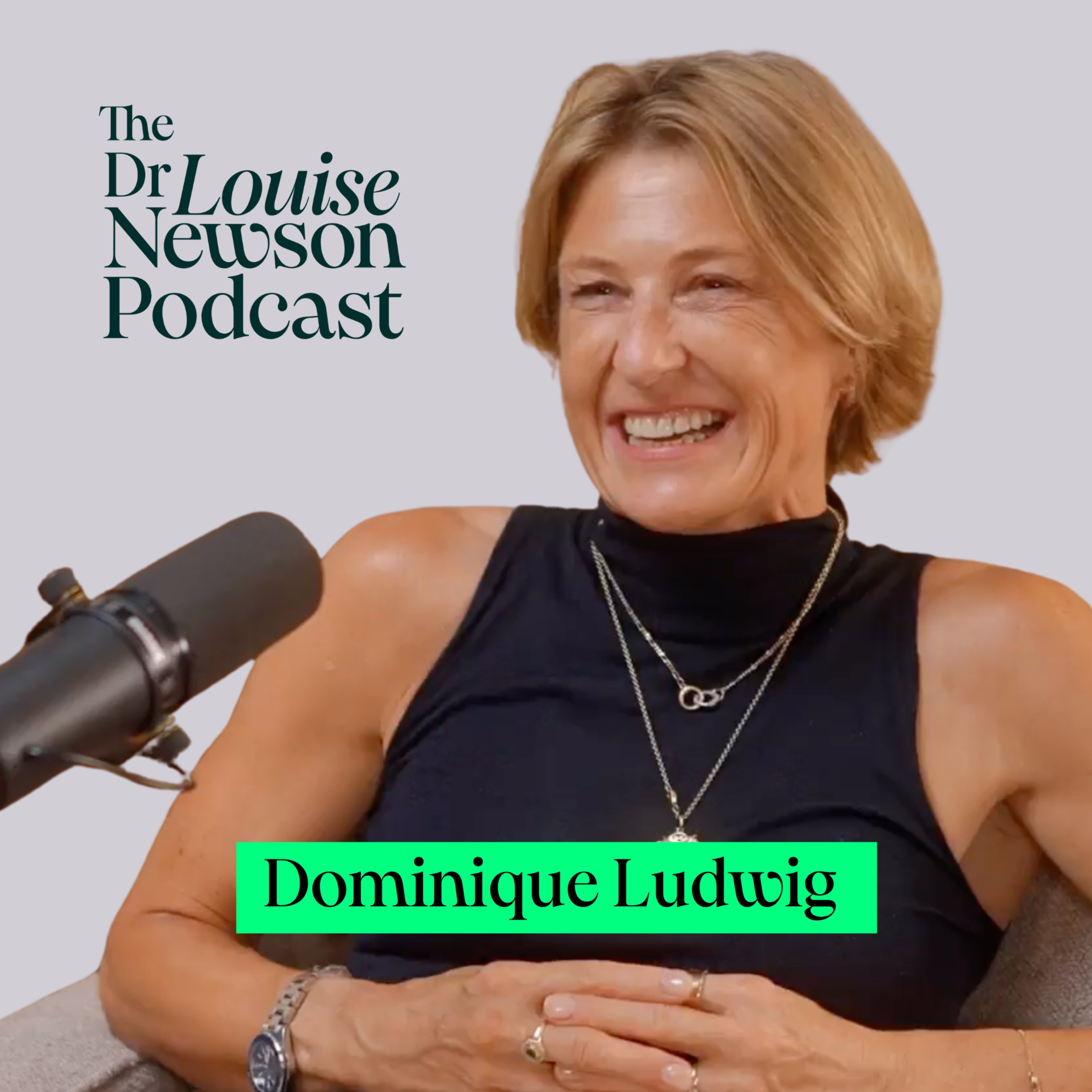
Gut health, hormones, and “food noise” (cravings/constant thinking about food) through whole-food eating—especially protein + fibre, micronutrients, meal timing, and gut–liver–hormone interactions.
Food is medicine; quality and quantity of carbs matter; micronutrients (“stardust”) drive biochemical reactions; protein plus fibre (about a quarter plate protein, half plate vegetables, plus whole grains) improves fullness, blood sugar balance, and weight management; processed/snack-heavy diets reduce nutrient density. Hormones: synthetic hormones (e.g., contraceptive pill) may impair absorption of B12, zinc, and folate; gut microbes (e.g., estrobolome) influence estrogen processing. Gut/mental health: fibre supports microbiome diversity and may improve mood via gut serotonin and inflammation reduction.
people report reduced food noise and stopped cravings; anecdote of Hashimoto’s antibodies normalizing after book recipes; firecracker chicken, breakfast “sprinkles,” seed/nut loaf, red lentil bagels, and “triple 30” (balanced meals with ~30g protein and ~10g fibre; 30+ plant varieties/week).
Dominique Ludwig, a King’s College-trained nutritionist with 30+ years’ experience, 20 years in clinical practice, runs global nutrition programmes, and authored No Nonsense Nutrition.
Written by AI. May contain mistakes.
Discussion on how food impacts health, especially in relation to migraines.
“So you are lovely and relaxed because you've just come back from a great holiday in Greece.”
Dominique shares her extensive experience in nutrition and her motivations for writing her book.
“So I've been a nutritionist for over 30 years.”
Exploration of the balance between macronutrients and the importance of micronutrients.
“Because what we're trying to do now is invest in our future health as well, isn't it?”
Discussion on how protein and fiber contribute to a healthy diet and weight management.
“There's loads to unpack in what you've just said.”
Insights on how synthetic hormones affect nutrient absorption, particularly in women.
“eating a more processed diet that doesn't have as many nutrients, we're unlikely to feel as well.”
Emphasis on whole foods and healthy eating habits to optimize nutrient intake.
“Because I think that will serve you better, you'll be less hungry between meals, and you'll be getting more nutrients in your diet as a result.”
Tips for preparing nutritious meals quickly and easily, using available ingredients.
“I arrive at the fridge at lunchtime with absolutely no clue of what I'm going to eat.”
Discussion on popular recipes from Dominique's book and their health benefits.
“When I was doing the food photography, I was obviously fretting over every recipe.”
Learn about the importance of balanced meals rich in protein and fiber for satiety.
“So it's everything you need is on the plate and everything balances.”
Explore how hormonal changes affect food cravings and mental well-being.
“If you'd like to hear more conversations like this, then please follow us or subscribe to the podcast on Spotify, Apple Podcasts, YouTube, or wherever you listen.”
Understand the relationship between gut health, the liver, and hormonal balance.
“And when I was a junior doctor, I mean, it's impossible, it still is now, to get good food in your call.”
Discover how dietary changes can positively impact mood and well-being.
“But yes, how we eating more fibre has been shown in research to have a positive effect on things like depressive disorders.”
Learn about the importance of fresh, unprocessed foods for health improvements.
“It's a bit of a weight loss program, but they're also resetting.”
Examine key daily habits that contribute to better long-term health outcomes.
“And while I'm very clinically trained to work with many conditions simultaneously, actually, what I've learned is and I call it zoom out.”
Get actionable advice on breakfast, meal prep, and grocery shopping for better nutrition.
“Not chasing a supplement we might take for three months and then decide it's too expensive and then stop taking it.”

Get the gist, explore an idea or ask about something said.
 Claude
On The Dr Louise Newson Podcast, what are the key points of this episode?
Searching your listeningAutomatic transcript. May contain errors.
0:00Dominique Ludwig: On my podcast today, I've got Dominique Ludwig, who wrote the most amazing book, No Nonsense Nutrition. We talk about how food is medicine, how important it is for us to eat the right type and the right amount of food. You're going to learn a lot from this, so I hope you enjoy it.
0:20Dominique Ludwig: So you are lovely and relaxed because you've just come back from a great holiday in Greece. And I've got your book. In fact, it's a bit dirty because I use it quite a lot. here on my lap, but I've been following you on Instagram for quite a long time. And I love it. No nonsense nutrition. There's so much noise in people's head about nutrition, what to eat, what not to eat. As a doctor, I got no training about nutrition, but I am really interested because if I don't eat well, I get migraines. So it's a blessing and a curse having migraine, but I can't eat processed foods. I can't just go and buy something in a shop.
0:57Dominique Ludwig: I can't eat we don't have caffeine or anything so have it but the trick of eating is to feel full and stay full and to feel well but people don't realize that whole thing about medicine and food you know food is medicine and it's so easy now especially with the glp ones to just think you don't have to bother with food but you you're just brilliant so just tell me a bit about you dominique and and why you're so brilliant with what you do.
1:27Louise Newson: So I've been a nutritionist for over 30 years. I'm a King's College trained nutritionist. I thought I was going to go and work in the food industry after that, did that for a short amount of time and realised I wanted to get back into, I wanted to work in clinic. And so I retrained in nutritional therapy and done 20 years in clinical practice. Like you said, I've just written my first book, No Nonsense Nutrition. I run two global nutrition programmes as well. And I think No Nonsense Nutrition was just something I've been wanting to write for a long time. It's wanting to put into words the things that I say day in, day out in clinics.
2:01Louise Newson: So I've worked with about four and a half thousand people, which means you get real time answers to how things are working. And I just wanted to put all of that into a book, but I wanted to make the nutrition simple and fun to read. And then I wanted to put all the recipes in because all the science then is woven into the recipes. So if you do nothing else and you just choose the recipes, you're likely to feel better but if you want to you can dip into the nutrition advice at the beginning which just gives you lots of practical tips of just how to put the food on your plate so that it's well proportioned it's going to fill you up for longer it's going to nourish your body yes and make you feel well yeah and it's interesting because when i was at medical
2:41Dominique Ludwig: school in the 80s it was all about fat protein carbohydrates but not what the different types work nothing about all the other nutrients that we need and and now there's so much talk about protein but people still are confused aren't they and you know I'm 55 and metabolism changes all the time I look at what my children eat and you know I can't eat the same as them but we eat differently so I'm really keen to just have a bit of advice really as to how we can keep as healthy as possible with what we eat for as long as possible. Because what we're trying to do now is invest in our future health as well, isn't it?
3:20Dominique Ludwig: We want to be fit and active as we age. And I do think our generation or sort of generation of people in their 40s and 50s are thinking ahead how to stay healthy
3:32Louise Newson: in ways that perhaps people didn't before.
3:34Dominique Ludwig: But food is really important for that, isn't it?
3:36Louise Newson: There's loads to unpack in what you've just said. So the first thing is when you think about food and you're thinking, yes, protein, carbohydrates and fats, obviously carbohydrates it didn't used to matter doesn't matter didn't used to matter if you ate or we didn't think it mattered if we were eating you know white rice compared to a whole grain carbohydrate like bulgar wheat so we weren't really making that different differentiation where it's all about quality and quantity how much of that carbohydrate you're going to eat and the quality of it which then leads you on to what you've just said about we were talking about the macronutrients and we forget about the micronutrients i often say it's like a train that arrives at your station with all your nutrients and first of all you've got the big macronutrients but the micronutrients are so important all the vitamins and minerals i describe them a bit like stardust in the body so they drive every single biochemical reaction that happens in our body that makes us feel well from our brain chemistry to our liver detoxification to our energy metabolism so the quality of our food is so important and the more vitamins and minerals we're eating and if you're thinking about hormones, we might be thinking about zinc, B6, magnesium, that are helping with our own hormone balance, where we need to make sure we're getting enough.
4:46Louise Newson: So if we're eating a more processed diet that doesn't have as many nutrients, we're unlikely to feel as well. And I think the other thing that you leading on to what you've just said is, you know, when we talk about protein, we didn't know how important it was. I think it's the magic duo of protein and fibre. And I don't like overemphasising one macronutrient over another. But what I see in clinic is if you focus on the protein and make sure you've got maybe a quarter of a plate of protein, and then you add on half a plate of vegetables, that gives you around five grams of fibre, and then some healthy whole grains, which might top you up by another five grams.
5:23Louise Newson: If you're focusing on the fibre and the protein, you naturally start to balance the plate, because you're eating the vegetables, the whole grains, the protein, then the healthy fats. It just works. So you start to feel better when you do that. So I think they're a dynamic duo. They fill us up for longer, balance our blood sugars. They help with weight management. And I think that's really important.
5:42Dominique Ludwig: Yeah. I'm talking a bit more about the difference between bioidentical sort of, you know, the natural hormone treatments that we prescribe and synthetic hormones. And I say hormones in inverted commas because they're not hormones. They're just chemicals made to look like hormones and behave like hormones. but they don't. So I was reading a study from the 1980s the other day about women who take the contraceptive pill, which all contains synthetic hormones, and how it blocks the absorption of B12 zinc folate. And I was really shocked because no one taught me this at medical school. So I was just thinking about all the millions of women globally who are on synthetic contraceptives and having more processed food than many of us ate many years ago it's quite hard then for them to absorb even if they are eating those micronutrients is it something that is on your radar it's on my radar if i see someone on the contraceptive pill i might
6:39Louise Newson: ensure they're getting enough zinc magnesium b6 and those some of those nutrients i think really if we're eating a really good whole food diet we should be able to cover our requirements and we should have a slight surplus but you're exactly right the problem is that it depends what we're eating if a quarter of our calories come from snack foods and that 75 percent of foods we snack on between meals are not particularly healthy which means that a quarter of our diet might not be as healthy as as the food we put on our plate at meals which is why I always put so much emphasis on three meals a day.
7:16Louise Newson: And so just put the food on your plate, have bigger meals with and add extra things like some walnuts and crumbled parmesan, some, you know, a dollop of hummus, whatever you're adding to your plate, add more to your plate. Because I think that will serve you better, you'll be less hungry between meals, and you'll be getting more nutrients in your diet as a result. So I think it's an issue. And I think also, we become a bit blase about our micronutrients and think that everybody's just getting enough. And it's not that we have necessarily deficiencies, deficiency diseases. We're not falling into that classification.
7:50Louise Newson: We'd call it more suboptimal. For example, iodine or something like that. We've got a big rise in iodine insufficiency, particularly among teenage girls, which has been linked, we think, to a reduction in dairy and plant milks and things like that. So our food habits then change the amount of nutrients we're getting as well.
8:09Dominique Ludwig: Yeah, it's very interesting, isn't it? And even magnesium, there's a lot of people who are deficient in or insufficient in magnesium but you can't measure it as a blood test easily because it's in the cells that it's low but even the way that the plants are grown the chemicals that are used in the soil all of that makes a difference as well doesn't it so so so just go back to basics really sourcing ingredients like a carrot is not a carrot in you know it's all very different isn't it it's quite hard to know when you're out and about you think you're buying an apple and it's going to be healthy but it varies so much doesn't it between supermarkets and farmer's markets and everything else I think just choose as local as
8:52Louise Newson: you can flavor is a determinant of how the quality of food as well so if you're going to get a an apple that's been flown in from South Africa and tastes like water it may not be as good for you as one that you're going to pluck off a tree and uh in your you know local area yeah um so I think we can't get too worked up about that because we can't always control our environment all we can do is do our best and I think just by basing your diet around healthier whole foods cooking from scratch where you can and just trying to boost the amount of nutrients in our food that's really all we can do and I think that's always been my approach it's always back to basics and it doesn't have to mean fancy recipes and everything being difficult because most people are time poor I think really it's about actually how you just arrange the food on your plate so you can literally arrive at the fridge.
9:47Louise Newson: I mean, I do this most days. I arrive at the fridge at lunchtime with absolutely no clue of what I'm going to eat. But I just get out all the vegetables, whether it's red cabbage, red onions, some peppers, cucumber, carrots, chop them up or grate them into a salad with a really nice olive oil salad dressing. Go find my protein. Maybe I've got a ball of mozzarella, a tin of mackerel, might be a salmon fillet, something like that. So I've immediately got my protein on my plate, add some extras, add some cooked lentils or some healthy whole grains. And I'm kind of there. So I've just made an instant meal, but I haven't really had a plan or it's not a complicated recipe.
10:24Louise Newson: You can just make your food work with your biology just by understanding how to put the food on your plate, which is something we cover a lot in the book.
10:32Dominique Ludwig: Yeah. So what's been the most popular recipes that's in the book? I'm sure there's loads. OK, so what surprised me? Shall I tell you a funny story?
10:40Louise Newson: When I was doing the food photography, I was obviously fretting over every recipe. And the food stylist said to me, oh, don't worry. You know, not many of the recipes in the books are cooked by people. And so I think what she was saying was that, you know, lots of us have cookery books and maybe we only make one recipe. What I find astonishing with this book is how many people are coming up to the book signings with tabs all the way through the book. And people are right. I've had hundreds of messages from people saying how many of the recipes they're cooking from the book and how they're just eat.
11:13Louise Newson: I had somebody today say that they've just been making recipes from my book and they've got Hashimoto's thyroid disease. And they said that their antibodies have normalized over three months. So this is the power of food. There's no you can't make claims and it's different with every person. But eating real natural food can have a positive effect on your health. but favourite recipes I think firecracker chicken seems to come up a lot it's like a takeaway yeah but it's really healthy and it just uses the juice of one orange to sweeten it instead of you know lots of sugar um so that's been really popular I think the breakfast sprinkles um is a fun one and people really like that it's all sorts of 10 different nuts and seeds and then I've topped it with pitaya powder which is dragon fruit powder and it's really vibrant pink so when you shake it up and put it in your yogurt yeah everything goes bright pink which is really fun and people really like that because they can make it up and just then eat it throughout the week and they're getting loads of plant variety in there as well which supports the gut microbes
12:13Dominique Ludwig: yeah yeah i i was talking something the other day actually i went to the house and they and i'd already made this before you know your seed and nut loaf yes that must be really popular as well wasn't it because it's so i mean i've just got it in the freezer i cut it up and then put it in a in um in the freezer so then i can just get a slice at a time because yeah sometimes when i'm always really busy but i cook a lot for the freezer because then i know that if there isn't anything in the fridge i've always got something healthy in the freezer and um and that's been brilliant because it's so easy to make as well i mean you don't have to need it you don't have to
12:46Louise Newson: prove it you put it in the oven it freezes really well you've got loads of plant diversity in there And I think unlike, you know, regular supermarket bread, because it's so dense and nutrient dense, you don't need very much. So lots of, it's really interesting, even the sweet recipes, like there's some really nice salty caramel bars in there. If you compared them to a traditional chocolate bar, you know, we can just inhale them and it doesn't really feel like we've eaten them. Whereas you only need a small amount. Another really popular recipe on the bread one is the red lentil bagels. They have been a really big hit as well.
13:19Louise Newson: And you think, how can that possibly work? It just does. And it's a really fun recipe, that one.
13:24Dominique Ludwig: I think that's what's great. And, I mean, obviously the way the pictures are brilliant, but it just, it's easy. There's not loads and loads of ingredients that you think you haven't got. And it just, it's the colour as well, because it is that whole, the more that we eat of the rainbow,
13:42Louise Newson: the more colour, that gives you more nutrients straight away, doesn't it? And everything's put on the plate. So the whole point of the book is that the pictures actually shows what you're going to eat. So rather than just giving you a recipe with some chicken breasts where you've got to go and think, well, now what do I serve it with? What I've done is I've put the vegetables on there. I've put the healthy carbs on there. So it's everything you need is on the plate and everything balances. So every single recipe in the book is balanced with around 30 grams of protein, around 10 grams of fiber.
14:13Louise Newson: and so if you were eating three meals a day that would be around 30 grams of fiber a day and if you're just eating from the book you'll get well over 30 different plants a week so I call it my triple 30 principle so just by choosing those foods you're likely to feel fuller for longer your attention should be better in the afternoon and focus you should just feel better from one meal to the next but it's tapping into your natural hunger and satiety mechanism so you're eating enough like you I think you said at the beginning lots of people don't eat enough food And I see that a lot in clinic where when we hit midlife, there's this sort of invisible memo that goes out that says that everything that worked in your 20s and 30s doesn't really work so much.
14:52Louise Newson: So we start to store more fat around the middle. We say we're gaining weight. Our blood sugar regulation isn't quite as good. We're losing muscle mass. We're maybe not sleeping as well, which is making us hungrier the next day. So lots of things start to happen and shift in our metabolism. And people, as a result, often start to exercise more and eat less. but when you start to put the principles in place of fiber and protein and the balanced plate you're eating lots of food but it's working with your biology so it's increasing all of your satiety mechanisms it's stretching your stomach to tell your brain that you're full you're switching on the hunger hormones in your small intestine you've got like mini laboratories in there that are scanning your food in real time and they're sending messages to the brain to say you're full And then you've got those deep satiety hormones like GLP-1, PYY, GIP, which then they're your long term satiety.
15:45Louise Newson: So when you're eating foods that are bulky and hard to break down, the bits of the residue of that food is is switching on or is reaching the cells that produce those long term satiety hormones. So that really keeps you going from one meal to the next. You're not feeling the need to snack. So you're not feeling deprived.
16:05Dominique Ludwig: I hope you're enjoying today's episode. If you'd like to hear more conversations like this, then please follow us or subscribe to the podcast on Spotify, Apple Podcasts, YouTube, or wherever you listen. By subscribing, you'll be the first to hear new episodes each week featuring expert guests, the latest research and evidence-based discussions about hormones and the health of women. Thank you for listening and being part of this really important community.
16:39Dominique Ludwig: Most people now have heard of GLP-1s but don't know that we make it ourselves. And it's so much better if you can stimulate it yourself. You can, but it only lasts one to two minutes.
16:51Louise Newson: So you're sort of relying on little bursts of GLP-1, almost like a little sparkler going off. but it's only part of the picture. Of course it is. It's not the only... So when we sometimes, when we're talking about food increasing our GLP-1, it's not quite the same as the medications which are going to stay in your system for a long time but it's everything together. It's the bulk of our food and it's eating the fibre and the protein and we just need to switch on the whole cascade of satiety and that can be transformational. I cannot tell you how many people have written to me to say that the food noise has gone and just how that has just changed their life because they're not thinking about food.
17:28Louise Newson: They can walk past the biscuit aisle.
17:29Dominique Ludwig: It's incredible, isn't it? I used to have a really sweet tooth. And when I was a junior doctor, I mean, it's impossible, it still is now, to get good food in your call. And then, you know, there's always biscuits at the nurse's station and chocolates, whatever, that patient was given. And it was three in the morning and I'd have some. And then the more you have, and my sugar levels must have just been up and down. It just must have been horrendous. And for some reason then it didn't seem to trigger migraines. And then when you change your diet and you don't feel hungry, like if you even if you offered me a donut, I wouldn't want it.
18:02Dominique Ludwig: Whereas if you offered me 20 years ago, 30 years ago, I would have gobbled it up and inhaled it literally and never. But it's it takes a while to change that. But it's not like saying you can't eat it because then you would just be hungry and think about donut all day long. But if you're having different foods, it's just it's just different. But somehow for women, I think we do think about food more than men for all sorts of reasons. But when we don't have our hormones or we have a hormonal imbalance, it can trigger, can't it, this craving for food, which can be really difficult for people. So having the right, I mean, I'm always talking about hormones.
18:39Dominique Ludwig: And of course, hormones can balance and help metabolism. They can help with insulin resistance. But it's often in conjunction with having the right food choices can be transformational. you know our hormones are linked with what we eat as well aren't they so you've got well there's
18:56Louise Newson: there's two there's you've got the liver and you've got the gut so your liver is how you get rid of old hormones when you've used the hormones it goes to the liver how well your liver's functioning is really important and certain foods can actually improve how our liver works so things like cruciferous vegetables are really important like broccoli and cauliflower um and then what goes on in your gut is really important and people don't always realise this so first of all we've got something called the istribolone which is like a sort of your it's part of the microbiome that can affect how we process estrogen just having the wrong type of bacteria in your gut can actually affect how your estrogen is um your estrogen levels are and how much of it you're
19:39Dominique Ludwig: going to excrete yeah and it's also the metabolites as well of of hormones that need to be removed but our hormones also help improve our gut microbiome and not just oestrogenial but progesterone and testosterone has a really beneficial effect and when our gut microbes
19:57Louise Newson: are happy it helps our mental health doesn't it it helps our metabolism and everything else as well just going through menopause can change the microbiome when oestrogen falls so you're right we can have less diversity in the gut. But yes, how we eating more fibre has been shown in research to have a positive effect on things like depressive disorders. And they're still sort of trying to work out exactly why this happens. But we're getting closer, I think, to it. We make a lot of serotonin in our gut. So 90 % of the serotonin we make is in the gut. There's other mechanisms in play that are also improving our mental health.
20:35Louise Newson: And it might be the metabolites that we're making in our gut actually help to facilitate the neurotransmitters in our brain. They also think it's linked with inflammation because eating enough fiber lowers our systemic inflammation, which can also affect our serotonin production in the brain. So I think it's complicated and I don't think we know all the answers to that yet. But I see this in my program. This is really nice sort of anecdote. I have a self-reported questionnaire at the end. So I ask people questions and let them tick a box. So people that have changed their diet with me on a program I do called Renew, Reset, Recharge, then will change their diet for 28 days.
21:16Louise Newson: It's a bit of a weight loss program, but they're also resetting. And around 45 % of people who finish the program tick a box to say that they feel happier.
21:27Dominique Ludwig: That's great. They feel better in their mood, happier. And they describe it as just feeling happier. So that's higher than any antidepressant research, isn't it?
21:36Louise Newson: It's really interesting. So there's obviously lots going on. Yes, yeah. And it'll be great when we have all the answers to this.
21:44Dominique Ludwig: I mean, the thing is, we'll never have all the studies because it's impossible to do so, especially with food. When it's self-reporting, it's really hard. But when I'm sort of inquisitive, I always think, let's go back to the basics. And this is really basics. It's not like cutting-edge science. This is very simplistic in some ways and obvious. But it's somehow been forgotten for so many years. If I go back to, you know, when I was growing up in the 70s, food was fresher. It was easy. We didn't have processing of foods in the same way. You couldn't eat the snacks that people do. You couldn't just go to a petrol station and drink some of those horrible coloured fluids that are now available.
22:24Dominique Ludwig: You know, there's all sorts of things that have changed. but I think stripping it back and cooking from scratch lots of people still don't do so it's got to make a difference hasn't it and like you say there'll be there's so many different ways but sometimes it doesn't matter as long as it's not doing harm and eating healthily is never going to do harm is it I think just in the environment we live in with social media we're always looking
22:45Louise Newson: for the next thing the next biohack the next longevity tablet supplement or whatever and I think having been a nutritionist for 30 years, I think we sometimes are so wrapped up in our ice baths and our green powders that we're forgetting what's right under our nose. And it's nutrition. And while I'm very clinically trained to work with many conditions simultaneously, actually, what I've learned is and I call it zoom out. when I run programs or I get people eating this way like in the book and people just you know start to eat a healthier balanced diet lots of the small ailments that they had or symptoms disappear so I had somebody on Monday who said um who was following the triple 30 principles in my book and she said I've stopped taking acid reflux medication I've been on it for 10 years so these are self this is like I said not the same for everyone but thing blood pressure might drop um hba1c might normalize uh menopausal symptoms improve uh joint pain uh can improve um autoimmune diseases can can improve just from changing our diet so sometimes we need to zoom out not over complicate and over medicalize everything in nutrition um and i think just by changing diet first and see what changes and then work with anything that's left over is kind of what I do in clinic now rather than jumping in and completely turning someone's you know diet upside down or giving them 20 supplements often that's not necessary I think that's really important I think we forget just how powerful food is on its own yeah and we need to stop chasing the next thing and what we do every day those consistent habits like having breakfast lunch and dinner trying to get enough sleep trying to as much as we can control our stress levels although that's really hard.
24:37Louise Newson: It's those things we're doing every day that are really going to affect our long term health. Not chasing a supplement we might take for three months and then decide it's too expensive and then stop taking it.
24:46Dominique Ludwig: Yeah, absolutely. You know, it's so brilliant. And what you're doing is incredible and changing eating habits of so many people and families, I'm sure as well. So I really appreciate you coming. Before I end, I always ask for three take home tips, though. There's a lot that I want to ask you but three things of people I know a lot of people a lot of listeners feel quite overwhelmed when I talk about food and there's always people have got their own thoughts and own theories but going back to your book No Nonsense Nutrition just three things that you think people could all do that's quite easy that's going to make a difference to them.
25:23Louise Newson: I think start with breakfast you don't have to eat at the minute you get up in the morning but I wouldn't push through till lunch. I think for particularly for women, my female clients do much better when they have breakfast. If you front load some of your calories in the day, you're less likely to sofa snack later on. And I think what you eat at breakfast actually dictates what you're going to eat for the rest of the day because it because you're not chasing calories because you've under eaten. So I think it just makes you much more calmer, you're likely to have a better choices at lunch and then find yourself snacking less in the evening.
25:59Louise Newson: So breakfast, I think, is really important. Just have some really useful ingredients in the house, whether it's tinned sardines or mackerel, bottled beans, oat bran. I'm a big fan of oat bran. I really like that. Having some nuts and seeds in, just having some real basics in that you can just, so you can throw meals together quite quickly can be really helpful. What else would I say? I think when you're in the supermarket, trying to get a wide variety of vegetables as well, just choose different colours, different types of vegetables, throw them all into your salad. We so often just go for lettuce, tomato and cucumber.
26:40Louise Newson: And that to me is like a very sad looking garnish. Get colourful vegetables, hard vegetables, make more than you need, because if you make a salad with hard vegetables, it can last for two to three days. make more than I need. And using hard vegetables is going to give you more of the phytonutrients in the plants. It's just a really easy way of getting diversity in.
27:01Dominique Ludwig: Yeah, you make it look so easy. So follow Dominic, buy her book and thank you so much for coming today. Oh, thank you. Thank you.
27:09Louise Newson: Thank you for having me.
27:12Dominique Ludwig: So just a quick one. It would be really great if you could follow or subscribe to this podcast. This will really help me reach more people with evidence-based information about hormones and their future health and also means you never miss a future episode. Thank you.
Nutritionist Dominique Ludwig, author of No NonsenseNutrition, explains why your gut controls your hormones and hunger.
Dominique trained at King's College and has spent 20 years in clinical practice, working with around 4,500m people before writing the book that turns her clinic advice, and the recipes behind it, into something anyone can use at home.
Louise and Dominique talk through how your liver and gut clear out old hormones, why the wrong gut bacteria can impact your hormones and how the Contraceptive Pill can block your absorption of B12, zinc and folate. They also unpick why protein and fibre switch on the body's own satiety hormones (the same pathway GLP-1 medications work on) and why so many of Dominique's clients describe the disappearance of "food noise" as life-changing.
Follow Dominique: @dominiqueludwig_nutrition
Let’s connect
👉 Track your symptoms and understand hormones, download the Balance app: https://bit.ly/4yZty5A
👉 More from Dr LouiseNewson: https://linkin.bio/drlouisenewson