In short
JOPE (Joy of Pets) and how a science-based pet supplement brand uses education, customer care, and marketing strategy to grow pet joint and mobility health, plus plans to expand beyond one product.
Guest backgrounds
Dr. Christine Colamonico, veterinarian and co-founder of JOPE. She co-founded with Jeremy Bryan; started from her own dog Pepsi’s mobility/joint issues and her vet training/research. She previously worked in marketing/sales for pharmaceutical companies and in vet-group M&A.
Key claims
Supplements are largely unregulated, so JOPE formulates based on scientific evidence and ingredient testing. JOPE differentiates via direct education (email, longer videos), personal vet-led customer support, and a 90-day satisfaction guarantee. Meta ads work best when paired with “foundation” building (brand/authority content). B2B vet partnerships were slower due to vet adoption and retail/e-commerce access.
Notable examples
Pepsi’s decline and passing at age 14; 80% of dogs over seven face joint issues; calls to upset customers; lunch-and-learns with vets; TikTok drove views but not sales; launching a gut health supplement for dogs and cats this quarter.
Written by AI. May contain mistakes. Listen to the episode to check what was said.
Chapters
Tap a time to open that second in VOIntroduction to JOPE
0:00 to 0:31
Learn about JOPE and its mission to improve pet health.
“We actually learn every day through the observation that our customers share.”
Journey of JOPE
0:51 to 2:20
Christine shares the origins and mission of JOPE, focusing on pet mobility.
“I'm Brian Roizenthal, your host, And today I have a great guest.”
Personal Connection to Pets
2:20 to 4:28
Christine discusses her personal experiences with pets and their health challenges.
“So could you please tell more about how it all started?”
Launching JOPE During a Pandemic
4:28 to 6:32
Christine describes the challenges and decision-making during the company's launch amid the pandemic.
“And so with Pepsi in mind and knowing that there's like 80 % of dogs for over seven years of age that suffer from joint issues, we decided to launch our first mobility supplement.”
Evolving E-commerce Landscape
6:32 to 8:12
The hosts discuss the changes in e-commerce since 2020 and its impact on brands.
“That's a lot because these years haven't been easy.”
Navigating Advertising Challenges
8:12 to 10:00
Christine shares insights on customer acquisition costs and strategies to maintain growth.
“I know you said that you've been growing, but what were the conversations, the high-level conversations about with your co-founder as everything I just mentioned developed?”
Building a Strong Brand Foundation
10:00 to 11:19
Discussion on the importance of brand trust and customer education in advertising.
“But I think where we're able to, you know, still maintain the growth is just focusing on the customers and making sure that, you know, they want to stay with us because we're helping, we're there for them.”
Building Brand Trust Through Education
14:00 to 14:48
Learn how effective brand partnerships and education can boost trust and sales.
“building your trust offline as well, brand partnerships, W2B as well.”
The Role of Customer Awareness in Advertising
14:48 to 15:46
Explore the importance of customer awareness in making ads successful at scale.
Challenges of B2B Marketing in Veterinary Health
15:46 to 16:40
Understand the complexities and slow adoption in the B2B veterinary space.
“You know, it was, it's enough until a certain point with nothing organically, you turn on some ads and it works, but then at some point you need to add those layers to support that business.”
Show all 24 chapters
Veterinary Practices and E-Commerce Competition
16:40 to 18:02
Discuss how e-commerce is reshaping veterinary practices and product availability.
“I think so being a veterinarian myself, having worked in the vet practice and I sold products, I worked with veterinarians.”
Partnerships with Veterinarians and Product Trust
18:02 to 19:36
Learn about building trust with veterinarians and the importance of product integrity.
“And there's also other probably factors where, I don't know if you know, but there's a massive shortage of veterinarians in the U.S.”
Navigating Product Strategy: One vs. Multiple Offerings
19:36 to 21:12
Explore the pros and cons of launching a single product versus multiple products.
“We have third party lab testing on our product.”
Lessons from Focusing on a Single Product
21:12 to 22:55
Discover how focusing on one product can strengthen a brand's credibility and success.
“Well, so to be fully transparent, initially we were hoping to have two products like right away.”
The Decision to Expand Product Offerings
22:55 to 24:02
Understand the strategic considerations behind expanding product offerings.
“We actually had some just people we spoke with in our network who recommended we only stay with one product and we try to grow it to being, you know, like a 8, 9, 10 figure product, which you can do.”
Subscription Models and Customer Lifetime Value
24:02 to 25:38
Learn how subscription models enhance customer relationships and lifetime value.
“We're 100 % aware we might fall flat on our face.”
Strategic Product Launches and Market Positioning
25:38 to 27:29
Explore the strategy behind launching complementary products and market positioning.
“The nature of your product is something that if people love it, they need to buy it again, right?”
Defining Brand Identity in the Pet Health Sector
27:29 to 28:03
Discuss how to effectively define and position a brand in the competitive pet health market.
“And then the only other point, too, which you probably know, but one other reason we want to expand our portfolio to more than two products even is with the goal to one day partner with retail.”
Brand Positioning and Purpose
28:03 to 30:03
Discussing the brand's current positioning and its purpose beyond just selling products.
“It's a brand that helps dogs with their joint pain.”
Customer Retention Strategies
30:03 to 33:18
Exploring strategies for retaining customers and minimizing churn through education and communication.
“You know, we want all animals to be healthy.”
The Importance of Customer Communication
33:18 to 36:13
Highlighting the value of direct communication with customers and its impact on brand loyalty.
“Like not all of them, not every time, but do you gather a sample of customers and call them and ask them?”
Understanding Customer Perspectives
36:13 to 38:47
Discussing how to categorize and understand customer feedback from different segments.
“But it's, you know, then it's a balance too.”
Challenges with TikTok Marketing
38:47 to 44:13
Addressing the difficulties faced in using TikTok as a marketing channel for the brand.
“Non-customers, let's say, are subscribed, you have the phone number, but they have never bought.”
Caring for Pets with Jope
44:13 to 45:01
Discover Jope's mission to improve pet health and how they engage with pet owners.
“I mean, if you have a dog and, you know, you really want them to be happy and healthy for many, many years, come check out Jope.”
Transcript
Automatic transcript. May contain errors.0:00We made the product. We actually learn every day through the observation that our customers share. And because we were fully concentrated on this one product, we were actually able to find what resonates with our clientele and what resonates with pet parents. Our customers hear from me personally and from my co-founder regularly to better care for their animals. So it's really about education. We don't just focus on the product. It's about, you know, how do you better care for your furry companion on a day-to-day basis. Welcome to the DTC Insider Podcast, where online business owners come to find actionable tips and tactics to grow their businesses.
0:40Now, here's your host, Brian Roizenthal.
0:50Hey, welcome to another episode of the DTC Insider Podcast. I'm Brian Roizenthal, your host, And today I have a great guest. She's a doctor, so I'm going to introduce her that way. I'm joined by Dr. Christine Colamonico, co-founder of Jobe. It's an amazing brand and she'll be able to tell you more about it in a minute. Christine, welcome to the show. Thank you for being here. Thanks, Brian. It's a pleasure. I love your emails. I've been a big fan, so very happy to be here today. Yeah, thank you. So for those who don't know about JOPE, could you please tell them more about the company? Yeah, of course.
1:29So JOPE stands for Joy of Pets. We're a pet supplement company online, so direct to consumer, but we also work with veterinarians. So I'm a veterinarian, Nick Bryan said, co-founder. We started the adventure in 2021 and we have one product and our main focus is joint health at the moment. And it's born from personal experience. being a veterinarian, seeing how a lot of dogs struggle with mobility, and then having my own personal dog, Pepsi, who had to suffer through issues. And so finding ways to keep him comfortable based in science. And then I wanted to share that with all the other pet parents, because I know there are more and more out there every day.
2:10And we all want a better, you know, furry companions. well I had the dog myself she passed away when she was 14 years old it was a beagle and wow she was noisy you know she broke everything around her and yeah they ate a lot we loved her now I have 6 year old twins a boy and a girl but it was when I was way younger I lived with my parents and I really enjoyed her so I love they are doing something for their health. So could you please tell more about how it all started? When was it? You know, what were you doing back then? So we, so the reason it started, I think it started before we actually created the company again with Pepsi and being a veterinarian, I always wanted to care for animals, but we know how tricky it can be, right?
3:05Because they can't speak. So they can't tell you if something is wrong. And I had to live this firsthand with my dog Pepsi again, who had joint issues. And so I basically saw the decline. And then I found ways to help him as a veterinarian, really leveraging research. And unfortunately, Pepsi passed away when I graduated vet school. And then I started working as a marketer for some of the pharmaceutical companies. I also did sales. I did some merger and acquisition work with a local veterinary group. And during the pandemic, you know, I guess having a little bit too much free time on my hand with my co-founder still had this idea of, you know, we're vets, we want to help animals.
3:46And I had this experience with Pepsi. So we decided to create a company to bring to market supplements more specifically. In the pet space, supplements are actually not regulated. So there's not, you know, like a official body that regulates supplements. And unfortunately, a lot of them out there are not rooted in science. So when we saw what was available on the market versus what the science was telling us could actually help our furry companions, we saw a big gap. And so we really wanted to basically go back to science, review scientific data to then formulate products that we knew would actually benefit pets based on the science that we could find.
4:29And so with Pepsi in mind and knowing that there's like 80 % of dogs for over seven years of age that suffer from joint issues, we decided to launch our first mobility supplement. And that happened in 2022. It took about 12 months to formulate the product because we created the company in 2021. And then, you know, manufacturing, going back to the formulation, finding exactly what we wanted. It took a while, but we're very proud of what we have today. And since then, we've been growing a lot, helping many pet parents better care for their dogs. So it's been super rewarding. Many challenges, but it's been super fun and very exciting too, because we're launching our second product this quarter.
5:15And it's going to be a product for both dogs who we're already helping, but also for cats. So for us as veterinarians, this is pretty amazing and we're very, very excited. We know to ask you, did you ever imagine being a brand founder when you started the career back in the university? Definitely not. I think a lot of our veterinarian friends are like, what are you guys doing? It's very strange. But we really love it. And my co-founder, Jeremy, and I, we always wanted to be vets. Like, you know, when you're small and you know you want to do something and then you're able to fulfill it later in life.
5:52It's pretty cool to know that we're actually, in fact, helping animals. And some, like if you go on our website, you'll see a lot of the comments. And those are really like some are life changing for certain animals and their pet parents. And that is just very satisfying to us. So we're super passionate. I never thought I would do this in a million years. I thought I'd own my own practice. Turns out, you know, I chose a different route. but I did always enjoy being like independent, you know, trying and failing by yourself and just figuring things out. And we're super happy to do, you know, what we're doing today, like helping animals, working, we're two friends working together, trying to make it in this world.
6:28And I guess it's been what, four years now and we're still up and running. So, so far so good. That's a lot because these years haven't been easy. I mean, we discussed this at length here on the show. And since we, you know, we started podcast in 2021. So this is the fifth season and it's about to end probably. I mean, the current season, because we are, believe it or not, in probably, you know, the end of October. So it's crazy how fast time flies. We've been able to discuss live the evolution of e-commerce, only that probably last year, we could say, okay, so we have three full years since the pandemic were actually for 2020, 2021, 2022, and 2023.
7:13So we were like, things are shifting in a way. We didn't know exactly, but we knew that there was a hype in the pandemic, of course, as we all know by now. Then in 2021, there was this crazy iOS 14 update. It was, for those who don't know about it, it's the loss of tracking, you know? So Apple decided that, well, whatever they decided about their privacy, That's amazing. But as advertisers and, of course, brands, we lost track and everything was more expensive, challenging. And then, of course, every brand was started to think about profitability, the bottom line, not only growth at all costs.
7:51And of course, in 2024, it was an election year and we were all hoping for 2025 to be the easy year, the calm year. And then, of course, TikTok announced, you know, the sell or buy in January and the tariffs and all the craziness. So what were these years like for you? I know you said that you've been growing, but what were the conversations, the high-level conversations about with your co-founder as everything I just mentioned developed? So we, you know, for us, again, our training is very technical and scientific. So we had no experience in e-commerce and digital marketing. So we kind of, you know, learned as we go, you know, how we're still doing it.
8:41And it's been a lot of ups and downs. We definitely see there's like trends where, so we mostly advertise on Meta. We really do most of, probably that's where we get most of our clients. And initially we weren't believers in Meta. We thought, you know, being veterinarians are bigger. We thought we'd be able to get more clients through the vet channel. So, you know, B2B2C. And that turned out not to be accurate. So we're mostly advertising through Meta. And we have been seeing just some seasonal, I would say, changes in the customer acquisition costs. Right now, for example, it's not ideal. We'll put it that way.
9:16But luckily, I think for us, you know, so what we've seen, and I think everybody's probably seeing this although i'm not the expert but there's been like a trend where we see customer acquisition cost increase over time since our launch i think it's due to first of all you know we started with nothing so where you scale you can't always be um how do you as like you can't optimize as efficiently when you're scaling although we're trying um but on the other side we do have like a very good product and so we have a fairly long lifetime customer value and people stay with us because we have a product that works that actually helps their animal and we do have a very strong customer-centric policy internal so we have like a 90-day satisfaction guarantee so we really work on you know keeping our customers going above and beyond and then the quality of the product I think also speaks for itself where people do you know want to use their product because they see a difference and it's really impacting the quality of life so that's where, you know, we see the trend that we read about and like newsletters, yours, for example, just, you know, groups, LinkedIn.
10:27But I think where we're able to, you know, still maintain the growth is just focusing on the customers and making sure that, you know, they want to stay with us because we're helping, we're there for them. So I'm a veterinarian, like we said, and I personally review like our customer care interactions. And if we see that, you know, somebody has a question about their animal health, we're going to go above and beyond to try to answer it give them resources of course always directing them to their veterinarian because in no way are we you know prescribing diagnosing or curing anything but we can certainly give them like good resources we can be there and listen to them when you know they just want to tell us their story so so that's kind of where we've been but we've definitely seen fluctuation and and we're working on you know tweaking different things like different angles for marketing and how to show how our product is differentiated in a very crowded market.
11:21Sorry for the long answer. I was trying to be exhaustive and comprehensive. This is a place for long answers that otherwise the episode would end after 10 minutes. So don't worry. No, I'm just kidding. So it was interesting that you mentioned, you know, meta being, you know, more expensive And of course, at scale, that's a normal thing. The thing is that, and I just recorded a video about that, I sound like a broken record if you follow my newsletter. And thank you, by the way. It's something that I discuss at length, you know, that the strategy, the growth strategy beyond, way beyond the ad account to grow.
12:00So if we compare these to, let's say, building a tower of whatever, I don't know if cards, but of blocks, you know, Legos or whatever brand. You try to build a tower and you start stacking the blocks. One, two, three, four. Everything is steady. But then, of course, there will be a point that you add one more block and everything will fall. Yeah. Right? that's the acquisition as well if you think about it and this is the first time i give these examples surprisingly i have a new example so i'm celebrating i like it it's it's this is the problem with ads you start reaching your core audience the raving fans the easy to acquire customers through meta at least and then as you scale you reach you know uh um you know far from the center, you know, in the sphere, the customer sphere, let's say, you start to acquiring people that is not probably as familiar with the brand as the other ones.
13:07You need to convince them in different ways. So you need to make the foundations of this, let's say, tower I just mentioned, thicker. Otherwise, it will fall. So if you make the foundation thicker, it will hold. In ads, what does it mean? I'm not crazy. I promise I have a point. For in the ad world, what it means is that you need to make the foundations stronger, the education stronger. So those people that you're reaching now, they don't know about you, about the brand. They don't trust the product, about your claims, because of course they don't know. You claim that your products are the best and they don't know that they work.
13:49They don't know. So it's not about social proof only. It's about building that base through organic content, long-form content, short-form content, building your trust offline as well, brand partnerships, W2B as well. I'm curious to ask you in a minute why it didn't work. And all of that universe outside the ad account, that will help you boost the ad account. Because once you reach those customers that didn't know about you before, probably by then they could have consumed a lead magnet, a resource, advertorial your blog because your videos so typically these brands i speak with that are not like successful but they do high eight or high nine figures they have over two million subscribers on the youtube channel over one or two million followers on each social network so it's not a coincidence they focus on delivering the message they focus on being there or being known in different ways and that's why their ads as a compound effect are successful at scale as well because more people know about them does this make sense yes it's like the top of the funnel situation no where you're branching out you're educating you want to be recognized as like an authority figure and somebody who people can turn to not just to buy a product but to you know really solve their questions answer their question and become a partner I think that's what I'm hearing you say with like education you know making sure you you show how you're an expert in your field and you're not just you know setting great marketing yeah it's trying to do what's enough to reach successfully that next cohort of customers that don't know you.
15:45Yeah. You know, it was, it's enough until a certain point with nothing organically, you turn on some ads and it works, but then at some point you need to add those layers to support that business. And if you think about it, these businesses I'm telling you about, and you don't need to be that big, you know, nine figures or so, But the more you do them, the easier and the cheaper it is. Some of them, paid ads is no longer the main source of acquisition. It goes that, you know, to that level of depth for them, you know. But yeah, it's easier said than done many times. It requires from a commitment to recording content, to educating some, let's say, I don't know have an app that is not a copycat of the website it's to educate customers to it's do different things so it could be many things right but i'm curious to ask you now why didn't b2b work for you guys yeah that's painful i said that's painful it's a hard question i mean And, you know, obviously it's hard to know exactly.
17:01I think so being a veterinarian myself, having worked in the vet practice and I sold products, I worked with veterinarians. I think just as a profession, we are slow adapters and we really want to start with science. And so in the realm of supplements where you're not going to have FDA approved studies, where, you know, it's a bit more gray, there's just a very slow adoption. And then for veterinarians who want, you know, it's also a bit more complicated because for veterinarians, they used to have their practice, right? And then they would provide services, but they would also sell retail. And they would be able to sell retail because they would be the one with access to the products and people wouldn't be able to find that products elsewhere.
17:49But now, you know, bring in Chewy, Amazon, just e-commerce in general, people can have access to these products much more easily. It's available almost everywhere. And so for veterinarians to want to, you know, go through the effort of stocking inventory, purchasing all that to sell it with a relatively low markup, which was not the case, you know, maybe 15 years ago, it's a bit of a harder sell. And there's also other probably factors where, I don't know if you know, but there's a massive shortage of veterinarians in the U.S. So there's estimated to be, I think in 2030, there's going to be like 20 ,000 plus shortage of veterinarians.
18:31So we're going to be missing 20 ,000 vets versus the need. And so these vets who are working, they just don't really have time, some time to, you know, sit down and learn about a new product because they're just busy attending to pets. So long answer, but we're not certain. We have hypothesis. And I will say to date, we partnered with 200 veterinarians. And then there's also a lot because we have a niche product. So we do hear a lot from our customers who say their vet recommended our product because of the combination of ingredients we have. We just don't have necessarily a partnership with that veterinarian.
19:09But in the veterinary space, because of how specialized our product is, we actually, I think, are making a name for ourselves and hopefully it's positive. So, you know, it's kind of shipping like at the wall, just little by little. And we make sure that whenever a veterinarian is interested, we also go above and beyond to show that we care and that we'll stand behind our product. And, you know, we have reviews on the ingredients we use. We have third party lab testing on our product. So we really put the effort to be premium and to make sure anybody who uses us is confident of the quality they're getting.
19:48Got it. So I wanted to ask you now about product development, but not, sorry, product expansion, not development. So I have the understanding that you have only one product currently, and you just said that you are going to launch another product, but for cats. So you will have one for dogs and one for cats, right? One for dogs, the joint supplement, and one for dogs and cats, gut health supplement. It will be the same formula. Two for dogs and one for cats. Correct. Okay. So I was going to ask, you know, what is it like as a brand, you know, for those listening to these, who are watching this, why not?
20:34Looking to, you know, start a brand or those in the early stages that started with multiple products or maybe as you with one product. What do you think are the ups and downs besides the obvious, you know, of running a business on one single product? So your question is, what are the benefits or downside of having one product versus multiple? First off, why did you decide to go with one product, you know, until 2025 slash 2026? And what do you see that are the benefits for the pros and cons doing that? Okay. Well, so to be fully transparent, initially we were hoping to have two products like right away.
21:18However, formulation, it just like manufacturing a product and for those listening who have a product they manufacture, especially if it's a custom formula, they probably know it's much harder than you would think. So we, I would say by default in some way, ended up with having just one product for the past three years on the market. However, in retrospect, I wouldn't want to change that and nor would my co-founder because it actually allowed us to really get to know our product and get to know it through the land of our customers too. So we really learned, like, although we made the product, we actually learn every day through the observation that our customers share.
22:00And because we were fully concentrated on this one product, we were actually able to find what resonates with our clientele and what resonates with pet parents. And I think it ended up making us much stronger and build credibility, allow us to basically stay focused. And so we, I actually like we speak about it with, again, my co-founder and we're like, we don't think we'd be where we are today. So today we're basically two co-founders, self-funded, no outside investors. We're, you know, somewhat profitable. So we're, for us, it's like the dream, like we're doing it. We're still small, but we're happy.
22:38And we don't know that we would be there because if we had a broader portfolio, we might have, you know, dispersed ourselves. And it was our first time creating a company. So we really just were able to fail, learn, fail, learn, but always staying very focused. And today, why do we think, you know, we're ready to bring a new product? We actually had some just people we spoke with in our network who recommended we only stay with one product and we try to grow it to being, you know, like a 8, 9, 10 figure product, which you can do. But we just want to have, like, there's different reasons, but as veterinarians, we want to have a broader offering to really help enhance the life of furry companions.
23:18But also we think for our company, it's kind of a test because it's one thing to have one product and be successful enough. But it's another one to have a diverse portfolio and be able to also be successful. So we kind of see this new launch as a test for us and, you know, take the company and our team to the next level. And if we're able to do that and have a successful launch and get this product out, we feel like it will be a milestone that for us will be very significant. And it will also be like you were talking about before, Brian, you know, a solid foundation for future launches. So that's the reason we think it's time.
23:59It's like we're a bit antsy to see if we're able to do it. We're 100 % aware we might fall flat on our face. But we kind of just, we also didn't want to have, you know, financial partners. We had some people interested. But our point of view is like, you know, first time brand founders, we just want to trial and make errors ourselves. And just learn from it and not just follow somebody else's advice. So we're kind of going for the learn it the hard way. yeah so very excited and we hope is going to launch because we never know but fingers crossed when we launch this podcast maybe it will be out we don't know yeah so you know don't get me wrong I think that there's nothing wrong with operating with a single product that's why I wanted to ask in fact we have interviewed here in the podcast some brands that operate with some with one product and some with one product category.
24:55For example, one of them was an eight-figure brand that only sells belts. Belts and buckles, right? But belts, right? So we were like, how did you make it to eight figures selling just belts? Because one thing is what you do. There's a caveat, you know, or a main difference between those two examples, your company and their company. You have customers, ideally, on a subscription, right? I know you offer subscriptions, right? And we'll talk about that in a minute. They don't. These are belts. How many belts are you going to buy? I mean, you can buy multiple, yes, but it's not something replenishable or something you need.
25:38You don't just offer a subscription. The nature of your product is something that if people love it, they need to buy it again, right? Because their dog needs it, right? Or it's been good for the dog. So as you said, it's no coincidence that CZO product is amazing. The lifetime value is super high as well. So that's probably a caveat, you know, because I'm asking about this because, again, I don't have anything about being a brand with a single product or multiple. The thing is that the main challenge we were discussing a few moments ago about the costs being more expensive, you know, or higher to acquire customers.
26:23Probably that's mitigated in a way by having more variety to offer to customers. When you release your products, when you have a catalog of multiple products and categories to add on products to the hero product. So that changes the equation because it's not only that one sale, it's probably multiple sales throughout the customer lifetime. Correct. And for us too, Brian, it's like the reason we redake this product too is, you know, we're setting two dogs right now, right? And this is a dog and cat product that we're launching, but there's actually like over 50 % of people who have a dog who have a cat.
27:06And so, yeah, so we want to be there for their other furry companion too. And so that's like another good reason for us where we were strategic about how we were launching and not just doing another dog product, but also doing one that was for both. And then complementary, obviously, because you can have, you know, you need gut health and also need joint health. And then the only other point, too, which you probably know, but one other reason we want to expand our portfolio to more than two products even is with the goal to one day partner with retail. And we've been told that retail partners will not really consider, you know, unless you're a very big brand, but they won't really consider one SKU company.
27:52Like if you just have one product and we have one size, it's like one product, one size. We're not very sexy for them, you know, right now. So that's another reason. What's your, and I'm going to tell you in a minute why I ask this, but what's your brand positioning right now? How do you define your brand? It's a brand that helps dogs with their joint pain. What is it? How do you define it? For us, it's really just healthier animals and happier lives. Right. Because if your animal is healthy, then you're happy and they're happy. So it's like healthy equal happy. And it's true for animals and humans.
28:36great because i'm asked because some brands feel that they cannot expand you know they cannot create new products because they feel that their current brand positioning doesn't let them because it's like i don't know i always still tell the story i once heard about kodak you know the big company once big company we all know that probably thought that they were of course it's more complex and this, but simplifying, they probably thought they were in the film role space or business, but actually they were in the memory preservation business, right? But they didn't see it that way. That's why they couldn't, you know, go beyond their, well, that's why they are not the company they were.
29:23And I think a more recent example is Samsonite. If I'm not mistaken, they did a new brand positioning because they were heavy on luggage or exclusively luggage. And now it's more about, I don't know exactly their positioning, but it's something like they help you with creating a better experience when you travel. So it's not about luggage. It's about bags and many other things for your, improve your experience when you travel. So that's why I was asking, because your position is perfect to allow multiple products as well. Yeah, we were thinking about it, you know, when we started and we want to have a bigger purpose than just sell a joint supplement.
30:09So I think it goes back to being vets. You know, we want all animals to be healthy. We'd love to save every single one of them if we could. So we're starting with one dog at a time, bringing on cats, and then we'll see how far we can go. Yes, you rely heavily, or I would say that you correct me if I'm wrong, but you rely heavily on, you know, people coming back on subscriptions in this case. Besides having an amazing product and have people come back organically or avoid, you know, high churn organically because your product is great and they need it. Do you do any other actions to prevent people from going away or canceling their subscription or to mitigate churn?
Read the full transcript
30:52Yeah, well, you know, obviously email marketing where it's not, we have like a very careful and curated email approach where we educate and we offer promotions too. But like our customers hear from me personally and from my co-founder regularly to better care for their animals. So it's really about education. We don't just focus on the product. It's about, you know, how do you better care for your furry companion on a day-to-day basis? So we do email marketing. we again like customer service will go out of our way to follow up with customers so we're not just answering their questions and moving on if somebody has a question that should be followed up on we will follow up like you know their animal had an issue with their product potentially or something is you know not well we'll follow up like three weeks later to make sure they're okay even if they stop using our product but just to make sure hey you know you reached out this was happening you know, we're here for you.
31:49Just want to make sure your dog is okay, that, you know, you don't have anything else you want to share with us. And so I think that also helps. I personally call giants too. So if somebody is really upset, has, you know, a question for a vet is unsure, like I will always pick up the phone. I'll call them on a Saturday, you know, at 9 p.m. if they call me, no problem. So that's really also how, you know, we're focusing. You were mentioning some, you know, educational. So we're putting together videos that are a bit longer form, more educational, really explaining the science behind our product, because it's important to understand what you're using, especially when you're new.
32:28So those are the things off the top of my head. I'm thinking about partnering with veterinary clinics. So when somebody, you know, one of the veterinarians, a professional, so a B2B partner, we do lunch and learn. So it's like, you know, I have a meeting with them digitally we take an hour i go over the product i answer their questions uh really just making sure that we're always available when anybody has a question and what else i think those are the main ones i can think of um at the moment seeing your customers go so a long way doesn't it i mean it's something i always preach and i tell brands you know call your customers We were talking about subscriptions, right?
33:12It could be useful for many things, but why do your customers churn? Do you call them when they churn? Like not all of them, not every time, but do you gather a sample of customers and call them and ask them? And they say, no, why would I bother them? They don't want to receive my call. They will hang up or I don't have time, whatever the excuse is. And again, I know people are busy, but if you're building a brand for somebody and you're not in touch with that somebody, you don't open that two-way communication line, then you're never going to, you're always going to be guessing, right? Of trying to find the real reason behind, in this case, churn, it could be many other things.
33:58So what would you say to those, you know, fellow founders listening that probably are shy or don't want to call their customers? I mean, to be honest, I understand because it's not the easiest thing to do, you know, pick up the phone and speak to a stranger, even if you're passionate about your brand. But I will say in the end, I always, even when I pick up the phone, I'm like, oh, no, you know, I have a call. I don't really want to do this. Like so many reasons not to. but I will say that customers have always been like so grateful like so impressed that I pick up they the only I would say kind of how do you say that complication is they end up staying on the phone with me for like 15 minutes and I'm like okay now I gotta go but I will say it's always like incredibly just like it's amazing when I do it I'm like oh I probably should do it more often it's sometimes it's hard in the day to like you know you have meetings you need to put out fires but it really like it's always been positive even when it's a customer who's like super upset who's you know venting on social media who's like you know posting bad comments on our facebook and we managed to find their phone number we managed to find their email and we call them and then they're just like the nicest and then they're like oh my god i didn't know i'm gonna go back i'm gonna like you know put another comment on facebook i'm gonna like defend you i'm like no and so they've always been like just amazing.
35:18They don't always need to, you know, resubscribe because sometimes, for example, they lost their dog and obviously they can't or sometimes it just didn't work for their animal too. So we have to respect that, you know, if a dog didn't tolerate it, we need to move on. But I think it allows, first of all, for you, it's great. Like you remember why you're doing what you're doing. The people I found are always super nice in the end, like always a positive experience even if it starts you know a bit heated um and then i think it just reminds us like you know what we do and i've had a lot of people who why we do what we do sorry and then i also have a lot of people who will say like oh it wasn't for me but i'd happily recommend your product to a friend i'm going to tell everybody at the dog part about you know this company because like you picked up you called me you care like i'll i'll recommend you to everybody and i'm super grateful so it's kind of the feedback we get.
36:09And again, as I'm saying it, I'm like, yeah, I should definitely pick up more often and call more. But it's, you know, then it's a balance too. It's like, I think at some point you need to reach out to be in touch and always be available. You also do need to delegate a little bit and then trust the process, I think. Correct me if I'm wrong, Brian. I mean, I'm not a brand founder. I work with many, but I'm not one. So I won't, I will never tell you you are wrong. You're right. I learn from people like you every single day. So So to me, this is gold. What I'm trying to share with you and the audience is that what you're doing right now, as you said, is not easy.
36:43Sometimes it's not fun. It's time consuming. And sometimes it's like, is this what I'm supposed to do as a founder? Well, let me tell you something that I see. Like what a CEO, founder, whatever the role is for the founder, whatever they are supposed to do changed a lot over the years. Like one very, very successful eight-figure brand I know and I interview here on the podcast. They build in public. I follow them on LinkedIn. They are 24, 26-year-old, more or less, pretty young. And they said, I've never thought in my life that as the CEO of the company, my highest value task could be recording TikToks.
37:28But that's my daily life. That's what I do. That's what gets us eyeballs, three eyeballs, like millions of eyeballs. And he also speaks about his setup far from perfect, wearing the same shirt every time they record. Like he can record 20 TikToks a day, 10 TikToks a day. And it's all about that. And some other CEO listening to that might say, well, that's not what a CEO is supposed to do, hire somebody. But people appreciate that. His run is that way. No two brands are the same, nor two brands are equal. So your brand is unique and you need to play using your advantages, right? Some people, you know, are great on the phone, great talking to other people and they turn customers into advocates.
38:18And as you said, that customer will go and defend you if somebody else says something mean about the product or whatever online. So those are the customers that will say, no, no, no, no. they call me and they will tell their friends you know this brand yeah i recommend that they even call me they care that's the word as you said they care yeah no so i believe it you cannot do everything but this is something that i could advise founders to do whatever it is they can do but one more thing i wanted to add on that is not only calling customers or customers who complain or randomly, something that I learned from somebody that has been doing it for a while successfully is, or that worked for them at least, is to put these people to call in three different bags or cohorts, let's say.
39:19Non-customers, let's say, are subscribed, you have the phone number, but they have never bought. But they are engaged, but they never bought. one-time customers, those who once said, I'll give you my vote of confidence, but they never come back. They never came back. And the loyal customers, each of those, as you can imagine, will give you different perspectives. One will give you roses. Hopefully, you know, the VIPs, they are in love with your products. They might have a lot of recommendations for you, a lot of suggestions but it will be mainly positive because otherwise you know they are loyal you know then you have the one in the middle you know they bought once but never again you might get a lot of great feedback because they had the experience but then what happened you know why didn't come back did they go for a sastity product or whatever it be and then the first cohort you know they won't have information about the product because they don't know but then you might get from them, you know, the main objections to overcome the marketing as well.
40:30So those three cohorts, it feels less, let's say, random because you have an intent and you can gather with their permission if you go a step beyond and record those calls again with their permission. And today you can put the transcript on the audio file into chat GPT or whatever tool and build moderns and improve. Yeah, it's interesting. We've been playing with that idea to just get more insights from our customers. I'll tell you if I do it with the three cohorts and not just, you know, keep reaching out to the people who are very unhappy. But I do think, you know, you have a point. And also, it might also depend potentially on your segmentation.
41:15Because, for example, TikTok you were mentioning earlier is not really the demographic. who's purchasing a product, like people on TikTok, or not necessarily the people we're targeting, just from an age perspective and demographics based on, you know, ourselves. We've tried it also. It doesn't seem to be something that's working for us at the moment. I'm sorry? Why not? Just curious. Why don't you think your audience is there? I mean, it's only a hypothesis, right? Because I haven't actually, you know, gathered information or real data. But what we're seeing at least from like our advertising is we cater more to, let's say, you know, more senior pet parents because we have a premium product.
41:58And it's also, you know, people with dogs and cats who, you know, want to go maybe more in depth in their care. So our demographic is not necessarily the 20 year old, you know, at the moment is what we're seeing at least. And for TikTok, I don't know. Maybe I'm just not good at TikTok. I tried. I'm not very natural. I love, you know, educating people. I'm always available for a cause, no problem. But TikTok being on the screen is not something I'm necessarily comfortable and comes naturally. So it's been hard for me to put myself out there just because it's just not something I do on a regular basis.
42:33And we have tried though. So it's not like, you know, I'm saying we just assume so. We did do it. I did it religiously for like three months. It just didn't really drive any sales like it drove views but we didn't see any sales from it you know we're focused on something that we know works right now that's great for what it's worth just if it's useful to know because i know how frustrating things could be when they don't work for a period of time let's say a decent period like you mentioned three months this brand eight eight figure mid eight-figure brand who is successful, they always say the CEO, but for TikTok.
43:16And the rest of the team said, you're crazy. That's not going to work because they sell to senior people as well, mainly. And they tried or listened well over eight months until they saw results. And now they have over a million or two million followers there and a lot of successful things going on. So some people try for two months, some people try for three, some people for eight. I guess it all comes down to trying to know how to iterate, what to do next, the content volume they create daily or weekly, whatever. Yeah, just wanted to know that maybe it was something that you tried and yeah, it won't work that way.
43:59Or maybe it needed more time or needed a different angle. I mean, we'll see, you know, we can't, we'll probably test again. we do a lot of try and error and try and error and that's kind of half the fun of it right yeah of course well i wanted to thank you for coming to this podcast episode i mean i i really enjoyed i learned a lot so i wanted to know before we go if there's anything that you wanted to mention that i didn't ask you that you wanted to tell the audience about no pressure just if there's anything that he skipped. I mean, if you have a dog and, you know, you really want them to be happy and healthy for many, many years, come check out Jope.
44:41It's petjope.com. So you'll maybe learn something even if you don't buy. But we are very, like, focused on helping you better care for your animals. So we're super passionate. I'm also available, like, more than happy to. And, yeah, I think if you're curious, come see what we do. Just two vets trying to make this world a better place. Amazing. so thank you for that and thank you for being on the show again it was a pleasure
45:10this episode was brought to you by BSR Digital we help DTC brands grow through paid ads and email marketing campaigns if you'd like us to help your business grow head on over to bsrdigital.com and schedule a call with us
From the publisher
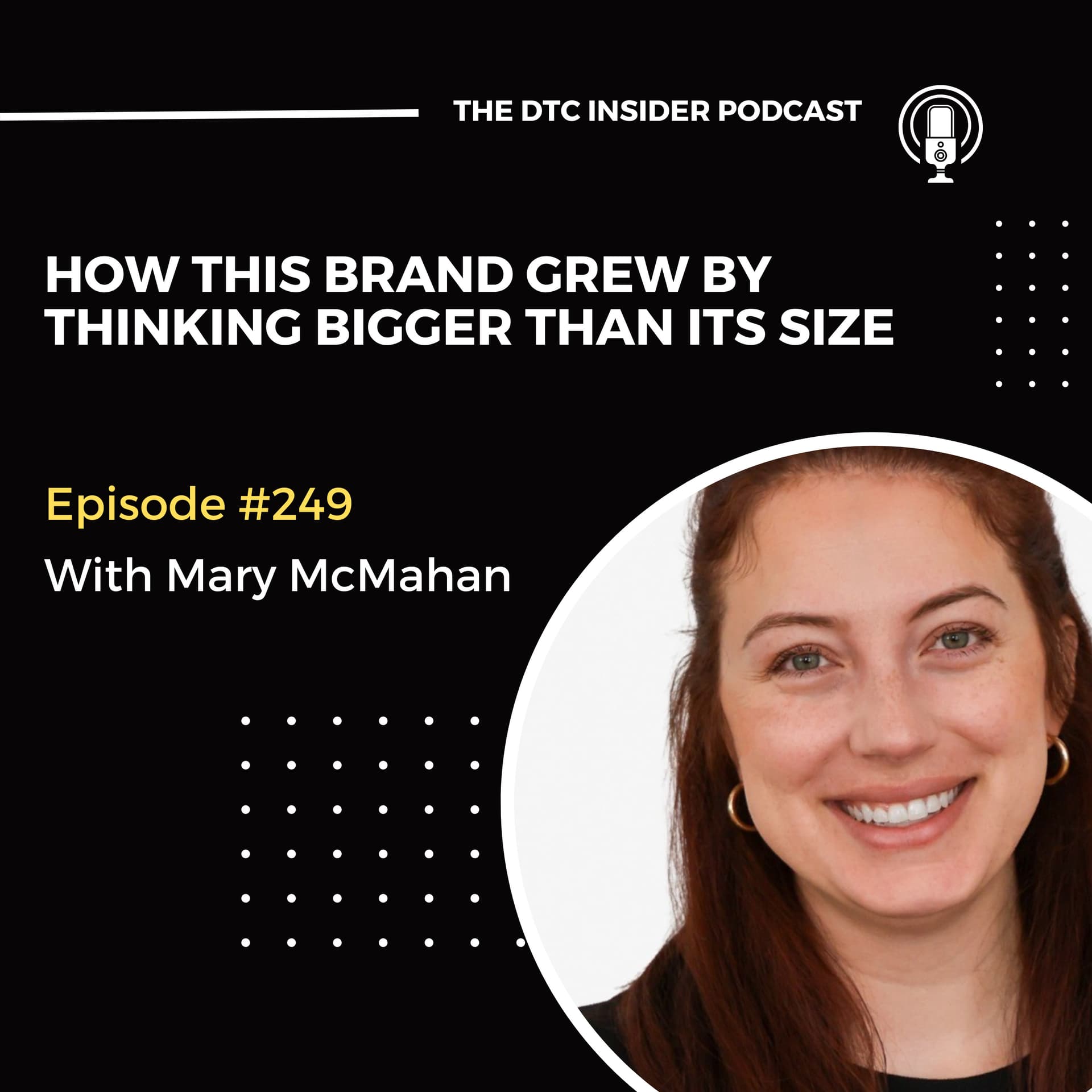
In this episode of The DTC Insider, Brian Roisentul sits down with Dr. Christine Colamonico, co-founder of Jope (Joy of Pets). Jope is a science-backed pet supplement brand created by two veterinarians on a mission to improve animal health.
We discussed:
The origin story of Jope and how her dog inspired the brand
Transitioning from veterinary practice to entrepreneurship
Building a science-backed product in an unregulated supplement market
Growing a DTC pet brand through Meta ads and customer loyalty
Challenges of scaling in a changing e-commerce landscape
Why customer experience and education are at the core of Jope's retention strategy
The pros and cons of launching with one hero product
Expanding from dogs to cats: product diversification and strategic timing
The power of calling customers and building genuine relationships
Lessons on patience, resilience, and staying authentic as a first-time founder
This episode is brought to you by BSR.
BSR helps e-commerce brands that want to scale their business to the next level through paid ads & email marketing.
To learn more about BSR, visit their website or book a call here.