
In short
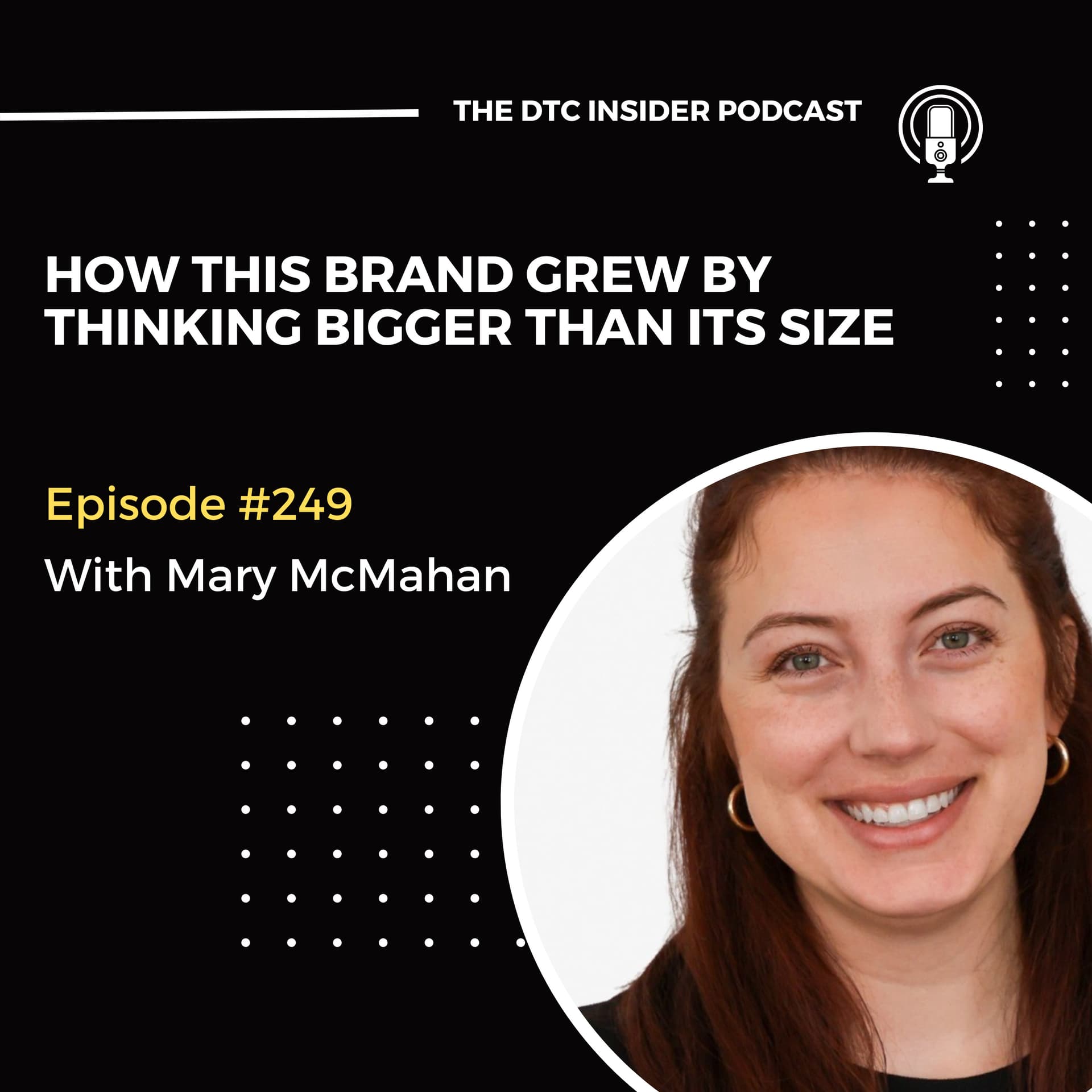
Episode topic: How With Simplicity (clean beauty DTC + wholesale) grew by “thinking bigger than its size,” using owned media, AR try-on during COVID, and relationship-driven affiliate marketing.
Guest
Mary McMahon, brand marketing manager at With Simplicity since 2019. Background includes working at a radio/media group with large-budget clients, then transitioning to a smaller brand with limited marketing budget. She also redesigned the brand identity (logo/packaging) and manages marketing while the company ships/fulfills in-house.
Key claims
Act like you’re bigger by building infrastructure (shipping continuity, virtual product testing). “AI is not your employee” and must be double-checked. Brand = the feeling customers get across every touchpoint. Growth came from affiliate community building; not just influencer payouts.
Notable examples
Instagram Spark AR filters for lipsticks/eyeshadows linked to product pages; partnering with local university students to build filters; competitor discontinued makeup line, creating affiliate opportunity; affiliates preferred email updates; in-person affiliate visits (facials/lunch at HQ).
Written by AI. May contain mistakes. Listen to the episode to check what was said.
Chapters
Tap a time to open that second in VOBrand Growth Overview
0:00 to 0:24
Learn about year-over-year growth and content performance insights.
“Year over year since I started, we've grown.”
Meet Mary McMahon
0:44 to 1:52
Mary introduces herself and shares the mission of With Simplicity.
“I'm Brian Roizenthal, and today I'm joined by Mary McMahon.”
Challenges in Marketing
1:52 to 2:38
Discussing the challenges faced by smaller brands in marketing.
“So what was like the, what do you remember the biggest challenges where back then before the pandemic when you started working for this company?”
Website and Branding Overhaul
2:38 to 3:04
Insights on the website improvements and rebranding efforts.
“Did the brand have like an online store already or did you use an online store when you started working there?”
Strategic E-Commerce Decisions
3:04 to 4:48
Key strategies implemented to enhance online presence without a budget.
“And then part of that was also when I came in, I decided to rebrand the whole brand with like changing the logo, the packaging and everything, which I'm glad our owner gave me that creative freedom.”
Innovative Adaptations During COVID
4:48 to 6:40
How the brand adapted to COVID-19 challenges with innovative solutions.
“So making sure our website flow worked really well.”
Leveraging Affiliate Marketing
6:40 to 8:06
The role of affiliate marketing in driving brand growth and community building.
“and building the relationships with the right, like the right community to grow the brand presence.”
Building Affiliate Relationships
8:06 to 9:10
Discussing strategies for establishing and nurturing affiliate relationships.
“but I think they had fun with it as well because it was just like a new fun experience.”
Effective Community Engagement
9:10 to 14:00
Exploring methods to engage and maintain connections with affiliates.
“And it was a time of exponential growth for many brands.”
Building In-Person Connections with Affiliates
14:00 to 14:58
Learn how in-person connections enhance affiliate relationships.
“She was actually flying over to Washington, D.C., which is right near us.”
Show all 18 chapters
The Importance of Brand Feelings
14:58 to 18:06
Understand the significance of emotional connections with your brand.
“But I know that some brands, what they are doing is that, especially those that work with a lot of influencers or affiliates, they have that like mass communication.”
Retention Strategies in a Competitive Market
18:06 to 21:43
Discover effective strategies for customer retention and loyalty.
“I didn't mention this, but like the first storefront was in a little Airstream trailer in our downtown space.”
The Role of Team Dynamics in Small Brands
21:43 to 23:15
Explore how the size of a team influences brand success and culture.
“a lot because it's, I mean, brands are for profit companies, brand organizations, but at the same time, we are all humans.”
Navigating Marketing Challenges with Agencies
23:15 to 26:11
Learn when and how brands should leverage agencies for growth.
“Oh, you redesigned the logo and every other marketing element when you started working there.”
Balancing In-House and Agency Marketing Efforts
26:11 to 28:03
Understand the benefits of maintaining an in-house team versus outsourcing.
“agency and then finding the right agency partner.”
The Role of AI in Marketing
28:03 to 31:00
Explore the limitations and risks of using AI in marketing strategies.
“And so like I've AI is not your employee.”
Building Affiliate Partnerships
31:01 to 33:10
Learn how strategic affiliate partnerships can drive sales and product innovation.
“I think the one thing I'd mentioned before we started recording was with the affiliate partnerships.”
The Importance of Founder-Led Content
33:11 to 34:29
Discover how personal storytelling and behind-the-scenes content can enhance brand connection.
“And how can we make them more money, right?”
Transcript
Automatic transcript. May contain errors.0:00Year over year since I started, we've grown. We've never dipped at all. That year, we grew 130%. We find behind the scenes content performs best. We did videos of just like showing us like packing orders or just like us eating lunch and like people love it. AI is not your employee. AI does not know your company. AI isn't the one paying the bill at the end of the day. I think the big piece that made us grew was. Welcome to the DTC Insider Podcast, where online business owners come to find actionable tips and tactics to grow their businesses. Now, here's your host, Brian Roizenthal.
0:43Hey, welcome to another episode of the DTC Insider Podcast. I'm Brian Roizenthal, and today I'm joined by Mary McMahon. And she's the brand marketing manager for With Simplicity. Hey, Mary, thanks for being on the show. Yeah, thanks for having me. Yeah, my pleasure. So why don't you start by introducing yourself and telling the audience more about With Simplicity as well. Yeah, so I started at With Simplicity back in 2019. So With Simplicity is a clean beauty brand. We do direct-to-consumer and also wholesale, but we really focus on truly clean and natural ingredients. We have everything from skincare to makeup and even a clean nail polish line.
1:22And then we also have a spa at our headquarters location and an aesthetic school. So we kind of are that full clean beauty ecosystem all under one roof. Wow. Do you go often spa? I do. I take my breaks over there. Yeah, I wish that was my job. So when did you start working for this company? When did I start working? Yeah, when did you start? So I started working in 2019, about a year before the pandemic. Wow. Timing, right? Yeah, great timing. So what was like the, what do you remember the biggest challenges where back then before the pandemic when you started working for this company? I think big challenge, especially working at the time we were a smaller brand.
2:08So when with marketing, I came from background of working at like a radio and media group where you have clients with like massive marketing budgets and then kind of going to a smaller brand where the marketing budget is very small and we have to be more creative with what we're doing. And I think that was a challenge. And also being the sole marketing person as well, really, it was my decision of what we were doing and having that responsibility was a lot, but it also gave me a lot of creative freedom, which I definitely thrive on. So what was it like? Did the brand have like an online store already or did you use an online store when you started working there?
2:47Yeah. So we had like a physical storefront and then the brand had an Etsy shop and then also like a Shopify like online store. And then when I started, we kind of decided to get rid of the Etsy shop and really consolidate more into we had the store and then online and really grow our online presence. And then part of that was also when I came in, I decided to rebrand the whole brand with like changing the logo, the packaging and everything, which I'm glad our owner gave me that creative freedom. It was a lot, but I have a design background, so it was really fun for me to do. All right. So you couldn't help, but you needed to go.
3:22I couldn't. Yeah. I decided to do that. What were you looking for? Like, what do you think the brand or the branding back then was lacking that you wanted? I think the big part was we kept the same brand name because the owner, she really loved it. And I created an identity with it. The issue was just that the design of it is when you call, since we're a really clean, simple brand and you call yourself with simplicity, but the look was very cursive and very kind of difficult to read. It didn't work well on packaging. it it was just really hard to use that logo across multiple platforms so we decided to like the logo need to speak simplicity into it so by doing the word mark with it and then the icon as well where we can use it in multiple places whether it's on socials or with packaging or anything it just kind of made it easier to share the brand and I feel like it also made customers take us a little bit more seriously giving that more elevated look yeah so you started working there in 2019 budget was tight or non-existent, right?
4:25Yeah. When somebody says, do your best without a budget or on a budget, right? So what was your first call back then? Like the first decision to help this e-commerce store take off the ground without the budget, let's say. So the first thing was definitely making sure the website was lacking some functionality. So making sure our website flow worked really well. And so I put a lot of time into like redoing the whole website and that experience. And then also just looking at channels we own. So growing the social media was a priority, mainly Instagram. And then also integrating email marketing into that.
5:07Basically, any type of owned and earned media we could focus on. That's what I did. And really just focusing on building that online presence. Okay. And how did that work out? Because, you know, I'm, for everyone listening, like, for the record in the audience, we have from founders, operators, marketers, and sooner or later in everyone's experience, I think, working from the agency side, like myself, or from the brand side, you experience, you know, the, again, lack of budget, limited actions you can execute. and many times growth is not there because of lack of resources. So what did you find back then that worked the best to help you grow the way you wanted?
5:55Yeah, so year over year since I started, we've grown. We've never dipped at all. And I think kind of bring COVID into it. Like COVID, we grew during COVID, which was very rare for a business to do. It's because we always, the way I function is I like to act like we're bigger than we are. So I wanted to make sure we had the infrastructure in place so that, okay, if the world shuts down, can we still ship orders? How are we going to do stuff? Like, for example, like people couldn't test our makeup in person. So I was like, let's make, at the time, Instagram, those AR filters were big. So we actually did AR filters over makeup so people could try it on virtually.
6:27While that helped our in-store people, it helped our online customers who like live across the country as well. So like being innovative with that. And I think the big piece that made us grow was definitely getting into the affiliate marketing and building the relationships with the right, like the right community to grow the brand presence. I know I just said a lot. But I wanted to ask a follow up question on that because we talked about at length, probably, you know, about the affiliate marketing in a minute. But before, what do you say that you did with the with the filters on Instagram? Yeah.
7:01You like filter or design filters for people to try out the products? Yeah. So during COVID, a big thing was especially with end stores, like we have testers. with cosmetic products or any type of user product, it's really important for them to be able to try it on, to feel it, to how the color works on them. With COVID, you couldn't have testers out. Everything had to be closed. So when someone would come in the shop, they'd be like, I'm like, well, I think it'll look great on you, but I really can't put that on you right now. So we actually worked with our local university, some students there that were really good with technology.
7:32And it was kind of part of their project is we create it through meta Instagram. I think it was called Spark AR. I'm not sure if it exists anymore, but we created like augmented reality filters of our lipsticks, eyeshadows, and those products. And they would then link to the actual products on our Instagram shop. So with that, it helped our in-store people because they could then try on the product, but that also at the same time helped for the people who don't live near our physical location. So I think not only did people, it helped them, but I think they had fun with it as well because it was just like a new fun experience.
8:10And we definitely got a lot of good feedback about that. Just, I think, especially during that time, a lot of businesses, we saw, I don't want to say a lot of people gave up, but they kind of were like, well, it's pandemic, I can't do anything. And we just full steam ahead was like, how can we try to give the same experience regardless of the circumstances going on? That's what I call being resourceful, right? Because say that every brand should use their company size to their advantage, right? The big guys are not going to be into doing some crazy stuff, innovative stuff, or moving fast, or as fast as the startups or smaller brands.
8:49So I think that there's a lot that small brands can do. But this one, I think across the year, over like almost 250 episodes of this podcast, I have never heard a company that accompanied by you did. So congrats. Well, thank you. Innovation right there. In a time that was tough for many, right? And it was a time of exponential growth for many brands. Of course, not for others, but those who had, those brands that had an online presence already were probably in a better position than the ones that didn't have a lot of experience with e-commerce because of, you know, it's easier to scale when you are already doing something and when you're not.
9:33So you started e-commerce, if I recall correctly, right before the pandemic, but in the pandemic is when it exploded, right? So you said that you did that not only through this, you know, amazing filter and this innovative strategy, but also through affiliates, right? Yeah. So I would say it's probably a couple years after the pandemic or so. We had already had some affiliates and partnerships going on. We weren't really putting like too much effort into at the time, because I feel like at the time with influencers, you used to be able to just send someone product and then they would post on stories and share it.
10:07But then slowly people realize, oh, I can make money on this. And so at that time, people were like, hey, like, I want $2 ,000 for a story. And we're like, sorry, like, that's just not aligned with what we're doing now. So we really pushed hard into building affiliates and building that community of people that have the same kind of values as their company, like the low-tox living, wanting to live more natural lifestyles. And I think this is a little bit more luck for us, but as one of our competitors who had a competing makeup line to ours, they actually fully discontinued their makeup line. So those people were scrambling, trying to find someone.
10:46And luckily, because we already had our presence and we'd already start creating some of those connections, there was one affiliate that some of her followers actually reached out to us. We're like, you need to talk to her. So we didn't even have to find her. Our community found her for us. And that year, we grew 130 % mainly because of that one brand dropping their makeup line, but also because we built, we found the people who are already promoting that makeup line and we created the relationships with them. Wow. So right time, right place, but you need to be prepared anyway. Right. Yeah. Oh yeah.
11:20Yeah. It's like, like when you started T like the first affiliate you worked with, do you remember that affiliate? I know there were some the brand worked with before I started and I think some of them are still around but it kind of like ebbs and flows like some kind of come in and then they like move on to different things but we've definitely built like a strong core community around our affiliates and we're really this year we're really pushing hard into that sometimes I think affiliates and influencers feel like they're being used as just strategy for a company and we really want to focus more on like you're actually like part of this growth and like that community building Right.
11:58So I want to know everything about it because I know the audience wants to know everything about it too. So how do you like get affiliates? Do they, like, I'm assuming, and I'll let you tell me right now, but that some are inbound, some outbound, if any. Do you use any tools? How do you reach out to them? And you said that you are trying to build like a great community. How do you, what do you, what, how do you find a community of affiliates yourself? Do you have a Slack channel or WhatsApp channel or Discord school channel in which you are in touch often? Do you do like frequent or occasional calls to brief them or keep in touch?
12:39What do you do with that? Yeah. So in terms of acquiring affiliates, a lot of that is I spend time on Instagram and I go through profiles. So I like I go to our current affiliates profiles and I use the see other profiles like this one and see who's similar to them. And then I also see like who their friends are, who they're hanging out with, because they all typically everyone finds their people. So I kind of try to get into that group. So a lot of our affiliate outreach is completely manual, not really using a tool for that. We do have some people that come to us directly, which has been really great as we grow.
13:12I think we're getting more of that brand awareness. And that's it's definitely that's much easier on our end if you come to us compared to me having to reach out. But a lot of the relationships literally just start with Instagram DMs. I always say if you don't ask, you'll never know. And if someone says no to me, I'm like, I'm like, fine. Like, at least I took the effort like to try to do that. So it starts with Instagram messages, then sending products. And then the way we kind of continue the relationship is we do like a newsletter, email, like newsletters to our affiliates. I actually sent a poll out to all of them, like, how do you want to be communicated to?
13:46And I was thinking like WhatsApp or Slack would be preferred, but actually it wasn't. And a lot of them preferred emails. So it's asking your audience, because all your audiences want to be communicated to differently. so asking them where they wanted to stay connected with us and then we affiliates that live close to us we typically actually invite them to our headquarters and they get a facial or we like we kind of treat them to lunch and everything to create those in-person connections that you really can never fully get over the internet and we actually even one of our affiliates who lives in washington state which is across the country from us i saw i was looking at her stories because I always like to kind of see like, where are they up to and kind of like talk about like non-business stuff with them.
14:27She was actually flying over to Washington, D.C., which is right near us. And I was like, hey, like you're two hours from us. Like, do you want to make a quick, quick trip down to give you a facial? And she actually was so excited and she made the trip to see us. I feel like having that in-person connection was huge. Yeah. So from my conversations with brand founders and operators that are doing something great as you are with affiliates, what, you know, these strategies, of course, are all over the place, different brands, different playbooks. But I know that some brands, what they are doing is that, especially those that work with a lot of influencers or affiliates, they have that like mass communication.
15:08Like, again, as you said, through email and other massive channels. But then they have a community through different platforms. The platform is not important. The important thing is that you are in touch with them and you can, there's a two way line between the brand and the affiliate. and they do weekly calls with the top affiliates only. So again, I think that sometimes if you ask people what they want, they will tell you what's easier for them and they jump into calls or they just want the commission and move on. I would encourage them to be part of something bigger and you encourage them through, I don't know, giveaways, prizes or something else to set them in the spa so they can join a call or a community and then you incentivize them to keep coming back.
15:58That's, of course, on the brand side to achieve. But I think that it could be much more meaningful what you can get out of that community and what that community can get out of a brand as well. Because at the end of the day, they want to feel part of something. Of course, they want the money, right? But they'll be part of something if you do things the right way. So I think, yes, again, sometimes it's a mix of asking, what do you want? But then sometimes it's, hey, we want to invite you to do this if you don't want to totally cool but then is what we are doing with top affiliate one thing here's what you buy yeah i think it's also just remembering like they are human too and they're not just a metric in your business ecosystem and like sometimes they'll post and like someone has like a baby it's like reaching out like congratulating them or they post they're reading a book i'm like oh my gosh i read that book i'm i asked i'm like what did you think of it, it's not treating them like they're your marketing all the time is very important because we all thrive for human connection, especially in today's world as we get more and more digital.
17:01I know you've mentioned many times now and before we started recording the word brand. What does that mean to you in an era of, I don't know, it's like fast pace, everyone wants everything right now is the attribution and sales. And what do you think of that balance of brand between everything else, let's say? I think for me, the word brand means feeling. Is whenever you interact with our brand, how does it make you feel? Is it whether you're interacting with us in store, if you're shopping online, you send us a customer service email. When you receive your order, you come get a facial, anything like that.
17:41is it's the feeling that is left with the customer. Because a lot, it's like in general communication, people aren't gonna remember what you said to them, they're gonna remember how you made them feel. So as we grow, and especially as like e-commerce and everything is changing, the way we, it's like, we want, obviously we want our brand to grow big, but we never wanna like lose our sense of self and the original feelings that the customers who shopped with us back in the beginning, I didn't mention this, but like the first storefront was in a little Airstream trailer in our downtown space. Like we had a tiny little shop and there's people like 11 years later now are still talking about that because they remember the feeling of first walking in and that connection our owner made with them.
18:21So taking that and making sure that feeling is shared across all of our channels. I never want people to feel like they're being sold to, they're being marketed to, they're being lied to. I want them to feel like they're part of a community that we truly care about them. And that, yes, obviously I want you to support our brand so it grows, but I also want you to have healthy skin and live a healthy low-tox life. It's more, for me, it's more than just the numbers behind it. And the other day I heard something from a brand owner that, you know, made me think because it's something obvious when you think about it, but it's not something said often, right?
18:55I don't hear that often. And it's that in this era of, you know, commerce, let's say, we are all selling services, whether it's through a product or not, right? So what do you do in that regard? Like, how do you think of that? Like, because it's very competitive out there and a brand, like an industry, like beauty is brutal, like the competition and the others, you know, right? And acquisition is one thing, but then activation, where I call activation, at least, you know, people to encourage people to start consuming what they bought in the first place. Sometimes it happens naturally and sometimes they need a little help and then retention, right?
19:39So what are the, let's say, services or actions that you provide them with or you do to make that happen? Yeah. So a big focus of our marketing is definitely that loyalty and retention. And I mean, we've had people with us for 10 plus years. And I think that kind of shows, I think what we're doing is right. So getting customers is hard, but I think holding on to customers is even harder. So the way we address our community, I think it's important the language you use is we call them the WS. It's like with simplicity, WS family to let them make it feel like they're part of it. Not just saying, Hey, you customer number one, two, three, four.
20:16And then with like loyalty is we do our loyalty program. Basically it's like you're getting 5 % back in 5 to 10, 5 to 15 actually percent back in rewards and so i think kind of understanding that the economy is tough right now and so meeting customers where they're at so we actually sent an email out once that was i was a little worried how it was gonna be received but i think it was received well is we kind of told customers like hey we know the economy's tough right now maybe makeup isn't your priority and you know what it's it's okay and like we're here for whenever you need your makeup but But like, I think just they felt like we saw them with that.
20:52And so I think a lot is in the copy you're using, the language you're using and just meeting your customers where they are and so that they don't feel like a number. So like email marketing is the really big one for that. And then the loyalty program for that retention is like people are so possessive of their loyalty points and it's huge to them. I love that move. That was bold, by the way. And it was I was scared, but it was people actually a lot of people don't respond to like company emails but I actually got a lot of responses of that one saying like this is my favorite email you've ever sent because we saw them and they felt like I don't I think people just really appreciated it and just to be like raw and be like hey like yeah like our sales this month maybe aren't where we want them to be but like we get that you need to put food on your table more than you need to put lipstick on your lips like that's just humanity yeah makes me think a lot because it's, I mean, brands are for profit companies, brand organizations, but at the same time, we are all humans.
21:51And we, if we can build a report, genuine report with the audience, I think it's the best thing brands can do. But again, many brands could be like afraid of doing what you did. And it was great. I think that those, sometimes when you don't sell, you sell the most. Like clients would send, I don't know, educational emails to make the customers' lives easier after they bought something. And we reached a thing. And those were the best performing emails, for example. So I'm with you. So what was, like, how big is the team? Or how small is the team? Yeah. So the full team. So we do all of our, like, shipping production, all of that, like, in-house.
22:32So our full team, I think, is about with like the estheticians in our storefront, I'd say like 12 to 15 of us or so. So we're like a pretty decent sized company. We are I would say we are typically like one person per role. So like one person handles our production management, one's handling our fulfillment. And then I handle marketing with a new marketing person starting soon next week, which is going to make my life so much easier. I'm like, thank you. But yes, we are a smaller team, which I love because I've worked in a bigger corporation where you feel like you're just a number in a company.
23:03And here it's like you get to see the full process and be part of everything from product conception all the way to shipping it to the customer. And I think that's something that is rare to get in businesses. And I absolutely love it. Oh, you redesigned the logo and every other marketing element when you started working there. So your footprint is there. Yeah, I'm very territorial. of it which is probably a problem but like this this for me like I'm very I get really into my work and this is definitely it's my job and yes it helps me pay my bills and everything but it's a passion project as well with all the hats that you wear that you wear every single day what does your like a day in your life look like when you start working what do you look at any dashboards any main metrics that you use like like the with a morning coffee or tea the first thing you check in the screen when you get to work?
23:55I like just kind of see where sales are at because I think that's like the good like booster of like confidence. Typically check that and then go into emails. My typical day is kind of all over the place because I do wear many hats where like there's days where maybe I don't do anything marketing related, but like I'm working on new product development, which doesn't fall under marketing at all. But like I love having my hands and everything. I might be working on new package design or like even today because our fulfillment managers on vacation, I just shipped out orders. But I think it's important, though, especially for marketers to see every piece of the company.
24:30So like when I'm packing orders, I'm like, oh, like this, these people are buying these two products together. Like, yeah, we can look at it in a dashboard, but like physically looking at the order, I think is important. And then just kind of I'm seeing like which products are moving, which ones aren't. And then one of my favorite things to do always with in the company is to figure out where there's tension points of like this could move smoother and figuring out solutions so like figuring out how can we cut down our shipping times to save on that or how is our unboxing experience for the customer because that's marketing as well what do you think about you know because everyone is in the house you said right no external so what do you think about that like when do you think that a brand like this one could be ready for external help if you think that's a thing you know and what the role of let's say, growth partners or agencies.
25:22What do you think of that right now? I know, you know, I have an agency, so you could be biased, don't be. But I'm curious about what you think from the brand side of, like, about how agencies can keep helping brands this day in this tough era or different era, let's say. Yeah, I think, I mean, I've always liked in-house because I feel like I have more control of it. But I think agencies can help brands as they do get bigger and you feel like, especially if you don't want to grow your team and you're like, hey, it's going to be much easier to outsource it. Like there have been times we have outsourced a few things like PR.
25:58We hired an external person to handle PR for a bit because I think you have to know your strengths and weaknesses. And I was like, I knew nothing about PR. Like I can go pitch a magazine, but like if they already have connections, I might as well tap into that. I think you just have to figure out, yeah, if you revenue wise, if you can bring on an agency and then finding the right agency partner. And then I think it's, I mean, people might be different. Some people like to have an agency that covers all their marketing, or you could do like, want to have this agency do this, or this one do this, and I'll keep this in house.
26:28I really think it depends on your business. It depends on the employees you have and whether or not you want to deal with mentally the marketing side of things, or if you really want to pass that off. Yeah. What do you think like brands could benefit from agencies right now? And what do you think that is no longer a thing? I know that from the agency side that like there's a mix of things going on right now. On one hand, of course, we all know about AI, right? It's doing some crazy stuff for good and for agencies as well, but for brands too. And then these days, there are fewer levers within the ad accounts to touch before, like back in 2018.
Read the full transcript
27:13And well, during the pandemic, there were a lot of levers to pull and it was like more complex, let's say. But these days, it's not like growth doesn't happen within the ad account per se. It's more strategy, planning, numbers, understanding the customer journey. So what areas do you think an agency could come in handy for a brand like yours? I think like for our brand, I think agency, especially when it comes to like example, like running any type of ads across any platform, like I know how to run meta ads and stuff like that. But I think that's something takes years of experience really to build.
27:52Yes, AIs integrate into it. But I've learned about AI, you have to double check everything it does, because it might it could be like, I mean, obviously, as metas, AIs could tell you to put$2 ,000 budget towards something because they want money. And so like I've AI is not your employee. AI is does not know your company. AI isn't the one paying the bill at the end of the day. So I think still having agencies or like contract workers or anyone who still has that base knowledge that like we all learned either back in like marketing school, like college or doing our own research. I think agencies can still have that human touch point on it.
28:26My personal take, and I'm trying not to be biased, of course, but is that as you know, it is said you know there are ten dollar tasks uh ten dollar the hour like task a hundred dollar task and thousand dollar task and so on so if you are the that's in your case the only one or one of the only people in that department doing ten dollar hours ten dollar tasks sorry that's probably preventing the brand from growing even more because you're focused on the midi gritty and daily stuff, but not so much in the high level strategy, let's say areas that you should be working on. So I think that could be it.
29:09But again, some different brands, different needs, of course, and with AI, I have friends who have nothing to do with this world. Like they are doctors, for example, and I've been a victim of that as well. Like they get patients like even more as we speak, coming with the results of whatever study they did with chat GPT or thoughts take on the results. And the same happens in easier, much easier with marketing. So I wrote a piece in my newsletter that said that this is the know-it-all era because the danger is not when we use AI in areas that we are knowledgeable in, but when we use it in areas that we don't know a thing and we assume whatever it says is true.
30:00And we can hurt a co-worker's job as well or area because it's like he or she's wrong. That's not right. And we get that at the agency as well from clients that sends us a weekly report from God saying all the universal truth and warns clients all over the place. And it's like CPM, like cost per impression is increased by 1%. Breath flat. It's like, wait. Yeah. So it's not there yet, but it will be soon. Yeah. And I was like, even like here, like using AI, not just marketing, but other tasks. I always tell our team, like, I'm okay if you use it for stuff, but you need to double check it. And AI is not going to have the answer to everything.
30:42Because I've like even using it, if you use it to like draft like a blog post to your website and help with like SEO keywords, like sometimes they'll like mention another brand in it. I'm like, like, no, like we don't do that. And so I think that's like agencies or like marketers and stuff is our knowledge is still important. I don't think AI is going to replace that. Right. So is there anything I didn't ask you that you like to tell the audience? I think we covered it all pretty much. I think the one thing I'd mentioned before we started recording was with the affiliate partnerships. We're now taking one of those affiliate partnerships that the way I found her, she's like one of our best affiliates.
31:20I found this random link linking to our website. I was like, what is this? It was like a blog page. I found her and I was like, hey, do you want to be an affiliate? She's already promoting our products. We have cultivated that relationship. She lives near us. We get together and like hang out and everything. And now we're releasing a collab product with her launching in a few days. So it kind of goes to show your affiliates can be part of your journey, not just in driving sales, but like product innovation. And also like there's so many opportunities with it. And for what it's worth, there's a brand called Battlebox.
31:54They, it's an amazing eight figure, I don't know if nine right now, but I interviewed Roman, the CEO and founder a few years ago on the podcast. They have a, I don't know, a Netflix TV show, a reality show, and they have a similar, a similar story to yours in the, in like the, they discovered these like orders coming from, you know customers mentioning a certain creator but it wasn't a creator it's per se they found that it was a customer who happened to record videos about like their products without anything in return like we're asking anything in return long story short they started to say hey we'll ship products for free then they said okay we'll go into pay and then hey move you and your family to our headquarter city and town.
32:49And this day is the face of a brand full time. So that story and your story both are amazing because it shows that a creator first, if the relationship is good, it shouldn't be a one-off with creators. Brands are always looking for more and more and more creators, but not nurture creators. And how can we make them more money, right? too that you can build amazing relationships like personally and build again product collections and way more things together exactly like i said the people who are already talking about you without being monetized are the ones who are going to be your biggest fans compared to the people that come out and they're like hey give me five thousand dollars i'll talk about you like doesn't work we've tried it doesn't work last question i have for you have you ever done or do you do founder-led content or a content produced internally by your team not produced but in which either you, anyone on the team or the founder appear in that content like consistently?
33:49Yes. So we feature our founder a lot. A lot of people resonate with her story of why she made the brand. She didn't really want to make a business. It just kind of turned into a business. So we definitely use her content a good amount. I don't want to say I'm the face of the brand because I'm not the owner, but like my face is like all over everything because especially during COVID, I was like, well, I can't get models. So I'm going to model every product. So we definitely our president, our social media, our team gets involved. So we find behind the scenes content performs best. So we kind of show like our day in life here or like we did videos of just like showing us like packing orders or just like us eating lunch and like people love it.
34:26So I think kind of putting that personal aspect back into the brand is key for us. I love that. Well, it was a pleasure to have you on. I don't know if there's anything else for us to cover. We covered a lot. Yeah. Well, thank you for being here on the show. really appreciate it i loved the story and everything you had to say and for you in the audience thank you for listening thus far we really do it with a lot of passion to share great stories like this one with you so you can learn i learn a lot as well and implement whatever we get out of this in our companies or in our in our jobs let's say so if you are on youtube please subscribe to the channel, share the video with somebody else who could use this help as well.
35:11If you're an Apple podcast or Spotify, leave us a review, hopefully five stars, but the review that you think it's honest and leave us a comment or a question, even if it's for me or for Mary, we love answering questions. So thank you. And yeah, see you in the next one. Bye.
35:36DTC brands grow through paid ads and email marketing campaigns. If you'd like us to help your business grow, head on over to bsrdigital.com and schedule a call with us.
From the publisher
In this episode of The DTC Insider, Brian Roisentul sits down with Mary McMahan, Brand Marketing Manager at WithSimplicity, to discuss how a small clean beauty brand grew by staying resourceful, building genuine relationships, and putting community at the center of its marketing.
Mary shares how she joined WithSimplicity in 2019 as the brand's sole marketer, working with a limited budget while taking on everything from rebranding and packaging to website optimization and social media. She explains how focusing on owned and earned channels helped strengthen the brand's online presence, and how creative ideas like augmented reality makeup filters helped WithSimplicity adapt during the pandemic.
They dive into the brand's affiliate strategy, how Mary manually finds creators through Instagram, why building genuine relationships matters more than treating affiliates as marketing metrics, and how one affiliate relationship is now evolving into a product collaboration. Mary also shares how WithSimplicity grew 130% in one year by being prepared to capitalize on the right opportunity and connecting with creators who were already aligned with the brand's values.
Plus, they discuss why brand is ultimately about how customers feel, how email marketing and loyalty programs can strengthen retention, the value of behind-the-scenes and founder-led content, when agencies can help growing brands, and why AI still needs human knowledge and oversight in marketing.
-- This episode is brought to you by BSR.
BSR helps 7-figure+ brands build and optimize strategic growth systems that unlock hidden revenue and scale profitably, without adding chaos, channels, or unnecessary spend.
To learn more about BSR, visit their website or book a call.


