In short
Q4 2025 planning for DTC brands amid tariffs, margin pressure, uncertain demand, and ROAS/incrementality challenges. The episode summarizes a Keen survey of 600+ brand operators and outlines two approaches to uncertainty (pull back vs “zig when others zag”), plus how to plan with contingency models, ramp-up/ramp-down marketing, and top-of-funnel continuity.
Guest
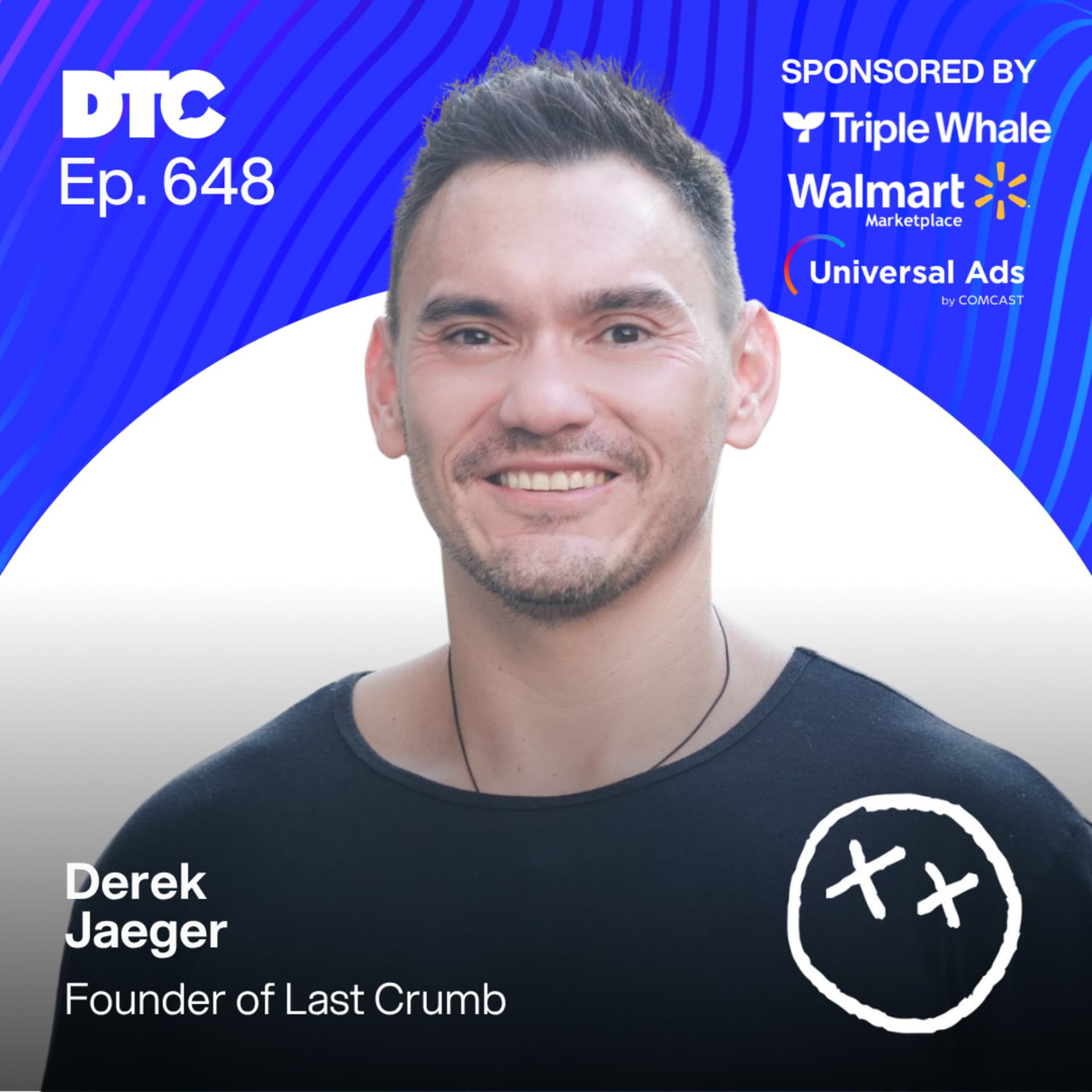
Justin Jefferson, VP of Strategy and Insights at Keen Decisioning Systems. Keen builds MMM/forecasting software (BaseSense) using historical sales, financials, marketing spend, and external factors to model scenarios and optimize budget decisions.
Key claims
58% adjust in real time; only 20% have contingency models; <7% are highly confident in Q4 forecasts; mature brands avoid going “dark.” Over-indexing on bottom-of-funnel hurts efficiency; use marginal ROI (MROI) vs short-term IROAS.
Notable examples
A brand with delayed inventory modeled “ease in then ramp” to avoid early waste and exceeded revenue forecasts; radio/podcast digital audio added to a model helped hit goals; streaming/CTV/OTT and improved targeting/CPM control are promising.
Written by AI. May contain mistakes. Listen to the episode to check what was said.
Chapters
Tap a time to open that second in VONavigating Q4 Uncertainty
0:00 to 0:54
Learn how brands are adapting their strategies for an uncertain Q4.
“Things are going to change year to year, so your plans shouldn't be the same year to year.”
Understanding Q4 Dynamics
1:42 to 2:36
Discover insights on approaching uncertainty in Q4 planning.
“Justin, to kick things off at a high level, what's your read on the DTC world heading into Q4 2025?”
Keen's Role in Decision Making
2:36 to 4:46
Learn about Keen's approach to data-driven decision making for brands.
“Give our listeners who maybe aren't as familiar with Keen a reason for why you guys are a kind of ideal partner for this topic at this time.”
Strategic Marketing Approaches
4:46 to 6:07
Explore strategies brands can use to capitalize during uncertain times.
“The one way, which is, you know, okay, we're a little uncertain.”
The Importance of Top Funnel Marketing
6:07 to 7:20
Understand why focusing on upper-funnel marketing can enhance ROI.
“Meta, we come, we're a meta first agency.”
Planning for Contingencies
7:20 to 8:21
Learn about the significance of having contingency plans for brands.
“So what we often try to help customers understand is that when you are spending at the bottom of the funnel to capture more and more demand, you're not actually bringing any of that there.”
Modeling Different Scenarios for Planning
8:21 to 11:19
Discover how to model various scenarios to optimize marketing spend.
“So the first question that we're covering from the report that we did is just sort of, it speaks to like the state of planning overall.”
Stocking the Pond for Q4
11:19 to 14:30
Understand the importance of preparing customer retention strategies before Q4.
“And if we get these tailwinds, great, we can actually start to ramp up and we'll incrementally place dollars on these tactics in these time periods.”
Managing Margin Pressure
14:30 to 16:53
Explore insights on managing margin pressure during peak seasons and pricing strategies.
“something that you guys take into consideration when you when you look at Q4 planning?”
Confidence in Q4 Forecasts
16:53 to 19:25
Understand the levels of confidence among brands regarding their Q4 forecasts.
“Is that something you can model with Keen as well?”
Show all 17 chapters
Brand Strategies for Market Presence
19:25 to 21:08
Discover how mature brands maintain presence during uncertain times.
“that they were highly confident in their Q4 forecasts.”
Reinvestment Rates Across Brand Sizes
21:08 to 22:36
Learn about how reinvestment rates in marketing differ across various brand sizes.
“We had a lot of brands that just kind of kept leaning in.”
Evolving Marketing Metrics
22:36 to 25:06
Discuss the transition from ROAS to focusing on long-term marketing performance metrics.
“I think that's one of the oldest quotes about marketing is half my budget works and half my budget doesn't, and I really don't know which half.”
Experimentation in Marketing Budgets
25:06 to 27:50
Examine the balance between proven strategies and experimentation in marketing budgets.
“it shouldn't be on that kind of, you know, two week, three week, four week period.”
Innovative Ad Formats and Strategies
27:50 to 28:03
Explore innovative ad formats and media strategies that brands are utilizing successfully.
Navigating Inventory Challenges and Strategic Advertising
28:03 to 30:24
Learn how brands can effectively manage inventory uncertainties and optimize advertising strategies during uncertain times.
“And so sometimes they'll lean into the recommendations.”
Optimizing Advertising Tactics for Better ROI
30:25 to 31:46
Discover strategies for optimizing advertising investments and improving return on investment during promotional periods.
“I think everyone should go check out the report that we produced in partnership with Keen here.”
Transcript
Automatic transcript. May contain errors.0:00Things are going to change year to year, so your plans shouldn't be the same year to year. We surveyed over 600 brand operators to understand how they're navigating a volatile Q4 shaped by tariffs, margin pressure, and potentially softening demand. In this moment, so much is changing, and you can all embed that into these optimizations and then compare them across. Two fundamental ways you can approach an uncertain Q4. The one thing I see that very mature brands are doing, they ensure that they don't go dark. Marketing channels are continually evolving. What one channel does now may actually change at a time, but if not, there's going to be three or four new channels in a year or two.
0:36It never goes from normal sales to peak Q4 sales. There's always a ramp up period. There's always a ramp down period. And if you're not planning for that, you're going to be missing out.
0:53Welcome to the D2C podcast. I'm Eric Dick. This is a really exciting podcast today. we have created a new sort of flagship product in the D2C ecosystem, which are these partnership-based surveys that we're doing with our audience. And I'm really excited to announce the survey that we did with Keen Decisioning Systems, where we surveyed over 600 brand operators to understand how they're navigating a volatile Q4 shaped by tariffs, margin pressure, and potentially softening demand. So our guest today is my third guest from Keen Decisioning Systems, Justin Jefferson, VP of Strategy and Insights. And now in this episode, we're going to unpack the key themes from the report, and we're going to get Justin's take on the state of Q4 forecasting, planning gaps, and what preparedness really looks like this time of year, this year specifically.
1:42Justin, to kick things off at a high level, what's your read on the DTC world heading into Q4 2025? Uncertainty is probably the hot buzzword. I think we hear people switching back and forth from what they're trying to do, what they're thinking about. It's a lot of we hear something from our leadership that they want to do one initiative one day, then the next day that might be switched. There's really just a lot of different chaos out there and people, what we're seeing, kind of overreacting and maybe getting a little bit too aggressive with some of their moves. And we're ultimately just trying to help them make sure that they have the right plans and also like variations of their plans.
2:20So, you know, when they start to see the path going one way or the other in the market, they understand where they can go without knee jerk reacting. Most oftentimes we're seeing a lot of knee jerking. So we're just trying to help people be strategic, thoughtful, think ahead, you know, kind of get ahead to the chaos. That's the dark side of being nimble, I guess, is knee jerk reactions. Give our listeners who maybe aren't as familiar with Keen a reason for why you guys are a kind of ideal partner for this topic at this time. Yeah. Keen is, first and foremost, really focused on helping customers make decisions.
2:53And to do that, we have to understand, yes, what are your activities and how impactful have they been historically? But also, what are your decisions moving forward and how can we forecast that and make sure that you're using the right one? So at the BaseSense, we offer a software that really helps you build kind of an MMM model from a historical perspective. We'll take into account your sales, your financials, your marketing investments, activities, as well as your external factors. Things like your distribution, your number of products that you're selling, anything that's really kind of going on, on-site promotions.
3:25We want to take into account what is helping to drive your sales, not only your marketing, but everything else as well. And then we use that information to frame, okay, so now what should you do next? Just because something performed well historically last year doesn't mean it's going to be the exact same next year. So what we help them do is we take a stance around, you know, are you trying to optimize the budget? Are you trying to grow your revenue? Are you trying to just, you know, drive profitable long-term growth? Or, you know, we can kind of work through different forecasting situations and optimizations.
3:53And then we layer in different assumptions around the environment. So oftentimes in a non-chaotic world, we're saying, hey, you know what? Year over year, things are going to be about the same. Maybe the category grows a few percentage points. But now this is really where we get to shine because in this moment, so much is changing and you can all embed that into these optimizations and then compare them across. So customers are changing their margins. They're changing pricing. They're changing their promotional schedule. They're changing a lot of different facets to understand, OK, given my objective, which is typically to get as much revenue as you can, as profitable as you can, how can I best achieve that?
4:29I've got to prioritize something or other and I can see what are the tradeoffs of those decisions. And so this survey was available on our website. We'll put a link in the show notes here. But if you just go to directtoconsumer.co, we'll have a call out on the website. You'll be able to see you can go through this whole survey. And we're going to go through some of the key insights in it. But just in our pre-chat, I wanted to just even just kick things off with your take on the two maybe fundamental ways you can approach an uncertain Q4. I thought that was kind of interesting. The one way, which is, you know, okay, we're a little uncertain.
5:00We're going to shy away from it. And the other is to double down and take advantage of that uncertainty to gain market share. Yeah, yeah. I mean, I think the first one is probably the most common that everyone does, which is, oh, no, something might happen. Let's pull back. And so they start figuring out, okay, where should we pull back? How much should we pull back? They start just hacking away at channels, right? Which is never really what you want to do. That's the knee-jerk reaction. the other side of the coin which has actually been working through a lot of customer kind of strategic plans around is zigging when everyone's zagging if everyone's pulling back and the market's getting pretty quiet and there's really not a lot of competition putting the message out there guess what that allows you to do get your message out even like louder and you can do that at cheaper rates if everyone's pulling back you can do that in more strategic timing and positioning so really when everyone's trying to pull back because they're uncertain it gives you a chance It's to really focus on your messaging and getting in front of the consumer, really more at the top of the funnel, not really trying to, you know, over index the bottom, but just helping to ensure that the, you know, the end consumer knows the value that you have, what you're bringing and kind of keeps you top of mind when they are ready to make that purchase.
6:06I think the first podcast I did with you guys was with Greg Dolan, and it was really like foundational one for me, thinking about the top of funnel as not just always meta in a way, right? Meta, we come, we're a meta first agency. We're now an omni-channel agency, of course, but still we have the tendency to think about meta first and foremost and that environment because it is sort of compresses the funnel from top all the way into bottom. But it's also a lot of reports I've been reading recently, like it's tough to establish your brand sometimes in that environment. And there's other ways you can lend credibility to your brand top of funnel that I think tools like Keen are interesting because they can, with your forecasting, can kind of help you understand stuff that's harder to understand about those types of top of funnel channels.
6:52Yeah, yeah. I mean, at the end of the day, what we see oftentimes with growing brands, especially on the DTC side, is when they start working with us and we're kind of evaluating their lay of the spend and where their profile has been executed historically, they're over-indexing on the bottom of the funnel. Almost always. They're spending too much on the bottom and they're really not taking advantage of the top. And that is going outside of meta as well. We see a lot in the video dynamic as well as the despite. Still got a lot of inventory out there you can strategically get in front of the consumer.
7:20So what we often try to help customers understand is that when you are spending at the bottom of the funnel to capture more and more demand, you're not actually bringing any of that there. So at some point, you're going to hit the point of diminishing returns. And you're just spending and spending and spending. You're going to see higher CPCs if you're on the search side, higher CPMs. But ultimately, if you can start to support that awareness, then you're naturally going to see more interest around your type of either topics or brand terms, which enables you to grow that bottom of funnel. And so we've actually modeled out and seen it come to success with multiple customers showing, you know what?
7:58I just want to take incremental dollars and put them at the top of your funnel and watch your bottom get so much more efficient. Because right now you're just overspending and you're not supporting that with top of funnel. And so it's just been a very, very eye-opening experience for a lot of customers to come on where they can't necessarily value the top of funnel in their direct attribution tools, but they can use a tool like us to help understand and model and forecast that out. So the first question that we're covering from the report that we did is just sort of, it speaks to like the state of planning overall.
8:27We were talking about so many brands in this space are nimble, which can lead to not being great at long-term planning. I think there's a lot of brands that are really good at surviving month to month and year to year even. But when it comes to really being proactive about planning, and that was something that we saw in the data where we saw that 58 % of the people we surveyed are sort of adjusting in real time. And only 20 % have actual contingency models, which I thought was interesting. That's something we've done for D2C since the beginning is always have a number of P &L different models depending on what happens.
8:59But speak to that a little bit. What is a contingency model, first of all, for those who don't know? Yeah, I mean, I love this insight. It helps people realize that they need to be nimble and they need to kind of have alternative options and know what the lay of the lane could be. But many of them don't have that ahead of time. And the nimble can also be associated with reactive. We talked about the dark side of nimble. It's just that you can be overreactive sometimes. And so what we help customers try to do is think strategically to act nimbly. You need to understand that the environment is going to play out in different formats.
9:32Right. Could be massive headwinds, could be massive tailwinds, could be the same. Right. But in those different environments, how much you're spending needs to change. You do not spend the same amount when you have massive tailwinds as you do when you have massive headwinds. You're just not going to make as much money. You're going to be spending way past the point of admission returns. So for us, it's really about helping people contextualize and frame what might this environment look like. Right. And so for our customers, we do that from everything from like margins to category growth. And we set up kind of ranges, right?
10:03We say, okay, in a best case scenario, hey, you know what? Maybe it's up 5 % category. In a worst case scenario, maybe you're down 10, 15 % on the category growth, right? Maybe the basis and we're right around that zero. Let's model out. If you just did the same thing, what is the outcome of these three different situations? And you can see what's the revenue gap and the profitability gap. And then from there, you want to ask, okay, well, how do I make sure that in the situation where I have these headwinds, I can still achieve the same amount of revenue, right? Let me understand what that might require.
10:35So you can model that out and know how much incremental spend or promotional activities or what other things can you do to help achieve that revenue despite your headwinds. And if you understand that outcome and it's too much money, it's too rich for your blood, then the question really becomes, okay, great. What am I willing to sacrifice and what's the trade-off? And so you can start to understand the range of revenue outcomes associated with the expected investment profiles. And so what that really means is, hey, we can start to model, okay, let's just say we want to get minus 3 % revenue, minus 5 % revenue.
11:07We can kind of model out different revenues, gives you different investment plans. So you can right size, this will be my go-to-market plan if we do start to see these headwinds. This will be my go-to-market plan if we don't see any. And if we get these tailwinds, great, we can actually start to ramp up and we'll incrementally place dollars on these tactics in these time periods. So you can have that plan ahead of time by forecasting out, well, what if all of these things change in this way? What does that mean I should do to get the best outcome? I was just hearing yesterday, the first note of a headwind, I guess, which was the Amazon Prime spend being way down.
11:4140 % down, actually. It's funny. I was trying to find a news item and I couldn't find it because it was all just about 40 % off for Amazon Prime. But I also did a podcast last week with our Amazon guys. And I know that Amazon Prime is spread out a lot more this year. So part of me is wondering if we're already, like, is it too early to say what sort of consumer confidence headwinds brands might be facing? I mean, it's sure to say what's going to happen in Q4. I think at the end of the day, for us, we've seen some varying kind of performance. Really, some of our key brands have not seen that much of disruption.
12:12Maybe they're not growing at the same plus 15 % year over year. Maybe it's plus 12%, plus 10%. You know, maybe they're flat. We haven't seen a lot of brands really struggling. There have been a few here and there. that have seen slightly lower conversion rates, slightly less kind of search intent around their products. But honestly, it feels like the shoe's yet to drop. So people are still uncertain, but they're still going to keep going. They haven't yet put away the wallet. One of the traps we talk about in this report is brands that sort of look too much maybe in the rearview mirror when it comes to planning.
12:46I think that's the safe thing to look at. Okay, here's our last year's data. But when you don't add new things to the mix, you're going to get diminishing returns likely in a competitive environment like this e-commerce one. What are some ways that people can be more forward thinking in their planning and not just rely on like last year's numbers? Yeah, I mean, I think it goes back to the frame and really it's around your marketing tactics in your environment or what you're going to be doing, right? Is your promotional schedule the same exactly this year as it was last year? I doubt it is, right?
13:15Everyone's kind of changing when they're starting their Black Friday, Cyber Monday. Sometimes it's earlier, sometimes it's later. Things are going to change year to year. So your plan shouldn't be the same year to year. You should think about what are the kind of environment, what are the factors that I have outside of my working dollars to kind of prime my audience and make sure I'm in a good place? And then how can I support my business with the appropriate amount of working dollars given the demand? right because at the end of the day if you have greater demand you should be spending more if that demand is weaker you need to know how much you should be planning to pull back and so it's really on kind of estimating what's that kind of range that i'm willing to kind of model out of how much more or less i should be spending and then think about that around your particular promotional schedule kind of when you plan on you know having more aggressive offerings launching new products anything like that we spoke in the beginning about the budgeting and maybe the two very broad approaches you could think about for budgeting.
14:10But we also on the podcast always talk about stocking the pond this time of year in a way. It's like there's an ask, you know, you want to be able to have a big war chest for Q4. But at the same time, you don't want to go into it cold, you want your retention piece to make up a large percentage. And so for that, you need to be generating as many customers as you can during during this summer period. Is stocking the pond something that you guys take into consideration when you when you look at Q4 planning? Absolutely. I mean, it never goes from normal sales to peak Q4 sales, right? There's always a ramp up period.
14:41There's always a ramp down period. And if you're not planning for that, you're going to be missing out, right? At the end of the day, we see too often people over index on their peak periods and under index on their off periods. And we never recommend kind of fully switching, but we try to say, okay, great. Could you reallocate 5%, 10 % of that total in peak period to some of the off kind of shouldering it into the period just to make sure that you're kind of building that awareness? There's a very well-known concept in marketing that your dollars will be more effective when you have continuity, when people remember you from last week, right?
15:17And so that process holds true going into the peak seasonality. You don't want the first time they hear about you being on the day they're going to make that Black Friday purchase. You've got to get your name out there and make sure that they're aware of you beforehand. The big thing heading into this year versus previous years, there's always margin pressure heading into big events when you're discounting and when there's a ton of competition and ad prices go up. But this year, we've got tariffs to consider for so many brands that manufacture offshore. What are some of your insights around margin pressure?
15:49In the survey result, not everyone's raising their price. A good number of people aren't. What are you seeing in terms of that margin pressure? Yeah, it's really people are trying to either pass it on or they're going to try to eat most of it. And that's kind of where I see most people going. They either want to make sure that their business can continue operating at the levels that is currently operating because they're, you know, for each unit of sale, they're getting the same amount of margin. And so when they take that hit, they want to make sure that it's being pushed up a little bit. But when they do that, they obviously understand that that might result in diminished demand, right?
16:25Relative to your category, if your category is not also pushing up their product pricing, then you're all of a sudden going to look a little less attractive. And maybe if you're a standout kind of brand that's positioned around quality and you kind of have that ability to You command price, cool. But a lot of brands don't have that ability. And when they take price and their competitors don't, they're hurt immensely. And so it's really about understanding, great, if I did take price, what potential headwinds might I face? And can I monitor if others in my category are doing so and kind of be able to adjust accordingly?
16:59It's not a one-size-fits-all. It's a tough situation. Is that something you can model with Keen as well? Yeah, so obviously there is sensitivity to pricing in the model. As you adjust your pricing, that impacts the demand. And so there's a couple of different ways we've been able to capture this. But net-net, there are kind of a range of expected kind of elasticities with percent increase in price. You usually have a percent decrease in demand. And so even if you don't feel comfortable that you know that number exactly, you can kind of take standard benchmarks and kind of averages for the industry and say, okay, well, let's just say it's a one-to-one.
17:37Okay, let's say it's a one-to-three. How does that start to change? Let's say it's only 50%. And again, because we have this modeling forecasting ability, you can start to see like, well, you know what? But if it is very sensitive to my pricing changes, I'm going to start seeing immediate decreases. And that's going to be kind of too probably impactful for my brand. Great. If I pull it a little bit, I might see a little bit of an increase. But hey, you know what? A little softness, but not too much. My margins will still be soft. And that way, when you actually go to execute it, you kind of know what to look for.
18:08You kind of know the percentage changes you should be seeing and how well that's aligning with what you forecasted. And you can react accordingly. The results from the survey were interesting in that 41 % of the people surveyed were still evaluating options, hadn't made moves to alleviate margin pressure, which I think is a good sign in a way because, you know, that means they're weathering things. I think it was 32 % talked about raising prices, 40 % looking at cutting costs in the space. I think that's, I think it's just, but it's probably just good hygiene for so many businesses to be going through, you know, on an annual or even more often basis anyway.
18:43Yeah, I mean, at the end of the day, we advocate our customers really think through all the aspects of their business, like when we're planning each year. We always go through annual planning and quarterly planning every time you get updated quarters. But really, you want to conceptualize what are all the factors at play here from the financial side to the kind of tailwinds and headwinds of the business to my marketing cost changes to the new marketing channels that are being introduced that I might try out. So there's so many things that you want to take into account when you're making these plans.
19:15It's really just vital that you think through all the aspects, because if not, you kind of come up on that decision, you're more likely to make a knee-jerk reaction and probably not make the right decision. And not to let any brands out there off the hook, but less than 7 % in our survey said that they were highly confident in their Q4 forecasts. And one in five brands openly admitted that they're kind of guessing right now, which is a clear signal of maybe how murky things feel right now. We broke it down a little bit further. Obviously, we see that the brands that are doing over 5 million are more confident versus we did have a category of brands that were sub 1 million in the report.
19:52They're less confident in their reports. I think a lot of that just shows maturity. What are you seeing in some of the – because I know you guys work with huge brands as well. You guys work with a lot of eight, even nine-figure brands. What do you see as you go up that scale with the size of brands about how confident they get in their forecasting? They're a lot less nervous. I'll say that for sure. You don't get to that size overnight. So you've probably seen a few moments like this, maybe not exactly like this, but you've run into some obstacles along your growth path. So you kind of understand how to plan around this and what you're going to be willing to do.
20:27With those brands, they are typically just trying to spend top of funnel. Maybe they'll shave a little off the bottom of funnel if they're going to cut anything, but they want to keep their brand presence. They want to make sure that they have a voice and they want to make sure that they're not going dark. That's the one thing I see that very mature brands are doing. They ensure that they don't go dark. Where very younger brands, they don't realize the negative impact of going dark for a long period of time. And you're just not going to win that share back and people will forget about you and start going to someone else.
20:55And so it is kind of a juxtaposition that if you can be a little more steady as you go throughout this period, you're able to rebound much quicker. We saw that coming out of COVID as well. We had a lot of brands that just pulled back and stopped spending. We had a lot of brands that just kind of kept leaning in. And those ones took off much quicker once everyone started spending again. I like you had some notes in here too, just about giant corporations spend so much of a smaller percentage of their revenue on marketing versus brands in the challenger category. Yeah, yeah. So there's, yeah, those numbers equate to large, still large ad spends, but proportionally it's so much less of their effort.
21:31Oh, yeah. We've done an analysis across our portfolio looking at annual revenues from less than$10 million to$25 million to$100 million to$500 million to plus a billion. And your percent, what we call the reinvestment rate, how much of your revenue you're reinvesting in your business, at the very low end, you're probably doing 30 % of your revenue, depending on your profit margins. You're investing a huge chunk. When you're plus a billion, it's 1%, 2%, maybe 3%, 5 % if you're getting aggressive. It's very, very small. So, you know, relatively that expense on the line item is a lot easier to digest and be okay with.
22:08But at the end of the day, like you got to get to that point and you're not going to get to that point by not marketing. I think one of the reasons for lack of certainty this year round is we're in a big crisis of ROAS. I think almost everyone in this industry, whereas previously, you know, ROAS was seen as more of a usable benchmark. People are so concerned about incrementality now. As you go to multi-channels, go omni-channel, it can get harder and harder to know where your marketing dollars are actually performing. I think that's one of the oldest quotes about marketing is half my budget works and half my budget doesn't, and I really don't know which half.
22:46What are you seeing with people and their sort of confidence in ROAS as a model, and what do you advise people do instead? Yeah, sometimes I feel like people treat that like a warm blanket that keeps them safe at night. At the end of the day, people gravitate to that because it's just a metric that you can use. It's something that you can prove to say, hey, look, I'm doing my job. I'm doing what you asked me to, CFO. This is the number. We're doing a great job. But what that misses is so much. First off, it's very short-term focus. At the end of the day, everything is being typically attributed on a 14-day, maybe 30-day basis.
Read the full transcript
23:20So at the end of the day, as we spoke about earlier, those top of funnel and those awareness metrics, the tactics, they're not getting any love from something like that. most times they don't even have an IROAS. And so if they do, they'll probably be getting something low, but they don't understand that you're not getting those branded search terms and you're not getting that kind of retargeting audience size growth without spending at the top of the funnel. And so we really want people to think less about, hey, what is my immediate short-term incrementality of my IROAS or whatever KPI they're using and think more about what is the long-term performance of these investments.
23:56And we really like to focus on what we call the marginal ROI or the MROI. It's essentially, where are you on the curve? What is the return on your next dollar invested? And so for us, we really want to plan, okay, great. You may have gotten a$1 ROI. How much of that spend, maybe that 50 % of that spend, did you really waste? How much of it was actually not driving profit for the brand. And can you understand, okay, if we could shave off that right side of the tail on overspending on this tactic, could we move it to some of the other tactics where you're underspending? Or could we move it to maybe some of those off-seasonal weeks where you're really not spending that much and you can kind of make a kind of a louder voice in the market ahead of that PQ4 seasonality?
24:41And so we really help people think, okay, great. Yes, you might have that IRO as, you know, you can even put that into our application if you want, because we leverage the Bayesian so you can bring in your own insights. You know, we don't encourage that you use that, you know, right out of the box. But ultimately, what you really want to be thinking is not what's the immediate impact, but what is going to drive my brand over the next three months, six months, a year? Because when you're thinking about it, like marketing investments, it shouldn't be on that kind of, you know, two week, three week, four week period.
25:11Yeah, 100%. That leads us to our next insight, which was the biggest budget shift between Q4 last year and Q4 this year. I think one of the standout stats here was that people, a good almost 20%, 17 % were scaling back on some of their experimental budgets. A lot of people pushing, you know, money into proven winners, which obviously makes sense. It's just that you need to make sure that you have winners that time of year. You need to be almost peaking at the right time. So it's almost like this is the time of year where you're doing more experimentation. I think like Labor Day or Memorial Day, you know, July 4th, people are often can be modeling out their promotions to, you know, really figure out what works best with their audience.
25:53But you really want to be hitting the ground running with a lot of winners come Q4. Yeah, at the end of the day, I agree. I think what we are seeing a little bit in this market or hearing people want to do is pull back. But we would, you know, we would say that that in itself carries its own risk. You know, at the end of the day, if you don't do that testing and learning, you're going to start Q1 in that next year without those insights, without understanding what worked, what didn't work, how to better optimize your actual activities on that new channel. So we do say it is advantageous to have a portion of your budget that you should continue testing and learning with and kind of pushing the frontiers because marketing channels are continually evolving.
26:29What one channel does, performs now, may actually change at a time. But if not, there's going to be three or four new channels in the next year or two. So really figuring out what channels best help you get in front of your end consumer and making sure that you're diligent and kind of consistently pushing that frontier. Any pet favorite channels that you have with all of the channels that you kind of see, you know, advertisers? Are there ones that you think people are under indexed on at this time that you really like? I mean, I like to think more about like ad formats and the way in which you're getting in front of the consumers, right?
27:00Are you getting in front of consumers on more of a search oriented, like an intent base? Are you getting more on a social kind of, you know, positioning? Are you getting them more in some type of video when they're watching some CTV, some Hulu, some something? Where are you reaching the consumers? And what I really felt like, there's been a lot of exploration and a lot of really great findings on the video side. I just feel like the targeting and the ability to control your CPMs has improved since it first came out a couple years ago when people really started to get more aggressive. so I'd say the streaming you know the streaming video kind of CTV OTT like we're seeing a lot of fun experimentations and really good performance out of that so I definitely encourage that and shout out to a few customers that are actually going a little bit back to the traditional something that you know we've seen a lot of success with recently is through kind of radio mostly through like podcast digital audio type of ways but we've actually seen that the model where customers had never done that type of tactic before.
28:05We added to their model. We kind of tested out. Model really likes it. And so sometimes they'll lean into the recommendations. We had one where they were shy of reaching their goal. And we said, hey, you know what? We think that if you actually brought in radio at this level, you're going to hit that goal. Lo and behold, they hit their goal. That's awesome. It was really great interpretation. But sometimes it's really not a bad idea to kind of retest some of the old as well. Yeah, 100%. Any other anecdotes? I always love talking with your team about some of the other case studies where people have zigged when they might have zagged and took a great benefit from it.
28:44I'd say there's two I'd highlight. One is around the environmental what-if kind of planning. We had a customer that went through some, let's just like manufacturing issues where their product was off shelf for a while and they were going to get back on shelf, but they weren't necessarily kind of certain when they would be available, how quickly all of that inventory would be available versus just some of it and how quickly they could get it out to Amazon and some of the other retailers. So they were really just kind of in this spot where they just they didn't know what to do. So they're doing nothing.
29:18And we were really encouraging like, OK, this is this is a moment in time where like you can model, you can forecast, you can play around. No one knows. But like, let's just make some guesses. Let's make some assumptions. Let's see what happens. And so we, you know, they had some general expectations around what the when the windows were going to happen to come in and kind of what the threshold levels that they might get their inventory back on. and ultimately allowed them to kind of scale their investment appropriately. They had thought of like, great, we're just going to start advertising on this date.
29:45We're just going to start going back full scale. And when we were showing that out, it was like, wow, you're just going to burn money at first because you won't have a lot of your inventory. You're coming out like pretty quiet. No one's heard of you in a minute. Like that's going to be pretty bad. Like maybe ease into it a little bit. And we were able to convince the leadership to like, hey, you know what? We're going to save a little bit here, but we're going to pump a little bit extra once we're back at full inventory. and they were able to drive so much more value out of that. The revenue forecast kind of exceeded what they initially forecasted.
30:12So we were pretty pumped about that. And it was just a, it reminds me a little bit of now. It's like, yes, you don't know what's going to happen, but you kind of have some educated guesses. Just go ahead and plug them in, see what's going on. Get yourself a better plan than what you're probably thinking right now. Love it. Well, it's been super interesting. I think everyone should go check out the report that we produced in partnership with Keen here. If you want to know more about Keen, you want to go to keends.com, chat with Justin. I see you're on LinkedIn. Maybe we'll throw your LinkedIn link there.
30:39Any final words for brands in the audience thinking about Q4? You know, I'd say at the end of the day for us, like we've just advocate that you continually optimize tests and, you know, evaluate your approach, right? Everything from the tactics you're investing in to the scale at which you're investing, you're increasing your investment, right? Relative to like when you put your promotions on sale and the revenue, making sure that you're ramping in appropriately. even on the like the weekly flighting right the weekly flighting to us is like that's really where you're going to save the most amount of money there's so many instances where you're either way overspending or you're leaving a lot of revenue on the table right and just by better understanding kind of where that point is for you you can make much much better decisions with your money and get a lot greater impact out of it right you don't have to change your strategy just to improve your roi by 10 15 20 by making these little adjustments not going so heavy on those heavy up weeks maybe.
31:35And then don't be that dark on those like kind of ramp up weeks. You know, I'd encourage everyone just to kind of evaluate your strategy, make sure it aligns with what you would hope. And, you know, I wish you all the best of luck as we go into it. Nice. Well, we'll stay in touch. Thanks for coming on the DTC podcast today, Justin. This was fantastic. Also, thanks for having me here.
31:58Thanks so much for listening to today's episode. If you're not a subscriber to our newsletter, you can do that right now at direct-to-consumer, all one word, dot co. I'm Eric Dick, and this has been the D2C Podcast. We'll see you next time.
From the publisher
Subscribe to DTC Newsletter - https://dtcnews.link/signup
In this episode of the DTC Podcast, we dive into the results of a survey of over 600 DTC brand operators, conducted in partnership with Keen Decision Systems. With Q4 2025 shaped by shifting tariffs, tight margins, and uncertain demand, we speak with Justin Jefferson, VP of Strategy & Insights at Keen, to unpack how brands are (and aren’t) preparing for what’s ahead.
You can access the full Q4 Planning & Profitability Report here: https://www.directtoconsumer.co/newsletter/inside-q4-what-dtc-operators-are-seeing-saying-and-planning
If you’re interested in the latest trends in marketing spend and performance, explore Keen’s insights dashboard. It’s continuously updated with timely, actionable data to help you stay ahead.
Justin shares real-world insights into how leading DTC brands are making smarter decisions through scenario planning, forecasting, and more disciplined budget allocation—while calling out the traps many fall into, from knee-jerk cuts to overreliance on ROAS.
Why less than 7% of brands are confident in their Q4 forecasts—and how to fix it
The danger of reactive planning and the real meaning of agility
How scenario modeling helps brands balance margin defense with long-term growth
Why ROAS is outdated, and the move toward marginal ROI and long-term profitability modeling
What large brands do differently: disciplined investment, top-of-funnel steadiness, and planning across multiple economic conditions
How to rethink testing budgets and ensure you’re not starting Q1 blind
This episode is for any brand operator looking to survive—and strategically grow—through an unpredictable Q4.
Timestamps:
00:00 Understanding Q4 Uncertainty in 2025
02:58 Why Contingency Planning Matters
05:55 Top vs Bottom Funnel Spending Strategy
08:13 Preparing for Margin Pressure and Tariffs
11:45 How Mature Brands Avoid Going Dark
14:20 The Problem with Relying on ROAS
17:22 What to Know Before Scaling Experimental Budgets
20:06 Underrated Ad Channels That Work
22:58 Real Case Study: Avoiding Costly Inventory Mistakes
26:30 Final Tips for Smarter Weekly Spend
Hashtags:
#dtcpodcast
#q4planning
#ecommercemarketing
#digitalmarketing
#keendecisioning
#roas
#marketingstrategy
#tariffs
#marketingbudget
#d2cpodcast
#customeracquisition
#topfunnel
#brandstrategy
#marketinginsights
Subscribe to DTC Newsletter - https://dtcnews.link/signup
Advertise on DTC - https://dtcnews.link/advertise
Work with Pilothouse - https://dtcnews.link/pilothouse
Follow us on Instagram & Twitter - @dtcnewsletter
Watch this interview on YouTube - https://dtcnews.link/video