In short
Why DTC brands are scaling influencer affiliate marketing now, and how Sati claims to fix affiliate’s two biggest problems: fraud and bad attribution. The episode argues affiliates should be paid for the whole customer journey (multi-touch) rather than last-click, and that cookie-less tracking is needed as browsers block cookies.
Guests
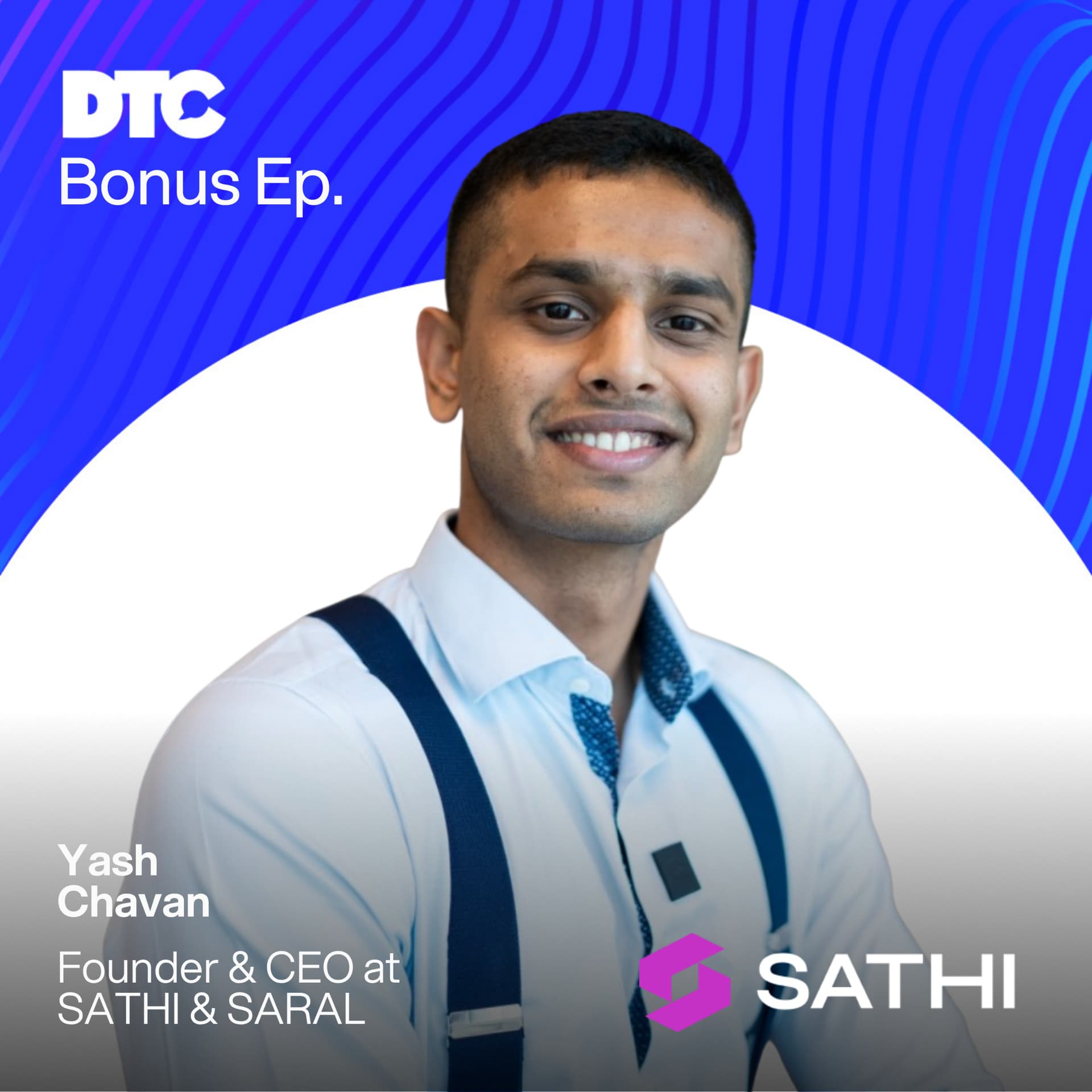
Yash (affiliate/influencer marketing background since ~2006; multiple podcast appearances; works on Sati, previously discussed “pyramid of influence” with Sural). Host: Eric Dick (D2C Podcast).
Key claims
5–20% of affiliate commissions may be fraudulent. Traditional affiliate relies on last-click and cookies (which are increasingly unreliable). Sati uses an AI fraud engine (leak-proof one-time codes, coupon-leak scanning, suspicious geo/IP/email/billing checks, blocks checkout code injection) and cookie-less, multi-touch tracking to show full journeys and distribute credit across multiple affiliates.
Notable examples
A “mom influencer” with ~3,000 followers flagged for ~$40k sales due to leaked codes; brand had paid ~$9k commissions before detection. Attribution models discussed: “decaying” credit for discovery (e.g., Brick) vs last-click-heavy for supplements.
Written by AI. May contain mistakes. Listen to the episode to check what was said.
Chapters
Tap a time to open that second in VOUnderstanding Affiliate Marketing Benefits
0:45 to 3:00
Exploration of why affiliate marketing is considered the best channel for brands.
“This is, I think, your third appearance on the podcast.”
The Pitfalls of Traditional Affiliate Models
3:00 to 5:30
Discussion on issues like attribution, tracking, and the challenges in affiliate marketing.
“So we were like, hey, let's just build something that solves that.”
Fraud in Affiliate Marketing
5:30 to 8:00
Insights into the various types of fraud that can occur in affiliate marketing.
“So if you're in case you're paying for clicks, you end up paying them on a CPC basis and it's just like random geotraffic from somewhere.”
Influencer Marketing Evolution
8:00 to 10:00
How influencers are transitioning from traditional marketing to affiliate roles.
“Because you're rewarding the wrong person.”
Sati's Innovations in Affiliate Marketing
10:00 to 13:00
Overview of how Sati addresses fraud and improves affiliate tracking.
“But if you have uncapped commissions on top, then you're incentivized to make better and better content that gets more and more views because you make more money as a result.”
Understanding Fraud Prevention in Affiliate Marketing
14:09 to 15:32
Learn how to prevent fraud in affiliate marketing through geotraffic analysis and cookie-less tracking.
“So a bunch of these things is how we prevent fraud.”
Innovations in Affiliate Tracking Methods
15:33 to 18:15
Discover advancements in multi-touch tracking and how to better attribute affiliate sales.
“So even if they don't have cookies, they've disabled it, they're on an unsupported browser, they have an ad blocker enabled, the affiliate tracking will still work.”
Strategizing Affiliate Credit Attribution
18:16 to 21:06
Understand the importance of strategic decision-making in credit attribution among affiliates.
“On the flip side of that, for more common products, like say supplements, great example, everybody has a supplement brand.”
Gamifying Affiliate Programs for Better Engagement
21:07 to 22:48
Explore how gamification can enhance affiliate marketing programs and reduce churn.
“were more like strategic high level problems on a tactical level.”
Optimizing Affiliate Programs for Success
22:49 to 25:32
Get insights on optimizing your affiliate program through retention metrics and fraud scanning.
“you can do this manually, of course, but it becomes a headache at any more than like a couple dozen influencers.”
Show all 19 chapters
Finding and Sourcing Affiliates Effectively
25:33 to 26:47
Learn effective methods for sourcing affiliates to boost your marketing efforts.
“Where do you recommend people source affiliates?”
Maintaining Affiliate Program Hygiene
26:48 to 28:00
Understand how to manage and prune affiliates in your program for optimal performance.
“So what are your ideal customers searching for?”
Understanding Affiliate Metrics for Success
28:00 to 29:10
Learn about essential metrics for evaluating the performance of affiliates.
“So purge them, do a fraud scan, make sure that the frauds are handled and you're maybe deleting their leaked discount codes.”
Case Studies of Successful Affiliate Programs
29:10 to 30:00
Discover examples of brands that have excelled in affiliate marketing.
“Brick is probably the best example of this because it's such a, they've scaled their program to, I can't reveal the numbers, but a lot.”
Affiliate Marketing vs. Traditional Ads
30:00 to 31:10
Explore the role of affiliate marketing in comparison to platforms like Meta.
“one of the things we've seen is it's a great second channel of growth, influencer affiliate.”
Leveraging Influencer Partnerships
31:10 to 32:10
Learn how to integrate influencer partnerships for better marketing results.
“And some of these, like the large omni-channel brands, they look at it from this perspective is that, hey, some influencers are going to post and that's going to drive retail sales for me next weekend.”
The Role of AI in Affiliate Marketing
32:10 to 33:40
Understand how AI is transforming the management of affiliate marketing.
“Not to plug Sathy too much, but we do that too.”
Future Trends in Affiliate Marketing
33:40 to 35:00
Discover the anticipated growth and evolution of affiliate marketing.
“Affiliate marketing has been there since the dawn of internet marketing.”
Challenges in Scaling Affiliate Programs
35:00 to 37:10
Learn about the complexities of managing and scaling affiliate programs.
“So I think trust-based, good affiliate marketing is going to take off.”
Transcript
Automatic transcript. May contain errors.0:00Why do you think everyone's talking about affiliate marketing right now?
0:03Yash Chavan:It's the best marketing channel. On Facebook, you pay for impressions. On Google, you pay for clicks. On affiliate, you pay for sales. 5 to 20 % of the commissions that you're paying may actually be fraudulent, which cuts deep into your margins. There's two breakthroughs we've done. Every affiliate marketing platform relied on cookies. Sati's affiliate marketing does not rely on cookies. Number two breakthrough is its multi-touch. So now you no longer have to rely on the last touch. Sati will show you the entire journey. You can retarget affiliate traffic with ad creative of that affiliate. Imagine that.
0:51Yash, welcome back to the D2C podcast. This is, I think, your third appearance on the podcast. always rely on you to discuss the world of influencer and now affiliate marketing. I come from a background in affiliate marketing. I started my career in like 2006. And it's one of the most uttered things I hear brand owners talking about these days. I feel like affiliate is really having a moment right now. Why do you think everyone's talking about affiliate marketing right now?
1:20Yash Chavan:It's the best marketing channel. It is on Facebook or TikTok ads. you pay for impressions on Google, you pay for clicks on affiliate, you pay for sales, which is eventually what everybody wants out of every channel is you, why do you market? You want to sell. Um, and affiliate is like this dream channel, which is like, Hey, I only pay when they do all the work and I only pay my, my cost of acquisition only gets spent when I have already made the money. Right. And maybe like, I can also pay them 30 days later, like in terms of like cash conversion cycles and so on. So it's like, that's why I think affiliate is, and I think it's always been that way.
1:59Yash Chavan:I think affiliate has always been this dream channel. It's just like, it's hard to execute. It's hard to track versus something like a meta or a TikTok ad is way easier to track. But CFOs love it. Yeah, the CFOs definitely love it. If you could invest the same amount of money as your meta ads, but on affiliate, you would do it in the blink of an eye because you can dictate your ROAS. So if you offer a 20 % commission, that's a 5X ROAS, right? But then it's hard to scale. You can't get the same volume of results, typically. You don't have the same transparency with affiliates. Some of that we're solving at Sati and happy to talk about that.
2:43Yash Chavan:But it is objectively speaking on a per unit, on a per say level a better marketing channel well talk to me about the evolution of of my sadhi because you uh you know get soral we've talked about multiple times on the pod talk to me about why you decided to expand the pyramid of influence to include a very specific focus on influencers yeah i think the so the pyramid of influence which we have spoken about on the other podcast link will be somewhere here the middle layer is still affiliate it's just that that layer was so hard to track, to scale, to grow, that it was hard to get to the top tier, to the pinnacle of the pyramid.
3:22Yash Chavan:So we were like, hey, let's just build something that solves that. Because Sural does the seeding part really well. Like we can help you find influencers, seed them at scale, ship them products, track when they post, all of that. The affiliate piece was still broken in many ways. And that's why we decided to build Sati. So yeah. So talk to me, you know, pound for pound, We're talking about affiliate as, if not the best, one of the best channels. But what are the pitfalls? What are the reasons that have traditionally held affiliate marketing back from dethroning meta, for instance? Yeah, a lot of brands still approach.
3:59Yash Chavan:And when I say affiliate, I also mean the modern form of affiliate marketing, which tends to be influencer affiliates, because influencers are the ones with all the reach. back when you started in affiliate marketing, it used to be blogs, publishers, email lists, these types of people as affiliates. Now, because they had all the attention, now it's influencer affiliates. And fundamentally, I think the consumer journey is less of a funnel than it ever was. Yet, affiliate marketing relies a lot on last click attribution, which basically means whoever had the last touch, the last click, or the last coupon code, gets all of the 100 % attribution for the sale.
4:40Yash Chavan:But we all know that's not how consumer journeys work. I think like on a very core foundational level, that racking dilemma of when I have five influencers post about me, but somebody uses one person's discount code to make a purchase, that person gets all of the credit for the sale that shows up in my dashboard. But the other four people did all of the hard work for no credit whatsoever. I think that fundamental problem leads to a lot of brands just cutting their affiliate programs, even though in reality, they may actually be working and having an impact on your bottom line. And affiliates are crafty.
5:15Having been an affiliate back in the day, that's another aspect to the channel is that sometimes these leaks happen accidentally, but also sometimes it happens because affiliates are just trying to get that last click in a lot of ways. Can you talk about instances where problems like that happen?
5:30Yash Chavan:That's the other side. With what I spoke about so far, the people who are actually doing like the other four people that I said who've posted but got no credit that's like a measurement problem so there's that on the flip side of that so there the good people are not getting credit on the flip side is affiliate fraud which is another huge discussion to have which is like hey some affiliates will literally leak their codes intentionally sometimes it's unintentional some affiliates will pay click farms to drive a lot of traffic which may or may not buy. So that clicks are inflated. So if you're in case you're paying for clicks, you end up paying them on a CPC basis and it's just like random geotraffic from somewhere.
6:13Yash Chavan:Some affiliates will run ads and then against your own keywords and that counts as fraud. Some affiliates will buy their own products and get the commission for that. And then they refund and then there's no clawback in your terms. Then that ends up becoming fraud. So like affiliate fraud is a huge component. And there's so many types where one of the most glaring ones was just recording this on a Wednesday. I think just this Friday, I was speaking with someone. We were onboarding this new brand on Sati and they were like, we connected, it has this fraud detection system. So we just, we were looking at some of the dashboards and there was this one influencer who had made some$40 ,000 in sales.
6:54Yash Chavan:And we were like, that's interesting because they were not that big of a brand. And then we were like, okay, most of your other affiliates have only made maybe like$500 or$1 ,000. What's special about this person? They must be like a huge influencer or something. And we went to their profile and it was like, it was like a mom fluencer with 3000 followers. So there's no way this person's selling 40K worth of goods. Then we ran the fraud check. And then we find out there was actually her code was, it was leaked somewhere. So that fraud engine picked it up and this brand had already paid them some i don't know i think roughly around nine thousand dollars in commissions over the last quarter um so it was pretty bad um so we were like okay this is clearly a problem this happens and then sathi is also able to catch it so easily so now in the future they won't pay any fraudulent commissions so yeah i think a lot of brands who are listening to this if you have an affiliate program onboarding i would run a fraud scan on that.
7:50Yash Chavan:I'm sure there is, we've seen historically, like even with other brands that we've tested, five to 20 % of the commissions that you're paying may actually be fraudulent, which cuts deep into your margin. So yeah. And it affects your program too, right? Because you're rewarding the wrong person. So you'll, you know, that person will continue doing the bare minimum and the person who's actually doing the work gets no result and then falls off your campaign because they're not getting paid. Correct. Exactly. And you end up making strategic errors because not only are you paying commissions to the wrong people, you are, like you said, Eric, making bad decisions because of that data.
8:27Yash Chavan:So on the other side, like if you're making decisions based on last click data, you're going to incentivize the last person a lot and not the people who drove like the discovery or the nurture process. You're only rewarding the last click. So the other affiliates drop off, aka stop posting about you, and then your affiliate program falls off the cliff. Um, cause the right people who are doing all of the hard work were never rewarded. Um, so there's definitely that, like you to end up giving credit to a lot of people who don't deserve it. Um, and then your program ends up crashing. So, yeah. I feel like affiliate is really, it's like a natural evolution in a way, because you know, when you have influencers, a lot of, a lot of influence, like it's about them maturing in a way, right?
9:07Because when you have influencers and you're first getting into influencer game, it's like, okay, it's pay to play. I make a post, you send me, you send me some money or whatever. But then as you gain actual affinity for a product or these influencers learn a little bit more about marketing, it becomes like a natural fit for them to actually be incentivized and actually rather than just make a post, like actually sell on your behalf, become an actual advocate on your behalf because they have skin in the game. They're getting paid when you get paid, right? So it's a way to align your incentives when you do it right.
9:39Correct.
9:40Yash Chavan:The good thing in favor of this is more and more influencers are starting to see themselves as media companies and not as influencers, which means they've started to think like business people. And what business people want is uncapped upside. When you're being paid flat money for a post, even if that post goes viral and gets millions of views, you're going to get paid a thousand bucks for it. Right? But if you have uncapped commissions on top, then you're incentivized to make better and better content that gets more and more views because you make more money as a result. So what we're increasingly seeing brands do, especially on the Serral side, is they do a mix of flat plus affiliate.
10:25Yash Chavan:So traditionally, if an influencer is going to charge, say,$1 ,000 for a reel, they're going to bring them down to, say,$600 plus 10 % of any sales that come as a result of that. And then typically, we've seen the good influencers who are like a perfect fit end up making way more than they're initially quoted$1 ,000. So sometimes the brands end up thinking, hey, maybe we should have just paid them the$1 ,000. bucks. But yeah, you can always add caps to these things and so on. But yeah. I see it being a perfect storm as well, because more people are looking for ways to make money too. So people are professionalizing their influencer profiles.
11:05People are looking for these new ways to make money. So I feel like affiliate, it's really like the perfect storm for affiliate right now.
11:11Yash Chavan:Yeah. Correct. On top of that, I think one interesting thing to mention, Instagram just allowed linking to external websites on Reels, which is fantastic for affiliate because now what used to happen previously was, you know what the highest converting asset was across affiliate influencer marketing? It was the Instagram story. And the reason for that, not TikToks, not Reels, stories. And the reason for that is you could link inside of a story, you could add like a link and then people could click on that link and go by. The downside of this was stories only last for 24 hours. There's only limited creativity you can do with a story because of the, it's either a picture most often, which is a static or a short video.
12:00Yash Chavan:So there's that. And it does not reach as many people. It maybe only reaches 10 % of their audience, right? And then disappears. Not everybody sees all your stories. So stories were limited yet highest converting because they had links in them. Reels, on the other hand, were the highest reach asset across influencer marketing, which means because reels can get on the explore page, reels can go viral. Now, if you add a link on a reel, that's just unreal for influencer affiliates because now you have the highest reach asset with potential to be the highest converting asset. And I think more and more influencers are going to look to do affiliate deals now because it's much easier to make money as an affiliate if you can link to the link on the reel instead of a link in bio or in a story.
12:50We've talked about the benefits of affiliates. We've talked about a few of the drawbacks. So then how does Sati actually sit in the middle and help you get the best of both worlds? How does it actually prevent fraud, for instance?
13:02Yash Chavan:Yeah, so we've actually worked on an AI fraud engine for the last three months. So the types of fraud that we even discovered was just unreal. People ordering their own things is the most basic fraud. But most affiliate fraud engines only catch things like, hey, if the influencer's email is the same as the order email, then that's a self-referral. We go one step beyond. We're tracking if they have similar emails. We're tracking if their IP address is similar, if their billing address is similar. It'll look at like dozens of criteria like this to flag if it's a self-referal. So things like that.
13:41Yash Chavan:It's a very deep fraud engine. It keeps scanning all the coupon websites for leaked codes. It automatically blocks when Honey or one of these, Capital One or one of these extensions try injecting code, codes directly at checkout to steal credit. It does that, prevents that automatically. We have leak-proof codes, which are one-time use discount codes that are only generated on link click, which means there's no code really, and then there's no leak as a result. So a bunch of these things is how we prevent fraud. There's suspicious geotraffic analysis, so to track if traffic is coming from a suspicious location, let's say locations where you don't ship, for instance.
14:20Yash Chavan:So there's that, and that's how we handle the fraud side of things. On the flip side, what's just personally more interesting to me is the opportunity with tracking. So there's two breakthroughs we've done. Most affiliate marketing so far until Sati, I'm pretty sure this is like words first. Every affiliate marketing platform relied on cookies, which means the way they worked was when you click on the link, it stores a cookie in your browser for seven days, 14 days, 30 days, whatever that length is, called the cookie window. And then whenever you buy within that cookie window, that sale gets attributed to the affiliate.
14:59Yash Chavan:The problem with that is cookies are increasingly unreliable. Most people opt. Whenever you get that cookie banner, your instinct is to click no, don't accept, don't allow cookies. That's one. Some people have ad blockers enabled. Some browsers such as Brave, such as Safari, do not support cookies. is Chrome might sunset cookies anytime. They keep releasing these heads up marketers. Cookies are going to go away. So that's like an impending doom that's coming. That'll hurt a lot of affiliate software. Sati's affiliate marketing does not rely on cookies. So it's cookie-less tracking. So even if they don't have cookies, they've disabled it, they're on an unsupported browser, they have an ad blocker enabled, the affiliate tracking will still work.
15:45Yash Chavan:So that's number one breakthrough. Number two breakthrough, true is it's multi-touch. So now you no longer have to rely on the last touch. Sathi will show you the entire journey. If they clicked on the first person's affiliate link and they just browse the website, it'll track that. If they clicked on the second link and then they added to cart but did not purchase, it'll track that. If they then finally seven days later visit the website and then use a third person's discount code to make the purchase, it'll track that. So you're now able to see all three touches it took to make the sale versus in the old world, the last person whose discount code was used would get all the credit.
16:23Yash Chavan:In the new world, you can choose how you distribute credit amongst the three affiliates that were part of that conversion. So these are some of the ways we are changing the game. I guess it's up to every person how they would choose to credit that, but maybe from brands that you've seen or even just how you think about it. In that case where you talk about three different touch points with three different affiliates, what's a good rule of thumb for how to actually attribute something like that properly? Very good question. And this is such an important strategic decision to make for any marketing team who's using this.
16:58Yash Chavan:And we're advising brands on this right now so I can speak to this. The answer is there is no really good thumb rule. The rule is look at how the conversion journey typically works for your brand and attribute weight accordingly. So generally speaking, the way you would attribute is you would assign certain weights or, hey, percentages to every touch. So for instance, if you're a new brand, so one of the brands that we work with, it's called Brick. I don't know if you've heard of them, but it's literally like a brick. You've heard of it. It'll brick your phone. It stops your phone. It bricks your phone.
17:31I need it.
17:32Yash Chavan:Yeah, it bricks your phone. Yeah. But this is like such a, yeah, yeah. It's such a interesting new technology. Like you don't see it. You can't visualize it. You have to like almost be educated about it. So for them, driving discovery is a much higher value event to them as a brand than driving the sale. Because if somebody like you already knows about it, they're like, okay, this person's going to buy one day or the other. What matters a lot is getting in, like getting in the mindshare, right? So discovery matters to them. So for them, they would buy us more towards the first click, the first affiliate who drove discovery as opposed to the last click.
18:11So maybe they're doing like, hey, you know, 70 % of the
18:14Yash Chavan:commission goes to the first affiliate and then 20 % goes to the second and then 10 % goes to the third. It's like a decaying affiliate model. On the flip side of that, for more common products, like say supplements, great example, everybody has a supplement brand. So what matters to supplements is not discovery, but sales. So for them, biasing more towards the last click is better. So maybe they do the opposite. They give 10 % to the first person, 20 % to the second, and then 70 % to the last click. That's one model. There's so many. Maybe it's just equal for you. Maybe you're just like, hey, I want to play the safest game.
18:52Yash Chavan:So I'm just going to give like 33, 33, 33. You could do that. So that's like linear attribution. You could do both. Some brands do like, I want to value the discovery. I want to value the purchase. And then everything that happens in between is nurture. So what they do is 40 % to the first touch, 40 % to the last touch, and then the remaining 20 % is spread evenly across all touches in the middle. So that's another attribution model. So there's different ways you can play around with this. And it really is down to you have to make a strategic decision of what works for your brand. Super helpful.
19:26Actually, I really like the instance of rewarding the discovery in the first touch, because once you have them on your site, then you can also retarget them through other methods as well. Exactly.
19:36Yash Chavan:One of the things that Sati does, by the way, is like it'll train your Facebook pixel. So yeah. So if you get affiliate traffic through Sati, you can retarget through a Facebook. This isn't like a POC stage right now, but I think by the time this podcast comes out in a week or so, it'll be live. But yeah, you can retarget affiliate traffic with ad creative of that affiliate imagine that right like hey this person drove eric drove like a thousand people to my website and let's say only five of them purchased um the other 995 i can retarget with a facebook ad with eric's ad creative um right which can then boost sales so it's like whitelisting but on steroids it's like whitelisted content but shown to the people who already know that affiliate um so those are some of the interesting things you're working on yeah we're seeing that actually from some B2B creators in the B2B space that they were wondering, you know, all these B2B influencers have sort of sprung up and then we're seeing the products that they're advertising being whitelisted back to us on their own handles.
20:43That's how they're getting those leads. Interesting.
20:45Yash Chavan:So we've talked better attribution. We've talked fraud detection. And the third pillar of this product is, and it's something you guys have mastered really well in the way you think about your influencers in Sorrel, is that like elevation or the gamification of the actual program. Talk to me about what Sadi does in that case. Yeah. So this is like the third problem with affiliate marketing, which is more on a, cause like the two fraud and measurement were more like strategic high level problems on a tactical level. Most affiliate programs are not gamified. And what that does is it leads to a lot of creator churn or affiliate churn.
21:24Yash Chavan:By that, I mean, if your creators are just on like a 20 % commission tier and they're just forever on that, no matter performance, no matter what, it's like, okay, they get bored and then they're going to leave and join some other brand who's giving them maybe a higher percentage. So you want to almost create this almost like in a B2B context, like a sales team incentive structure for them because your affiliates are like that. They're like your sales team at scale, like they're selling your brand to their audience, right? There's these micro salespeople in some sense. So you want to give them a commission incentive structure that gets them going, that gets them excited and pumped to sell your products, right?
Read the full transcript
22:01Yash Chavan:So one of the ways to do that is gamify your program. So things like, even basic things like, hey, once they join the program, send them a$50 bonus. Or once they drive their first$1 ,000 in sales, send them a$100 bonus. Once they drive their first 10 ,000 clicks, send them this free product. If they post five times in the next four weeks, because we have this like campaign going on. Send them like this special swag box that we have, something like that. Like all of this stuff needs to be there for your creators and needs to be communicated to the creators that this thing exists so that they're motivated to keep posting about you, to keep being part of the movement that is your brand.
22:47Yash Chavan:So, and Sati, the way we, you can do this manually, of course, but it becomes a headache at any more than like a couple dozen influencers. So we just automate it. You can just set up rules for this stuff. And then there's just a reward set up. And anybody who crosses, say, you can set it up so that anybody who crosses$5 ,000 gets a$500 bonus. You can do that. Anybody who crosses$2 ,000 gets a higher percentage commission after that. You can set that up. So, yeah. This brings me back to my, like, info selling days when you'd work in the affiliate marketing space, in the info space. And there'd always be, like, leaderboards.
23:21Is that something that you've built in where you actually have like leaderboard on your affiliate program?
23:26Yash Chavan:Coming soon. So we do have a leaderboard on the brand side. So the brands, who are their top performers are, we don't have an affiliate facing leaderboard. But very soon, that's on the roadmap. All right. So I'm a$5 million supplement brand. I have a$5 million electrolyte brand. I've done a fair amount with influencers and that kind of thing. How would you sort of walk me through the process of how I should approach affiliate? If you've done some affiliate already, the first thing I would do is get a free trial of Sati and run a fraud scan. Because if you're running any reasonable sized affiliate program, there's probably some fraud.
24:04Yash Chavan:So let's figure out where the leaks are. And then plug those leaks. They're very easy to do. So it literally takes 30 minutes and you're saving thousands of dollars every month. So boom, that's fixed. number one. Um, second thing you should do is evaluate your program for retention metrics. So things like revenue per ambassador, nobody talks about this. Um, you may have a thousand affiliates, but if everyone is making like a hundred bucks in sales on average, then it's like, what's the point? Like there's going to be a section of your affiliate program. That's just the highest converting, highest revenue driving, focus on them, ignore the rest.
24:44Yash Chavan:If you're, if you're resetting so like look at these uh retention metrics for instance so do that fraud analysis retention metrics and then start uh measuring things right so decide on an attribution model make sure that the creators who are that's you said electrolyte brands you probably want to do the reverse last click where the last click probably gets a lot of weight but then you also want to enable the or give credit to the first touch the second touch the third touch and so on. So decide on an attribution model and then start scaling, start finding more affiliates, onboard them onto your program, make sure it's gamified, make sure you have some default game structure created so your affiliates are incentivized to hit milestones and keep making more money for you.
25:29Yash Chavan:And with some of those principles, you should be good and all set. Where do you recommend people source affiliates? Is it just a matter of searching on the platforms for the kind of people you like in outreach? Or what do you recommend for actually finding affiliates? It depends on the scale that you want to operate at. Often brands also, by the way, the best place to find affiliates is your customer list. So if you already have customers and you're a$5 million brand, you have thousands, tens of thousands of customers, send them an email with an application form saying, hey, if you want to work with us and make 20%, apply here.
26:03Yash Chavan:If you want to work with us, you have more than 3 ,000 followers on any social media, apply here. and then they can apply. And inbound is like one of the most under leveraged channels for acquiring affiliates. It's the first place you should start. You're probably going to, if you have a list of like 10 ,000 people, you know, maybe a thousand, so many people are creators now, maybe 500 of them are influencers. So like 500 influencers are sitting in your email list right now who've already cared about you enough to give you their money. So if you reach out to them saying, hey, we want to give you our money to sell the product, which you already know and believe in as like one of the highest converting acquisition channels that you've seen.
26:43Yash Chavan:So first step, do that because you can just require dozens of affiliates like this and jumpstart your program. Second thing, search on the platforms. So what are your ideal customers searching for? What are they posting about? And then search for those sorts of things. So for electrolytes, I would search for say marathon runner because they would take electrolytes, right? So like, and then go reach out to those people, DM them. If you're running this process at scale, you would need a platform like Serral. But if you're just getting started, you should rely on your email list and rely on searching, DMing creators on Instagram to get the ball rolling.
27:17Talk to me about program hygiene in a way. Like how, when, in terms of like number of affiliates and then how you should think about maybe like managing or pruning affiliates from your program.
27:28Yash Chavan:Yeah, we have an AI agent that will tell you who is inactive. So we recommend cleaning it every three months for like the average program. Now there's some high velocity programs that would do this once a month. But frankly, that's a bit overkill for the typical sized program. So every three months, look at your bottom performers. Look at who's not driving because you're going to find like there's dozens of, if you have like more than 100, you're going to find like at least a dozen affiliates just don't do anything. Like not just not selling, but not even like posting. AKA zero traffic on the affiliate link.
28:02Yash Chavan:Those are the easiest ones to purge. So purge them, do a fraud scan, make sure that the frauds are handled and you're maybe deleting their leaked discount codes. If somebody is running paid ads, you can warn them. So these are some of the hygiene things. And then one of the metrics I recommend looking at is actually two metrics. RPA, revenue per ambassador or affiliate. And EPC, earnings per click. That will show you the quality of traffic that they're driving. So maybe there's some people driving a lot of traffic, but it doesn't convert. their EPC is low. But if they're driving a little bit traffic, which on paper maybe isn't that good, but then if it's converting at a much higher rate, that's great.
28:44Yash Chavan:So their EPC would be higher. So revenue per, on a program hygiene level, revenue per affiliate, earnings per tick are the two metrics you should focus on and optimize from a metrics perspective. And then the rest of it is pruning the inactives once every three months, looking at fraud once every month and deleting those. That's how I would approach it. Can you give me an example of a brand that you guys have worked with that maybe has exceeded expectations with what they thought was possible with affiliates? Has exceeded expectations. Brick is probably the best example of this because it's such a, they've scaled their program to, I can't reveal the numbers, but a lot.
29:24Yash Chavan:It's huge. And you know about Brick, so that's testament to their influence program. Like they've probably seen that somewhere on social media. So Brick is a great example. Heart and Soil supplements, another great example. So big affiliate program, big group of affiliates. So these are some of the ones that come to mind. And then when at scale, like where does affiliate fit in the, is it something that can like rival meta for scale? Or like where does it fit in a, you know, like an omni-channel brand doing high volume? I don't think it's at a place where it can rival meta. one of the things we've seen is it's a great second channel of growth, influencer affiliate.
30:07Yash Chavan:So like the first channel pretty much for all the brands we work with is always Meta or TikTok. Now affiliates are getting there, however, especially that these platforms opening up their own shops. So Facebook Creative Marketplace, TikTok Shop, like those sorts of things are rivaling Meta for some brands. But again, I think those things work for a certain type of brand, not for all brands. I think generally speaking, meta is definitely the biggest. And then affiliates tend to be a good supplement to that. Because what happens on meta is you run out of people to sell to. So at any given time, as marketers, we know this, only 3 % or 3 % to 5 % of any given market is in market, aka looking to buy.
30:48Yash Chavan:Those are the people that your Facebook and Google ads are going to target because it's like intent-based or it's interest-based, right? Now, when you're done with those, you need more people to move from the 97 % that's out of market to in market. And then your ads close them. And so I think ads, the way I look at it from an omni-channel perspective is affiliates, influencers, great for like top of funnel, mid funnel, and then ads do the final close. Right. But brands have to look at it. And some of these, like the large omni-channel brands, they look at it from this perspective is that, hey, some influencers are going to post and that's going to drive retail sales for me next weekend.
31:26Yash Chavan:which is fine because you look at it on an org level and not on like a program level, if that makes sense. So yeah, you have to have that mindset. And then once you've cracked Facebook ads, like you said, once you're at that$3,$5 million scale, top that up with some influencer affiliates and you're going to see not just affiliate sales, which is the direct ROI, but indirect ROI, such as your influencers post about you. You retarget those people on ads, those ads perform better. The overall Facebook ROAS goes up or GAC goes down, whatever. So that's how I look at it. I really like that idea of funnel congruency when you have a really top affiliate and making the creative either come from that affiliate or you could even have, depending on the size of the affiliate and the content of the affiliate, you could have a special lander that has the affiliate on it for like full congruency, right?
32:11Yash Chavan:Correct. Yeah. Not to plug Sathy too much, but we do that too. It can personalize landing pages. So yeah. Talk to me about how AI plays in all this. You mentioned like it's part of the fraud detection engine, but how else does Sathy use AI to make great affiliate programs? A lot of workflows. So for instance, things like, what do you do when a code leak happens? There is an agent that will auto detect a code leak and you can set it up. Right now it's manual by default because we want to give brands that control. But you can set it up so that if somebody's code leaks and it's crossing like, say,$1 ,000 in commissions after a leak date, you can automatically delete that affiliate and claw back their commissions.
32:53Yash Chavan:So like minor things like these that at scale, at dozens of affiliates being caught as frauds becomes like a headache is just now done by AI. And one of the things that we are excited about that AI does is better things that humans cannot do. So looking at attribution, like what if there's an AI attribution model that actually looks at their content and attributes the weights accordingly. So these are the things that humans cannot do that we're looking to crack with Sati. But right now it's a bunch of agents that do a lot of these workflows, collecting W9 tax information, those sorts of things.
33:30Yash Chavan:Payments are automated. So that's how we're looking at AI right now is from a workflow perspective. But from a long-term perspective, we're really thinking what can it do that humans cannot do. Affiliate marketing has been there since the dawn of internet marketing. But where do you see it going? Where do you see affiliate marketing going in the next year or two? Do you think it's just going to get bigger and bigger? I think yeah especially with this Instagram rollout especially with TikTok shop and things and I'm sure like Instagram is gonna do like a version of shop I think this like affiliate thing is like a test for them they're gonna roll out a shop and I think once that's live it's gonna be crazy so yeah I think we've seen so much social commerce explored over the last like year or more exactly over a year I think it's just gonna keep increasing because like I said it's the dream affiliate channel if you could guarantee the same scale as meta but with affiliate everybody would pick affiliate, right?
34:21Yash Chavan:The reason why we pick meta is because it's better attribution and more volume, right? So I think we're solving for some of the attribution problems with affiliates now with, uh, with Sati, and then hopefully with more volume will be solved by the platforms actually making more of these, Hey, now you can link affiliate links or reels. So the future of affiliate marketing, I think is more, honestly, more trust-based. I know back in the day with all the info products and everything, it was very, used to be a little bit of the slimy marketers, just making absurd claims. Yeah, it was a wild, wild west.
34:52Yash Chavan:So like, just make the most absurd claims, the six pack abs in six days. Like that claim is just not going to work anymore, right? Like if an influencer posts that, like they're going to get called out. So I think trust-based, good affiliate marketing is going to take off. So yeah, I think brands should ally with these mission-first creators who are aligned with their brand and just make them partners, make them affiliates. So yeah. I think it's the secret to platforms like TikTok Shop, because I know so many marketers have been trying to like crack TikTok as a traffic platform because so much attention is going there.
35:29Like so much, I just look at my life and my, you know, TikTok is a big chunk of my info diet for better or for worse. But so many people would be trying to run ads into it and just not able to get to the scale that they were getting on other platforms. But then you hear stories of people that go out, make the right affiliate partnerships and like affiliates really appear to be the way to crack scale on some of those platforms. But traditionally, then it becomes unruly to manage, right? Whereas meta, you're just you're managing your campaigns, you're managing your creative. With affiliate, you've got all these people, you've got all these codes, you've got all these platforms.
36:00So traditionally, scaling affiliate was probably intimidating to people a little bit.
36:04Yash Chavan:yeah i think that's also traditionally like affiliates used to be a small channel because it used to be like email lists like bloggers like how many bloggers are you going to work with maybe like a dozen or so maybe 20 25 like that's easy to manage in a spreadsheet and you can look at them it's also more last click friendly because somebody's sending an emailer out and you make a purchase like it's mostly last click it's not like people are going from email to email to email and then versus now it's completely changed now you could literally you're on a feed on tiktok called reels and you're literally you probably watch like a hundred reels every day five of them are about one brand and you watch them in different times of the day it's just like the volume of content has changed so much um so the attribution and the measurement has to evolve accordingly and that's what you're doing this platform you've been kind of it's fairly new you've launched it in the last little while i guess you've been working with brands on it for the past several months um but it's exciting yeah very they're very exciting i think it's it's time that there was a new frontier of measurement with affiliates.
37:09And I think it's going to be huge with the influencers are going to love it
37:13Yash Chavan:because you can literally have a smaller program now because more people get credit for the sales. So more people want to post about you. And the more often they want to post, the lesser people you can have to get a certain number of sales, for instance. So I think it's going to be huge. Let's see, we're super pumped. We actually, as of this recording, we just launched publicly yesterday. But yes, we have been working with a few initial early brands for the last couple months. Results with the fraud detection, the measurement have been very, very exciting, very revealing. So can't wait to scale and take this to more brands.
37:47Nice. Well, go to mysathi.io and look up Yash. Just give him a call. Guy's always good to talk to. It's your fourth time on the podcast. Yeah, I look forward to seeing how this scales for you. I think it's an awesome opportunity.
38:01Yash Chavan:Yeah, and thank you for having me on always to share some of these exciting things we're working on. I think it's always a great conversation when I'm talking to you.
38:16Thanks so much for listening to today's episode. If you're not a subscriber to our newsletter, you can do that right now at directtoconsumeralloneword.co. I'm Eric Dick, and this has been the D2C Podcast. We'll see you next time.
From the publisher
Subscribe to DTC Newsletter - https://dtcnews.link/signup
Affiliate is getting a lot more attention in DTC right now, and for good reason. In this episode, Yash Chavan, Founder and CEO of SATHI & SARAL, breaks down why the channel looks so attractive on paper, where it falls apart in practice, and what brands can do to make it perform like a real growth engine.
Claim your free trial and 20% across all pricing plans at mysathi.io. Don't forget to use the code DTC! Request your free trial: http://www.mysathi.io/?utm_source=partner&utm_medium=dtc&utm_campaign=dtc-podcast
We get into:
- Why affiliate is attractive to operators and finance teams
- How last-click attribution distorts performance data
- What affiliate fraud actually looks like inside a real program
- How to think about multi-touch attribution by product category
- Why gamification matters if you want creators to stay active
- How affiliate fits alongside Meta, TikTok, and retargeting
What to steal:
- Run a fraud scan on your current affiliate program and check for leaked codes
- Build commission tiers and milestone bonuses to keep strong creators engaged
- Choose an attribution model based on how your product actually gets bought
If you’re a DTC marketer, founder, or growth lead trying to lower CAC, improve measurement, and build a more durable acquisition program, this episode is essential listening.
Timestamps
00:00 Affiliate marketing explained
02:00 Why affiliate is hard to scale
04:00 The problem with last-click attribution
06:00 Affiliate fraud examples and risks
09:00 Influencers shifting to affiliate models
11:00 Why reels + links change everything
13:00 How modern affiliate tracking works
16:00 Multi-touch attribution strategies
19:00 Retargeting affiliate traffic
21:00 Gamifying affiliate programs
24:00 How to start and scale affiliates
27:00 Program hygiene and key metrics
30:00 Where affiliate fits in your funnel
33:00 The future of affiliate marketing
Subscribe to DTC Newsletter - https://dtcnews.link/signup
Advertise on DTC - https://dtcnews.link/advertise
Work with Pilothouse - https://dtcnews.link/pilothouse
Follow us on Instagram & Twitter - @dtcnewsletter
Watch this interview on YouTube - https://dtcnews.link/video