In short
Incrementality vs ROAS/ROI; how to prove which ad spend is truly incremental, plus how Stella (and its “Always On Incrementality” and MMM) works and what channels tend to be more/less incremental.
Guest
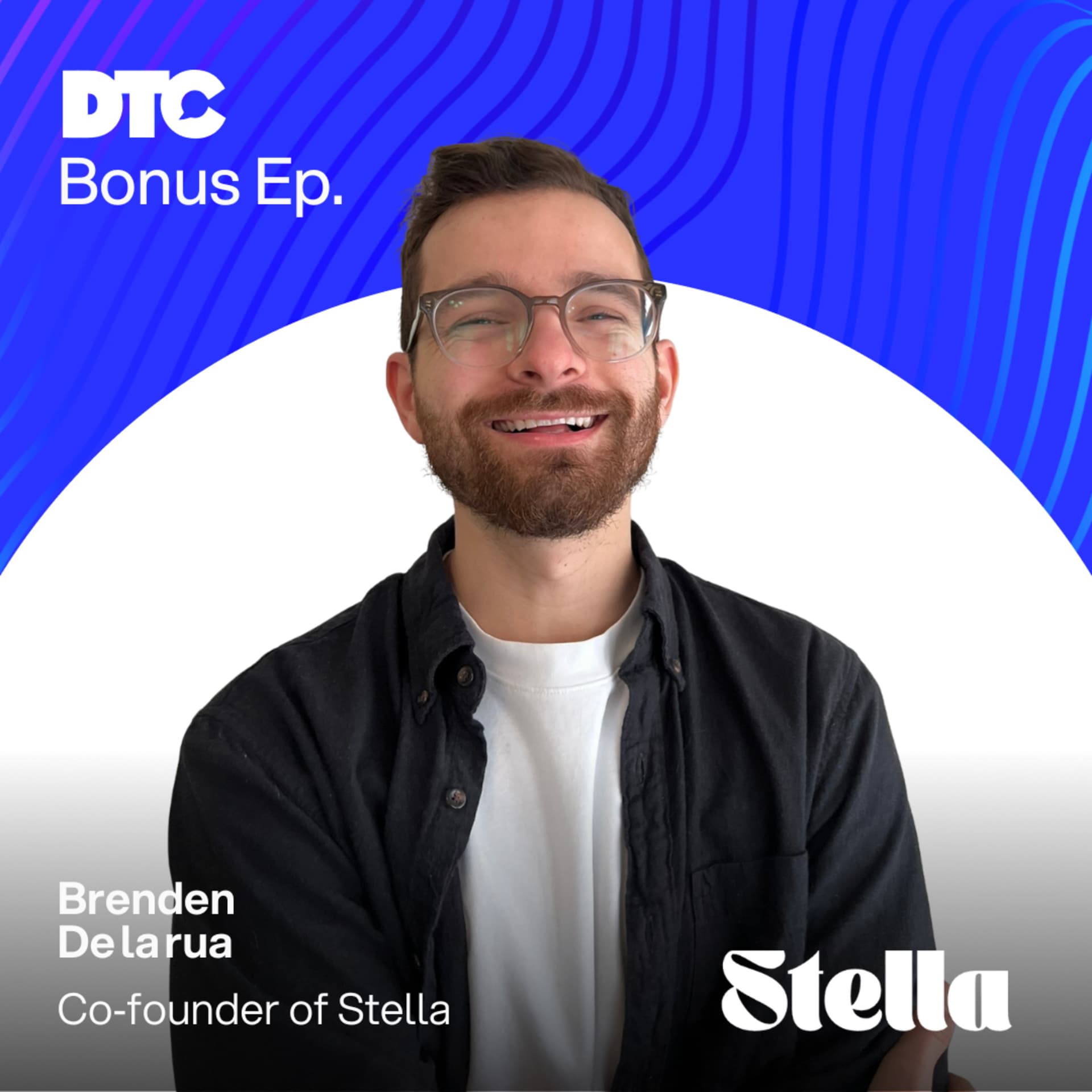
Brendan De La Rua, media buyer, SaaS builder/co-founder of Stella with Vinny, and TikTok creator focused on marketing measurement; previously built/ran incrementality-style analysis for clients.
Key claims
On-platform ROAS often doesn’t equal ROI because of saturation and diminishing returns. Branded search and retargeting can be high ROAS but low incrementality; CTV/YouTube tend to be more incremental. Incrementality is a “snapshot” (changes over time), so always-on testing helps.
Notable examples
Holdout/scale tests for CTV (e.g., scale spend 0x/250%/500% to find diminishing marginal ROAS). AppLovin studies showed iROAS close to platform-reported ROAS (often 0.4–1.2). Meta incrementality factor ~1.21; Pinterest “surprisingly incremental.”
Written by AI. May contain mistakes. Listen to the episode to check what was said.
Chapters
Tap a time to open that second in VOUnderstanding Incrementality in Ad Spend
0:00 to 0:52
Learn about the importance of incrementality in advertising and its impact on ROAS and ROI.
“What a lot of brands don't realize is most of the time with channels that they're on, they might already be at a point of saturation, meaning if they spend more, they're going to start getting diminishing returns.”
The Journey to Building Stella
1:06 to 3:08
Brendan discusses his background and the motivation behind creating the incrementality tool, Stella.
“I mean, that could go forever, but just to make sure I'm keeping my answers short and sweet here.”
Misunderstandings in Media Buying
3:08 to 4:34
Explore common pitfalls media buyers face regarding overspending and the misconceptions of ROAS.
“scientist on your team to actually run them and interpret them properly.”
Implementing Incrementality Testing
4:34 to 9:28
Learn how brands can effectively set up incrementality tests using Stella to optimize ad performance.
“But most of those conversions would have happened anyways, because people already have the intent of searching for your brand.”
The Role of Surveys in Incrementality
9:28 to 11:14
Brendan highlights the importance of post-purchase surveys and their role in understanding incrementality.
“Like right now, as we're filming, this is October, right?”
Developing AI-Powered Insights
11:14 to 13:17
Discover how Stella uses AI to provide actionable insights for marketers in their ad strategies.
“We have like a custom AI built into it that can really be your collaborator on like, Stella, what do I do?”
Media Mix Modeling and Methodology
13:17 to 14:00
Brendan explains the methodology behind media mix modeling and its advantages in advertising.
“So that's kind of the idea of why we've like focused on the AI component of Stella.”
Introduction to Incrementality Studies
14:00 to 15:10
Learn about the use of Bayesian models for incrementality studies and their benefits.
“So we've leaned towards Bayesian models.”
Building a Proprietary Incrementality Model
15:10 to 18:00
Explore the development of a proprietary model inspired by other measurement tools.
“But also just very easy to use, especially for a generalized self-service platform like Stella.”
Challenges with Media Spend and Pricing
18:00 to 20:00
Discuss the pricing challenges clients face with traditional media tools.
“So$12 ,000 a year compared to$12 ,000 a month for Stella.”
Show all 18 chapters
Conducting Scale Tests for Marketing Insights
20:00 to 22:30
Understand the importance of scale tests in determining optimal ad spend.
“maximize incremental revenue, where now they're just running CTV and they're super bullish on CTV because it is showing this like insane lift in their shop.”
Incrementality Factors Across Platforms
22:30 to 24:50
Discover how different platforms perform in terms of incrementality.
“So it's good to hear they're not doing that.”
Misconceptions About Incrementality Testing
24:50 to 26:50
Address common misconceptions surrounding incrementality testing for brands.
“people kind of are not thinking about correctly that you think need to be corrected?”
Using TikTok for Marketing Growth
26:50 to 28:05
Learn how TikTok can be leveraged for personal branding and business growth.
“to get started with incrementality testing.”
Brenden's Marketing Journey
28:05 to 30:06
Brenden shares his passion for marketing and his experiences on TikTok.
“marketing i'm like this is it dude this is all i do it's just marketing all the time but uh yeah I started posting about marketing content.”
Ad Strategy Insights with Andromeda
30:06 to 32:22
Discussion on effective ad strategies and the impact of audience targeting.
“I've been following the discourse on the main takeaways from the way you need to be thinking about it with Andromeda.”
Creative Diversity in Advertising
32:22 to 35:41
Exploring the importance of diverse creative in ad campaigns for better reach.
“duplicate creative, but at the same time, you want to make sure that you've got a good diversity of kinds of creative and angles.”
The Role of AI in Media Buying
35:41 to 37:44
Insights on how AI is shaping the future of media buying and advertising.
“But there's some metrics that we can look at to understand what's performing.”
Transcript
Automatic transcript. May contain errors.0:00Your ROAS does not mean ROI. What a lot of brands don't realize is most of the time with channels that they're on, they might already be at a point of saturation, meaning if they spend more, they're going to start getting diminishing returns.
0:16Brenden Delarua:In the incrementality industry, I just think it's so confusing. It's over a lot of marketers' heads, and that's why I think a lot of companies are charging so much for it, because they're saying this will achieve more incremental revenue or profit for you. It's like a black box for how it works. Like, don't worry about the data models. Me and my co-founder, Vinny, built Stella to kind of democratize this space and make incrementality testing much more accessible and easier to understand and much more affordable for D2C brands.
0:52Brenden Delarua:Brendan De La Rua, welcome to the D2C podcast. You are a, at least a triple threat. You are a media buyer, you are a SaaS builder, and you are an entertaining and educational TikTok creator. I've been enjoying your channel, sir. Thank you, Eric. That means a lot coming from you. Well, welcome to the D2C podcast here. Let's start with why. Why did you build Stella? Oh my God. I mean, that could go forever, but just to make sure I'm keeping my answers short and sweet here. I mean, I was a media buyer. In general, I'm just an anxious person. So I love to get good results for my clients. But like weekly client sinks, whether results were good or bad, I was nervous, just because I could never fully feel confident in explaining why performance was the way it is.
1:38Like performance is good. Now, I don't make a change next week, it's bad. And I'm going to go on this like, weekly sink with this like, well respected, like marketing leader, just gave me a lot of anxiety. And I think what it was, was sometimes I would smash all my ROAS goals as a media buyer. And I'd be in a board meeting or meeting with the business leaders, talking about how profit from ads is like the highest it's ever been. And then I'm getting checked on like, well, our actual profit in our P &L is like the lowest it's ever been. So something's not adding up here. And like, what could it be?
2:11And those types of conversations have always like, taken me aback and being up all night researching how to fix this, how to not do this again. And eventually, the answer I stumbled upon was incrementality of finding out what's actually causing growth to happen. And it's become such a game changer from becoming a media buyer and knowing about incrementality to explain the causal relationship between ad spend and business outcomes. Because right now, they are just not correlated. your ROAS does not mean ROI, right? So finding incrementality and understanding how to do these like causal analysis, these lift analysis or holdout studies, inverse holdouts has really helped overall media buying.
2:56Anyways, so I always gravitated to it as a media buyer. And then I noticed the current tools in the market are just super expensive, super hard to use. Even if you're spending 12K a month on them, you might still need a data scientist on your team to actually run them and interpret them properly. So me and my co-founder Vinny built Stella to kind of democratize this space and make incrementality testing much more accessible and easier to understand and much more affordable for D2C brands of pretty much all sizes, but mainly mid-market.
3:29Brenden Delarua:You mentioned you can't trust your on-platform ROAS. That's been a trope as a media buyer for years, pretty much every platform you're on. Where do you see media buyers may be going wrong the most right now when it comes to, I guess, overspending or underspending? Yeah, I mean, I think there's like a inverse relationship between like the traditional marketing funnel and causality. For example, like top of funnel campaigns are typically the most incremental, where the bottom of funnel campaigns are the least incremental. So like the most common use case you'll see or people talking about on LinkedIn when they think they're finally understanding incrementality is like branded search is just not incremental.
4:06Even though it has the highest ROAS, it has a 5x ROAS on platform, right? Yeah, exactly. And if you wanted to optimize for ROI, if you're a media buyer like I was, and you're getting pressured by the CFO of a large publicly traded company to get better returns, you see this 50x ROAS of branded search. You're like, I'm just going to start investing more in branded search. Because it makes sense. But those are non-incremental. I mean, there's some cases where branded search makes sense. Like when you're in a really competitive industry, if your competitors are on your branded terms, it makes sense to keep it live.
4:39But most of those conversions would have happened anyways, because people already have the intent of searching for your brand. They're probably going to just scroll past the ads and get to the organic listing anyways. And then on that, it's the same thing with retargeting, right? Like retargeting is typically the highest ROAS, but usually the least incremental. But the inverse of that is like CTV and YouTube are typically very incremental, what we're seeing. And when I was a media buyer, those were the channels that would get cut first, or what I would call like a spillover channel. After we're spending too much on Google and meta, like what's our channels that we're going to spill into?
5:14And usually it's like CTV, maybe YouTube. But now if I were to be a media buyer again, I'd probably be very bullish on CTV, OLV, linear, and YouTube based off all the incrementality studies we've been doing.
5:25Brenden Delarua:Okay, walk me through how a brand who maybe is spending on meta and Google, and they've just launched their streaming or CTV campaigns. Walk me through using Stella, how someone determines that, oh my God, this thing that looks like low ROAS is actually driving people further down funnel. Yeah. So to set up a study with Stella, we tried to make it as easy as possible. We still run into some use cases where users are reaching out to us, asking us to kind of explain certain things. But the most important part of a holdout study is selecting the right locations, which a lot of people kind of skip over.
5:59A very common scenario we see is in the US, people will pick like 25 states on 25 states off. And that's just arbitrarily picking locations with no correlation. So the first thing Stella recommends is like you upload your data to Stella and Stella will look at the last 120 days of your data and tell you the best regions to activate CTV in if you're activating CTV ad. So whether we're doing a state level or DMA level or city level or zip code level, Stella will tell you the best regions to compare to have a high correlation from the start, even before we add in like a what's called a weighted synthetic control.
6:34So we have very high correlation. So basically, you would activate CTV in only certain regions, what like whatever Stella has told you to to activate in, let's say for like example, it could just be like California, Oklahoma, and I don't know, maybe Tennessee, it would say activate CTV, we'd activate in those three regions. And we would look at basically total revenue. We're not looking at in platform metrics. I don't care what the CTV vendors claiming that they've driven. I want to look at like Shopify, or WooCommerce or whatever you're using, I want to look at your source of truth in those states to see if there is a statistically significant lift that is caused by nothing other than that intervention, which is activating CTV.
7:17And that's what we'll see. And typically, you also see conversion rates increase on meta and Google. But regardless of how the sale happened, whether they clicked a meta ad in Google ad, if they're influenced by CTV, Stella will be able to pick it up in the final analysis. Interesting. And then what role do you place on post-purchase surveys? Oh, I love post-purchase surveys. I feel like sometimes I have to write like anyone in the D2C space, I have to write like Twitter posts or LinkedIn posts. And I feel like it's easy, like writing posts thinking of like an enemy, right? So I've had a lot of people ask me if I like believe in MTA still.
7:51And I'm like, I love MTA, obviously, coming from that background, I don't think incrementality should replace like multi touch attribution or post purchase survey. I think what they all all three of them, I think, fill a role in just like showing the full picture. I think MTA, it shows like 40 % of the picture. And for a lot of brands, that's enough. But obviously the issue comes when you're making 100 % of your decisions on 40 % of the picture. I think post-purchase surveys extend that picture to about 60%. They add an additional 20 % of the picture. So if you're making your ad buying decisions or business decisions based off MTA and post-purchase surveys, you're going to be right more than half the time, in my opinion.
8:35I think where causal analysis like incrementality or media mix model comes in, shows that additional 40 % of the picture that gets really muddy when you're a larger brand. When you're a smaller brand, you probably don't need it. But when you are making 10 million to 100 million in annual revenue from your D2C shop, that's when incrementality really becomes powerful.
8:57Brenden Delarua:What do you mean when you say always on incrementality? To me, that makes me think of like when you're investing in an ETF or whatever, how any dividends are just automatically rolled back into the fund. So you're always getting more efficient. So me and my co-founder are still on every sales call for Stella. And we get asked all the time from marketing leaders, not data scientists or CTOs or even CEOs, like they want a dashboard to log into and see like how incremental they're doing right now. And incrementality studies don't really work like that. How we describe them, they're like a snapshot in time, right?
9:30Like right now, as we're filming, this is October, right? So if we're doing a holdout study of YouTube in October, whatever incrementality factor we give back is going to be YouTube's incrementality of October of 2025 with the bid strategy that you have, with the creatives that you have, with the competitive market that you have right now. It's going to change next month in November when Black Friday, December, Monday comes. It keeps changing over time. But we kept getting requests for like a daily dashboard where people can log into and see how incremental their campaigns are. So my co-founder and I put our heads together like, how could we do that?
10:08Is that something that's even possible? So we've built a tool called Always On Incrementality as like a response to those questions or requests we were getting. What it does is it ingests your platform data from Shopify, Google, Meta, TikTok. We're adding in connectors right now. And it ingests campaign level data and it runs daily causal analysis on every single campaign that you have live. And when you first install the app, it pulls the last two years of data. So like if you ran a study, you know, a couple months ago and you don't know if it worked or not, Stella will be able to look at it and run an analysis.
10:46However, the caveat there is since everything's automated, we're very strict on what we allow to pass our criteria for validating a study. So some tests might come back invalid, but we show every test so you can see if there wasn't enough spend or there was other nuanced external factors that just muddied up the results so we don't want to show it. Anyways, it's a pretty cool tool. I'm excited about it. And I think the value in it is like Stella's AI. We have like a custom AI built into it that can really be your collaborator on like, Stella, what do I do? Like, what do I do, Stella? I don't understand any of this.
11:24Stella can walk you through exactly how to use these incremental insights to drive net new profit for your business, which is, I think, is such a win.
11:31Brenden Delarua:Was that always the case? Because, yeah, just sort of on Stella, heystella.com, looking right now, it really draws attention to the prompt as the main interface. Was that something you always wanted to do with this? Or did that just kind of come about as the best way? We try to keep our ear down to the floor when it comes to like the market of like what's happening and then like how we can pivot. And we're a pretty lean team and we pivot pretty quickly. But one of the things we were noticing where we would hop on calls with like agencies or marketing leaders who are like, why pay for an incrementality tool?
12:04We're already doing it ourselves. And then when we see what they're doing is they're just uploading CSVs to chat GPT and saying, these are our test locations. These are our control locations. How incremental was it? And then they're taking that insight and putting it into their decks. And we're like, that is not the right way of going about doing that at all. But we noticed it. We noticed it a lot. And we still do. So our idea was like, what if we made Stella to mirror like a GPT or a cloud, at least in the UI, to feel native to these marketers? Because ultimately, we're building a data science tool for marketers, not for data scientists.
12:40So if they are telling us that this feels native to use a GPT and they feel comfortable using a GPT, let's build it to make it feel similar. But with data models that are actually very accurate and have fallback models to make sure that we're providing real insights. Because ultimately, it doesn't matter how much you're paying for like whatever tool. You just need to be right, especially if you're going to move a million dollars of budget from one channel to another channel. And you're doing that off of bad data because that could obviously cost your client his job, his or her job, if you are allocating budget wrong based off wrong insights.
13:17So that's kind of the idea of why we've like focused on the AI component of Stella.
13:21Brenden Delarua:And then how do you, so the second big tool you guys offer is media mix modeling. Talk to me a little bit about your methodology there, maybe what you've updated from other players in the space that are doing the same thing. When we were doing media mix models at the agencies I've worked at, there's like open source tools, right? Like there's the two big ones are PyMC and Meridian, Meridian owned by Google. There's also one called Robin from Facebook. It's like a frequentist model. There's like frequentists in Beigeian models. Okay. Familiar with Beige? Oh, are you? Well, a little bit. But I had a startup called Tap for Tap that was like a tap exchange where it was like a click exchange for apps.
13:58Brenden Delarua:It was way back in like 2013. And we were kind of using Bayesian models to determine how to match apps up, essentially. Very cool. Yeah. So we've leaned towards Bayesian models. One of the reasons being is we can run an incrementality study. Let's say YouTube is like a 2x iROAS. We can put that IRO as what's called a Bayesian prior into our MMM to help calibrate the MMM, be a little bit more accurate over time with consistent testing and MMMs. But we looked at PyMC, we looked at Meridian, and we kind of saw good parts about both of them. A big common issue we hear a lot from Meridian is the baseline revenue.
14:36So if you turned off all media spend, how much money would you still make? A lot of people are getting negative baselines, which don't make any sense. It should never be negative. It might be zero, meaning if you turn off all ads, you'd make no money. Usually there should be some baseline there. But we really liked Meridian's budget optimizer and how they're forecasting. So we took inspiration from a lot of these open source models to build out a proprietary model. We also consulted with some pretty big names in the measurement space who've built large custom models for other companies. And we just did this big collaboration of building a model that is repeatable, accurate, is the main thing that we're going for.
15:17But also just very easy to use, especially for a generalized self-service platform like Stella.
15:24Brenden Delarua:So you talked about people just using ChatGPT with their data. Throw that in there. I'm sure there's probably lots of people doing that. That's the low budget version. Then you also mentioned that you guys are coming in at quite a bit of a lower cost than like what's available out there. Talk to me a little bit about what kind of investments people are making in these kind of tools and tell me about what's Telecost. I think what it is is like, so my co-founder and I used to kind of, you know, do these types of analysis for clients at an agency we worked at. or if they wanted, we would be the, or mainly I would be the one sitting on vendor calls with our now competitors, they who shall not be named.
16:01Um, but, and I always love the tools. I'm like, I never say like their tools are bad, like their tools are amazing. And this, the, what they're building at our competitors is like top notch. But what I would be tasked with is going back to the client with like, Hey, you know, they want 12 K a month for a six month contract minimum. or a year minimum. And that was always hard for the client to stomach. And sometimes it'd be like, yeah, maybe we don't need it at that price. And let's move forward. And then I just think the value prop of like, you know, use this incrementality tool to uncover like wasted spend and become more profitable.
16:38But it's ironic, the minute you sign for those platforms, you're immediately less profitable, like in by a lot. So there's that that side of like the the gap we saw in the market. The other side was I've done years of marketing for B2B companies that don't want to show their pricing on their website, that make you sit through like four rounds of like almost interviews. I was going to say interviews, but like sales calls to see if you're qualified to even know the price. And then by the time you know the price, you're like, oh, that's out of budget. If you would have just told me that we wouldn't have wasted any of this time.
17:08Or I've marketed products that like in the space, there was just a better product that was cheaper and better. and it was so hard to figure out angles to market products like that. So when we were starting to build Stella before we actually had a product, I was like, I want to make this thing easy to sell, like the easiest product to sell. I want to have like the highest accuracy, but I also want it to be the most affordable tool by far. Like I don't want anyone to compete with us. And that was like a very strategic decision. Like we did that intentionally. And I'm not sure if maybe there's like a perceived quality thing we're running into.
17:44But I think on demo calls, when we show people the tool or when they do a free trial, because we also offer free trials, they've realized like how powerful Stella really is. But yeah, so like Stella runs at$2 ,000 per month, just month to month. You can roll off any time. We just rolled out an annual plan that's just$1 ,000 a month paid annually. So$12 ,000 a year compared to$12 ,000 a month for Stella. and you get unlimited uses of the incrementality testing tool. Or for the MMM tool, it would be an additional 2K or 1K for the whole year if you want. But we did that very intentionally. So Art's been working for us.
18:20Brenden Delarua:Can you walk me through an example? Because I know you've used the tool a lot in your own media buying. Can you walk me through an example where either you or a client has basically ran one of these ongoing studies or one of these studies and made a pivot that really aided their business? Yeah. Yeah, I mean, the biggest one that comes to mind is like kind of what I explained earlier, like investing more in YouTube or CTV types of tactics, because the idea is the first step with an incrementality study is like a holdout. So you're activating CTV or you're turning off CTV in certain regions to monitor the eyebrow at your current spend level with your current creative.
18:54And then we start measuring, we do what's called a scale test. So it's like a three cell experiment where cell A, you keep spend the same in certain regions. cell b you increase spend by like 250 percent in in other regions and then cell c you would increase spend by like 500 so like a substantial increase and then you run those and look for instead of i roas or incremental roas you're looking for marginal roas but what this test allows you to do is allows you to start mapping out this like marginal growth curve so you can see how far you can scale before you hit a point of diminishing returns and what a lot of brands don't realize is most of the time with channels that they're on, they might already be at a point of saturation, meaning if they spend more, they're going to start getting diminishing returns.
19:42And they don't know it because the wall is kind of like invisible. So a scale test shows like, okay, CTV is very incremental, but we can really only increase spend by about like 50 % rather than 250 because we're starting to get these like diminishing marginal returns. So we've seen that play out very well for clients that have run the scale test and seen how far they can scale to maximize incremental revenue, where now they're just running CTV and they're super bullish on CTV because it is showing this like insane lift in their shop. Like, I wish I could show you a Shopify account, but you can just see kind of where they started investing a lot in CTV.
20:17It
20:17Brenden Delarua:kind of like spikes up like right there and kind of gains for a while. What about AppLovin? I'm always curious about what AppLovin is showing in the incrementality world. Yeah. So AppLovin obviously is like a newer platform. I've never run ads on AppLovin when I was a media buyer. We've done, honestly, a handful of AppLovin studies, maybe five or six AppLovin studies. And every single one, so an incrementality factor is a very simple equation of like iROAS found in Stella divided by platform ROAS. So for example, if your platform ROAS is a one in the iROAS is a one, one divided by one is one, right?
20:55So that's 100 % incrementality factor, meaning from our holdout study, it looks like the platform is reporting exactly the incremental contribution of that channel. With AppLovin, we have seen that like pretty much every single time we've run a study. So like we'll run a study for a client, we might not have access to AppLovin like the dashboard, we just get the spend data to run the analysis, we'll pull in some confounders to isolate certain variables. And then we'll send back, okay, AppLovin was like a 1.2. Like, what are you seeing in platform? And they're like, a 1.2. And I was like, oh, that's interesting.
Read the full transcript
21:28I've never seen that. Because like on Meta, Google, it's like rarely ever exactly the same. And then we've done it again and again and again, like five or six times. And each time it's come back incremental. I've never really seen it above a 1.2, though. I've seen it everywhere between a 0.4 and a 1.2. but usually the iRow as in Stella is very close to the iRow as the AppLovin is reporting. And I think it's because they report off like a click basis. So that might be more incremental. It's showing more intent. But yeah, so far it's just seeming what AppLovin is reporting is incremental. However, I know they've gotten into some like hot water lately.
22:03You know what I mean? And I've been reached out to by a few reporters asking my opinion on it. I have no skin in the game of AppLovin, but that's just what I've seen is what they're reporting seems to be what Stella reports to. And Stella doesn't connect to AppLovin in any way.
22:17Brenden Delarua:Which is really smart for them, I think, just because I come from that mobile world as well, back from the Tap for Tap days. And there was a lot of tendency to promote impression conversions and impression, setting cookies on lots of devices and taking lots of credit for specific things. So it's good to hear they're not doing that. That's a good... Are there other platforms out there that you consider thirstier than other platforms? Because I think every platform, if left to its own devices, it's going to, it's probably going to oversaturate the bottom part of your funnel. I imagine, especially meta, left to its own devices.
22:51Brenden Delarua:Are there platforms that are thirstier than others that you see? Yeah, I guess by thirsty, what do you mean? I just mean like willing to take more credit for the conversions. Oh, yeah. I don't know. You're going to make me name platforms. But I'll say the ones that come back incremental. I'll say that. because I don't want to get into any money water with any of these larger tech companies that are going to get mad at me. One, Pinterest comes back surprisingly incremental. It's a platform I've advertised on very few times throughout my career as a media buyer, but it does come back fairly incremental.
23:26Meta is, we did a larger study with meta campaigns and their average incrementality factor is like 121%. 1%. So like if your meta campaign is showing a one ROAS, the true incremental ROAS might be closer to like 1.2, which is a little bit more incremental. I think there's like a larger halo effect with like paid social channels, right? Google is also pretty incremental, depending on how we were running Google. I found like performance max campaigns with branded search terms can sometimes be more incremental than separating out Oh, interesting. A non-branded and a branded performance max campaign.
24:03I've seen that on several occasions across a couple brands, but I've also seen it the other way around too. It's really a case-by-case basis. And then obviously CTV is super incremental. I've done CTV tests across pretty much every vendor now. Each one is like fairly incremental. Like I'm very surprised if a CTV study comes back non-incremental. And then I'm trying to think of every single other platform because I'll just say if I did not mention the platform. We've probably tested it and it probably did not come back well for a lot of brands. There's two that are very popular that I'm thinking of right now that seem to be thirsty based off your definition, Eric.
24:42I definitely have some thirsty.
24:44Brenden Delarua:And we're not naming names. That's fair. You don't want to piss off. Do you have any hot takes in this space that you think people kind of are not thinking about correctly that you think need to be corrected? Oh, interesting. I don't know, like in the incrementality industry, I just think, I think it's so confusing. I think it's over a lot of marketers' heads. And that's why I think a lot of companies are charging so much for it because they're talking to marketers. They're saying this will achieve more incremental revenue or profit for you. And like, it's like a black box for how it works. Like, don't worry about the data models, which most of them are just using like a BSTS or like Bayesian model.
25:20And they're like pretending it's like this big high-tech thing. and I think it's such like this like black box that people are willing to spend so much so people over complicate it or it overwhelms a lot of marketing leaders that I'm finding that we get on calls with people are like everyone's talking about incrementality I have no idea what it is and we're trying to explain it to them where people feel like I need to be in the loop because people are talking about it but I don't understand it or how to use it but honestly I think they're over like I think incrementality has a place especially for brands that are spending enough And like, I think if you're below 10 million in annual revenue D to C, you probably don't need an incrementality tool at all.
25:59You don't need to be doing it on GPT. You don't need to be doing it at all. Like you can assume to some extent every dollar you're putting into market is incremental. But what I'm finding out is like talking to these marketing leaders that are using other products or trying to do it themselves is I feel like they're overcomplicating it because they don't know the nuance behind data science and they want to be right. but I'm kind of seeing a lot of them like floundering rather than just using a tool that makes it a lot easier for you which is another reason why we built you know Stella but yeah I don't know if that's like a misconception that like only like these big brands can do incrementality testing Amazon's really popular for doing incrementality testing they did a big holdout with their Google shopping campaigns and now they're like completely off Google shopping because of the results of that holdout study but yeah it's not reserved to these large brands but it doesn't have to be super complicated to get started it doesn't have to cost you a lot of money to get started with incrementality testing.
26:53Brenden Delarua:Before we finish up here, I want to talk a little bit about your personal TikTok. I'm an avid TikToker or TikTok consumer. I don't create as much as I should. How did you get into that and how has it impacted the growth of Stella? Yeah, honestly, like the videos I started posting on that TikTok account, like were very childish, just little silly things I thought would make me laugh. And what I love about the TikTok algorithm is you can have no followers and go viral. So I would just make videos where I was like the butt of the joke, where like in the video looked like, you know, I was like beating around the bush of something that like was so obvious, but like I didn't know it, which seemed to bait or farm engagement of people commenting and being, you know, like almost like a scary movie where people are like, don't go in there or like he's behind you.
27:40It's like obviously the actor knows what's happening because they're acting in the film, right? Anyways, I did that once, twice, three times, like videos were going viral like crazy. and um which was a cool like rush and i started growing a following and they're all just like these like silly videos which i'm sure if like any of my competitors are watching this are probably scrolling real far on my tiktok right now um but then i just started talking about marketing because that's all i do um yeah i know you're asking me about like what do i do in my free time other than marketing i'm like this is it dude this is all i do it's just marketing all the time but uh yeah I started posting about marketing content.
28:16I posted a couple of videos that kind of followed the same like viral framework. It took off and I got much more followers that were authentic and real followers for marketing. And I'm also finding like I'm speaking to tons of people that are finding me from TikTok. I'm just finding because I think I've been in this like advanced marketing measurement space for so long that like going back to the basics of just how to set up a meta campaign post Andromeda, like so many businesses are struggling right now. And also what I'm noticing across tons of accounts or CPMs across meta are like insanely high right now.
28:49I'm like seeing it from brands in the UK, like brands in America, brands in Canada, like everyone's like, what am I doing wrong? And I'm seeing like$100 CPMs. And I'm like, let's see how your audience is. It's probably not broad enough. And it's like a completely broad audience. So I'm like, wow, like meta is definitely just like increasing CPMs. It could be close because it's Q4. But there's these like little questions that people don't even know to look for CPM, like these business owners who are just managing their own ad accounts and struggling. So I'm like getting back into the world of just like very basic, you know, media buying tips that I used to live, eat and sleep, breathe, whatever.
29:26And now I'm like helping people. And I get the comment I get the most is like, I feel like we should be paying you for this like content. I don't know if you saw those, any of those videos, but like, I'm like, I'm just like, I don't run ads anymore. I'm doing something else. So I'll just tell you everything I know about running ads. And it's been really fulfilling because I felt like the previous videos that were going viral, there's just this weird, I don't know. It just wasn't me. It wasn't like authentically me.
29:49Brenden Delarua:Yeah. I had one video that went viral one time that I'm like, if you go on my profile, it's like it has like 600 ,000 views or something. But it was just the most random thing ever. People thought what I said was in another language. So there's people from all over the world on it. I'm like, what an amazing, weird platform. Talk to me about Andromeda a bit. a little bit. I've been following the discourse on the main takeaways from the way you need to be thinking about it with Andromeda. What are your sort of high level thoughts and takeaways about how people need to be pivoting or thinking about their ads differently?
30:19Yeah, exactly. Like, I think like, just maybe less than a year ago, you'd be running like multiple campaigns, using cost caps, maybe testing lookalike audiences. I've been going broad for a while, because that's always been like the best audience for me, maybe separating out, retargeting from prospecting. What I'm seeing best work across DSE brands is a very consolidated approach. If you're spending like over$200 a day, which most brands are, I recommend a two campaign approach, a testing campaign and a scaling campaign, and that's it. And basically, they're set up the same way, just the testing campaign has 10 % of the budget, and maybe more exclusions on the broad audience.
31:02So I'll exclude like customers, site visitors, engagers, anyone who's ever seen your brand, I want to test ads that are performing well with a net new audience. Like I want to drive incremental sales, right? I don't want to just capture retargeting. And then I'll have a scaling campaign that's set up pretty much the same way as the testing. The budget is like 10x higher, but there's less exclusion. So we'll just exclude like either all customers or customers from the last six months, depending on your lifecycle of your product. So now you have like that is your retargeting campaign. That's your re-engagement campaign.
31:35And then you put all your creative into that campaign. You can sometimes segment. It's hard to give one blanket statement for what's working best because you might segment ad sets into creative theme or different product categories. So there's ways that you can kind of pivot on it. But for the most part, that's how I'm testing. So I'm testing out a small budget to not waste budget. If ads are winners against a new audience, I copy the post ID and move it to this scaled campaign with a 10x budget with less restrictions and let that baby run. And I'm just seeing that work, like tons of people from TikTok are reaching out to me and like, I'm like setting them up on this account structure.
32:10And then they're reaching back out and being like, it's working. And that honestly, that feels great too. But yeah, it's like a very consolidated approach that I probably would never run like three years ago when I was running ads at the agency.
32:21Brenden Delarua:And one thing that I've taken away from it is just it's not going to penalize necessarily duplicate creative, but at the same time, you want to make sure that you've got a good diversity of kinds of creative and angles. Because that was one of my questions too. Like, can you impact the incrementality of your meta campaign just by having better, more diverse creative in a way, right? Because creative in a way is going to find new audiences. If you're like showing a nurse using your product, for instance, and then, wow, it finds nurses and you know what I mean? Like the creative can lead the incrementality as well to some degree, right?
32:54Absolutely. There's a friend of mine, an internet friend, we've spoken a couple times on like a video call. So shout out Kevin Kovacs, who runs Broad Audiences. He's a big meta buyer and he's a content creator on LinkedIn. And he looks for ways to increase incremental reach with a broad audience. Because technically, like your broad audience, the audience size doesn't change. But the more creative diversity, you start hitting these other pockets of people. So creative diversity, 100 % can increase the incremental reach of your campaigns, even if it's a broad audience, you're targeting everyone in America, Meta is really only showing it to a small pool of people.
33:29One thing I talk about a lot is like reviewing your ads, like a Neanderthal, like saying the first three words that come to your head to understand if the ad is diverse enough. For example, if you're selling like men's shoes, and the ads are all like product shots of like a guy wearing shoes, you might think like man leg shoe. And even if you like, then have like in the studio, someone wearing a shoe or someone running. And it's like a kind of emotion type of image of a man wearing a shoe. If they're all men, leg, shoe kind of thing, the creative is not diverse enough. Like we need to like expand beyond that.
34:04I think that's a good rule. I saw an article that Meta will be putting out some metrics to look at the creative diversity in your account. So you can see if you need to expand. But one thing, and I know you didn't ask, but one thing that's been on top of my mind this week specifically is Meta's conversion. So when you get a conversion on an ad, it's basically last touch, right? Like now that you're lumping all your ads in together, a person might see multiple ads, but then the ad that they clicked on or viewed before they converted will get the conversion credit within Meta, right? So some media buyers are saying just to look at spend as the metric of if an ad is working or not.
34:43But I've been thinking through that a little bit more because there could be assisted conversions, right, from an ad that's getting impressions but no sales. So you shut it off because it's spending money, but then all of a sudden your other ads are also not converting as well because it could be driving incremental assisted conversions. Anyways, like I'm still thinking through it, not to just look at CPA or ROAS in account to see if an ad is actually driving sales, but to also look at like percentage of shares from that post, like shares divided by impressions to see how many people are seeing the post and sharing it to someone they think is useful.
35:21or 100 % view through completion if it's a video to like, okay, people aren't buying, but people are watching this video all the way through. So it's likely Meta is then serving them another ad in that sequence before they purchase. Anyways, now that marketers have less visibility into the funnel, all that data is within Meta. And now we have to kind of just trust what Meta is doing, right? But there's some metrics that we can look at to understand what's performing. It's been something I've been thinking about all week of like, yeah, I guess there's no way of doing that anymore. You used to make up like view campaigns, video view campaigns and have people like carpet bombing.
35:54Brenden Delarua:We used to call it back in the Timber. Do you ever follow Timber? I just was giving a shout out to Timber's the godfather of Facebook ads. He's a, he's throwing these masterminds around the world and I joined him on several and they were extremely fun. Met some of the most interesting people. But it was back in that day where he was teaching the shotgun method and the surfing method and all these. And he sort of had, he trademarked them or whatever. And I feel like those, you know, your tool, I think, is proof that we're a long way away from like full algorithmic takeover of the media buying role because there's just so many decisions that have to be made.
36:30Brenden Delarua:And each platform is vying. Like I say, each platform is thirsty. So you need that human brain in there still. What's your take on the AI and the future of media buying? I'm very hopeful. I see tons of posts about like AI can never take my job. I can never smoke as many cigarettes as I smoke. You know, like those types of things. But I'm very hopeful. I think it's getting better and better. And I think ads will get better. I think like Sora's new update brings me hope. I don't think it's fully there yet, but like I feel like in six months to a year, it will be. Like my friends, my aunt, my friends and my aunt have sent me videos in the last like two weeks.
37:05Like, can you believe like, you know, like it says Sora on the video, it's fake. Like it says it right there. like yeah but so if it's already tricking them now it's just going to get better and trick them even better but i apart from tricking i like just ugc that looks like very authentic like with creative diversity being a big thing like imagine if you actually had an ai image generator or video generator that could actually make good content i'm very hopeful for it but yeah i think ai is going to play a big role obviously i don't think you can't like get away from it right now but we'll see how long we have until it just takes over completely and is spoon feeding us all.
37:43Brenden Delarua:Yeah. Well, you'll be here to come back and talk to us about it. Thank you for coming on the D2C podcast, Brendan. Go to Stella, heystella.com to check it out. You mentioned that special offer. Yeah. If you sign up for a year annual plan, we give you 50 % off for the whole year. So instead of two grand a month, month to month, it's just one grand a month paid annually, which is the most affordable incrementality tool on the market. Nice. And you get a seven-day free trial. Oh, yeah. Seven-day free trial. We'll hook it up. I don't want anyone paying for the tool if they don't like it, if they don't find value in it.
38:16So go run past data that you've run somewhere else in Stella today for free. We don't even ask for your credit card. Go see what the results Stella gives you. Go run an MMM in Stella completely free. You won't even hurt my feelings if you don't subscribe at the end of the seven-day free trial. I think the tool we've built is amazing. And I just want to scream from the rooftops of people just need to try this tool.
38:37Brenden Delarua:Nice. All right. Well, glad we can help with that. Also be nice to Brendan on his TikToks when you go follow him at Brendan Builds on TikTok. Nice to get to know you. Nice to meet you. And thanks again for coming on the pod. This was a lot of fun. Yeah, sure thing. Thanks. Thanks for having me, Eric.
38:57Brenden Delarua:Thanks so much for listening to today's episode. If you're not a subscriber to our newsletter, you can do that right now at direct to consumer, all one word dot co. I'm Eric Dick and this has been the D2C podcast. We'll see you next time.
From the publisher
Subscribe to DTC Newsletter - https://dtcnews.link/signup
Hello and welcome to the DTC Podcast. Today’s guest is Brenden Delarua, co‑founder of Stella, the measurement SaaS helping DTC brands convert media spend into real business growth through incrementality testing and media‑mix modelling (at a much lower price than a lot of other platforms).
Follow Brenden on TikTok
Why this matters for DTC marketers & media buyers:
- You’re under pressure to justify ad spend with profit, but your on‑platform ROAS doesn’t tell the full story.
- Brenden walks us through how to build and run incremental testing (hold‑out studies) + media‑mix models so you allocate budget to channels that drive real growth.
- We also dig into his view on channel incrementality: why CTV/YouTube often win, why branded search and retargeting may be traps, and how creative diversity and scaling methodology matter.
Key moments in this episode:
- Why Brenden built Stella (the anxiety of hitting ROAS goals but not seeing P&L growth.)
- How to set up hold‑out incrementality studies: picking regions, measuring revenue lift, ignoring on‑platform vanity metrics.
- The “Always On Incrementality” concept: daily causal analysis across campaigns.
- Creative diversity review: three‑word heuristic to test if your ads are too similar.
- Campaign structure advice for Meta: testing vs scaling in two campaigns.
- Hot take on measurement: many brands over‑complicate it (and overpay) without actionable clarity.
- Future of media buying & AI: creative + measurement convergence.
If you’re a DTC brand owner, media buyer or marketing leader trying to squeeze more profit from your ad dollars, this conversation will give you a grounded, tactical framework to start measuring and scaling smarter.
Timestamps
00:00 – Why ROAS doesn’t mean ROI and the rise of incrementality
02:00 – How Stella helps DTC brands test true ad impact
06:00 – The myth of high ROAS campaigns and what’s really incremental
10:00 – Always-on incrementality and Stella’s AI dashboard
14:00 – Media mix modeling and improving accuracy for marketers
18:00 – Pricing transparency and making incrementality affordable
22:00 – Which ad platforms are actually incremental
26:00 – Why most marketers overcomplicate incrementality
27:00 – Brenden’s TikTok growth and its impact on Stella
30:00 – Meta’s Andromeda update and how creative drives results
36:00 – The future of AI and media buying
Hashtags
#dtcpodcast #incrementality #mediabuying #marketingstrategy #adspend #stella #digitalmarketing #ecommercegrowth #brandstrategy #advertisinganalytics #d2cbrands #metaads #googleads #tiktokmarketing #marketingmeasurement #roas #growthmarketing
Subscribe to DTC Newsletter - https://dtcnews.link/signup
Advertise on DTC - https://dtcnews.link/advertise
Work with Pilothouse - https://dtcnews.link/pilothouse
Follow us on Instagram & Twitter - @dtcnewsletter
Watch this interview on YouTube - https://dtcnews.link/video