Ask ChatGPT
 The DTC Podcast
23 Nov 2026 · 38m · 15 chapters
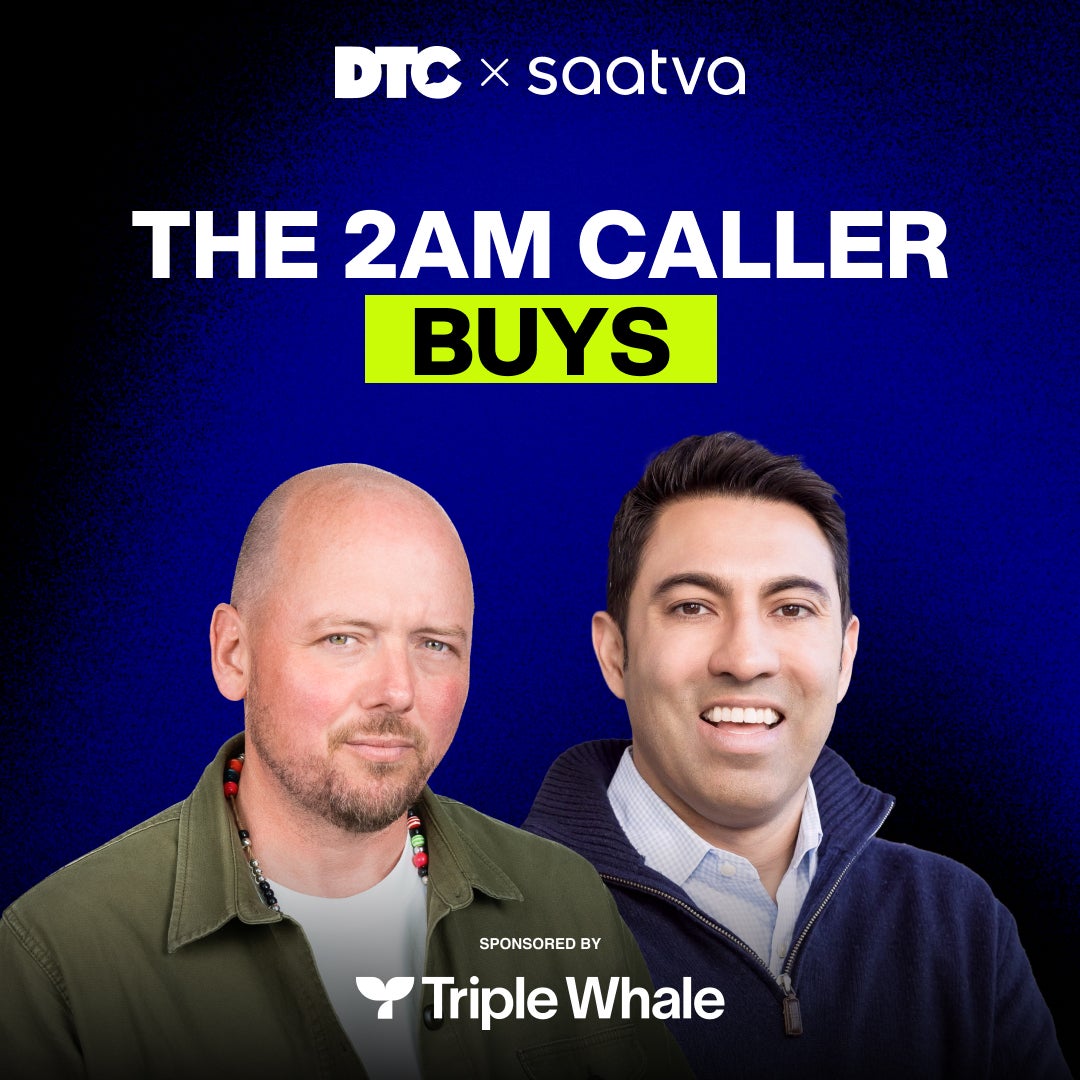
How Saatva (luxury mattress DTC) scaled to ~$600M+ revenue with disciplined, mostly bootstrapped growth, using Google demand capture, AEO (AI-driven “new SEO”), phone orders, and later profitable retail stores; also how they think about Meta, discounting, and remarketing.
Ricky (Saatva executive; CMO background mentioned). Interviewer: Eric Dick (host of the DTC Podcast).
They avoided VC for years; raised private equity in 2018 after ~$200M revenue and profitability. Casper/Tuft & Needle “mattress wars” increased market awareness, and Saatva’s logistics moat + white-glove delivery won. Phone orders were a major early channel (up to ~30% of orders), with reps answering calls from stores nationwide. Google drove early growth via hyper-targeted zip code/conversion optimization; Meta is mainly remarketing/upsell for higher AOV and soft-goods. AEO is essential to be referenced by AI; use tools like GetFancy and Reddit strategies.
Revenue growth cited: $9.5M (2014), $28M (2015), $81M (2015). Stores: ~35 in under 7 years; conversion uplift ~60%+ in markets with stores.
Written by AI. May contain mistakes.
Learn how phone orders significantly contributed to revenue.
“I like didn't want my competitors to know that one of my biggest things I had in my playbook was phone because the guy calling at two in the morning is probably going to buy.”
Explore Saatva's growth from inception to a $600 million brand.
“I've talked to a few folks in the mattress who've been in the mattress industry.”
Understand the discipline and strategies behind Saatva's bootstrapped success.
“So, you know, we were, the idea was incepted in 2010, 2011, you know, we're rock and rolling, we're launching and really, you know, never played the VC game.”
Discuss the challenges posed by competitors like Casper and their effects on Saatva.
“Like, does that even, was that even a big deal for you guys?”
Learn how Saatva emphasizes quality in their product offerings compared to competitors.
“of money to evangelize kind of the market segment, raise the size of the market.”
Explore Saatva's marketing strategies, including the early use of Google ads.
“lot of DTC brands that were kind of like later in the game is they weren't actually providing like much better value than you were getting elsewhere, right?”
Learn how Saatva initially leveraged Google for demand capture and marketing.
“A couple points increase in conversion for us because we have such a big platform is justifiable.”
Discover the significance of phone orders in Saatva's growth and customer service.
“So even if maybe some of the mattress guys, I think resident and Nectar has always been very sophisticated at digital marketing, but we just have a core differentiated product.”
Understand the reasoning behind Saatva's decision for private equity funding in the 2020s.
“Well, I appreciate breaking the news here on the DTC podcast, But how does it work?”
Explore how Saatva's retail stores contribute to overall sales and brand visibility.
“And is that something that you guys, when you say your, your retail stores are generally profitable pretty early on.”
Learn about Saatva's approach to maintaining luxury branding while offering discounts.
“And you're a bit like I was talking with people recently about how more retail experiences are going to need to become experiential.”
Understand the importance of remarketing and storytelling in Saatva's advertising efforts.
“But for you guys, it would have to be like a good, solid chunk of incremental ad budget that you'd be spending over the holidays.”
Learn how remarketing plays a crucial role in driving sales for high-value products.
“Where would you be interested in putting it?”
Discover how large language models are reshaping consumer behavior and purchase decisions.
“Are you guys seeing that in your data yet?”
Explore potential high-value product categories for future DTC growth and strategies.
“And that's why I think you need a good tool to help you do that.”

Get the gist, explore an idea or ask about something said.
 Claude
On The DTC Podcast, what are the key points of this episode?
Searching your listeningAutomatic transcript. May contain errors.
0:00Ricky Joshi: I like didn't want my competitors to know that one of my biggest things I had in my playbook was phone because the guy calling at two in the morning is probably going to buy. It's not that expensive to have 10 people picking up those phone orders and every night I'm making, you know, 100 grand, 200 grand in phone orders. AEO is a practice in its own right at this point. We're using a tool to kind of guide us through the AEO process. It's like the new SEO in so many ways, right? It's making sure you're referred to. These are these are the articles that artificial intelligence is using. Make sure you have visibility here.
0:31Ricky Joshi: These are the things you need to fix on your own website. What are some categories that you could see similar growth trajectories that you've experienced in mattresses? You know, I'll tell you my secret.
0:46This episode is brought to you by Triple Whale, the AI operating system for e-commerce. Just a quick gut check for brand owners and media buyers. Have you started your Black Friday, Cyber Monday planning yet? If the answer is not yet, you're not alone. But the brands that win BFCM aren't the ones scrambling in November. They're the ones planning right now. And here's why it matters. BFCM keeps getting more expensive. Last year, ad spend climbed faster than demand did, CPMs went up, and the season stretched from a single weekend into a full month of promotions. Show up unprepared and you spend more to reach the same shoppers right when your margin matters the most.
1:21Triple Whale built a free resource to help, the BFCM Hub. It's like a command center for planning your most profitable Black Friday, with everything in one place. Real benchmarks from tens of thousands of brands so you know what performance should actually look like for brands just like yours. Free tools to set goals and forecast outcomes. Strategy guides and checklists covering ad performance, retention, and conversion. And AI-powered tactics you can put to work before BFCM week hits. The best part, it's completely free and there's no login required. Go to triplewhale.com forward slash BFCM 26 and start building towards your most profitable Black Friday Cyber Monday today.
1:59Ricky, welcome to the DTC podcast. I was super excited when you came out to our Austin DTC dines event, which was a really great one. Welcome to the DTC podcast, man. How you doing?
2:09Ricky Joshi: Good, good. How are you? Pretty great here on this slightly dreary Friday afternoon. Otherwise, super excited to be talking. I've talked to a few folks in the mattress who've been in the mattress industry. And to me, it's like just emblematic of the most sort of symbolic product in our industry with considering how it was so integral in the early days of D2C. And Satva is a brand you guys have grown, like it's public. You've grown up past$600 million, like almost fully bootstrapped. First of all, congratulations. How did you do it? Oh man, you know, honestly, we were one of the first kind of brands out there.
2:48Ricky Joshi: So, you know, we were, the idea was incepted in 2010, 2011, you know, we're rock and rolling, we're launching and really, you know, never played the VC game. Always were, you know, disciplined from day one. And I think that kind of led to our success. I think a lot of the DNA of the company that sort of started us off by having to be sort of scrappy, be a little smarter, be super kind of nerdy about things like attribution and making sure that we're sourcing revenue in an efficient manner and being really, really kind of scaled in our approach and knowing what we were capable of at the time and sort of growing kind of our marketing stack, for example, over time, making sure that the profit, the unit economics always made a lot of sense, getting better and better about how we handled things like inventory and logistics over time.
3:35Ricky Joshi: So, you know, we really built it like, I think like a real business. And so, you know, we were bootstrapped 100 % until we did private equity in, you know, 2018. And so, you know, for the most part, one of the longest, you know, So I think Bootstrapped kind of runs probably in history. But when we raised capital, we were doing almost$200 million in revenue at that point and profitably. So I had already kind of had the operation underway. So it's, you know, yeah, I think it's kind of an incredible story. And I think, I mean, honestly, you know, we don't probably get enough credit for being one of the larger Bootstrapped direct-to-consumer companies, I think, in history.
4:12Ricky Joshi: I don't think there's anyone our size who's even kind of close who did it the way we did it. And also, I think just in general, again, it led to, I think, a longer term great result because the company just has a discipline in its DNA. Do you like when I say that, like when I talk about the mattress wars that I've heard, like, did you guys just because you started early and because you're in a different category, because you're more of a luxury mattress than a mattress in a box? Like, does that even, was that even a big deal for you guys? Or were you guys just always kind of in your own category that you created?
4:41Ricky Joshi: No, it was the worst thing in the world. Like for a while, I mean, I was like having a heart attack. I mean, we basically invented the category and then all of a sudden, like Casper puts a Tuft & Needle first in 2012 and then Casper came out there in 2014. And really, they're just like evangelizing. Casper's really taking the mantle. Like, I mean, they raised a ton of capital. They're saying, you know, that they are the original mattress brand, you know, forgetting about us and Tuft & Needle. They're getting tons and tons of press. You know, it's like you're all of a sudden everyone's, you know, like, are you like Casper?
5:11Ricky Joshi: And so I think it was a kind of a little bit of a blow to us. and this is like an ego blow, right? I mean, hey, we built this category. We're doing it the right way. And at the end of the day, I mean, they're just, you know, a firestorm. And I think what they also did was they kind of set, because they're dropship products, right? So it's really, there's no moat there. So everyone, all of a sudden, I mean, next thing we do, there are 150 mattress brands competing online. The interesting thing, though, was it all, you know, all these things kind of have their way of working themselves out, right?
5:41Ricky Joshi: I think all number one, I think a lot of our concerns were actually, you know, it turned out to be the reverse. Right. So what ended up happening is they really evangelized that you could buy the product online and we would just sit there and be efficient, and just be all over all the articles a minute that someone started to actually do research. So really, really good. I think broad scale SEO, not just for our own brand, but for other brands, for articles, for whatever it is. you know, we played the internet marketing game 100%, made sure that we were, you know, a known entity. And our revenues went up in 2013.
6:16Ricky Joshi: There were nine and a half million, 2014, there were 28 and 2015, there were 81. So Casper actually helped us out significantly. They spent a ton of money to evangelize kind of the market segment, raise the size of the market. And, you know, we just efficiently were able to kind of, you know, do what we do, which is, you know, our, our white glove delivery product nationally also. But I do think it was interesting in, in terms of us having to kind of get PR, we had to be so scrappy. It was like almost all of a sudden a scrappy part too. You know, I was just asking favors for guys who went to business school because I saw that there were Forbes contributor writers.
6:49Ricky Joshi: I mean, we were asking permission to be in articles that, you know, again, for the guys who created the category, it was kind of like an afterthought a year and a half, two years later, all, you know, after knocking on doors, you know, just really trying to make sure that we were kind of a known entity. And one of the players, finally, I think that shifted and we started to get included. And then here we are, you know, years later, Sattva keeps building a very honest, again, very disciplined business. And one with, I think, great strategy from the beginning. And, you know, I think, you know, we're probably larger than most of those guys combined.
7:24Ricky Joshi: And, you know, we are. I mean, we're definitely in the top two or three, definitely number one in terms of profit generated. And, yeah, I mean, we, you know, we kept doing what we're doing and we were able to, I think, win. There is a bit of a Casper backlash, too. I think there's like a backlash about the quality of the product a little bit. Did you guys find yourselves having to define yourselves against a lower quality product? Or would you like because you guys just describe the decision? like was it ever like what did you think of the mattress in the box phenomenon yeah it was never us right like i mean we you know we built a product that we wanted to sleep on we built a product that we believed in and at the end of the day um you know a compressed product is just not going to be the same as a product that's hand delivered it's you know you're not going to have the same quality you're going to have the off gassing you know the spring quality is not going to be as strong it's not going to last as long even if it's a hybrid product i mean it's just it's just not as strong a product.
8:21Ricky Joshi: I mean, do you want your car compressed when it arrives at your door? Like there is a little difference mechanical, but, but I mean, to a lesser degree, right. It's, it's a similar kind of concept. And so you, but yeah, we, we were, again, you know, we, everyone was talking about the bed in a box and we really had to get it out there that that's not our, that's not who we are. We're not a bed in a box and here's why it's better. And for a while, the messaging, you know, it was kind of difficult, but eventually, you know, I think the market sorted itself out and people eventually had the product for a while.
8:50Ricky Joshi: And, you know, the word of mouth on Casper and not to, you know, just pick on them exclusively, but or any of the bed in a box products, eventually, I think the product, you know, speaks for itself. And that's one other thing that I would say is that really was sort of part of the reason for our success. You know, we built a massive moat with a massive logistics operation. And because of that, we were able to offer the best product we possibly could. And, you know, event consumers talk and there's a life cycle. And people always ask me, well, you know, they buy mattress on the only last for eight years, but you know what else happens?
9:24Ricky Joshi: They grow. They go from a one bedroom apartment to a three bedroom apartment. Three bedroom apartment becomes a four bedroom house. And we've seen that life cycle with our customers. And then they tell their parents and they tell their uncle. And when they realize they've been on the bed for six years, the amount of people that they're evangelizing themselves are a word of mouth. You know, the net promoter score, I think people think about it in the near term, but I mean, over a 10 year period, the net promoter score for us is, is, is tremendous. And so what I think is just kind of happens is, is again, I agree with you completely good product ends up winning at the end of the day.
9:55Ricky Joshi: And we always over-invested in product, really focused on products and also value proposition. I think one other thing I saw with a lot of DTC brands that were kind of like later in the game is they weren't actually providing like much better value than you were getting elsewhere, right? So charging almost more, and that was never part of who we are. We were always going to offer a value-driven deal. As a more efficient company, you're going to get a better deal here than versus mattress firm or wherever. And that still rings true today. So we kind of stuck to the core values of the company from the beginning.
10:27What I hear on the marketing side of things, you mentioned more than once now, is efficiency. talk to me about what it was like what what sort of first of all how did you sell your first few mattresses it was this even pre-facebook ads like was it pre was it like oh yeah yeah this is pre
10:43Ricky Joshi: like any serious facebook ads yeah 100 so it was um it was actually google so you know and we were focused because we were only really we only had real logistics um and delivery in the northeast so we were exclusively focused on zip codes around new york city and the tri-state area And yeah, we had like kind of you look at our early, early website, you know, is a shell of what it is today. One product, you know, a tremendous value really focused on the details. I think when we're one of the first brands to ever really, really sort of do that. I think one of the big things about DTC is, in general, before you had a lot of online companies, but they were more like catalogs.
11:19Ricky Joshi: DTC, part of the thing that I think is really different about DTC, at least for me and my own definition of DTC, is the companies are also sort of really, really deeply explaining their value proposition and why the product is better. And we were one of the first ones to do that. So you're looking at an in-depth analysis of our bet. You're able to have close-up shots. You're able to see the cotton. You're able to understand that it was organic cotton. and all of those things. So that was kind of a differentiator for us from the beginning. And no one else is doing that. And I think in our category, particularly, right, even to this day, I think it's really interesting when you go into a mattress firm, no one's talking about organic cotton.
11:54Ricky Joshi: No one's talking about natural thistle as a flame retardant instead of fiberglass. No one's talking about using the least off-gassing kind of foams possible. You know, no one's talking about a dual coil layer for longevity. None of that stuff's happening. They're trying to sell you the fancy car that's going to break apart in a few years and give you no warranty on it. You also have such a great AOV from day one. When you do get into the meta side, when you're in on the Google side, you guys have a premium product. You have some margin to play with. Let's skip ahead to meta, I guess. What has been the philosophy of what's worked best on meta over these last 15 years or so?
12:31Ricky Joshi: You know, meta has always been an amazing remarketing channel for us. So meta is, I think I've always had this framework where essentially higher AOB products are actually not necessarily meta acquisition driven. So meta is good for acquisition, but it's not the fundamental core of acquisition. So acquisition has been really focused on other channels. What's meta has been great for, for the core expensive mattress product has been again, remarketing for other products, sheets, pillows, you know, you name it where there's a little more impulse buy stuff that's under 500 bucks. Meta is a great, you know, we use the meta for acquisition.
13:03Ricky Joshi: Now that we have this total kind of system where we have LTV that's figured out between soft good products, lower priced products, and using Google and more expensive channels, in addition to now brand channels, which now we're spending on TV, remnant television, digital platforms. So we're doing, we now have an incredible channel mix, but that took time, but we focused. We were very diligent with what made sense for what product at what time. In the beginning, that was Google. And Google and eventually met a remarketing that shifted. And again, every product is its own sort of, you know, and we look at it that way.
13:44Ricky Joshi: Every product is its own sort of marketing plan outside of the brand stuff, which we're doing now at this point. We never really did the brand stuff until we had a bunch of stores. I think that's also really interesting because we needed to have the stores to have the high conversion to justify spending money from a brand perspective and big stuff like the Olympics. Now it makes sense. A couple points increase in conversion for us because we have such a big platform is justifiable. So back in the early days then, because you guys had incredible demand generation, demand capture and demand generation.
14:14You had incredible sort of hyper growth as you were describing over those years there. what you know if you a lot of people that come on the podcast see meta as sort of a one-stop shop where you are generating a lot of demand on it and capturing it and remarketing so where maybe in those early days did you generate the incredible demand that you were seeing with the product
14:32Ricky Joshi: it was all google we were like one of the largest advertisers on google like in the country i mean i was sitting there at cmo conferences with chewy and fanatics i mean we were up we were we were my, I mean, we were Google masters. I mean, that, that was, that was our number one channel and it's shifted again, that, that has shifted so much over time. The, the, the space has shifted so much over time. In the beginning affiliate was not a major, a major piece. There were like a couple of guys out there. All of a sudden when the mattress wars kind of happened, 2000, mid 2010s, uh, 2014 to 2000, I call it 18, 19.
15:09Ricky Joshi: Um, all of a sudden there's a million reviewers and that became a massive channel. So the channel, you know, every, there's always been a lot of ebbs and flows. And this has been so interesting for me as a, as sort of a marketer online is just, you know, it's never been static. And every time I've thought it's a little static, you know, all of a sudden AI comes out and now we have AEO. So it's, you know, and Reddit and whatever. So there's always constant movement, but in the beginning at that point in history, I think Google was the smartest channel. Now it's a lot more complicated. And it would have been demand.
15:39There's just a ton of demand. It was so much like such great timing, I guess, I guess as well, because Google's generally you're you're you're capturing demand that already exists. People are searching for mattresses. And as you say, they're just becoming more and more aware that this is a purchase you can sort of have just show up at your home with this white glove service or whatever. And so it's just, yeah, it's interesting because I'm sure there are other, was there anything you were doing on Google at that time openly to try to generate demand? Or was it mainly about the demand capture on the search terms that were booming?
16:08Ricky Joshi: No, I mean, it was totally demand capture on the search terms and being really, really smart about demand capture on the search terms. Now it's changed so much with, you know, I mean, now you have machine learning and PMAX and all sorts of things. But back in the early days, you had to really kind of do a lot of those things yourself. So we are putting in zip code targeting on our own demographic targeting on our own, essentially having to do our own version of algorithmic machine learning. And that was tremendously successful. And no one else in our category was thinking that way. And I think because we were so hyper-targeted, so hyper-focused on conversion, things like landing pages, being really, really good at the nuts and bolts of core internet marketing.
16:46Ricky Joshi: Anytime, you know, like a CPs or Sealy or whatever would try to compete, they really just, they were not even thinking along the same lines. They're just like spend budget here or whatever. They're not, they're not getting really, really deep on it and hyper-educated. And I think to be totally honest, we had a differentiator. So even if maybe some of the mattress guys, I think resident and Nectar has always been very sophisticated at digital marketing, but we just have a core differentiated product. We're not Nectar. So at the end of the, or DreamCloud. So at the end of the day, our conversion is likely, and particularly amongst certain target audiences from certain channels, even when it comes to advertising on other websites, they're going to be more analogous.
17:29Ricky Joshi: mommy bloggers are going to like Sapa probably more than they're going to like Nectar. So it's, it's, you know, just trying to really figuring out that mix, I think was, was smart and something we spent, just spent a lot of time on. I mean, I can't underestimate how, and you know, how much time we spent on being hyper targeted and hyper focused on conversion. And did you keep it in-house mostly with your, did you build this muscle within the team? For the first few years? Yes. And then we, we actually outsourced to AdLucent, which was, you know, has been acquired since then. But Adleucin was actually in Austin where we're located.
18:01Ricky Joshi: So they were like in our kind of our neck of the woods. And actually we kind of had like a running door. Our current head of performance actually is an old Adleucin employee. So, and, and, and normal, I think normal clients would have like a once a month meeting. We'd have like a weekly meeting and a once a month in person. I mean, we were, and there'd be like two hours. I mean, we were that focused on, on, on spend. Talk to me about phone orders. That's a unique feature. Not a lot of people who come on the podcast have that aspect to their sales process. How important have phone orders been as a growth channel for Safa?
18:33Ricky Joshi: So, I mean, at the end of the day, I think phone orders, you know, it's been huge for us, like since the beginning, it does two things for us. Number one, we're the customer service brand, we're the brand that's sitting here and, you know, making part of our entire core value proposition. The fact that you're not negotiating with us, the fact that, you know, we are transparent, that we provide, you know, this kind of exceptional experience that no one else does. So phone does that for us. When you pick up the phone and someone picks, when you call and someone picks up, that immediately sets us in a completely different, and make our phone number readily available.
19:07Ricky Joshi: It completely puts us in a different kind of category versus most brands that are out there, regardless of category. I think the second thing is full-order conversions are massive. We have a high AOV product. I mean, so one person who's sitting there, you know, making 20 something,$30 an hour is that person on one conversion, you know, is worth a lot. And so we made adjustments with our phone team over time. In fact, our phone team now is distributed around the country. So all of our reps in their stores are also manning the phone for local calls, which has been a tremendous, really smart Sapa thing that I think no one else has really done.
19:47Ricky Joshi: because we have lots of traffic kind of at various stages, kind of coming in and out of stores. So when people are not actually working in real time in the stores, they're actually answering the phone, which is such an, I think it was such an amazing idea. But at the end of the day, it's worth every penny. And it's funny, I actually wouldn't talk about this on podcasts and anytime I was speaking, because I like didn't want my competitors to know that part of the, one of my biggest things I had in my playbook was phone. and phone because again, the guy calling at two in the morning is probably going to buy.
20:20Ricky Joshi: And Casper, why aren't you paying like that employee? You know, I mean, it's not that expensive to have 10 people just picking up those phone orders and every night I'm making, you know, a hundred grand, 200 grand in phone orders. I mean, that's easy with the highest conversion rate. Like, you know, so anyway, I really was actually quiet about that early on. I wouldn't even let anyone know. Well, I appreciate breaking the news here on the DTC podcast, But how does it work? Does it, do you, would you ever run? Cause I have friends who ran a click to call business for a while. We were actually advertising.
20:50Like is the, was the phone always there just as something as for something in case people wanted it? Or were you actually out there promoting it like in ads or in, in other, like was the phone an essential part of the sales process?
21:01Ricky Joshi: It was, it was just something we had. Um, it, like it was never, we were never sitting out there with an ads or anything. We never got to that level, but at one point it was 30 % of our orders. Wow. That's amazing. And when we were doing tens of millions in revenue, I mean, we're literally doing tens of millions in revenue. It was 30%. It's obviously shrunk as a channel significant, but it's still, you know, it's an incredibly high percentage. Absolutely wild. Talk to me about why you took on some private equity funding in the 2020s. What was your decision making for that process? You know, I think a little bit of it was we wanted to kind of sell a little portion of the business just for, you know, the sake of everyone at the company, including employees.
21:45Ricky Joshi: You know, employees have had a share of the company from the beginning. So, you know, everyone had a really good time. I took my entire Austin team out to like the Hyatt Regency and we were all celebrating and everyone else could, you know, they could go buy a car or whatever. Everyone was having a great time. So it was nice. It was a little bit of an early exit opportunity for us. I think the second thing was it was, you know, also capital to expand, particularly stores. So that was a massive part of the playbook. And so the capital provided for us to be able to do that without having to worry about profitability.
22:18Ricky Joshi: To be able to really reinvest in the business and have that capital intensive strategy was part of it. And it's been phenomenally successful. I think the crazy thing is we probably didn't need the capital because the stores have been so profitable. from, you know, they paid themselves back on average within a year. So even including capital expenditures, one to three years max. I mean, some of them, it's literally a year. So we probably didn't even need the capital, but at the end of the day, Hey, here we are, you know, there's no set playbook. 35 stores in under seven years. And one of the things we're always looking for on the podcast are the halo effects that you have.
22:52We're at 38 now. Oh, you're at 38 stores now. Well, ChatGPT is a little behind you. Opened three since we started the conversation. Um, but I'm always interested in the halo effects. And is that something that you guys, when you say your, your retail stores are generally profitable pretty early on. Um, do you, is there, do you quantify the effects of regional ads into, uh, retail sales or the way that they play together? Or is it just sort of like, Hey, it's all working. Just keep going.
23:17Ricky Joshi: No, I mean, it's, it's a, we, we, we look at conversion rates by DMA in different cities. we look at overall where we're converting. So in fact, we convert higher by about 50, sometimes 50 to 100%, depending on the month. Oftentimes, I think the average is somewhere in the 60s higher in areas where we have a store. So it's massive. And that's just so that it just massively increases conversion rate. It's an amazing billboard. We see sales go up. It takes about three or four months, But inadvertently, you know, it opens up markets. It also all of a sudden, because you have the higher conversion rate, now you can spend more in that market.
23:58Ricky Joshi: So we see the markets depending on, it depends on the market and kind of stage of the market. But we see the markets kind of going up anywhere from, again, 60 to 80 percent within a couple of years in addition to the conversion rate. So it's just a, it's a massive uplift. And we're trying to go everywhere we can. I mean, and the interesting thing is, one thing I will say is we, the store thing is almost like building a company again. you know the beginning no you know it's we're an online brand it takes a minute to sort of get in i think sometimes it's really kind of funny to me people think that like launching a store and particularly if it's in like a town center it's just like leasing an apartment like you just go up there with some money and they just like give it to you no these are incredibly curated environments uh where you know in in the furniture sector we're not you know skims or whatever you know we're not like there is some super hypey product but we provide a beautiful experience tie AOV, you know, and do a lot of things that are just make it make it.
24:54Ricky Joshi: I think a town center look really, really good. But in the beginning, it took a minute for people to be receptive. Now we get in everywhere we want. And so it's as long as it's there, we're there. So it's been a complete flip for us. And but again, it was an entrepreneurial venture in its own right. And it's it's again, it's been a phenomenal success. And you're a bit like I was talking with people recently about how more retail experiences are going to need to become experiential. And I feel like mattress retail environments by their nature, and I haven't been in a safra store, but I imagine the way you've constructed it there, I'm sure it's like quite an experiential thing because that's what you're there to do.
25:29You're there to literally jump on the beds, feel what it feels like to lie down, et cetera, right? So you've curated a great environment there.
25:35Ricky Joshi: Oh, my God. It's an unbelievable environment. They're beautiful. I don't know if you've seen our stores, but if you walk into one, I mean, you know, you'll get a cup of tea and, you know, I mean, they're just like, it's like you feel like you're in luxury. You know, it's interesting. I'll sometimes go into our store just to use a phone or like just take a quick call. It's just if I'm ever up, you know, and by the domain, I just keep walking. I'm like, wow, this place just smells beautiful. You know, it's it's just fantastic. And it's a very beautiful, unique experience. And that's a part of our brand.
26:06Ricky Joshi: Our whole brand is accessible luxury. But that's that means two things. One, you know, it's still a value. You're going to get a better deal at Sapa, but it's also luxury. You're going to have an amazing experience. So that's kind of the mantra. I wanted to, one of the more interesting things that came across in my notes is sort of how you guys handle discounting. Because you're a luxury product, and a lot of times luxury products don't even maybe mess around with discounts as much. But you guys quite often will have sale banners. We're headed into the biggest sale period of the year. How do you guys think about the tension between being a luxury brand and offering discounts on your product?
26:42Ricky Joshi: I mean, I think that everyone wants a discount. I think that at the end of the day, you know, maybe that, that was sort of the, the way to go. Unfortunately, um, I think we have a discount culture and, you know, offering discounts, um, it's just like kind of part of the DNA and it's something that we've just found, you know, is, is just something it increases conversion. It's just, I think you just kind of have to do it, um, because everyone else is. Um, so if we had no competitors, we'd probably just have like the same flat price, you know, the whole time. But at the end of the day, I think it's just a, it's a, It's a part of our consumer culture.
27:15Ricky Joshi: I mean, look how crazy people go for Black Friday, right? I'm going to go crazy for Black Friday. I'm moving in a new house. And everything that's not in the bedroom, which is all Sapa, you know, I'm waiting to go buy all of it. I'm just curious. I know you're probably not directly, you know, leading the marketing of Sapa anymore at the stage that it's at. But I'm curious, based on your sense of the marketing stack that you have going there, if I were to give you a million dollars, because usually we say like$100 ,000 or like$50 ,000. But for you guys, it would have to be like a good, solid chunk of incremental ad budget that you'd be spending over the holidays.
27:47And like, where would you be most interested in putting it to see? Maybe you can tell me what the number that would make sense. But maybe let's say it's 500 grand or something in incremental ad spend that you can make over the next quarter or the rest of the quarter. Where would you be interested in putting it?
28:04Ricky Joshi: I think remarketing. We have an amazing funnel and just like a bunch of different remarketing ads, which we do. You know, the remarketing budget goes up during holidays. But, I mean, remarketing is just massive. And particularly when you have people who are kind of like entering the funnel. There's so many people who are entering the funnel. And, again, every brand also, sorry, in every category has a different conversion cycle. You know, ours is a curated purchase. That's why Google is so effective for us early on. It's not an impulse buy. You just don't, like, buy a$2 ,000 mattress by just, you know, you see an ad once, you just kind of buy it.
28:35Ricky Joshi: I mean, it's a curated experience. So, remarketing really does amplify the effect. because these people have been looking for a month, two weeks, three weeks, you know? So that's why it's so critical. But remarketing with the discounting. Yeah, so discounting is part of the remarketing. And then what else goes, is it really just sort of really telling the story of your mattress, how it's made? Like what goes into an effective remarketing campaign at scale? Oh, I mean, just like, it's essentially the product messaging. And, you know, it was kind of difficult for us in the early days to sort of kind of get them, because there's so many attributes to our product, right?
29:08Ricky Joshi: We're a good for you brand. We're American made. We have more durability. You know, you let you sleep more comfortable. You know, it's a luxury experience or all those things. I mean, remarketing allows you to kind of tell that message across a series of ads. Video ads obviously being more effective. And there's also just kind of the brand authenticity and feeling, right? And we've always done that. I mean, if you look at a Satva ad, you look at our website, any of it, Satva always, you know, is in a great location. Like Satva looks pretty. I mean, it's also, there's a little bit of the aesthetic kind of like, oh, okay, I get this.
29:43Ricky Joshi: It's a quality product. You know, it's not just some fly by night. We will mix that in. I mean, we'll have, you know, affiliates do that stuff. So affiliates will go out there with their DTC looking content with the flash, flash, flash. But, you know, that's why we have different relationships. Well, I have to ask everyone, because everyone's talking about it in this space, about Tribe and about people using these UGC networks where people are actually, where you're getting UGC content and you're actually paying out on GMV, at certain scales of business, it becomes a little bit worrisome. Is this something you guys are messing around with or using?
30:17Ricky Joshi: Like in a small scale, it's not a core part of the strategy. It's like, I think again, with a high AOV product, we have such a complicated stack. And so those are things, you try different things all the time. I don't think it's like a massive part of what we're doing. Fair. You mentioned right at the beginning, AO. And you also said people aren't making purchase decisions in one session, But now with our agents, with our Claude, who knows everything about us, the chances of making very considered purchases in much compressed windows, because we trust these Frontier LLMs so much, goes way up. Are you guys seeing that in your data yet?
30:50Are you starting to see an amount of people being referred to by ChatGPT or Claude or any of these players?
30:57Ricky Joshi: 100%. I mean, it's part of the purchase cycle. We're using a tool, GetFancy, to actually be able to, I think they're rebranding. but I've, you know, it's been, it's been amazing to kind of guide us through the AEO process. And that means kind of, it's like a new SEO in so many ways, right? It's making sure you're referred to these are, these are the articles that artificial intelligence is using. Make sure you have visibility here. These are the things you need to fix on your own website. So it's, it's almost like, you know, AEO is a practice in its own right. At this point, Reddit, massive part of it.
31:29Ricky Joshi: People always say it's not, you know, it's, it's shrinking, but it's still part of it. You You know, shrinking doesn't mean it's no longer existent. So we now have a Reddit strategy. So we're playing the game just like we used to. But yeah, so just having a dashboard there, like the Get Fancy that allows us to kind of go through and figure out exactly what we need to do to make sure that we're very highly relevant there. And it's not going anywhere. I mean, again, like I said before, everything is constantly in flux in e-commerce and this is a massive part of e-commerce. It's only growing. It's maybe even shifting a little bit in its own right in terms of maybe Reddit, it's like less important, but it doesn't matter.
32:04Ricky Joshi: At the end of the day, you just have to kind of do all these building block things. Right. So it kind of is kind of, for me, it's actually kind of fun to talk about this because, you know, it reminds me of kind of the early building blocks of SEO, which is kind of like my background. Yeah, it is super, super exciting. I think I've been talking with a lot of people about like what, and I really interesting metaphor I heard from a call that I had this week was like, there was, there was commerce before Amazon. But then Amazon came and it changed everyone's frame for what commerce online is. And it's like, then if you went to try to build a company based on things that happened before Amazon came to the market, you're not going to make it.
32:43Whereas, and he was sort of saying that LLMs are that are going to be that, but even more impactful where it's like, we need to start thinking of like how we build companies and strategies, like on the other side of the LLMs, Because it's like people are going to be putting an increasing amount of their, you know, front end wants, desires, wishes, you know, entertainment, everything into this prompt line potentially or into their into the way they work with their agent. And so the model increasingly is going to have to become how to figure out to be on the other side of the LLM and the outcome that they want, essentially.
33:17100 % if that makes sense.
33:18Ricky Joshi: That's all AEO is. I mean, that is a core of AEO. And you have to be on top of it. It's changing. And that's why I think you need a good tool to help you do that. Yeah. Get fancy. I'm going to be sponsoring the podcast. Yeah. Otherwise, we're kind of flying blind. So it's, you know, and once I got the tool, I was like, oh, my God, this is amazing. Thank you for helping me do this. But yeah, it's a big part of where we're headed. I could talk to you about this stuff all day, but we're coming to the end here. And I'm curious if there's, you know, I know you're involved in other things and you're not just a mattress guy, as you were saying.
33:51But like what other areas, like do you see, like, have we burned out all the wars? Is there going to be another period of mattress? Are we in like, I guess, protein supplement wars or fiber wars? What, and ultimately this is all to ask you, what are some categories that you're excited about that you could see similar growth trajectories that you've experienced in mattresses or are those days done?
34:13Ricky Joshi: At the end of the day, I'll tell you my secret. So I'm on the board of branch, which is branch furniture, which office furniture. I was an early investor in Carraway. I'm on a board of advisors for Guardian Bikes. They all have one thing in common. Number one, great internet marketing teams. Number two, they are higher AOV products where there's an LTV cycle as well. So people are adding on, they're going, you start off with a small bike, you go to a bigger bike, and and and so personally i've always find found that um premium well-built differentiated product where you can kind of create an ecosystem around product you can start off with mattresses but you can go to sheets and pillows and bed frames and now nightstands and bedroom rugs i mean you know the business has a life cycle around it i think that that's that's kind of where i have found I see, you know, some wins.
35:11Ricky Joshi: And that can be in a number of categories, right? So, I mean, I've seen, I mean, Away did it in luggage. And, you know, again, you know, people have done it in furniture. So, I like high AOV stuff. There are a lot of people who, you know, have, I've done a tremendous job, you know, on TikTok shop. I was talking about, I think, Comfort or something. That's a brand I hadn't heard of, but it was doing like a billion dollars in revenue. And, selling like fly by night t-shirts and things like that. And I've seen a lot of businesses do really, really well in doing those sorts of things. Not as much my playbook, but hey, if you can generate the volume, that's great.
35:51Ricky Joshi: But I like premium differentiated. And products that lead into an ecosystem. I think that's a big key. I've talked to a lot of products where you're buying one product and then maybe it'll last you for your life, but you don't have this entree into all these other things that you can fill your home with and improve your life in the same that you can with all the products in the software ecosystem. Yeah. Like, it's funny. I was, I was actually, I was just talking, I mean, there's one idea we had, which is, you know, office, sorry, outdoor furniture, you know, I'm like, okay, well, if you do outdoor furniture, but you can also sell like backyard, nice cornhole sets or whatever.
36:21Ricky Joshi: I mean, there's an idea for someone, you know, and, and, you know, there's, there's an LTV around that. There's a, an AOV anchor, which is, you know, an outdoor couch and then, or an outdoor table or whatever it is. And then you can build a kind of a nice little brand yard birds done it. um you know there's not like it hasn't been done but um i think uh yeah stuff like that you know just just spitballing you know that's there's one right there and and also i think that one thing we found is that someone who's had now 175 dtc competitors at one point in our history as a in addition to uh existing traditional retailers so it's not like we've lived a life without competition.
36:59Ricky Joshi: It's been nothing but competition. Both sides. All from all sides. But at the end of the day, I think, you know, I'm less scared of competition. I'd rather have a good idea and competition than no competition and a bad idea. Love that. Competition tells you you're in the right area. Yeah. You don't have to invent everything. Ricky, thank you for coming on the DTC podcast. This was absolutely value packed. I look forward to catching up with you again in the future. And we'll be back in Austin shortly and we'll, uh, we'll share a drink and, uh, and share some more stories. Sounds great. Look forward to it.
37:31Go to satva.com. If you're ready to luxuriate your sleeping experience as S A A T V A.com. Uh, maybe I'll put your LinkedIn or your Twitter on, uh, on the show notes here so people can follow you if they're interested. But again, this was awesome, Ricky. Thanks so much. Cool. Thank you so much. Appreciate it.
37:53Thanks so much for listening to today's episode. If you're not a subscriber to our newsletter, you can do that right now at direct-to-consumer, all one word, dot co. I'm Eric Dick, and this has been the D2C Podcast. We'll see you next time.
How do you grow a high-ticket DTC brand past $600 million? Saatva co-founder Ricky Joshi bootstrapped the luxury mattress brand to almost $200 million before taking private equity in 2018. He explains how phone orders, Google search and retail Viewing Rooms did the heavy lifting.
At one point, 30% of Saatva's orders came in over the phone, and Ricky kept it quiet for years so competitors wouldn't copy it. He walks through why Meta works as a remarketing channel for a $2,000 mattress, how Saatva's stores pay back in about a year, and how Casper's fundraising helped triple Saatva's revenue.
Get the DTC Newsletter: https://directtoconsumer.co
WHAT YOU WILL SOLVE
High-intent shoppers leave without buying. Saatva answers the phone around the clock and makes the number easy to find. At one point phone orders were 30% of the business, and Ricky says ten people on the phones could bring in $100,000 to $200,000 in orders a night. In his words, "the guy calling at two in the morning's probably gonna buy."
Staffing a phone line looks expensive. Saatva's store reps answer local calls when they aren't helping customers in a Viewing Room, so the phone team is spread across the country.
Meta isn't acquiring customers for your highest-priced product. For a high-AOV product, Ricky treats Meta as a remarketing channel. Saatva uses it for acquisition on sheets, pillows and other products under $500, then builds lifetime value from there.
You're not sure retail will pay off. Ricky says Saatva's Viewing Rooms pay back in about a year on average, and in one to three years at most including build-out. Conversion runs 50 to 100% higher in markets with a store, and those markets grow 60 to 80% within a couple of years.
A well-funded competitor is outspending you. When Casper raised big money and told everyone they could buy a mattress online, Saatva made sure it showed up wherever shoppers did their research. Revenue went from $9.5 million in 2013 to $28 million in 2014 and $81 million in 2015.
Brand spend is hard to justify. Saatva held off on TV and sponsorships like the Olympics until it had enough stores to lift conversion. At Saatva's scale, Ricky says, a couple of points of conversion makes that spend worth it.
Your agency treats you like every other client. Saatva met its search agency, Adlucent, every week and in person every month, for two hours at a time. Its current head of performance came from that agency.
AI search is changing how shoppers find you. Saatva uses an AEO tool to see which articles AI models cite, what to fix on its own site, and where Reddit fits in.
You have budget to deploy over the holidays. Given $500,000 in incremental spend for the quarter, Ricky would put it into remarketing, because a mattress shopper researches for weeks before buying.
ABOUT THE GUEST
Ricky Joshi co-founded Saatva in 2010 and built its marketing from Google search up. He is now a senior advisor to the company. He sits on the board of Branch, advises Guardian Bikes, and was an early investor in Caraway. https://www.saatva.com
STAY CONNECTED
DTC Newsletter, daily ecommerce marketing and ecommerce growth tactics: https://directtoconsumer.co
YouTube: https://youtube.com/@dtcnewsletter
LinkedIn: https://linkedin.com/company/directtoconsumer
TIMESTAMPS
02:00 How Saatva Bootstrapped a $600M Mattress Brand
05:00 Competing With Casper and the Mattress-in-a-Box Boom
12:00 Google Ads, Meta, and High-AOV Marketing Strategies
18:00 How Phone Sales and Retail Stores Drive Revenue
30:00 AI Search Optimization and the Future of Ecommerce