Ask ChatGPT
 The DTC Podcast
11 Nov 2026 · 45m · 22 chapters
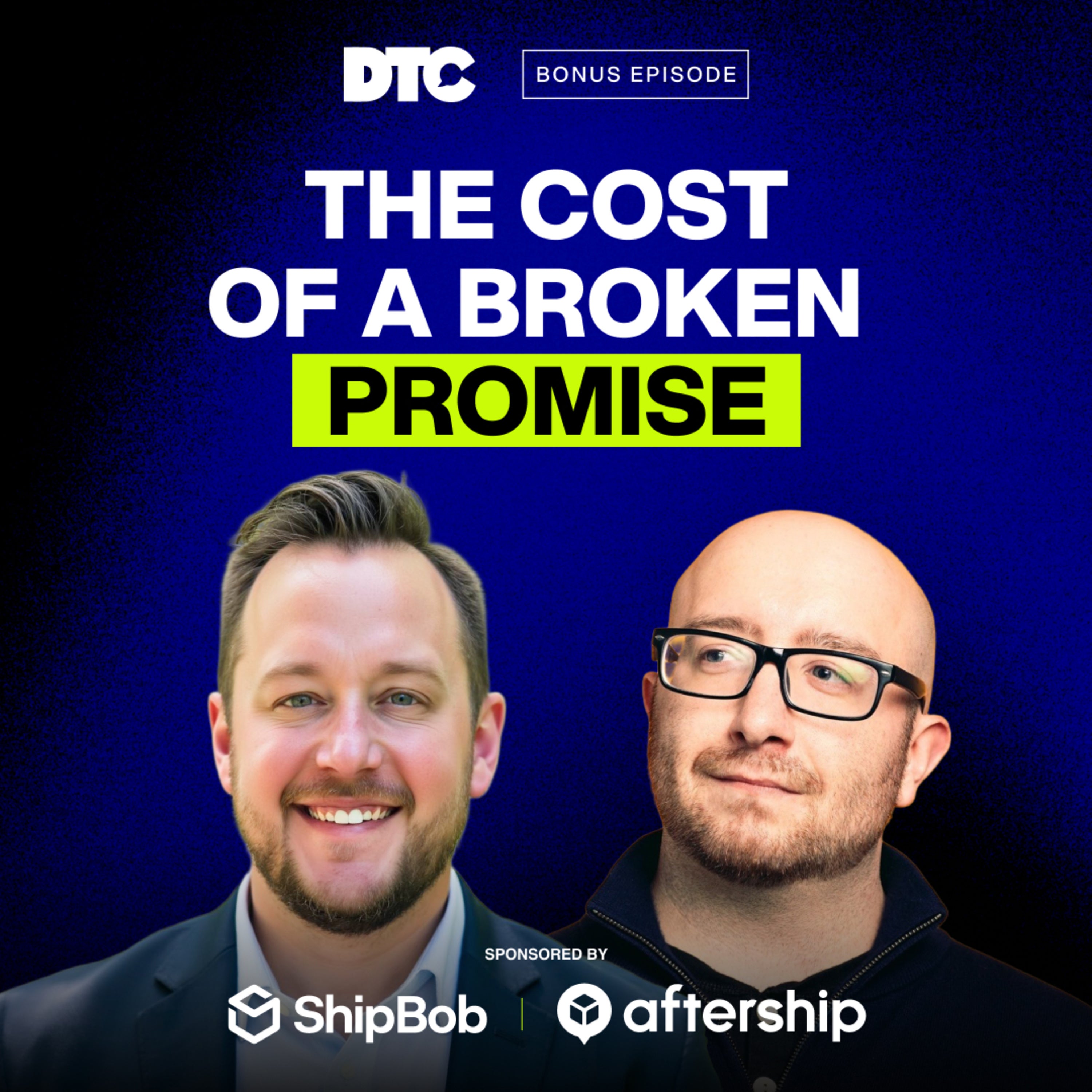
How DTC brands can protect retention after checkout by auditing the full post-purchase journey (delivery promises, fulfillment performance, tracking/communications, and returns/exchanges). Guests argue that overpromising delivery and poor post-purchase visibility/support reduce repeat purchases, and that connecting fulfillment data with tracking/returns data enables data-driven fixes.
Written by AI. May contain mistakes.
Learn how fulfillment and delivery affect customer retention after checkout.
“The thing for brands to think about is like your checkout page is going to make a promise and your fulfillment provider is going to decide whether that promise is something that your brand can keep.”
Discover how brands establish delivery expectations at the time of purchase.
“Maybe, Cody, could you start with a little intro about your position at ShipBob and followed by Mike?”
Examine the consequences of delivery promises on repeat business.
“So a lot of times you're providing upfront, if you're not, you should be providing an estimated delivery date.”
Learn how to audit customer experiences from order receipt through delivery.
“And that's a big part of the topic we're talking about today.”
Understand how customer support data reveals fulfillment issues.
“Never shopping with this brand ever again.”
Explore how proactive communication can enhance customer satisfaction.
“So they had about one in every four or five customers opening up a ticket.”
Discover how AI can help brands manage delivery issues and improve efficiency.
“That customer is likely, in most of those cases, they're going to get that item, right?”
Learn how data accuracy affects decision-making in supply chain management.
“pairing AI and in this topic of like, your data is only as good as your data is going to be.”
Learn why accurate attribution is crucial for DTC brands to avoid costly decisions.
“And it kind of like in layman's terms, you can't fix what you can't attribute correctly.”
Discover how AI can help brands analyze fulfillment data and improve decision-making.
“Aftership absolutely tells a similar story on our side.”
Understand the best practices for handling returns and exchanges to enhance customer satisfaction.
“And Mike, I think that's where this partnership makes sense, right?”
Learn how to manage customer expectations and logistics during the holiday rush.
“I didn't feel like I had time in the moment to go through that experience again.”
Learn why timely delivery is crucial during the holiday gifting season.
“We're going to help you get out ahead of those.”
Explore the significance of clear communication during post-purchase issues.
“And it ensures that that customer, you know, if you had that promise up front, the faster the customer reacts in those situations, the more likely you are to be able to keep that promise.”
Understand how tech stacks and fulfillment partners influence brand scaling.
“The kids are screaming in the background.”
Discover how effective data management can enhance customer retention strategies.
“Because a brand spends a lot of money and time and effort on acquiring a customer, right?”
Learn about the common challenges brands face with product delivery and customer support.
“If it's smooth and easy, and obviously the discounts are there and everyone's happy, like those are the people who are going to go back to your brand's page in January and February and so on.”
Explore how strategic partnerships can enhance service offerings in e-commerce.
“So those powdered anything evidently cause some pretty extreme strain on the bags.”
Understand the financial benefits of efficient return management and customer engagement.
“So in our show notes, we're going to have links to, obviously, both products.”
Learn about the importance of customer experience and brand loyalty in modern e-commerce.
“And it all goes to building brand equity, which is you can't, you know, there was a period in e-commerce, I feel like where you could churn and burn customers and reacquire them all the time on meta at the cost.”
Explore the return rates in the apparel industry and their implications for brands.
“So it's like, as soon you kind of like, we talk to brands that come to us with that.”
Discover how third-party logistics can enhance brand fulfillment and customer retention.
“Like with software, you can go in, it's anything.”

Get the gist, explore an idea or ask about something said.
 Claude
On The DTC Podcast, what are the key points of this episode?
Searching your listeningAutomatic transcript. May contain errors.
0:00The thing for brands to think about is like your checkout page is going to make a promise and your fulfillment provider is going to decide whether that promise is something that your brand can keep. We're actually able to review returns and determine is this a high risk return? Is this a low risk return in terms of fraud risk? Your audition for repeat customers for 27 starts this month. You've got to be able to either hire tremendously, which is a time suck and probably not an efficient use of your spend, or you get smarter with the right tech stack. You get smarter with the right fulfillment partner.
0:34You look at the visibility, you have the data conversations, and then you start making data driven decisions on what your business needs.
0:47Hello and welcome to the DTC podcast. I'm Eric Dick. Today is all about retention and specifically how much of it is decided after the checkout. We're going to walk through what happens to an order from the warehouse to the doorstep to the return and where brands win or lose the customer's next purchase. This episode is in partnership with ShipBob and AfterShip. And with me are Cody Burton from ShipBob and Mike Fazio from AfterShip. Welcome, guys. Maybe, Cody, could you start with a little intro about your position at ShipBob and followed by Mike? Yeah, absolutely. I lead the team at ShipBob that sits with growing brands at the exact moment their operations stop keeping up with their growth.
1:28Overseeing our SMB sales segment, the managers and the sellers that are talking to these brands each and every day. Awesome. And I'll dive in. I'm Mike Fazio. Nice to meet you, Eric. Lead Solutions Architect here at Actorship. I've been in this sort of post-purchase returns and tracking space now for, gosh, about eight years at Actorship, actually, for four of them this month. And really excited to sit down and have this conversation with you. Yeah, we talk about retention all the time. We have a retention podcast, but we're quite often talking about email marketing or remarketing. But I think what we're here to talk about today is just how much that post-purchase experience decides the repeat order and sets the tone for the whole brand experience, the LTV, the AOV, everything.
2:15So maybe, Mike, starting with you, what expectations are brands setting the moment a customer places an order? Yeah, it's a great question. So a lot of times you're providing upfront, if you're not, you should be providing an estimated delivery date. You're also providing a return policy on your site. So you're giving some sort of guidance in terms of what to expect if there is an issue. And those are kind of the key points that you want to get up front and make accessible to your customers. And from your side, Cody, on the 3PL side, how do you think about that? Yeah, it's a great question. I mean, there's kind of, well, not kind of, there's this shift happening in the industry of like, we've all been so accustomed to seeing like five to seven business days being, you know, what your shipping time would be.
3:03And now you're seeing delivery promises, Mike alluded to. And I think, you know, the thing for brands to think about is like your checkout page is going to make a promise and your fulfillment provider is going to decide whether that promise is something that your brand can keep, which is obviously a huge deal. And, you know, talking about delivery promise, I think one of the things that we talk about a lot on the like more operations side of things is that these dates shouldn't just be arbitrary. Like they should be data backed, right? Like they should come from, you know, where your inventory actually sits, cutoff times and all these other metrics that kind of go into the backend, instead of just kind of looking at a five to seven day business or five to seven business day window, and then making that seventh day, the date as like your delivery promise, like the delivery promise should be as accurate as it can possibly be based on the data that I've mentioned.
3:54And yeah, I think the thing that we talk about a lot with our brands is an overpromise can win you a click, but it can lose you repeat customers. And that's a big part of the topic we're talking about today. And then what should brands be asking their fulfillment partner about how to calculate the precise delivery date? Yeah, it's a great question. I think there's several, but cutoff times are a huge one. Shipping zones would be another one. Where your inventory is actually going to be placed. Those three things. And again, probably a couple others, but those are probably the big three that are really painting the picture.
4:31Is this a suggestion or is this a promise? It's funny. It's like one of the things I talked with someone this week recently, and they talked about living in this world of like post-Amazon e-commerce. And it's like Amazon has become the standard in so many ways for people's purchase experience. And it's like everything, whether we want to or not, gets held up to that experience. Is that something on the 3PL side that you guys are thinking about? Of course. Of course. Yeah. I mean, it really wasn't that long ago that no one expected a drone to drop off their package within an hour or what have you.
5:10I mean, at this point, it almost feels like two days is slow for Amazon. And I'm guilty of that as well, right? But no, certainly, it's certainly something that's a hot topic. And then from your side, Mike, anything from your perspective at AfterShip that enters your mind about when you think about the Amazon standard? Yeah, I think, you know, not so much with Amazon, but on the Shopify side, like Shopify has made life super, super easy for brands in terms of providing a really great pre-purchase experience, right? So almost to the detriment of consumers. Actually, a couple of years ago, I bought a Halloween costume on this site and it said, you know, it'll be delivered in the next period of time.
5:55And I was really excited about it. It looked really great. Everything on the pre-purchase side flowed perfectly. It wasn't until the product didn't arrive for three weeks. I never heard from the brand again. Tried to go in place or return and it was this sticky mess to try to get through. that I realized, you know what? Never shopping with this brand ever again. Because that's really, when you think about the pre-purchase side, that sort of showing something beautiful on the page, that's pretty achievable today. Amazon does a great job of organizing and providing that up front, but they also follow through with their commitments.
6:35And that's what brands or that's what customers really care about, right? is did it arrive on time? If it didn't arrive on time, why? And were you supportive and clear in your messaging? I think that makes sense. And then, so moving through to the pick, pack, and ship portion of the customer journey, Mike, if you were auditing like a single order, where would you look for the first signs that the experience isn't optimal or that it's breaking down? Yeah, I think, honestly, I would look to your customer support tickets, right? I would look and say, hey, are we essentially – 90 % of customer support tickets are post-purchase issues, right?
7:17So I'm going to look and say of that 90 % of our tickets that are coming through, where are the key challenges here? Is it our customers asking about where their order is? Are packages being delayed in terms of shipping out, right, in terms of that? But like, are we providing a promised delivery date up front that we can't actually meet? And try to dissect those customer support. And then Cody, in our pre-interview, you had a good quote, I thought, which was that the audit or when you're looking at these things, it should really start at the receiving dock rather than at the tracking phase. What do you mean by that?
7:54Yeah. So I think like it's so just instinctual to start after the order has been placed to start auditing things. But in reality, a brand's audit trail or journey should start pre-sale, like long before the pre-sale. Right. And so a huge or very like, I guess, prominent topic within 3PL is like dock to stock. You'll hear that term thrown out quite a bit. And this is one piece to the audit package, similar to what we talked about in the last subject with order cutoff time, same-day ship rate, pick accuracy, the dock-to-stock, inventory placement, so on and so forth. All of these factors can show you where a WISMO ticket is probably going to come from.
8:41Or to Mike's point, when you're auditing those support tickets, you can start to find those trends. Right. Like perhaps a lot of our Wismo tickets are coming from a certain region in the United States or certain region in the world. And perhaps our inventory is not in the optimal place that it should be. Now it's time to have a conversation with your 3PL. But again, back to your earlier question, it's like this this journey should start before the 3PL is really even received anything. If you do it right. And in my opinion. And when there are issues, can we keep those customers on your turf? right?
9:16As much as possible. If there's a problem with a package in flight, and the first thing a customer hears from is from the carrier and not from you, that's a problem. That's something that needs to be looked at. Because you can easily flip a negative experience into a positive experience by staying engaged and being proactive in those communications. If you're not doing those things, that's really where the challenges arise. I love new acronyms. And I know WISMO has been around for a while, but just for those in the audience that aren't familiar with, what is WISMO for those that might not be familiar?
9:50Where is my order? Almost like a bad word at this point in the year. And what percentage of the tickets that you field are WISMO tickets? Is it a large percentage? Absolutely. Yeah. Actually, I was thinking about this conversation today, reminded me of a use case from earlier this year. This kind of premium home and kitchen brand that we're working with came to us with over 20 ,000 tickets logged in a five-month period. And Wismo was about 20 % of those. So they had about one in every four or five customers opening up a ticket. About 30 % of those, again, were coming from a Wismo standpoint due to a eight to nine delivery day window, like we talked about before with delivery promise and that shift that's happening.
10:41So, you know, to Mike's point, like you should start kind of like maybe one of your first questions as a brand is like, ask yourselves, how do we find out that an order is delayed? And if the answer is like we find out from our customers first, like that's a problem. Right. And when you've seen 20 ,000 plus tickets in five months, you don't really have a support problem. Your support's inundated with a bunch of problems, but what you really have is like a retention issue that's already here and just going to continue to bubble over and obviously lead to poor brand experience and reputation. Exactly.
11:15That customer is likely, in most of those cases, they're going to get that item, right? It's delivering a couple days late. It's not going to be the end of the world at the end of the day. But the way they feel during that period where they're waiting for that package to come in route, they're going to remember that. They're going to remember, you know, did I have to go bug them for support or were they actively engaged throughout the experience? And I think, you know, literally the sort of partnership, the way that AfterShip and ChipBob are connecting is kind of the reason for this podcast today.
11:47So, Mike, what can brands learn when they connect their fulfillment data with tracking and delivery performance? Are they keeping their promises, right? Whether it's the carrier's estimated delivery date or something you promised at checkout, the customer has a commitment in mind. Was that achieved? And if it wasn't achieved, did you get out in front of that messaging? I think that's the key thing when we're talking about Lisma. And then, so we're all living in the, we talk about the post Amazon world. We're now in the post LLM and AI infiltration into all of our processes world. So how does AI help brands get ahead of delivery issues?
12:26I can jump in on that. Agents are great at spotting and organizing these issues and helping you kind of like manage, OK, what is the next step here? However, I will say at this point, most of the brands that I talk to still prefer to have people at the wheel. So they want to have the tools that they need to complete. And they need the full context in terms of how to solve those problems. But they do want their customer service reps, their voice to be what the customer ultimately hears. I think that makes sense. But AI is just going to bubble up the issues so that you can be, that your humans can be aware of them and be out in front, as you say.
13:06Exactly. Now, I do think that there's a world down the road where AI is also handling a lot of that, like the customer management. But I think that where we're at today, most of the customers or the brands that I'm talking to still want to sit between that AI and their customer, typically. Cody, what is ShipBob's – how is AI changing the ShipBob business? Yeah, I mean, I feel like I could go on that for a bit. question. It's a whole podcast. Yeah. I think like, you know, kind of piggyback off Mike a little bit, like getting, getting ahead of the issues is key. A hundred percent. I think we can all agree on that, but I do think that there's like a level of this talk, you know, kind of pairing AI and in this topic of like, your data is only as good as your data is going to be.
13:54So the AI that sits on top of it can only do as much as the data that you've given it. Right. And so And it kind of like in layman's terms, you can't fix what you can't attribute correctly. So, you know, we talk about Wismo and we get into the AI. It's like if the attribution is incorrect, your brand is going to make potentially a decision that costs them millions, depending on the size and the short term, midterm or long term. Right. If if if your warehouse is messing up and you're blaming the carrier or vice versa, like you can make the wrong decision. So when we think about AI at ShipBob and we've released Bobby, our MCP, what we're able to do is literally have our brands go into our dashboard and talk to Bobby just like it would use any other LLM, Claude or Chad or whatever it might be.
14:44And you can ask those very basic questions, right? You know, of orders that were placed in the last 17 days, how many of them delivered on time? How many of them were mispicked? mispicked, you know, those types of things would normally with a more traditional provider be a phone call and an email and a meeting and an Excel spreadsheet. And then someone synthesizing the data. Now it's just as simple as typing the same thing as you would to chat GPT. Like, hey, I need a tomato soup recipe for this weekend. It's the same kind of concept. So that's how we wanted to bring the simplicity of something that's very complex and fulfillment, but kind of bring it to, I guess, 2026 and how people are kind of living their lives and making decisions for their brands on top of that LLM and kind of those features.
15:29So not to boil it down, but one of the things you're trying to do is figure out whose fault a late order or an issue was. So AI can kind of bubble that up in a way. And once you have that data, how do you drill in? And then that's a matter of giving a call and finding out why it happened, make sure it doesn't happen again. And how do you get ahead of it once you know which part of the process is at fault here? Yeah, yeah, it's a great question. So, you know, I think a use case for this would be if you're seeing orders out of a particular region. Let's just say you're only in one region, right?
16:05Let's just say you're in Texas, right? And you're noticing that there's a Wismo ticket volume from the East Coast. First of all, like that's where you got to win the prompt within your LLM to like kind of synthesize your data is like how many orders were delayed of those? How many of that? Was there any trends here? Was it a certain destination? Was it a certain carrier? And then you start being able to make those decisions, because, again, it could be that the warehouse is not hitting their cutoffs. But it also could be one particular carrier. If your 3PL has a carrier mix like ShipBob, we work with about a dozen different carriers.
16:39Sometimes there's a particular lane that a FedEx is really strong at, but a UPS isn't. And I'm just making these up for examples. But when you do that, when you analyze it that way, you can start to make a better decision or have a more, I would say, like, not progressive, I'm blanking on the word here, but like a more constructive conversation with your 3PL to not just say, hey, we got a bunch of orders that are an exception or a bunch of orders that didn't get delivered on time. It's like we had several orders that didn't get delivered on time, but the common denominator here is X. It's either this fulfillment site missing a cutoff or it was this particular carrier.
17:16What can we do about it? Because this is developing into an issue. Those blanket statements are the ones that kind of make people like even at an aftership or a ship bob kind of scramble to try and figure out what is the root cause. And again, it goes back to what I mentioned. If you're not able to attribute the shortcomings accurately because your data is no good, you're making business decisions that cost you a lot. Yeah. Aftership absolutely tells a similar story on our side. Like our intelligence and our reporting, it's not here to be a kingmaker, but it is there to call balls and strikes.
17:53Right. So we can leverage that data. We have, you know, and I won't name names specifically, but we have a large number of our brands are leveraging that data to determine, oh, wow, we noticed this carrier, you know, isn't performing as well in this region as possibly this carrier. we're going to change some of those volumes or vice versa, right? We're going to switch some things around because ultimately at the end of the day, going back to that promise, that's what's core to them and their customer. And they're going to make the changes they need to service that. And we want to be a part of that story.
18:25I think of my online purchase behavior and the amount of times that I'll check the status of a shipment. And basically I just get punted out to, I don't know, Canada Post or one, and they're pretty opaque. Like generally, once you're on a carrier's tracking page, it's pretty opaque. You're not getting a ton of information, or I'm not generally to my shipments here in Victoria, British Columbia. And I know with AfterShip, you guys turn that tracking page into an opportunity to resell or to extend the LTV. So explain to me how AfterShip turns a tracking page into more than just a place to check delivery status.
19:02Yeah, I'd say, just going to my notes here, shipment-related notifications can boost 60-plus percent open rates and even 10 % to 20 % click-through. So give them a reason to come back to that page, right? Even after delivery, we have brands that use that page to show their warranty registration, care instructions, setup instructions, tutorial videos and resources. But put that alongside product recommendations, loyalty programs, referral offerings, right? Like use that page as the hub for what's next with your brand, right? Use that as a real driver for the next stage for that relationship. Cody, what has to be true in the warehouse for exchange?
19:52First of all, what do you mean by exchange first? And then what has to be true in the warehouse for that to work well? Yeah. So there's a couple of different options that a brand would have with like, how do you want to deal with returns? How do you want it to be exchanged first? Do you want it to be returned first? There's a million ways that you can do it. But I think that from my standpoint, you're saying earlier about your own buying habits. And I personally just will not deal with returns. It's a problem. If I'm being honest. I hate returns. Listen, if I buy it, it's just staying with me forever until my wife makes me throw it away.
20:26I just don't like dealing with returns at all. But from the industry standpoint, when we think about exchanges, a lot of brands will come to us and say, hey, what should we do first? Where are you seeing success? Which brands that look like us, how are they handling this? And exchanges are typically the way that a lot of apparel brands want to go. And so what we advise them is like exchange first is a great option, right? Kind of the money stays where you want it to stay. It's the path of least resistance. However, this is only going to work if the returns are received and restocked very fast.
21:03So kind of going back to what I mentioned before, some of those metrics like dock to stock, like that's really talking about the inbounding side of things. But from a reverse logistics standpoint, it's the same concept, right? If I can't get your inventory back on the shelves quickly, then exchange first doesn't do you any good because it's still going to be sold out. It's not going to be there for you to buy as the next buyer or vice versa when you want to exchange for the medium, for the small, or what have you. If the inventory is not there and it's not back quickly and your 3PL is just sitting on it in quarantine, how much money are you losing?
21:38Now we start to get into that opportunity cost metric, which is extremely difficult to quantify and then keeps everyone up at night, no matter what business you're in. So ultimately, it's just Exchange First works if you can get received inventory back on the shelf as quickly as possible. And Mike, I think that's where this partnership makes sense, right? Because you guys are able to talk to me maybe about how returns move between AfterShip and ShipBob and why it helps with speed. Yeah, absolutely. So AfterShip has an integration in with ShipBob where we're posting that RMA over to ShipBob basically at creation.
22:13So immediately when the customer notifies us of a requested return, that information flows into ShipBob that that RMA is now created. So long gone are the days of ASN reports and delays where items are sitting on the dock and ShipBob doesn't know what to do with it. They have that information so they can scan, open, reshelve, and move on with their lives, right? And that allows them that speed from the jump there. I do want to go back to what you were saying around exchanges as well. I always kind of frame it with new customer clients as, look, the customer just, you know, they went onto your site and they saw something that they loved and they were really excited about.
22:58And they got it and something went wrong, right? it didn't fit. It didn't look like it was originally presented. This is a really uncomfortable moment for that customer. What can you do to incentivize them to give you a second chance, right? A big part of that is that speed story, right? They might've expected that replacement item for an upcoming event. They may need that really quickly, right? So if you can tell a story of, hey, we're going to ship this item out, you know, put your item in the mail. We're going to ship out the replacement while it's in transit even. Or we're going to make sure we're reviewing this quickly and getting you that replacement.
23:37Or one thing we've been doing is we've been providing personalized recommendations to customers. Hey, it's not just this item that's on our site. Maybe try something else. We could look at their order history if they've been someone that's worked with that brand before and say, here's something that might be more suited to your tastes. Or, you know, if you're returning it because the item was too small or too large, here's, you know, the next size up or down, pointing them in the direction and making that experience really seamless end to end with our recommendation tooling as well. I was thinking about exchange first and being like, ultimately, that's what you'd want to gear towards.
24:17But to your point, Cody, it doesn't work if you're not able to actually do it effectively and with speed. You might as well just refund the item if you can't make it efficient in a way. And actually, as a customer, that's always been my best experience where it's been like, okay, this didn't work for you. Don't bother sending it back. I think that was probably just for lower ticket items probably. But that to me has always been the best experience as a customer because I am like you. I hate bringing a package to the FedEx or whatever. That whole process is not a good customer experience generally.
24:46Totally. And we're thinking about this as ourselves as the consumers, but now think about it like this time of the year, right? We're buying gifts for family and friends and mispicks happen. They do. They just exist in the world, right? And so you bought the small and you got a medium. And now all of a sudden, because we waited until the last minute, because Amazon has conditioned us that we can do that, at least for me, that's how it's gone. Now, all of a sudden you're like, oh my gosh, I like this upcoming weekend, I have to give this gift to someone like, what can I do? And usually everyone first goes back to the brand and say, Hey, can you help me?
25:23Can you send something? Can you expedite it? I'll send this to you back again. Like this all revolves around in that particular scenario. Okay. You send the small back. They do kind of trust you and send the medium or whatever the size was back to your house. They expedited that's money from the brand. Right. And, and that, that, that small needs to get back on the shelf so they can sell it to the next person as quickly as possible because in that moment, that brand has now sent two items out and they're kind of like net negative one because one was purchased and two have gone out the door. So it's this whole like just kind of tangled web of urgency to be completely honest.
26:02And again, yeah, it all comes back down to speed and how quickly we can get it back on the shelf. And obviously, you know, looked at and examined and made sure that it's sellable. But all these are factors that go into what happens on the next purchase as well. And that cost is incredibly high, right? Like if you don't get this right, especially when it comes to gifting, I've been there where I bought something that I was really excited to provide, to give to, you know, a family or a friend. It arrived not in the appropriate condition or in, you know, wasn't the item I was expecting. And I didn't have time.
26:39I didn't feel like I had time in the moment to go through that experience again. So I, hey, I'm just going to go down to Walmart or I'm just going to go up to the Easton Mall as an example. So you need to give those customers all the confidence in the world that they can keep those dollars with you and that that next transaction is going to move quickly. I think one part we've heard in the past, I've always kind of erred on the side of trusting customers, right? in terms of make that returns experience easy and seamless and trust your customers that they're shipping back what they're saying they're shipping back.
27:17But another tool that AfterShip is rolling out and going back to our earlier discussion around AI is we're actually able to review those returns and determine, is this a high risk return? Is this a low risk return in terms of fraud risk, right? And we're able to say, hey, if this customer, if this scenario looks above board, let's allow this return to automate the processing a little bit more quickly. Let's simplify that flow for the 95 % of customers that just wanted to get the right product. I know you're worried about this other, you know, probably less than sub 5 % of customers that might be trying to get one over on you.
27:58But we're going to help you handle with those. We're going to help you get out ahead of those. And we're going to stop those in their tracks so that everybody else gets the experience that they deserve. The stakes in the holiday season are the highest. You were mentioning just about gifting. And it's like, if I order something for myself and it doesn't come, I'm okay with either returning it or not in a lot of cases. But when it's gifting, it's time sensitive inherently because it's a gift and gifts are given on items. And it's for someone else, which we tend to be stoic or whatever, care more about gifts for other people.
28:31So I feel like in the holiday season, the stakes couldn't be higher, essentially. Absolutely. Mike, talk to me about agentic commerce and where agents in the process are making it different. Yeah, I think on the post-purchase side, essentially what we're seeing right now is a lot of taking that 10 % of orders that may have those issues, what we'd call on the aftership side, exception handling, and essentially making sure that it's clear and easy for our brands to go out and solve those problems. Super common ones are, you know, I've actually had this happen myself where I've entered my zip code incorrectly.
29:12When I moved here, for whatever reason, I was putting in 48031 instead of 43081 everywhere. And I was constantly getting messages from UPS, like update your address. But when you get those messages direct from the carrier you kind of you're you're wondering is this a scam like did i shit like what is being shipped to me through ups like what actually is this but when you know a customer service agent or some sort of notification comes from that brand letting you know hey there's an issue with your shipment you're not going to get the item you purchased from us unless you go here and update your zip code on your address um that makes all the difference.
29:52And it ensures that that customer, you know, if you had that promise up front, the faster the customer reacts in those situations, the more likely you are to be able to keep that promise. What about on the 3PL side, Cody? Yeah. So, I mean, the way that I kind of think about AfterShip and ShipBob in this topic of Agenda Commerce is like AfterShip owns a great deal of the proof and we own a great deal of the P &L and more or less like the foundation of some of these things. So it is true that agents are buying more today than they ever have. But it's also true that not a lot of people trust AI and their agent with their credit card just yet.
30:34And I think Mike alluded to it before, right? I definitely don't. But like, I think Mike alluded to it before, you know, a lot of people still want that human element to, you know, for tracking and WISMO and things like that. But I think the appetite is higher for AI to be or an agent to be involved in that aspect of it, right? There's a little less risk. It's like, I'm busy. I'm at work. I got a million things going on. The kids are screaming in the background. Like, let me just see if an agent can figure this out for me versus let me give an agent my Amex. And so I think like, when you think about the next level in AI and commerce, it goes back to what I mentioned before.
31:13It's like that data needs to be airtight. And if you can't, you know, put your head at night, you know, put your head on the pillow at night and go to sleep knowing that your data is crystal clean and you have it at your fingertips, it's probably not time to start layering on agents on top of it. Right. Because if you, if we talk to brands all day long, Eric, that come to us and they talk about visibility and they say, visibility is a problem. We don't have great visibility and they don't even know what good visibility even looks like, but they know what they have is not good because it takes them 20 minutes to log into four different systems and this and that.
31:46And like that time spent doesn't always show up on a P &L, but your invoice from your 3PL will every single time. And when you're having to do all these like kind of mundane tasks to get one answer to a pretty simple question, that's where you got to start asking yourself, like, is this how I'm going to scale? Is this, is this the partner that I'm going to scale with? You know, I think like the brands that my teams talk to every day, they're really at an inflection point a lot. And we hear quite often from them, they're about a few moves away from like really scaling into that enterprise level.
32:22And it's tech stack one, like Aftership, it's fulfillment partners, the right one, and then a manufacturing setup. You get those three things right. Scale's not necessarily inevitable. It's still difficult, but it's much easier when those three things are in the right place than when they're not. Because a brand spends a lot of money and time and effort on acquiring a customer, right? What happens after their first order is really your only shot at guaranteeing or hopefully having a second one. And I think your point too, just about having individual humans go try to track down these issues, it's just like it's the time switching cost too for those people.
32:58It's probably exponential. When you can get it all bubbled up into a report that allows you to stay ahead of things versus constantly having to hunt down things. It's going to have exponential impact on the rest of that side of your business as well. Make their job, have better staff retention too, potentially. Totally. I mean, that brand that I mentioned earlier that had the 20 ,000 tickets and whatnot, they actually just spoke with them again a couple of weeks ago, just ahead of Peak and all the things. And they've reallocated those support resources to things like forecasting, to things like manufacturing, sourcing, and different things of that nature.
33:37They're moving some things around. But that's to your point, you can start to reimagine what your P &L looks like today, what your payroll looks like today, if you get the data right. And I think a lot of times it's very easy to skip that part, right? Because you just get an Excel and you go, okay, it's true, it's accurate, and this is all the information that I can possibly have. But then you log into a ship bob dashboard and you see skew velocity reports and you see heat maps and you see all these different data points that really start to paint this picture of what your brand looks like post purchase.
34:09And that's critical, right? I mean, like we've talked about it today, like when you have a poor experience, it sticks with you. And we're talking about retention. And now we're not talking a lot about Black Friday, Cyber Monday right now, but your audition for repeat customers for 27 starts this month right now. If it's smooth and easy, and obviously the discounts are there and everyone's happy, like those are the people who are going to go back to your brand's page in January and February and so on. And you get a really good leading indicator of what 2027 could and probably will look like for your brand.
34:46But if it falls apart right now, the leading indicator goes in the opposite direction as well. anything you add there mike yeah that's interesting what you said around like a agentic uh like the the back end side of that the customer support side of that's really interesting i know when i came in to returns gosh it was seven eight years ago now right um there was some conversation around well if uh if the software is going to automate these returns what are we going to do with these folks that that have to that are intaking and processing these returns, like they'll be out of a job or what have you.
35:20That didn't really happen because there was plenty of other work to do. And you're going to see the same thing with the agent experience is we're going to take, we're going to offload these more automated tasks. And there's going to be a lot of what we're going to find is there's a lot that we uncover that we're going to need really great minds in this space to solve for, right? Because there's so much that you're unable to solve for within your business because your team members are just stuck in the muck all day doing like, you know, really high importance, really menial tasks, right? So they're really high importance, they're high urgency, but they're not incredibly sophisticated tasks.
36:04And they're stuck doing those because, you know, and that's where unlocking like this agentic commerce is going to get us. It's where we're solving those. And then we'll find the next sort of layer of challenges for those customer support reps. It'll allow them to focus on, you know, a higher level of problem that only they can solve for. Another thing just kind of popped in my head there, Mike, that you mentioned, like, we, we worked with a brand last year, they do protein and supplements. And, you know, the, we've, we've all bought protein from like the tubs, right? And then there's like, also the bags, you can get those like bags of proteins, So those powdered anything evidently cause some pretty extreme strain on the bags.
36:50It makes sense conceptually when you talk about it. I just never thought about it. I've learned more in the last 12 months about bags and that aspect than I ever thought that I would learn. It was pretty fascinating. But anyway, similar kind of concept. A lot of support tickets coming to us. A lot of WISMO, a lot of this and that. they were able to repurpose a couple of their team members time to kind of finding out root cause for these bags that keep they kept breaking in transit and of course they first come to us then they go to the carrier and what the root cause ended up being is that the support system within the bags could not hold that like i guess heavy of a product so they kept having these these customers that were upset because they ordered this protein powder and then there's just chocolate whatever powder all over the place when they open up the box and that goes back to everything that we've talked about today, the proper allocation, the right data, and now the resources to go source a new bag manufacturer, new bag vendor.
37:44And all of those issues went away effectively overnight. And I don't think any of us would have been able to examine a bag and say, oh yeah, that one's not sturdy enough. Even the owner of this brand who started this brand couldn't do that. It took time, to your point earlier, Eric, like these runarounds, they add up. If you're running around all day, four or five days a week, seven days a week for a lot of these bootstrapped brands that are just getting going or have been going for a few years, like it adds up and you just start to think about what opportunities did I miss during this time where I'm figuring out if it was a carrier or a warehouse employee or was it my bag.
38:24You've got to be able to either hire tremendously, which is, you know, a time suck and probably not an efficient use of your spend. Or you get smarter with the right tech stack. You get smarter with the right fulfillment partner. You look at the visibility. You have the data conversations. And then you start making data-driven decisions on what your business needs. So in our show notes, we're going to have links to, obviously, both products. But talk to me just – I'm just curious. We should have started this at the beginning, but how did this partnership maybe come together? And where do you guys see it going?
38:57We're playing in the same space, like constantly. And it's not just returns, right? There's all these different features, like all these, this whole land of e-commerce is more vast than you can imagine just for, it's not just brands. It's not just tech. It's not just fulfillment. And so, you know, I think the reason that our partnership works so well is because what we have to focus on what we focus on, right? Like the moving of the product, the physical work, the kind of dirty work in the warehouse, right? And we can't be that and be world-class like Aftership in terms of the tech stack and the things that they're able to bring to a brand.
39:34Like you've got to, as soon as someone says that we can start doing everything, right? Like you can't really do anything. It's kind of like if everything's a priority, nothing's a priority. So we play very well together and we work really well together with a lot of similar brands that have the need of AfterShip. And then obviously they have the need for their customers to get their products either the first time or exchanged or returned or all three. I'll say on our side, like AfterShip, we have strongest post-purchase software solutions in the market. But we are very much on the web, the API side.
40:10I love that when somebody comes to me with a real-world physical problem, I can point them towards ShipBob and say, they do that. They do the shipping. They do the physical product stuff. We're here to help you with your tracking. We're here to help you with your customers and return management. Love that. Mike, from your side, what are the financial impacts on a brand that gets this right? Like what's the upside that you'll actually see on the P &L? Yeah, on the exchange, I guess on the tracking side, we talked a little bit earlier about that conversion rate, that click-through rate of those actual track pages.
40:54We actually have one Shopify brand that we looked at. They saw 78 ,000 page views, 15 ,000 clicks, and were able to attribute nearly 150 orders strictly to the tracking page experience. Alongside that, when we're talking about exchanges, many of our brands are posting 20%, 30 % exchange rates. Obviously, those numbers change a little bit depending upon what you're selling and also whether or not you're incentivizing. through, you know, we have brands that are provided, brands that will provide customers a bonus to exchange. So maybe, you know, maybe you're charging$5 for the customer to refund, but you're giving them a$5 bonus if they choose to keep their dollars with you.
41:45All of a sudden, that's a$10 swing. If it's a, you know,$60,$70 item, that becomes worth it really quickly. And we definitely see a lot of engagement with customers who, you know, they're cost conscious as well. They're going to work with you. They're going to try to find something else that works for them. I love it. And it all goes to building brand equity, which is you can't, you know, there was a period in e-commerce, I feel like where you could churn and burn customers and reacquire them all the time on meta at the cost. But it's like when you're building a brand today, you just have to have, you can't really have a leaky bucket or you can't have a very leaky bucket.
42:19You've got to plug those leaks and get efficient on all sides. Everything you sell, I mean, it's the same with software, right? Everything you sell, you can kind of find somewhere else. So what it really comes down to is the experience. And obviously the quality of the product matters, but the experience the customer has when they're shopping and the experience they have post-purchase so that they feel like not only did you provide a great experience up front, but that you went through with your commitment. That's massive. Yeah. Any final words, Cody? Yeah, I mean, I think unlike that topic of the financial side of returns, what's interesting, I think a lot of people don't realize unless you're in the apparel e-commerce space is like for apparel specifically, it's like industry norm, I believe it's like 15 to 20 % of all items monthly are returned, which is just, again, Eric is like non-returned people.
43:13That is like crazy to me. So it's like, as soon you kind of like, we talk to brands that come to us with that. I don't even want to call it a problem. It's not a problem. It's just part of their motion is knowing that 15 % of everything that went out the door is going to come back. So you start to kind of go back to your question about how do we work together and why does this work? It's like, well, for apparel brands specifically, again, 15 % is coming back. They have to have an aftership. They have to have a ship bob in order to scale or it's just a zero sum game at that point. And I think, you know, the last thing I'd say with that is like, it's not, I think Mike was touching on it.
43:54Like with software, you can go in, it's anything. You can just go find somewhere, another vendor. And what you need from a brand perspective is I think you need to have a 3PL that talks to you and is less about the rate card and more about your brand. Right. So like our job here at ShipBob is not to sell a rate card. We talk about what good fulfillment looks like, what a brand needs today, and also what they don't, but they will. That's the formula to scaling and what good looks like in terms of retention and all the things we talked about today. So if you're looking to get ahead, click the links on this podcast.
44:33Go to aftership.co, ASXshipBob.com or to shipbob.com to find this integration. Thanks for coming on the DTC podcast today, guys. This was a lot of fun. Thank you. Yeah, this was great. Thank you so much for having us.
How do DTC brands improve customer retention after checkout?
Codee Burton of ShipBob and Mike Fazio of AfterShip follow one order from checkout to the warehouse, the doorstep and the return, and show where brands keep or lose the repeat customer. Eric Dyck asks what to audit at each stage and what to fix first.
See how ShipBob and AfterShip work together: aftership.co/ASxShipBob
WHAT THIS EPISODE SOLVES
Your delivery date is a guess. Codee explains why a promise built on "5 to 7 business days" fails, and the three inputs that make a delivery date hold: inventory placement, cutoff times and shipping zones.
You don't know where your retention audit should start. Mike starts with support tickets. Codee starts earlier, at the receiving dock, with dock to stock, same-day ship rate and pick accuracy.
Your customers hear about delays from the carrier first. Why the brand should be the first to say something, and how proactive messages turn a late order into a good experience.
You're blaming the wrong partner for late orders. How to trace a delay to the warehouse, the carrier or a specific shipping lane before you make an expensive decision.
Your tracking page is a dead end. How brands use it for care content, warranty registration, product recommendations and loyalty offers, and what one Shopify brand saw in 90 days.
Returns turn into refunds. What exchange first needs from the warehouse, how returns move from AfterShip to ShipBob the moment they're created, and incentives that keep the revenue.
You want to add AI agents. Why clean, connected data comes first, and where agents help today.
ABOUT THE GUESTS
Codee Burton is Senior Manager of Client Acquisition at ShipBob, leading the team that works with growing brands when their operations stop keeping up with their growth. shipbob.com
Mike Fazio is Lead Solutions Architect at AfterShip and has worked in post-purchase tracking and returns for eight years. aftership.com
STAY CONNECTED
Get the DTC Newsletter: directtoconsumer.co
SPONSORS
This episode is in partnership with ShipBob and AfterShip.
ShipBob: shipbob.com
AfterShip: aftership.com
The ShipBob and AfterShip integration: aftership.co/ASxShipBob
TIMESTAMPS
00:00 How post-purchase experience impacts customer retention
07:00 Identifying fulfillment issues before they happen
13:00 Using AI to improve shipping and delivery performance
19:00 Turning order tracking and returns into revenue
28:00 How AI agents are transforming ecommerce operations