Ask ChatGPT
 The DTC Podcast
16 Nov 2026 · 43m · 18 chapters
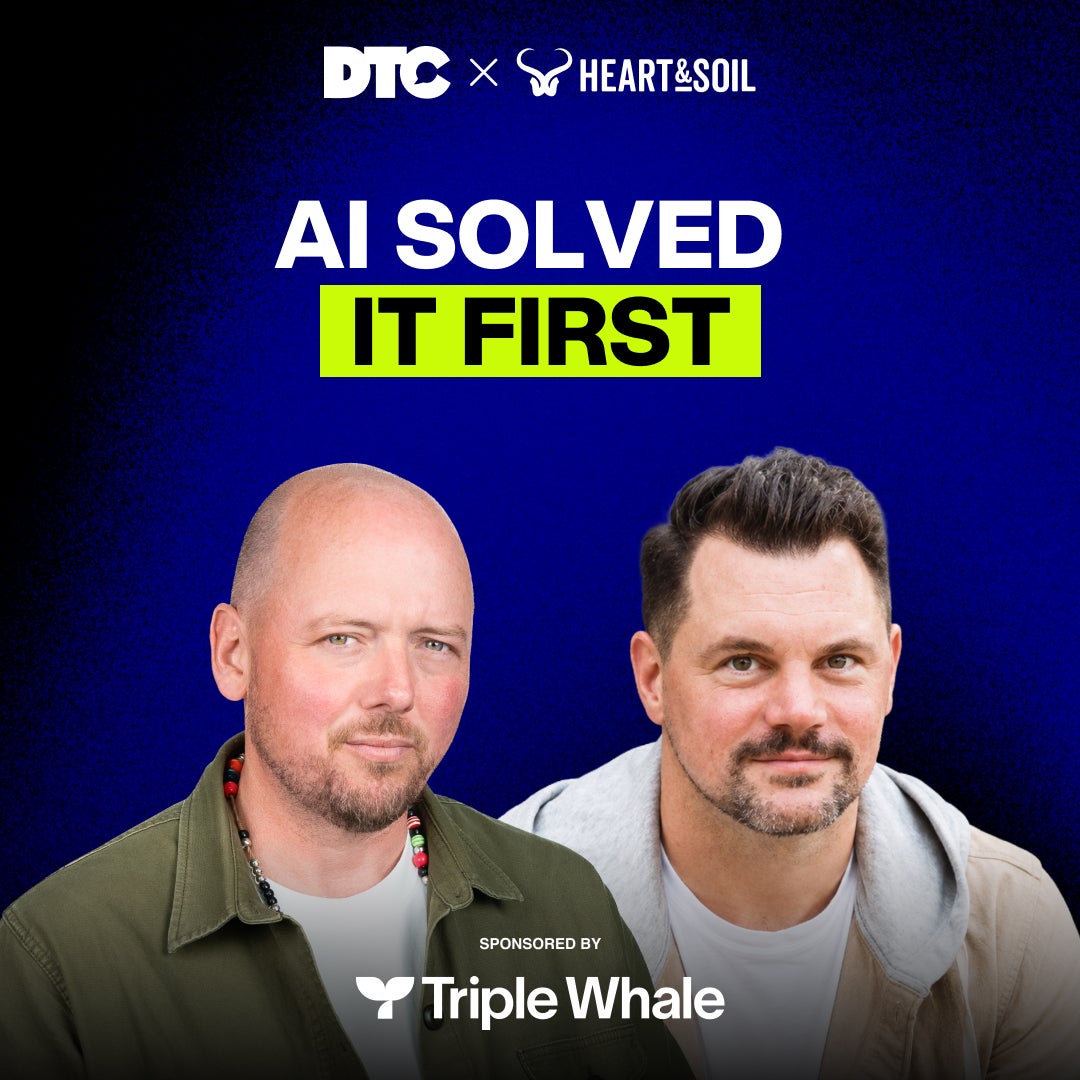
Heart & Soil CEO Dean (DTC supplement brand) explains how he used an AI “mirror” (Opus) fed with his contacts, meeting transcripts, emails, Asana, and Slack to find accountability and execution patterns, plus how the company shifted from mostly organic growth to more paid acquisition, and how it uses Tribe/UGC video at scale.
Dean is co-founder/CEO of Heart & Soil (about 6 years running operations). He previously worked in filmmaking/content creation and has personal health experience with autoimmune issues (alopecia and ulcerative colitis) that he says improved with real-food eating and liver supplements. He met Dr. Paul Saladino in Austin (sauna) and joined Heart & Soil at launch, initially working for free for ~3 months.
Organic growth dominated for ~2 years; by ~3 years they reached ~$50M top line. The “quality/speed/cost” triangle can be optimized with AI video sourcing (Tribe). CEO intervention was reducing team accountability by turning plans into “Dean’s plan.” AI scorecards (e.g., say-do ratio) improve follow-through.
Scrapped most internal video after seeing algorithm efficiency limits; Tribe deployed ~100–200 videos/week. Q4/Cyber Monday: launching a whole-food electrolyte product (seawater + bone calcium; unflavored and coconut nectar).
Written by AI. May contain mistakes.
Learn how Heart & Soil achieved significant revenue without paid ads.
“We didn't have one paid ad for probably two years.”
Dean shares his personal health struggles and how they led to founding Heart & Soil.
“If anyone needs to tell us apart, I'm the bald guy with the beard with the D to C on that.”
Understand why glandular products are crucial for health and nutrition.
“in grade 11 tell me one time, very sort of conspiratorially, he was an organic farmer.”
Explore Dean's decision to work for free during the launch of Heart & Soil.
“But you brought it up and I have to ask, what was this three month free Dean program?”
Learn how Heart & Soil prioritized customer experience and organic growth.
“And I know a lot of your growth, or I think a lot of your growth in the initial days came from the organic growth.”
Dean discusses the pitfalls of rapid growth and the mistakes made early on.
“People are buying your stuff and you're like, oh man, let's sell this in Australia.”
Learn about the complexities of managing a supply chain in DTC, especially in organic demand.
“And you'd be getting traffic from everywhere.”
Discover the journey of moving from organic growth to a balance with paid acquisition strategies.
“Yeah, much more balanced, but probably more on the paid side now in terms of acquisition volume.”
Understand the importance of message quality in advertising versus mere volume production.
“And are you doing that mainly internally or are you working with agencies or both, I guess?”
Explore how understanding your audience and product salience leads to effective storytelling.
“And it's just so important, in my view, to telling the stories and for unlocking the messaging that matters in the Andromeda.”
Learn about the shift in content creation strategies and the impact of platforms like Tribe.
“It's just wild to me that the advertising world oftentimes is like seen as this like synthetic fake type of thing.”
Dive into the financial implications of using user-generated content for marketing.
“I mean, you can, in the past before having these platforms, how difficult was it to create something where you could output real people's story with video at that type of scale?”
Hear about the integration of AI in performance accountability within marketing teams.
“Speaking of all in, we, I think the last time we were trying to get this podcast together, we were talking about talking about some of the things that you've built internally with AI.”
The speaker discusses how quickly technology evolves and its impact on their work.
“January and I was building this thing and it was incredible.”
The CEO shares how they utilized AI to analyze communication data for insights into team dynamics and accountability.
“That's not like a tactic in the account, right?”
The conversation shifts to developing an accountability scorecard system within the organization to enhance performance.
“system for myself as a CEO and for the organization where it's taking the data from meetings, it's taking my interactions, and it's scoring based on a number of factors.”
The CEO expresses excitement and concerns about product launches and market dynamics in the upcoming holiday season.
“Like, I don't think it's, if you just use it out of the box.”
Discussion on consumer spending behaviors and the economic outlook for the holiday season.
“Well, you mean just like on the economy and people like, you know, spending behaviors kind of thing going into Christmas this season?”

Get the gist, explore an idea or ask about something said.
 Claude
On The DTC Podcast, what are the key points of this episode?
Searching your listeningAutomatic transcript. May contain errors.
0:00Dean Brennan: We shot out of a cannon organically. We didn't have one paid ad for probably two years. Three years in, we were close to 50 million in top line. We were like, how did you guys do what you do? And the one thing I say is like, you'd see this triangle, quality, speed, cost. The hard rule was you could only pick two. Now that triangle, you can get all three. I fed an AI model all of my contacts, all the meeting transcripts, my emails, our project management system, Slack. I essentially wanted to use it as a mirror, and it came back with some surprising findings.
0:45This episode is brought to you by Triple Whale, the AI operating system for e-commerce. Just a quick gut check for brand owners and media buyers. Have you started your Black Friday, Cyber Monday planning yet? If the answer is not yet, you're not alone. But the brands that win BFCM aren't the ones scrambling in November. They're the ones planning right now. And here's why it matters. BFCM keeps getting more expensive. Last year, ad spend climbed faster than demand did, CPMs went up, and the season stretched from a single weekend into a full month of promotions. Show up unprepared and you spend more to reach the same shoppers right when your margin matters the most.
1:20Triple Whale built a free resource to help, the BFCM Hub. It's like a command center for planning your most profitable Black Friday, with everything in one place. Real benchmarks from tens of thousands of brands so you know what performance should actually look like for brands just like yours. Free tools to set goals and forecast outcomes. Strategy guides and checklists covering ad performance, retention, and conversion. And AI-powered tactics you can put to work before BFCM Week hits. The best part, it's completely free and there's no login required. Go to triplewhale.com forward slash BFCM26 and start building towards your most profitable Black Friday Cyber Monday today.
1:58It's the D2C podcast. And after a couple of years of going back and forth, I finally got Dean on the podcast from Heart and Soil. Welcome, man. It's great to have you.
2:08Dean Brennan: Yeah, it's been a while. You know, we've been going back and forth for about two years. So glad to be here. Glad we could finally make this work. If anyone needs to tell us apart, I'm the bald guy with the beard with the D to C on that. You're the other guy. We have a similar profile, which I appreciate. Amazing. So I know you've told it before on podcasts, but just tell me your condensed hero's journey with Heart and Soil. Yeah, I've taken a very non-traditional route to being a co-founder CEO at a supplement company. I was previously in filmmaking, content creation, and I think like most really great things that are built, they're built through a passion.
2:47Dean Brennan: I don't really love that word all the time, but I guess a real pain point and problem. And you mentioned the bald head earlier. I'm somebody that, you know, had suffered from autoimmune issues like alopecia on my head or ulcerative colitis, which I noticed that I had in my 20s, which caused a bunch of health issues. And at the time, you wouldn't have even known at all that I had health issues. I was an athlete. Most people were like, man, you're the healthiest guy on the planet. But my journey kind of took me into that realm where I figured out that after being prescribed a bunch of medication that eating real food, who would have thought the food that we ate way long ago before we had a bunch of processed stuff in our diets and we lived a different way, who would have known that that would have healed a lot of my symptoms and underlying condition that I had.
3:39Dean Brennan: So long story short, man, on the side of a filmmaking and content career, I always pursued health, ended up in the right place at the right time. And liver was actually one of the things that really helped me in my health journey. And I always took, I took liver supplements prior to starting Heart and Soil with Dr. Paul Saladino and yeah, right place, right time. Ran into him in a sauna in Austin, which is kind of wild. And I had, you know, I was pretty connected in the health space because I was in it and we decided to launch a company and I helped him take it from, from square one, the day of launch, I was packing supplements.
4:21Dean Brennan: What wasn't in my current role. I worked for free for three months. There's a whole story there. And eventually took over the company, the operations, and I've been running it for about six years. I had an English teacher in grade 11 tell me one time, very sort of conspiratorially, he was an organic farmer. And he said, now more than ever, you are what you eat. And I think I've thought it's really stuck with me over the years, especially as this like health revolution has kind of really kicked in. Give me, cause I don't like liver. I don't like, I don't, this is not, this is not a very mature taste standpoint to have on this podcast.
4:54Never liked liver. Why is it important that humans consume that kind? What's the category?
5:00Dean Brennan: It's called glandular glandular glandular. Why do, why must humans consume glandular products? Yeah. So I could go down a whole rabbit hole about what is in the organs. Um, but essentially if we just back up, I think real food is the answer, right? Like we have to get so stuck on, um, organs. Um, real food in general is what helped me with my health conditions. It's just that organs are so nutrient packed and, and, you know, we've, we've evolved for a long time as, as humans, as people. And, uh, back in the day when we would hunt, oftentimes the leader of the pack would, would take the organs first because they were so depleted from, you know, the hunt and they're just full of nutrients.
5:45Dean Brennan: They're full of growth factors, uh, growth factors, peptides, nutrients are one of the most nutrient dense foods on the planet. And I'm like you, I don't love, like, I don't, I don't love eating texture. Yeah. There's texture, there's taste stuff. And, you know, we, we've got interesting things these days to eat, like highly processed, salty, and sweet at the same time. The food scientists know what they're doing, right? They've hijacked our physiology, essentially. Look at Nerds Gummy Clusters and the revolution of that company just by making it look like a COVID-19 particle, actually. Yeah, exactly.
6:20Dean Brennan: There's just so much in those organs. It's incredible. And there's a lot of interesting science too. Now I'm not the science guy at the company, but there's a lot of really compelling and interesting research about what is in like, let's say a gut lining tissue. There's peptides and stuff that can actually help your gut lining. There's a theory called like supports like, and I think it's really fascinating and interesting that folks that have like a thyroid, hypo or hyperthyroid issues can take thyroid and it can help with those types of things. I've gone down that rabbit hole as well. And I think that's why I was trying to relate a little bit to the, are they are what you eat thing, but let's leave it there.
7:03But you brought it up and I have to ask, what was this three month free Dean program? Like was Paul already kind of breaking out in terms of, of his popularity or yeah. Walk me through that decision.
7:16Dean Brennan: Yeah. He, he was breaking out at some level. This is pre, and this is before he was on the, on the Joe Rogan podcast. He had wrote, written a book called the carnivore code. I, uh, you know, it's very plugged in. I listened to every health podcast, read every book, and I knew who he was actually a funny story is I, I found him on Instagram because I, I tried a carnivore diet for a while. And when you do something that feels really out there in relation to like mainstream, what everyone does, you know, when you, when you decide like, Oh, I'm only going to eat meat and nothing else. That's a weird thing.
7:53Dean Brennan: Right. And it's especially unsettling when you don't understand, at least for me, when you don't understand maybe the foundational science underneath it. Right. Cause you're like, you feel like you're taking this gamble and you're like, am I right? Am I wrong? Like it worked for Jordan Peterson, but that's not enough to go on necessarily with your long-term. Exactly. So that wasn't enough for me to do it long-term. I was, I tried it and I felt a little bit like uneasy about it. And so I started searching for answers and I found some, you know, some interesting, uh, forums, a guy named Sean Baker, who's, uh, uh, he was an ex surgeon, you know, you know, talking about it in a more medical way.
8:33Dean Brennan: Anyways, I stumbled upon Paul who, you know, at the time I think, man, he was in San Diego. He only had a few thousand followers. He's talking about the diet. So I followed him really early on. And funny story, I sent his profile to my brother-in-law at the time. This might've been 2018 or so. And I was like, hey, watch out for this guy. He's going to be on Joe Rogan someday because I really think he had this ability to explain the science in a way that made sense to where it was accessible and nobody else was talking about it. So I right off the bat started consuming his content because I, it helped me feel more confident in the choices that, that I was making.
9:15Dean Brennan: And I think that was part of part of his appeal with, you know, we had the time of COVID, we had kind of this carnivore diet thing going on and it kind of all met at the same point in time around 2020, which caught a lot of steam. And that's when I had met him anyways, I worked for free because I mean, you know, you meet somebody who's starting a company on the street, they don't know who you are. They don't know what you're capable of. And I was just very much into, uh, liver supplements as weird as that sounds. They had benefited my health and I was, uh, I wasn't bored in my career. I was doing quite well.
9:51Dean Brennan: I was at a FinTech company. Um, I, you know, I wasn't looking for work necessarily, but I was just into what, um, the whole story of this company and what we were doing. So I worked for free. I popped over there on the day of launch and packed supplements, swept the floors and little by little, you know, I was solving bigger problems and bigger problems and bigger problems. And about three months in, it kind of got to the point where I think they were like, well, we can't imagine doing this without Dean. And so I came on full time. That's a beautiful, really cool story. And I know a lot of your growth, or I think a lot of your growth in the initial days came from the organic growth.
10:29It came from organic side of things. How, how quickly were you guys integrating paid like or aggressive paid into, into your growth strategies?
10:35Dean Brennan: You'll notice if you talk to me for a while. I'm very, I forget numbers and I, I, I get the bigger picture, but I don't remember exactly when that was. What I do know is we shot out of a cannon, um, organically. We didn't have one paid ad for probably if I had to guess, it was two years. Um, and our growth was, I think, don't quote me on this, but I think three years in we were close to 50 million in top compliance. Organic, all organic. Yeah. Primarily. Yeah. Yeah. We didn't run an ad for a long time. And, you know, I've talked to a lot of people and been on some podcasts where people were like, okay, what's the, you know, how do you do that?
11:20Dean Brennan: What, like, how did you guys do what you do? And the one thing I say is like, well, I'm not responsible for that. Right. Like I get a lot of props as being the CEO of this company, but, um, the truth of the matter is, is we had a founder who put in like four years of sweat equity, building an audience and not even really with the intention of building an audience, but there was a problem in the world and something that he was into helped. He wanted to solve it and he added value to people's lives. And so he did that for free for four years. And that really was the springboard along with some timing of COVID and some other things that really propelled, you know, the whole wave, the whole organic wave.
12:08Dean Brennan: My part in it was, okay, we've got this opportunity, right, to collect demand, to convert demand, and to retain customers and to build word of mouth and to do the absolute best that we can for our customers. You know, let's not sacrifice and cut corners on product. Let's put a person behind the keyboard to talk and answer every single question from every single customer that comes in. And we were getting thousands and thousands of emails from people. So we built really like the CX arm first, the surprise and delight aspects first. And a lot of our effort went into supply chain and product quality and simplicity.
12:51Dean Brennan: We decided to stick with DTC first and not expand in too many channels. We actually made a mistake in the beginning where we were trying to do too much. But yeah, it was all about the customer. It was all about the product and it was all about just serving them to the best of our ability. What was that mistake? Oh, we, the mistake was really trying to shiny object syndrome, right? Like you're, you're new to market. People are buying your stuff and you're like, oh man, let's sell this in Australia. Let's sell it in Africa. Let's sell it here, there. So we were in like, we were selling all over the world.
13:27Dean Brennan: all kinds of issues came up with that. We screwed up our subscription program in the very beginning. We didn't really think through it and we didn't have an infrastructure at the time to keep things in stock. So we had all kinds of, we had, these are like issues that aren't as big of a deal today because you've got better systems and platforms. But at the time, you know, we didn't even have like a gorgeous setup or a CRM. So we're liking it. We're in a Gmail inbox, you know, trying to tell, uh, 3000 people that their orders not coming. Yeah. Oh my God. And you'd be getting traffic from everywhere.
14:05So that signal would be like, Oh, well let's sell to all the places that we're getting traffic from, but that could lead you into challenges as you're saying.
14:12Dean Brennan: Everywhere. We were on Amazon. We just had a tough time. It was, it was tough on the supply chain side. You know, we're dealing with cows. Um, we got to put orders in like a year, year and a half, sometimes before we actually make the product. So it was really difficult with that organic demand to actually estimate what are we going to need, how much. And that caught us in some rough spots here and there. Like a lot of CEOs and leaders in this space, you're also, you're in the DTC Snipers group. They're chatting a lot about paid social growth and how people are architecting across different platforms and channels.
14:49I'm always amazed when CEOs are as involved in those conversations because they are the shiniest objects in our ecosystem, I think, are all these amazing tools we have for growth. So fast forward, your first two years were all organic. Tell me about the journey into paid, where I assume right now you're a much more balanced portfolio of organic to paid at this point.
15:10Dean Brennan: Yeah, much more balanced, but probably more on the paid side now in terms of acquisition volume. you know, some of that's environment, your environment changes. It's very difficult to, I guess it's different for every brand, but for us, once we hit kind of that 40, 50 million top line mark, the organic, not volume, but just like how hard it hit kind of started to dissipate. And so, yeah, a couple of things that we did really well, I think what we did really well is we tried to build the right systems on the paid side in the beginning. We did a decent job collecting, converting that demand through really bottom of funnel, you know, ads.
15:56Dean Brennan: The top of funnel was being driven by our founder, by some of the things we were doing. We produced a couple of films that, you know, helped on the top of funnel. So we did that well, but we really weren't forced to build much of a muscle in acquisition. And I love, I'm taking this off to a little bit of a rabbit hole, but I love sports analogies. It's kind of like, I don't know, if you have a football team and you've got a really great running attack and you can win games just because you're so good at running the ball, but you don't know how to throw the ball. And then pretty soon the teams start catching up and they start configuring their teams to stop your running attack.
16:38Dean Brennan: And then pretty soon you got to pass the ball and you're going into games like, well, shoot, we could kind of pass the ball and we had a good running game, But now that the running game is not good, like we might need different players. We might need different schemes. We might need a different quarterback. Right. We kind of got into this place where because of the selection pressure of your environment, we weren't really forced to build that muscle early on. And so if I had to do it again, going back to 2022, I would have applied more pressure to our team and probably do certain things internally to force just a stronger muscle on the paid side because we really kind of stumbled our way.
17:20Dean Brennan: Once the tide started shifting a little bit, our funnels were really fragmented. They still are in a lot of ways. Our creative, we were just throwing a bunch of stuff at the wall, not really starting with maybe the persona. We're just starting with features and benefits and just throwing a bunch of stuff out there and not doing a very good job with kind of the top mid funnel and then converting that. It just wasn't working very well with us. So we've hit a number of roadblocks since then, really in the last year, trying to build those muscles back. And are you doing that mainly internally or are you working with agencies or both, I guess?
17:59Dean Brennan: Yeah, a little of both. One agency that's been super helpful, we've worked with CTC for a long time. Man, they've helped us so much and they've helped us a lot really tying our kind of financial plans in with the marketing, which is, I guess, a different type of conversation. Yeah, they've helped greatly there. And we got in a few sticking points last year where they really helped us unlock some volume. And then internally, we've had, man, we've tried all kinds of different things with pod-based content creation flywheels. That's evolved a lot. And now we're simplifying things again. We're going back to like, okay.
18:40Dean Brennan: And this is actually the funny thing coming from a content background is, I don't even know if I can put this into words so much. But one thing I found interesting with like D2C when I came in, because I was a complete outsider, especially to paid ads. I produced some content for paid ads, but I never like was in the weeds of it. And what gets me is like the conversation for a while was just volume, volume, volume, volume, volume, volume, volume. And I get that to some extent, but I've always been a quality guy and not in the, not in terms of like polish, but quality of message. It's like my thing when I was a filmmaker is like, who are you talking to?
19:20Dean Brennan: what tools do you have at your disposal and tools when i'm saying tools it's like what's the graphic what's the message what's the sequence of your your video what's the pacing what are the cuts um the camera angles like all these are communication tools to convey a message to an audience so you have to understand that audience you have to understand what you're trying what where you want them to go right what you want them to do you want them to take this action or feel this way. And that's the quality to me. That's the quality of the message. And so I always like would kind of scratch my head with the volume thing because I feel like the quality conversation would either get misinterpreted to like quality of product, like technical quality, but the creative messaging quality oftentimes got lost.
20:10Dean Brennan: And now everyone's on like the messaging quality, which I love. But I feel like it's been that the entire time. It has. The more things change, the more things stay the same and it's just forcing marketers to get good at the word that came up that through our strategy team at pilot house that we use a lot that was a word that don draper used all the time uh i think was salience which is such a good word and salience is all is like the combination of your avatar but it's also like your product and your product's role in their life and the moment that they're in as it relates to your product kind of thing um and it's like It's like that one layer deeper even than Avatar.
20:47And it's just so important, in my view, to telling the stories and for unlocking the messaging that matters in the Andromeda. I guess it's not Andromeda anymore. It's more gem in terms of getting selected as the right ad in that moment for that user.
21:02Dean Brennan: I love that. Have you ever gone down the rabbit hole of how the algorithm... I know some people get frustrated with it, but I actually think it's getting closer to like truth, right? It's like it's recognizing who the person is, what they look like, what they're like. It's just wild to me that the advertising world oftentimes is like seen as this like synthetic fake type of thing. but it's actually getting very, very good at letting the cream rise to the top and getting the right message to the right person, not through gaming it, but through actual authentic communication. Yeah. I don't know if I described that the right way.
21:48Dean Brennan: You did. You did really well. It's just rare we get such a non-cynical, optimist take on what advertising is in the world. I appreciate it. And again, I just love it that you've got all these CEOs of these eight-figure and beyond companies that think about the algorithm, that are thinking about the technical side, because it's been such a powerful growth engine for every one of these companies. Yeah. I love it because, again, if I zoom out, I'm a storyteller at heart. And where our products meet the storytelling is like, I know there's millions of people that are suffering with chronic autoimmune conditions, or they just don't feel right in their body, or they have this identity and version of themselves that they want to become, but they've had friction in that.
22:35Dean Brennan: And I love that the algorithm can get our content to those people so we can help. And so that's why I think about it. And I don't have to hack it. Like back, I hate shortcuts. And back in the day, It was just like, you just had to like try all these like tactical things that just felt kind of surface level to me. And now I'm like, no, I can have a real person. That's why this UGC thing tribe is blowing up. Cause you've, you've got, you've got a real person talking about it. And that piece of creative is going to go to a person like them. And I just, I love it. You know? Yes. That was my next topic of discussion is sort of the more people I, you know, I hate giving free advertising on the podcast, but the more entrepreneurs I talked to, we just did a big dinner in Vancouver.
23:21We had like almost 50 people out, which was crazy. And a bunch of people were talking about tribe and a bunch of people were talking about how it sort of taken over as like a huge chunk. This guy was saying 90 % of his ad campaign. What's your experience with the platform?
23:34Dean Brennan: Yeah. So I'm not in the weeds in it, but I do know we've got about, man, I think we're deploying anywhere around a hundred to 200 videos, like almost a week through that whole thing. And so it's funny, it is volume. It still is volume. It's both though, right? It's both. And I guess I didn't say that earlier, but the thing has always been to me is it's both. And we've never been in a world like we are today where you can actually achieve both and you can do it fast. I used to, when I was actually in school learning about content production and guiding clients, it was like, you'd see this triangle.
24:15Dean Brennan: You've probably seen this before. And it's like quality, speed, cost. And it's like, the hard rule was you could only pick two. You can't pick all three. You know, you could have quality fast, but it's gonna be expensive. You could have it cheap and you could have volume, but it's not gonna be good, right? Quality is gonna be low. And now that triangle, you can get all three. And Tribe is an example of that. I mean, you can, in the past before having these platforms, how difficult was it to create something where you could output real people's story with video at that type of scale? You couldn't do it.
24:56And truly be on the same skis with those people so that the market itself is optimizing for the ones that drive sales.
25:04Dean Brennan: 100%. Yes. Yes. it's yeah it's been a big unlock for us um we were just a little storytelling um we're producing a lot of a lot of video content our account's like 90 video content and that might actually be a mistake i don't know but that's just the way it is and we're producing a ton of stuff internally and it was working for a while like we our entire team will get in front of the camera right like we all use the products we all live the lifestyle so um we've got a headquarters here everybody's in person. And oftentimes you'll see people out shooting Instagram reels. And so we were producing a ton of content and it's quality content in terms of we were saying the right things.
25:43Dean Brennan: But I think what was going on is the algorithm was like, oh, these are the same people talking really about the same thing in the same environment. And it, you know, they're not sending a 20 year old female talking about her package. They're not putting that in front of the mom who's 50 and struggling with whatever she's struggling with, right? Whereas now utilizing Tribe, you have a 50-year-old woman talking about her struggles and that ad is going straight to that person. So we hit a bit of an efficiency wall with the internal content that we were creating and we completely scrapped it, more or less.
26:23Dean Brennan: We're still producing a little bit, but we scrapped almost all of it and we transitioned to Tribe and our internal creator network that we have. How do you feel about it on your P &L? I think that's one question. I think we were in that Snipers group. We were talking with someone who's doing it, and he was just like, with the biggest companies in the world, the enterprise clients, it's too big of a line item to be giving away or to be paying GMV for those kinds of companies. How do you feel about how it shows up on your P &L? To be honest with you, I don't love it right now. um and and i'm thinking more some of the creator stuff on on tiktok shop um i i we haven't quite figured that out where i'm happy with what it looks like on the pnl and i i keep kind of waiting for the the bigger efficiency gains at scale and it's not quite there yet so i think the jury's still out on that but i i'm a pretty big proponent of like testing and and i'm like hey sometimes you got to go all in and you got to like switch things up and see how things move and you might adjust it.
27:30Dean Brennan: But we're kind of in that phase right now where it has helped us quite a bit, but yeah, jury's still out. Speaking of all in, we, I think the last time we were trying to get this podcast together, we were talking about talking about some of the things that you've built internally with AI. And I think you've got some things that go right into your purse. I'd be just interested to hear a little bit of an overview about what's working for you with how you're using these frontier LLMs. You know, it's crazy. I gave a keynote at the commerce round table in April about this system that I had built. And when I got called to like, go do that speech, I was like in January and I was building this thing and it was incredible.
28:07Dean Brennan: And then by the time April came around, to do my keynote, I was like, I'm doing this keynote, but none of this is novel anymore. So that was kind of a weird thing that the pace of technology is moving so quickly that the thing that I was doing in January, which everybody that I talked to about it was like, oh my gosh, my mind's blown about how are you using this? They, when I talk about it, it's like, duh, is the, you know, this is the same stuff I'm doing with it. But, um, essentially what, what I had done, and it's going to sound so outdated, um, in January, we were hitting some walls with, uh, with performance, a lot of it on acquisition.
28:44And I just, I like taking personal
28:48Dean Brennan: accountability, right? Like if there's ever a problem, I'm like, I probably should start with me. And it's easy. It's really easy for me as a CEO to be like, what is this team doing? What is this team doing? Why aren't we getting results here? What is, what is this person doing? And I, maybe that is the case, but I just had this like feeling that there's something I'm missing here. That's not like a tactic in the account, right? It feels like we're doing everything that all of these experts and agencies are telling us to do. Like I see it moving, but something else is getting in the way of our progress.
29:24Dean Brennan: So I fed an AI model, essentially all of my contacts over the last, like, I think year or two, every meeting we had recorded every, and this is organizational data, right? All the meeting transcripts, cause we record our meetings across the whole company. all of them that I'm in. My emails are project management system, Asana, Slack, all of my communications. And I essentially wanted to use it as a mirror back to me. And I'm like, okay, what patterns are you recognizing in this data organizationally? Because I'm responsible for the organization, right? I'm responsible for the cadence, the flow, the priorities, what we're working on what we're not.
30:13Dean Brennan: I essentially had to go through the whole data set. And if AI is good at anything, it's good. A lot of things. It's very, very, very good at synthesizing information across multiple domains, which humans, we are very terrible at that. And it takes a very, very long time. So the minute the, I think it was Opus, the minute Opus came out, I fed it all that data and it came back with some surprising findings. And some of them I were, I was kind of aware of, but a little bit unaware of like how impactful it actually was. One of the patterns it found was whenever, and this is more of maybe a, this is relevant probably to people listening that have teams, you know, or layers of teams.
30:58Dean Brennan: And maybe you're, maybe you're a marketing lead, Maybe you're a CEO, maybe you're a CMO, maybe you're a brand director. What I noticed in the data that I didn't recognize before is that when problems would surface, would come up, like big problems, right? Like what's a good example? Let's say, and everyone's experienced this, our acquisition, like our CAC isn't as low as we want it to be. We keep, we've tried a million things and we're missing our targets. what would often happen is me as CEO, I'm going down. I say down, not really down, but I'm going to the team level. And I'm like, all right, what's going on here?
31:42Dean Brennan: Let me help on the practice. Cause I take pride in being a collaborative CEO, right? I will jump in the trenches with you. I will look at the data with you. We will figure it out because I'm that kind of leader. What I realized is, is that every time I did that, which was over and over and over again, you know, subscription problems, CX problems, supply chain problems. We come up with a plan. And most of the time the plan was my plan, right? Because when you jump in and you do, and you don't realize like, oh, well, you're the CEO. So there's, there's little things that are going to happen where people are probably going to be like, okay, that's a good idea.
32:18Dean Brennan: Even if maybe they think it might not be, it ends up being your plan. So when the plan is successful and works, you've solved the problem. And when it doesn't work, well, it's your plan that failed, which reduces the amount of accountability and agency that somebody has with actually solving it. And I thought I was being this great collaborative CEO. But what I was really doing is I was training the team to bring me their problems because they know that I'm going to jump in and solve it. And then there's going to be less accountability there. And so that's something I learned. um ai instantaneously was like boom after it analyzed it it's like you're doing this this is the outcome try this um that was that was amazing uh and there was a number of different patterns that that it found organizationally and so to kind of wrap it wrap it up um what i try to do now is i've tried to build essentially an organizational context layer and a scorecard system for myself as a CEO and for the organization where it's taking the data from meetings, it's taking my interactions, and it's scoring based on a number of factors.
33:31Dean Brennan: Like I have the say-do ratio. Like if somebody says something, if I say something, if we say something in a meeting, how often does that get closed, right? And there's a percentage. It's like if we say 10 things, we want eight of those to get done, right? If it's any lower than that, we've got a big problem and we're going to address it right away. Anyways, I don't know if that answers your question. And it hits home for me as an organization. I think accountability as an entrepreneur who likes to start things and loves the idea and loves getting things going. And it is that accountability layer that becomes a challenge.
34:03And we're going through it actually right now with different layers of accountability and how it all – it kind of all flowed up to me and my co-founder for a really long time. And then we would jump in and solve the problems. But then that do-say ratio was off. And we've recently gone through a repositioning where we've sort of elevated one of our team members to sort of be a bit more of the context or like have more of the context. So it's not all just flowing up to us. And so far, the dividends have been good. We've recognized that on our own without AI telling us. It's always amazing when the things that AI can tell you about yourself, you know, that it's surprising to be like, oh, yeah, I guess you do know that about me.
34:42That's good to know.
34:43Dean Brennan: I think one of the best use cases is just pointing it inward because everyone probably has a mentor maybe and your mentor can't be with you 24 seven and it doesn't understand 100 percent of your context. You got to go through a lot of effort to, you know, to get them there. And it's like, yeah, this thing pretty much can have all of your context. It's how you're talking in meetings. It's are you following through your actions? It can really coach you in a really good way if you're open to it. And then also I will say I programmed this thing to be, uh, very harsh on me because it's like, I don't want, I don't want a yes, man.
35:23Dean Brennan: It's like, I need you. It will gaslight you unless you tell it not to, that's for sure. It will. And I think you got to, you, you have to understand your philosophy and approach and how you want to approach business too. Like, I don't think it's, if you just use it out of the box. It's just going to pull the law of averages and apply it to you. So I have this book here called The Enlightened CEO. Beautiful book. This book has helped me in my position more than any book. And so the principles in this book on how a CEO operates, I've essentially distilled those into my model. And that's why I called it Ellis.
36:06Dean Brennan: It was the Enlightened Leadership Insight system. And I pulled a lot of the principles from that book. So that'd be another tip for people is like, you got to understand your principles and how you want to operate. And once you get that, it's pretty easy to put it into operation. That's a great, I'm going to get that summarized for me by my AI directly after this call. We could talk all day about this. Just in the last section here, What are you maybe most excited about or most trepidatious about about Q4 this year? I guess with supplements, Q4 can be a big time of year, but it's almost like Q5 in January is almost even bigger for you guys because your new year, new you kind of situation.
36:48How are you thinking about the holidays this year? And what are you most excited about?
36:51Dean Brennan: I'm very excited, one, because we're launching a product on Cyber Monday. So that's something we haven't done before. And so I'm really excited to have a new offer on Cyber Monday that's really going to hit hard with our existing customer base. So that I'm excited about. That is a whole food electrolyte product, which we've been developing. I love electrolyte. Oh, is that from like harvested sea salts kind of thing or something like that? Yeah, we actually have seawater. Seawater is in it. Right. We have bone in it for the calcium. And coconut, coconut water. And so I'm excited about that because there's not a whole lot of electrolyte powders in the market that don't have like fake sweeteners in it or like fillers and additives and those kinds of things, artificial flavors.
37:43Dean Brennan: So we have an unflavored one, just those ingredients that I told you. And then we have a coconut nectar one that's flavored, but it's with actual coconut nectar. And so I'm excited about it. I'm an electrolyte nut. So if you're If you need a review or some, some unprompted UGC, send me some. I'll send you some anyway. Shoot me your address after this, but yeah, Q4, I'm excited about that. So we have, we're going through, you know, we have a different calendar this year, which I'm really excited about. I'm really excited to see how, I don't know, just the macro stuff going on right now. I'm not quite sure what that's going to look like across DTC compared to last year.
38:24I've read conflicting things on it.
38:27Dean Brennan: You know, what's your take on that? Have you looked into that? Well, you mean just like on the economy and people like, you know, spending behaviors kind of thing going into Christmas this season? Yeah. We did a podcast a few weeks ago that was about Prime Day on Amazon. And the amount of people that were buying, not like the deal, like the big electronics, but were like stocking up on their staples and stocking up on like products that they already buy. So like customers being more wary and using those moments. And then in a way that potentially reduces your contribution margin throughout the year because they would have bought that at regular price.
39:01So I think you're going to see a little bit of that. I think it's really hard to know. I know my stocks all took a jump after the election in the U.S. with the idea that, okay, things will be more stable or Trump will be reamed in or something like that. But it just feels – well, for the past five years, it's felt like the calm before the storm a little bit. And I feel like everyone's kind of holding on. But I remember I bought a house in like 2009, like right after the last financial crisis. And like nothing, like it felt there was a crisis then and a lot of people, but like it didn't, you know, maybe being in tech, like it just felt like we just kept, I look back and I'm like, we just kept on trucking.
39:36And I like to think it's going to be the same situation here. I'm no prognosticator though. What do you think?
39:41Dean Brennan: I share that view. And I also think like, since it is a more or less a discount holiday, I think we're going to see a bump in general just because of that. Um, yeah, so I don't, I'm optimistic about it. And for us, I'm really optimistic about it just cause, uh, I mean, health, it sits on the hierarchy of needs, you know, it's, it's kind of at the base. So I always tell my team that I'm like, you know, if people are spending less, it, um, for us, the health portion really matters to people's livelihood. And so it becomes a marketing problem. I'm like, we're not, we're not connecting in the right way with, with the consumer, or we're not being clear about the value prop and how this can benefit their lives or whatever the case may be there.
40:30So I'm optimistic,
40:32Dean Brennan: man. And Q5 for us last year, Q5 moment, I don't know if it was us. It was partly us, partly maybe the economy. I don't know. I always like to look, what are we doing? So I'll blame it all on us. We didn't execute very well Q5 of last year. So I'm excited for a redo. And the new product thing, anytime you can enter that time with not just a same discount kind of thing, but a new product, a new market, I can see why you're excited about that. And we tested the waters with it last week. We did a little VIP launch with our first batch, and I think we'll be sold out of that tomorrow morning. So good signal.
41:16Have you ever thought how ironic it is that you're partnered with a guy with the last name Saladino when he's a carnivore entirely?
41:25Dean Brennan: I've thought about it before. It is a weird coincidence, I guess. The universe rhymes. I think about Trump. I think about there's a guy that's like, you know, doing all these things, changing the global financial system or changing the way nations relate. And his last name is Trump. He's like Trumping. And it's like the universe is a mysterious place, Dean. We could change his name to Stake Dino. Oh, okay. I'm down. I think he'd like that. That's what it is. Dean, thanks for coming on today. I'd love to keep in touch with you. Good luck this holiday season and I'll see you in the Snipers group.
41:57Dean Brennan: Thanks for having me, Eric. I appreciate it. Glad we could make this work finally after two years. 100%. And go to heartandsoil.co if you're feeling like you need more nutrients in your life. Appreciate it. Appreciate the call. And make sure you follow Dean on LinkedIn and Twitter for any pearls of wisdom. But yeah, thanks again, man. This was awesome. Appreciate it, Eric.
42:25Thanks so much for listening to today's episode. If you're not a subscriber to our newsletter, you can do that right now at directtoconsumeralloneword.co. I'm Eric Dick, and this has been the D2C Podcast. We'll see you next time.
How do you use AI to make a DTC team more accountable? Dean Brennan, CEO of Heart & Soil, built ELLIS, an AI scorecard and context layer for himself and his team. He now runs agents that spot problems in Slack, pull the data and post the answer before anyone on the team has finished digging.
It started when Dean fed AI a year or two of his meetings, email, Slack and Asana, and it showed him he was the bottleneck. He walks through the say-do ratio ELLIS tracks, the context it keeps by day, week, quarter and year, and the agents he's been running for the last few weeks. He also covers how Heart & Soil grew for two years without a paid ad, what it took to build paid acquisition once organic slowed, and the whole food electrolyte Heart & Soil launches on Cyber Monday.
Get the DTC Newsletter: https://directtoconsumer.co
WHAT YOU WILL SOLVE
ABOUT THE GUEST
Dean Brennan is CEO of Heart & Soil, which makes organ supplements and launched with Dr. Paul Saladino in 2020. https://heartandsoil.co
LinkedIn: https://www.linkedin.com/in/deancbrennan/
STAY CONNECTED
DTC Newsletter, daily ecommerce marketing and ecommerce growth tactics: https://directtoconsumer.co
YouTube: https://youtube.com/@dtcnewsletter
LinkedIn: https://linkedin.com/company/directtoconsumer
TIMESTAMPS
02:00 How Heart & Soil started and built its brand
10:00 Growing to nearly $50M through organic marketing
15:00 Transitioning from organic growth to paid advertising
23:00 Scaling UGC creative with TRIBE
28:00 Using AI to improve leadership and team accountability