In short
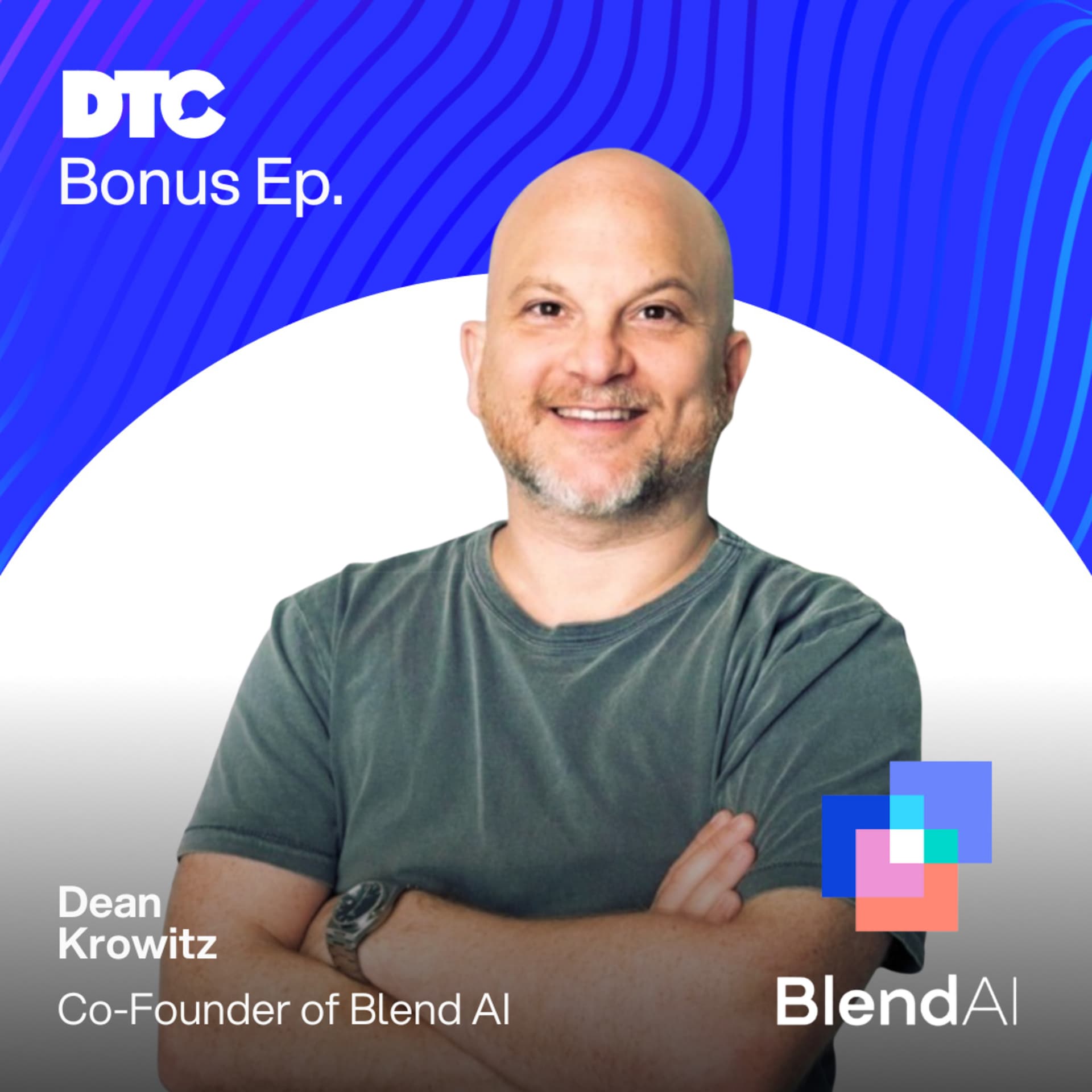
Dean Krowitz (Blend AI) explains “composite funnels” and how Blend automates cross-channel marketing mix optimization for e-commerce. He argues brands over-invest in one channel, ignore micro-conversion events, and overspend on bottom-of-funnel retargeting while failing to feed the top of the funnel. Blend measures conversion/traffic at each step, then reallocates budgets daily across channels like Meta (Facebook/Instagram), Google, TikTok, Microsoft (Bing/Edge), and others.
Guest background
Dean Krowitz is co-founder of Blend AI (started ~5 years ago). He and his co-founder came from technology, not marketing; they built Blend after a client’s business collapsed overnight following a major algorithm change. Blend later pivoted to e-commerce.
Key claims
Meta “monoculture” is over; omnichannel/composite funnel is required. Platform attribution is insufficient; cross-channel measurement is critical. Microsoft is an underused incremental channel. Creative winners get most impressions; long-tail content is neglected.
Notable examples
A customer reportedly achieved ~3x more revenue with 20% less ad spend during Black Friday/Cyber Monday; CPC spikes up to ~250–300% hurt top decliners, while top gainers saw CPC down ~35–60%. Another example: a disciplined client tracks daily channel results in Excel.
Written by AI. May contain mistakes. Listen to the episode to check what was said.
Chapters
Tap a time to open that second in VODean Krowitz's Journey and Blend's Origins
0:45 to 1:41
Dean shares his background and the inception of Blend AI to address marketing challenges.
“I love starting with the mask of a thousand cultures or whatever that book was.”
The Evolution of Marketing Strategies
1:41 to 2:26
Discussing the shift from Meta's dominance to a more diversified marketing approach.
“I love doing this podcast because I hear these trends and these sayings that, for instance, like creative is the new targeting or everyone needs to be omni-channel or all of these things.”
Understanding Composite Funnels
2:26 to 3:27
Exploring the concept of composite funnels and its importance for marketers.
“Blend is by nature designed to help people diversify their marketing mix.”
Blend's Automated Campaign Management
3:27 to 4:52
How Blend simplifies campaign management across multiple channels.
“And it's perfect for a computer and AI driven platform to execute on behalf of brands.”
Balancing Marketing Budget Across Channels
4:52 to 6:13
Strategies for managing budgets effectively across different advertising platforms.
“taking on your site at every single step of the conversion.”
The Role of AI in Marketing Optimization
6:13 to 8:01
How AI can streamline marketing efforts, allowing brands to focus on creativity.
“So it's all about like putting those guardrails and make sure you're not, you know, on Google, you're not bidding too much on your own branded terms and things like that.”
Setting Up a Blend Campaign
8:01 to 9:18
A guide on how to easily set up a campaign using Blend's platform.
“It's this agnostic middle part that says, all right, we understand where all of this traffic is coming from.”
Understanding Budgeting Intelligence
9:18 to 13:44
Insights into how budgeting works within Blend and its impact on campaign performance.
“And so there was a lot of like structuring that would go on where you're like, okay, well, I want, here's, here's where I'm going to structure my top of the funnel.”
Channels of Advertising
13:44 to 14:02
Discussion on various advertising channels and their roles in modern marketing.
“You don't want to overspend on any given channel.”
Introduction to Blend Campaigns
14:02 to 14:46
Learn how Blend campaigns automate budget analysis and performance tracking.
“And if you have content inside Blend, what we call a Blend campaign, every time a conversion event is happening, our algorithms are running budget analysis and then making micro adjustments daily.”
Show all 22 chapters
Channels of Advertising
14:46 to 14:56
Discussion on various advertising channels and their roles in modern marketing.
“And they will see slowly over time how budget will converge to where the results are actually coming from.”
Exploring Untapped Channels: Microsoft
14:56 to 16:46
Discover the potential of Microsoft as an advertising platform.
“So you mentioned, obviously, Facebook, Instagram, the meta platforms, Google, TikTok.”
Cross-Channel Attribution Challenges
16:47 to 18:56
Understand the complexities of measuring cross-channel marketing effectiveness.
“Is how you measure that it's working, right?”
Rebalancing Ad Spend
18:57 to 19:28
Learn how to effectively analyze and rebalance advertising budgets across platforms.
“and they'll say, how did that, how did you come up?”
Creative Diversity Across Channels
19:33 to 22:17
Explore the importance of creative diversity in advertising across different platforms.
“Because you often hear, you know, sometimes people are repurposing meta creatives for TikTok.”
The Role of Algorithms in Advertising
22:23 to 23:43
Examine the impact of algorithms on advertising effectiveness and audience targeting.
“I was just talking about this on the podcast with Pilot House this past week about, Because that's always been the distribution as the 90-10, in a way, 10%.”
Holistic Marketing Approach
23:44 to 25:25
Understand the interconnectedness of different marketing channels and their impact.
“Andromeda gets brought up just time and time again.”
Data-Driven Marketing and Tools
25:26 to 27:58
Learn how to combine rigorous data analysis with automated tools for better marketing.
“and that's what blend just shines up that is exactly what we do day in and day out yeah because the customer's mostly agnostic to the platform.”
The Importance of Constant Optimization
28:00 to 29:20
Learn why continuous data analysis is vital for effective marketing strategies.
“vacation and we forget to look all the time.”
Effective Strategies for Holiday Marketing
29:20 to 31:30
Discover successful marketing tactics used during Black Friday and Cyber Monday.
“We just finished Black Friday, Cyber Monday.”
Navigating Google vs. Meta for Advertising
31:30 to 34:00
Understand the distinct roles of Google and Meta in customer generation.
“We need a broader perspective around this marketing mix to help marketers.”
Leveraging Blend AI for Marketing Success
34:00 to 36:40
Explore how Blend AI assists brands in optimizing their marketing efforts.
“I think the off-the-shelf tools do it, that Meta provides them inside Shopify, do a good enough job of setting up the pixel.”
Transcript
Automatic transcript. May contain errors.0:00Blend is by nature designed to help people diversify their marketing mix. Too often we see that brands over-invest in one particular channel and they don't consider the composite funnel. It's very hard for marketers to get this right. And so what we try to do inside Blend is make it really simple for brands to execute campaigns without worrying about the tinkering of actual campaign setup inside every individual channel.
0:32Here we are on the D2C podcast. Dean, welcome. Excited to talk about the forefront of AI and media buying. Talk to me first about your hero's journey and why you built Blend AI. Did you say hero's journey? I love the hero's journey. I love starting with the mask of a thousand cultures or whatever that book was. I love it. That's awesome. I'll tell my son that because that's what he says about Zelda. Thanks. Yeah, no, thanks, man. It's great to be here. Thank you for having me. We started Blend about five years ago, Michael and myself, my co-founder. And actually, we didn't come from marketing backgrounds.
1:12We both came from technology. And we saw a problem where one of the clients we were working with overinvested in one particular channel. There was an algorithm change, and their business collapsed overnight almost. And we just kind of asked the question, like, there's got to be a better way to do this. And that's why we started Blend. Fast forward five years, pivoting purely into e-commerce, the business is growing rapidly and accumulating e-commerce merchants all over the world. I love doing this podcast because I hear these trends and these sayings that, for instance, like creative is the new targeting or everyone needs to be omni-channel or all of these things.
1:52I hear them and I say them over and over again. And then within three or four years, they become incontrovertible truths backed by data in a number of ways. And I think, you know, when we started this, we were in the era of Meta's absolute primacy, where there was this feeling like you could just hit the scale button on Meta and kind of go indefinitely. But things have really changed. We started talking about Omnichannel probably three or four years ago, how every brand needs to be Omnichannel. And I feel like your technology is just absolutely proving that on a day-to-day basis for everyone. Would you agree?
2:25Thank you for saying that, firstly. And we would agree. I mean, that's what blend is. Blend is by nature designed to help people diversify their marketing mix. Because too often we see that brands overinvest in one particular channel and they don't consider the composite funnel. That's what we call it. It's a composite funnel. And it's very hard for marketers to get this right. You know, you were saying about what happened, what worked a few years ago inside Meta. You know what? Everyone's right and everyone's wrong. and everything changes every single day, it feels like at the moment. And for marketers or e-commerce merchants to just stay on top of that, it's an incredibly challenging job.
3:06And so what we try to do inside Blend is make it really simple for brands to execute campaigns without worrying about the tinkering of actual campaigns set up inside every individual channel. Doing it inside one channel is really, really hard. Doing it inside five channels daily, that's a really, if not impossible task for a human. And it's perfect for a computer and AI driven platform to execute on behalf of brands. And that's how we enable our clients to grow. Talk to me about how, because a lot of times with e-commerce brands, there's this, you can almost paint by numbers. You're like, okay, well, I've got to have a meta campaign.
3:43I got to have a Google campaign. I got to have my email, maybe Amazon. You can kind of tick these things off, but if you're not really understanding how they all work together in a composite funnel, as you say, it's not going to pay dividends. You're not going to have efficiencies. So talk to me about how blend helps people wrangle these different campaigns in different areas to make sure that you can create efficiency and continuity, essentially. Yeah. Let's break it down first. Let's kind of break down what is a blend. So when we talk about a blend, we are talking about the who, the what, and the where.
4:18Who are you targeting? That's your audience. What are you targeting them with? That's your message. And where are you targeting them? That's the channel. When you wrap those three things together, you have a blend. And too many marketers focus on one particular channel with one particular piece of content or multiple pieces of content and an audience. And it's really hard to mix that up across all of the different channels. What blend does is actually execute that automatically for brands inside all of these channels, right? And what we're doing is we're measuring conversion events and we're measuring traffic and the actions that they're taking on your site at every single step of the conversion.
4:59And too often brands will look at the end. They will look at the end result at the purchase, which is obviously, that's why we're here. That's what we're looking for. But they neglect everything that led up to it. And it's next to impossible for individuals or brands or people running e-commerce stores to measure each of these individual micro events. And so as traffic is coming into the algorithm, the algorithm is evaluating what's actually happening from that traffic, and it is making budget adjustments daily. If you think of it in another way, I like to use the analogy of almost like a managed fund.
5:33You have a fixed amount of budget, or you have a budget that you want to deploy. How do you utilize that budget in the best possible way? That's what we are doing daily for all of these brands. Because if you're just on Meta or if you're just on Google, each of these platforms has a way of teaching you that it's the most important piece. And I feel like, especially when it comes to like bottom of funnel messaging, I think we just finished Black Friday, Cyber Monday, and there's gonna be a lot of bottom of funnel messaging in there to try to really get people to convert. But the name of the game, especially 2026 and beyond and this whole year was about how do you actually bring new eyeballs into the funnel?
6:11And if you just go with a platform's recommendations, I think you'll often find that you're oversaturating and overspending on that bottom part of the funnel without as much attention. So it's all about like putting those guardrails and make sure you're not, you know, on Google, you're not bidding too much on your own branded terms and things like that. How much how much of those guardrails to keep platforms from overspending are kind of baked into blend? It's baked into the core. I mean, if you I think while you're talking to Eric, I'm nodding. So I know that like every e-commerce owner or brand or marketer is nodding along with you.
6:45Because if you just listen to the channels, they'll tell you how amazing they are, right? We all know. And they are making it really easy to spend money with them with automated campaigns, right? And these automated campaigns aren't good. They aren't bad. They are what they are. And they exist only within themselves. and you need a wider perspective to understand actually what is happening with your marketing mix. And that's what Blend will do for brands. So if you are executing a Blend campaign, you are not just executing a piece of content inside a channel. Blend will actually implement full funnel campaigns across all of these channels and it will make sure that the audiences are synced between all of these channels so that you're not just overspending on bottom of funnel and retargeting, we are always introducing new blood into the top of the funnel or new eyeballs into the top of the funnel and massaging them down.
7:41Sometimes you will convert at the top, which is obviously going to be cheaper. Sometimes you will convert at the bottom. But balancing that in between in one channel, let alone five channels, is an incredibly tricky job to do. It's an analytical job. It's a job born to be done by a computer. And that's what blend is. The metaphor that you used in the pre-interview was it's a bunch of hungry chicks in a nest and you're the mother bird. You got to make sure everyone gets fed. you know yeah if you're a marketer you are that mother hen you're in the middle of all of the chicks and they're all saying me me me me me me me and you it's quite a dark metaphor if i think about it but you actually have to decide who are you going to feed your budget to um and a lot of them you know as you know will uh inflate what they say to get to get more of your budget you need to control that you need to be an impartial uh player in that game and you need to understand actually what is driving traffic, high quality traffic to my website.
8:42And that is what Blend does. It's this agnostic middle part that says, all right, we understand where all of this traffic is coming from. We can see conversion events on the site. We understand where that traffic originated from, where it's not necessarily converting, but attracting people into the top. Maybe we need to turn down budget there. Maybe we need to move budget to another channel. maybe inside one channel, one piece of content is proving to be really, really good at the top of the funnel versus the bottom of the funnel. And then we'll make all of these adjustments. So inside channels, outside of channels, it's just operating nonstop.
9:15I come from an old, like I started media buying, I think in 2005 or something on Google AdWords back in the day. And so there was a lot of like structuring that would go on where you're like, okay, well, I want, here's, here's where I'm going to structure my top of the funnel. Here's, Here's middle of the funnel. Even now, I'm always asking our internal media buyers on pilots, like, are we even breaking out retargeting campaigns anymore from regular campaigns? It does blend even take it that one step further where you're, it's going to think about top, middle and bottom part of the funnel, but it's even going to think about it across platforms.
9:47So I can just see the level of simplification. Like, just talk to me about what it's like setting up a blend campaign on, on your platform. Yeah, I'll walk you through it. So when you think about a Blend campaign, you are loading in content into our platform. So Blend will allow you to load content, select your channels, choose a budget, and execute it. Literally in those steps. I'm going to upload this video. I'm going to give it titles and descriptions. We don't assist at the moment with content creation because we feel that the brand understands their message better than anyone else. But we make it really easy for them to load it in.
10:24They'll select which channels they want to send it to. Could be Facebook, Instagram, Google, Microsoft, or TikTok. Critically, we'll split out Facebook and Instagram because they are separate channels. I see too many marketers rolling it all into just one ball and going, there you go. So you'll choose which channels you want to send it to. You'll give it a daily budget and you'll execute it. Instantly, those pieces of content will be deployed across the top, middle, and bottom of funnels in each of those campaigns. So you could be in a scenario where if you launched two pieces of content, let's just keep it simple, and two channels, you would have six ads instantly for each piece of content.
11:05So you would have 12 instances of that content live across those channels. And just the time saving on that alone saves brands hours, man hour a month. And then you layer on top of that all of the budget optimization that goes on and it really alleviates a lot of the stress and the pain that e-commerce brands face when managing these campaigns. So when we consider a blend campaign, it is a mixture of the content and the channels. And then inside all of those channels, the audiences that are driving the conversions. Back in the day, when I was first advertising on Facebook, I started working with what they were called FMPs at the time, like nanigans or Facebook marketing platforms.
11:48And what they were really good at was, or the one that I was using anyways, was helping me break down into like little micro campaigns. So I could micro target creatives against audience. And I would just put in my parameters and I would spit it all out. And all of these tools at their best, they free up. And this is the hope, I guess, for all AI tools. You know, AI is not going to replace us entirely, but what it should do is free us up to do more human things. And in the case of marketing, to me, that's like really uncovering the avatars and the motivations and the psychological hooks and taglines and stuff that actually speak to different members of your audience.
12:24And I imagine that's what using a tool like Blend frees up for your creative teams, your media buying teams to actually get more creative. Yeah, we literally say to people, use Blend so you can focus on what actually matters in running your business. Like so many e-commerce merchants who come to us, I feel like they are full-time media buyers. Like they are not e-commerce store owners or brands. They are so focused on performance, marketing and tweaking. You need to focus on your product. You need to focus on your brand. and like you said, you focus on the strategy and why people are resonating with you.
13:03You shouldn't be focusing on how to tweak micro adjustments inside. No, that's the wrong thing to focus on and you're right. It's not a silver bullet, we always say. You can't come to a platform even like Blend and just give it money and you go, cool, I can sit back and do nothing. Running these stores is hard work and we are just trying to alleviate a lot of the pain that we see across all of these accounts by automating so much of the daily functions someone is trying to do to run profitable campaigns. And ultimately, that's what we want to do. We want to run profitable campaigns for these brands.
13:43Talk to me about the budgeting piece of it, because everyone's looking for efficiency. You don't want to overspend on any given channel. Talk to me about how the budgeting intelligence works on a campaign. So we are measuring every single event that we can possibly measure and track along a purchase cycle. And if you have content inside Blend, what we call a Blend campaign, every time a conversion event is happening, our algorithms are running budget analysis and then making micro adjustments daily. And so what that means for brands is measuring the end results is not a tedious or arduous task.
14:27They can just see inside Blend at a really simple view, their entire ad portfolio, how everything is performing. And then if they click into one of those campaigns, they'll see a list of the active channels and they will actually see how Blend has moved budget between those channels. Depending on the traffic, that can happen daily. It can happen every few days. And they will see slowly over time how budget will converge to where the results are actually coming from. Talk to me about channels for a sec. So you mentioned, obviously, Facebook, Instagram, the meta platforms, Google, TikTok. And then you mentioned Microsoft.
15:05Again, this goes back to my, this is a display network. I feel like there's a bit of a forgotten platform. Talk to me about what Microsoft represents in the ecosystem. Yeah, it's so funny. It just represents this real untapped channel. And they have PMAX campaigns, Microsoft, right? They literally call them Performance Max campaigns. It is very similar to Google in targeting search intent. I mean, if you go and you buy a laptop and you just start using it, Windows laptop, whatever, and you just start using it, you are going to be using Edge and you're going to be plugged into what used to be called Bing and is now Microsoft, right?
15:45And without even knowing it, it looks very similar to Google. And I would say probably of the brands that we see, we did some analysis just the other day, I think maybe 30 % come to us with some Microsoft experience. I would say even less than that have active campaigns running. And if you have a product that has a high level of search intention, why would you not be running campaigns there? There are millions of people visiting or browsing Microsoft. You will attract them into the funnel. They will be retargeted by other channels that you're actively running in, and you will get conversions from it.
16:20So it's just this, we feel this rich, untapped potential for so many brands. And it's likely to be incremental. You know what I mean? Because you're locking, if the people are in that environment, they're likely in that environment and not elsewhere, right? Correct. And this is essentially a whole audience that you're neglecting, right? And it could potentially be a cheaper audience than you're currently targeting. This is a, you know, if you're listening to this, you're not running Microsoft ads, just go, just test it. The trick though, Eric, right? Is how you measure that it's working, right?
16:55Because let's just say tomorrow you turn on a Microsoft campaign. Yeah. Now, I can tell you what's going to happen. You will get some conversions in there. Great. Good guns. Now, how do you measure how that has affected your meta performance? That's harder. Because cross-channel attribution is very tricky. And what will happen is a portion of that traffic will hit your site. They won't convert straight away. They will then be sitting on their couch a week later. And they'll be browsing and they'll be targeted with one of your ads that's hitting them up on their Instagram feed and they will convert.
17:33Now, how you measure that is very important. Too many marketers will focus just on that end result and they will fail to measure how that traffic from your Microsoft campaign in this example has affected that result. That's a very hard thing to do. a lot of brands who come to us, they will say, yeah, I'm spending 40 % of my spend on Google, and I'm spending 60 % of my spend on Meta. Great. How did you come up with that number? And a lot of the time, you will get blank stares. Finger in the wind. It's just something. It feels right. The vibes. I get it. It's vibes. It's vibes. So yeah, we did some analysis, and that was where the traffic came from.
18:15And the challenge with that is that the analysis that you did, let's assume, Let's give this fake imaginary person the benefit of the doubt and say that they did some analysis. And that analysis showed them that result. The problem is that analysis was probably done six months ago, 12 months ago, two years ago. And they haven't refreshed that analysis. And they're not constantly refreshing that analysis to understand what's working for them. And so, in effect, you have this scenario where it's not the right mix. We had a client recently, quite a large client come to us. 90 % of their spend was going to matter.
18:51I'm talking in the tens and hundreds of thousands of dollars here. And we kind of looked at this and because the team will look at large accounts and they'll say, how did that, how did you come up? Oh, that's what our previous kind of agency recommended. What we actually understood when we started working with them, we let the algorithm do its work, a lot of the quality traffic was coming from Google, which had a minuscule amount of spend. And so in rebalancing it, now that meta efficiency is increased and they're actually spending less on ads as a whole, which is perfect. If you're spending less on ads after coming to us, we are happy.
19:32How much creative diversity across channels? Because you often hear, you know, sometimes people are repurposing meta creatives for TikTok. Sometimes they're different. What do you see when you look at these channels about how much diversity is required? Are ads working across every platform? Almost impossible to give like just general results. However, in short, if you launch a piece of content inside Meta, why would you not launch that same piece of content inside TikTok, right? You should be testing everything that you launch and continually refining it as the results come in. One thing that we see is, and we've just launched our creative analysis tool actually, on this point.
20:18And the creative analysis kind of layers an AI element over your active creative content that is live in channels, and it will grade it on what is working and what is not working. And it will break it down into eight pillars. So we've got like these eight pillars that we measure and give them what we call a creative DNA score for. And then that can be anything like a call to action or emotional resonance and technical hygiene that gets graded. And it will actually give marketers a prompt when it notices a missed opportunity. So you might have a Christmas stocking stuffer campaign going on your website.
20:55You might have a big banner at the top and the AI will actually say, hey, you've got this banner across the top of your website. You don't have any active campaigns for that. There's a hole there that you should plug. But to just go back to your original kind of question about creative, one thing we notice inside Meta, and I'm sure that there'll be people who nod along to this. Across almost every single account that we have ever looked at, I'm talking in the thousands, we will see lots of content nested inside a campaign, and the top 5 % or 10 % of the content gets 90 % of the impression share, not necessarily at the most economical CPA or returns.
21:39So these platforms are rewarding winners really, really quickly, and then that long tail of content is neglected. That is essentially brands leaving money on the table in two forms, right? You are not giving that content a chance to perform when it could perform, and it likely could perform better than where all of your budget is going to. And secondly, content takes time to produce. Even if you're using AI tools, it takes time to produce. It can be costly. And so too many brands fall into that trap where they just try to throw content at the problem. And that is part of the solution, but it's more nuanced than that.
22:22You need to be smarter about how content is distributed across channels. I was just talking about this on the podcast with Pilot House this past week about, Because that's always been the distribution as the 90-10, in a way, 10%. And my feeling was the promise of Andromeda is if you are digging below the demographics and going into Avatar stories and angles, it should, with its gem lattice, I guess, be better at being that concierge who matches up each individual ad with each individual person. Is talk of that overblown as far as you're concerned? Is it still about the same as it was before or has it got better at reaching the long tail?
23:02It's a message we see a lot of brands talk about, Andromeda. The way to think about it is if you are a social media platform and you are incentivized for eyeballs and to keep traffic coming through to your site, you want to keep that mix really rich. I would be telling brands to create as much content as possible. It benefits me and they pay me for it. And so brands just need to be careful about this, right? And the brands that win at this, they know what works for them and they know how to leverage it. So all of these promises about like algorithms doing things and working, you have to measure it to make sure and validate that that is actually the case for you.
23:46Andromeda gets brought up just time and time again. I always roll my eyes at this stage. It's a great word to say. It sounds cool. I get it. But I think it is really overhyped, if you want my honest kind of take on it. Yeah. I'm always looking for hot takes on this podcast. Well, because even if it is, it's still down to the fundamentals, right? It's still like the fundamentals of good marketing are still the same. You still want to be reaching customers where they're at, being as precise as you can without being creepy or, you know, minority report-ish in how you advertise, you know? And so it's like, the more things change, the more things stay the same in a lot of ways.
24:24And just to be clear, we don't care where the conversion comes from as long as it's for the benefit of the merchant. So if the conversions and high quality traffic is coming from Meta, great, double down, triple down, quadruple down the budget. But if it's not working, then corrective course needs to be taken and the budget needs to go somewhere else to test and refine and drive better traffic. So it's not about like trying to beat these channels. It's not, right? It's about learning how to leverage them because they are inextricably linked. They don't operate in a vacuum. What you do on Google will affect what happens on Meta, just like our Microsoft example, right?
25:10And I'm not being paid by Microsoft actually, but they are inextricably linked and untangling that link and taking actions from it that is the job of marketers to actually understand what the traffic is doing and how i can maximize my budget and that's what blend just shines up that is exactly what we do day in and day out yeah because the customer's mostly agnostic to the platform. The customer doesn't care whether it saw an ad on Microsoft or on Facebook. All it know, I was just, I was talking with like a CPG expert and it's like, well, it takes two impressions in the morning and two impressions in the evening to create awareness.
25:54He really was reductive, I think, in how he was thinking about it, but it's kind of interesting to think about like how you actually create brand awareness. And it just does require that you're a bit omnipresent. And users aren't tied to specific platforms. They don't only go on Facebook or only go on email or only, they're all over the web. And so it behooves you as an advertiser to be there in as strategic a way as possible, obviously. Exactly right. Exactly right. And I think understanding where that is occurring or understanding where those interactions are happening is based on measurement and just constant measurement, refinement, and iteration.
Read the full transcript
26:34And it's like, it is a never-ending loop. It is just a never-ending loop that marketers do. The ones that we see who are amazing, who are using blend, come to us a lot of the time, and they are really disciplined in how they do that. And it's awesome to see Some marketers and brand owners, they come to us and they have reports set up. There's actually one client we have. She's got this report that she uses and it's not in some complicated tool. It's in the original tool. It's in Excel, right? And every row in that is a day and every column is a channel. And she has multiple countries and she does Amazon, Google, Meta, TikTok, Microsoft, YouTube.
27:22And she is so disciplined about inputting results each day. And she evaluates it. And if you can create a routine that you can follow daily, you are going to succeed. You will spend your budget more wisely and you'll get greater learnings from it rather than just being stuck inside these channels looking at what they're telling you. Those are the brands that win. In that anecdote, she's super organized. she's keeping track of all the results, but then you also have blend doing what it's doing in like an always on fashion. Cause I guess that's the, the problem with humans is we sleep and we go on vacation and we forget to look all the time.
28:04It's, it's hard to constantly look. Whereas a tool like yours is always on always adjusting. So what's the perfect handoff then between rigorous data, like you say in this example, and then the always on blend, like why is, why is that the magic formulation, I guess. I think it's important to understand what's going on in the business, regardless of what tools you're using. You need ownership. You need to actually make sure that you are an active participant in what's going on. And so learning and going through these, we call them like these feedback loops, is super important because you learn more about your customers.
28:41And that might not affect your budget distribution, but it might affect how you're actually talking to them. You might notice that certain messages are resonating really well with certain customers. And in doing the work, you extract the learnings. Unfortunately, what we see time and time again is brands are kind of, they do this like, they do like these monthly reports, but it's a lagging indicator. It's really hard to optimize for something that's happened 30 days ago. And so you kind of need a tool that's on your side that's assisting you in constant optimization of campaigns and constant execution of the campaigns.
29:21We just finished Black Friday, Cyber Monday. Any heroic anecdotes of people who kind of used Blend and saw extraordinary results? Yeah, we had a customer who did essentially three times more revenue than they did in 2024 with 20 % less ad spend. We actually released, like if you go to the Blend LinkedIn or on our socials, you'll see our Black Friday retrospective. The cool stat that I saw was the effect that CPC spikes had on returns. So we saw that the top decliners saw essentially CPCs go up to as much as like 250, I think, or 300%. And the top gainers or the better performers saw their CPCs decrease by 35 % to 60%.
30:14They were monitoring their CPCs really, really closely. And Blend was actively moving the budgets for them. So, it's a challenging space for a lot of marketers this time of year. It's quite stressful for everyone, us included. The brands that I saw do really, really well started in October. That's something else that the data showed us. You know, late October was super efficient to start acquiring customers and the brands that absolutely slayed it did that. And then they paired it with things like email campaigns that were nurturing clients through a conversion funnel. Because don't forget, ads are expensive and they get really expensive in that time.
30:58If you can acquire someone relatively cheaper in October, pre-November, and then you can retarget them with kind of like natural, I just call natural tools like email, you are going to acquire those customers and those conversions at a lower cost than your competitors are. So those brands absolutely slated this year. And then you can be remarketing them for Christmas purchases before the end of the year even. Correct. Correct. And that's the goal here. If you are just plugged into channels looking at ad metrics and all the time, that's great. But there's more going on here. We need a broader perspective around this marketing mix to help marketers.
31:40And the email example, it's a goldmine for brands. So we always say, why would you pay for an audience if you could acquire a customer for free. Like they're sitting there, use it. And it's strange how many brands neglect it. You mentioned Google making some gains this year, maybe versus meta. And I think sometimes people are locked into the idea that meta is your place where you're going to get new eyeballs, where you're going to get top of funnel. Whereas people that are maybe not as into Google or they're not as in-depth on all its capabilities, view it more as like a demand capture versus a demand generation platform.
32:18But they've really, I think, upped their game with YouTube, obviously. But again, a lot of advertisers haven't quite figured out YouTube. I'm just curious, what are your thoughts on the Google platform for new customer generation? Do you think it's still an underused opportunity? I find like it's a more technical platform and people aren't as familiar with it as they are with Meta. For some reason, I don't know if it's the... Look, there's a lot going on, obviously. They do things differently. But people are scared of it. They view it as like a bit of a black box. They don't understand performance max campaigns very well.
32:51They don't understand dynamic search campaigns. They don't even understand search campaigns. They don't understand how demand gen works plugging into YouTube. They don't understand it. Blend customers don't have that worry. Blend customers log in. They can launch Google campaigns. They can launch YouTube campaigns. It literally would take you 10 seconds to execute it. But the key point here, right, it's not necessarily about meta versus Google. They are both part of the mix. and different brands will get different results with different channels. That's the reality. So just understand and give it an opportunity to perform and give it a test, give it a budget, and see what happens.
33:28I do notice that around all of the Blend customers, when they come on, there are some fundamental things that may or may not be missing. Some of them come to us with it, which is great. Some of them, it's missing. These fundamental things on the data layer, particularly with tools like Google, are often neglected. And that data layer is so super important. There needs to be a feedback loop between your store and the channel around what the traffic is doing so that they can optimize. And for some reason, brands actually do that okay inside Meta. I think the off-the-shelf tools do it, that Meta provides them inside Shopify, do a good enough job of setting up the pixel.
34:09But the data feed and the data layer back to Google is often neglected. And if you can fix that, if you're looking for a quick kind of win, I would inspect that kind of Google tag layer and how it works. See how your traffic is being matched with products in your feed. It's really important across every e-com brand. So we've got lots of seven, eight-figure brands in the audience here. What do you recommend if they're curious about your tool? Go to blend-ai.com. And then how does it work billing-wise with you guys? Yeah, well, you can go to blend-ai.com. You can read all about the tool. You can book in a demo with one of the guys.
34:53When people first sign up with us, they are paired with one of our account execs, and they'll actually walk them through an onboarding process. and we have humans in the loop initially just to handle any complicated handovers. We want to make sure that any campaigns that you're running are gracefully turned down before Blend can take over and we want to actually work with brands at that layer. They'll have regular check-ins with the team depending on the tier. Anecdotally, when brands first join us, it's quite crazy, and they add channels. On average, they'll see a 30 % drop in CPA. And by adding more channels and diversifying the marketing mix, that's what we aim for.
35:38But yeah, they'll come into blend. You can book that demo. You can also install it into the Shopify. It's live on the Shopify App Store and has been for many years. And in terms of pricing, it's a subscription fee and a percentage of ad spend, which scales down sharply as the spend rises. So for smaller brands, it starts at 10 % of ad spend. For larger brands, it's at 2 % of ad spend. So the whole idea is creating scale for these brands. And I'm sure you easily make that up in efficiencies, right? Because if you just run each of these platforms without help, they're going to trend towards making you spend as much as possible.
36:19And it sounds like with yours, with the way you're shifting budgets, with the way you're thinking about the composite funnel, you're going to not let one bird get too fat. We want a healthy spread of budget. We want budget that is actually backed by data, spread across channels to mitigate risks and optimize efficiency. That's what we are aiming to do. So yeah, no fat birds. That could actually be a good t-shirt. No fat birds, no starving birds. Well, Dean, thanks for coming on the D2C podcast today. I advise anyone who's looking for some AI help with their blended campaigns, going to blend-ai.com.
37:02Yeah, let's stay in touch. See how this year. I'm excited for 2026. Outlook looks good for 2026, right? All rosy and peachy. Yeah, it's looking really, really good. And thank you for having me, Eric. I really appreciate. Yeah, I love your podcast. And it's a real treat to be on here with you. Thanks, brother.
37:25thanks so much for listening to today's episode if you're not a subscriber to our newsletter you can do that right now at direct to consumer all one word dot co i'm eric dick and this has been the d2c podcast we'll see you next time
From the publisher
Subscribe to DTC Newsletter - https://dtcnews.link/signup
On this episode of the DTC Podcast, Eric sits down with Dean Krowitz, Co-Founder of Blend‑AI, to unpack what happens when you stop managing channels in silos and start automating your entire media mix. If Meta’s efficiency is dropping and your cross-channel budget is vibes-based… this is your fix.
Learn More about Blend AI: blend-ai.com
What You’ll Learn:
- Why composite funnels matter more than platform-specific attribution
- How Blend automates budget shifts based on live conversion data
- Why humans shouldn’t manage five channels manually anymore
- What most brands get wrong with creative distribution
- How underused channels (like Microsoft) quietly drive results
- How to launch campaigns in October — not November — for peak BFCM gains
- Sync audiences across channels to reduce over-saturation
- Analyze top, middle, and bottom funnel cross-platform, not in silos
If you’re a media buyer, growth lead, or a DTC founder trying to scale performance without losing your mind, this episode is your new best friend.
Hashtags:
#ecommerce #dtc #mediabuying #performancemarketing #paidmedia #digitalmarketing #aimarketing #martech #adtech #marketingautomation #omnichannel #fullfunnel #growthmarketing #customeracquisition #conversionrateoptimization #cro #marketingmix #crosschannel #attribution #metaads #googleads #tiktokads #youtubeads #shopify #ecommercegrowth #d2cpodcast
Timestamps:
00:00 – Introduction. Why overspending on one channel kills growth
04:22 – The “who, what, where” framework behind Blend’s composite funnel
10:00 – How AI launches full-funnel ads across every major platform
15:18 – Why Microsoft Ads is the most ignored growth channel
21:40 – Why Meta’s algorithm starves most of your creative
29:15 – How one brand tripled revenue with 20% less ad spend
Subscribe to DTC Newsletter - https://dtcnews.link/signup
Advertise on DTC - https://dtcnews.link/advertise
Work with Pilothouse - https://dtcnews.link/pilothouse
Follow us on Instagram & Twitter - @dtcnewsletter