In short
DTC growth planning vs reactive execution, using a Keen + survey of 540+ DTC operators and a Brand Study with Three Ships Beauty.
Guests
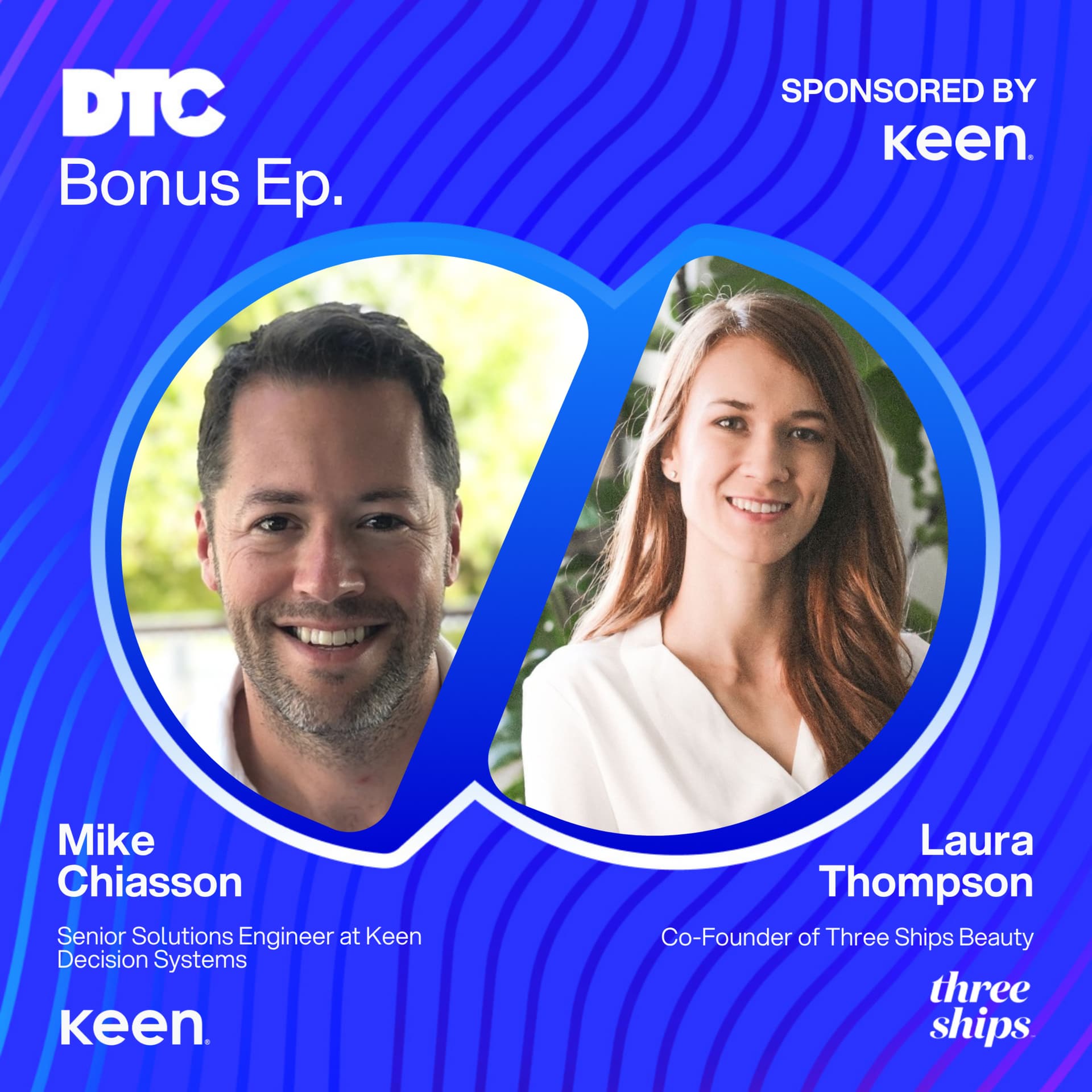
Mike Chasen, solutions engineer at Keen Decisioning Systems (planning/modeling/scenario planning for marketing and forecasting). Laura Thompson, co-founder of Three Ships Beauty (DTC skincare brand; runs rolling marketing calendar and 24-month forecasting).
Key claims
Most teams plan short-term (56% plan 1–6 months; <5% plan 1+ year). Revenue is a lagging indicator; teams should monitor funnel/KPIs and leading signals. External “market conditions” are often an easy excuse, especially for brands under ~$50M. Scenario planning improves confidence by defining actions for different outcomes. Execution fails mainly due to team buy-in and giving each person an influenceable KPI tied to revenue/EBITDA.
Notable examples
Three Ships pivoted Black Friday offers a week before launch due to under-forecasted trade spend; delayed a serum tentpole launch after a lab formulation miscommunication; pre-shipped 6 months of inventory to the US ahead of potential tariffs.
Written by AI. May contain mistakes. Listen to the episode to check what was said.
Chapters
Tap a time to open that second in VOUnderstanding Market Dynamics
0:00 to 0:49
Learn about the importance of reacting and adapting to market conditions.
“Knowing what to react to and maybe dig into and try to have some explanation for, and then from there, knowing what you're actually going to act on and maybe do something differently than before is super important.”
Insights from the DTC Survey
1:18 to 3:14
Exploration of survey findings on DTC operators' planning tendencies.
“where best laid plans are always good, but the actual following through on those sometimes in the day-to-day reactivity of this interesting market we find ourselves in can be challenging.”
Effective Planning Strategies
3:14 to 6:04
Discussing the importance of long-term forecasting and bottom-up planning.
“So how we think about planning at three ships is we do things on an annual basis with our marketing calendar being planned on a rolling basis.”
Scenario Planning Insights
6:04 to 8:32
Exploring how scenario planning can aid business decision-making.
“Mike, I'd open it up to you as a solutions engineer over at Keen.”
Managing Reactive Loops in Business
8:32 to 13:10
Strategies to avoid the reactive loop and ensure sustainable growth.
“showing them multiple scenarios, especially at your more junior or mid-level roles within the company, it's too much for them to actually really grasp and understand.”
Avoiding Over-Dependency on Performance Metrics
13:10 to 14:02
Ways to balance brand and performance marketing without over-investing.
“Mike, what are some of the things that you see in brands that are caught in this spin cycle?”
Monitoring Key Performance Metrics
14:02 to 17:26
Learn how to effectively monitor key performance indicators for growth.
“I, you know, to get to the scale you guys are at, Laura, you guys would have to have kind of figured this out a little bit.”
Understanding Revenue as an Indicator
17:26 to 20:38
Discover why revenue should not be viewed as the primary metric for success.
“it allows you to stick really close to the business and can allow you to really closely diagnose too.”
The Importance of Team Dynamics in Metrics
20:38 to 24:08
Explore how team performance impacts business metrics and decision-making.
“That's actually a lagging indicator for your business.”
Adapting Plans for Market Changes
24:08 to 26:42
Learn about the necessity of flexibility in planning and decision-making.
“Our biggest diagnostic tool or the thing that will change is the actual team member that's managing that system.”
Show all 19 chapters
Scenario Planning for Future Success
26:42 to 28:00
Understand the value of scenario planning in anticipating market uncertainties.
“So only 39 % including scenario modeling in our survey.”
Understanding Scenario Planning in Business
28:00 to 29:00
Learn how scenario planning helps businesses prepare for market changes.
“You know, sometimes it directly relates to what the marketing plan is going to look like.”
Preparing for Tariffs and Trade Wars
29:00 to 31:30
Discover proactive strategies for handling potential tariffs and trade challenges.
“Give me an example of how you handled – like, were tariffs impactful for you guys?”
Assessing the Impact of Economic Shocks
31:30 to 34:28
Explore the effects of economic shocks like oil prices and supply chain disruptions.
“We only have two products are made in South Korea.”
Bridging the Gap Between Planning and Execution
34:28 to 36:58
Learn how to ensure effective execution of business plans through team buy-in.
“I'm not sure that brands that are sub even 100 million would really be able to see a material ROI on their time for that.”
Key Performance Indicators for Success
36:58 to 42:05
Understand the importance of KPIs and how they drive departmental accountability.
“like, OK, well, I guess we're doing 10 million this year because they tell us we're going to.”
Effective Brand Planning Strategies
42:05 to 43:38
Learn how brands can approach planning to allow for creativity while being effective.
“This is something we've never, we haven't talked about hardly any of these things that we've talked about on this podcast before.”
Understanding Causality in Business Decisions
43:38 to 45:35
Discover the importance of recognizing causality in planning and execution for brands.
“You know, the one thing that comes to mind for me is recognizing the causality of what's happened in the most recent year, let's say.”
Brand Leadership and Market Response
45:35 to 46:04
Explore how successful brands lead rather than react to market changes.
“Well, thank you both for coming on today.”
Transcript
Automatic transcript. May contain errors.0:00Laura Thompson:Knowing what to react to and maybe dig into and try to have some explanation for, and then from there, knowing what you're actually going to act on and maybe do something differently than before is super important.
0:11Mike Chiasson:Sometimes you need time to make the right decisions and things happen. Planes go off the track. We've had to pivot Black Friday offers very last minute, like a week before Black Friday launch, because we've realized we had under-forecasted trade spend.
0:22Laura Thompson:There's knowing what's within your control and what's outside of your control. And for the things that are outside of your control, while you can't necessarily determine what your destiny is going to be, if you're measuring those things in your past, you can recognize the range of outcomes that could happen in your future. Ultimately, what we're trying to help organizations do is make decisions with confidence.
0:49Laura Thompson:Welcome to the DTC podcast. I'm very excited today. I've got Mike Chasen from Keen Decisioning Systems. as well as Laura Thompson, the co-founder of Three Ships Beauty, making her return to the DTC podcast. Today, we are talking about a report that we co-authored with Keen, where we surveyed 540 plus DTC operators, digging into actually what happens when marketing plans go live and why so many teams end up reacting instead of executing. This is something on the marketing side for our media company that I can totally relate to, where best laid plans are always good, but the actual following through on those sometimes in the day-to-day reactivity of this interesting market we find ourselves in can be challenging.
1:34Laura Thompson:Mike, curious from your end, you guys run a business all about planning. When we ran this survey, what were some of the things you were hoping to unlock or find out about the audience? Yeah, I guess, I mean, first and foremost, it's the degree of the tendency to plan and to think about especially long-term sort of planning, right, and how businesses are thinking about where they're going to be, not just by the end of this fiscal year, but, you know, two or three years out, as well as just the amount of data and the type of data that's available for them to work with, whether it's about, you know, the sort of data that we use for modeling and planning purposes or just the data that they're going to on a regular basis as signals for where their business is going and how they react to them.
2:19Laura Thompson:And that in and of itself can be a really significant sort of factor in the degree of confidence that teams have in how they're proceeding. The signals that they're looking at, are those actually good indicators of where their business is going? Or are they just sort of like reading into a lot of noise that's really more of a distraction than anything else? I think the stat from the report that was interesting to me was 56 % of people plan in that one to six month range, which so over half people are in that range and less than 5 % plan over a year or a year in advance. How did that resonate with you, Laura?
2:54Laura Thompson:How do you guys look at planning?
2:56Mike Chiasson:Yeah, I thought that was surprising too. I really appreciate that the report broke it down by revenue size because I think that's a key factor here. When you're smaller, it's okay and probably better for you to plan on tighter windows. You have to optimize your team for being really nimble and scrappy. And sometimes long-term planning can actually get in the way of that. So how we think about planning at three ships is we do things on an annual basis with our marketing calendar being planned on a rolling basis. All of our forecasts, the financial level, inventory buying, all of that is done annually.
3:28Mike Chiasson:And we do it for actually 24 months now. We used to just do 12 months at a time. Now we're doing 24 months at a time because we found that we had gaps in forecasting in particular. Once we get to the end of that 12 month window, we didn't really have visibility into how we were planning on kicking off the following fiscal year. But it's not surprising that most brands are around the three month mark.
3:49Laura Thompson:And then what are the signals that you're really looking at you feel are the most loyal or have the most fidelity when you're looking at them planning two years out?
3:58Mike Chiasson:Yeah, business performance for us is number one. Like what are our actual nuts and bones metrics performing at? So paid media is our biggest acquisition channel. What are our new customer acquisition costs there? What are our click through rates on our creative? And we actually model that out on a monthly basis. And we have a fairly detailed D2C model that we've built out that can contribute revenue down to the different channels. So we know in November how much revenue we're expecting from email, from SMS, from paid media. And we find that those are the most reliable ways for us to forecast out into the future based off of how the channel itself and the metrics that drive that channel are performing.
4:35Mike Chiasson:I think a mistake that a lot of brands make is that they do top-down forecasting instead of bottom-up. And so their management team will set them and say, okay, we want to grow to$30 million this year in revenue. And they'll be like, okay, got it,$30 million. How much do we think we can get from DTC versus our wholesale partners versus other channels? And then they'll try to attribute out a weight of business across different months. And then they'll back into their marketing spend. I actually think it's a better way to build a model where you're building from the ground up of, okay, what are our fundamentals telling us how many customers do we have?
5:06Mike Chiasson:How many customers do we think that we can acquire each month? What's the cost to acquire those customers? And therefore, what's our overall revenue going to be from our new customers versus existing customer cohorts? And so I think that's an area that a lot of like a signal that people get really wrong is they do their top-down forecasting instead of their bottom-up. And for small brands, I was really surprised to see that external market conditions was their number one, like a feed endpoint. I don't actually think that that should be something that you pay too much attention to when you're really small.
5:36Mike Chiasson:When you're sub even 50 million, market conditions aren't actually going to be the big unlock or drawback for your business. It's something to keep an eye on, but probably not something to plan your entire forecast around.
5:48Laura Thompson:It's an easy out a little bit too. It's such an easy out.
5:51Mike Chiasson:It's easy to say on tariffs and Trump or like Iran war, all this different stuff. It's easy to say and to blame those things for a lack of performance or great growth or whatever it is, but it's not actually I think how smart businesses plan and grow.
6:06Laura Thompson:Mike, I'd open it up to you as a solutions engineer over at Keen. What are some of the questions or, you know, after hearing Laura talk about this, what are some of the thoughts that you'd have about their situation? Yeah, I think, you know, in terms of market conditions and particularly external factors, right, it's important to understand the range in which that can have an effect on your business, right? And that's where scenario planning comes into play, which is, you know, something that I thought was really interesting about the survey and the results around it. But there's knowing what's within your control and what's outside of your control.
6:39Laura Thompson:And for the things that are outside of your control, while you can't necessarily determine what your destiny is going to be, if you're measuring those things in your past, you can recognize the range of outcomes that could happen in your future and how you're going to behave in each one of those different scenarios, right? So I think that's an important part of the planning. And the other thing that comes to mind for me is like, we've got some clients that are thinking about planning just in terms of optimizing their marketing spend and others that really want to understand holistically what's going to be their performance of their brand in the future, inclusive of all the baseline or environmental factors, right?
7:18Laura Thompson:So, and for those clients that are thinking about total business forecasting, that's where understanding the environmental factors and different sorts of outcomes related to those becomes really important. Is scenario planning something that you guys have done much of, Laura?
7:31Mike Chiasson:We do a little bit of it, but it's more for different parties. So we'll have a model or a plan that we'll build for banks and investors, which is usually more modest. Then we'll have our internal most likely case scenario. And then sometimes if we're going after a big unlock in the business, so say, for example, we're planning on launching into a big new brick and mortar retail partner that's going to be a huge unlock for the business and we're in the process of pitching, we'll do a scenario assuming like what if we land them? then what would the business look like? What would the forecast look like?
8:01Mike Chiasson:But for our internal team, we don't actually use multiple scenarios. I find it's really hard to keep the team focused and bought into even one scenario, let alone if we were to show them three and have them monitoring against three scenarios across the team. Everyone on our team has a KPI, which we think is really important. And that KPI rolls up to the overall forecast. So they all directly know how their number and their work impacts the actual financial health of the overall company, whether that's revenue or EBITDA, every one of their goals ties to those two numbers. So I think once you start showing them multiple scenarios, especially at your more junior or mid-level roles within the company, it's too much for them to actually really grasp and understand.
8:40Mike Chiasson:But it's a great management tool for us to manage expectations at the banking or investor level that you might want to be a little bit more modest with your growth than expectations.
8:49Laura Thompson:Mike, do you have any sort of anecdotes or examples of a time where scenario planning really helped a company pivot smartly or make great decisions? Yeah, there's one that comes to mind for me where it was around, they were making decisions on when was the right time for them to start investing in media based off of the amount of distribution that they had of their product. That doesn't necessarily apply to DTC businesses as much, but for the sake of discussion here, I think it's really meaningful because what we were able to do is illustrate to this client, depending on what sort of trajectory your distribution is going to have, this is how we might think about the effects of media and when you should be planning media to support your business.
9:30Laura Thompson:And all these things sort of, they affect one another, right? The greater sort of availability of your product, the more that your media dollars are going to work for you. And so understanding the relationship between those and how you might think about media investment in a low distribution versus a high distribution scenario was really helpful in helping them land on what decision they were going to make going forward. And then Laura, back into your model, the bottom up sort of where you're taking into account like actual even ad click-through rate, how confident does that help you get in your numbers over a year out, for instance?
10:05Mike Chiasson:So confident. Like I find that those numbers, by breaking it down with each point of your funnel and with each channel, it allows you to really accurately diagnose why you're missing target or why you're over-exceeding target. Because otherwise, if you're just building it off of, okay, this is what we think we're going to do for just new customers. We're just going to assume that we're going to get new customers by this number. And you don't really know what channel you're getting them from or how much it's going to cost you. It can be really hard to know what's happening if you're exceeding that or not meeting it.
10:33Mike Chiasson:So having all of those key underlying levers broken out and monitored each month allows us to trend spot because there is a level of seasonality in D2C. Of course, Black Friday is a huge, like a Super Bowl for D2C companies and your metrics change meaningfully during that period of time. We want to be able to reflect that accurately in our model. Same with December. It always is a really soft month for us because people load up on product in November. And then by the time December hits, it's a really, really bad month. And we want to make sure that we reflect that in the performance of our metrics and pivot over to a different type of creative as well.
11:07Mike Chiasson:So it's instrumental for us to be able to break it down at that level.
11:11Laura Thompson:A lot of the brands surveyed in this, maybe on the smaller side, as you mentioned, found themselves stuck in what we were coining the reactive loop where you end up, it's sort of similar to, it's a cousin of shiny object syndrome, I guess. And does the way that you do planning and forecasting really help you stay out of that? Or is it still something you're susceptible to you you guys are at at a serious scale at this point so it's probably hard to pivot
11:35Mike Chiasson:the ship on on a shiny object yeah we're north of 20 million um so we're still small in the grand scheme of the beauty world but definitely larger than the early early stage g2c like we were a couple years ago we are still susceptible to the reactive loop so i thought it was really relatable actually a lot of what it talked about of being like oh um growth is behind so invest take money out of brand and put into performance. And then like you kind of just are constantly delaying that task down the road of investing to brand, which is really necessary long term. So it's something that we have to actively resist against.
12:10Mike Chiasson:But hey, it's also about the stage that your company's at. If you're still early on and you're trying to prove product market fit, your dollars probably are actually best spent on figuring out your performance media channels. Like that's really going to be what allows you to get to the 5 million. You don't want to ignore brand or do things that are detrimental to the brand. But I understand not investing heavy dollars into brand at that point because you kind of need to keep the lights on. So yeah, it's definitely a chicken and egg and it's a constant push pull between the growth and the brand teams.
12:39Mike Chiasson:We do find though that by having these metrics, it allows us to really be really surgical with how we go about thinking through our growth model and allows us to not assign revenue targets to that brand spend. So then the brand spend can truly just be brand spend. There isn't pressure on those channels and those tests and those activations having to drive revenue now because we know where it's coming from within our performance channels or within our existing customer base or within our wholesale part of the business, which helps to kind of stop that reactive loop from happening.
13:10Laura Thompson:Yeah. Shield it from the main line of things. Yes, exactly.
13:12Mike Chiasson:Exactly.
13:13Laura Thompson:Mike, what are some of the things that you see in brands that are caught in this spin cycle? I think it's when they're following the wrong KPIs or the wrong signal, right? So it starts from having a really strong measurement system to know what are the drivers of your business, right? Which Laura, I think that's a lot of what you're speaking to as well. So it gives you the confidence to sort of recognize when those ebbs and flows are going to happen in your business. And it mitigates teams from maybe overreacting and making sort of poor short-term decisions that have long-term implications that are negative to their business.
13:47Laura Thompson:Yeah. I think one of the things that we've talked with on previous podcasts with Keen and with a lot of guests talk about the tendency in the performance world to over-invest on the bottom part of your funnel. So, you know, Meta will let you spend endlessly on the bottom part of your funnel to drive, you know, conversions from people that may or may not have converted anyway. I, you know, to get to the scale you guys are at, Laura, you guys would have to have kind of figured this out a little bit. How do you, how do you think, I think you just kind of mentioned it by breaking things into your brand activations and into the performance side of things, but how do you sort of ensure that you're not over-investing on bottom of funnel?
14:23Mike Chiasson:We really closely monitor targets for new customers and new customer acquisition costs. Like those are really our holy grail metrics, especially within our paid media, because ultimately that's what we want to be acquiring from that channel. We can rely on CRM to bring existing customers back or on like Google search to a degree, which I actually think we're still overspending on Google search. I think that's an area that a lot of brands are really paying to just reacquire people that would have clicked on their link anyways. Obviously there's unique situations where maybe it does make sense for you to pay for branded search.
14:52Mike Chiasson:And we haven't been able to figure out non-branded search for the brand. It's just so hyper-competitive. And I think GEO has better upside these days anyways. So it's probably a more important area to be investing in now. It's a tricky balance for sure between the two.
15:06Laura Thompson:And then I think you probably mentioned this. How often are you reviewing these key metrics? Over 70 % of the survey said weekly or more. I guess you're probably looking at them all the time, but what's the sort of internal cadence that you have at looking at your numbers versus your plan?
15:24Mike Chiasson:Yeah, great question. Because this was also an area that I think a lot of the smaller brands sub 5 million could really improve based off of the report. You should be looking at them bare minimum once a week with the full team. So what we do is every Monday morning for an hour from 1030 to 1115, every single one of our channel owners has their core KPI and they'll report on how that KPI is performing. If it's below 80 % of forecast or above 120 % in a forecast, you're really missing or you're really exceeding, then you have to present just a couple sentences about why that's happening. If you're like roughly close to plan, then you still have your notes in there, but you're not actually presenting.
15:58Mike Chiasson:So it allows us to cover all of our core KPIs by channel across all touch points of the business, all channels in a very, very short period of time, usually around 25 to 30 minutes. And then we also have time set aside around 20 to 30 minutes to do team brainstorming, big picture planning, things like, oh, we're discontinuing this SKU later this year. What should we start doing now to move customers off of that SKU? What's the risks involved? What do we have to start thinking through? How does this impact our product assortment two years down the road? Those big picture things that you sometimes need everybody in the company to put their brains together for, but it can be really hard to find the time on.
Read the full transcript
16:31Mike Chiasson:So yeah, Full Team gets a view of core KPIs by channel and overall revenue, of course, every single week. And in that meeting, we also touch on inventory levels because that's typically a break point when you talk about how these scenarios break. It's typically ops, something happens, you go out of stock of a product, something blows up, a supply chain issue happens. Usually that's what will cause a break point of a model to go off plan. And then within individual teams, they'll do deeper dives. And many of our channel owners, depending on how metric driven their own seat is, they'll be looking at their performance metrics every day.
17:02Mike Chiasson:So like I'm heavily involved in the paid channel. I look at our new customer acquisition costs every single day, oftentimes down to the ad set level. And so just because it's a fun game. And so you want to try to find people that want to look at the numbers daily and like have that habit. I'm probably compulsively looking at our Shopify dashboard widget on my iPhone too often. It's unhealthy. I have to log out of those platforms when I go on vacation, but ultimately it allows you to stick really close to the business and can allow you to really closely diagnose too. If there's little problems that happen, like something breaks at cart, which happens all the time.
17:34Mike Chiasson:And you're like, oh, our new customer offers within the US is down 40 % today versus yesterday. What's going on? Usually it's a bug on site.
17:43Laura Thompson:And then Mike, from the keen side, does this resonate as some of the top brands that you guys work with, they have a similar kind of cadence or what do you see? Yeah. I mean, it varies a lot, right? But I think having that sort of discipline around the thresholds, like Laura, you mentioned like below 80%, above 120 % or whatever it might be, versus like what you might normally expect. Knowing what to react to and maybe dig into and try to have some explanation for. And then from there, knowing what you're actually going to act on and maybe do something differently than before is super important.
18:16Laura Thompson:And so with various organizations that I've worked in in the past, I think that can be really paralyzing if you're always just chasing some sort of an aberration that happened in your business. And it turns out there really wasn't anything there to begin with. It was just noise. And the problem is gone by the following week, right? And that can really chew up a lot of organizational time and effort if you're not careful about sort of understanding what things are worth reacting to versus not. Just to close the loop too on something you mentioned earlier about brands, you know, using the wrong KPI or kind of being in a fog of war.
18:51Laura Thompson:Can you give me some more characteristics? Like, are there any standout metrics that teams are using that you see or just they should not be using? Or is it more of like a mindset or mind frame about how they're doing things? Yeah. One thing that comes to mind for me is brand awareness tracking and recognizing there's variability that can happen in that history. It's a survey-based solution, generally speaking. And the range of error that might be associated with that data point is not all that sort of acceptable to people sometimes when you start to look into it. And I mean, I've been in that role myself as a consumer insights practitioner where I'm asked to solve for why did our awareness decline in this particular period?
19:33Laura Thompson:And you try to line up all these disparate data sets to make sense of it. And ultimately, there isn't really a good explanation in some instances. And the problem is gone by the next month of your brand tracking. And it turns out it was just noise, right? So in our world of regression modeling and business planning and that sort of thing, the confidence in the historical model fits comes to mind. We're oftentimes explaining 95 % of sales from week to week. So if somebody has a 5 % or 6 % sales decline in a week that was unexpected, that might just be noise. And they're not necessarily really getting to the root cause of what happened, if there is even anything there at all.
20:13Laura Thompson:And sometimes it requires that sort of discipline and how much variability in our sales are we willing to accept as just things that happen without much explanation and things that don't necessarily require us to go and diagnose the cause and take some sort of action that was different than what we had already planned.
20:33Mike Chiasson:I would kind of add to that too, that it's important to think about leading and lagging indicators. And an indicator that brands over rely on, which I think Mike, you touched on too, is revenue. That's actually a lagging indicator for your business. It's not a leading indicator. And so it's very easy to just look at revenue and that's your diagnostic tool. That's not your diagnostic tool. Whatever's happened within and whatever's broken or performing well within your funnel and model has already happened by the time those dollars actually hit your KPI dashboards. And so revenue gets overemphasized as a metric, I think, and should not be viewed as the most important metric to be monitoring or tracking at your individual seat level.
21:10Mike Chiasson:Obviously, very important at more of the executive level because it's important for cash flow and for your overall profitability and for your balance sheet and everything. But just too much reliance on it. And another element of that, too, relevant for omni-channel businesses is you should try to ignore and scrub out sell-in. Within the wholesale side of the business, it's so easy to have these massive spikes if you're selling in a net new retailer or a new SKU or you're doing a rethink of your assortment. and those can be huge distractions and huge bumps in your data set that are really artificial and might hide some underlying issues, much more important to look at sell through at your store level.
21:48Laura Thompson:Yeah. And I was going to add just on that same point, one of the things that we're often sort of reinforcing in the marketplace and with our clients is recognizing how your decisions today affect your future revenue, right? So it's just the other side of the same coin. Your marketing today is going to affect your revenue next year, maybe two years out, right? And that gets back to the whole point about bottom of funnel versus top of funnel. There's a tendency to go to bottom of funnel because the impacts of it are more evident and it's obvious, whereas the top of funnel effects, they take place over time.
22:21Laura Thompson:And it's easy to sort of imagine like, well, we're not going to negatively affect our business today if we pull back on top of funnel because it doesn't have immediate sort of implications. But that sort of behavior over time can have compounding effects, or it's a lost opportunity in really being able to build out your business and your brand equity over time and help your long-term revenue. I think that's a great point. It makes me think of, you've got this email list and you send constant sales emails to it. Maybe you decide, okay, I'm going to start sending a content stream to this email to build brand affinity or whatever.
22:58Laura Thompson:You're going to make less money every time you send one of those emails. But if you're doing it right? You're going to raise your LTV or your AOV or something like that. Do you have any examples, Laura, of times where you guys have used data in that way to make a decision that might not have looked good today, but pays dividends down the line?
23:15Mike Chiasson:Like looking at our leading versus legging indicators?
23:18Laura Thompson:Yeah.
23:18Mike Chiasson:Oh, that's a good question. I mean, for us, a lot of the time, it's about finding the right people in the right seats. Like I think something that we've added in and has become a more important part of our planning process that we haven't really touched on here yet is how critical HR is to the plans and the process. Like not just look at how your metrics are performing, but how is the talent performing within those seats? Do they have the right people in the right seats? Is the organization set up in the right way where your teams are able to work really well together? And as we've grown, this has become so instrumental and so important and honestly, probably a bigger impact to overall performance of the business than if we were to try to diagnose or tinker around with one metric individually.
23:58Mike Chiasson:And so sometimes our biggest changes that we've made when we've seen, okay, our new customer acquisition cost has climbed a lot steadily over the last six months. It's up and up and up. It's up quite a bit year over year. Our biggest diagnostic tool or the thing that will change is the actual team member that's managing that system. We'll get new eyeballs and we'll get a fresh perspective. We'll move that person who maybe was managing before. What are they really great at? What numbers are they crushing it on? And how can we get more of their time focused on that area of the business and maybe take some of the metrics that they're struggling with and bring on different talent.
24:29Mike Chiasson:And so that's an example. We've done that several times where a metric is consistently hit, like missing. And usually we diagnose and it comes down to oftentimes the people that you have in the seat. They're just not the right person.
24:40Laura Thompson:And another, I'm just curious about your two-year long-term planning. Can you think of an example of a time where you've had to pivot from the plan that you have two years out?
24:51Mike Chiasson:Not two years out, because honestly, the two-year plan, we do more for like inventory purposes and for banks. Our team right now in 2026, we're recording this end of April. We're not looking at our 2027 plan. It's built out, but we're not looking at it at this point. We know what our launches are going to be in our big temple moments. So we're starting to prep for those and obviously do all the legwork for those. But we're not looking at what our click-through rate is going to be next April, for example. But we have had cases where plans have had to change quickly and pretty drastically. Within skincare, it's a very trend-driven, launch-driven industry.
25:24Mike Chiasson:and so your tentpole product launches of the year are really really critical and actually this year we had to delay our tentpole a launch of a new serum because we had a miscommunication with the lab we had asked them to formulate our active at a certain percentage and they formulated a different percentage we got all the way through for the final po process before it was actually caught and we decided that we needed to do our legwork to make sure okay what percentage you actually want to go forward with what can we afford from a margin standpoint what makes the most sense within the market at these different price points because this active was very expensive.
25:55Mike Chiasson:So formulating it at 15 % versus 10 % made a huge difference for our margins and therefore the price point that we could charge. And so we decided to actually pull that launch. It was supposed to launch in April of this year and we pushed it to next February, which was a great decision. That's an example where sometimes you need time to make the right decisions and things happen, plans go off the track. We didn't think that the lab would have this miscommunication with our internal team, but it happened. And giving the team time to be able to really think through all the implications of that strategy and push it to next year was the right decision for us.
26:27Mike Chiasson:We've had to pivot Black Friday offers very last minute, like a week before Black Friday launch, because we've realized we had under forecasted trade spend. Really basic little things like that that are easy to overlook, but are a lot of work and pain when you have to rethink them.
26:42Laura Thompson:Back to scenario planning a little bit. So only 39 % including scenario modeling in our survey. Mike, curious, what are some of the scenarios that, you know, it sounds like, Laura, you know, you guys do scenario planning. Maybe you call it something different, but it sounds like there's some aspect that you're doing. It doesn't trickle down to your team as much, which I think makes sense. But what are, Mike, what are some scenarios, for instance, you think a lot of brands should consider modeling? I think it starts with sort of recognizing what the biggest X factors are in their future, right?
27:12Laura Thompson:So if there's a lot of uncertainty about something, especially external, we don't know which way it's going to play. Well, you want to be thinking ahead to how you're going to act in each of those two different scenarios. It gives you more confidence when you run into that situation and you actually have to make a decision. It reminds me of one of my favorite quotes from Mike Tyson, everyone's got a plan until they get punched in the mouth. Punched in the mouth, yeah. And so having that sort of experience or thinking ahead on, this is what I'm going to do if X happens and I'm going to make Y decision.
27:45Laura Thompson:Thinking through that ahead of time just brings a lot more confidence to the organization and how they're going to respond in various scenarios that could play out. And then how does Keen specifically play into that? In terms of enabling those decisions to be made? You know, sometimes it directly relates to what the marketing plan is going to look like. And ultimately, what we're trying to help organizations do is make decisions with confidence, right? And so being able to do that based off of some set of assumptions on what the environment is going to look like becomes really, really important in how they're thinking about how they want to behave.
28:22Laura Thompson:And also, it helps understand when you see maybe those first signals of something that's happening, right? Maybe it's a downturn in category performance, right? Having done those scenarios in advance, you sort of understand the sort of bounds of where your business is going to go and how sensitive it is to those individual factors such as category performance. So it just helps teams sort of recognize how exposed, I guess, they are or sensitive their businesses to different sort of outcomes that could happen in the marketplace. And then, Laura, you mentioned you're not really focused on doing that level of scenario planning.
29:01Laura Thompson:Give me an example of how you handled – like, were tariffs impactful for you guys? Or I guess a lot of your – you sourced locally, so maybe not as much. Like, have you been hit in the mouth? And what did you do?
29:14Mike Chiasson:We haven't been hit in the mouth by tariffs, but it doesn't mean that we didn't plan for it. And we prepared to be hit in the mouth so that we were kind of trying to throw a block before that punch could actually be landed in the face. So for us, what that looked like was as soon as Trump started talking, even before he got elected, of all this, oh, 51st state type rhetoric, and we want to have no trade deficit with Canada, which is never going to happen because of the amount of oil that we export to the U.S. It's such a discount. It's never going to happen. but like we took him at his word and we said okay it sounds like he's probably he's saying he's going to start a trade war with canda what would that look like if that actually did happen now we didn't model this out from an entire financial scenario plan but we started to talk what would need to change in the business how can we get ahead of this and then we took action on those plans so what that looked like for us was pre-sending a bunch of inventory down to our u.s warehouse could we stuff our u.s warehouse for six months of inventory so we could have that inventory on hand to allow us to adjust price if we needed to and have time to react with our retailers, because many of them require 90 days notice before any price change can go into market.
30:18Mike Chiasson:And we need to make sure that we are equipped to do that by having enough inventory on hand. At the same time, we also start to look at our supply chain and think, OK, if we did have to pivot longer term, what are some relationships that we could start to open up with U.S. manufacturers if that's something that we would decide that we want to do and have them separated out by country? Or should we maybe bring our warehousing back into Canada instead of having in the US? What do we think is the most likely outcome here? What would a 10 % tariff on our product really do to our margins? Would we have to increase our price point at that point?
30:50Mike Chiasson:So it's asking those big questions and answering them, but not necessarily working through the full financial model. I find at our stage, it's really not needed. And it just creates a lot of extra work for the team, I find, which is hard to get buy-in on. And ultimately, I don't want to take a lot of our senior leaders away from actually managing their parts of the business. We want to talk about these problems and potential risks, but without letting it derail us from the here and now, what really is moving the business forward currently or over the next like six, 12 months. So it's a balance.
31:21Mike Chiasson:Yeah. The scenario plans, I'd say, like I said, is more of a management tool for us and more of us talk about the theoreticals rather than to work through an entire forecast and bring it to the team.
31:30Laura Thompson:Did you have to raise your prices? I'm curious.
31:33Mike Chiasson:No, we didn't. Most of our goods are made in Canada. We only have two products are made in South Korea. So those ones had tariffs that went from like 10 % to 20 or 25. It kept changing. But now that they've been ruled illegal, there's this whole like refund process that brands can go through to get their tariff money back that they had paid. But for us, it really wasn't a very material amount. It was like maybe$20 ,000 over the course of whatever period of time that those were running for.
31:57Laura Thompson:Not to get doom and gloom at all, but one of the things I see on my feed all the time these days is the looming oil shock. Is that a scenario, Mike, that brands should be thinking? But I've heard that, you know, it's the whole, the fact that like the Hormuz Strait has been closed. So there's a good chunk of the world that isn't getting the oil it needs and that it could lead to a systemic oil shock. Is that something that brands need to have on their radar? Yeah, perhaps. And I've not personally had a discussion with clients about that one, but it does kind of feel like the tariff 2.0 thing where we were talking about the tariff factor quite a bit, right?
32:36Laura Thompson:And, of course, as soon as you get into that sort of discussion, whether it's about tariffs or oil, there's the magnitude of how much it affects your business, but there's also the duration and how long it's going to be a problem, right? Which is very, very difficult to even sort of like – that might get beyond sort of the scenario planning that we're talking about here because it's anybody's guess, right? But I think that's certainly a factor, whether it's measured or simulated or otherwise, in thinking about what sort of response we're going to take based off of if this becomes a reality for some period of time.
33:11Mike Chiasson:To play devil's advocate to that, I don't think brands should really be modeling for oil and gas unless oil and gas is a large input cost for them. So unless you're like an airline or you're a gas retailer, it's just not going to have that immediate material impact on your business. It's probably more of a distraction than anything. Again, it kind of gets back to like the business performance conditions versus market conditions. I think market conditions cause a lot of noise. And when you're early stage and you're just trying to get to your first$25,$50 million in revenue, like one of your goals and jobs as a founder or leader is to cut noise and protect your team from that noise.
33:47Mike Chiasson:Let the important and the loudest noises through and then brainstorm on that together. Don't stick your head in the sand, but filter it for what actually is going to materially impact your business. like an instance of something that was a material risk that did end up happening for us was the rail shutdowns in Canada. Usually it's a supply chain things that actually impact the business in major ways, much more than these economic shocks, I find. So in Canada, both rail companies striked at the same time around a year and a half ago. So basically there was no movement on rail in the entire country.
34:19Mike Chiasson:And it was, it went on for, I think, two to three weeks before they were able to get cargo moving again but that was a huge issue and it happened i think in september right when all brands were bringing all their goods in for black friday so those are important things for you to pay attention to and probably model out okay what would it cost for us to actually pay to truck this over instead of relying on rail do we need to have conversations with our brokers in
34:40Laura Thompson:advance scenario planning on the supply chain side i think scenario planning on the supply chain side
34:45Mike Chiasson:is huge like regardless of your size honestly i think that's really critical on these like uh The economic side, it's so hard to predict. I'm not sure that brands that are sub even 100 million would really be able to see a material ROI on their time for that. It's important to keep your pulse on as a CEO or a leader, but probably not a big enough deal for you to take to the team, unless you're an airline.
35:09Laura Thompson:Yeah. It makes me think of, someone told me once I was talking about a looming economic shock or something, and someone said, do you know what the number one chocolate bar in 1935 was? And it was like Mars bar, you know, what the number one chocolate bar in today is it's Mars bar. And it's like things, the more things change that, you know, a lot of things still stay the same. And, uh, and so to not worry about it too, too much. The last section we have here that I want to dive into is the biggest gap that the survey that we did with Keane here illuminated, which was the gap between planning and execution.
35:41Laura Thompson:And so I guess that's the minute after you think about it, after you get hit in the mouth and then you actually start punching back. It sounds like, pardon the pun, Laura, you guys run a pretty tight ship over there. But how are you ensuring that your plans get executed?
35:56Mike Chiasson:It is the hardest part. And I'm not surprised that this was the biggest gap. Number one thing by far is team buy-in. You could bring them the most thought through, intentional, smart, perfect, structured plan. And if the team doesn't believe in the numbers that you're telling them that you're going to hit or their influence on those numbers, it's just not going to happen. You need to get your executors bought into the plan, bring them into the actual creation process as much as you possibly can. At least your senior leaders, give them ownership of their P &L line items, give them ownership of being able to create their channel model for that year.
36:29Mike Chiasson:And I think that's an area that we get really right is that we'll push our channel model, like our channel owners and be like, no, we actually think you can do better on this metric. Like you're kind of sandbagging here. You're being too modest with your forecast. And this is why we think this way based off of historical numbers. And so we vet it, but we involve them in that planning process. And so that will help tremendously for you to get from the plan to the execution because they've helped build the plan. And they have an idea in their mind of what they're already going to do to execute on those numbers that they've committed to.
36:57Mike Chiasson:And so you have to make sure that your team actually really believes it and isn't just like, OK, well, I guess we're doing 10 million this year because they tell us we're going to. Like, good luck. That I think oftentimes is a big missing step. And again, I can't say this enough, but make sure that everybody at the company has a number. They really need to know how they're going to influence performance of your key financial metrics. So either their number influences your EBITDA or their number influences your revenue. And this is true across our entire team. HR has a number that impacts EBITDA.
37:28Mike Chiasson:Our PD team has a number that impacts EBITDA and gross margin. Every single person has a number that impacts the financial health of the business. And it allows us to focus on projects that I think otherwise would never get done because it's not an emergency. Things like renegotiating payment processing costs, that's not an emergency usually. And so it doesn't usually happen. But can I bonus and metric our controller off of her renegotiating payment processing fees and get an extra 0.4 % back on all of those transactions? That could make a meaningful difference for the business.
37:57Laura Thompson:And it gives your team the autonomy to operate as true operators when they're beholden to that one number, it gives them a mandate to change it.
38:09Mike Chiasson:They're a bonus off of it. If they hit their number, their core KPI, that number that they report on every single week is their core KPI that they'll get a bonus off of at the end of the year. And it's not just a couple hundred dollars. These are substantial amounts up into the tens of thousands of dollars, depending on their level within the company. That is a meaningful buy-in for them as well that will allow you to get from the plan to the actual execution because they'll monitor it. They'll look at it daily without you telling them that because they have to, because they have skin in the game, they're being monitored on it, they have to report on it every single week to the team, they get a bonus off of performance, and they understand how it impacts overall company performance.
38:42Laura Thompson:Are you able to share a few of your, I don't know if this is proprietary, how you feel, but are you able to share a few of the key numbers for different departments that you're anchoring people to?
38:51Mike Chiasson:Yeah, definitely. So for instance, one of our key numbers for paid marketing, it's ROAS. CRM, it's click-through rates, is their key metric. Website is conversion rate. Social is average reach per post. So again, we don't metric them off of followers. It's actual reach. Influencer, it's impressions that they get from any of their influencer hits. Customer experience, they have metrics for CSAT goals that they get compensated off of. And then the sales team, a lot of it's based off of sell-through rates at the actual store level, as well as opening up net new accounts. So these are their main holy grail metrics and then they'll have individual project-based metrics too.
39:31Mike Chiasson:So like even though our controller is not reporting every single week on how her conversations of payment processing are going, that's a number that she's going to be bonused off of at the end of the year is if she completed that project and got payment processing down or not. Same with PD. Last year, our PD gal, one of her targets was to target our bottom seven performing gross margin products and get five of those seven above our average. And so that's not typically something that PD would manage on our team. Usually that's ops, but PD is instrumental to the process because a part of some of these changes required reformulations.
40:06Mike Chiasson:And maybe we had to swap out really expensive ingredients to more affordable ingredients or move over to a different co-man, which then we'd have to re-vet the products and put them through stability testing all over again. That's going to have a material impact that she was able to move some of our products up eight percentage points in their gross product margin, which is huge because she was bonused off of that. So that's like a great, I think her bonus off of that was maybe$4 ,000. But it's such an impactful, important project that now will pay off this year and years to come. So everyone should find their number that impacts revenue or EBITDA.
40:40Laura Thompson:Beautiful. Mike, this resonates with you about bridging the gap between planning and execution? Yeah, for sure. I mean, I think that there's, just speaking to Laura's part there about KPIs, right? There are KPIs that are very close to home, depending on what role you play in the organization. And having something that an individual or a team leader can influence is super important. It has implications for long-term business health, right? That I think is important to recognize. In terms of planning versus execution, I was going to say something very similar to what Laura said, which is, you know, to have confidence.
41:16Laura Thompson:I keep going back to confidence, but I think it's really critical for everyone on the team to recognize and have confidence in the plan that's been developed and have some sort of commitment towards the plan. So there needs to be buy-in as well, right? But recognizing that our decisions now are going to directly affect the way that things play out, that factors into how committed people are to staying the course and following through on the plan that they agreed to and that they understood was going to have a true impact on the business. And related to that, from a modeling standpoint, making sure that you've got all the right variables to truly understand what drives your business up and down is the other sort of component to that.
41:58Laura Thompson:And making sure that everybody sort of recognizes these are the things that we know and have sort of modeled out to validate that are truly impactful in the ebbs and flows of our business. This is something we've never, we haven't talked about hardly any of these things that we've talked about on this podcast before. So I really appreciate you both coming for it. In closing, Laura, what's one thing, or for both of you, maybe starting with Laura, what's one thing you'd change about how most brands plan?
42:25Mike Chiasson:They fall into two categories, either they under plan or they way over plan for the over planners. Make sure that you don't put yourself into a situation that you don't leave room, especially for your marketing team, for creativity and spontaneity. So much of our world now is trend driven and social driven. and what works on social media this week is not going to resonate in another four weeks. So within your marketing plans, do not overthink those ones, like really focus your team on those big tentpole moments, but then leave everything else wide open. We've made that mistake before that we've tried to like brief out every single month and make sure that all the channels are talking together about the same thing.
42:59Mike Chiasson:And it just ends up feeling really disingenuous on the actual platform because things change so rapidly within marketing. So plan and spend lots of time, like at least six months out planning for your big tentpole moments, but then for everything else in between, allow your channel owners to be able to move really, really fast. And then for the people that aren't doing any planning right now, take a new look at your model with fresh eyes. Make sure that your model is not just based off of year over year or month over month percentage increases. Like you need a model that's a lot more sophisticated than that.
43:31Mike Chiasson:It has to be based off of your actual business levers and not just off of some assumptions that you decided that you would like to grow this year. So do your bottom up instead of top down planning.
43:40Laura Thompson:Anything you'd add there, Mike? You know, the one thing that comes to mind for me is recognizing the causality of what's happened in the most recent year, let's say. And in Keen's world, you know, for us, that's forecast reconciliation. We advocate that for all of our clients. So when your business plays out, it's going to do something different than what you expected to some degree, right? And recognizing how much of that is the execution versus planning is, of course, important versus there's always going to be some degree of model error, right? And teasing those things out and recognizing how much of the miss versus your plan was because of different decisions you made versus what was initially expected, I think is really important as sort of a continuous loop of learning from your past and knowing how good you are at sort of predicting what your decisions are actually going to be versus how much you follow through on those.
44:36Laura Thompson:And, you know, the other thing that comes to mind for me, and I think this was really evident from the survey results, is just the focus on more short-term decision-making and reacting. And brands that are just constantly sort of reacting to what just happened to them sort of become an artifact of whatever is in the environment around them. And really successful brands that sort of - And can become a downward spiral even worse, right? When you get bad inputs and – Yeah. And conversely, the successful brands that understand the implications of choices that they're making are more in a leadership role.
45:13Laura Thompson:And they're making decisions that in some instances they're causing the reaction, right? They are driving things that they know that their consumers are going to respond to, that maybe their competitors are going to respond to. And so it just puts them more in the driver's seat in sort of flipping the script and recognizing we understand that there's going to be uncertainty that happens in the marketplace. And the more that we can sort of stick to our guns and learn from our past and recognize what things really matter, the better off they're going to be in the long run. Beautiful. Well, thank you both for coming on today.
45:46Laura Thompson:Go check out KeenDS.com and talk to a solution engineer like Mike if you want to get a decisioning system in place. and follow Laura on socials. Laura, you should have your own podcast. You're wonderful on these things. Great to see you as always. I still love your products too. The Three Ships Beauty, go to Three Ships Beauty for some fantastic skincare as well.
46:08Mike Chiasson:Oh, thanks, Eric. Thanks for having me.
46:10Laura Thompson:Nice. All right. Thanks guys. And go download the report. It'll be linked on this podcast and hopefully it helps you all plan better.
46:24Laura Thompson:Thanks so much for listening to today's episode. If you're not a subscriber to our newsletter, you can do that right now at directtoconsumer, all one word, dot co. I'm Eric Dick, and this has been the DTC Podcast. We'll see you next time.
From the publisher
Subscribe to DTC Newsletter - https://dtcnews.link/signup
We surveyed 540+ DTC operators on how they plan and forecast. This episode, we break down the data and see why most brands are stuck reacting. We’re joined by Laura Thompson, co-founder of Three Ships Beauty, one of the few who's figured out how to run a tight, fast, 8-figure brand without drifting into chaos, and Mike Chiasson, Senior Solutions Engineer from Keen Decision Systems, to pressure-test the Three Ships Beauty playbook against the data.
Grab your free copy of the report here: https://www.directtoconsumer.co/thereactiveloopreport
In this episode:
- The biggest gaps in how DTC brands plan
- Why "revenue is a lagging indicator"
- The bottom-up forecasting Three Ships uses
- The KPI ownership system across the whole team
- When scenario planning is worth the time, and when it's just noise
If you’re a DTC operator past $5M who wants to stop reacting and start running a solid plan, this episode is a must listen.
Timestamps
0:00 Planning vs reacting in ecommerce
2:03 Why most brands only plan 1–6 months ahead
4:02 Bottom-up forecasting vs top-down forecasting
6:06 Scenario planning and external market risks
9:02 When media spend actually works harder
11:01 The reactive loop hurting DTC brands
14:03 Why brands over-invest in bottom funnel
15:06 Weekly KPI reviews and forecasting systems
18:02 The danger of reacting to noisy data
20:04 Leading vs lagging indicators in ecommerce
23:02 How talent impacts business performance
24:58 Product launch delays and forecasting pivots
26:53 Scenario planning for tariffs and supply chain risk
31:55 Should brands worry about oil shocks?
35:34 The biggest gap between planning and execution
38:02 KPI systems that drive accountability
42:16 The right way to plan for growth
44:02 Why reactive brands fall behind
Subscribe to DTC Newsletter - https://dtcnews.link/signup
Advertise on DTC - https://dtcnews.link/advertise
Work with Pilothouse - https://dtcnews.link/pilothouse
Follow us on Instagram & Twitter - @dtcnewsletter
Watch this interview on YouTube - https://dtcnews.link/video