In short
Top-of-funnel “collapse” driven by AI/LLMs and Answer Engine Optimization (AEO), changing e-commerce discovery and requiring marketers to adapt with structured, trustworthy content plus personalization/testing.
Guest
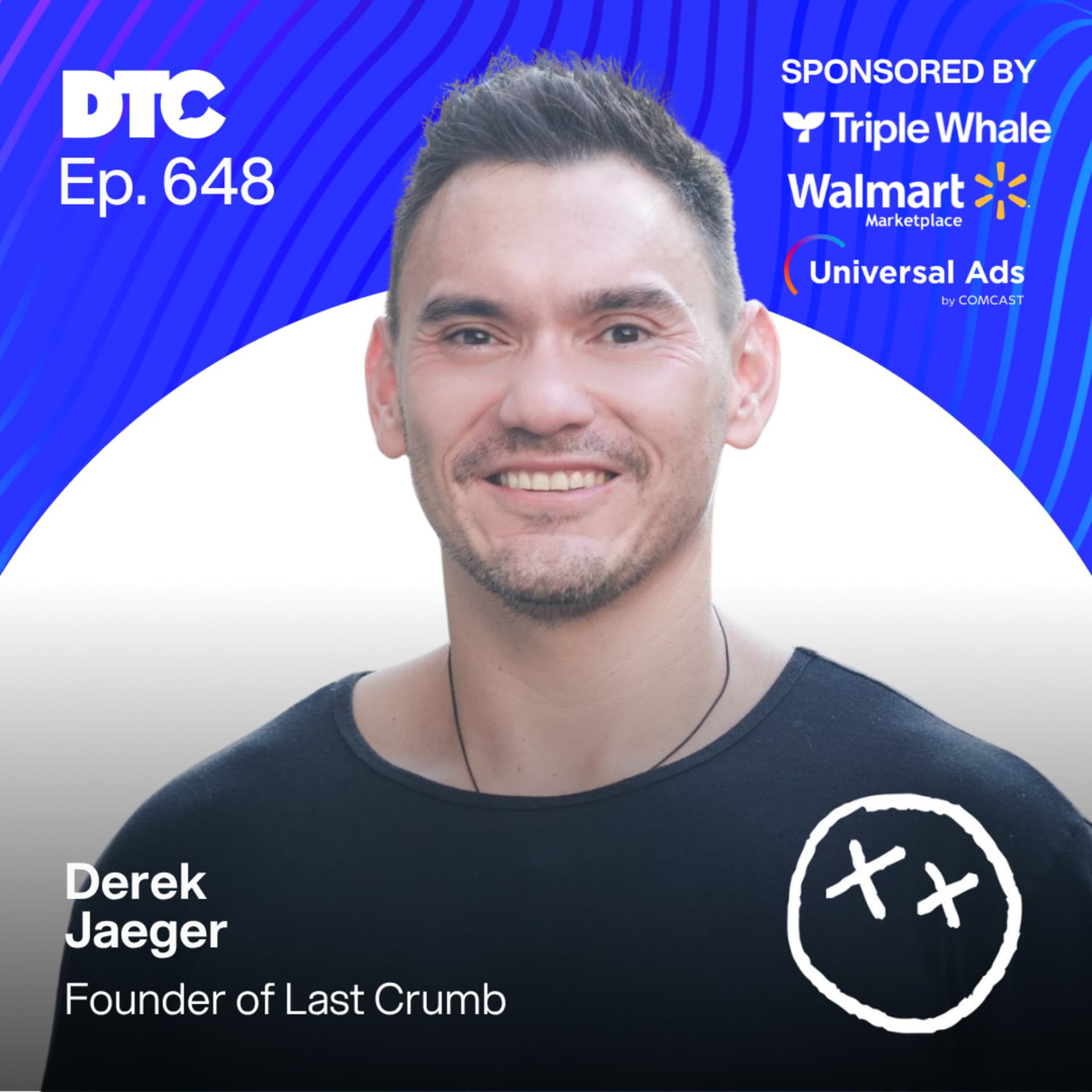
Kimberly Gong, VP of Marketing at Contentful. Career in content marketing (since ~2007/08; content marketing focus since ~2009/10). Works with brands on content operations, global localization workflows, and marketing automation.
Key claims
60% of searches don’t click through to websites anymore. AI “slop” reduces trust—50% of customers lose trust if content seems AI-written. AEO differs from SEO due to longer, conversational/rambling LLM queries and the need for query-aligned, structured content with authority/context signals. Personalization at scale is essential for authenticity; start small with VIP/segment-based experiences and continuous testing.
Notable examples
Pets Deli personalized cat vs dog offers; ~50% conversion lift. Ruggable personalized hero banners/pages for segments; 7x CTR and 25% conversion lift. Bossard localized 18 sites/38 countries using AI workflows. On integrated inspirational content into e-commerce; Runners clubs energy translated online.
Written by AI. May contain mistakes. Listen to the episode to check what was said.
Chapters
Tap a time to open that second in VOThe Importance of Content in E-Commerce
0:00 to 0:50
Learn about the central role of content for brands and the changes marketers face.
“Content still remains king and it is central to every brand, every business.”
Shifts in E-Commerce Discovery
1:10 to 2:10
Explore how search behaviors are changing and impacting e-commerce strategies.
“What is your take right now on state of e-commerce and growth marketing in the space?”
The Great Content Collapse
2:10 to 3:40
Understand the implications of the 'great content collapse' on marketing strategies.
“I think it also presents an opportunity to, as marketers, to really rethink how we adapt in this new time.”
AI's Impact on Marketing and Content Creation
3:40 to 5:30
Discuss how AI is reshaping content creation and marketing efficiency.
“start creating some content really quickly to try and exponentially create more so I can meet my KPIs.”
Adapting to Answer Engine Optimization (AEO)
5:30 to 7:10
Learn the differences between AEO and SEO and how marketers should adapt.
“But how do you see AI changing the way people search and discover brands?”
The Role of Personalization in Marketing
7:10 to 9:10
Discover why personalization is crucial for creating relevant customer experiences.
“So it's looking for relevance, authority, context.”
Starting Small with Personalization
9:10 to 11:40
Learn strategies for implementing personalized marketing in manageable steps.
“And so that's going to really take me down a different path.”
Leveraging AI for Global Marketing
11:40 to 14:01
See how companies can use AI to streamline content across multiple languages and regions.
“I think brands, and I can speak from experience ourselves, are often good at taking a lot of data, but less good at acting on it.”
Leveraging AI for Content Creation
14:01 to 17:25
Learn how to use AI for content translation and workflow optimization.
“They have, I want to say, 18 sites, 18 languages, and 38 countries that they serve.”
The Importance of Human Touch in AI Content
17:26 to 19:22
Explore the need for human creativity and voice in AI-generated content.
“when we talk about the human experience and authenticity, that's what humans crave.”
Show all 16 chapters
Testing and Optimization Strategies for Brands
19:23 to 21:57
Understand how high-performing brands approach testing and continual optimization.
“Am I having, do I have the right audiences?”
Challenges of Scaling Content Across Regions
21:58 to 23:40
Identify the challenges brands face when scaling content globally and maintaining consistency.
“Okay, let's talk about scaling content and operations.”
Successful Content Strategies: Case Study of On
23:41 to 25:51
Learn from On's effective content strategy that integrates inspiration with e-commerce.
“I think what we see is inconsistent experiences, very different kind of tone or message or look and feel in different regions, or maybe just sites that feel out of date.”
Personalization and Experimentation in Marketing
25:52 to 28:04
Discover how personalization can drive engagement and conversion rates for brands.
“My understanding is you do want to be very cognizant of the platform you're on and make sure you're not sort of like copy and pasting the exact.”
Developing a Great Content Strategy
28:04 to 29:43
Learn how brands can focus their efforts on personalization and content strategy.
“I would definitely invest in my personalization testing infrastructure.”
Auditing Content for AEO Searches
29:43 to 30:38
Understand the importance of conducting a content audit to optimize visibility.
“my language and experience consistent across every touch point do I have a strong differentiated voice among my competitors?”
Transcript
Automatic transcript. May contain errors.0:00Content still remains king and it is central to every brand, every business. However, there are these big structural changes and challenges that I think marketers are dealing with right now. Discovery is changing for e-commerce. And what we're actually seeing is that even though people are searching, 60 % of those searches, people are not even clicking through to the website anymore. It presents a challenge. It also presents an opportunity as marketers to really rethink how we adapt in this new time. AEO and SEO, is it essentially the same thing or are there key differences? There are key differences and I'm so glad you said that.
0:35Having that source of brand truth is I think going to be more critical than ever. To be a trusted name that consumers will click through.
0:50Welcome to the D2C podcast. Today we are joined by Kimberly Gong, VP of Marketing at Contentful. We're talking about a topic near and dear to my heart, which is content and the collapse of top of funnel, how AI search, AEO, and changing consumer behavior is reshaping discovery, personalization, and the way modern marketing teams work. Welcome to the D2C podcast, Kimberly. How are you doing? I'm great. Thanks so much for having me, Eric. What is your take right now on state of e-commerce and growth marketing in the space? Right now, it's a very rapidly changing space. I think the thing that I'm really looking at all the time is how discovery is changing for e-commerce.
1:28I mean, a lot of us go to search engines. We often use it as kind of our front door to discovery if we aren't maybe familiar with the brand. We're looking for something general. I think everything that we're seeing in terms of the answers that are now being generated are really shaking up. I think how we all need to think about search, discovery as a brand to get to our customers and to get to those consumers. So whether they're finding us for the first time or they are reminded of our brand the second time, because so much of that is now being really translated into that top of funnel search.
2:02And what we're actually seeing is that even though people are searching, 60 % of those searches, people are not even clicking through to the website anymore. So it presents a challenge. I think it also presents an opportunity to, as marketers, to really rethink how we adapt in this new time. I've been in the digital marketing space since about 2007 or 8. I think it was around 2009 or 10. I started hearing the term content is king. Content is king. And so I've actually spent my whole career in content marketing. That's what DTC is. Content marketing essentially for an agency and becoming this media company in partnership with them.
2:39But there's another term that you're bringing to the table here, which is the great content collapse. Is the king collapsing? What do you mean by the great content collapse? I don't mean the king is collapsing. I think content still remains king, and it is central to the way that I think every brand, every business needs to think about it. However, there are these big structural changes and challenges that I think marketers are dealing with right now. The first one is that top of funnel is changing. Like how we engage, how customers engage with our brand is changing. It means that brands are maybe losing out on those top of funnel leads, and so they need to rethink how they are actually approaching customers.
3:17The other side of this is that budgets are continuing to shrink or at least remain stagnant in marketing. And teams are now really being tasked to still do at least the same amount of work, if not more, with the same size team, if not a smaller team. So now if we think about what are marketers going to do, they're going to, and merchandisers and everyone who's working in these businesses, they're going to turn to AI and say, let me start creating some content really quickly to try and exponentially create more so I can meet my KPIs. The problem is that we're seeing we're really flooding the market with a bunch of generic content, a lot of AI slop.
3:55I don't know if you've ever read a piece of content and said to yourself like, I'm pretty sure that's written by AI. So you can tell and I think that consumers are now becoming a little bit more savvy about what's great and what doesn't and what feels like it's been written by AI. And I've actually seen some recent reports and studies that say 50 % of customers, you'll lose trust with them by 50 % if they think something is written by AI. So that is what I mean by the collapse, is that the traditional way in which marketers are thinking about just kind of solving these problems is changing because, and we can't continue to work in the same way.
4:33I do believe, though, the content is still critical to how customers engage with you, the emotions that they feel from a brand. And it's going to be, I think, even more important in this new era. It's a confluence of a lot of events. You've got brands relying on saturating the bottom part of the funnel for a long time with meta ads, but realizing in the age of increased attribution, realizing the pitfalls of that and really figuring out ways that they can invest in more top of funnel content. You've got Meta changing their attribution. You've got Andromeda, where if you turn out things that aren't different, if they don't have strategy or sort of angles behind them, you're going to get lumped in these algorithms as the same kind of content.
5:15So it's a lot of things happening. All the while, like at the agency, we're at now all of a sudden 20 % of the inbound leads are coming from Angele engines. And we've done very little optimization for that, but we've blasted our names out there into the ether so much that it's starting to kind of come back to us. But how do you see AI changing the way people search and discover brands? I mean, I think that answer engine optimization is going to be one of those ways. I think right now, LLMs account for about 5 % of traffic. So people are going into LLMs and maybe searching for products or those answers will result in product recommendations.
5:51I've gotten just a couple the other day. Google still represents, I think, about 95 % of the traffic. However, I think this kind of reminds me about like 10 years ago when we were all like, what's happening with mobile? Do you think people will actually transact on a mobile device and buy really big purchases? And they are, right? And so I think this is really the entry way. This is the entry point for a lot of consumers as they are now starting to play with LLMs. They are starting to see answer engine answers being suggested to them and now are clicking through to those or just getting the answer and then moving on.
6:26And so I think that this is where it's really changing the game for marketers, for merchandisers, as we think about how do I create digital experiences and content that then gets surfaced in those. So instead of being ignored and bypassed because I didn't show up in an answer, I can actually try to dial in my content to be so well-tuned to what agents want that I'm more likely to show up in that space. And so I think that that's really where the momentum is. Practically, what does that mean? Like how should brands be thinking about their content so that it is digestible by both agents and people?
7:01Well, I think that they need to be thinking about content that is structured. So agents really prefer structured content. That means it is easily parsable, easily understandable, and it has a very easy way to understand and be contextualized. So it's looking for relevance, authority, context. It's looking for third-party validation. And that's why you'll see a lot of answers sometimes look at Reddit or ratings and reviews or blogs, other things that give credibility to that source. Because an agent or an LLM doesn't fundamentally know if this is a trusted source. And so it's looking for all of those signals.
7:36I think where the difference is now, though, is that as we think about what a marketer needs to do, we are trying to build that experience that an agent likes and that it will prefer. We also, of course, need to keep going and making sure that we're providing even better experiences for human customers because when they do find your brand, when they do come to your website, now they've probably done much more research. They're much more savvy about what is in your product set. And so now you need to get them exactly what they need, more finely tailored to their preferences so that you can actually transact, so that they can transact.
8:11What would you say is the Venn diagram of AEO and SEO with how much it overlaps? Is it essentially the same thing or are there key differences? There are key differences, and I'm so glad you said that because that's exactly how I think of it as well. In AEO or in SEO, you still have alt text and keywords that are really important, authority, context. What we do see in AEO as well, though, on top of it, is that there are differences in how people search. And so making sure your content is query aligned. So, for example, when people search on Google, they might search for words. But if they search on an LLM, that query might be 30 words.
8:53Yeah, they might ramble for 10 minutes on a voice note. Exactly. And I even find myself doing this. Like, I am being trained by LLM prompting that now I kind of search in the same way. So instead of searching for brown shoes, I'm going to be searching for, I'm going on a hike. I need boots, preferably in brown, that can handle this kind of terrain. And so that's going to really take me down a different path. And so if we kind of reverse engineer, now what is the opportunity for brands? It's making sure that you have content that is aligned to those types of queries. It's not just about creating text keywords that will match up with the keyword searches, but that you also have maybe content that supports that exact query or something similar to that query.
9:38Personalized experience, right? This goes back to funnel congruency, which was something back in my affiliate marketing days. I remember we were like, okay, we're going to make the button blue, and then we'll make the button on the page blue, and then we'll, you know, all these sort of simple ideas of visual funnel congruency. But now personalization, like that's one of the big things that AI unlocks is personalization at scale. Yes. So why do you think personalization is sort of more important than ever right now? I think personalization is more important because as people, as we all kind of interact with all technology agents, et cetera.
10:10I think that humans are now seeking authenticity. And I think they're seeking something that feels more relevant to them and personalized to them. So I think this is really where brands have the opportunity to stand out from others by having a clear message to each of their customers to give them experiences that feel more relevant. And experiences meaning content, but also product assortment, product offerings, promotions. we actually saw this with one of our customers who pets deli they are a mia based food brand for pets so they have cat food dog food and what they started doing was taking data about their customers looking at who is buying what and can i give better can i give different promotions or pricing packages or offers to different kinds of users based on their behavior and they saw huge increases in their conversion rates.
11:04I want to say it was like 50 % increase in conversion just from making that change, giving their customers much more tailored experiences because I don't know if you own pets, like I don't want to be served dog food when I'm looking for food for my cat. And so even just making very simple changes like that in personalizing experiences, I think helps create that one-to-one, that human feeling where this brand knows who I am. They know what I care about. And it was so easy for me to find exactly what I need and transact that I'm just going to come back here again. This now becomes my preferred brand instead of one of many brands that sounds the same.
11:43I think brands, and I can speak from experience ourselves, are often good at taking a lot of data, but less good at acting on it. Less good at acting. And I feel like it's almost like a feeling of being overwhelmed or, you know, okay, I've got to create this incredible flow chart. Now this person's getting this. So why do you think brands maybe feel overwhelmed or overcomplicate this process of personalization? I mean, I personally think it's because we all have these big lofty ambitions and we have this big, beautiful North Star of a perfect, personalized journey across every single touchpoint for every single one of our customers.
12:18I really do believe in a start small approach, and this is something that we at Contentful have been using as well, by just saying, who are some key audiences that we want to target, and how do I maybe first just create a couple different experiences for them? So we in particular have looked at, we have two major sets of users. We have marketers and developers. We created different pages for each of them. When they come to our website, we then put different campaigns and paid ads and paid spend toward each of those. And just doing that has increased our click-through rates because we now have a couple personalized experiences for our different users.
12:59But we have a bunch of customers as well who have started small with one or two different personalizations and then really expanded over time to make it much more robust. But it's not something that you have to do overnight. That would be my recommendation to everyone. Start small. Who are your VIP customers? who are first-time customers, who are repeat customers, and even just showing three different variations can be a great first step. My team is awash this week using AI in different ways in our marketing. We are interfacing directly with Meta. We are building out creatives. We're using Claude's design tool.
13:39We're going whole hog with it. But across the brands that you guys work with, where do you see that AI is being most helpful for marketing teams today? I think the AI is being helpful. We see it a lot with our customers in terms of really how they think about scaling their content across different global sites. So Bossard is one of our customers. They're a manufacturer. They have, I want to say, 18 sites, 18 languages, and 38 countries that they serve. They are taking our AI products and translating their entire catalog into multiple languages, creating the alt text, the SEO tagging, and then automating it with workflows to really try to streamline the creation of the content, but also the approvals process.
14:26So someone will create the content, the writer will create the content or the translation. It will then get automated and pushed to a reviewer to approve it, and then ultimately back to the regional editor to then publish it and push it live. So there are certain steps that we recommend in not just using AI to create the content or to edit or to help brainstorm, but really to automate certain processes. What I'm seeing as I talk to other marketers in the space is really a new kind of thinking around design systems thinking. Really, how do I create processes that are scalable, that are optimized so that it's not just about what I as an individual can do, but how I can work with my counterparts in other teams and optimize the entire process, all using AI and automations into bigger workflows.
15:20I think the global opportunity is one of the biggest things facing brands today. There are pressures all over the North American market and there's headwinds, but I think there's still so many green pastures with this idea of localizing. And if AI can do that reliably through the process you described there, I see it as being a big hurdle. And that's what I see with AI across the board is things that would otherwise take, yeah, it's just things that weren't possible or would take weeks or months, you know, become very possible. It's like almost anything you really want to do with AI, you kind of can do now.
15:54Exactly. And I think it's about really thinking about how do I take that process that took days or weeks and then shrink it down to potentially hours. And when you start to think about that in the context of all of the other pressures that marketers have, that is really where the opportunity is to streamline all of the work that teams do. Where do you see brands over-indexing on AI, over-relying on it? I think where they over-rely is really in generally using AI too much in creating content that doesn't have a human voice. I think there is still a lot that I see, and we talked about it a little earlier before, which is if I see content that is created by AI, I'm almost starting to ignore it.
16:42It starts to seem a little bit contrived. It feels undifferentiated. I think where brands can really lean in is making sure that they have established their brand tone and voice. They have an authoritative view on who they are, what they stand for. That is uniquely them. And I think that is where really leaning into humans as the people on your team who have creativity, who have judgment, who have context that an AI will never have. right? Humans have lived experience. We have cultural awareness. Taste, yes. Yeah. Discernment. Discernment. All of the things that AI cannot replicate. And so I think that that's where, when we talk about the human experience and authenticity, that's what humans crave.
17:31And making sure, I think as brands embark in this new world, thinking about how do I keep that as pure as possible, and then use AI to speed up certain parts of the process to replicate the great thing that I've done, or to translate it into other languages so I can at least shrink some of the more laborious work that can be automated so that humans, so that your marketing teams really have time to do the things that they love, which is the creative work, the strategic planning and thinking. Those are the things that I think give a lot of people joy because and it makes you feel like you're making a real contribution.
18:11This allows you AI really can be a tool to help lighten that load of all the drudgery and toil. As brands kind of feel their margins squeezed, it puts a bigger sort of emphasis potentially on CRO or optimizing your web presence. And AI is here at a good time where it does make it easier to both suggest things that you could be experimenting on and potentially helping you run the experiments. You know, we talk about testing on the podcast quite often. How are high-performing brands testing these days in ways that you see that work? I think high-performing brands are taking a longer-term approach to testing.
18:50They are not just thinking about, I run a test once and that's it, but now I'm taking that data and then continually optimizing it. So what we see is that a lot of brands that we work with are looking at, how do I make testing the foundation of my content strategy? So instead of thinking of it, testing is the end result, and we're going to do this, we'll test it, We'll see how it performs. And then that's it. It's really the testing continues to give me new data that helps me evolve my thinking on my customer base. Am I segmenting the right way? Am I having, do I have the right audiences? Am I saying the right thing to each audience?
19:29I think experimentation and testing needs to be tightly woven into the fabric of your entire marketing strategy because things are changing so quickly because consumer tastes change very also on a dime. I think having that ethos built into your team around continually optimizing is going to be really critical. And again, I was talking about in 2009 or 10, they're optimizing a button color and changing this. But based on our conversation, you know, you're not always thinking about these sweeping changes you might be making to your web presence, but instead actual just steps along the journey for a particular part of your audience in a way, right?
20:06So it really adds a layer of like multidimensionality to the things you can test and the way you should think about it. Yes, absolutely. It's just, it's around making every experience richer. Even thinking about, you know, is this, how do I take some of the content or experiences that I've created? And actually, are there things that perform well with one group that I can apply to another? Can I take some of what I have and reuse it in other places? I think that's also where marketers need to think about how they can be more creative in reusing what they've done if they want to get more scale from their programs.
20:40Again, testing is another one of those things that can feel overwhelming or you can overcomplicate. What's your advice for the sort of simplest way to get started with testing if a brand isn't doing much of it? start small i feel like a broken record here but i think that that's really the least scary way to get started think about what is the experience i want to provide even if i'm just testing headlines or even if i'm just testing button placement or layout some very simple changes in what content you create can make huge impacts part of what we do is allow teams to create multiple variants of content and then test it all side by side.
21:19Even making changes to imagery, text, headlines can make a huge difference in how people resonate with that content and really how they engage. We went through an exercise on the podcast and newsletter side recently where we made a very conscious effort to change about the way we talked about the challenges that we are seeing in our ICP essentially. We basically took a lot of meetings with our ICP through the agency and then we sort of like really worked on mirroring our ICP's content back. And the changes really, like you really can, like content really is king. You can, you know, by really diving deep on the pain points, really understanding your customer, the power of content is hard to underestimate.
22:02Yes, I couldn't agree more. That's really interesting feedback. Okay, let's talk about scaling content and operations. We talked about expanding globally. So what challenges do you see brands run into as they scale across channels or regions? I think a lot of the challenges we see are around consistency, localization, translation. It's really hard when you're managing a global brand to make sure that you're showing up with the same message in the same way across all of your sites, especially when you have global teams that are managing it. So I think that's a huge opportunity for brands to really reconsider how they structure their teams, how they create, again, those workflows that allow you to maintain your global brand to allow for some flexibility and creativity in all of your regions while sticking to those brand guardrails.
22:53One of the things I might also say is that when it comes to brand, we talked about it a little bit before, having that source of brand truth is, I think, going to be more critical than ever to be a trusted name that consumers will click through. I don't know if you feel this way, but when I see results in search or in LLMs, I am much more likely to click through to a brand that I know and have already had a great experience with or that I've heard of. And so I truly believe that brands today have a bigger opportunity than ever to establish a presence and make sure that they are really showcasing that consistency across every touchpoint to create better long-term experiences for their consumers.
23:39Do you have any sort of yellow flags that you could call out or see when a brand has the content management portion of their operation starting to break down? I think what we see is inconsistent experiences, very different kind of tone or message or look and feel in different regions, or maybe just sites that feel out of date. That would be kind of the yellow flag. The other yellow flag is internally when you talk to the teams and they say, I am just working overtime to connect the dots between all of my teams and to stay in sync. So it can either be externally in how the brand shows up or internally with just the pain that teams feel trying to keep control.
24:23On the flip side, do you have any examples of brands operating at a high scale, maybe internationally, and really managing their content well that our listeners could maybe go check out and get a sense of what top-notch content marketing looks like? Yeah, I mean, I think that there's a couple. So On is a great brand that we love, customer of ours. They make the running shoes and athletic apparel. They have, I think, done a really great job in their content strategy. So as they think about not only their network of retail stores, but also their digital experience, they're really trying to bring the excitement that their customers get in retail from the running clubs and from getting to interact with the product physically.
25:03They're trying to bring that same excitement into their digital experience because 40 % of their sales still comes from online channels. So it's a really important channel. And what they've done is they've woven together great content, content marketing from a blog, their product, their digital experiences, all integrated into their e-commerce experience. So when you go to the On website, you're not just going to see a product detail page or a homepage. You're going to see a lot of additional content that is inspirational, that is supportive about the product, that gives you an insight into athletes.
25:39So it's a really great place to engage and learn more about On as a brand, about the products that they have, as well as really get inspired and find great shoes that you want. How should brands think about showing up on different platforms? My understanding is you do want to be very cognizant of the platform you're on and make sure you're not sort of like copy and pasting the exact. You want to have brand continuity, but you don't want to be treating every platform the same. Would you agree with that? I would agree with that. I think every platform has its own vibe, right? Which is how do I create content for social versus my website?
Read the full transcript
26:14But I do think that there is some synergy between what the experience I have on my mobile app. I want to be very similar to my website. And so I think what I'm saying is, is a brand, as you think about your brand, what are the non-negotiables? This is absolutely the way we want to talk about it. This is absolutely our look and feel. And then where are the areas where there's a little bit more freedom and creativity still within guardrails for teams to really have that differentiated message that is right for the channel that you're on? Back to personalization experimentation, you gave us a great example of a brand doing content at a really great level.
26:52Any examples of people doing personalization or experimentation where it drove some great results? Yeah, so Ruggable is a great example of one of our customers who's been doing a lot of personalization with their consumers. They have different segments of audiences. They know who their customers are. And when they were preparing for Black Friday and Cyber Monday, they actually did a couple different promotions. One of them is really personalized hero banners and pages to their audiences, to different audiences, backed by paid ads. That had a 7x increase in click-through rates just by having different pages for different customers.
27:31They also then personalized their homepage products and had email campaigns that pushed to those personalized homepages. That increased their conversion rate by 25%. So really simple, but very effective tactics just by really understanding your audience, knowing what they care about, and then sending them exactly what they want. Seems fundamental. And we now live in an era where it's a lot more possible with tools like Contentful, with AI. So for brands listening, let's say they have a modest budget to invest, where would you focus first to develop a really great content strategy? I would definitely invest in my personalization testing infrastructure.
28:16If you think about really the example we just talked about is getting customers to convert, really understanding who your audiences are. You're not going to do that unless you are personalizing and testing how those personalizations work. So I think understanding your customer at the foundational level is probably the most important thing that any brand can do just to make sure that they can then start to build the bigger foundation for larger segmentation or more detailed segmentation, more differentiation in terms of the programs, the loyalty programs or other types of promotions that you offer your customers.
28:57I think all of that is going to be really key to thriving in this new era of the agentic web. Imagine we've got the base. What's one practical step that brands listening could take in the next 30 days to actually build on their established base? Okay, you've already got your established base. You have your content strategy. One thing I would do that's very practical is really look across all of the content you have today on your site. anything that can be searchable because all of it is now important it's not just what marketing creates it's what every team has created or that is available throughout the entire web so if you are really thinking about it from the marketing perspective do I have everything translated as my language and experience consistent across every touch point do I have a strong differentiated voice among my competitors?
29:51Do I have assets, content, and pages that are outdated? If so, are they showing up in AEO searches? Are these things that I don't want showing because your content, your marketing content, your product detail pages, your product descriptions, help content, support, reviews, other, all of that contributes to how consumers can now see and perceive you very, very quickly. So I think really first doing a bit of an audit and then after that, then starting to think structurally about how you prepare your content for a future where agents are much more integrated into really helping discover and identify your brand into that future where brand trust becomes even more important.
30:40Beautiful. Well, thank you for guiding us into this new era of content's kingdom. So if people want to reach out, obviously you can go to contentful.com, maybe follow Kimberly on LinkedIn, which maybe we can provide her link there. If they want to talk content at a high level, you seem like the person. Absolutely. Look forward to hearing from everyone. Thanks so much for having me, Eric.
31:07Thanks so much for listening to today's episode. If you're not a subscriber to our newsletter, you can do that right now at direct-to-consumer, all one word, dot co. I'm Eric Dick, and this has been the D2C Podcast. We'll see you next time.
From the publisher
Subscribe to DTC Newsletter - https://dtcnews.link/signup
This episode, Kemberly Gong, VP of Marketing at Contentful, joins Eric to walk through what some marketing leaders are calling “The Great Content Collapse”, and what marketers can actually do about it.
The setup: 60% of Google searches now result in zero click-through, and replaced by GenAI models like AI overviews. LLMs already account for 5% of traffic and climbing. Marketing budgets are flat or shrinking. Companies are flooding consumers with AI slop to hit KPIs. And consumers can smell it. 50% lose trust in a brand when they think the content was written by AI.
Explore Contentful: https://www.contentful.com/?utm_source=dtc&utm_medium=podcast&utm_campaign=fy27-q2-global-tl_awareness&utm_content=gcc
What you'll learn:
- What is the "great content collapse" and why traditional content strategy is breaking
- AEO vs SEO: where they overlap and where they diverge
- Why agentic agents prefer structured, query-aligned content with third-party validation
- How buyer behavior is changing and what marketing teams can do to stay ahead
- Where brands over-rely on AI and how to keep the human voice
- The 30-day content audit for the agentic web
- The Pets Deli case: 50% conversion lift from one personalization change
- The Ruggable BFCM case: 7x CTR and 25% conversion lift from personalized hero banners + homepages
- How Bossard scaled its content across 18 languages and 38 countries with AI workflows using personalization software
- What On Running does to drive 40% of sales online
- Plus: Kemberly Gong's 30-day content audit checklist for the agentic web.
Timestamps:
00:00 The Great Content Collapse
05:38 AEO vs SEO Explained
10:08 Why Personalization Wins in 2026
13:27 Where AI Actually Helps Marketing Teams
22:23 Building Brand Trust Across Channels
Subscribe to DTC Newsletter - https://dtcnews.link/signup
Advertise on DTC - https://dtcnews.link/advertise
Work with Pilothouse - https://dtcnews.link/pilothouse
Follow us on Instagram & Twitter - @dtcnewsletter
Watch this interview on YouTube - https://dtcnews.link/video