Ask ChatGPT
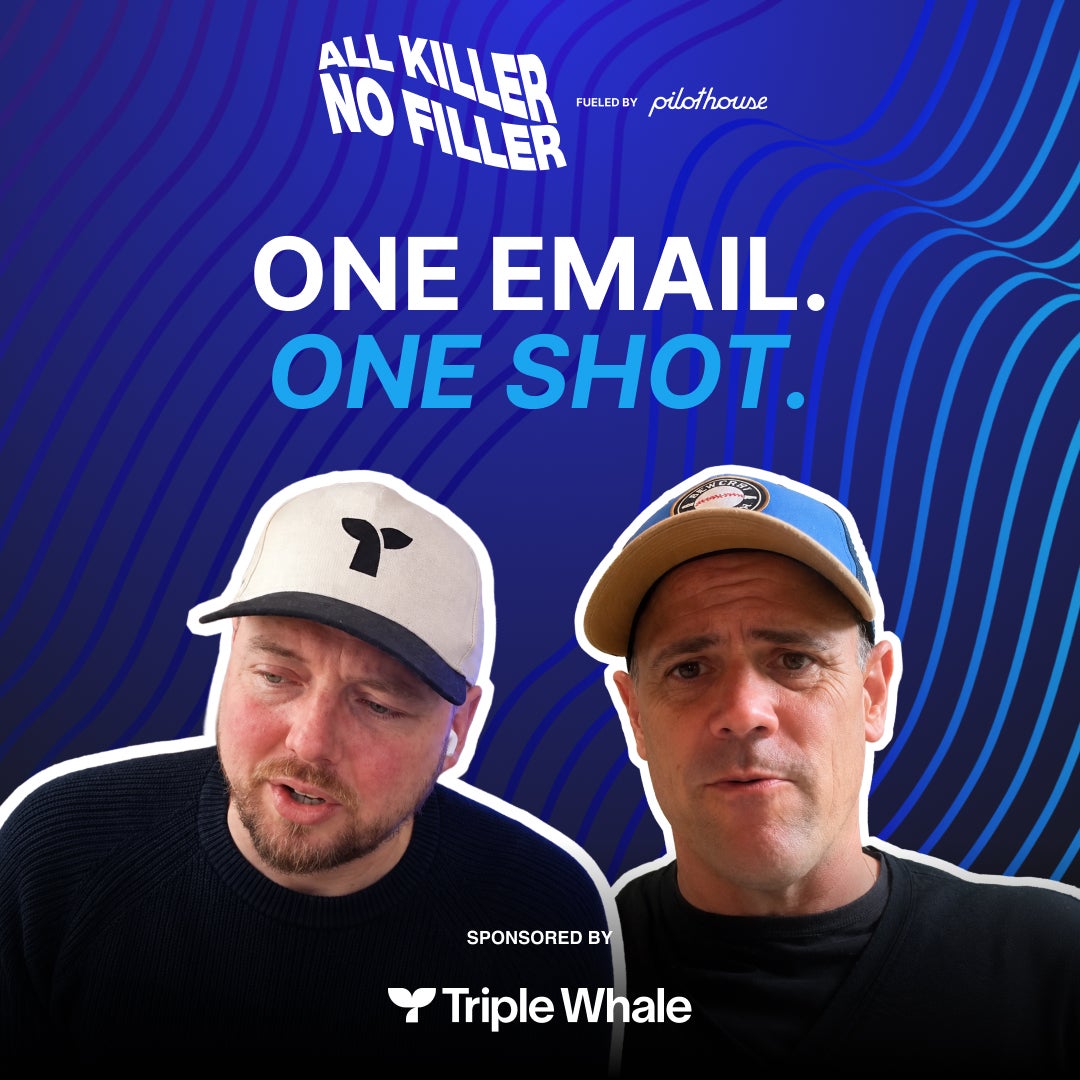

 The DTC Podcast
13 Jun 2025 · 29m · 14 chapters

How to use AI to compress “busy work” and boost creative productivity for DTC marketing—especially using ChatGPT, Firefly (call transcript AI), ChatGPT image generation, and Magnific.ai upscaling; plus a look at AI “operators”/agents that can take over browser and account tasks.
Brayden Senior, content manager and AI leader at a DTC ad account (All Killer, No Filler). He uses AI for client calls, creative ideation, and ad production workflows.
AI helps save time (time is the “ultimate currency”), enabling more output and higher quality. Operators will close the loop by automating the final steps (form filling, data pulling, account tasks) for ~$200/month.
Firefly transcripts from multiple client calls combined into one GPT chat to answer client concerns; reverse-engineering competitor ads via ChatGPT image generation (then handing tickets to designers); Magnific.ai adding realistic textures to AI hands/nails; Instant abandonment email targeting with reported brand results (e.g., Fate the Label 4.5x, Masco 15%+ Shopify revenue, Toys R Us/ThirdLove/OODI ~11.2x ROI lift).
Written by AI. May contain mistakes.
Discussing how AI tools like TrackGPT can help save time and boost productivity.
“You're spending real money to drive traffic to your site, but the truth is 98 % of that traffic leaves without ever giving you an email.”
Exploring how AI can improve client interactions and enhance understanding of their needs.
“And today I'm here with Brayden Senior, content manager, content manager on the DTC ad account.”
Using AI tools in creative workflows to generate compelling ads and optimize output.
“Well, what's crazy about it too, is how much I was just hearing, maybe it was the all-in pod.”
Detailed methods on using AI for ad creation and design, including analysis and mock-ups.
“I'm a huge fan of Firefly, which is like a call transcript AI.”
Discussing the importance of brand guidelines when using AI for creative work.
“So chat CPT came out with their new image generation, which, um, was a huge step forward.”
Exploring the evolving role of AI in workplaces and its potential to revolutionize tasks.
“So then in like one hour of time, I can maybe do three tasks.”
Discussion on the latest advancements in AI technology and its applications in business.
“And he's basically a famous photographer.”
Learn how AI agents can automate tasks and enhance productivity in the workplace.
“And especially for like deeper thinking on like persona or strategy work.”
Explore how AI can take on tasks previously deemed too complex for automation.
“So say you're a large company, you've got thousands of contracts, you're not going to hire a bunch of lawyers to go through all the words and all those contracts.”
Discover how AI can change our daily tasks and enhance personal productivity.
“be, you know, or they'll, or they'll be given, you know, the context being, being given a very specific job and they'll just kind of quietly do it for 200 bucks a month.”
Understand how AI can help manage time and increase efficiency in daily life.
“And I guess there is like a value in decision-making.”
Examine the energy implications and sustainability challenges posed by AI advancements.
“The interesting thing is where it goes to, I remember Sam Altman, like right when this was coming out, he made a quote about how he sees the cost of intelligence and energy, he said, are on a path towards near zero.”
Reflect on the evolving relationship with AI and its potential benefits and challenges.
“But I think what they're saying is the demand of these large servers that are full of these GPUs that are basically doing a lot of people's jobs is going to be insane.”
Learn how to identify and address personal blind spots to enhance your career and life.
“you know about me, can you tell me some of the blind spots that you don't think I know or that you think I need to be aware of in order to, whatever, advance my career or become a better person or whatnot.”

Get the gist, explore an idea or ask about something said.
 Claude
On The DTC Podcast, what are the key points of this episode?
Searching your listeningAutomatic transcript. May contain errors.
0:00I wouldn't say I love ChatGPT, but I really am quite fond of it.
0:04Braydon: As a senior creative manager, how are you using AI to impress your clients, create great work, all that? ChatGPT is really an operator. It just kind of solves that last step. It's a real time suck to go cruise the internet to find inspiration. With ChatGPT, you can just explain what you're going for. Time's the ultimate currency. If you have mechanisms that say they buy you more time, Instead of having to work 12 hours a day, I can use TrackGPT to work eight hours a day and get just as much work done as if I had been doing 12. Since that time is like the most valuable asset to people, offering them systems to give them time back is the ultimate business model.
0:49Braydon: You're spending real money to drive traffic to your site, but the truth is 98 % of that traffic leaves without ever giving you an email. Meta knows who they are, but you don't unless you use Instant. Instant helps brands identify anonymous visitors so you can send more abandonment emails, build stronger retargeting audiences, and actually recover that lost revenue. Brands like Fate the Label saw a 4.5x boost in their abandonment flows. Masco increased Shopify revenue by over 15%. Third Love, Toys R Us, and The OODI, these are all massive stores that use Instant to see an average ROI lift of 11.2x.
1:22Braydon: They'll even guarantee you a 4x ROI or your money back. It only takes 15 minutes to set up and you'll start seeing results fast. If you're serious about getting more out of the traffic you're already paying for, now's the time to fix it. Get 50 % off your first month at instant.one slash DTC. That's instant.one slash DTC. It's all killer, no filler. And today I'm here with Brayden Senior, content manager, content manager on the DTC ad account. You're also one of the leaders in the company on what you're doing with AI, and that's what we're talking about today. Welcome to All Killer, No Filler.
1:59Braydon: How are you doing, Braden? Doing well. Thanks for having me. Excited to be here. You mentioned you're potty training your son. You can't use AI on that. Yeah. Well, actually, you know, I was able to ask Chad GPT for like a 80-20, give me the Pareto principle on the book, Holy Crap Potty Training. And it did quite a good job. So my wife was pleased about that. I like that. I love that idea. So many books, I feel like, especially like not self-help, but like, you know, those kind of productive books quite often can be boiled down to get the idea of them in a lot shorter time, compressing the amount of information to its like vital note.
2:35Braydon: And I feel like that's a little bit about what we're talking about today about how you're using AI. Yeah, I think today I'd love to talk about all the ways I'm just trying to compress my busy work as much as possible so I can take on more opportunities and then just deliver higher quality with compression at the same time. It really remembers me that I've maybe brought this up on the podcast before, but I had a conversation with my brother who's worked at Shopify for years. About three months ago, he had become known on his team as the person who was like most adept at AI. He was using it for all these things.
3:03Braydon: He was getting a lot of accolades. It was doing great. And he was like, I love this sweet spot because it's like, right now I'm in this space where I'm using AI and it's like accelerating my workflows and compressing everything I need to do. But he's like, it's only a matter of time before this kind of mindset gets built into the foundation of the company. And it was probably like two weeks ago that I saw Harley or maybe Toby talking on Twitter about how it's like now an expectation at the company that everyone uses AI to compress their busy work so that they can focus on more revenue generating creative things that humans can do.
3:39Braydon: And so he was like, dope. But it's inevitable, right? Yeah, it's inevitable. I think it's like, I mean, organizations are realizing it's a major competitive advantage if you have, you know, your teams leveraging it as much as they possibly can. Because like, it's just getting better and better every day. It's like crazy. Every time I come on the podcast, I'm always like, oh, it's just gotten so much better. And I just feel it. You know, it's just like, I wouldn't say I love ChatGPT, but I really am quite fond of it. Well, what's crazy about it too, is how much I was just hearing, maybe it was the all-in pod.
4:08Braydon: it was a clip from something just talking about how the different generations are using AI and how like younger people are really using it like not only for their work, but like they're using it as their therapist in a lot of ways. Like the amount that my chat GPT knows about me now. Because I yeah, and it's amazing the level it's willing to help you. Yeah, I mean, I've done that. I am one of those people. I've created like a custom GPT that's, you know, trained on a few of my favorite psychologists. And I gave it instructions on how to, you know, always prompt a leading question to kind of dive deeper.
4:43And a lot of times I don't share too much personal information, but I will go to it with like, you know, little issues that I have, or if I'm like concerned about something, or if I'm confused on how to handle a certain situation. And yeah, it's like increasing my emotional intelligence, because you can only go see a therapist say, you know, if you, you know, once a, once a week for an hour, whereas like I could be in like a slight, like an argument with my, my wife or my partner and I can quickly just chat with it, go for a walk and just chat on my phone. I use like the microphone button so I can just talk to it, dictate.
5:17And, and then it'll just give me some insights and I can be like, Hey, steel man, her position or steel man, my position or, and yeah, it's crazy. And then I can go back to her and be like, Hey, I've like, I've worked through this. This is how I think we should go about it. And just like our ability to like work through these things has gotten better. So it's been helpful with a one-year-old at home.
5:35Braydon: So it's a really hopeful example too, because it's this idea that AI will eventually make humans even more human. It's not going to replace humans, but maybe it'll help us be more in touch with our emotions, our creativity, all the things that make humans so special. So that's a very broad AI point. Now back to Brass tax as a senior creative manager, how are you using AI to impress your clients, create great work, all that? Yeah. So I think, I mean, I may have mentioned this before on the podcast, but I'm a huge fan of Firefly, which is like a call transcript AI. And the workflow that I like to do is what I've found with client calls is, you know, you've got a lot of players in the room.
6:16They're throwing a lot of information at you and you can either stay present by listening or you can take notes so that you don't miss anything. And I feel like there's a balance that you can have. And the great thing with the Firefly AI is what I'll do is if I have like, say four or five conversations in a matter of like two weeks, I'll grab all those transcripts and I'll put them all into one chat. And then that way, that chat has all the context of like what's happening on the account at that particular point in time. And then what I can do is I can start pulling screenshots from Slack as well.
6:47And I'll put that just to give it as much context as possible. and what that's just been able to allow me to do is then I can ask it questions be like hey what is this client really concerned about what are some of these things that maybe I'm overlooking and so instead of me having to guess or instead of me having to remember or look at like scribbled notes I can actually have like a conversation with the GPT on what was said in that call and what that's been able you know what it's allowed me to do is is you know just answer clients, you know, concerns, understand where they are, understand what's really, you know, driving the behavior that they're representing on their calls and who they're answering to.
7:24And you just get so much rich context from it that, yeah, it's just really been able, I've been able to crush a lot of like new client relationships and stuff like that just by having so much context because you can meet them where they are. And then you can kind of take all their thoughts that they're just kind of spilling out on calls and you can kind of give it back to them in like an organized way that then they feel heard and understood. And then it gives you clear path to move forward on what you need to execute on. Um, that's been a huge, a huge, huge one for me.
7:52Braydon: Nice. That's on the, uh, on the operation side when it comes to actually creating ads, uh, what have you been experimenting with these days? Yeah. So chat CPT came out with their new image generation, which, um, was a huge step forward. Like it's, it can do hands. It can do hands. It can do like, it can do copy. Like you can tell it to like make mock-ups of that so this is the one way i love to do it is what i'll what i'll do is um you know i'll go i love using motion and motion has this section that is like brand intel so you can easily go into brand intel and you can search other you know brands ad accounts and you can look for like static ads that are really inspiring or whatnot you take those images so just take the ad from from there chuck it into chat gpt ask it to do i usually use o3 for this and i'll ask it to reverse engineer so basically i'll say can you analyze why this ad might be working for this brand and it'll give me an analysis and the great thing about the analysis is that not only is it's it's telling me things that maybe I already knew but it's also telling me things that I might not have known so then I'm learning a little bit about like oh I didn't think about that or like oh it's right the text hierarchy is doing this thing or or the badges is performing in this way so you can kind of learn a little bit by why that adds my performing and so then I'll get the analysis I'll read through the analysis then I'll say okay here's my brand I want you to reverse engineer, take your analysis, reverse engineer, and let's create an ad for our brand for this product.
9:14Here's the offer. Here's the angle. Here's the hook, whatever we want to do there. And then it'll create it and it'll say, make it up in Dolly. And it will make a really compelling looking ad based on that mock-up. And so now what I've done is I've taken an ad from a competitor. I've analyzed it. I've made it for my brand now. And then what I can do once I get that image is I'll say, okay, now I want a graphic designer to make that ad for me. Put, create a ticket description or create a task description for that image. So then it gives me that. So now I have the building blocks to give to a graphic designer.
9:46They've got the competitor ad, they've got a mock-up for the brand, and now they've got the ticket description. And that would have maybe taken me an hour to kind of think through for like one task like that. And now it's compressed it down to like maybe 15, 20 minutes. So then in like one hour of time, I can maybe do three tasks. So it's like tripling my productivity. It's like really insane. I really love the image generation stuff. And if you find that some of the, another, another thing I'll, I'll riff on here is if you find like the images that are coming back from, from ChatGPT are a little fake looking and stuff.
10:19I love this AI tool called Magnific.ai and it's an upscaler. And so you can take, you know, sometimes like a mid journey and ChatGPT, they'll give you images that look great, but they're kind of like, they're kind of a, they almost look like plasticky or they look like kind of hyper real hyper real hyper real in a way that you
10:36Braydon: can just tell as ai if they have that glow to them or whatever right yeah for instance i made an ad where it had like hands and the hands were so smooth there was no wrinkles like the the nails were perfect stuff like that right and you could just tell but you use this uh magnificent.ai to upscale it and it'll add all the subtle textures of like someone's wrinkles in their hands it'll add little crud or like little hangnails on their nails it'll just really bring it to life and um that's one way of like, if you do want to use kind of AI imagery, imagery in your ads to kind of not fool people, but just at least make it not look like it's just, oh, it's just pulled from the journey.
11:13Braydon: Fill it out. I was wondering, like, what are the, like, have you ever tried running the mock-ups that you produce in Dali against the ones that our designers eventually pull? Or do our designers end up using elements, actual like one-for-one elements from that? Or what are the reasons that you can't use the Dali mockups? Dali doesn't do a great job of product, like images. So say I have like a product that has like a logo on it and stuff. And sometimes if it's like a pill jar, maybe it would work. But if it's like an actual kind of like product that's been designed and, you know, looks a certain way, Dali's not going to execute on that like 100%.
11:48So it'll get like the, it'll get the font wrong on the product itself for like the brand, the logo or something like that. So there's just like little things where it's like, you just can't really use it. I think for certain brands, you probably could. But for most of the situations I'm finding is like, it's just better to like, use it as a mock up, use it as like a here's a
12:06Braydon: generalization idea for a custom idea board, because you can you can put like, I'm following this guy on TikTok right now. And he's basically a famous photographer. And he walks through some of these iconic, you know, fashion celebrity photo shoots that he's done. And he first shows us all of the images that were in his like dream board or like, okay, we were going for this going for this, going for this, going for this. And I imagine that process is something you can really do in AI as well, where you just give all these different mood boards, all these different sort of like references, like you're like you're doing now with the competitor, but you could do it with all sorts of things.
12:37Yeah, it's a real time suck to go cruise the internet to find inspiration. Like, that's probably the part that I hate the most about, like, you know, trying to find the vibe or the thing. And, and, and with with chat, you can just explain what you're going for, you know, or like you can kind of say like, or help me create a similar vibe for all these different images. Like, I think it just does a better job rather than having to waste your time, like picking through the internet. It can just kind of do that for you. So.
13:04Braydon: And are you doing this in a GPT you built or just in Raw Dog, ChatGPT and Dali? Yeah. So I usually do it in ChatGPT and depending on the client, if I have like a really nicely built out GPT for them and they have good brand guidelines because if they have like a brand guidelines that's a PDF and it's got all their brand colors and stuff like that, it'll pull some of that information and kind of integrate that into the creative. So yeah, mostly it's done in chat GPT. I feel like in the past it was kind of important to do the custom GPTs, whereas now all of a sudden it kind of seems like that's not as important.
13:41So yeah, I think it's just a matter of yeah, if I have the custom GPT, I'll probably do it in there. But I think the one thing about the custom GPTs that I'm finding is you can't switch models. So if you're in, say, a custom GPT you made for a brand, you can never switch to that O3 model. I think it's always stuck in 4.0. And that's good. But O3 is like, the reasoning models are really fantastic. And especially for like deeper thinking on like persona or strategy work. So sometimes I like to jump between either custom GPT and regular one and just kind of make sure I have access to that O3.
14:15Braydon: I was listening to a podcast the other day with the founder of Y Combinator. And he was basically saying that within the next, I forget the timeframe, one year, three years, I don't know. He was basically saying that all employees at high growth companies should have their own agent, basically doing what you're doing, but trained to do it without having to be prompted. So taking all your client calls and compressing them into the salient points, just basically reducing all the busy work, all the things that take you a long time, these agents should be running alongside you and doing those for you.
14:48Braydon: So you can be freed up for bigger work. What are you seeing in this space? Yeah, so ChatGPT is released operator. And it's been available in the States since January. And I think recently, it's just opened up in Canada. And since I live in Canada, like I haven't had too much experience playing with it, but I get a good understanding of of what it can do. And I think, you know, from the way that I use ChatGPT and AI, it's a lot of me prompting back and forth and then kind of like taking all that information and then, you know, transferring it to our like ClickUp space or whatever. And I feel like the operators, what that's going to do is it's going to open things up where it just kind of solves that last step where it's like, okay, I've used ChatGPT to do all these things for me.
15:29And now I'm copying and pacing into our, you know, our browser, our workflow or whatever. I think the operator is just going to help close that loop at that final step. I mean, it's 200 bucks a month. And so if you can figure out how to like compress your work day even more with that, I think it's going to be worth 200 bucks a month for a lot of people. You know, I was thinking like, well, if I can take on instead of four clients, eight clients, well, that's like twice as much that I could potentially make. So I think like productivity will go through the roof with that. And I think it's still early days.
16:04I think it can kind of, you know, operator, what it does is it'll actually create like a browser and it'll click through things and it's using O4 and it's using O4's like image recognition to take like screenshots of a browser window. And then it can like actually use the mouse and keyboard to fill out different sections on the webpage and things like that. So filling out forms, pulling data, stuff like that, I think it's going to be really good. I mean, eventually you're probably going to have operators that can run Facebook ad accounts. Obviously, there'll be a human there, but for building campaigns or doing that kind of busy work, I think you're going to have operators that can do that.
16:39So it's just a matter of time there, but it's pretty fascinating. And I think too, the other thing I've heard was the All In podcast, they were chatting about this, I believe it was last week, maybe it was two weeks ago, but they were mentioning how it's going to really open up a lot of possibilities for businesses to send the AIs to do the work that they would never hire people for. So say you're a large company, you've got thousands of contracts, you're not going to hire a bunch of lawyers to go through all the words and all those contracts. So it's not really worth your time and money to do that.
17:10So, but now with AI, it's like, you can sick them on tasks that you would never want to hire humans for. And so then all of a sudden, you're going to have this, like these operators that are kind of working behind the scenes, doing these like large scale tasks to really help the company's bottom line. So I think overall it's early stages, but it's going to be pretty remarkable.
17:31Braydon: I like that. I guess you haven't played around with it too much yet, but I guess you've got to give it access to your accounts. Like you'd give it access to your ClickUp account. You'd give it access to various places where it can go find the information it needs. Is that, that's part of it, I guess? I guess so. Yeah, I would be making assumptions there. I think because it's so early, what it does do a good job at is coding. And then I think the other thing it would do a good job at is like, you know, there's a bunch of like apps for like Instacart and stuff. So you can say like, hey, my kid wants this for dinner.
18:01Can you find a recipe on this website and get me all the ingredients in Instacart? I already have butter. I already have, you know, the pasta, but I need everything else. And it'll go and it'll go onto Instacart. It'll add all the things in Instacart. It'll submit the order and then that'll get shipped to your house. So it's like, that's kind of how it's being used right now. a lot. I think a lot of people are also using it for like travel. So they're being like, Hey, I want the best deals on this. Can you go search the web? So it's kind of like those kind of tasks at this point. But I think once you can figure out how to, yeah, let it into some of these, these websites and get it to do some of these work tasks, I think it'll be a huge unlock for people.
18:39Braydon: My mind goes to we need we want to get all of our transcripts up on all the 500 podcasts we've done. And we could tell someone to spend a week doing that. Potentially, that would be a great task. Just, you know, just yeoman's work, go find the transcript here, clean it up the way it needs to be cleaned up, get it into the website here and just go. And that could be done in a matter of days, I'm sure, or less, who knows? Yeah, exactly. I think that that's the sort of task where it's like, it's an excellent example because yeah, you could pay someone to do that and maybe it would take them a week and, but you could maybe get the operator to do it and, and then it would just always do it.
19:13So it's like every time there's a transcript, it just goes and fetches that and puts it where it needs to go and it's done.
19:18Braydon: So, and you mentioned it, but then the next phase is full out. Everyone will have their own agent that's sort of tied to their hip and they'll be kind of controlling it, but eventually there'll be full out agent employees, right? They'll be, you know, they'll come to your morning, morning standup and they'll be, you know, or they'll, or they'll be given, you know, the context being, being given a very specific job and they'll just kind of quietly do it for 200 bucks a month. It's hard to beat. I mean, it makes sense because like the way that I'm using Firefly and the transcription, like if you can have an operator that's listening to all your calls as well and then it can even prompt you to be like hey i heard you need you need this this this and done like do you mind if i do that and you just say yeah go for it i'm gonna focus on on this or i need to deal with this so it's gonna happen i think it's gonna happen quickly do you have any like that's kind of the end of our like practical ai discussion for today but i'm just curious like for someone that works with it as much as you do are you having any thoughts about like because i feel like everything that we talk about with AI is just sort of like, it's almost like, it's like tables, we're building the table, it's table stakes, like this is the stuff that's going to get done.
20:18Braydon: We're going to get our, you know, busy work compressed. But have you had any thoughts about like, where this is all going? And like, any, any like high level thought, I just put you on the spot, but like, any thoughts about where, where this whole, this whole thing is going? Well, let's play with that. I think, well, I think where that's where it's going is, is, there's demand in the marketplace for replacing these tasks that are, you know, repetitive and boring. And like, even from a robotic standpoint, you know, having a robot in your house that can do all the cleaning, do all the cooking, do all the grocery shopping, take your dog for a walk, do your laundry.
20:59Like that's, that's, there's an insane amount of demand for that because people don't want to have to do that. And if you have the money, you can maybe pay for a nanny. But if you can get a$20 ,000 robot to do that, then you're going to do that. And so I think ideally what that does is it frees up people's time to focus on new and interesting problems to solve. I think that's hopefully where it goes. And that... Jetsons. Yeah, it's like, you know, maybe we can just like solve bigger, more important problems because we're not having to deal with all the little things. And I think like, it's going to be, it's going to be, it's going to be a fantastic teacher.
21:40Like our kids are going to be able to learn way quicker with it. I think there's a certain part of me that uses chat GPT where it's like, I'm just offloading a lot of the decision making and thought. Like sometimes when I use it, it's like literally like, I'm just, it's just replacing the decisions that I have to make. And that's just like taking the burden. And I guess there is like a value in decision-making. There's value in critical thinking. There's value in all this stuff. So there's a part of me that doesn't want to lose that skill. But yeah, I think it's just going to like open things up for us to focus on a different set of problems.
22:16Braydon: I hope so. I think the big change, and I've mentioned this before, but I think the big change will come when there's real persistence, where there's like, it's, you have, you were talking about AI agents, that's, that's something that persists among your tasks, and we'll learn probably about your workflows, as it goes, but like, AI, I come back to AI Butler, but an AI Butler that actually not just, you know, engages with you when you engage it in a chat, but is actually sort of actively, persistently, you know, helping you reach your goals, or advising you, or, you know, I feel like that that's where the real breakthroughs will come in i think robotics is a is a great point i actually saw uh i don't you know i don't know if it was ai generated but it was uh it was a robot that was cleaning and i think it was maybe it was like doing the dishes or something like that and it's like it's amazing how far that technology that tactile stuff has come along um i was it's just the amount on like a modern person's plate when it comes to like eating healthy keeping themselves healthy, keeping their clothes, their, their laundry done, keeping their apartment clean, keeping like all of this stuff.
23:20Braydon: It's like, there's almost no time for the modern, like upwardly mobile individual to like, to, to have that, that freedom or that time. So I'm interested to see the way, the way that frees us up. And I hope we don't become like a Wally society. We're all just like, yeah, I don't think so. I think like time's the ultimate currency. And so if you have, if you have mechanisms and stuff, they buy you more time, you know, it's like, oh, instead of having to work 12 hours a day, I can use Trash GPT to work eight hours a day and get just as much work done as if I had been doing 12. That frees up so much more time for me to spend with my family or for me to focus on other goals or creative endeavors or other business opportunities.
24:00It's this compression of time that allows you to have freedom to do other things. And I think that's really where I'm excited for it to go. And since that time is the most valuable asset to people, offering them systems to give them time back is the ultimate business model.
24:20Braydon: The interesting thing is where it goes to, I remember Sam Altman, like right when this was coming out, he made a quote about how he sees the cost of intelligence and energy, he said, are on a path towards near zero. And now I hear people talking about also like the cost of goods and services are on that same scale in a way, whether we're going to be 3D printing what we need from home, maybe we won't be buying it from China as much, you know, given some of the financial constraints that we're facing right now. But I'm really interested to see the cost of intelligence, you can see where that's going, you can see the cost of intelligence is going to go to zero.
24:52Braydon: I'm really curious about what he knows about zero point energy, or where we're going to get to a point where energy is at zero. I don't see how that'll happen. But yeah, I can touch on that. I think what I've heard, I've heard some influential people talk about energy requirements of AI. And I think that's like the one thing that people don't really get. And even, I mean, even from like, even like before AI, when it was just like going on Amazon, like for you to go on Amazon and search for something and maybe buy something like that costs energy. You know, that's like energy that goes to the server that then like makes the server, you know, push the order in.
25:30It's like, it's like all that stuff costs energy, right? And now that we have AI, the demand on energy is going to basically be exponential. And so that's, I think, the real fear with all this is like, where's the energy come from? And how do we get it so that we don't hit a ceiling or, you know, I guess other countries, you know, become AI dominant because we don't have the energy to support the infrastructure of the AI. I don't know where it's going to come from. Obviously, you know, energy policy is not my forte, but I think like, I think nuclear or small nuclear reactors, I think, is probably where it's going to go.
26:08And then maybe AI is what opens up the technology to have more sustainable energy sources like fusion or something along those lines. So it's kind of like maybe we use AI to solve that problem. But I think what they're saying is the demand of these large servers that are full of these GPUs that are basically doing a lot of people's jobs is going to be insane. And so we need to have the energy in order to continue growing and continue advancing this technology.
26:37Braydon: So what did Altman say a couple weeks ago that the cost of people saying please and thank you to ChatGPT was costing them billions a year? Just to be polite, it costs billions. I know. And I was thinking, I was like, I wonder if that's a good thing to say or bad. Because like, is that just going to make people not say thank you? Or is that going to be like, oh, yeah, say thank you more? So I don't know. But it definitely made me second guess. I like being friendly to the GPT. I don't know about you, but I like saying like, oh, thanks for that. That was really helpful. I'm just amazed at how it, how willing it is.
27:09Braydon: So for, I'm a, I enjoy the odd rabbit hole and the amount that chat GPT will like, not only like facilitate that, but like push me deeper down it. Like the amount that it's willing to say like, oh, by the way, you know, you, you just learned about this. Would you, that's kind of scary. Would you also like to learn about this, this, and this, like the way it kind of propels you. and it like, and I've always like, I gut check it. I'm like, are you saying this? Cause you know me or are, and you know what I want to hear? Or are you saying this like more objectively? And it's like, well, it's a bit of both.
27:39Braydon: I know what you, I know you, but I also know that this is the truth and blah, blah, blah, blah, blah. I'm just like, it's, it is, it's, it's an, the relationship we're all developing with this is quite interesting. Yeah. There's some great prompts that you can ask it. Uh, for example, like, um, you know, if you have your own chat GPT account, you use it a ton. You know, you can ask it things like, based on everything that we've talked about and everything you know about me, can you tell me some of the blind spots that you don't think I know or that you think I need to be aware of in order to, whatever, advance my career or become a better person or whatnot.
28:11And it'll give you some, like, it's given me some really insightful tips. Like, you know, for example, I have like a need to know all the information before I start executing on something. And it's just like, you know, you could just kind of like just go in and fail as, fail forward as they say so you know it's i think it's just that thing it's just like it's like having this really smart compadre a friend that's just like helping you with your blind spots and how to move through life more efficiently and and uh with more um with more knowledge because you don't know what you don't know and it can really help you know things that you had no idea about
28:43Braydon: it's a brave new world very excited for it thank you for coming on chatting ai today we'll have you back on soon yeah my pleasure
28:55thanks for listening to today's episode if you're not getting the d2c newsletter you can subscribe
29:00Braydon: for free at direct to consumer.co and if you want to learn more about pilot house's all killer no filler services take off to pilothouse.co i'm eric dick and this has been the d2c podcast we'll see you next time
29:19Thank you.
To Subscribe to DTC Newsletter - https://dtcnews.link/signup
In this episode, Braydon, Senior Content Manager at Pilothouse, dives into how he uses AI to streamline client calls, automate creative workflows, and reclaim time. Below are the standout tactical takeaways:
🔥 3× Creative Productivity: Use ChatGPT + DALL·E to reverse‑engineer competitor ads and build mockups, cutting tasks from ~1 hour to ~15–20 minutes.
🎧 Amplified Client Understanding: Aggregate call transcripts in Firefly, add Slack context, then query a GPT to surface concerns and opportunities—leading to more empathetic execution.
🛠️ Image Quality Hack: Use Magnific.ai to bring authenticity to AI‑generated visuals (wrinkles, textures, life).
🤖 Future‑Ready Agents: ChatGPT “Operator” can traverse browser workflows (e.g., ClickUp, FB Ads), broadening AI’s utility across campaigns and forms.
💡 AI as Emotional Coach: Custom GPTs can behave like personal therapists—boosting emotional intelligence in real‑time.
🔌 Energy Consideration: As AI scales, energy constraints may become the defining bottleneck—fusion, small‑modular reactors, and policy are key to sustainability.
Did you know that 98% of your website visitors are anonymous? Instant powers next-level retention by identifying who they are and converting them into loyal shoppers. Sign up for a quick demo today to get 50% off and unlock a guaranteed 4x+ ROI: instant.one/dtc
Timestamps
00:00 - How AI gives you time back
02:00 - Using ChatGPT to improve emotional intelligence
04:00 - AI adoption at Shopify and workplace expectations
06:00 - Firefly and ChatGPT for smarter client management
08:00 - Generating custom ad mockups with DALL·E
10:00 - Boosting productivity with AI mockups and task descriptions
12:00 - Using Magnifi AI to enhance AI-generated visuals
14:00 - Energy demands of AI and the future of infrastructure
16:00 - ChatGPT as a personal assistant and blind spot advisor
18:00 - The human-AI relationship and future potential
Hashtags
#aiinmarketing
#chatgptworkflow
#dalleads
#creativeproductivity
#emotionalintelligence
#aiinfrastructure
#marketingautomation
#digitalads
#clientmanagement
#generativeai
Subscribe to DTC Newsletter - https://dtcnews.link/signup
Advertise on DTC - https://dtcnews.link/advertise
Work with Pilothouse - https://dtcnews.link/pilothouse
Follow us on Instagram & Twitter - @dtcnewsletter
Watch this interview on YouTube - https://dtcnews.link/video