Ask ChatGPT
 The DTC Podcast
16 Jun 2025 · 36m · 17 chapters
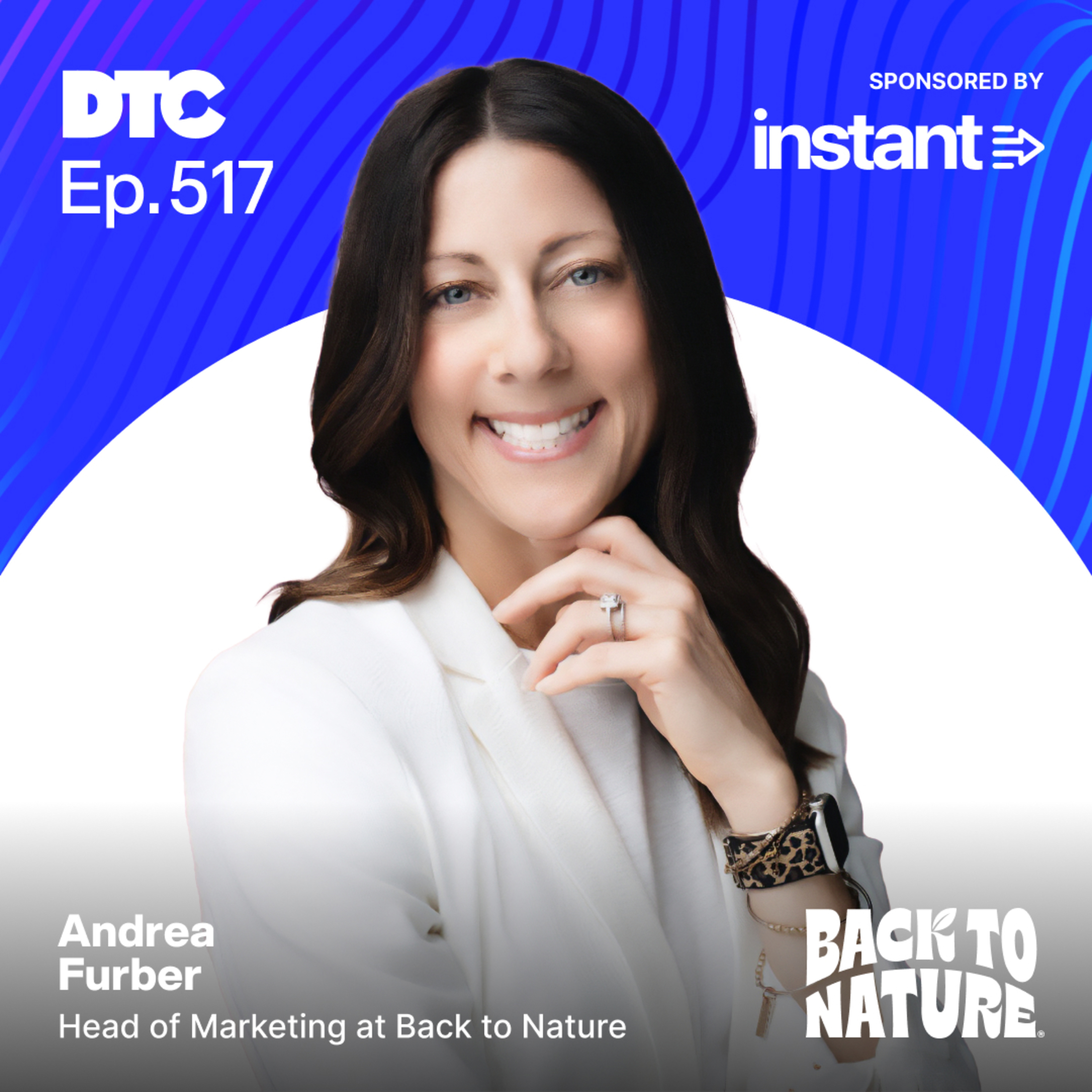
Back to Nature’s rebrand after Barilla acquired it in 2023. The team repositioned from “plant-based” to “better for you” remakes of classic snacks to improve shelf velocity and broaden appeal, without reformulating. They also discuss category trends in cookies vs crackers, and how they’ll measure success post-launch.
Andrea Ferber, Head of Marketing at Back to Nature (employee #5 after acquisition). Background: General Mills; Schwan’s Food Company (led integration/repositioning of frozen Asian); Jack Link’s (built emerging brands portfolio). Barilla/Back to Nature context: Barilla acquired Back to Nature from B&G Foods, which had repositioned it to plant-based in 2020.
“Plant-based” became a negative association and wasn’t ownable/authentic for growth. Rebrand was risky—changed everything visually while keeping product claims (plant-based, non-GMO verified, no artificial flavors/colors/high fructose corn syrup). Better for you messaging is “keeping it real,” plus taste/joy/nostalgia.
Consumer learning via interviews, focus groups, and Amazon reviews; shelf confusion risk mitigated with “new looks, same taste.” Competitor outspend comparison (e.g., Oreo-style awareness). Expo West brand reveal; first national campaign planned (OTT + digital influencers).
Written by AI. May contain mistakes.
Learn about the initial challenges faced by Back to Nature in understanding consumer behavior.
“When we built the Back to Nature team, we went on a consumer learning journey.”
Explore the strategic acquisition of Back to Nature and its position before the rebrand.
“I know you joined in mid-2023, Back to Nature, as one of the first five employees after Barilla acquired the brand.”
Trace Andrea's career and her journey to becoming head of marketing at Back to Nature.
“I've kind of done, I would say, a roadshow or journey through food in the Minneapolis area.”
Learn about the decision-making process and strategies behind Back to Nature's rebranding.
“we went on a learning journey, like I said, with consumers.”
Understand the current dynamics in the cookie and cracker segments and their consumer engagement.
“What's happening in the, it was funny in our pre-interview, we looked up where the word cracker came from.”
Explore why cookies are a preferred daily snack and how they fit into various occasions.
“keep my, you know, snacking cookie desserts interesting.”
Learn about the rebranding strategy to create a better-for-you identity focused on joy and heritage.
“So you do this research, you discover that plant-based maybe isn't all it's cracked up to be.”
Discuss the challenges of changing brand identity while maintaining customer loyalty.
“of how creatively are we going to bring this to life?”
Understand how the brand communicates health benefits while focusing on taste.
“And so we have to break through in a different way.”
Explore the balance between awareness and conversion marketing for small brands.
“So that was our way of communicating that while leading with taste appeal and brand appeal on the front of pack and moving everything to the side.”
Examine the pressures brands face to innovate while staying true to their core identity.
“This yeah the brand has not had a national campaign and so this will be our first opportunity to really start to engage with consumers outside of the store.”
Insights on current food trends and the importance of staying focused on core offerings.
“And I tell my team probably every day, we have to stay focused.”
Learn about the various protein sources in snack products and their implications.
“When you say protein, in products like yours, what are people using for proteins like pea proteins?”
Discover the potential of e-commerce for snack brands and their strategies.
“It's been, again, like simplify to scale is my motto.”
Gain insights on the challenges and strategies of rebranding in the CPG space.
“I really, I'm a big, I'm a big proponent of learning from others.”
Understand the importance of distinctiveness and memory structures in branding.
“It's, I think I've read it five times in my career.”
Learn about the elements that contribute to creating engaging brand experiences.
“It forces you to think beyond just driving sales.”

Get the gist, explore an idea or ask about something said.
 Claude
On The DTC Podcast, what are the key points of this episode?
Searching your listeningAutomatic transcript. May contain errors.
0:00When we built the Back to Nature team, we went on a consumer learning journey. The trend line did not look good. So we knew we had to do something. We didn't know exactly what. Coming from big CPG, you could spend hundreds of thousands of dollars learning from consumers. We didn't have that luxury. So we did a combination of... What's happening right now in the cookie and cracker segment of the market? Two different things. It is risky what we did. We broke every rule. Like, don't do this when you redesign. Don't do this. We did. We changed everything. I'm a huge fan of Simplify to Scale. I came in and had a really complex portfolio.
0:39We play in four categories. We have 40 SKUs. We need to simplify before we can scale the brand.
0:52You're spending real money to drive traffic to your site, but the truth is 98 % of that traffic leaves without ever giving you an email. Meta knows who they are, but you don't unless you use instant instant helps brands identify anonymous visitors so you can send more abandonment emails build stronger retargeting audiences and actually recover that lost revenue brands like fate the label saw a 4.5x boost in their abandonment flows masco increased shopify revenue by over 15 third love toys r us and the oody these are all massive stores that use instant to see an average roi lift of 11.2x they'll even guarantee you a 4x roi or your money back it only takes 15 minutes to set up and you'll start seeing results fast.
1:32If you're serious about getting more out of the traffic you're already paying for, now's the time to fix it. Get 50 % off your first month at instant.one slash DTC. That's instant.one slash DTC.
1:48Andrea, welcome. Today we have something a little bit different. We're talking about a retail rebrand from a very large brand, Barilla, which is one of the biggest global pasta brands. Is that correct? It's in the US. It is one of the largest pasta brand. Globally, it's one of the largest pasta and bakery brands. Before we get into Back to Nature, because what we're going to talk about today is the Back to Nature rebrand that you've kind of architected and its impact on retail, which is still to be determined a little bit. But I wanted to just start a little bit about Barilla because it's such an interesting company.
2:26I know you joined in mid-2023, Back to Nature, as one of the first five employees after Barilla acquired the brand. But I was just doing a little Googling on Barilla and seeing that they started in 1877. Now that is the definition of a legacy CPG brand. Yeah, family-owned over the generations, continues to be family-owned. Barilla globally is a bakery. It has a broad portfolio, bakery, pasta in the U.S., which is what we all know them for. They were looking to expand their portfolio and get into baking in the U.S., which is what led to the acquisition of Back to Nature in 2023. So it was a strategic acquisition.
3:08Talk to me a little bit about Back to Nature's trajectory or their sort of position at the time of that acquisition. Yeah, great question. So when they acquired the brand, it had actually just gone through a rebrand a couple of years ago under the ownership of B &G Foods. They repositioned in 2020 to be a plant-based snacking. So plant-based cookies, crackers, granola, and nuts. so when we acquired it that was strong plant-based front of pack right below back to nature was huge plant-based and when when we built the back to nature team acquired the brand we went on a consumer learning journey like let's learn as much as we possibly can about the consumer consumer that buys us today that buys the brand today and also doesn't buy the brand and what we learned is that plant-based was actually a negative association.
4:02So less people would buy the brand because of that positioning. And it's really not, it's not ownable and it's not super authentic. Now there's some, you know, there's some places where it really is differentiated to be plant-based, but it wasn't driving consumers to purchase the brand. It wasn't driving taste appeal. And so we made the decision, as you can see in the new brand that I know we'll talk about, We really, we didn't reformulate. We did not walk away from plant-based, but we are leaning in with taste with benefits that support it like plant-based. Super cool. I want to dive into the rebrand, but let's just do a little quick tour on your career and how you kind of found yourself as one of these, you know, one of these first five employees after the acquisition of Back to Nature.
4:48Yep. So I, so Andrea Ferber, head of marketing at Back to Nature currently. I've kind of done, I would say, a roadshow or journey through food in the Minneapolis area. So I live in Minneapolis. I started my career at General Mills, spent quite a bit of time there in different parts of the business across different brands and different channels. I then went to Schwan's Food Company. They own Red Baron. They now have a large Asian frozen Asian portfolio. So I led the kind of integration of the Asian portfolio and repositioning of frozen Asian, which is now booming. I left there and went to Jack Links to lead and build their emerging brands portfolio.
5:33So Jack Links protein company has a lot of additional brands under the company's halo. And that's what I led. And then that brought me here. You know, there's always this question of like, was it, you know, was I looking for something? Was it luck? Because I feel like I have the best job of any marketer. And it was a little bit of luck. And I think destiny, where the current CEO was playing tennis with one of my colleagues at Jack Links, and my name came up, and the rest was history. And I was employee five, the last one of our leadership team marketing, I guess was the hardest to find. And that started our journey, I'm building a team.
6:15We're based in Minneapolis. We operate independently of Barilla. So we have a team here. About half of our team is in Minneapolis and then half of our team is remote. So we're a kind of mixed remote hybrid team. Talk to me just a little bit. You teased it there, but talk to me a little bit about the repositioning of Frozen Asian. How were things repositioned to be now booming. Yeah. Think five years ago, Frozen Asian was maybe egg rolls. And I can't even think of what else was even in the category at the time. There wasn't a ton of private label. There was a couple of anchor brands. It was more appetizers is what I would say than anything else.
6:58At the time I was at Schwann's, we had a small egg roll portfolio in Asian. We then got purchased by CJ Foods, which is a global Asian food company, a conglomerate beyond just food company. And they they had some additional brands within the frozen Asian called Bibigo, which is now a U.S. name in the category. So I was over Asian and actually desserts. And then when we got acquired, we built out a portfolio of Asian brands that would compete in the category and that would attract different consumers. That is now, I mean, if you walked into Frozen five years ago, it would maybe be, I don't know, half a door.
7:44And now if you walk in, I mean, there are a lot of brands, much more food forward, like food flavor, global experience. So it's really changed a lot. So I feel, you know, I had an opportunity to help build out what that vision looked like for our portfolio. And now to see how that's really grown the category is impressive. So you get brought in to back to nature. And then what were your first moves on the marketing side? Did you know, obviously, maybe you had a sense that there needed to be a refresh. But talk to me about those, the first few months there and how you gathered the data and how you actually made the decision to pivot.
8:25So, you know, acquiring the brand, we literally just acquired the brand. We did not acquire any people with the brand. So we had to learn. And that was my first, I would love to say 90 days, but it was more like 60 because we were moving as quickly. we went on a learning journey, like I said, with consumers. And it wasn't a, you know, coming from big CPG, you could spend hundreds of thousands of dollars learning from consumers. We didn't have that luxury. So we did a combination of consumer interviews where, you know, we definitely invested in learning and, you know, spending the dollars where it mattered.
9:06But then also just, I mean, there's a lot you can learn online reading Amazon reviews, like what are consumers saying about the brand? So it's a combination of research focus groups, you know, more like quant and qual in addition to just trying to understand what consumers are saying about the brand. So did we know that we wanted to rebrand? We knew we needed to do something to generate growth. The brand was on a decline. It had just come off of a couple rounds of pricing. We're now post-COVID. So like, I mean, the trend line did not look good. And so we knew we had to do something. We didn't know exactly what.
9:50And so as we talked to consumers, we identified that there was one, the brand was not positioned in a way that really could drive growth. We are very niche consumer set that we were talking to and talking about. So we wanted, we definitely knew that we wanted to broaden that. You know, it took probably three months of just learning and conversations with our internal team, plus our agency partners. We had an agency partner that helped us through this. That's been just an amazing, amazing partner to really unlock what was this repositioning? What did we want this brand to stand for? Which is where we identified better for you remakes of America's Classics Next.
10:29that came from the portfolio that we had. We had a huge portfolio of like, what do we do with this portfolio? What do we stand for? And then what are consumers telling us is missing from the category? And it really was classic snacks that remind me of my childhood, but that don't have all the junky negative ingredients. And that was our sweet spot. So we just owned it. And not plant-based, which is funny because I don't think in this category of crackers and cookies, it's sort of like a, it's like a non sequitur in a way. Cause it's like, I didn't, Oh, I didn't even think that I was eating a meat based product.
11:07Right. It just seems to be sort of out of place a little bit. Yeah. Yeah. And there is a segment again, we did not reformulate. So we still are plant-based and there is a very loyal, passionate group of our consumers that are maybe vegan or dairy free and value that. So we're not walking away from that. But to talk to the broader subset of consumers in the world that are eating cookies and crackers, we are an amazingly tasty portfolio products. And that's what we wanted people to know and really connect with who we are as a brand, not just shout product benefits. What's happening in the, it was funny in our pre-interview, we looked up where the word cracker came from.
11:51Yeah, I learned a lot from that. We learned a lot. It was basically in the 1800s. It was very onomatopoeic. It was the sound that when you eat these hardtack style products that were built to last a long period. But what's happening right now in the cookie and cracker segment of the market? Two different things because they really operate as – they're two very different categories and how consumers engage with those categories are very different. So I'll start with crackers. You know, I'd say crackers is going through a tough time. I think the category in total isn't doing great. There's been some challenges as consumers shift out of crackers and maybe into other snackable formats of salty snacks.
12:37Better for you within crackers is doing better than the overall category. you're seeing a lot of gluten-free, a lot of alternative grain. And that, you know, over the last couple of years, you really saw that shift. Now you are starting to see more flavor-driven, taste-driven, snackable formats. Brands that are in crackers that are now offering the keyword there snackable because crackers in and of themselves is not the most snackable format. Like you use it, right? It's like utilitarian. Yep. It is a carrier of something. Yeah, that's right. And so to try to get into the more snacking space is where you see a lot of brands going.
13:17Now, cookies, cookies, right? Very different dynamics. Cookies are an impulse, more emotionally driven category. And you definitely do see better for you growing within the space, but you also still see the category as a whole growing. And a lot of that is flavor, form, you don't see a ton of unique form innovation, but a lot of flavor. I mean, look at what Oreo does every couple months with flavor innovation. I mean, you see that because it is such an impulse driven category, you have to constantly get on the consumer's list. Like what's the new flavor? I'll try it. I may have my loyals that I always have in my pantry, but I'll try a new flavor, you know, on occasion just because it's impulse and I want to keep keep my, you know, snacking cookie desserts interesting.
14:09I just feel like cookies are just a bit more regular too with crackers. It's like, oh, if I'm entertaining or, oh, if I'm in the mood to eat some cheese or all these other things. Whereas with cookies, it's like, it's my daily cookie ration. I'm going to eat those cookies, whether maybe it's impulse driven with like the variety of cookie I buy that week. But if I'm in the cookie zone, I'm getting cookies. Yep. And you almost always have them in your cupboard or pantry, whatever it is. Yeah. Okay. So you do this research, you discover that plant-based maybe isn't all it's cracked up to be. You're working with this great agency, which is a branding agency.
14:40Is that right? Correct. And then, so talk to me about formulating this new identity and maybe how you kind of have gone to market with it. So we identified the space where our positioning is around better for you, remakes of classic snacks. And the other, the other aha moment that we had throughout this journey, I would say two things. One, there is a lack of joy that is especially within crackers. Like, again, because it's more of a functional item in your day-to-day, you use it to put cheese on it or dip in something. It didn't have, it really didn't have a lot of, like, joy and emotion or energy within that category.
15:23Cookies are a little bit different. But we unlocked this, like, we can bring joy to these categories. and in a without shouting product benefits. And then the third thing, so around the positioning bring joy is tapping into our heritage. I mean, we're a brand that's been around since 1960. Not a lot of brands can say that. And even though this brand has been handed off multiple times to different food companies throughout the years, it still has a history and a heritage that is relevant and ownable. And we wanted to tap into that. So that was part of one of the pillars of our new positioning was a really a nod to our, our heritage and nostalgia.
16:07And if you're, if you're listening to this on the podcast, go to back to nature foods.com to check out kind of what it looks like in our clips, we'll kind of cut in some of these images, but it really does. You've sort of captured that like 60s, California, nostalgic vibe really, really well. Yeah. Thank you. So we, so we locked that in and then we started on the journey of how creatively are we going to bring this to life? And as you know, I'm sure you have been a part of or experienced like it's a journey. It took us a lot of iterations. You know, I look back now at some of the, you know, some of the logos and colors that we were discussing and I, I am like, thank God we didn't launch with that.
16:48But it was, I mean, it was an iterative process. And And then just now two months ago, we launched the new brand look and feel to the world. And it's something that we've been working on for a year now. And it has been amazing. Honestly, a career moment that you can introduce something into the world that is so different from where we were before in such a unique and ownable way. Honestly, it is risky what we did. We broke every rule. Like, don't do this when you redesign. Don't do this. And we did. We changed everything because we felt like the brand really needed it. Without changing the product, we felt like every other element of the brand really needed a facelift.
17:33The reason for that and our goal, we have to get in consumers' minds, right? It is a competitive category. Our competition will always outspend us. We're a small brand. And so we have to break through in a different way. We have to connect with consumers in a different way. And that really is what this new brand is attempting to do. I can see it being a risk, right? Because people just get used to the products on their, you know, there's probably shelf blindness that happens. Oh, for sure. You're dealing with shelf blindness, but you're also dealing with your core customers who know where your products are, know what they look like.
18:11Maybe they care that they're plant-based, maybe they don't. And so making sure that you don't lose those customers in presenting something totally new must be a challenge. It is, very much. And we're in the midst of that. Like we know there's confusion at shelf because you go in, you look for the white box with the, you know, the green leaf. That's what we were before. And even, you know, to cause a consumer to pause for a moment on shelf, they might pick up something else. Oftentimes for us, private label, because private label looks very similar to what we, what our previous brand looked like.
18:49So that was a risk and we knew that. And we've tried to mitigate it, you know, where we can put stuff on shelf. We have new looks, same taste, um, on our pack, but we can't, you know, we can't be in every store and, and bring every consumer over to the new brand and, and give them confidence that we didn't change the product, but we're working through that right now. Talk about how you chose to reposition the better for you angle, but from a plant-based angle, how have you handled, you know, keeping that messaging there in that, in this new way? Yeah, I think that's the other risk that we took.
19:27We moved. So on the front of pack, the way that we communicate better for you is keeping it real. Better for you means something different to every consumer. And we don't want to be inauthentic in what we mean by that. So keeping it real is kind of our brand vibe, more laid back, easy, easygoing way of saying like we're we are trying our best to keep this as simple and real as possible. Where we can take things out like artificial flavors and colors and high fructose corn syrup, we are making sure that we keep those out of our products. We are non GMO verified. We are plant based. So that was our way of communicating that while leading with taste appeal and brand appeal on the front of pack and moving everything to the side.
20:12I can't see the side here, but does it still say plant-based on the side? It does. Yep. You think you need to use your front of pack to communicate everything. It's challenging. It's everyone wants to add one more thing or, oh, we need to have this. We need to have this claim. We wanted to stand for our brand and taste. And so we held ourselves accountable to making sure that we weren't laying other things on the front of the pack and trusting that consumers would pick us up and then look at the side panel and still believe in the brand. Super cool. When you mentioned that your competitors outspend you, I'm curious for brands that are, you know, this is very much a retail brand, grocery brand, less D2C, I'm sure.
20:55When you say spend in this category, what does that mean? Is that spending for promotion in store? Are we talking like Oreo Super Bowl commercials kind of thing? Yeah, more of the Oreo Super Bowl commercial. Now, we don't have visibility to what our competitors are spending in store. And honestly, I would tell you there's a spectrum because a lot of the more natural organic brands tend to spend more in store and lower funnel than the big brands that are upper funnel and driving awareness via Super Bowl ads. We're trying to find the balance between the two of those. We have to drive awareness. We have 1 % household penetration.
21:35Like there's 99 % of households that are not buying us that aren't even aware of us. So we know we have to drive awareness. But at the same time, we have to make sure that we're supporting our retailers where we are today and that we're getting consumers, you know, engaging them with shopper tactics in store. I don't know the right balance. And if anyone is listening and has the right balance, like, please share it with me because we're trying to figure that out with a small budget. How how do you how much do you spend on awareness versus, you know, conversion? And we're starting to push a little bit more towards awareness now.
22:11And what what sort of things are you using to build awareness? Yeah, mostly digital. So we'll be launching our first ever campaign next month, mostly OTT. so that's our biggest spend is going to be OTT and then digital like social influencer. So we're very excited. This yeah the brand has not had a national campaign and so this will be our first opportunity to really start to engage with consumers outside of the store. And for your OTT are you going with sort of a graphic overlay of the brand and package? Are you doing something scripted? What sort of strategy are you going with for that TV strategy?
22:50Yeah we are going hard into pack fame and taste. So pack is centered to it's so you'll see it's very simple structure to how how we've built the shots or the spots really big on brands pack and then taste. We pulled back on storytelling because we really wanted to get our brand out there first and start to connect with consumers with like the look and feel. And everyone knows what a cracker is in a cookie. And so we felt like we could just push a little harder into PacFame and brand and taste appeal. So that's the, yeah, that's the direction we're going. Super cool. And then I know it's really early.
23:32I know you're just a couple of months in here, but what metrics are you dialed in on to determine whether the rebrand is working? I'll like kind of the lower funnel consumer takeaway at shelf. Like we are watching velocities like a hawk to make sure where we are, that consumers are still picking us up. Outside of that, as we look at the campaign, we're looking at reach, frequency, conversion, where we can get some of those metrics. I mean, our goal is reach and frequency. Nice. And engagement, I will say. Yep. So you've innovated the brand. Do you think there is there pressure to be launching new product or to going, you know, a seed-based product or a gluten-free product?
24:16Do you feel the pressure to launch something like that as a company? Oh, I feel the pressure every day. And not that I don't have, you know, my boss coming down and saying we need to launch these things, but it's all you hear about. I mean, anywhere you look, we just came back from Natural Product Expo West, if you're familiar. It's the biggest natural food show. Yeah. I mean, everyone is talking protein. There is protein in everything. seed oils. I mean, it's hard to stay focused. And I tell my team probably every day, we have to stay focused. We have to stay focused on our core. We have to stay focused on what our brand stands for and solidifying that because we have so much runway by just focusing on what we have today as a brand versus get distracted by the new, whatever the, whatever the new thing is.
25:13Yeah. Um, it's hard. It's not easy because you don't want to miss a trend that becomes the norm. Yeah. A hundred percent. But it's, but that's such a, probably a, such a more involved process than the rebrand for instance, right? Like you're redoing the package, but to redo a product is like a whole other ballgame, I imagine. Whole other ballgame. Yeah. And then it's not authentic to who we are. We are back to nature. We are remakes of classics. Get back to the simple ingredients without all the junk. If we start going after every trend, we're adding things. We lose our center of who we are and what we stand for.
25:58and right now it's so important that we get that right. And then we can look at how we evolve the brand over time. But right now, I'm a huge fan of simplify to scale. And I came in and had a really complex portfolio. We play in four categories. We have 40 SKUs. We need to simplify before we can scale the brand. And have you actually closed shop on any of those SKUs? Or is it really just, yeah, There's some that you kind of pulled up stakes on. Yeah. We had a pretty long tail of products that, yeah, we had an opportunity to clean up a little bit. And so now we have a portfolio that we feel really good about that deliver on the taste and the better free almonds that we want to stand for.
26:46So I feel really good about what we have and we'll continue to add products and innovate, but we will stay true to what our core positioning is. After coming back from Expo West, the natural food show there, what are there any – first of all, are we going to have to eat bugs anytime soon? Were bugs a big trend? I know they're protein-based. I don't want them. I don't want to eat bugs. Good. I didn't see any bugs. Were there any other big trends that you saw there? Number one, I already said this, but protein. I mean, protein has been a trend over the last couple of years at the show, but what they're putting protein in now, I mean, it was sauces, so many beverages.
27:28Protein beverages? Oh, yeah. Well, like prebiotic, you know, but healthier soda. There were so many beverages. And, you know, I actually left feeling like there weren't as many like new dynamic brands or products compared to years previous. I think it was more of the same types of trends, just more like broader, across broader categories. Yeah, I actually got that in a LinkedIn post I was reading about yesterday that it just didn't feel as popping or fresh as in previous years. Because it's just these categories are, you know, these changes have been coming for a while. When you say protein, in products like yours, what are people using for proteins like pea proteins?
28:09I definitely saw pea protein, like whey proteins, oat. and it's this combination of protein and fiber that I started seeing more and more of. Like I always, when I'm walking around and everyone's like sampling, I'm like, you need to be careful how many protein and fiber products you're eating. Like on a given day. I think I know where you're going with that. Yeah. It was almost like a breath of fresh air for all of our team that were down there. And it was the most exciting expo for our brand to, right. Our brand reveal was really expo. You know, you walk around and everyone's touting all of the things that they added, like all the protein and the fiber.
28:54And, and, and we were the, you know, among the few brands that were like, we're not adding anything. We're, we're actually taking things out. So you just want a cracker that you can read every ingredient. Like, here you go. A cookie that you can read every ingredient. All right, here you go. So it was a dynamic I wasn't expecting, but it really was a breath of fresh air to be able to be the ones that weren't adding anything. I can imagine as a parent, like every time I walk down that aisle and I think of like, what am I going to put in my daughter's lunch this week? And that idea of just being able to understand all the ingredients.
29:26We now live in this RFK world where he may pop up at any time and snatch that bag of Doritos out of our hand. And so I think that is a pretty powerful brand proposition for parents that my kids are going to eat this. My daughter would not eat an Amy's Cracker. She would be not eating one of these seed conglomerates. But a Ritz, but with better ingredients. I'd do that all day. Yes. Oh, trust me. My kids eat. They go through like a box every two days of our classic rounds, crackers. What do you see the role of e-commerce in this business long term? definitely will play a bigger role. It's been, again, like simplify to scale is my motto.
30:09And we needed to simplify our core business where we have distribution today. And that is, it's a journey we're still on. I mean, we just launched the rebrand. We don't even have performance yet. We need to get that right. But we also know that there's an opportunity in e-commerce. So we've been digging into it. We know that there's a big opportunity, especially on Amazon to get that right. Walmart, those kind of places where people are buying these online. Yeah. Yep. So that will definitely become a bigger focus for us in the next couple years, year or so. Nice. Well, super interesting. I'm very excited to see how this rebrand goes for you and how some of your marketing efforts kind of come to be.
30:54If you want to give Andrea feedback on the brand, go to backtonaturefoods.com. That's right. And then how would people find you if they were interested in kind of following your journey? Are you active on LinkedIn? Yes. Yes. I'm active on LinkedIn. So find me there. I really, I'm a big, I'm a big proponent of learning from others. I actually just listened to your podcast with Preston Rutherford, who I follow on LinkedIn and take notes of like, how do you get your CEO not to care so much about ROAS or return on investment? So I really appreciate and learn learning from other brands that have been through this, what pitfalls to avoid.
31:37So if anyone, if you have others, if anyone has anything to share, I'm always open to learning. Do you have any sort of final learnings or final words of advice for maybe CPG brands out there or any brand that's contemplating a whole scale rebrand? I think the luxury of what we were able to do as a back to nature team, because we operate as an independent, more insurgent brand, we were able to take risks that a lot of brands couldn't take. So if any, if when I was at General Mills, any other big company, right, there's so many layers, There's so much process in what you have to go through to get a rebrand into market.
32:18And therefore, you water it down. Throughout that process, you water it down and it doesn't become as, I think, distinctive and bold as what it could have been. I had the luxury for the first time in my career to be able to take the risk, be bold, create a distinctive brand, and do all the things that I think every major rebrand needs. but it just doesn't always come to life that way. So I would just say, read Byron Sharp's book, stay true to being distinctive. Don't get afraid. Like you have to lean in and take the risk and not hold yourself back because you're worried about it not being successful.
33:01Like I have to stop myself every time I'm like, how is it going? Like, is it going in the direction that we need it to go? Like I, you just, you have to lean in and take the risk if you really want the growth. And I would say the long-term, you know, brand that you're trying to build. And this is Byron Sharp, How Brands Grow, Stay Ahead of the Career? Yeah. It's, I think I've read it five times in my career. Interesting. That's a great show. What, if you had to, you know, describe its thesis or some of the main things you've taken from that book, what are its best lessons? He talks a lot about distinctiveness in building memory structures.
33:42And I mentioned that before, like, how do you get someone to think of your brand? And if you're not being distinctive, if you're not taking the risk to stand out, you're not going to build those memory structures to get a consumer to think of you and connect with you outside of picking up a product off of a shelf. So it really forces you like, what does it take to build a brand is very different than what it takes for you to just grow your sales. Yeah. Or to drive a purchase with an ad, for instance, right? On Facebook. Right. And so I really, I just respect his philosophy and approach to this memory, building memory structures, being distinctive.
34:26It forces you to think beyond just driving sales. Super cool. And I think you've mentioned it, but the main memory structures that you're trying to build with Back to Nature are this sort of idea of better for you, you know, ingredients that you can comprehend, the joy that you brought with the package, the nostalgia, anything else that you're sort of actively thinking about with memory structures with Back to Nature? So I love that you just were able to say those three things because it is, I mean, our number one asset will become our brand logo and our packaging. And that's what we, that is what we're striving for.
35:01And that's why we were so distinctive in the new branding, but joy, bringing joy to snack time, um, more easygoing laid back approach to these categories that we play in. Like those are all elements of the brand that we are just going to hit over consumers head over and over, over again. Nice. Well, look for the, look for the brand on shelf. Uh, let Andrea know what you think. And thanks so much for coming on the DDC podcast today. This was a lot of fun. Thank you, Eric. I really enjoyed this.
35:37Thanks so much for listening to today's episode. If you're not a subscriber to our newsletter, you can do that right now at directtoconsumeralloneword.co. I'm Eric Dick, and this has been the D2C Podcast. We'll see you next time.
To Subscribe to DTC Newsletter - https://dtcnews.link/signup
This episode dives deep into how a major global brand (Barilla) reimagined Back to Nature with a bold rebrand strategy anchored in nostalgia, joy, and simple ingredients. Hear why shifting from a plant‑based tagline to a "Better‑For‑You Remix of Classics" helped unlock broader consumer appeal, fortified by skinnier SKU range and sharp creative decisions.
🔍 Key Highlights:
Did you know that 98% of your website visitors are anonymous? Instant powers next-level retention by identifying who they are and converting them into loyal shoppers. Sign up for a quick demo today to get 50% off and unlock a guaranteed 4x+ ROI: instant.one/dtc
Timestamps:
00:00 – Why Back to Nature Needed a Total Rebrand
02:55 – Barilla’s Acquisition and Strategic Goals
06:10 – Andrea’s CPG Background and Role in the Brand Relaunch
10:45 – Why “Plant-Based” Was Hurting the Brand
14:30 – Unlocking a Distinct Brand Identity with Joy and Nostalgia
18:00 – Managing Risk and Shelf Recognition in a Full Redesign
21:20 – Balancing Better-for-You Messaging and Simplicity
23:50 – The Role of OTT and Digital in Brand Awareness
26:15 – Staying Focused vs. Chasing Trends at Expo West
30:00 – The Evolving Role of Ecommerce and Amazon
32:10 – Lessons in Bold Branding and Distinctiveness from Byron Sharp
Hashtags:
#DTCmarketing
#CPGbranding
#RetailRebrand
#FoodMarketing
#BrandStrategy
#ConsumerInsights
#PackagedGoods
#MarketingLeadership
#BrandPositioning
#EcommerceStrategy
Subscribe to DTC Newsletter - https://dtcnews.link/signup
Advertise on DTC - https://dtcnews.link/advertise
Work with Pilothouse - https://dtcnews.link/pilothouse
Follow us on Instagram & Twitter - @dtcnewsletter
Watch this interview on YouTube - https://dtcnews.link/video