Ask ChatGPT

 The DTC Podcast
20 Jun 2025 · 36m · 20 chapters

California CCPA/CPRA privacy compliance for ecommerce, including penalties, when it applies, what “selling” means (broadly including analytics/ads pixels), how to become compliant (privacy policy, data access, opt-out of sale), and practical impacts on tracking (missing data, reduced conversions/sessions).
Server-side tracking doesn’t bypass compliance; Google Analytics isn’t compliant by default; full compliance requires more than cookie banners (must support data access and opt-out).
A client implementing a compliance platform saw 28% fewer Google Ads conversions, 58% fewer GA sessions, but only 4% fewer purchases. Another claim: Instant customer identification can boost abandonment flows (Fate the Label 4.5x; Masco 15%+ Shopify revenue; Third Love, Toys R Us, The OOdie average ROI lift 11.2x; 4x ROI guarantee).
Richard (Pilot House technical manager; returning guest) discusses the CCPA/CPRA; host Eric Dick.
Written by AI. May contain mistakes.
Learn about the CCPA and CPRA laws and their implications for businesses.
“This is an update on California's CCPA or CPRA laws.”
Discover how Instant helps recover lost revenue through better tracking.
“You're spending real money to drive traffic to your site, but the truth is 98 % of that traffic leaves without ever giving you an email.”
Introduction of guest Richard and overview of CCPA laws affecting businesses.
“And today we are diving in with Pilot House's technical manager returning to the podcast, Mr.”
A detailed look at the CCPA and CPRA, their rights, and compliance requirements.
“So I thought I'd start off by having a look at what is the CCPA and you mentioned there some other acronyms, the CPRA.”
Learn about the potential penalties and lawsuits for non-compliance with CCPA.
“So this is where they can basically, they've got enhanced enforcement powers and they eliminated the 30-day cure period.”
Identify the thresholds for businesses that must comply with CCPA regulations.
“Now, their definition, I'm not sure where I put it, but their definition of selling is pretty broad.”
Understand how CCPA affects non-California businesses and other states' privacy laws.
“It must be stolen in a data breach a result of the business's failure to maintain reasonable security procedures and practices.”
Learn about various states enacting privacy laws beyond California.
“It's just getting personal information from California residents.”
Discover the specific thresholds and requirements of California and Virginia's privacy acts.
“very specifically at the California Act here today.”
Understand the three essential steps to make an e-commerce store CCPA compliant.
“But I thought it was worth mentioning that anyway.”
Examine tools and extensions available for compliance on Shopify and other platforms.
“like in their customer profile there you needed to add a tab that's like data and it's like here's the data we have on you?”
Learn how server-side tracking relates to compliance and its limitations.
“The banner ones will just come up and say, hey, we use third-party cookies.”
Explore the implications of CCPA on legitimate businesses and data collection.
“And, you know, if you're online and you're, you know, you want to buy the product or find out some information, then, you know, that's fine.”
Discuss the legal risks businesses face under CCPA and the potential for litigation.
“The first one is that you're liable, even if you're not based in California, this is just if you make any sales or what you mentioned, I think that's great.”
Review Canada's PIPEDA and its relation to CCPA, including compliance aspects.
“you know, kind of full compliance kind of has.”
Understand the importance of consent banners for compliance and user interaction.
“And so you've said consent banners a few times.”
Learn how compliance affects tracking data and sales in ecommerce.
“You will have reduced tracking data and you'll probably see a little bit of a reduction in sales.”
Discover insights from a client who implemented compliance and its effect on conversions.
“Even if you're under that 25 million threshold.”
Learn how to handle existing customer data to ensure compliance.
“How do you get compliant with all the data you may be storing for your existing customers and customer base?”
Explore potential future scenarios for managing personal data with AI.
“I guess if you could prove that you're being targeted before you gave your consent.”

Get the gist, explore an idea or ask about something said.
 Claude
On The DTC Podcast, what are the key points of this episode?
Searching your listeningAutomatic transcript. May contain errors.
0:00This is an update on California's CCPA or CPRA laws. Why should I bother about the CCPA? If you're doing business with any California residents, there are non-compliance penalties. We're starting to see clients be affected by this. One of the other questions we get asked all the time is, does server-side tracking help? No. Can you stack the odds in your favor? A little bit. Is Google Analytics compliant by default? No, it's not. so there are a number of steps that you need to take to make GA CCPA compliant. Will it affect your site? Yes, it will. You will have reduced tracking data and you'll probably see a little bit of a reduction in sales.
0:42We're going to be missing data. It's as simple as that.
0:51You're spending real money to drive traffic to your site, but the truth is 98 % of that traffic leaves without ever giving you an email. Meta knows who they are, but you don't, unless you use Instant. Instant helps brands identify anonymous visitors so you can send more abandonment emails, build stronger retargeting audiences, and actually recover that lost revenue. Brands like Fate the Label saw a 4.5x boost in their abandonment flows. Masco increased Shopify revenue by over 15%. Third Love, Toys R Us, and The OOdie, these are all massive stores that use Instant to see an average ROI lift of 11.2x.
1:24They'll even guarantee you a 4x ROI or your money back. It only takes 15 minutes to set up and you'll start seeing results fast. If you're serious about getting more out of the traffic you're already paying for, now's the time to fix it. Get 50 % off your first month at instant.one slash DTC. That's instant.one slash DTC. It's all killer, no filler. And today we are diving in with Pilot House's technical manager returning to the podcast, Mr. Richard, welcome to DTC. How are you doing? Thanks, Eric. Yeah, I'm doing well. I can't complain. Dougie suggested we bring you on to discuss something that's affecting a lot of people in the industry, affecting pilot house clients already.
2:05And this is an update on California's CCPA or CPRA laws. And you say you've sort of prepared a bit of a presentation here. So if you want to kind of take it over, I guess you have slides. You can do a screen share. People listening can either watch on Spotify or YouTube or just listen to Richard's dulcet tones. But yeah, I'll turn it over to you. And then can I ask questions as we go? Yeah, totally. Yeah, totally, totally. And while this is an area that I know quite a bit about in preparing the presentation, I wanted to make sure that I'm not putting anybody completely in the wrong direction. And I think it is worth saying right at the start here, Eric, I'm not a lawyer.
2:47you know, if you've got any concerns about any of this at all, you know, please get proper legal representation and advice. All right. Disclaimer. Disclaimer. So I thought I'd start off by having a look at what is the CCPA and you mentioned there some other acronyms, the CPRA. So the CCPA 2020 is the California Consumer Privacy Act. This gave people, residents of California, the right to know what personal information is collected about them, why it's being collected, and any third parties with whom their data is being shared. It also allowed them at that time to request deletion of their data and opt out of the sale of their personal information.
3:28So that was kind of step one in 2020. And then in 2023, they enacted the California Privacy Rights Act, the CPRA, and that gave additional protections, including the right to correct inaccurate information and the creation of the California Privacy Protection Agency, which is also CPRA, but not the Act, it's the agency, to enforce the law. So they don't operate in lieu of each other, they work together, so CCPA and then the CPRA sort of sits on top of that. So then I thought, okay, so let's get people's attention here, why should I bother about the CCPA? And the reason is because if you're doing business with any California residents, then there are non-compliance penalties, which is, as you alluded to at the top of the podcast, Eric, we're starting to see clients be affected by this.
4:29So there's a number of different ways that you can get penalized. So there's, first of all, as civil penalties. So that's if you have an unintentional violation, an intentional violation potentially, and then if you have repeated violations. So this is where people can basically go to the law, to the Attorney General, I guess it ends up at, and they can impose various penalties. So it's up to two and a half thousand for an unintentional per violation, seven and a half thousand if it's intentional and then if they start racking up then um they'll keep ramping keep ramping it up if you have multiple violations so that that's those are civil kind of civil lawsuits and that could be per email per person per email address so that can yes per visit you know um you know if you're if there's data flying off to facebook and google and wherever else, then yeah, everyone knows it can be a violation.
5:27So that's the first one. The second one are these consumer lawsuits, the private right of action. So this is where if there's a data breach, so if a CCPA violation results in a data breach due to inadequate security, consumers can sue for damages. Now, the limit of that is up to 750 per person, per incident or the actual damages, whichever is greater. So if, I don't know, something happens and some data gets leaked and it gets used and they lose more than$750, then they're entitled to get$1 ,000 or$2 ,000 or$5 ,000, whatever happened as a result of the data breach. And then it is possible for class action lawsuits to be filed.
6:16So that really could potentially expose businesses to a lot of liability. So that's the second one. Then there's injunctions and other remedies. So an injunction, a court can issue an injunction and just say, no, you got to stop until you get compliant. And yeah, this other one, declaratory relief to clarify legal obligations. So, I mean, these things really can ramp up. And then finally, the agency, which came out of the CCPRA Act in 2023. So this is where they can basically, they've got enhanced enforcement powers and they eliminated the 30-day cure period. So there used to be a, you know, you've got 30 days to fix it and then you're okay.
7:00But they eliminated that, but that still might be granted at the discretion of the agency. They can actually, if they get involved, they can actually impose higher fines and increase enforcement. So there's four different ways there. can get hammered. It's got teeth. Stops just short of putting you in the public stocks to have people throw tomatoes at you. Pretty much. And it stacks. It sounds like it could really stack as well. Absolutely. It's not mutually exclusive. No. So, yeah. So, you know, it's some pretty significant stuff and we are starting to see some of our clients get sued under the private right of action on some of these civil penalties as well.
7:42So definitely something people want to pay attention to. In California, the CCPA does have a threshold and it's a pretty high threshold. So if your business meets any of the following, if you're doing business in California, so you can be located anywhere at all, but if you're doing business in California, if you've got a gross annual revenue of over 25 million US dollars, second one is if you buy, sell or share their personal information of 100 ,000 or more California residents or households, or if you derive 50 % or more of your annual revenue from selling California residents' personal information.
8:18Now, their definition, I'm not sure where I put it, but their definition of selling is pretty broad. If you're getting any kind of business benefit, then that's considered selling. So it's not me selling you a load of email addresses necessarily. That obviously would be part of it. But in sharing and giving information to Google Analytics or the Facebook Pixel or TikTok or wherever. It could also be interpreted as buying, I think, for a lot of our listeners as well, because you're buying the sales through Meta in a way, which are giving you all these email addresses. I don't know. Yeah. But you're saying this applies, even though it doesn't say this applies to e-commerce sellers.
9:02Yeah. Yes, absolutely. You know, it's not just people who are, you know, in the business of - Data brokers. Yeah, data brokers. Yeah, absolutely. It's not just those people. This is e-commerce businesses. You're going to be part of that. Okay, so there's a threshold. So those listening who are under$25 million can take a small sigh of relief, but probably you never know when they're going to march this up and have it apply to more people. So it probably behooves you to pay attention and get right as much as you can. Absolutely, absolutely. And, you know, interestingly, and I'll come to it in a second, there's different legislation for different states.
9:41So this obviously is California's Privacy Act, but there are other Privacy Act, and I'll just touch on one or two of those in a minute just to kind of clarify what some of the other ones have done. but I'm not going to go through all of the states instead of an active privacy act. You know, it really is obviously up to the businesses to do their homework and get their lawyers involved and figure out kind of what you need to do. But, you know, ultimately it's all heading that direction. And of course, if anybody's doing business in Europe and the GDPR applies to them, then that's even more onerous than the CCPA.
10:19So, yeah, yeah, it's all heading that direction. So I think ultimately, even though it's not all of the US states right now, I think it's going to get there. So I think everybody's going to have to stick a dear to it. I mentioned before about the civil suits. So people can only sue under the CCCPA if personal information is stolen. I say stolen, it gets lost, we'll generously say. And it has to be first name or initial and last name in combination with any of the following. So the social security number, driver's license number, tax ID, passport number, military ID, or some other unique government issued identification.
11:10Your financial account number, credit card number, debit card number, and any required security codes, pins, etc. medical or health insurance or your fingerprint, retina, iris image, whatever, some other unique biometric data that could identify a particular person, not including photographs unless they're being used or stored for facial recognition purposes. So those are the only times that people can actually sue under the CCPA. So even if you're not compliant, then the CPA, the agency, or one of the other routes, you could get in trouble for that. But the people, individual people can't sue you just because you've got a Facebook pixel on your site and you didn't tell somebody about it.
11:58But your credit card number is still happening in this transaction. So you still technically could be sued if you're fast and loose with the credit card number. Only if they get hacked. If the company gets hacked and that credit card information gets out into the wild, then that's the problem here. That's where the condition would apply. So not just for storing it. If you're storing it and you didn't tell them, as long as you don't lose it or it gets hacked, then you can't get sued. okay so um just to continue that just a little bit the p the pi the personal information must have been stolen in non-encrypted and and non-redacted form um so if it's encrypted then that's fine i'm gonna say i'm gonna say fine i mean i don't mean obviously that that's data getting stolen is fine it's not but just in in the terms of what we're talking about here, it has to be non-encrypted and non-redacted.
12:56It must be stolen in a data breach a result of the business's failure to maintain reasonable security procedures and practices. They can sue for the amount of the monetary damages suffered or statutory damages up to$750 per incident, which isn't too bad. Before suing, you must give the business written notice of which CCPA sections it violated and allow 30 days for them to respond. And if the business is able to actually cure, fix the violation and give you a written statement that is done so, you can't sue the business unless it continues to violate contrary to its statement. So a fair bit of protection there for businesses that are doing the right thing, trying to do the right thing.
13:41You'd have to be pretty negligent, I think, to end up being sued under the CCPA. Yeah, you'd have to ignore a lot of warning signs. You certainly would. You certainly would. So one of the biggest questions we get asked is, does the CCPA apply to non-California businesses? And yes, it does. So if you're doing business with California residents, it doesn't matter where you're located. That's the criteria. It's just getting personal information from California residents. So absolutely, it applies to non-CCA businesses. And are there any other states doing privacy stuff? Absolutely. Colorado, Connecticut, Delaware, Florida, Indiana, Iowa, Montana, New Hampshire, New Jersey, Oregon, Tennessee, Texas, Utah, and Virginia are the ones currently.
14:27And there's two or three others in the process. So these ones have all enacted some kind of Privacy Act. There's two or three others who are going through legislation to enact Privacy Acts. And we're just looking very specifically at the California Act here today. But each one of them are slightly different And just to give you a flavor of that, the Virginia Consumer Data Protection Act, the VCTPA, their threshold is slightly different from California. So they've got two thresholds, either one if you meet. So if you're a controller processing the personal data of at least 100 ,000 Virginia-located consumers during the calendar year, or a controller process the personal data of at least 25 ,000 Virginia customers, and you derive over 50 % of its revenue from the sale of personal data.
15:15So that really is aimed at the data folks. But you'd need to have a pretty big e-com business to be having at least 100 ,000 Virginia customers, I would imagine. But those are there. So there's their thresholds. And the other one I pulled out was the Colorado Privacy Act, the CPA. They were similar to Virginia, 100 ,000 or more Colorado residents and derived revenue or received discounts from the sale of 25 ,000 or more Colorado residents, which was slightly different. They didn't have the 50 % of the gross revenue. They just said any revenue or discounts on goods and services from the sale of personal data of 25 ,000 or more.
15:58So yeah, so that was just a couple of other ones that I pulled out just to give people an example of how other states are doing it. Again, get your lawyers involved, go and have a look at what each of these states are doing. I mean, it would be rare for any one of our e-com clients to not be doing business in pretty much all of the US. So, you know, I think this is going to apply to almost all of them. And of course, once you start enacting it to be compliant with California, you know, are you going to show somebody in Colorado a, you know, different version of your website and, you know, somebody in a non-data protection state, you know, something else again?
16:36I don't think so. You know, you're going to want to just employ another, you know, and across the board solution. But I thought it was worth mentioning that anyway. So how do we make a store CCPA compliant? So there's three steps. So the first thing you've got to do is you've got to add a privacy that complies with the right to know. And this is where, you know, most of them are going to be very similar in terms of what needs to be in this privacy policy. But it's basically saying, you know, here's what we do with your data. You know, if you say yes to the analytics section, then we use Google Analytics or whatever it might be.
17:12And that's how we use your data in that instance. And then we use a Facebook pixel and here's how that's used. So you've got to detail how their data is being used. You've got to allow customers access to their data. So they've got to be able to see what it is that they've signed up to or not. And you've got to allow customers to opt out of the sale. And I say the sale is very much anything that's business transactional, analytics pixels all that sort of stuff so they've got to be able to say yeah no thanks i don't i don't want to be um i don't want to be in this so those are the three steps to actually making a store an e-commerce store ccpa compliant how do you let your customers know their data is that like in their customer profile there you needed to add a tab that's like data and it's like here's the data we have on you?
18:01Yes. So I was going to come to that because, yeah, I mean, essentially you somehow need to say, okay, here's your data, Eric or Richard or whoever it might be. So the best way, certainly if you've got a Shopify store, would be to use one of the compliance extensions. And Consentmo and Pandectes are the two best well-known on Shopify. There's another the one which kind of works with Shopify as well as a number of other platforms called secure privacy. There are a few others, but certainly for Shopify, consent mode, Pendeck, these are the ones I've seen the most of. And what these compliance extensions do is that they do everything.
18:46So literally, you know, they'll do the banner that comes up or whatever it is, you know, and says, hey, you know, we use your data. Are you in? Are you out? Or here's your what options do you want to have a look at. They also then will allow customers to access their data via the extension, and then they can also opt out at any point. So the full compliance extensions like Consent, Mope, and Ectis, Secure Privacy, they handle it all. There are other banner kind of extensions, but they're not doing it all. The banner ones will just come up and say, hey, we use third-party cookies. Do you consent for functional use, essential use, functional use, analytics?
19:32And then the fourth one's usually targeting advertising. But that's all that they do then. So to be compliant, you've got to give people access to the data. The banner extensions don't do that. And if somebody wants to opt out, then they also don't do that either other than going back again. and the software not realizing that they've already opted in and then they're giving them the opportunity to opt out, which is obviously problematic. So be careful if you're trying to be fully compliant, look at one of the full compliance extensions like consent mode pandecties and or something like secure privacy.
20:06Now, one of the other questions we get asked all the time is does server side tracking help? No, in that server side tracking doesn't bypass your need to comply. you've still got to comply. The server-side tracking platforms like LFR, and I've talked about LFR on this podcast in the past, and they do work with compliance apps extensions. So LFR, for example, they work with Pondectes, OneTrust, Consentmo, Cookiebot, PiEye, UserCentrics, TrueVault. I think that's an exhaustive list as we speak. So if you've got one of these other platforms, then something like LFR will work with those. Now, what it doesn't do is bypass.
20:52Just because you're server-side tracking doesn't mean, okay, I'll track them using first party. It's totally fine. I'm not using cookies. No, you can't do that. If somebody says, I'm out, whenever they go to the banner, you literally, you can't track them. You can't use their data. No ifs, no buts. If you're being compliant, you can't track them. um you're not allowed to jump in that's so tough but they see the ad in the wild they don't really know have a way of knowing whether they were retargeted or just targeted no but yeah you know when they come to your site my site yeah they're entitled to they're entitled to find that out if you're being compliant so um it's a real it's a real pain and i have to say i'm sort of going off off script a little bit here i think it's i think it's way way overkill i mean you know these websites a lot of them are providing you know services they're providing products you know that people want they've got to make money in and um i think i think it's gone too far the way of or too broad the brush has been too broad if we're talking about data brokers spammers you know hundred percent of things like that they should yeah but but but they should have had some more provisions in this to shield legitimate businesses who are collecting data at large scale due to them wanting to, they're, you know, wanting the products that they're selling.
22:13Exactly. Exactly. And, you know, if you're online and you're, you know, you want to buy the product or find out some information, then, you know, that's fine. I mean, did people expect to get a newspaper for free before the internet existed? No, of course not. You paid, you expected to pay for the newspaper because there was a lot of stuff went on and behind it. Why is this any different? And this is my, just my personal opinion that you're hearing here. But, um, I asked, um, chat GPT for a, you know, an outline of the things that e-commerce advertisers would need to know. The first one is that you're liable, even if you're not based in California, this is just if you make any sales or what you mentioned, I think that's great.
22:47The other, the thing that I mentioned here is that performance marketing tools often can trigger compliance requirements, just because when you're going with pixels across all these different platforms, relying on a lot of growth across meta, TikTok, Klaviyo, you're sort of just like inherently in these woods the way that it's written absolutely 100 you are 100 you are and say i think this is where it's gone it's gone too far because if it's all you know anonymized you know and it's grouped up you know so that any ticker audience has to be at least you know 100 100 people a thousand people whatever um you know then you can't individually identify somebody to target them they're just part of they're just part of buckets and would i rather get ads that i'm interested in absolutely you know i don't want ads for stuff that I'm not interested in.
23:33So it's, you know, in my opinion, and I say this is my personal opinion, I think this is all a little bit overkill. But it's happening. Legal enforcement is happening. It's happening to clients. I know we obviously can't give too much information there, but can you paint that picture a little bit about what went wrong there? I don't know the details. So I'll maybe try and find out. Maybe we can do a little follow-up or something. But yeah, they're getting sued by, I think it's individuals. So for that to happen, there has to have been a data breach. Their data has to come out from that company into the wild.
24:12And I'm not sure that that's actually what happened. So it could be maybe somebody just having a bit of a fishing exercise. And that's the big problem is whenever you get these broad rules, you get all the people in there. I forget what their term is for that kind of law. But people that will just exploit this kind of situation to make money. 100%. And, you know, the US is, you know, it's particularly litigious. Frivolous. Yeah, exactly. Yeah, so it feels like it's a bit of a, you know, a bit of a field day out there. So, yeah, I'll actually give you some data. I've just got a couple more slides here just on the impact of that implementing, you know, kind of full compliance kind of has.
24:53Very quickly, I just want to say that, you know, can you stack the odds in your favor? A little bit. if you're going after GDPR, then no, it's totally opt-in. So all of those boxes have to be cleared. Nothing can be pre-ticked. People have to tick every one of those boxes to opt-in to, say, essential, functional targeting, et cetera, et cetera. With the CCPA, so far, at least, it can be opt-out. So you can have all of those boxes ticked and just say, yeah, I consent to all. So it's an opt-out model currently in the CCPA. so that's you know so that's something at least you know you're not making people you know check four boxes before they can actually get in they can just just click one and and off they go so that's something that you can that you can do is google analytics compliant by default no it's not um unfortunately um so there are a number of steps that you need to take to make gaccpa compliant.
25:52Again, it's the policy. Make sure you're not storing things like user IDs in GA. Enable IP anonymization. That's just a very quick update with the code. You disable data sharing. Now that's a little bit of a pain because that's all your remarketing stuff. You add your cookie consent banner. And then if somebody wants access to their data, there is a way actually within GA that you can do that. But that's literally just GA. I'm not talking about Google Ads. I'm not talking about Facebook, TikTok, or anything else. That's just GA there. Canada, because we're Canadian, there is a thing called PIPDA, which is very similar to CCPA.
26:35Pretty much the rules and regulations are the same, except there are no thresholds. It does apply to all e-com businesses. It's not really being enforced in Canada. However, the CCPA has been talked about for quite some time. it would be very similar to GDPR. So literally it would be much more strict. It hasn't gone through yet, but they're talking about it in Canada. So officially to be compliant in Canada, you are supposed to have consent banners and all that good stuff like the CCPA. And so you've said consent banners a few times. So consent banners are literally just, they're horizontal things that go across your site or like, where are the banners specifically?
27:15They're in the checkout process uh no as soon as you come onto the site because if you do if you don't give if i ask for people for consent as soon as they hit your site then you're not it's too late yeah um so so as soon as they hit your site i'm sure you've come across them they're usually sort of banners at the bottom but you can actually i think consent mo and um pandectes i think you can kind of say well actually could you do it like a pop-up or could you do it like i think there's two or three ways that you can do it on these um compliance platforms but yeah most people will know okay from the bottom.
27:46Yeah. And it says, hey, you know, do you agree type thing? And there's three or four boxes that you can check. Just to finish off, Eric, I thought, you know, how can all this affect your e-commerce site? Say, you know, you want to be above the law, you want to be compliant. What impact might this have? Will it affect your site? Yes, it will. You will have reduced tracking data and you'll probably see a little bit of a reduction in sales. Although I think when everybody becomes compliant, then it'll have less of an impact because people will just be used to it. And, you know, it'll just be one of the standard things that happens every time you go to a website.
28:28You know, if you haven't already given your compliance and the cookie's not there, then it'll say, you know, are you compliant? Sorry, are you in or are you out? And I think people will eventually get used to that. Will it do away with the missing data? didn't know. I mean, you know, we're going to be missing data. It's as simple as that. But GA and various platforms have been modeling for years. So we'll just have to get better at modeling. And just finally to finish, I wanted to give a very recent client example. One of those clients that was getting sued, potentially sued, they went ahead and implemented one of the compliance platforms.
29:05And what they saw was a 28 % reduction in conversions coming through on Google Ads. they saw a 58 % reduction in overall sessions coming through on Google Analytics. However, they only saw a 4 % reduction in actual purchases. So lots of data missing, but the overall impact on their business was, you know, nobody wants to see your business go down, but it wasn't as big as, you know, the missing, obviously the missing data might've indicated. So I don't think that's on atypical i think that's going to be um similar to whatever anybody's going to see if they're um implement some of these consent platforms what percentage of customers are going to manage their data i wonder right like i would imagine i don't have that you know but i'd imagine it's very small i could care less about yeah you know about yeah my data in fact typically when i go onto one of those sites i go functional yes um uh advertising no i'm targeting no analytics yes and I'll, you know, because I'm obviously part of the industry and I know what it's like if you're missing analytic data and stuff.
30:11Oh, that's nice of you. That's nice. I'm a decent sort, you know. That's good. But that's typically what I'll do. So, yeah. Yeah. So get on it. Get compliant out there, folks. Yeah, compliant. Even if you're under that 25 million threshold. Yeah, because you could really end up in trouble and, you know, have no business and be sued for millions. So we don't want that to happen to anybody. and it is pretty straightforward. The downside is the lack of data, but I think that's coming anyway. Whether it's via one of these privacy acts or whatever, it's going to happen. So we'll all just be top of funnel advertising in due course, Eric.
30:49Yeah. There will be no remarketing. There will be no top of funnel. Just newsletter advertising. It'll just be top of funnel. Everything is top of funnel. I like that. Like the industry needed another big hurdle to get over. And help me quick. So I understand these tools and the banner that'll pop up for all new people coming on. How do you get compliant with all the data you may be storing for your existing customers and customer base? So, yeah. So you've basically got to get it all in. Now, you know, some of those compliance platforms, they'll import what they can. you've just got to try and kind of catch up with whatever you can.
31:32And if you are storing any kind of personally identifiable information, PII, get it into one of those compliance platforms or get rid of it because if that goes out into the wild, that's really when you get into big trouble. So if you've got any kind of social security numbers, credit card numbers, bank account numbers, anything like that at all, geolocation was one that kind of surprised me in your presentation there just because i feel like every esp keeps track of people's ip addresses or their approximate geolocation uh anyway yeah an ip address is considered um pi pi yeah you know and a mac address would be a pi a user id if you're you know say you're using it in ga or something to to track users that's pi and that's one of the you'd have to get rid of for for ga to be compliant so yeah and so you need them if they accept it uh now if i've if i've been a customer for a long time at a brand but i go to their web and i haven't and they haven't implemented any of this stuff and then one day they implement it and i go on there and i say accept all accept all accept all does it like retroactively like you know make it okay um you're not a lawyer i know that's a good question i'm not a lawyer i I would imagine, yes, it does.
32:47You know, because it's you, you know, whether you gave your info a year ago or today. Yeah. You know, it's your data. No, it never excuses a breach. You know, if your PII gets out into the wild because of a breach, that never gets, that's never excused. But if you're then, you know, unhappy because Facebook show you an ad about something you visited on their site, then no, you can't do anything. You wouldn't be able to go back. I guess if you could prove that you're being targeted before you gave your consent. Totally. But I'm not seeing many of those kind of lawsuits. Certainly not in Canada yet anyway.
33:27Nice. Well, another podcast of hyper-relevant and necessary information. Are there any other further points you wanted to highlight here? No, I don't think so. I think everybody's going to have to do this at some point. Obviously, the bigger business is 25 mil in California, particularly. But yeah, I think just get on it and get it done because you just don't want anything to happen to your business. But the downside is the lack of data. And we're always complaining about the lack of data before this. This is only going to get worse. But, you know, maybe the sooner you embrace it, the sooner you'll find ways and means of overcoming it.
34:11I don't, I have a sci-fi hunch that I talk about on this podcast all the time that we're going to get to more of an era where we have our data profiles that are a bigger part of like who we are and what we recognize. We'll have to, you know, UBI in the future will be tied to these digital profiles and we'll have AIs that like help manage all of our personal data. So we won't have because we don't really care, you know, about so much of them. But we'll have AIs that like that we give settings to and then it will allow and we'll find more and more ways where we're intermediating in the world between between our AIs.
34:47And we'll monetize, we'll actually monetize our data better. Like everyone will be an influencer, like literally when that system kind of comes into place. Absolutely. And it makes sense if I'm always happy to be everything except targeting or whatever it is, or if I'm totally happy to be everything, then why do I need to just keep doing that on every site that I go to? If AI knows me and then I go to any site, then it just preemptively just goes, yeah, Richard, he's good. He's good to go on all of this and whatever it might be. So I hope that's where it ends up. Yeah. Yeah. Well, if you want to talk to a semi-pro about this, I should email Richard at Pilothouse.
35:26And again, he's not a lawyer, but he's researched it probably more than most. But anyways, have a look at it for your organization. Make sure you're compliant. Maybe I'll put the notes from this presentation in the show notes. So if anyone wants to go deep on the options kind of laid out there, we'll make that available for everyone. Thanks for coming on today, Richard. This is good. You're very welcome. Good to see you, Eric.
35:53Thanks for listening to today's episode. If you're not getting the DTC newsletter, you can subscribe for free at directtoconsumer.co. And if you want to learn more about Pilot House's all killer, no filler services, take off to pilothouse.co. I'm Eric Dick, and this has been the DTC Podcast. We'll see you next time.
Subscribe to DTC Newsletter - https://dtcnews.link/signup
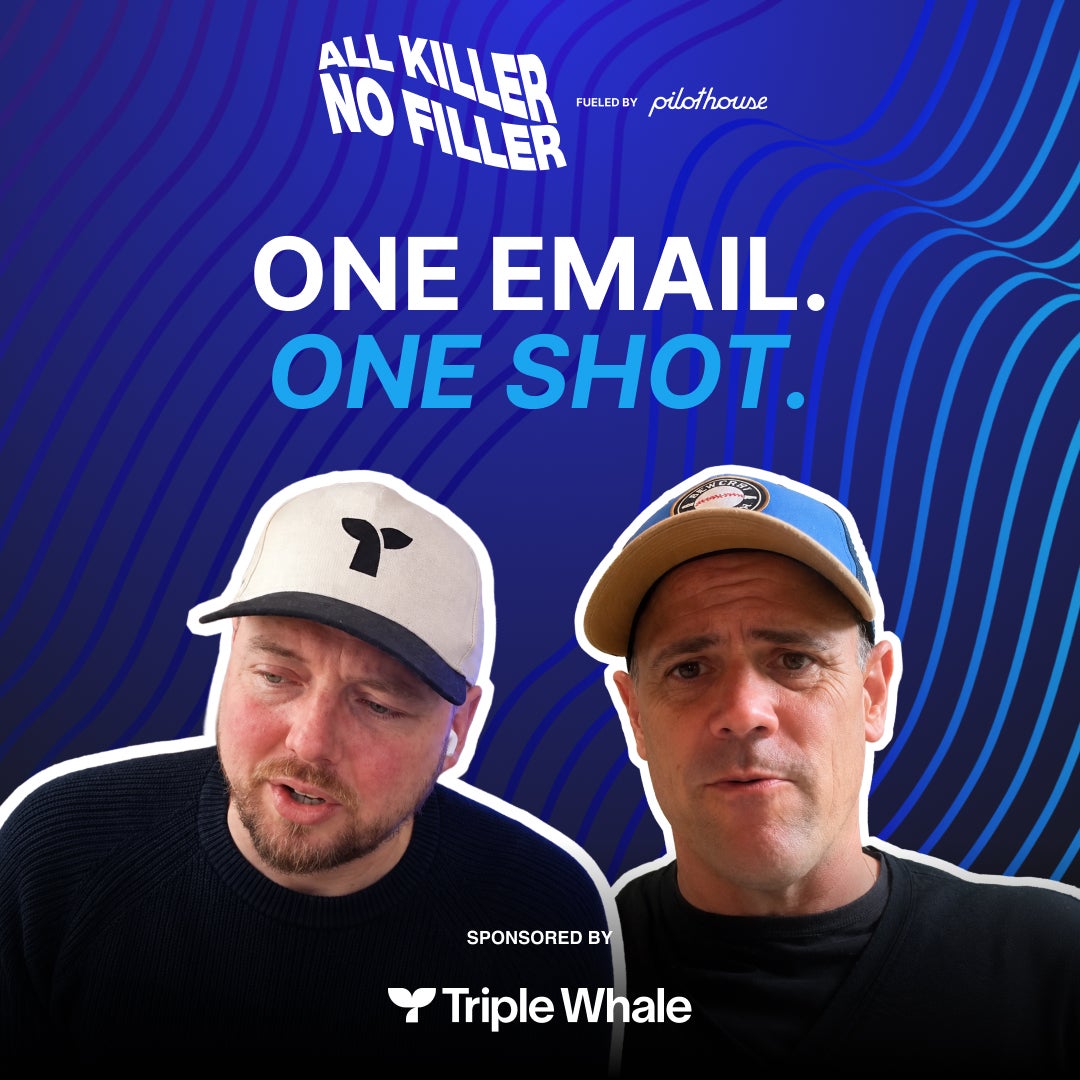
In this episode of All Killer, No Filler DTC Podcast, host Eric Dyck talks with Pilothouse’s Technical Manager Richard about the expanding impact of California’s CCPA/CPRA and evolving privacy laws across North America.
Key moments to listen for:
CCPA/CPRA 101 & penalties – Up to $7.5K per violation, private-data breach lawsuits, and agency enforcement
Thresholds that trigger compliance – Revenue over $25M, 100K+ Californians’ data, or data‑sale revenue ≥50%
Multi‑state comparison – VA, CO, CT, and others have their own compliance standards
Compliance tooling deep dive – Shopify solutions (ConsentMo, Pandectis, SecurePrivacy) for banners, data access, and opt‑outs
Tracking vs. consent – Even server‑side tracking must respect opt‑outs
Case study – A client lost 58% of Analytics data but only 4% of purchases after adding full compliance tools
Future of data consent – How PIPEDA, GDPR-like shifts, and AI‑driven consent profiles are shaping privacy
This episode is essential listening for ecommerce and tech managers who need to navigate privacy law demands without compromising growth and analytics integrity.
Did you know that 98% of your website visitors are anonymous? Instant powers next-level retention by identifying who they are and converting them into loyal shoppers. Sign up for a quick demo today to get 50% off and unlock a guaranteed 4x+ ROI: instant.one/dtc
Timestamps
00:00 – Why eCommerce brands should care about CCPA
02:55 – Overview of CCPA and CPRA regulations
05:10 – Penalties for non-compliance with California privacy laws
08:30 – Thresholds that trigger CCPA enforcement
11:05 – What personal data qualifies under CCPA
14:00 – Which US states have privacy laws beyond California
17:00 – How to make your Shopify store CCPA compliant
20:15 – Server-side tracking and compliance limitations
23:30 – Real client example: Data loss vs purchase impact
27:50 – Impact of consent banners on analytics and conversions
31:10 – Managing existing customer data for compliance
34:10 – The future of personal data and AI-managed privacy
Hashtags
#consumerprivacy
#ccpa
#ecommercelaw
#dataprotection
#cpra
#shopifycompliance
#usprivacylaws
#servertracking
#retargeting
#googleanalytics
Subscribe to DTC Newsletter - https://dtcnews.link/signup
Advertise on DTC - https://dtcnews.link/advertise
Work with Pilothouse - https://dtcnews.link/pilothouse
Follow us on Instagram & Twitter - @dtcnewsletter