Ask ChatGPT
 The DTC Podcast
23 Jun 2025 · 43m · 22 chapters
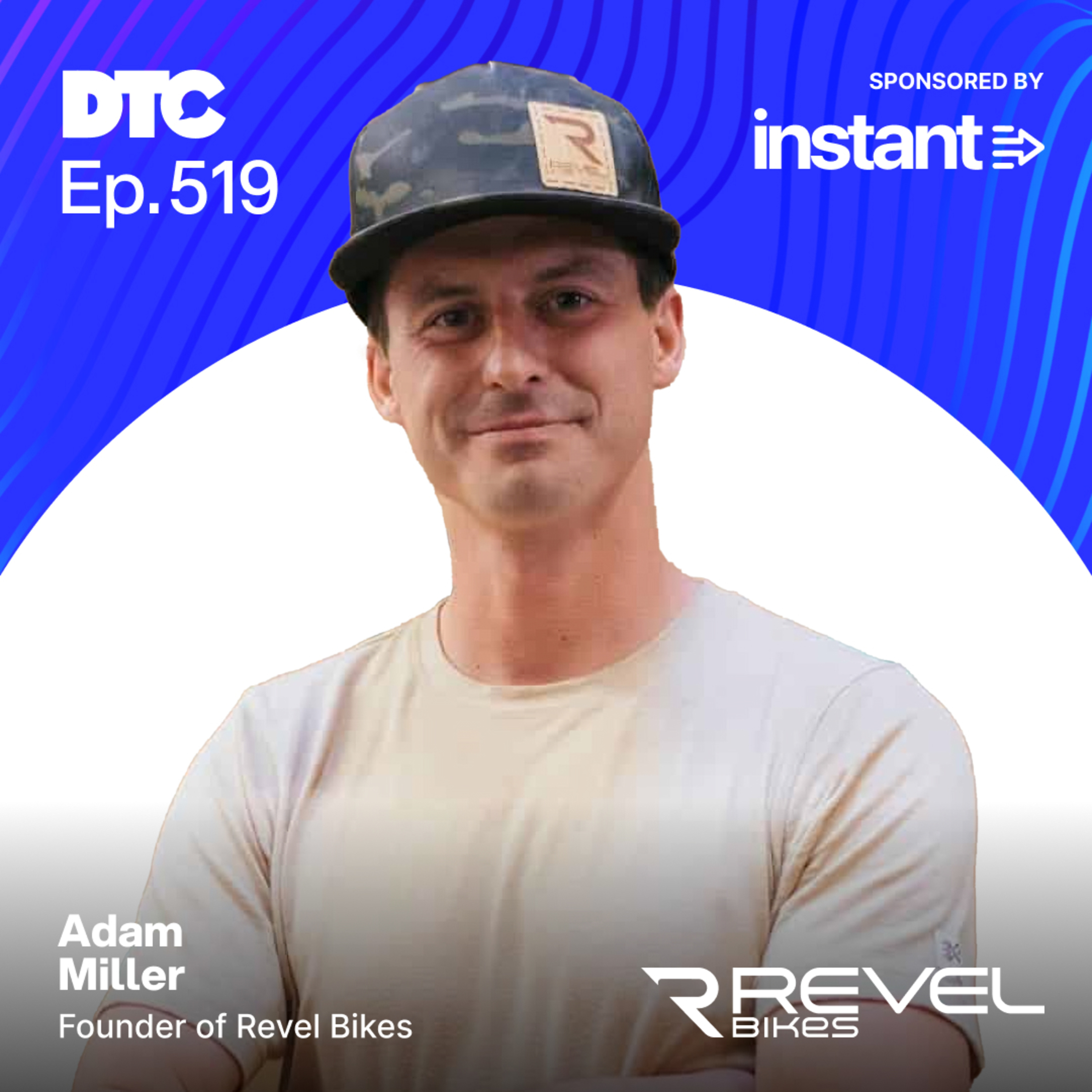
Revel Bikes’ bootstrapped growth into a high-end carbon full-suspension mountain bike brand, its D2C/retail go-to-market, and Adam Miller’s post-acquisition experience after selling the company in late 2021.
Adam Miller is a lifelong cycling enthusiast from Alaska; he sold a first bike-related company (high-end carbon fat bikes) and later founded Y-Cycles (titanium niche brand) and Revel Bikes (launched 2019). He previously built businesses while studying economics and focused on cash flow, inventory timing, and customer service.
Traditional ads didn’t drive $6,000–$12,000 bikes; storytelling, PR, and authentic product reviews mattered more. Revel spent only $96 on Facebook ads early on, relied on bike-shop credibility, and treated “marketing” as communications and “sales” as customer service. They turned down a $980,000 retailer purchase order to protect capacity and customer experience. Post-sale, the business benefited from capital and international logistics expertise.
PR launch reviews on Pinkbike and Germany’s Enduro mag; licensed suspension patent (from Chris Canfield); Taichung, Taiwan manufacturing; Meta “Instant” ad-tech mentions (abandonment/retargeting ROI claims).
Written by AI. May contain mistakes.
Learn about the unique marketing approach for selling high-cost bikes.
“We didn't do a lot of the traditional marketing methods.”
Explore Adam's background and how he transitioned into the bike business.
“Tell me a bit about your background in cycling and what brought you to Revel.”
Insights on the challenges and strategies of bootstrapping a bike company.
“And you bootstrapped this bad boy, which kind of blows my mind when I think about the costs that are involved in bike building.”
Understand the factors that contributed to Revel Bikes' launch success.
“I don't know if that's exactly true, but we grew quickly and it was really quite a bit of fun.”
Learn how authenticity and storytelling played a role in Revel's marketing.
“if like, just hearing this, like to pinpoint it, one of the most successful engines I can see is that you've got all these cool bike shop workers and owners.”
The emotional journey of launching Revel Bikes amidst fears of reception.
“And so, and I remember I was like sitting at this demo event in Arizona and the articles went live and I was like so nervous.”
Discussing the unique suspension platform that sets Revel Bikes apart.
“You know, this is like this refreshing new take on the, on the mountain bike world.”
The importance of in-person marketing and traditional tactics for a D2C brand.
“I, um, you mentioned a little bit about the like mindset and like purchasing behavior.”
How authentic content and product reviews drove customer interest and sales.
“kind of a learn as we went sort of a situation.”
Navigating the complexities of rapid growth and customer service priorities.
“So it's not only like the magazines and the print things, it's this whole blogosphere that people get sucked into when they're lovers of these products.”
Making tough decisions around capacity and customer focus during rapid growth.
“If customers are happy, they'll tell their friends, you know, they'll come back and buy a second bike.”
Reflecting on the acquisition of Revel Bikes and the lessons learned.
“You're one of the rare D2C podcast guests who is post-acquisition.”
Learn about the challenges of scaling a rapidly growing business and the need for additional funding.
“If you want to jump in, you know, let's go.”
Discover the unique challenges and experiences of selling a business while maintaining its vision.
“Like it was a challenge to like build and design and create bikes and figure out how to, you know, market them and figure out what, you know, how to do meta ads and all that.”
Understand the intricacies of choosing the right financial partners and the due diligence involved.
“and fly out here and like go out to dinner.”
Explore the process of transitioning leadership after an acquisition and the importance of mentorship.
“The group I ended up going with called next spark, small family office based in, uh, in Cleveland.”
Gain insight into how private equity firms set expectations and the influence on business decisions.
“I hired a CEO to replace me and then stayed on for another about six months after that to help with the transition.”
Learn about the challenges and considerations in hiring a successor for a CEO position.
“I'm just curious with this PE, are there really high expectations of massive scale?”
Examine the importance of customer experience in a passion-driven industry like biking.
“I was, I was ready to say, I started this, you know, I built this team of awesome people.”
Reflect on the emotional challenges of leaving a business and the search for new purpose.
“And it's, it's almost a little bit cliche, but it worked really well for, for our business.”
Explore thoughts on future projects and the excitement of new opportunities after stepping back.
“healthy thing, but like, no, I'm, I'm ready, ready for whatever's next.”
Learn how to connect with the guest on social media after the episode.
“I don't do a lot on there, but I'm on LinkedIn.”

Get the gist, explore an idea or ask about something said.
 Claude
On The DTC Podcast, what are the key points of this episode?
Searching your listeningAutomatic transcript. May contain errors.
0:00We didn't do a lot of the traditional marketing methods. I think when you get to a product like ours at a very high price point, the customer scrolling Instagram who sees an ad pop up and says, oh, that's cool, I'm going to click and buy it. That doesn't happen when you're talking about a$6 ,000 product. I made a conscious effort to say, we don't have a marketing department, we have a communications department. We don't have a sales department, we have a customer service department. The best thing we did from a true sort of marketing perspective was one of the largest online retailers. wanted to sell our bikes.
0:31I kept on telling them like, no, we can't take you on as a customer. We need to focus on our existing customers. They didn't want to take no for an answer. They sent me a purchase order for like$980 ,000. And I literally printed it out and I held it in my hands. I just thought, am I going crazy to even like think that I could say no to this?
0:52Adam Miller: You're spending real money to drive traffic to your site, but the truth is 98 % of that traffic leaves without ever giving you an email. Meta knows who they are, but you don't unless you use Instant. Instant helps brands identify anonymous visitors so you can send more abandonment emails, build stronger retargeting audiences, and actually recover that lost revenue. Brands like Fate the Label saw a 4.5x boost in their abandonment flows. Masco increased Shopify revenue by over 15%. Third Love, Toys R Us, and The OODI, these are all massive stores that use Instant to see an average ROI lift of 11.2x.
1:26Adam Miller: They'll even guarantee you a 4x ROI or your money back. It only takes 15 minutes to set up and you'll start seeing results fast. If you're serious about getting more out of the traffic you're already paying for, now's the time to fix it. Get 50 % off your first month at instant.one.dtc. That's instant.one.dtc. Adam, welcome to the D2C podcast. Really excited to dive in here. I'm an avid cyclist myself. Tell me a bit about your background in cycling and what brought you to Revel. Yeah, thanks, Eric. Great to be here. Yeah, I've been kind of a total bike nerd my whole life. I grew up in Alaska. You know, biking was kind of the first sport I got into that I felt like I was decent enough at it.
2:10So I kind of just got hooked, started working in a bike shop as a kid. I had a little bike eBay business when I was like 12 years old and actually did pretty well selling used bikes on eBay. until I sold my first company. That was the best I ever did from a business standpoint. So I was kind of really into bikes from a young age as a kid, got into the business side of things. I was lucky enough to work at a great bike shop in Alaska. And then I sort of fell into the business of the bike world. Everything was really sort of passion-driven, I suppose. And then I started dabbling in a few side projects that sort of turned into businesses.
2:45So I started my first company when I was in undergrad in Colorado Springs. We made high-end carbon fat bikes, which is a bike with big wide tires for riding on snow. And timing was great. We hit the market, the first product, it was a carbon fat bike. I built that company through college, then a little bit after college, and then I ended up selling it to my business partner back in 2013, I think. So kind of dipped my toes in the water, had a good crazy experience, was able to sort of travel all around the world with bikes. And then after I sold that company, I wanted to start another one and really make the types of bikes that I like to ride personally, high-end, full-suspension mountain bikes, and a few others too.
3:30So in around 2015, 16, I started really diving into that. I started two companies. One was called Y-Cycles. It was a really kind of unique niche titanium bike brand. that I launched in 2016. And then we were working on my main company called Rebel Bikes. We started working on it at the same time. But that was like a long time of developing and creating the products. And so we launched that in 2019 and then combined the Y-Cycles product line into Rebel Bikes. I ended up selling that business in 2021. It was a fantastic experience. We can dive into it more. and then I worked for the company for a couple of years and then left the business about a year ago now.
4:16So that's kind of the quick and dirty.
4:18Adam Miller: That's the quick and dirty. And you bootstrapped this bad boy, which kind of blows my mind when I think about the costs that are involved in bike building. What can you say about how big it got? Like from your humble beginnings, like how big did this get? Yeah, we totally bootstrapped it. I mean, and looking back on it, it was challenging at times. The bike industry or any product-oriented company, but bikes specifically, take about 40 different components to get together to sell one unit. So inventory and cash flow are a super, super important thing, especially as a smaller company when a lot of suppliers weren't giving us very big terms.
4:55You end up spending all this cash, let's just say, in January to get your products. And then you don't get those products for three, four, five months sometimes. And you don't always collect money on them for several months afterwards. So the cash cycle was like, you know, day in and day out. I feel like, you know, we were a cash flow company more than a bike company at times just trying to manage that. But we totally bootstrapped it. You know, I took out a, I was lucky enough, I sold my first business for a little bit. So I was able to kind of, you know, put all of that into the business. I was able to buy a house and then have the first six, six employees were also my roommates for a period of time.
5:29So we could all kind of save costs. I remodeled the house and took out two different home equity lines of credit on how to use that cash to buy the inventory for the bikes. So everything was really focused on how do we get enough cash to pay for this inventory, let alone all the cost of several years of developing the products. We ended up launching the brand that the grand total advertising spend was$96 on Facebook ad spend. And then we brought a few bikes and a van to a bike festival in Sedona, Arizona to launch the company. So we had to get very creative with all of our D2C marketing. But, you know, we grew very quickly after we launched in 2019.
6:10It was myself and six employees at the time. A couple of years later, we had 40 employees. I had an office, our own office that I opened in Taichung, Taiwan, to help manage the manufacturing and supply chain and an international business. We had distributors in 17 countries, DTC sales in I think over 40 or 45 countries, and then retailers in every state in the country. So I was told we were like the fastest growing carbon mountain bike brand ever. I don't know if that's exactly true, but we grew quickly and it was really quite a bit of fun.
6:42Adam Miller: You're the Hoka of bikes, it sounds like. Not quite that big. A little smaller total addressable market, but it's a good start for sure. What do you attribute to those? So you said it took off in 2019 when you launched it. I'm interested. I know people follow bike makers and people who love biking know maybe they're a little tuned in to people launching new brands. But what do you attribute to that big takeoff period when you launched it? Yeah, I mean, I've thought about this a lot over the years of trying to go back and pinpoint that, because I think if I could pinpoint it and somehow put it into words, it would be very helpful to my future businesses and maybe some other businesses.
7:20I think it was definitely a combination of a lot of different things. We obsessed over the product. For those, if you're not in the mountain bike space, people are very enthusiastic about the products. Like you said, they really follow along. The bikes we sold were high-end bikes. We are priced very similarly to our competition, if not a little bit less expensive than our competitors at different points. But the starting price of our bikes was$6 ,000 and went up to$12 ,000, which, you know, sounds crazy. I take it. Yeah, but it's just sort of what the bikes cost. So, you know, it's similar to golf or fly fishing or sports cars.
7:57When a person gets, you know, really into it, you can really kind of go down the rabbit hole and upgrade every little, you know, piece and part here and there and get a really high-end product. and that makes your hobby more fun. And for me, I've kind of lived that my whole life. I just fell into loving bikes. So it sort of made sense for me. But I think a huge part of our success early on and through the years was sort of the authenticity and the storytelling. You know, as I've listened to a lot of your other podcasts or read books on marketing or, you know, how to sell products, I almost feel like we didn't do a lot of the traditional marketing methods.
8:33I think when you get to a product like ours at a very high price point. The customer scrolling Instagram who sees an ad pop up and says, oh, that's cool. I'm going to click and buy it. That doesn't happen when you're talking about a $6 ,000 product. You can't convince someone in the moment just to buy it. So there's a very long sort of thought process and purchase process that goes into spending this amount of money on a bike. And I think we really leaned into that and the storytelling aspect of it. Of course, I mean, we're a product-focused company. We spent three and a half, four years developing, you know, the first two bikes before we launched them in 2019.
9:09And so the product itself was really set apart. We had a unique suspension platform. So the way the rear wheel moves up and down over rocks and roots, I had licensed the patent from a friend of mine who invented like the best method ever for that. And then we developed the bike, you know, kind of every little detail and possible feature we could think of to put on the bike and make it ride really well and look really good. I think we did a great job at that. But when we were going in to launch the brand, I assumed we would be like 90 % DTC and maybe one or two bike shops here and there would pick up the bikes.
9:44We'd sell a few at retail. And like, I couldn't have been more wrong. I think going into the concept that it's an expensive purchase and, you know, 2019 wasn't that long ago, but it was still sort of a long time ago when it comes to like DTC sales and whatnot, especially on a higher end product like this. I realized, you know, even though we sold quite a few bikes or, you know, the first couple of days, first couple hours after we launched, a lot of people still wanted to go into their local bike shop where they knew someone and touch and feel and see the product before spending that kind of money.
10:17So we certainly sold some, products online, but we kind of accidentally went very heavy into retail for that first year or two, especially. And then the D2C kind of picked back up and actually started outpacing the retail sales fairly quickly. I think it's sort of just that consumer confidence. Someone, they finally read enough reviews and saw enough of those bikes on the trails and heard from their friends that they're good, that they're not going to spend$10 ,000 on the internet with some random company that just popped up and, you know, hope they get a good product.
10:49Adam Miller: So I think your B2B game, if like, just hearing this, like to pinpoint it, one of the most successful engines I can see is that you've got all these cool bike shop workers and owners. Cause they're like, you walk in the, in a bike shop, it's like, they're cool. They're cool people, uh, working on bikes and you know that they have, they love certain bikes and maybe they don't love certain bikes. So you got a lot of those people to really like the brand and the product of rebel bikes. Is that accurate? it totally and you know and i don't think we were super conscious when we were going through our you know marketing plan because our me and one other guy that really did the kind of the marketing and branding side of it chris great great guy we didn't like have a huge plan or you know i don't even know if we had a few notes scrawled out on a piece of paper of like what our plan was going to be it was really hey let's show off these you know amazing products that we worked really hard onto the world and then it was we were sort of reactive from there uh which ended up working out is fine.
11:40But the plan wasn't, oh, let's get everybody in the bike industry to buy our bikes and I'll tell their friends. But that sort of, that happened. I think a lot of it was that we were truly like, I mean, I hired six friends before we launched Revel. I moved the company, I'd started in Utah, but then I moved it to this small town called Carbondale in Colorado, town of 6.000.
12:01Adam Miller: That seems like part of the brand because it's carbon bikes and you're in Carbondale. That's just another awesome layer of the brand. I mean, it's a small town down the road. There's Aspen Ski Resort up the road. And, you know, it's a bike mecca. Like I moved the business here. Awesome mountain biking, awesome skiing, river sports, whatever. And I figured, hey, this is a lifestyle product. We need, you know, I want to live here for one, but our company needs to, we need to live what we sell if we're going to do a really good job. And everybody we hired, I mean, for years, I think really still the company is hiring people who are like diehard, passionate bike people.
12:34And that really showed through in our marketing kind of on accident. And, you know, I made a conscious effort to say, you know, in the beginning, we don't have a marketing department. We have a communications department. We don't need to, you know, make anything up. We just need to sort of tell, you know, tell the world what we're doing. And I said, we don't have a sales department. We have a customer service department. Because if we have a great product and we're authentic and we truly take care of customers, we should really just be reactive to this. And that ended up working out quite well for several years.
13:07the best thing we did from a true sort of marketing perspective was getting really good PR. So we sent a handful of bikes to different magazines early on. And luckily, you know, I had a few connections from my previous company. And then some of the people on our team had some great connections too. So we, you know, some, some of these magazine editors were even willing to accept a bike to try out to write an article on. But the day we went live, we had a product review on Pink bike, which is the largest mountain bike publication, um, and a product review from a magazine in Germany, uh, called Enduro mag.
13:39And I had flown over there. I was on like a college friends Euro trip that I almost didn't go on because I had no money before we launched this brand. And like last minute I was like, okay, I'll join this trip, but I have to like, you know, go visit this, this bike magazine in Germany to like get them a bike. I flew, I flew with the bike over there because it's cheaper than shipping it. Cause we didn't want to spend, you know, all that money on, on shipping a bike. It would take too long to bike there.
14:01Adam Miller: So you gotta. Exactly. Exactly. Yeah. And so, and I remember I was like sitting at this demo event in Arizona and the articles went live and I was like so nervous. I went and like sat under this juniper tree in the desert and I was like, you know, it was like refreshing my phone to like see when the articles would go live. Cause if, if they were good articles, our company was, we were golden. We were going to sell a bunch of bikes. If they were bad, it's like game over. Like we were going going to be dead before we even, before we even started. I don't think I slept a whole lot. There's a couple of weeks leading up to it, but I was like reading these articles on, on my phone.
14:40And like, I just had this like huge feeling of relief. Like it was, they're amazing reviews. It was like, the bike's amazing. The bike's awesome. The company's awesome. You know, this is like this refreshing new take on the, on the mountain bike world. And it like, it just checked every single box. And then it was like off to the races from there. Like our story resonated. I know we were all like taking bets on when we were going to sell the first bike you know when we launched at 9 a.m and like everyone was off by like days like we sold several bikes you know that those first few hours um and then it just it just took off from there can you describe just a
15:12Adam Miller: little to a non like I'm a cyclist but not not not a mountain biker and I'm not as into it but like what did you innovate with the product I'm looking at they're really like sleek looking but I'm always just so interested I know there's so much difference in how a frame is oriented and the angles in it. Like at a, at the highest level, how did you innovate with rebel bikes on the actual product? Totally. Yeah. The biggest like backbone, most tangible thing that, that our differentiating factor was the suspension platform. So how the rear wheel moves up and down and every wheeled vehicle has it cars, motorcycles, dirt bikes, mountain bikes.
15:48It's all about how do you keep your wheels moving up and down over bumps. So it's comfortable to ride the bike. It's efficient to ride the bike. It's quiet. It's fast, all those things. And so everybody tries to figure that out. Every company kind of has their way of doing it. A friend of mine had invented this patented suspension system, and I rode one of his bikes, and I just said, this is the best thing ever. This is what I want to build my company around. Actually, his name's Chris Canfield. I just talked to him on the phone this morning. One of the best guys ever. Super fun to work with. just like a genius when it comes to how to lay this stuff out.
16:24So we set up a deal where I could license this patent. We're the only ones using it for carbon bikes. And then beyond that, it was like every little detail, the geometry, the angles, how you sit on the bike. And really, it's a lot of really small things that add up. I go right to high-end sports cars a lot. If you look at a Ferrari and a Lamborghini and a Corvette, I don't even know all the names of them, but like, you know, they're all awesome. Like in the high end mountain bike world, all the bikes are really pretty awesome out there. There's little differences here and there that different people are going to really resonate with.
16:58And you can, maybe there's some performance differences here and there too, but it's kind of a culmination of all these little details that add up. Uh, and I think, you know, that we, we, we nailed the main thing, the suspension platform and then kind of backed it up with all the other details. Very cool.
17:13Adam Miller: I, um, you mentioned a little bit about the like mindset and like purchasing behavior. So I'm curious, and you mentioned that you have grown, like the Revels like D2C business has grown. How do you do that kind of storytelling and education on a platform like Meta Ads, for instance? Yeah. And, you know, truly we spent$96 on Meta Ads for the first like two years of the business. So I'm by no means an expert on Meta. We ended up working with several agencies and we kind of got a good system figured out after some time, but we were so really kind of traditional marketing before that. I mean, we were in retail.
17:50I went to a lot of trade shows. We went to demo events. You know, we've, we had face-to-face speedings with a lot of, with a lot of, you know, customers in person, bike shops in person, and that worked really well. That's all so kind of like simple and old school sounding compared to everything that's, that you would do now starting a new brand. But I do think with our product and likely with other products in a similar price point, that mentality, you sort of have to have some of that mentality. It's such a long, people aren't making impulsive decisions when it comes to this amount of money for the most part.
18:23And so focusing on that in-person, that real person on the other end of the phone, we'd say all over our website, hey, you can text us, just send us a text message. You can call us any way you want to contact us, reach out and little answer. And we did. That stuff really worked. Back in college, I was an economics major. I did my senior economics thesis on Facebook advertising because I had a bike company at the time in college. And I was like, hey, I can barely figure out how to get to class. I'm trying to run this business. Can I do my thesis on something that'll apply to my business? And I wrote 46 pages with all this data analysis and evidence on types of images and how the customer resonates with an image and what does that lead to from like a click-through rate and it was it was probably a horrible thesis but the the concept was like very applicable to my business and I used that for my first company but that was back in 2013 2014 like so irrelevant like even by the time I really got into it in 2019 like all that work I had done and what I thought I knew about Facebook advertising was just like completely irrelevant for this business so it was definitely kind of a learn as we went sort of a situation.
19:38We did a lot of evergreen content. It was not a lot of like click to buy this bike. Uh, we did some of that. We experimented, we did some AB testing with, you know, especially the last couple of years is, you know, we, we got a whole lot bigger and we were doing more traditional advertising, like, Hey, you know, president's day sale 20 % off or, you know, whatever sale, you know, 10 % off discount. We, we did a lot of AB testing with that? And, you know, do you do a dollar discount, a percentage discount? What sort of image do you use in there? What's the call to action? It all kind of worked.
20:10But what really worked well was the evergreen content. If we had a third party video review that worked, that worked very, very well. So if it was like some of our retailers or athletes or magazines doing a product review video, if we could get those in front of people and do paid, you know, promote those posts to targeted audiences, that worked well because it sort of helped feed people's thought process of, you know, through the winter, they're thinking about what bike they're going to buy in the springtime. And a lot of people who are really into buying these high-end bikes will spend, you know, many waking hours reading product reviews, watching YouTube videos, following, you know, different athletes and whatnot on Instagram.
20:53And so the more we could just constantly fill those channels with authentic storytelling product reviews, the better it works. The problem is it was very hard to measure that, which we sort of just had to embrace.
21:06Adam Miller: You just have to see the top line grow. I'm on Bikerumor.com following one of the Y-cycles things. So it's not only like the magazines and the print things, it's this whole blogosphere that people get sucked into when they're lovers of these products. Yeah, Bikerumor is a great website. Yeah, there's quite a few websites like that. And, you know, when we first launched, we could only afford to send a couple bikes out because every product is fairly expensive. And so we got a few different reviews. And then it was just sort of a snowball effect. You know, everybody in the industry was following our brand.
21:39Then it became a lot easier to reach out to, you know, a lot of these different blogs, websites, publications, YouTubers, and say, hey, can we send you a bike for a month? And, you know, you review it. And if you like it, you like it. If you don't, you don't. And, you know, luckily everybody liked the product. And so that, that sort of online product review, I mean, that was, that was the key to, to, to everything. Our paid, paid meta ads was a very, very small part of our overall, of our overall marketing. And, and really for several years in there, we were, we were selling so many more bikes than we could produce.
22:15I mean, when I launched in 2019, it was myself and six employees. And then literally as I was driving back from this Arizona trade show, you know, 12 hours in the car, I was like posting job openings. We need to hire more people. Like this is crazy. And so it was kind of like we went on a hiring spree after that. I moved the business, I think, four or five times in those first few years, like just to a bigger warehouse, bigger warehouse. That's a big reason why we ended up opening this facility in Taichung. was like, hey, we need a bigger global footprint so we can have enough physical space for these bikes, have enough space to build them and then ship them to our customers.
22:52And then the tariff game, funny timing now, that's all we're talking about. But the tariff thing was a big deal back in 2019, 2021 as well. So where bikes were assembled and shipped from was always a thing. But we were basically, we're selling more bikes than we could produce for several years now, which is just a wonderful problem to have, obviously. But it was also, I wasn't very focused on financials in the beginning, which I know kind of sounds crazy. I was very focused on cash flow, because if we had the cash or we didn't to buy inventory. And then I was very focused on, you know, were customers happy?
23:30Because I knew we were growing. If customers are happy, they'll tell their friends, you know, they'll come back and buy a second bike. Usually a person that buys one bike at this level is buying a whole lot more bikes down the line. So we kind of just obsessed over that customer service aspect. And so as we were going through those supply issues for really several years in there, everything was about how do we take care of our customers? How do we keep them happy? And I'm sure a lot of businesses went through that during some of the supply chain shortages. It was quite a balance. I mean, I have a vivid memory of, it was only a couple of years ago, a few years ago now, we had one of the largest online retailers wanted to sell our bikes.
24:12They had been courting us like crazy, which, you know, five years earlier, someone told me that would be happening and I wouldn't be the one, you know, knocking on every door trying to get sales. I wouldn't have believed it. But I kept on telling them like, no, we can't take you on as a customer. We need to focus on our existing customers to make sure, you know, we just don't have the capacity. and the concept of like turning down new customers with a new business is is crazy to me like i can still barely wrap my head around it but we were so overwhelmed with demand and orders that we had to say no to a lot of people but this this this big online uh uh retailer they they like didn't want to take no for an answer they sent me a purchase order for our bikes like i didn't even send a part numbers and stuff they sent me a purchase order for it was it was for like 980 thousand dollars and i literally i printed it out and i held it in my hands and i thought you know I just thought, am I going crazy to even think that I could say no to this?
25:00That's more money than I ever thought I'd see for the business. And that's like one order kind of a thing. And I had to call up and say, sorry, guys, we can't accept this order. We can't take you on as a customer. Because I was so hyper-focused on we have to take care of the customers we have. We have to do the right thing with our retailers, with our direct consumer customers. Taking on an order like that might make the month look good or the quarter look good, but it's not going to make the five-year horizon look good. And I think that was always a challenge as we were growing, is how to balance always having enough money in the bank to pay everybody and to buy new inventory, but obsessing over the customer service side of things because that's what I knew would build the brand to be something special and something that lasts a long time.
25:48Adam Miller: And it paid off. You're one of the rare D2C podcast guests who is post-acquisition. uh so congratulations on that can you walk me through uh how did was that something you were thinking about for a long time with the brand talk to me a little bit about how that came about and uh and what that went down yeah so i i sold i sold the company in late very late end of 2021 um it feels like it was like last week but i guess it was a few years ago now we were doing so well i'd spent so you know from when i was like my first real bike company was when i started when I was like 19 or 20 in college, sold that.
26:25I kind of started up this company shortly thereafter. I started and sold actually a cannabis-related company in the meantime, which was like a fun side gig. I learned a whole lot. I wanted to jump back into bikes. So I kind of, from a personal standpoint, I like starting businesses. Once they're at a certain point, I think the operating side, it wasn't necessarily in my skill set. I think it got there a whole lot more. but it was you know we were always even when we you know when we were doing incredibly well better than i thought the business would do in 20 years let alone in one or two years um everything was so focused on cash flow just the way you have to buy the inventory you have to invest in molds to create products two years before you're going to get the products there which is six months before you're going to collect cash on it everything was this cash flow game and i was so you know we were We were, Topline was growing.
27:21EBITDA was growing like crazy. We were very successful by all financial metrics, but cashflow was always such an issue. My home had a couple mortgages on it. I had borrowed money, taken on four other investors to have enough capital. And I kind of always lived by the idea that the best time to ask for investment money is when you don't need it. As soon as you really need money and you're coming up against the timeline of you're gonna run out of cash, It's, you know, then that person sitting across from you at the, you know, over coffee is they're in the driver's seat instead of you as the, as the business owner.
27:53So I'd done well raising smaller amounts of money from, from a handful of investors earlier on with that mentality of, Hey, you don't necessarily need it. This business is growing like crazy. If you want to jump in, you know, let's go. And, and it worked out really well. Really, we were growing so fast that I knew that my, you know, couple of home equity lines of credit on my house and, you know, my handful of smaller investors, I knew we weren't going to be able to provide the business with enough funding to grow to what it could. I mean, the Rebel brand, the ship we were on had like so much more potential than we had, I think, from a, you know, from a pure cash standpoint.
28:34And then also from an expertise standpoint, like we were selling in all these different countries. Like, you know, I was for years, I had like a bag packed and I was home for, you know, 50 % of the year. I was like home for a few days, like grab the bag, hop on a plane to, you know, to China or Vietnam or Taiwan for the manufacturing side. And then, you know, home for a few days and hop on a plane to Europe for the, for the selling side of things. And, um, you know, it was absolute blast, but I was like, we, we need more expertise. Like this business could, you know, we're, we're already growing, you know, hundreds of percents a year.
29:05This could, this business could be five, 10 times the size in, in, in a couple of years. and I want to make sure we have the capital and the people to, to make sure that could happen. Um, so I started the sales process very slowly and it was actually really fun. It was kind of like a fun new challenge. Like it was a challenge to like build and design and create bikes and figure out how to, you know, market them and figure out what, you know, how to do meta ads and all that. And then selling the business was like a whole separate challenge. And I actually had a ton of fun with it. Like I, you know, talked to all the kind of advisors, mentors, whatever that I could, you know, asked a lot of questions, interviewed several investment bankers, ended up hiring a fantastic banker out of New York City, and she helped me, you know, just a ton.
29:49And then it was like super, like, it's just a different kind of business meeting and type of person, you know, a lot of the bike meetings, I'm like wearing flip flops, or like, you know, we're going on like, you know, bike rides with our customers. And then, you know, these, when I was going through the business sale process, it was like, I think it probably helped that our company was based down the road from Aspen. We had a lot of people fly out in their, in their jets, you know, to like have an Aspen vacation and like, you know, use this as an excuse to have a business meeting too. So, um, it was fascinating.
30:19Like it almost, it almost felt like, like a dating life.
30:22Adam Miller: Like I was going so many dinner swiping. Yeah, exactly. Like these private equity companies and fly out here and like go out to dinner. I got to eat a lot of great meals up in Aspen. And, you know, so many of them, and I wasn't selling the business to like sell it and walk away that day. I was like selling it to, you know, sell a large portion of my equity, but, you know, bring on a partner that would, I want to see this business grow. I want to be 95 years old someday and say, I started that company and it's awesome. And, you know, that was kind of my goal. So I want to, I want to make sure this, this group could, could help the business grow.
30:58And so many of these, you know, dinners I had after like 10 seconds at the table, I was like, Oh no, this is, this is never going to work.
31:04Adam Miller: Like how many Patagonia vests did you see with the, uh, the bankers? They love them. They are, you know, that's a true stereotype, especially out in the mountains of Colorado, the Patagonia. So how did you find your Cinderella? How, or how did you find your, your Prince Charming in the, uh, ugly step sister world? Yeah. I mean, it was, it was a ton of meetings. It was a ton of these in-person meetings. They flew out here. I flew out there. All that stuff. It really was kind of fascinating to meet all these finance groups. I had spent a lot of time in that world. I'd raised money. I brought on, I don't know, 10 or 15 investors over the years with my different businesses, but way different than a private equity or family office type things.
31:46So it was fascinating to go to New York City and have business meetings. I was running this bike company in the mountains of Colorado. Like it was, it was two very different worlds, but a lot of people like bikes, uh, and the business was very good. So it made, it made the conversations, you know, pretty, pretty fun. Um, I kind of narrowed it down to a handful of groups that I thought were good. The group I ended up going with called next spark, small family office based in, uh, in Cleveland. Uh, the main, the main guy who started it had done very well for himself was a passionate biker. Um, and everything just sort of lined, lined up well.
32:18So made the decision to go with them, jumped into the due diligence period, which everybody told me, you know, due diligence when you're selling your company is like the worst thing ever. And it's so difficult. And, um, I was really, you know, through that process, I was like super proud of our, our team. Uh, like our company was very like organized and very focused on, you know, in the, in the bike world and outdoor industry space, not everybody's super, super business focused. A lot of it's purely passion driven and not business. And we were, I think, a good combination of like a passion-driven company, but hey, let's do this right.
32:52Let's run this company really well. And so due diligence was like easy. It was just like everything went great. There's no, nothing came up. No skeleton, no bodies buried. Yeah, exactly. That's great. Everything happened right on time. And it was fantastic. I set up the business very well, you know, getting a, having a family office, bring a line of credit from a large bank was like night and day difference, you know, compared to me, you know, walking into the bank and I'm being like, Hey, you're not getting another dollar from us. So it definitely worked out well. And then I stayed on a CEO for about a year during that process.
33:31I let the company know, you know, the private equity company know that I was going to be working my way out, but you know, over as much time as needed. So we hired several people. I hired a CEO to replace me and then stayed on for another about six months after that to help with the transition. And then I took off completely last, let's see, last April. So almost a year now. And it's been fantastic. It's like mentally like a lot of interesting challenges. But for me, I wanted that company that I started and put my heart and soul into. And there's so many amazing people that work there that are that still work there.
34:09I wanted to see that company, you know, grow and thrive onto the next level. And it's kind of like a nice, neat feeling to kind of step back and let it grow.
34:19Adam Miller: And has that like how I how has it done post, like, you know, post the acquisition? I think, well, I mean, there's always a lot of changes when, you know, institutional money comes into a business, but it's what the business needed. The business needed more capital and it needed that level of expertise. I mean, it's an international business and we were doing a lot of figuring things out. Um, and I, you know, sort of at the point where figuring things out costs a lot more money when we were at that scale. So like having, you know, expertise come in, someone who could say, Oh, here's how you do banking in Taiwan.
34:52And here's how you figure out the international sales. A customer needs a bike in, uh, say Germany. Well, should the frame ship from America and the parts from Taiwan or should it all get assembled in Taiwan? What does that do to the tariff? You know, kind of all this logistical stuff that isn't very exciting, but it makes a really big difference from like a financial standpoint. So I think the business is set up very well. Do they buy something with the idea
35:18Adam Miller: that they're going to 10X it essentially? Or is it more that we love this as an asset? It's such a well-run company. It's such a good company. I'm just curious with this PE, are there really high expectations of massive scale? Yeah. That was the thing when I was meeting with a lot of these PE firms is a lot of them have very specific expectations there. Hey, we need a 3X return in three to five years or five to seven years, or we need a 20 % IRR or whatever it is. And here's what we think we should do to make that happen. And I didn't want to go with that route. I think that for a product like this that has such a passionate marketing need, you have to be really careful of running the business purely by the P &L.
36:02You need to be able to say, hey, we're going to do this thing. It might not make perfect financial sense, but we're pretty sure it's going to make a lot of financial sense for five years down the line. And that's tough for a lot of peer finance people to come into a passion-driven business like this. So a lot of the private equity firms were very specific on that. This one that I ended up going with was not. It was kind of like, hey, let's hold this for a long time because it's a fun, awesome business that's doing really well.
36:28Adam Miller: And then what was it like hiring your replacement? Did you find someone great? Were they just as passionate about mountain biking as you? Yeah. The CEO's name is Ben. He's fantastic. It was actually really fun because I think mentally, I was, I was ready to say, I started this, you know, I built this team of awesome people. Most of them are still, are still there. And to me, like I sort of set the mindset of like my biggest reward is if I can leave this company and see it really grow and be successful. I wasn't, I didn't kind of have that specific ego of like, I need to be the one in charge. No, for sure.
37:08Yeah. successful, which, which kind of, which made it fun. But I mean, hiring a CEO is like, it had its host of challenges. I interviewed a lot of people and, uh, and it was tough. And then I ended up, I hired Ben as COO, um, with the intention of, you know, Hey, I thought it might be a year or something until, until, uh, you know, I was ready to give him the CEO title and me to step back and like three days into the job, I was like, wow, this guy's fantastic at this job. Like was going to happen a whole lot sooner. So I made him the CEO a lot sooner than expected. And then I stayed on for a while just to help with the transition and it went great.
37:44I mean, it was, yeah, you know, people that are, the bike world's unique. It's, it's a passionate industry. I've probably used that word passion way too many times, but you know, when people care, they care. And I think that level of caring and really caring about making a great product all the way down to how the customer feels about that product, even years after they bought it, you know, everybody is on the same page there. I think it's a recipe for success.
38:07Adam Miller: And it's such a complex product. There's so many pieces that go into it and it, and it's, and it's lifetime, right? It has a real lifetime with the user. It has, it takes on its own, you know, life basically as, as a product. Totally. And, and people are like, and I talk about this with our customer service team, before we ever call it a sales team, like customers will call. And if there's, if, you know, this bike is like, for a lot of people, the biggest purchase of their life is a house, the next biggest is a car. And then the next biggest could be a$12 ,000 mountain bike. And if it's someone's main hobby, you know, outside of work and outside of family, the main thing they spend their time doing, there's a very outsized feeling and emotion attached to that product compared to a different product, you know, different, any material product that someone buys.
38:53And so really putting yourself in those shoes and understanding how that customer thinks and feels about their, about their bike, you know, whether they want to get it early because they're going on a bike trip to Moab and, you know, it's their vacation they've been planning for a year or whatever it might be like putting yourself in those shoes. And so many of our employees came from the bike shop world and maybe didn't have like a super traditional resume, but I found that someone who had worked in a bike shop who would interface face to face with a customer who was, you know, asking those questions, what do they think about those people that could really put themselves in the customer's shoes were far and above the most successful and kind of that service first service oriented, uh, thing, you know, it's not, it doesn't sound that fancy compared to like a lot of really tangible, tactful, um, uh, uh, marketing things.
39:41And it's, it's almost a little bit cliche, but it worked really well for, for our business.
39:45Adam Miller: And it's something I was really proud of our team for, for doing well. Super cool. Well, big congratulations. You're, you're now you're, you're now out of the business. Do you feel, I do feel like a postpartum a little bit with it or a loss of your purpose or identity or what? And then what are you focused on now these days? Oh, a hundred percent. It's like, you know, any expectation I had before I left the company, it was like blown out of the water. It's a little bit bizarre to go from like 200 miles an hour every day. And like, you know, waking up the first thing you think about is like, you grab your phone, you start answering emails in the morning, like, you know, going from like any of the other founders or, you know, people in the business world listening to this fully understand go from that to just like oh now I don't go into work in the morning absolutely bizarre it's been it's been good though I kind of told myself I'd force myself to to be chill for a little while I've gone out skiing and biking more more days than I have in like the last several years combined um but I I have my hand in a few different projects I got got a few a few things in the works now and it's like I'm like itching to get back into that world now which is which is good.
40:49So I think forcing myself to like spend time out in the mountains, uh, was probably a healthy thing, but like, no, I'm, I'm ready, ready for whatever's next.
40:56Adam Miller: You don't have to answer this, but do you have limitations like from the contract or from the acquisition about not being competitive? Um, yeah, I have some standard stuff there, but it's actually not a whole lot longer. Um, and it's, it's all good, you know, super cool, man. How many bones have you broken from mountain biking? I feel like that's the real question. I haven't done it. I haven't done it very much. I just have so many friends. I have a friend who did it for his like wedding, like his, like a bachelor party or something. And like half of the people broke their collarbone or something.
41:29You know, that's, I was at a wedding last summer and, and like, we had this big bike day for the wedding and everyone was like, no, no one can let the groom crash. Like we got to ride slow. Like this, this is nice. And everybody has like a little blood on their shoulders at the, the wedding. Um, uh, I've broken a handful of bones. That's that, that, that, that comes with the territory a little bit. Yeah, yeah, exactly.
41:50Adam Miller: Well, you've come out on top. Well, yeah, thanks for being a shining example for the DTC world. I'm excited for what you do next. If people want to follow your journey, are you on any of the business media platforms like LinkedIn? I'm on LinkedIn. I don't do a lot on there, but I'm on LinkedIn. It's Adam Miller. And then my Instagram is adam.miller907. So feel free to follow me there. Hit me up anywhere. Nice, man. Well, thanks for coming on the DTC podcast. This was awesome. Thanks a lot, Eric. I appreciate it.
Subscribe to DTC Newsletter - https://dtcnews.link/signup
In this episode of DTC Podcast, Adam Miller, founder of Revel Bikes, shares how he bootstrapped a premium mountain bike brand — solving product complexity, managing cash constraints, and scaling to global distribution with only minimal paid marketing.
Why it matters:
Bootstrapping high-cost inventory with home equity lines
Building authenticity through storytelling and PR
Turning earned media into sales on long buying cycles
Aligning team & culture around product passion, not spreadsheets
Knowing when to say no to big orders to preserve customer trust
Highlights:
Launch day success propelled by dual Pinkbike + EnduroMag reviews
Licensed a breakthrough suspension patent as product foundation
Fused retail credibility with DTC growth
Customer service = primary growth engine
Navigated exit with alignment to partner sharing long-term vision
Did you know that 98% of your website visitors are anonymous? Instant powers next-level retention by identifying who they are and converting them into loyal shoppers. Sign up for a quick demo today to get 50% off and unlock a guaranteed 4x+ ROI: instant.one/dtc
Timestamps
00:00 Intro and Revel’s untraditional marketing approach
02:00 Adam’s early entrepreneurial journey in cycling
06:00 Bootstrapping Revel with home equity and roommates
09:00 The launch strategy: PR, product obsession, and authenticity
12:00 Why community and lifestyle drove growth
16:00 What made Revel bikes different: Suspension and design
19:00 How Evergreen content and reviews outperformed paid ads
22:00 Managing explosive growth and demand
26:00 Turning down a $980K order to focus on customer experience
30:00 Selling the business: The decision and process
34:00 Post-acquisition transition and CEO handoff
39:00 Reflections, purpose after exit, and what’s next
Hashtags
#DTCPodcast
#RevelBikes
#FounderStory
#EcommerceGrowth
#OutdoorBrands
#BootstrappedBusiness
#ProductMarketing
#BikeIndustry
#DTCMarketing
#CustomerExperience
Subscribe to DTC Newsletter - https://dtcnews.link/signup
Advertise on DTC - https://dtcnews.link/advertise
Work with Pilothouse - https://dtcnews.link/pilothouse
Follow us on Instagram & Twitter - @dtcnewsletter
Watch this interview on YouTube - https://dtcnews.link/video