Ask ChatGPT
 The DTC Podcast
30 Jun 2025 · 27m · 17 chapters
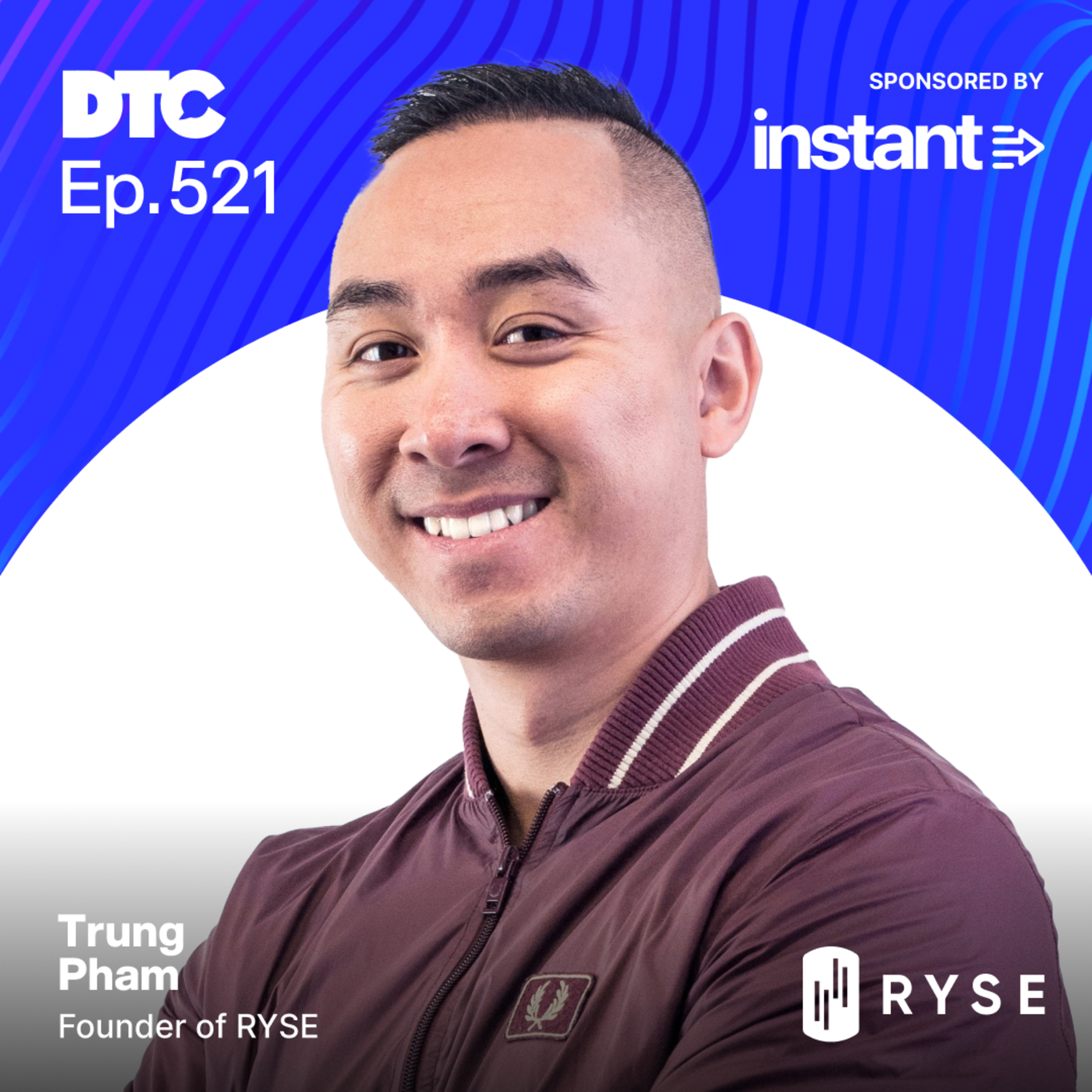
How RYSE (Hellerize) used Meta ads and DTC-style funnels to raise $10M+ via equity crowdfunding, plus growth tactics for a hardware smart-blinds company.
John (founder of RYSE/Hellerize; started 2015; built motorized window-shade automation after finding no existing product; 3 years of R&D; later scaled via e-commerce/Meta/Google/Amazon and equity crowdfunding). Host: Eric (DTC podcast).
VC funding is hard for physical products; equity crowdfunding lets founders control terms and “own destiny.” Meta ads and email capture/retargeting drive investor traffic like e-commerce. They raised $10M+ using DealMaker with SEC/FINRA compliance and average $2.5k checks.
Indiegogo/Kickstarter launch; investor funnel on invest.hellerize.com; Amazon Apex/IP complaints against knockoffs; 4.5x abandonment-flow lift (Fate the Label) and 15%+ Shopify lift (Masco) cited for ad/retargeting; TikTok sister brand priced $79–99 to monetize copycats; production diversification to Philippines due to tariffs.
Written by AI. May contain mistakes.
Learn about the concept of equity crowdfunding and how it fits into funding rounds.
“Equity crowdfunding, or what they call a community round, it kind of fits right after an angel round, maybe in line with a VC round.”
Discover how Amazon's Apex Program addresses IP infringement issues.
“Masco increased Shopify revenue by over 15%.”
Trung shares the inspiration and development process behind RYSE.
“but why don't we start with your hero's journey with Rise and sort of why you built this product, what it is.”
Explore the unique challenges faced during RYSE's research and development phase.
“improving the product, and now launching into new markets.”
Understand how RYSE transitioned from crowdfunding to leveraging e-commerce.
“But the benefit with that is that we apply for a lot of IP and we protected a lot of our inventions and aspects of the product that are extremely, extremely strong today.”
Learn how RYSE utilizes Meta ads to boost product visibility and sales.
“Video is where customers learn about the product.”
Discover how RYSE successfully raised over $10 million through equity crowdfunding.
“Yeah, so equity crowdfunding or what they call a community round, I would say it kind of fits maybe right after an angel round, maybe in line with a VC round.”
Learn how RYSE uses DealMaker for managing investments and compliance.
“And because we had a lot of expertise in direct-to-consumer and e-commerce, we did the same thing.”
Understand the dynamics of engaging with investors through crowdfunding.
“And then I'm just curious with the targeting.”
Explore the strategies RYSE employs for effective targeting in their ads.
“Short answer is that all kinds of companies out there.”
Learn about the investment structure RYSE uses to attract various investors.
“Would you say most of that 10 million or more has come from customers or cold from meta prospecting?”
Learn how to structure investment deals to make them enticing for investors.
“is you want to structure it so it's enticing for the investor to invest more.”
Discover how to use Amazon's IP protection program to combat counterfeiters.
“how much you guys have invested in patent and IP and talk a little bit about what you discovered some Chinese suppliers were doing to you.”
Understand the impact of tariffs on direct-to-consumer sales and manufacturing.
“And at one point, we had hundreds of knockoffs on Amazon.”
Explore creative TikTok strategies for launching a lower-priced sister brand.
“manufacturer going direct to consumer on TikTok to tell me that I could buy my Birkenstocks from them for one 10th of the price, even with tariffs baked in.”
Learn about building a sustainable brand with a focus on distribution channels and market adaptation.
“And so what, you know, I think one of the things you took away from our event in Victoria was Jared, who was building out robust stuff on TikTok Live, essentially.”
Key insights on securing IP and utilizing equity crowdfunding for entrepreneurs.
“So the offering is live for 12 months, but we only actively market the round every three months.”

Get the gist, explore an idea or ask about something said.
 Claude
On The DTC Podcast, what are the key points of this episode?
Searching your listeningAutomatic transcript. May contain errors.
0:00I wanted to motorize my window shades. That's it. Equity crowdfunding, or what they call a community round, it kind of fits right after an angel round, maybe in line with a VC round. It works well when you do have some traction, a prototype concept, sales. That's where we kind of fit in. If you're chasing VCs, you don't really own your own destiny. But when it comes to equity crowdfunding, it's just like e-commerce. It's direct-to-consumer marketing. Amazon launched something which was formerly called the Patent Neutrality Program. This has since rebranded to the Apex Program. If you have IP, instead of going to the courts, you could file a complaint with another seller or brand that's selling a product that infringes on your IP on Amazon.
0:38I'm perplexed that Instagram and the other players haven't kind of caught on this, but if you're able to sell online, you're able to raise investment dollars online. It's not rocket science at the end of the day.
0:52Trung Pham: you're spending real money to drive traffic to your site but the truth is 98 of that traffic leaves without ever giving you an email meta knows who they are but you don't unless you use instant instant helps brands identify anonymous visitors so you can send more abandonment emails build stronger retargeting audiences and actually recover that lost revenue brands like fate the label saw a 4.5x boost in their abandonment flows. Masco increased Shopify revenue by over 15%. Third love, Toys R Us, and the OODI. These are all massive stores that use instant to see an average ROI lift of 11.2x. They'll even guarantee you a 4x ROI or your money back.
1:29Trung Pham: It only takes 15 minutes to set up and you'll start seeing results fast. If you're serious about getting more out of the traffic you're already paying for, now's the time to fix it. Get 50 % off your first month at instant.one slash DTC. That's instant.one slash DTC.
1:48Trung Pham: Trung, welcome to the DTC podcast. We met when you came to our event last fall in Victoria, which was fantastic. Learned all about your story. And we've got some really interesting things to talk about today. Some things we've never talked about on this podcast before, but why don't we start with your hero's journey with Rise and sort of why you built this product, what it is. It's an interesting one. Yeah. So I started this company over years ago, 2015 was when the idea was conceived. And then we took about three years in R &D before launching our first gen in the market. But it was a very simple problem I was trying to solve.
2:22I wanted to motorize my window shades. That's it. So I already had my window shades installed. I didn't want to replace them with motorized shades. I got quoted about$2 ,000 per window and had four windows. So too expensive. Initially, I thought there was a product that I was looking for, essentially like a motorized pulley system, if you can imagine that. And it turns out there wasn't. And that was kind of like the Eureka moment. So very simple problem I was trying to solve. I wanted to motorize my own shades. They had beta chains with the loops. And I just wanted a simple motor that could pull it up and down.
2:55So I did some research. The product didn't exist. And that's when I went the rabbit hole learned that the market was dominated by a few key players and there was all these middlemen that required the motor itself to flow from the factory all the way to the distributor to the window blind fabricator to the window blind retailer to the end consumer and everyone has to eat a margin and that's what really drove up the price so that's where the idea came from and you know as i mentioned we spent three years in r &d before launching our first gen and since then we've been just you know slow and steady going growing the company improving the product, and now launching into new markets.
3:32Trung Pham: What was the hardest part of that R &D process? I would 100 % say because the concept was so new and we didn't have existing competitors or products on the market to really mimic or copy or learn from, it was all new IP and new technology. We developed everything from the ground up. The cadence back then was to develop one clean prototype per month. So one new 3D print design, design, new electronics design, and try to get them to work over a year, getting the size right, getting the components right, sourcing the right components, things like that. Because if you're looking at other consumer electronics out there, typically what a company would do is they'll buy a competitor, a community product or a few of them, and then they'll break it down.
4:17They'll pick and choose which components and what kind of design elements they want to copy and combine to create a new product. We didn't have that because our approach is very new and novel. So that's why the R &D took a lot longer with our first gen. But the benefit with that is that we apply for a lot of IP and we protected a lot of our inventions and aspects of the product that are extremely, extremely strong today.
4:39Trung Pham: Super cool. What's been the main growth or maybe in the beginning, in the first few years, what was the main growth engine? Is it the same growth engine as today? Yes and no. So back then we did launch on a crowdfunding platform, Indiegogo and Kickstarter. And back then, those platforms were very popular to get startups off the ground. And from that initial campaign, we were able to raise our angel round. Angels saw the product. They loved the product. And that really got us to the initial traction. But since we launched back then to today, it's been definitely just e-commerce. Like you're talking about Facebook ads, meta ads, Google.
5:13Those are the primary channels. Now Amazon as well. Those are definitely the primary channels. TikTok is another channel that we're going to be testing with a sister brand that we were about to launch.
5:21Trung Pham: Yeah, we'll dive into that. It's a product that sort of sells. It's a new novel product, but the video just makes it so visually obvious what it is, and it looks so good. Video must be a big part of the strategy on Meta. It is today. I think back in the heyday, back in the wild, wild west, you could just launch an ad and then make a lot of money. But, you know, it's much different now running ads. The creatives really matter, the video, the hook. And we focus heavily on video. Video is where customers learn about the product. And I like to say it's much different from, you know, if you're selling fashion or makeup online, very different because you could just post a picture online of somebody posing in in a fashion item, in maybe travel luggage or in beauty.
6:06But with our product, you have to see it in motion. Because it is one of those products that activates and moves, you have to see it in motion. You have to see the installation. You have to really learn about the type of product and really learn that this product does exist. So we do have that challenge of educating the audience, the consumer, that this product does exist and educating them on what kind of problems we do solve with our technology.
6:28Trung Pham: So with a tech-heavy company like this and a product that requires education, funds become an issue. The amount, your sort of war chest to go through there. So one of the things I really wanted to dive into was your strategy of equity crowdfunding, where you've raised over 10 million through equity crowdfunding. Talk to me about how that works. Yeah, so equity crowdfunding or what they call a community round, I would say it kind of fits maybe right after an angel round, maybe in line with a VC round. I think it works well when you do have some traction, a prototype, a concept, sales, things like that.
7:02And that's where we kind of fit in. We had products in the market, we had sales. We are not like, just like a lot of direct-to-consumer brands out there, a lot of them are not venture backable, if that makes sense. A lot of the VCs right now are really just into high-tech AI companies and things like that. When you're dealing with physical products, a lot of VCs hate that. It's a very small niche of VCs that actually invest in that. So you're already kind of priced out because you're not a SaaS company, you're not a AI company and things like that. So I find that this kind of funding model is great to fund our R &D, our inventory, and our sales and marketing efforts going forward.
7:39So I got into this probably four years ago, maybe, I think, three or four years ago. And it was a byproduct of what happened with our VC round. So we actually had a term sheet. We were going to raise from two to four million. With two filming committed another two million that was going to be joined by a Canadian government agency. So kind of like matching funds. And then when COVID hit, they pulled the term sheet. So it was one of those situations where I'm taking a step back. I'm like, I'm kind of really annoyed. Went through all this diligence. They're pulling the term sheet. They had their reasons.
8:10Like, you know, we wanted to expand to commercial buildings. Commercial buildings were all on lockdown. Like no one was going to sell into commercial buildings. No one was allowed into the office space. Everyone was working from home. So I understood where they're coming from. But I also realized that if you're really chasing VCs, you don't really own your own destiny. You don't have control over that. But when it comes to equity crowdfunding, it's just like e-commerce. It's direct-to-consumer marketing. Your audience might not be consumers that buy the product, but your audience will be investors that invest in the company.
8:38So I looked at it just like that. And because we had a lot of expertise in direct-to-consumer and e-commerce, we did the same thing. We just built a funnel. We built a funnel. We drove traffic to the landing page. We acquired emails. We educated the investors on our company. And we had a strong closing date. And that's what we've been doing for the last couple of years, just to fund the company, fund the growth, fund the inventory.
8:59Trung Pham: Super cool. Is there a platform you use or is it all DIY? Yeah. So we use DealMaker. So shout out to DealMaker. They're like the Shopify of fundraising. We have a live raise if you want to see our actual kind of landing page. It's invest.hellerize.com. And you could check it out. But basically, we have a video there. We have our terms. We have all the company traction. We have our products. We have a roadmap. app. It's basically a website that pitches, that presents the pitch deck in a sense. And then you have an invest now button. So instead of a buy now button, like you would with an e-commerce site, it's an invest now.
9:32And then dealmaker facilitates the entire investment transaction. It's just like how Shopify would on a consumer product. Obviously, there is a lot of compliance because you're dealing with investors. So our offering, our deal has to be vetted by the SEC, has to be qualified by the SEC. FINRA has to go through it if there's any broker-dealers involved. And DealMaker themselves, they go through KYC and AML with each investor that invests. So you could even invest with a credit card. You can invest with a credit card, wire ACH to fund over. But DealMaker will still go through the whole compliance aspect of things.
10:03Trung Pham: Super cool. What's the average check size? Two and a half grand. Two and a half grand. That's crazy. And then I'm just curious with the targeting. Everyone's trying to go general with their ads when they're selling a product. Is the same thing true with your ads? Are you letting your creative of do the targeting? Are you targeting different communities with interests and lookalikes and stuff? So we're in a very interesting place because I believe Meta just launched their kind of Pmax kind of product a couple of weeks ago. So that's still being kind of tinkered with, but ideally you would be targeting a lookalike audience.
10:37And one great thing about this is that if you're an e-commerce company and you have a loyal fan base or a loyal customer base, you could market to them. You could send them an email and say, hey, we're thinking about raising a round. Would you be interested in investing? And then you'll get kind of good data points on if they would invest. So your initial customers are going to be your early investors, like plain and simple.
10:57Trung Pham: Yeah, because they love the product. It is like, just from seeing it, it seems like if you guys are out there and you have blinds that have a chain, you got to just go to hellorise, R-Y-S-E.com. We'll throw the link both to your crowdfunding strategy and to the product because super cool innovation. And that's my next question. with crowdfunding, is it required often that you have a bit more of a defensible IP or something complex or electronic? Or can this kind of crowdfunding work for all different kinds of companies? Short answer is that all kinds of companies out there. I think there was an alcohol company in the UK, BrewDog, that raised a lot of money.
11:35There's deep tech, future tech, like flying cars that raised a lot of money. I think one car company raised$120 million all through crowdfunding. It was a flying car concept. Back then, cannabis companies are raising money. A lot of variety. You have, I would say, scientific materials, like different materials to build homes. Very, very broad concepts, not just tech, by the way. So a lot of consumer electronics, a lot of consumer brands raise money, like$5-10 million quite easily because they have a loyal following. Super cool.
12:03Trung Pham: And I imagine dealing with many smaller investors, you mentioned being able to control your destiny and how that's harder with larger VCs and equity investors and stuff like that. Is that one of the benefits of this crowdfunding strategy is that you're sending quarterly emails, you're sending reports, but you're not having to listen to as much feedback, I guess? I think feedback's always great because customers, they're using your product. So they're always going to give you feedback. I think the biggest benefit is that when I say control your destiny, one, you control the terms of the deal. A savvy investor is not going to invest in a bad deal.
12:35So the terms have to be fair for the investors. So the first and foremost, you don't have to give up a board seat. You could issue non-voting shares. If you're a US company and you raise through a US entity, you could raise up to 5 million. And under regulation CF, it could be one name on the cap table. So all the investors get jumbled into an SPV and then this one name on the cap table, easier to manage. But the things that people don't realize, the legalities of how you structure the term sheet, quote unquote, is a lot more favorable with equity cropping because you as the founder are making those choices.
13:08You're obviously not there to scam anybody, rip anybody off with terrible terms. They have to be fair. They have to be reason. They have to be logical. as long as they are. And the investors and the community looks at your deal
13:20Trung Pham: and they like it, they'll invest. Would you say most of that 10 million or more has come from customers or cold from meta prospecting? Cold. So not only meta prospecting, meta is actually a very small channel that we're only scaling up now. But a lot of it has been newsletters. So we'll sponsor newsletters to the general public that reads up on any kind of general news and they'll find us. And the check sizes, they range. We've had check sizes as low as 1 ,000 and as high as a million all through this public advertising. All at the same valuation, essentially. No, no. So one thing I do that's very unique, and this is kind of like a free tip, is you want to structure it so it's enticing for the investor to invest more.
14:06And it's fair for the investors that do invest more. So someone that invests 1 ,000 will not get the same deal somebody that invests$10 ,000,$50 ,000,$100 ,000, a million.
14:13Trung Pham: Makes sense. So it's kind of like a sliding scale when it comes to the valuation. That's how we structure it to make it fair and enticing. At the same time, it's kind of like if you think of e-commerce, if you sell bundles, for example, you buy more product, you get a better deal. So very, very, very similar. I think that makes perfect sense. And then I don't know if you want to disclose this exactly, but what has it cost to acquire that much investment? Like what percentage of what you've ended up getting did you have to spend to acquire it? For us, it's about 3X, just like e-commerce. So you do have to kind of bake that into the valuation.
14:46So if you think a VC will give you a fair value of a$20 million valuation, you have to bake up that 30%. So you might want to price that initially at a$30 million valuation. It's still within reason. It's still fair because the check size is not$5 million. It's only$1 ,000. So that's how I structure it because you have to account for that dilution that you're spending on the ad spend.
15:04Trung Pham: That's a great tip as well. Let's shift gears and talk a little bit about how much you guys have invested in patent and IP and talk a little bit about what you discovered some Chinese suppliers were doing to you. Yeah, so I love talking about this because I think it's one of those rare occasions that we kind of got lucky with timing. Amazon launched something which was formerly called the Amazon Patent Neutrality Program. They have since rebranded to the Apex Program. And what that means is that Amazon, being a dominant distribution platform, If you have IP, instead of going to the courts, you could file an essentially kind of complaint with another seller or brand that's selling a product that infringes on your IP on Amazon.
15:46Amazon will then ask you to submit kind of like a report or a summary of why they are infringing on your product. And you could get a lawyer to do that for like five grand or something, right? But it's much cheaper than going to the courts. And then Amazon will then go to the copycat sellers. It could be five of them, could be one of them, whatever it is. And they will say, this seller has IP. This is their patent number. Please submit your IP protection that you have that gives you the right to sell this product. Or please explain why you are not infringing on it. Amazon is then the judge, jury, and executioner.
16:17They make the final call. And at one point, we had hundreds of knockoffs on Amazon. And Amazon, we won the court judgment initially. So right now, it was free for us. It was just a quick report. So right now, anytime there's a copycat, we go on Amazon, we click within their brand register, you go in and we file a complaint and Amazon runs it within two days. That's wild.
16:38Trung Pham: It's funny, I just did my interview with Kevin O 'Leary and I hear him talking often about how most people have no, there's no recourse with Chinese sellers out in the wild. But on Amazon, there is this program that can be beneficial. Yeah, there was another podcast I listened to, man, I forgot the name of the company, but it was like TRX or PRX. It was those workout ropes, but they went through a very similar process with Amazon. They won, and all the Chinese knockoffs got kicked off the platform. But it's very interesting because this is something that's kind of mind-blowing, but the factories and the key players in China that are copying you, they'll know that you have a patent.
17:18They'll try it still. They get kicked off, and then the inventory that is in Amazon because you have to ship it to Amazon to the FBA, that either gets stranded, disposed of or returned and it's on the seller to eat up that cost. So they're very mindful of infringing on patents because they don't want to get stuck with inventory they can't sell, right? So as I mentioned, at one point we had like hundreds of sellers that we just, every day we just knock them off. Now it's like one copycat every month that might pop up and we just kick them off. But it's incredible. People should really look into that.
17:50If they do have like patents, the Amazon Apex program is very, very, very useful.
17:55Trung Pham: That's cool. but that's just on Amazon. It's funny. We're just in this era now, you know, we're in the tariff era. And it was just, I think over the past few days on my TikTok feed, every second ad is a Chinese manufacturer going direct to consumer on TikTok to tell me that I could buy my Birkenstocks from them for one 10th of the price, even with tariffs baked in. And so it's a brand new world for that. What are you doing on TikTok? Talk to me about your TikTok strategy. So initially we were going to launch our product in TikTok, but our product is like, it's got like a ring doorbell nest. It's a little more expensive for the TikTok type of audience.
18:31What is the price point? The Rise brand itself is from 150 to 200, right? And even if we put it on sale, 20 % off, it's still a little more expensive. That being said, well, the interesting thing we did was with regards to China, we actually found the factories that were copying us and knocking us off. And the product isn't as high quality, but it's completely functional. No, it's very, very robust. And instead of trying to shut them down, we're like, you know what? We're just gonna buy from you guys and we're gonna private label it and we're gonna own the distribution channel. And that's our TikTok strategy.
19:02Just launch a sister brand, sell it through TikTok, price it at 79 to 99 bucks, which is like the sweet spot for TikTok. And don't compete with the Rise brand or the parent brand and then really just create a sister brand that's more lower price, not as robust, but does the job.
19:21Trung Pham: If you can't beat them, monetize them. Yeah. And because of the IP, you just own the distribution channel. And that's what IP is. I think Peter Thiel said it, like distribution is defensibility. You want to own that channel and you want to definitely secure. Like we're not going to stop factories from manufacturing your product. They're going to open like 10 factories. You're going to take years to shut them down. But you could choke the distribution channels. Super cool. And so what, you know, I think one of the things you took away from our event in Victoria was Jared, who was building out robust stuff on TikTok Live, essentially.
19:56Trung Pham: Is that part of your strategy that you're kind of going to use going forward with this new sub-brand? Yeah. So TikTok in the UK and the US, those are the markets we're going after first. And it's definitely a strategy, TikTok Live and TikTok Shop. I think it's the, like, I'm perplexed that Instagram and the other players haven't kind of caught on this. but every consumer brand always gets outreach from influencer or kind of creators say, hey, pay me 5 ,000 bucks and I'll do a post or something, right? There's no ROI on that. Like you can't monetize that. But with TikTok Shop, the affiliate strategy, they only get paid when, you know, their content actually monetizes for you.
20:30So to me, that's fair. Like you make the content, you get a commission, you build a whole affiliate army and it's low risk for the brands. And that's what I love about TikTok Shop versus a lot of these creators that reach out and say they want$5 ,000,$10 ,000,$20 ,000 for a video that may not generate any revenue, that's pretty ridiculous in my opinion. So I stay away from that. I really just rely on affiliate model and TikTok shop really dominates with that.
20:53Trung Pham: And again, it can be directly showing the product, but it can also just be part of any TikTok influencer or TikTok creators like life. They could just part, you know what I mean? I think I was talking with HexCloud and they just love cooking influencers who don't sell their product. They just use their product in their videos. And I assume with you guys, it could be a similar thing where people are just like, oh, let me open my windows, check this out. And they do it. Very much so. We had a lot of surprising customers that just did videos and stuff. And some of them went viral. Some of them got a lot of views and whatnot.
21:22So we're happy about that.
21:23Trung Pham: Did you connect with Brett Turner, the Pilothouse team member, who is also one of the biggest tech influencers out there these days? I bet he would love your product. I don't know that he has the right blinds. I spoke to him. I know he was doing a house. I didn't get his contact. I reached out to him on Instagram, but I don't know if he manages or not. But if you could get me in contact with him, I'll give him some free products. He could definitely play around with it. I'm going to make that connection right after this. What's going on with, you know, you mentioned in the pre-talk there that you're just sort of rolling with the tariff situation.
21:54Trung Pham: Talk to me about kind of what you're dealing with importing your product from China right now. So luckily for us, when Trump was first, during his first term, he already implemented that like 25 % tariff across the board from Chinese goods. That wasn't removed. So during that time, our factory, the company that owns our factory in China, opened another factory in the Philippines. So we have that ability to shift production to the Philippines if that was ever the case. I think a lot of people don't realize this, but during that time, a lot of manufacturers shifted to Vietnam because of those tariffs.
22:30So that's what made Vietnam one of the powerhouses in the last five, six years. Its economy is growing like haywire. But you also have to be careful that he might implement those tariffs in Vietnam. and it kind of kills their economy that way, right? So I think the Philippines is a good spot for us, but you have to diversify at the end of the day. We might have one or two shipments coming out of China, but then if worse comes to worse and we need to shift production to the Philippines, we could do that.
22:52Trung Pham: What's your goal with Rise Aura? What's your goal with this platform? We want to build a brand. We want to focus on window blinds, shades, automation. So we have that one product for window shades with the beta chains. We launched a new product for curtains, for curtain rods and rails and tracks. And then we're launching a product for blinds that tilt the traditional ones. But that's kind of the focus for us. So if you think of Rise, we want to be that solution people think of when they think of smart blinds, smart shades. That's kind of the focus of the company. We have the expertise with motorization.
23:24That makes sense to us. Kind of like how Ecobee really just focused on thermostat or Nanoli focused on cool lighting and things like that. So that's really our niche and focus. But we want to build a company. We have, again, a lot of investors through the equity crowdfunding. And we want to make a very, very favorable exit for everyone. I think we would be a great fit with a larger tech player or somebody in the window blind space. But we have to build out that distribution channel. We have to get a little more traction. We have to build our brand.
23:49Trung Pham: Like a Philips or something. Yeah, I think Philips was, I think they got divested from GE. But yeah, you're talking about one of those larger players in the space that wants to diversify. And your crowdfunding is always on. Is that right? It's like an always on situation? It's always on. So we do something called the Regulation A in the US, which allows you to raise, I think, up to 75 million every 12 months. So the offering is live for 12 months, but we only actively market the round every three months. So there's a three-month raise, three-month gap, three-month raise. It's because we don't want to be marketing to the same audience where they get too used to the brand and the offering.
24:29And we want to change it up every quarter.
24:31Trung Pham: What's your biggest challenge these days? Q1 has been very interesting. with what's happening with the tariffs, what's happening with the economy. I think we're not seeing the same, I don't know if this is across the board with the other brands you're speaking with, with direct to consumer. We're not seeing the same level of ROAS, sales traction, conversions as we used to see like last year and the year before. So I don't know if you've seen that across the board, but that's what we're experiencing both on the investment side, as well as on the product sales side. It's almost like, yeah, conspicuous consumption is getting a little more hesitant in a way, right?
25:02Trung Pham: People are just a little bit tighter with their purse strings maybe? Yeah, that's what we're seeing. So that's another reason why we do want to focus on the new brand, the sister brand that's a lot more affordable and targeting a different audience and see how that converts. Do you think you'll have other distribution channels with that one or will you focus mainly on TikTok? TikTok, perhaps Amazon, but those would be the main channels. We have our own TikTok partners that we're working with right now. So definitely interested to see how we're going to scale there. Very confident though, very confident.
25:28Trung Pham: Yeah, it's a great product. It just, and it like, when you see it in action, it just makes perfect sense. And I could see it gaining, yeah, a lot of traction with people as they, people want like the smart home trend is not going anywhere. No, no. Right? Yeah. I think LG just acquired a platform. And so they're entering the space themselves. Nice. Any final words or words of advice for aspiring entrepreneurs out there? From my experience in hardware and consumer electronics, kind of to sum it up, IP is very important. Definitely secure that IP. Leverage what's available with Amazon to protect your IP.
26:05And if you're ever looking to raise from non-traditional sources like non-VCs and whatnot, then definitely look into Regulation CF or Regulation A in the US for equity crowdfunding and raising from your own customers and the investor base there. And I think with your podcast focused on DTC, it makes sense. Like if you're able to sell online, you're able to raise investment dollars online.
26:25Trung Pham: It's not rocket science at the end of the day. People want to follow your journey. where do you recommend they potentially reach out somewhere like LinkedIn? Yeah, you could reach out on LinkedIn or follow us on our, any of our social media handles, hello rise at hello rise. And yeah, you'll be able to find me there. Nice. Well, great to connect. We hooked up again at, in, in Whistler and then Ecom North coming up. When, when is that? That's in the fall? September, September. September. And you'll be attending that one as well. Nice. All right. Well, I'm always looking for an excuse to get to Toronto to see my family.
26:51Trung Pham: So I will see you there as well. Thanks so much for taking the time today, John. It was super interesting. Awesome, man. I appreciate it.
27:03Trung Pham: thanks so much for listening to today's episode if you're not a subscriber to our newsletter you can do that right now at direct to consumer all one word dot co i'm eric dick and this has been the d2c podcast we'll see you next time
Subscribe to DTC Newsletter - https://dtcnews.link/signup
In this episode, Trung Pham, founder of RYSE, shares how he turned paid ad funnels — usually used to drive DTC sales — into a reliable growth engine for equity crowdfunding, raising over $10 million to fuel smart-home hardware innovation.
Join Ryse's Round! https://invest.helloryse.com/
🎯 Why Listen:
Equity Crowdfunding Meets DTC: Learn how Trung structured investor acquisition just like customer acquisition — using Meta, Google, newsletters, and conversion-optimized funnels.
Patent Strategy at Work: Discover how RYSE leverages Amazon’s APEX program to automatically take down copycat products.
Smart Brand Architecture: Hear how RYSE plans to monetize knockoff competitors with a lower-priced TikTok-focused sister brand.
Manufacturing Flexibility: Learn how Trung is using geographic production flexibility to hedge against rising tariffs.
Key Concepts Covered:
How to apply ad-driven sales mechanics to investor outreach
What Reg A and Reg CF allow founders to do that VC doesn’t
How to structure tiered investment incentives to drive larger check sizes
Why your IP and distribution channels are your real moat
The difference between marketing high-ticket smart devices and traditional DTC goods
Perfect for:
DTC founders, bootstrappers, eCommerce marketers, hardware entrepreneurs, and operators looking to raise capital without giving up control.
Did you know that 98% of your website visitors are anonymous? Instant powers next-level retention by identifying who they are and converting them into loyal shoppers. Sign up for a quick demo today to get 50% off and unlock a guaranteed 4x+ ROI: instant.one/dtc
Timestamps
00:00 – Solving the $2K problem: How Ryse was born
02:00 – R&D challenges and building novel IP from scratch
05:00 – From crowdfunding to ecommerce: Scaling a smart home brand
07:00 – Equity crowdfunding as a DTC growth strategy
11:00 – Creative ad strategy for investors and customers
14:00 – Cost to acquire investment vs. product sales
15:00 – Patent protection and using Amazon's APEX program
19:00 – TikTok strategy and launching a lower-cost sub-brand
22:00 – Managing tariff risk by diversifying manufacturing
24:00 – Building for acquisition: Ryse's smart home vision
26:00 – Trung’s advice for hardware founders and DTC equity raises
Hashtags
#DTCBrands
#EquityCrowdfunding
#SmartHome
#StartupGrowth
#EcommerceMarketing
#AmazonSellers
#ProductInnovation
#TikTokShop
#PatentProtection
#HardwareStartup
Subscribe to DTC Newsletter - https://dtcnews.link/signup
Advertise on DTC - https://dtcnews.link/advertise
Work with Pilothouse - https://dtcnews.link/pilothouse
Follow us on Instagram & Twitter - @dtcnewsletter
Watch this interview on YouTube - https://dtcnews.link/video