In short
Mira’s femtech growth playbook—why community and education should come before heavy paid ads, plus how they use AI and partnerships to scale a hormonal monitoring device.
Guest
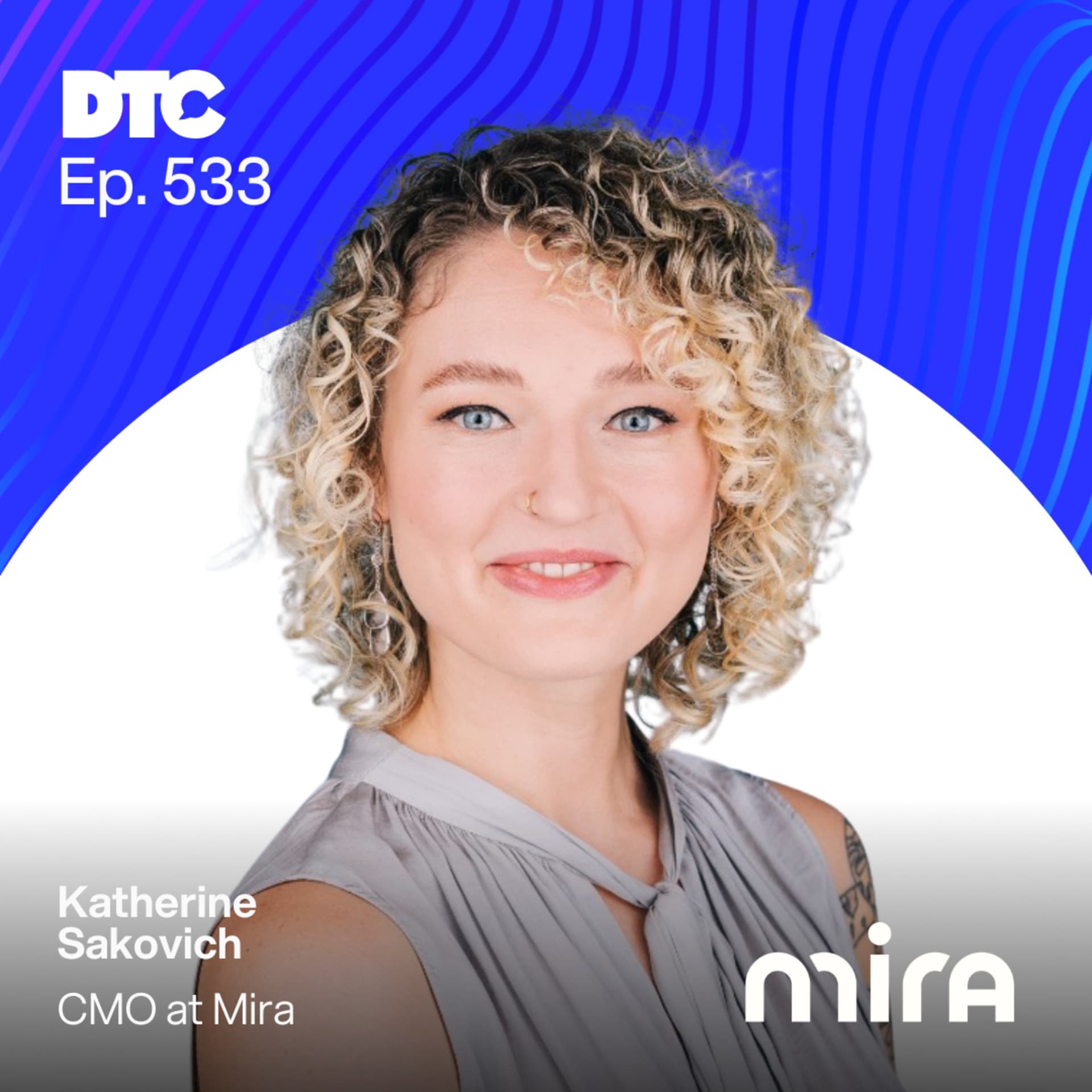
Catherine (CMO at Mira, “world’s number one hormonal tracker”). Background: previously worked with established FMCG brands at an agency; then moved into startups, including fintech. Joined Mira ~5 years ago around FDA approval for an at-home hormonal monitor.
Key claims
Don’t start with “a million ads”; start with organic community and product seeding. Community (18,000 women) became an “army of brand ambassadors” answering questions and sharing results. AI handles 30–40% of customer support tickets with better CCA scores than humans. Sales cycles are ~3 weeks, so content nurtures problem awareness.
Notable examples
pre-launch Facebook beta tester group; Meta/Google media buying by a dedicated in-house hire; webinars with doctors and partner brands; ads using consumer language from Amazon reviews; pregnancy-test “two lines” creative backfired due to sensitivity. Partnerships: Swelltory (menopause audience), Aura (research + integration), Flow Living (study + founder Alicia Witsi).
Written by AI. May contain mistakes. Listen to the episode to check what was said.
Chapters
Tap a time to open that second in VOInitial Growth Insights
0:00 to 0:51
Learn about the early growth phase and strategies used for success.
“In the beginning, of course, like when you grow from zero to something that was like 150 % per year, like 100 % per year.”
Catherine's Journey to Mira
1:02 to 2:41
Discover Catherine's background and her journey to Mira.
“So first of all, maybe a couple of words.”
Launching the Product
2:41 to 4:04
Understand the challenges and strategies in launching Mira.
“You painted a picture of what it was like then, but what was the size of the business?”
Building a Marketing Team
4:04 to 6:30
Explore the evolution of Mira's marketing team and early hires.
“I think that our core growth happened from establishing a marketing team and really scaling it up.”
Community-Driven Marketing
6:30 to 8:15
Learn how community engagement shaped Mira's marketing strategy.
“So we had a partnership manager who was responsible for this initial influencer seeding and also bringing partners, affiliate partners on board and leveraging organic channels.”
Leveraging User Stories
8:15 to 11:21
Discover the importance of user stories in marketing and communication.
“And really, when I joined, our founders are very scientific people and we mostly communicated features and benefits like our AI and our patented technology.”
Content as a Lead Nurturer
11:21 to 14:00
Understand the role of content in nurturing leads and driving conversions.
“remove this test because we don't want to see it.”
Engagement Through Webinars
14:00 to 14:48
Learn how engaging content and webinars can improve conversion rates.
“and someone from another company, for example, male fertility test or supplement company or some like a sexual wellness company or even mental health because mental health also is a big topic.”
Exploring Growth in B2C Space
14:48 to 17:48
Discover key factors driving growth in a B2C business model.
“I'm always curious because we've run a lot of webinars.”
Customer Lifetime and Product Development
17:48 to 19:38
Understand the challenges of customer retention and product relevance.
“But it probably when you think about your customer avatar, there's a lot that goes into finding them at those exact stages.”
Show all 18 chapters
The Importance of In-House Expertise
19:38 to 22:20
Explore the benefits of having a strong in-house media buying team.
“And as these companies that come in now, it brings ownership of your health more preventatively, brings you a patient rather than just relying on the doctor and dealing with consequences.”
Navigating Advertising Challenges Post-iOS 14
22:20 to 26:08
Learn how advertising strategies have evolved in the wake of privacy changes.
“We were able to, first, I think that one of the biggest wins right now to really leverage menopause segment because everyone had concerns about it.”
Partnerships and Future Growth Plans
26:08 to 28:00
Understand successful partnership strategies and future growth ambitions.
“So I was doing a lot of consulting with different CMOS of famous brands, not only in women's health and wellness, but just overall D2C brands.”
Exploring Brand Visibility Strategies
28:00 to 29:02
Learn about innovative strategies for brand visibility and awareness in the marketplace.
“Because it's the kind of product it is too, right?”
The Retail Dilemma: Timing and Awareness
29:02 to 30:11
Discuss the challenges and timing considerations for retail expansion in niche markets.
“When will be for everyone, basically, for men, for women, for now, for trying to conceive, but still feels like as a very specific need that people research a lot online.”
AI in Marketing: Balancing Automation and Human Touch
30:11 to 31:18
Examine how AI tools are reshaping marketing strategies and customer support.
“that we will use for our new campaign and launch.”
The Future of AI and Analytics
31:18 to 32:16
Delve into the future potential of AI in analytics and the importance of human oversight.
“So it's another good case was really helping us not to scale team, not to spend more on a team when we have more sales and more tickets coming in.”
Tools for Growth: SaaS Solutions in DTC
32:16 to 34:19
Discover essential SaaS tools that facilitate growth in direct-to-consumer businesses.
“If you can just sort of natural, have these natural language conversations that allow you to do this really interesting data extraction.”
Transcript
Automatic transcript. May contain errors.0:00Katherine Sakovich:In the beginning, of course, like when you grow from zero to something that was like 150 % per year, like 100 % per year. Now we are growing around 30%. And a lot of this growth is really driven by... Running a million ads to this product right out of the gate was probably not the best plan. You started with organic, you started with product seeding. Talk a little bit about your strategy to go that way with the product and how it paid dividends. I think around 30 to 40 % of our customer support tickets, it's answered by our AI agent. And AI agent has sometimes better reviews, like a better CCA score than a human agent because she replies quickly.
0:42Katherine Sakovich:She knows everything. People like her.
0:51Catherine, welcome to the D2C podcast. Could we start with a bit of your hero's journey that led you to the position of CMO at the world's number one hormonal tracker?
1:02Katherine Sakovich:Sure. So first of all, maybe a couple of words. What is Mira? Mira is an at-home hormonal monitor device that helps women to track their hormones at home, trying to conceive, understanding their hormonal imbalances, or maybe perimenopause. it's my first company that's focusing on the women's health i joined them around five years ago honestly was a bit of surprise for me because before that i worked with multiple brands and the agency side mostly established fmcg brands and after that jumped into startup world but more focused on fintech companies um and i think at some point i was thinking that i want to have a project or a product that I can deeply rely to and also that would make the impact and a change in the world so I was interviewing with different companies focusing on sustainability and ecology and you know pop-up and it was a very risky decision for me because the company was brand new and the product just about to launch but in the same time I realized that I really like this initial time, like when everything is chaotic, unorganized, there is no brand, there is no communication strategy, anything.
2:23Katherine Sakovich:And I have opportunity to build it from scratch. It sounded pretty exciting. And yeah, since then, we grew quite a bit. And looking back, it's like almost impossible how we did it. And how long have you been with them on this journey? Around five years. Around five years. Okay, take me back to the beginning. You painted a picture of what it was like then, but what was the size of the business? Had it gone to market? Start at the beginning. Yeah, so when I joined, we basically just got FDA approval for product. It's a medical device, so all this compliance and regulation is pretty important. It took founders a couple years to develop devices, innovation.
3:04Katherine Sakovich:So it went through the whole studies and confirmation from FDA and CS, Mark's approval. And when I joined, they were like, oh, we wanted to do launch in a couple of months. So what we should do, like how we're going to launch it. So my goal was to get initial feedback from customers and kind of set a base for upcoming events. We participated in ICS. We did some trade shows. But I was a person who was managing basically customer support and marketing and being an influencer and a social media manager in one. And yeah, we started to grow pretty fast, especially during the pandemic. And that was a turning point when we started to expand and hire a marketing team.
3:57Katherine Sakovich:And besides manufacturing, who is responsible for building the product and bringing it to the consumer, I think that our core growth happened from establishing a marketing team and really scaling it up. So it was like the first teams that basically formed in a company. I think it would be really helpful, actually, if you could outline those hires. When you've got a business that has traction, product market fit, you're the market leader and you're building your team out, what were your first hires that you made? Yeah, I think for the, we had, first of all, like our strategy, especially those times was just like work with some contractors and freelancers, like don't hire, you know, don't commit for something long term and try people.
4:43Katherine Sakovich:And a lot of people with whom we start working in this part time basis eventually joined. Like, for example, we had one of the first hires, I need to have someone who can like a proofread and write copy because our product is heavily content based. We do a lot of education. So like writing was a very labor intense thing that I can like multitask and manage. So we found a book writer. And yeah, now she's a creative director. Oh, nice. So it was really interesting to see her growth. And I think Media Buyer was also one of the first hires because I truly believe that Media Buying should be done really by a dedicated person who is focusing on specifically Meta or Google.
5:28Katherine Sakovich:And those times we didn't have opportunity to hire good qualified agencies. So we just worked with a couple of freelancers. and I think the kind of the third step was to hire like a marketing kind of like a person who can do everything, a generalist who can help me with sourcing influencers and sourcing partnerships because in this initial stage, we didn't have a lot of budget. So we were like, okay, what a channel that we can leverage and definitely like product gifting and partnership with like-minded companies who also have female wellness, women's health audience really helped. But it's again, it's like you feel that it's organic and some founders ask like, what I can do that doesn't require money?
6:19Katherine Sakovich:And I guess there's nothing that not requires money. Time is money. Yeah, you still pay for employees, but compared to the media cost, it's more affordable. So we had a partnership manager who was responsible for this initial influencer seeding and also bringing partners, affiliate partners on board and leveraging organic channels. So your go-to market, I think that's one of the things we're talking about at Pilothouse all the time these days is just sort of strategy. And I think when we come up, we kind of came up as a performance media buying company. And when you have a hammer, everything looks like a nail.
6:56So I like your perspective a little bit where you really thought deeply about how to, Like running a million ads to this product right out of the gate was probably not the best plan. You started with organic. You started with product seeding. Talk a little bit about your strategy to go that way with the product and how it paid dividends, I guess.
7:13Katherine Sakovich:Yeah, I see it. Like a two sides component because nurturing your social media and community before product went live, we started to do pre-order. And I started to look for communities on Facebook that have women who are trying to conceive or they're discussing some challenges connected to it and kind of ask admins to introduce the product and onboard some initial testers, like beta testers. And these beta testers, we created a group for them because we thought, oh, they might ask more questions. But this community started to grow. And now it's, I think, 18 ,000 women who are like a really army of brand ambassadors who answer questions to each other and recommend products to other people.
8:03Katherine Sakovich:So it helped you build this social trust because when you generate traffic and people coming to the website, they want to see that someone is using it, someone is exciting. about it so that's why also influencers and partnership help to build this content that kind of address the traffic and leverage what is the product value through storytelling because i mean for our products it's pretty innovative there is something like this before on the markets there are definitely some solutions which is just a regular like a test strips you can buy in the pharmacy, but also they cost$10 and our product cost$200.
8:46Katherine Sakovich:So it's a big ask. And really, when I joined, our founders are very scientific people and we mostly communicated features and benefits like our AI and our patented technology. But really what we realized pretty soon is that no one cares. It's really what people wanted to hear, like, can I get pregnant or not? And this first stories that community and influencers helped to bring was addressing these questions not us talking about the product but them talking about the product and of course it can't happen organically because we need to stimulate it we were sending we're checking on instagram who is posting hashtags like trying to conceive or going through ivf having challenges checking ovulation and we're sending them product and asking them to like you know whatever if you will get pregnant share but if not like we're not obligated and when we start to see first results i mean it was very difficult to be patient because it's not like something you sent and you can see feedback next day but when some first stories uh come it came in it was huge because it was my working the ads eventually converted much better and we use start to use them as our ambassadors and also leverage right listing and also i'm just you're probably not building those stories into your marketing funnels but you're using them to inform your customer avatars and your pain points and the language that you use i'm sure in your ads and landing pages as well yeah for sure it was i'm still sourcing a lot of copy and insights from amazon uh reviews uh now it's much easier with the eye you can just summarize and but before they just go and review by review and checking what people like about the product what people don't like about the product and plug in this consumer language into our copy and landing pages um adjusting it because also like how people call these journeys for example we one of things that we thought would be really great to show pregnancy test like two lines on the pregnancy test congratulations for this content and make ads with it because we thought like oh people will see i can get pregnant and it's like confirmation that someone got pregnant but people got really upset because it was triggering someone who is going through a very sensitive journey and they were commenting that like, remove this test because we don't want to see it.
11:25Katherine Sakovich:It's like, you can imagine how difficult is it to kind of listen to this feedback of also to build guide that we use how to talk about sensitive topics like infertility or miscarriage or menopause in the ways that people feel that we're listening to them. because number one insights that we learn that like no one listens to them um it's unfortunate that you know healthcare system builds this way that they need to go through the whole like a journey basically like demand from their practitioner to get some treatment but it's also great for direct to consumer companies who are working in this reproductive area because consumers self-educated now they're so educated like this uh members that are now a group they probably know more than any of our medical advisors.
12:19Yeah, I believe it because they've got a lot on the line, right? I guess, which is why you have to be careful in the language that you use. Can you talk a little bit about like, was there, it sounds like with your, with the co-founders, there's a lot of, there's going to be a lot of data and science and, you know, results that you can show like, but what, how did you think about creating out the sort of like content web that will answer these questions? Maybe aside from the community, how did you think about content for the brand?
12:42Katherine Sakovich:Yeah, content was really big needle mover. because our sales cycles now around three weeks, but I think earlier it was even longer. Like people really considering the product, they're checking what else is available, they're following you. So how we nurture leads during this time is very important. How we provide education because our funnel starts from problem awareness. It doesn't start from a product awareness. First, we need to tell them, oh, you can't get pregnant, maybe because you're doing it at the wrong time. or maybe you experience some menopause symptoms and you don't know about it.
13:20Katherine Sakovich:You think that it's for someone who happened later in a lifetime. So really starting from educating what is a challenge and how you can go through it and bringing some experts. So it's not, again, not us talking about these things, but some people that have authority. And for it, we pretty early on started to engage just like doctors that has social media presence to run webinars with us. And we collected leads, we advertised this on Meta and also like did through partnerships. Like for example, there is a free webinar where there is a doctor, someone from our company and someone from another company, for example, male fertility test or supplement company or some like a sexual wellness company or even mental health because mental health also is a big topic.
14:15Katherine Sakovich:And we do webinars together. So it's more engaged and conversion rate was much better than just running giveaways because people for giveaways, they just like want to get something for free and go. So bringing content for free, valuable content was really working really well because we also can split these videos and to snippets and like use for social media and so on. So building like this really like a content wheel and using it in a different channels, recycling it. What was your show up rate? I'm always curious because we've run a lot of webinars. In my info career, I've run a lot of webinars and show up rates are usually pretty abysmal.
14:55Usually like one third or so, like one third to maybe one half of the people who sign up show up. What was it like in this B2C space?
15:02Katherine Sakovich:Yeah, one third is a really good result. I would say that in around two live webinars, around 20%. But again, it doesn't matter because we record them. We send them a link. We send a limited time discount. And eventually, we start to do pre-recorded webinars. We just pre-recorded them and basically evergreen. People sign up, they immediately get this webinar so they don't even need to attend live. Okay, so you've set the groundwork here. You've got a great organic base. You've got community. You've got content marketing. Tell me a little bit about the growth journey. Because it's been pretty wild.
15:39It's been a lot of growth in the last five years. Talk to me a little bit about your growth journey, what you can say about how big you guys are now, and what really were the key levers in that growth?
15:49Katherine Sakovich:Yeah, so in the beginning, of course, like when you grow from zero to something that was like 150 % per year, like 100 % per year, now we are growing around 30%. And a lot of this growth is really driven by new product launches, because I think it's something that also I learned, And, you know, when I worked with the big brands on the marketing side, I kind of didn't participate in a product development so closely. We're given, you know, there is these products and you are like advertising them. But at Mira, I work pretty closely with the product team. And the product strategy is very driven by consumer demand, like what they want, what they don't like.
16:33Katherine Sakovich:And like launching, for example, in the beginning, we had just one hormone test. and after that we launched two hormones that can not only predict ovulation but also confirm that it happened and after that we launched another hormone that also can like i tell you how successful you ovulated and now we have hormones that also measure your ovarian reserve so like every launch was really game changer that you can't achieve just by launching new channel i don't know we're launching now connected tv so we'll see maybe it will be a huge change but Honestly, any adjustments, any influencer we bring or changes we did on meta, they never made this turning point as well as new products.
17:18Katherine Sakovich:So new products are very important and pipeline, having them regularly, like every year and preparing for them, like making sure that people understand what the benefits. And a lot of people, of course, like a switch to the new product. So it kind of feels like upgrade, like iPhone launch every year. Yeah, I've talked to other people in the space that, you know, where there's a large focus around pregnancy. And it's a challenge because you, there's only a few windows in a person's life necessarily. And I think you mentioned menopause as well. So you've got that to think about. But it probably when you think about your customer avatar, there's a lot that goes into finding them at those exact stages.
17:56Katherine Sakovich:Yeah, exactly. And unfortunately, also the lifespan of a customer is pretty short. I compare it to like dating app lifetime because you're like, you want to build the products for people to get pregnant faster, but in the same time, you want them to stay and like retain and be loyal. So it also comes to product development, like how we know that hormones connected to different aspects of our life, not only reproductive. And there is no other products that kind of gives this insights. So that's a challenge because we need to educate. But now we're bringing it into hormone imbalances, checking, and perimenopause, so some like a more wellness application.
18:40Katherine Sakovich:So it's not just for time when they're trying to get pregnant. It also helps to justify cost of investing into the product. I feel like it's maybe not as much as I think, but it's a blue ocean space in a lot of ways because people are just learning the science around a lot of this stuff, right? where for a long time, we've just sort of had this one-way relationship with doctors or health providers, whereas now people, like you say, are really educating themselves about all this stuff. Exactly. And I think other products, like some people asking like, oh, is it like an orary in your competitor or maybe whoop or some like Apple Health?
19:15Katherine Sakovich:I think that no, because it really helped to educate and like build this behavior. We even did the research with the glucose monitors, how cycle and hormones affect glucose spikes in women's health. But really, it's consumer now much more trained and educated even than five years ago. It's like, oh, wow, I can track everything. And as these companies that come in now, it brings ownership of your health more preventatively, brings you a patient rather than just relying on the doctor and dealing with consequences. You mentioned how important it is to have a strong in-house media buyer. And I also know that you kind of came to this podcast because you were a pilot house client as well.
20:02Can you talk a little bit about your decision to work with an agency when that became a priority for you?
20:07Katherine Sakovich:Yeah, I think as we started to spend more and more on meta, before that we tried to build our in-house team and we had a part-time person who was doing media buying. And after that, we hired someone full-time and we hired a producer who was helping with preparing creative assets and like setting briefs for designers for static ads. But at some point, we just realized that the level of expertise that we can get from just one person basically boiling in the same product all the time and the exposure to what I see as a big benefit of the agency, that people, first of all, they're working in the teams.
20:50Katherine Sakovich:And I think based on my journey, like the best ideas coming from discussing with the people who understand what they're talking about. And unfortunately, we had just one person. So we can't provide the support. We can't guide. We didn't have someone senior. And another one is exposure to other clients. Like even, you know, you don't have like exactly the same product. You can see like inspire ideas and what worked with other brands and kind of cross-pollinate and bring these ideas to us. So I think it was really helpful to get the team, not get just one person who is probably, you know, the best in the class and super skilled, but get a team with a diverse set of expertise and see how each person can contribute to scale.
21:37Katherine Sakovich:Because with meta at some point, you do everything right. Meta limits what you actually can change in the account. It's not so many things as before. You actually don't need maybe so much technical skills. It all goes to the strategy and analytics. Like how do you get insights what's working or not and what are fresh ideas what we can try. And you have to feed the machine. Week in, week out, new concepts, new tweaks, new angles, new avatars to keep it going, right? Yeah, and also scale. Like when the first time I heard that like, oh, we need to like produce like 100 ads per week. I was like, oh my God, how we can do it.
22:16Katherine Sakovich:So definitely need help. Yeah. And how's it gone? How has it gone with Pilot House? Yeah, it's going great. We were able to, first, I think that one of the biggest wins right now to really leverage menopause segment because everyone had concerns about it. Like, is it right audience? Like, why do they need test hormones? Do they understand the product? And we see great results, but they didn't came like from beginning. I think it took a lot of iterations and gaining this insights from customer interviews, from product team, from comments, from influencers, and testing a lot of creators and hooks as well and see like what resonates.
22:57I wonder if it would be as hard pre iOS 14 or if, cause that's kind of been the feeling, is you've had to get really go back to basics a little bit with how you think about advertising, you know, and make sure you really are putting forward compelling hooks, you know, really thought out customer avatars, you're speaking to pain points, all that stuff that you talk about, you know, really having to work at to lock in. So it's cool that you guys have found it. You mentioned partnerships. I think people on this podcast are always interested about partnerships. Can you talk a little bit about some of your more successful partnerships and what made them work so well?
23:32Katherine Sakovich:Yeah, I think one of recent partnerships that was pretty successful was the app called Swelltory, which is a longevity app. And also, sometimes you don't know from where this successful partnership can come from. And it was pretty good because they had menopause audience that we don't have, and we introduced our product. In terms of more PR and awareness impact, we really believe in our partnership with Aura. We're doing research with them and now launching integration. I would say, I can't highlight one specific partnership, but just bundling them. We had a pretty good partnership with some other fertility like clinics and men reproductive health products and fertility benefits as well, like a carrot and wind fertility.
24:26Katherine Sakovich:So it's like companies who offer to employee benefits and like being part of them yeah also help to kind of grow this b2b sales at some partnerships that we had really high hopes with a big one of biggest apps for period tracking for example didn't work it's just you know you need to think not only if it's a right audience but also if it's the right moment like do they come to this product to learn about something or it's just like i don't know very utilitary function and they're not open to kind of research and get introduced to other products but what we learn also that what works the best is more like long-term partnerships where we not just exchange social media posts imls about each other but doing campaigns now we're working with this app that calls flow living and with them we We have a study that we are conducting and their founder, Alicia Witsi, which is very famous in this women's health space, being a speaker for us and joining our podcast.
25:34Katherine Sakovich:So it really helps to show consumers that you are not just selling another company product, but you really believe in a synergy between both of you. You mentioned you're experimenting with connected TV. And that also leads me to the next piece, which is, I think, correct me if I'm wrong, You said in the pre-enter, you guys are approaching eight figures. You're like really experienced incredible growth. What's it going to take, do you think, to get to the next? It's like you're building this. It seems like you're building it very organically, very steadily. What's it going to take to get to that like next phase of growth?
26:07Katherine Sakovich:Yeah, it's a great question that I'm also trying to answer. And recently I was talking, like doing my research and, you know, I never been in the same role before when I kind of like scale company from ground up and I joined, you know, and I built the product and the brand from beginning. So I was doing a lot of consulting with different CMOS of famous brands, not only in women's health and wellness, but just overall D2C brands. And I was asking the same question, like, you know, what brings brands from like being you know in a i don't know 20 30 millions revenue so like 150 and 200 and uh honestly there is no secret more of the same better of the more of the same i was like asking what channels do you bring and everyone is like oh you just need to work on a brand awareness so honestly i don't know like our approach now is to try different things and i think that really big growth will come from new products and reaching new audience like menopause audience we know is pretty growing and like trending right now and uh we also want to get into wellness space and also working on their products for men because there are also men hormones that you might be interested in the test uh so all of it will expand the product to be multi-facet uh like for example like ordering because it started from someone who is a biohacking for sleep.
27:38Katherine Sakovich:And now the big growth is coming actually from women's health. And in women's health, also there are multiple segments, like someone tracking for avoiding pregnancy or someone is tracking for menopause. So it's really like how do you expand into different segments and tell the story. But also I believe that the brand awareness will play a more role. uh we just discussed today to do a campaign for our new product launch on the times square like on this big screen yeah probably i would be like a year ago oh my god that's crazy because it's so expensive it's absolutely impossible to measure it's just a waste of money but now i feel like it's really something that would help us to put the brand up front of people eyes and even though that don't need the need right now, maybe at some point of their journey, they will think about the brand.
28:31Yeah. I'm telling you, Super Bowl. You work out the CPM on women's... I just think, I think you're... Because it's the kind of product it is too, right? Because there's this dawning awareness of your ability to take this into your own hands that maybe wasn't there before. So I do think these exercises that you're doing in branding at the top of the funnel could pay real dividends down the line. I think that's really cool. Are you guys in retail?
Read the full transcript
28:53Katherine Sakovich:No, we did some trials, but honestly, I don't think that it's time for retail yet. No, post-Super Bowl commercial. Yeah, maybe after for sure. When will be for everyone, basically, for men, for women, for now, for trying to conceive, but still feels like as a very specific need that people research a lot online. And also we see based on sales growth that's coming from Amazon, A lot of people like pick something that is more convenient for them, like just, you know, Amazon where they can get fast delivery cash back and so on. But retail is, will be a big step for awareness for sure. Oh yeah. But it's, it's like, it almost requires more category awareness or like the amount that you'd have to put into raising awareness right now in the retail environment would cost you a lot probably.
29:43Right. And no, you're no one's doing Costco samples with this, right? That's not going to work. I have to ask you one final question, which I've got to start asking everyone who comes on the podcast is, how are you using AI right now? What are some of the ways that you're using AI as a CMO effectively? Are you old school and not using it?
30:01Katherine Sakovich:Oh, we're trying to use it in many different ways. It was a fun experiment, kind of like my failure as a CMO. We did this commercial video right now that we will use for our new campaign and launch. and I was like, please, just don't do voiceover with AI because a couple months ago I tried it and it was horrible and I feel like we really need a human voice. And our creative director sent me two wings and I was like, which voiceover do you like the most? And honestly, I thought that both of them are some narrators, some actors who did it. And I picked one and she's like, oh, do you know actually the one that you picked is AI?
30:44Katherine Sakovich:Is AI. I thought maybe AI was a human. So it's really developing so fast. And yeah, so for like video editing, for video creation, for voiceover, for generating ads, generating illustrations, it's like creative process wise. But also, I think around 30 to 40 % of our customer support tickets is answered by our AI agent. and AI agent has sometimes better reviews, like a better CCAT score than a human agent because she replies quickly. She knows everything. People like her. So it's another good case was really helping us not to scale team, not to spend more on a team when we have more sales and more tickets coming in.
31:32Yeah, it's something I think organizations have to kind of continually assess right now. Don't, we just had a meeting about it today and we're wanting to be careful not to do make work projects or like, oh, wouldn't it be cool if we could do this with it? But like really take repetitive things that we're doing all the time and figure out, can we do it faster with AI rather than making work?
31:50Katherine Sakovich:Yeah, it would be interesting. A lot of hopes regarding AI and analytics, like all the things that Triple Whale now launched and North Beam, it doesn't work, you know, in a, how to say, like, you know, there is a pretty demo when someone is like, just ask questions and AI answer all the concerns. but so you still need the data analyst to support but i believe it's just a matter of time and pretty soon we'll get much better analytics uh everyone can access without like pinging data analyst and asking to send the report or get some data yeah i uh will just be able to talk to it it'll just be a lot more natural language processing i was watching some videos on people putting you know basically something that was watching their screen and listening to them talk And it's like, it totally, you don't need a keyboard anymore.
32:39If you can just sort of natural, have these natural language conversations that allow you to do this really interesting data extraction. I'm just, there's one last random question. Do you have any tools like SaaS products that you're a big fan of that have been a big part of Mira's growth?
32:54Katherine Sakovich:I mean, we use a lot of tools. I think TripleL definitely would help us to flip how we look into acquisition because before we were looking into meta data and we were optimizing towards eros and meta and after like launching shippelwell will start to optimize towards new customer acquisition and sometimes it leads you to make very different decisions than before um really like gorgeous in terms of customer support and helping use this ai for answering tickets there are some tools that we We use on Shopify, overall Shopify as such, I think is pretty great and like amazing infrastructure and all the apps we use like Loop, like Rebuy, just to like build the ecosystem and increase LTV by subscribing people or offering them upsells.
33:46Katherine Sakovich:Exciting, one of the less recent tools we launched is VideoVice for like more social looking e-commerce and see how it will work. We're using Silly Gems for our A-B test. It's also a big part because, you know, sometimes there are questions that you never know answer. And what I'm excited about is to try more integrate Coursor. It's like AI agent that you can talk to and give exactly like it's connected with all the services you use. So you can say like go to this file and find this information and input in another file. kind of like really feeling like in the future to try integrate it more into analytics and yeah, just like a basic operational task.
34:29Nice. Well, if they're listening, you should sponsor the D2C newsletter because this is the kind of stuff we talk about. Catherine, I want to thank you so much for coming on today. This was super cool. I think we've got a lot of CMOs and people who want to be CMOs and probably founders who want to hire CMOs. So hopefully people find a way to reach out. Do you think LinkedIn is the best place to find you there maybe?
34:47Katherine Sakovich:Yeah, sure. Nice. Well, I will include your, um, your page there, but yeah, thanks again for coming on. I look forward to getting an update. Uh, cause I know you're headed to, I think probably pilot house is deep in Q4 prep already thinking about how we're going to make this. Is it, is it a really seasonal? Is it, yeah. Q4 is big for everyone, I guess, regardless of, but still people still have to be in that phase of their life at the same time as Q4, but you have big plans. Yeah. It's still seasonal back to school. Yeah. That's right. up to summer, going after vacation and really preparing for life changes.
35:26Katherine Sakovich:So it feels really optimistic. And with CTV and all the Top of Funnel, we'll see how Meta starts to perform better as well. Nice. Well, I look forward to catching up with you. Thanks for coming on. Thank you for inviting me.
35:43Thanks so much for listening to today's episode. If you're not a subscriber to our newsletter, you can do that right now at direct-to-consumer, all one word, dot co. I'm Eric Dick, and this has been the D2C Podcast. We'll see you next time.
From the publisher
Subscribe to DTC Newsletter - https://dtcnews.link/signup
Katherine Sakovich, CMO at Mira, shares how Mira scaled from chaos to a multi‑product hormonal health platform via community-led, educative marketing. Highlights explore positioning tactics, messaging for sensitive journeys, product‑marketing integration, and the evolving role of AI.
Key Moments:
- Built early beta‑tester community into 18,000-member brand ambassador network
- Laid tagline-offfer-tested messaging over media buys to human stories
- Designed marketing hires as strategic freelancers to scale
- Used beta feedback to inform educational and emotional copy strategy
- Layered performance media once trust and voice were grounded
- Positioned each product launch like an iPhone upgrade for community anticipation
- Partner-generated webinars (with doctors) became evergreen funnel assets
- Deployed AI in support and fraud prevention—still cautious with patient‑facing AI
Timestamps
00:00 Katherine’s journey to becoming CMO at Mira
02:00 Launching Mira from scratch and early growth strategies
06:00 First key marketing hires and team structure
08:00 How Mira built community and organic traction
13:00 Webinar strategy and content wheel for education
16:00 How product launches fueled Mira’s long-term growth
20:00 In-house vs agency media buying and working with Pilothouse
24:00 Partnership strategies that actually worked
27:00 Mira’s next phase of growth and top-of-funnel focus
30:00 How Mira uses AI in support, creative, and operations
33:00 Favorite SaaS tools and tech stack powering Mira
Hashtags
#DTCMarketing #HealthTech #FemTech #StartupGrowth #CMOInsights #CommunityMarketing #ContentStrategy #MediaBuying #EcommerceStrategy #DirectToConsumer
Subscribe to DTC Newsletter - https://dtcnews.link/signup
Advertise on DTC - https://dtcnews.link/advertise
Work with Pilothouse - https://dtcnews.link/pilothouse
Follow us on Instagram & Twitter - @dtcnewsletter
Watch this interview on YouTube - https://dtcnews.link/video