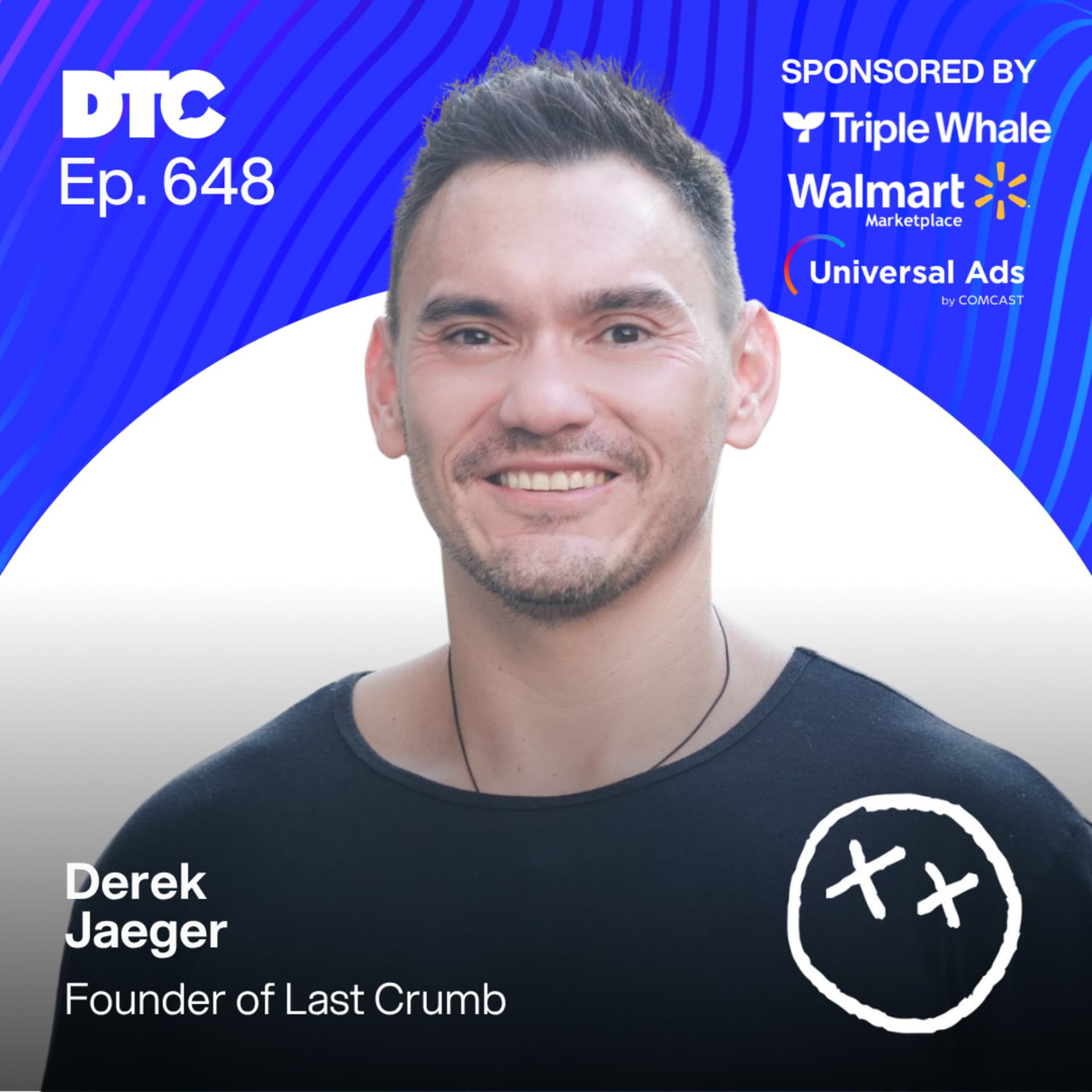
In short
How Dugout Mugs scaled to $55M+ using authentic branding, profit-focused metrics, smart partnerships, and operational control of the supply chain.
Guest backgrounds
Chris Denard, founder/CEO of Dugout Mugs. Former sales leader (opened Gold’s Gyms), then real estate (2008 short sales), then early social-media audience building (Facebook/MySpace-era), later ecom via social and paid/push-button commerce. He says he previously grew fan pages to ~7M at peak and later invested in multiple ventures (some losses, including cannabis and restaurants).
Key claims
“Measure and pivot”; prioritize bottom-line profit over top-line; authenticity/transparency; “shut up and listen” in deals; partnerships work when strengths/weaknesses complement; audience doesn’t automatically convert.
Notable examples
Dugout’s bat-barrel mug concept (Randall invented it; Dugout launched ~2017). Deal structure: Chris earned 8% equity per $100k generated (capped at 40%) while Randall kept 60%. Competition: Lumberland/Thompson Mug—Chris criticizes vanity metrics and weak content-to-sales linkage. Seasonality managed by segmenting B2B/B2C and targeting corporate gifting (Bud/Miller/Coors/Hard Rock/Celsius/Fox/T-Mobile/Capital One). AI used for customer service, content/image creation, A/B testing, and contract drafting.
Written by AI. May contain mistakes. Listen to the episode to check what was said.
Chapters
Tap a time to open that second in VOIntroduction to DTC Philosophy
0:00 to 0:52
Learn about the importance of authenticity and profit in direct-to-consumer businesses.
“You have to get it going and then you measure and you pivot.”
Chris Denard's Entrepreneurial Journey
1:01 to 4:38
Chris discusses his diverse background in sales, social media, and real estate.
“a long time you've been mining the internet for a long time but give us a walkthrough Oh, back to the beginning of time.”
The Birth of Dugout Mugs
4:38 to 5:54
Chris shares the backstory of how Dugout Mugs was created from a personal crisis.
“You know, like I said, all the business and I've had several businesses along the way.”
Navigating Competition in DTC
5:54 to 12:29
Chris reflects on competition, mistakes made, and key strategies for success.
“There's a lot of story between where we just left off and that we'll skip through a lot of it, which is fine, but we did well, we made money.”
Building a Brand with Authenticity
12:29 to 14:01
Discussion on the importance of being relatable and transparent in brand marketing.
“$55 million in bat mug sales would indicate.”
The Importance of Brand Transparency and Consistency
14:01 to 18:04
Learn why transparency and consistency are vital for brand identity and marketing strategy.
“We're doing, you know, all these guys back here, you know, like I'm very forward facing with that.”
Partnerships and Their Impact on Business Growth
18:04 to 19:59
Discover how understanding strengths and weaknesses in partnerships can lead to business success.
“I've had some good partners and I've had some bad partners because I've had several companies.”
Deal-Making Philosophy: Being Right vs. Being Rich
19:59 to 22:46
Explore the mindset needed for successful deal-making and the importance of aligning goals.
“You have to understand what you're good at and more importantly, what you're not good at, and then just kind of get out of the way and find the people that are good at it, in my opinion.”
The Art of Listening in Networking and Deals
22:46 to 24:44
Understand the value of listening in creating successful relationships and deals.
“in the pre-interview, you mentioned something about your approach to deals being shut up and listen.”
Crafting a Win-Win Business Deal
24:44 to 28:00
Learn how to structure deals that benefit all parties and leverage individual strengths.
“And then it's just, I don't want to call it ammunition, but it kind of is.”
Show all 15 chapters
Understanding Seasonal Trends in Sales
28:00 to 29:52
Learn how Dugout Mugs manages seasonality in their sales cycle.
“You're an introvert that doesn't want to go out and do sales and talk to people.”
Leveraging AI for Customer Service and Marketing
29:52 to 32:26
Explore how AI is being utilized for customer service and marketing improvements.
“We did what we could do to maximize those those chunks, like because we're doing things internally, we can sell all the way up to like December 18th, 19th and still get it there for Christmas.”
The Importance of Flexibility in Business
32:26 to 34:38
Understand the significance of being adaptable in business through examples.
“And then they take it out on a customer.”
Living Life Beyond the Screen
34:38 to 38:20
Discover the importance of actively living life rather than just engaging online.
“That's why the water wears away the rocks.”
Valuing Time as the Most Important Asset
38:20 to 38:50
Learn about the significance of time as a resource compared to material wealth.
“And I think that is a misstep by most people.”
Transcript
Automatic transcript. May contain errors.0:00DTC and Ecom, it's ready, fire, aim. You don't have to get it right. You have to get it going and then you measure and you pivot. You measure and you pivot, adjust, move, stay fluid. What matters, it's not your top line sales, it's your bottom line profit. You know, I'd rather have 5 ,000 people that follow us on social media and 2 ,500 of them are buying than 3 million and you got 500 that are buying. authenticity man that's a magic word i don't think enough people use it understand it integrate it in everything they're doing authenticity and transparency are massive life is so short stop wasting it doing stuff that truly doesn't matter that is a misstep by most people i know i did it and i got lucky enough to get that time back
0:51welcome to the d2c podcast i'm eric dick and today i'm here with chris denard founder and ceo of dugout mugs chris welcome to the d2c podcast how you doing today thanks what's up man glad to be here why don't we start with the hero's journey uh i know you've been at this for a long time you've been mining the internet for a long time but give us a walkthrough Oh, back to the beginning of time. Okay. So yeah, man, like I was in, I was in high school and, um, you know, I've been really outside the box, everything I do, it's, you know, I'm pretty unemployable. I found, uh, over the years, as many, many of us are in the DTC world, but, um, I came out of school and I started opening gold gyms, right?
1:30That's where I got my start. Um, I was really good at sales, really good at people. And I found this new website called Facebook that I was leveraging and being one to many communication really worked well for me. So, you know, I did that for a few years and I, you know, crushed it. You know, we taught, you know, top sales in the region, top sales in the Southeastern United States. Like we were really getting after it. But, but it was, that's as high as I could go. Right. And then I bounced out and I got into the real estate in 2008, which was just chaos, 2008 real estate, but I was flipping short sales.
2:02right? So I was in the, I was at least in the right vertical of the real estate business. But you know, what, what I really started doing is understanding algorithms and how to leverage websites and how to be, so like I'm in my forties, right? Like we grew up belly to belly, shaking hands, like this is how we do things. And I kind of was, I was kind of on that bridge, that little generation, that little window that knew how to be real people, but also could do it digitally. And I feel like that was a really sweet spot for me because then And what I did is I just did what I did best, sales and people and communication and engagement.
2:36And I just did it online so I could do it from a one to many format. And naturally, that brought me into social media, you know, some of the very early, the MySpaces, the, you know, the realestateinvestor.com, like some of these weird little things. And that just kind of steamrolled. And eventually I had about, you know, I had probably 7 million fans at the peak of it. and then I just went to them. It was the biggest pages in the world for like Tim Tebow and Duck Dynasty and just some of these really cool, like the in thing at the time. But because I knew how to engage. And this was back when Facebook hadn't gated these organic audiences fully.
3:15So you had a lot more access to them too. Yeah, it was push button, make money, right? So I went out to these folks. I was like, hey, well, what do y 'all want? And they're like, oh, I wish I had a shirt that said this. I'm like, hold on. And I went over there and one of the first like real notable companies was uh teespring i'll give them a shout out even though they they got over on me on some money but you know that's that's between them and god but uh i got into teespring and i really got after it with that and some of these some of these pages we crushed it man we did over 20 million dollars in sales of t-shirts and that's when i really uh when i had those big fan pages that's when i really started getting my head wrapped around uh e-com and direct to consumer through social media and paid ads and stuff like that.
4:01And like you mentioned back then, it wasn't even really paid ads. It was just push a button, make the money that everybody wasn't being throttled. Right. But things change and you learn how to pivot. That's the biggest thing in DTC anyway. Pivot. That's funny. I started my affiliate career back in the day selling Donnie Darko t-shirts to Donnie Darko fans. We talked about Shine On as well. I did a small jewelry store with Eric Tazko. But what was it that shifted your mindset from, you know, sort of like servicing these fan groups with print on demand to like trying to build a brand, trying to build a bit more legacy with a product yourself?
4:37Well, it was really more long term thinking, right? You know, like I said, all the business and I've had several businesses along the way. So I just treated my e-com and my DTC brand as a business. You know, even my t-shirt, I mean, you remember the print on demand. I know, I know Eric, I know Eric very well and actually had a little part of when Shine On first got started, right? So that's a nice little blast from the past there. But, you know, I, at the beginning, I looked at this, you know, I think we may even have talked about it at one point where we sat in a room at a meeting table. We had, we had design meetings, we had customer service meetings.
5:15We treated it. We had roles. We had responsibilities. We had checks and balances. We had things. It was a business. Whereas a lot of DTC people, it's just like a moonlight thing. It's a side hustle, which is fine, but it's not going to be as scalable, in my opinion, right? Because it didn't have the infrastructure. And it's more of like a bottle rocket than it is the grand finale kind of thing, where you could start the spinoffs and pulling this off and this off and really create an infrastructure that is more stable and self-sustaining. Like that's how I looked at it, you know, when I was growing that brand.
5:50And then, so what brought Doug out together? How did that come to be? There's a lot of story between where we just left off and that we'll skip through a lot of it, which is fine, but we did well, we made money. I was very naive in investing and blew it on all kinds of things that just, I might as well lit that on fire. What was the worst? The worst? Cannabis. Being in the cannabis space, that lit money on fire. The restaurant lit money on fire. Lessons. Expensive lessons. Those who invest out there, understand your core competency because now I only put money in things that I understand and I can positively impact, right?
6:32Because I have a pretty powerful network and a pretty powerful skill set. So if I can impact the investment, not only do I get my money in at the right time, but then I can help it grow. Right. So that's kind of one of the pieces that I did, one of the boxes I check when I'm doing investing now. But anyway, so I was just burning money, burning money, burning money, trying to make it, you know, make it multiply because I was chasing legacy and I was chasing money and I was chasing all these things. And I got sick. I ruptured my appendix. It's nothing abnormal, right? But I ruptured my appendix and I was so busy with meetings.
7:07I didn't go to the hospital for a week, which is not advisable for anybody out there that thinks that shit was smart. It was not smart and it nearly killed me. And I had a six month old little kid at home that I had barely met, honestly, because I was busy running around and flying here and going to this conference and that conference and just trying to, you know, make it happen. Right. And then while I was laying there, I was like, you know what? get me out of this. You guys had some prayers going up there. And it's like, get me out of this and send me somebody that needs my skill set. And a guy named Randall reached out to me, invented a mug.
7:42So we take baseball bat barrels and we hollow them out and turn them into really cool mugs. And Randall hit me up and, you know, it was divine intervention. I'll never deny that. That's my take on it. You know, I had a prayer get answered in a weird, very weird way. but I mean, I know people, I know scalability, I know branding, I know sales, I know e-com and he created a cool thing, you know, and like I had all the things he didn't. And I was like, you know what, dude, let's, let's give this a run. And that was back in 2017 and, you know, uh,$55 million and counting later, you know, we're still selling the hell out of bat mugs.
8:22You know, we're on good morning America here in like a week and a half, you know, we just keep getting the love and we're going to keep telling the story. I, we talked a little bit about, I brought up, I put my foot in my mouth because I mentioned a brand that I had seen in the early days of TikTok that I thought was you guys, but you ended up telling a pretty instructional tale about Lumberland, about when businesses maybe don't have that business acumen. Maybe they have the audience building skill, but not the business acumen. Talk about that a bit. Yeah. I mean, so, uh, you know, a little insight to that story because that book has been closed now, Randall and this other guy created the company Lumberland.
8:58And Randall actually came up with the idea for the mug, came up with the idea, the name for the company, the whole thing. This other guy had, you know, whatever he was bringing to the table. I don't know. I wasn't around then. And they linked up and they started rolling. And it was just one of those things was like fire and ice. You know, I don't think they meshed well together. It was obvious that they didn't because they broke up really quick. and uh randall let him keep the name and he launched uh thompson mug company right over here and then there were two horses in the race this one kind of already had the momentum and randall was a really big analytical guy so i think he kind of like simmered a little more than he than he probably needed to wanted to because sometimes with with dtc and ecom you know i'm gonna try to drop tips too right it's ready fire aim like you don't have to get it right you have to get it going and then you measure and you pivot, you measure and you pivot, adjust, move, you know, stay fluid.
9:49And I think that's kind of what delayed him on the get go. But then we got together really quick after that, end of 2016. And he told me about this other guy. And I was like, well, listen, man, you know, I love the saying, do you want to be right or do you want to be rich? And it's like, it's one of those things where it's like, we can choose to fight this dude. We should have just extinguished him at the beginning. Hindsight's 2020, right? But we ran side by side with this dude for maybe a year. And then I said, look, we can either play to win or we can play to not lose. And those are two very, very, very different things.
10:25And playing to win is just those blinders and then just go. You can't be beat. You can't be stopped. You grind when others sleep. There's a lot of versions of it, but, but like, that's what we decided to do is we decided to just go harder, play harder, beat them, you know? And, and then eventually, you know, about a year, two years in, he started feeling that heat, man, that pressure. And they started caving and caving and caving. And then they're, they're like, we can't beat these guys, us at the bat mug game. So they just like were curling over and then they launched a media side of their business.
11:03And they had a big following, you know, millions of followers on like TikTok and all this stuff. And they had all these just goofy videos going on. And I feel like it was more of like vanity metrics, right, to me. And vanity metrics are irrelevant. So, again, another tip out there, what matters, it's not your top line sales, it's your bottom line profit. what matters isn't how many you know i'd rather have 5 000 people that follow us on social media and 2 500 of them are buying then exactly 3 million and you got 500 that are buying and bridging to the purchase is not automatic right just because you have an audience doesn't mean they're gonna buy what you're putting out there and it was even just like i remember looking at the content it was just sort of like slice of life office stuff and i thought it was funny and i followed them but just i barely made the connection that they were selling this product so it's just kind of a miss there.
11:58Well, it was a miss and, and it was a miss and, and I think they could have done better. Um, they didn't have, I didn't, I, they didn't have the acumen, like you said, in my opinion, uh, do I think they're bad guys? No, I never really did. I think some of the shit they did was a little crooked and sideways, but that's, you know, that's, that's desperation. That's what it smells like. And to me, I just don't think they had the right leadership in place to scale their core business. But you guys have. We're still hearing their knots. I mean, obviously, maybe I'm right. $55 million in bat mug sales would indicate.
12:35Would indicate that for sure. And when it came down to it, we gave them, I mean, kind of a burned up olive branch. It wasn't much of a branch left when we offered it. But I said, look, man, it's time for you to leave. And you'll be dead on the street in six months when we're done leaning or you can sell me the business right now. And, you know, it was Friday. You got till Monday. And at that point, it was right before Q4, going into like Black Friday, Cyber Monday, Christmas, all that goody. And, yeah, they pulled the trigger, sold me the business. And we probably recouped 60 % to 80 % of what we paid for the business by the end of that year.
13:21Nicely done. Just because we knew what to do with it, right? We know what to do with the email list. We know what to do with the social. We know what to do with everything. I want to dive deeper on some of your philosophies around partnerships. But before we go there, I just want to touch a little bit about where these guys maybe failed to create content that actually connected through to sales. How have you thought about both audience building and content marketing in a way that has effectively driven to the sale? Simply put, I think you've got to be somebody that somebody wants to do business with.
13:52If you're the face of the brand, like I'm very much face forward with my brand, with Dugout. I'm at the events. I'm, you know, with the players and celebs. We're doing, you know, all these guys back here, you know, like I'm very forward facing with that. And I believe that transparency from a brand is really important, at least for me. So creating that type of content and staying on brand. And that's something that we didn't. We had a lot of disconnect early on, and we still struggle with it a bit today. I'm not going to lie. And it's just being consistent and having a disconnect. Like, what is your brand and your marketing strategy?
14:34Spend more time building that and put the people in place to execute that, if that makes sense. Yeah, it really does. Just involvement and engagement. One of the things I probably do best is networking. and one of my core beliefs with networking is it's not somebody's job to remember you. It's your job to be unforgettable, right? And the premise of that is kind of what we're trying to do with Dugout. People see these and they're like, oh, yo, there's a Dugout mug, right? Like, you know, you see him on TV behind Kevin Millar. You see him on our governor here in Florida's desk when he's doing an interview.
15:14Like, you see things, right? And I feel like we're making a brand that is cool, fun, and memorable. And that's what I think creating content that does more of that. Like today, like last night, Pete Alonzo hit his 253rd home run. Now he's all-time home run leader for New York Mets. Justin Verlander, like a week ago, threw 3 ,500 strikeouts. Only 10th guy to ever do it. So today I posted me with Justin Verlander and Pete Alonzo with our mug and a video testimonial of him saying how great we are. Right. I did that because I didn't even there was no pitch, but it's memorable. So somebody saw that because they're searching Pete Alonzo or Verlander.
15:58What it does is you're everywhere. You're everywhere. You're all the things you're never. We're becoming somebody that other people – we're a brand that other people are proud to be associated with. And to keep around in their lives, to get two or three impressions, one before they go to bed and two in the morning kind of thing, right? And you just become a fixture in their scroll kind of thing, right? Yeah, and it'd be cool. Like there's certain industries that it's just not possible, and I don't want to be in those industries. Insurance. It's like, oh, how exciting. real, you know, real estate.
16:34It's not really that sexy. Plumbing. And these are all great industries, right? Don't get me wrong. Very lucrative. But from social media, I don't think so, man. Like, like, what do you do? What do you even talk about? So for me, I want to be a part of these brands and these, these verticals in these industries that are cool, fun, exciting. Sports are going to be a massive growth industry. I heard a really great take on how as automation filters into all these different aspects of our life. Like we're never going to want to watch a robot Tiger Woods. We're going to watch, we're going to want to watch the pinnacle of what we can do as humanity in these sports.
17:11And that's probably going to get bigger and bigger and bigger in people's minds because it's so authentic. Authenticity, man, that's a magic word. I don't think enough people use it, understand it, integrate it in everything they're doing. Authenticity and transparency are massive in my personal opinion. All my companies, all my ventures, what you see is what you get. Because I would rather somebody not like me right now up front than to play around and then be let down by the brand. Transparency and authenticity. So I have a saying, unapologetically authentic. That's me. And I sleep very well.
17:51How does that work? So you've had a lot of growth through strategic partnerships, through sounds like semi-hostile takeovers. Talk a little bit about your partnership philosophy and how it's helped you grow your businesses. My partnership philosophy? I've had some good partners and I've had some bad partners because I've had several companies. I think dug out to number nine, right? Like a real company. Randall was a tremendous partner. And I know he knows that and I hope he always remembers that. He was tremendous. Colby was another tremendous partner of mine. There's a few others that weren't that were.
18:28I think with partnerships, it's really important to understand the other person's strengths and more importantly, their weaknesses to me, because if two people are in the same lane, one's not needed. It is a very good rule of thumb. So when I'm looking into partnerships, Randall and I fit really well together when, you know, because I bought him out about a year and a half ago. So this, you know, the company's mine now. But when we did work together, I'm very forward facing. I'm very promotional, sales, personable, put me on a stage, put me in a room, put me with celebrities. No problem. I got it.
19:04Right. Randall is introverted. So he wanted to be off in the cut. It really wore him out being out in public and things like that. He just wanted to be at the house and like, you know, to each his own. Right. That sounds like hell to me, but that was a dream come true to him. So it's like, okay, well, what are our weaknesses, right? And that was a good fit. And understanding that we could have a very similar – and another one is have similar mentalities for like grit, grind, hustle, pick your term. But we both looked at each other and said, I'm going to run hard. You better run hard. Don't let me down.
19:43I'm running harder than you. You're running harder than me. Like we would just go. And then we were in two different lanes and we did make mistakes. Sometimes we cross lanes. She went crazy. That happens, right? It's, it's, and it's going to happen. And a lot of the people who listen to this, get the hell back out of that lane, right? You have to understand what you're good at and more importantly, what you're not good at, and then just kind of get out of the way and find the people that are good at it, in my opinion. And then when it comes to deal-making, You said earlier, do you want to be rich or do you want to be right?
20:14Which I think is an important philosophy when it comes to making deals. Can you give me an example of a deal that you've made that sort of had that mentality? You had to overcome maybe some disagreement in order to make money together? I think the deal making happens on the front. The negotiation and your ability to communicate with people happens in the midst of it, right? So deal making on the front is understanding the other person's core metric. Like I always love saying to create a win-win situation, you don't have to use the same currency. So if time with my two little girls and my wife and time to travel and enough time and availability to travel three or four times a year, You know, if that's what's really important to me, then I need to find somebody who they understand that that's really important to me.
21:06And then they have similar things but different that are important to them. And then like you kind of find that that lock, you know, I think conversations and reflection on the front side are very important because then you under it's all of it. Like, what do I stand for? What do I not stand for? Because these blueprints, if these blueprints are not similar, it's going to result almost 100 % of the time, it's going to result in friction. And then friction becomes animosity. Animosity becomes – it just goes right downhill. So what do I stand for? What do I not stand for? What do I believe in? What do I not believe in?
21:48What am I good at? What am I not good at? Just really deep reflection. You know, what is a win? You know, if you ask the me from 15 years ago, I needed to be making$10 million a year, whatever asinine number you could come up with. But reality is, you know, a buddy of mine, Jason, said it. He said, you know, it's not what it makes you, it's what it costs you. And if you really think about that, like to me, well, what's most important to me, it's not money, you know, money. I'm not an idiot, right? Like need money to do all the things. But to me, it's like, how do I do all the things that are really important to me, truly important to me?
22:27And how much do I need to make to do that? And what am I willing to give up to get to that point? So I think not enough people really go down those paths enough at the beginning. And it can cause problems if you're on a different page than somebody. 100%. in the pre-interview, you mentioned something about your approach to deals being shut up and listen. Or that's what AI is telling me. I actually don't remember you saying that. Do you remember saying that? And what does that refer to? I've said that to people's faces before. Shut up and listen. How did it play out? Because it's an aggressive position to come from.
23:05But again, it relates to the do you want to be right or do you want to be rich kind of thing. What I will say is too many times people won't shut up and listen. Because if you do that, you're going to learn a lot about what the other person, what lights them up, what they want, what scares them. And asking better questions, back to reflection, you got to ask better questions on the front side. You know, how long do you want to do this? Oh, I'll do this forever. I kind of want to be done in like four years. So let's make a plan for that. Right. And it's just all the questions on the front side.
23:45And now with AI, you can probably get a lot of this stuff, you know, almost have a script, you know, until until it becomes like second nature. But all the time people are just talking, you know, when they're at a networking event. Like my favorite thing to do is networking. I love it because I kind of love people. And my relationship capital is really high, you know, because of those who I know. And more importantly, who knows? It's not who you know. It's who knows you. and and and I find that you can really get some some genuine good relationships if you shut up and just listen to the other person because a lot of times they'll ask a question and then the whole time the other person's talking they're just waiting for their chance to talk and like piecing together something in their head you know it's it's a it's it's wild it really is but I think the more you pay attention and listen, you'll learn a lot.
24:48And then it's just, I don't want to call it ammunition, but it kind of is. It's all the things you need to craft the perfect deal, to craft the perfect conversation. Can you talk about a deal that you've made that was very successful maybe for both parties? Well, I mean, Dugout, without a doubt, would be probably the apex of that, Randall came up with a great idea. He proved the concept on a very, very, very small scale, brought it to me. And I said, look, man, this thing's pretty cool. I didn't like it at first, honestly. But he's like, carry it around. You'll see what I'm talking about. And he was really confident.
25:28And I was like, I appreciate this dude's confidence. And I did. I walked around. People like it. I said, OK. I crafted a deal where I got 8 % equity for every$100 ,000 that I generated in the deal because he wanted an investment. I was like, dude, I just got done being sick. I got no investable cash right now. But what I do have is a skill set and I can take this thing for a ride. So if you're serious about it, quit your job, call me tomorrow. We're going to take this thing for a ride. And he did. And I was like, this dude's serious. And I put together a deal because I needed to understand a perfect example.
26:04I needed to understand what mattered to him. He didn't want somebody running away with his baby. Understood. Okay. He didn't want somebody sliding in on what he believed at the time to be a lot of money coming in every month. No problem. And he needed to grow the company, but he didn't have the money to do it. And we needed to get licensing, but he didn't know who to call. Right. So I understood where this thing needed to go. And I knew, and I took like, I was listening, go figure. and I was checking these boxes in my head. It's like, okay, well, I could call so-and-so. I could call, you know, so-and-so.
Read the full transcript
26:38I could do this. We could launch that. And I did the math. I was like, okay, so you've done like 70 ,000 in sales over seven months, let's say. That's 10 grand a month. I'm going to take a 10 % commission on every dollar over 10 grand. So he's like, okay, well, I can't lose there. You guys not taking any of what I'm already doing. Okay, great. And, you know, let's just round it up to a hundred. Say it was a hundred. I said, So we 5X this company in six months or less, every$100 ,000 in sales, I get 8 % until I cap at 40. And he's like, well, I can't lose there either. So over the course of like five or six months, I earned out 40 % equity in the company while getting 5, 6, 7, 8, 9,$10 ,000 commission checks.
27:20Only growing his end too. So what he owned got significantly more momentum. and in the scheme of things, that momentum and that spike in the early days might have been what just catapulted us past our competition, if you will. And that was the beginning of the end. And so you never know. I mean, the ripples of what we did, but I know where we are now and the boat's still floating. But I think that deal in particular, I got 40 % equity of something that could be something. He retained 60. We 5X the company. We did, we shoot, we shoestringed it. Imagine somebody, you're, you're an introvert, right?
28:01I learned that about him. You're an introvert that doesn't want to go out and do sales and talk to people. I'm like, well, that's what I do absolutely best. So now there's two of us. You can stay in your core, like, like your superpower and I can stay in my superpower and run parallel. All the things kind of clicked and we put together a deal that kind of nobody could lose, right? Which is, which is if you can create a deal like that, it's a good thing. One last topic I want to hit on, which is we're in the early stages of the stock, the pond, well, we're sorry, in the later stages of the stock, the pond time heading towards Q4.
28:41And I'm wondering how seasonal is your business and what do you do to sort of even out seasonality or to account for seasonality in, in dugout? Well, what we do, and again, I don't know, because a lot of DTC people, I mean, now with the tariffs and everything hitting, like, we'll see how that goes. You know, all the EPAC and a drop ship and the, you know, POD. And now Alpha's gone up with their shirts and apparel. Like, it's just chaos, man. We're in a pretty good place because we control a lot more of the supply chain, the manufacturing, the decorating, fulfillment, customer service. We do it all, right?
29:13So we're not as impacted by that. But some people's businesses are different. What we do, because we have a component of dugout that is brick and mortar, you know, the Dick's Sporting Goods, the Rally House, Hallmark, groups like that that sell our product. They spike in the same months that we spike, obviously, Mother's Day, Father's Day, Opening Day, Q2. And then in Q4, you've got with us, I kind of have a little extra spike because I have playoffs. So I have in October, I got playoffs and World Series. Then traditionally, Black Friday, Cyber Monday, holiday buying. We did what we could do to maximize those those chunks, like because we're doing things internally, we can sell all the way up to like December 18th, 19th and still get it there for Christmas.
30:07So, you know, when you're doing$100 ,000,$150 ,000,$200 ,000 a day, going an extra five days matters, right? And I think this year, of all years, this year we're going to see the biggest impact of that. When people are going everywhere wanting to get something last minute because they procrastinate because that's just what people do, they're like, nobody can get anything to them. They're like, shit, what can I get now that I know is going to get here? And we'll be over here waving our hand. We're in stock. Don't worry. So first we identified two and four. Then we went back to Q1 and three, which are historically slower, except when you're doing trade show or fair or these other B2B sites.
30:52So we're doing sales there and spiking sales there,$50 ,000,$60 ,000 every couple of weeks for retailers because they're loading up for Q2 and Q4. So we kind of leveled it by segmenting the business into B2B, B2C. And that's how we filled Q1 and Q3. Also understanding different use cases for what we're doing. Groomsman gifts. Wedding season is not Q2 and Q4 typically. So you're going to get a little bit more activity with groomsmen and wedding. Fifth anniversary is wood. The other one that we're really getting some traction is corporate gifting. So dug out, you know, corporate gifting, you know, we make mugs for Bud, Miller, Coors, Hard Rock, Celsius, Fox, T-Mobile, Capital One.
31:47Like we're making some cool products and these things are evergreen. They're always popping. So when we're not hitting hard in Q2 and Q4, our sales efforts and internal inbound as well as outbound with AI are targeting corporate gifting, wedding, groomsmen, and retail. What are some ways you're using AI in the business right now that are sort of impressing you? Customer service is an interesting one. There's no feelings involved, right? And I think that's important because people can have a bad day. And then they take it out on a customer. Customer gets pissed, tells 10 more people. And there's this real negative impact to that.
32:32And I think to date, we have over 60 ,000 reviews online, which is wild. There aren't too many brands that can say that. And we want to protect that image. We want to protect that image. So we're leaning into AI because it's infinitely scalable through holiday and things like that when all the traffic picks up. The other is content creation and A-B testing with ads. I saw Meta was talking about in their vision of the future, it's going to be you just put up your budget and then their AI is going to write the stuff and test the stuff and this and that and scale and have it all automated, which is kind of wild.
33:14But I think that's where it's going to be. I use it for contracts. Nice. Oh, yeah, me too. Yeah. Like I'm like, I'm like, Hey, I say I get an affiliate. I say, Hey, I need a two page affiliate contract between this and this dish it. And I got it in like 20 seconds. It's just kicked out and it's perfect. Every time it's perfect. We use it for that image, image creation. We definitely do it for image creation. Yeah. I mean, it's just like, it's just like, it's like Google on crack, man. You know, ask it anything. It's going to run. And it frees you up for more things that it can't do. Right. Whether it's deal making or, you know, networking, hanging with the kids, going swimming in the pool.
33:55That's one of the reasons that we're building this company agency, which is sort of, you know, newsletters. We think people are always going to be listening to podcasts to some degree. There's always going to be like email newsletters aren't going anywhere anytime soon, except for maybe when Google summarizes them fully. But that human connection piece is is a growth industry for sure. Things come and go. Trends come and go. AI is not a trend. I'm not saying that, but I'm saying the way we communicate with people. And again, back to the very first thing I said when we hopped on here, you have to be fluid.
34:24You know? I mean, look what happens when you're not fluid. Ask Blockbuster or Circuit City or Kmart. Kodak. Kodak. Yeah. Ask them how it's going when you're not fluid. Fluid, but unrelenting also. I guess that's what fluid is. That's why the water wears away the rocks. Yeah. It's just relentless. Yeah. Yeah. Beautiful. Chris, I want to thank you for coming on the Dizzy podcast. People want to follow your journey. Where do you recommend they go? Probably LinkedIn. I do most of my business there. All my other social is pretty much private. I don't do it because I don't, you know, I will say this.
35:03Life is so short. Stop wasting it doing stuff that truly doesn't matter. if anybody heard anything hear that because that's why i'm not that easy to find because i'm busy being alive elsewhere outside the kids swimming in the pool traveling my wife visiting my parents you know and and that's not the answer you normally get there i bet but if y 'all gonna if you need something you can find me on linkedin i still have my consulting company um i do a lot of sales branding, marketing, um, little 90 day things here and there. That's about it. But that's why I keep that open, you know, because, because people need to have access to me.
35:43But other than that, I mean, dugout mugs, dugoutmugs.com is, is, uh, you know, our, our main company. And then I have a golf company as well. Uh, big golf, B I G G big golf, where we do golf ball bottle openers and cigar holders. And I print custom logos on golf balls and stuff like that. So, uh, you'll find me in my happy place, beer, baseball, golf, cigars. Lovely. Nice. Well, I'm, I am a huge Blue Jays fan. Uh, so I am, but what's your tea? Are you, uh, are you a, uh, Miami fan? Uh, I'm whoever's buying my mugs fan. Uh, no, in all seriousness, I'm closer to Tampa. So I'm a Rays fan. Oh, good.
36:22Well then you're head to head with the Jays here. Yeah. Well, no, nobody's head to head with the Jays are killing it. But like for me, if you look behind me, I don't know if you can see those, but, I'm a people fan. I love the players. Those are all signatures, right? Oh, yeah. Let's see. It's Nolan Ryan and Frank Thomas. I'm reading backwards. Pedro Martinez and Griffey, Miggy, Big Papi. You name it, man. Vladdy Jr. is over there. That right there is Roberto Alomar. He's a J. Verlander's right there. Lou Piniella. I mean, yeah, you name it, man. It's crazy. It really is crazy. But like, that's what I'm doing.
37:03I'm out living life, man. Just that's something that took me a little while to figure out. Thank God I didn't die when I got sick, right? Or I would have missed out on all the right lessons. It's super important because it's so easy to live via your screen now. It's so easy to get that constant, you know what I mean? To feel like you're living life in a way and you're getting, because you're getting that dopamine. But I think it's a great constant reminder to be aggressively living life, getting what you want, thinking about what you want, executing, having agency, having high agency, I think is such an important thing.
37:37Absolutely. I mean, everybody's like, well, I can't afford it. That may be true, but you better get to that point quick because you can't not afford it either. You can't afford to not have it because time, time is without a doubt the, the most rare asset out there. You don't know how much of it you have. You don't know when it's over, right? Like, uh, any chance you like that, like that's the difference between rich people and poor people, rich people by time, poor people by things, you know? And, And when you realize that asset is the time, you're going to quickly start building a business and building a lifestyle by design that aggressively protects your time.
38:22And I think that is a misstep by most people. I know I did it. And I got lucky enough to get that time back, at least a big chunk of it. But so, yeah, I mean, I always wrap up interviews and talks like that because I don't want anybody to miss that part.
38:50Thanks so much for listening to today's episode. If you're not a subscriber to our newsletter, you can do that right now at directtoconsumeralloneword.co. I'm Eric Dick, and this has been the D2C Podcast. We'll see you next time.
From the publisher
Subscribe to DTC Newsletter - https://dtcnews.link/signup
On today’s DTC Podcast, Eric interviews Kris Dehnert, CEO of Dugout Mugs, the brand that turned baseball bat barrels into a $55M+ business.
Kris shares his journey from early Facebook fan pages and Teespring to building a durable, licensed, retail-distributed sports brand. The conversation covers brand authenticity, partnerships, deal-making, AI in ecommerce, and the pitfalls of chasing vanity metrics.
🔑 Key Insights from this Episode:
- Why authenticity and transparency are the foundation of modern DTC brands
- How Kris structured a win-win equity deal to launch Dugout Mugs
- The difference between playing to win vs. playing not to lose
- How to balance seasonality with corporate gifting, retail, and evergreen sales channels
- Why AI in ecommerce (contracts, customer service, ads) saves time and reduces friction
- The philosophy behind “Do you want to be right or do you want to be rich?” in partnerships
Whether you’re scaling a consumer brand or still testing product-market fit, Kris’ insights on deal-making, audience building, and building a brand that lasts are tactical, grounded, and immediately useful.
Timestamps:
00:00 — Building authentic brands and prioritizing profit over vanity metrics
04:00 — From Facebook fan pages to $20M in t-shirt sales
08:00 — The origin of Dugout Mugs and scaling to $55M+
14:00 — Turning content and personal branding into sales
18:00 — Partnership philosophy and making win-win deals
26:00 — How Kris structured an innovative equity deal to grow Dugout
30:00 — Handling seasonality, Q4 strategy, and corporate gifting
33:00 — Leveraging AI for content, customer service, and business growth
37:00 — Living life intentionally and protecting your time
Hashtags:
#DTCPodcast #EcommerceGrowth #DirectToConsumer #DugoutMugs #BrandBuilding #Entrepreneurship #DigitalMarketing #ContentStrategy #AIinEcommerce #Partnerships
Subscribe to DTC Newsletter - https://dtcnews.link/signup
Advertise on DTC - https://dtcnews.link/advertise
Work with Pilothouse - https://dtcnews.link/pilothouse
Follow us on Instagram & Twitter - @dtcnewsletter
Watch this interview on YouTube - https://dtcnews.link/video