In short
Outweigh Socks’ path back to profitable 8-figure growth via channel expansion, margin/efficiency improvements, and a renewed “brand moat” built through community—especially as product and digital ads become commoditized.
Guests
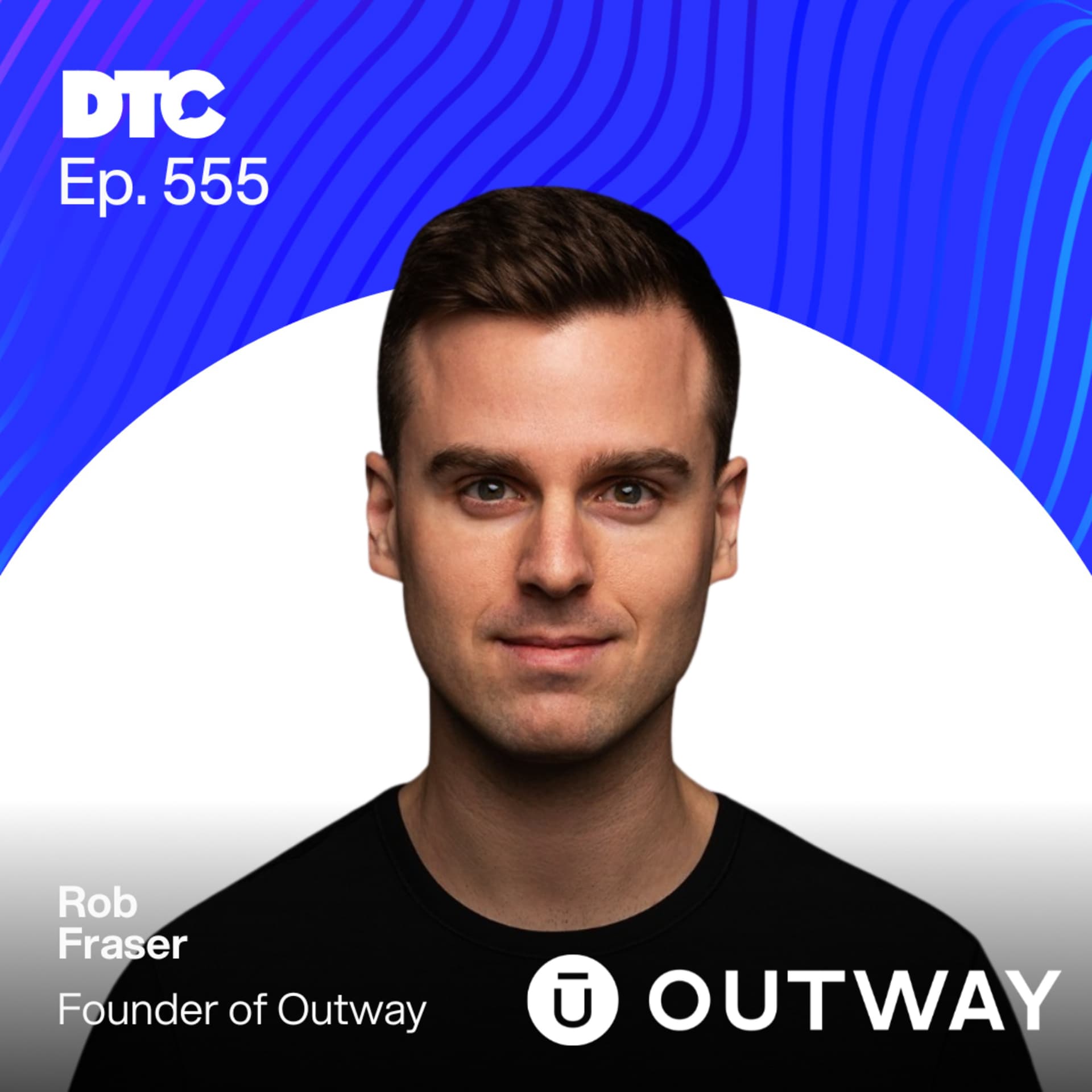
Rob Fraser, founder/CEO of Outweigh Socks (started 2016; serious US push since 2019; eight-figure sales; former professional cyclist/athlete; rebranded from Endure Apparel to Outweigh after trademark/legal threats). Eric is the host of the D2C Podcast.
Key claims
Brand/community will matter more as AI makes stores and advertising easier; relationships can’t be “prompted.” Tariffs forced efficiency upgrades like US fulfillment. Growth stalled in 2022–23 due to market conditions and chasing growth; profitability returned in 2024.
Notable examples
US 3PL warehouse to ship faster and hedge tariffs; Amazon + wholesale + MEC distribution in Canada; merchandising hero/differentiated designs on Amazon while keeping expanded catalog on Shopify; “compliments guaranteed”/socks-on-feet as strongest marketing; 2026 bets: running focus, creator marketing, partnerships with run clubs, marathon sponsorships, and allocating ~5% of ad budget to brand/community.
Written by AI. May contain mistakes. Listen to the episode to check what was said.
Chapters
Tap a time to open that second in VOBuilding Brand Affinity and Community
0:00 to 0:44
Explore how brands can create community and affinity with consumers.
“I think there's an emergence of people wanting to find their tribe and community.”
Recap of Past Collaborations and Events
1:10 to 2:16
Reflect on previous collaborations and the impact of speaking engagements.
“on the road to 10, 10 would be sweet, but yeah, man, stoked to be back.”
Strategies for US Market Expansion
2:16 to 3:37
Learn about Outweigh's strategic approach to expanding into the US market.
“It was amazing to see Canadian entrepreneurs come together like that.”
Growth Journey Post-COVID and Profitability
3:37 to 6:04
Understand the challenges and recovery strategies leading to profitability.
“and pretty excited about it just because a lot of lessons, one being that the American consumer is quite impatient.”
Channel Expansion and Sales Strategy
6:04 to 8:28
Discover how channel expansion has driven sales growth for Outweigh.
“So like a lot of great things we wanted to get back to.”
Product Positioning and Consumer Insights
8:28 to 11:21
Explore insights into product positioning and consumer behavior in retail.
“So we'll list sort of our best selling stuff on Amazon and in stores, but all the new limited and kind of expansive catalog is still going to live on our Shopify store.”
Efficiency Changes Amid Tariff Challenges
11:21 to 12:51
Discuss the efficiency changes made in response to tariffs and market demands.
“It's truly a product that once you put it on, you understand it and you get it.”
Scaling Challenges and Future Considerations
12:51 to 14:01
Examine the challenges of scaling a business and future considerations for growth.
“I like to say tariffs expedited some of the things we were going to do anyways.”
Navigating Supply Chain Challenges
14:01 to 16:55
Explore the complexities of managing supply chains amidst geopolitical risks.
“So if you're in like a specific area that's more prone to hurricanes or whatever, like perhaps your factory gets taken out.”
Transitioning to Scalable Operations
16:55 to 18:03
Understand the challenges of scaling from small to mid-sized operations.
“it's not as visceral and painful is because we built a lot of that muscle in that no man's land.”
Show all 27 chapters
The Shift in Founder Responsibilities
18:03 to 19:46
Learn how a founder's role evolves as a company grows.
“I don't really get hands-on tools as much anymore because I've got great leaders in each function of the business.”
Building a Brand in Canada vs. the US
19:46 to 21:44
Examine the advantages and challenges of branding in Canada compared to the US.
“Do you, Has it been more difficult building a brand in Canada or do you feel like you've benefited from being here?”
The Importance of Brand and Community
21:44 to 23:25
Discover why prioritizing brand identity and community engagement is essential.
“I think we say it a little bit less now, but I think I know what you mean by that.”
The Future of Brand in a Digital World
23:25 to 26:28
Discuss the evolving role of brand in consumer relationships and marketing.
“And so you've seen, and I think why these things are happening is because over COVID, we weren't going out as much.”
Positioning for Future Success
26:28 to 28:01
Identify initiatives for brand growth and community focus moving forward.
“the Nikes are, they'll refine their way as well.”
Valuations and Market Positioning
28:01 to 28:31
Discussing market valuations and the demand for socks amidst changing business landscapes.
“they're getting the valuations, but now all of their businesses are in question.”
Brand Initiatives for 2026 and Beyond
28:32 to 31:24
Exploring future initiatives for Outway focused on community and brand visibility.
“Maybe it's just the robots at that point.”
Challenges in Expanding to the U.S. Market
31:25 to 33:11
Discussing the challenges faced while trying to penetrate the U.S. market.
“And I know you've built up that brand in all these kinds of initiatives.”
Personal Health Journey of a Business Leader
33:12 to 36:26
Reflecting on the intersection of personal health and business success.
“You need a partnership with Marcus Millione.”
Integrating Brand Values into Company Culture
36:27 to 37:42
Discussing the importance of brand values and team alignment within Outway.
“but Taylor, I guess he's CMO now, right?”
Reflecting on the Rebranding Journey
37:43 to 39:28
Looking back on the challenges and successes of the Outway rebrand.
“Do you look back on that now and are you glad it happened?”
Lessons Learned from Equity Distribution
39:29 to 41:48
Sharing valuable lessons learned about equity distribution in startups.
“To me, it's like people are living in, in a number of ways.”
Preparing for Q4 and Business Outlook
41:49 to 42:00
Discussing the business outlook and stressors as they approach Q4.
Navigating Mistakes and Inventory Challenges
42:00 to 45:04
Learn about common startup mistakes and inventory management strategies.
“And so as much as I can talk about it and post about it, I still see people that are going to, going to do it.”
Optimism for Holiday Sales
45:04 to 45:15
Hear insights on holiday season expectations and market trends.
“Once again, we're going to have you back soon.”
AI in Advertising and Content Creation
45:15 to 46:39
Discover how AI tools are revolutionizing advertising and content generation.
“If you're not following Rob on DTC Twitter, on LinkedIn, give him a follow because he puts out great content, sometimes sparks controversy.”
Creative Sparks and Future Opportunities
46:39 to 48:26
Explore the creative advantages of AI and future advertising opportunities.
“Because like this is the worst it'll be.”
Transcript
Automatic transcript. May contain errors.0:00I think there's an emergence of people wanting to find their tribe and community. They want to have an affinity with the brand because they want to purchase from something that feels real. How do you create that community and how do you focus on the brand to create the affinity with the consumer? You're going to need to layer back on one of the only moats that are going to exist, your brand. Product is going to be commoditized. Our digital advertising is going to be commoditized. It's all going to get so easy where I can just go prompt and just going to build me a Shopify store. You can see how that's not far out.
0:29You're not going to be able to prompt a relationship with the consumer. If you're able to do that and establish that now, I think you're going to see a real emergence of some of the challenger brands really break through. The big brands that are able to realize that, they'll re-find their way as well. But the ones that don't, I think are going to fade.
0:52Rob Fraser:It is the D2C Podcast and I'm Eric and I'm here with my good friend Rob Fraser, founder, CEO of Outweigh Socks. Good, awesome local brand doing 10 figures in apparel. Welcome to the podcast, man. It's been a minute. Eric, I'm stoked to be here. Eight figures, not 10 figures. Soon to be 10 figures. Did I say 10? Soon on the road to 10. We're talking aspirational. We're talking aspirational. on the road to 10, 10 would be sweet, but yeah, man, stoked to be back. I think this is what, third, third time. Yeah. Third time we did once in the early days and then you were, I came to our live event, obviously that we did last year, which was fantastic.
1:28Rob Fraser:And then we just were on the stage at Ecom North. You were on the main stage there. Congrats on that. How'd that go? Yeah, it was great. It's, it's always a challenge. I love these types of conversations and the stage there was a fireside, but it's, it's such a large audience, you know? I think the event itself had a couple thousand people. I'm not sure how many were in the auditorium when I spoke, but trying to craft a message that lands for that many people where there's people that are just starting and there's also people doing similar or more revenue than we are. So that was a new experience somewhat, I guess not dissimilar from this podcast, but you don't necessarily sit in front of everyone that's listening to this.
2:05So it went really well. The conference itself was really good. So shout out to those guys, Ecom North, they're doing something special.
2:11Rob Fraser:Hugely impressed with it. I'm excited to be a part of that one in an ongoing way. It's just great. It was amazing to see Canadian entrepreneurs come together like that. I think you guys are now, let's talk about that. You guys were, I think maybe last time we spoke, you guys were well into your US expansion, but talk about how US expansion has gone for you guys. It's the main mandate right now. So we've been in business for a while now. We started in 2016, it got quite serious in 2019. It's kind of when I went all in on it. So well over five years of being kind of all in, but we took a Canada first approach being a Canadian business.
2:46And there was just a lot of opportunity in Canada, but have kind of reached our limit of how much we can spend here and actually scale. And there's a lot of room to grow, but the majority of growth ahead of us is certainly in the US. And so I'd say, you know, that was one of the mandates this year. It's certainly the main mandate for next year. And what that's looked like is we've finally actually opened a 3PL warehouse in the States. So we're now shipping out of the US, which is sort of a hedge against tariffs and sort of forced through that whole gong show that has been this year. But it's also, we've just split the whole business out in terms of like our P &L and how we think about it for marketing.
3:25And we truly look at the US now as a separate business and a separate complete channel for us where we haven't historically done that. And so it's going well. It's growing overall compared to last year, but we have significant goals for this coming year and pretty excited about it just because a lot of lessons, one being that the American consumer is quite impatient. So shipping across border and having even a five-day wait for their package is somewhat unreasonable. So let's just the breadth and scale of Amazon there, where like in major markets, you can get them same day. In a few hours even, you get orders.
3:59So it's conditioning the consumer to really kind of want what they buy now. And so by positioning ourselves down in the US, we're able to get orders much quicker to people. And from our level, it's actually way more, it's way cheaper for us as well. So it's better economics. So it's going to allow us just to spend even more on advertising and scaling down there with, we've got just significant improvements in gross margins. So lots of great things that have kind of happened this year to get that ready for scale next year. And we're kind of seeing those economics play through and already, and certainly will on Q4 this year, but yeah, it's the main goal, man.
4:32Rob Fraser:That's very cool. I'm doing all these catch-up interviews with people who I interviewed two or three years ago. And it's interesting in all the cases where I sort of, I think everyone has gotten to where maybe I assumed they were when I first talked to them, which bodes well for you, because I just said you were a 10-figure sock brand, which means in two years' time, no problem. But I'm curious, what has the growth journey been over the last year? You mentioned the US, what else has been a key aspect of the growth? probably going back to even shortly after we've talked the first time in 2023. So I'll back up even a little bit more.
5:06We grew, we kind of grew like crazy up until 2021 and a 2021. So, you know, we started and just doubled every year into the high kind of seven figure annual revenue, and then kind of flatlined in 22 and 23 when things got tougher, you know, like iOS updates, post-COVID interest rates started to get high. And also, I think the way you were running a business, we just started chasing growth in a market that was not rewarding, that sort of mentality. And it led to two years, 2022 and 2023, of just very slow growth, even financial losses where we had historically been profitable for the previous five years.
5:44And we kind of had to rethink think about how we approached the business. And that started in kind of mid 2023, where we finally saw those things work out last year, where we had a great growth year. I think we grew up like 40 % or so year over year last year compared to 2023, back to profitability, eight figure sales. So like a lot of great things we wanted to get back to. And what we attribute that to is expanding the channels that we sell on. So we were historically just two different channels. So we sold DTC through our Shopify store. And then we have our private label business, Custom Lab, where we make socks for other people.
6:20So that's kind of a different channel, but with the Outweigh brand, certainly we're just single channel for the most part. And we were kind of like fumbling around previously figuring out like, what is our growth path? Is it going to be introducing new products? Is it going to be entering new markets? Obviously we talked about entering the US was one consideration and thing we're still working on. But what became obvious was just entering new channels where people could discover and purchase our product was the thing that we hadn't really tried to do. So that meant opening up Amazon and wholesale.
6:50Because if you think about just our category as a whole, we sell performance athletic socks or apparel in general. This is like a rough quote, I forget the exact percentage, but I think somewhere around 30 % of all apparel sales were happening on Amazon in terms of online. So by not listing online, we were basically not presenting ourselves to a third of the market. And then socks in particular are somewhat of an impulse buy or like a needs basis buy or want people buy in store when they're buying other things. So we need to be positioned where people could just stumble upon us. So we did that methodically.
7:26We started entering, we got national distribution with MEC in Canada. We've since opened up sale and other large accounts and a bunch of other smaller kind of run, bike, athletic accounts all throughout Canada and some in the US. And then we listed on Canada, Amazon, and US Amazon. And those two things and just being in those markets really led to that growth, which we're seeing play out this year in 2025, where at the end of Q3, we're up 50 % year over year compared to last year, which was already a big growth year and an eight-figure year. So it's not just growing 50 % on kind of like six or seven-figure sales, eight-figure sales.
8:02We're doing that very profitably. I just pulled actually our Q3 report today and our profit has gone up I think four or five X I think it's five X since this period last year so in terms of just yeah it's it's meaningful because what I talked about earlier is like we've done a lot of margin improvement specifically with how we're shipping and where we're shipping from and also introducing these new channels which have good economics have really seen that play through the entire P &L so that's that's kind of the main thing that we've focused on over the last little bit is just where people can buy our product and we do that interestingly like it's a merchandising strategy across those channels as well, understanding like what is the consumer, like where are they going to be in their buying journey and trying to funnel them ultimately back to the D2C site.
8:46So we'll list sort of our best selling stuff on Amazon and in stores, but all the new limited and kind of expansive catalog is still going to live on our Shopify store.
8:55Rob Fraser:Nice. I was going to ask you about that. I just did a podcast yesterday with Rob from Pilot House about how brands might approach selling a limited version of their catalog. because you guys have so many SKUs. So you focused on your hero SKUs a lot, your millennial ankle socks and your Merinos. How did you choose what gets available on Amazon? We have quite, initially before getting any data, obviously, we have quite extensive data on our Shopify store. So we took an educated guess on what moves, like you said, are just hero SKUs, things that we had quite a lot of confidence that people would just be searching for or need.
9:28We were wrong with some things. Surprisingly, more of our basics and Merino stuff that do really well on Shopify aren't doing as well on Amazon. And that probably comes down to just the nature of the consumer there where they're looking for, if they're looking for black and white ankle socks, they're probably looking for massive bulk buys at really good prices. And we're not that kind of business. We have great prices for the quality, but we are a premium brand. However, our kind of athletic socks that have the very unique designs on them are quite novel and differentiated by anything else on there.
9:56And so they do well. So that has typically been what we've merchandised in stores and on Amazon is kind of that product that's very differentiated. Where if you went into a wholesale or in a retail store, you see our product on the wall or on the shelf. It's very different than the other offerings. And that works well for us. And we see that that kind of works on our advertising online. It took us for a while to really understand, you know, like if you think about socks in general, no one's walking around thinking about their socks. They're not thinking that I need to improve them or they don't even really know they could be improved.
10:27and trying to convince some of that online is even harder because they can't touch it. They can't put them on. They can't feel them. But what people do know is they like a design when they see it and they like something that gives them an emotional response. So we lead with that sort of design aesthetic online and in store. But when people try the sock, then they are convinced that, oh my God, these are good. I have been wearing the wrong socks. They come back and we see they typically buy a lot of our basics to replace their sock drawer.
10:52Rob Fraser:And then when they wear the socks, they invariably get comments on them, which I do. literally every time I wear one of the brighter designs that, that, you know, we've collaborated on or that, or that I've, uh, I've got, and it's like reinforces that decision. Also, every single time I put them on, I am reminded that they are not like normal socks because of how they're made and the materials used. And so I think once you get them on foot, you've got a good retention program just with the product itself. That is the main thing I say, like our strongest marketing is socks on feet. It's truly a product that once you put it on, you understand it and you get it.
11:24You're right. It's a conversation starter. we say kind of like one of our internal things is like compliments guaranteed you know like if you're wearing one of the fun designs it's a it's it's cool it it starts conversations people are able to express themselves that is kind of one of the core tenets of of funky or bold design socks is there a way that you express your individuality so yeah we really lead with that and uh and people enjoy it but but overwhelmingly people want um more kind of subdue designs and so we've uh we do, our best-selling SKU, like you mentioned, is like a white or black ankle sock, which is counterintuitive to kind of how you would see our brand positioned online or if you went on our website.
12:02But it really speaks to that quality where people want that fun sock they can put on when they feel maybe a little spicy or want to start a conversation. But if they're just a daily driver and they just want something basic and easy and quick, they're buying a lot of the basics.
12:14Rob Fraser:You said the magic P word. We don't talk a lot about it on the podcast, but profit. And, you know, we talked, you talked about your distribution channels growing as a big part of like growing your top line, growing the business overall. Was the focus on, I know you guys had already made a big pivot to be really focusing on profit after, I guess, 2023, but then tariffs come into it. That's one of the themes that I'm finding is tariffs, as you say, we're a gong show. The whole situation has been brutal, but at the same time, it's forced brands to make key efficiency changes that even when tariffs go down or diminished, your efficiency changes aren't going to go away.
12:50Rob Fraser:So talk to me a little bit about those efficiency changes that you made and were they in response to tariffs? I like to say tariffs expedited some of the things we were going to do anyways. I think the wrong strategy was to be reactive and short-term in your thinking because especially with what's going on, it's really hard to say what's going to shake out. So if you move out of China for production to another country, they could get slapped with tariffs too. We've already seen that happen. So I think from our perspective, we thought, what did we need to do to position the business for scale and better economics anyways?
13:24That obviously was opening a 3PL in the US, which is always on the roadmap. I would say our timeline was expedited. We didn't necessarily plan on doing that this year, but it happened this year because of tariffs. In terms of finding suppliers outside of, you know, whether it's China or other affected markets, thankfully, most of our supply chain is actually out of China. So we didn't really have to scramble for that. Our main thing that we had to solve for was shipping out of Canada into the US. And so when the de minimis was removed, we needed to be positioned for that. But it's great to have a lot of redundancy in your supply chain and suppliers that are in different parts of the world.
14:00Because not only around tariffs, you have to think about, well, obviously global political issues, but you even think about kind of natural disasters, right? So if you're in like a specific area that's more prone to hurricanes or whatever, like perhaps your factory gets taken out. So you need to really consider these things, wars even. Maybe you were producing over in somewhere affected in the Europe area. So at a certain level of scale, this needs to come into your calculus of you're kind of paying attention to geopolitical and environmental risks as it pertains to your supply chain. And whether getting to it into the weeds, I would say our approach was certainly just expediting the timelines on things we needed to do anyways.
14:41And the biggest thing there was opening the warehouse in the US.
14:46Rob Fraser:So at eight figures, what's harder now that you thought would be easier at this stage? Honestly, that like last little hump to getting there a couple of years ago or a few years ago was, I would say, a lot harder than it is now. I would say that path to getting there, almost when you're right on the edge, because I think that kind of like that jump, you get to 5 million. My belief is that you can really scrap your way to 5 million in sales. Like you could be a one to three person team. You can fulfill yourself. You can kind of run everything internally. You can have no systems, no, just, you can just scrap it together.
15:21That kind of like five to seven things start to break. You need to start to build a team. And it's not just building a team. I found like you need to hire two or three more people. The thing that one or three people were handling splits into like two or three jobs per. So you like your team grows somewhat exponentially while the revenue only goes, you know, up 20 or 30%. That's a difficult thing to kind of manage. it stabilizes in my experience, again, at 10 million and up is like your kind of team stabilizes with the revenue. But that sort of no man's land of five to 10 million is really tough because you kind of need to become a company, right?
15:53And you start to figure things out. It's maybe when you've got some scale that you become a relevant target for legal attacks. Like we were, we had to rebrand, we got brands coming at us and threatening our trademarks, we had to change our name. And there's a whole bunch of things we had to deal with in that stage. And then getting to eight figures are just, it's more of just professionalizing the business, which would be the more difficult things as you're looking, you know, if you're selling in multiple markets, for example, or if you're selling on multiple channels, we're now managing inventory forecasting in tons of warehouses.
16:24So we've got our Canadian and US DTC warehouse. We've got our Amazon warehouses all over Canada, all over the US. Then you've got wholesale sales cycles, DC sales cycles, Amazon sales cycles. So you're trying to inventory plan across all of this demand and channels, which is very complex. And then this kind of second order effect of that is the cash flow to support inventory in all those locations and make sure that you have enough cash and inventory to grow the business. So that I would say is the total complexity of it. However, why to me, it's not as visceral and painful is because we built a lot of that muscle in that no man's land.
17:01That was a lot more painful as like going from self-fulfillment to warehouse is a lot harder than going from one warehouse to two because you've kind of already built the muscle a little bit now you're refining and so tbd i'm sure there's things i'm not considering now or haven't like there's another shooter drop as there always is but i'd say kind of that transition into scale was tougher than where we are now and mostly because we're at a stage now where our team has turned over from like the last few years and we've got people that have kind of been there done that and we've got a lot of support and we've got the scale now where we can bring in people that really know what they're doing.
17:35And we can work with partners that really know what they're doing. And that really helps. In No Man's Land, you're also trying to band-aid things together. You've got maybe your initial scrappy team. You've got the 3PL that's not the top tier because you can't afford them yet or they don't have the volume. So anyways, not a perfect answer, but it's all hard. I think it does get better if you build the company right.
17:56Rob Fraser:And speaking of that, has your role changed much? Have you managed to remove yourself from bottlenecks, which I think is something that founders have happened to them all the time? My role has changed a ton. I don't really get hands-on tools as much anymore because I've got great leaders in each function of the business. Our business is basically broken into product, marketing, operations, and then sales on the custom lab side. And we have great leaders in each of those functions. And my role has really shifted to making sure that those are functioning, obviously team cohesion, culture vision, all of those kind of like fancy words and everything down to even just like I talked about, like professionalizing the business in terms of like, can we go get a revolving line of credit with the bank just to make sure that we've got access to additional cash if we need and kind of like starting, like I talked about becoming a real company, you know, like doing the real things and making sure that the, your financial statements are done properly.
18:51And so it has changed. It's not as fun. I would say, I think I'm trying to get back into the fun.
18:57Rob Fraser:It seems like it from your social feeds. I've been enjoying them. It's getting more fun. So I found like, you know, like I've, I've reinserted myself in areas that maybe don't necessarily show a direct ROI or require me to, but I want to touch the territory a bit more and get involved in what we're doing. And, uh, the whole point of this is to have fun, in my opinion. Super cool. Um, so that Ecom North event was great. And I went to a VIP dinner on the final night, I think maybe you'd left already. And the, uh, Shree gave a speech about Canada and about the state of Canada. This, this, Paul, this, this podcast never gets political.
19:31Rob Fraser:Um, but the state of Canada, the state of the economy in Canada, I'm curious, how do you view being a founder in like, you guys had such a great, had such a great run in Canada. You built up such a great brand in Canada. You're now leveraging that to go to the States. Do you, Has it been more difficult building a brand in Canada or do you feel like you've benefited from being here? There's probably two sides to that coin. I think we've benefited from being here because despite it being a 10 times smaller market than the US, it's still a big market. You know, it's still a 40 million person market.
20:04And a lot of US brands don't really care to dominate our market or they don't do well here. You see that big box that come up and fail. So when we were getting started, we were able to kind of capture a lot of market share with very little competition. There was a period where Bombas, which is arguably one of the best and largest stock companies on the market today, best in terms of businesses, I think our product's better. I'll make that clear. But for a period, they stopped even distributing in Canada. I remember that, yeah. I think they're back in here now. But I was like, oh, people are like exiting the market, let alone coming into it.
Read the full transcript
20:40So I think there was a benefit there of like Canadians, there's still a good level of nationalism. And we saw that during the kind of tariff disputes back in March, April, and really leveraged that in our ads. And we saw a lot of growth in Canada during that period. So I think there is a benefit. However, there is a certain culture in Canada, which maybe you're alluding to a little bit of kind of tall poppy syndrome, where I think maybe it's Toby says like we're like a bronze medal, you know, kind of country, like we're happy with bronze, you know, where if you're if you go like you've interviewed a lot of founders, a lot American, there's a different level of ambition, a different level of sort of intensity.
21:20Rob Fraser:Manifest destiny in a way. Yeah. With Americans. I take it back to like our national credo. You know, America's national credo is life, liberty, and the pursuit of happiness. And it couldn't be a more individual manifest destiny kind of thing. Canada's is peace, order, and good government, which is all about like looking inward or looking at ourselves. I think that's why we say A, in fact, is because we're always looking for like affirmation, A, you know what I mean, A? I think we say it a little bit less now, but I think I know what you mean by that. It's an interesting environment here in Canada.
21:54Rob Fraser:Have you taken advantage of any of the government credits or any of this? Because I know Canada does have a fair amount of credits when it comes to building businesses here. Have you taken advantage of any of those? We haven't done a lot of like, a lot of it's been to manufacturing here. We have, there's Export Development Canada, EDC. Once you're 10 million and above in sales, they will back you to get financing, whether like they'll kind of take a lot of the liability for the bank to get a line of credit, for example. So we've, we've leveraged that, which is super helpful. And that's like under the mandate of expanding outside of Canada.
22:26So we've done that. Other than that, we haven't been able to access, whether it's just like, we haven't tried hard enough, I'm not sure. But we haven't, haven't accessed too many of those kind of like shred credits or grants or anything, just because like mainly we have, we don't produce here and we're not doing a lot of like hardcore innovation here. We're doing more marketing and sort of sales here. and there's been fewer programs, at least that I've been aware of.
22:52Rob Fraser:Recent posts you made about the return of brand in 2026. I don't think brand, neither of us think brand went anywhere, but why are you leaning on brand heavily in 2026 and beyond? I don't think brand went anywhere, but I think it got deprioritized over the last few years by a lot of companies. I mean, you can see this in the macro. Just over the last few days, the Nike CEO has come out in a public kind of interview talking about how they've reorganized the entire company and they're really focusing back on the athlete and their brand and kind of core consumer and they've reorganized the whole company to be like nike run uh nike x nike y whatever sport and they've they've positioned that to really focus on that end consumer and then lulu lemon right now is getting hammered in the market and chip wrote a public letter i think like yesterday the day before where he's basically criticized the brand for just chasing kind of quarterly results where they're positioned themselves away from the original muse to this kind of lifestyle company where they've kind of shaded or kind of separated the core consumer from the brand.
23:57And so you've seen, and I think why these things are happening is because over COVID, we weren't going out as much. People weren't getting as engaged in the community and everyone was online. So you shifted a lot of focus to kind of direct response to advertising. You shifted a lot of focus to, especially while there's a lot of uncertainty as a founder or a CEO, you also wanted direct ROI you could attribute. You wanted things that you could spend money and see a return on. So all of the incentives were pointing to kind of shifting away from more of the frilly kind of spend, like brand events and whatever, that kind of was like the pre-COVID era.
24:31And you got really hardcore on like, we need to spend a dollar and see this amount back. And unfortunately with brand spend and brand activations, there's not a lot of great attribution there, at least in the short term. However, I think what you're seeing now is the long tail of a deprioritization of that is that people have lost that community feel. There's been a lot of loss of kind of affinity with certain brands. And I think moving forward as Sora was just the Sora two apps, just, you know, I've been having a lot of fun with that. It's only going to get crazier of our feeds are going to be filled with things that we're not sure if they're real or not.
25:06So I think people are going to crave more in real life community experiences. And we've seen this with the emergence of run clubs, even in our space, founder dinners, founder clubs, these Ecom North events, which weren't happening a couple of years ago. There's more events, it seems like every year. So I think there's an emergence of people wanting to find their tribe and community and they want to have an affinity with the brand because they want to purchase from something that feels real. And so I think you're going to see a lot of spend and focus just like you're already seeing in the macro, especially with Nike leading the way.
25:36I know we're thinking about it a lot is how do you create that community and how do you focus on the brand to create the affinity with the consumer? And that doesn't mean deprioritizing all the stuff that you are doing around paid ads and all the stuff that we've got really good at and D2C has got really good at, but you're going to need to layer back on what I consider probably one of the only moats that are gonna exist in the kind of future, which is gonna be your brand. Because product is gonna be commoditized. Our digital advertising is gonna be commoditized. it's all going to get so easy where I can just go prompt and it's going to build me a Shopify store.
26:13You can see how that's not far out. However, you're not going to be able to prompt a relationship with the consumer. So it's like, if you're able to do that and establish that now, I think you're going to see a real emergence of some of the kind of challenger brands really break through. And the big brands that are able to realize that, which I would say kind of like the Nikes are, they'll refine their way as well. But the ones that don't, I think are going to fade.
26:37Rob Fraser:I think about Lululemon, I think they probably had the double-edged sword of like athleisure becoming just what everyone wears all the time. So they kind of lost their connection to their, maybe their core, their white hot audience that becomes emblematic or that people want to be like. In Nike, it's the same with the athletes. It's a similar thing, right? I'm also interested. I have the thesis that I think sports, sports are so popular and I think they're only going to get more popular as because our feeds are going to be flooded with fake stuff or, you know, synthetic stuff. So these and no one's going to really want to watch, you know, robots play golf or tennis or run or anything like that.
27:15Rob Fraser:Maybe fight. I think we'll probably want to watch robots fight. But I think that connection to like real human activity, specifically athletics, I think could bode well for brands like yours in the future. I totally agree. I think, you know, if you think about the things that are going to exist, especially if careers start to go away, jobs start to go away. It's like, where do you find, where will entertainment still live that's real? And where will the human experience be able to compete and sort of get good at something? I think sports will exist. And so I'm super bullish on that. I like how we're positioned, honestly, you know, making a physical product with a brand in the athletic industry.
27:51it's funny because like for the last five years of building my business, a lot of my friends and our friends are in the tech space. And they were like, you know, it's like, you know, they were the hot topic. Like they're kind of like, they're getting the valuations, but now all of their businesses are in question. And like me with my little sock company, we're like, people need socks, you know, like even our robots are going to need socks, I think. So I think like, you know, you can just, you know, dress up your robot with fun socks. Why not? So I think, I think we're well positioned for, and I think like for the next little while, a direct-to-consumer or a consumer business is just going to be made more efficient with AI.
28:25And then a few years from now, who knows how anything looks. But I think in the short term, this gets better. We're still wearing socks. Maybe it's just the robots at that point. I don't know.
28:36Rob Fraser:So what are some things, like what are some bets or initiatives that you're placing on brand and community that you're prioritizing in 2026 and beyond? We've targeted running as just a great opportunity to kind of position ourselves as like the best running socks. So we're getting more narrowly focused on the sports that we are serving. Running is having a renaissance. It's always been popular, but it is very popular among all age demographics right now, particularly young folks. Run clubs are now the new dating scene. They're the new kind of like club clubs. So running is very popular. So that's going to be one of our main things.
29:15is it's going to be kind of a three-prong approach. We are going to do a large kind of influencer and creator marketing strategy and kind of outreach and plan with runners. And that's going to be kind of like mainly social media and YouTube. So partnerships with influential people in running. And then we're going to work on collaborating with all of the largest run clubs in North America. So do collaborative projects and get involved with all of those run clubs. I'm going to actually fly to a bunch of them and like actually show up. so that's two and then three is get involved with a lot of the large major marathons in north america as well so try and be everywhere so that you create you've heard tony talk about this like create levels of saturation and try to make it like the product is everywhere regardless of whether it is or not we want to be like if you're going to the local run club oh there's outway socks you know you watch your favorite runner on youtube oh he's wearing outway socks or she you go to the Ottawa Marathon.
30:13Oh, it's sponsored by Outway Socks. And so like, it's just like, what is Outway Socks? If you haven't really, you'd be like, you'd be leaving me like, I need, why is everyone wearing these? So that's one of the main things. And I think that's largely brand, right? Those are all brand initiatives where we're collaborating across the different levels that exist within that sport and that culture. Again, because there's no culture around socks per se, whereas like there's a big coffee culture. For example, certain products have culture around them. We exist as a product inside of cultures in the people we serve.
30:47So running or training or cycling or whatever. So our kind of brand approach there is really trying to figure out how we integrate with that. And we're actually allocating, we're taking 5 % of like what we would be spending otherwise on ads and just allocating it to that, which is a large amount of money when we look at our lineups. We've never done that before. So there's a big investment. There's like a full-time hire that's like focusing on it. There's a bunch of stuff that we're doing there. And it's exciting because, you know, like it's not going to have a direct immediate ROI, but I'm quite confident that it's going to work out for us.
31:23And it's gonna be fun too. Like I like running. So.
31:25Rob Fraser:I want to get to that actually about your personal health journey a bit, but I'm most just interested in this idea because you kind of, you have that Vessi effect a little bit in Canada in terms of like your visibility, in terms of your saturation, you were saying, like even just your ability to spend. And I know you've built up that brand in all these kinds of initiatives. We talked about it on a previous podcast with you as a former athlete and, you know, being at events and providing product in trade essentially for sponsorships and things like that. Now you've been spending a lot trying to expand in the States.
31:56Rob Fraser:So you're basically using the same playbook that you used in Canada and just using what worked best to do the same thing in the States? We had been, but that's not been working. So that's why I think a large part of this investment in sort of brand as well as influencer and sort of deeply integrating ourselves in these communities is gonna be one part. Another part is just gonna be re-imagining how we think about content and creative in the States. So I think it's just a completely different market, the attention span, the competition level, the way consumers are shopping, what they're expecting in terms of offers and deals and speed and everything is completely different.
32:33And I'm not sure you can truly be successful with what's just worked well here in Canada and applying that in the States. And we're learning that and we've been making changes and they've been successful. But that's why I think we're making this big push because you're right, we did spend a lot of time and a lot of, more than resources, just time building our brand and saturation in Canada. And we just haven't done that in the States. So we need to figure out a way to speed run that. And I think that the best way to do that is just through these influential clubs and people and events to create that saturation and invest in it.
33:11And I think that'll create the relevancy and the awareness that we can then capitalize on through digital advertising.
33:18Rob Fraser:You need a partnership with Marcus Millione. You know, Marcus Millione? Yeah, yeah. I have him on one of my Slack groups here. I should introduce you guys because I feel like a collab there would be pretty deadly. Yeah, I think we're doing similar stuff. I'd love to. Talk a little bit about, because you've always been, you're a former professional athlete. You've always been what I would consider in pretty good shape, although I never really put it to the test. But just over the past six months or so, it's like you've really gone pro with your health. Is that related to going into these running communities or just talk about your mindset when it comes to your own health?
33:50It's been a bit of a roller coaster. Like you said, my former life or career was professional cyclist and athlete. And so that's how I always operated and then started a business and it got hard and you deprioritize a lot of those things that are required for maintaining your health, like sleep and eating well and exercising. And then 2021, I was like, we were at home a lot. I was kind of like found this inspiration and got real fit again. And then business got hard again. you know, like I mentioned, and I kind of lost that fitness. And so this is kind of my third kick at the can while running this business and trying to get fit.
34:27And personally, I feel the most like me, the most inspired about even business when I feel very aligned with my personal fitness journey and our brand. Because ultimately, like I started the business to stay active in sport, just running the company in the athletic space. I know I couldn't be the pro athlete anymore. But I was like, could I still be involved, but run a brand? And like, what's the sport of business look like? That was kind of the original idea. And along the way, I've lost that. And I would say like where I found the most success, even in business, is when I'm in harmony with my own personal fitness and love for sport, running the business.
35:05So it was kind of like last year, as I mentioned, 2024, we got like, I got my health back on track. Wasn't as fit as I am now, but got it back on track and we got the business back on track, like I mentioned. And this year was like kind of this personal mission of like, how good can I get? And how good can the business be? And how can we keep improving on that and never let it go again? Really just focus on this idea of like, there is no finish line, but there's continual improvement and compounding on the results. Whereas I think in the past, there's been like kind of, okay, I hit this goal. And then you kind of let off the gas a little bit.
35:40So I don't know. I would just say I really just get a lot of energy and personal confidence and inspiration when I feel good physically and when I have a goal outside of the business. I say to them, I've got the business. I've got two kids. I've got a wife. A lot of what I do in my life is not just for me. That's fine and that's great. My running and my fitness goals are the one thing I do that are just for me. I'm not getting paid. It costs me money. and it's just something that is self-fulfilling and maybe that's selfish in a way, but I think we all need a goal that's just for us. And I was lacking that.
36:17I was like, I need something that just like I do that fills my cup and it's hard and it's rewarding. And yeah, I've got a lot of enjoyment out of that.
36:24Rob Fraser:That's awesome. And it's infectious too. I'm about to get serious, but Taylor, I guess he's CMO now, right? I think I saw. He's been on a crazy fitness journey as well that I've been really impressed following. Yeah, like one thing about Outweigh, And I've made a post about this too, is like, we're not just, and we've never positioned ourselves as just like an e-commerce company. You know, I didn't start the business because I saw some arbitrage in socks or able to buy Facebook ads. I think we've done a lot of those things wrong for a long time. We've probably been a lot less successful than we could have been.
36:54But one thing we have focused on is building a brand and everyone in the company is aligned with what we do. We all have fitness goals. We all have sports we do outside. And we are very committed to serving that end consumer, which is why I'm very confident over the long term, we will be the best and we will win because we're not playing short term games. So yeah, Taylor, my COO, she's a like world champion level rower, our head of director of content. She's like a high level crossfitter. So we're all doing what we do. We're just trying to like, we want our careers and our sports to be somewhat integrated.
37:28And we're all living those values. We're not just a bunch of people behind the keyboard that are trying to like, you know, hack our way to some level of whatever. We're truly like building for ourselves and the extended community of that.
37:42Rob Fraser:I feel like on both our past podcasts, we talked about your 2022 at the barrel of a gun rebrand from Endure Apparel to Outweigh. Do you look back on that now and are you glad it happened? And I'm like, you're not glad you went through it, but I feel like Outweigh is such a strong brand. How do you feel about the brand today, considering what you had to do? I think like most things that were really hard at the time, I look back on now and I'm very thankful for. I agree with you. There's a lot more distinctness in Outweigh than there is in Endure. And you see behind me, there's like, we've got all our trademarks now.
38:15It's been actually a three-year journey to get them, but we've got all of them in different markets for different classifications, which never would have happened with our former name because of many factors. one being the kind of the legal threats and others just being it's not a distinct name it's an English word so yeah in hindsight um it was a really rewarding journey it was really challenging I think like you know over the last number of years I've got a lot of lessons and that helps us operate better today but I'm really proud of of the outweigh brand I think like it's going to finally find its true form next year.
38:53There was a lot of like meaning that Endure had, you know, like it really kind of, our name was our mission. Like if you're willing to endure anything as possible. And I think the one thing we missed with Outweigh was giving it a meaning. And so that's what you're going to see roll out pretty soon is a lot more meaning and intentionality behind what Outweigh stands for and how that looks. And that's going to be exciting for next year. And there's an inherent meaning. We haven't lost that value of hard work and compounding results, but with the loss of the name, a part of that died. And so finding our way back has been challenging, but it's like a core priority now.
39:32Rob Fraser:I look forward to seeing that unfold. To me, it's like people are living in, in a number of ways. They're more insular, they're more screen focused, they're not going out as much or whatever. And so the out way is the way where you're sort of like, you're putting yourself out there more and joining communities, joining, having goals, doing these things. Am I close? I think I might steal that. That's really good. You should. It's the out way. Yeah. It's the out way. Yeah. And you got to outrun. You got to outwork everyone. It's the out way. Yeah. And be out. Like, don't turn in. Everyone's turning in.
40:03Rob Fraser:You've got all the reasons in the world just to lay in our beds and doom scroll. You can even convince yourself that it's helping you understand the geopolitical landscape for business or whatever. Right. So I think the out way is the way to go. I think so too. We got to stand out, you know? So yeah, it's been a good journey. Nice. Well, you can hire me as a brand consultant just for a small piece of equity. I saw your post recently about being very careful about who you give equity to. Is that a lesson that you've heeded yourself or you've had to learn? Oh, I've learned that the hard way. And I've just seen it play out so many times now over the last almost decade.
40:37And I don't know if there's a way to avoid it. I had another post that was like, despite how many mentors you have or books you read, I've never met an entrepreneur that hasn't just learned the lessons the hard way. Like, I think it's because there's a lot of hubris, which you need. You need a lot of like delusion and overconfidence as a founder. Otherwise, like, why would you ever start? It's just so hard. And like, it's kind of ridiculous to think you'll make it. But we do think that. And so, yeah, I mean, you know, with equity, I think it's not a one size fits all thing. And it's incredibly nuanced.
41:09but it's just, I think if you're going to say like one thing I've learned there is just think long-term with it, you know, ask yourself, am I trying to solve a short-term problem with issuing equity? Like, cause the thing with equity is it's permanent unless you find a way to buy it back. And very, very rarely is the person you're issuing equity to providing value that's permanent and over time, a long enough time. So in certain cases, there's a trade-off where that is true and you should do it, but not as willy-nilly as I see a lot of people give out equity. It's an impossible sort of situation because every situation is different.
41:46But I think I gave out equity. Dude, I said this, I was convinced by a mentor, manipulated, I would say, that we should issue our corporate attorney equity instead of paying for incorporation, which is insane. We gave our attorney equity. This is way back in the day. uh so like i've been manipulating the dumb stuff like that you know so like that like that's just a non-starter don't do that right like i'm happy to say that just full stop don't do that so like i've made a lot of dumb mistakes but you trust people and like you think oh yeah of course that makes sense you know the five grand for incorporation when you're a startup like that's a lot of money equity is free you're like oh man you know five percent of my company i was worth a lot of money so uh and that would have been permanent i bought it back i also bought it with my co-founder and I bought it another hit that the guy who manipulated us.
42:35So, or me primarily. So yeah, I've made the mistake. I've touched the stove. It's cost me a lot of money. And so as much as I can talk about it and post about it, I still see people that are going to, going to do it. And you just kind of like grit your teeth and watch it happen and hope you can help them when, when they need help.
42:52Rob Fraser:And then you're all, are the hatches all battened down for Q4 this year for you guys? We're feeling good about it, man. I think like our, our biggest stressor and thing where we've, despite feeling like we've done the right amount of planning has been inventory, just not arriving on time. It seemed like no matter how early we planned or it just never, I'd say it's almost too early now because my terms have started and it's landed and I want to like, you know, manage cashflow. Um, but I would rather have it, um, than not. So I'd say like in terms of inventory, we're stocked up now. Right. And it's, it's more than a month until we launch in terms of advertising plan, all of that, that's a lot easier and more nimble.
43:32Inventory is the thing you can't fake, right? We can adjust an ad campaign on the fly for the most part. So I'd say we're feeling good from an inventory perspective across our different markets and channels. And then beyond that, you know, like Prime Day is just finished up and it's kind of extended in Canada. And there was really good signals. We had like, my other take was that like Prime Day has gotten kind of, it's not as good as it used to be. And we weren't even on Amazon when it was...
43:58Rob Fraser:It's kind of diluted, right? It's diffused a little bit across a lot of time versus being like such an event. Well, I think what's happened is every brand activates online in tandem. So I think the consumers started to realize that, oh, I can just go to X, Y, or Z brand site and they're going to have a similar or better offer. So we actually saw a huge increase in year-over-year sales on our D2C and our Amazon was relatively flat. So that said, there's demand and people are really hungry for deals right now. So I took that as a really positive signal for what's coming in the holiday season because the summer was a bit rocky.
44:34And I think you've probably heard that from many brands. The consumer is just kind of like, the consumer is weird right now and rightfully so. Like, are we in a recession? Are we not? Like, what's going on? The world's kind of scary. Are we being absorbed by the country below us? So I think like creating demand has been difficult, but when there has been demand cycles, like just, you know, holidays or whatever, we've seen a lot of success. So I'm pretty bullish on this year's holiday season. So we'll see, but we're feeling ready.
45:04Rob Fraser:Nice. Well, I'm bullish on Elway Socks too. Thanks for coming on the DTC podcast. Once again, we're going to have you back soon. Always a voice that we love hearing from. Thanks again, Rob. Always a pleasure. Thanks for having me. And make sure you go follow Rob. If you're not following Rob on DTC Twitter, on LinkedIn, give him a follow because he puts out great content, sometimes sparks controversy. Always fun. And one last quick thing, actually. What about these Sora ads you're putting? It's funny. I sent you a message last night because you put out a real video with your real face on it. And I was like, is this AI?
45:34Rob Fraser:I can't tell because you put out like five or six Sora videos. Are you actually using those Sora videos? You're just kind of having fun right now? Having fun right now, but we're getting ideas from them. So I asked it to create an ad kind of in the vibe of Nike old school. And it came out with a really unique angle and take. And we're taking that as inspiration and developing and iterating on it, like with our own content team. So I think it's really cool as an idea generation and iterative tool. And it's only going to get better. Our friend Andrew sent me something today where there's like this Sora 2 and N8N integration that was just like, and you can create UGC ads with it.
46:11I don't know. I haven't looked into it deep enough. Now I got to like, it's pinned for me to kind of go deeper on, but it's going to get crazy. We're definitely going to use it. It's definitely cool. I think right now it allows someone like me who doesn't have like editing and like design skills to just go prompt and create an ad that I can then just send to the marketing team and be like, let's just go do something like that. So I'm having a lot of fun with it. But it is a real signal of where things are going. Yeah. Because like this is the worst it'll be.
46:41Rob Fraser:Last, last question. Have you done much in the streaming space or in the like the, yeah, basically in the streaming space? I had Vibe on the podcast this week and they were talking about, first of all, they're going to do a 50 % match. So if you want to test them, I can get you that 50 % match on your first purchase. But they were just talking about how in two or three months, like 80 to 90 % of all the ads on the network are going to be from AI, multiple tools used or whatever. But I just feel like there's such an interesting arbitrage opportunity right now. A, in the streaming world where people, they're giving prestige to the TV screen, not knowing that it's basically a real-time bidding sort of like meta environment that you don't actually have, you don't need a lot to advertise on TV now.
47:23Rob Fraser:And when you've got all these AI capabilities, the production value you can kind of put into things is pretty astronomical. Have you experimented in that space at all? We haven't, just because we're quite focused on the current channels. However, another brand that was involved in Firebelly Tea, they've recently started doing some there and testing. And it's still early days, but it looks like the results are quite strong. I think, again, it's going to be a question of like, who's your audience and what are you selling? There's a certain consumer there. I think for us, there's probably a really good market of people, specifically around our compression sock line, that are watching this online and specific products and angles that'll work.
48:02We're just trying to maximize and focus on the channels that we still have a lot of opportunity in. However, it's exciting. And I agree with you. Maybe this kind of lowers the barrier to production and everything. So we'll see. I think next year will be really exciting. And AI is exciting. And I mean, if you're not using these tools, you're going to fall behind, right? That's why I'm having fun with it. because like it's a saying to friends, like I haven't felt this creative spark in a while because like it's been challenging. Like it requires a lot at our kind of size to kind of like go get just a video made or go get models or hire like whatever.
48:38But now I can just prompt it. And it's like this, my brain's just kind of like, oh, what about this idea or that idea? And, you know, it's like, it's really cool to kind of, you know, you had an image generation where it's fun, but video generation is like this whole new level of like creativity and just ideas and I'm able to kind of get those out. So it's, it's kind of reinvigorated that, that creative edge that I felt you could do at a small scale and just like get things done, but yeah, we're having fun.
49:01Rob Fraser:You can always get your ideas out here on the DTC podcast. Thanks again, Rob. We'll, we'll see you soon. Thanks, man.
49:13Rob Fraser:Thanks so much for listening to today's episode. If you're not a subscriber to our newsletter, you can do that right now at direct-to-consumer, all one word, dot co. I'm Eric Dick, and this has been the D2C Podcast. We'll see you next time.
From the publisher
Subscribe to DTC Newsletter - https://dtcnews.link/signup
Rob Fraser, founder of performance sock brand Outway, returns to the DTC Podcast to share how his business rebounded from flat growth to profitable eight-figure scale. Rob reveals exactly how Outway added Amazon, wholesale, and U.S. distribution, and why 2026 is all about community and brand.
This is a must-listen for brand owners scaling past $5M and trying to professionalize ops, expand markets, and stay profitable while doing it.
🔑 In this episode:
• How Outway treated the U.S. like a separate business unit — and why you should too
• Their 3-prong expansion strategy: Amazon, wholesale, and 3PL logistics
• The margin unlock that let them outspend competitors and return to profitability
• How Rob plans to build brand and community in the running space
• What changes when you hit 8-figures: cash flow, inventory planning, and team complexity
• Rob’s hot take on brand as the last defensible moat in DTC
If you're building a real business, not just chasing growth hacks, this episode is for you.
Timestamps
00:00 The future of brand and community building
02:40 Outway’s U.S. expansion and logistics challenges
05:30 Overcoming slow growth and finding new sales channels
09:10 Amazon vs DTC strategy and merchandising lessons
12:20 Profit focus, tariffs, and efficiency improvements
15:00 Scaling pains: hiring, inventory, and cash flow
18:00 Founder evolution and professionalizing the business
20:00 Building a Canadian brand and competing with U.S. giants
23:00 The return of brand and the power of community in 2026
29:00 Outway’s 2025–26 brand and running club strategy
33:00 Expanding in the U.S. and adapting creative for new markets
34:30 Balancing entrepreneurship and personal health
37:00 Living brand values through team culture
38:00 Rebranding from Endur to Outway and lessons learned
41:00 Founders, equity mistakes, and long-term thinking
43:00 Q4 readiness, demand signals, and Prime Day insights
46:00 Using AI tools like Sora for creative production
47:30 Future of streaming ads and creative reinvention
49:00 Closing thoughts on creativity and growth mindset
Hashtags
#dtcpodcast #outway #robfraser #ecommerce #brandstrategy #d2c #marketing #entrepreneurship #communitybuilding #scalingbrands #runningcommunity #founderstory #directtoconsumer
Subscribe to DTC Newsletter - https://dtcnews.link/signup
Advertise on DTC - https://dtcnews.link/advertise
Work with Pilothouse - https://dtcnews.link/pilothouse
Follow us on Instagram & Twitter - @dtcnewsletter
Watch this interview on YouTube - https://dtcnews.link/video