In short
Why people buy CPG/DTC products, how to uncover motivations beyond demographics, and how to scale “VIPs” using a “Why People Buy” pyramid and product-market-fit signals.
Guest
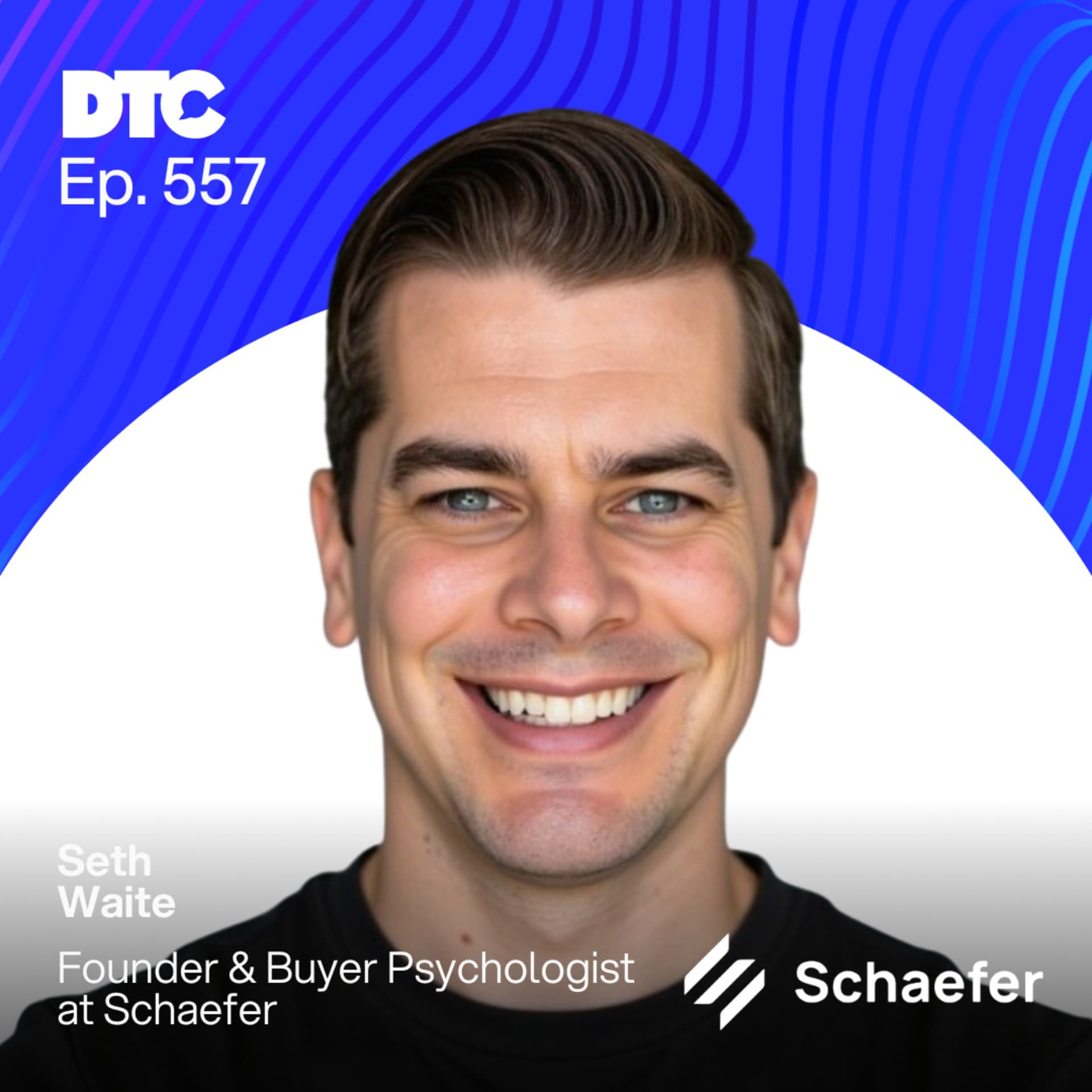
Seth Waite. Background includes early digital marketing/content work for Sam’s Club (wholesale CPG), helping launch Sam’s Club’s first mobile app (including a BlackBerry app), and experience living in Bentonville/Walmart ecosystem. He focuses on consumer motivation research across retail and e-commerce.
Key claims
Demographics are “interesting” but not insightful; founders often rely on old decks/assumptions. Product-market fit in food/bev is when the only constraint on sales is money/cash flow or inventory/stock availability. Brands should reverse-engineer obsessed VIPs and build multi-year marketing by segment/motivation, not firefighting campaigns. Storytelling should center the customer’s moments/occasions, not the brand’s origin.
Notable examples
Oreo’s dominance via taste/texture, nostalgia rituals (milk + lunchbox moments), and frequent limited editions (e.g., 231 flavors; scarcity every 6–8 weeks). Mentions Fishwife (“hot girls eat tinned fish”), Flamin’ Hot Cheetos, and Liquid Death/Red Bull as lifestyle/community-driven brands.
Written by AI. May contain mistakes. Listen to the episode to check what was said.
Chapters
Tap a time to open that second in VOUnderstanding Consumer Behavior
0:00 to 0:50
Explore why people make purchasing decisions and the science behind it.
“Why do they make the decisions that they do?”
The Science of Buying Decisions
2:18 to 4:59
Seth discusses how brands often misinterpret customer behavior.
“And so I got lots of exposure over the years and was just always fascinated by that core question of why do people buy?”
Motivations Behind Purchases
4:59 to 8:00
Discover the difference between demographics and motivations in marketing.
“So what tools or frameworks do you use to uncover the hidden reasons that people actually make consumer decisions?”
The Why People Buy Pyramid
8:00 to 11:53
Learn about the pyramid framework for understanding consumer motivations.
“And so it's a framework we built to kind of make sense of what can get really confusing and convoluted really quickly.”
Oreo's Marketing Mastery
11:53 to 14:00
Examine how Oreo effectively resonates with consumers on various levels.
“at as we're evaluating and thinking about motivators.”
The Emotional Appeal of Oreos
14:00 to 16:53
Learn how Oreos leverage nostalgia and emotional value to enhance consumer experience.
“that goes with the Oreo consumption, all of a sudden you're just like you're logging that in your brain.”
Limited Editions and Consumer Engagement
16:53 to 19:17
Discover how limited edition flavors create excitement and consumer engagement.
“So Oreos taking this very old school thing that we all know about, and they're making it a regular TikTok and Instagram conversation every six to eight weeks.”
Understanding Subconscious Desires
19:17 to 23:05
Explore how subconscious drives influence consumer choices and branding.
“Duncan Hines had this instant food cake that they could not sell to, at the time, housewives who were making those buying decisions.”
The Psychology of Purchase Decisions
23:05 to 28:00
Uncover the psychological factors that affect buying decisions in the grocery sector.
“And most people are constantly talking about the person that makes the purchase.”
Identifying VIP Customers for DTC Growth
28:00 to 31:13
Learn about the importance of focusing on VIP customers and their behaviors in DTC marketing.
“And when you think about that from a direct-to-consumer standpoint, like these are your VIPs.”
Show all 14 chapters
The Importance of Storytelling in Marketing
31:13 to 34:29
Discover how to effectively use storytelling to capture customer emotions and drive sales.
“like buy my product, you should like this, it's built for you, it often doesn't work.”
Reframing Product Categories for Connection
34:29 to 36:42
Explore how brands can reframe their products to connect with audiences on a deeper level.
“basic needs, they start triggering when they start to see a potential story that could be them unfolding.”
Conducting Effective Customer Research
36:42 to 42:01
Learn methods for conducting customer research to gain insights and improve your marketing.
“Even if it's tin fish, which they've, you know, like totally upgraded.”
Understanding Customer Needs for CPG & DTC Growth
42:01 to 43:26
Learn how to engage with non-customers to uncover insights driving purchases.
“So that replacement conversation is really powerful.”
Transcript
Automatic transcript. May contain errors.0:00Why do people buy? Why do they make the decisions that they do? Is there a science behind this process? What is it and how can you figure it out? Demographics are interesting, but they're not always insightful. Most founders show up and they're like, my mom likes this. My friends like it. This is probably really good. Unless this stuff is flying off the shelves, chances are you don't understand yet who your customer really is. product market fit is when the only reason why you're not selling more is money. I'm not just looking for people that will buy my product and looking for people that are obsessed.
0:35The rest of your business all works when you can go and scale your VIPs and reverse engineer like what is it about them.
0:50Seth Waite:welcome to the d2c podcast seth i saw your profile on linkedin um your background looked really interesting why don't you start us off with a little background uh as to your hero's journey in the cpg space yeah my very first experience in cpg was working just out of college at a large agency. And I was responsible for digital marketing and content for Sam's Club. So wholesale, CBG items. The only reason why they gave it to a kid like me at the time was this was like at the very beginning of digital marketing. And I was a digital native, essentially. And so that seemed like it made sense. That's really where it kind of kicked off.
1:37Had a bunch of experiences there, launching programs. I was part of the team that launched Sam's Club's first mobile app, which doesn't sound that impressive. But at the time, there were only two other retailers in the top 10 that had mobile apps. So we launched a BlackBerry app as part of the mix. So that kind of dates me. But that's when we started and I started getting experience. And over the years, I've lived in Bentonville, Arkansas twice. So I've been very familiar with the Walmart world. And I don't know if there is a bigger mecca for CPG than Bentonville, Arkansas. Definitely not a large city by any means, but everybody in the world is there.
2:25And so I got lots of exposure over the years and was just always fascinated by that core question of why do people buy? Why do they make the decisions that they do? And is there a science behind this process? Answers yes. But what is it and how can you figure it out?
2:44Seth Waite:Did you have an aha moment that made you realize that brands actually don't understand why people buy in a lot of cases? For sure. Yeah. Well, what it always comes back to is there's always this moment where people show up and they're like, we understand our customer. And I feel threatened that you'd ever say that, that we don't, right? Like what normally happens is I get reached out to by an executive or somebody in leadership and they'll say, Hey, I don't think we're close enough to our customer. I don't think we understand them well enough. And then I go have a conversation with the team and the team's like, we've got this buddy, like, you know, get out of here.
3:21For me, it was this realization of everybody's operating off of like three-year-old decks, you know, like old presentations. And then when I would actually go get these presentations and like blow the dust off and actually look at it, I'd realize that those were built on assumptions also. So like there was no data, like the further I dug, it was just like a lot of statements by senior leadership in CPG talking about perspectives. And there's definitely something to having experience for sure. But having data is really powerful too. And when you can combine experience with data and perspective there, you get something really powerful.
4:01So when I was doing this work with Sam's Club, I worked with a lot of large CPGs who were selling wholesale items. I was like 24, 25 years old. I was not the ideal Sam's Club customer. Like didn't naturally have a membership, didn't need to buy like 20 pounds of chicken at a time or like fill my cart up with bags of rolls and all this kind of stuff. And so to figure it out, my kind of aha moment was like, holy cow, there's a science to this process. Even though I'm not the ideal customer, I can really figure out who is and how we sell seven pounds of pick an item. Like I can kind of I put myself in the perspective of why am I loading up a sled of items as I go shopping at this warehouse?
4:55And that was this kind of moment of like, oh, there's a science here and I'm going to go
4:58Seth Waite:figure it out. So what tools or frameworks do you use to uncover the hidden reasons that people actually make consumer decisions? Yeah. So most of the time, we've got really kind of two core perspectives that I think are different than anyone we've run into. And the first big one is that demographics are interesting. And that's kind of the word we always use. But they're not always insightful. Like, they don't tell you why people do what they do. They just give you some perspective. And so all the time, we'll hear people walk in and be like, our customer is a millennial mom. Our customer is a, pick a, you know, Gen Z.
5:36That's the popular one right now. We have a Gen Z customer. And the question always comes after that is like, so what does that mean? Because if I put it a hundred Gen Zers into a room, they're definitely not the same. They don't care about the same things, buy the same things. Like we're just throwing people into buckets and acting like all these people are motivated by the same things. That idea of like demographics are interesting, but not always insightful is important. And then what we go to is what is insightful, what does answer the question of why is motivations. And so most of the time when you're doing like segmentation work, you're trying to understand who your customer is and figure out if the world is 100 people, where are my people?
6:25Then in that process, historically, most people start with this kind of demographic model. Like let's start grouping people based on how much money they make or ethnicity or all these kinds of circumstances, our approach is the opposite then, which is let's go figure out some of their basic behaviors and then let's connect the dots between those behaviors and the reason why they're doing it. And there's two elements there that are really important because there's the reason we say we're doing things and then there's the reason we do them. And they overlap more than we think. They do overlap. But there also are these edge cases where, you know, there's a reason why shopping carts are see-through.
7:09That's what I always kind of say. Like, the reason why we buy a lot of products is because we're influenced about how we're seen by others. Like we, we, when we're shopping, when we're putting things in our car or thinking about what we're doing, we have a perception of ourselves and we have that desire to have other people that see us understand that about us. I'm a value shopper and I only buy vegetables. I can tell.
7:34Seth Waite:Yeah, right. Yeah, exactly. I only buy private label or I only buy this premium product or everything in my car is neon colors and super bright because I'm buying emerging brands, like whatever that is, or I'm an early adopter. So in the process of trying to figure out these motivations, we have to ask those questions. What do you say you do? And then what are you doing behaviorally? And we use something called the why people buy pyramid. And so it's a framework we built to kind of make sense of what can get really confusing and convoluted really quickly. So the why people buy pyramid is built off of like Maslow's hierarchy of needs.
8:14So if you think about that, like pyramid structure at the very bottom, right, you have this kind of idea of like safety and, you know, taking care of your physical body. Like those are real basic instincts that you start building off of. So similarly, in our why people buy pyramid, we're building at the foundational level, very similar things. There are basic needs. And we primarily work with food and beverage, by the way. So that's kind of our sweet spot within the CPG world. And we work with people who are both in retailers and e-com direct to consumer, all the channels. And these principles really work across all of the channels that you could be in, in the CBG world.
9:00But what we've done is basically said, okay, in the food and beverage world, in your basic needs category, you can't overlook the fact that a core basic part of food and beverage is taste. Like everybody wants to be like, oh yeah, yeah, taste is kind of an afterthought. And it's like, no, actually it's the whole story. Texture matters, right? Like how does this feel in your mouth? Is it gritty? Is there an aftertaste? Is there something unpleasant? Like smell. There's all these basic needs that have to be met. And as part of it, there are things that we don't often think about like satiation. So this idea of like, is it satisfying?
9:37Is it filling? Do I feel like I'm just eating cotton candy? And sometimes cotton candy is what you're looking for, but like not when you're looking to eat a protein bar and you walk away and you're like, I'm kind of starving still. And so as you go through these basic needs, this pyramid has like 30 different motivators that we evaluate and look at. And so you have all the basic needs, components, price, all of those things. Then you work up to emotional values. And these emotional values are really driven around things like nostalgia. So does this take me back? Like, am I eating Oreos? Because I remember as a kid, like splitting them apart and dipping them in milk and having this experience?
10:19Is that why they're in my pantry? That could be part of it. And so you're looking at nostalgia. You're looking at the way it makes you look. Does this make me look more attractive and better by having this? All of these kind of emotional values that are important. Indulgence, is this a treat for me? And then you work your way up to personal goals. So it's like, cool, we've got this baseline of needs. We've got emotional values that are deeply subconscious oftentimes, and we don't recognize those. That's usually where what we say and what we do have some disconnect is in the emotional value section.
10:57We're not all as honest with ourselves or as aware as we'd like, but then you move up to personal growth. And so these are where in food and beverage, especially right now, you're seeing a lot of functional foods and beverages. So like, this is going to give you energy. This is helping you lose weight. This is helping you grow muscles, like hitting your macros, right? So this is like, I've got goals and I expect my food to do work for me here in these goals. So that's really this third phase is like, let's hit these personal growth areas. But again, it still has to already be very functional down at the like basic needs level.
11:34It has to meet these emotional values. Oh, and by the way it's got all the macros that I need to hit my goals today. And then the very top one is just beyond self-concept of like, and it's connecting me to a community that's bigger than myself, or a cause or a mission. That's kind of that snapshot of like, that's the world that we look at as we're evaluating and thinking about motivators.
11:56Seth Waite:Can you give me an example, either a client that you've worked with or someone in the wild like Oreo, who sort of really mastered this ladder, being able to attain resonance, I guess, at every stage of that pyramid? Yeah. I mean, Oreo is a great example. They do a killer job. They dominate the shelves. They're all over the place. Put that in context a little bit. I've heard this recently because I was working with someone who was trying to build like a diabetic version of the Oreo. It's like the cookie is a big category, but Oreo is as big as like the entire cookie category itself, which people don't really realize.
12:32Seth Waite:It's like, it's just massive. Most people think of cookies as a pretty diverse set of products. Like you walk down the shelf, like the shelves and in your mind, the aisle's got like chocolate chip cookies and it's got this huge row of all this stuff. But when you walk into most grocery stores, 80 % of the aisle is Oreo. So you've got the OG Oreo, like original flavor cream. And then what Oreo has done is made variations of all these. They took this original product that triggers enormous nostalgia. So if we go back to the pyramid, they nail it with taste. So they've got a variety of products to hit whatever your individual proclivities are too.
13:17So if you're like, hey, I'm all about the cream, well, you've got double stuff, mega stuff. You've got whatever flavor variations you're interested in, but like they nail the taste. They've got a really strong texture conversation. The entire nostalgia we have around like twisting that Oreo open is that we're getting the crunch of the cookie. And for people that really like the cream component, you've got the lick or the bite or whatever that experience is. So it's very texture oriented and it's creating memories. As you're eating the Oreo, very few foods have the kind of memory generation that Oreos do.
13:56And all their ads for a really long time were reinforcing that when you're sitting down at the table or pick a place, usually at home, and you've got your little mug of milk or your little whatever, your little ritual that goes with the Oreo consumption, all of a sudden you're just like you're logging that in your brain. and now you're moving into that emotional value section. So they're like checking the box off. It's a pretty inexpensive product. You get a lot of cookies.
14:26Seth Waite:Very satisfying. You've got the chocolate element as well as the creams. You've got this combination of flavors and textures. You can eat a whole sleeve of those things in a single sitting. And they're very shareable. When it comes to kind of the occasions that you're thinking about as well, it's like it's easy to put a couple cookies in a Ziploc bag and send it off with your kid to school or put it in your own lunch. It's a late night snack. Like after dinner, I'm going to have a couple Oreos. It's easy to have at any time. So it's very consumable. But now you start adding these emotional values of like, it feels a little indulgent, but it's small enough that I can have just one, which is not the case.
15:08But you feel like, oh, I can indulge in a cookie or two. I can take that part of that thing. And then it really just plays on the nostalgia. What we've seen from a data standpoint is nostalgia works best when it's connected to a place. So it's not enough just to see a brand. But when the brand can connect you with a location, nostalgia's ability to increase your marketing capabilities or, you know, like the desirability of something goes through the roof. And that's because that place will have a special meaning that brings all these values and attaches it to the brand now. So when you're thinking about an Oreo and you're thinking about opening your lunchbox and a parent or a loved one has prepared this lunch for you and they've got this little treat in there that surprises you and you're sitting with your friends at school, right?
15:58There's a moment in time where you feel really happy and Oreos are part of it. Or that indulgent moment at the end of a long day and you're sitting at home and you're like sitting down to a favorite show and you're having this, you know, cookies and milk experience. So nostalgia is super powerful. Oreo owns a lot of moments. And then on top of that, right, personal growth, not as much. They're not dominating in the like, hey, we're helping you lose weight and do all of those things. But where they win is they have a crazy amount of limited editions. They're constantly also not just playing on the emotional value of nostalgia, but they're saying, look, as much as you like the original, we're going to bring excitement and energy, weirdness.
16:42there's a wasabi flavor of Oreos. Not good. But they have 231 limited edition flavors, and they'll bring them in every six to eight weeks. So Oreos taking this very old school thing that we all know about, and they're making it a regular TikTok and Instagram conversation every six to eight weeks.
17:04Seth Waite:And then they walk that line between being the most abundant cookie in the cookie aisle, but then also having scarcity within each of their like limited edition. So they get to play in both those worlds. Yeah. Cause you're, you're literally pursuing, like if you, if you want to know like how those, you look at eBay, there are people selling limited edition cookies and then there's a huge debate around flavors. So Reddit, great place to look at for like consumer research and just perspective. Like there's entire conversations around it. There are rankings. So people have built all of these lists.
17:39I've tried 72 of the 231 flavors, and here are the best ones. And let's compare regular peanut butter Oreos with Reese's peanut butter Oreos and which one's better. And so they're checking lots of boxes. And that's really what it comes down to is you don't have to check them all. You don't have to always check off the personal growth or have this tied to some mission that's like going to elevate your experience. They're just nailing the two bottom categories and it creates a pervasiveness that's dominating the grocery store.
18:14Seth Waite:This is kind of crazy. I read an article a while ago, because they also have another category. If you're talking about a pyramid, they also appear to have some sort of like free Masonic symbology on their cookie. They actually have this like Western cross and these things. So maybe they're also activating some like occult, like eye on top of the pyramid that we don't realize or whatever. And it makes me think of one of my favorite all-time movies. If anyone in the audience hasn't seen this, go track down Century of the Self. Have you seen the movie Century of the Self? It's a BBC documentary. It's a four-part BBC documentary about how Freud's nephew came to the United States, Edward Bernays.
18:51Seth Waite:He wrote a book called Propaganda, actually. But he started the world's first PR firm. And the documentary gives these examples of basically unlocking people's subconscious desires. Like we've taught Maslow's hierarchy of needs is quite often very overt, you know, about what people want. But there is this other aspect of these subconscious drives that Freud says that we all live with. And he gave examples of the one was Duncan Hines. Duncan Hines had this instant food cake that they could not sell to, at the time, housewives who were making those buying decisions. because, and they did through consumer research, they found the women felt like it was cheating to just create a cake and not create it from some scratch.
19:32Seth Waite:So that Freud's nephew came in, he's like, okay, well, have them add an egg to the mix. Take out whatever the egg does in the mix and have them add an egg to the mix. And that was this Freudian sort of like symbol that made it feel like it was more homemade and it totally changed the scope. I baked the cake. Yeah, exactly. I baked the cake. I added my Freudian egg to it or whatever, right? Another one about women and smoking, which is a terrible example, but about how he tied cigarettes to the suffragette movement and they became this phallic symbol of liberation. And so I'm always interested in the sub-psychological reasons that products do well as well, right?
20:10And you look at that from a lot of perspectives. Like every time someone talks about the repackaging, the rebranding, like how all these things work, the conversation is are you going to mess up something that's working? That's always a big risk. You see that all the time. Like Tropicana had a really tough rebrand conversation, not like outside of just like the Cracker Barrel controversy and all these kind of things. But like you look at that and part of it is the subconscious elements. Like the Cracker Barrel conversation, a huge part of that is they're removing some very subtle things in the logo that generate most of the value systems associated with their brand.
20:48Good, bad, indifferent. Like I'm not judging those elements as much as they're triggering for people an association that has nothing to do with the actual Cracker Barrel experience. But it brings those values in and for certain segments of the population dramatically enhances them. you know, whatever that is. And so you're looking for those areas. And that's why I always go back to, you have to know your customer. You can't like make guesses. The average person isn't Steve Jobs, right? So like Steve Jobs is, I think who all these like founders and people, not just in tech, but throughout CPG and all these businesses will go back to and be like, he just had this intuition and he just understood the customer and what they wanted.
21:30And it's like, look, there's a really good chance, like a one in eight billion chance you're not him, you know, or whatever like that is. Like you're not probably going to have that kind of intuition. And intuition in my mind anyways, is just the ability for the mind to make sense of really good data and usually lots of data. So you have to be consuming all this information, but most founders show up and they're like, my mom likes this and my friends like it. And this is probably really good. And unless this stuff is flying off the shelves, Chances are you don't understand yet who your customer really is.
22:05And so we're always just pushing for people, talk to more customers, even if you're not going to go do a more scientific research approach. Like you should be constantly demoing products. You should be constantly having interviews and conversations. And that's going to inform you about the occasions people are using your products for. I mean, if you're in beauty, pick a scenario. You always want to know when are you using this? And what are you replacing? And that replacement component will tell you a lot about the psychology behind what people are thinking. So in food and beverage, the question I always have is, when I open the fridge and put this new product in there, after just going shopping, what am I not putting in there that I had in there before the shopping trip?
22:52Like, what's this replacing? What am I sliding over when I have this new product and I put it in the pantry or the cupboard? Like you're wanting to think about those elements because the IRL version, that in real life version of how the product gets used once you leave the grocery store tells you so much. And most people are constantly talking about the person that makes the purchase. So it's like it's the mom who buys this in the grocery store. And it's like, cool. But is the mom the one eating this at home? because that's going to make all the difference when you find out that this product you designed for dinner that is focused on, you know, mom character, and you end up finding that this thing gets eaten for breakfast by kids.
23:37You know, it totally changes, okay, my positioning, the offer, the way that I'm pricing and structuring this and building my promotions around it. And then also the messaging that show up on a website that show up in all your marketing and brand materials, all of that shifts when you better understand the occasion that they're using this for and the psychology behind why it fits in that situation.
23:59Seth Waite:The psychological job to be done, the product. We talked on this a lot about you don't want a two-inch drill bit, you want a two-inch hole, right? And people focus so much on the how and the what, but so much of it comes down to the actual job that things do. I have a quote from you here. It's not the people view product competition as like an adjacent brand, but it's not always that it's actually what solves the consumer's problem faster, emotionally, socially, or practically. A hundred percent. And we get caught, I think, outside of that, right? Like we're always looking at competition. We're always thinking about these other elements.
Read the full transcript
24:36And we're just at the end of the day, trying to solve a problem for somebody. And it's always more complex than we think. Like that two inch hole is a better problem to solve than the size of the two inch, you know, drill bit. But the hole's purpose is also tied to what am I planning on doing with that hole? Right. And why am I putting that up? And what's the pressure that I'm under to have that experience? And so as you kind of break down those situations, that's when you get to this place of like, okay, this is driven by a convenience conversation. This is driven by I want to eat healthy, but I also don't have time to make traditional meal.
25:19Or this is dinner at 8 o 'clock instead of that cookie cutter commercial suburban lifestyle where you're like, you know, kids come through the door and we're eating at 5. Those are very different occasions. And the psychology behind them and why the case is very different. You might have a convenience-focused customer who's eating dinner at 5.30 and a convenience-focused customer who's eating dinner at 8.30. And how they feel about that and the pressure on those motivators is wildly different. So your messaging would adjust and change, even sometimes the placement in the store.
25:56Seth Waite:What's your litmus test for true product market fit? So I've spent part of my career in technology. So that's been interesting as well because like product market fit, minimum viable products, you get all these conversations around like that area. And the SaaS world in particular is like all of this kind of measurement for what it looks like. But I find in the food and beverage space that can get really complicated. But most of it is just velocity. Like, do I have the ability? And actually what I would really say is product market fit is when the only reason why you're not selling more is money.
26:34Like I don't have the resources currently to buy more product, pay for more shipping, or to pay for more marketing. Like when your limitation is cash flow, you've got product market fit because you're basically saying, I have almost no problem selling this product. I have a problem having this product in stock and getting it in front of enough people, then that's your issue. And so that I think from my perspective is like, okay, there's fit here. These are all the signs of fit. And you see that a lot with some of these, you know, fast growing companies. It's really just like, I can't keep it on the shelf.
27:16That's my real issue. I can't keep it. It's sold out on my website at all times because I'm trying to solve operational problems with a manufacturer or, you know, pick a scenario.
27:29Seth Waite:I think I saw a quote of yours around a good gold standard is if someone panics, if the product isn't there. I think that's a good, good gold standard. Yeah. If it's not there, are they looking you up basically? Like that happens all the time, right? It's just like I couldn't find it in my store recently. Where is it? Where else can I get it? Can I go to another location? Can I reach out to somebody, you know, in a direct message on Instagram and ask how else I can get this product? And when you think about that from a direct-to-consumer standpoint, like these are your VIPs. But the reality is these VIPs are really, that should be the model.
28:10You should be breaking down, okay, when I've got this VIP customer who seems to have a high average order value and is buying, you know, high frequency, whatever those are, those core metrics, you're really looking to say there's the segment here there's a motivation and psychology behind these vips and my goal is to scale those i'm not just looking for people that will buy my product people looking for people that are obsessed because you're trying to find this initial beachhead especially especially in that product market fit phase i always kind of reference it as like this beachhead concept as a kingpin strategy so like if you think about bowling i'm not like a great bowler.
28:49It's not my jam all the time. But if you want to get a strike, you have to hit the king pin, the very first pin. And when you knock that pin down, it hits the next row, which hits the next row, which hits the next row. And we mostly show up with CPG products and we're like, almost everybody's my customer. Like everybody could love this. And even if you narrow it a little bit, But you're still thinking, if 100 people showed up to my website to buy this, 70 % of them are probably likely to. And you're like, no, the real conversation is probably nine of those 100 people. And there's nothing wrong with that because you can scale those nine and you can have a billion-dollar category or opportunity for yourself.
29:32And so I think in that conversation, what we're always looking at is like, cool, figure out who those nine are. Then go figure out that one person who seems to be a little bit of like a freak. They're just super into this. And then go figure out what are all the things behind this? Because if there's one, then there's a lot. And these people will influence everyone else. They create profitability early. That profitability drives better gross margins and net, which then gives you more cash, which then there's a downstream effect. Like the rest of your business, all of works. when you can go and scale your VIPs and reverse engineer like what is it about them?
30:16And the other benefit too is then you go from having like, it's kind of like a quarterly marketing plan at best for most businesses. They're kind of scrambling from like campaign to campaign. These ads aren't working. This thing's not doing what I thought it was going to do. And instead what happens is you go, okay, I know who my customer is today and I know who the next three or four customers are, type-wise, segment, motivation, et cetera, I've got a multi-year marketing strategy now that I can lock in on. My marketing team knows what to do, along with brand and all those other elements. And now I can really focus on, let's go execute this and make sure that our product and operational team is ready to keep up with this new strategic plan.
31:02Because the marketing plan now is layering and stacking on next segment, next segment, next segment. You've just got out of the firefighting and the scramble that is often CPG.
31:12Seth Waite:And to take the metaphor further, if you're bowling and you hit that kingpin straight on, like buy my product, you should like this, it's built for you, it often doesn't work. It's not going to create that kingpin. You've got to come at it from the angles. You've got to have some spin on it so that it actually knocks down. Yeah, and enough force. Like that's the balancing act is like you've got to come at it with an angle and enough force that it kind of explodes to some regard. It just it just goes from being vertical to horizontal. And when it does that, it just spreads. And when you're thinking about your product, you're looking for just kind of rabid fans.
31:54People who are saying in this process, I can't live without this product. How do I stockpile it? But how do I make sure, you know, how I tell my friends, how do I keep you around? Those are the clients you're looking for who are saying, like, how can I help? Because I love this product so much. I'm willing to share it with friends or do these kind of things.
32:15Seth Waite:So what's your process like? I think obviously looking at the kingpins, that makes sense. But what's your process like for a brand that maybe has found, you know, the lowest level of Maslow's fit in that the product fills a need. It's the right price. but they're looking to bridge to those higher functions or to those emotional connections. What should brands be asking themselves? What processes should brands go through to unlock those deeper motivations? Most of the time, we start by talking about brand and storytelling. But I think most of the time, the brands think that what we're talking about when we're saying storytelling, that it's them telling their story.
32:53And I think, and what we've found consistently, is it's not the case. It's not you showing up and saying, let me tell you our story about this product, about its origin, about all these things. The real story you should be telling is what's their story, the customer's story. And you're trying to show for them, these are the moments, the occasions, and the experiences that you'll have with our product. And you're connecting the dots to this very emotional experience early on, not because your story is special. You know, let's pat ourselves on the back because of how this came to be. It probably is.
33:31And there's a place for that story and a podcast and a whole bunch of other places. But for driving sales, you're trying to connect them to, again, that Oreo moment. It's watching that little kid sit in front of a camera and twist the Oreo and lick it. And then you're triggered in thinking, that looks really good. Or I'd look for that experience or I've had that experience or pick all of these other components. you're showing them these are the occasions and the experiences in your life that are available if you buy this product. So it transitions out of what's in the package and do I like the features and functions of this thing and goes beyond that to what are the experiences I'm looking to have because those experiences will define how I feel about myself.
34:20Is this indulgent? How do I see myself? Is this something that makes me look better? All of those other conversations above basic needs, they start triggering when they start to see a potential story that could be them unfolding.
34:38Seth Waite:You got to follow Seth on LinkedIn. You always have some really good examples. And the one that springs to mind from this conversation is hot girls eat tinned fish in a way, right? For fishwife just an absolute bread it's like not the sex not what you'd consider the sexiest category in the world which is tinned fish i think it's having its moment right now on socials but just to call out like you know hot girls are health conscious hot girls like protein you know what i mean like hot girls eat this product kind of reframes the conversation right they're making millions of dollars on merchandise now at this point and it's literally it's either that statement or it's hot girls like sardines and like things that are just like breaking people's brains, which is creating the wild kind of like, you know, experience on TikTok and Instagram and like snap.
35:30And so what's happened is all of a sudden it's like, let's connect the dots because even what's been really interesting is even that post that I made where I broke down like how Fish Wife is doing it and what I would consider and what they've even called a dusty category, what they've really done is they've given people the opportunity, particularly women, to raise their hand and be like, yes, that product is for me. So I'll even say, as I analyzed that post on the back end, the number of women who liked that post and have participated on that particular post was also much higher than my average.
36:11So it's kind of an interesting component for me to start seeing, even when we talk about Fish Life and its positioning, there was just a lot of hand raising of like, yes, that's me. I'm interested in that. I can see myself in that. And in this kind of conversation, and this was just talking about them, but you can see in the work that they're doing, they're creating opportunities for people to see themselves in their ideal and aspirational form. And that's crazy powerful. Even if it's tin fish, which they've, you know, like totally upgraded. It's not canned tuna or canned sardines. It's tin fish and it's European and it's got this amazing brand.
36:55They're somebody you should reverse engineer if you're in CPG and you want to go after a category that's kind of dated itself and gotten what I would call like lazy.
37:06Seth Waite:We talk about on this podcast all the time with one of our creative leads about brands' willingness to get weird with it a little bit and to be a little interesting, to be unique, to take unique shots. And I feel like we're at an era where you just, you kind of have to make people make a decision about your brand one way or the other. And it's gonna, I was just talking yesterday about a friend of mine that started his new man cereal. It's just for men. It's just like, it's just who do you want in your audience? I think one of the brands that you called attention to in one of your posts is Flamin' Hot Cheetos.
37:35Seth Waite:Like the fact that Flamin' Hot Cheetos is a$3 billion lifestyle brand now is insane. And they've done it through being really, really creative and out there, taking a lot of risks probably. A hundred percent. The risks are the key. I mean, liquid death might be one of the best examples of this. But you go back to liquid death is just the Red Bull of the moment, right? Like beverage is really fascinating because in the CBG world, beverage is the easiest category to break into. like it's really inexpensive to buy beverage products you can get you can get anything in aluminum can but when you look at the actual flavor profiles they're not that different there are thousands of small brands in the beverage space so for one to break out it has nothing to do with the product like liquid deaths can helped it a little bit in the design but really it was they're like this is who you'll be holding a liquid death can in your hand regardless of the taste and they're a media company who is connecting with their community like they're very tribal in the process and they're a really good example of that in the same way that red bull is now with all of their years right like they sponsor all these stunts and all of these extreme sports because what they're selling more than anything else is not like, this is what Red Bull tastes like.
38:59It's really, these are the people that drink Red Bull and you want to be one of them, regardless of how this tastes or even how much it costs.
39:08Seth Waite:Any final words for, because we have a lot of CPG marketers and brands on this list. Any final words for heading into Q4, 2026 for brands to really connect with their customers, the process to go through? Yeah. My take is first look at your budget. Your budget outlines a lot of where your priorities are. And if there's no space on there for you to talk to your customers, that's a problem. Like, and I'm not talking to like reach out to Schaefer as much as just there's survey tools. There's opportunities to interview and connect with people. Like make sure that you're prioritizing somewhere the opportunity to have any kind of priority around doing the research.
39:49and then don't make it overly hard. So I think some people feel like, you know, research is something that starts at$150 ,000 and above and it's going to be super expensive and it's going to take six months. But really good research just starts with asking good questions and starting to have the conversation. And so my take is like as a marketer, as an owner or founder, you know, pick whatever role, I would just start talking to customers And I would create a regular practice of it. So a big part of that is just, can I set up a, you know, MailChimp or email process in which I'm sending, you know, these out to my customers and inviting them to have a conversation with me.
40:34And it's 30 minutes and I'm going to ask them these eight questions and I'm going to record it. And because today's technology is really simple, maybe Zoom or Google Meet or whatever is going to transcribe it for me. and then I'm going to throw it into chat GPT or Gemini and ask it to look at it. Like it doesn't have to start out and be hard.
40:54Seth Waite:You may not have those eight questions canned, but what are the key questions that people would need to ask in those conversations? I think the key part of the conversation is if you're talking to current customers, you want to know what would you, the question I always come back to is, if this product disappeared today, what would you do? and that will tell you almost everything and then you just keep asking follow-up questions well i would go and i would buy this where would you go well i'd go to this online store i would do this thing and what would you buy what would your second option be and why would you buy that and would that be better than what you have today what's worse about it like if you just talk from the replacement space that's it that is like an easy starting point if this product were gone, what would you replace it and what would that look like?
41:45And as they walk you through that story, they'll tell you, well, it's because I use your product to do this thing. And you'll be like, you're doing what with this, right? Like you'll have this moment of like, how are you using that? That is weird. And then you realize, oh, there's a whole category of customers who are doing this and I'm missing out on this whole space. So that replacement conversation is really powerful. And if you were talking to people who are currently not your customers, I would ask the same question, which is, what are you buying today in this category of things that I'm selling?
42:18And what would you do if that product was gone today? And it just creates the conversation. They'll start telling you, why do I buy it in the first place? What does it do for me? What are my motivations behind it? And coming out of that, you'll easily get a long conversation where suddenly you've got a dozen insights. And if you start doing a couple of those a week, all of a sudden you're like, holy cow, I'm getting real information. And as you're compiling those transcripts and pulling it all together over time, whether it's AI or you like, or whatever, you'll start to see some trends and patterns and you'll have opportunities for, for wins that you wouldn't have gotten otherwise.
43:01And that's like simple DIY, right? Like you could get way more sophisticated, but I just feel like everybody should be talking to customers and creating really simple models to have conversations. No one's above it. And there's no amount of product market fit that I would ever say that justifies not continuing to do that kind of research and asking those questions.
43:26Seth Waite:Amazing. Well, I want to thank you for coming on the DTC podcast today. If you're in the audience and you're looking for more in-depth help around this topic, you got to go to Schaefer.co. I'll add your LinkedIn profile because you're always putting out great content about, about brands. I think people would really benefit from that. Thanks. Thanks very much, man. Yeah, appreciate it. And everyone go out and watch Century of the Self, my weird BBC documentary, because there's a lot to learn from, from Edward Bernays as well. So we will talk about that next time. Awesome. Will do.
44:00Seth Waite:Thanks so much for listening to today's episode. If you're not a subscriber to our newsletter, you can do that right now at directtoconsumer, all one word, dot co. I'm Eric Dick, and this has been the D2C Podcast. We'll see you next time.
From the publisher
Subscribe to DTC Newsletter - https://dtcnews.link/signup
Welcome to the DTC Podcast. Today, we’re joined by Seth Waite, Founder and Buyer Psychologist at Schaefer, where he helps CPG and food and beverage brands unlock growth by digging into the real reasons people buy.
In this episode, we cover:
Why knowing your customer via demographics isn't enough - the shift to behaviors, motivations, and jobs-to-be-done.
How to build a "Why People Buy Pyramid" for your brand and map messaging across basic needs, emotional values, personal growth, and community.
How to recognize true product-market fit in a DTC/CPG context (hint: when the only thing stopping you from selling more is budget).
Why targeting the small obsessed segment matters (the "kingpin strategy") and how that unlocks long-term scale and profitable growth.
Practical tips for talking to customers today - simple interviews, replacement questions, and how to turn qualitative insights into segmentation and messaging.
Best moments you'll want to scan for:
• "Demographics are interesting ... but they're not always insightful."
• "What you should be telling is the customer's story - these are the occasions you'll have with our product."
• "If the only reason why you're not selling more is money ... you've got product-market-fit."
• The breakdown of the Why People Buy Pyramid and how it applies to food and beverage brands.
• How brands like Oreo and Liquid Death illustrate layering of needs, emotional values, and community.
Whether you're launching a new DTC food brand, scaling a snack or beverage line, or trying to sharpen your segmentation and messaging, you'll walk away with concrete frameworks and a clearer path to growth.
00:00 - Introduction: Why People Buy
01:20 - From Sam's Club to Walmart: Studying Real Buyer Behavior
05:12 - Motivations vs. Demographics
12:15 - Oreo: How to Own a Category
18:03 - Brand Psychology, Packaging, and Subconscious Triggers
26:06 - What Product-Market Fit Actually Looks Like
32:28 - Tell Their Story, Not Yours
39:13 - How to Actually Get Insight (Without a $150K Research Budget)
#ConsumerPsychology #WhyPeopleBuy #CPGMarketing #BrandStrategy #ProductMarketFit #CustomerInsights #BehavioralScience #MarketingPsychology #FoodAndBeverage #DTCMarketing #MotivationBasedMarketing #EmotionalBranding #DataDrivenMarketing #OreoCaseStudy #LiquidDeathMarketing #FishwifeBrand #CustomerResearch #FounderStrategy #MarketingPodcast #DTCPodcast
Subscribe to DTC Newsletter - https://dtcnews.link/signup
Advertise on DTC - https://dtcnews.link/advertise
Work with Pilothouse - https://dtcnews.link/pilothouse
Follow us on Instagram & Twitter - @dtcnewsletter
Watch this interview on YouTube - https://dtcnews.link/video