In short
Episode topic: Levelwear’s evolution from a golf-apparel manufacturer (decorating for a customer) to a wholesale “nine-figure” brand, and its current pivot toward brand-first DTC ecommerce.
Guest backgrounds
Hyman (Levelwear founder/owner) acquired the company in 2004; previously operated as a manufacturer doing embroidery/decoration for customers. He built a B2B growth engine over 20+ years. Host: Hyman to the D2C podcast.
Key claims
Demand can’t be built on quality/service alone; Levelwear is entering the “final stage” of building consumer emotional connection (last 2–3 years). Golf credibility (status courses) and relationship selling drove early acceleration; brand messaging (“Who’s with you,” team-first) is now the next growth pillar. Licenses are “means to an end,” not the brand.
Notable examples
Selling into Oakmont/Pebble Beach; sales reps carrying nine garment bags to club showrooms; 27 pro golfers (Corey Connors, Taylor Pendrith, etc.); pro sports licensing including MLB/NHL/Blue Jays; Fanatics as a major customer via dropship/wholesale.
Written by AI. May contain mistakes. Listen to the episode to check what was said.
Chapters
Tap a time to open that second in VOIntroduction to Brand Transition
0:00 to 2:14
Learn about the challenges of shifting from manufacturing to branding.
“The transition from a manufacturer to a branded play is not easy.”
Acquisition and Early Growth Challenges
2:50 to 4:40
Explore the initial challenges faced after acquiring Levelwear and the transition to branding.
“What made you buy it, what it was and what you focused on since?”
Diving Deeper: Order Processing Issues
4:40 to 6:31
Understand the surprising complexities in processing orders post-acquisition.
“And, you know, as a manufacturer, you're dealing with thousands of units at a time, right?”
Sales and Competition Strategies
6:31 to 8:27
Learn how Levelwear positioned itself against competitors in its early days.
“So retailers are putting through orders.”
Expansion into the U.S. Market
8:27 to 11:46
Discover the pivotal factors that helped Levelwear grow in the U.S. golf market.
“But I'm curious, in those three years while he was there, did the growth accelerate a lot more than he had been able to accelerate it?”
The Changing Landscape of Golf
11:46 to 14:00
Examine how cultural shifts and athlete trends are transforming the golf industry.
“Was it just great salespeople, like breaking into Pebble Beach, Oakmont, these sort of prestige golf courses?”
Evolution of Golf Culture
14:00 to 15:00
Explore the changing perceptions and styles in golf.
“I remember thinking if I worked hard enough, I could get into curling, but I see that all the curlers now are just absolutely yoked.”
Sponsoring Pro Golfers
15:00 to 17:16
Learn how Levelwear sponsors and partners with professional golfers.
“Like do you actually have, you have golfers wearing level wear?”
Growth Through Licensing
17:16 to 18:25
Discover how licensing with major leagues boosts business growth.
“There's a ton of production going through now with Blue Jays.”
Comparing with Fanatics
18:25 to 20:35
Understand Levelwear's positioning compared to a major competitor.
“So they're now the official jersey provider for the NHL.”
Show all 19 chapters
Transitioning from Commodity to Brand
20:35 to 22:45
Examine the journey of evolving from a commodity to a recognized brand.
“Well, I mean, the interesting thing is they actually use the same – they use the same manufacturer, right?”
The Team-Oriented Approach
22:45 to 24:59
Learn about Levelwear's focus on teamwork in their branding strategy.
“It's basically about, it's about team, right?”
Marketing Strategies and Brand Awareness
24:59 to 28:00
Explore how Levelwear plans to increase brand awareness.
“Now, streaming is something we talk about on the podcast quite a bit.”
The Emotional Connection in Business
28:00 to 28:34
Discussing the importance of emotional connection in branding.
“And I think it really does connect with people, right?”
Tightening the Message for B2B Success
28:34 to 29:48
Exploring the impact of messaging on B2B marketing and growth.
“Has the tightening of your message helped in the B2B?”
Vision for DTC Growth and Brand Development
29:48 to 31:44
Articulating the vision for direct-to-consumer growth and brand strategy.
“Yeah, he's all over the Blue Jay stuff right now.”
International Distribution and Retail Strategy
31:44 to 33:58
Examining the strategy for international distribution and retail approaches.
“but it's not about selling Toronto Blue Jays or Toronto Maple Leafs gear or Vancouver Canucks gear.”
Closing Thoughts and Future Plans
34:44 to 35:17
Wrapping up the discussion with closing thoughts and future podcast plans.
“I think we're going to have, we have a lot of people, DTC, there's a big contingent in the LA world and in the Toronto world.”
Closing Thoughts and Future Plans
35:19 to 35:49
Wrapping up the discussion with closing thoughts and future podcast plans.
“And yeah, like I say, once you guys launch that DTC biz, maybe towards the mid of next year or whatever, I'll have Steve on and we can talk.”
Transcript
Automatic transcript. May contain errors.0:00The transition from a manufacturer to a branded play is not easy. And I went through all of that from that start to the end. We've always been a good operator, right? Always made good product. We can service a customer well. We can do all of those things. But at some point, you realize this can only take us so far, right? You got to build the demand up from the consumer level. We're into the final stage of business. You start off in the service side, you get into the product. You can only do so much with quality and service, right? At the end of the day, there's got to be an emotional connection to it.
0:30And so we've only started down that journey in the last two, three years. And I'm so excited. And I think there's so much we could do with this messaging. There's so much we could do with the story. It really does connect with people, right? We just have to make sure we live it with all our staff and everybody else.
0:51Hyman Ngo:Before we dive in, let's talk about something that can actually help you survive the Black Friday chaos this year. Here's the reality. Everyone talks about planning for BFCM, but no one shares how to stay ahead while it's happening. You're running on fumes, making million-dollar decisions, and trying to decide which ads to scale, which products to push, what to pause, all with zero time to dig through the data. That's where Triple Whale comes in. Triple Whale is the agent-powered intelligence platform powering faster, more confident decisions for over 50 ,000 brands like True Classic, Way, and Olipop.
1:21Hyman Ngo:With the smartest AI in D2C, you'll save hours on manual analysis, catch issues before they hurt revenue, and unlock insights humans can't find, all to maximize profit. And just in time for Black Friday, you'll get Triple Whale's new BFCM Command Center, preloaded with real-time performance dashboards so you can track every order, ad, landing page, and conversion channel in one view. No tab hopping, no data lags. On top of that, you'll get three AI agents built to analyze your BFCM 2024 data and give you tactical, instant recommendations to win BFCM 2025, from ad spend and email strategy to overall profitability.
1:59Hyman Ngo:The brands that win Black Friday aren't the ones with the best gut instincts. They're the ones making faster, smarter decisions backed by real data. Unlock the BFCM Command Center and turn chaos into your most profitable season yet, completely free of charge. Visit triplewhale.com backslash DTC to learn more. That's T-R-I-P-L-E-W-H-A-L-E.com backslash DTC to learn more. Welcome Hyman to the D2C podcast. I was excited to have met you at Ecom North at the VIP dinner there, hearing more about Levelware. And this is a bit different for the D2C podcast because you're mainly, a lot of your growth has come through the B2B space and you guys are only now moving into D2C, but you've built quite a B2B empire and you acquired the company back in 2004.
2:50Hyman Ngo:Can you take me back to that date? What made you buy it, what it was and what you focused on since? Well, I'd like to tell you that we had a great foresight on where the business was going, but that wasn't really the reason. So prior to that, we were a manufacturer. We were doing just Carmen decorating and Love War was a customer of ours. And he was doing a good chunk of business with us. And he would just send us his goods. We'll put the embroideries on, we'll send it back to him and charge him for the labor of the manufacturing. And I think he got into a little bit of financial trouble, couldn't pay his bills.
3:31So rather than going after him, we say, hey, why don't we do a deal? And at the time we just thought, We're the manufacturer. We can capture the bigger chain of the value chain. Now we're going to sell it wholesale instead of just getting$2 for the piece, and we're now going to get$20 for the shirt or what have you. But the transition from a manufacturer to a branded play is not easy. And I went through all of that from the start to the end. So you've got to put a line together. You've got to bring it in. You've got to stock the inventory. You got to build catalogs. You got to sell to the sales force.
4:08You got to go to trade shows. I mean, it's just everything. And then there's a second evolution. Once you get into the branded space, right? Trying to market a brand as opposed to just, you know, if you're a manufacturer, you're marketing a service, which is very, very different, right? So, I mean, that's just a big kind of overview. I'm not sure how specific you want me to get into with that.
4:30Hyman Ngo:Let's dive in on that transition from your manufacturing role into branded apparel. What was your first big lesson or like what surprised you most about that transition? What was surprising was the amount of touches to an order, right, from the salespeople. And, you know, as a manufacturer, you're dealing with thousands of units at a time, right? So we don't have that many orders. But as we got into this, all of a sudden we had, you know, we'd come back from a trade show and we'd be sitting on, and at the time it was like paper orders. Like it's, this is going back. Yeah, literally. Yeah, paper orders.
5:05And so we'd come back from a show with 250 orders, and someone would have to sit there, enter every single one of these orders. And so we're thinking the manufacturing part is a difficult part. It's actually the processing. There's processing of hundreds and hundreds of orders. We just did not have the foresight. I mean, we were young. We were stupid. So anyway, just chalk that up to experience, I guess. So that was one big learning lesson.
5:30Hyman Ngo:And what did you do? Did you just keep going at like, just doing it manually like that? Or did you build processes that smoothed that part of it? A bit of both, right? I mean, when you're in the thick of it, you just have to just sit down and brute force it, right? You just bring in as many people as you can, get these orders entered. And the way the business works is it's not just entering the orders. We're selling decorated products too, right? So we're doing artwork, we're doing all sorts of others. There is a lot involved. And so rather than dealing with an order of thousands of units, you're dealing with an order of 36 pieces, right?
6:07And now all of a sudden, and then, you know, the units are the same at the end, but the number of times you're touching it. So, you know, 36 units times whatever, 2 ,000 orders is a lot. It's a lot of work versus, you know, getting one giant order of it.
6:23Hyman Ngo:And how did you get the orders? Like as a manufacturer, is it the same places you were getting the manufacturing orders from? No, no. You mentioned a trade show. We're selling it to retailers. So retailers are putting through orders. And we have sales reps, right? So sales reps are taking the orders, and then they're writing it onto an order form. And they were either emailing or faxing us at the time. It was just that crazy. And this was 20 plus years ago, right? So I do remember getting a package from a sales rep, like a little envelope with all his orders. So he actually mailed it to us. That's hilarious.
6:58Which is, you know, I'm sure that doesn't happen anymore.
7:00Hyman Ngo:And then how did you, with your sales reps, like how did you position this new business in a way that was, I don't know, better than the, like, how were you competing? What points were you competing on price? Were your designs or materials better? Or what were you, how were you differentiating back then? It was very much a price game at that time because we were just getting in. Now, the previous owner had a, he had a loyal following already, so it wasn't that tough. And so he has people who want it. And he stayed on. He stayed on for three years after the acquisition to basically run the sales side of it.
7:34So there is no change on that side. Once we acquired the company, the selling infrastructure remained the same. And he ran it for three years after that before we kind of took the whole thing over. And then he left. So the selling to the consumer or to the customer, there was no difference. It was still business as usual. he I think he positioned as he he partnered with a you know with a company with with more money who can who can finance and bankroll the business and finance the whole the whole thing and so that's how he was able to and then we you know we did the sales meeting all the sales people came in so that was that transition wasn't that hard because the selling for the most for the most part was taken care of we were just executing on the back end and when you bought it with had he because
8:20Hyman Ngo:you guys have experienced some meteoric growth here from, I think, around 2 million USD to really high eight figures over the past 20 years, long time. But I'm curious, in those three years while he was there, did the growth accelerate a lot more than he had been able to accelerate it? And what was his position during that time? Would that have been surprising to him to see the way you were growing the biz? Well, I mean, I think for the first three years, the three years that that he had stayed on the growth was was minimal it was it was hard it was a tough space it wasn't just about having you know the inventory which he struggled with like we were able to invest in inventory but it's just getting getting the getting the brand out getting the awareness out because at that point it was still a very niche brand not a lot of penetration it was very much a local brand and we were now slowly starting to go across the country and then even into the u.s really the trajectory didn't it didn't really start until probably i would say you know 10 years like it grew it grew at you know low single digits for the first little while until um 10 years and then started growing double digits and really the last uh probably five years it's really grown by by leaps and bounds for us that's incredible talk to me about those those tranches like in that first when you got into the first double digit growth what was the what was the driver for that?
9:46Hyman Ngo:Interestingly enough, it was actually the US. Because in Canada, there was a bit of baggage. The initial product line, even prior to us acquiring the company, it was so-so. It wasn't great. So there was a little bit of baggage. And so it was hard to break through that baggage. But in the US, it was completely new. Nobody knew the brand, right? And so we had the opportunity to start fresh. And so when we were able to, we were able to get into like, this is predominantly the golf business at the time, right? We were getting into, you know, the Oakmonts of the world, like these are like serious courses.
10:26And all of a sudden, once you're in those places, the Canadian customers looked at you a little bit different now. Oh, you're not just this local Canadian brand trying to, you know, it's like you're get your real so it's almost like prove yourself in the u.s and then we'll come back and and and which is which is a little strange right you think it'd be the the other way around like they would support a local company but we had to go around prove ourselves in the u.s get the sell-throughs really you know going really really well and then come back and then target the canadian market again and reposition the brand as listen this is this is we've gone through it we've gone through a change the quality has improved the product line has greatly improved the service all of it and so the proof point is we're able to get in and today we're we sell to like 85 of the top 100 golf courses in the u.s and in canada too and so that actually carries a lot of weight especially in the golf business golf business is very much still a status kind of play like if you're able to get into pebble beach like oh okay well then you knowst george's in toronto or or whatever or Shaughnessy in Vancouver would be,
11:33Hyman Ngo:we're like, oh, okay, well then you're real now, right? And so that was kind of the first step. So we were struggling through trying to break through and then once we're able to break into the US and then it came back around. And so then we started to really grow that business. What were the key factors? Was it just great salespeople, like breaking into Pebble Beach, Oakmont, these sort of prestige golf courses? What was the key factor in getting in there? The product, obviously you got to start with a product. The product's got to be good, but that's just the first line. Like the next step is you need to bring in salespeople.
12:05You know, golf is very relational business still. Like it's still a lot of one-on-ones. I think I told you before, like literally our salespeople will walk to a club with nine garment bags of clothes, you know, set up in a little showroom and, you know, pull out samples. And that's how they sell. And that's every single meeting, that's how they would sell. And so it's still very much a relationship business, right? So if you can get in front of these people, even get the meeting, and then you just let your product kind of do the talking. And then there's a bit of salesmanship there too, for sure.
12:38Hyman Ngo:And then relationships and momentum, as you're saying, right? And then they'll try you out a little bit. And then I suspect this is the same for everybody, right? So if they buy a little bit and it sells through and it checks out, they're like, okay, let's buy a little bit more and buy a little bit more. And then by the time you're done, you've got like seven categories in and you're selling through every single one of them. And it's great timing in the golf industry with it just being exploding as a cultural force with Tiger at that time. And then also in a fashion sense as well, right? People expressing themselves more on the golf course, you probably timed that well.
13:10Yeah, well, I mean, 20 years doesn't mean I timed it. We were just there as it happened, right?
13:16Hyman Ngo:Yeah. We were there when it wasn't happening either. But I think you're right. Golf is actually a trending sport right now. So we are seeing the growth there. And, you know, the way the golf has evolved too, like it, for years, golf was looked at this kind of as a sport that's for old people. You know, it's a little dated, but now with, with all the athletes now, they're all fit. Like you don't, you don't see that, you know, fat guy, you know, smoking in the golf course, like on tour. Duffy Waldorf. Right, right. Yeah. You don't see Duffy on the course as much or John Daly. We could use a John Daly though.
13:49Hyman Ngo:I feel like we could use another John Daly. Well, you know, I think if you look at Rory Mako, I mean, that guy is a physical specimen. He's ripped. He's strong. Oh, they all are. I mean, there's no more of these guys who are not in shape anymore. It's a lot of conditioning. Every sport's like that. I remember thinking if I worked hard enough, I could get into curling, but I see that all the curlers now are just absolutely yoked. So there's no, you got to be fit in pro sports. And you got to have your fit dialed, which is something that all of these young golfers are so, you know, they're standing.
14:21Hyman Ngo:I remember it was like a big deal when Tiger's wearing his red back in the day or, you know, there was that stuffiness to it, which has really gone away. Right. And now, you know, you see guys wearing joggers on the PGA Tour event, right? Like you would never, like people are wearing hoodies playing golf and you just don't see that before. Right. So it's not as stuffy anymore. And I think it's become cool. I think when I was, I remember when I was young, like I didn't know anybody who golfed and now, you know, I have kids in high school and like all their friends are golfing. They're going out golfing all the time.
14:54Right. So it's just, I think the times have changed too.
14:57Hyman Ngo:You're selling to pro shops. Do you also sponsor athletes? Like do you actually have, you have golfers wearing level wear? Yeah. Yeah. We, we have 27 pro golfers in our stable of athletes. Uh, in our, our, our, you know, most, our best golfer is probably Corey Connors. He's the number one golfer in Canada. He's probably top 25 in the world, but he's really good. And he actually looks really good in the product. So he's a really good kind of muse for us. We do have Taylor Pendrith, Aaron Rye, Adam Hadwin. There's quite a few golfers, LPGA Tour players too. So we've got probably about 10 of those and about 20 guys all over, you know, PGA Tour, Korn Ferry, and even European Tour, which is DP World Tour.
15:41Hyman Ngo:And then how do you get the golfers? Is it through some of the pro shop connections? Is it just a sales effort as well? How do you actually get golfers to wear your gear? Well, the tour players, you have to go through their agents. So you don't just go up to the… And so I think how we got… Because we've been involved with Golf Canada for a while. We connect with the golf coach, the national coach. And he kind of points us, hey, this guy's up and coming. We had Corey Connors signed to a deal before he was on tour. I remember when he won his first event, then he qualified for the Masters that following week.
16:18like I think on a press conference he's like yeah I have to call my my apparel sponsor because I ran out of stuff and so they had to send me all this new stuff so that because he wasn't expecting to play the masters like the following year right the one thing I credit these guys too is they're there's they're very loyal like you know they they respect the people that's been there from the start and so you know like Taylor Pendereth we were we were sponsoring him uh before he was even on any tour. So he was just come out, he just came out of college. And, and so we were just supporting him and it wasn't, it wasn't big dollars at the time, obviously, but it was enough to just keep them.
16:57Okay. He can keep, keep doing what he's doing. Right. And I think they, they appreciate that a lot of these guys.
17:02Hyman Ngo:So golf was a major accelerant, uh, in, in your growth. And then give me another one. What, what else has been a big, like even maybe in the last five years or so, what's been the, the, the catalyst there? So golf is our biggest part of our business, But our second big, and it's growing too, is our pro sports license division, especially now with the Blue Jays playing the World Series tonight. Oh, yeah. I mean, it's going crazy. There's a ton of production going through now with Blue Jays. So we started getting into the license business probably about 15 years ago, 10, 15 years ago. We started getting into U.S.
17:39college. We've since left that business, but we're very big in the NHL. We're very big in Major League Baseball and to a lesser degree in NBA too. We've got partnership deals with the Yankees, San Diego Padres, Edmonton Oilers. So that's a big accelerant for the business. And it does add a lot of credibility for our products too. So that's a good one.
18:04Hyman Ngo:In the pre-interview, we talked a little bit about Fanatics, which is a company that does similar branded sports gear, but has taken it the full way of having their own retail stores and their own presence. How do you compare yourself as a brand to a company like Fanatics, which maybe our US listeners would be more familiar with? They're a retailer. That's what they do. Now, they happen to also be a licensee. So they're now the official jersey provider for the NHL. So I'm sure you've seen the Fanatics jerseys. So they're kind of playing in the branded. Ironically, they are our single biggest customer.
18:39just because we do a lot of work, a lot of business with them on their e-com business. We have a dropship program set up with them and that one's doing really well. And just wholesale, right? So because they operate a bunch of retail stores and incidentally, they also are in the golf business. And so there's a lot of crossovers, especially once you're getting in the sports business, there's a lot of crossovers. And so they're the biggest customer that we have.
19:08Hyman Ngo:Was there an issue with them with the materials used for the baseball clothes being see-through or a little bit transparent? I remember an issue coming up around when they switched to Fanatics jerseys in the MLB. There was some issue with the way that they were looking on cameras. Am I making that up or did that happen? They've gone through some bad press. and and to give them credit they've actually worked through a lot of it and now the product is is uh is quite good now i think you know reputation being what it is is i think there is a little bit of reputation that the product isn't great i mean i can say you know even though i'm a competitor their products are actually good they're like if you look at their jerseys now i don't know if you have a canucks jersey or anything but like it's a good quality product But I think because they went out so fast, I think they had some problems executing at that level.
20:04And so they had to fight through some initial quality issues, which, I mean, they got punished online. Even the NHL jerseys, they were totally – if you're a netizen, you know, you would have seen all the crap that they got from the haters online.
20:23Hyman Ngo:I think they had this rep as like previous jersey providers had been on the professional side of things. And these guys weren't at that level. Maybe they were more like consumer-based rather than for the pros. And I think that kind of – but it's good that they've pivoted. Well, I mean, the interesting thing is they actually use the same – they use the same manufacturer, right? So I think the previous jersey provider was Adidas. But it's the same people making it. So really, there should be no difference in quality. You've been on such a journey. you start as a service, you go into a commodity, and now you're building a brand.
20:56Hyman Ngo:Can you talk a little bit about that process of kind of moving from a commodity to a brand and what you guys have gone through to do that? Or what you're still going through? I would say that is our next big kind of pillar of growth is once we realized, you know, we've always been a good operator, right? We've always made good product, we can service a customer well, We can do all of those things. But there was only, at some point, you realize this can only take us so far, right? You got to build a demand up from the consumer level to your brand. And so this only happened probably within the last five years, probably maybe even three to four years ago.
21:36You know, this really came to light when, you know, I remember we hired our sales manager and he would travel with all our sales reps. and he would and he said to us at a meeting one time he says you know it's interesting how every sales rep describes a brand or and he says it's different for every single every single time i hear it and i'm like oh my god that is a big problem if everyone is telling the story in a different way that's not good and so and then we kind of look back and we said well what is our story and we and nobody could have really articulated very well right and so we actually went down this whole path of we hired an agency to help us with this.
Read the full transcript
22:17And then it was a really cool process, I have to say. They interviewed a lot of stakeholders, a lot of our employees, interviewed our customers, they interviewed our vendors, so everybody. And they drew out the values as well as kind of... And then we kind of crafted a story from there. And I think where we landed, I'm actually quite pleased with. And it's only been the last couple of years that we've been actually pushing that hard, that story hard. So I'll kind of tell you the story. It's basically about, it's about team, right? So team over everything. So essentially, you know, because we're in the sports business, you know, everyone focuses on the athlete, right?
22:57But we say, well, without that, without the team around that athlete, they're not going to be successful, right? And so in order to do your best, you got to surround yourself with the best. And that's become our manifesto. And so rather than celebrate the individual, which if you're a sport company, you're going to celebrate the individual. That's kind of inherent in the business.
23:19Hyman Ngo:That's the playbook, right? With Jordan and LeBron and on and on. And so we actually said, well, let's take a different approach. Let's celebrate the team around them, right? If it's the coaches, the trainers, his parents, her parents, you're not going to get where you are without their support right i mean every single one of these athletes you know hockey players like you know 5 a.m practices when you're seven years old right it's it's all of those things and then and then extend that out to your teammates to the people who support you and the people who who encourage you mentors you know everything so that's we're going to celebrate those guys as opposed to you know obviously the the athlete has got to have all the tools and skills and determination, all of that stuff.
24:02But it goes beyond that. We're anchoring our messaging around that. And so we came up with our tagline, who's with you. And so now we're now coming up with really interesting ways to tell that story. We did our first TV spot this year with Adam Hadwin, and he's a tour pro. And basically, it's it's no team no dream right it says without without my team around me i won't have this dream right and it was pretty cool like it was i'm not sure you've seen the spot or not but like he basically you see him kind of you know duffing a shot or hitting it into the water and he starts going to the stream if i wasn't if i didn't have my trainer then he kind of sees himself as this kind of big fat guy or or or he was actually now instead of having a golf club in his hands now he's actually, he's got a weed whacker.
24:51Now he's a grounds crew guy, right? So, and then he kind of shakes over and says, without my team, there is no dream. Who's with you? So it was a really cool spot. And so we're quite proud of that.
25:00Hyman Ngo:Now, streaming is something we talk about on the podcast quite a bit. Was it, did you sort of see that as like a high-end, like kickoff to like the brand awareness piece? Was it tied to a D2C campaign? How did you sort of conceive of that investment in marketing? See, this is prior to our DTC. We had hired Steve and he's now, and he's only, this is his third month now. And so when we did that, we had no DTC in mind here. We were just thinking this is pure awareness play. So there was no conversion. There was nothing. We just wanted to get as many eyeballs as we can with the messaging. We thought the messaging was so good and i think the problem with that is we just can't outspend our competitors if we throw an entire marketing budget on placement of that ad into tv and everything else we still wouldn't we're not going to make a dent right because the market is so huge and like whatever we got like 20 30 million eyeballs okay well there's between the u.s and canada there's like 300 and you know almost 400 million people.
26:07You're only getting it. And that's them seeing it once. So it's not really making an impact because you can target it a little bit better, but still, there's just nowhere enough impressions that you're going to need to really build a longstanding brand.
26:24Hyman Ngo:I'm impressed with the brand sort of thesis and sort of identity that you've come up with. And it's funny how relevant it is to what's happening right now at the Blue Jays. I just saw like a tweet actually this morning that was sort of saying that LA is the best individual roster. Like they have the greatest superstars with Otani or whatever. But Toronto has this like real team vibe. They have this, you know, they've been together for years. They've had the same coach for years. They have this whole sort of like team mentality. So they might be the better team, even though they don't have the individual players.
26:53Hyman Ngo:Which is great. Or they do have a lot of individual players. I think our messaging can translate across. It can go so broad, right? You know, with all the markets that we're serving. and especially translate really well in baseball because baseball truly is a team sport. I mean, I guess that translates to hockey too, I would presume. But I think the messaging is really good because you can talk about the team as your actual teammates, but then you can extend that even further, right? The coaches are now part of the team. The trainers are part of the team. The PR people, the people in the organization who are helping, like all of this, Like people are the one who works on the ticket stand, who sells the tickets.
27:33Like it's all. And then extend that further out to the fans, right? The fans, that's the 10th man on the field, so to speak, right? And they're all customers.
27:43Hyman Ngo:They're all potential customers, right? It's kind of a smart branding play because it brings the focus from the individual that everyone wants to be like maybe. And they'll dress like that person because it's a – but it's like when you actually envision the fact that you're part of the same team, it's just it opens you up to thousands of new customers right right and that and that's why i'm super excited like this is we're into the that that final stage of kind of business right you you start off in the service side you get into the product but you're a commodity and commodity and you can only do so much with quality and service right at the end of the day there's got to be an emotional connection to it and so we've only started down that journey in the last two three years and i'm so excited and i think there's so much we could do with this the messaging There's so much we could do with the story.
28:27And I think it really does connect with people, right? We just have to make sure we live it with all our staff and everybody else.
28:34Hyman Ngo:Has the tightening of your message helped in the B2B? Because I know you've got big designs on D2C, but has just the tightening of your story and your message helped in acquiring new golf stores and in your B2B marketing as well? We're certainly growing. So I don't know how much of that is a factor. I mean, obviously, the product line is improving. and we're very competitive in pricing. So a lot of those things obviously help. And then we're hiring more salespeople. So it's definitely a factor, but it's not going to be the determining factor because it's all of those things besides that message.
29:07But I think the message, and I think with the messaging too, I'm not actually sure how well it's being translated from the sellers because I know we created this great video for them to show. I think a lot of them are using it, but I'm sure not everybody, right? Salespeople, they kind of do what they want. And so I believe it is. It really is one of those things that's hard to quantify. It's like putting ads on TV. How do you quantify the success? I have no idea.
29:36Hyman Ngo:It was awesome meeting Steve as well and hearing kind of his initial, I think he's only been, like you say, a month or two in. And I'd love to have him back at some point after he's got his feet wet with the D2C vision and the D2C plan. Yeah, he's all over the Blue Jay stuff right now. Is he? He's just a total nut about it? Yeah. Oh, me too. What's your vision? What's your vision for where you want that to go in the next two, three years? You know, that's a good point. We kind of have to step back. I mean, the vision really is to just continue to build a brand, continue to build a business. And, you know, it's not that I'm not happy where I am today or where we are today.
30:15Like, you know, we're lucky. This has been a really fun journey. It's been a successful journey so far. We're going to hit nine figures probably in the next maybe year, year and a half. And so that's super exciting. And I don't want to reach too far or I don't want to put it out there that my goal is to be whatever, the next name your big brand. But I do see that's a possibility, right? Whether or not I can live long enough to see that, I don't know.
30:46Hyman Ngo:Do you think you're going to lean on the licenses or like, do you, I guess, I guess it's all TBD and maybe you have multiple fronts that you'll be kind of going to DTC with, whether it's golf or hockey licenses or how, like, how do you, what do you see as the tip of the spear to enter into DTC? Is it, is it going to be golf? I think from the DTC side, I think it's all angles, right? We've got an athleisure line that we've been successful in the last few years. I think that could do really well. And I think from, I'll keep going back to Steve, but he's got to pick and choose. I think it's going to be timely, like something like the Blue Jays hitting.
31:23Okay, that's pretty timely. And so we'll capitalize on that. And he's going to take his wins wherever he can. but from the DTC side, we do see it's not about the license. It's about the brand. That's what we're pushing. The license side, yeah, I think it's a means to an end for us. We are going to support that business. We're going to continue to build for that but it's not about selling Toronto Blue Jays or Toronto Maple Leafs gear or Vancouver Canucks gear. It's really about the Lavore brand. That's what we're building.
31:54Hyman Ngo:And the other thing, we've actually opened up our first international distribution And so we see the international side to be a big, big part of the future growth for us too. So I think that's well underway. Golf also is taking off internationally as well, right? Like it's like a growth sport globally. And in a lot of regions, in Asia in particular, golf as a sport is really an elite sport, right? So it's not like in Canada where you can just go to a municipal course, pay whatever, 60 bucks and go in your t-shirt and shorts and play. like in a lot of these places it really is a highbrow kind of elite sport which it's good because it's if you can if we we've established ourselves as a legitimate north american brand and so now i think that's where we can really take a foothold in in europe in asia in the middle east in in some of these other places and so we've got a really uh a good strategy to go after that very cool and is that will be like i think you brought up a point in the in the pre interview that i thought was interesting was about independent retail and about the way you guys are approaching this is inherently because of the way that all golf courses are sort of decentralized.
33:02Hyman Ngo:And, you know, there's some, I guess there's organizations where some companies own a lot of different golf courses, but it's a very, it's like the last bastion of like independent retail. Will that be the same approach globally as well, where you're just sort of like getting in front of the right golf courses? I would think so. I mean, I, to be honest, I don't, because this whole thing had just started and we, we had signed a couple of distributors already. We'll have to just take a, we'll wait and see. Like just from what I've learned in talking to these distributors is it's a little bit different the way they're set up.
33:33For example, you know, this Middle East distributor that we have, they actually operate 29 pro shops, right? So for them as a distributor, they just place the goods. So it's really easy transition because they don't have to go, the distributor doesn't have to sell it because they are also the retailer, right? So this is where I see kind of the consolidation. And I think from a larger point of view, like this is where the whole business is going, right? Everything is vertical now. Like you go to a mall, you don't see independent retailers there anymore, right? It's everything is a branded vertical retail.
34:04And so, yeah, the point about the golf is the last bastion of independent retail is true because there's 16 ,000 golf courses in the US and there's whatever, 4 ,000 or 5 ,000 in Canada. And so there's a good base. And we sell to 3 ,500 golf courses in the US and another whatever, 1 ,000 golf courses in Canada. So that still allows us to have a rep force to go call on these individual accounts and they can still make a good living doing it, right? Whereas I don't know that that's happening in all other parts of retail.
34:38Hyman Ngo:I'm going to go buy some official Jay's gear, which you have for 20 % off on your website at levelware.com. That's right. Everyone in the audience. I think we're going to have, we have a lot of people, DTC, there's a big contingent in the LA world and in the Toronto world. So I think there's going to be some real turf wars on Twitter about this series. Like I had some good rivalries going with Seattle friends, but will you make it to any games? No, although I will be, I will make it downtown if they win the World Series. Nice. Just stay out of the riots. I guess that's not Vancouver. You guys should be fine.
35:14Hyman Ngo:but thanks for coming on the DTC podcast today. Check out levelware.com. And yeah, like I say, once you guys launch that DTC biz, maybe towards the mid of next year or whatever, I'll have Steve on and we can talk. Oh, absolutely. I'm sure he would love to come on. Awesome. Thanks again, Hyman. Talk to you soon.
35:36Hyman Ngo:Thanks so much for listening to today's episode. If you're not a subscriber to our newsletter, you can do that right now at directtoconsumer, all one word, dot co. I'm Eric Dick, and this has been the DTC Podcast. We'll see you next time.
From the publisher
Subscribe to DTC Newsletter - https://dtcnews.link/signup
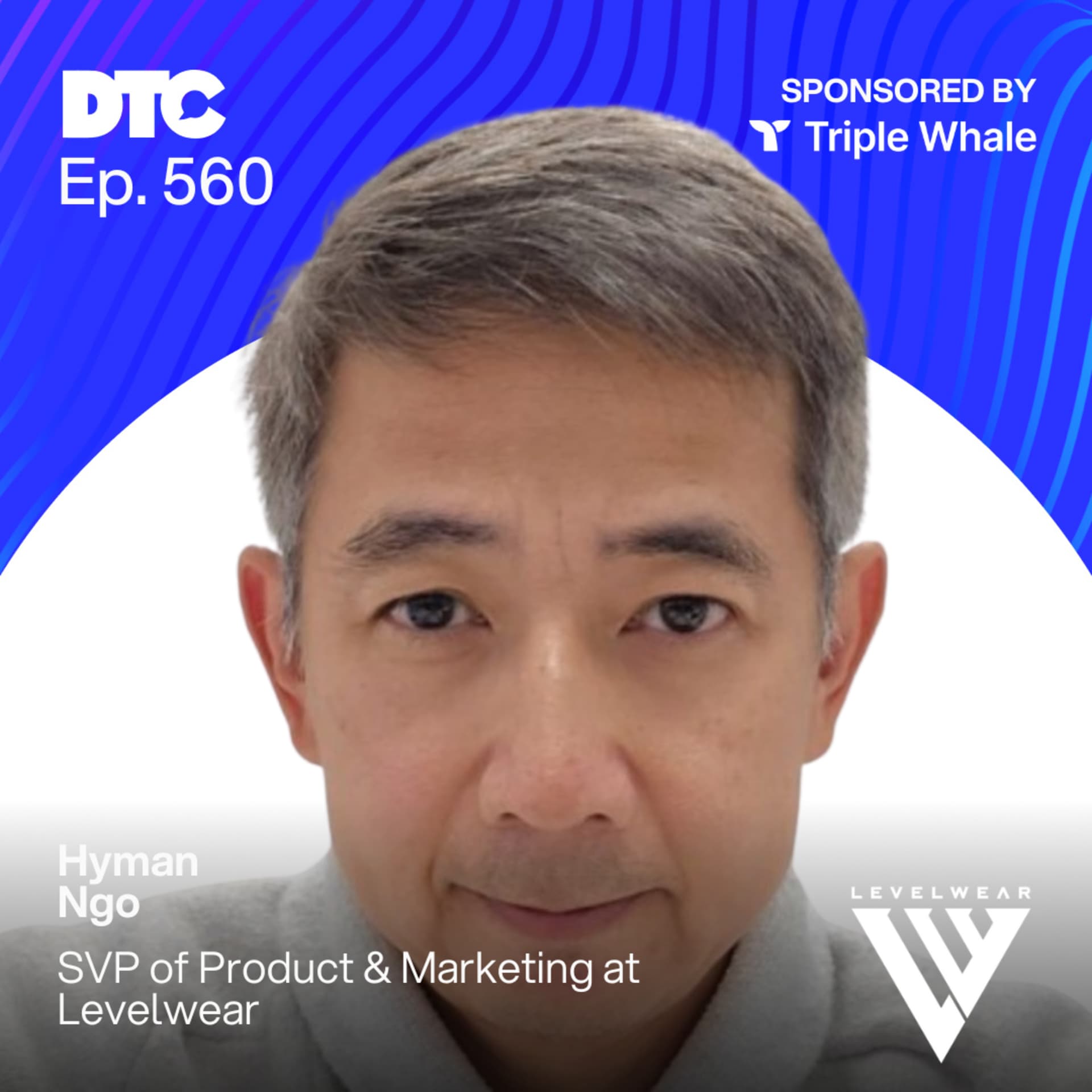
Hyman Ngo, SVP of Product & Marketing at Levelwear, joins us to talk through the brand’s evolution from a behind-the-scenes apparel manufacturer to a powerhouse in wholesale and licensing — and now, their pivot into DTC.
For brand leaders scaling from golf, wholesale, or licensing into consumer channels.
What we cover:
- The real reason they acquired a customer’s brand — and how that changed their whole trajectory
- Why golf was the launchpad: how credibility in elite U.S. clubs unlocked growth back home
- How they scaled to 85 of the top 100 U.S. golf courses (and what that did for their reputation)
- The role of licensing (MLB, NHL, PGA) in adding growth and brand legitimacy
- How they finally built their brand narrative (“Team Over Everything” / “Who’s With You”) and why it’s now central to their DTC push
Who this is for: Brand operators in wholesale, licensing, or B2B looking to build emotional connection and consumer pull
What to steal:
- Build credibility in a “clean” market (no legacy baggage) and use it to reposition back home
- Treat brand story as an internal alignment tool — not just external marketing
- Use licensing as a bridge, but don’t lose sight of your brand equity
Unlock the BFCM Command Center: https://triplewhale.com/dtc
Timestamps
00:00 Transitioning from manufacturing to a brand
02:15 Buying Levelwear and early operational challenges
04:40 Breaking into retail and managing order volume
07:20 Slow early growth and breakthrough in the US golf market
10:05 How Levelwear entered top golf courses
12:40 Evolution of golf culture and apparel trends
14:00 Sponsoring pro golfers and athlete partnerships
16:00 Expanding into licensed sports apparel
18:05 Fanatics partnership and industry comparisons
20:00 Crafting Levelwear’s brand message and manifesto
22:30 Launching the "Who's With You" campaign
24:15 Using streaming ads for brand awareness
26:10 How the brand story aligns across sports
27:40 Message consistency in B2B and retail channels
29:00 Levelwear’s path toward nine-figure revenue
30:30 DTC ambitions and where the brand goes next
32:00 Expanding into international golf markets
33:00 The future of independent retail in golf
34:00 Closing thoughts and next steps for Levelwear
Hashtags
#dtcpodcast #levelwear #golfapparel #sportsbusiness #directtoconsumer #ecommercegrowth #brandbuilding #athleisure #golfindustry #sportsmarketing
Subscribe to DTC Newsletter - https://dtcnews.link/signup
Advertise on DTC - https://dtcnews.link/advertise
Work with Pilothouse - https://dtcnews.link/pilothouse
Follow us on Instagram & Twitter - @dtcnewsletter
Watch this interview on YouTube - https://dtcnews.link/video