In short
Santevia’s shift from retail/vendor-controlled Amazon to DTC/Seller Central, plus a Meta creative overhaul that scaled Amazon revenue 2x and supported a major Black Friday/Cyber Monday push.
Guests
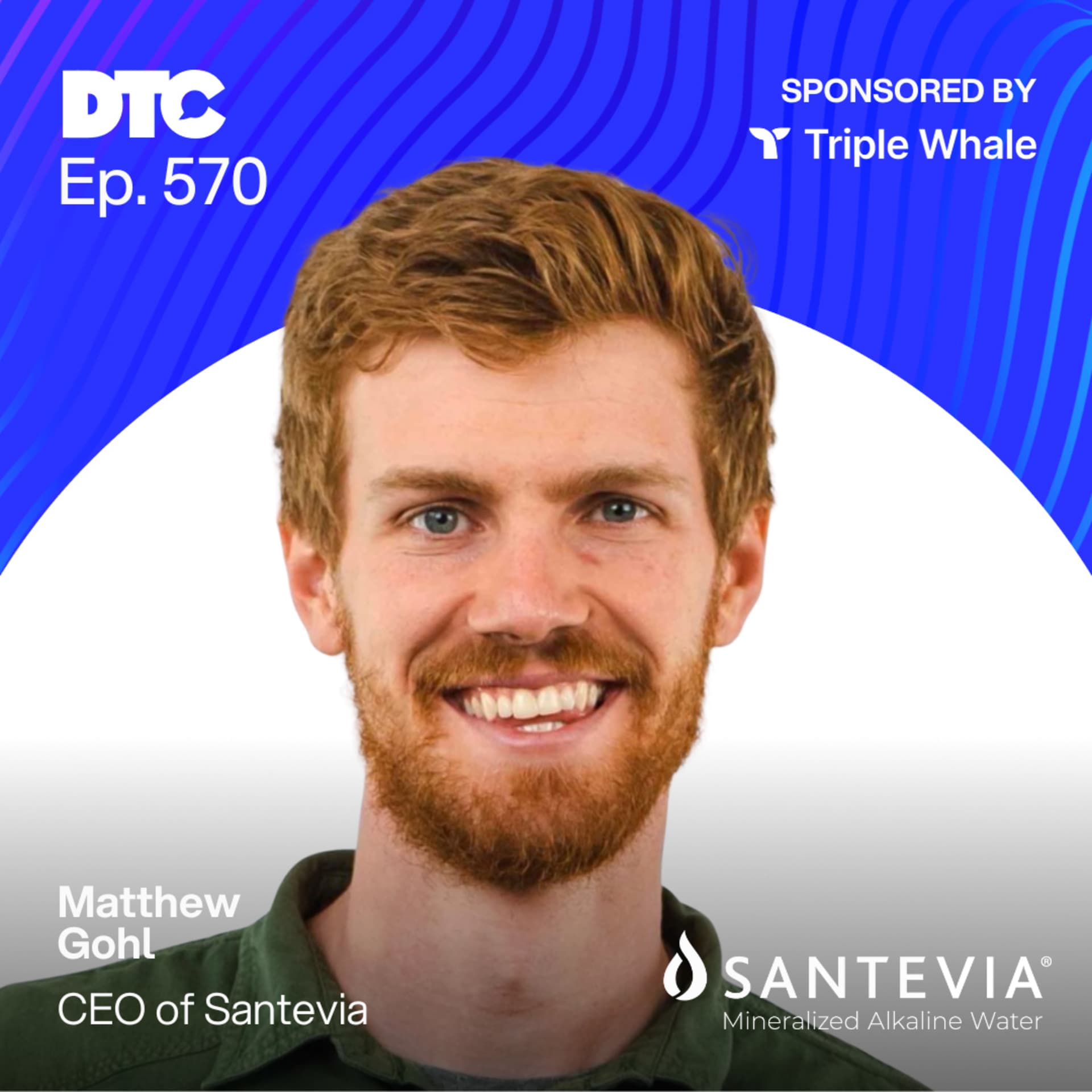
Matthew (Santevia co-owner; grew up in the family business started 2008; joined in 2018; bought the business from parents in late 2024; scaled DTC on Amazon with partner Michael).
Key claims
Vendor Central limited pricing/control; moving to Seller Central took ~16–17 months and initially dipped revenue, but enabled brand protection and scalable ad spend. Meta scaling depends on “creative diversity” (many creatives per ad set, persona-based journeys) and guardrails from unit economics (COGS/shipping/fees; profit-based max CAC/ROAS).
Notable examples
Bath filter ($25) was too low-AOV to scale profitably on Meta; they launched the $320 Glass Water System instead. Meta “creative diversity report” helps identify what Meta treats as “same vs different.” Dragons’ Den impact: sales doubled daily after airing Nov 13; deal with Arlene, Manjeet, Michelle; endorsement clip (“I own that one…”) boosted trust.
Written by AI. May contain mistakes. Listen to the episode to check what was said.
Chapters
Tap a time to open that second in VOThe Importance of Brand Building
0:00 to 0:47
Learn why building a brand is essential for e-commerce success.
“It's less about creating an insane campaign structure.”
BFCM Insights and E-Commerce Performance
0:47 to 2:03
Discover key insights from the massive BFCM weekend sales data.
“because the numbers were massive and they reveal a lot about the state of e-commerce performance right now.”
Santevia's Family Business Story
2:37 to 4:32
Explore the history and transition of Santevia as a family business.
“Wild Black Friday, Cyber Monday, just kind of coming out of that.”
Shifting from Retail to DTC Control
4:32 to 8:30
Learn about the changes made in Santevia's business model for growth.
“What were some of the first changes, I guess, that you made after kind of being fully in charge?”
Meta Advertising Strategy Overhaul
8:30 to 14:00
Understand the strategic changes in Santevia's meta advertising approach.
“And if any partner doesn't respect your pricing, then probably they're not a very good partner to scale with over time.”
Understanding Product Margins and Customer Retention
14:00 to 14:48
Learn how product margins and retention strategies can impact sales and customer loyalty.
“So no matter if your product is$20 or$200, the CPMs are still going to be somewhere around that.”
Launching New Water Solutions
14:49 to 15:20
Discover the unique features and benefits of Santevia's new water filter products.
“Okay, the bath filter was the 24-hour product.”
Creative Strategies for Customer Engagement
15:21 to 18:34
Explore the significance of creative diversity in advertising and how to communicate your brand's value.
“I know ladies who might be dying their hair, chlorine really fades that color out a lot.”
Understanding Meta's Advertising Algorithms
18:35 to 19:55
Learn how Meta's algorithm evaluates ad creativity and diversity for effective spend.
“It's just like an awesome piece of creative.”
The Importance of a Strong Brief in Marketing
19:56 to 24:30
Understand how a well-structured briefing process can enhance marketing effectiveness.
“And that was really eye-opening because for you to get spend, for Meta to show your ad to people, it wants to know that it can try different things, different ways in.”
Show all 18 chapters
Evaluating Black Friday Cyber Monday Success
24:31 to 26:18
Insights into how Santevia performed during BFCM and the impact of market trends.
“That's exactly what I wanted to chat about.”
The Journey to Appearing on Dragon's Den
26:19 to 28:00
Get a behind-the-scenes look at the audition process and experience on Dragon's Den.
“And I think that continues for literally decades.”
Auditioning for Dragon's Den
28:00 to 29:09
Learn about the experience and challenges of auditioning for Dragon's Den.
“And so anyways, next year, like this, this year, I get a call on my phone.”
The Impact of Endorsements
29:10 to 31:06
Discover how the show's endorsement led to a significant increase in sales.
“But we as the TV show, as the production company, like we are, we want views.”
Behind the Scenes of the Deal
31:07 to 32:41
Get insights into the negotiations and due diligence after securing a deal on the show.
“Because we actually haven't done endorsements before.”
Using the Show for Marketing
32:42 to 34:49
Learn how to leverage Dragon's Den appearances for marketing and brand awareness.
“brand with the glass water system, with our shower filter that's just dropped.”
Future Plans for Retail Expansion
34:50 to 38:19
Explore Santavia's plans for retail expansion and new product developments.
“So we're definitely advertising dragons and just as much as we're advertising our own product.”
Customer Engagement and Product Use
38:20 to 38:41
Understand customer engagement and the importance of product maintenance.
“Yeah, you'll notice the change in taste because there's a mineral components, right?”
Transcript
Automatic transcript. May contain errors.0:00Brand is the most important thing. You really have to build brand. So how do you spend profitably on meta? It's creative diversity. It's less about creating an insane campaign structure. It's more about aggregation into a single campaign or ad set with a ton of creative in there. We really have a well-defined creative strategy now that is turned on in a big way. So it's not just diverse, but there's scale there too. If you have a meta rep, ask for your creative diversity report. It shows you what Meta's algorithm thinks is different and what it thinks is the same. And that was really eye-opening.
0:46Matthew Gohl:Before we dive in, let's take a minute to talk about what happened this BFCM, because the numbers were massive and they reveal a lot about the state of e-commerce performance right now. Across the Triple Whale platform, brands processed more than 26 million orders and over$2.9 billion in revenue in just one weekend. Brands also spent more than$600 million across the major ad platforms, and Triple Whale brands alone represented nearly 20 % of all Shopify sales during BFCM, which is pretty incredible when you consider the scale. But here's the part that actually matters. The brands that performed best weren't reacting blindly.
1:21Matthew Gohl:They had a clear understanding of what was driving results, which channels were truly profitable, how ROAS was trending throughout the weekend, how AOV shifted as promotions rolled out, and where they had the strongest opportunities to keep momentum high. That level of clarity only comes from having all your data in one place, updating in real time. Triple Whale is the agent-powered intelligence platform trusted by more than 50 ,000 brands like True Classic, Way, and Olipop. It unifies data across every channel and tool, giving you a single source of truth and actionable AI insights so you can make confident decisions faster.
1:56Matthew Gohl:If you want that level of visibility heading into 2026, you can create a free account and see the platform for yourself. Visit triplewhale.com slash DTC. That's T-R-I-P-L-E-W-H-A-L-E dot com slash DTC. Matthew, welcome back to the DTC podcast. one of my personal favorite brands, Santa Villa. We did a podcast. We did a hot seat live on our Las Vegas stage. I have your glass system of water dispenser on my counter, and I absolutely love it. Happy to have you back to catch up on the Santa Villa journey. How are you doing? Thanks so much for having me. Yeah, yeah. It's been great. Wild Black Friday, Cyber Monday, just kind of coming out of that.
2:41We're still packing all the orders. Yeah, thanks so much for having me. I'm excited to be here and glad you're getting to drink the Santevia water, Eric, because you're looking hydrated. You're looking handsome. Thank you. Thank you.
2:54Matthew Gohl:Wow. Don't often start with great compliments like that. But I wanted to start with something that I don't, a story that I don't hear of a lot. Santevia is more or less a family business with you. Maybe it was earlier this year or maybe late 2024, you actually bought the business from your parents. Can you talk a little bit about that process? Yeah. So my parents actually started the business in 2008 and I grew up around it. Me and my two sisters did. And, you know, we saw them build kind of something from nothing. They made the very first product, something called the Gravity Water System. Got it into over 500 retail stores Canada wide.
3:30And then I got into the business in 2018. I obviously knew a bunch about it because, you know, I'd been working summers at Santa Via forever. ever. And yeah, like I could see that the growth in retail was sort of flattening out, you know, we weren't hitting huge numbers year on year. And I got a little bit more involved and saw that there was a massive opportunity online, specifically on Amazon on DTC. So me and my business partner, Michael, another friend of mine who had joined the business around the same time, we thought, hey, you know what, like, I think we can we can buy this provide an exit path for my parents who are now happily retired.
4:09You know, they just got back from New Zealand, went on like a 20-day bike trip with some helicopter rides. They were sending me some like some crazy videos of them crossing rivers in a helicopter. Insane. And yeah, we bought the business and have really been scaling through D2C on Amazon. And most recently we're on Dragon's Den too.
4:31Matthew Gohl:Yeah. I'm excited to dive into that. What were some of the first changes, I guess, that you made after kind of being fully in charge? Because I know you were running the marketing for a long time, even when they were still in the picture. But are there any big changes that you've made kind of since taking it over? Yeah, the biggest thing that I wanted to do was really pull back on how many resources we were putting into retail, just because I saw it. Like, you know, there's obviously an opportunity to grow in retail. But I thought that the best use of our cash, like the highest incremental value of every dollar was through D2C.
5:04So specifically turning on meta advertising in a big way, really owning Amazon was huge. We used to be a vendor central business, which is kind of like for everyone that knows there's seller central on Amazon and there's vendor central. Vendor central, it's almost like it's a relationship that you would have with a store. Amazon is buying the inventory. They own it. They set prices. It's very much hands-off. And for certain types of businesses that are not very econ forward and don't really want to mess too much with Amazon, that's a great option. However, for us, we wanted to control pricing.
5:38We wanted to run our own advertising. We really wanted to change those PDPs and optimize them. So that was the first change we made is the transition from vendor central to seller central to really take back Amazon. And a part of that was even looking at who was selling Santa Fe on Amazon. We had some retailers who kind of opportunistically were selling on Amazon for probably very, very little margin. And we had been selling through a distributor to a sales rep to a retailer who's then selling to Amazon, who's then selling to the end customer. And there's so many levels in there. And maybe they weren't even really caring about the brand so much.
6:22so uh we took that back and we started to unwind that spaghetti's uh spaghetti mess and that took a long time that took a couple a couple years actually like from when we first had the idea to when every other seller was was off and we had fully transitioned from vendor central to seller central it was like almost like a 16 17 month process of which for a lot of it we had reduced sales because of that because as you're transitioning from vendor they have a lot of inventory and they have to sell through that inventory. And then we're transitioning to seller central where we're essentially consigning an inventory to Amazon.
6:59So that was a tough process because revenue dipped during that. And so you're like, I was really second guessing my decision to move from vendor to seller. Cause you know, I'm taking a more leadership role. And one of the first things that I'm doing is like actually making revenue go down. So I kept really thinking to myself like, Oh my gosh, like, am I, do I know what I'm doing? I had imposter syndrome. Like, is this a good idea? But I kept going back to the original plan that we had drawn up and kept reminding myself, no, this makes sense. I have to trust the process. We scaled Amazon literally 2x through working with Pilate.
7:34I'm so stoked about that relationship. And we're like really off to the races on Amazon. So that was a big piece. DTC was a whole other picture, you know, like meta advertising, getting the creative going on all that fun stuff too.
7:47Matthew Gohl:Your experiences with Amazon sounds a little like a detox. Yeah, yeah, definitely. You know, we had to stop drinking the Vendor Central Kool-Aid. That's right. So really from before Seller Central to after 2X. And you know what? It's way more scalable because we can actually decide how much advertising dollars we want to spend. And it's conducive to building a brand, which for anybody in the DTC space, you know, brand is the most important thing. You really have to build brand. And so guarding your pricing, your map pricing, and ensuring that Amazon's not competing with your direct-to-consumer store, your direct-to-consumer store's not competing with your retailers, you have to really be careful about that.
8:29And a big part of that, of course, is pricing. And if any partner doesn't respect your pricing, then probably they're not a very good partner to scale with over time.
8:37Matthew Gohl:Okay, you were leading into the big meta shakeup. And I love this story because I hear it echoed a lot of my podcast guests coming in talking about this. We're just on the heels of a huge Black Friday, Cyber Monday. So tell me a little bit about your meta creative overhaul and how that set you up for this year's big holiday season. yeah so three years ago we didn't really do meta in a big way which is crazy to think about um so like when we were like everybody here's you have to make creative you have to make content um and so when we were thinking three years ago like oh let's create a piece of content we're like okay well let's make uh maybe like a long form video and publish it in the next two weeks you know um and now it's like hey no we're gonna make like 60 pieces of creative and they're gonna get published by Friday, you know, and they're going to be creatively diverse and we're going to use agency support and we're going to make some of them in-house and we're going to use content creators and really focusing on personas and, you know, all over the place.
9:38So we really have a well-defined creative strategy now that is turned on and in a big way. So it's not just diverse, but there's scale there too. Why is that important nowadays? Well, it's because meta is content hungry and the king is spend. Spend in ROAS really, right? Like how much can you get spend on Facebook that is profitable? That takes a long time because you really have to look at a few different things. The first thing that we looked at was our margins. Some brands aren't like this. I know like, you know, every SaaS story ever is like, oh, you know, they're scaling to the moon unprofitably and they're venture backed, whatever.
10:16We're not venture backed. Uh, we're bootstrapped. Uh, we don't have external money. So every single product that we sell, it has to be profitable. That's the first thing. So looking at the margin of our product and knowing specifically how much we can spend on Facebook on meta to ensure that we don't overspend and essentially ship a product to a customer at a loss. So that was the first thing defining the math, the marginal unit economics of each sale. And that's COGS, the cost of goods sold. That is also how much does it cost to ship to someone? That is, you know, the packaging cost, like how much is it, the payment processor fees, everything all in.
10:56And then knowing, okay, well, all right, maybe for this product, we can spend like$80 to acquire a customer. So how do we do that? Well, you need to ensure that you have a great campaign set up. You need to make sure that you have enough creative. And maybe you do have, you know, a great ROAS last week, but you were only able to spend like$5 ,000. Well, that's not scalable. You know, like I need to put in, you know, I want to spend$100 ,000 a week, you know,$150 ,000 a week. And the way to do that is a lot of creative and really setting out those guardrails, both with your digital team and your finance team to ensure that everything's working together.
11:38Like one of the like operational hurdles that we run into and recently, you know, luckily avoided, but we're watching really closely after huge mistakes in the past is you'll be, it'll be like Thursday before Black Friday. And then your credit card is maxed. It's like, oh no. Right. So really thinking about all of the operational pieces that go alongside, uh, just, just launching ads on, on meta.
12:05Matthew Gohl:I want to dive into the creative strategy piece. I just had a friend reach out to me to ask if I knew any creative strategists. Everyone's talking about hiring creative strategists and building that into the plan, not just spamming content, but doing it really strategically, but just to dig it. Was there anything you learned on the cog side of things? I'm sure you learned a ton, But like when it came to actually the products you lead with the products that you have the most, you know, focus on in your ads, what, what, what were some of the main learnings when you really dug into the contribution margin of your, of your products?
12:36Sure, yeah. On the acquisition side, we have a product that's really hot. It's the Santevia bath filter. It's a$25 product. And we would spend super hard on that until we realized that actually, you know what? It's hard for us to really raise a ton of brand awareness and acquire a customer profitably on a$25 purchase. In fact, it's almost impossible. So when you're thinking about building brand awareness and, you know, running meta campaigns at scale or any campaign at scale, ensuring that your flagship or hero product is something that provides you a lot of advertising room. That's what we learned.
13:17So that's why we launched the Glasswater system. The Glasswater system is a$320 product. It's the one that you have. It's a fantastic product. And we did a lot of product research on that and R &D to make a product that isn't only fantastic and people want, but is a little bit of a higher AOV so that we could spend on meta. So looking at COGS is super important because, you know, you can have phenomenal unit margins, but the gross profit on the sale is really small. And so it's hard to compete on meta because, you know, like you're never going to get CPMs that are like 10 cents. It just doesn't happen.
13:57Like a CPM is going to be$10, you know? So no matter if your product is$20 or$200, the CPMs are still going to be somewhere around that. Like, you know, if you're lucky, you're sub$10, but it could be as high as$20 depending on what field or, uh, you know, niche you're in. So I think that's really important is making sure that it's not all margin. It's also gross profit.
14:18Matthew Gohl:It's such a striking looking product, the glass system too. Whereas like, I'm sure the shower thing, the shower piece is going to be really popular. But you've got that AOV, you've got this really striking looking glass product, and then you upsell or you sell through retention on the other products. Because a lot of people don't even, a lot of people know they should be drinking better water, but it's like this whole other thing that people are just learning that they should be showering in better water probably. So it's such a good task to maybe allow your retention to do that after you acquire the customer on this higher AOV product.
14:47Totally, yeah. No, I mean like, so this was the bath filter. Okay, the bath filter was the 24-hour product. We actually just launched yesterday our shower filter, which I'm stoked about. The shower filter, 150, it's refillable. The first and only refillable shower filter that's on the market. And you're right, actually. You know what? You'll actually inhale just as much chlorine from a shower every day as you will from drinking eight glasses of water. I don't think most people know that. So like if you're trying to reduce how much chlorine exposure you have, the shower is a huge vector for chlorine exposure.
15:18So that's a huge one. Dry, dry hair. I know ladies who might be dying their hair, chlorine really fades that color out a lot. So that's a big sales. Don't have that problem. Yeah.
15:32Matthew Gohl:But I want to dig in on your avatars a little bit, because I think this was kind of an extension of the conversation we had at the hot seat in Las Vegas, where I think we were looking at your website back then, and we were sort of like, you know, talking to you a lot about selling, you know, what the product actually does versus all the technology that kind of goes into the product. it because people want a two inch drill hole. They don't want a two inch drill bit kind of idea. And you really have built that into your whole creative strategy with, with who you're advertising to and why talk about that process.
16:01Matthew Gohl:Did it start with knowing you had to do it? And then you actually hired a creative strategist. Is that right? We did. Yeah. Yeah. So, okay. You know, your brand, you have your product. It has a good margin, high gross profit. Okay. So you know that you can spend profitably on it. So how do you spend profitably on Meta? Well, it's creative diversity. Andromeda is the new engine that Meta is powered by. And Andromeda is very much, it's less about creating an insane campaign structure. It's more about aggregation into a single campaign or ad set with a ton of creative in there. So what type of creative you put in there is the real question.
16:41And what are the KPIs or metrics that you want to give your team. So for us, the KPIs that we give our team is we want spend. We want these campaigns to spend. That's the first and foremost thing. They have to spend within KPI. So one of those KPIs is to ensure that we have a ROAS, a return on ad spend, or an AMER. So you can't spend unprofitably, essentially. We set those guardrails up. Because these guardrails are set up, you need to be able to entice people to purchase your product? And how do you do that? Well, they're real customer journeys. And that's what I always want to pull this back to.
17:18It's not buttons on meta. It's not just like funky colors. It's the communication of the value of your brand. So how do you communicate the value of your brand? Well, you need to define your customer journey and you need to be able to explain that through a set of creative. So for us, for Santavia, we need creative that's very high funnel that says hey you know what you might have a health issue are you thinking about the most foundational piece of your health which is what you drink so we'll have a bunch of creative that's like that and to make that creative diverse we're going to have an old person saying that message a young person saying that message a doctor saying that message you know an athlete saying that message and then once they know that hey you know what i am interested in my health and water is a vector uh then maybe we're going to talk about product features.
18:05So we're going to say, Hey, Eric, the glass water system, it's made of glass. It has a bamboo lid and stand. It's super premium. It's going to look nice on your countertop. Now I'm going to say that through a couple of different ways as well, through the doctor's going to say that, you know, the, uh, young influencer is going to say that the athlete's going to say that. And I see an ad of Eric saying that one day, because I submitted an actual UGC. So yeah, fun fact for the audience, Eric sent us a sick piece of UGC. I wasn't expecting that. I I thought you were just going to send us a photo, but the video was awesome and it's in queue to be launched.
18:38Didn't even need any extra support. It's just like an awesome piece of creative. And then bottom of funnel, right? Like, okay, well, now what do people want to hear? Hey, it's free shipping. It's got a lifetime warranty. Again, creative diversity, right? So we're really thinking about that stack and it's the marketing funnel, brand awareness, consideration, and of course, conversion. And then creative diversity, all different types of people. So that's great for a single funnel. however there's all these different ways into the brand this was just our general health funnel but we have different personas so we'll have about like you know five to ten different active personas depending on the campaign that we're running so an example of that is like we'll have one persona that is acid reflux adam acid reflux adam he is really interested in solving his acid reflux or uh gerd gastroesophageal reflux disease right he's he's in pain and he wants some relief from that pain.
19:30So again, we'll go from brand awareness. Hey, you know, acid reflux, Adam, guess what? Drinking alkaline water is really good for reducing the symptoms of acid reflux, then go down into consideration, then go down into that conversion, right? So it's interesting. We were just speaking with our meta rep and she produced this report and the report's called, if you have a meta rep, I do recommend you go and speak to them and ask for your creative diversity report. And what that report does is it shows you what Meta's algorithm thinks is different and what it thinks is the same. And that was really eye-opening because for you to get spend, for Meta to show your ad to people, it wants to know that it can try different things, different ways in.
20:17So if you make three videos that are all using the same influencer, manager, Meta will actually say that those are not creatively diverse, likely, right? And it will only show one of those ads. And if that one ad doesn't work, it won't even show the other two ads. If that ad does work, then it'll probably show the other two, right? So that's really interesting because what we've found is that it's much broader than that. We had different CGC creators speaking the same message with the same framing. So they're like standing in front of our glass water system saying, hey, Santa Fe adds minerals, it filters contaminants, and it tastes great.
20:56And Meta said, hey, these are all the same piece of creative. Well, that sucks for us because if Meta doesn't feel like there's enough opportunity to spend on those creatives, we personally have spent hundreds and hundreds of dollars with these CGC creators sending the product, writing up contracts, our people's time to produce these pieces of creative. And Meta will never spend on them because it's not creatively diverse. So you really have to think about persona based advertising and ensuring that those personas are wildly different. Yeah.
21:28Matthew Gohl:Or the setting of them, like if it's the same influencer and they go to a different setting, like if they're talking about a different thing in a different setting, do you think meta will, will see them as separate or is it really like influencer specific? Uh, yes. I think if, if you are in a different setting and you deliver the message differently, yeah it's going to deliver it so like you know if you have the same influencer on a hike saying the message and then that same influencer in a kitchen and she's saying the message that's that's probably creatively diverse i don't think anybody really understands the algorithm so you definitely have to try test um but uh i mean i would run that for sure i'd run that i think just because i've had so many like i just this text this morning uh nick sharma was on the other day and he was just talking about the creative strategist is like the most important position in the ad stack in 2025 and beyond.
22:16Matthew Gohl:So with this whole process that you've developed, did you hire someone to come in and build this with you where you worked with them? Talk about the process of finding a good creative strategist, hiring them and their actual role in overseeing this process. So when we were going to hire a creative strategist, we really wanted to find someone with experience. That was a big thing who understood the marketing funnel. This process was developed before they were onboarded actually. So I think if you need help developing this, I would go to an agency. Like I would go to Pilot House and say, hey, like let's develop this, co-develop this, tell them kind of directional, show them this podcast, say, I want that.
22:57Yeah, yeah, yeah. You'll get them there, right? So that would be the first right step. The creative strategist role for us is really about briefing and ensuring that we're adhering to this plan and the plan of attack, because the briefing is the most important step. Like if we're briefing in the same ad over and over and the person, whoever, like maybe it's not a trained creative strategist, it's just some, you know, a marketing coordinator who is just kind of learning and they're briefing in the same ad and they don't realize it. Or maybe they're briefing in what they would want to see, which is something I find a lot of junior marketers do is they, you know, they were advertising to themselves and not realizing that, Hey, you know what?
Read the full transcript
23:36You're not the customer. You really need to put yourself into the mind of whatever persona you're advertising to. That's super important because that brief kicks off so much work. That brief is like literally the piece that kicks off the contracts team to go and get a contract with an influencer, that influencer to go spend a bunch of time creating a piece of content. We're sending them a product, we're paying them. That goes to the digital team who's then running that ad, all of this so that we can find out like maybe three weeks or a month later that that ad didn't perform. Well, why didn't it perform?
24:10Well, the brief all the way four weeks ago was flawed. So the brief is everything, I think. And it's hook, it's offer, it's setting, it's persona, the demographic. So making sure that that's nailed doesn't guarantee success, but it definitely increases your chance. Huge.
24:30Matthew Gohl:That's awesome. That's exactly what I wanted to chat about. I want to get into Dragons down in your experience there because it sounded fantastic. But just give me a quick brief on how Black Friday Cyber Money was for you guys. Our biggest BFCM ever, which is awesome. We crushed targets. We were about like 38 % above target, which is awesome. And those were on some really big lofty targets. So I couldn't be more impressed with the performance. The Santa Viet team absolutely crushed it. Stoked about that. I think we had definitely some strong wins at our back with the Dragons' Den episode that came out.
25:09And it was perfect timing because it dropped on November 13th. So we literally had two weeks preload into Black Friday. And I think, you know, I was a little bit nervous about Black Friday this year just because with everything that's happening with tariffs and the economy, you know, consumer sentiment's pretty low. But it seems like we pulled through. Like BFCM right across the board seems like it did pretty well for everyone. It's bigger year on year, which is great.
25:36Matthew Gohl:Those prepared for it. I think they're like looking in the pilot house channels and stuff. There were some clients that just were for whatever reasons internally, just not in it to win it as much this year for their own reasons. But I think everyone who was like prepared to win, uh, did really well. And you're, you're just also on like, there are all the sentiments you mentioned, but there's also this like crest of awareness that people have about, you know, the quality of their water, for instance. Right. And I think anytime you're dealing with broad trends in the economy, there's positive trends that are helping products like yours, especially.
26:06Matthew Gohl:And so many of the products in this space are like a rethought version of something people have done for years. So there's always that progressive trend that's combating other things in the economy for the right products. For sure. I mean, like if you're in an industry or you're a brand that's in health and wellness, health and wellness is trending upwards. And I think that continues for literally decades. I mean, who's not interested in living long, living strong? I think everybody is. So I think that's a huge trend. I'd be super scared if I were like, you know, in some super niche brand that like, you know, you're just shrinking year on year.
26:44Matthew Gohl:Smokes. I'm selling cigarettes. You're like selling cigarettes. In a vape school. Yeah, you don't want to be on the vape tree. I feel people are drinking less and less alcohol, right? Like I feel like it's a bad spot to be in. Doesn't mean that you can't crush it in an industry that's shrinking. Like I think you can. Even in an economy that's not doing super well. I always tell our team like, hey, you know what? we're a salmon in a river the river might flow a little bit faster but we're a strong salmon like we can still get up river that's what it's all about it definitely makes it harder for sure but it's a beautiful west coast metaphor i i absolutely love it yeah okay but talk to me more about dragons then so you guys have been kind of court i feel like courting dragons den for a while you've had opportunities earlier on talk about how it came about and what it was like yeah yeah so So Michael and I, we pitched last year and we didn't get it.
27:35And we were super bummed about that. We went and did a pitch. Dragon's End, obviously, you know, everybody knows Dragon's End in Canada. It's the equivalent to Shark Tank in the US. What they do is they have these auditions right across the country. So they'll have one like in Toronto, like on the East Coast in the Maritimes and Calgary, and they have one in Vancouver. So we went to do our audition in Vancouver and I thought we crushed it you know I came out of it feeling really good and we didn't get a call back and classic they were like you know if you don't get a call back don't contact us this is like uh we call you situation so just crickets and we were super bummed and so you know I sent an email to them just asking like hey like I thought we did really well like can you give us some feedback nothing um so whatever we left it I kind of thought maybe we were a little bit too big for Dragon's Den because there's a lot of small kind of really scrappy startup businesses on there.
28:31And we've been around for a little bit. And so anyways, next year, like this, this year, I get a call on my phone. I like next all the spam callers, I like almost never pick up an unknown number. I picked it up. It's Molly, who's the senior producer for Dragon's Den. And she's like, Hey, I really liked your audition last year. I want you guys to come down and do it again. And I was like, oh, no way. That's crazy. So I asked her, I was like, why didn't we get it last year? What can we do this year to make sure that it's a success? And she was like, okay, I'm going to level with you. Water filtration is a bit boring.
29:04So we want you to make it fun. Like CBC, we're making a TV show. The investors that are on the show, like they are there for deals. But we as the TV show, as the production company, like we are, we want views. so we basically went to this audition a second time with our lab coats with like a science experiment prepped and yeah we got it so then we actually went to the show and uh we filmed um you know a few months ago and it aired november 13th and it was super fun to be honest i i've watched dragons in my entire life and uh it couldn't have gone better honestly like we're season 20 episode 8 we're the very last spot so if you want to go check it out you can you can watch it on CBC jam.
29:48It like literally read like an advertisement, which was awesome right before black Friday. So, and what was its impact? How do you quantify its impact? So we have had ever since dragon's den, our sales have doubled just baseline sales double every single day, which is huge. And I think the reason for that is just the brand awareness and also the endorsement because so on the show if you go and watch it michelle romanoff she's like you know one of the dragons that's been on their longest i think everybody knows her uh she literally we we walked out onto the stage we were super nervous we did our like kind of uh spiel about like hey you know we're santa via we're asking for this much money for this much percent of the company and michelle stops us and she says i own that one i did all the research and i decided that it was the best one She literally said that verbatim.
30:41And I was like floored. It's like, oh my gosh, like please clip that. Like that is a meta ad. Let's go. So that was just phenomenal. Honestly, I was so stoked that she said that, that she had it. Arlene, she like literally double confirmed with Michelle. Are you sure? Like you have that one? She's like, yeah, for sure. Like I own that. It's in my kitchen right now. So yeah, really happy about that. A big takeaway or learning that I had from this is endorsements. Because we actually haven't done endorsements before. like we haven't gone and approached a really large influencer and and had them endorse our product and we for sure will be searching for the right endorsement in 2026 we had people who knew us and never pulled the trigger on santavia just because i think they didn't have that belief in the brand but then when they heard dragons had our product and they saw that we were on the cbc they were like, this is the real deal.
31:34We'll try it. So I think that's a huge unlock for us and is something that we're going to pursue.
31:40Matthew Gohl:That's so, cause you think of ads being able to reach everyone, right? You think of, you know, with your ads, you go, I reached a million people or whatever, but it's like, there's like a whole other level of awareness that can be generated from something like an institution like that. Like it's on CBC, it's on the dragons then, right? Like the amount of authority that you generate from things like that, you can't really build with ads necessarily. No way. No way. I mean, like an ad is, it's an ad, right? But people love to watch Dragon's Den. They love the entrepreneurial spirit. They know the CBC, they know Dragon's Den.
32:14So yeah, I mean, like if you can associate your brand with an even bigger, more powerful brand like that, and you can get alignment, like it's a good episode, which ours was. Sometimes people go on Dragon's Den and they get wrecked. And like, I feel super bad.
32:27Matthew Gohl:Yeah. I mean, we all see that, you know, some entrepreneurs, they don't know their numbers or something and they crash and burn. Um, but, uh, yeah, ours was just fantastic. So it's, it's really been a boon for us. And, and, uh, you know, it's, it's even at a really opportune time just because we have a couple of new products that we're really redefining the brand with the glass water system, with our shower filter that's just dropped. So I think, um, yeah, it's, it's an awesome time. And what did the deal look like that you actually secured from the dragons? Yeah. So, uh, we got a deal from three dragons.
32:59Uh, we had Arlene, Manjeet and Michelle. Uh, so a three-way deal. And, um, we had gone in asking for a million dollars, uh, and, and, and we sold, uh, you know, a million for right around, uh, 8 % of the business. So, um, basically like, um, a 12 and a half million dollar valuation right around there. Um, we're due diligence right now. So basically once you get the deal on Dragon's Den, everybody asks like, is it scripted? What happened? So it's not scripted. We were in there for one hour and they cut the show down to about six or seven minutes. So they're superb business people, right? Like they are basically like asking us all these different questions about our margins, about our plans to use, like, what are we going to use the capital for?
33:47And they cut most of that out, to be honest, just because it's not really TV worthy and they, they grab some of the best spiciest moments. And, um, yeah, so now we're in due diligence and how that goes is we're talking to all three teams. They all have teams on their side, their lawyers, their accountants, um, just trying to find a, you know, a deal that will work for them and will work for us.
34:09Matthew Gohl:But you've already reaped so much benefit from it from, uh, do you get the show to cut into your own clips as well and use it in ads? Yeah, we do. Yeah. So like you can't use the Dragon's Den logo, but you can definitely use clips for sure. And just kind of like, uh, roll it into ads. I don't know. I'm half expecting us to get like a cease and desist. Like we're definitely, I've maybe pushed in the envelope a little bit, but, uh, I actually think the CBC likes it because we're raising so much awareness of like Dragon's Den and the show too. It's funny how many people have said, Oh my gosh, I didn't know you were on dragons.
34:43And I was like, Oh sweet. Did you see the episode? And they're like, no, I didn't see the episode. I saw the clip on Facebook and I was like, okay. So you saw our ad.
34:49Matthew Gohl:Yeah. So we're definitely advertising dragons and just as much as we're advertising our own product. And you worked in a strategic spit take. Was that, that was part of the plan. That was part of the plan. So the way that it goes is that we go out on stage and Michael says, Hey, we're Santa via we're selling so-and-so percent of our company for$1 million. And as soon as he said that I had water in my mouth and I spat it out. And then he looked at me shocked and all the dragons looked at me shocked. And Manji was like, well, what did he say the wrong number? And then we looked at each other and I was like, no, that was tap water.
35:28And then I go into the spiel about Santa via and how it's way better than tap water. Um, so it was a little bit of misdirection. And when we like went to pitch the dragons, what I wanted to do is our goal was like, Hey, I want to make the season premiere. I want to be on the trailer. Uh, and the way that we can do that is be really exciting. So that's why we worked in that spit take. Um, I think it worked really well for sure. Yeah. And you got on the trailer, right? We were in the trailer. Yeah.
35:54Matthew Gohl:Extra promo. That's sweet. Um, and then what do you, what did you tell them and what are your intentions for what you want to use that money for? So the intentions for the money are really expanding. It's like kind of a full circle. Cause like, you know, when we took over the business, we really turned down retail and went into DTC and the purpose of this money is to turn back on retail. So, uh, we want to pursue retail in a big way, both in the U S as well as in the UK. So, um, yeah, we're basically going to a bunch of shows in the U S and the UK in the, in the coming year, uh, with the idea of getting and securing a few big retail partners.
36:31I like retail.
36:32Matthew Gohl:I think it's, um, like, and those dragons will be hugely helpful that you, that you got too, right? They're like retail icons. Usually, yeah. I mean, like Arlene Manjeet and Michelle are all in like Costco in Canadian Tire. Yeah, I mean, they know everybody. 2026 is the year of, again, crazy growth and reinvestment in retail. Anything else on your to-do list for 2026? The shower filter was a big one. We've just launched this shower filter. It's refillable. So that's really the cool thing that we're doing right now is we're moving to some refillable products with the shower filter being the first of those.
37:09I think this is cool because we're a Vancouver-based company. Anybody from Vancouver knows this already, but for everybody else, I think we're more environmentally focused. We really care about the environment. We live in probably one of the most beautiful places on planet Earth, and we're excited to preserve that. And so what we're trying to do with these refillable products is to reduce our environmental footprint. And so every time you have a, you use your water filter, like your Brita water filter, a competing shower filter, you take this big fat cartridge full of media and you throw it in the garbage.
37:44So what we're doing is, Hey, let's flip the script. Let's allow you to open that shower filter and refill the media. You're going to reuse that cartridge forever and the media you can put into your garbage. So that's basically reducing the impact of these products massively. Um, so shower filter first, but you'll see some other really cool refillable products come out from us in 2026. So we're well on the way for R &D for those and super excited just to do something that I think is awesome for the planet and doesn't compromise on water filtration at all.
38:18Matthew Gohl:How often do I need to change my filter in my glass filtration system? I can ask directly to the program. Every two months. You should change it every two months. Every two months. Yeah, you'll notice the change in taste because there's a mineral components, right? We filter and then we add minerals. After two months, you'll notice that we're not adding as many minerals and you'll start to taste the change. And so, all right, I'm going to go check that right now. Thank you for coming back on the DTC podcast. I can't wait. I'm going to check back in with you in about six to eight months and hear about your, your retail glory.
38:46Matthew Gohl:If you're in the audience and you are drinking tap water, you should spit it out directly, get a video of it and go to santavia.com and get the glass water filtration system, you will never look back. It's been a great addition to my life. And I, people, every time they come to my house, people are just like, oh my God, that's so cool. So keep up the great work, Matthew. It's definitely eye candy. It's kitchen eye candy. It is. All right, thanks, brother. Thanks, Eric.
39:17Matthew Gohl:Thanks so much for listening to today's episode. If you're not a subscriber to our newsletter, you can do that right now at direct-to-consumer, alloneword.co. I'm Eric Dick, and this has been the D2C Podcast. We'll see you next time.
From the publisher
Subscribe to DTC Newsletter - https://dtcnews.link/signup
Matthew Gohl took over the family business, Santevia, and turned it into a DTC powerhouse. In this episode, he breaks down how they scaled Amazon 2X, rebuilt their Meta ads strategy from the ground up, and landed a killer deal on Dragon’s Den.
For DTC operators scaling beyond $5M and navigating Meta + Amazon growth channels:
- Why switching from Vendor Central to Seller Central was worth the 16-month headache
- How a $25 hero product failed on Meta, and why their $320 glass system now crushes
- The role of creative strategy in hitting $100K+ weekly spend without tanking ROAS
- How they prepped their brand for Dragon’s Den—and doubled baseline sales after
- The case for launching refillable, eco-focused SKUs in 2026
Who this is for: DTC operators, marketers, and founders looking to scale with lean teams and high-margin SKUs.
What to steal:
- Creative briefing process that reduces wasted ad spend
- Why Meta sees "different creators" as "same ad" (and how to fix it)
- How to make a high-ticket product actually work in cold acquisition
Timestamps:
00:00 Why creative diversity (not campaign complexity) is the real Meta unlock
03:05 Buying the family business and shifting from retail-first to DTC
06:48 Revenue dips, imposter syndrome, and trusting the long-term strategy
09:15 From 1 video every 2 weeks to 60 creatives by Friday (creative velocity shift)
13:02 Why hero products with higher AOV unlock profitable Meta spend
16:19 Meta’s Andromeda explained: aggregation + creative volume wins
30:34 Dragon’s Den moment: “I own that one” and why endorsements change everything
Hashtags:
#DTC #Ecommerce #MetaAds #CreativeStrategy #BrandBuilding #PerformanceMarketing #DirectToConsumer #PaidSocial #AdCreative #MarketingPodcast #EcommerceGrowth #ScalingBrands #FounderStory #Dragon’sDen #BFCM #RetailStrategy
Subscribe to DTC Newsletter - https://dtcnews.link/signup
Advertise on DTC - https://dtcnews.link/advertise
Work with Pilothouse - https://dtcnews.link/pilothouse
Follow us on Instagram & Twitter - @dtcnewsletter