
In short
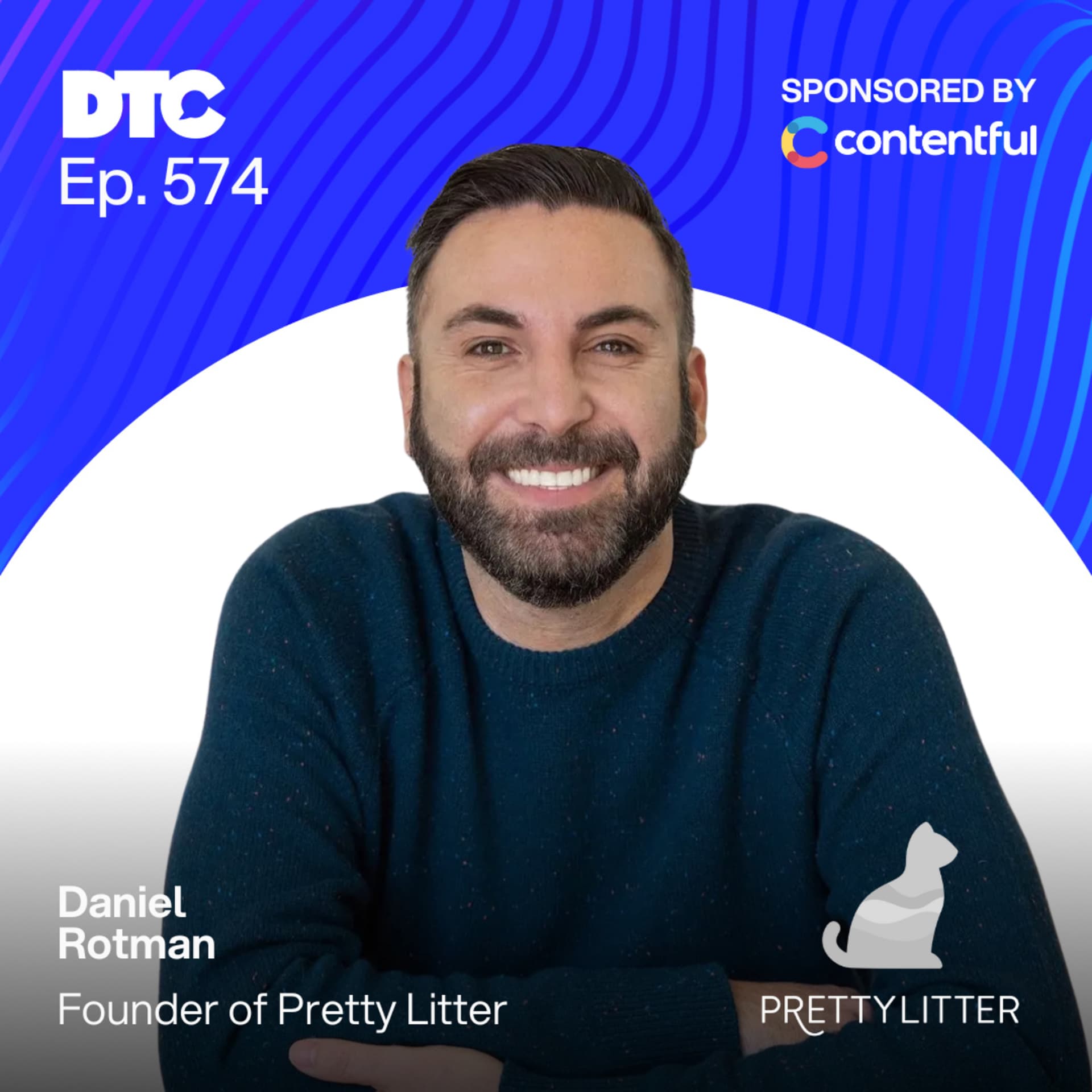
How Pretty Litter scaled a cat-health monitoring litter to $300M+ with a lean team (12 employees at acquisition), focusing on an “unsexy” but underserved category, DTC shipping economics, subscription retention, and color-change pH diagnostics that prompt vet visits.
Guest
Daniel (founder of Pretty Litter), previously studied politics/government and built businesses before grad school. He pivoted after losing his cat and learning cats hide illness; he developed the idea during an incubator program.
Key claims
Cat litter is a heavy, odor/tracking problem; silica litter is lighter (about 6 lbs/month vs ~24 lbs for clumping clay), enabling DTC shipping. The litter changes color based on urine pH (normal yellow/olive; abnormal blue/orange), acting as a “directional alert” to see a vet rather than a full diagnosis. Scaling walls: CPA spikes around ~$25M from ad audience saturation; operational bottlenecks around ~$50M.
Notable examples
built product in 6 months; first sales via TV/incubator exposure and Google/paid search; early Shopify + stamps.com + Facebook ads from his bedroom; growth milestones: $750K (year 1), $6.5M (year 2), $13M (year 3), ~$250–$320M before Mars acquisition (2021; completed 2024).
Written by AI. May contain mistakes. Listen to the episode to check what was said.
Chapters
Tap a time to open that second in VODaniel's Entrepreneurial Journey
1:41 to 3:20
Daniel shares his motivations and experiences leading to the creation of Pretty Litter.
“I appreciate you letting me share the story of Pretty Litter.”
Inspiration Behind Pretty Litter
3:20 to 6:36
Exploring the inspiration and health impact behind developing Pretty Litter.
“Yeah, the path you took, unconventional, but with a big payoff at the end.”
Brand Identity and Community Sentiment
6:36 to 8:31
Discussing how the brand resonates with cat owners and challenges stereotypes.
“And I learned a lot from that moment that cats are very stoic creatures and they hide illness very well, which was the experience I had with my cat who went from fine to sick in pretty rapid succession.”
Market Potential and Addressable Market
8:31 to 11:30
Analyzing the market size and potential for cat products, specifically litter.
“But cat owners know that cats are awesome, and they're funny, and they're affectionate, and they're loving, and they build a very unique bond.”
Addressing Kitty Litter Problems
11:30 to 14:00
Discussing the common issues with traditional kitty litter and how Pretty Litter solves them.
“What's the total addressable market for cat products?”
Innovative Cat Litter Solutions
14:00 to 16:20
Discover how Pretty Litter addresses common issues with cat litter.
“you want it to have low tracking, and you want to make it as easy as possible to clean up on a regular basis.”
Health Monitoring in Cat Litter
16:20 to 19:20
Learn about the health monitoring capabilities of Pretty Litter.
“And then, of course, the cherry on top was the health monitoring piece to it.”
From Concept to Market
19:20 to 23:00
Explore the journey of creating Pretty Litter from an idea to a product.
“Like when my dog, I just like, yo, we're going on a trip, like back into my backseat, happy to go anywhere, all love.”
Scaling the Business Effectively
23:00 to 27:00
Understand the strategies used to scale Pretty Litter and its subscription model.
“And when we started, by the way, the subscription originally, it was going to be just like one-time purchases.”
Investment Strategies and Business Control
27:00 to 28:00
Delve into the founder's approach to funding and maintaining control of the company.
“I wasn't interested in raising because when you take on the responsibility of somebody else's money, That comes with real responsibilities and obligations.”
Show all 24 chapters
Navigating VC Relationships and Board Dynamics
28:00 to 29:00
Learn about the complexities of managing investor relationships and board governance.
“hopefully meet their ROI, the business case for your company.”
Scaling with Lean Operations
29:00 to 30:18
Discover how to grow a business while minimizing overhead and maintaining profitability.
“And of course, by the way, raising money means diluting your own equity in your company, which is also never a fun thing.”
Growth Journey of Pretty Litter
30:18 to 31:28
Follow the impressive growth trajectory of Pretty Litter from initial sales to acquisition.
“I'd love you to walk us through it a little bit of you.”
Outsourcing for Efficiency
31:28 to 33:04
Understand the benefits of outsourcing to reduce costs and enhance flexibility in business.
“Iams and Royal Canin and all the pet brands you've heard of.”
The Importance of Branding in Unsexy Products
33:04 to 34:48
Learn how to turn an unsexy product into a successful brand with strategic marketing.
“And then having all these full-time employees there at the full-time wages that you would have to pay.”
Lessons from Scaling to Nine Figures
34:48 to 39:23
Gain insights into the key challenges and strategies for scaling a consumer-facing business.
“I had a friend growing up, her dad was like the rich dad of all the kids.”
Overcoming CPA Walls in E-commerce
39:23 to 42:00
Explore how to navigate increasing customer acquisition costs in the DTC space.
“then you'll like be like, I was never embarrassed to begin with, you know, kind of vibe.”
Navigating CPA Walls and Consumer Insights
42:00 to 44:16
Learn how to overcome customer acquisition barriers through messaging and testing.
“online if it's not Amazon or like a really large, like a Walmart.com or Target.com.”
Scaling Operations During Rapid Growth
44:16 to 46:18
Understand the operational challenges faced during scaling and how to address them.
“Another wall that we hit was around operations.”
The Journey After Acquisition
46:18 to 48:20
Explore the transition process after a company acquisition and the ongoing role of a founder.
“It started as a transitionary process in 2021.”
Personal Triumphs Post-Exit
48:20 to 50:28
Discover the personal achievements and values that matter after a successful exit.
“convincing people, I'm proud to say that the vast majority of people that work at Pretty Litter till this day are people that I poached from other companies.”
Challenges in the Entrepreneurial Journey
50:28 to 53:18
Learn about the uncontrollable aspects of entrepreneurship and how to manage anxiety.
“Being able to support my family has been my favorite thing that I've been able to do.”
Insights on Control in Business
53:18 to 55:32
Gain wisdom on balancing control and acceptance as a founder.
“I know that that could give you anxiety as a founder to think about, but you have to have some peace in knowing that you can't control timing.”
Founder Insights and Networking
56:00 to 56:19
Learn about the founder's experience and willingness to help others.
“Um, yeah, if they find me on LinkedIn, please feel free to add me there.”
Transcript
Automatic transcript. May contain errors.0:00The unsexy product is the product that can take you to the places that you want to go. If you want to start a sneaker company, and if you want to be in the beauty space, and if you want to be in the influencer space, and you want to like have all that swag, and it's cool for your clout, I have so much love for that. But the problem that comes with it is a ton of competition, a lot of eyeballs on your product from the very beginning. That's a disadvantage. But if you start a product, for example, a kitty litter that monitors your cat's health, and you're tapping into a community that feels underserved, and you're tapping into a segment that is ripe for innovation, hasn't seen any innovation in 40 years, and has very real pain points, and you're under the radar, and there's no competition, and no one's really looking to do anything in there because it's not sexy, and the BCs aren't looking at it.
0:42It's open field. It's a blank canvas for you to get in there and make your mark.
0:53Daniel Rotman:This episode is brought to you by Contentful. Marketers, you know that feeling when your creative clicks, when that social post sends engagement through the roof, when your outside-of-the-box campaign hits ROI positive, when a personalized homepage turns prospects into customers, it's utter marketing bliss. Contentful helps you create tailored omni-channel experiences without working overtime. No stress, no limits, only possibilities. Get the feels at contentful.com. Daniel, welcome to the D2C podcast. Super happy to have you here. Your story is just absolutely amazing. One of the more spectacular exits and efficient exits I've ever heard of in the DC space.
1:36Daniel Rotman:And you're just starting to kind of come out and talk about it. What's taking you so long? Thanks, Eric. I appreciate you letting me share the story of Pretty Litter. I valued being a more under the radar type of entrepreneur. I mean, at the end of the day, I just wanted to see this business grow and succeed so that I could be the boss that I wanted to be, the gain, if fortunate enough, some financial independence. I mean, my goals were kind of more pressing and immediate than a limelight or having the story out there. And like, I thought that there was potential disadvantages to having the Pretty Little Story out there at a time when I was running the business.
2:16I mean, I knew that we had tapped into something really great, that the consumer response was really solid. And I felt like the more people realized that the cat market, which is what my product is in, we're serving the feline community, the more that I realized that people were going to get onto that. And that was just going to bring more competition. And who's looking for that? when you have that first mover advantage and you just kind of fly under the radar. Sometimes it's a really solid thing to do. But now that Pretty Litter has gone through its full-scale journey, I was actually encouraged by some of my seed round investors and other founder friends who've experienced exits to really share the Pretty Litter story, not just so that I can have the opportunity to share the things I learned and the things that I would want to avoid in the future, but also give other founders and other entrepreneurs is a chance to hear potentially a different way of building a business.
3:14So I was like, you know, you're right, let's do it. So I'm glad to be here and talk about it.
3:19Daniel Rotman:And that's what we're going to dive in today. Yeah, the path you took, unconventional, but with a big payoff at the end. Take us back to the beginning, though. What were you doing before you decided you were going to radically innovate the world of kiddie litter? I was in graduate school studying for politics and government. A natural leap, of course. I had gone and studied public policy, and I was really interested in the public sector. But before I started grad school, I was an entrepreneur, nothing related in the consumer space, but building businesses. My parents had done and I learned from them and it was kind of more in my DNA to be in that route.
3:55So when I ultimately decided that at the time public service wasn't the direction in which I wanted to do like mission oriented work, I came into this idea of Pretty Letter, which really still is, it has its social impact, right? It's a for-profit company. This is a hardcore ninja-focused D2C e-com venture, which is now all over retail stores. But it's cool that we make a product that does have a health monitoring component to it for people's pets. And people care a lot about their pets. And so the fact that our product has contributed to the extended lifespan of cats for pet owners, there is a cool mission aligned with that.
4:37But anyway, I was focused on something completely different, but the kind of the urge and the bug to do something, it's really funny. When I look back on the journey, I noticed a pattern of things in my life that maybe I wasn't so dialed into at the time. One was I was a good employee throughout the jobs I had in life, but I really never liked at the core working for somebody else. Now, granted, I have a bunch of employees and I hope and I think and the feedback is that they enjoy working for me and working for my company. So I'm certainly not saying I discourage people to work for others. It's just I felt oftentimes when I was working at someone else's company, my wheels were always turning about how directionally kind of from at the top of the company from culture or the marketing plan or the product development.
5:27I always had like a vision of how things could be torqued or done in a different way. And I just always had this like gut feeling that I should be spending more time building something that was more in the light and idea of something that I felt that could be like a bigger and broader contributor to. So that was one piece of it. You know, financial independence was like a real thing. I really wanted to get to the point in life where I was able to not have to worry, I guess, so much about where will I be in 20 years? How will I afford to pay for my family and afford a home one day? And all those things really mattered a lot to me.
6:07Helping my parents want to retire one day because I saw that when that time would come, my mom would probably have to live off of whatever her 401k would be in Social Security. And I wanted to make sure she had a bigger safety net than that. So kind of these motivating factors. And then I always loved kind of setting the tone from a culture perspective. So all that led to me to rethinking the idea of public service and public policy at that time and refocus where my fire was calling me, which is to go into entrepreneurship. Long story short, I had a cat. She passed away. And I learned a lot from that moment that cats are very stoic creatures and they hide illness very well, which was the experience I had with my cat who went from fine to sick in pretty rapid succession.
6:50and when I used to take her to the vet at the end of her life, the vet was pointing out to me like, first of all, I was noticing he was doing a bunch of urinalysis tests and I was like, what's with the constant urine tests? Because I, as humans, I think we're more probably used to blood diagnostics and certainly they did blood draws, but he pointed out to me that in canines and felines, urinary analysis is a very powerful diagnostic tool. So kind of like a little footnote in the back of my head about that was kind of an interesting thing to learn. And then eventually what ended up happening is that I was a part of this incubator program and we were kind of hacking out ideas.
7:22And I was reflecting on the experience I had with my cat who passed away. And I thought, you know, it would be a super cool thing if we could turn the litter box into a health monitoring tool. I mean, if it comes into daily contact with a cat's waste and urine in and above itself can be a health monitoring idea, like why don't we take this like nuisance and burden of cat ownership and turn it into something that's more useful. And so that was the inspiration of Pretty Litter, which is a health monitoring color changing cat litter that tells you if your cat is sick. And so I made that pivot and I just like went, boom, like full into it.
7:54And I'm glad I did.
7:55Daniel Rotman:Real innovation. When I'm describing it to friends, it's like a whoop strap for your cat kind of thing. And there's so much, people are so into all sorts of different aspects of diagnostics these days and people are so into their pets. I like your point too about in the foundation of the brand, there is this sort of like really sticking up for cat owners in a way where we've got this public perception of guys, you know, being dogs being man's best friend and the crazy cat lady are probably the first things that come to mind for like a lot of maybe non cat people out there. And I liked how you built this sort of like, you know, sensibility into the brand.
8:30Thanks, man. I appreciate that. I learned that community sentiment really matters a lot when you're building something that hopefully has like a large organic reach and a deep connection from a consumer perspective it really helps our subscription business so loyalty and retention really matters when people uh feel a certain affinity for your brand and part of that affinity is not just having built a product that works and people responded to and it solved several pain points which i'm happy to touch on later but at its core cat owners are and have historically i i can't tap into the history as to why but at the body like you said it they're always like kind of looked at as like this the stepchild of pet ownership like everybody says they're allergic to cats when realistically it's only five maybe 10 percent of the population but it feels like every other person i meet is always like oh you know i'm allergic to cats it's like people associate the cat owner with like an unkept home because it's like litter and you can smell it and you know and then this like idea that it's like the crazy cat lady and and america loves dogs and i've been a dog dog was my first pet i'm a dog love for my entire life.
9:37But cat owners know that cats are awesome, and they're funny, and they're affectionate, and they're loving, and they build a very unique bond. And they are yet kind of teased and looked down upon. And so I think cat owners in general, there was this kind of like this subconscious simmering resentment that like America treats cat owners like they're weirdos. And so when we came forth and created a product that says, hey, not only are we going to tap into the fact that we want to take care of the health of your cat, which matters a lot because you see these, of course, naturally as extended members of your family, but we're going to create like an innovative product.
10:17So we were really focused on the brand, right? So making something that from its color to its design, to its font, to the call to action on the website and the way we explain things. It is a premium, innovative brand. So the idea that a litter product, a cat product is actually designed to be tech forward and cool. And we have cool people who use it and the aesthetic of what the customers look like. And eventually the celebrities who endorse our product, like it was a cool, it was cool to be associated as an, as an owner who uses pretty litter. And we saw that from the organic growth in the SEO, that people were talking to other people about pretty that are kind of proud to be like, you know, hey, have you checked out this like innovative litter, you know, which is another very cool thing about cat owners, by the way, as a community, they'll talk like, we could pretend culturally like dogs are, you know, the pet of America.
11:13But the truth is, cat is the viral pet of America. I mean, they're the original YouTube meme, you know, in the piano playing cat, that was the original viral video. and cat people talk to each other, not in a way that I think dog people necessarily share product ideas. So that worked in our favor as well.
11:30Daniel Rotman:And it's also like, what's the cat TAM? What's the total addressable market for cat products? Yeah, so we'll start with litter alone. So litter alone this year is 5 billion in the US alone. That is not counting a massive market in Europe, in Asia, in Latin America. That is just litter. That's not talking about litter accessories. And that's not talking about food. Food is estimated to be another$8 to$10 billion. I mean, so, and then you add on veterinary care and you add on accessories. And the rages for the feline market in the United States alone are just somewhere between like$12 to$15 billion, which is a pretty significant market.
12:10And it's growing. It's outpacing other consumer segments and consumer products in the United States.
12:15Daniel Rotman:I don't want to get into the growth, but I want to go back to the product because growth, you know, you can do a lot of things in growth, but when you, when you have thought about the product at the level you've thought about this one on a number of different fronts, it just makes everything so much easier. So take me back to the main problem you're solving with kitty litter. What, what was it before, before pretty litter? A disgusting necessity in the household. So 70 % of cat owners have indoor cats. So if you have an indoor cat, you have cat litter, whether you like it or not. And so it's a toilet, basically, usually in some relatively public or common space in your apartment or home.
12:51And the problem with it is that there is a real odor issue with cat litter, just by the mechanisms of how it functions and how you use it and how you dispose of waste. It tracks the relatively kind of dirty, icky process, and it's cumbersome, and generally speaking, very heavy, except until pretty litter came along. But prior to that, the market leader was clumping clay. It's been around since the 1950s. And it's very heavy. It's 24 pounds on average for a one month supply of clumping clay litter, as opposed to pretty litter, silica litter, a one month supply for one cat is six pounds because silica functionally is built to absorb rather than just act as like a clump and attract it when you have to consciously replenish.
13:32So what we were trying to solve for was, first of all, creating an experience for the cat owner where they didn't feel a sense of, this is the bummer of cat ownership. Like we wanted to kind of remove like litter being that cumbersome problem from a purely logistics, like the most important things that litter is, which is you want it to be clean, you want it to be fresh, you want it to have low odor, you want it to have low dust, you want it to have low tracking, and you want to make it as easy as possible to clean up on a regular basis. Make it as convenient as possible. So we try to solve for all those things by creating a lightweight litter that functionally works different from an odor control.
14:12So we have superior odor control. And then we removed as much as we could the dust element. We created a different way of thinking about the tracking. It's super soft on a cat's paws, but the way that we filled the litter box and the kind of litter box sizes we recommend people use. And we used to include cat litter mats with every odor in the beginning. So we were kind of really covering the cat tracking perspective and the way that we would deliver it to you. So prior to Pretty Litter, there was Amazon, of course, but the vast majority of cat litter would be bought in retail stores. So there's your average cat dad or cat mom going to Target, going to Walmart, going to the supermarket, picking up a huge pail.
14:53I mean, you're literally talking, I mean, if you get the pail, you're like at 30, 35 pounds. If you get a jug, you're at 20, 16 to 20 pounds, depending what it is. That jug alone lasts you two weeks, by the way. Imagine you live in New York City in a five-story walk up without elevator. It's just like it is a serious pain. And so the first thing we wanted to do is, well, let's be the first kiddie leader that does a direct-to-consumer shipping option. And the reason that that had never existed before is because the margins weren't there. Clumping clay is heavy. It's just heavy. You're not going to make any money when it comes to the shipping costs, whether that be through FedEx, UPS, USPS.
15:28It doesn't matter. I mean, there's just no margins in shipping when you're dealing with something that heavy. So there never really had been a DTC play on that. But because silica is 80 % lighter, all of a sudden the margins really worked. It made sense. And so that was the first big kind of aha moment where people immediately were just into the convenience of having something delivered directly to their door. And what's really cool about something like CatLitter, similar to if you're a guy, Razors, it is a non-discretionary continuity product. It's something that you need replenished on a regular basis, subscription.
16:00So it became a perfect subscription product to have replaced on the regular. So that was really great because then when we became a subscription business, now we were able to really track all of that data and really have a really good sense of what the long tail was and why customers were responding and how we could tweak the product to make sure that people were retaining effectively onto the product. And then, of course, the cherry on top was the health monitoring piece to it. That was a really kind of like, that was a game changer. Litter had never been used like that before. And all of a sudden, it became a necessity rather than this kind of disdained tool.
16:37So we're really proud that we solved a lot of those problems for people.
16:40Daniel Rotman:Maybe we don't need to go into the deep science of it, but how do you make silica that changes color via your animal's urine? Similar to the concept of a pH dipstick, you're using the pH levels in a cat's urine to detect abnormalities. There is a range that's considered normal. average, healthy, and anything outside of that range, whether it be on the too acidic side or the too alkaline side, is a potential indication that something's going on. There are situations that are temporary. Cats get stressed out. They get stressed out by weather. They get stressed out by strangers in the home. And so they'll see like a 24-hour temporary spike potentially in their pH levels.
17:21But if you're seeing over a 48-hour period, a consistent change in your cat's pH, something is probably doing. And so then that becomes an alert system that you should take your cat to the vet. Now, interestingly enough, when I was developing Pretty Litter and we built it out of a veterinary lab, it actually has the ability to be diagnostic in that we can actually really zero in on very specific issues with the cat through their pH. But we chose not to be that level of detail focused. What we were more interested was to be generalists, is to say, look, what we can tell you is that there is an issue that we see popping up within your cat's pH, which is an indication of potentially a UTI, kidney acidosis, potential things that your vet needs to go and check out.
18:11So we figured out, and we do have the IP on all this stuff, how to take the idea of a pH tipstick, create it in a form that can be assimilated into the crystals of our litter. And when the cat pees, if all is well, it looks like a typical color of urine, like yellow to olive green. But if something was off, it would change color into the blue on the alkaline side or into an orange on the acidic side. And then that's an alert. Go to the vet. And that's an important thing because another whammy that's going, unfortunately, for cats is cat owners make the understandable but false assumption that cats, because they groom themselves and their personalities are very independent, that like, if something was wrong, I would know kind of thing.
19:02And it turns out that just because, like I said earlier, cats are very stoic, you wouldn't know. In fact, cats are built to hide that illness to the point where only until they're in so much pain will they actually start symptomatically showing that something is wrong. And because taking a cat to the vet, it's not the funnest experience. I mean, that definitely is a plus column for dogs. Like when my dog, I just like, yo, we're going on a trip, like back into my backseat, happy to go anywhere, all love. But you put a cat in a carrier, it's not a fun experience. The cat's going to meow, the cat's going to be super stressed out and owners just don't want to do that to their cat.
19:39So the reality is, which I've learned from the veterinary communities, cats are very underserved by their owners when it comes to regular wellness checks. And so this idea that we created a litter that gives you a general theme of something is wrong, go to the vet was very intentional because we were trying to encourage people not to use the litter as like a very specific diagnostic. I'm going to find out what the ish is. It's more like go directionally, something's wrong, go to the vet. And that's a good thing for your cat.
20:06Daniel Rotman:Canary in the coal mine kind of thing. Canary in the coal mine. Super cool. All right. So take me, I just love that this, the really unique thing about your product, you describe it as the cherry on top in a lot of ways, because it really is the, how you were able to radically change the market by making it shippable and actually using that DTC advantage, which, you know, which we talked about earlier in, you know, like 10 years ago, or eight years ago with that DTC advantage. But it's cool to actually hear that there are some products where it still is actively the case. But let's get to your product.
20:36Daniel Rotman:Let's get to the go-to-market. Like how long did it take to create the product? And then tell me about your go-to-market. We created the product in six months. I was in this incubator program that was about to air on a television show. I don't know if it's still called ABC Family. I think ABC Family has updated their own branding, but it used to be on a television network called ABC Family. It's back in 2016, which is our first year of sales. and the incubator program that I was in, which was a normal business incubator, was actually being used for that exact cohort that I was in for a pilot TV show.
21:16It was just kind of cool and coincidental. So I got to basically introduce Pretty Litter to the world on a television show that, you know, God bless, I think was probably watched by an average of 60 ,000 people on a weekly basis, but it was still cool to be able to like do that. And Pretty Litter, when the incubator program was over, it was kind of like a competition. And Pretty Litter was one of the winners on the retail side. They kind of split out people into B2B and B2C. And so I got a$50 ,000 check. And so we took that$50 ,000 check. And I went back to my home and my apartment in LA. And I was like, okay, I won on a deck, a concept of a deck.
21:57And I got six months before a television show was about to air. Like, I need to do everything I can to get this done so that I have a product ready to ship when people can start Googling our name. So in those six months, I was heavily focused on working with a veterinary lab. I did a lot of research and found out that it was possible to build this. And I found a great veterinary lab to partner with me to build it. And I thought exact same time while we were working on the fundamentals of the product, I was teaching myself Facebook ads. I had no exposure to Facebook before, but at the time, it was still a great time to target audiences on Facebook.
22:33And it wasn't as saturated and competitive and kind of more black box dialed in. I mean, the last couple of years, because of data privacy, it's just harder. It's harder to target people than it used to be, which is good for the privacy of people. But if you're trying to run a D2C business, it just makes it harder. So we were lucky from a timing perspective on that. But anyway, and then, of course, working on the website itself and building it. Six months from a check and a deck to being able to ship the product to my very first customer right on time for that television show.
23:04Daniel Rotman:Pretty badass. And when we started, by the way, the subscription originally, it was going to be just like one-time purchases. And then when I started, when I really realized from a margins perspective, as we started scaling, how much this was working, I advanced the model into a subscription model. And that was just the best. That was just the best for business, which I could talk about separately. So, Shopify, did you go with Shopify out the gate? From the beginning, out of the gate. From the beginning. Literally in my bedroom, it was a laptop on a little table connected to Shopify and a label that printed out on stamps.com.
Read the full transcript
23:44And I would like get an order and I would print the label and I would put it on a FedEx package. And then I would go into my Gmail where we had a generic customer service and I would just answer Gmail and then go back to running the Facebook ads. And I did that alone for a year out of my bedroom. and we did$750 ,000. I did$750 ,000 in my first year working out of my bedroom, cranking it like every day. And then I was like, listen, by myself, I could do 750K. And obviously there's a really strong response to this. And I'm giving pretty basic Facebook ads. I mean, pretty good for a dude who didn't know how to do Facebook a month before that, but it's, you know, I can now up it to the next level.
24:22And then I hired my first employee. And then the next year I did six and a half million. Now we were just still two people, but at six and a half million. So there was a really intense scale that was happening. So, and the subscription model was a major contributor to that.
24:35Daniel Rotman:And what, back in the day, do you remember what, like how long did it take you to get your first sale when you started running? And did they come through the meta ads? No, the first sale, I think came through probably the TV show. Again, it wasn't a huge TV show. So it wasn't like an influx of customers. But I remember my first couple of sales, actually, I think were because we got Googled and I had learned also how to do paid search. And so I didn't make sure, because you know, it takes time to build an SEO presence. So I had to make sure that if people were Googling Pretty Litter right there, there would be some kind of ad that would lead them to the website.
25:10Daniel Rotman:Well, 750K in your first year, and I think you said 6 million in your next year. Six and a half the next year. Six and a half the next year. Like, did you think about taking money? Talk to me about your investment strategy. I think a lot of people might've, with that amount of traction, okay, let's blow this up. Let's take a series A. I had such an opposite approach to it. I was not excited at the idea of raising money at all. So I didn't. I ultimately raised a$1 million seed round. And that is the totality of everything that Pretty Little raised until all the way through the exit. And the reason I ended up doing a seed round was because there was a lot of attention.
25:53It's really cool. When you start a business, to any of your listeners who are in hubs around the country that aren't LA, New York, Chicago, San Francisco, there are amazing startup communities across the country. The one advantage to being in those hubs is that if you want to raise money, you will be heard about very quickly. I'm in Silicon Beach in LA and you have founder friends and you're kind of in the community doing your thing. And so people start hearing very quickly about this company that's growing like crazy from a revenue perspective. So we were getting a lot of inbound from a lot of the LA-based VCs and San Francisco-based VCs, of which I kind of declined them all because I wasn't interested.
26:35And I'll tell you two seconds, like why? But I did end up choosing to raise the seed round because as a sole founder, it might be to my advantage to surround myself with some really smart people to at least lean on because I didn't have a board until I raised my seed round. And so I decided to go for it and raise$1 million seed round and really only involve myself with other founders who had achieved exits and were now kind of angel investing or had started small VC funds. So really my entire seed round was the co-founder of OkCupid, who then ultimately became the president of match.com and the match group, the co-founder of the Honest Company, one of the co-founders of Warby Parker, because it was really cool to have that kind of, it's not that I needed the money, but I wanted to have those guys around me and the money was good to have.
27:28I wasn't interested in raising because when you take on the responsibility of somebody else's money, That comes with real responsibilities and obligations. And you no longer, the second you take that very first dollar, you no longer are the sole owner of your company. You have a responsibility, if you care and you should, to return that investment in spades. And those people who are giving you money are doing so with expectations that you will hopefully meet their ROI, the business case for your company. If they're going to get a board seat, if they're going to have preferred rights, they're actually going to have the ability to affect your decision-making.
28:15I mean, in the worst case scenario, there could be a large VC who has a significant presence in your company who could block you from selling your company because it could be a life-changing event for you, but for them, it's not returning the business case of the investment. There are people who can just get in your way of doing it your way. And I just really preferred to do things my way. And so I didn't want to have a board kind of squawking in my ear, telling me how they thought things should be going. Again, there's an advantage to having a board. That advantage is that you have people who understand fiduciary responsibility.
28:47You have people who have an amazing network. These are people who will be able to be there for you when you need them. But I realized that you can get that through having advisors. I ultimately chose to raise around and have a very small board, but I wasn't interested in that part. And of course, by the way, raising money means diluting your own equity in your company, which is also never a fun thing. Obviously, if by doing so, the pie gets larger because the money that you're taking in lets you scale, well, then ultimately your piece of the pie is worth more even if the percentage is smaller, of course.
29:19But there was also the component of, look, I had a lot of friends in LA and in San Francisco who wanted to raise money also for a little bit of the clout of it all, To say that this marquee VC gave me money and now I have this amazing Venice Beach compound and I have, specifically your office, and I have 100, 200 employees. But to me, that is overhead. That is burn. That is a shorter runway. That's probably going to mean you're going to need more cash. The pressure is real. No one likes laying off people if your business isn't going to end up going well. I just didn't feel like those were things I wanted or needed.
30:01All I cared about was building a sound business based on fundamental economic principles of gross margins being high, keeping CPAs low as possible, being profitable, and having a solid LTV to CAC. Sorry to your audience. I'm getting over a cold. No, that's okay. I'll talk for a minute.
30:23Daniel Rotman:Your story just of scale is unreal. I'd love you to walk us through it a little bit of you. 750K in the first year, 6 million on the second year. Walk me through your other tranches of growth and where you're at now. Where it ended. All right. So 750K the year that I was working alone, 6.5 million the year that I had hired my first employee. We went to 13 million the next year. I think by the end of that year, we were four employees. then it was so yeah so 1632 60 each one i'm mentioning is a year so 1632 64 so doubling every year 128 then it went to 250 then it went to 315 320 at that point pretty litter was acquired and from that point forward my lips are sealed because now we belong in the heirs of another of the Mars family, an amazing, amazing group.
31:23Mars Pet Care, the largest pet care company in the world. The owners of VCA Clinics, the owners of Pedigree and Sheba and Caesars and Iams and Royal Canin and all the pet brands you've heard of. Private family, meaning it's still a privately held company. And they care very much about pet health. And it was a full circle moment for me to end up coming to them because even from the very early days of Pretty Litter, I actually always kind of had a vision that Mars would be a really great place for pretty litter because of the natural extension of veterinary care that comes with pretty litter. We change color and obviously that then means go to the vet and they are a large owner of veterinary practices in the country.
32:02So there you go. It made a lot of sense, but they're also very private. So, you know, I'm not going to share, but pretty litter has continued to experience very solid growth since they completed their acquisition of pretty litter. I will share that when pretty litter was acquired, I think we were at like 12 employees.
32:23Daniel Rotman:That's what I was going to ask. That's profit per employee is insane. One of my seed investors, the investor for my seed run shared with me that we were one of the highest revenue per employee acquisitions at that time, as well as one of the greatest ROIs from any seed investment. Kind of the untold story of Pretty Litter. The reason, you know, I had a larger ecosystem of people making a full-time living off of Pretty Litter. At the point that we were acquired, there was probably 100, 120 people, but I had made a strategic decision very early on with the company that I wanted to outsource as much as possible and only hire the core competencies to then oversee those things.
33:03Because you don't have to saddle yourself with the kind of overhead of opening up your own customer service center, right? And then having all these full-time employees there at the full-time wages that you would have to pay. There are some extremely qualified and talented offshore agencies in the Philippines, for example, which is what a lot of D2C companies use, that can manage your customer service for you. And they are very much a part of our team. And, you know, we go out of our way to make sure that every single agent that's added is a cat owner and all these things. But, you know, we use an agency to manage them.
33:35And I have a director of customer service in-house who's responsible for the platform and the analytics and managing that team. So, you know, that alone is 80 people making a full-time living off of Pretty Litter. but they're not a part of the payroll. It's the same thing as our 3PLs, right? We didn't buy and own warehouses to ship out of. We work with qualified 3PLs who already have the whole infrastructure built. There's probably over 40, 50 people making a full-time living, picking and packing pretty litter on a daily basis, but we just use 3PLs. So even until today, it's still a very kind of lean and mean company from that perspective.
34:09And that allows you the fluidity and flexibility to be able to manage your budgets and add employees, but it also makes it easier to have to like scale back if you needed to. Luckily, just really honestly, fortunately, PrettyLitter didn't have to ever scale back. But if you were in that position, it makes it easier rather than having to all of a sudden, you know, close down a place that you have a lease on and get rid of a bunch of employees. And, you know, so outsourcing is a really great way to get your business off the ground.
34:34Daniel Rotman:You know, your VC story of saying this was one of the best exits or the most efficient exits that they've seen. And it's based on the least sexy product that you can maybe name. Anyway, you've made it sexy. This is lampshades. I had a friend growing up, her dad was like the rich dad of all the kids. We grew up like middle class, like normal suburbs of LA. But she was like the rich kid from school. And we always used to talk about her father is the lampshade provider to Marriott. So any room you get, his job was to provide the lampshade and they were the richest people on the block. Sometimes the unsexy product, the random, who's even thinking about it product is the product that really can take you in so many ways to the places that you want to go financially and as building in a business because unsexy products oftentimes are a not attracting the interest of very talented founders.
35:46And I think that's a mistake. I mean, it depends on like what you want out of a founder. Like, look, dude, if you want to start a sneaker company and if you want to be in the beauty space and if you want to be in the influencer space and you want to do all the interviews and you want to like have all that swag and it's cool for your clout and you want the Instagram following and you want to be like the dude who's like on all the panels. I totally get it. And I have so much love for that. And I'm from LA and a lot of my female and male founder friends are very much in that space. But the problem that comes with it is a ton of competition and a lot of eyeballs on your product from the very beginning.
36:20And that's a disadvantage. That's another hurdle to overcome. But if you start a product, for example, a kitty litter that monitors your cat's health, and you're tapping into a community that feels underserved and you're tapping into a segment that is ripe for innovation it hasn't seen any innovation in 40 years and has very real pain points and you're tapping into a TAM that's really large and growing annually and you're under the radar and there's no competition and no one's really looking to do anything in there because it's not sexy and the VCs aren't looking at it it's it's it's open field it's a blank canvas for you to get in there and make your mark and if you're really good at it before before they know it everybody turns around and looks at being like, where the heck did this company just come from?
37:00And why are they coming for my lunch? And how come I haven't heard about them? And by that point, you have the first mover's advantage. You've created a moat around your brand and it makes it very hard for people to copy you. So listen, I don't know if that's how that works in the lampshade business, but I can tell you that for Pretty Litter, yeah. And one of the tips, I always meet a founder who wants a tip or two about like getting started, like, listen, own your brand. Like I did not have an issue from an ego perspective being labeled the, like the kitty litter guy, you know, like not at all.
37:35And today that profile has evolved very much. So from like the investing that I've done and the boards that I serve on and the way that people look at me today. But at the time, like I had no problem walking in and talking to anybody about this product that at first people would probably laugh at. You're like in the business of cat waste. Like what's fun about that? But the reality is I knew that I was onto something that was significant. And now everybody and their mama has tried to copy our product. First of all, every large incumbent in the space from the Nestle's to the Clorox's have all tried to copy it.
38:14We've had tons of knockoffs try to come online. And now every big VC had approached us to want to be investors. And now I speak on panels about the cat segment, the cat market. I was on this before Taylor Swift had a cat. You know what I mean? But if you trust your instincts and you know you're onto something, I promise you the puck will be headed there. And what is not sexy today could eventually become really innovative and cool based on your leadership in the space. And so I encourage people to look at the underserved categories that are right for innovation. I encourage people to not make a decision to spend your time going into a business because you're more interested in the clout and the upsides and the fun and the cool that comes with it.
39:01Like find and build an awesome product that you have hopefully a personal attachment or story to and approach it with humility and a real desire to help the consumer, build it brick by brick, be proud and tell your story to everybody who asks. And eventually you'll land on your feet. And then, you know, then you'll like be like, I was never embarrassed to begin with, you know, kind of vibe. So yeah, I'm very much about the unsexy businesses.
39:29Daniel Rotman:We talked a little bit about the pre-interview. I think it's a rare opportunity to have someone who's, you know, architected a high nine figure business. Because we have a lot of people in this audience who are, they have a seven figure business. There's a lot that have an eight figure business of maybe a few that have nine, but talk to me about where the biggest sort of breaking points were along that process. Oh, that's a really great question. I actually do think that many retail consumer facing or DTC businesses actually hit certain walls at similar points. For Pretty Litter, I remember kind of the first kind of point that was like when we got to 20, 25 million, I remember that was like we started experiencing notable increases in our CPA that felt relatively rapid, trying to figure out the mechanics around that.
40:17I remember another hurdle was around 50 million, and that was more from an operations perspective. So I think here's what happens. I think they always say like getting to your first million is the hardest. Probably there was truth to that. But what I did notice were two big things. When you're an online, when you're trying to serve people specifically from a D2C perspective, you are serving an audience, ideally a target audience, and you're serving the most ideal customer possible, whether that's through meta, whether that's through other social channels, whatever it is, you're going to reach those customers.
40:49There's going to be a low hanging fruit. You're going to have relatively low CPAs. And then that's going to be that. Then what's going to happen is you're going to hit a point where most of the people who would have been your obvious customers had now been acquired online. And now still potential customers, i.e. cat owners, but they haven't bought online from you, you now have to figure out a way to reach them. And for us, that was like the$25 million point. It was like all of a sudden, like the CPAs were like, what's going on? And we started like really digging into the metadata and figuring out what was going on.
41:23And it turned out that we were seeing a huge increase in our CPAs because the repeat target audiences, meaning the fact that we had to continuously keep serving the ad to the same customer, was becoming the main mechanism by which we were acquiring a customer, which meant that we had reached the people we were going to reach that no longer believed, for whatever reason, that they were into your product even though they were cat owners. And a major issue around that is e-commerce adoption. There are still a lot of people. COVID helped, by the way. But even before COVID, there are a lot of people.
41:55This is my cat, by the way, making a little appearance. There are a lot of people who just don't trust like buying something online if it's not Amazon or like a really large, like a Walmart.com or Target.com. Shopping on Instagram, shopping on Facebook, there's like real hesitation for people around that. And a lot of people will look at a brand that's advertising on Facebook and Instagram that they never heard of. It's very much that, like a gimmicky, like online mom and pop type of brand. Like, why should I trust it? So you're going to reach a CPA wall. And then when you reach your CPA wall, that's when you and your marketing team are going to have to really dig in and figure out what are we going to do to be able to express our message in a way that's going to continue to reach this consumer that clearly knows who we are, but are still not buying into what we're trying to do.
42:39And there's a lot of work that needs to be done with some really smart people around you to figure out how to do that. What did you guys do? Started working on the messaging, right? So that's when we started really doing deep consumer insight surveys. And those consumer insight surveys, We're trying to share with us what people were responding to about our product and what the hesitations were. And once we found what the hesitations were, we started building a really robust testing platform where we were serving dozens of versions of our website through A-B testing and taking those versions and using a bunch of different callouts.
43:16So we would have one version of the website that was focusing on the health monitoring aspect of our product. Then we would have another version of the website that was focusing on the convenience and another one that was focusing on the odor control. And we would do these A-B testings and we would change font and we would change color and we would change upload speeds and download speeds and call the action buttons and everything and constantly, constantly, constantly be throwing out this A-B testing. And at the same time, we were doing the exact same stuff with our assets, putting all these assets into the market, especially on Meta, testing what people were responding to.
43:44And so that is when you're not on cruise control anymore. You got to work. Like you put in a product, if you're lucky enough to have people responding to your product early on, the CPAs are low. That's because you created a product that people are immediately responding to. At a certain point, you will reach those people and you're going to have to find the next circle of audience. So we did that and we broke through and then we started actually exploring other things like podcasts and blogs and radio and TV and eventually moving on to celebrity endorsements. And those things started adding to the authenticity and the validation that the product needed for those people who had those hesitations in their mind.
44:21So there was a wall. Another wall that we hit was around operations. That happened probably more around like$50 million in revenue for us. And all of a sudden, we just noticed that the speed at which we were able to get product out to people wasn't as efficient as it used to be. We were having a harder time managing all the invoices that we had to put in with our co-packers. The warehouse space wasn't enough. The packaging costs were going up. It was very rapid. It was kind of suddenly like, oh, we need to profoundly build out our operations team so that we get way ahead of this stuff. And it was really kind of an overnight kind of thing that we had to deal with when it came to that.
45:03And I can't exactly tell you why it happened at around 50. But I can tell you that the size of your team in terms of the expertise you have will matter. And especially on the operations end, it's always better to be a little ahead of where you think your company is going than always just having the exact number of people that you meet for where your business is at at that time. Because Pretty Little was scaling pretty rapidly. And when we hit around 50 million, I had a team that was at that point probably good for around 35 to 40 million worth of product that we needed to ship out. But at 50 million, the cracks were starting to show.
45:40So those were our two big hurdles. And when I talked to my other friends and the DDC and retail space that have CPG products, they all have similar stories of hitting walls out of nowhere, where all of a sudden their CPAs are going through the roof and they can't figure out why. all of a sudden, like people are freaking out that their orders aren't coming in as fast as they used to. And you're just like, what changed? What happened? And then you look back and you realize like what the reasons for that are.
46:05Daniel Rotman:So just an amazing story. I want to thank you for coming on the D2C podcast to share. What's your day to day like at this point? You're still actively leading the company after acquisition? I'm not. I stayed on with the company. So the Pretty Letter got acquired and completed that acquisition in 2024. It started as a transitionary process in 2021. So Pretty Litter was first acquired by Mars in 2021. And they asked me to stay on and continue to run the company for three more years, which I did. And they did a very cool incentive structure in order for me to do that. And then that completed in 2024.
46:39And then I stayed on as an advisor to the company since then, which I still am. So I'm an advisor to Pretty Litter. I'm still in a lot of the marketing materials. One other thing I'll share with you, Eric, is You know, people who start companies as founders based on personal pain points is always a really powerful marketing tool. You know, if you're able to share your story through your marketing because you started a product, you know, I lost my cat. That was real. And so we found that the founder story and my talking about my experience of losing my cat resonates very much with consumers and still plays a central role in a lot of our marketing.
47:19And so I'm still in a lot of the marketing materials for them. I'm still constantly in touch with the team. I'm helping to advise the current general manager that works under Mars for the product, attending the team retreats, keeping, you know, keeping a friendly face and just being there for whenever they need me. But no, I'm now in advisor mode and just kind of watching Pretty Little continue to take off.
47:38Daniel Rotman:It's a very proud thing. I love the story of the exit, that post period that you can't really talk about, but where my sense is you absolutely crushed it during your earn out kind of thing. with there's a public i tried there is public information if we want to google pretty litter acquisition you'll get like there's you'll get a sense of what pretty but we did to put it in the title of the podcast that's for sure it's out there pretty litter got acquired it's out there got acquired for over a billion dollars um which was you know life-changing obviously a crazy life-changing experience you know i just raised only a seed round of a million dollars and was able to take care of a lot of that early staff that was super loyal.
48:16A good founder has to be like a really good recruiter, right? And so coming to people, I knew the vision of the company, but convincing people, I'm proud to say that the vast majority of people that work at Pretty Litter till this day are people that I poached from other companies. Now, I don't enjoy poaching. If it happens to me, I don't enjoy it. But business is a cutthroat world. And when, especially if you're looking for amazing DTC marketers or people in ops, whatever it is, like, you're going to have to go out and find that talent and bring them to you. And usually most of the best of them are gainfully employed.
48:45So I'm very proud that I poached a lot of ours from some very notable other D2C cool brands. And I did that because I had to really sell the vision of what Pretty Litter was all about. And at the end of the day, approaching a potential employee that you want to help convince them to join a cat litter company at first is not the easiest thing, but when people really hear the vision, it's awesome. But I also felt such a sense of loyalty to those people. So when we had this massive acquisition, I was also very proud that obviously my early employees were able to experience a little bit of a windfall is because of that.
49:18That made me really proud. But yeah.
49:21Daniel Rotman:My last question, when people have a win this big, what's the thing that you sort of did for yourself or for your family that you're maybe most proud of or excited about after the exit? Retiring my mom probably was like my best and favorite action so far similar to pretty litter stylistically like who i am as a person i'm not like a jump in go quit meaning i didn't raise like 100 million bucks or something because i didn't want to do i wanted to do it my way a post-exit life has also been very similar to that like i bought a home and that's awesome and i have a decent car nothing crazy and that's it and i chill and i have my family and we travel and we're comfortable and i'm sure over time i'll figure out like what where all the fun of that is but you know chill but i will say that being able to retire my mom it was really meaningful for me um and for her because she's just around more and i could like hang out with her and see her and you know she's happier now because of it i felt like you know like uh like a rapper or like a rock star you know like like they all talk about their songs like the first thing they're gonna do is like you know like like i took care of my mama and that's what's up.
50:28And my dad, he's good too. He's taken care of. Being able to support my family has been my favorite thing that I've been able to do.
50:35Daniel Rotman:When is someone, when are you, when is someone going to invent this for humans? Dude, so there are tons of people already working on the concept. If I want to be a pain in the ass about it, I could point out to all these people that Pretty Litter actually has claims in its patent that covers a lot of the human stuff. But I will tell you that the cat market and the dog market is a large enough segment. The problem with people, humans, is now you're working through FDA approval. It's a harder slog. But that being said, yes, urine for humans can still be a telltale sign of certain things. And there are ideas and concepts of how people can interact with where people choose to use the restroom or how they interact with other things with their body that can give signs through color changing and health monitoring that I think could be really useful.
51:27And I hope that there are some great entrepreneurs out there that are thinking about it or already working on it. I've already seen some ideas. Some people have pitched me on some decks to invest in stuff like that. People are thinking about it, man. Elizabeth Holmes tried or she faked. She faked her way to the top.
51:44Daniel Rotman:But yeah, hopefully someone can do it for real. But like, you know, that's the crazy thing about entrepreneurs, man. It's like, there is a real, like in the beginning, of a fake it till you make it mentality because it's so scary. It's so scary to like walk into a VC and like be like, oh my God, you know, well, so they're going to ask me a question that I don't know the answer to, but I got to come across authentic, you know? There's a fine line between being, you know, fraudulent versus like having an almost nonsensical sense of confidence that you have to give yourself a kind of a fake it till you make it feeling that like you can push forward, but you have to do it.
52:25You have to be above board about it though, man. There's ways and especially like, you know, your fiduciary responsibility to investors, I think is a really important thing. And so, you know, God bless all founders who are out there trying to just slog their way through it, man. I recognize the biggest thing about my Pretty Little experience is I try to give myself credit. I do. There's moments where like, I don't take enough time to kind of sit back and look at what the accomplishment of it really was. and I try to always give the team that built this as much credit as possible because they're really like, you just can't, you can't do it without the ninjas that have this unbelievable skillset and passion.
53:00I mean, they are at the end of the day, the people that like run it forward for you. So those things are within your control, but there's a lot of stuff that's just not in your control, Eric. And I think like any founder who's on this journey has to have some peace in that, even though the reality is I know that that could give you anxiety as a founder to think about, but you have to have some peace in knowing that you can't control timing. You can't control whether this is the right time to enter the market and how people are going to respond to your product. You can't control economic cycles.
53:34You can't control a president who puts tariffs on you. You can't control whether the company that might acquire you is even interested. Can I give you a 30-second interesting story real quick, Eric? I found out after the fact when Pretty Litter was acquired that the person that was responsible for the pet nutrition division at Mars, the pet care division that was handling Pretty Litter's acquisition, was a relatively new transfer within Mars. They had previously been in a different department. And her thesis at the time was making a really big bet on cats, which she was very smart to do. My understanding is the person that was serving in that role literally six months before I got acquired was still kind of really dog-focused.
54:15I don't know. I never met that person. Whether that's true or not, I don't know. But you definitely need to have the head of the division that's going to be managing your company, believing in your segment, right? And so I could see a world, hypothetically, we had gone to market six months earlier. And I wouldn't have known it, but maybe the guy that was running the pet division at that point wasn't, like, so hyped up on cats. He would have been a fool not to be, but it's possible that that would have been his vibe. And then he would have, like, never even brought it to the board to look at. Do you know what I mean?
54:43Meanwhile, I came out of time and lucky for me, she was very into cats, the new leader. And she went to the board and was like, you guys got to really think about this. And the board got really excited because they started looking into the research and realized like, wow, this is a major market. I didn't know that. I can't control that. That's like not on my radar. So I think the biggest thing I learned about this entire process is there's a lot that you have to bring to the table as a founder that revolves around your skills and your temperament and your leadership and your vision. and your ability to manage people.
55:15But there's a lot that is beyond your control. And you have to have some peace with that. And just put the brick in front of the brick in front of the brick and go and go and go and have some faith that at the right time it will land. But let go of the things that you can't control because it just kind of is what it is. You know what I mean? That's my two cents of knowledge on it all.
55:37Daniel Rotman:You're two cents out of the billion. Thank you, Daniel, for coming on the podcast today. Thanks, Eric. I really appreciate it. super, super interesting. One of, uh, ChachiPT agrees with me. It's one of the most interesting ones we've had yet. Uh, so ChachiPT is my, he's my homie. Yeah. Oh yeah. I appreciate you. I appreciate you. People want to follow your journey. Do you think they should add you on LinkedIn? Yeah, feel free. Yeah, for sure. Daniel, Daniel Rotman on LinkedIn, CEO, founder of Pretty Litter founder today, no longer the CEO. Um, yeah, if they find me on LinkedIn, please feel free to add me there.
56:09And I appreciate it. And people reach out all the time. And when I can pass the knowledge forward and help any founder, I can. So feel free to reach out. Always happy to help.
56:18Daniel Rotman:Thanks, brother. Lots of love. See you later, man.
56:27Daniel Rotman:Thanks so much for listening to today's episode. If you're not a subscriber to our newsletter, you can do that right now at directtoconsumeralloneword.co. I'm Eric Dick and this has been the D2C podcast. We'll see you next time.
From the publisher
Subscribe to DTC Newsletter - https://dtcnews.link/signup
Daniel Rotman built Pretty Litter into a $300M+ revenue juggernaut by doing something most founders won’t: going all-in on an unsexy product. In this episode, he breaks down how a single innovation in kitty litter unlocked a billion-dollar outcome—with just $1M raised and a 12-person team.
For DTC founders scaling from 7 to 9 figures...
- How to win in overlooked categories (and why sexy products attract deadly competition)
- Why kitty litter was the perfect subscription product
- The secret to high-margin DTC logistics (and how silica unlocked DTC viability)
- Daniel’s media buying strategy in year 1 that drove $750K solo
- How Pretty Litter used smart ops, lean hiring, and brand positioning to build a moat
Who this is for: Founders, growth leads, and marketers looking to scale profitably and avoid the DTC hype traps
What to steal:
- The underdog category playbook
- Retention-driven brand building
- The ops strategy behind $300M revenue and 12 employees
#DTCGrowth #SubscriptionBusiness #RetentionMarketing #BootstrapStartup #EcommerceStrategy #ConsumerBrands #FoundersJourney #LeanStartup #ProductInnovation #BrandBuilding #UnsexyProducts #ScalingUp #StartupExit #PetCareIndustry #MarketingTactics
00:00 – Introduction: The Power of Unsexy Products
04:41 – The Loss That Sparked Pretty Litter
16:41 – The Health Monitoring Breakthrough
20:25 – From Idea to Launch in 6 Months
23:44 – $750K Year One, Solo Founder
25:33 – Why Daniel Said No to VC
30:20 – Year-by-Year Revenue Growth to $300M+
36:00 – How Unsexy Built a Moat and Killed the Copycats
Subscribe to DTC Newsletter - https://dtcnews.link/signup
Advertise on DTC - https://dtcnews.link/advertise
Work with Pilothouse - https://dtcnews.link/pilothouse
Follow us on Instagram & Twitter - @dtcnewsletter