In short
Silk & Snow’s scaling story from 2017 to 10 retail stores, emphasizing profitable CAC and sustainable, multi-category growth beyond mattresses.
Guest
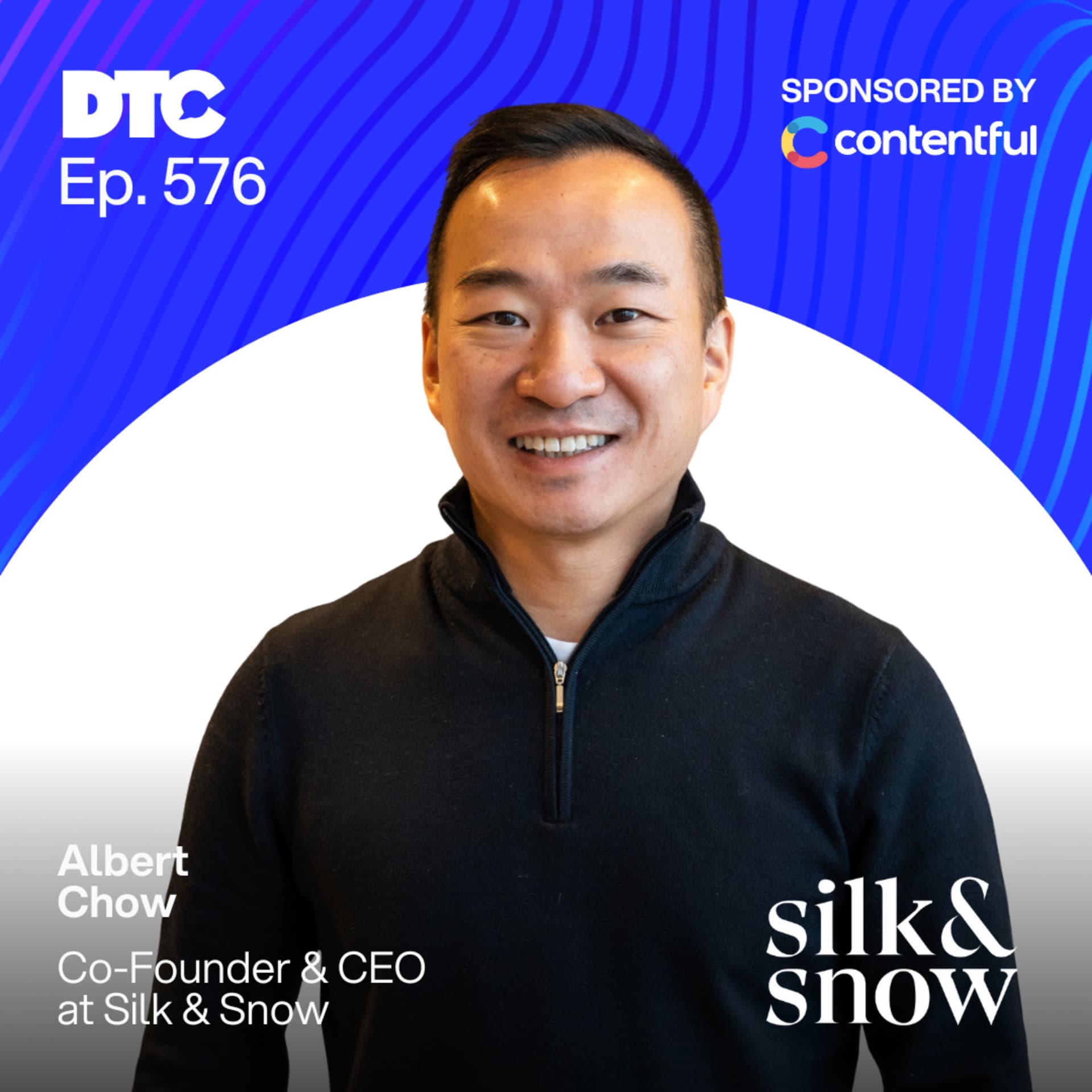
Albert (Silk & Snow co-founder; studied computer engineering; technical + retail background; performance-marketing focus early, later more content/brand).
Key claims
2019 “DTC apocalypse” showed competitors were buying customers more expensively than they earned; Silk & Snow grew organically by keeping CAC profitable. Customers don’t repurchase mattresses often, so they expanded from mattresses into sleep accessories (pillows, duvets, sheets) and then broader home categories (bedding and furniture), evolving into a homewares retailer. They shifted marketing from bottom-funnel ROAS to longer-term brand building and diversified media (Google plus traditional/out-of-home/CTV).
Notable examples
first store opened in Ottawa (2023); aggressive expansion to 10 stores by adding Summer Hill (Toronto) and a Vancouver store. Bundling replaced with a Veritree tree-planting option (30,000 trees; ~$1.3M). They track repeatability (second/third purchases) more than ROAS.
Written by AI. May contain mistakes. Listen to the episode to check what was said.
Chapters
Tap a time to open that second in VOThe Organic Growth of Silk & Snow
0:00 to 0:51
Discover how Silk & Snow grew organically during a challenging market period.
“One of the things that was kind of unique about Silk and Snow, and it was by accident, is that we grew organically.”
Origin Story of Silk & Snow
1:36 to 2:26
Explore the beginnings of Silk & Snow and how the founders navigated the market.
“I've always been a fan of the DTC podcast And I love hearing about the journey of other founders.”
Challenges in a Competitive Market
2:26 to 4:32
Learn about the difficulties faced by Silk & Snow in a crowded mattress market.
“hundreds and it was pretty competitive environment.”
Evolution Beyond Mattresses
4:32 to 5:59
Understand how Silk & Snow expanded its product range beyond just mattresses.
“And I think that's kind of what gave us room to grow over time is that we really tried to sell the entire space of a bedroom and also the entire home over time.”
The Importance of Local Manufacturing
5:59 to 7:48
Discuss the benefits of local manufacturing and its impact on Silk & Snow's strategy.
“You know, often when people are furnishing homes, they're not just thinking about a mattress.”
Navigating Customer Acquisition in DTC
7:48 to 11:33
Explore the strategies employed by Silk & Snow for customer acquisition amid industry challenges.
“And is it actually mostly a local supply chain that you built up?”
Transforming the Purchase Experience
11:33 to 14:04
Learn how Silk & Snow shifted its marketing to focus on lifestyle beyond functional purchases.
“What was your first category that you went into outside of mattresses?”
Identifying Customer Pain Points
14:04 to 14:28
Learn how understanding customer problems shapes marketing strategies.
“So usually the starting point is you're starting from a place of a problem, like either your mattress is worn out or you have back pain or you're sleeping hot.”
Evolving Marketing Messages
14:28 to 14:54
Discover how marketing messages can evolve from problem-solving to aspirational.
Understanding Customer Journey
14:54 to 16:00
Explore how customers discover brands through various channels.
“And that lent itself well to a lot of the content that we were starting to create and some of the platforms that we chose to project our brand on.”
Show all 25 chapters
Investing in Retail Presence
16:00 to 16:53
Learn about the benefits and challenges of expanding into retail outlets.
“And then you guys are investing heavily in your own retail presence in this year and beyond.”
Operational Challenges of Retail Scaling
16:53 to 18:17
Understand the complexities of scaling physical retail operations.
“and we felt it was a bit of a test and kind of like a low-risk entry into bricks and mortar.”
Navigating U.S. Market Expansion
18:17 to 19:13
Explore the differences in market presence and growth strategies between Canada and the U.S.
“We're pretty strategic in that we, I think what we have the benefit of is that because we have digitally native roots, everything is data driven.”
Brand Building Insights
19:13 to 21:06
Learn how brand building strategies differ in various markets.
“What's that mix like right now and how much more of a market do you think you have in the U.S.?”
Implementing Bundling Strategies
21:06 to 22:40
Discover how bundling products can enhance customer experience and sales.
“But one of the unique things about Silk and Snow is because we started in the mattress category, we've been highly focused on just getting that lower funnel right.”
Sustainability Initiatives and Customer Loyalty
22:40 to 24:51
Learn how sustainability initiatives can positively impact customer loyalty.
“Can you talk a little bit about your bundling strategy on the website and how that's worked out?”
Founder's Background in Marketing
24:51 to 26:42
Explore how a founder's background in performance marketing shapes business strategies.
“We actually, our first program was to plant trees out in Williams Lake, BC, which is probably close to your area.”
Evolving Marketing Mix
26:42 to 28:00
Understand how businesses adapt their marketing strategies over time.
“So I did come from a technical background with a mix of retail experience.”
Diversifying Marketing Strategies
28:00 to 31:20
Explore how the company adapted its marketing strategy to enhance brand awareness.
“But over time, we've had to really diversify into all sorts of channels and platforms.”
The Journey of Fulfillment and Customer Loyalty
31:20 to 36:20
Learn about the challenges of fulfillment and the evolution of customer loyalty metrics.
“I remember like early days of our marketing team, it was tough for us to look away.”
Scaling and Culture in Store Expansion
36:20 to 39:20
Discuss the impact of expansion on team culture and maintaining values.
“And how has that evolved since your early D2C days?”
Successful Acquisition and Partnership Dynamics
39:20 to 42:10
Understand how the acquisition by Sleep Country Canada impacted Silk & Snow.
“I'm just looking, you do have a store in Vancouver.”
Branding and Marketing Strategies
42:10 to 43:19
Learn about the differences in branding strategies between Sleep Country and Silk & Snow.
“We've learned a lot on both sides, I would say.”
Following Entrepreneurial Journeys
43:20 to 44:04
Discover how guests can stay connected with entrepreneurs through social media.
“Okay, well, I'll be down soon-o this afternoon.”
Innovative Mattress Features
44:04 to 45:01
Explore the unique selling propositions of Silk & Snow mattresses and their features.
“I went with the Silicon one because I was really in a, I was in the like trying to avoid microplastics kind of area.”
Transcript
Automatic transcript. May contain errors.0:00One of the things that was kind of unique about Silk and Snow, and it was by accident, is that we grew organically. 2019 was kind of like the DTC apocalypse. A lot of our competitors at that time, they were acquiring customers at a more expensive pace than they were getting back from the acquisition. We learned a lot in that time frame and how to do things right and how to grow a sustainable and organic business. 2017, 2018, a lot of the digitally native businesses, they started with just one category and being very much focused on a digital channel. What all of us found over time is that we're actually just retailers and it's a multi-channel approach.
0:38It's likely not one category that you can be successful in. It's an aggregate of a lot of categories.
0:51Eric Dick:This episode is brought to you by Contentful. Marketers, you know that feeling when your creative clicks, when that social post sends engagement through the roof, when your outside-of-the-box campaign hits ROI positive, when a personalized homepage turns prospects into customers? It's utter marketing bliss. Contentful helps you create tailored omni-channel experiences without working overtime. No stress, no limits, only possibilities. Get the feels at contentful.com. Albert, I want to welcome you to the DTC podcast. I've been a longtime fan of what you built with Silk and Snow. I am an owner of actually two Silk and Snow beds.
1:30Eric Dick:My daughter has a queen and I've got a California king. Welcome to the DTC podcast. Awesome. Thanks for having me, Eric. I've always been a fan of the DTC podcast And I love hearing about the journey of other founders. So I'm excited to be here today. So mattresses kind of started this D2C revolution. When you go back to Casper and the mattress wars back in the day, and it kind of feels like Silk & Snow is a bit of the second generation of the D2C mattress company. Can you maybe give me a little background on why you built Silk & Snow? Yeah, it was very much that. But it's funny because not many people know this part about DTC history is that I would say when we started in 2017, we were a few years into the transition of the mattress category going online and going full DTC.
2:23And it was pretty ugly back then. I think there was like a count at one point of how many people or how many brands were out there that were DTC mattress brands. And it was upwards of the upper 100s. hundreds and it was pretty competitive environment. We were late to the game and it was slow in the early days when we were purely just a mattress brand. And I think it kind of taught us a lot of things about being a little bit different as a brand and really carving out your niche in the market.
2:54Eric Dick:What were some of those things you kind of learned about how to tackle the category differently than some of the giants before? Yeah, so I think because we were really, really late to the game. You know, we, we didn't have like first mover advantage or, or that kind of disruptor moniker that a lot of the other brands had. You mentioned one of them like Casper. That was kind of one of the challenges we dealt with as a brand. We were probably the hundredth brand in the market. So the first couple of years, we actually didn't grow very, very quickly. And what that made us realize is that we really had to reorient the brand to kind of stand for something.
3:35One aspect of our business that I found was really developing in the early days was the aesthetic of the brand. I think we did it a lot better in terms of the accessories we sold than a lot of other brands. But one of our origins too is that my co-founder and I, we came from a deep retail background and we had a closeness to manufacturing. I would say we're like factory geeks where we loved visiting factories and just understanding the supply chain. And that's kind of how it started in our journey. We probably went across North America to meet a lot of different manufacturers. And one of the things we kind of learned in that journey was that a lot of the businesses that still exist in manufacturing mattresses in North America, they're typically family run multi-generational businesses.
4:23And these are the type of businesses that are typically more focused on quality and just obsessed about the details similar to what we do. And that kind of formed the DNA of our business. We started pivoting towards applying kind of those principles of being close to the manufacturer and working with multi-generational family-owned businesses and really started expanding into different categories like bedding, furniture, and products that go right across the home and not just focus on a specialty category like mattresses. And I think that's kind of what gave us room to grow over time is that we really tried to sell the entire space of a bedroom and also the entire home over time.
5:09And it made us very, very different as a brand, as our brand evolved over the years.
5:15Eric Dick:More of a homewares brand than just specifically like a raw mattress company. Right. Yeah. And I think that made, I think even the purchasing journey for a lot of the customers a lot more interesting. Like a lot of people consider buying a mattress, like very much like a grudge purchase where it's very functional in nature. You're solving a pain point. But I think when you look at buying products for your home, like if you're looking at home decor or any type of home goods, it's usually more of an aesthetic purchase or one that's more personalized. So we found that to be something that we can lean into a lot more than sticking to the typical approach of selling within the mattress category.
5:58Eric Dick:And I want to dive into that more because your purchase experience is sort of the gamified nature of hitting different thresholds. You know, often when people are furnishing homes, they're not just thinking about a mattress. I like to use the term grudge purchase, where it's just like, I know this is something I have to spend on. I'm going to spend, you know, so many hours for the rest of my life on this thing. So I might as well make sure like I bite the bullet, buy something good now. But before we dive into that, I want to go back into your background a little bit because I read a little bit that you grew up in this, in sort of the garment world with your mom being a seamstress.
6:30Eric Dick:Is that kind of what informed you being a factory addict? Yeah, actually, I kind of flew past that question. But when we started our business, we were looking at a lot of different possibilities of what we would start. And like personally, I kind of grew up in the 80s. So my mom worked in the garment industry when it was thriving in Toronto. and when we started looking at different models, there was a lot of things we could have done, but one of the ones we fell in love with was just the mattress industry and it was kind of by accident because when we visited factories, we had to kind of understand the entire supply chain.
7:09So that included foam pourers, people that made coil springs, but also the textile industry. So we found a pocket of a thriving textile industry that still existed within Toronto. And that really reminded me of the days of when the garment industry was thriving and was kind of a cool bit of history that still survived in Toronto. And when we saw it, we kind of fell in love with the concept of local manufacturing and still having access to heritage manufacturers
7:42Eric Dick:that made really well-built products. He talked a little bit about the supply chain, like what goes into the making of a mattress? And is it actually mostly a local supply chain that you built up? It is. It's obviously nothing that you would, like it's a much smaller scale than you would find in Asia. But I think the supply chain here, they have all the components to make 100 % Canadian-made product. So I think typically within the mattress category, you need fabric, you need foam, and you need coils. And all three are made locally in Toronto, but they also have quite a healthy supply chain across North America.
8:22And that's one of the things that I found because it's such a large product, it's been difficult for a lot of manufacturers to really diversify offshores because so much of it has to be close to the end assembler. But that's also kind of worked in our benefit because we've been able to start from those origins of making a domestic product. And it's really helped us to kind of navigate all the political movements that have happened over the years, especially around tariffs.
8:53Eric Dick:So talk to me about the growth trajectory. What year did you start it? We started in 2017. And I would say it was a bit of a slow start. Like we were really just dipping our toe into starting the business because we started a Kickstarter program for about a month in, I believe it was March 2017. We sold a modest amount. It wasn't phenomenal, but it at least showed us that this was a viable model. And about four months later, we started launching the business of Silk & Snow fully. Okay, and so then that's the kind of heat of the D2C mattress worse, I guess, right? What was it like kind of coming to market and trying to get customer acquisition at scale at that time?
9:37Eric Dick:I guess you had the benefit of pre-iOS 14, you know, meta environment. But talk to me about bringing the product to market at that time and what that was like. Yeah, that was tough. Like I remember it was still like the early days of Google marketing where there's a lot more. It was less algorithmic. So there was a lot more you could do to kind of personalize the approach of acquiring customers. but it was still a very expensive endeavor to acquire a mattress purchase. The typical AOV is about$1 ,000. And if you could imagine, it's probably half of that those days were spent on marketing. One of the things that was kind of unique about Silk and Snow, and it was by accident, is that we grew organically.
10:26So we didn't have the benefit of spending a whole lot of money and acquiring customers. And I think 20, like within the first two years of our business, I think 2019 was kind of like the DTC apocalypse where a lot of businesses in our space were trying to IPO and they kind of realized that the economics of marketing a mattress was not exactly what people thought. So a lot of our competitors at that time, they were acquiring customers at a more expensive pace than they were getting back from the actual transaction of the acquisition. And that made it really difficult for us. But it also, we learned a lot in that time frame and how to do things right and how to grow a sustainable and organic business.
11:11Eric Dick:It's such a tempting category, I guess, because the AOB is so high. But I guess that gets negated when you're going against so many other high AOB competitors. And I guess that's probably what pushed you guys into this sort of like broader category approach where you're moving away from the transactional purchase of a mattress towards the lifestyle that you can build with Silk and Snow's whole lineup of products. What was your first category that you went into outside of mattresses? You're right, Eric, because I find all of us in the mattress category started in the same place of offering one product within the category and trying to drive growth through the high AOV.
11:50Over time, what we realized was the customer isn't coming back. It takes a very long time for them to need a mattress. And so part of our exercise was to kind of give a reason for customers to keep coming back. It also played into you have to ultimately make it interesting and also allow the customer to have an affinity to the brand. And it's very tough to do with just the mattress category. Over time, a logical first step was we started building out our sleep accessories. So things like pillows, comforter duvets, bed sheets. and we started growing all the adjacent categories that revolved around a mattress
12:31Eric Dick:and gradually built out from that. Where did you come up with the brand? I was always curious where Silk and Snow came from. Yeah, I wish I could say something more creative, but we actually, at the time, it was very difficult to see what our brand would grow up to be. So we knew that we loved textiles. we loved that we were building something that was of higher quality and we wanted to have Silk be a part of the name because it lent itself so well to so many of those things and we we knew that we were going to start within Canada so we wanted to call out the kind of our Canadian roots as well and then outside of that it was just tough to find a domain name at that time so Silk and Snow kind of worked out when we were doing the typical domain name search and making sure that all the social media handles existed as well.
13:25Eric Dick:It's good. Snow's got the Canadian vibe, but it also has that restful vibe or something, right? Like a fresh blanket of snow seems very calm and peaceful. I'm glad you think that way. I don't know if that was intentional, but that actually works. I agree with you. I think that's only because I live in Victoria and I don't have to deal with the reality. How do you think about the decision cycle? You mentioned this term, brunch purchase. I never heard that. But how do you think of the sort of intention cycle or buying cycle around mattresses versus something like maybe a sofa, which you guys also do now, right?
13:58Yeah, I think with mattresses, it's very functional as a purchase. So usually the starting point is you're starting from a place of a problem, like either your mattress is worn out or you have back pain or you're sleeping hot. So a lot of it, the purchase journey starts from a problem that you're trying to fix. And we found that that's always a very difficult marketing message to get across is you're trying to address a problem. It's not as nice as some of the products that we've grown into where you're really just trying to improve the aesthetic of your home, where you're trying to make your bedroom look like a Pinterest board.
14:38So we found that it just kind of took place organically where we kind of evolved our marketing message from trying to solve a functional problem into one in which it was more aspirational and inspirational. And that lent itself well to a lot of the content that we were starting to create and some of the platforms that we chose to project our brand on.
15:04Eric Dick:Do you find that most people are coming into the brand through the lens of the mattress and then kind of opening up into your other catalog? Or are people equally coming from your other pieces now and looking at mattresses? I find a lot of DTC businesses are going this way now. Like, I think in the 2017, 2018, a lot of the digitally native businesses, they started with just one category and being very much focused on a digital channel. And then I think what all of us found over time is that we're actually just retailers and it's a multi-channel approach. So it's likely not one category that you can be successful in.
15:41It's an aggregate of a lot of categories. So we are finding that we're getting customers from different types of products, but we're also getting customers from different types of channels. Like they're not just coming in digitally. They're also coming in through some of our retail partnerships. They're coming in through some of our stores. And I find that the more we grow as a business, the more we realize we're becoming a traditional retailer that just happens to be digitally native.
16:09Eric Dick:And then you guys are investing heavily in your own retail presence in this year and beyond. Can you talk a little bit about that? Yeah, that's been really fun. Like it's one of the aspects that we've always talked about where I think we've succeeded as a digitally native business in spite of just being digitally native. Like our products are very tactile. A lot of the times we deal with the customer, even digitally, it usually there's a lot of questions around what the product feels like or what the product, how sturdy the product is. And we always knew that the path for us was to grow a bricks and mortars channel.
16:45It was just a matter of how much that would be a part of the mix. We opened our first store in 2023. So that was about three years ago. and we felt it was a bit of a test and kind of like a low-risk entry into bricks and mortar. That went incredibly well. Our first store was in Ottawa, and that's still one of our best-performing stores today. In the last year, we've kind of gone through this aggressive path of opening more bricks and mortars. We just opened up our Summer Hill location in Toronto as of this weekend, and so it's been our 10th store. So we've opened about nine stores in the last year, and that's been our 10th store today.
17:28Eric Dick:What's your biggest learning about moving that aggressively into your own retail? It's definitely tougher to scale operationally. Like with digital, you could pivot. You could change marketing messages or pricing on the fly. But with bricks and mortar, it's really tough. Like we've found that you've got to get the underlying infrastructure right first. Everything from kind of distribution to warehousing to even just how you manage the experience within the store. It's easy enough to find. It's not easy enough, but it's easier to find real estate. But to open up at a pace where your experience is in keeping with all the other stores that you have and also the online experience is very, very tough.
18:11Eric Dick:Just a lot of planning goes into it as to where you can support these. How strategic are you about where each store goes? We're pretty strategic in that we, I think what we have the benefit of is that because we have digitally native roots, everything is data driven. We know exactly where our customer is coming from. And we often let online dictate where our market is and what sells in those markets and what works. And so we've definitely had the benefit of data and opening up markets. And when you layer that in with just real estate opportunities as they come up, it becomes a much more easier exercise.
18:55We've been with other retailers where the starting point was bricks and mortar. And then you don't have the benefit of the amount of data that we have. And I found that that's helped a lot in our journey to grow bricks and mortar.
19:08Eric Dick:Where are you guys in your journey? Because obviously you've got a huge presence in Canada. I assume you're selling in the U.S. as well. What's that mix like right now and how much more of a market do you think you have in the U.S.? Both markets have been good, but I would say it's a very different journey. We typically like to say we're about three to five years behind within the U.S. market than we are in Canada. It's still a very sizable portion of our business, but it's just such a bigger market than what we have in Canada. We've been able to grow our brand in Canada a lot faster. And a lot of it has to do with just competition and closeness to our supply chain because it started in Canada.
19:49But I think it just takes a lot more investment and time to build a brand in the U.S. And we have been taking our time. We've definitely had a much more mature customer base within Canada, where we've been able to test the market and really open up on bricks and mortar. And I think when we look at the U.S., it's where we're happy with where we are. But we would say that we're probably three years behind from where the Canadian side is.
20:16Eric Dick:Brand building is always such an interesting exercise. I come from a performance marketing agency where, at times, the performance world has felt at odds with the branding world. And like, how do you think of brand building? Maybe as you've done it in Canada, is it just really a combination? Like I know bricks and mortar must obviously have a big impact on people's perception of the brand. Obviously, just getting people experienced with the brand, getting more and more of your different kinds of pieces in people's homes helps establish that brand. Anything else like about how you think about brand building for a brand like Silicon Stone in Canada?
20:50Yeah, I don't know if it's a fair question because I think I'm more like you in that I come from performance marketing roots as well. Like I like numbers and probably I lean on the rest of the team for the creative aspects a little bit more in brand building. But one of the unique things about Silk and Snow is because we started in the mattress category, we've been highly focused on just getting that lower funnel right. One thing that we talk about a lot is that once we get a customer into the funnel, we found that our customers are loyal. We typically have a very high conversion rate and a repeat rate, especially as it relates to our category.
21:33And so we kind of went through this journey where we went bottom up, where we focused on once we got the traffic to come to our website, it was a much easier exercise to get them to convert. but then we kind of went through the phase of trying to get traffic into the website and and that is is really a journey of building a brand and brand awareness and so I would say that like in the Canadian side we've been a little bit quicker at that in building a brand awareness but I found that it's always better to build from the bottom funnel up and that's kind of been our approach to growing the Canadian market at least.
22:13Eric Dick:It definitely worked for me. You know, I own two beds and I got bedside tables. I got a couple of lamps. I've got my bed linens. And it is like once you're in that environment, I think the website does such a good job of both like exposing you to all the different kinds of products, but also like not necessarily gamifying, but building it in, building these other products into the purchase process in a, you know, in a dynamic way where you're, you're getting your bedding kind of bundled in for free. Can you talk a little bit about your bundling strategy on the website and how that's worked out?
22:44Yeah, bundling is quirky as it relates to the mattress industry. It's like one of those necessary evils that we have to deal with because I think mattresses are really a special, what I think the industry considers like a specialty retailer. A lot of the competitors we compete with on the mattress side, they only sell mattresses. So they've had the ability to throw in a lot of value in other products as an offering rather than compete on price, which has worked for them. For us, we like to sell everything and then really help our customers really round out their home. And so it's kind of been a mixed bag for us in terms of to sell a mattress, the customers expect bundling.
23:28But at the same time, we've built our entire business on giving our customers optionality to build out their home. And they like mixing and matching products that we have, like other bedding or sleep accessories or furniture. So we've used it in very specific ways. But we also like just giving our customers the ability to pick what they want. And so it's kind of been a mixed bag.
23:54Eric Dick:And then one of the things that customers can pick based on my ChatGPT notes here, so you can correct me if I'm wrong, basically replacing bundles with like a tree planting initiative via Veritree. And according to ChatGPT, it's safe$1.3 million and planted 30 ,000 trees. Is that true, first of all? Yeah, yeah, that's definitely true. It's actually been a fun little journey. I kind of mentioned it was like a necessary evil. So what we found is that giving bundles is sometimes giving a consumer a lack of choice and something that they might not want. So we found that to be a little bit off brand.
Read the full transcript
24:33We also found that a lot of our customers who focus a lot more on sustainability and thoughtfulness and what we offer, they don't want the offering of getting more. They just want something thoughtful and optionality. So we thought it was really on brand to partner with another organization that was dealing with a problem that was very relevant for the last few years, which is tree planting. We actually, our first program was to plant trees out in Williams Lake, BC, which is probably close to your area. And it's really resonated with our customers. And we were really surprised that a lot of customers, they were willing to give up their free products in replacement of just getting something that was a little bit more socially and conscious and mission driven.
25:27Eric Dick:Did you find that had any impact on long term AOV or customer behavior or loyalty offering something like that? Yes, it's been nice because I think it was something very unique that we were doing as a brand that was different from every other retailer that was in our space. But when you kind of slow down the purchase cycle and not try to do everything all at once in terms of a product offering, it does give the customer a reason to come back. So maybe to answer your question, it doesn't help with the immediate AOV for the customer, but it does help with the long-term relationship with the customer and having them come back and have a reason to come back.
26:06Eric Dick:And the brand. Yeah, just just knowing that they've had this good interaction through the brand, this thoughtful interaction. I know every time I'm searching for anything from my home and Silk and Snow comes up, it is a, you know, I'm noticing it more, obviously, because I'm a customer, but it definitely, definitely works. Can you talk a little bit about your back? You mentioned you're a performance marketer long term. Can you mention a little bit of talk a little bit about your background in digital marketing and how that's kind of informed how you built this company? Yeah, so maybe I should clarify that that was a bit overstated because my background is I actually studied computer engineering.
26:42So I did come from a technical background with a mix of retail experience. But I wouldn't say I was on the creative side. So when we started our journey at Silk and Snow, I immediately gravitated towards numbers of data. And I think it lent itself well to performance marketing. So I think in the early days of the business, that was kind of the area that I focused on. So we were deep into kind of the Google world before a lot of it was AI or algorithm driven. And then we learned to market through content a little bit later because I think it was just simply the way the founding team was built. But yeah, that would be the starting point of me learning performance marketing.
27:25Eric Dick:How do you think about marketing? Obviously, you guys are a big organization now, obviously, at this point. How do you think about marketing now, especially this is the week of Black Friday. I'm super impressed you're taking this call. How do you guys think about your marketing mix right now when it comes to you guys still very Google heavy, a lot of social media as well? Oh, we've definitely diversified our media mix. Like I think at least the 2017 version of Google when we started was very much high intent, low funnel. Our starting point was that it was a disproportionate amount of Google. But over time, we've had to really diversify into all sorts of channels and platforms.
28:06And even we found ourselves leaning in more towards like traditional media, like out of home and connected TV. And I think it's part of the journey of growing up as a brand is that once you've kind of mastered or figured out the low funnel portion of the marketing funnel, A lot of it is content driven and just being where the customer is, even before the demand or the necessity of your brand comes. And so over the years, we've shifted a lot of our media spend to awareness, marketing and a lot of traditional media. And a lot of that has had to be more creative and a lot more content driven.
28:51Eric Dick:I haven't seen your top of funnel stuff. And I'm always interested because I come from this performance marketing world. And all of the platforms will take all of your money if you're focused on bottom of funnel. They will spam that bottom of funnel. And your ROAS will look good in the platform. But you may not be bringing enough new eyeballs. So you mentioned a bunch of different things there. Can you maybe give me either a campaign or a traffic? One of these platforms or a specific campaign that you felt was really effective at driving top of funnel actual awareness into the Silicon Steel world?
29:28I would say like even so, so typically, uh, on, on a lot of the traditional platforms like meta, Facebook, Instagram, TikTok, there's an immediacy of the messaging that, that we've had to focus on. And it could be formal messaging or it could be sale messaging or things that would cause you to want to convert or perform a particular action immediately. We've tried to, over time, move away from that because I think it's good for performance marketing, but terrible for brand. And so maybe a better example is just maybe the shift in terms of content and messaging, like even projecting social causes and what our brand stands for.
30:14Like you mentioned earlier, like the program we've been running to plant trees as a core part of our messaging. Those things don't normally play out in the immediate term of ROAS and you don't see the effects of it, but you do see it over time. And I find that what we've had to learn is to kind of be patient, to kind of look at our marketing funnel over a longer period of time and kind of look away from the traditional things we look at, like ROAS by platform, because they always lean towards certain types of messaging, but not towards brand building.
30:52Eric Dick:I saw a good tweet the other day about that. It was just like, if you think that having a high ROAS in platform is a flex, then you're lost. Because really, it's like high volume, low ROAS is what you want to see. And then you want to have all your other channels dialed to, you know, to be, you know, rather than just grabbing the attribution, we want them working together like a symphony. And you have to be, the more you're willing to take a low on platform ROAS means maybe more health in the long term of your business, if you're thinking about it right. Yeah, yeah. I remember like early days of our marketing team, it was tough for us to look away.
31:29Because every time we ran an awareness campaign, you can never justify it through the ROAS. And it was probably that was probably one of the turning points of our business was when we finally shut off the the all the the ROAS data and just started having conviction as to this is the right path. You got to build a brand that stands for something. And I think that's when long term brand building happens. But, yeah, you're absolutely right. It's it's it's one of those things you do early in the journey, but you can rely on that forever.
31:59Eric Dick:And then leaning on out-of-home and streaming, did you have a strong retail presence like your own retail stores and being in wholesale before you dove more heavily into out-of-home and retail? Or did you have that supporting your D2C business? this? We've been selective with the partnerships that we've had on the retail side. Because our origins were direct to consumer, we've always been dealing with trying to just find distribution at the right places. I think we've been a little bit different than a lot of people in our space where we've avoided a lot of marketplaces and we've avoided discount retailers to partner with.
32:40So So we've, in our journey, built out relationships with more specialty retailers that kind of more aligned to brand. But it hasn't been a huge, huge part of our business. We've been really selective with that. But I also think that we've always had a view to kind of maintaining a directness with our consumer and being a direct-to-consumer brand. So we've always had the long view of we had to build out our own stores over time.
33:08Eric Dick:And then Black Friday, Cyber Monday later this week. What do you got going on for that? Is mattress purchasing the Super Bowl in Black Friday, Cyber Monday or is it understeady? Yeah, I think it's super cool for almost all DTCs, but it's incredible. Like I remember when we started this business, I couldn't believe the amount of people that were buying mattresses on Black Friday. I would have thought that would be the last category you worry about. But yeah, it's huge for us. And I think it's because it's such a considered purchase that people have time to think about it and wait. And it's not something you need immediately.
33:44But I'm certain right now, like the funnel is building and people are making their lists and they're going to make their decision on Black Friday. So that's typically a really big day for us. And then how do you handle discounting? Because our journey of consideration for our customers takes weeks rather than days. We try to give more time to our customers and communicate our Black Friday promos a little bit earlier. I think it's even more important for big ticket purchases like sofas or furniture products and mattresses. So we try not to have like flash sales or things that only appear for a few days.
34:31And we try to have an extended period. But I find a lot of retailers moving in that direction anyways.
34:36Eric Dick:I think one of the most interesting things about a mattress purchase is when it comes to your home in a seemingly impossibly small box, weighs so much more than you think it should. It's this whole experience when you buy one of these mattresses. What's been maybe the most challenging aspect of scaling out your fulfillment and your returns across North America? I would say that even on the fulfillment side, we've tried to stick to that model of fitting everything into a box. It's been pretty crazy what we've been trying to fit into a box. So the latest is our sofa, but we've tried to apply that across all products.
35:16And it works well on the way out to the customer, but it doesn't work as well sometimes coming back. But yeah, it's been an issue. But I found over time as you get scale and the distribution grows, then also our distribution network grows. So we have been able to be more sensible with our returns. Like I'd like to think we do a lot better job of taking back product when for whatever reason it doesn't work out for the customer. than marketplaces like Amazon or Walmart or what they do with products when they return. Over time, we've been able to kind of build out our partnerships with charities that could make use of the products or give it a second life.
35:58We've also gotten better at just taking back product that is resellable. Certain goods are, especially hard goods. So yeah, it's been a real journey, but I think that kind of stuff, It was really hard when you started, but over time, it just gets easier and easier.
36:15Eric Dick:And then what metrics as CEO are you tracking most closely today at the size of your company? And how has that evolved since your early D2C days? That's definitely not ROAS anymore, but it's hard not to look. But I do find what we look at quite a bit is just the repeatability of the customer. I think early days, you're just fighting for survival like any other startup would. So you're constantly looking at how to acquire a customer as cheaply as possible. But for us, the customers, like our customers are now coming back and they're growing up. It's been eight years in the business and they're coming back for different reasons.
37:00And you're starting to see that journey. So what we've been focused on a lot is just seeing what the customer does on their second or third purchase with us or more.
37:09Eric Dick:And that's been really, really interesting for us. And I imagine the SOPA has been a big part of that because it's like a new, it's that you have all these other products, but you have probably mattresses or your flagship. Whereas SOPAs are another flagship in a way, right? They're not accoutrement. They're this whole other destination thing that people are coming to you guys for. How has the SOPA launch happened around April or this year? Is that right? Yeah, I think it was summertime this year. I should know this, but I think it was the summertime in June. But yeah, it was very, very recent.
37:38And yeah, each product launch has been really, really interesting because I find as we continue to launch more products, it's gotten easier. And what we found is that there is an affinity with our customers and just buying Silk and Snow products. So it's less about needing a sofa and more about we've launched something new again and the customers just want to keep seeing that. that's been really really different uh it's taken a while for us to get there but uh it's been fun because it just allows the team especially the product team to be a lot more creative and in what they can dream up of next for silk and snow speaking of what's next for silk and snow
38:14Eric Dick:do you have any uh any resolutions that you've made uh from from what you've learned in 2025 about how you want to do things in 2026 um no that's a good question i don't know like i'm still like in black friday mode and then shortly after this boxing day mode but uh um a canadian specialty is boxing data i can't believe americans don't have more boxes yeah is it starting to break into america it was like made for america yeah yeah i i think uh maybe one one thing in our journey like uh especially with the stores like it's been uh more and more remote uh as we open upstores. So the people element has been really, really different.
38:53Like we were, we're very used to growing as a small team. And then as we grow, we're still all in one place, but we're definitely as a team, a lot more split up these days. And so maybe new year's resolution, like not so much resolution, but one thing we value a lot is just people and culture on our team. And, and how do you maintain that as you grow, especially if you're in different geographies. So that's probably one of the focuses that we've really thought about as we continue to expand out our bricks
39:25Eric Dick:and mortars and looking into 2026. I'm just looking, you do have a store in Vancouver. How's that one going? Oh, it's fantastic. It's so far my favorite store. So we opened that last week in the Granville neighborhood, which is kind of like Furniture Row if you're looking for furniture in Vancouver. And it's been an interesting area because we've been trying to open that store up for the last two years. So it's been really heavily anticipated by a lot of our customers, but even the neighborhood as a whole. Like when we opened it last week, it was fun to watch the community come out and support us.
40:06A lot of them are people that live in that area. And there's been an equal mix of people that have traveled really far just to come see us in a bricks and mortar form. So Vancouver has been a good market for us, but it's also been very uniquely one of our favorite stores in terms of where we've always wanted to be.
40:24Eric Dick:And then we cut that just earlier, I guess, but congrats on the exit. You guys exited to Sleep Country Canada. I'm thinking of the jingle, of course. Why would you buy a Patris anywhere else? Talk a little bit about maybe how that's gone. And then I think it's probably been one of those acquisitions that's been very successful for both parties. Has it affected the culture at all being acquired? No, I think it's been really successful. And I think part of that is because our expectations were very much aligned and our interests were very much aligned when we decided to partner together. We've formalized kind of the partnership three years ago.
41:02And one of the things we talked about a lot was being experts in our own kind of domain. So one thing that we did incredibly well at Silk and Snow was growing out everything that was not mattress related. So we really focused on growing out the bedding category and the furniture category. And we grew digitally native. And one thing that we really, really needed help on was just growing our bricks and mortar channel. And that was one thing that Sleep Country was incredibly good at. And I think that's when the partnership is best is when you have different strengths and you're very different in the right ways.
41:42And so it's been a really good partnership. Obviously, like there's always topics that come up, like the differences in culture, maybe the differences in the DNA of the businesses that were built. But outside of those differences, we've been able to operate very independently and we've been encouraged to kind of grow within our own path. And it's been a really healthy relationship. We've learned a lot on both sides, I would say. And yeah, this is the third year and it's probably going faster than planned. And we're on our 10th store, which we've gotten a significant amount of help with the Sleep Country family.
42:27So it's been really rewarding as a journey.
42:29Eric Dick:Are you going to get a jingle? Or are we posting? Our brand is not coming up with fun jingles anymore? This is where culture is very different. I think Sleep Country loves their jingles and radio. And it's interesting because as marketers, Sleep Country hasn't run that jingle for maybe seven or eight years now. But everyone still remembers it. So when you think about awareness, like that's, that's like the ultimate awareness play, but I don't know, being different in different areas, we have never run a successful radio campaign. So we're, we're, we're nervous to get back into it. So no jingle for us yet.
43:06Eric Dick:And you have to be careful because you don't, you want to be a lifestyle brand, right? You don't want to be a mattress warehouse or, you know, you want to be something that people are, people are very happy to have all around, but I don't know. I just, I still think there's room for a jingle. So that's, that's my advice. You come up with one, shoot him my way, I'll consider. Okay, well, I'll be down soon-o this afternoon. I'll send this AI jingle for you. Howard, thanks for coming on the podcast today. This was really cool. If people want to follow your entrepreneurial journey, do you recommend they follow you on LinkedIn?
43:34Eric Dick:Are you active on any of these platforms? Yeah, you know what? I'm terrible at that kind of stuff. But I would say my most active social profile would be on LinkedIn. But if anyone goes on it shortly after this podcast, they'll notice that I haven't posted in like a year. But I do respond and connect with people on LinkedIn quite a bit, but it might not appear like that outwardly. Nice. Well, again, thanks again. And I will continue having great restful sleeps on my hybrid Silk and Snow mattress. And if you're looking for a mattress out there, people, you've got to take a look at Silk and Snow.
44:07Eric Dick:I went with the Silicon one because I was really in a, I was in the like trying to avoid microplastics kind of area. And I know Silicon and Hank still has microplastics, but I was also real. What really got me was the cool sleeping because I'm a hot sleeper and I find the bed is extremely cool sleeping bag, which I really appreciate. Is that a big angle in the marketing? It is. Like I think our organic mattress is one of the only ones that you can find within Canada. It's a little bit more popular in the U.S., but a lot of customers look to us for more sustainable options when it comes to sleep.
44:46And so it's been a very unique offering that is really connected with our brand. So we're really proud of it. And I think a lot of customers love it for even its cooling features, but outside of that, also just what it stands for. Nice.
45:01Eric Dick:Well, I hope some people in the audience buy a bed or some other of your great products. Thanks again, Albert. This was awesome. Yeah. Thanks for having me on the show, Eric.
45:16Eric Dick:Thanks so much for listening to today's episode. If you're not a subscriber to our newsletter, you can do that right now at direct-to-consumer, all one word, dot co. I'm Eric Dick, and this has been the D2C Podcast. We'll see you next time. Thank you.
From the publisher
Subscribe to DTC Newsletter - https://dtcnews.link/signup
Albert Chow built Silk & Snow in the shadow of the DTC mattress wars—but instead of racing to burn VC cash, he played the long game. Today, Silk & Snow has grown into a full home brand with 10 retail stores, a thriving Canadian customer base, and a strong U.S. expansion roadmap.
For DTC founders scaling from $5M to $50M...
- Why they skipped the mattress arms race and leaned into vertical integration
- How bundling less (and planting trees instead) saved $1.3M
- What they learned scaling from 1 to 10 retail stores in a year
- The metrics they track now that ROAS is irrelevant
- Why launching a sofa was more about customer affinity than furniture
Who this is for: Operators scaling past one SKU or one channel—and looking for a sustainable path to growth.
What to steal:
- Bundling with purpose (optional tree planting vs. free stuff)
- Bottom-up brand building: low-funnel mastery first
- How to use DTC data to drive brick-and-mortar strategy
Timestamps
00:00 Organic growth and surviving the DTC mattress crash
02:00 Entering the crowded mattress market in 2017
04:00 Why Silk and Snow became a full home brand
06:00 Factory-first supply chain and Canadian manufacturing
08:00 Launching with Kickstarter and early traction
10:00 The 2019 DTC apocalypse and sustainable growth
12:00 Expanding beyond mattresses into sleep accessories
14:00 Functional vs aspirational buying in home goods
16:00 Becoming a multi-channel retailer
18:00 Using customer data to choose store locations
20:00 Canada vs US growth strategy
22:00 Building brand from the bottom of the funnel
24:00 Replacing bundles with tree planting
26:00 Performance marketing roots and early Google
28:00 Shifting into awareness and brand media
30:00 Why ROAS isn’t the real growth signal
32:00 Retail partnerships and staying DTC
34:00 Black Friday for big-ticket home products
36:00 Fulfillment, returns, and sustainability
38:00 Repeat customers and long-term LTV
40:00 Sleep Country acquisition and retail scale
42:00 Vancouver store and physical retail strategy
Hashtags
#DTC #EcommercePodcast #SilkAndSnow #AlbertChow #DTCBrands #HomeGoods #MattressIndustry #BrandBuilding #RetailStrategy #DirectToConsumer #EcommerceGrowth #StartupPodcast #FounderStory #CanadianBrands #PerformanceMarketing #Omnichannel #RetailExpansion #DTCpodcast
Subscribe to DTC Newsletter - https://dtcnews.link/signup
Advertise on DTC - https://dtcnews.link/advertise
Work with Pilothouse - https://dtcnews.link/pilothouse
Follow us on Instagram & Twitter - @dtcnewsletter
Watch this interview on YouTube - https://dtcnews.link/video