In short
DTC Podcast Episode Notes: Ep 580 - How Fan Bi Revives DTC Brands with 30 Days of Cash Left
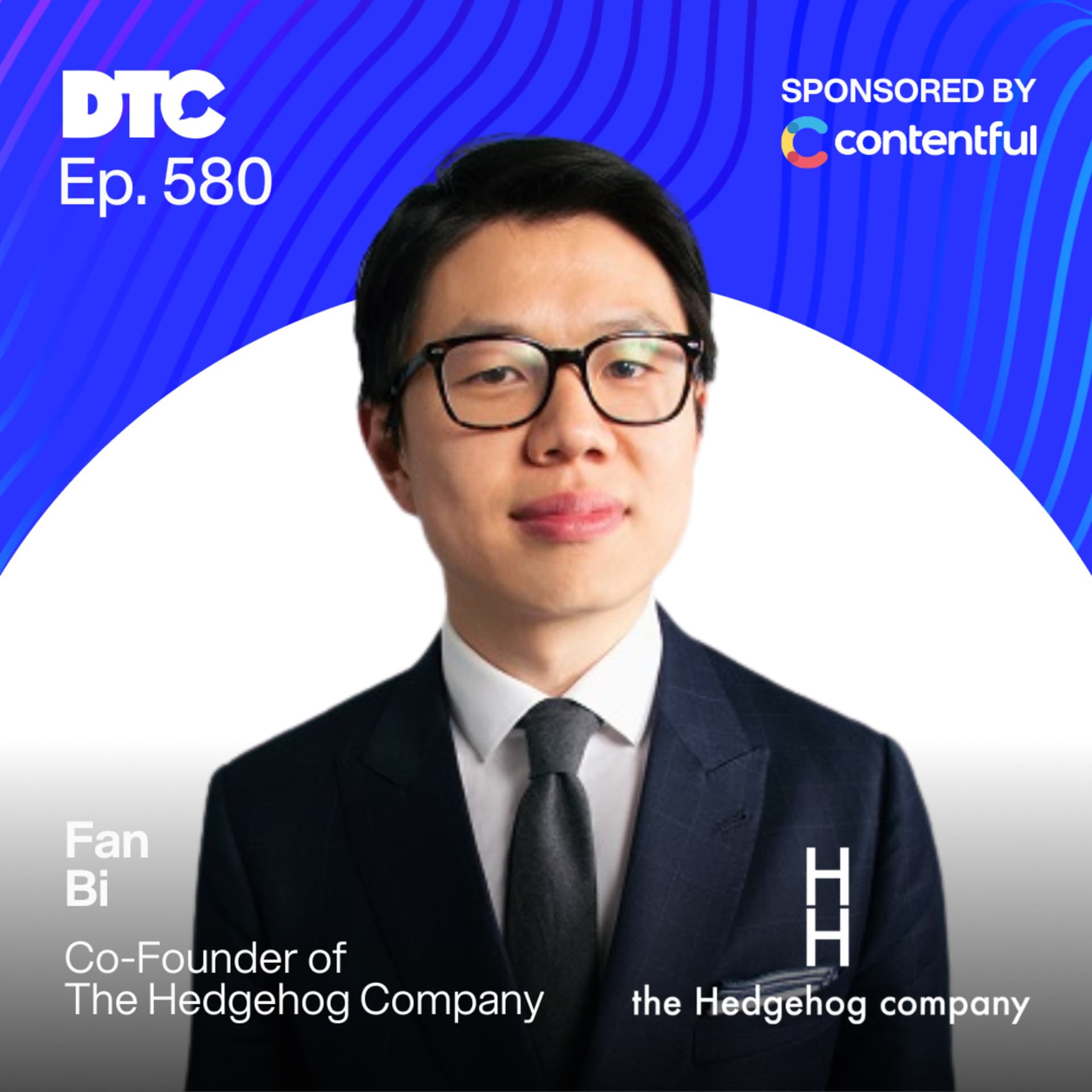
Overview In Episode 580 of the DTC Podcast, host Eric Dick interviews Fan Bi, the founder of The Hedgehog Company. Fan Bi specializes in acquiring and reviving distressed direct-to-consumer (DTC) brands, often stepping in when they have only 30 days of cash left. The discussion focuses on the current state of the DTC marketplace, valuation myths, M&A landscape shifts, and strategies for improving distressed brands.
Key Guests
- Fan Bi: Founder of The Hedgehog Company, creator of "In the Money" podcast.
Episode Highlights
Market Landscape
- Evolving Valuations:
- The belief in DTC brands being valued at 3-5x revenue, particularly when unprofitable, is outdated. Such valuations are now extremely rare.
- Acquirers are increasingly focusing on larger deals, often in the 10-figure range, leaving smaller brands at a disadvantage.
- Current Acquisition Challenges:
- Customer acquisition costs have risen, making it harder to achieve profitability.
- Brands with low switching costs struggle to retain customers.
- The competition for impressions on platforms like Meta (Facebook) is stiffer, leading to higher costs.
Key Concepts
- Profitable Exits:
- Founders must understand the importance of demonstrating profitability and positive cash flow.
- The significance of strong fundamentals, such as a post-marketing contribution of over 20%.
- Bridge Rounds:
- Many brands rely on bridge funding, which often leads to further financial deterioration rather than a turnaround.
- Identifying a bridge round as a "bridge to nowhere" is crucial for founders.
- Product Market Fit vs. Product Channel Fit:
- Product market fit focuses on customer retention after initial purchase.
- Product channel fit examines how well a brand's products perform on sales channels, especially in terms of ad efficiency and customer acquisition.
Insights on Acquisitions
- Criteria for Acquiring Distressed Brands:
- Fan Bi looks for brands with potential growth but that need operational adjustments.
- Brands showing signs of operational inefficiency, such as bloated teams or negative EBITDA, are candidates for acquisition.
- Examples of Turnarounds:
- Baboon to the Moon: A backpack brand revitalized by streamlining operations and enhancing its focus on content marketing and wholesale distribution.
M&A Process Dynamics
- Deal Momentum:
- Deals require quick momentum, with frequent communication between parties to maintain engagement.
- Selling Process:
- The ideal M&A process timeline is around four and a half months, allowing for initial traction assessments within the first three weeks.
- Understanding Exits by Category:
- Businesses typically fall into various revenue brackets influencing their attractiveness to buyers.
- Brands in the $10-50 million revenue range might attract private equity (PE) or trade buyers.
Strategic Takeaways
- Focus on Fundamental Health:
- Brands must measure health metrics beyond revenue, including customer lifetime value (LTV) and customer acquisition cost (CAC) efficiency.
- Navigating Market Trends:
- Founders need to adapt to changing market dynamics, including shifting buyer priorities and higher acquisition costs.
- Future Outlook:
- While DTC brands face challenges, strong operators can still find opportunities, especially those incorporating innovative products or business models.
Conclusion This episode provides valuable insights for DTC founders, operators, and investors navigating the complexities of the current market landscape. Fan Bi's expertise highlights the importance of understanding valuation, operational efficiency, and the critical nature of strong fundamentals in achieving successful exits in the DTC space.
Additional Resources
- Fan Bi's Podcast: ["In the Money"](https://www.inthemoney.com)
- DTC Newsletter Subscription: [Subscribe Here](https://dtcnews.link/signup)
Hashtags DTC #DirectToConsumer #Ecommerce #DTCExits #MergersAndAcquisitions #DTCBrands
Written by AI. May contain mistakes. Listen to the episode to check what was said.
Chapters
Tap a time to open that second in VOThe Evolution of D2C Valuation
0:39 to 1:01
Learn how D2C brand valuations have shifted in today's market.
“I grew up in the D2C generation of Dollar Shave Club and Bonobos.”
Common Misconceptions in M&A for D2C Brands
1:57 to 3:08
Understand what D2C founders often misunderstand about mergers and acquisitions.
“What's the number one thing that DTC founders get wrong about how M &A actually works?”
Current Challenges in the D2C Market
3:09 to 5:24
Explore the state of the D2C market, including customer acquisition challenges.
“And second of all, strategics have moved up market.”
Identifying Strong D2C Brands for Acquisition
5:25 to 6:10
Discover the criteria for acquiring D2C brands with strong fundamentals.
“We're still seeing, you know, winners for sure.”
Successful Turnaround Stories in D2C
6:11 to 9:03
Hear about a successful turnaround of the brand Baboon to the Moon.
“I think of my friends like Bart Sanuski, who's running, you know, Dad Gang, or my friend Brock Mameser, who's running Frostbuddy.”
Insights on Exits for D2C Brands
9:04 to 12:23
Learn about the landscape of exits and what institutional players are seeking.
“you build the portfolio and hold it or do you look to flip it or sell it up market?”
Interesting Capital Moves in D2C
12:24 to 14:03
Discover recent capital movements and repair strategies in the beauty industry.
“We haven't really seen anything material in apparel for a number of years now.”
Founder Takebacks in DTC Brands
14:03 to 14:46
Learn about the trend of founders reclaiming control of their brands after private equity struggles.
“Is that sort of like a skin service or skin repair, essentially?”
Challenges in DTC Deal Engagement
14:49 to 16:38
Discover what can hinder the process of closing DTC deals and how to maintain momentum.
“from some of the stuff that isn't working.”
Effective M&A Process for Small Brands
16:40 to 19:15
Understand the key steps and timeline for a successful M&A process in DTC brands under $20 million.
“Or what, or in your best examples, how long has it taken?”
Show all 15 chapters
The Dangers of Bridge Funding
19:16 to 22:08
Examine how bridge rounds can hinder brand growth if not approached correctly.
“Like, I guess everything is cyclical, but do you see a point in the future where CPG and D2C deals will kind of return to prominence?”
Assessing Product Market Fit
22:09 to 24:26
Learn the key metrics to evaluate product market fit and the importance of retention.
“How, you know, product market, a brand has to have product market fit to be considered here.”
Identifying Successful Brands in DTC
24:27 to 26:27
Explore examples of standout brands in the DTC space and the factors driving their success.
“as sort of best in class that you kind of look to for success signals?”
Starting a Brand Today
26:28 to 27:48
Discuss the challenges and considerations for starting a new brand in the current DTC landscape.
“And I think what I will say is that founders are just so much more sophisticated now than they were five years ago, 10 years ago, 15 years ago.”
Navigating DTC Business Challenges
28:00 to 28:39
Learn about common challenges DTC brands face and how to address them.
“lot of brands on the on listening here so what's pump your podcast again what's your podcast called In the money, easy to find on Spotify and YouTube.”
Transcript
Automatic transcript. May contain errors.0:00Fan Bi:Today on the D2C podcast, we're getting into the real math behind D2C exits. I'm joined by Fan Bi, founder of The Hedgehog Company, who steps in when brands have 30 days left of cash and no clear path forward. He's bought and turned around dozens of distressed D2C brands, and he's got the receipts on what actually makes a brand sellable in this market, and what kills deals dead. We'll talk valuation myths, bridge rounds that go nowhere, how to tell if your brand's even worth selling, and the difference between product market fit and product channel fit, especially when Meta is the main driver.
0:31Fan Bi:If you're a founder thinking about an exit or just trying to survive the plateau, this one's for you. I hope you enjoy it and on with the show. I grew up in the D2C generation of Dollar Shave Club and Bonobos. There was this idea that you could be a D2C business, be valued at three to five times revenue, and very importantly, not profitable. Growing, but not profitable. Being bought for three to five times revenue when you're not profitable, that doesn't exist anymore. We've been humbled by how challenging the current environment is. The threshold for, hey, are we going to be able to turn this around?
1:10Are we going to be able to do something differently and specifically better than the smart people that we're buying it from? That bar has continued to increase.
1:26Fan Bi:This episode is brought to you by Contentful. Marketers, you know that feeling when your creative clicks, when that social post sends engagement through the roof, when your outside-of-the-box campaign hits ROI positive, when a personalized homepage turns prospects into customers? It's utter marketing bliss. Contentful helps you create tailored omni-channel experiences without working overtime. No stress, no limits, only possibilities. Get the feels at contentful.com. Welcome Fan Buy. What's the number one thing that DTC founders get wrong about how M &A actually works? Yeah, I think that, look, I grew up in the DTC generation of Dollar Shave Club and Bonobos.
2:12and there was that kind of initial burst probably 2013 to maybe 2018 where there was this idea that you know you could be a d2c business be valued at three to five times revenue the early signal was that investors are willing to value the companies on this and then it was further validated kind of importantly by a couple of these large exits walmart buying bonobos for kind of three times revenue. Unilever buying Dollar Shave Club for, I think, around seven times revenue. And very importantly, not profitable and growing, but not profitable. And so I think the big thing that's changed is that that doesn't exist anymore.
2:59Being bought for three to five times revenue when you're not profitable is extremely, extremely rare. It was rare back then, but it's even more right now. And second of all, strategics have moved up market. So those deals were kind of nine figure deals, but more so now acquirers are doing 10 figure deals. That's, you know, what were the kind of half a dozen transactions that have been, um, well, half a dozen to dozen transactions that we've seen are largely one to 2 billion or half a billion dollar deals. So incumbents themselves are dropping some of their smaller brands. They're only looking to buy larger brands, which makes it really tough for the median D2C business.
3:44Fan Bi:Obviously, profitability is the name of the game. Describe to me just the state of the market we're in right now. I see a lot of things on D2C Twitter where seasoned founders are really giving up and coming founders a reality check about the possibility of creating a lifestyle business or a really profitable business in this market and really laying down the things that you have to have, you know, strong organic following, you know, all of these things. How do you see the sort of like ecosystem right now in terms of like, is it a good time? Is it still the best time to have built a DTC brand? I think, you know, from a financial lens, you're looking at two things.
4:24One, which is like how much net income can a DTC business generate through its kind of ordinary operations? And then second of all, like, can it exit for an exciting premium? and from an operating standpoint this is being well stated but acquisition remains more challenging than ever and increasingly challenging. In an actually auction-based marketplace of meta there's just increasing there's more demand for impressions than there is supply. So yeah, it's harder and more expensive to acquire customers than it was three years ago, five years ago, seven years ago. Somehow Shopify is still doing an incredible job growing GMV, but all it's doing is introducing more competitors for each, you know, of its merchants.
5:08And so, yes, it's more expensive to acquire a customer. And then B, you know, if there's no switching costs between one apparel business to another apparel business, you know, retention becomes harder. And if there are fewer acquirers and they're moving upmarket, you know, it becomes harder to sell the business for an exciting premium. We didn't call, this podcast isn't called the anti-DTC business, right?
5:27Fan Bi:No, no, no, we're pro-DTC here, but we understand, where we want to deal with in the reality as much as possible yeah and i think that like you know it's you know you asked about the state of the market it's it's very much a tale of two cities you know we have friends you have friends that the top three percent of businesses they're still getting you know zero to a hundred and two and a half years with all the promise of the scalability of the internet and reaching customers in all corners of you know the continent let alone the world, finding people that can come back on a monthly or quarterly basis.
6:07We're still seeing, you know, winners for sure. But I think for the other 97%, it's tough.
6:14Fan Bi:I think of my friends like Bart Sanuski, who's running, you know, Dad Gang, or my friend Brock Mameser, who's running Frostbuddy. And they're still like, they're not solopreneurs, they have teams, but they're still shooting all their content. They're still living the DTC dream in a lot of ways where they're, it's like they have these small teams. They make a lot of their own content themselves. That's what's driving the business forward. Frostbuddy just had insane numbers on TikTok shops, you know, this sort of like, but they're few and far between, as you're sort of saying, these people that are running these really lean, really high growth teams.
6:51Fan Bi:What do you look for? Like, obviously, those are going to be harder brands for you to acquire. You're more interested, I guess, in acquiring brands that have strong fundamentals but are weak in specific areas. Like, what's your criteria in this day and age for looking to acquire a brand? Yeah, strong fundamentals, I'd say 20 % plus post-marketing contribution is a very strong metric that we look at. Usually that has bled into it some pretty strong repeat behavior. and maybe they're not the kind of one person plus small team shop. They've expanded their team to be... It often kind of correlates to a venture-backed business that is heavy on G &A and OPEX and the team is maybe a little bit too big for the business.
7:37Sometimes it means that it's had a few years of negative EBITDA or negative net income that's bled onto the balance sheet and so the balance sheet kind of has started to crack a little bit. But they're the kinds of things that we can fix. What we can't fix is that there's no product market fit or there's no customer affinity or there's no kind of product channel fit with Meta.
7:56Fan Bi:I don't know if you can give me an anecdote, a specific story, but talk to me about maybe your favorite example of a brand that you kind of turned around. Yeah, I mean, I think maybe one of our better known brands is a backpack business called Baboon to the Moon had raised a bunch of equity, built this really cool brand. And it's maybe a Gen Z focus, like Neon, Callaways, Travel First, Adventure. Yeah, I had a reasonably strong contribution margin. But again, because it had built team and infrastructures ready to scale for growth, it never quite got there. There was maybe some excess. And so we were able to take a team down from maybe high teens to less than a handful of people.
8:40continue to invest in the content strategy that had been working for them. So, you know, organics are a big part of the reach. Continue to invest in wholesale, specifically Urban and Nordstrom, which has continued to perform well. We've been able to benefit from having it being pretty successful within the corporate channel. So B2B, logo for Nike, et cetera. That'd be an example of something in the portfolio that we've been proud of.
9:06Fan Bi:And then do you hold it? you build the portfolio and hold it or do you look to flip it or sell it up market? We're usually looking to sell the businesses. Some of the pieces from the intro that I gave earlier, I think, you know, naturally we're concerned about the longer term trends of DTC businesses. So we think that there are a ton of great operators out in the market and for ones that are really focused and naturally we run a portfolio strategy. and someone that's really focused on a specific D2C business can maybe do a better job with it than we can. So yeah, our hold periods are pretty short.
9:41We're looking to come in, fix it up, fix up the income statement, fix up the balance sheet, get it profitable, get it stabilized, and then leave kind of the upside for a new owner.
9:51Fan Bi:You mentioned a lot of the big, the institutional players are moving up market. So they're looking for bigger deals. What sort of size deal are you looking for? Yeah, we're typically looking revenue of kind of 10 to 30 million. Describe maybe the tranches or like the landscape of like exits in this day and age. So you've got people in that range, maybe they're in that distressed category a little bit, and that becomes an opportunity for you. What are the other sort of major tranches that brands find themselves in where they might be thinking about an acquisition? Like what when you say moving up market, these institutional players, what size of deal are they looking for?
10:26Fan Bi:And then are there any tranches like in between that are, that are attractive? Yeah. So if you look at the median Shopify plus business, that's probably something in the like maybe three to$10 million range. And so maybe we'll, to answer your question, let's talk about tranches. So maybe there's the like nascent seller, the one to$3 million business. Even if you're profitable, it's really, really hard to sell that business for anywhere near kind of what you think it might be worth. I think most of these transactions happen for, you know, a million dollars or less. So for the people out there that are running a$3 million business thinking that they're going to sell for$10 million, I think that's tough.
11:02Then you get to that median Shopify Plus business,$3 to$10 million. If you're growing and you're bullish and you're focused, my advice would be to keep going. But if for whatever reason you can't, you really sold on a profitability multiple. So maybe you're a$10 million business doing a million in EBIT. You're probably selling for$4 to$5 million. Once you get to kind of mid-market size, maybe$10 to$50 million in revenue, they're probably still not the strategic buyers, but you might get other PE firms or other trade buyers, like a manufacturer or a distributor, maybe a boutique licensing firm.
11:43you start to get a little bit what's called multiple expansions. So rather than kind of three to five times EBIT, you might be looking at four to eight times EBIT. So even double your size, that$10 million business doing a million, a million and a half of EBIT, selling it four times. You could be a$20 million business doing$3 million EBIT, maybe selling it six to eight times. And so there can be quite a bit of a jump, but then very category specific and not necessarily D2C, but still kind of consumer brands, once you're in that kind of$100 million plus revenue and you're printing kind of 15 to 20 % EBIT, there's much more multiple expansion.
12:23Obviously, we've seen a handful of huge food and bed deals. We haven't really seen anything material in apparel for a number of years now. We've seen a good number of personal care deals. So it's very category dependent because naturally, it's based on the kind of corporate development strategy of some of these legacy brands on, you know, how well that they're doing and what their balance sheets look like.
12:45Fan Bi:And D2C, like the other thing too, I guess, as opposed to the early days is D2C is not usually a standalone effective path to one of these deals. I'm looking at some of the brands that you're highlighting. You got to go find, you got to find Fan, I'll link to him on LinkedIn here, but you're posting all the time about interesting deals that you find in the space. And the one thing I'm seeing is a lot of them are, you know, they're the omni-channel, they're retail, they have these big customer bases, they're consumable repeat purchases. I'm just looking at your post on Laird here. What made Laird Superfood such an interesting acquisition to call attention to?
13:23I think there's a few things interesting about Laird. One, which is they decided to go public even as a kind of smallish brand. They wanted to tap, I think it was kind of peak Zirp era. So a few companies did this. They're one of the few that have kind of survived in the public markets. Saying, yeah, the fact that they're a small, like at a microcap is always interesting. They've never really been profitable and yet kind of surviving in the public markets. And then, yeah, it looks like they're trying to do a multi-brand platform, which has been tried a lot in the last five years. So I think that's interesting.
13:56Fan Bi:And then you have another post here about the most interesting capital move in beauty isn't growth, it's repair. What do you mean? Is that sort of like a skin service or skin repair, essentially? It's financial repair, not product repair. So yes, the founder of this beauty business put in$200 million of her own money, so she exited, I think, had a maybe$600 million exit to a PE firm. Didn't go well. PE firm took on a bunch of debt. She's now recapping the business to$200 million of her own money from the exit to come back, take control. And kind of the point of the post is more that I think we'll see some more of these founder takebacks, whether it's selling back to the founder or the founder investing at kind of a steeply low valuation to recap the business.
14:44They're one of the same. And yeah, I just think we'll see a little bit more of that as investors try to move on from some of the stuff that isn't working.
14:52Fan Bi:When you look to engage on a D2C deal, what are some of the things that can kind of kill that deal the fastest when it comes to those situations? Yeah, maybe not the fastest, but the first thing that jumped into my mind, because we're kind of on a couple of these right now, and one of them is moving particularly slowly. People say that speed kills all deals, and I think when one of the two parties, even just one of the two parties, the level of both parties, replying to each other, instead of talking a couple of times a day, it's talking a couple of times every few days, or talking once every few days, deals need momentum.
15:32So if you're really slow moving, really hard to get a deal done. I think the order of information is sometimes interesting. This is getting really tactical, but some people share a lot of information before the first LOI gate or the letter of intent gate, just to make sure everyone's got information and you can make a really thoughtful offer. The opposite is also true of, hey, we'll give really skinny information, try to get a lot of offers hopefully get kind of a non-normalized offer outside of the band something way above like whatever else is because there's limited information get that under a contract what we often see is that a lot of those processes end up getting broken because the top bidder is like oh actually now that i've dug into it more so that's always interesting um you know how people decide to run run their m &a process i think a bad version is like hey let's just have like a couple of conversations this week.
16:28Oh, nothing kind of came of it. Let's have a few more conversations next month. Nothing, you know, you kind of really need to collapse it all and run kind of a very rigorous sale process.
16:38Fan Bi:That's what I was going to ask next was just sort of what a good M &A process look like for brands under 20 million. Like how, how long should it take? Or what, or in your best examples, how long has it taken? Yeah, I'd say like the median from really from beginning to end, it's probably like maybe four and a half months, you'll find out in the first three weeks if you're going to get traction or not. The best way to get traction is to expand the top of the funnel. Everyone in your ecosystem, competitors, financial sponsors, manufacturers, distributors, anyone that's reached out to you in the past, you know, expressing interest, collapsing all of that, you know, trying to come up with a minimum 50 names and tell everyone that you're in market, reach out to all of them and be like, hey, we're running a process.
17:26Maybe we're giving you an early peek before we kind of open up to the market next week. Have like a good amount of information. And maybe not everything, but a good amount of information so people can make informed decisions. Yeah, hopefully create some heat.
17:39Fan Bi:One of the things we talked about in the pre-interview is this idea of bridge to nowhere brands and brands that are kind of maybe stuck in a attraction loop, essentially, what are some instances where a bridge round, a bridge round of funding is actually just sort of kicking the can and is maybe helping that brand sink deeper? I think most bridge rounds have the story of, we're going to, we just need to grow an extra 30 % to get to break even. That's kind of the normal bridge round. And the reality is, if it hasn't grown the 30 % previously, it's going to be like, most people aren't taking a big enough bet in that bridge round because it is supposed to be a short bridge.
18:23You know, if you really pressure tested it, it's like they're mostly underwriting, like miraculously finding some creative that's going to give them more efficiency, which again, to everything we talked about earlier, is just hard. And what probably needs to happen is that it needs to be something fundamentally changed about the business. that probably gives it the better shot rather than, Hey, let's just kind of try to iterate around the same thing, but give us six more months of cash to do it.
18:50Fan Bi:If you've got a leaky bucket, it's going to leak. Yeah. I'm just interested in the space overall, because I've been, I've been, you know, investing on in, on the side into AI companies, into microprocessors. There's so many things happening. It like, it feels like the whole U S economy right now is really being fueled by these like really high-end technology plays. And it's like, do you ever see a point in the future where CPG and D2C brands will be as attractive as they were in those early days? Like, I guess everything is cyclical, but do you see a point in the future where CPG and D2C deals will kind of return to prominence?
19:30Fan Bi:Or is this, do we live in an AI microprocessor world now? Yeah, I think when you're moving physical product, just doesn't have the natural scalability of software. And yeah, look, I think that there are going to continue to be great transactions, continue to be great brands that are worth a lot of money. And there are going to continue to be investors that make a lot of money from those. And I think the last two years have really shown that. I think the probably biggest difference is, whether it's AI or software, it's really the switching cost. you and I will probably be using our favorite LLM for the next five to 10 years in the same way that we've been using Google as our main search and you know Google's been monetizing us to the tune of hundred dollars you know hundreds of dollars per user for the last 10 plus years but just with consumer brands the switching cost is so much lower and we're constantly bombarded with new ads to try different kind of competitors so staying relevant maintaining that margin over the long term, I think it's challenging.
20:36But yeah, there'll be continue to be brands that catch lightning in a bottle and hopefully they exit at the right time.
20:42Fan Bi:Is the aggregator play mostly dead at this point? Is it mostly just funds and individuals who are buying or is there still an aggregator play active? It's very, very rare. We certainly come across multi-brand platforms, but it's, you know, one one hundredth of, you know, what it was, maybe even less so than it was in the 21 peak. Makes sense. Can you give me an example of a brand that you maybe recently passed on? You don't need to say who they were, obviously, but maybe sort of some of the reasons you did pass on them. Yeah. I'm surprised that I'm going to say this, but like maybe after doing this for a while, we've become a little bit more, even more skeptical on that.
21:21That's even, you know, the we've had to accept, you know, be humble. We've been humbled by how challenging the current environment is. and so the threshold for hey are we going to be able to turn this around are we going to be able to do something differently and specifically better than these small people that we're buying it from that bar is continuing to increase and so most of it it's just that margin of safety of do we believe commensurately even at this you know 20 contribution margin but maybe the revenue is declining or, hey, you know, it's a subscription business, but really masquerading because, you know, the trend is so high, it's really just a transactional business.
22:08Yeah, there's some of the traits of, you know, meaning that we're, yeah, moving on.
Read the full transcript
22:13Fan Bi:How do you assess product market fit? How, you know, product market, a brand has to have product market fit to be considered here. What are the metrics or like, or the things that you're looking at in these brands, even if they're not or they're they're dipping in profitability dipping in revenue what are the the the diamonds in the rough that you're looking for the metrics that you're looking at that help you determine okay this does have product market fit yeah i think it's it's really about kind of product channel fit with metaphors and that's what's going to drive the acquisition and the product market fit is really the retention because i think a lot of people especially if it's some$100 AOV purchase.
22:52There's a lot of trial happening. But hey, once they get it, once they try it, are they excited to come back? And do you have the product skew to drive that kind of repeat velocity? So it's equally both of those things. Because yeah, if someone's willing to come back after they like it, it's so hard to acquire customers. You probably also don't have a great business. So it's really that product channel fit as well as that product market fit.
23:16Fan Bi:And then when it comes to category, You built an apparel brand, but I think apparel is sort of notoriously challenging when it comes to scaling just because you've got sizes and the switching cost is low, as you mentioned, or non-existent really. Are there categories you look to more than others in today's market? I mean, I think it's where we've come back to and most investors that we know and talk to is we're looking for businesses that resemble software businesses that have high revenue quality, high margin. The revenue quality is really baked with mostly repeat business and that has an attractive LTV to CAC curve that is highly predictable with a relatively short payback window.
24:01and naturally those businesses are often in kind of vms or personal care which is why those
24:06Fan Bi:categories have been so hot i mentioned a few of my friends bands there frost buddy and and dad gang there's countless sort of unicorn or great examples out there are there any brands that you really keep your eye on as at ones that are sort of bucking trends or or really represent you know i guess the the term unicorn probably isn't as applicable we're not talking about dollar shave clubs maybe at this point but there are there any brands out there that you think of as sort of best in class that you kind of look to for success signals? Look, I think that, look, I don't know Barr personally, but, you know, I've kind of observed from the outside of Dad Gang as, it's one of those things that are really hard to predict.
24:44And I think of Dad Gang because a good friend of mine, he's maybe the president, I can't remember what his exact title is, of Blanket Company called Lola. I think it's near nine figures, started maybe three or four years ago. Incredible business. um and i'm like how's this blanket business when so many other blanket businesses have gone by the wayside that have peaked and then trough how's this blanket business like continuing to crush grow unbelievably you know i'm sure the product is amazing i don't have one personally but like not like super differentiated you know um and it just makes me think that like you really have to catch lightning in a bottle like right place right time right ad creative right you know you've caught the zeitgeist and you need that to win.
25:28Fan Bi:I think of, I just released this past Monday, this will be out in a few weeks, but a couple episodes ago, Pretty Litter, Daniel Rotman from Pretty Litter. And his story is just incredible. And to me, it's like he took a product that hadn't been evolved in a hundred years, clay kitty litter, turned it into a different material that took up 30 % less space in order to ship. So you've got a D to C win right there. then the product is a silica that actually shows you if your cat's urine is too acidic or too base and so it's like a diagnostic tool it's in the pet lover space you know pet owners spend a lot of money it just had like all signs go to it being this incredible brand and he scaled it to like i think three or four hundred million in with like 12 people and no funding so it's like to me that that's incredible really represents what i would call a unicorn in the space but he had literally everything going for him from form factor to product market fit to, you know, all of these different things that really worked for him.
26:25Fan Bi:And so it's definitely possible. But to me, it's interesting that it happened in the least sexy possible, you know, category. It's literally cat shit. Yeah. And I think what I will say is that founders are just so much more sophisticated now than they were five years ago, 10 years ago, 15 years ago. They're looking before they're starting. And they're looking to make sure that, you know, they're designing the P &L and their business. So it has a huge right to win. It's not a like, oh, I have an idea. Let's like launch on Shopify and see what happens. It's, hey, like, let's reverse engineer like the kind of margin to be, what do we need the cap to be?
27:01What do we need the retention cohorts to be? And how do we edge all of those into our favor?
27:07Fan Bi:If you had to start a brand today, someone's got a gun to your head, said, fan, you've got to start a brand today. What would be, I think we've talked around it, but what, what would, do you have an idea or a category that you would want to build in? Or would you just say, no, it's not worth it right now? Look, there's, there's nothing like, you know, the pretty litter story in my head of like, Hey, this is a, here's some, some white space or Dan from create gummies or like, you know, here, here's a white space, but then also has all the attributes that we just talked about and without like something really compelling i wouldn't just be like i want to go into the you know daily knife fight of you know acquiring each customer that doesn't come back yeah fair daily knife fight that's what i'll name my my new podcast in the dc space the daily dc knife fight well thanks for coming on and uh explaining the lay of the land i bet we have a lot of brands on the on listening here so what's pump your podcast again what's your podcast called In the money, easy to find on Spotify and YouTube.
28:09Yeah. If you search in the money DTC, yeah, I think both on the podcast as well as our work in general, we're always happy to talk to brands, especially ones that are thinking about exiting. Maybe they have some hair in their business. And because I think it's not really talked about, but I actually think it's the median Shopify business. And hey, we're in this situation. What do we do? And then again, just also talking about the flow of money in DTC and CPG for that matter of, I want to make sure that everyone's kind of being eyes wide open about what's going on. Nice. Well, thanks for coming on today, fans.
28:39It's a lot of fun. Yeah, thanks so much for having me.
28:48Fan Bi:Thanks so much for listening to today's episode. If you're not a subscriber to our newsletter, you can do that right now at directtoconsumeralloneword.co. I'm Eric Dick, and this has been the D2C Podcast. We'll see you next time.
From the publisher
Subscribe to DTC Newsletter - https://dtcnews.link/signup
Fan Bi is the founder of The Hedgehog Company, where he acquires distressed DTC brands and helps get them profitable fast. He’s also the creator of In the Money, a must-follow podcast and content brand unpacking the capital side of consumer.
For DTC founders navigating exits, plateaus, or profitability hell...
- What most founders still get wrong about valuations
- How the buyer landscape has shifted post-Unilever & Walmart
- Signs your bridge round is a bridge to nowhere
- The trenches of sub-$20M exits, explained with examples
- Why switching costs matter more than ever
Who this is for: Founders, operators, and investors trying to understand today’s DTC M&A landscape
What to steal:
- 20%+ post-marketing contribution as a key health metric
- The 3-week test to know if your exit has traction
- Realistic comps on $3M, $10M, $30M brand valuations
Timestamps
00:00 Real math behind DTC exits in today’s market
02:15 Why 3–5x revenue exits no longer exist
05:00 The real state of DTC profitability and acquisition costs
07:00 What makes a distressed DTC brand worth buying
09:00 Turning around Baboon to the Moon and fixing fundamentals
11:00 DTC exit trenches from $1M to $100M+ brands
15:00 What kills DTC acquisition deals fastest
17:00 Why bridge rounds often fail
19:00 DTC vs software and AI from an investor lens
22:00 Product market fit vs product channel fit
24:00 Categories that still work for DTC exits
26:00 What it takes to build a winning DTC brand today
Hashtags
#DTC #DirectToConsumer #DTCExits #Ecommerce #EcommercePodcast #StartupExits #MergersAndAcquisitions #BrandAcquisition #DTCBrands #EcommerceGrowth #FounderAdvice #ConsumerBrands #PrivateEquity #ShopifyBrands #BusinessPodcast
Subscribe to DTC Newsletter - https://dtcnews.link/signup
Advertise on DTC - https://dtcnews.link/advertise
Work with Pilothouse - https://dtcnews.link/pilothouse
Follow us on Instagram & Twitter - @dtcnewsletter
Watch this interview on YouTube - https://dtcnews.link/video